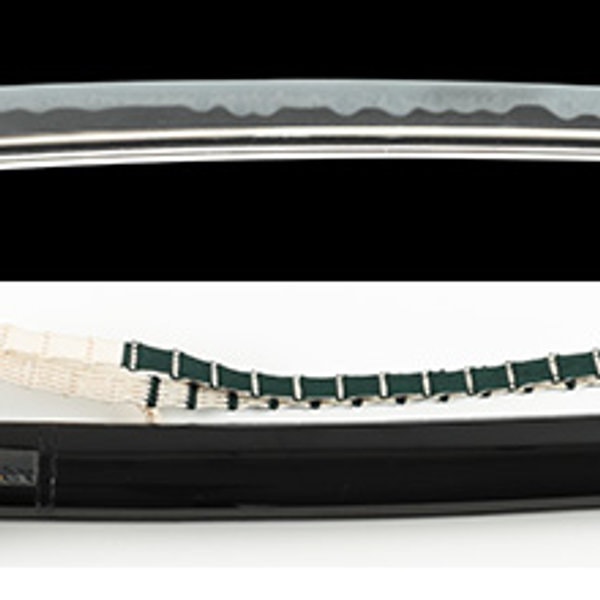
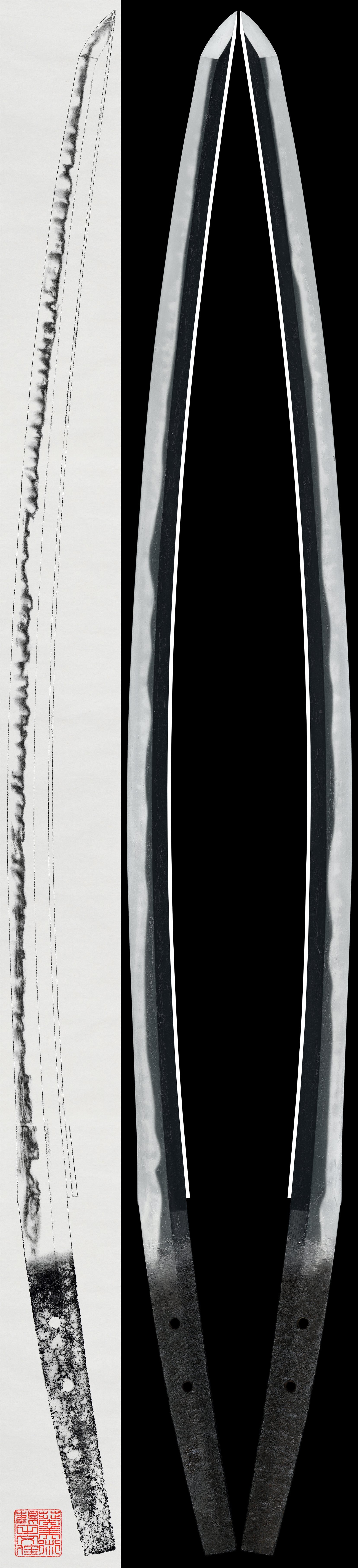
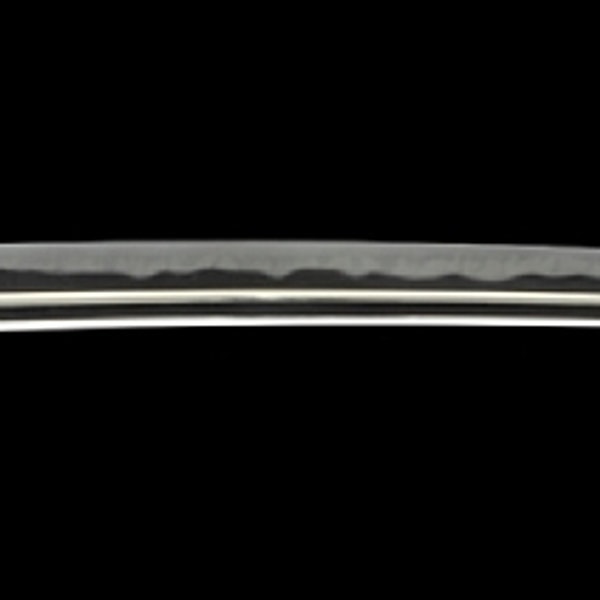
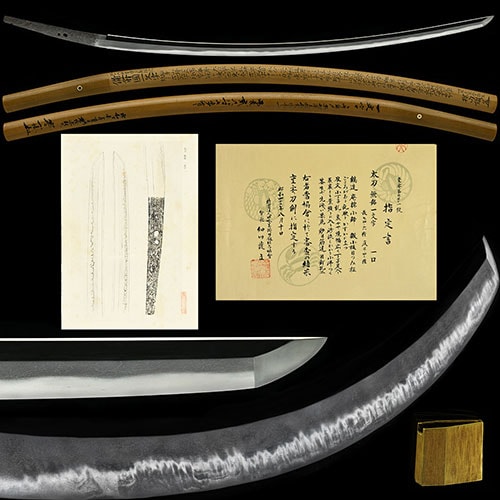
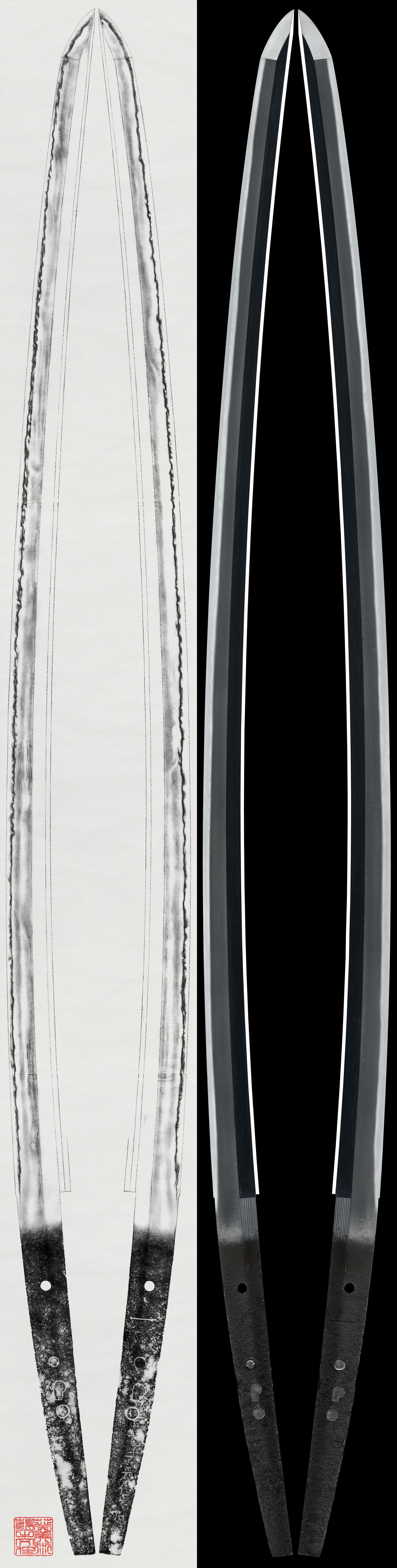
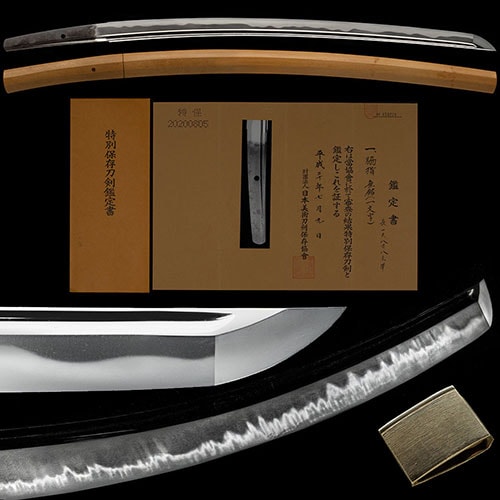
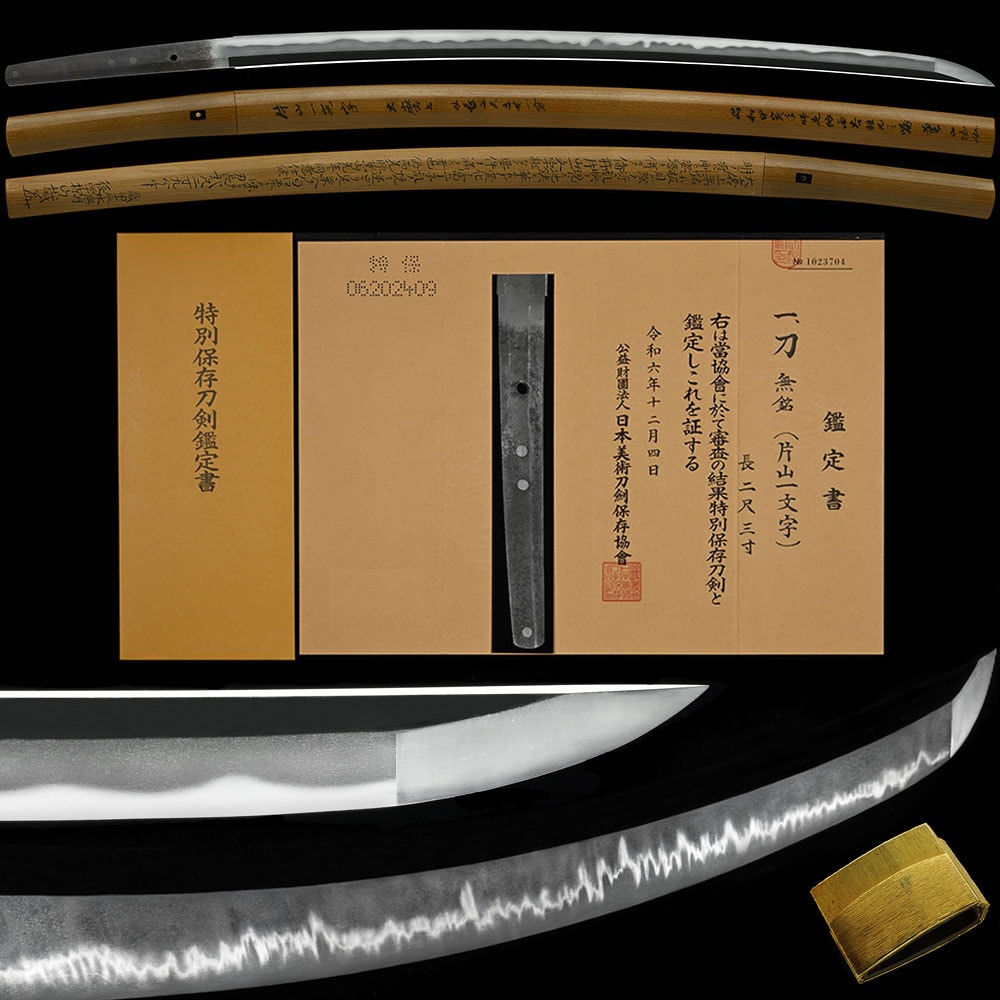
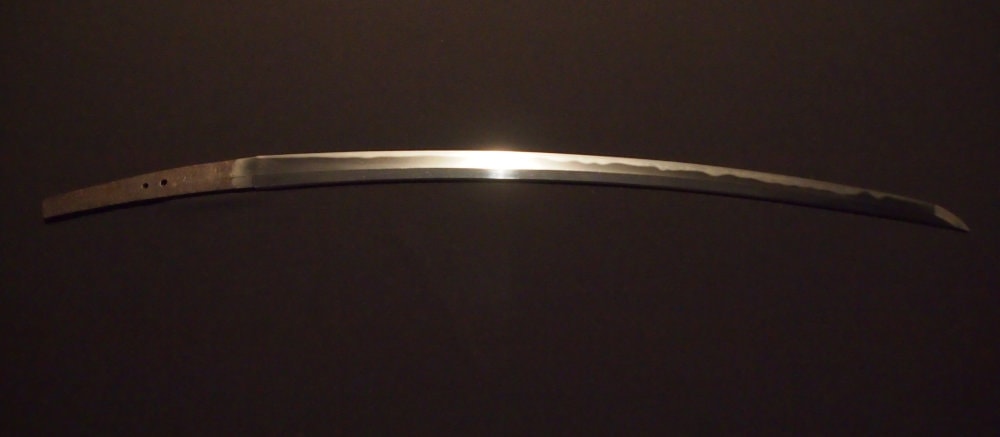
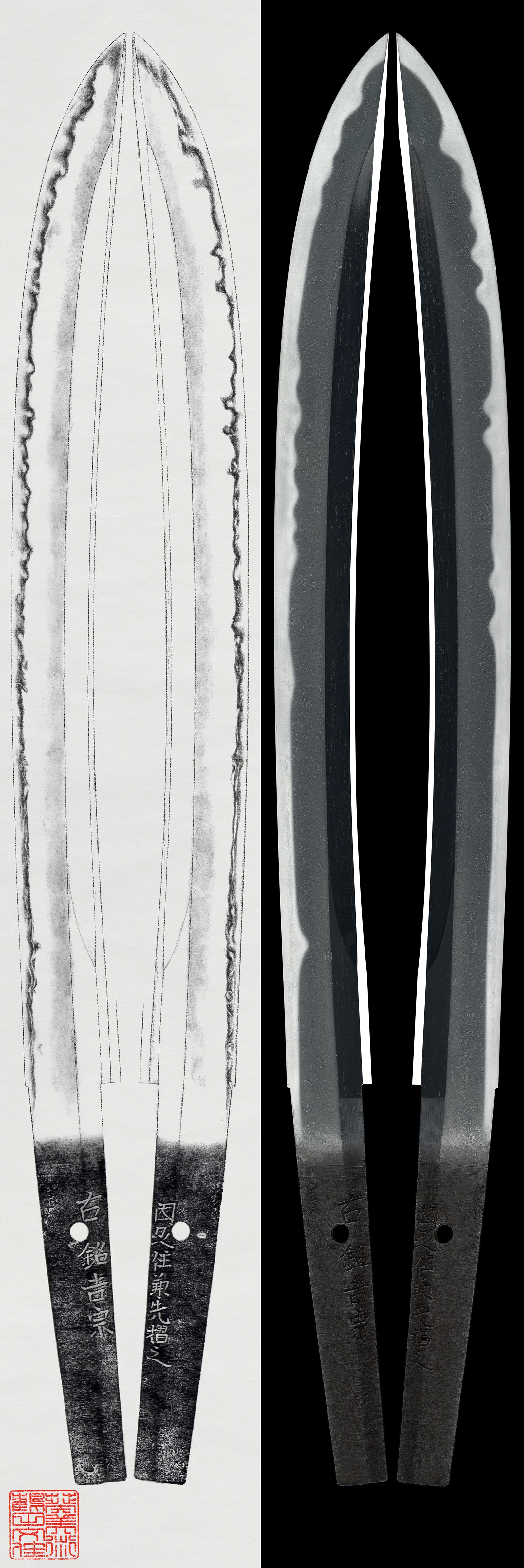
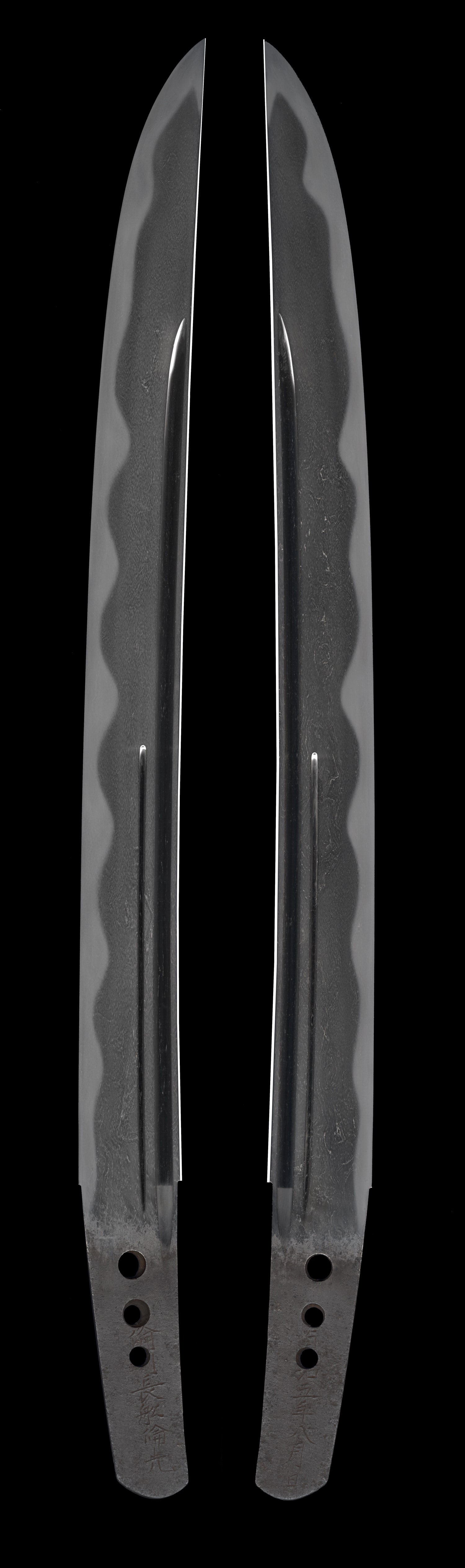
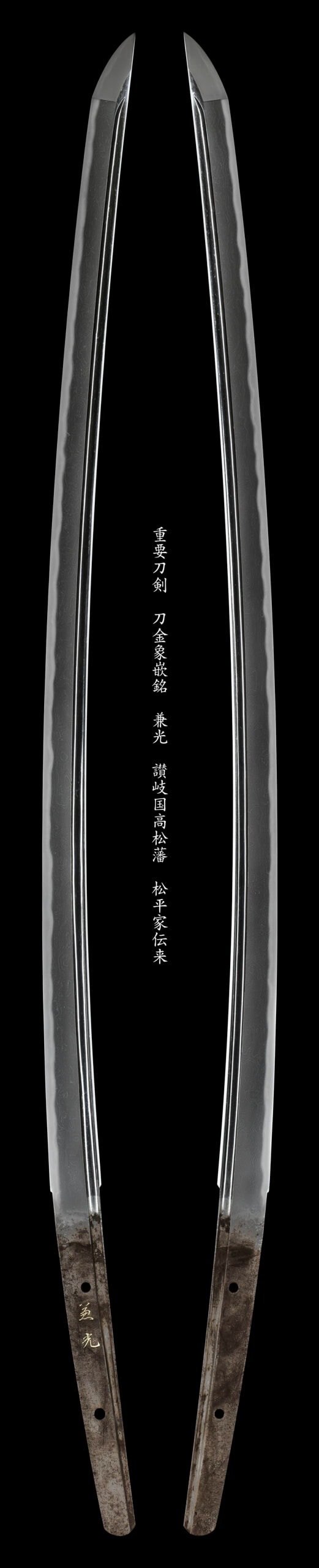
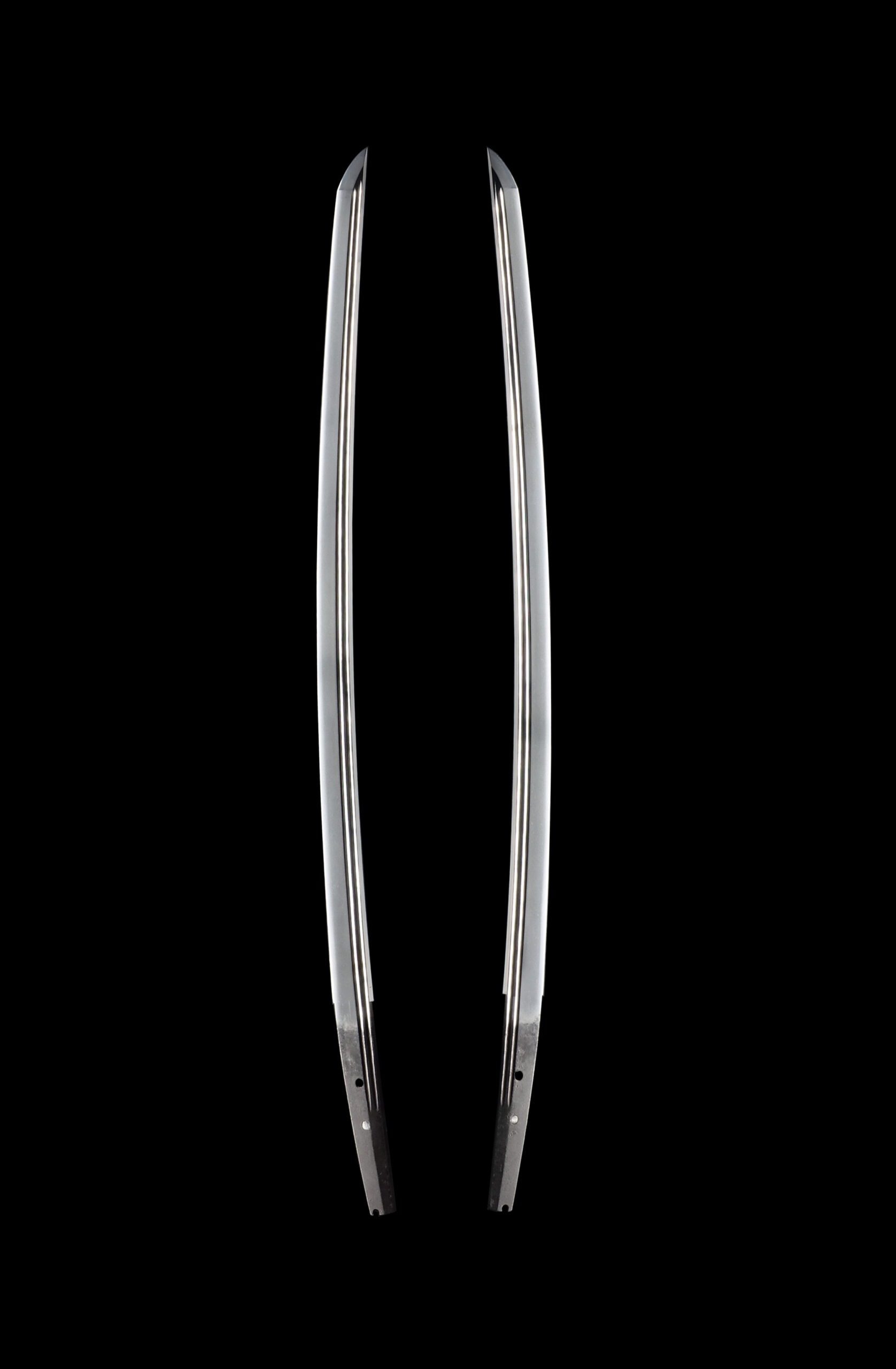
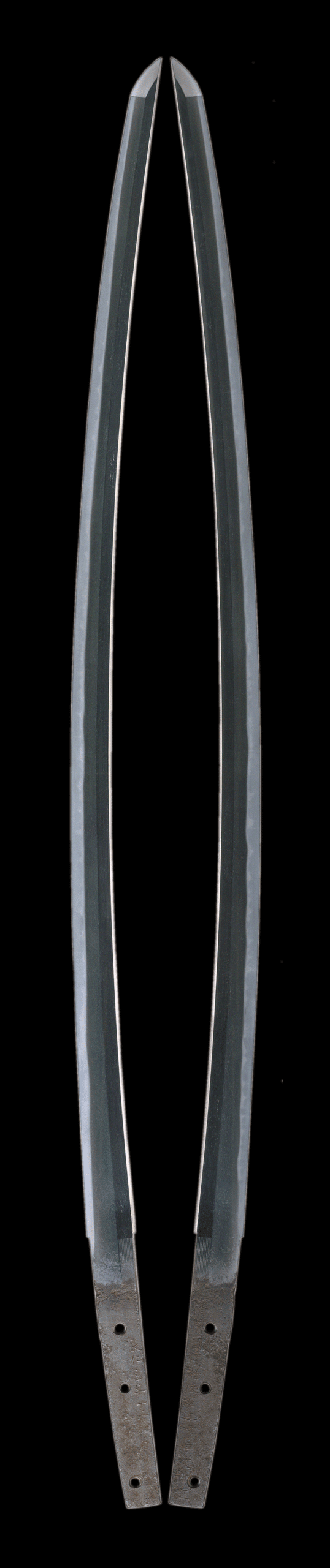
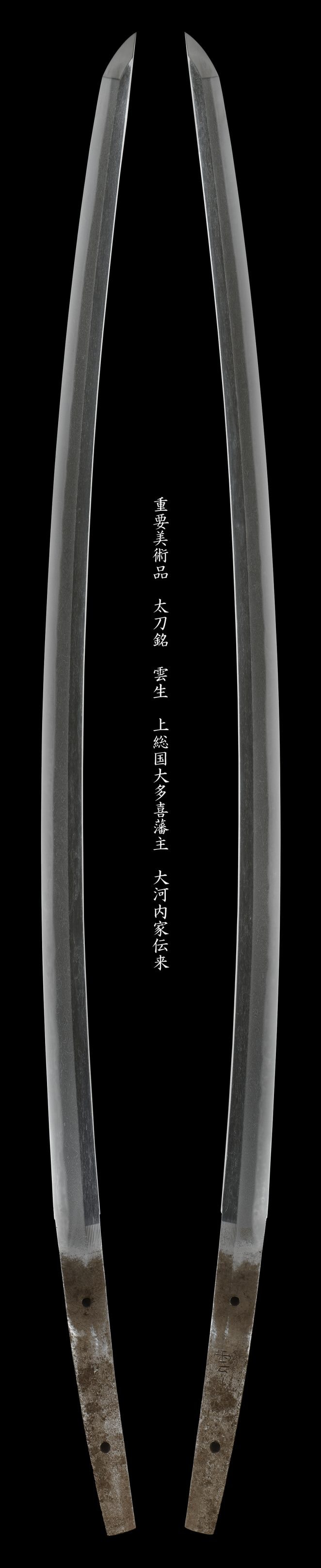
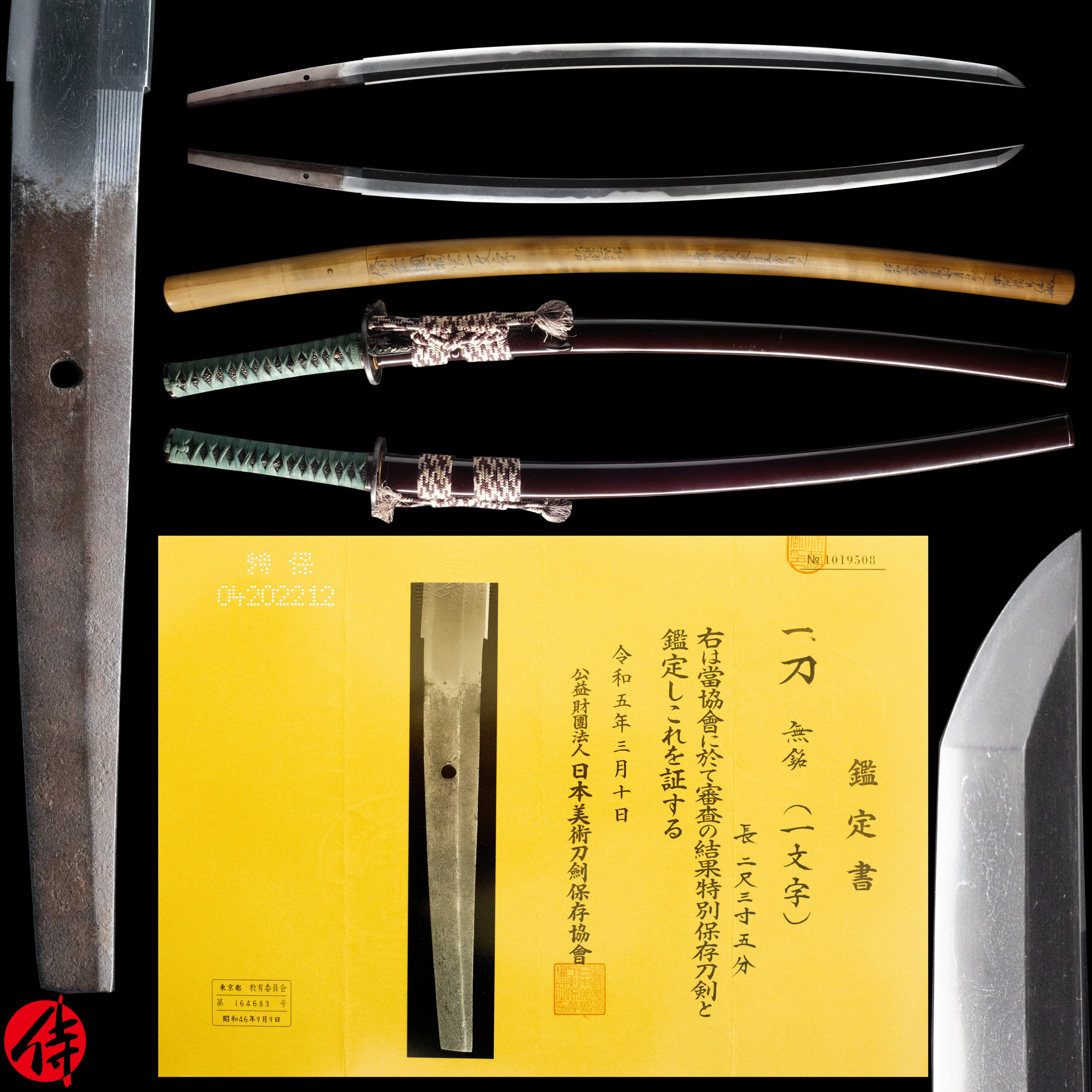
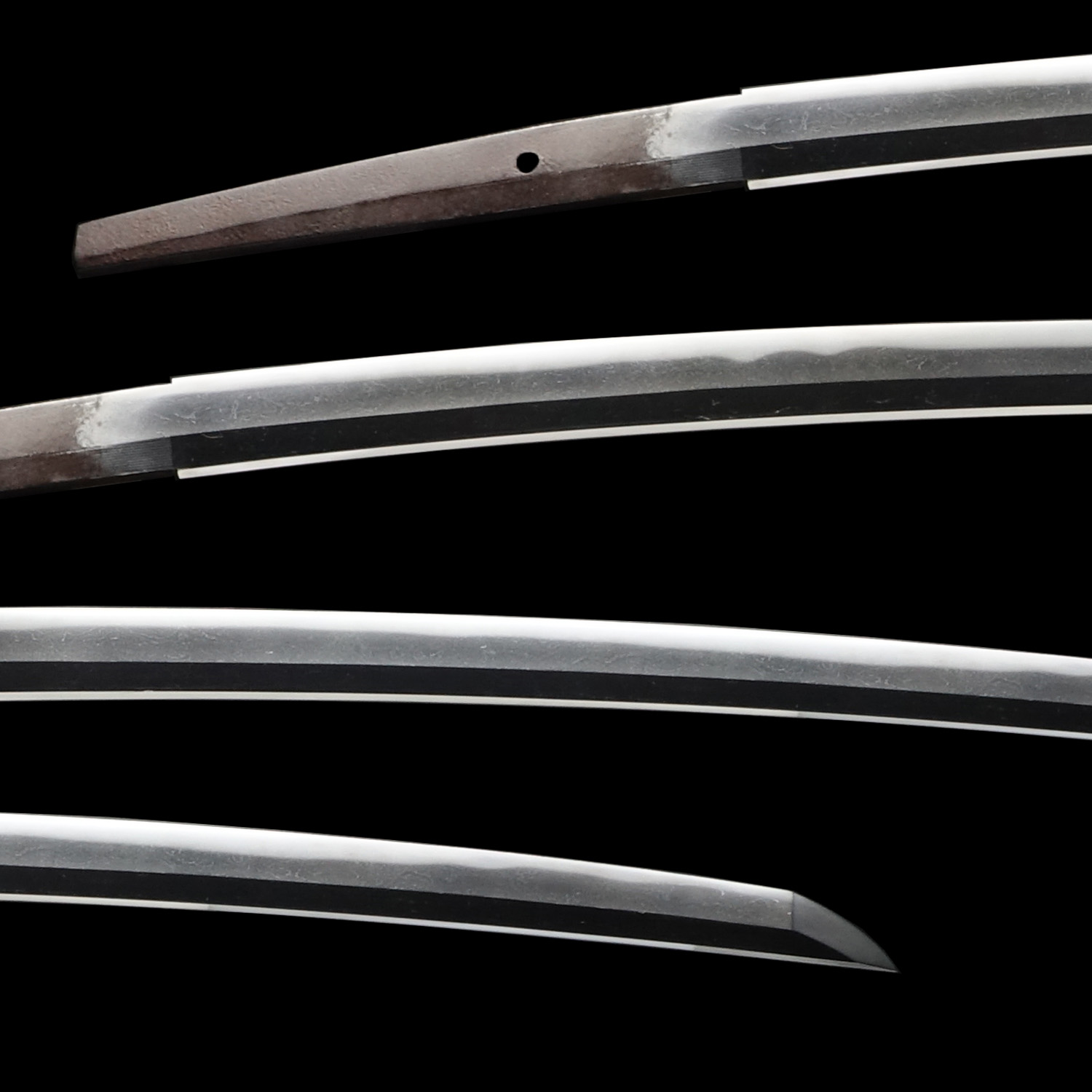
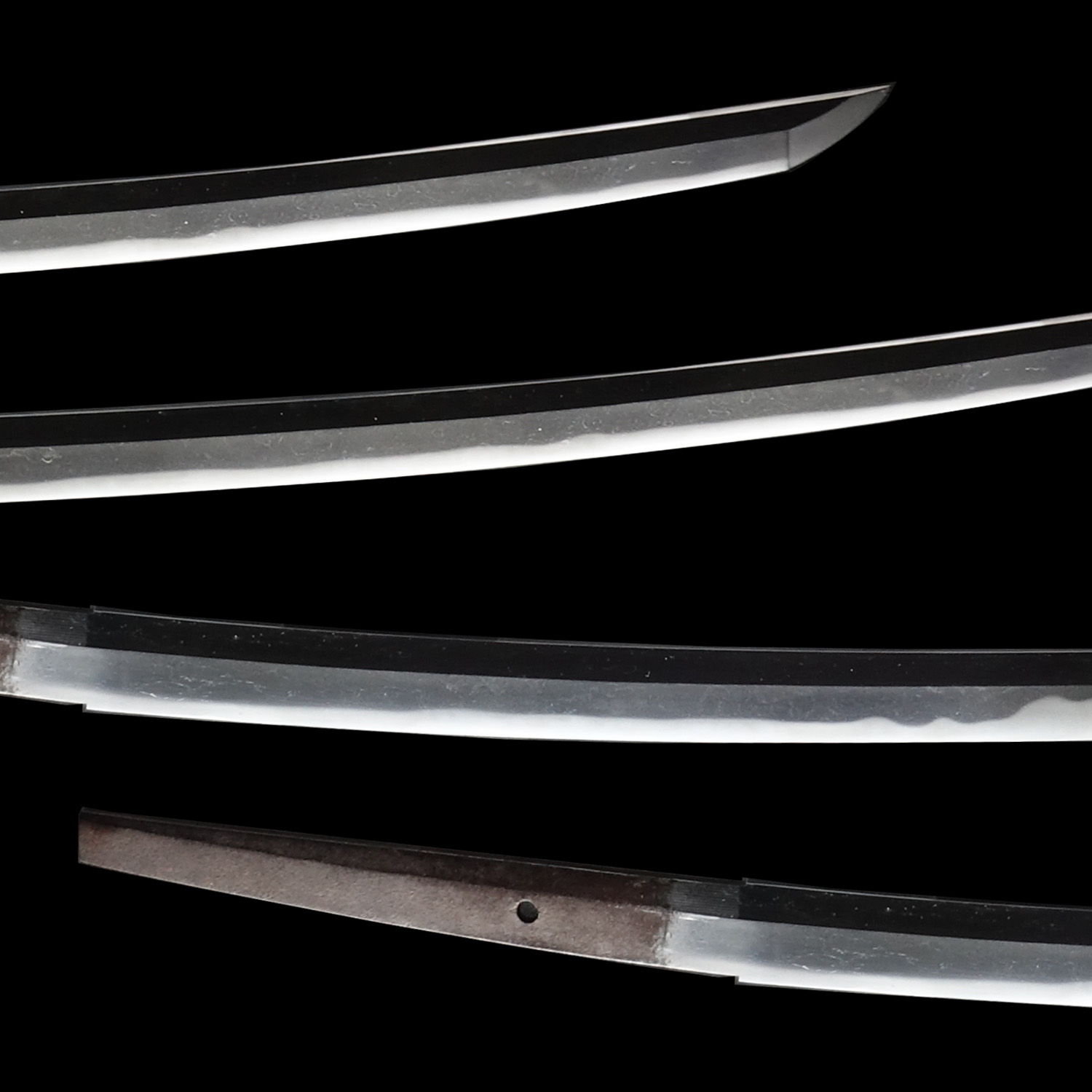
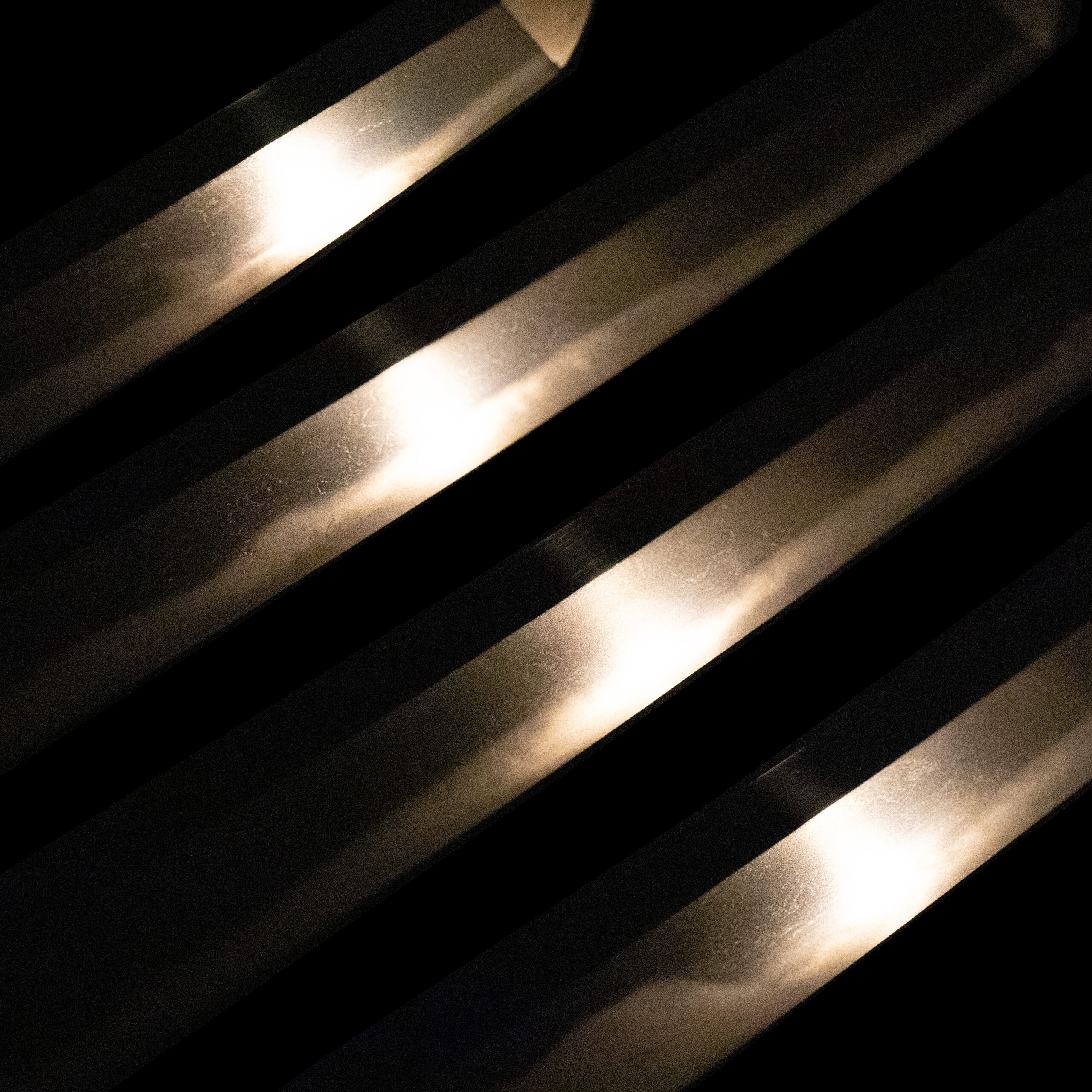
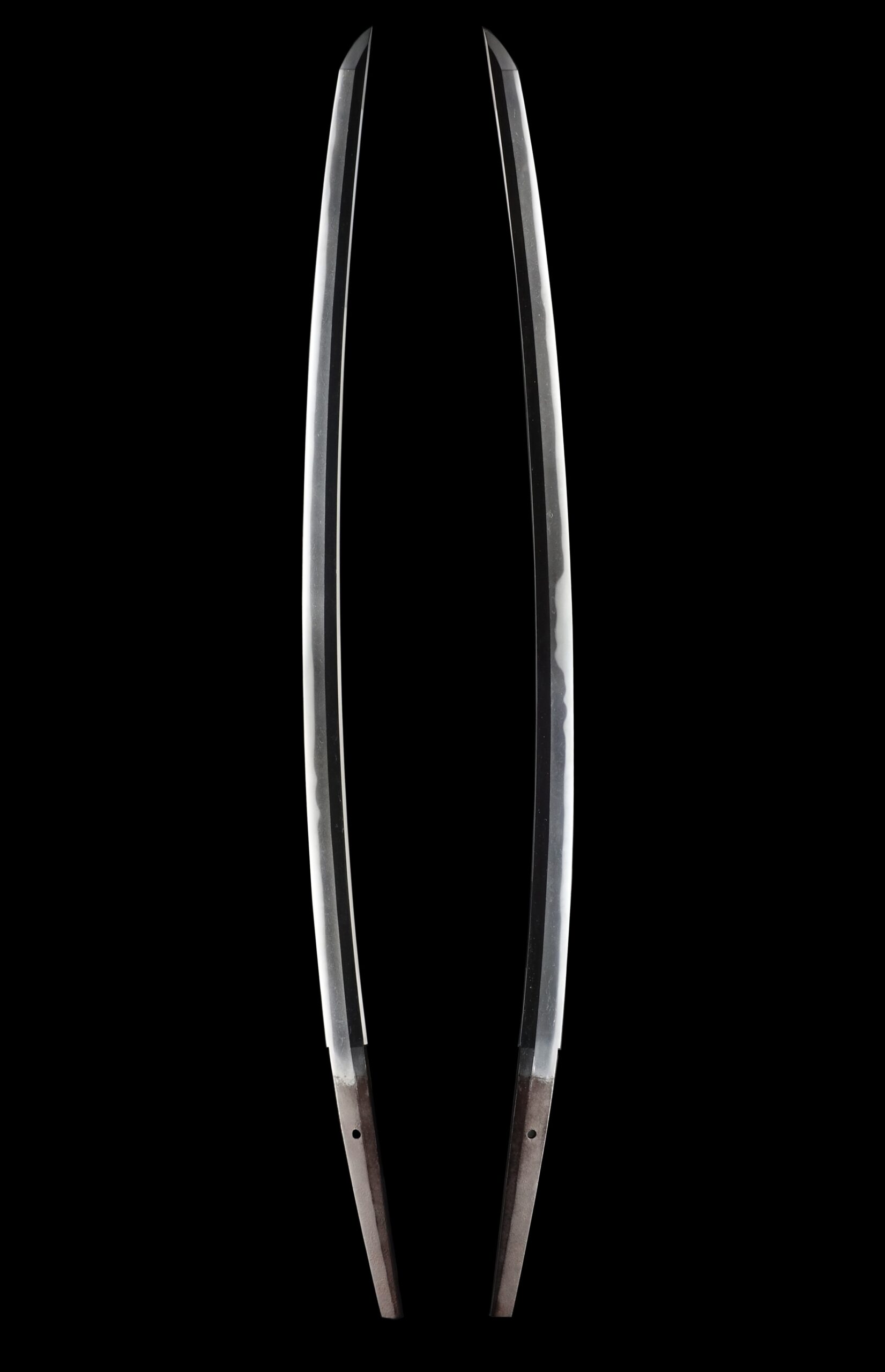
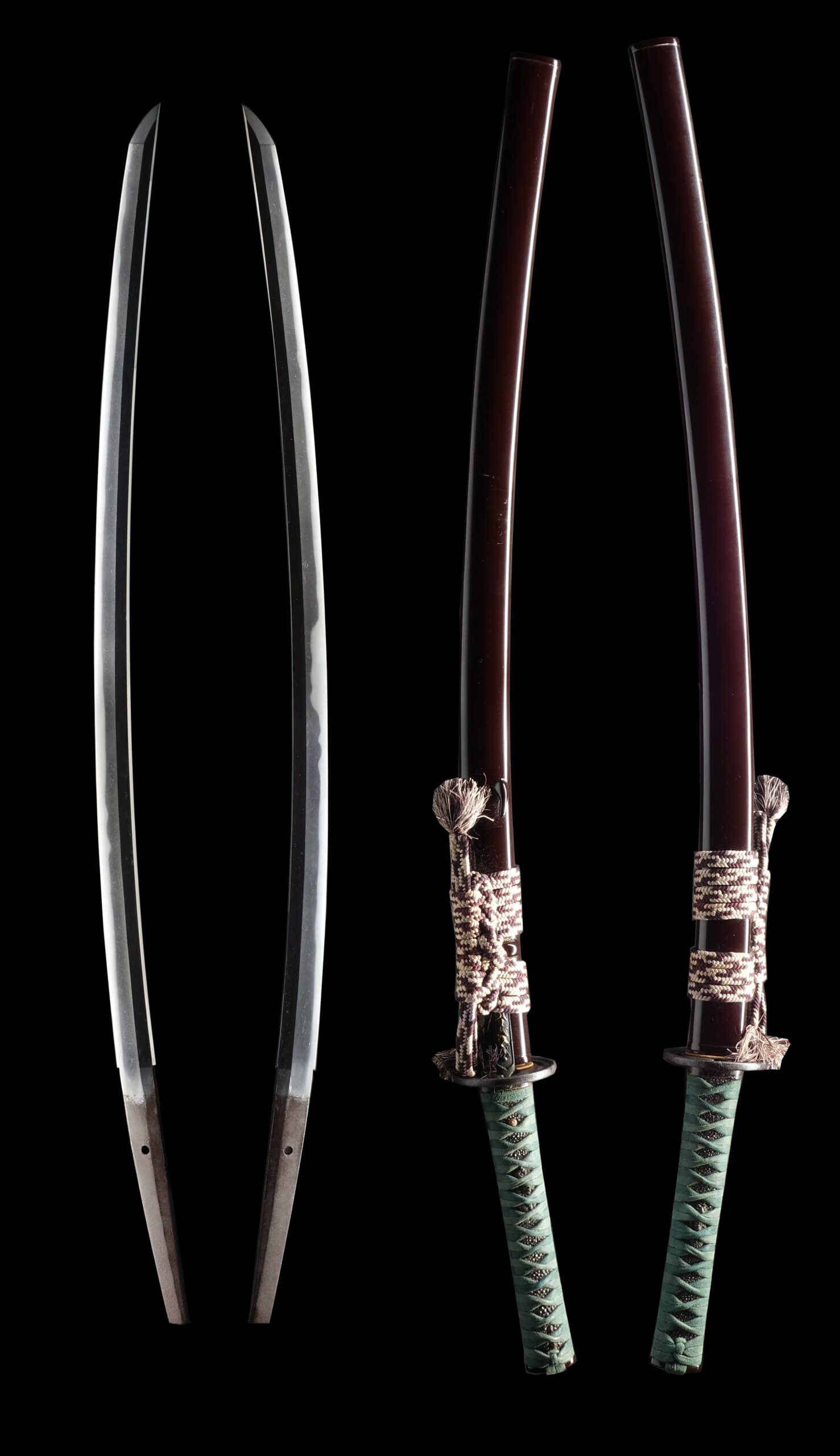
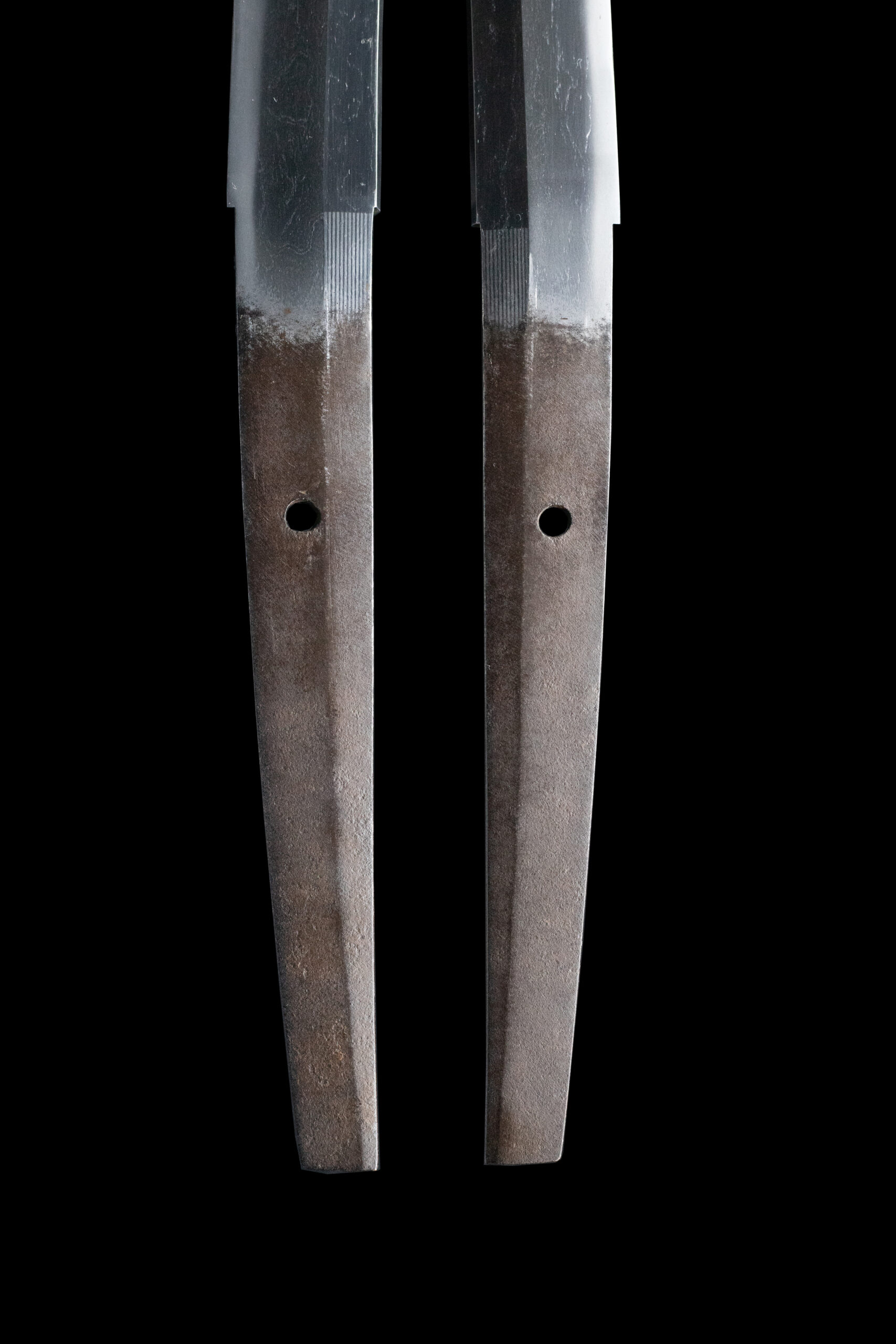
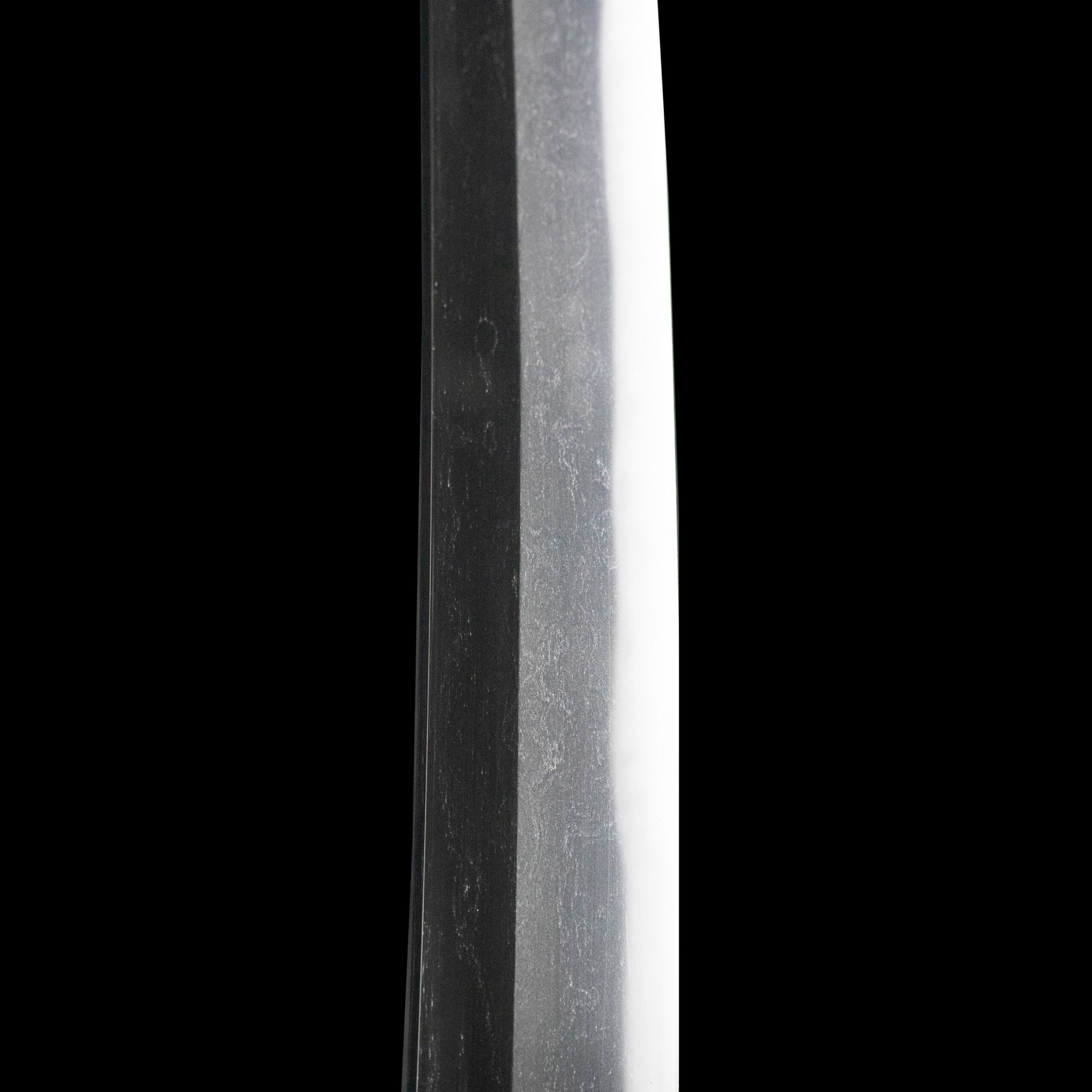
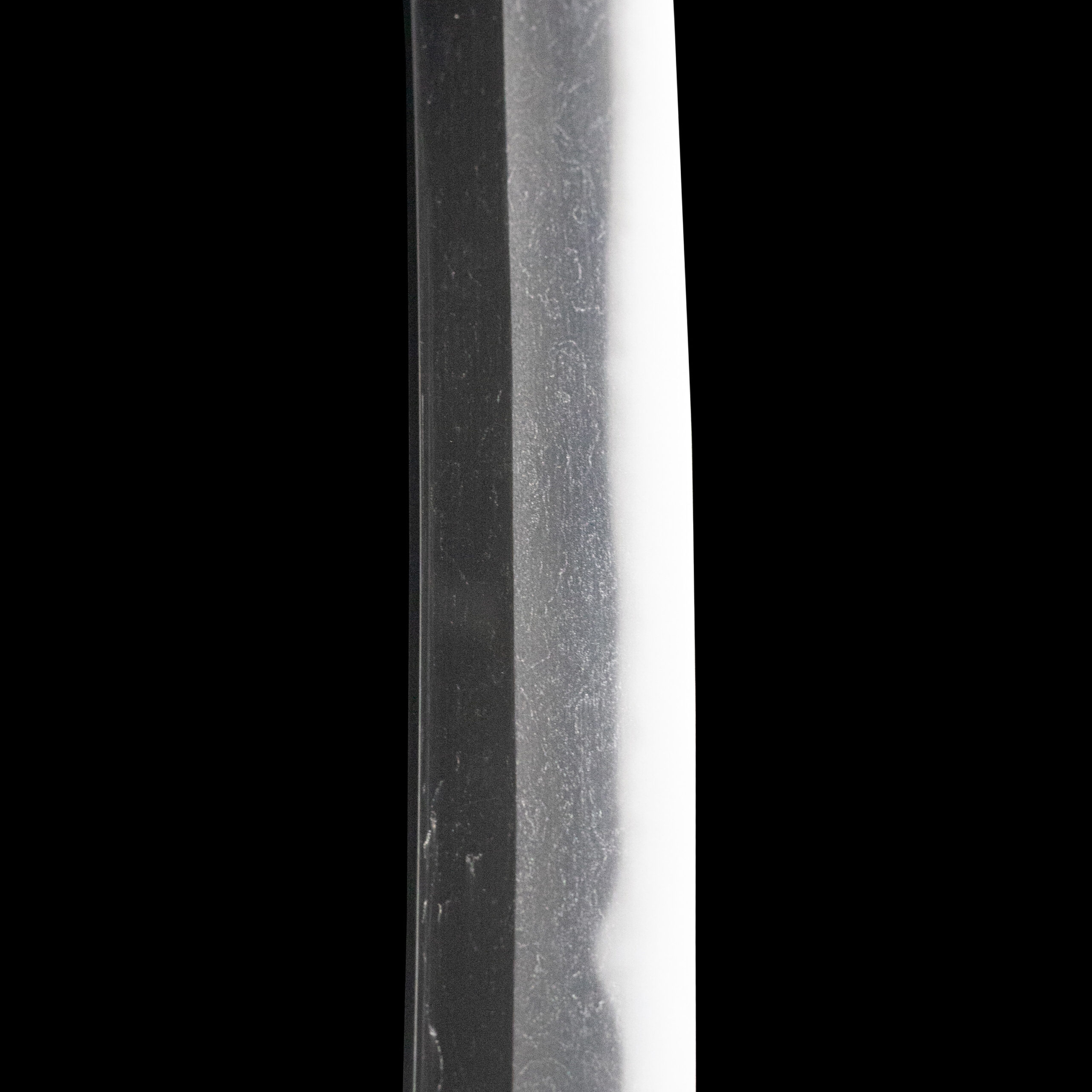
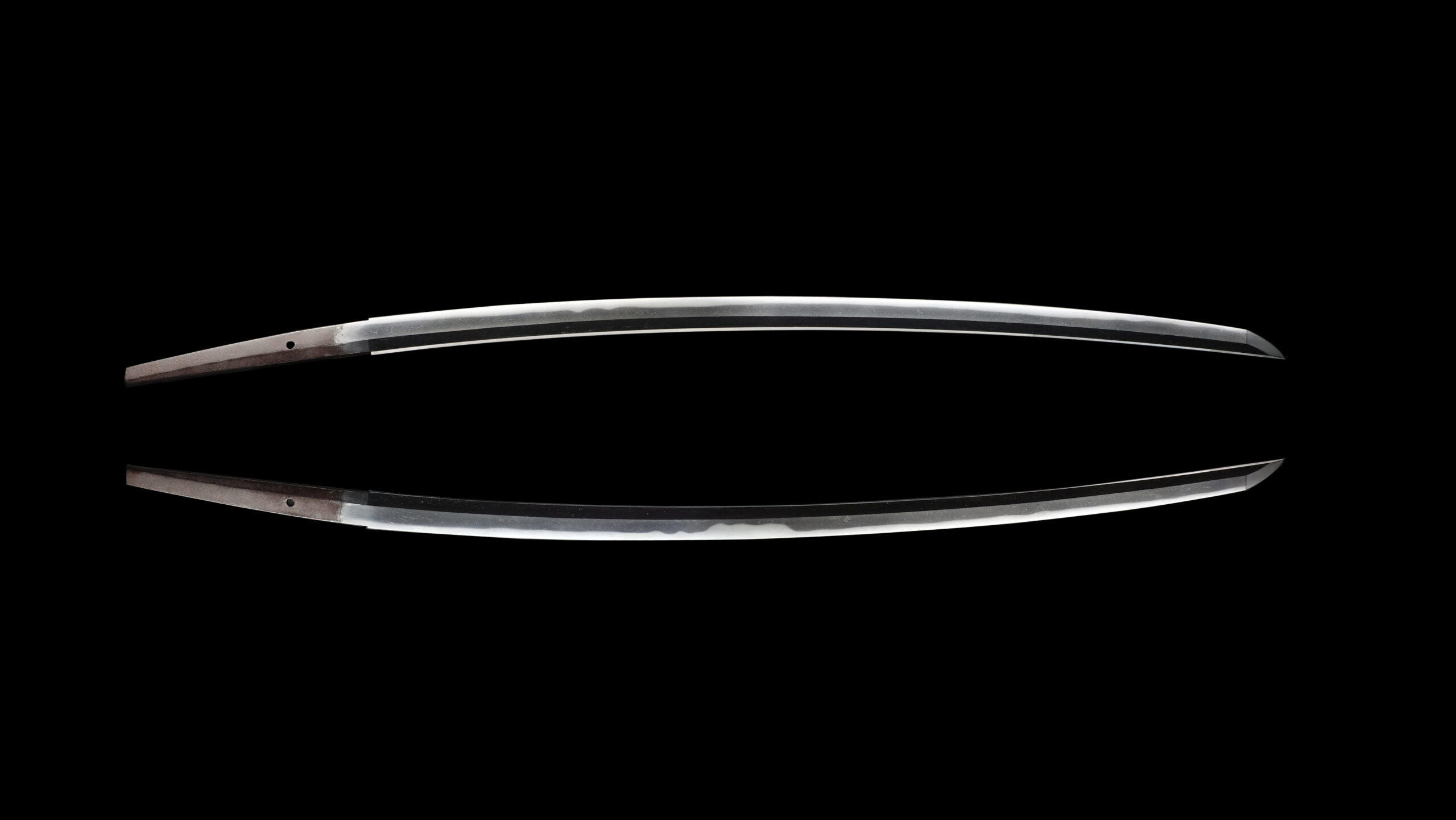
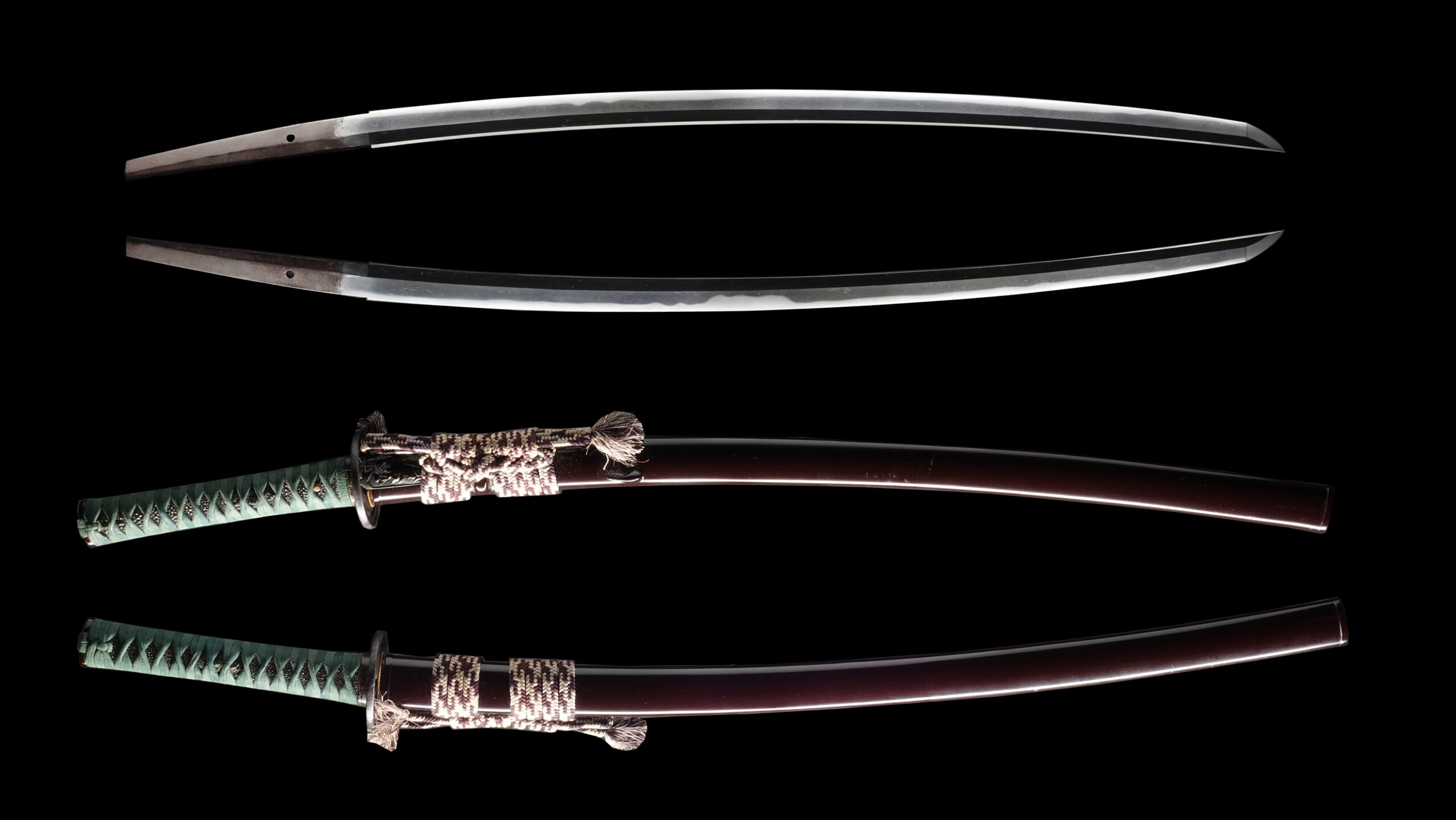
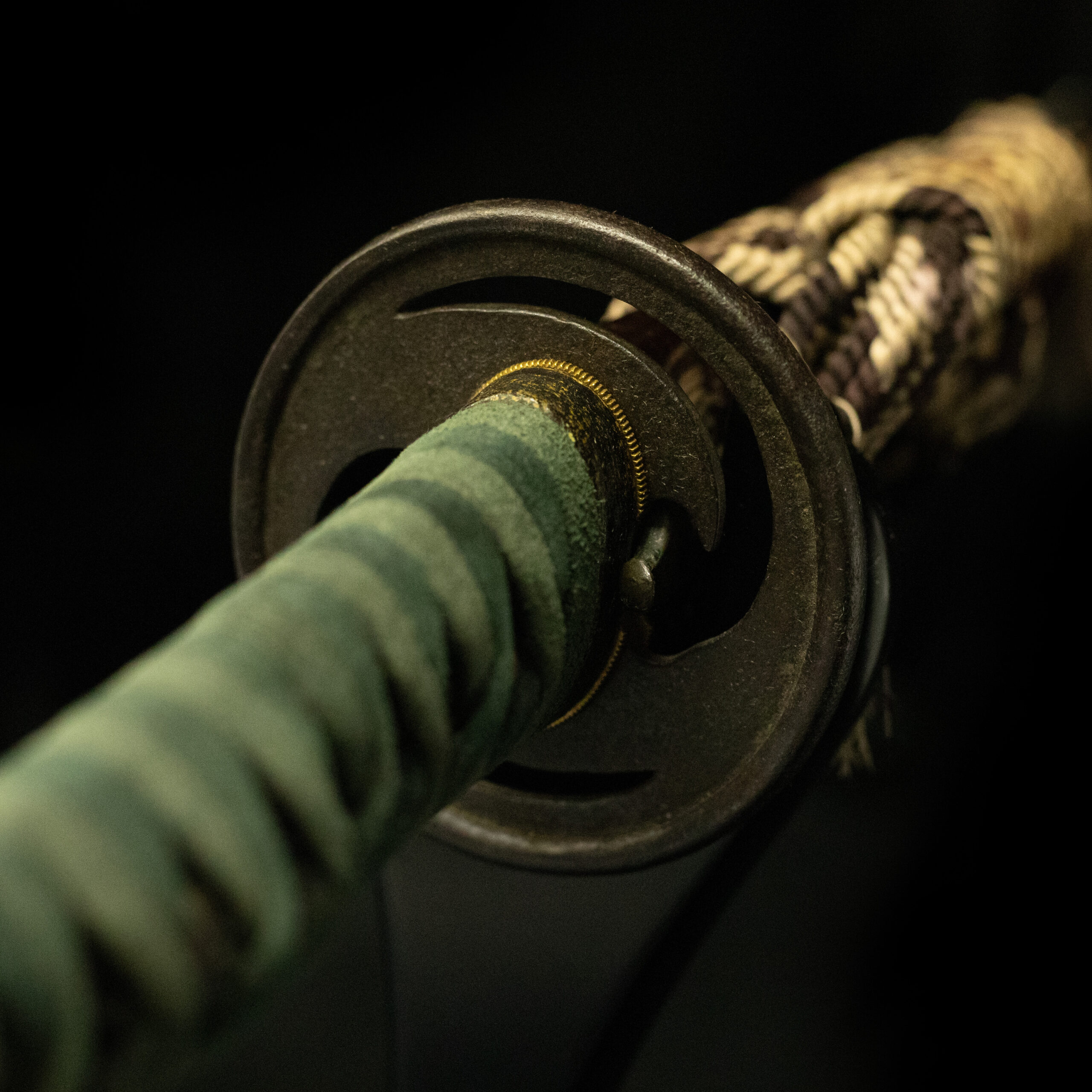
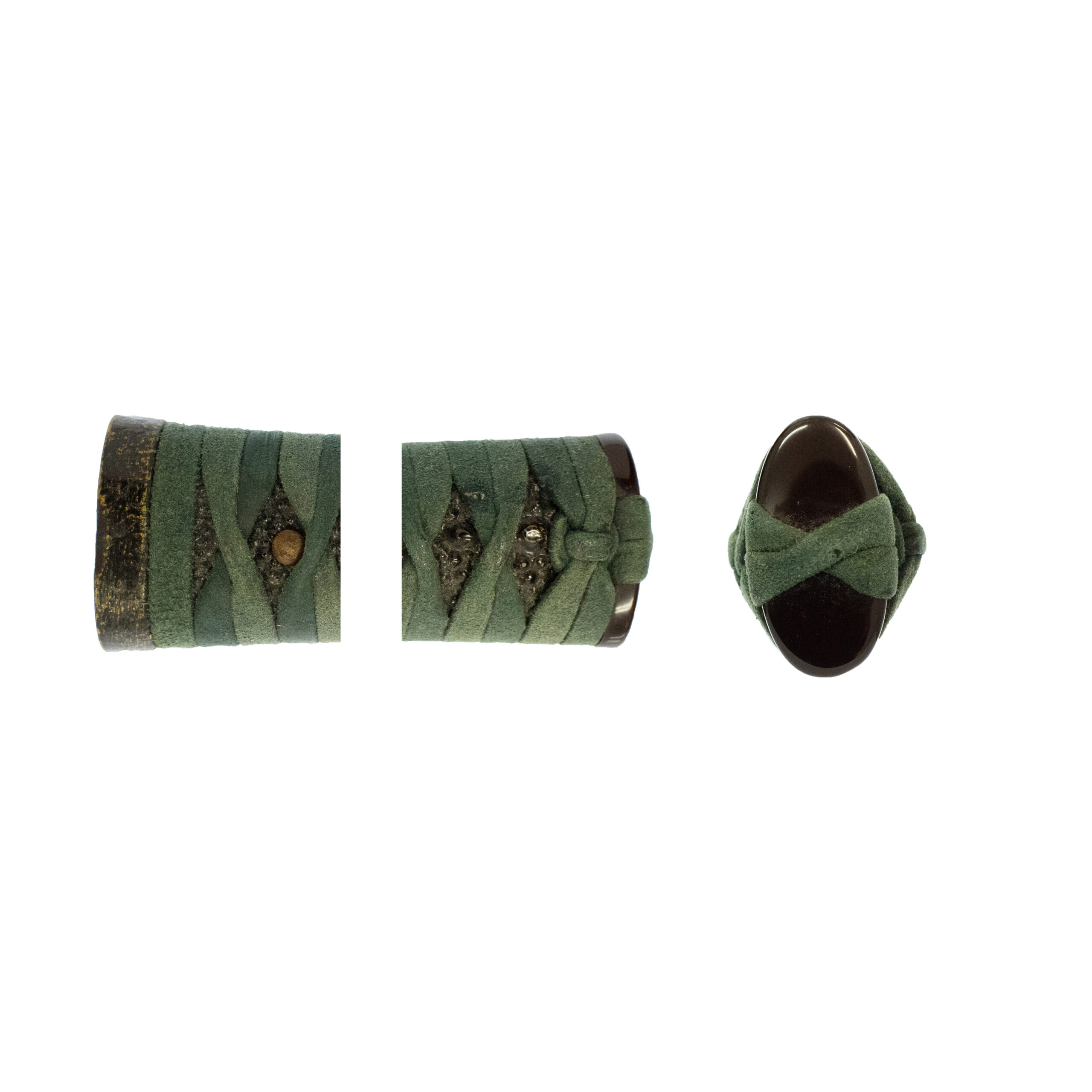
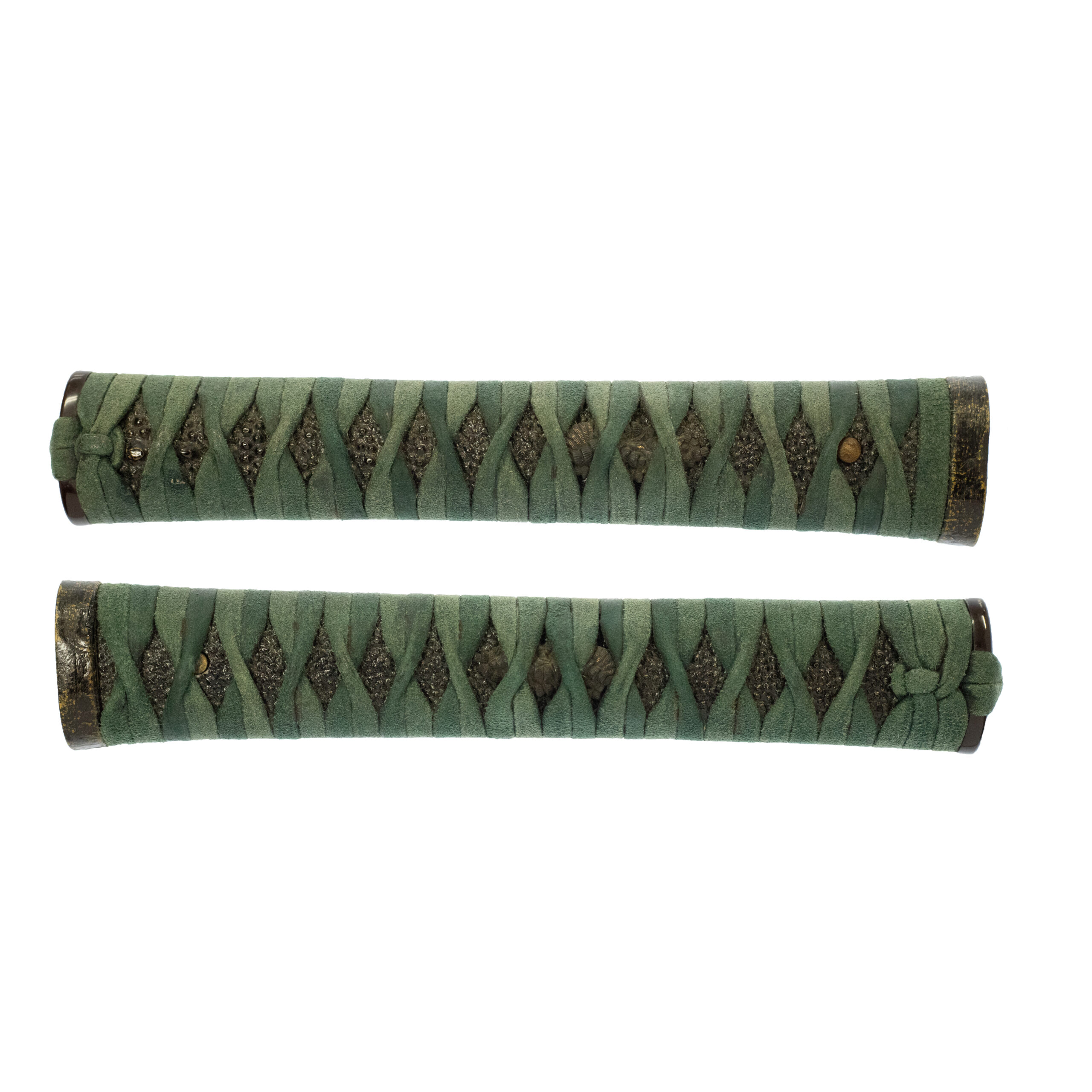
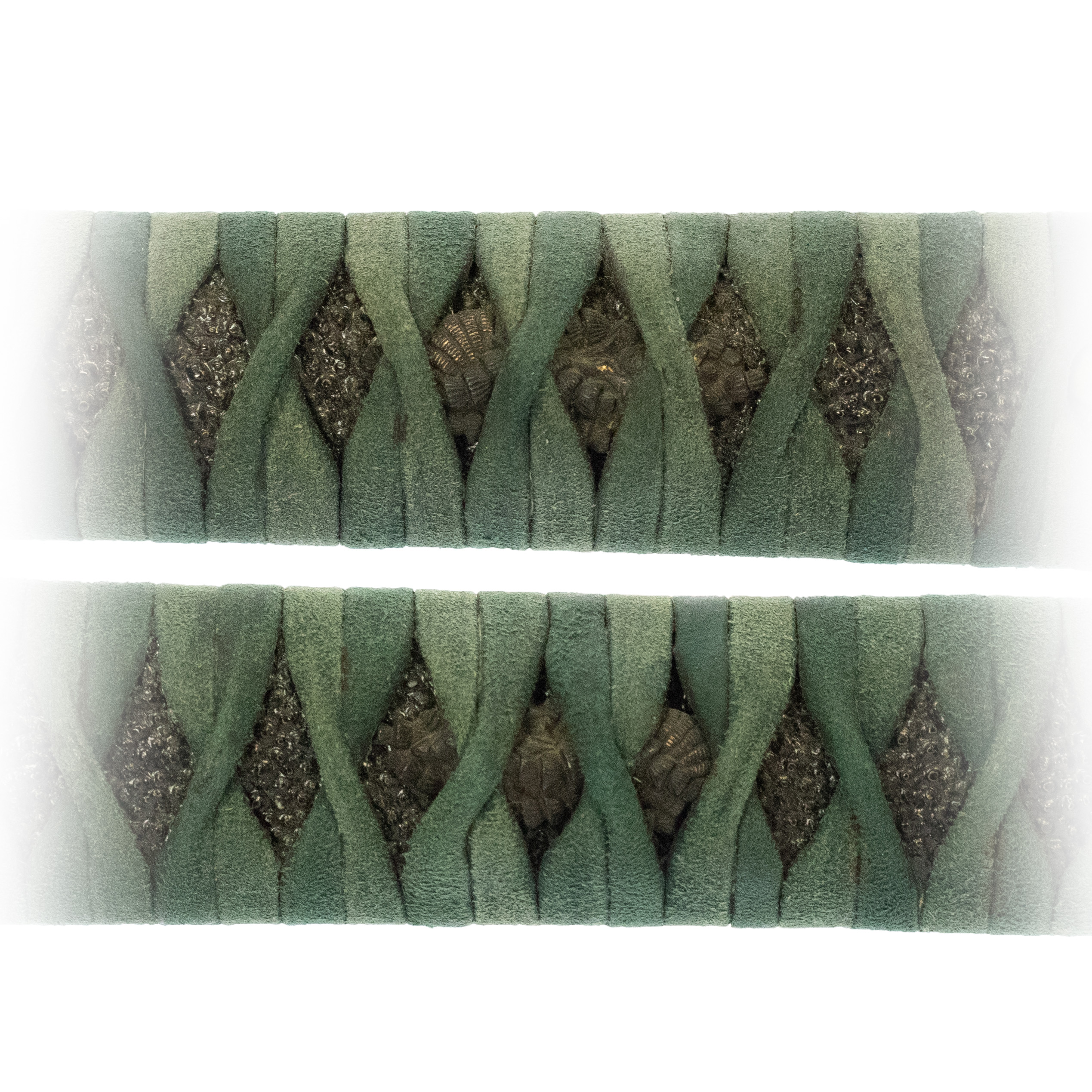
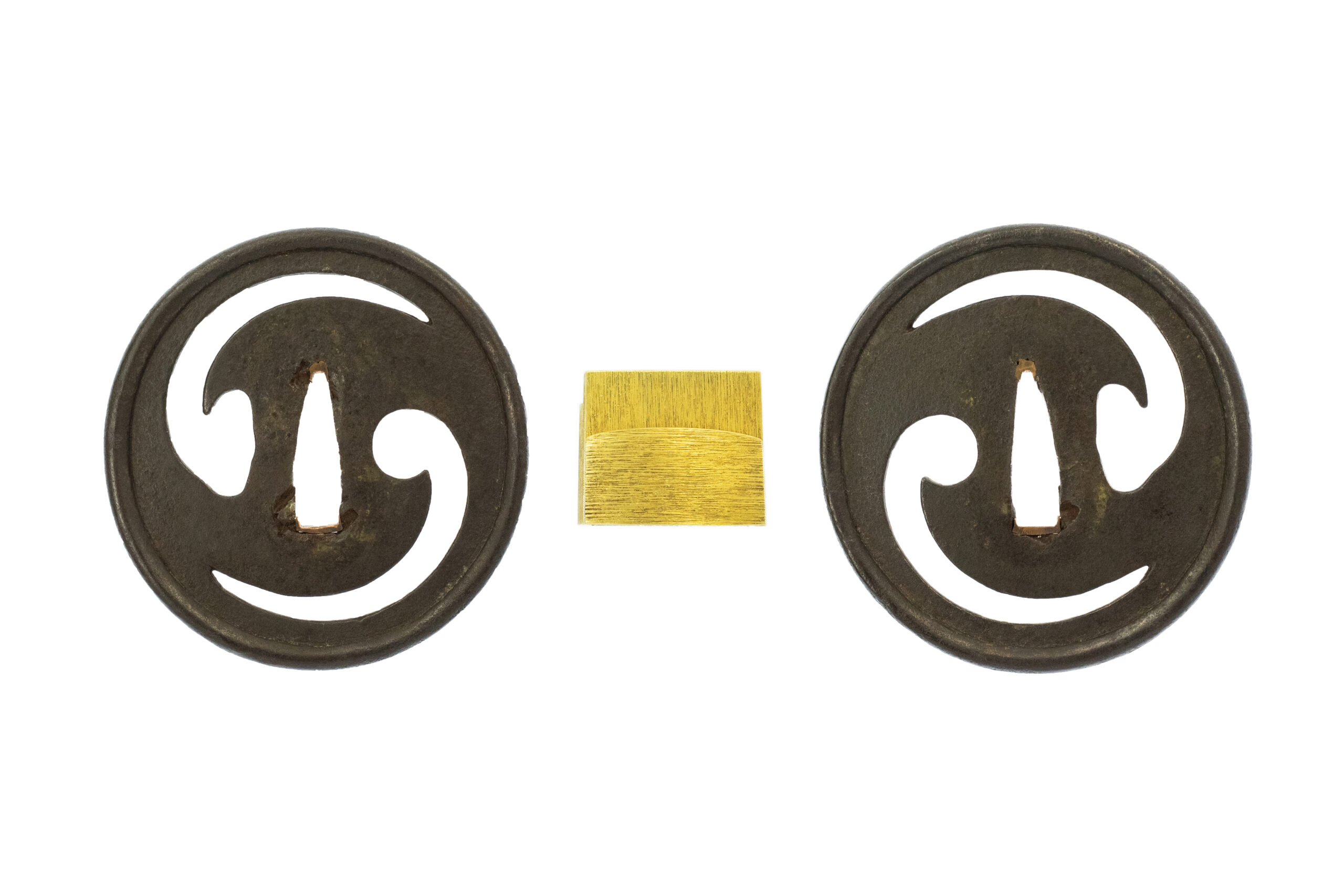
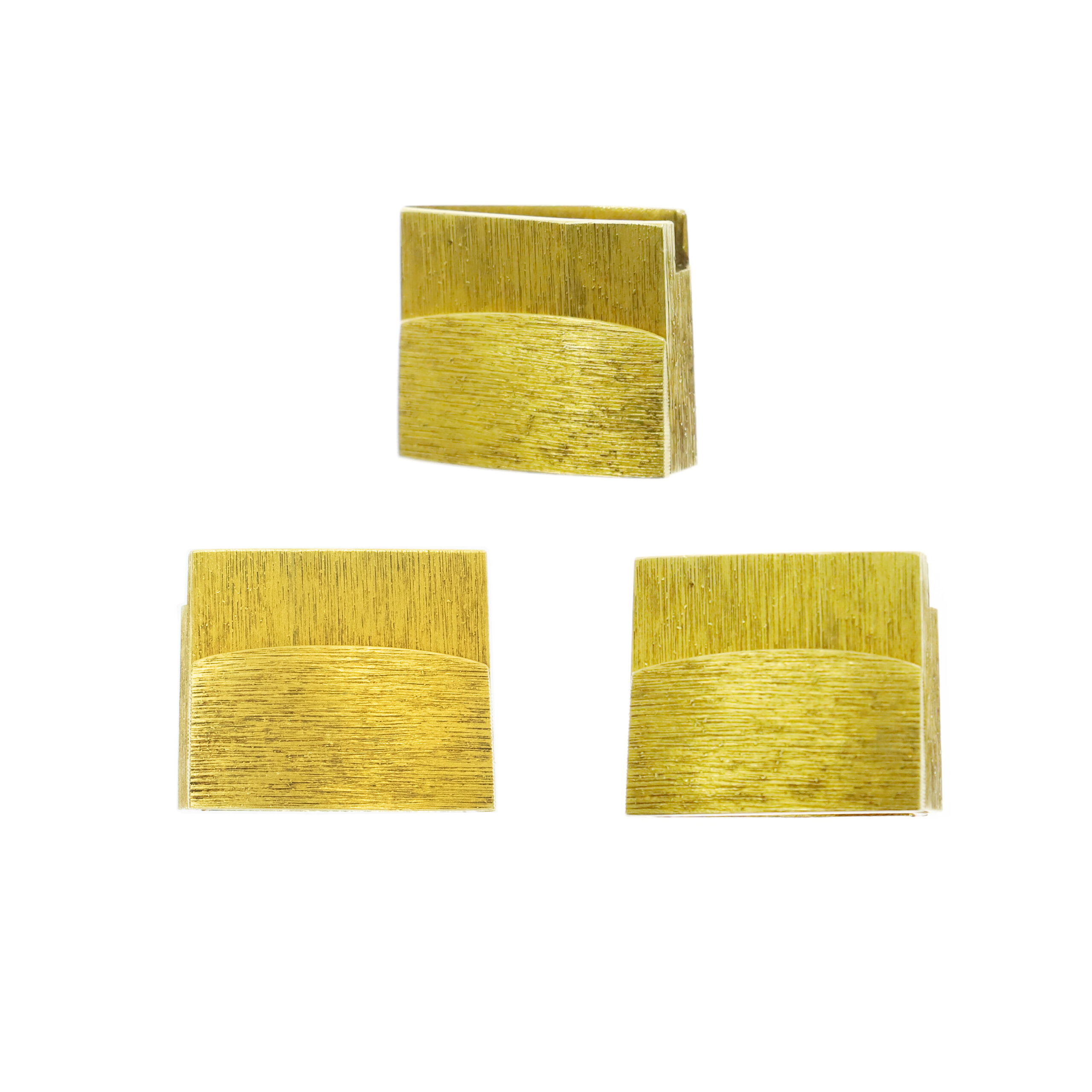
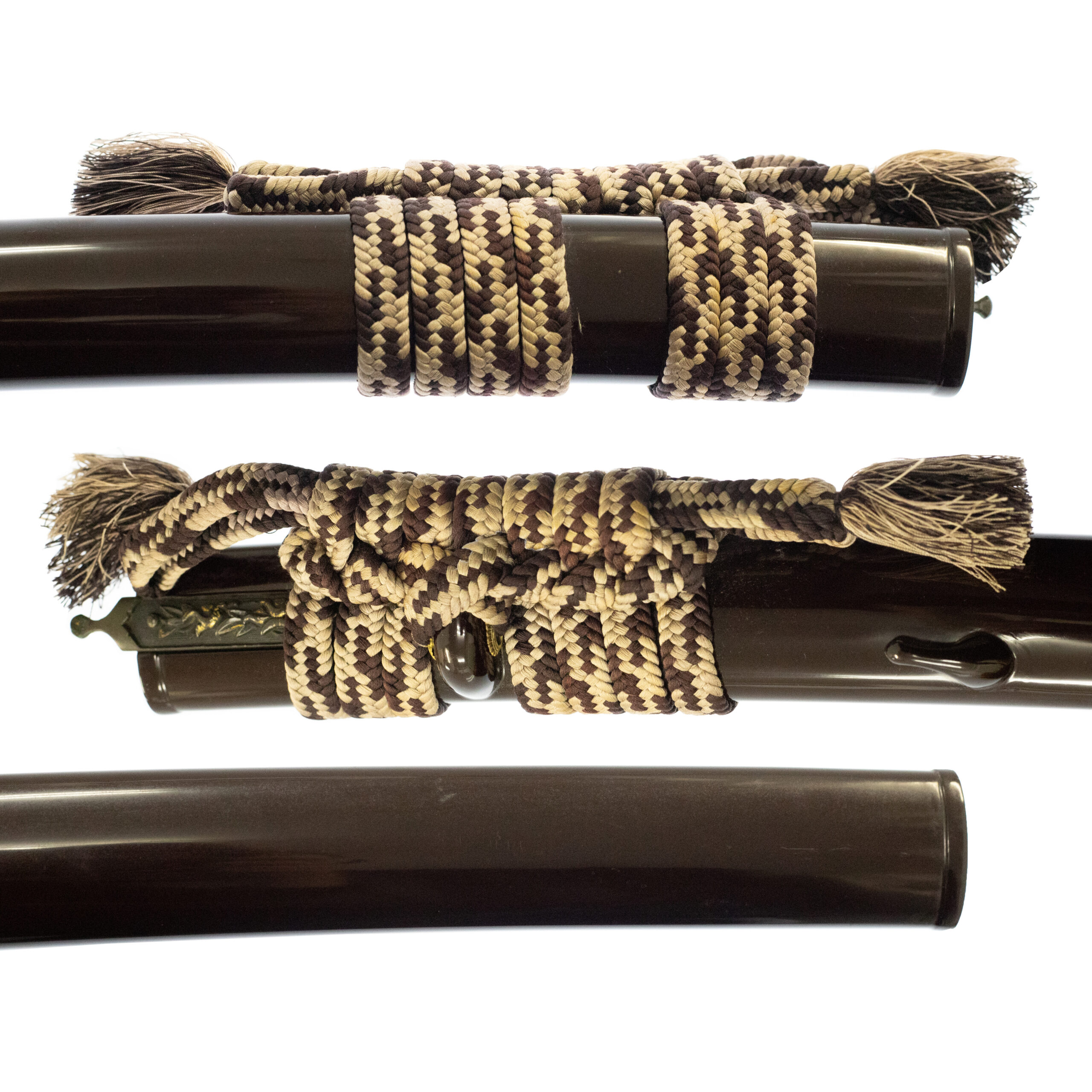
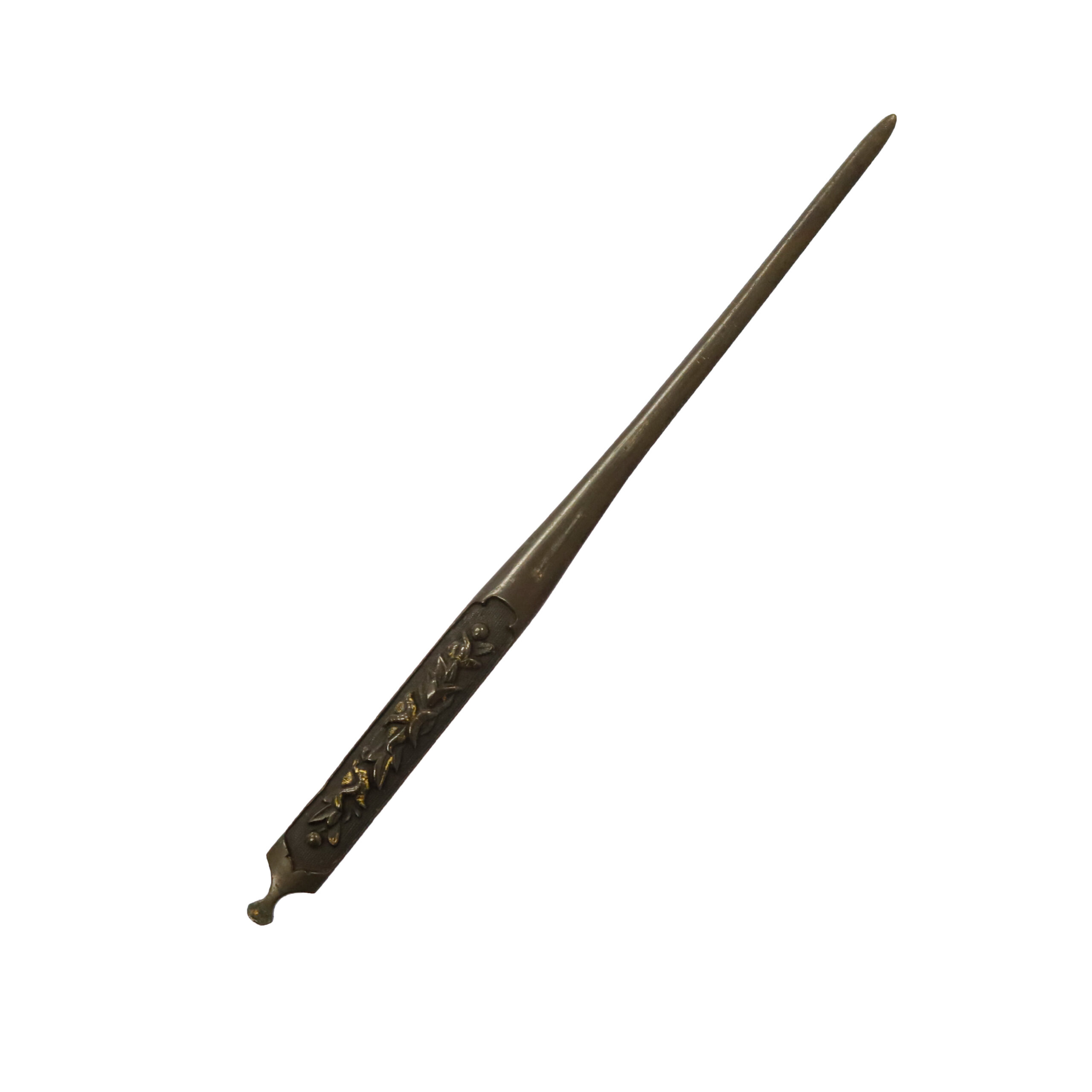
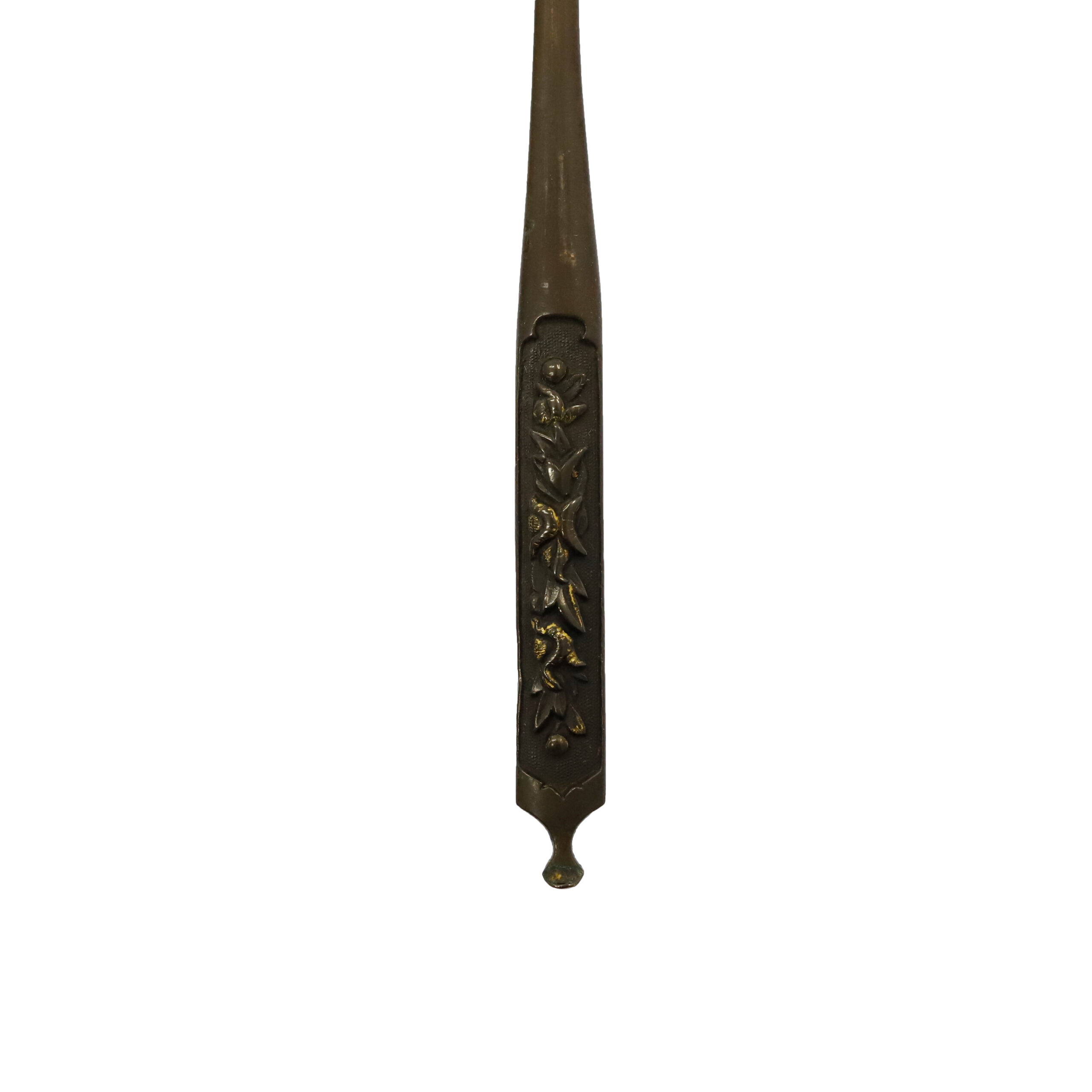
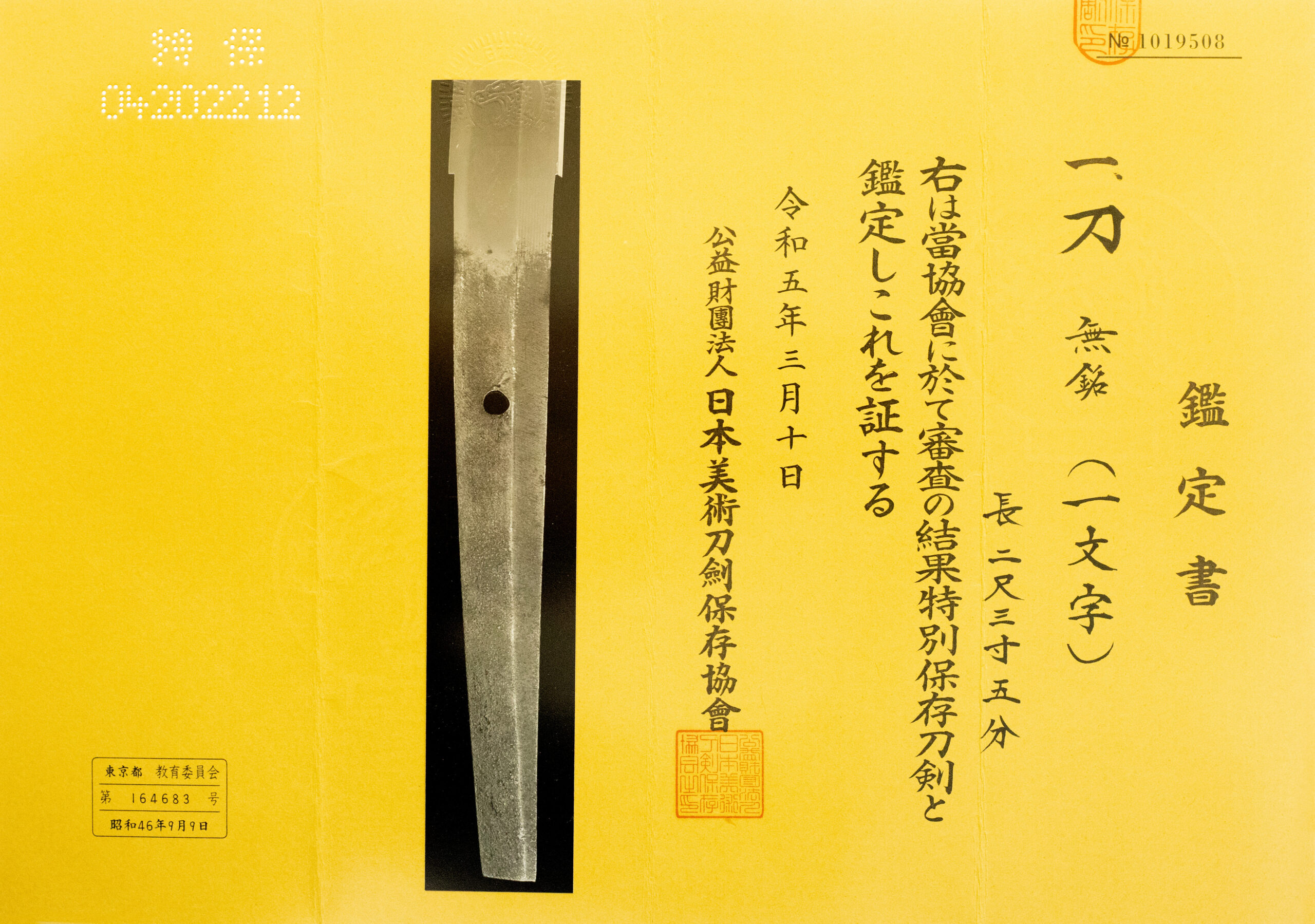
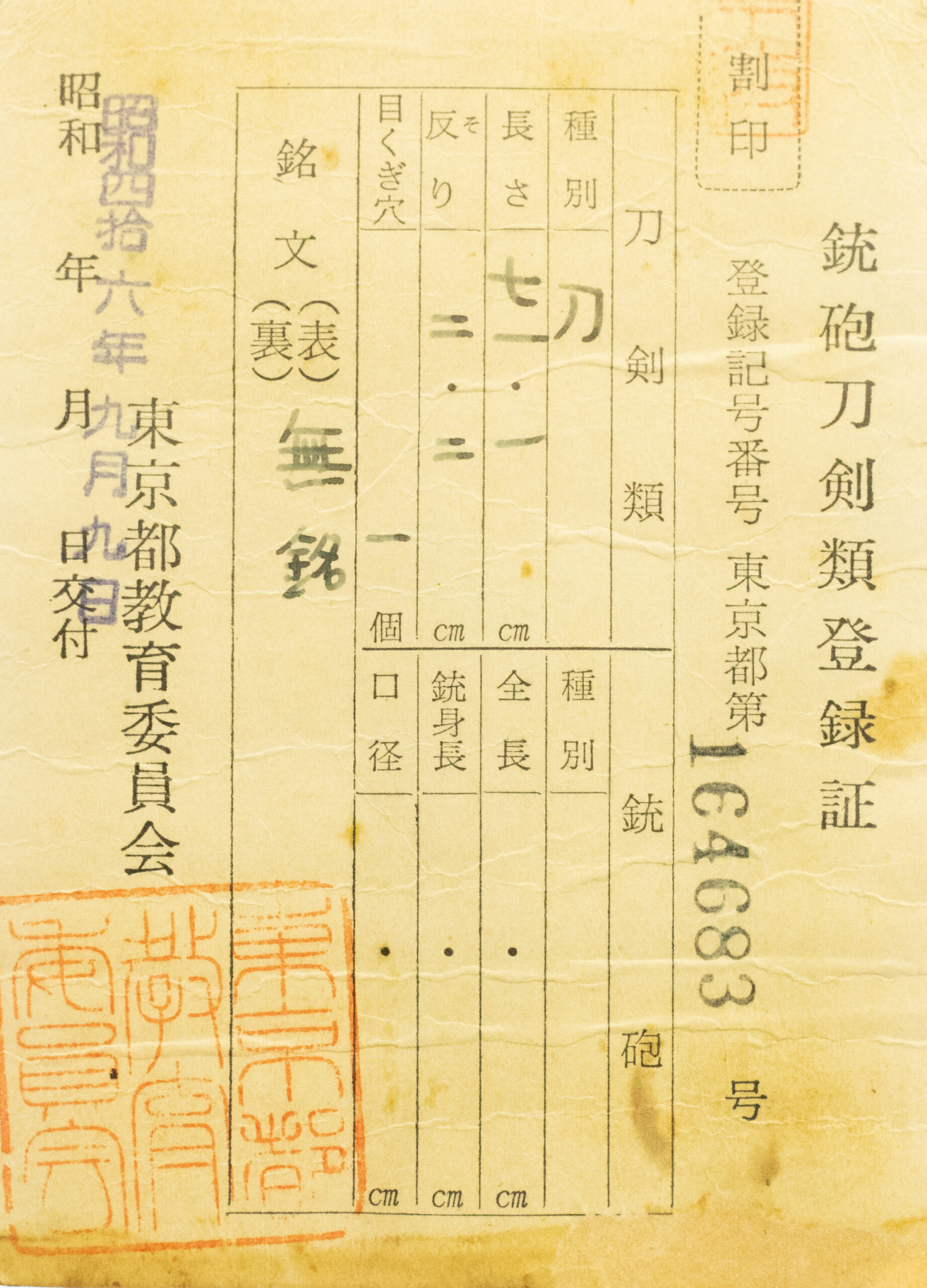
Antique Japanese Sword Katana attributed to Fukuoka Ichimonji with Tokubetsu Hozon Certificate 【Description】 This blade is attributed to Ichmonji (一文字) by NBTHK, which appraised it as a Tokubetsu Hozon Token. Ichimonji is one of the most influential schools. There are a few branches that include Ichimonji in their names. They are Fukuoka Ichimonji, Yoshioka Ichimonji, Kataoka Ichimonji and Shochu Ichimonji. Overall, more than 200 swordsmiths were categorized as members of the Ichimonji school. This fact indicates how acknowledged the schools were. We called NBTHK and confirmed that the attribution for this blade was given to Fukuoka Ichimonji school, the first Ichimonji school ever created. Fukuoka Ichimonji school was prosperous during the mid-Kamakura period (mid-13th century). They signed “一” (Ichi: one in Japanese) on the tang, which is the reason why they are called Ichi Monji (One Letter). It is said that Fukuoka Ichimonji school was founded by Norimune (則宗)in Fukuoka village in Bizen province (today’s Okayama prefecture). Many renowned swordsmiths belonged to Fukuoka Ichimonji school, including Nobufusa (信房), Muneyoshi (宗吉), Sukemune (助宗). Seven swordsmiths from Fukuoka Ichimichi school were selected as Gobankaji (御番鍛冶). Gobankaji is a unique system created by the retired emperor Go-Toba (後鳥羽上皇), who was enthusiastic about the preservation and development of the Japanese sword forging. He summoned thirteen of the finest swordsmiths nationwide, and one swordsmith forged a blade for the emperor each month. This fact indicates that Fukuoka Ichimonji School was highly acknowledged during that time. Norimune, the founder of Fukuoka Ichimonji school, was one of Gobankaji. Even today, 15 blades made by Fukuoka Ichimonji swordsmiths are designated as national treasures of Japan. And 7 of them are classified as Important Cultural Property. BIZEN is located near the Chugoku Mountains, where iron sands, one of the essential materials for making Japanese swords, were abundant. Furthermore, BIZEN swordsmiths had close access to Yoshi River, where they could find water and charcoal. This geological location contributed to the swordsmiths forging high-quality refined blades. We presume BIZEN was quite active in sword-forging from ancient times. It is said that BIZEN DEN was created by groups of swordsmiths there during the late Heian era (Late 12th century ). These ancient swordsmiths in Bizen province are called Ko-Bizen (Old Bizen) swordsmiths. One of the most prominent figures in Ko-Bizen swordsmiths is Masatsune (正恒), who is said to be the father of Norimune (則宗), the founder of Fukuoka Ichimonji school. By inheriting the sword forging techniques from Ko-Bizen swordsmiths, the Fukuoka Ichimonji school flourished from the mid-Kamakura period. One of the most distinctive features of Fukuoka Ichimonji school is Choji Midare Hamon, which is an irregular, wavy tempering line. Because of their elegant design, the swords forged by members of the Fukuoka Ichimonji school were appreciated by high-ranking samurai. It is appraised as a Tokubetsu Hozon Token (特別保存刀剣) issued by NBTHK(Nihon Bijutsu Touken Hozon Kyokai:日本美術刀剣保存協会). This authentication paper was only given to authentic Japanese swords, especially well preserved and high quality with artistic value. 【 Blade】 Cutting Edge Length(Nagasa) : 71.1 cm (28.0 inches) Curvature(Sori) : 2.2 cm ( 0.86 inches) Hamon : The crystalline structure which forms along the cutting edge of a blade as a result of the hardening process Jimon(Jihada) : visible steel surface pattern created by folding and hammering during forging process Nakago : Nakago is the tang of the Japanese sword. Japanese swordsmiths left the black rust on the tang because it prevents red rust while the tang is in its handle. And the discoloration of the tang was created over time, and it is a great indicator for a Japanese sword specialist to estimate when the sword was forged. Koshirae: Koshirae is the mounting of the Japanese s
 NihontoWatchBETA
無銘 · Ichimonji · 鎌倉 · 長さ 71.1cm · 反り 2.2cm

備前伝 · 備前
現在25点販売中
一文字派は、鎌倉時代初期から南北朝期にかけて備前国に栄えた一大流派であり、古備前に続く備前鍛冶の黄金期を築いた名工群である。この派が一文字と呼称される所以は、茎に「一」の字を刻すことに因るが、銘は「一」の字のみのものと、「一」の字の下に個銘を加えるもの、また個銘だけのものもあり、多様な銘振りを見せる。一文字派の作域は広範にわたり、福岡・吉岡・片山・岩戸などの地に繁栄し、則房・助光・助吉・助茂・助次・助義などの良工を輩出した。同派の作風は、初期は丁子よりも小乱れが目立ち、総じて古備前風であったが、鎌倉時代中期に至って華麗な丁子乱れの刃文があらわれ、地には鮮明な乱れ映りが強調された出来口を展開するようになる。 福岡一文字派は鎌倉時代初期乃至中期に隆盛し、大丁子・重花丁子・袋丁子・蛙子丁子などを焼いて焼きに高低を見せて華やかに乱れた作品を多く遺している。特に「一」の字のみが切られた作は、個銘のあるものよりも一段と丁子に変化があって大模様に乱れ、地鉄の肌合が大きく、肌目の立つ作品が多い傾向にある。地鉄は小板目に杢目を交え、総じてつみ、地沸微塵に厚くつき、地景細かに入り、乱れ映りが立ち、刃文は丁子乱れに大房丁子・袋丁子・蛙子丁子・互の目・尖り刃などが交じり、足・葉盛んに入り、匂口柔らかく、匂勝ちに小沸つき、金筋・砂流しが頻りにかかるなど、絢爛豪華な作風を示している。片山一文字派は、福岡一文字派の則房が片山に移住して一派が繁栄したもので、地鉄が強く冴え、丁子乱れが福岡一文字派に比して幾分小模様となり、乱れが逆がかり、刃中の足が細かいところに見どころがある。片山なる場所については従来備中国とされてきたが、近年備前国福岡近在の片山ではないかとする説も唱えられており、今後の検討を促している。則房は古来薙刀の名手と伝えられ、片山一文字と伝える薙刀直し造の無銘作が多く遺存している。 吉岡一文字派は、福岡一文字派に次いで鎌倉時代末期から南北朝期にかけて繁栄した。助光・助吉・助茂・助次・助義・助秀などが知られ、「助」の字を通字とする刀工が多く、「一」の字に個銘を添える銘文の例が多く見られるようになる。作風は、福岡一文字の名残のある大模様の乱れのものも稀にあるが、一般には丁子乱れの中に互の目が目立ち、やや小模様となるもの、直刃調に丁子や互の目が交じるもの、直刃に足が入る穏やかなものなどがあり、しばしば逆がかるものも経眠する。地鉄は板目肌がつみ、地沸微塵につき、地景細かに入り、乱れ映りが鮮明に立ち、刃文は小丁子に小互の目が交じり、部分的に逆がかり、小足・葉入り、匂口締まりごころに小沸よくつくなど、福岡一文字派に比べて冴えた作風を展開している。一文字派は、その華麗な丁子乱れと明るく冴えた地刃の美しさによって、鎌倉時代を代表する備前鍛冶の最高峰として、長船派と共に備前物の双璧を成す存在であり、後世に及ぼした影響は計り知れない。
保存刀剣のうち、出来が一層優れ、保存状態も良好と認められたものです。再刃や、室町・江戸期の多くの無銘作は対象外となり、保存刀剣より高い基準が課されます。
日本美術刀剣保存協会(NBTHK)は、1948年に設立され、文化庁の監督を受ける公益財団法人で、東京・刀剣博物館に本部を置きます。専門の審査員が出品作を直接審査し、美術的・歴史的価値に応じた鑑定書を発行します。NBTHKの鑑定書は、日本刀および刀装具の真正性を示す最も広く認知された基準です。
NBTHK公式サイトReturns/exchanges limited to defects caused by shipping (except willful misconduct or gross negligence by the company); customers must contact within 72 hours of receiving the product.
Antique Japanese Sword Katana attributed to Fukuoka Ichimonji with Tokubetsu Hozon Certificate 【Description】 This blade is attributed to Ichmonji (一文字) by NBTHK, which appraised it as a Tokubetsu Hozon Token. Ichimonji is one of the most influential schools. There are a few branches that include Ichimonji in their names. They are Fukuoka Ichimonji, Yoshioka Ichimonji, Kataoka Ichimonji and Shochu Ichimonji. Overall, more than 200 swordsmiths were categorized as members of the Ichimonji school. This fact indicates how acknowledged the schools were. We called NBTHK and confirmed that the attribution for this blade was given to Fukuoka Ichimonji school, the first Ichimonji school ever created. Fukuoka Ichimonji school was prosperous during the mid-Kamakura period (mid-13th century). They signed “一” (Ichi: one in Japanese) on the tang, which is the reason why they are called Ichi Monji (One Letter). It is said that Fukuoka Ichimonji school was founded by Norimune (則宗)in Fukuoka village in Bizen province (today’s Okayama prefecture). Many renowned swordsmiths belonged to Fukuoka Ichimonji school, including Nobufusa (信房), Muneyoshi (宗吉), Sukemune (助宗). Seven swordsmiths from Fukuoka Ichimichi school were selected as Gobankaji (御番鍛冶). Gobankaji is a unique system created by the retired emperor Go-Toba (後鳥羽上皇), who was enthusiastic about the preservation and development of the Japanese sword forging. He summoned thirteen of the finest swordsmiths nationwide, and one swordsmith forged a blade for the emperor each month. This fact indicates that Fukuoka Ichimonji School was highly acknowledged during that time. Norimune, the founder of Fukuoka Ichimonji school, was one of Gobankaji. Even today, 15 blades made by Fukuoka Ichimonji swordsmiths are designated as national treasures of Japan. And 7 of them are classified as Important Cultural Property. BIZEN is located near the Chugoku Mountains, where iron sands, one of the essential materials for making Japanese swords, were abundant. Furthermore, BIZEN swordsmiths had close access to Yoshi River, where they could find water and charcoal. This geological location contributed to the swordsmiths forging high-quality refined blades. We presume BIZEN was quite active in sword-forging from ancient times. It is said that BIZEN DEN was created by groups of swordsmiths there during the late Heian era (Late 12th century ). These ancient swordsmiths in Bizen province are called Ko-Bizen (Old Bizen) swordsmiths. One of the most prominent figures in Ko-Bizen swordsmiths is Masatsune (正恒), who is said to be the father of Norimune (則宗), the founder of Fukuoka Ichimonji school. By inheriting the sword forging techniques from Ko-Bizen swordsmiths, the Fukuoka Ichimonji school flourished from the mid-Kamakura period. One of the most distinctive features of Fukuoka Ichimonji school is Choji Midare Hamon, which is an irregular, wavy tempering line. Because of their elegant design, the swords forged by members of the Fukuoka Ichimonji school were appreciated by high-ranking samurai. It is appraised as a Tokubetsu Hozon Token (特別保存刀剣) issued by NBTHK(Nihon Bijutsu Touken Hozon Kyokai:日本美術刀剣保存協会). This authentication paper was only given to authentic Japanese swords, especially well preserved and high quality with artistic value. 【 Blade】 Cutting Edge Length(Nagasa) : 71.1 cm (28.0 inches) Curvature(Sori) : 2.2 cm ( 0.86 inches) Hamon : The crystalline structure which forms along the cutting edge of a blade as a result of the hardening process Jimon(Jihada) : visible steel surface pattern created by folding and hammering during forging process Nakago : Nakago is the tang of the Japanese sword. Japanese swordsmiths left the black rust on the tang because it prevents red rust while the tang is in its handle. And the discoloration of the tang was created over time, and it is a great indicator for a Japanese sword specialist to estimate when the sword was forged. Koshirae: Koshirae is the mounting of the Japanese s
NihontoWatchBETA無銘 · Ichimonji · 鎌倉 · 長さ 71.1cm · 反り 2.2cm
備前伝 · 備前
現在25点販売中
一文字派は、鎌倉時代初期から南北朝期にかけて備前国に栄えた一大流派であり、古備前に続く備前鍛冶の黄金期を築いた名工群である。この派が一文字と呼称される所以は、茎に「一」の字を刻すことに因るが、銘は「一」の字のみのものと、「一」の字の下に個銘を加えるもの、また個銘だけのものもあり、多様な銘振りを見せる。一文字派の作域は広範にわたり、福岡・吉岡・片山・岩戸などの地に繁栄し、則房・助光・助吉・助茂・助次・助義などの良工を輩出した。同派の作風は、初期は丁子よりも小乱れが目立ち、総じて古備前風であったが、鎌倉時代中期に至って華麗な丁子乱れの刃文があらわれ、地には鮮明な乱れ映りが強調された出来口を展開するようになる。 福岡一文字派は鎌倉時代初期乃至中期に隆盛し、大丁子・重花丁子・袋丁子・蛙子丁子などを焼いて焼きに高低を見せて華やかに乱れた作品を多く遺している。特に「一」の字のみが切られた作は、個銘のあるものよりも一段と丁子に変化があって大模様に乱れ、地鉄の肌合が大きく、肌目の立つ作品が多い傾向にある。地鉄は小板目に杢目を交え、総じてつみ、地沸微塵に厚くつき、地景細かに入り、乱れ映りが立ち、刃文は丁子乱れに大房丁子・袋丁子・蛙子丁子・互の目・尖り刃などが交じり、足・葉盛んに入り、匂口柔らかく、匂勝ちに小沸つき、金筋・砂流しが頻りにかかるなど、絢爛豪華な作風を示している。片山一文字派は、福岡一文字派の則房が片山に移住して一派が繁栄したもので、地鉄が強く冴え、丁子乱れが福岡一文字派に比して幾分小模様となり、乱れが逆がかり、刃中の足が細かいところに見どころがある。片山なる場所については従来備中国とされてきたが、近年備前国福岡近在の片山ではないかとする説も唱えられており、今後の検討を促している。則房は古来薙刀の名手と伝えられ、片山一文字と伝える薙刀直し造の無銘作が多く遺存している。 吉岡一文字派は、福岡一文字派に次いで鎌倉時代末期から南北朝期にかけて繁栄した。助光・助吉・助茂・助次・助義・助秀などが知られ、「助」の字を通字とする刀工が多く、「一」の字に個銘を添える銘文の例が多く見られるようになる。作風は、福岡一文字の名残のある大模様の乱れのものも稀にあるが、一般には丁子乱れの中に互の目が目立ち、やや小模様となるもの、直刃調に丁子や互の目が交じるもの、直刃に足が入る穏やかなものなどがあり、しばしば逆がかるものも経眠する。地鉄は板目肌がつみ、地沸微塵につき、地景細かに入り、乱れ映りが鮮明に立ち、刃文は小丁子に小互の目が交じり、部分的に逆がかり、小足・葉入り、匂口締まりごころに小沸よくつくなど、福岡一文字派に比べて冴えた作風を展開している。一文字派は、その華麗な丁子乱れと明るく冴えた地刃の美しさによって、鎌倉時代を代表する備前鍛冶の最高峰として、長船派と共に備前物の双璧を成す存在であり、後世に及ぼした影響は計り知れない。
保存刀剣のうち、出来が一層優れ、保存状態も良好と認められたものです。再刃や、室町・江戸期の多くの無銘作は対象外となり、保存刀剣より高い基準が課されます。
日本美術刀剣保存協会(NBTHK)は、1948年に設立され、文化庁の監督を受ける公益財団法人で、東京・刀剣博物館に本部を置きます。専門の審査員が出品作を直接審査し、美術的・歴史的価値に応じた鑑定書を発行します。NBTHKの鑑定書は、日本刀および刀装具の真正性を示す最も広く認知された基準です。
NBTHK公式サイトReturns/exchanges limited to defects caused by shipping (except willful misconduct or gross negligence by the company); customers must contact within 72 hours of receiving the product.