江戸は刀の目利きの時代である。本阿弥の鑑定、1719年の享保名物帳、盛んな刀剣書が、戦で抜かれることのなくなった刀を学問の対象へと変えていった。
 NihontoWatchNihontoWatch
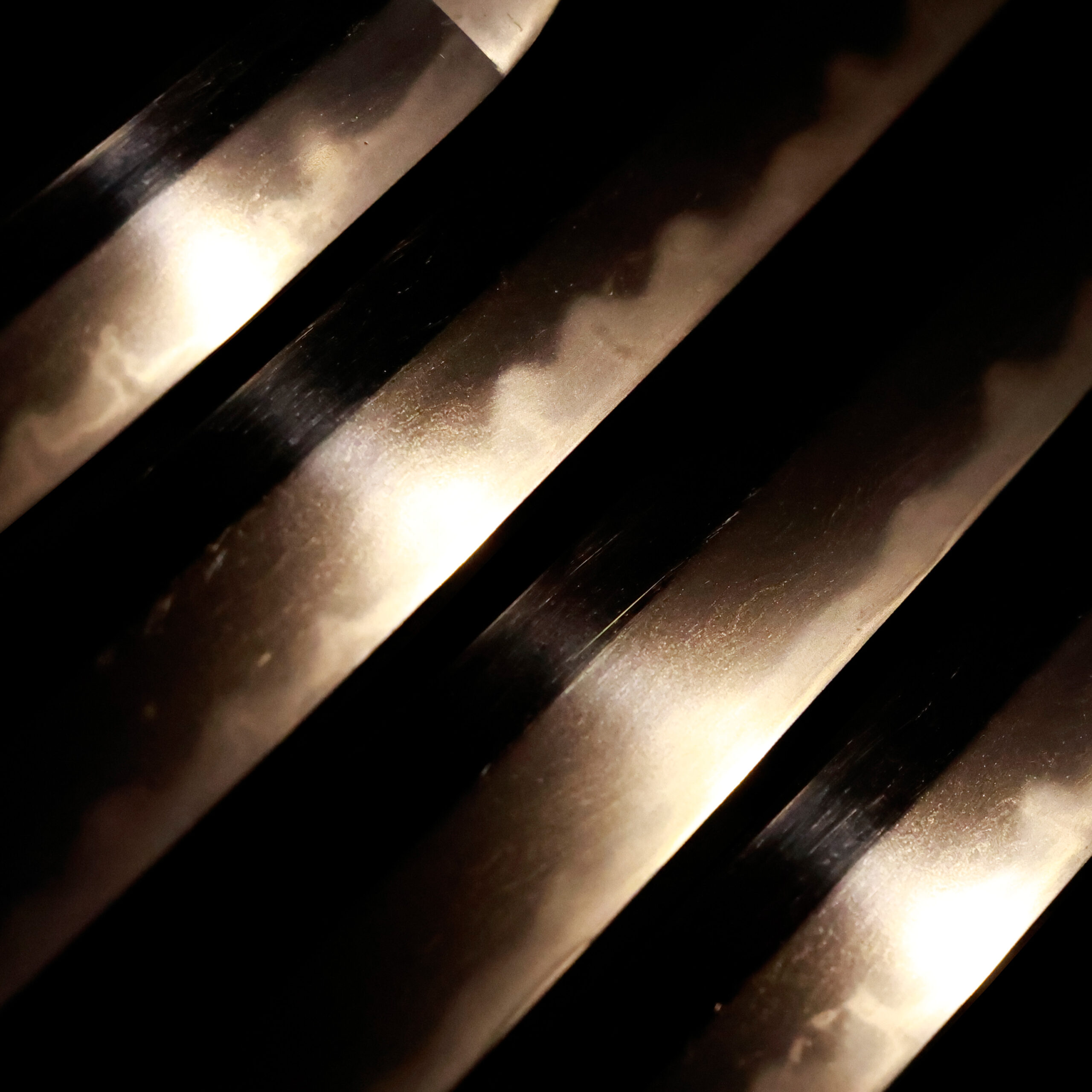
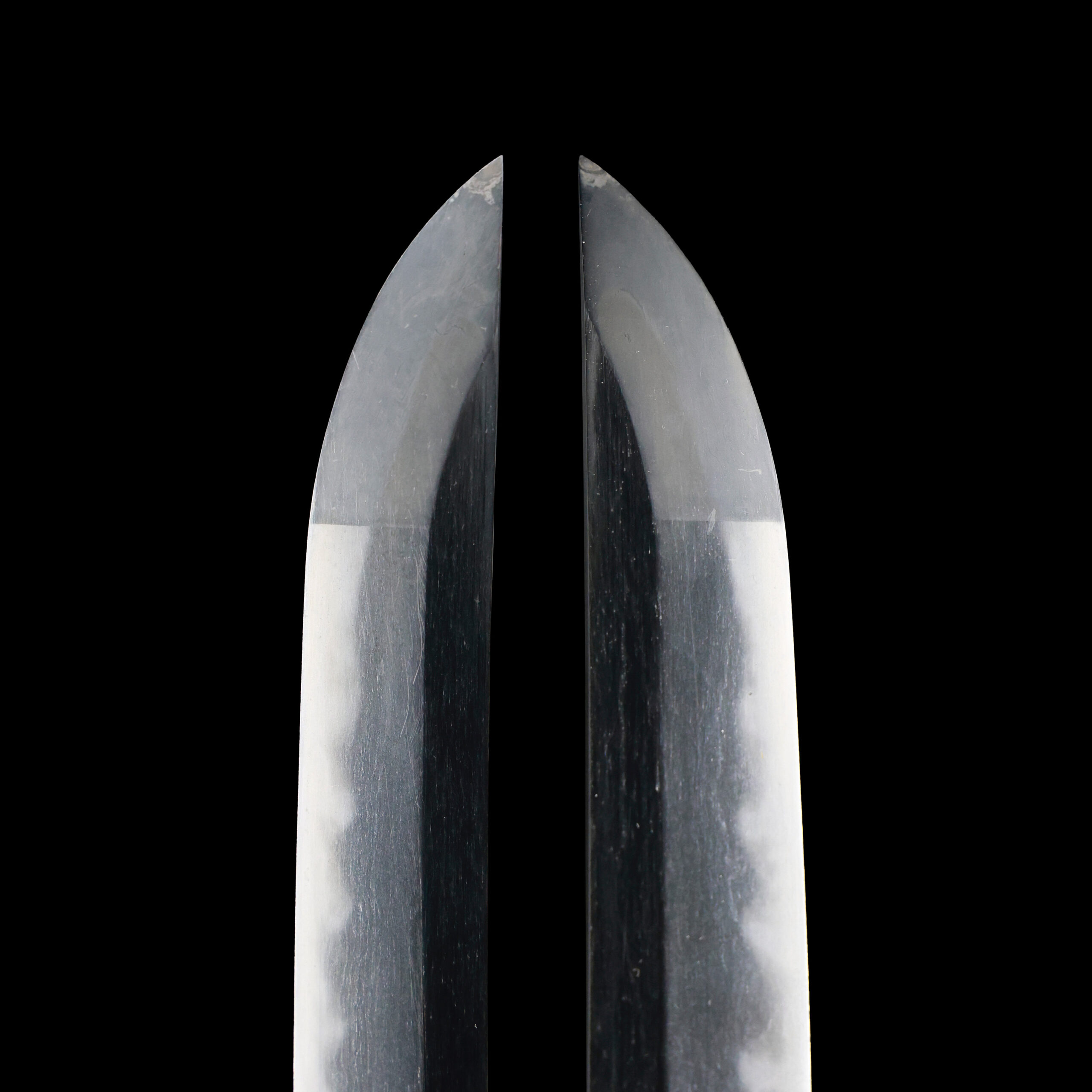
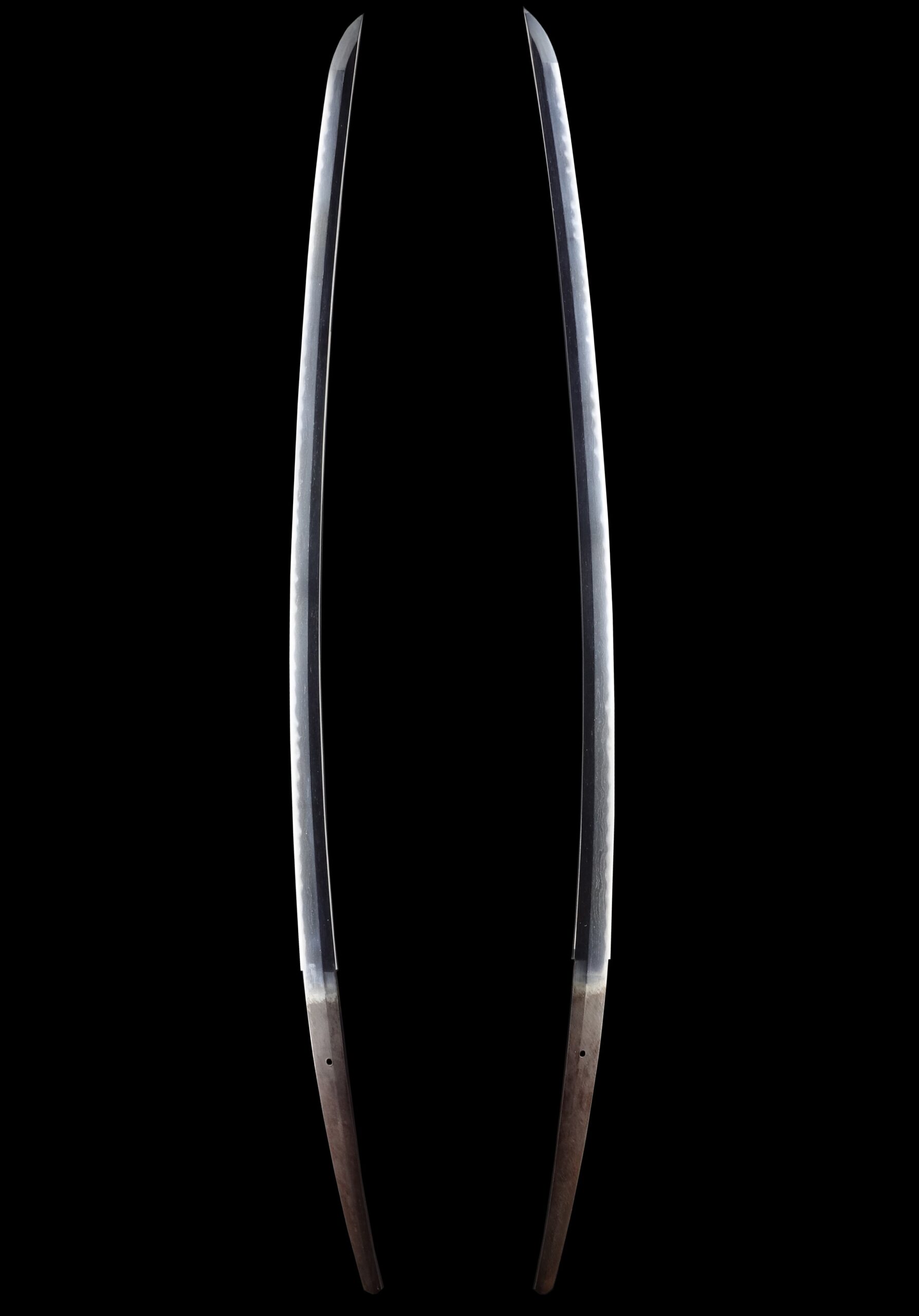
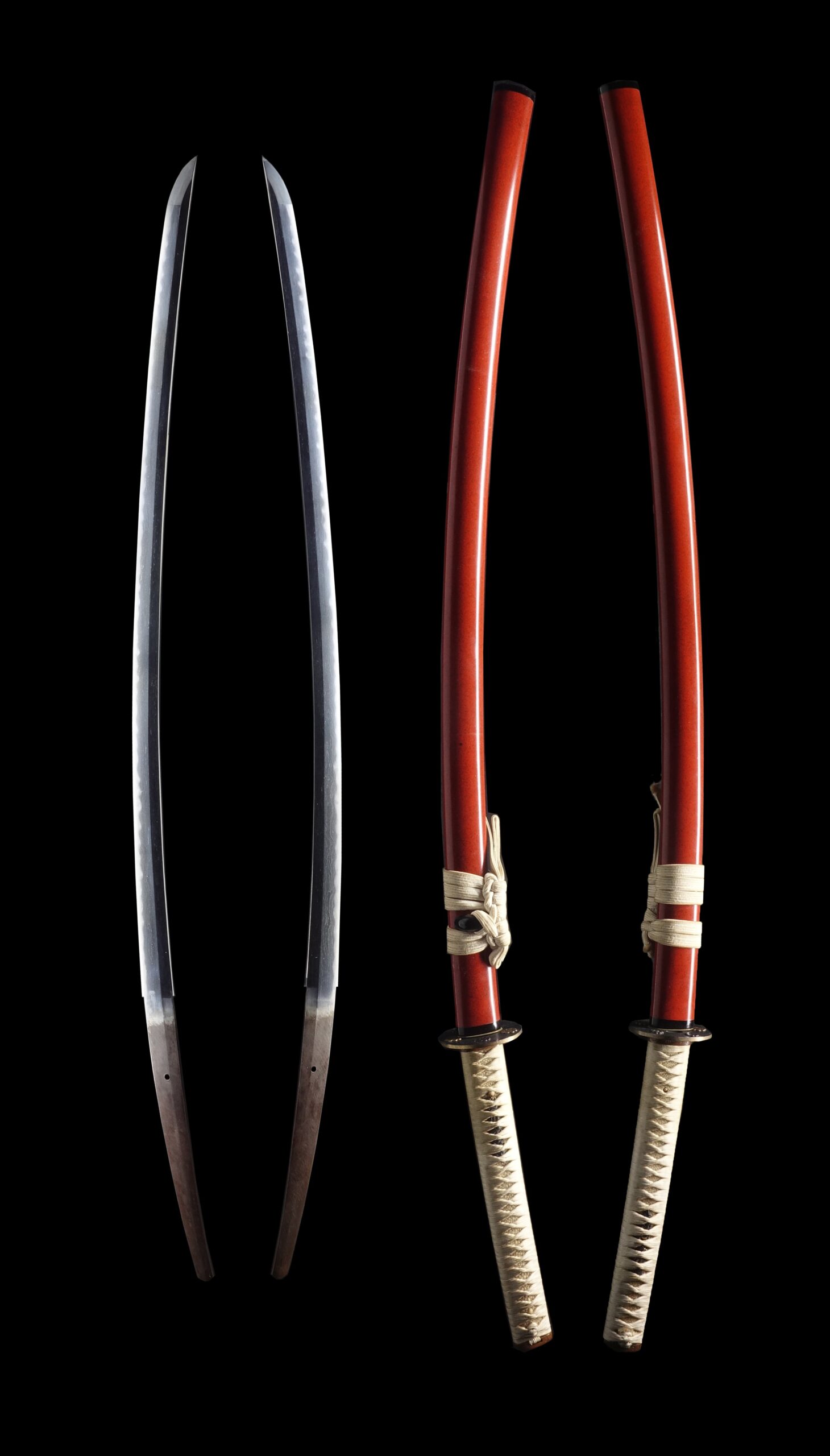
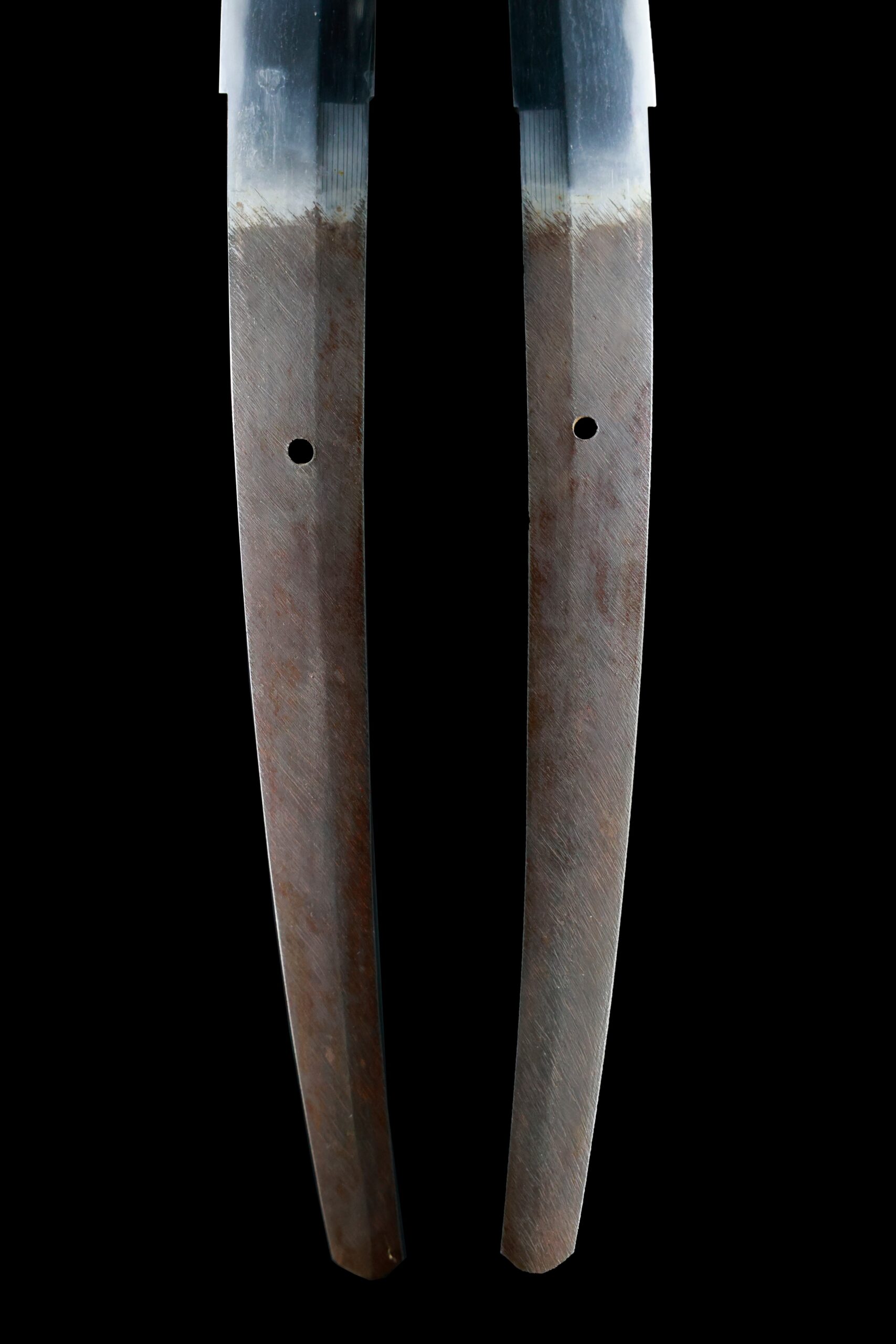
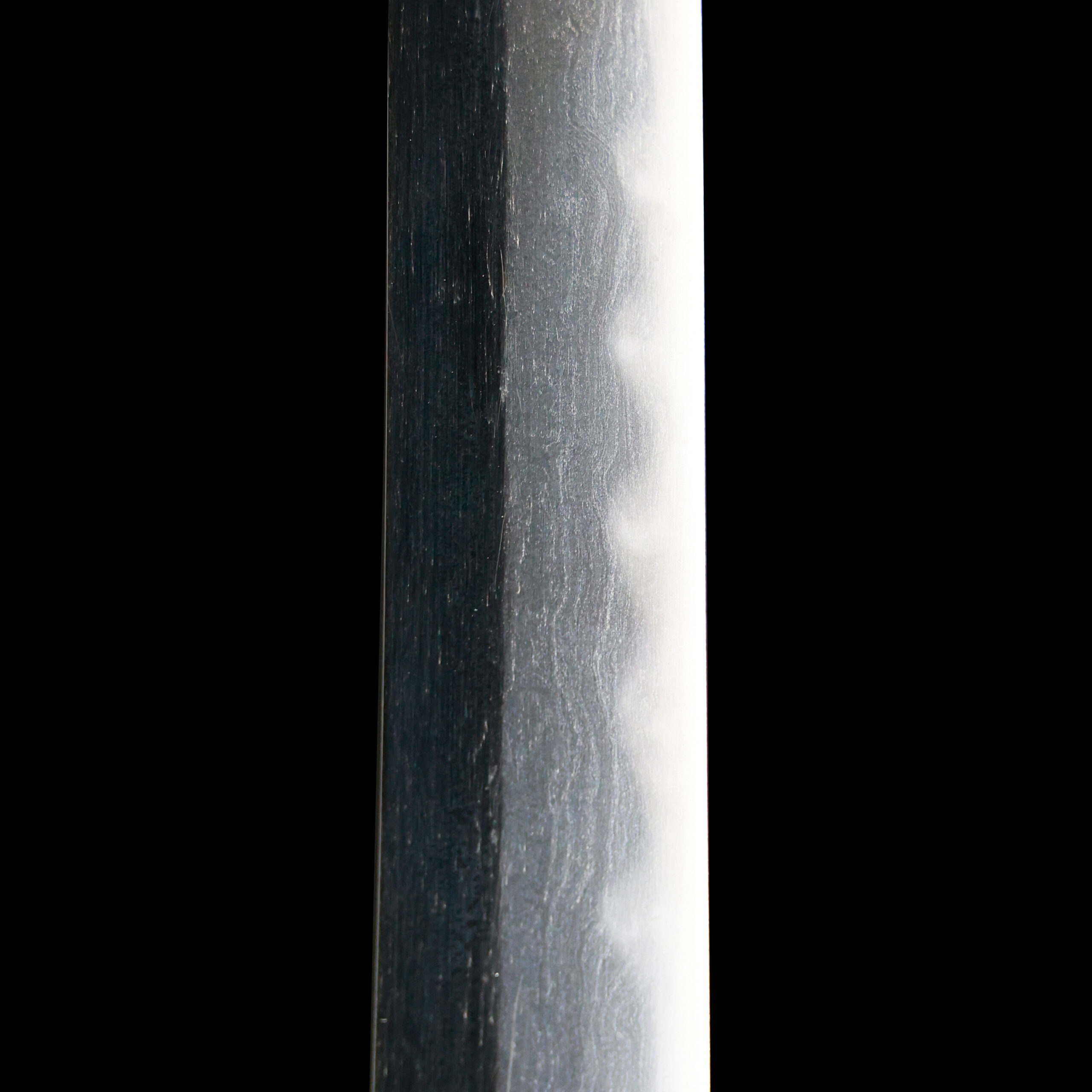
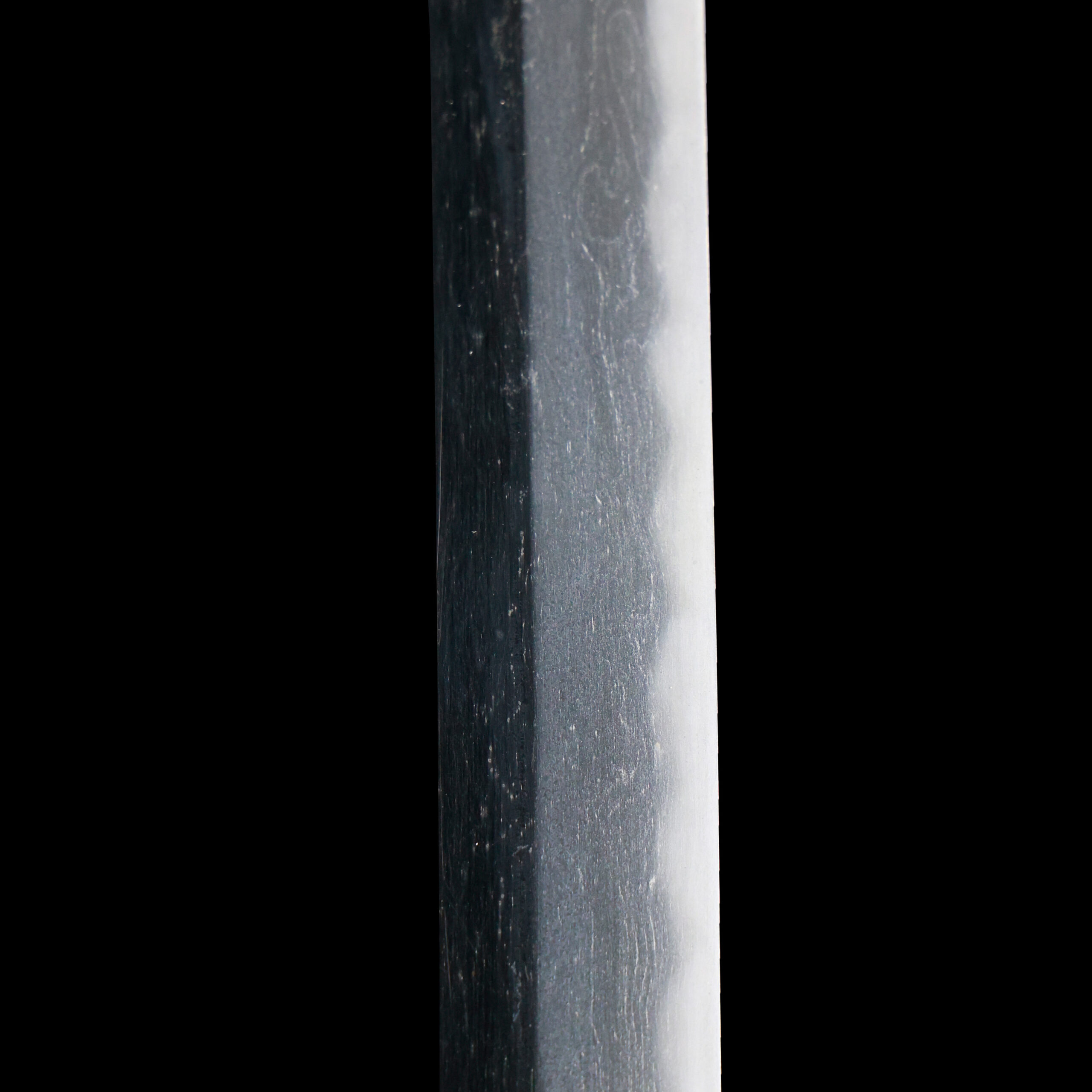
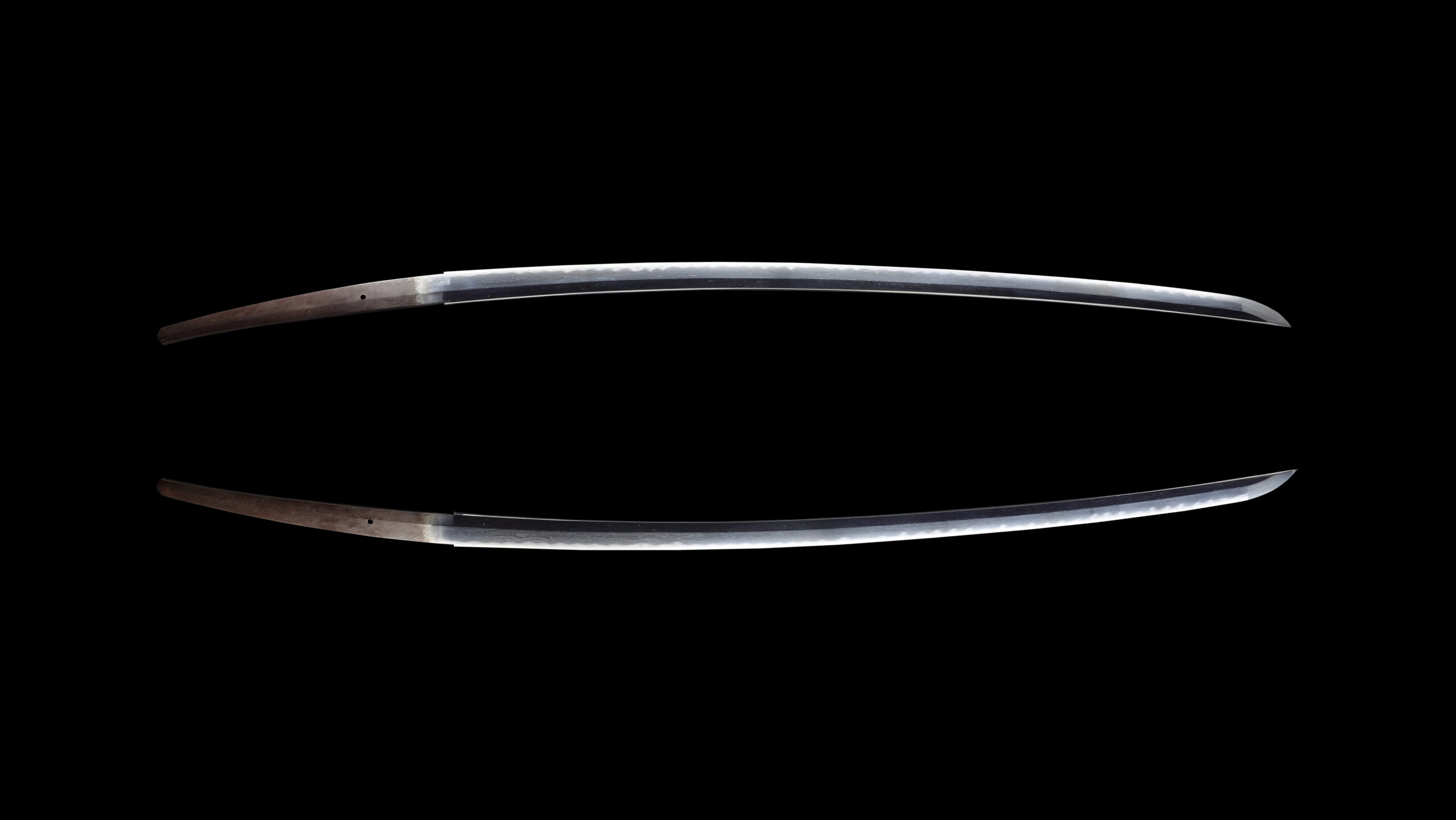
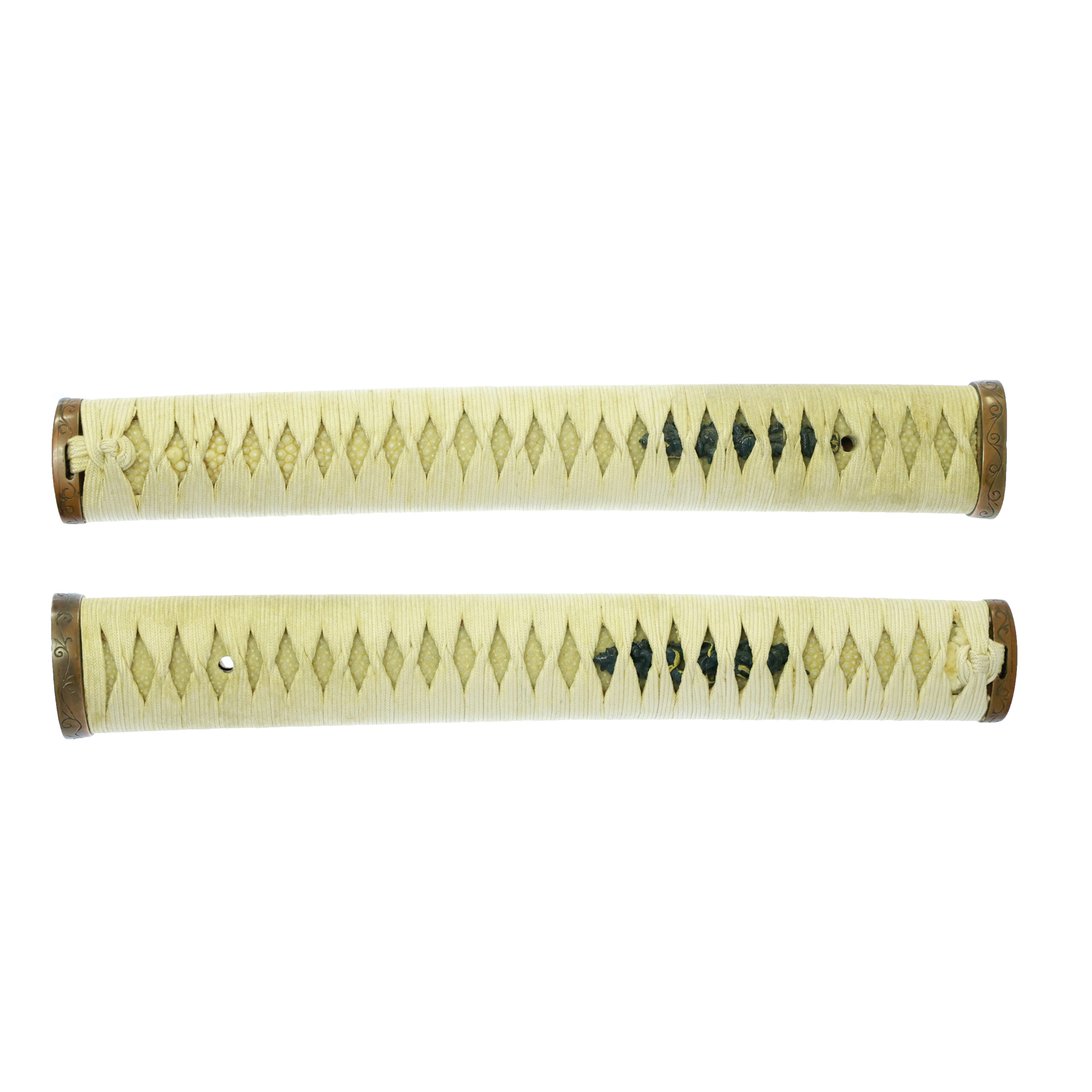
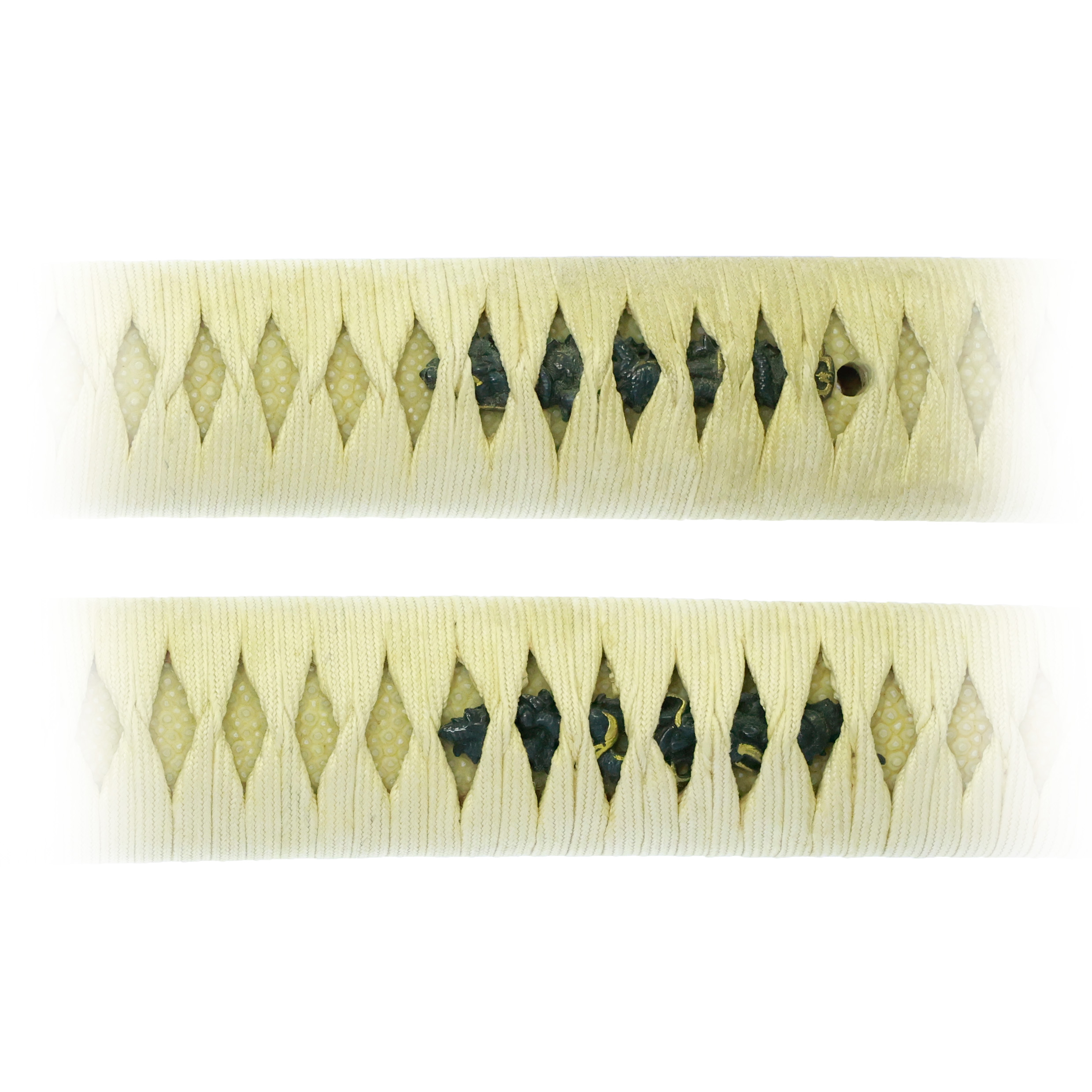
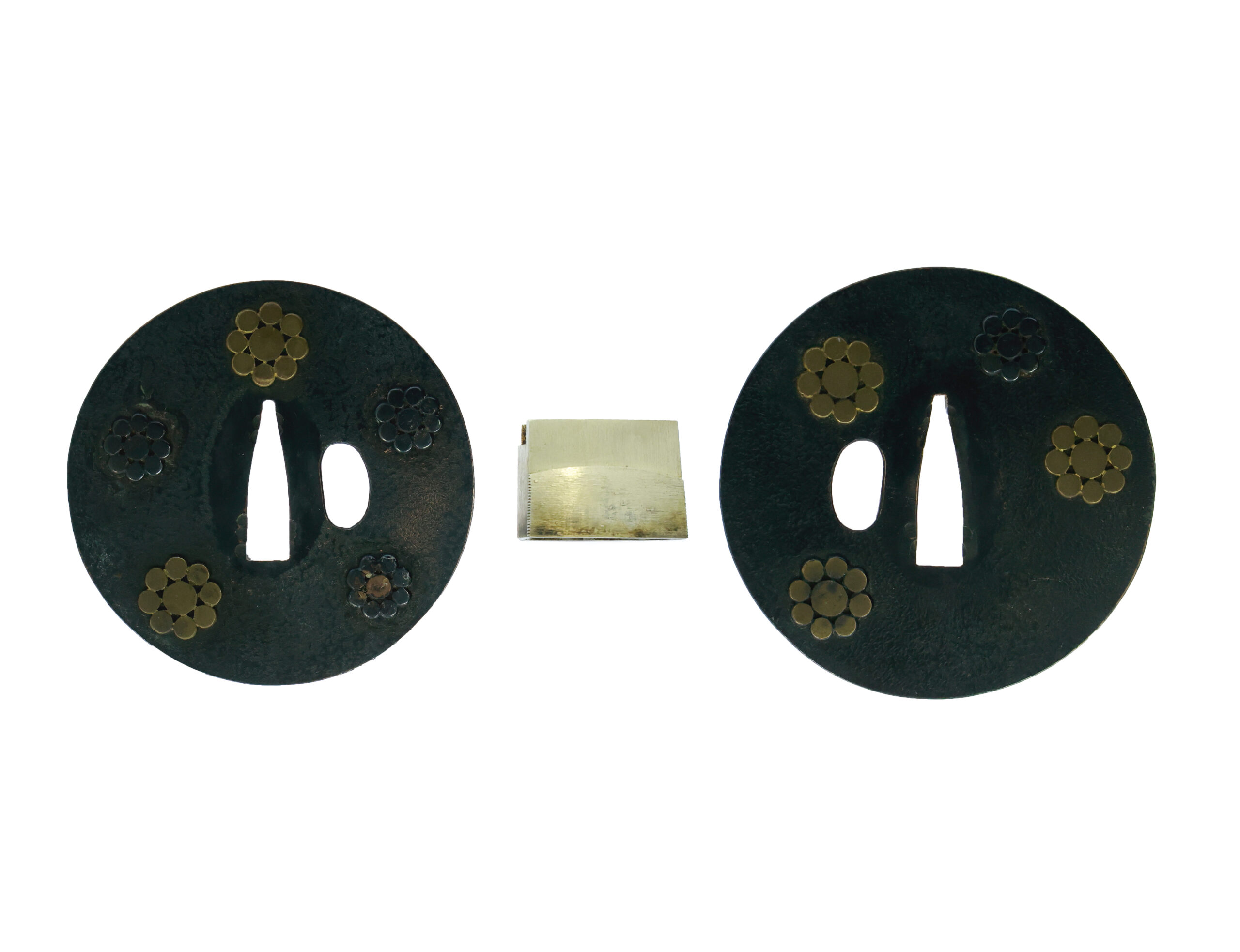
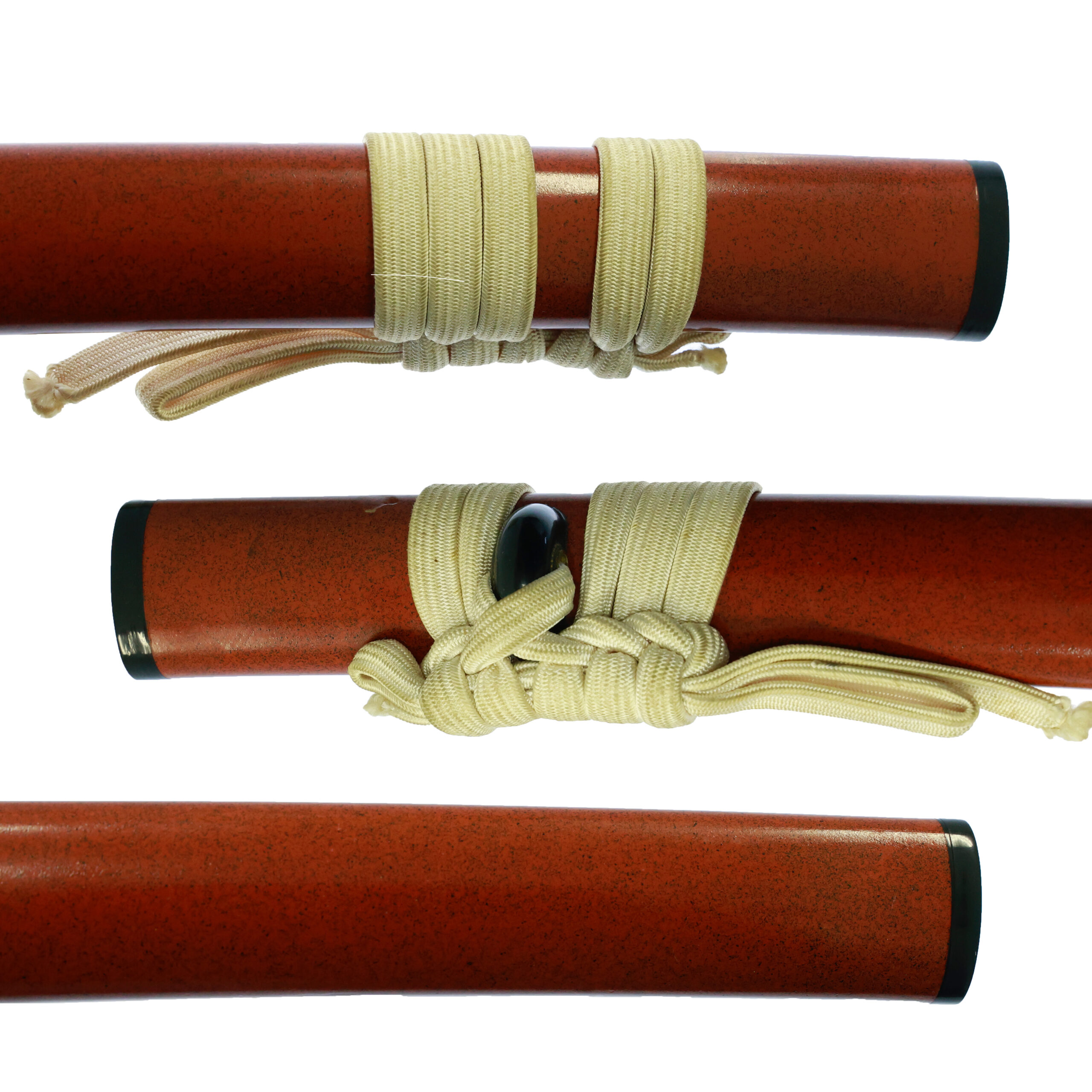
Summary This blade is attribute to Enryushi Kunihide (園龍子国秀), who was active during the Tenpo era (1831-1845: Late Edo period). He was an apprentice of Nakayama Ikkansai Yoshihiro (中山一貫斎義弘). Kunihide served Itakura clan who was the head of Annaka domain in Kozuke province (Today’s Gunma prefecture) as an Okakae Kaji, who exclusively forged swords for a specific domain or clan. One needed to be very skilled and acknowledged to gain this position. Enryushi is the title Kunide used in his career. He moved to Kamakura in Kanawa prefecture in his late career. He trained Tachibana Enryuji Yoshihide (立花円竜氏義秀), who was a grandson of Yoshihiro, his master. This indicates that Kunihide’s craftsmanship was highly regarded and trusted. According to available records, Ryoma Sakamoto, a famous figure at the end of the Edo period, ordered a sword from Kunihide. Background Japan enjoyed a relatively peaceful time from the early Edo period to the mid-Edo period(the 1600s-1760s) because of the stable economy and the powerful government run by Tokugawa Shogun. Samurai didn’t have many opportunities to utilize his Katana sword in public or on battlefields during this time. Thus, they carried their swords more as a symbol of their social status. The demand for weapons decreased accordingly compared to the previous Warring state period called Sengoku Jidai (1467-1600). However, toward the end of the Edo period(1764-1876), the Japanese sword’s role changed dramatically. With the poverty spreading in Japan, there were so many riots initiated by the civilians. Japanese sword started to play an essential role in maintaining public safety. Pressure from foreign countries to open Japanese borders also forced Samurai to order strong-looking swords to survive this tumultuous time. We believe many swordsmiths, including Kunihide, made great efforts to forged high-quality, practical blades for their masters to prepare for battles. There was a civil war between Tokugawa’s military government and the new Meiji government at the end of the Edo period. That means the original owner of this Katana might have seen the moment when Samurai’s life changed forever. This blade is appraised as a Hozon Touken (保存刀剣) issued by NBTHK (Nihon Bijutsu Touken Hozon Kyokai: 日本美術刀剣保存協会). *Please keep in mind that there are a couple of Kitae Kizu on the blade. Fuchi-Kashira The motif of this Fuchi-Kashira is Karakusa (唐草, Arabesque). It is a pattern in which stems and leaves of vines are twined and make curves. Since ivy has a strong vitality and grows up without interruption, people regarded this design as a symbol of prosperity and longevity. Vine is called Tsuru (蔓) in Japanese, and it has another pronunciation; “Man.” There is a word 万 (it is also read Man), which means ten thousand. In the Karakusa pattern, leaves and vines are connected like Obi (帯, belt). The word “帯” can also be read “Tai.” Due to its pronunciation, the term “代 (Tai)” is associated. From this word-association game, an idiom 万代 is associated, and it means a thousand generations. In other words, we could imagine that people used this design wishing prosperity and longevity for their clans for a long time. Tsuka and Menuki The Menuki features a dragon, a powerful and revered symbol in Japanese culture. In Japan, dragons are often associated with water and rainfall, signifying their role as guardians of rivers, seas, and skies. They are seen as benevolent creatures that bring prosperity, good fortune, and protection. Additionally, the dragon is a symbol of strength, wisdom, and authority, embodying a mystical power that transcends human limitations. As a mythical creature deeply rooted in Japanese folklore and traditions, the dragon is often considered an auspicious emblem that wards off evil and ensures harmony. Tsuba and Habaki The motif of this Tsuba is the Hachiyō (八曜, Eight Luminaries) family crest. This design represents seven stars revolving around a central star, symbolizing devotion to Myōken Bosatsu (妙見菩薩, one of the dieties of Buddhism). It was the family crest of the Maita clan (蒔田氏), a branch of the Fujiwara clan(藤原氏). Originally aristocrats, the Maita clan later became Samurai and, after the Meiji era, were elevated to the status of Kazoku (華族, nobility), receiving the title of viscount from the emperor. The side of this Tsuba also features Tsuschime (槌目, Hammered pattern). This pattern is created by striking the metal with a hammer, forming small indentations that reduce light reflection and give the surface a unique texture, different from the natural shine of the metal. When this technique is applied to weapons, as seen in this Tsuba, it may have also served the purpose of improving grip and making it less slippery. Saya While its overall condition of this Saya is great, there are a couple of tiny area where lacquer comes off, which is natural for lacquered items of this age. Authentication Paper They authenticated the blade on Feb 21th in the 6th year of Reiwa (2024). They appraised it as Hozon Touken, the blade worth preserving for Japanese society.

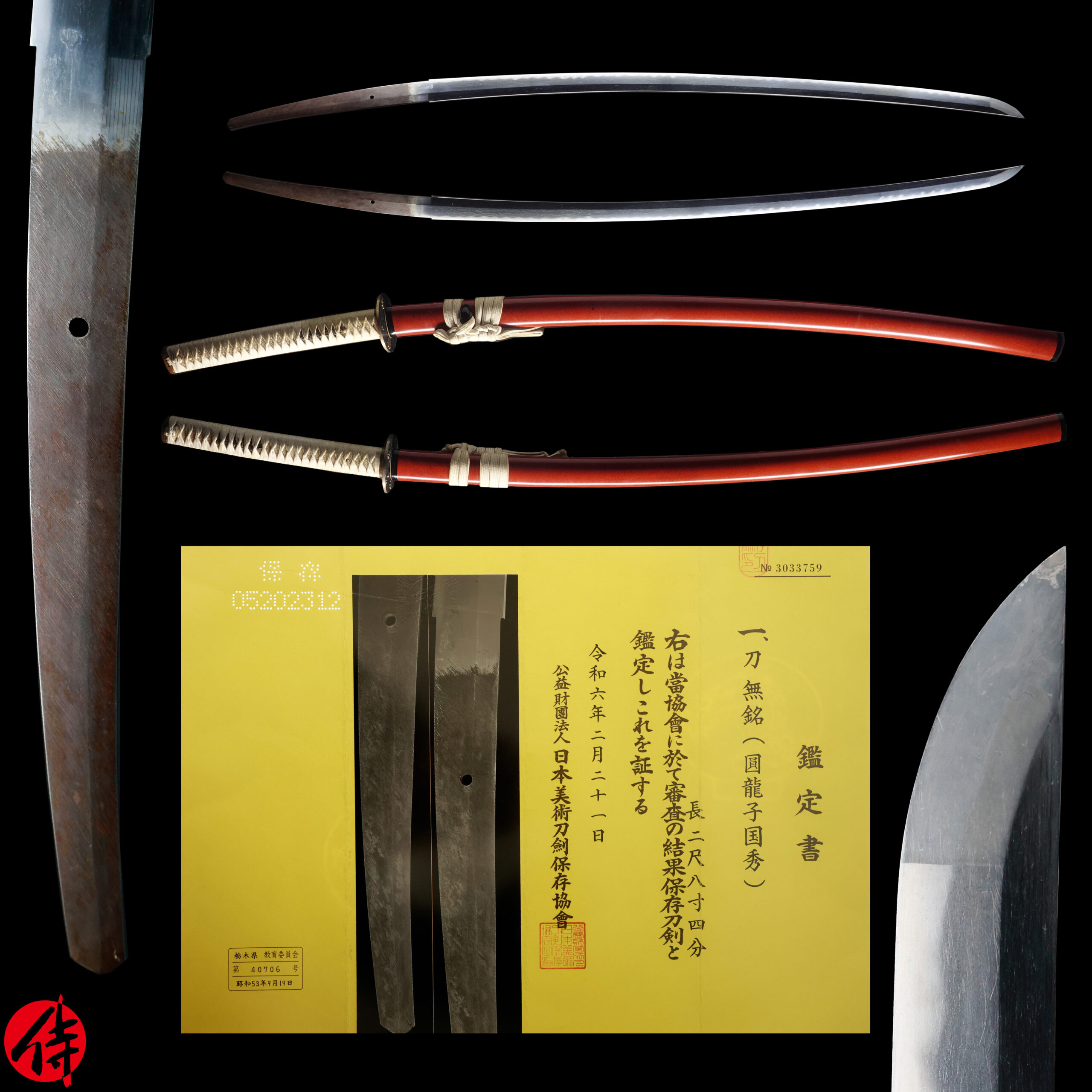
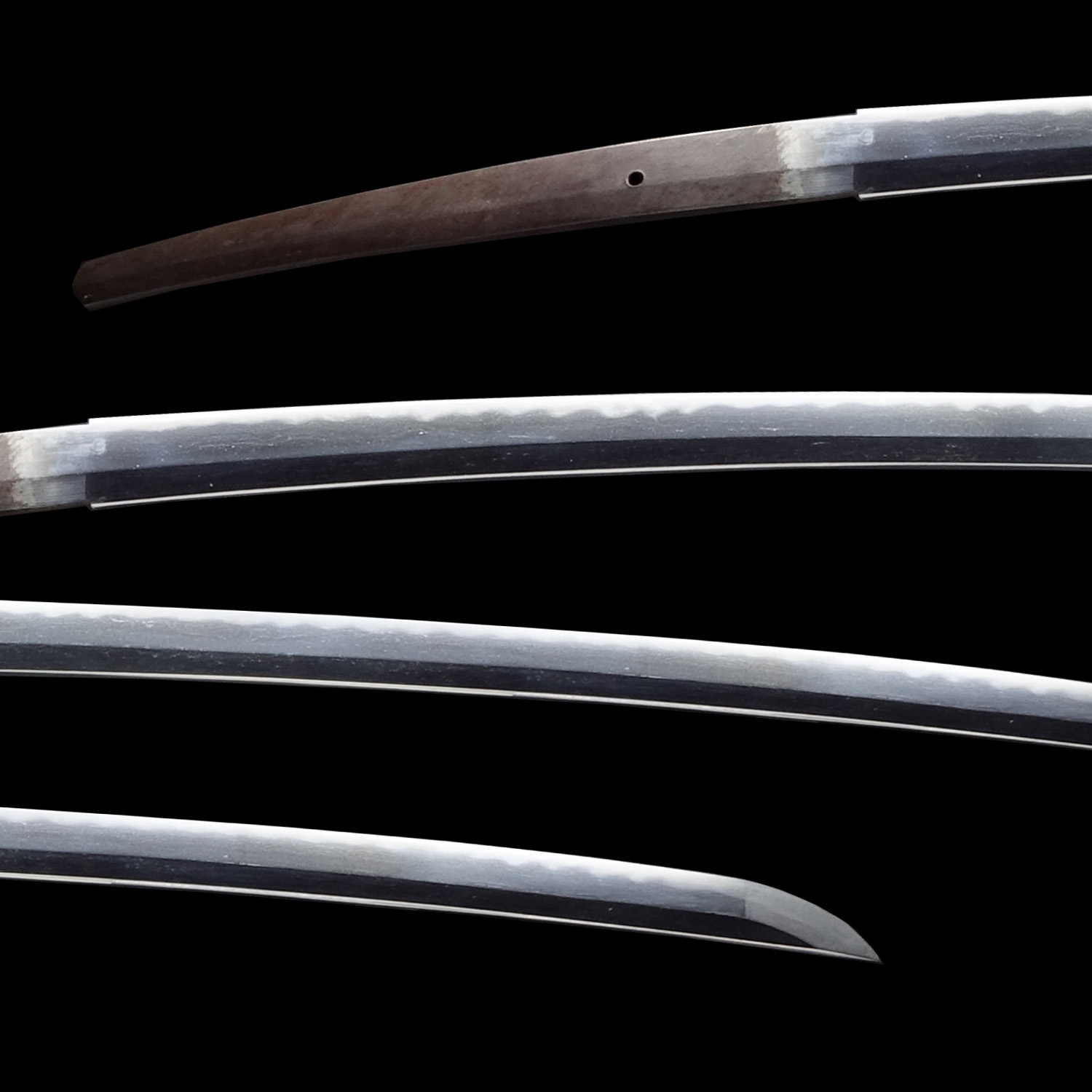
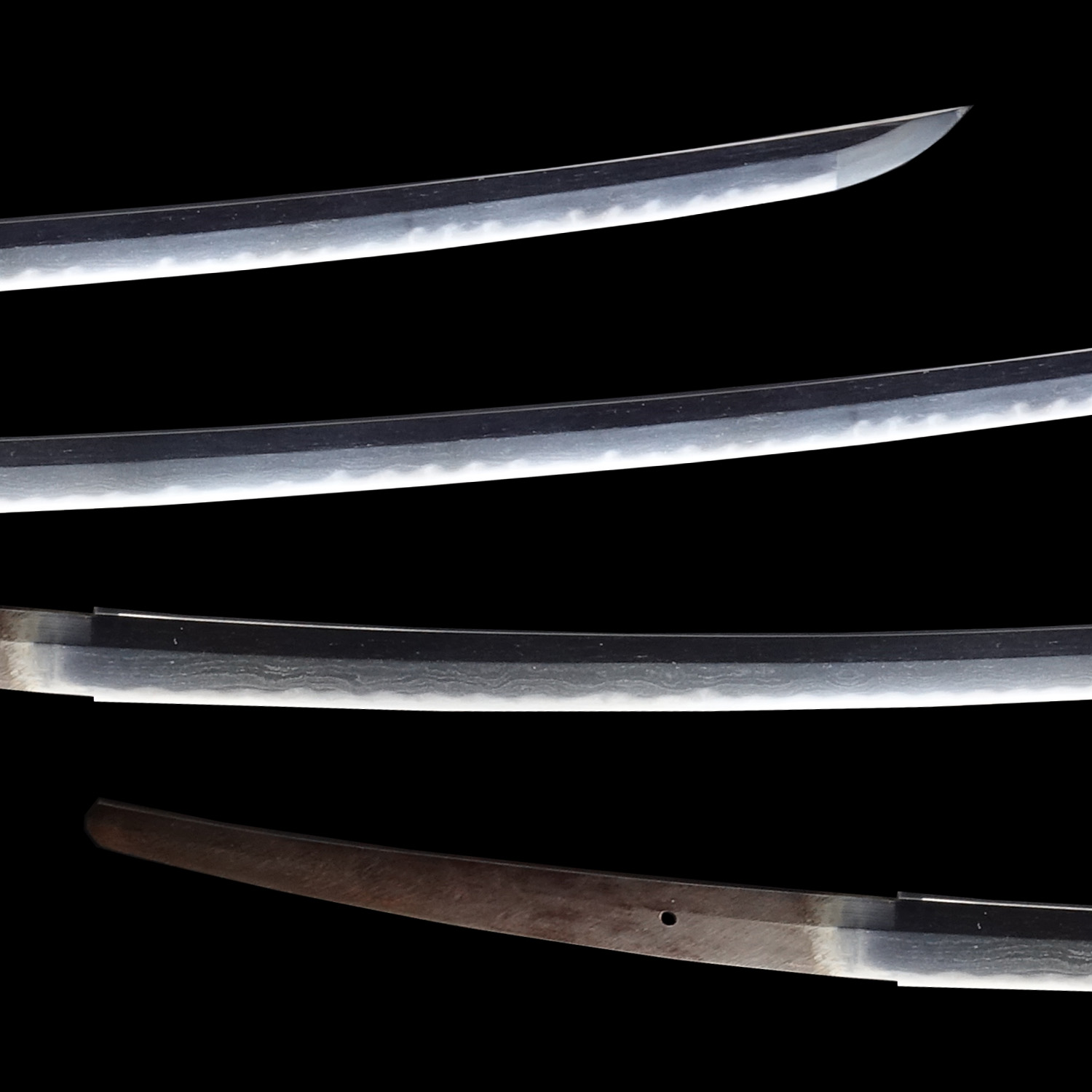
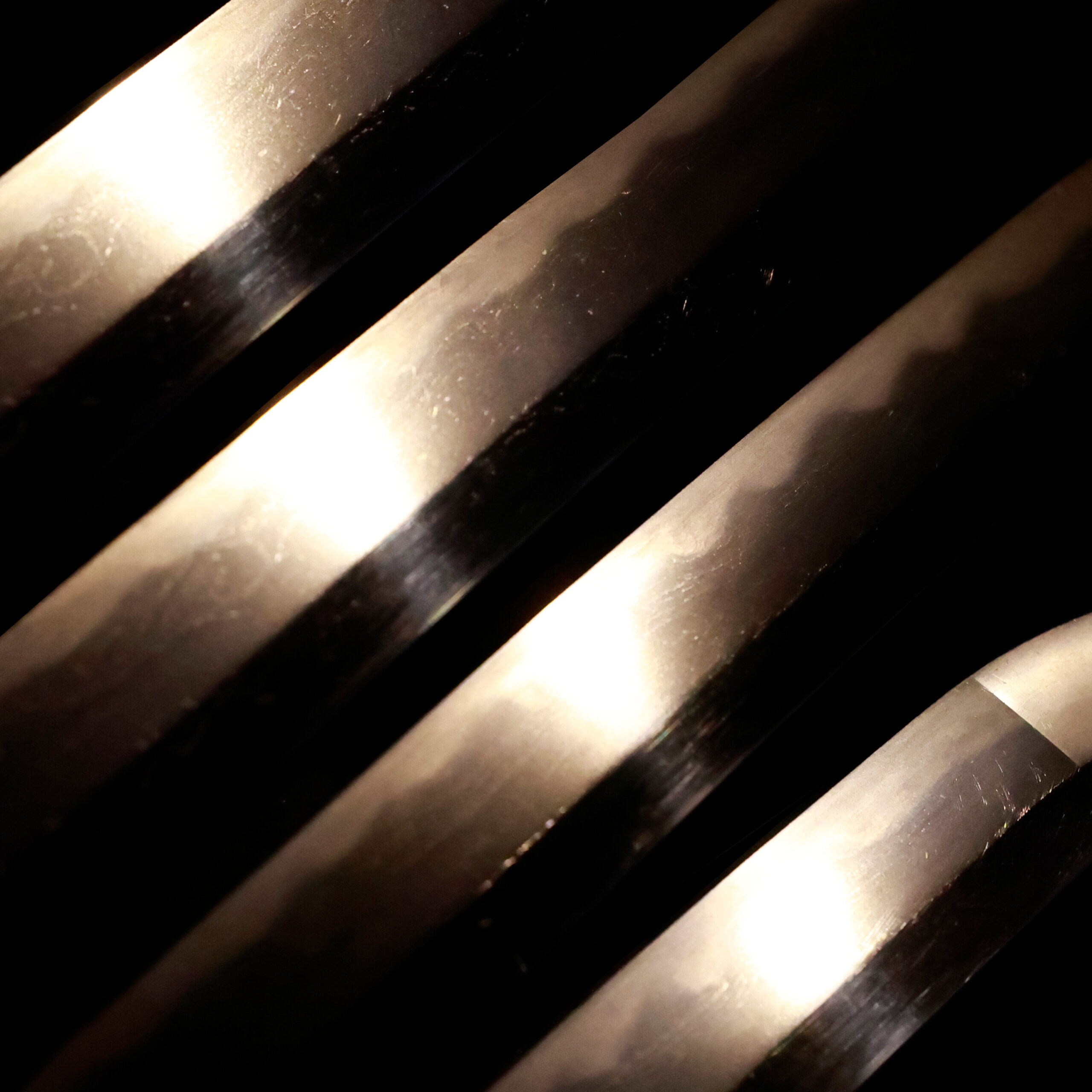
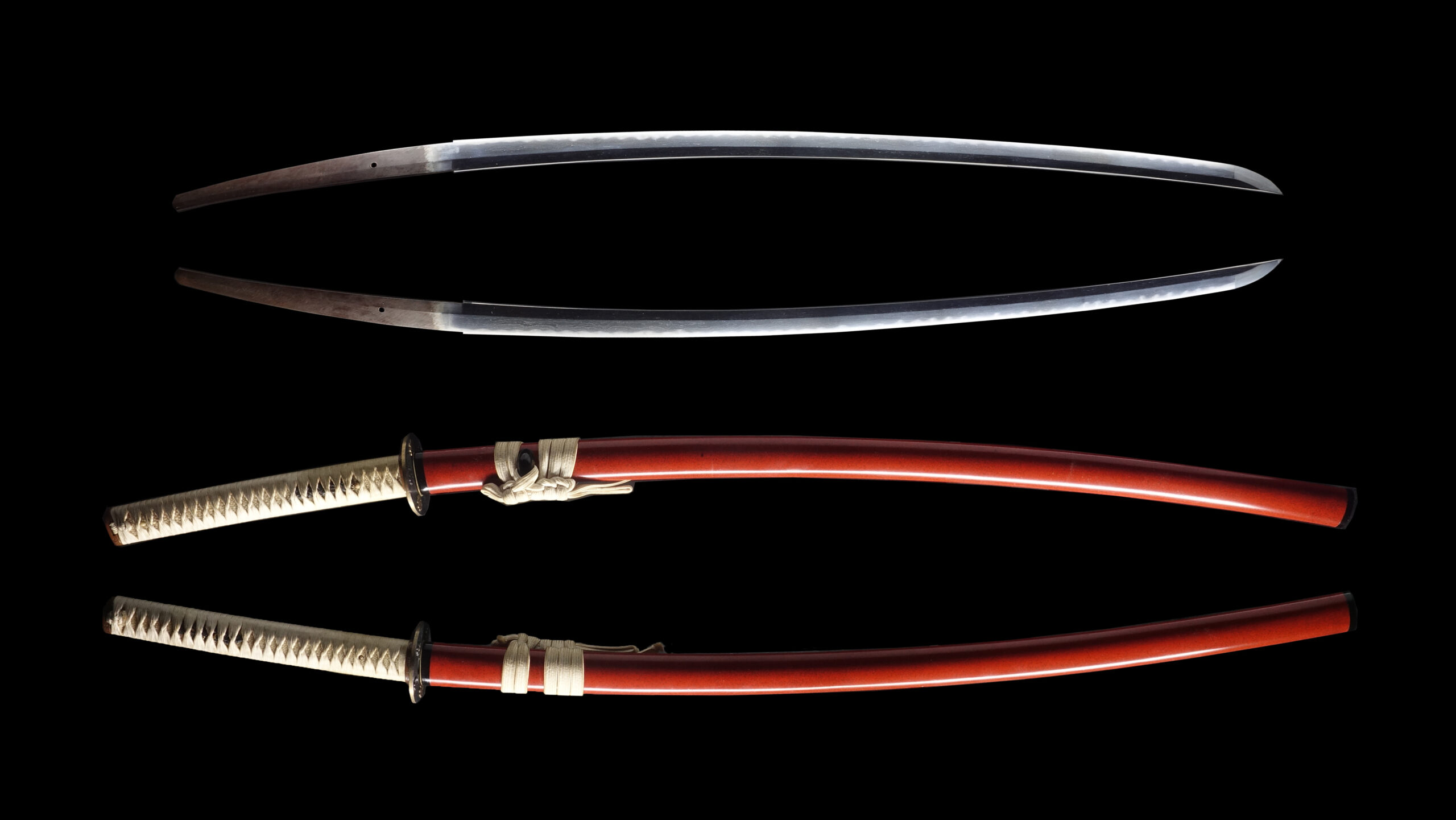
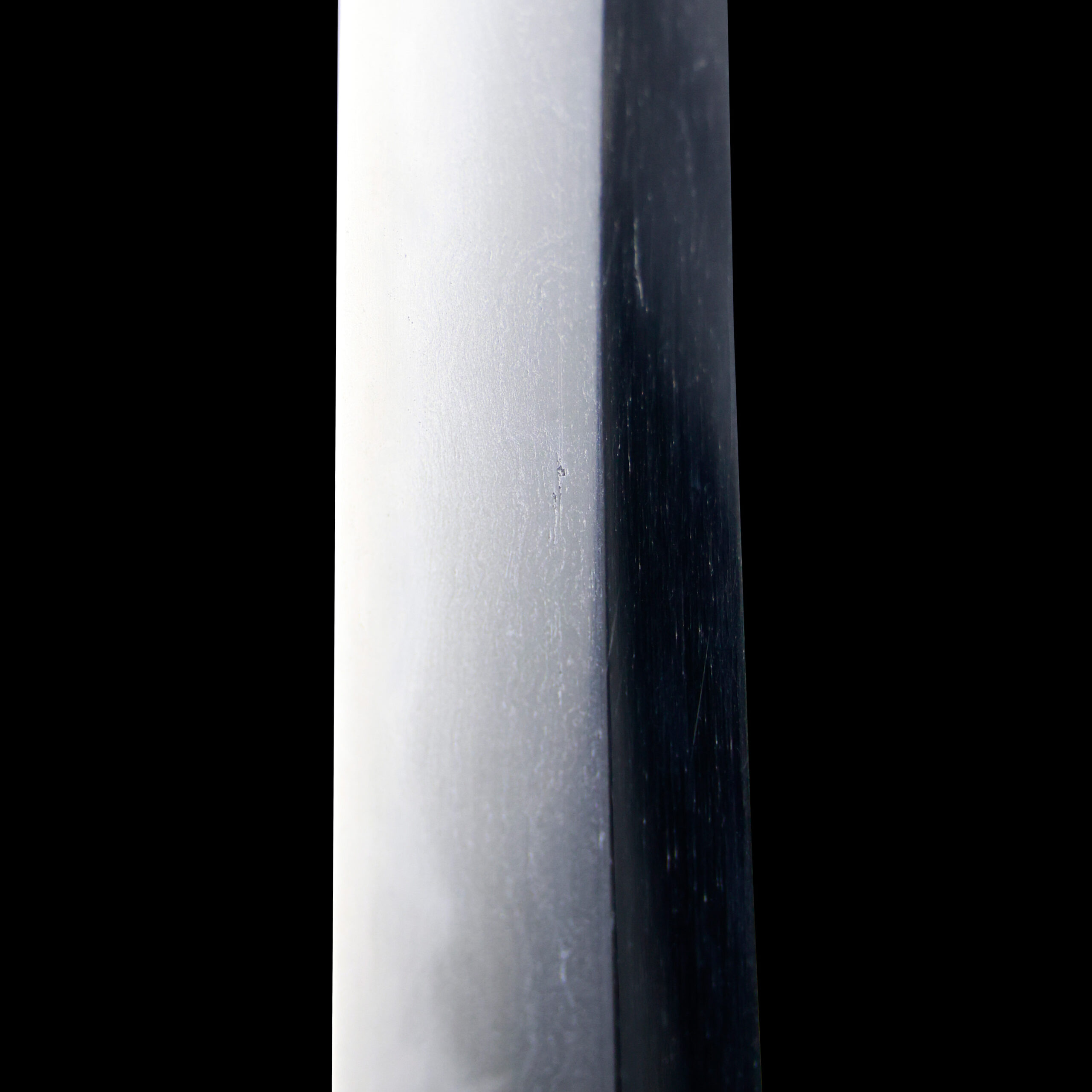
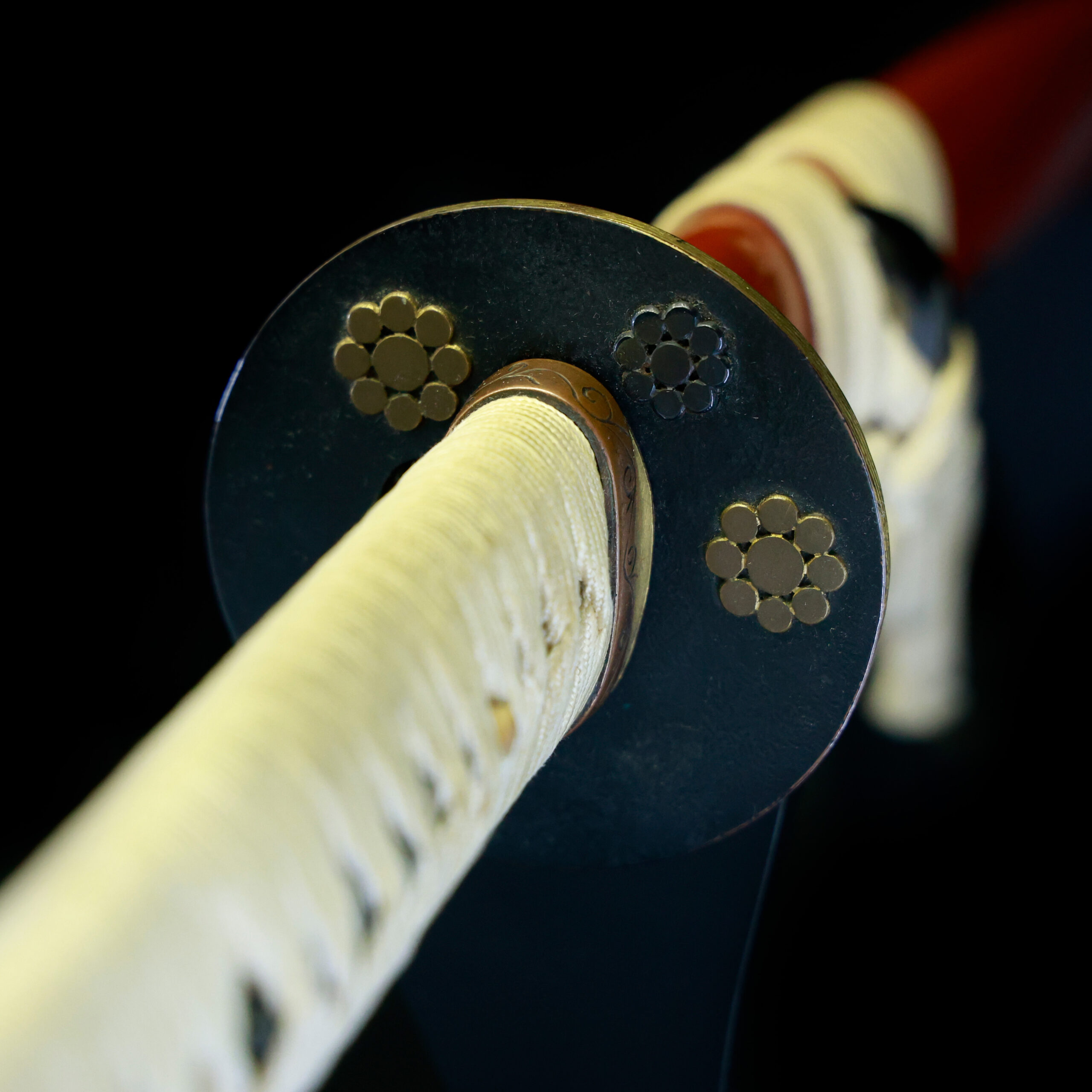
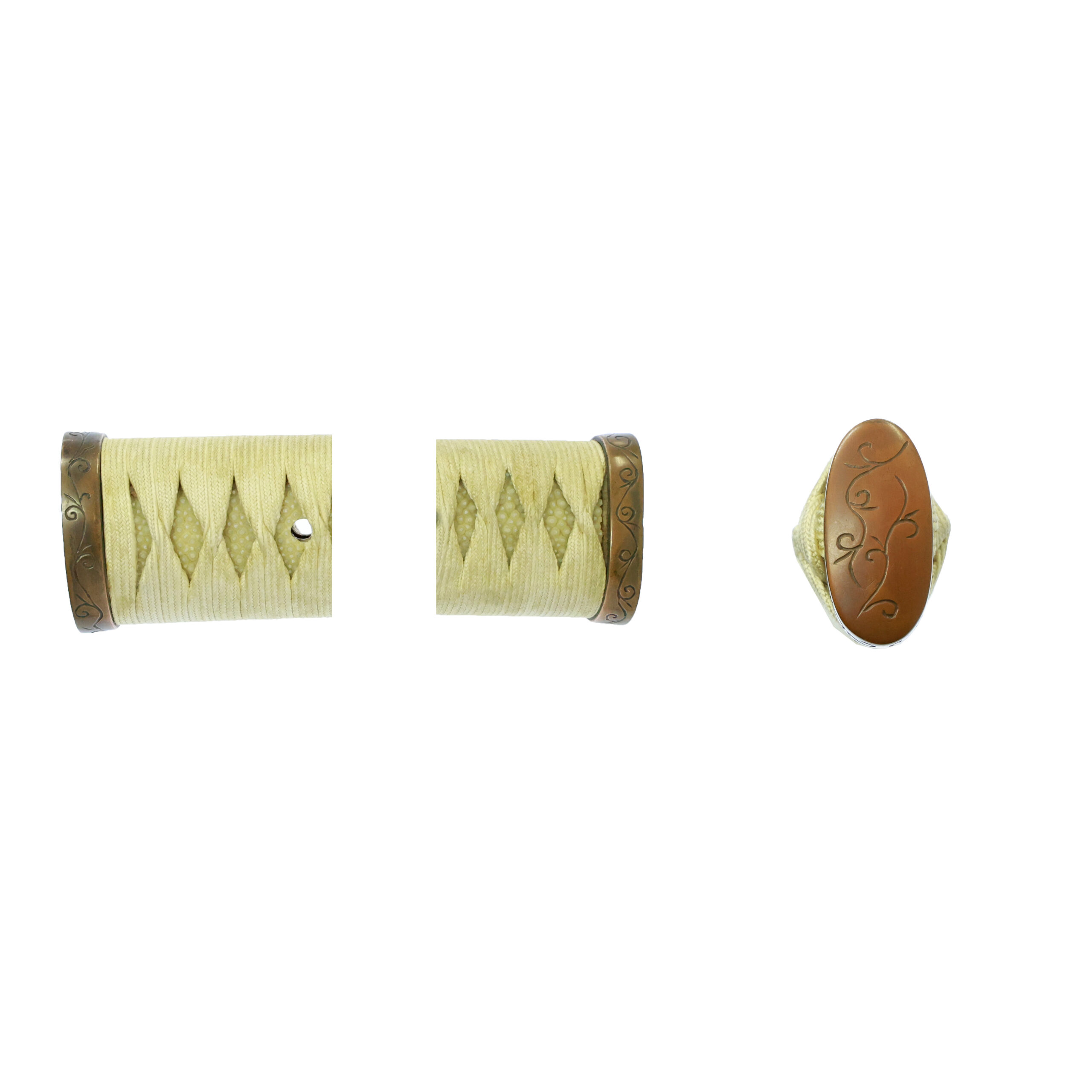
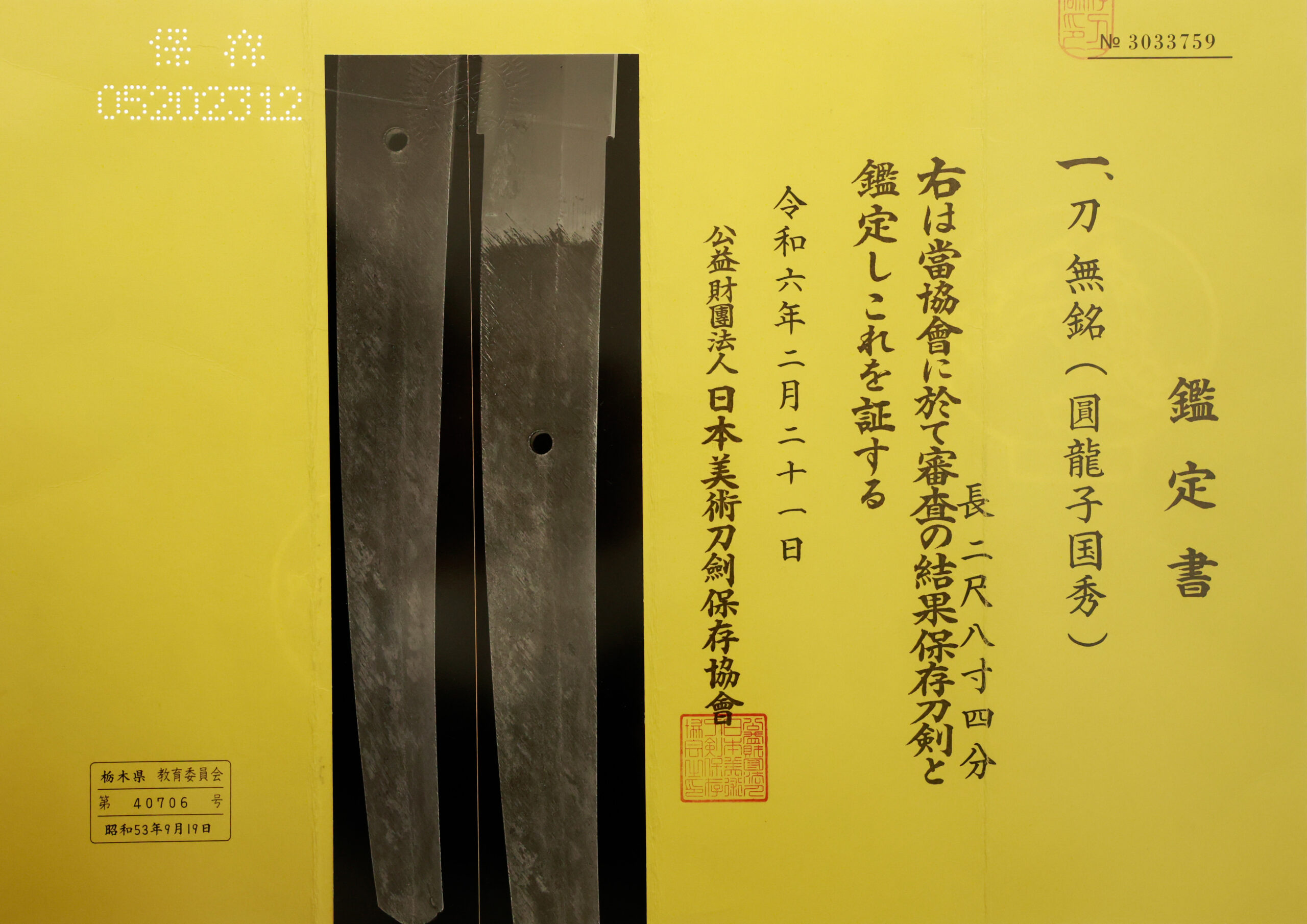
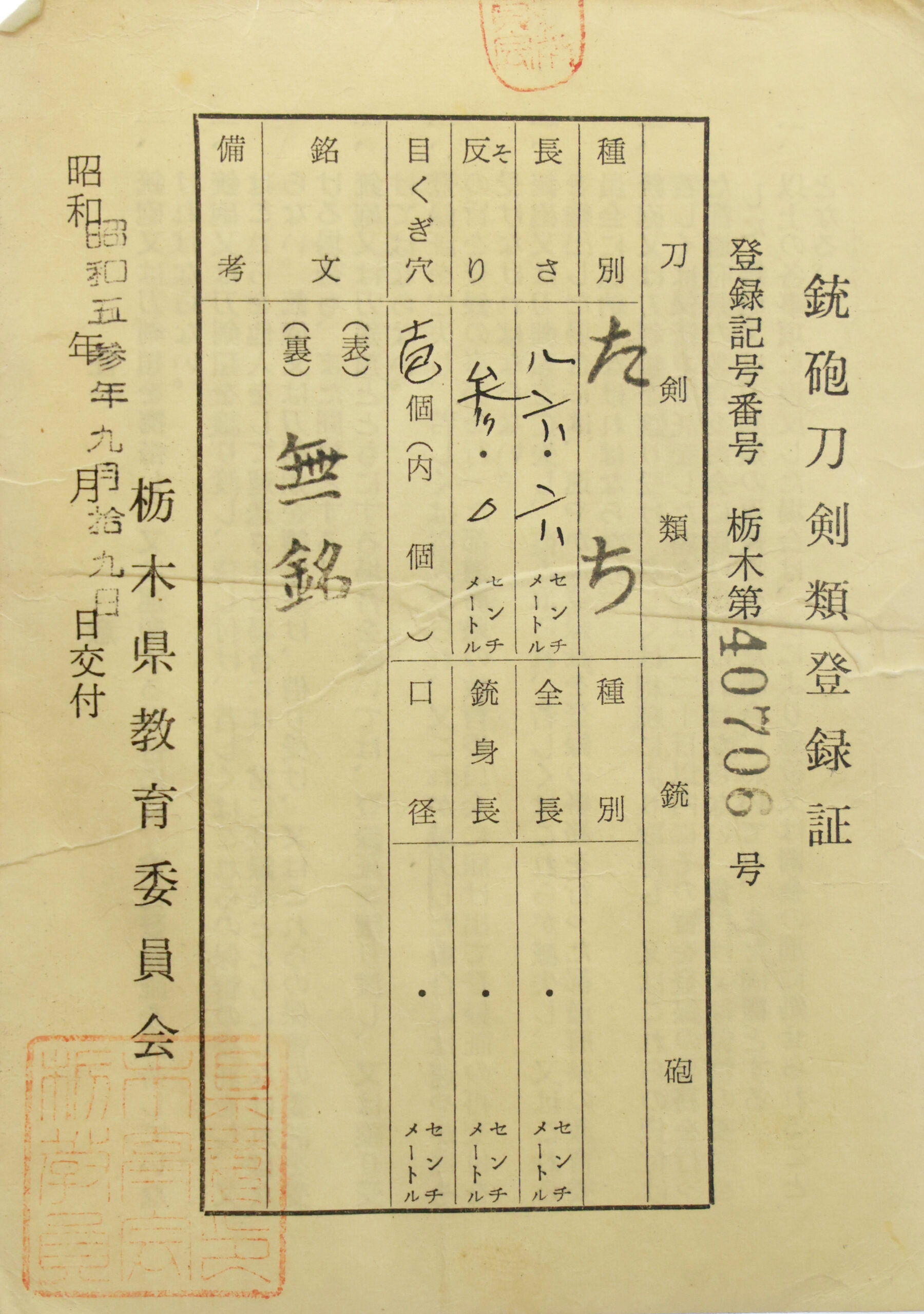
販売店の記載のまま
上野 · 1830-1844頃
刀剣大鑑 上位91%
現在5点販売中
江戸時代
江戸は刀の目利きの時代である。本阿弥の鑑定、1719年の享保名物帳、盛んな刀剣書が、戦で抜かれることのなくなった刀を学問の対象へと変えていった。
銘が正しい、または無銘でも年代・国・系統を確実に指摘できる、保存に値する真正の作と鑑定されたものです。
日本美術刀剣保存協会(日刀保)は、1948年に設立され、文化庁の監督を受ける公益財団法人で、東京・刀剣博物館に本部を置きます。専門の審査員が出品作を直接審査し、美術的・歴史的価値に応じた鑑定書を発行します。日刀保の鑑定書は、日本刀および刀装具の真正性を示す最も広く認知された基準です。
日刀保公式サイトReturns/exchanges limited to defects caused by shipping (except willful misconduct or gross negligence by the company); customers must contact within 72 hours of receiving the product.