江戸は刀の目利きの時代である。本阿弥の鑑定、1719年の享保名物帳、盛んな刀剣書が、戦で抜かれることのなくなった刀を学問の対象へと変えていった。
 NihontoWatchNihontoWatch
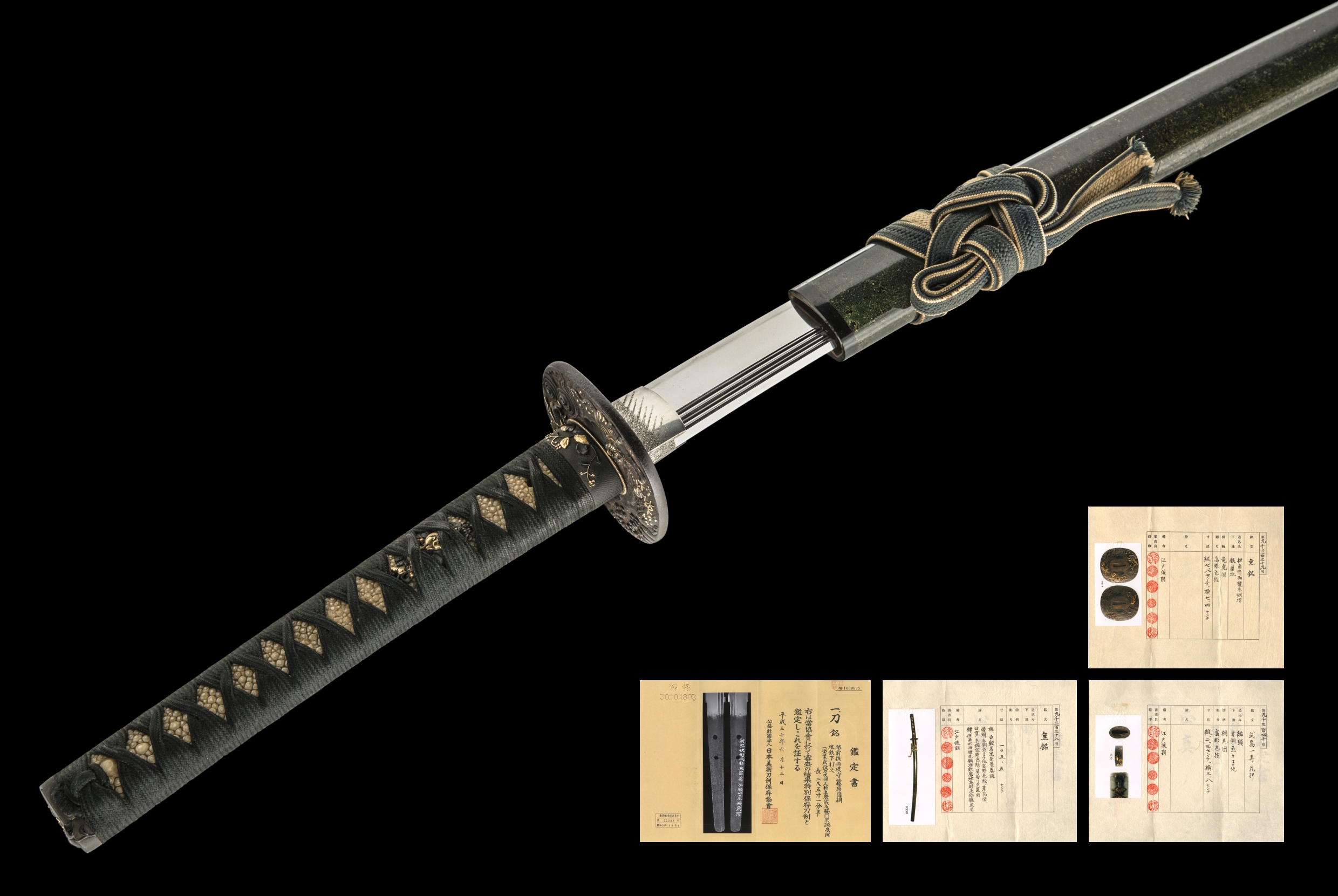
Skip to content ITEM# UJKA304 – Catalogue 30 – Sold A Kunitsuna Tameshigiri Katana (越前住相模守藤原国綱) This is one of the most historically charged katana to pass through Unique Japan. Forged by the first generation Kunitsuna of the Echizen-Shimosaka school during the Keian era (1648-1652) – the height of his artistic output – the blade carries a gold-inlaid kinzogan-mei documenting a live cutting test of exceptional rarity. The inscription records that a tester named Sen’a severed through the standing body of a convicted criminal via the tachi-kesa cut (diagonally across the body), followed by the wakige cut (horizontally across the upper torso) – both in single strokes. That such a test is recorded in gold on the nakago speaks to the profound confidence both smith and owner placed in this blade. Kunitsuna also had the sword’s steel noted directly on the nakago: the inscription jigane oroshi kore o utsu declares that the blade was forged from oroshigane – steel prepared by the swordsmith himself in a small-scale tatara , blending pieces of tamahagane and other steels to precise specification. This was a mark of pride and mastery rarely proclaimed so openly. The blade is long and generously curved, characteristic of work from the Keian era before the flatter Kanbun shape took hold, with twin full-length parallel grooves ( futatsuji-bi ) adding both visual distinction and structural lightness. The dark jigane is typical of Echizen work, with a mixed itame-hada and masame-hada grain and shirake utsuri visible in areas of the blade. The hamon is based on suguha with weaving notare and ko-gunome , with tooth-like ashi extending into the temper line. The koshirae is a Late Edo uchigatana-koshirae with a saya lacquered in the rare Tsugaru-nuri technique – a charismatic green-on-black lacquer originating from Aomori prefecture in the 17th century. The iron tsuba is attributed to Edo Tsuchiya Masachika and depicts a roaring tiger and snarling dragon in gold-inlaid relief, with the
NihontoWatch取扱店 Unique Japan
越前 · 1648-1652頃
藤代 中上作 · 刀剣大鑑 上位76%
現在1点販売中
江戸時代
江戸は刀の目利きの時代である。本阿弥の鑑定、1719年の享保名物帳、盛んな刀剣書が、戦で抜かれることのなくなった刀を学問の対象へと変えていった。
保存刀剣のうち、出来が一層優れ、保存状態も良好と認められたものです。再刃や、室町・江戸期の多くの無銘作は対象外となり、保存刀剣より高い基準が課されます。
日本美術刀剣保存協会(NBTHK)は、1948年に設立され、文化庁の監督を受ける公益財団法人で、東京・刀剣博物館に本部を置きます。専門の審査員が出品作を直接審査し、美術的・歴史的価値に応じた鑑定書を発行します。NBTHKの鑑定書は、日本刀および刀装具の真正性を示す最も広く認知された基準です。
NBTHK公式サイトAll swords come with a three-day inspection period beginning from the date of delivery. If not satisfied, the sword may be returned within this period for a full refund of the purchase price. Outside of this period, all sales are final. Swords purchased on a layaway payment plan are not eligible for the three-day inspection period.