 NihontoWatchNihontoWatch
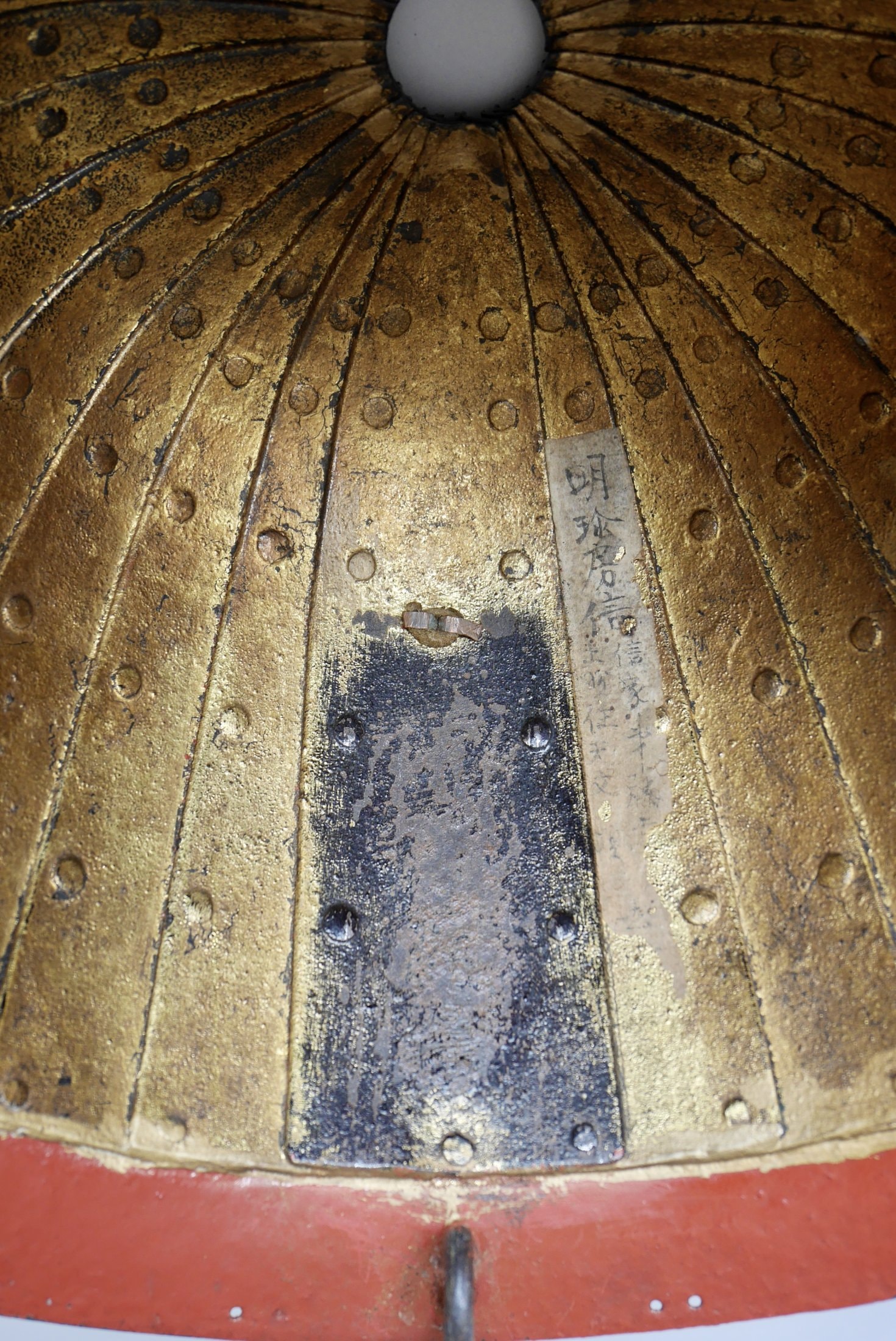
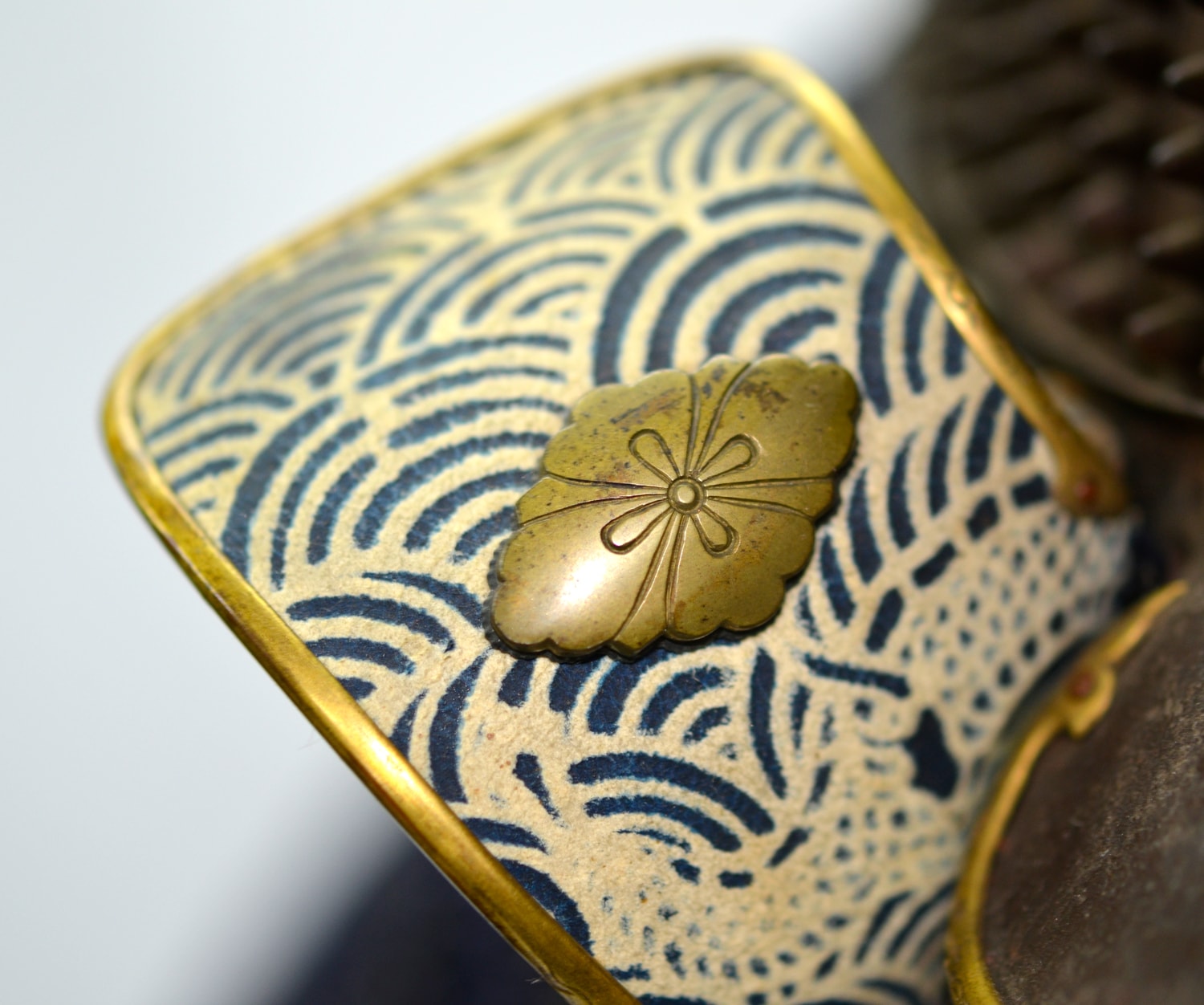
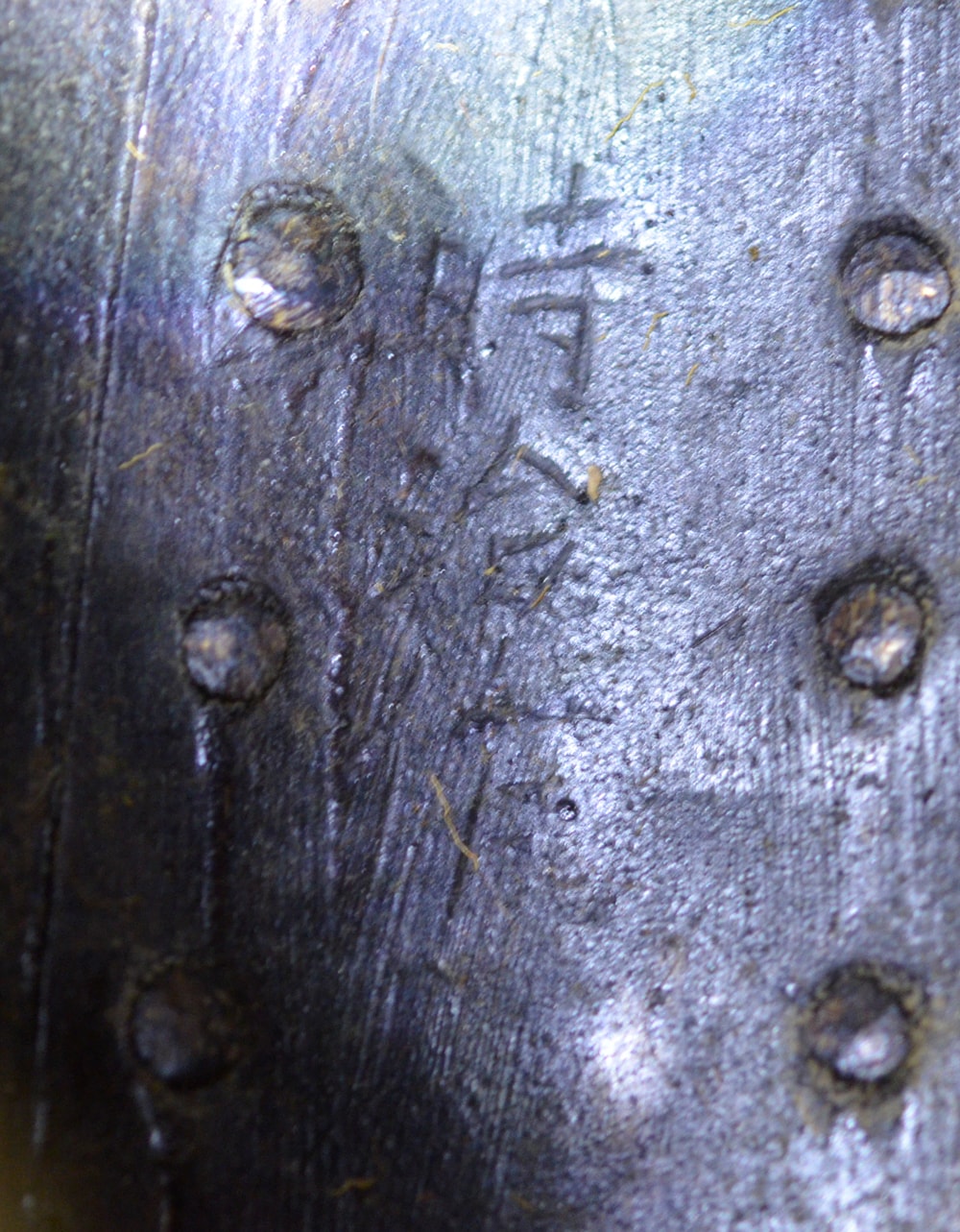
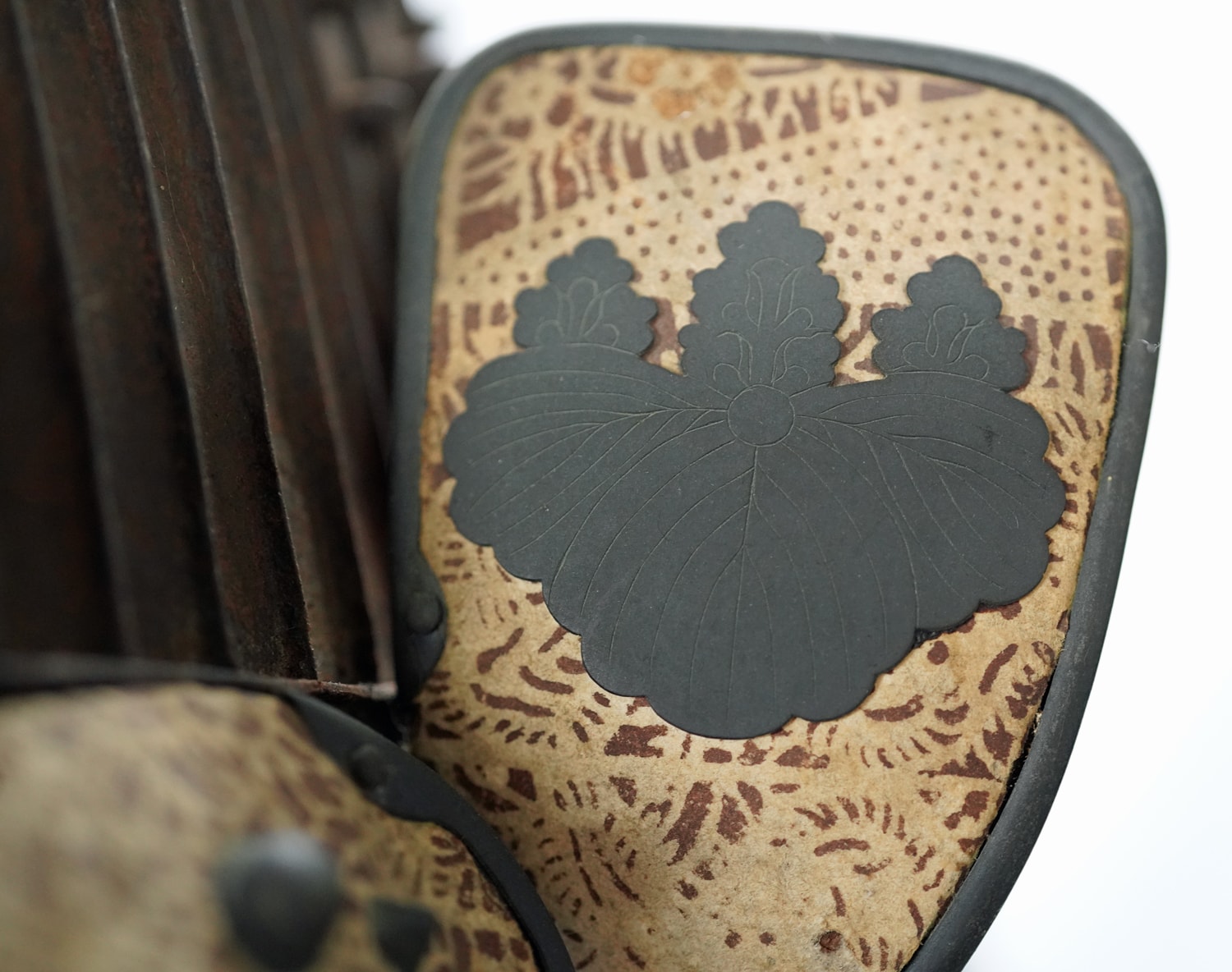
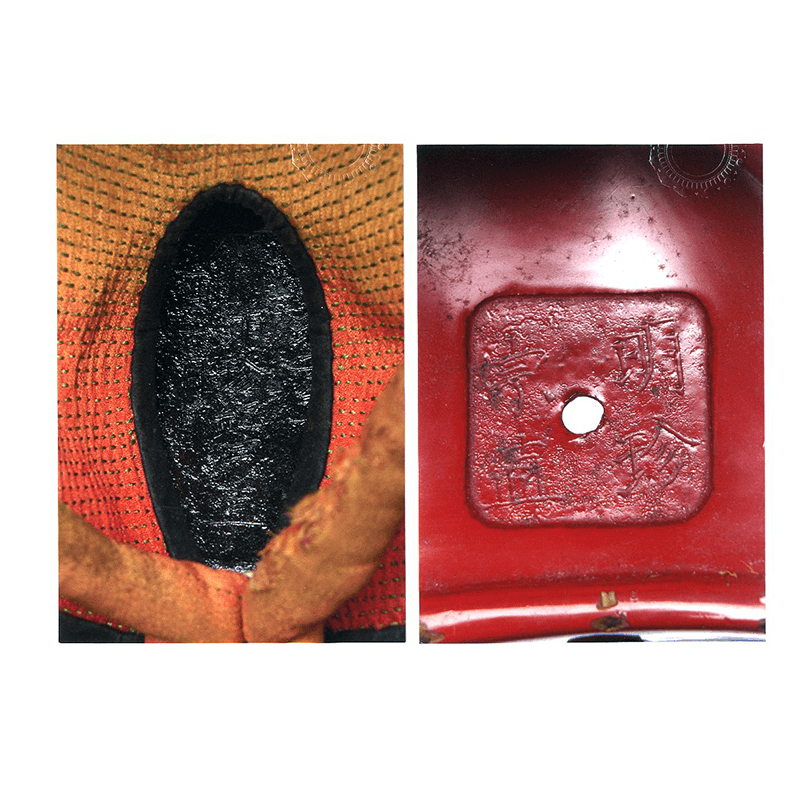
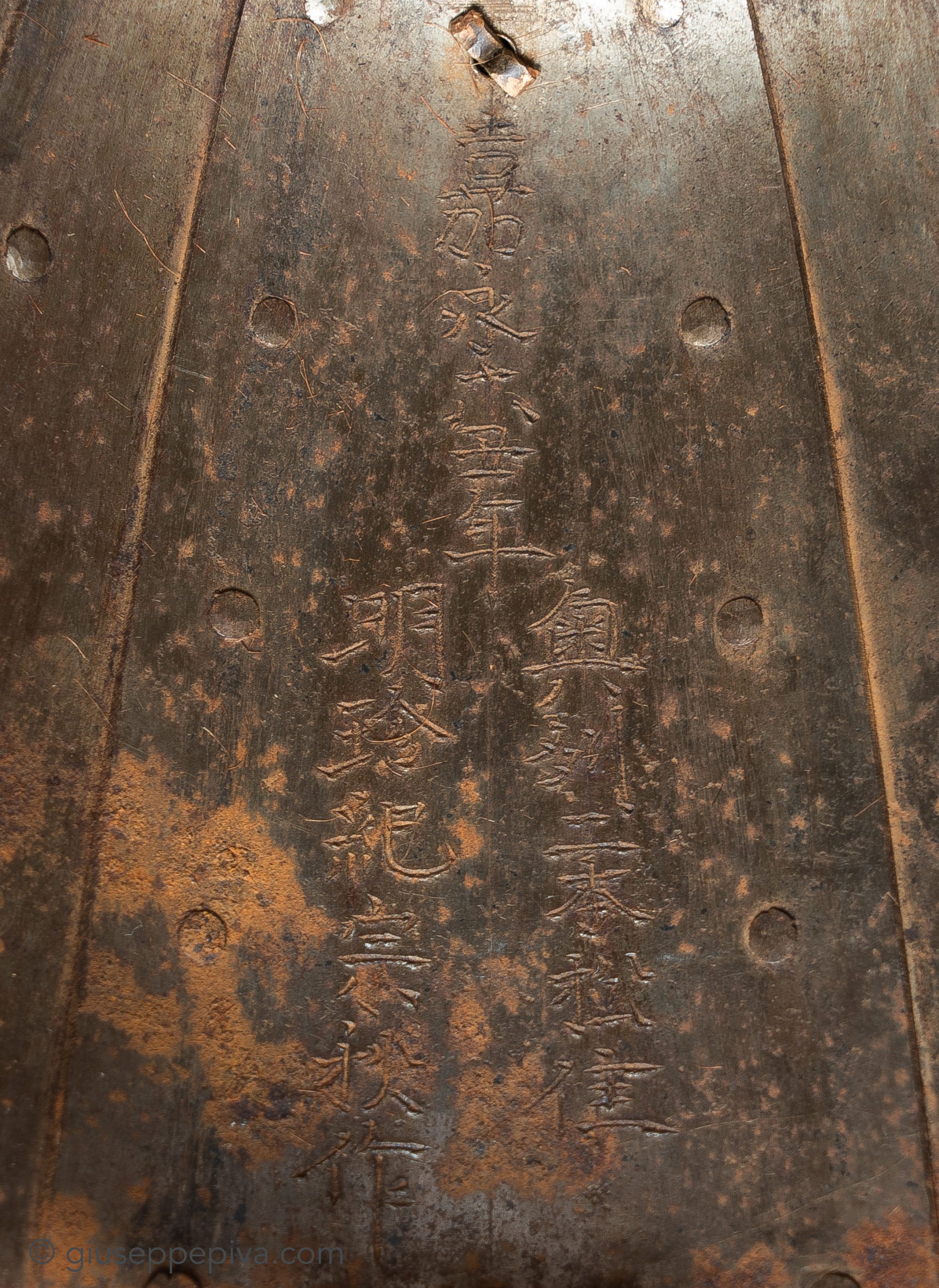
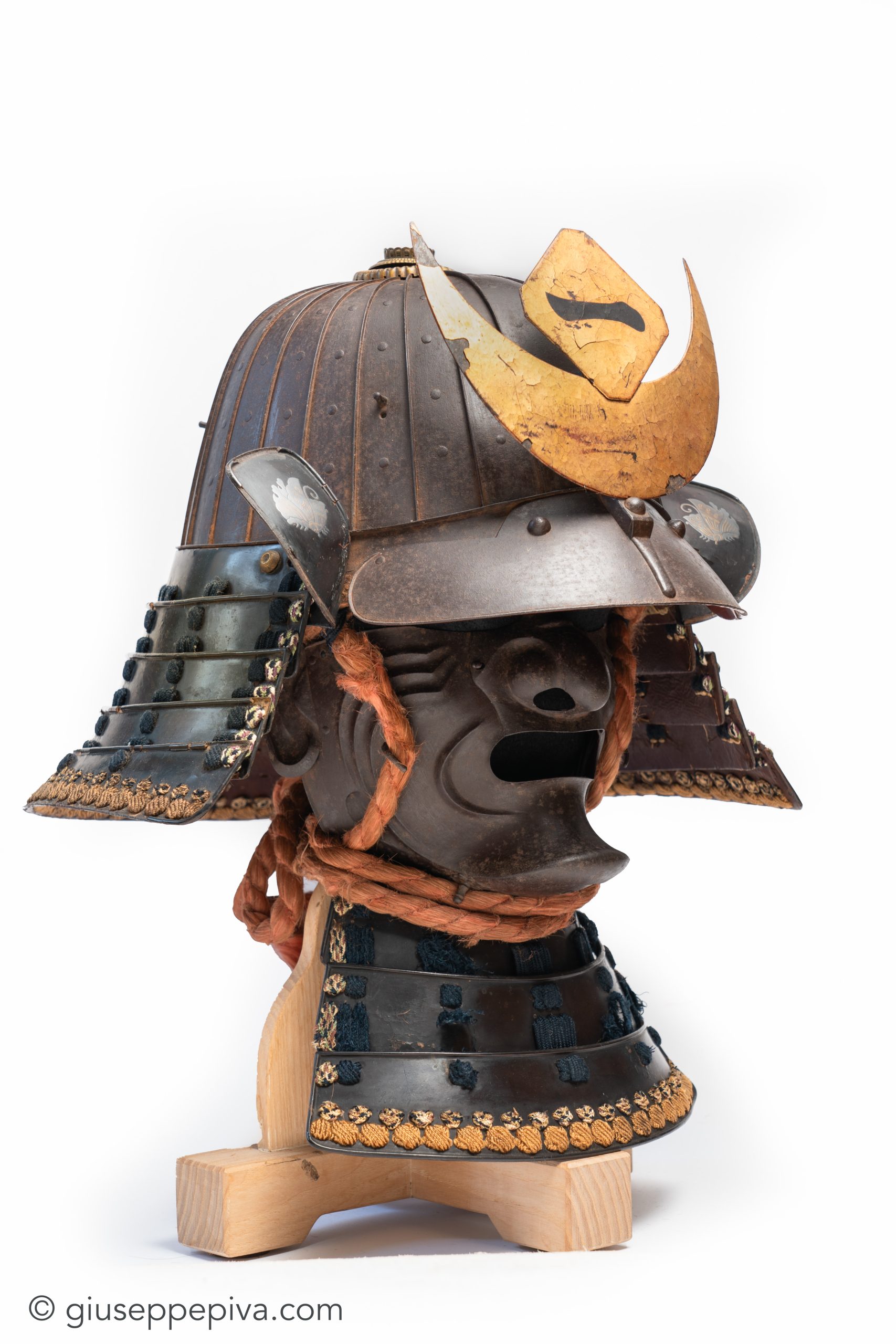
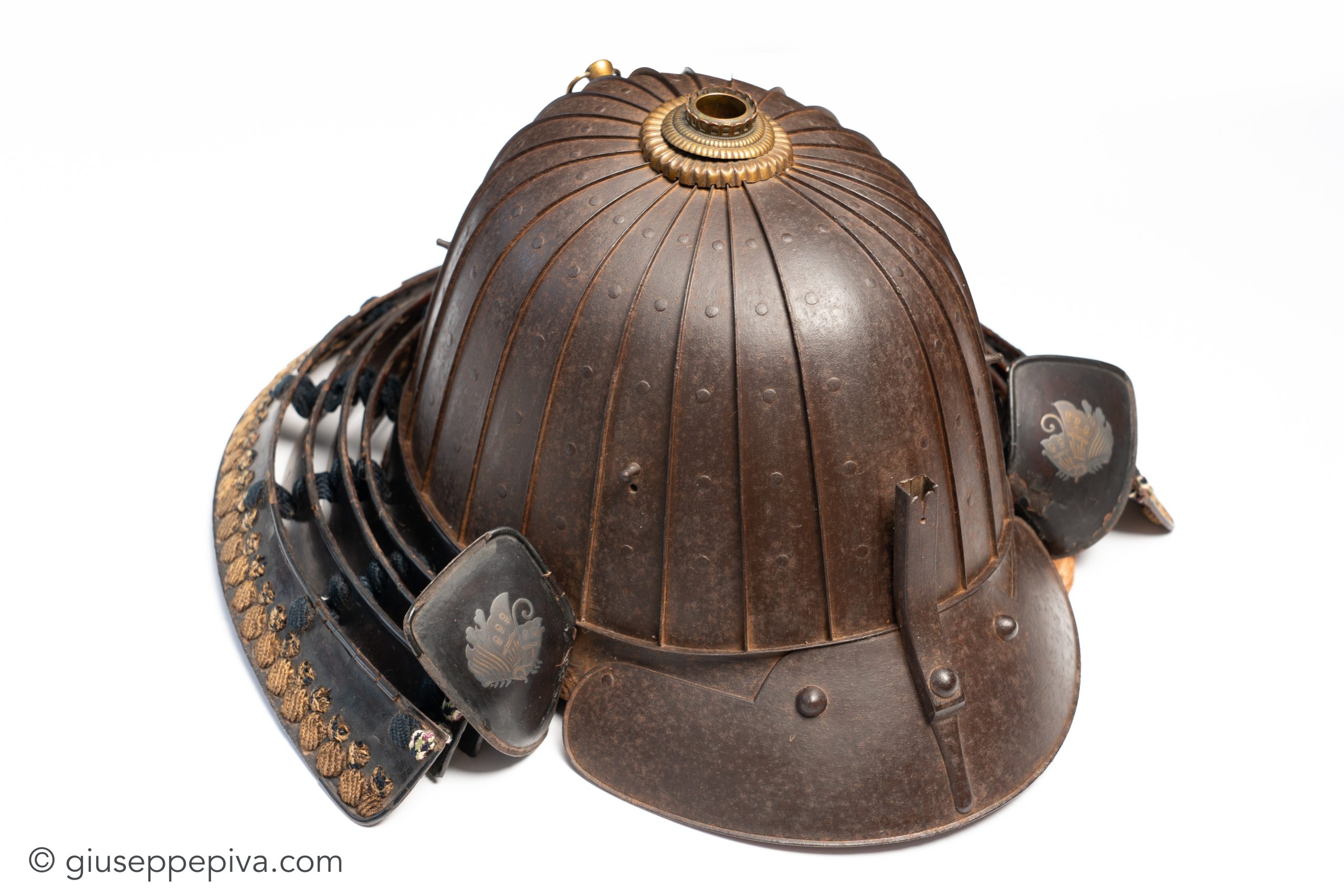
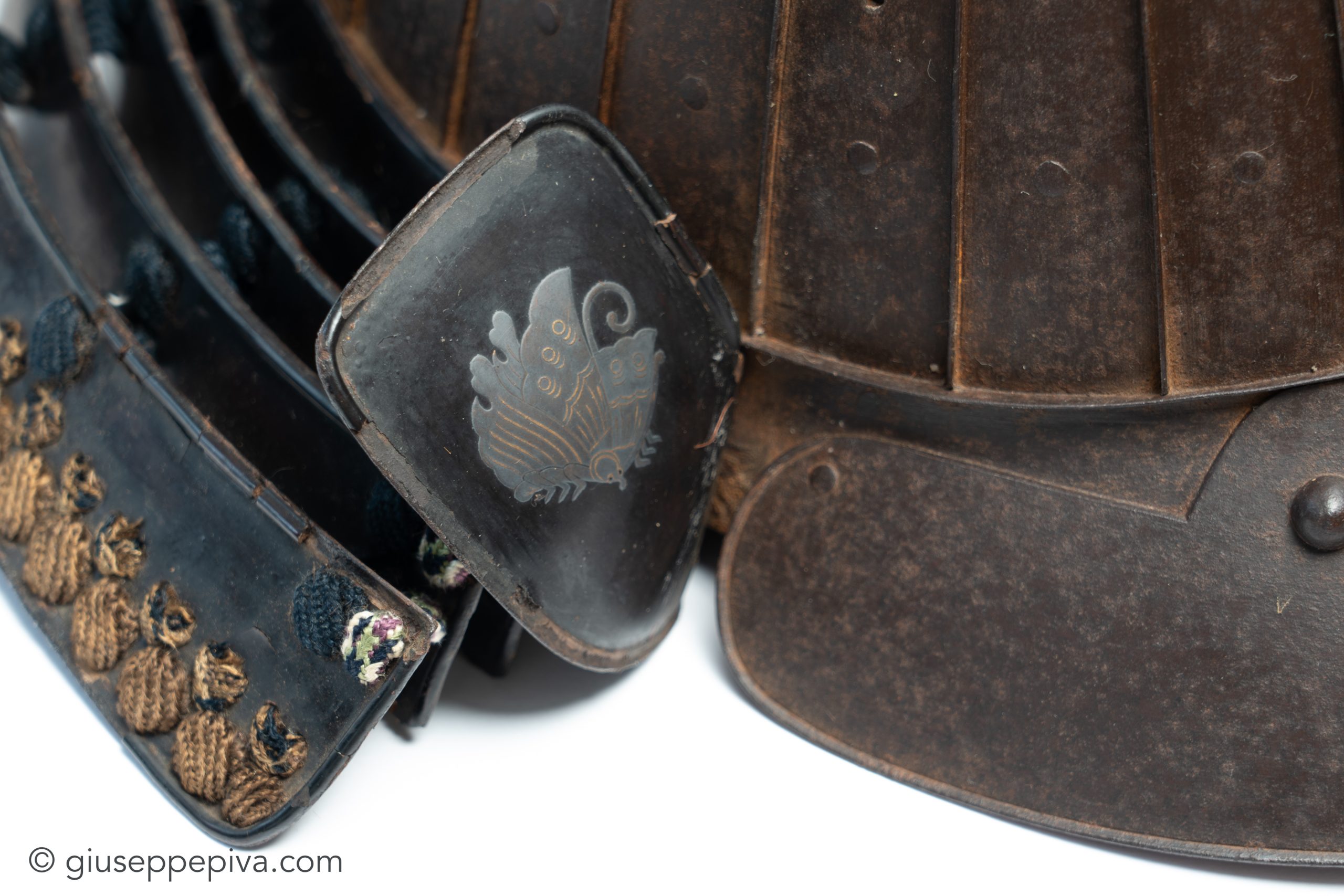
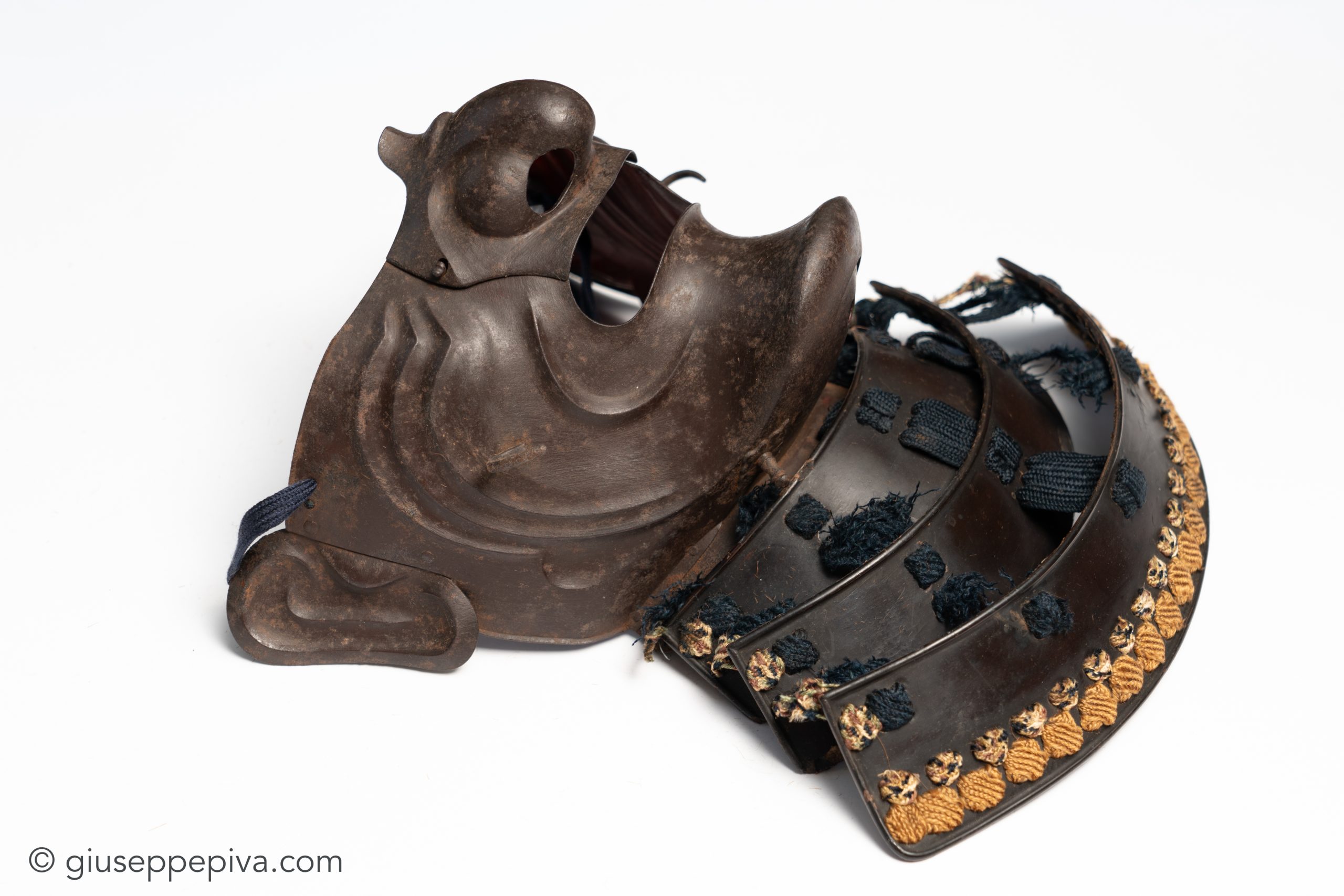
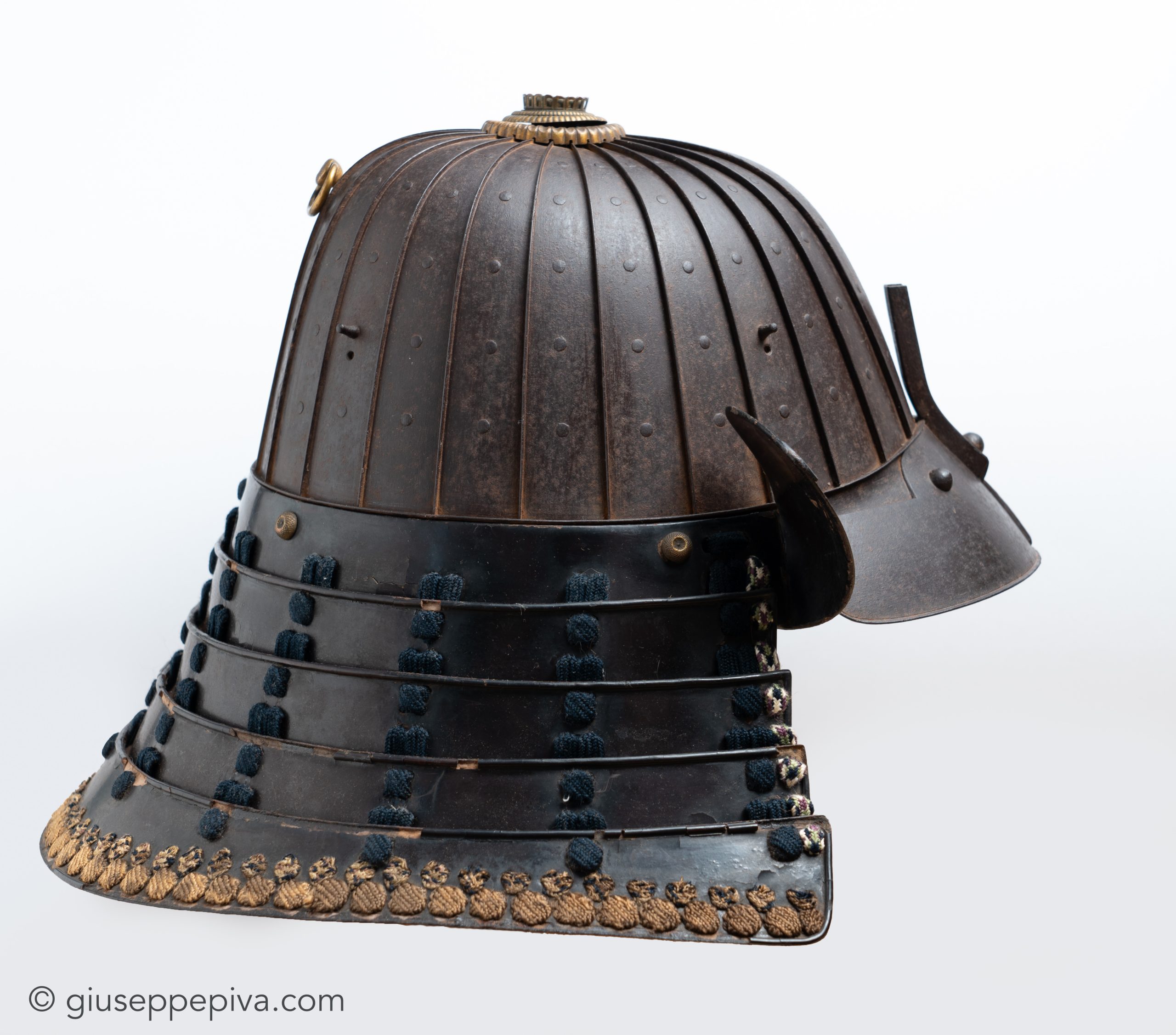
Made in 1853 by Myōchin Ki Muneaki in Nihonmatsu castle. The helmet is a 24-plate suji kabuto with five rows of visible rivets. The shape is rather tall (koseizan), and the fittings, such as the visor (mabezashi) and the maedate holder (haraidate), are beautifully crafted. The five-plate shikoro bears on the fukigaeshi a rare kamon (family crest) made of silver maki-e lacquer, depicting the butterfly (hachō) used by the Taira clan in the ancient times and later taken up by a number of families claiming descent from it, most notably the Matsudaira clan, the shogunate family. The half-moon shaped maedate shows the “ichi” kanji in the center. The mask is of the ressei type, of excellent workmanship. The shapes of the nose, ears and chin are those typical of the branch operating in the Ki region, where the Myōchin family of armorers settled in the early Edo period and specialised in embossed metalwork (uchidashi). The inscription is definitely interesting, as it places the helmet inside Nihonmatsu Castle, which was besieged during the Battle of Aizu in 1868, in which Matsudaira Katamori and the forces for imperial restoration clashed. During the siege, 543 samurai loyal to the shogunate died under the modern weapons used by the imperialist daimyo, trained and equipped by Western armies. The presence of the butterfly kamon, used by the Matsudaira, would confirm the use of the helmet by samurai loyal to the shogunate. The armor associated with these events has almost all been lost or destroyed, and to find a helmet in perfect condition that survived the last Japanese civil battles is undoubtedly an extraordinary event.
NihontoWatch取扱店 Giuseppe Piva


兜のみ
24間 · 筋鉢 · Koseizan
Myochin
Muneaki
在銘 · 兜鉢
butterfly (hacho) of the Taira clan, later Matsudaira clan
江戸
Taira|Matsudaira
販売店の記載のまま
(翻訳なし)
刀剣商の出品ページで鑑定書を確認できませんでした。甲冑武具は通常、日本甲冑武具研究保存会の鑑定を受けます。鑑定書がない場合、極めは刀剣商の見解にとどまり、第三者による確認は行われていません。ご購入前に刀剣商へ鑑定書の有無をお問い合わせのうえ、慎重にご判断ください。
価格はお問い合わせ