二十世紀は二度この工芸を殺しかけた。戦時の歪みと、占領下の禁令である。1948年の日刀保設立と1953年の作刀再開が刀を美術として再建し、人間国宝と無鑑査がその頂に立つ。
 NihontoWatchNihontoWatch
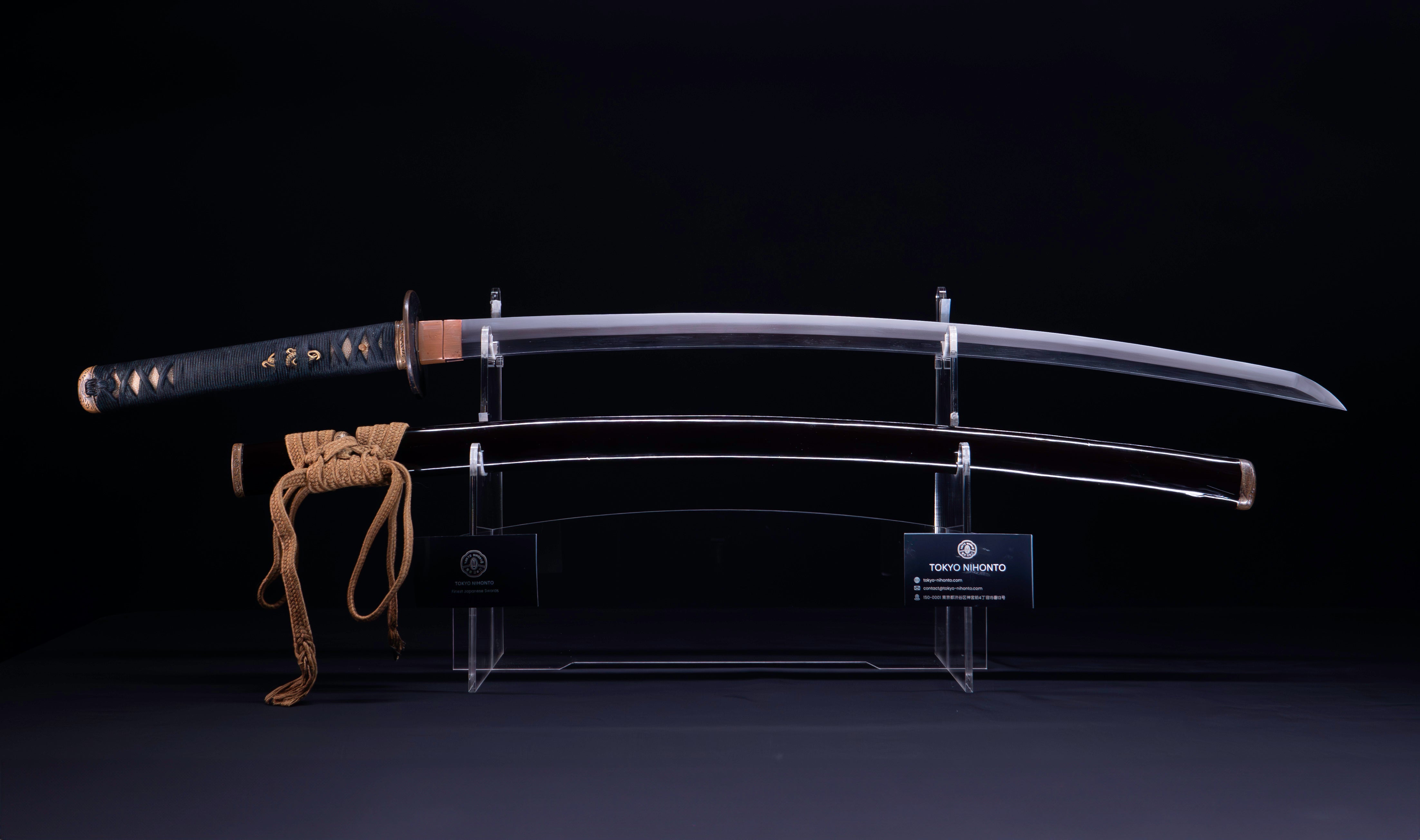
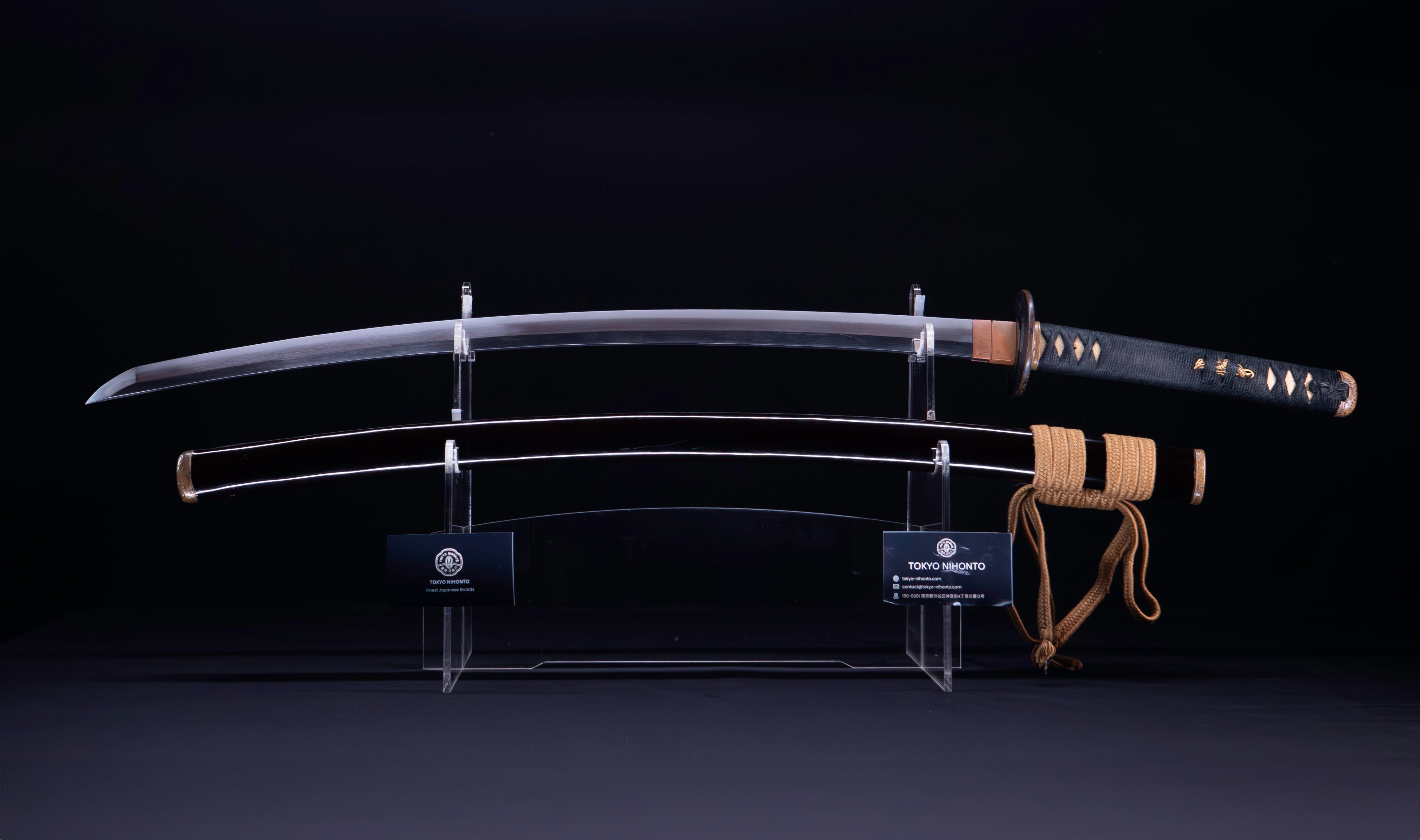
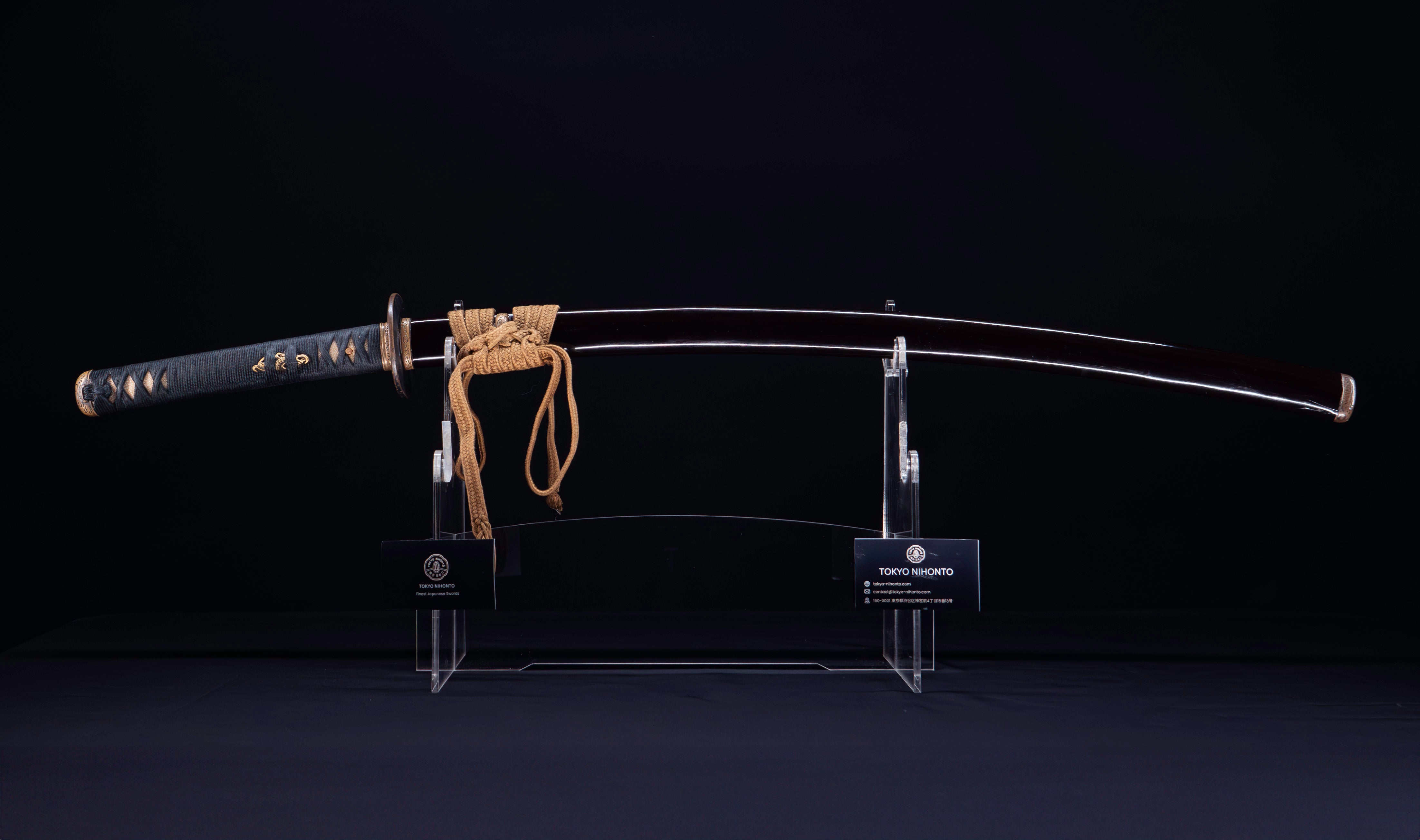
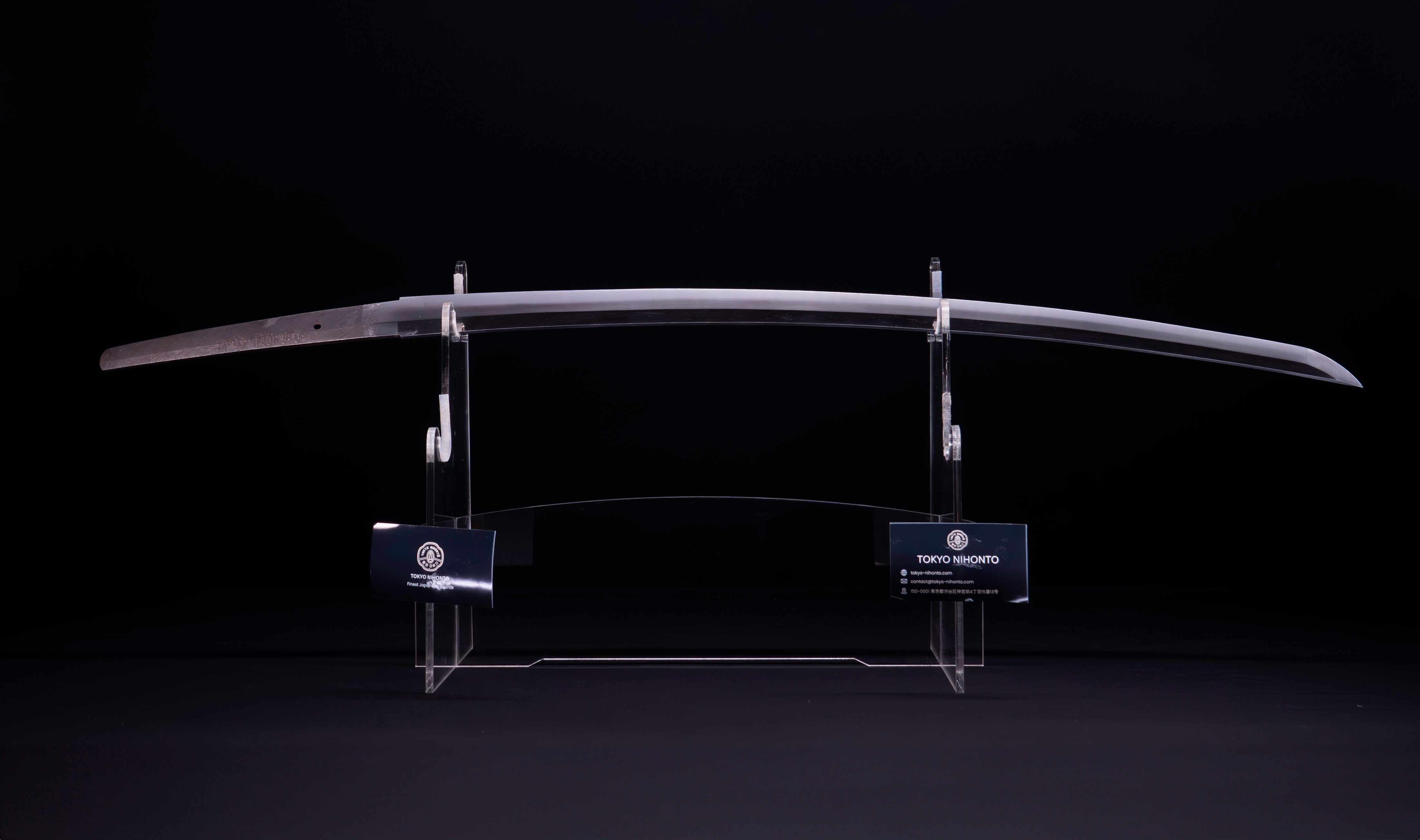
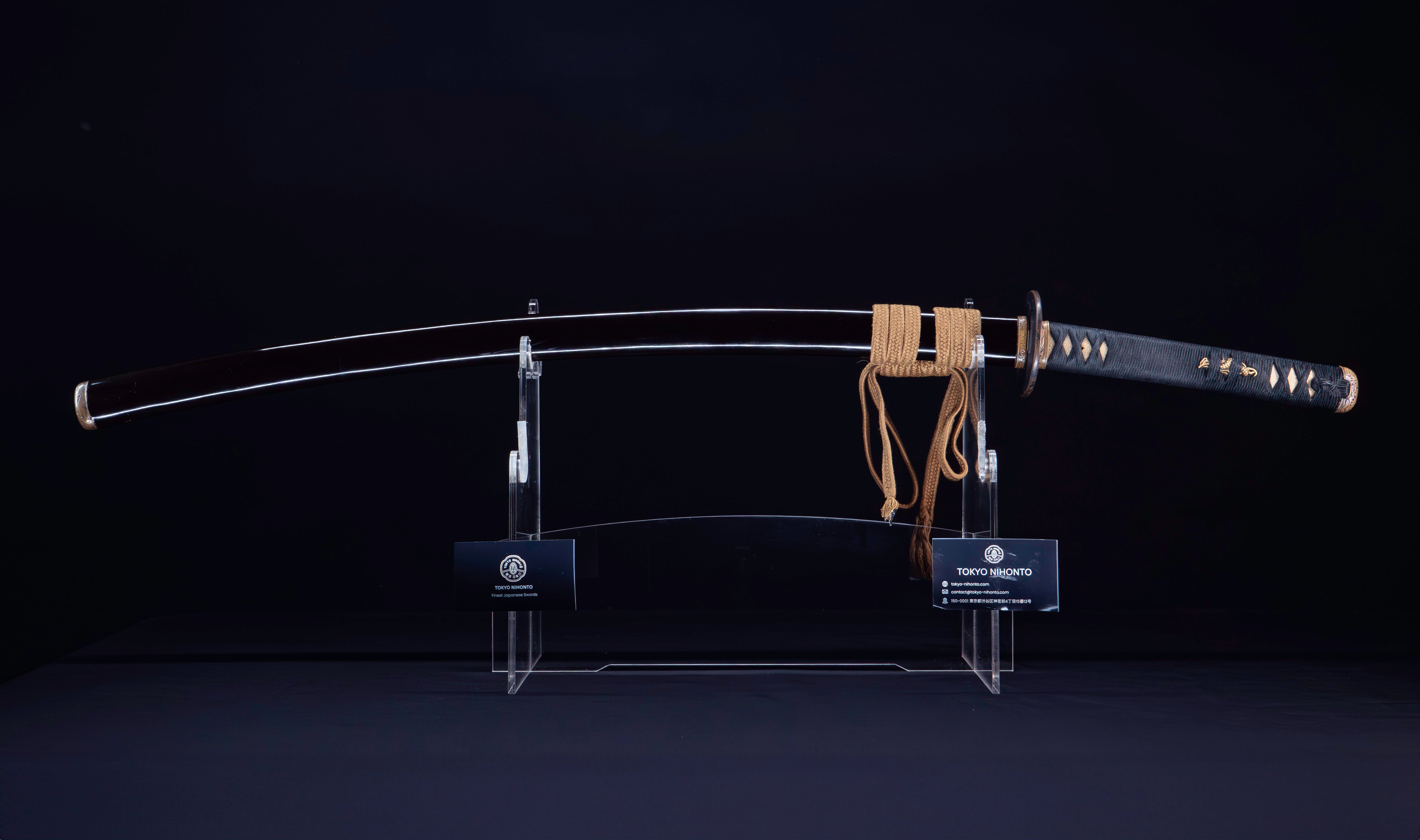
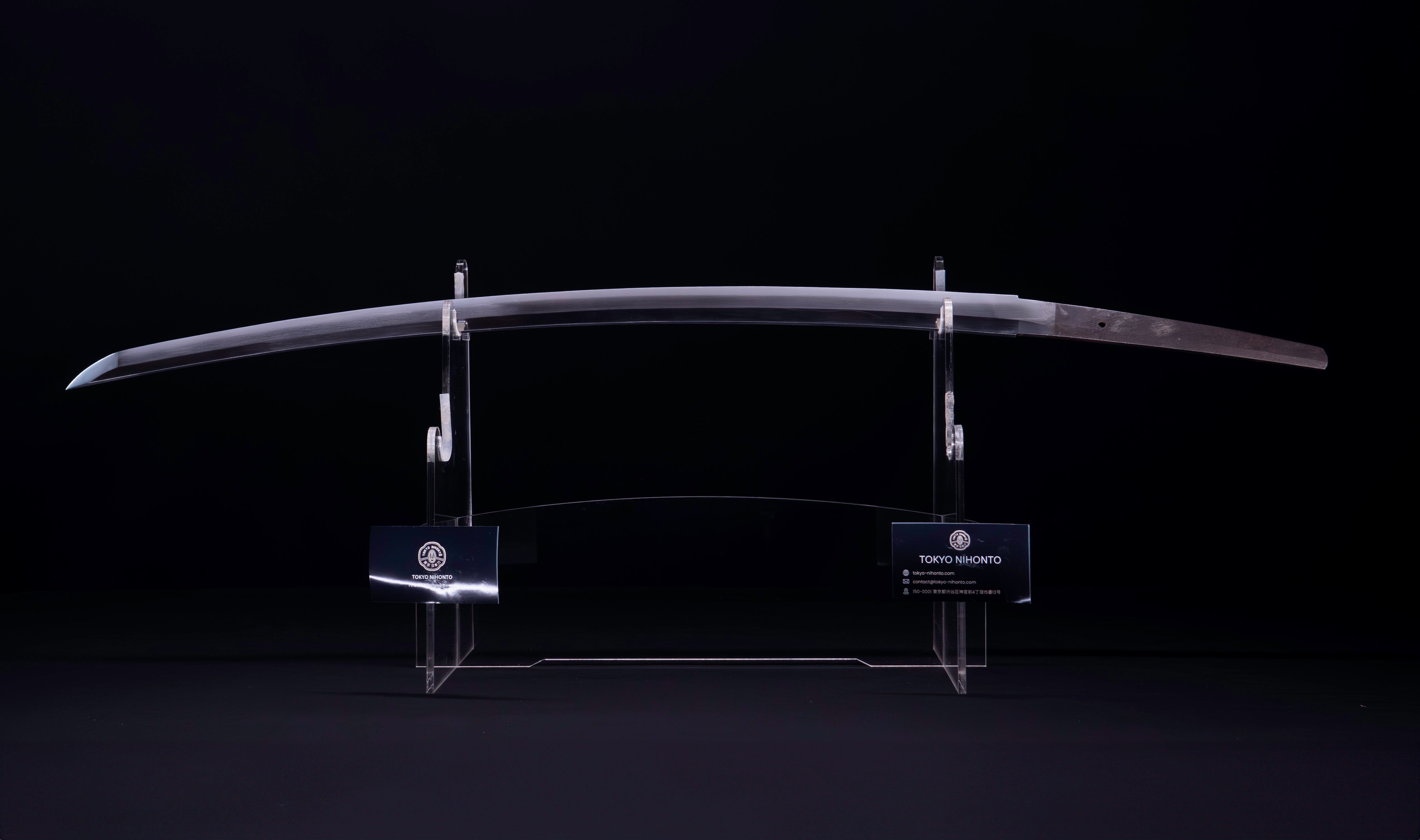
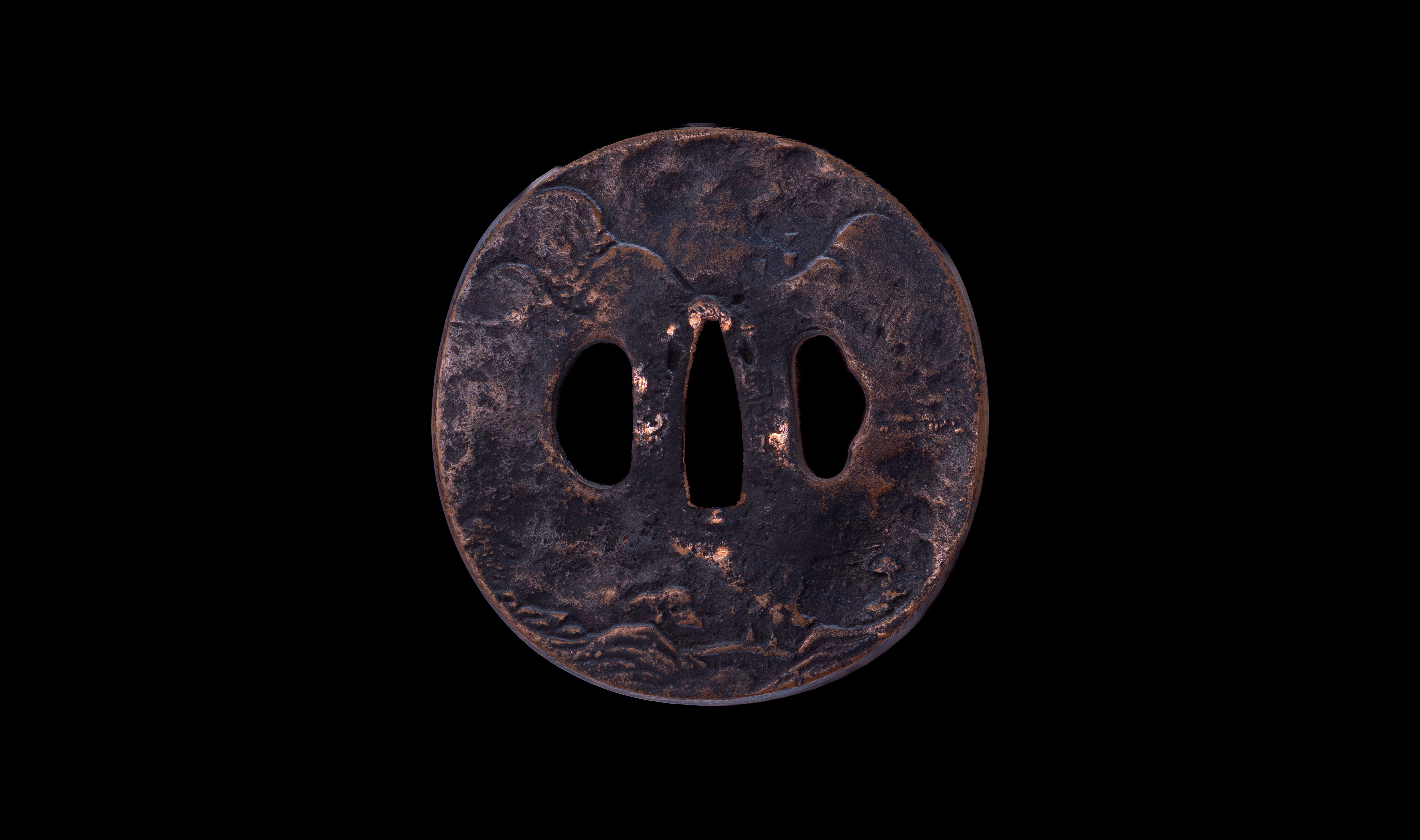
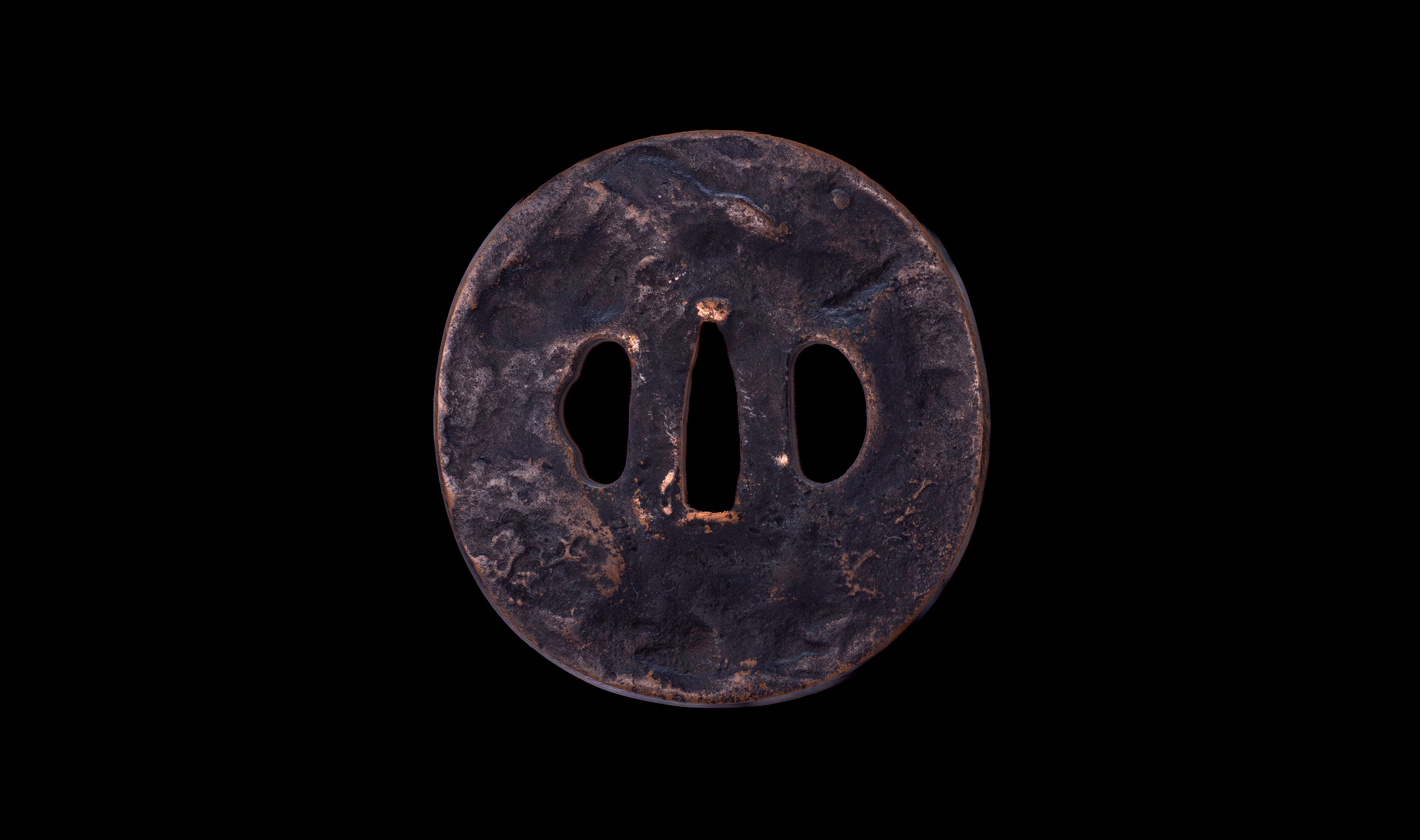
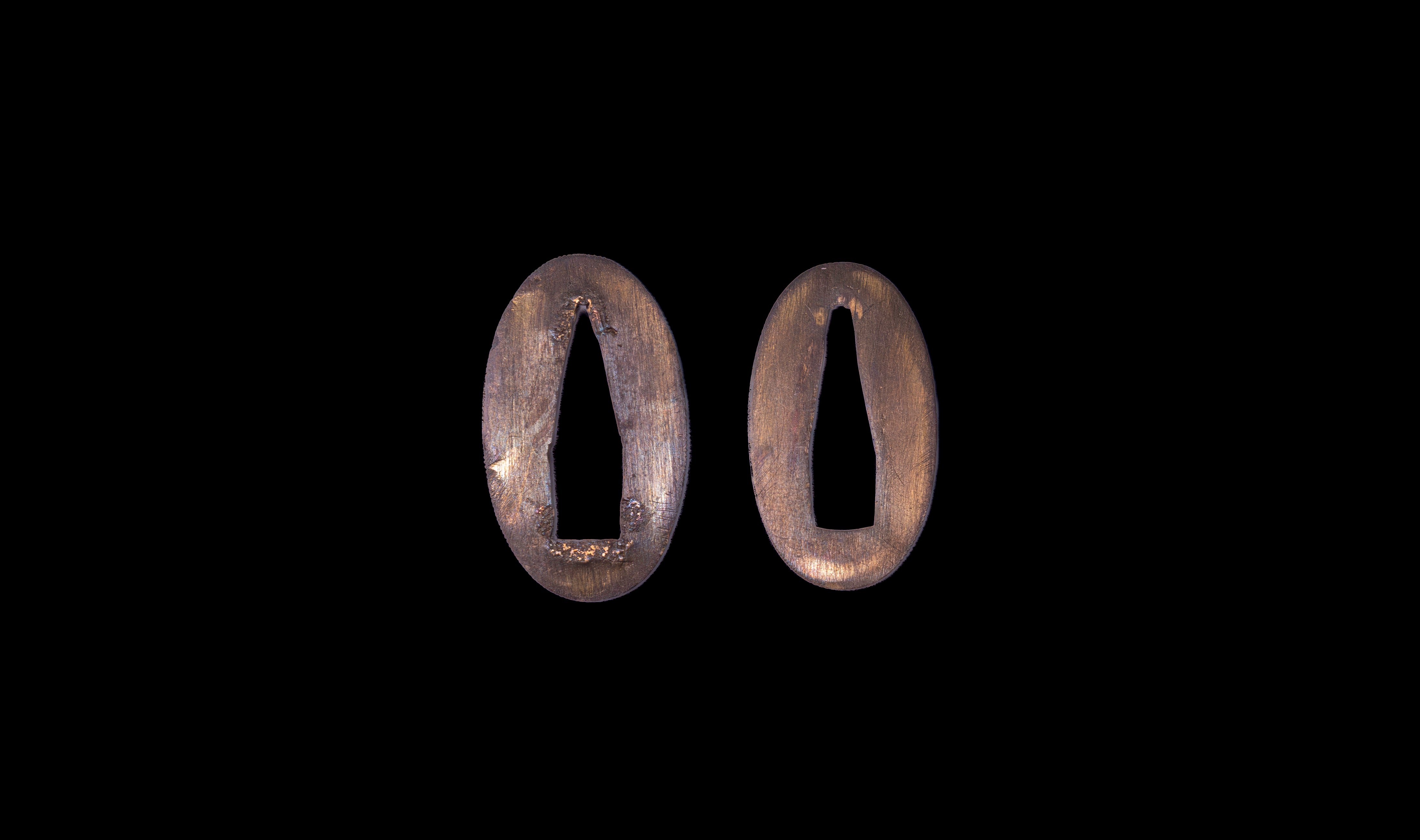
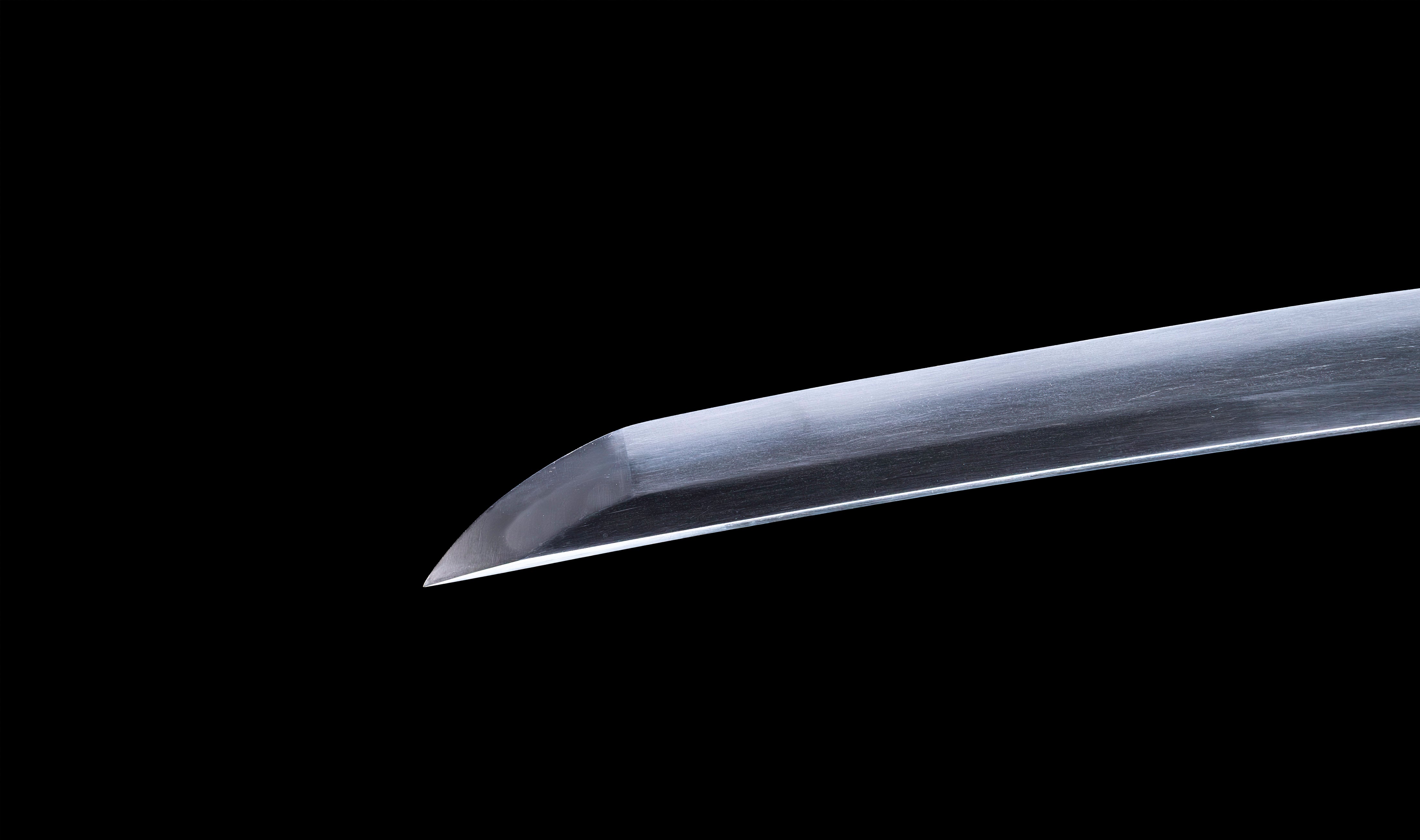
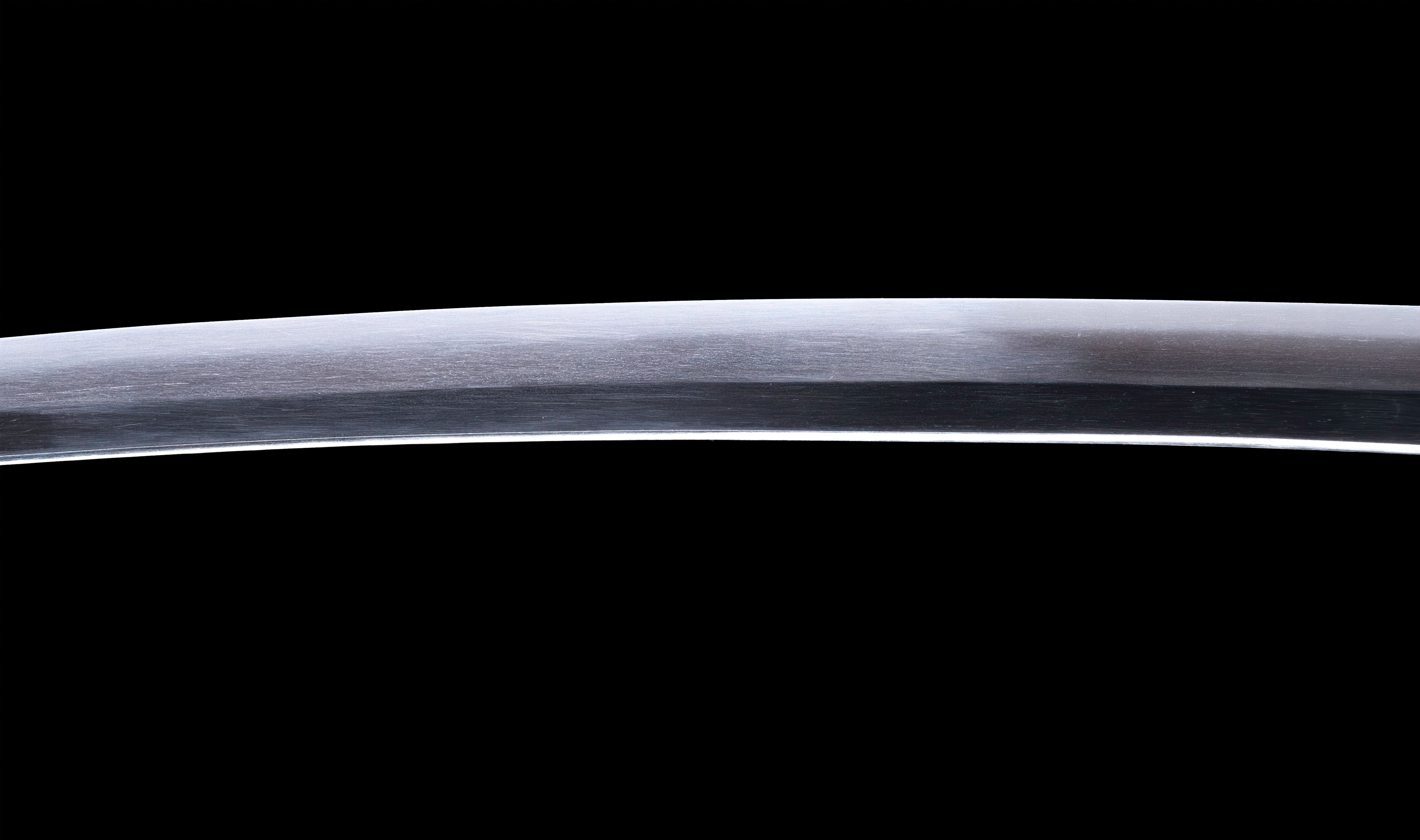
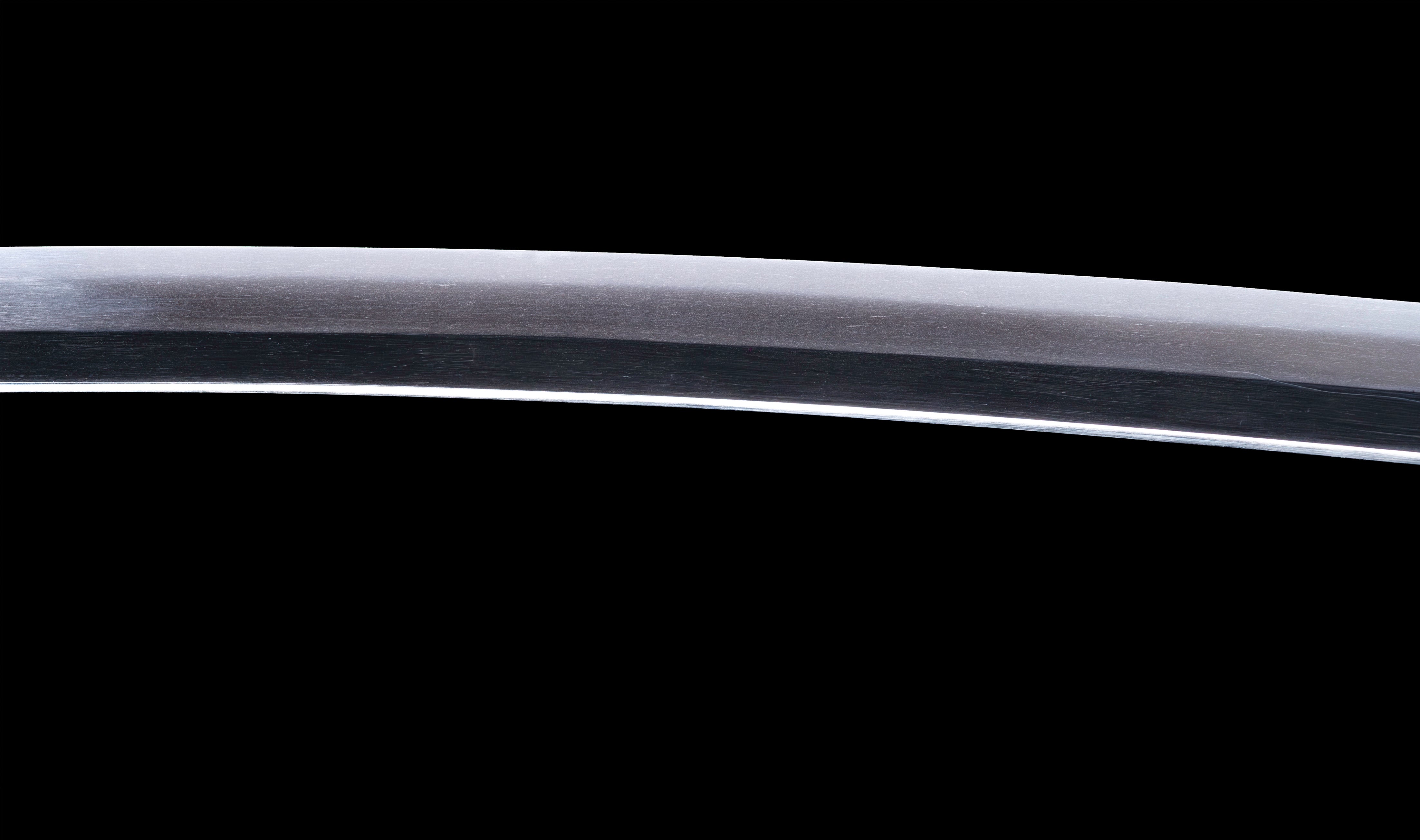
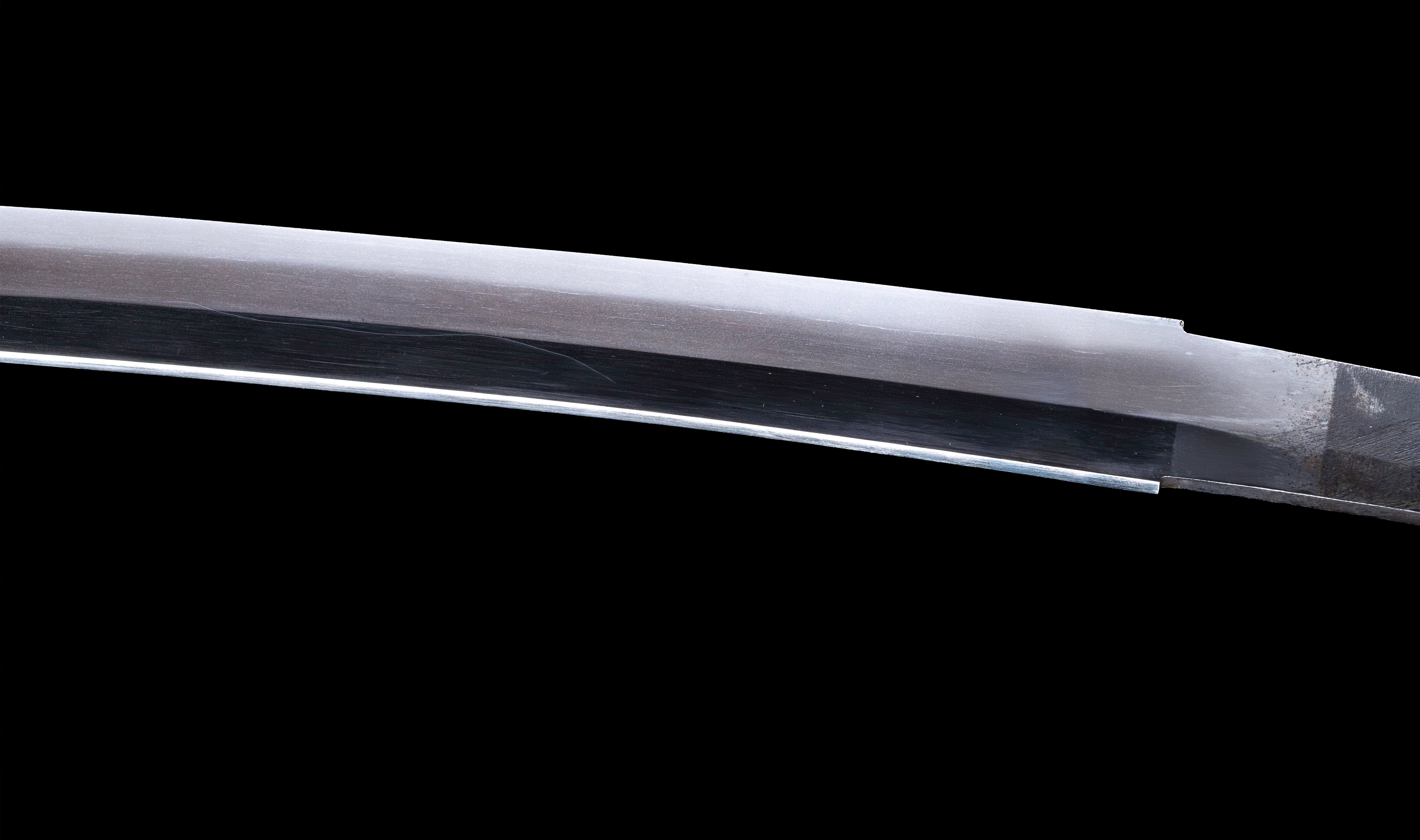
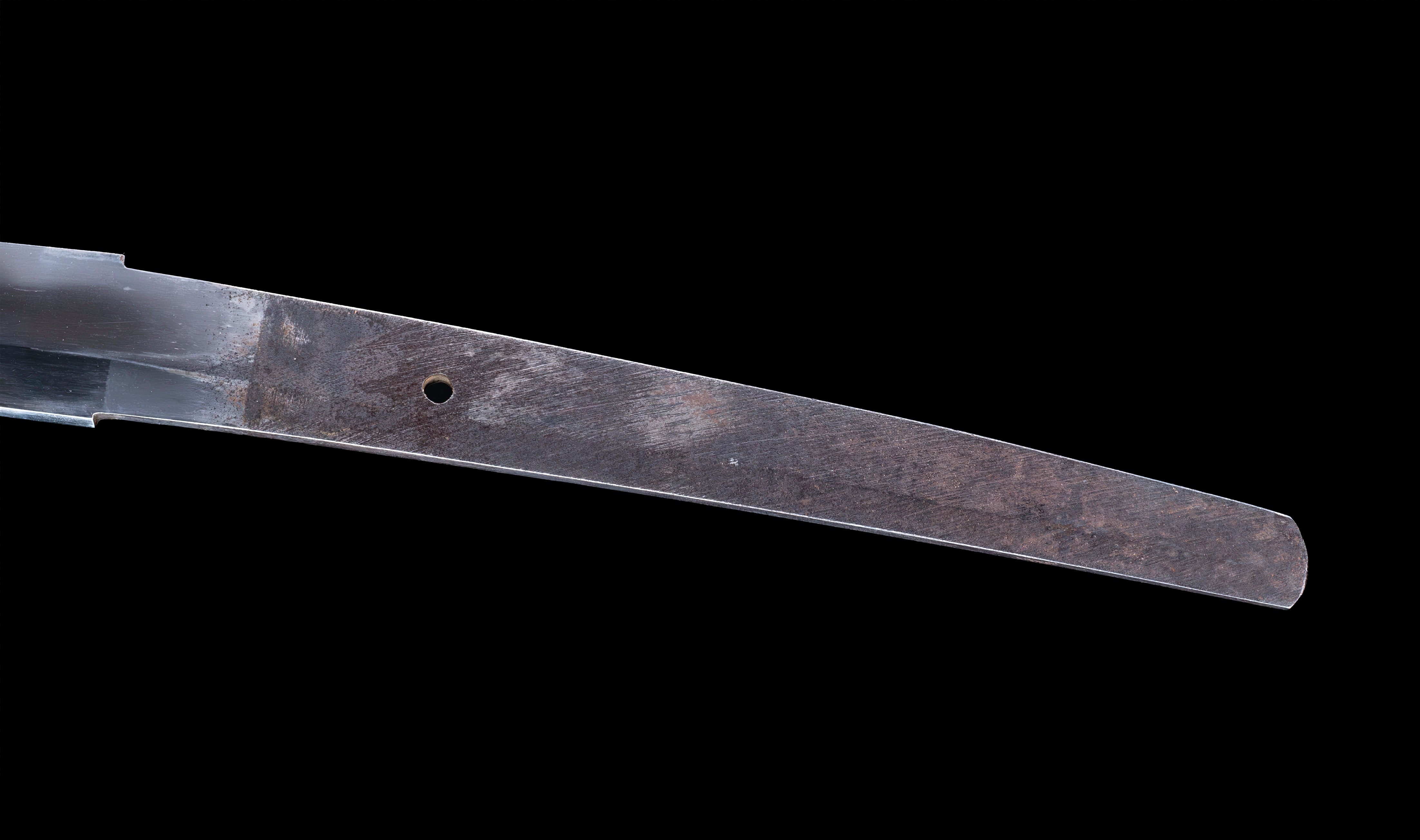
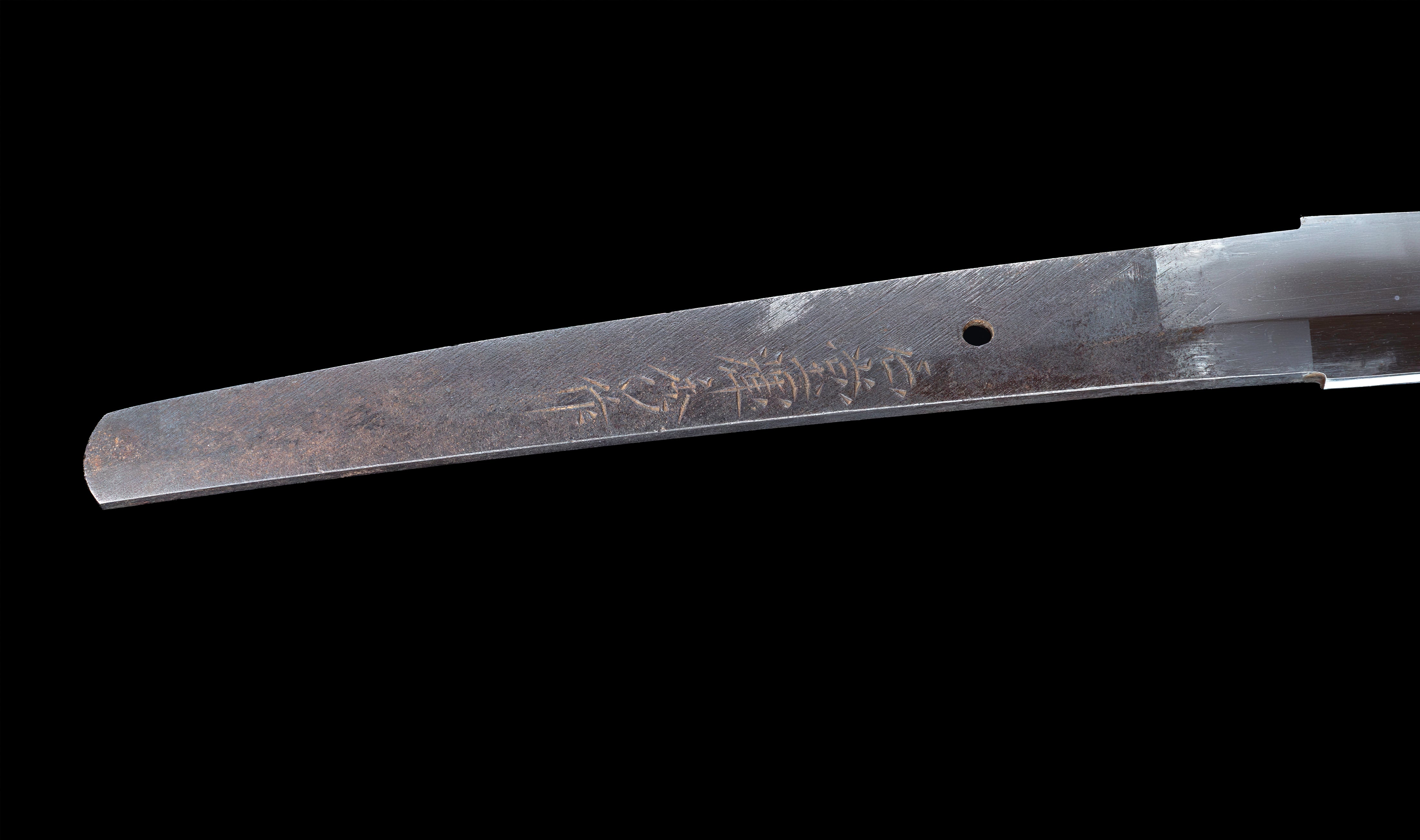
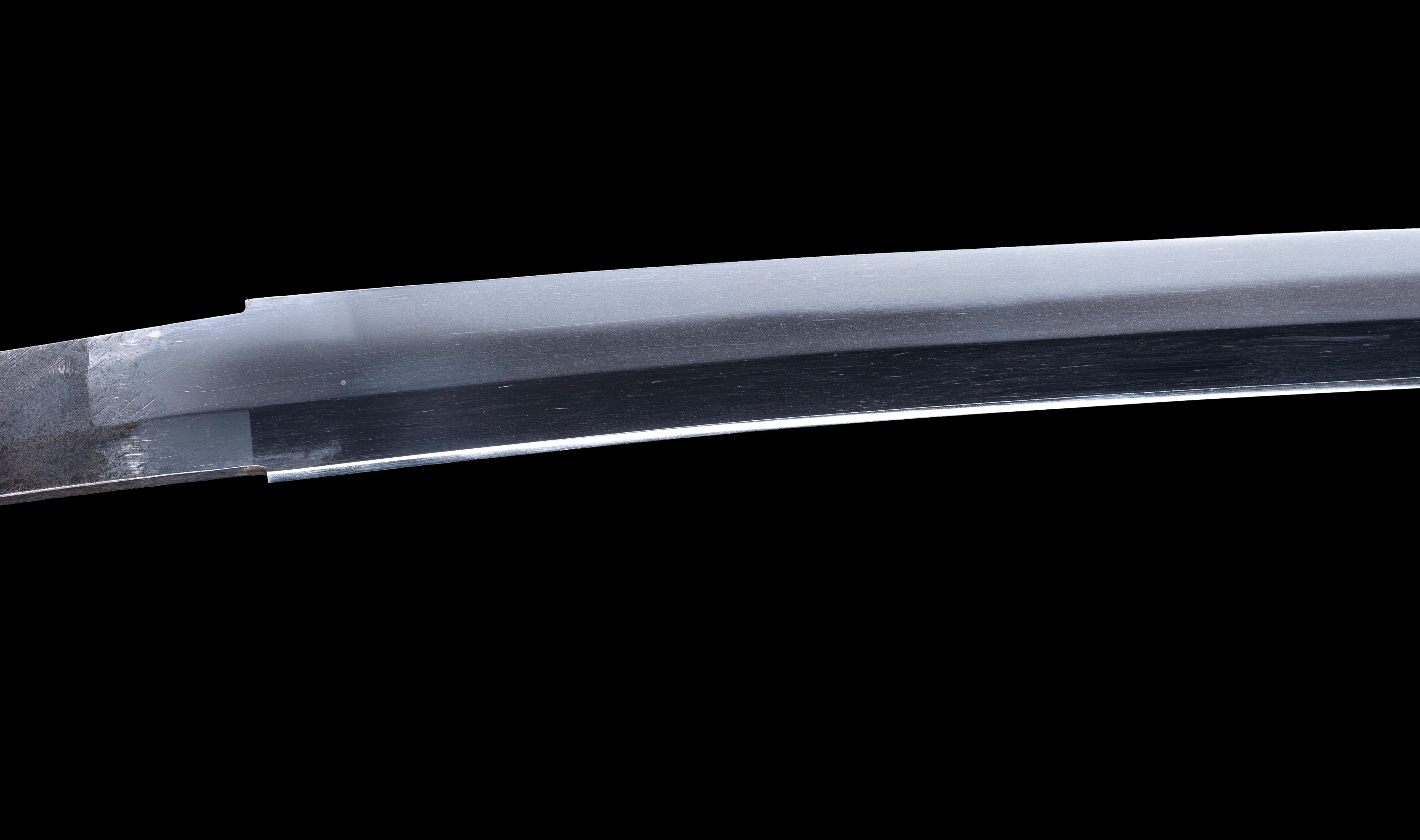
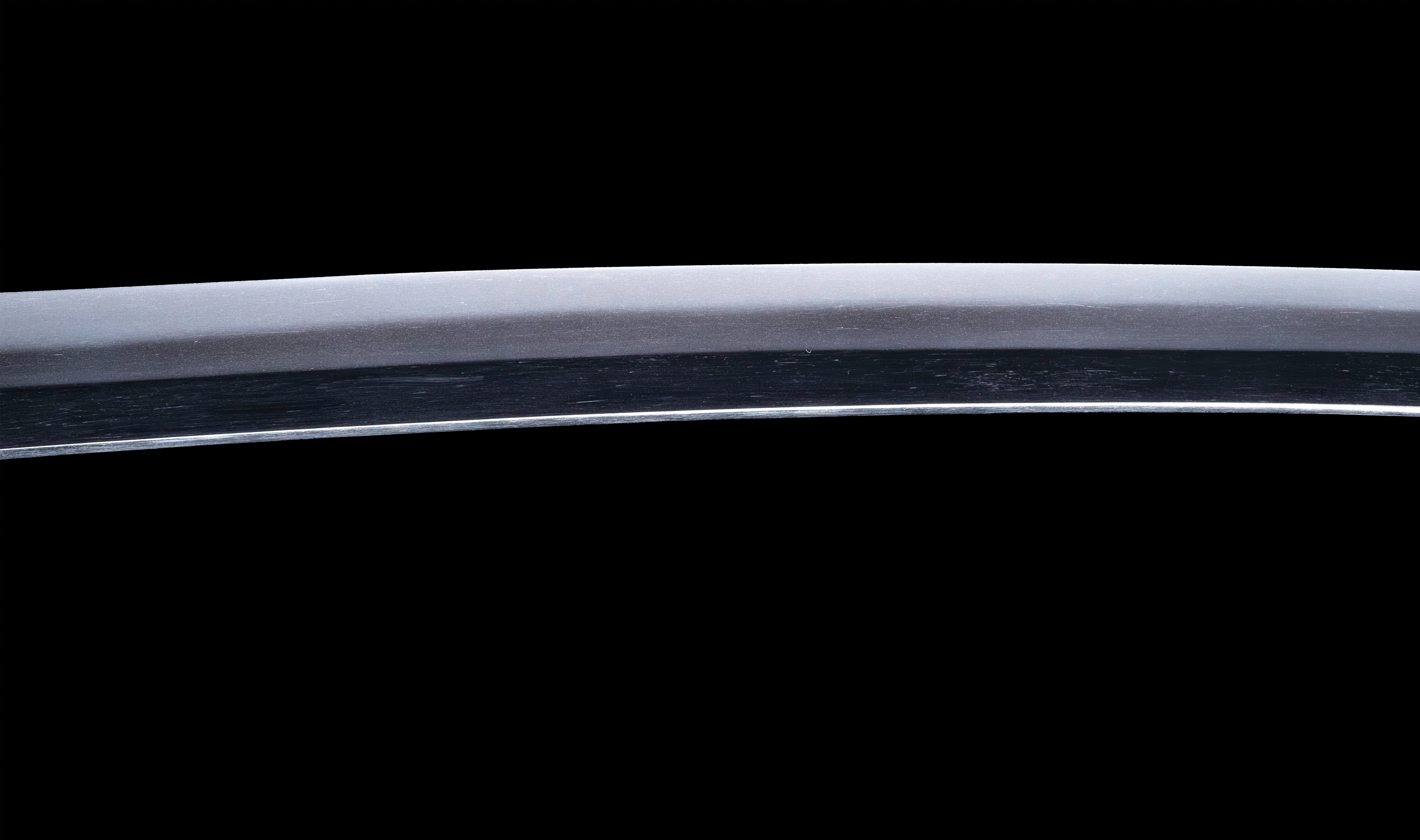
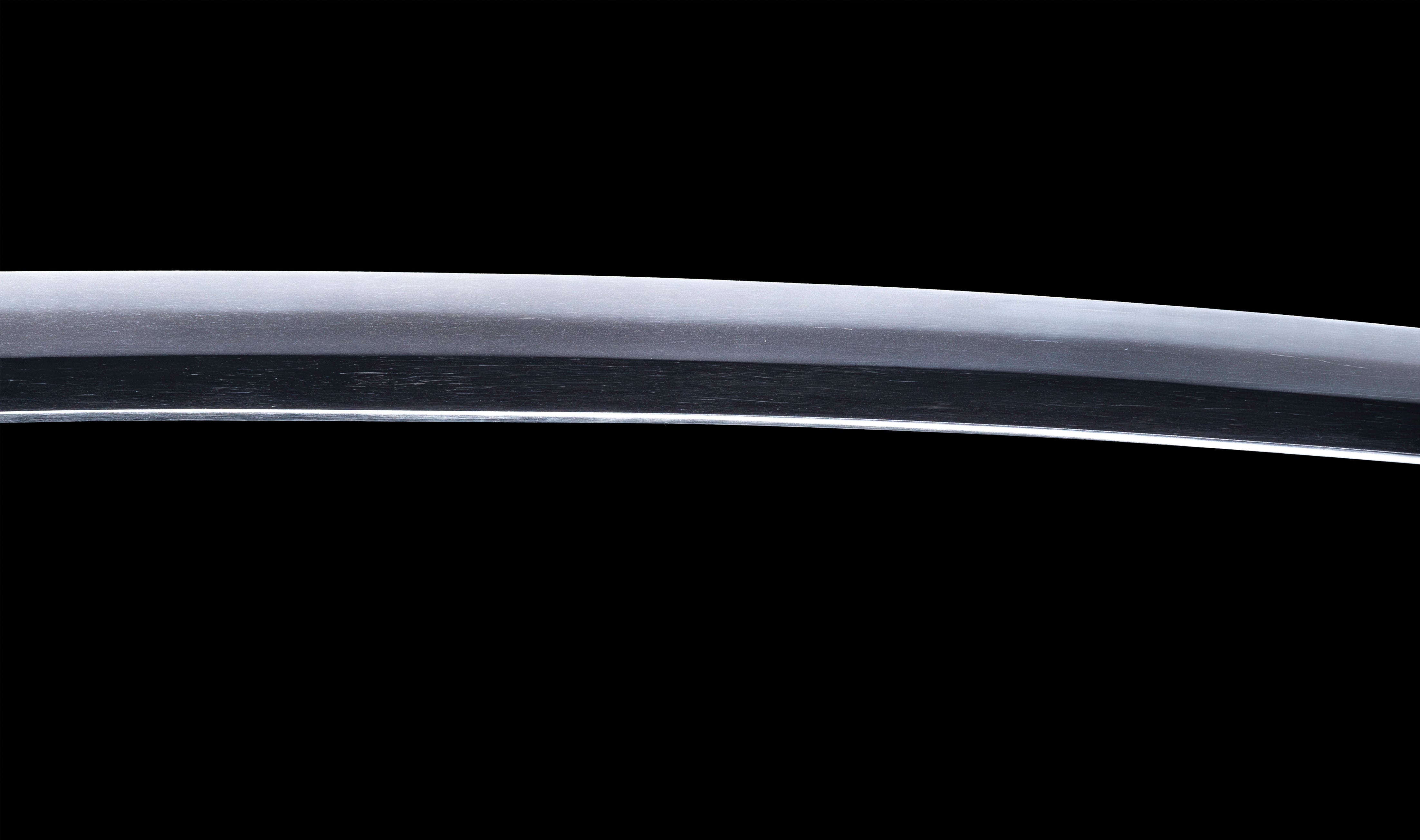
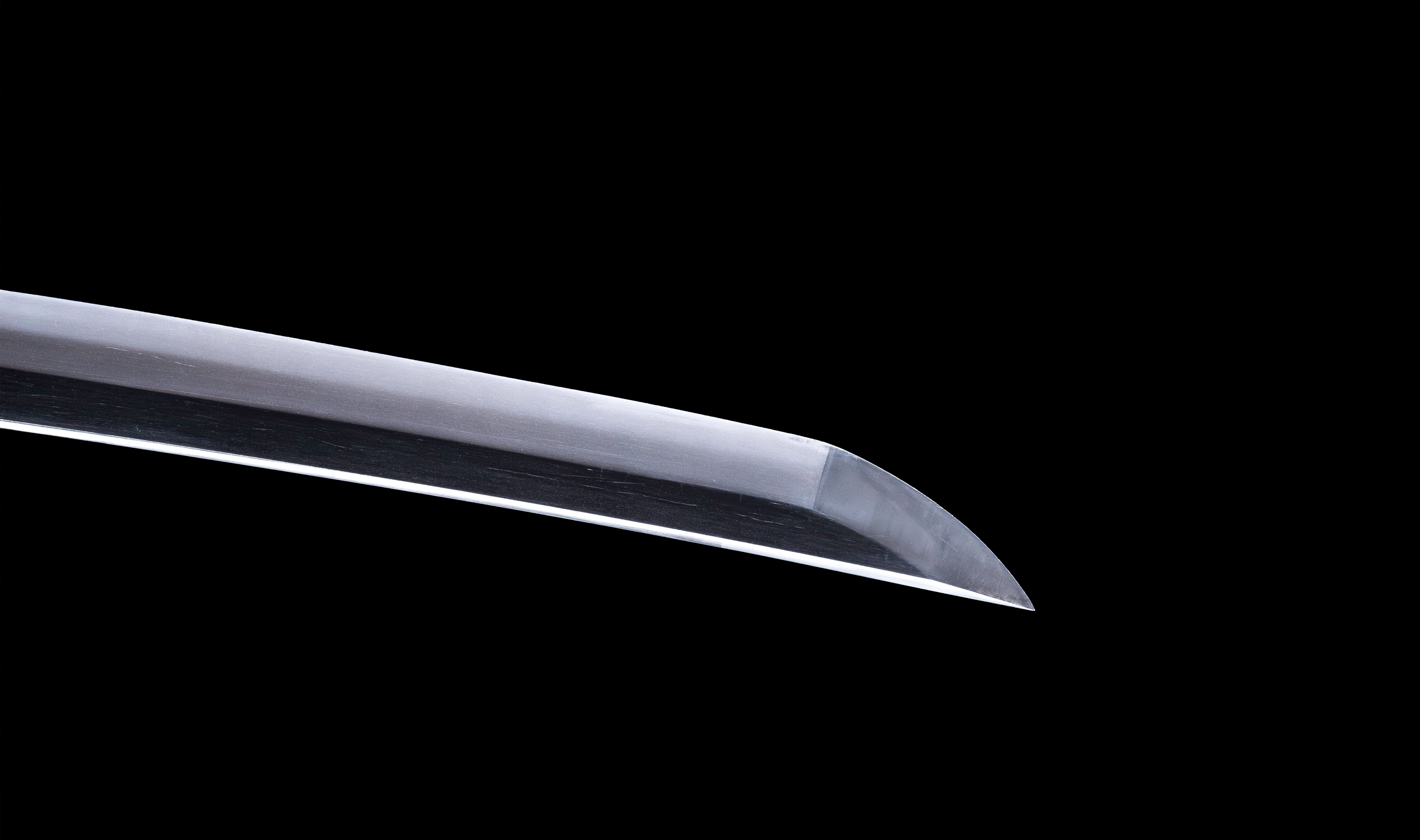
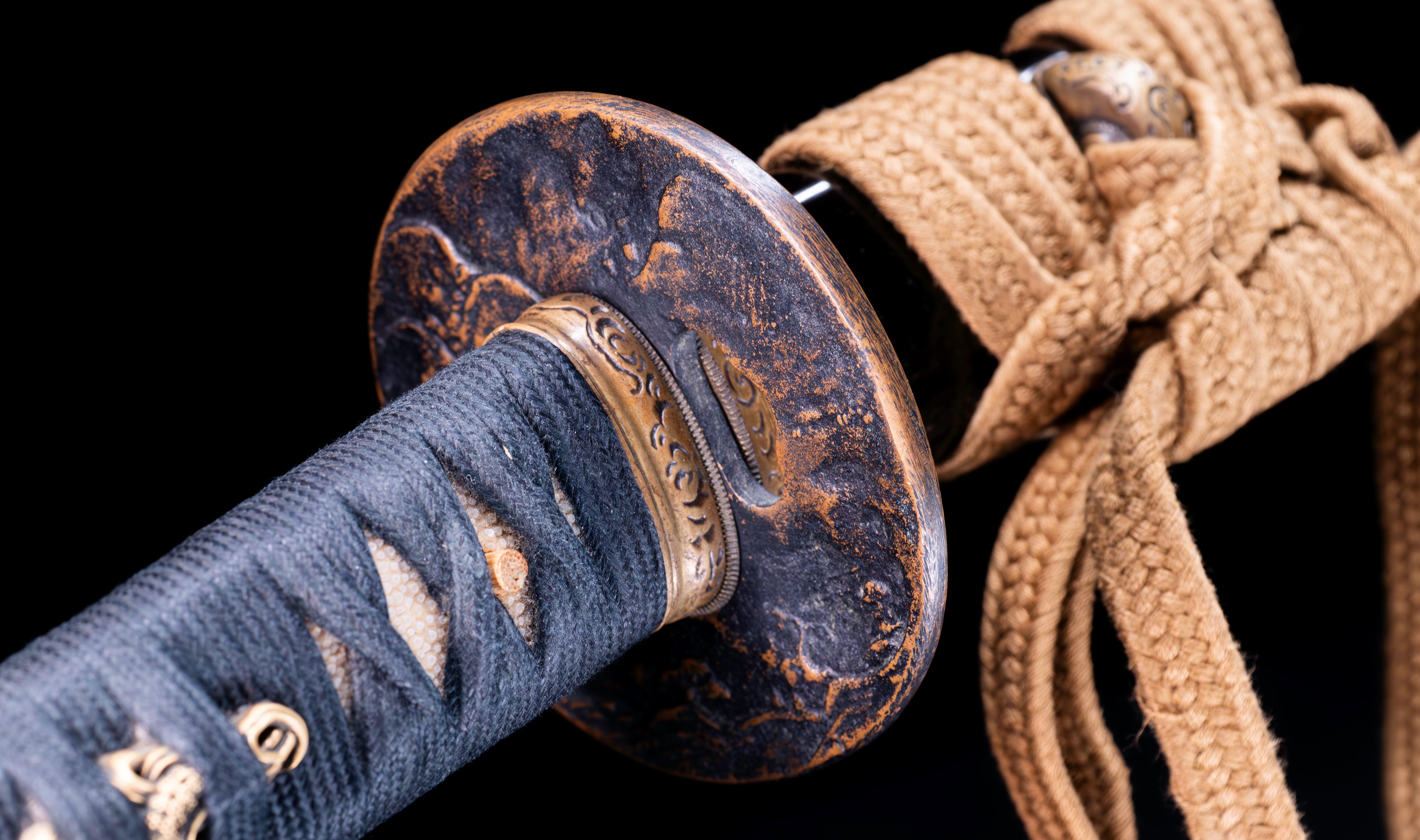
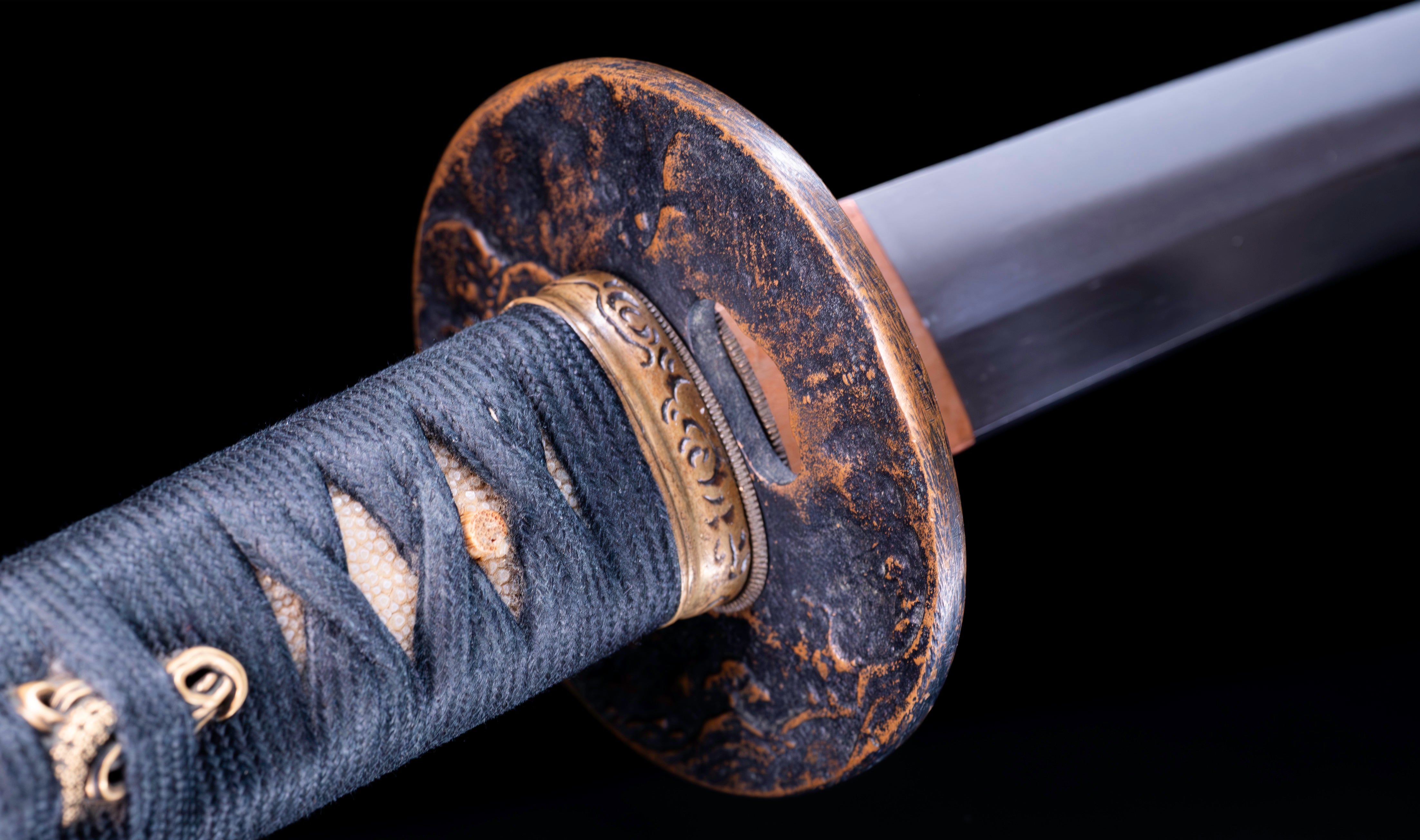
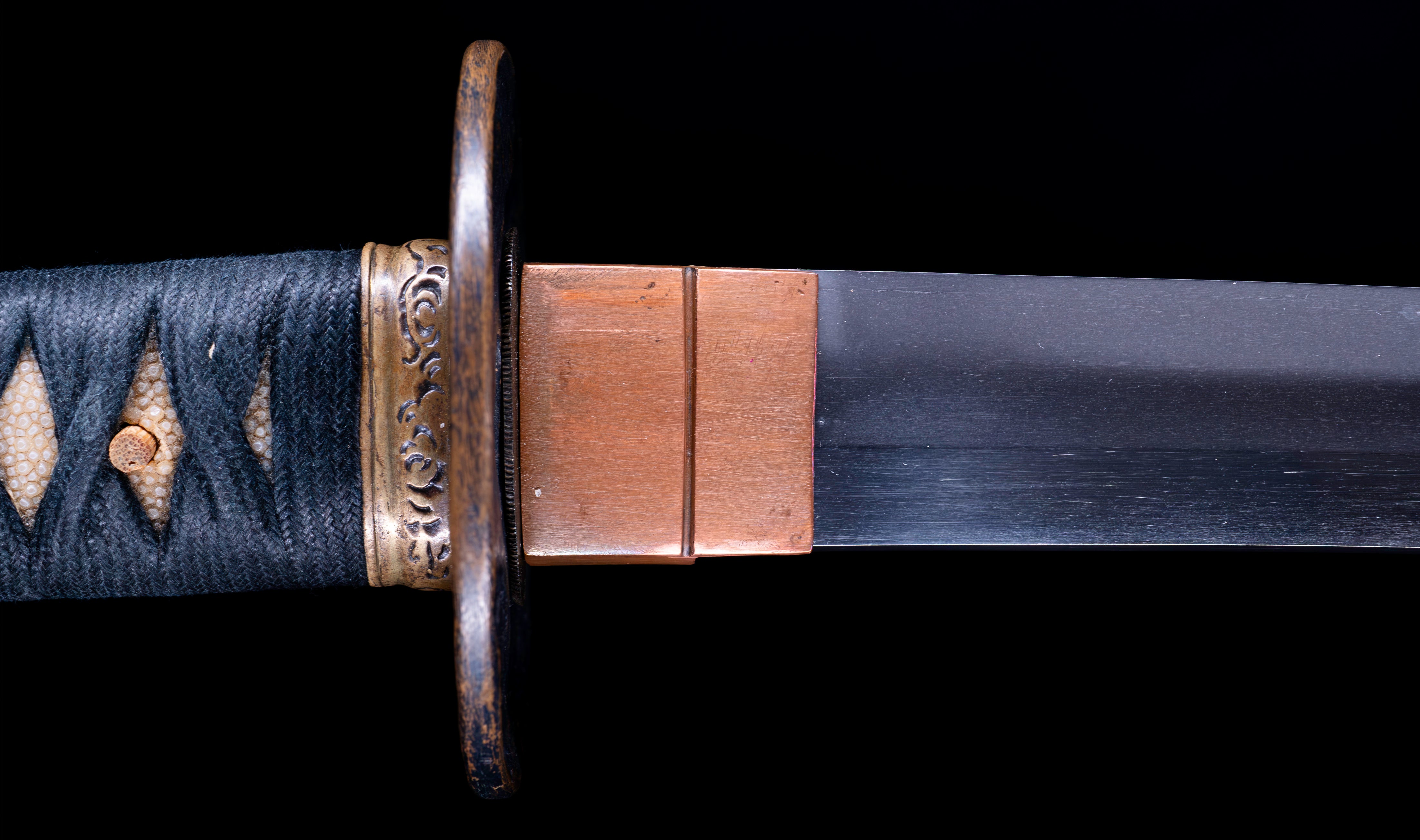
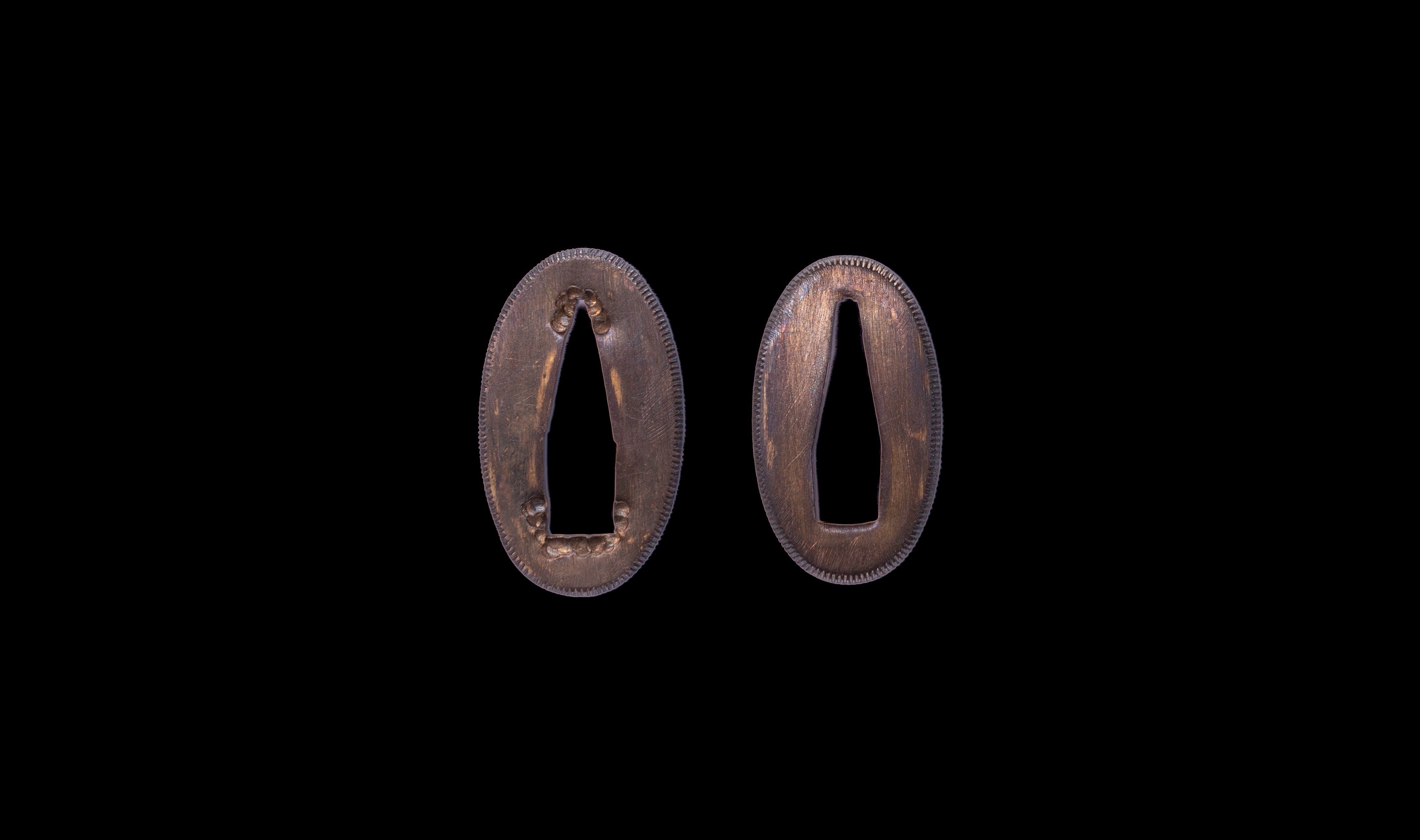
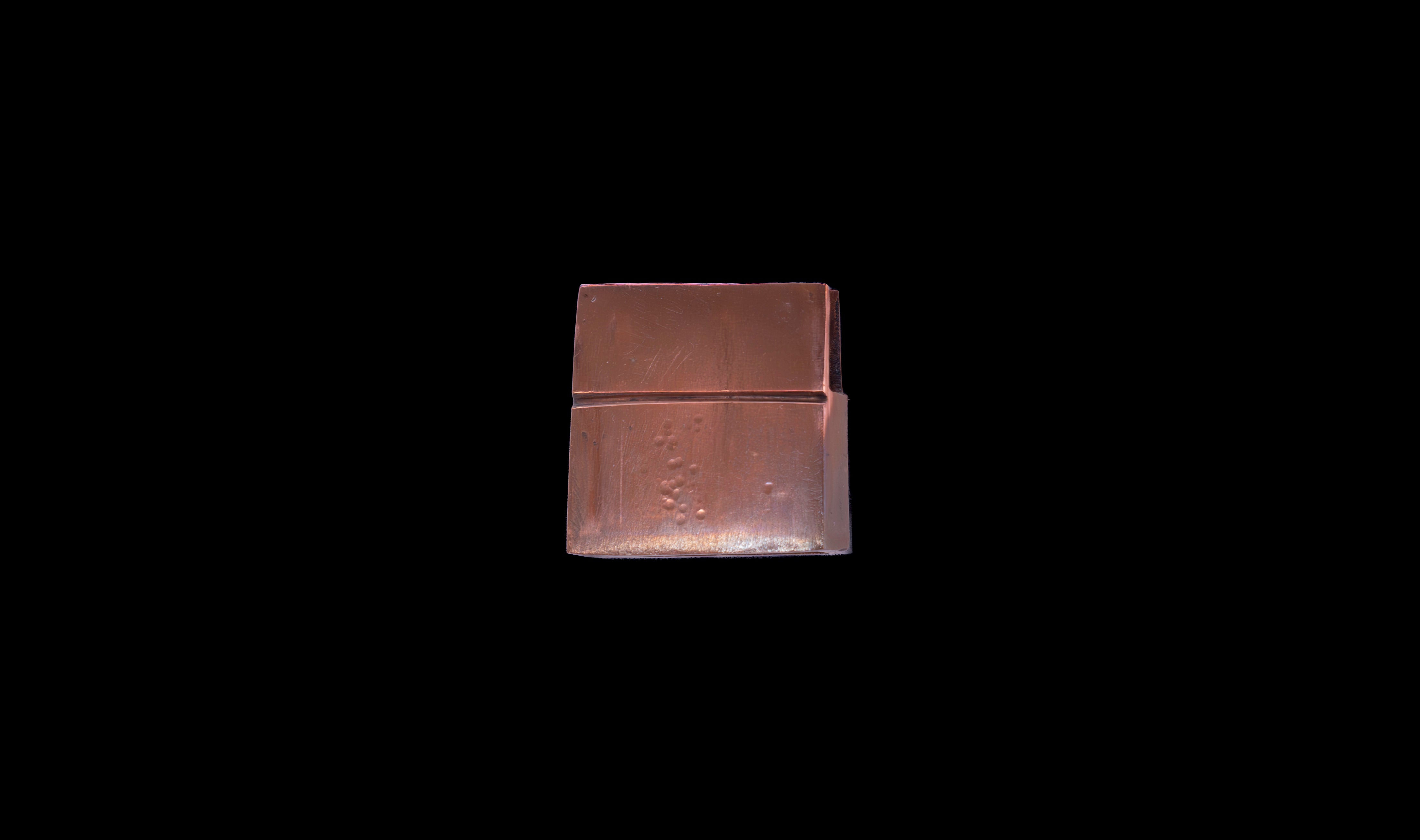
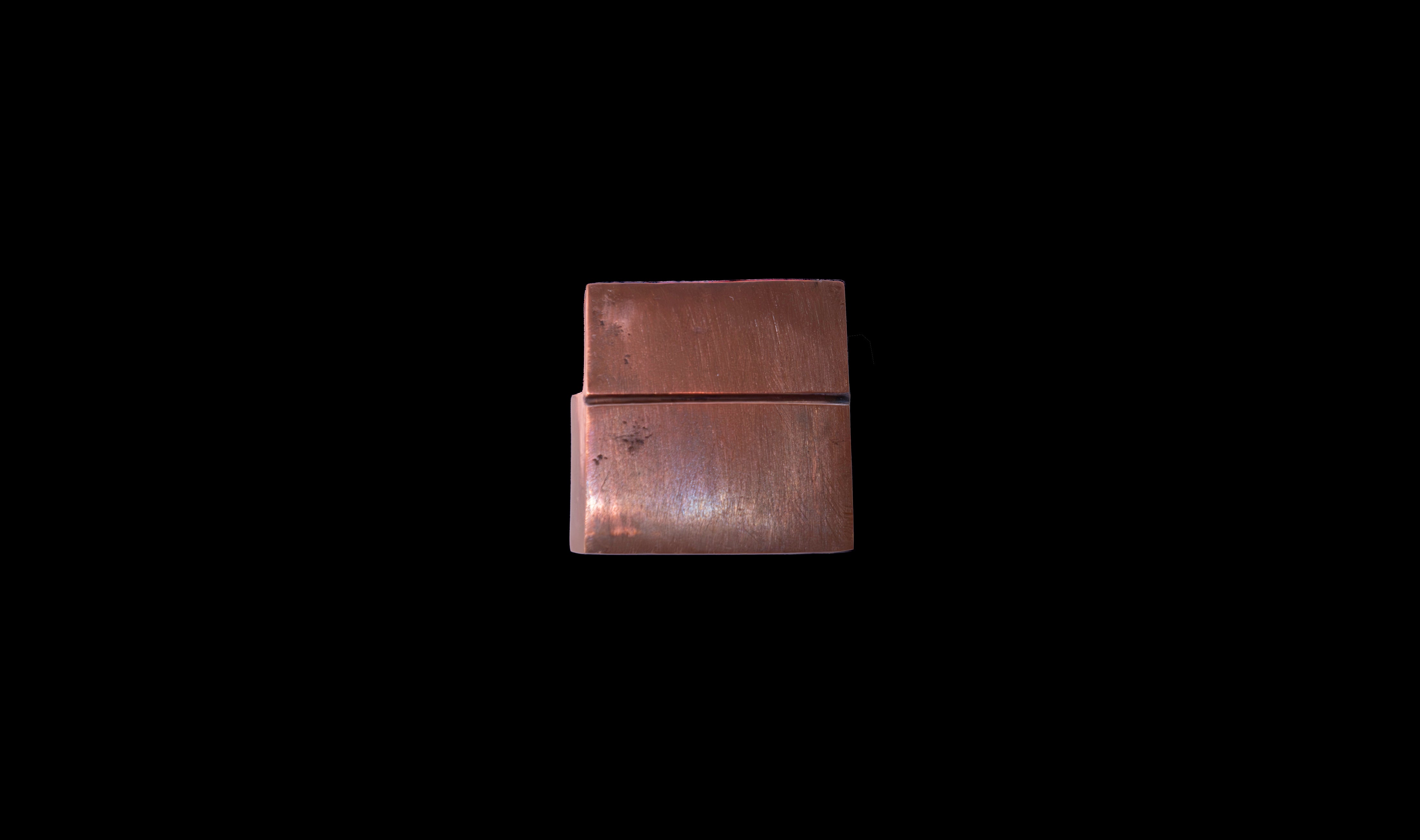
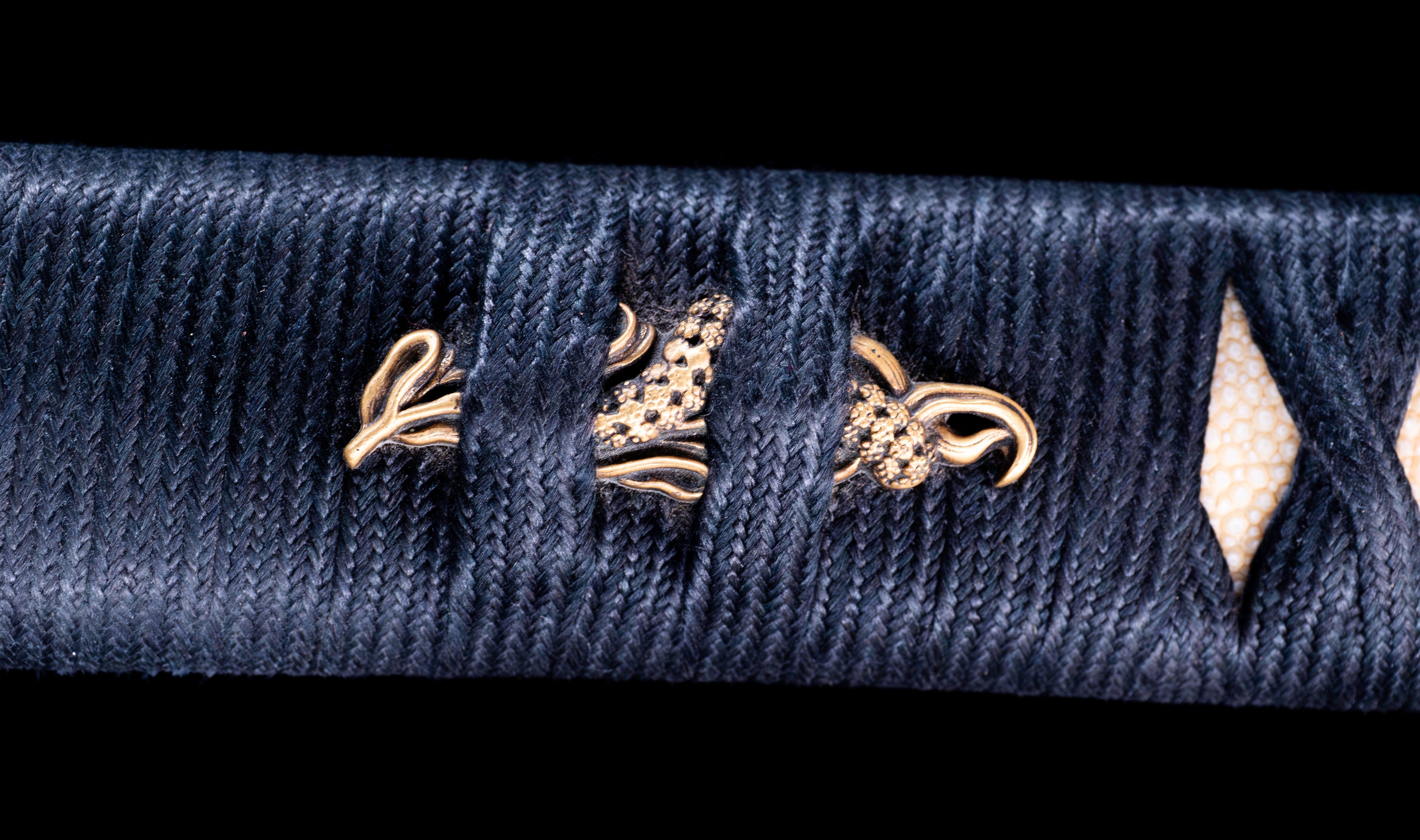
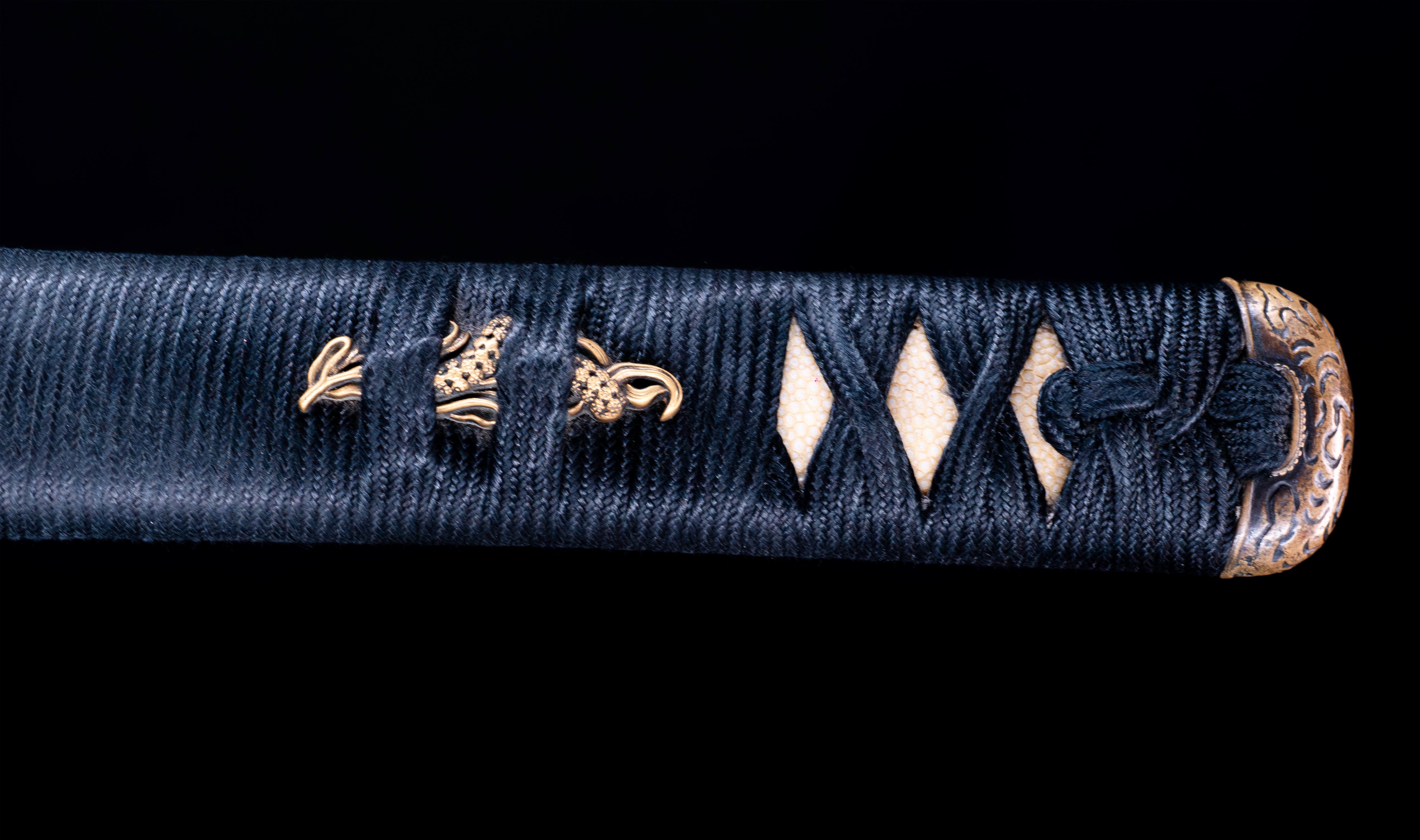
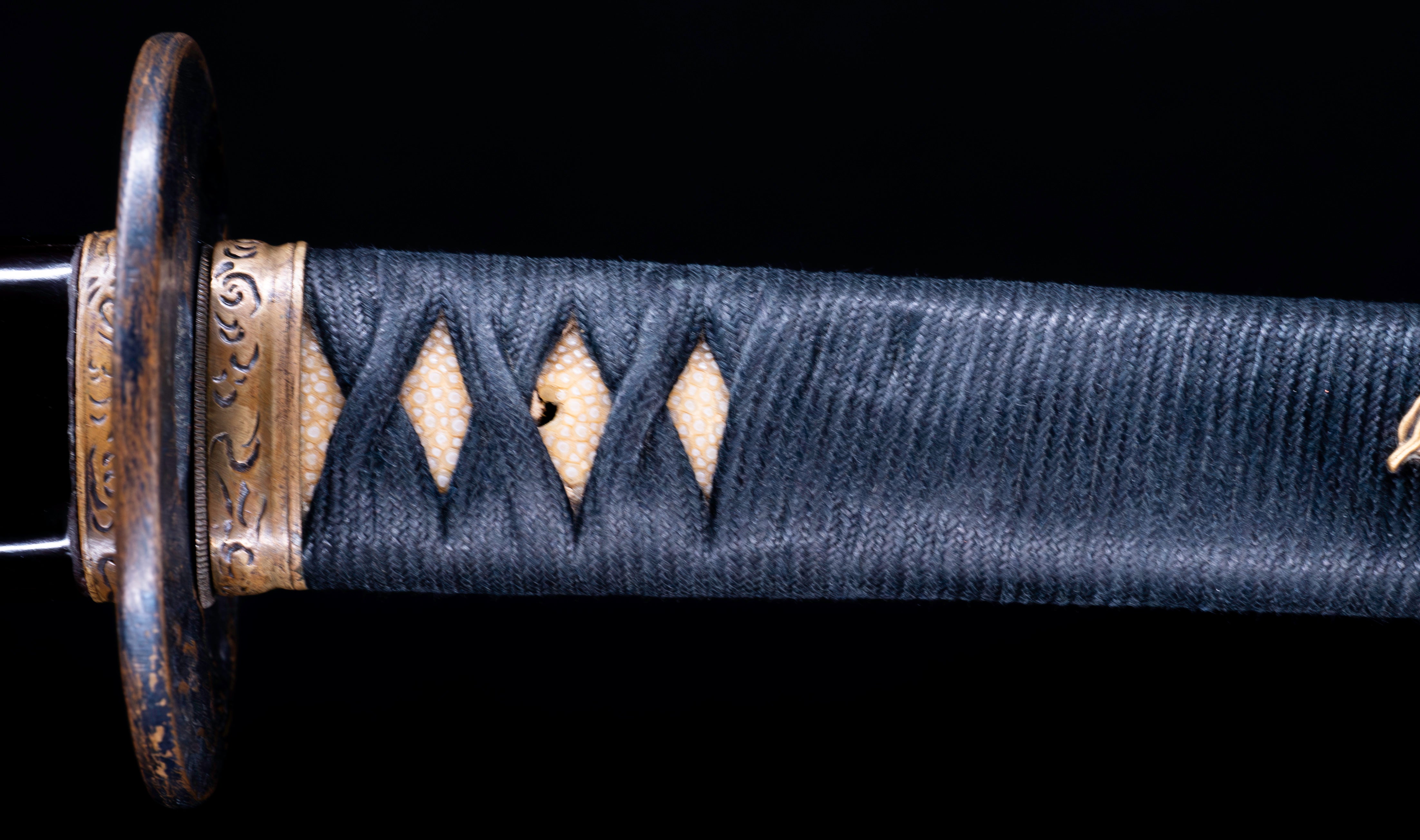
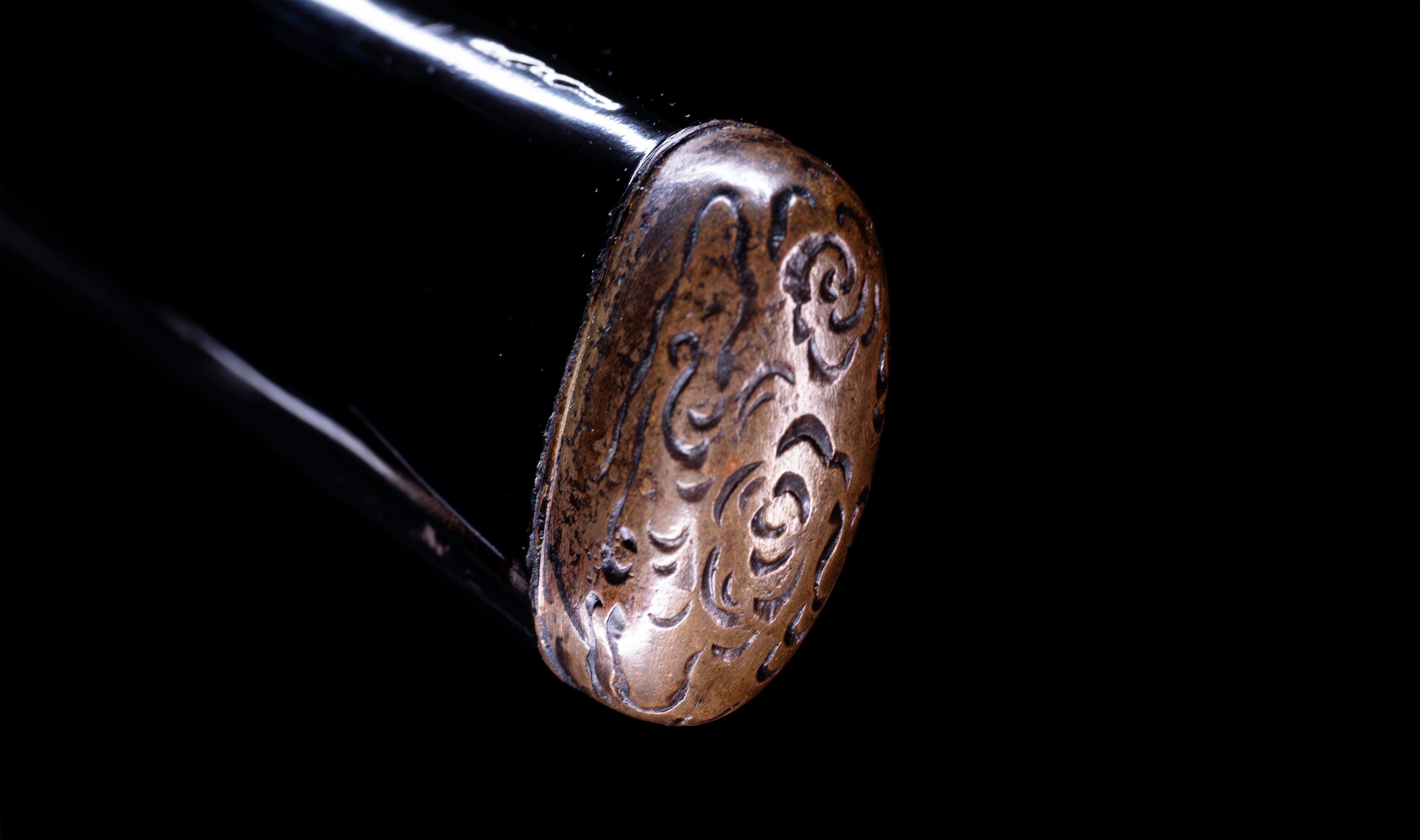
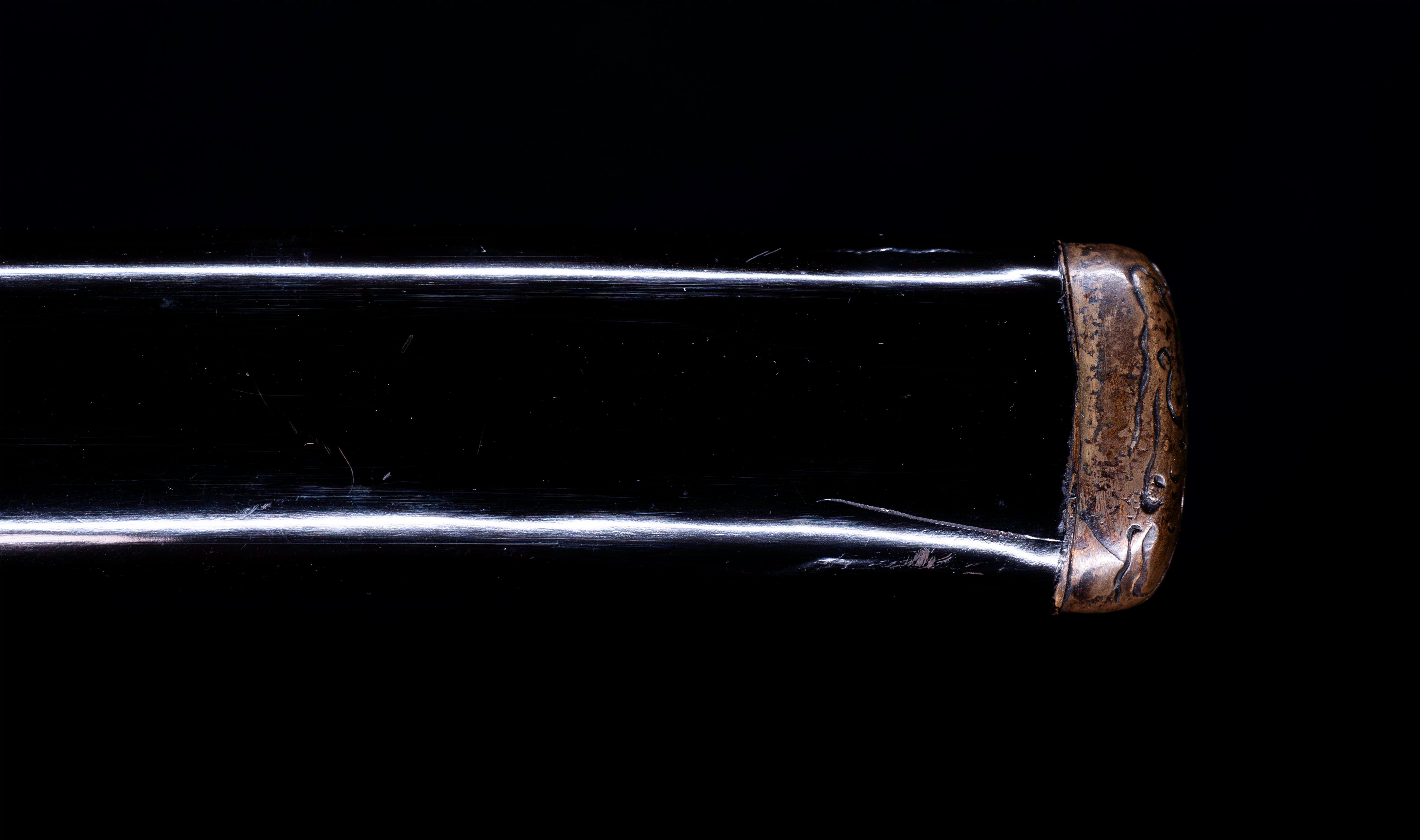
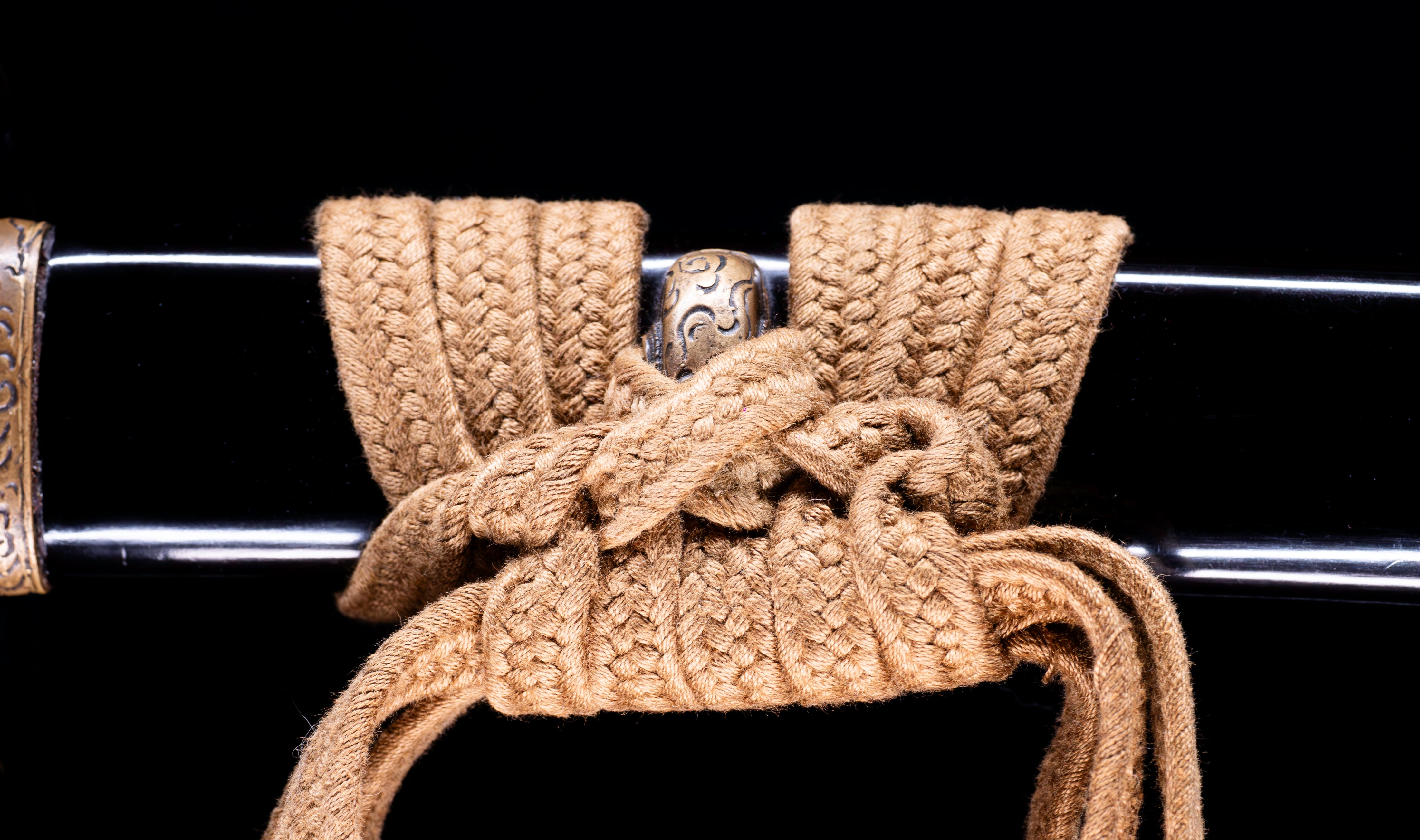
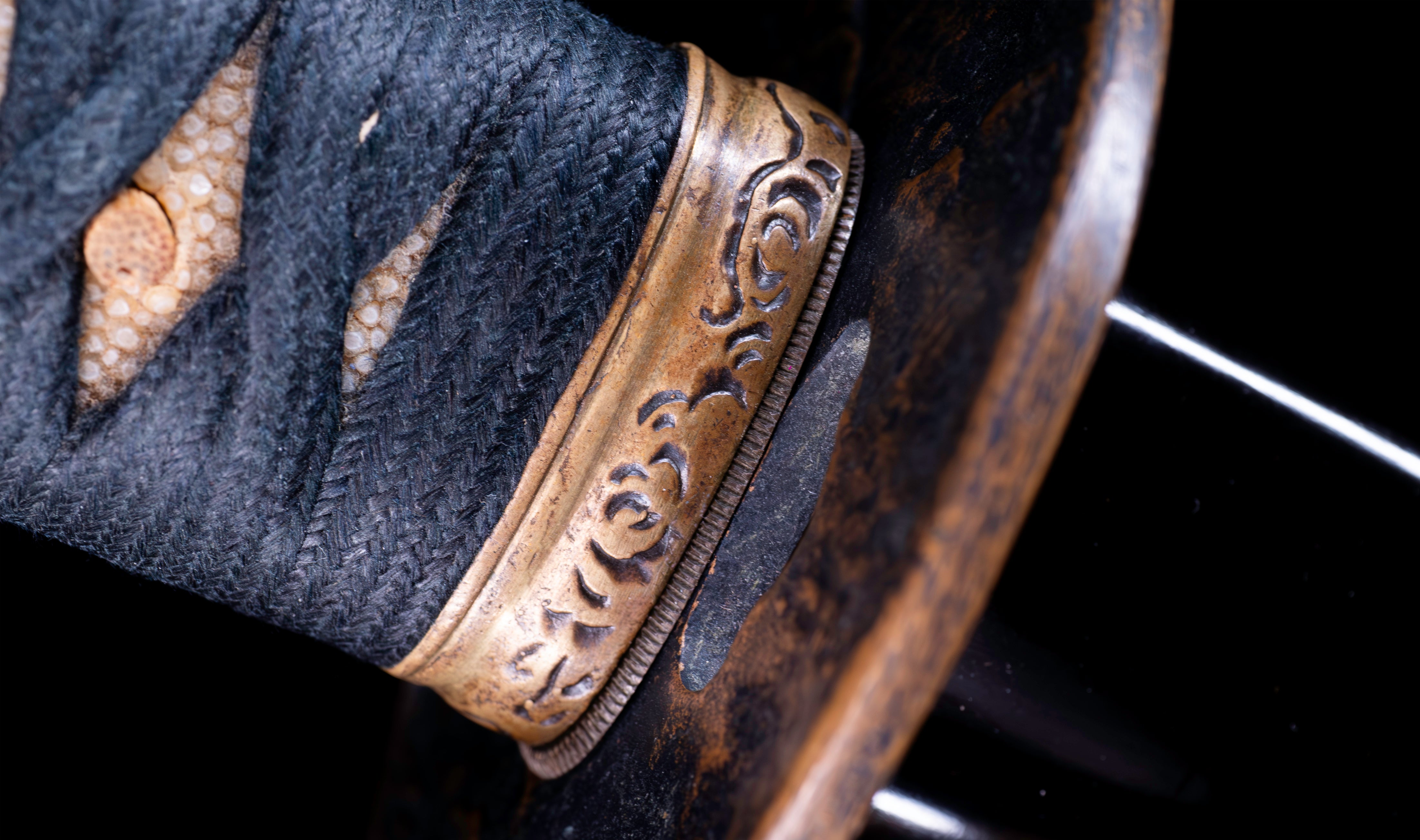
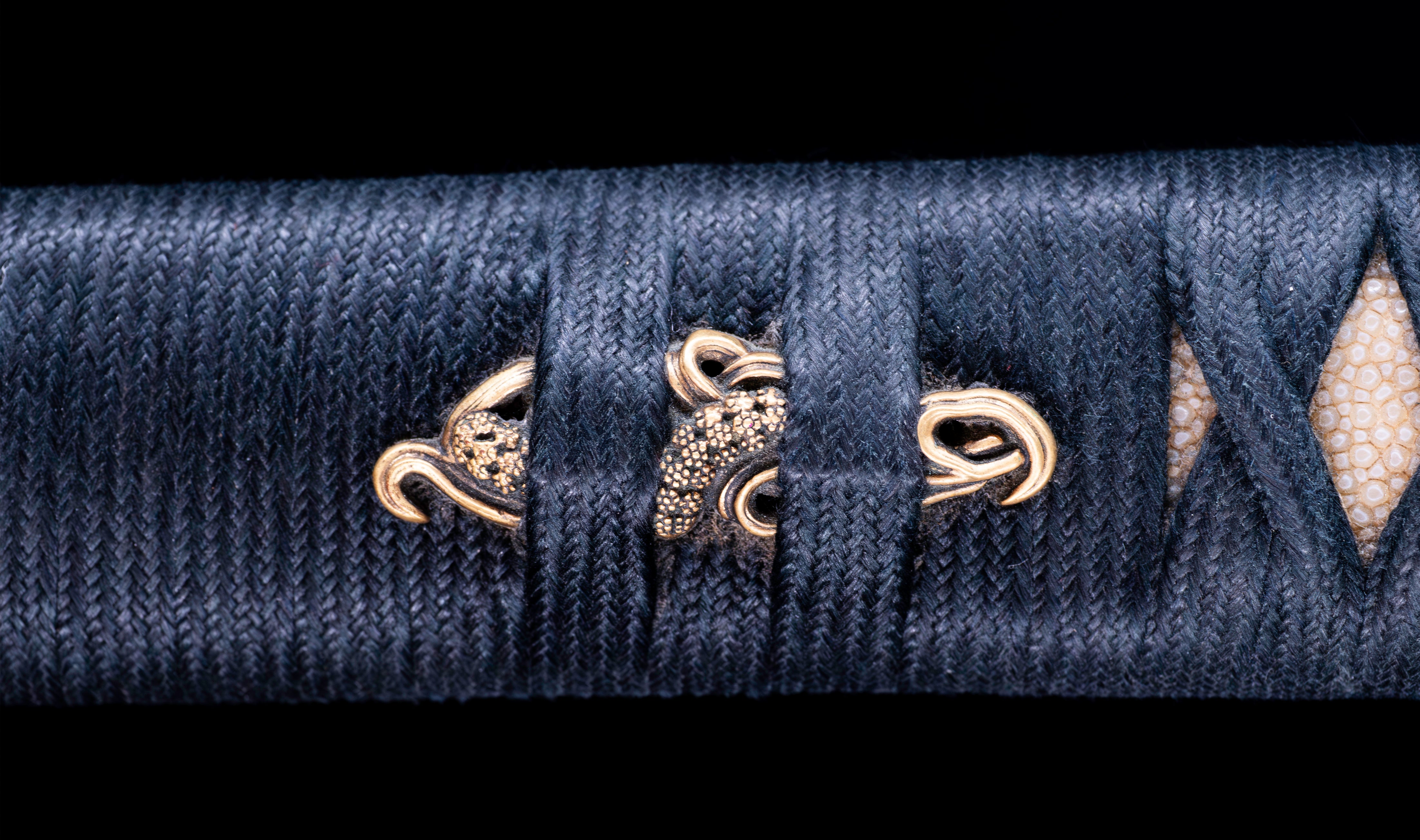
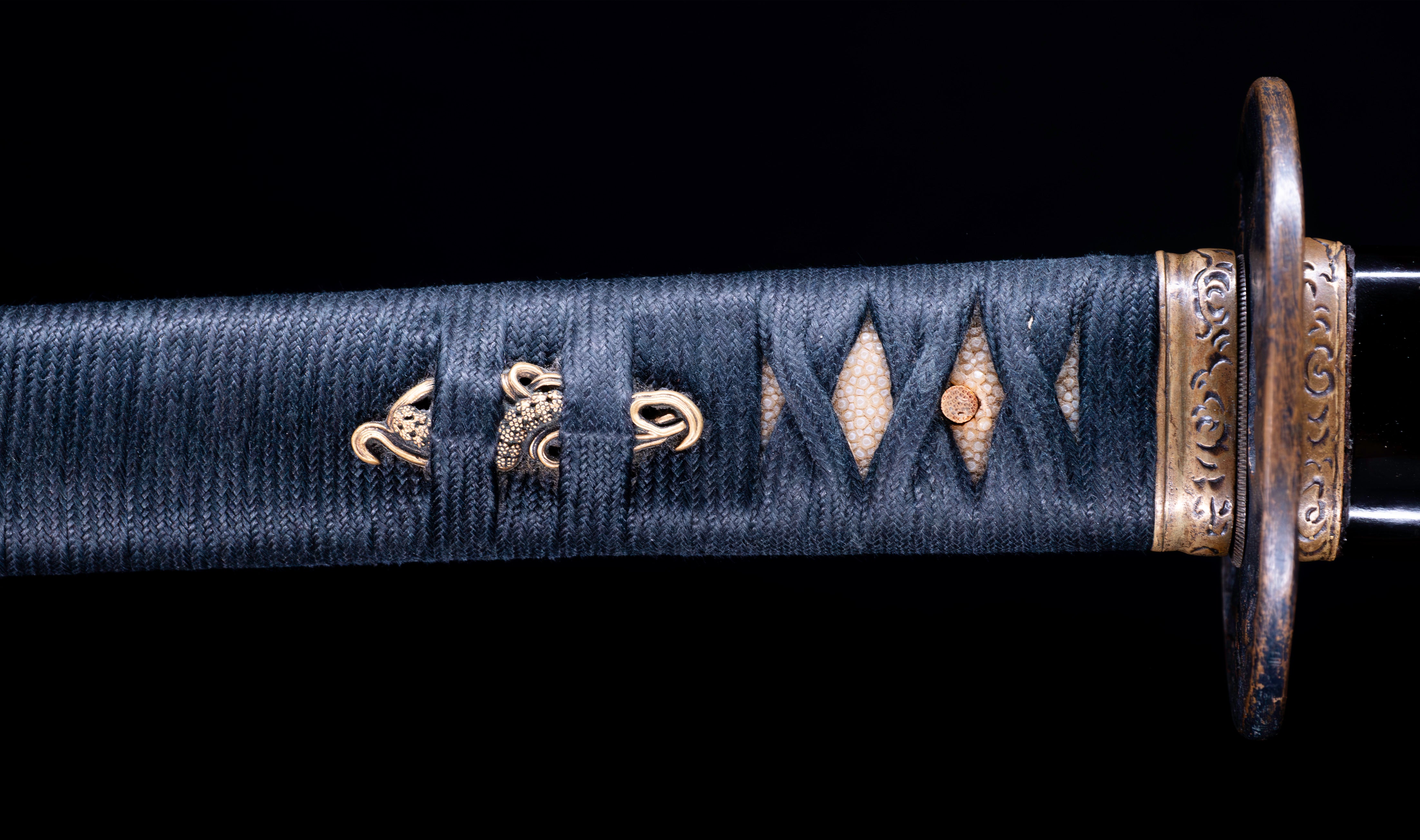
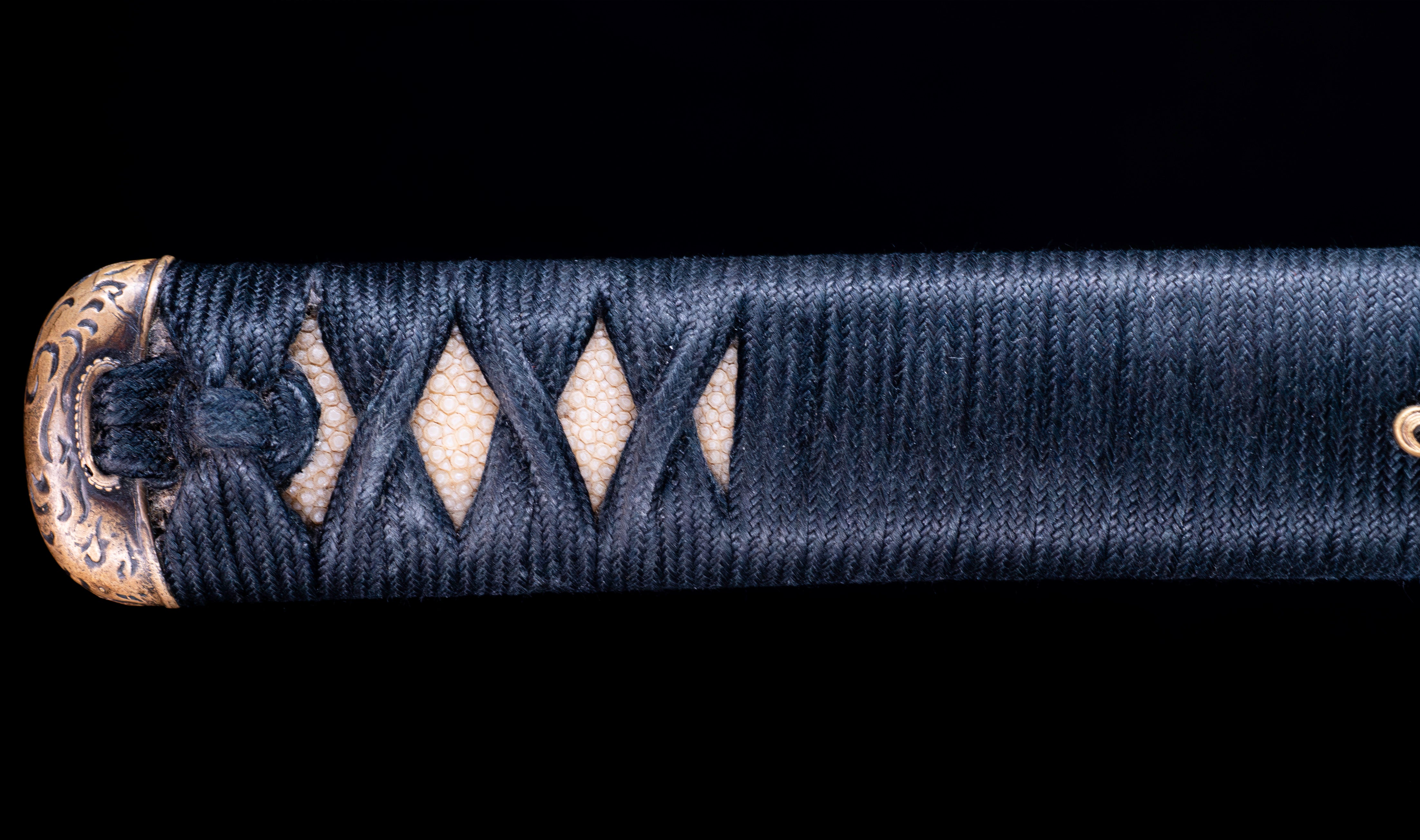
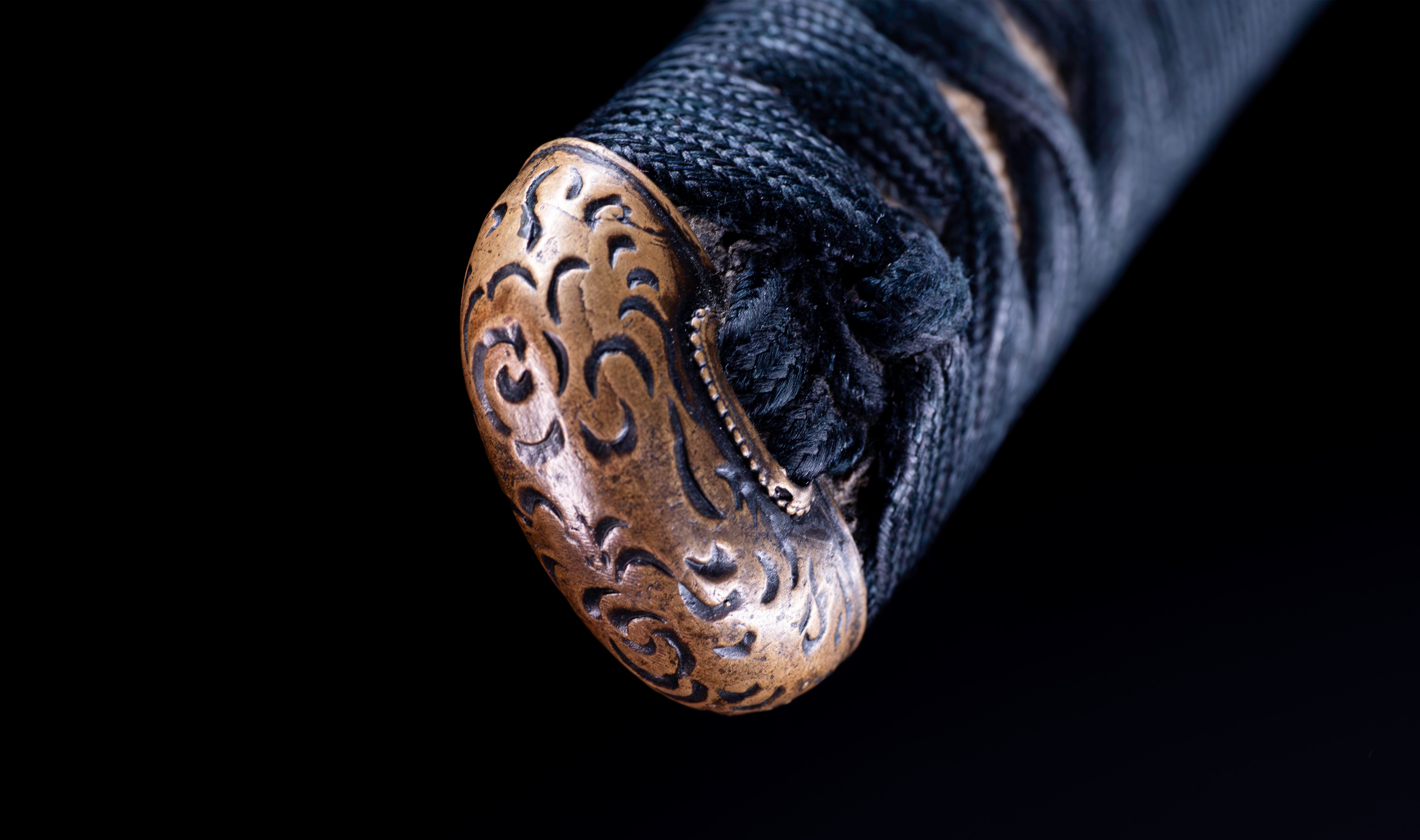
Signature (Mei): 石堂輝秀作 Ishidō Teruhide saku Swordsmith: Ishidō Teruhide (菊池清一, Kikuchi Seiichi) — 10th generation Ishidō family School / Tradition: Ishidō School — descendant of Musashi Daijō Koreichi and Ishidō Unju Koreichi Period: Shōwa era (昭和) — modern traditionally-forged nihonto Mounting: Koshirae — iron maru-gata tsuba with landscape relief, brass fuchi-kashira with karakusa engraving, navy ito tsuka-maki over samegawa, gilt brass menuki, gold silk sageo Blade Length (Nagasa): 67.4 cm Curvature (Sori): 2.6 cm Mekugi-ana: 1 Shape: Shinogi-zukuri, chu-kissaki Hamon: Notare-gunome, nie-deki, bright and active nioiguchi Boshi: Ko-maru with clean turnback, fukura kareru tendency Nakago: Signed omote: 石堂輝秀作 (Ishidō Teruhide saku), 1 mekugi-ana A katana signed Ishidō Teruhide saku ( 石堂輝秀作 ) — the personal work of Kikuchi Seiichi , 10th generation of the historic Ishidō family, forged during the Shōwa era by one of Japan's most lineage-rich smithing dynasties. At 67.4 cm nagasa with a commanding 2.6 cm sori in pronounced koshi-zori, the blade carries the assertive, grounded geometry of a sword built for practical purpose — forged during a period when Teruhide's skill was directly engaged in producing blades of the highest functional standard. The hamon is a vigorous notare-gunome — broad rolling waves of notare punctuated by rhythmic gunome peaks, the whole executed in a bright nie-deki that fills the nioiguchi with dense crystalline activity. This is a hamon that announces itself immediately and rewards sustained examination: the nie catches differently at every angle, the boundary line between hardened and unhardened steel alive with the micro-structure that only traditional differential hardening produces. The high-quality polish presents the hamon with full clarity, doing justice to the smith's command of the forge and the clay. The boshi closes in ko-maru with a slight fukura kareru tendency — a tightened tip profile that reflects deliberate technical control.
NihontoWatch
Tokyo · 1926-1989頃
昭和から現代へ 断絶と再生
二十世紀は二度この工芸を殺しかけた。戦時の歪みと、占領下の禁令である。1948年の日刀保設立と1953年の作刀再開が刀を美術として再建し、人間国宝と無鑑査がその頂に立つ。
Returns/exchanges only for manufactured defects or incorrect products; notify within 72 hours of delivery. Cancellation only within 2 hours of placing. Customer pays return shipping. Refund within 3 business days of package arrival.