1800年前後、水心子正秀は著述をもって、鍛刀は古作の法に立ち返るべしと説いた。復古刀の運動である。最大の後継者直胤は、数百年絶えていた備前伝と相州伝を確信をもって再現した。
 NihontoWatchNihontoWatch
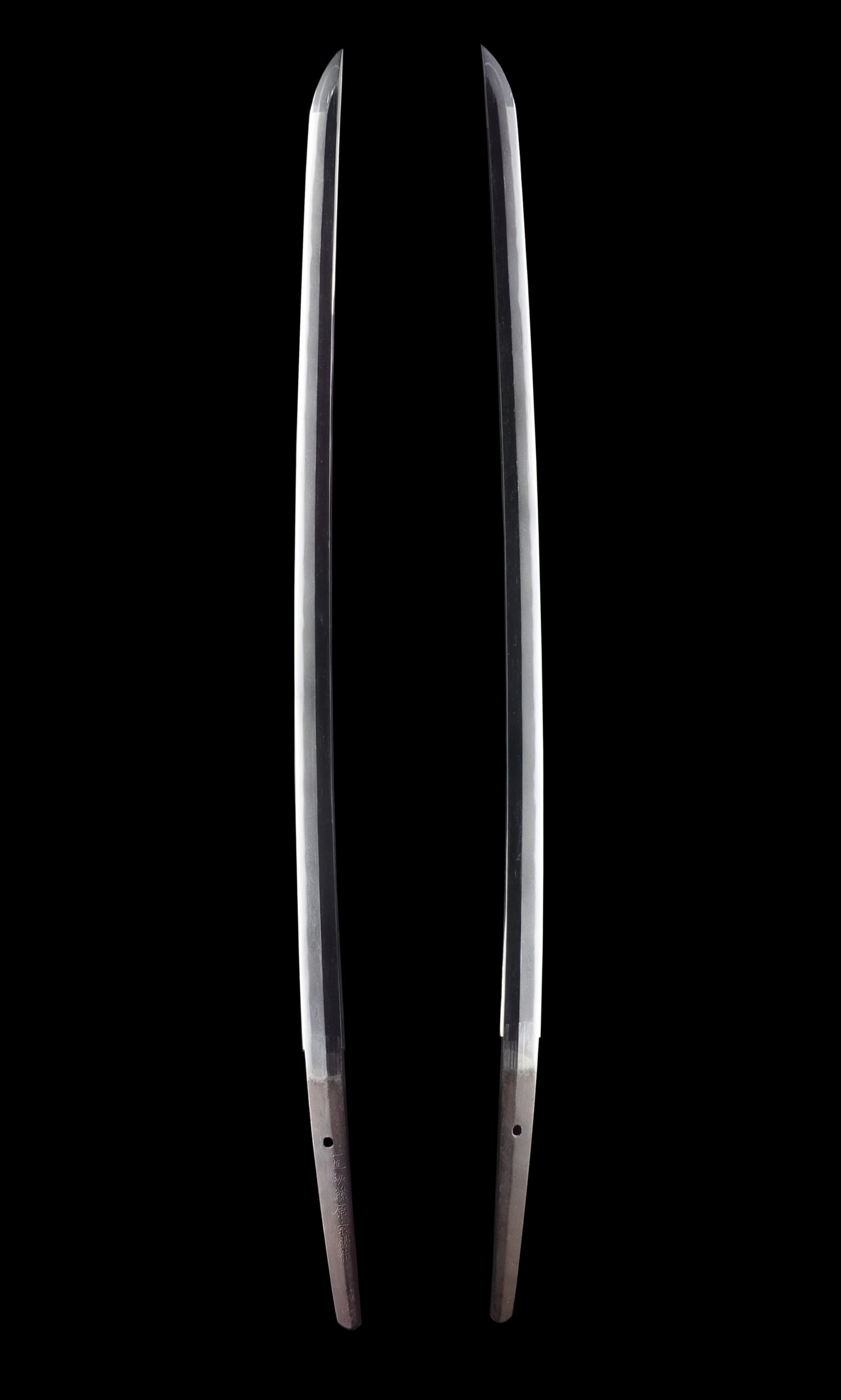
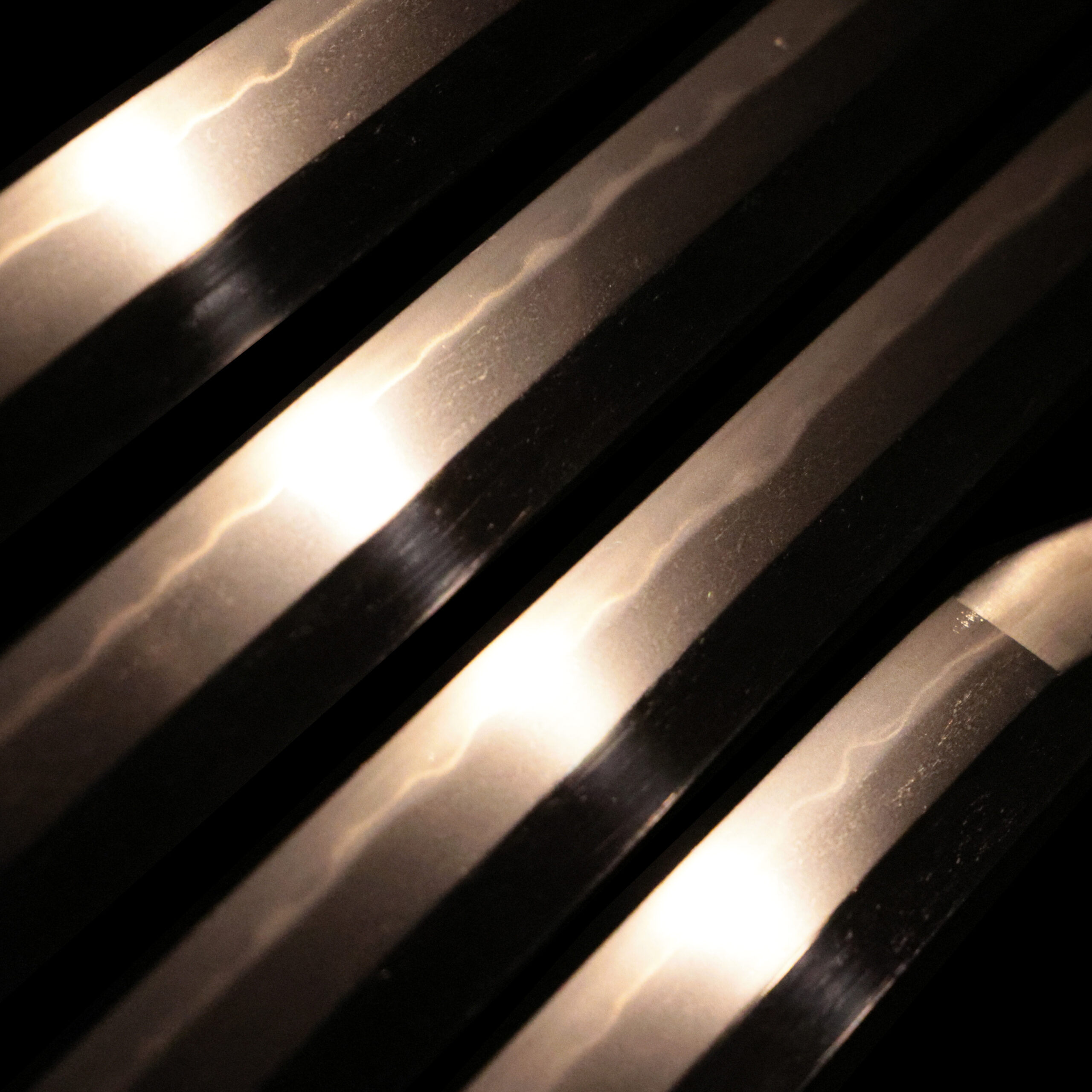
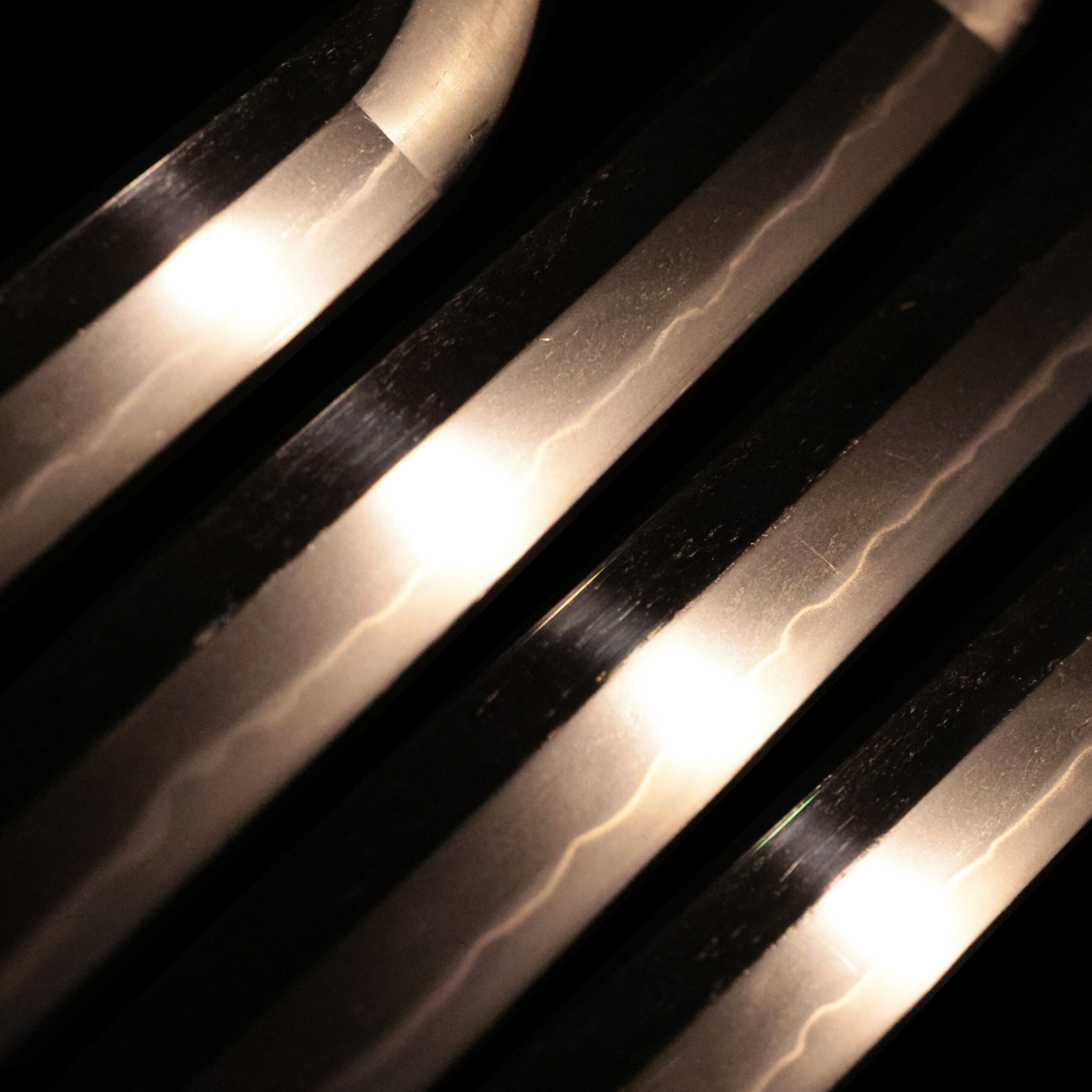
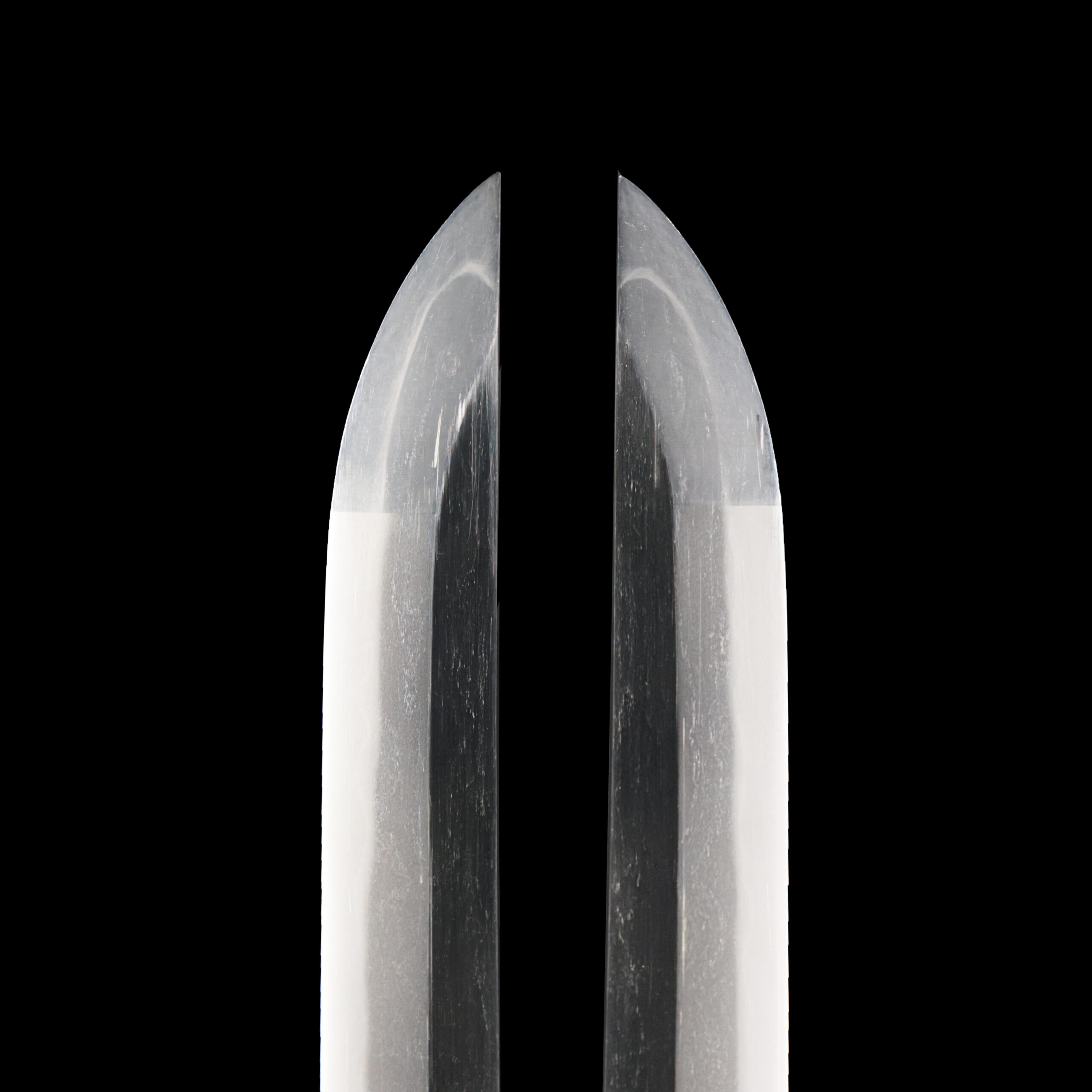
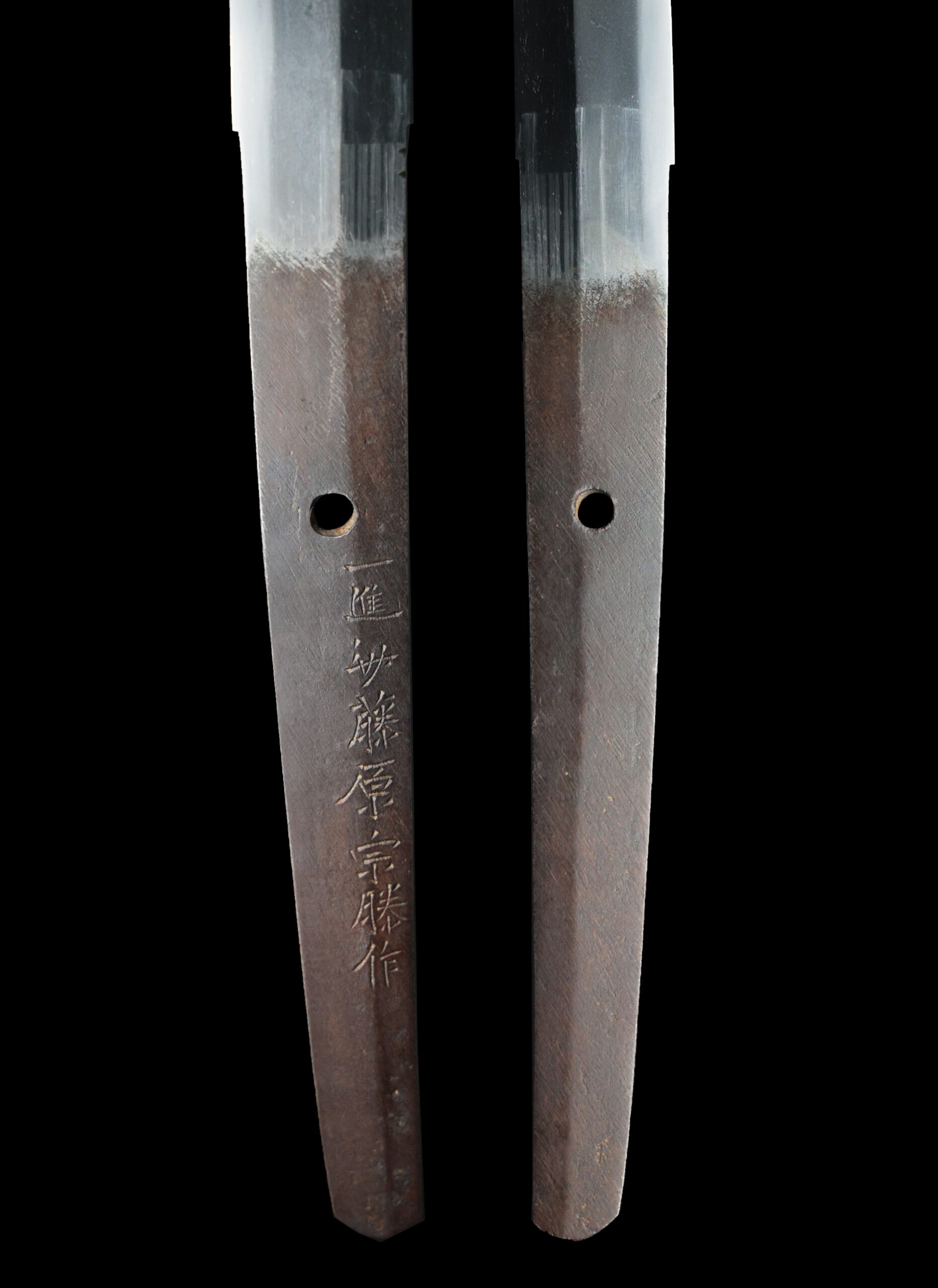
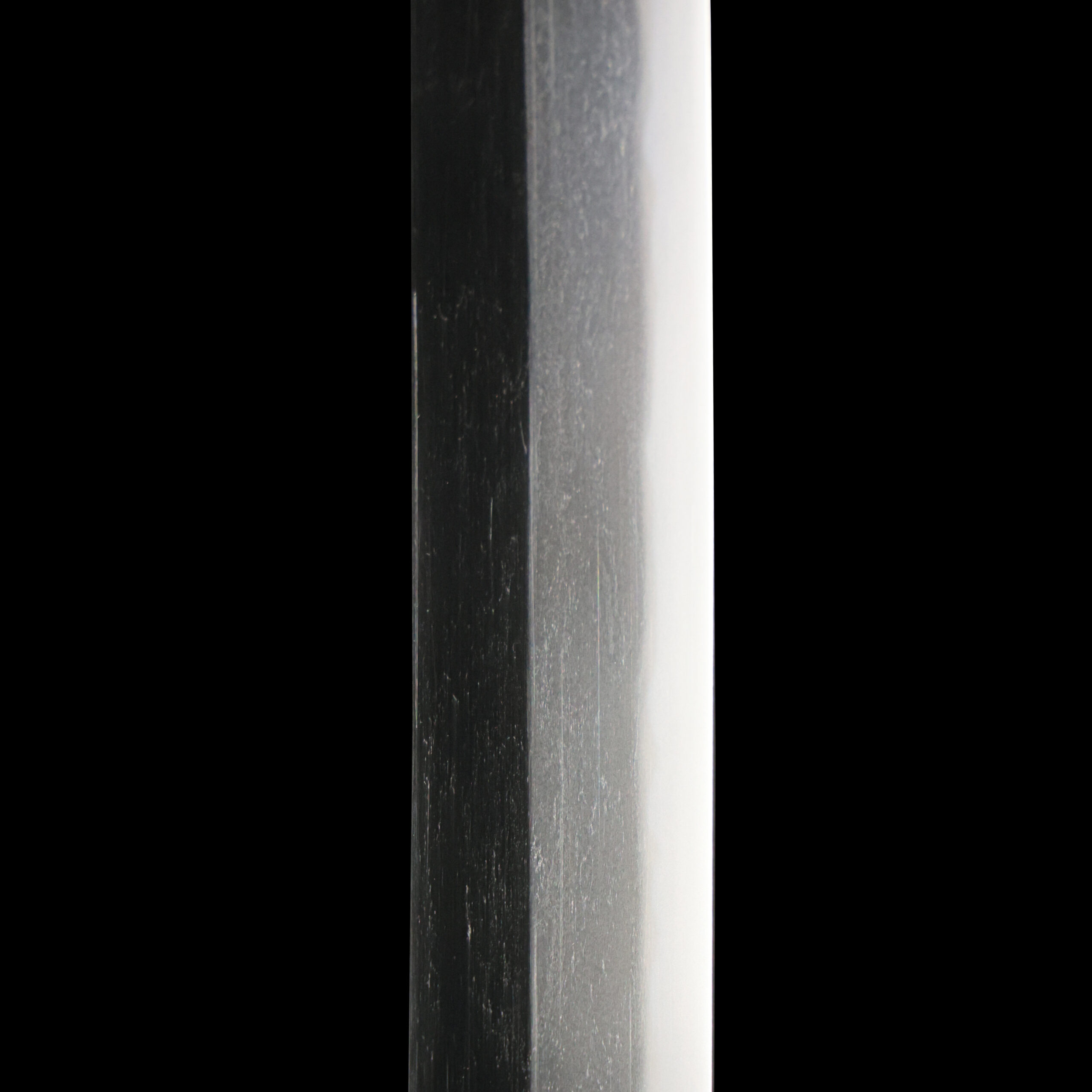
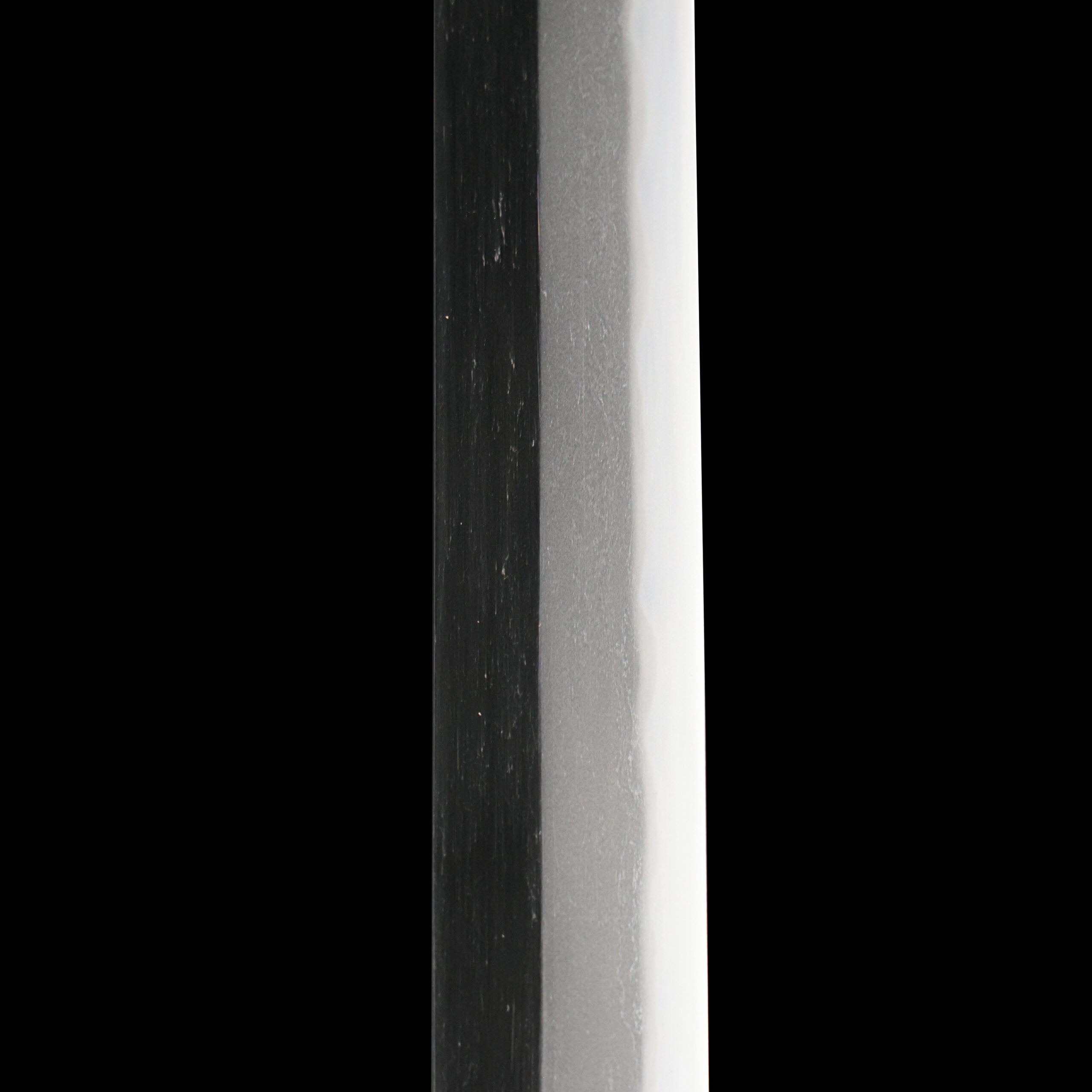
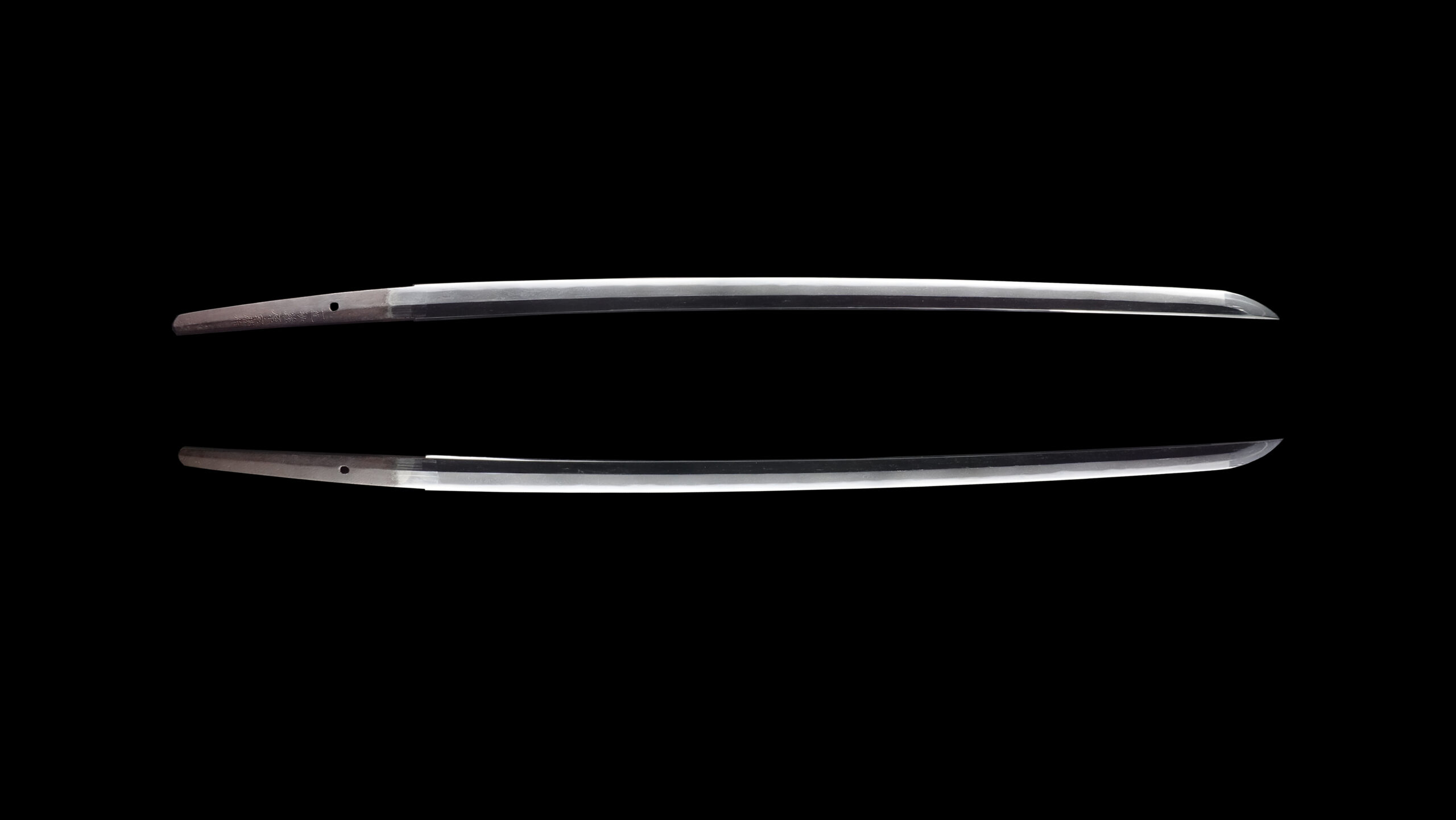
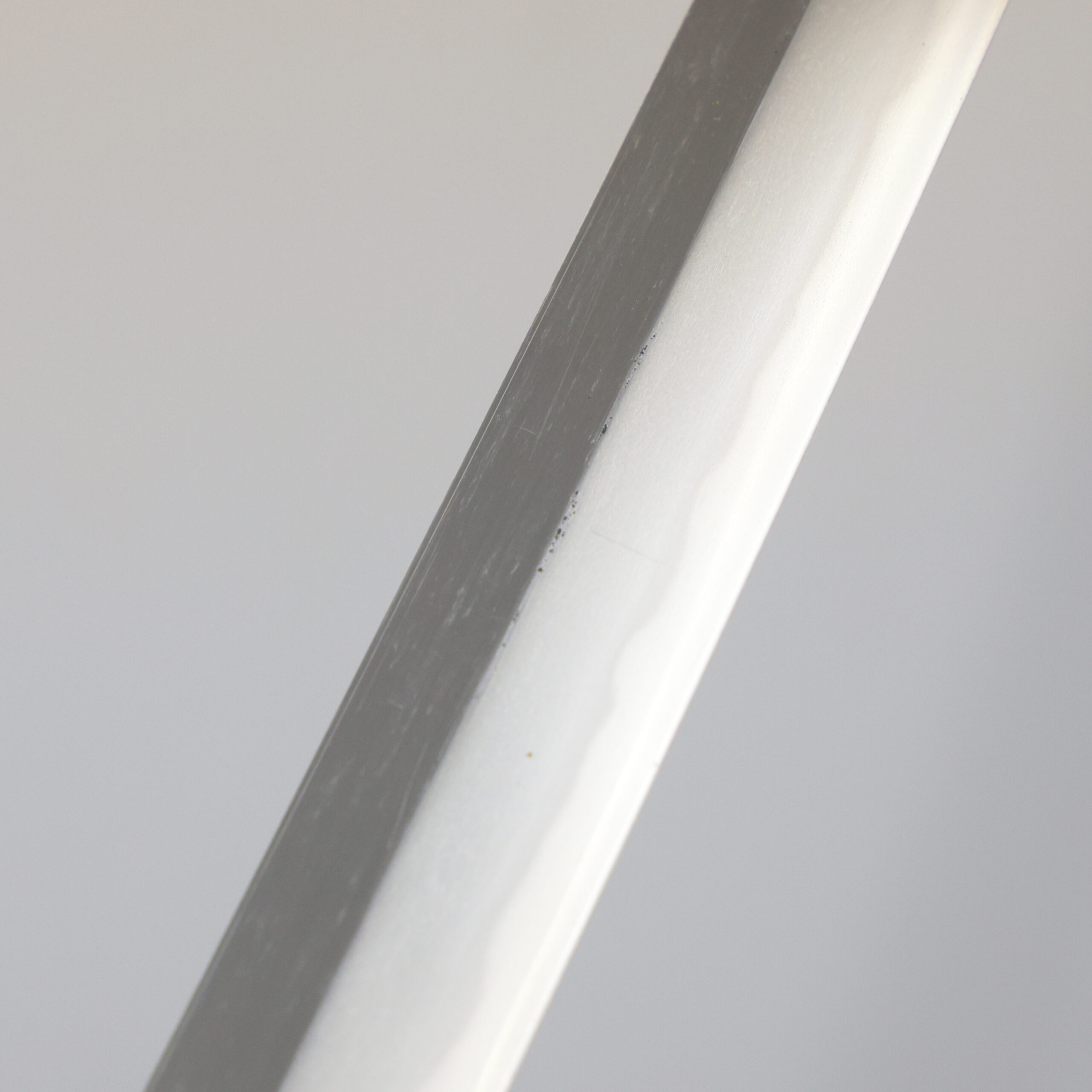
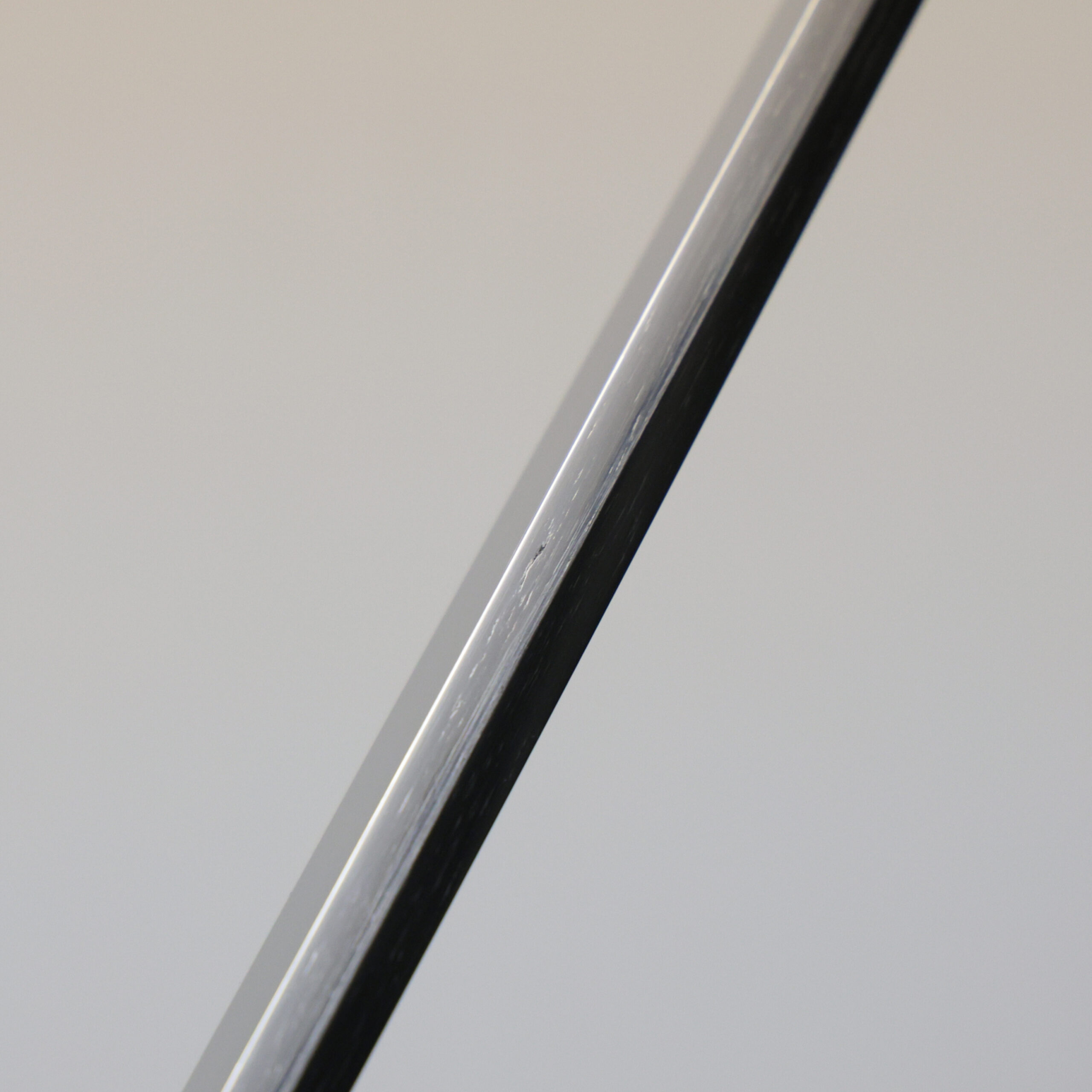
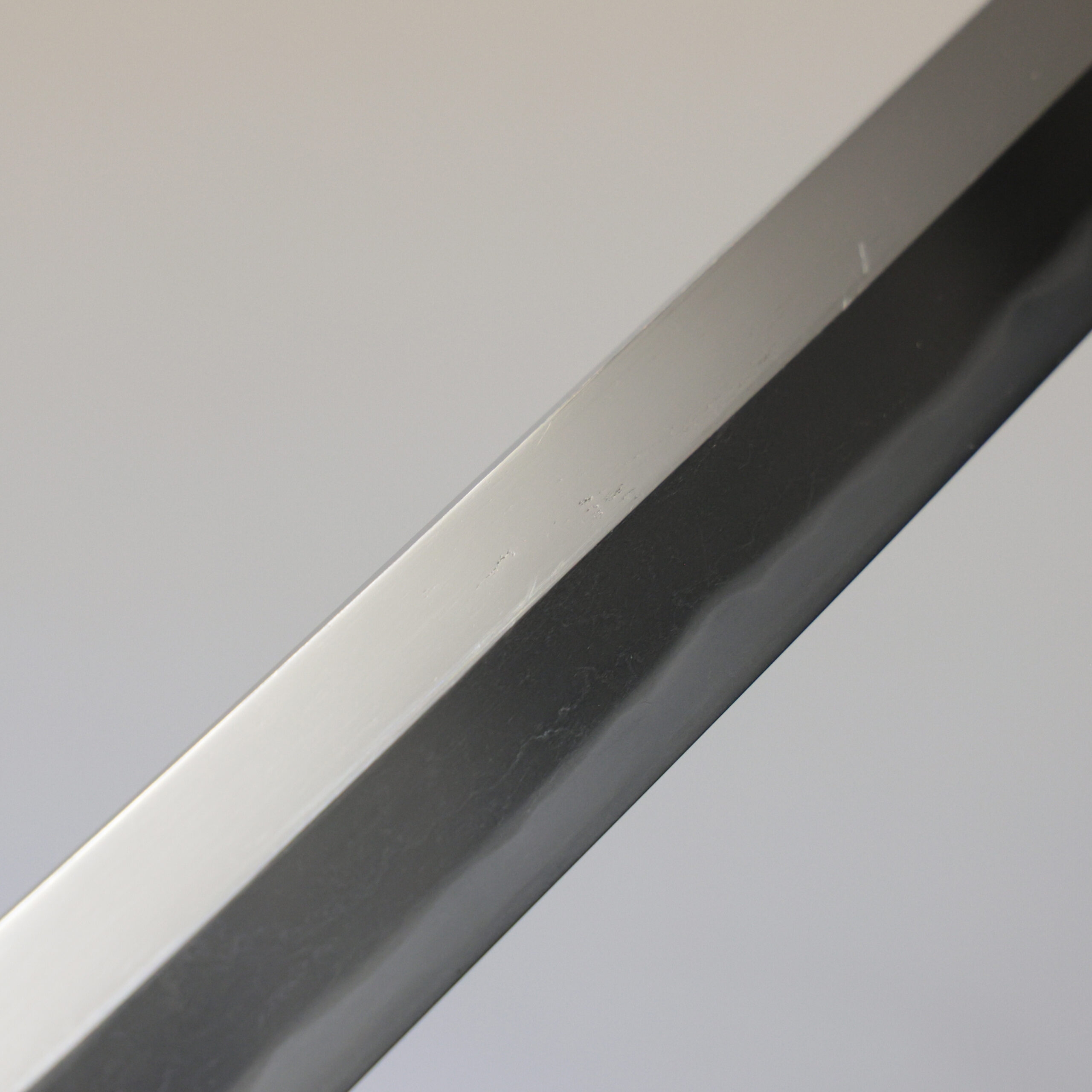
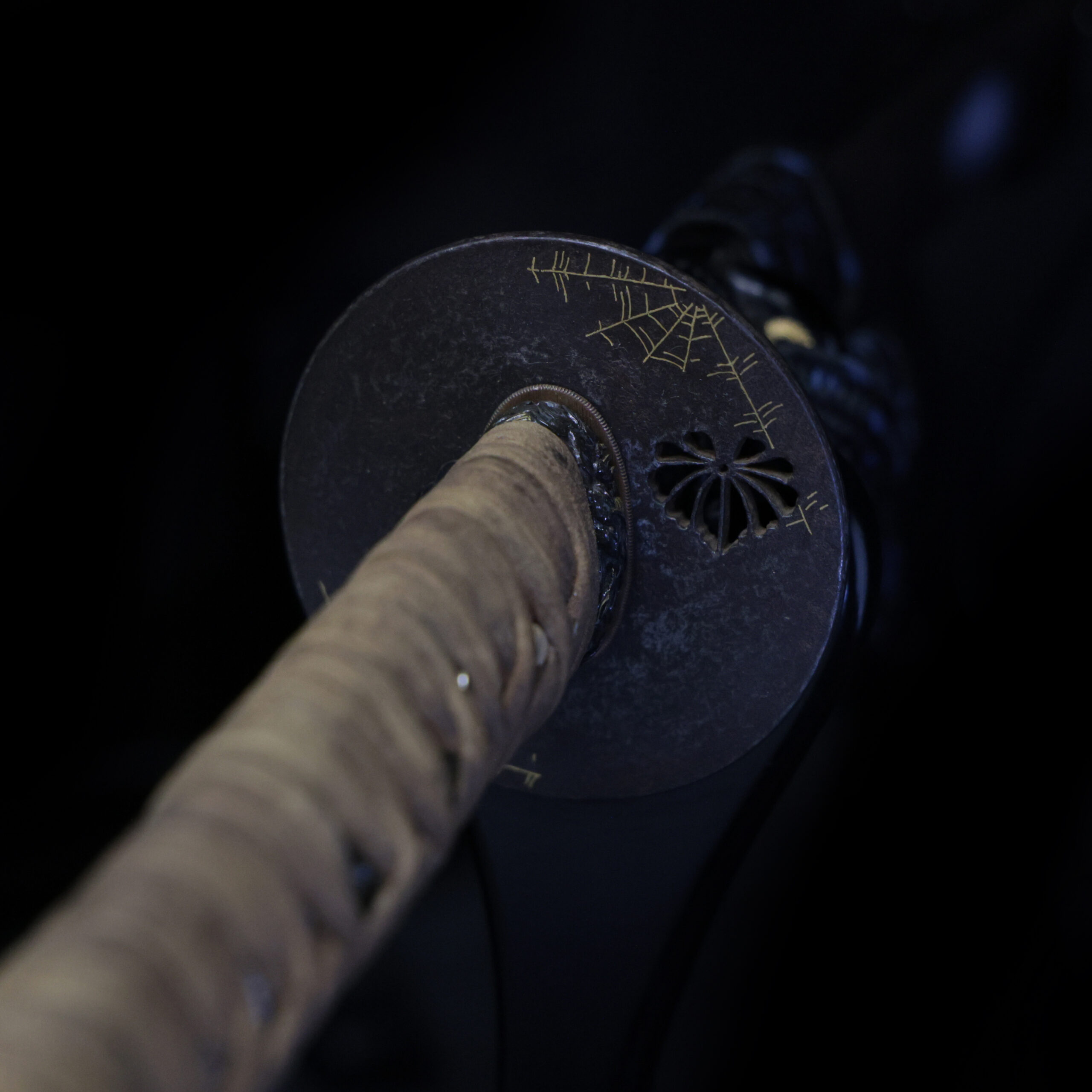
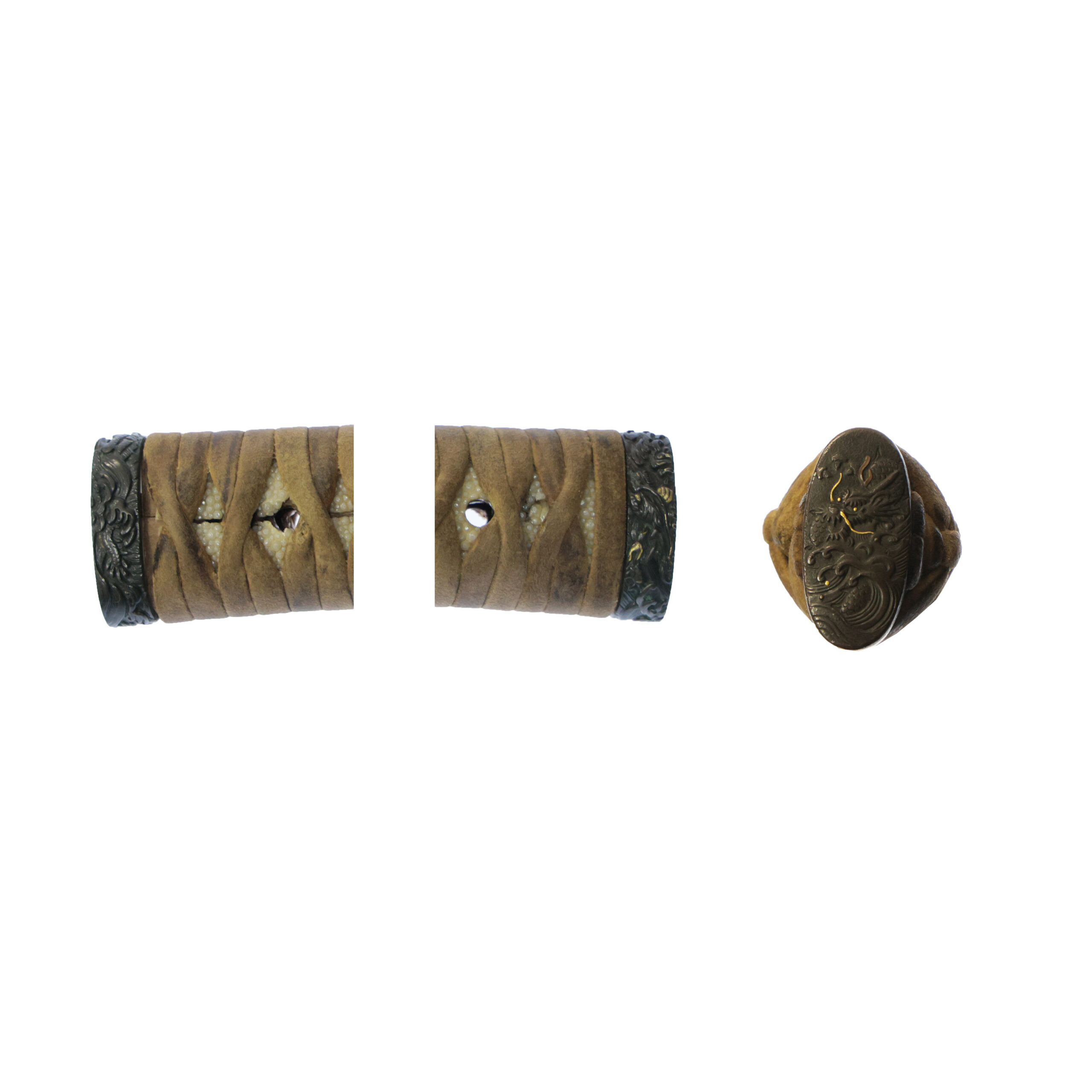
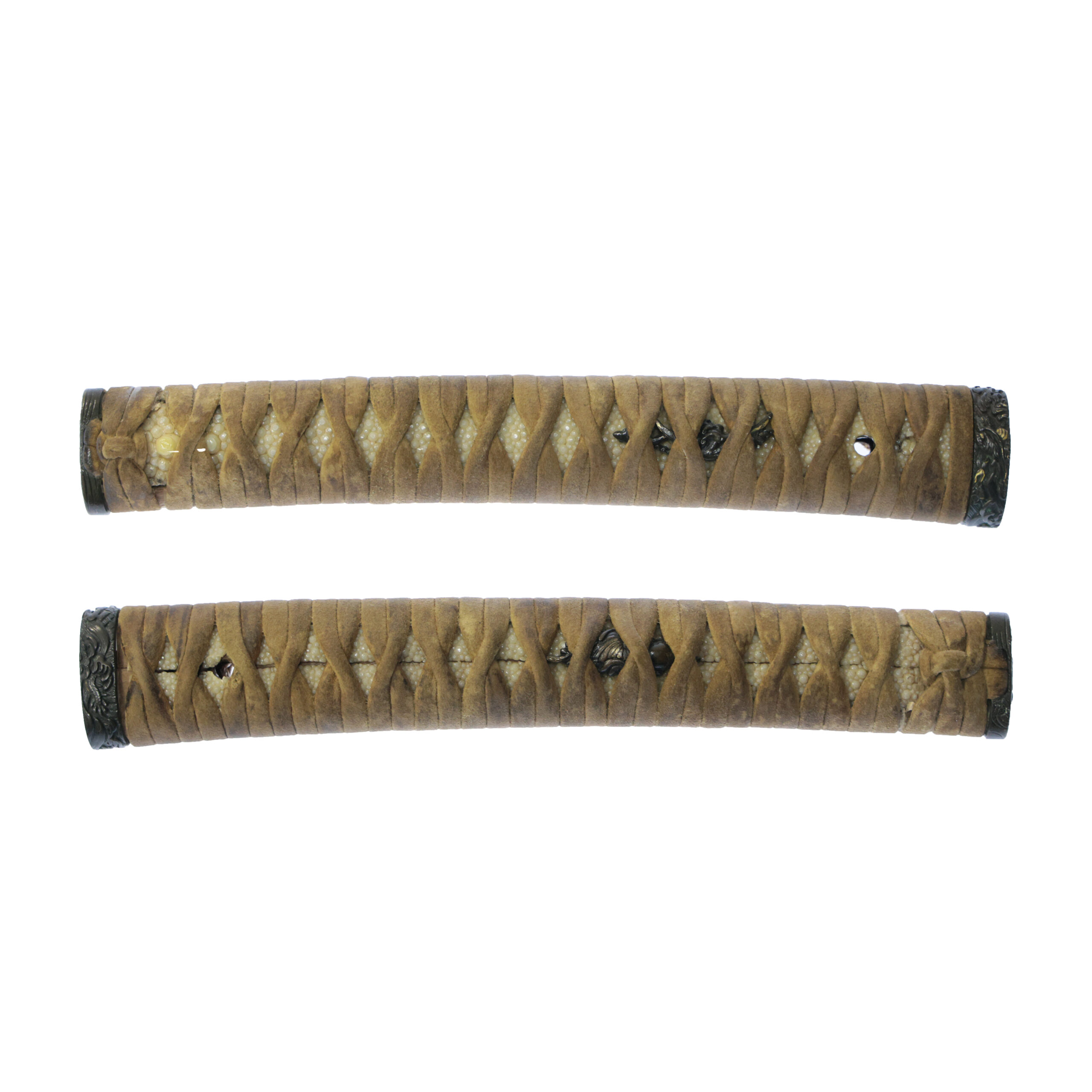
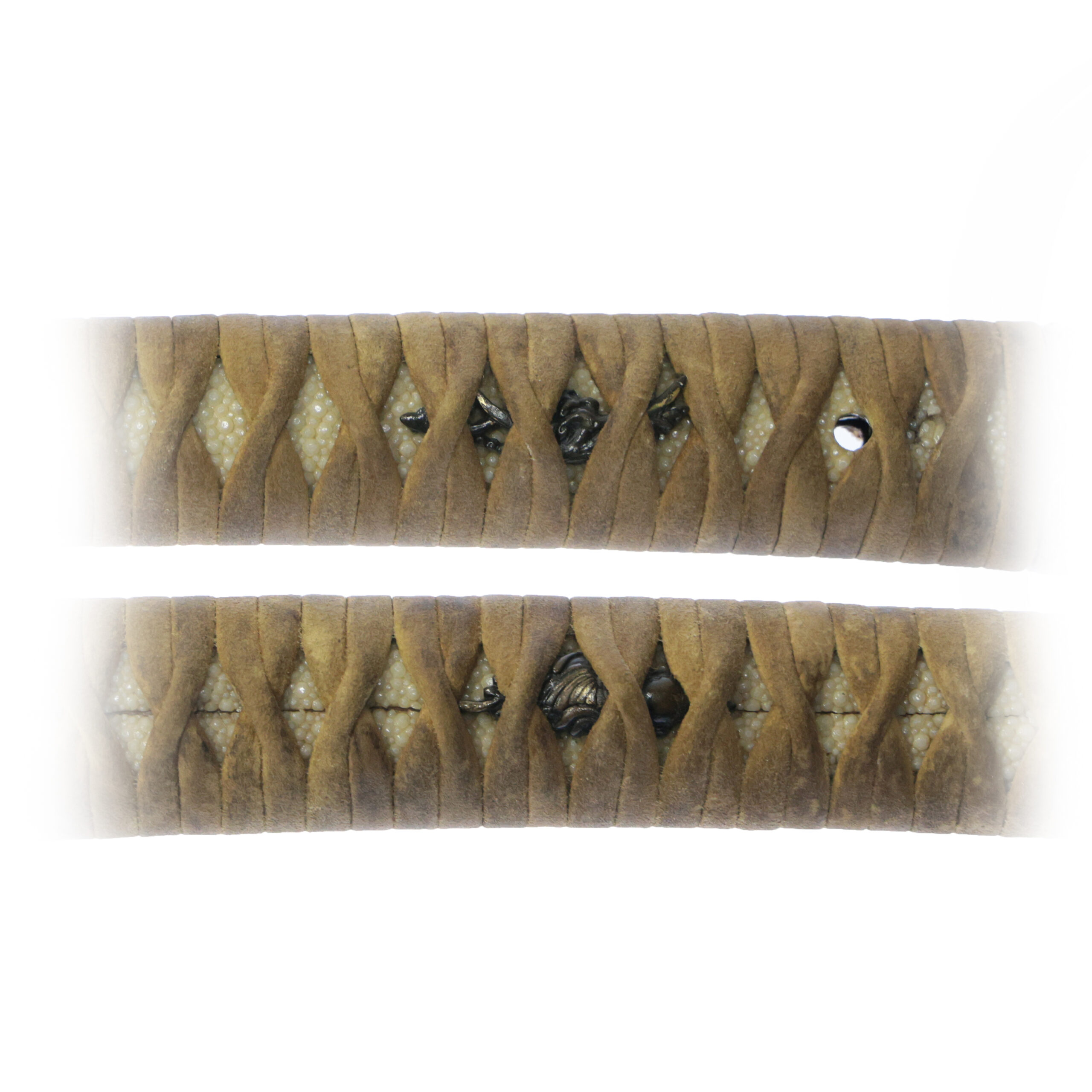
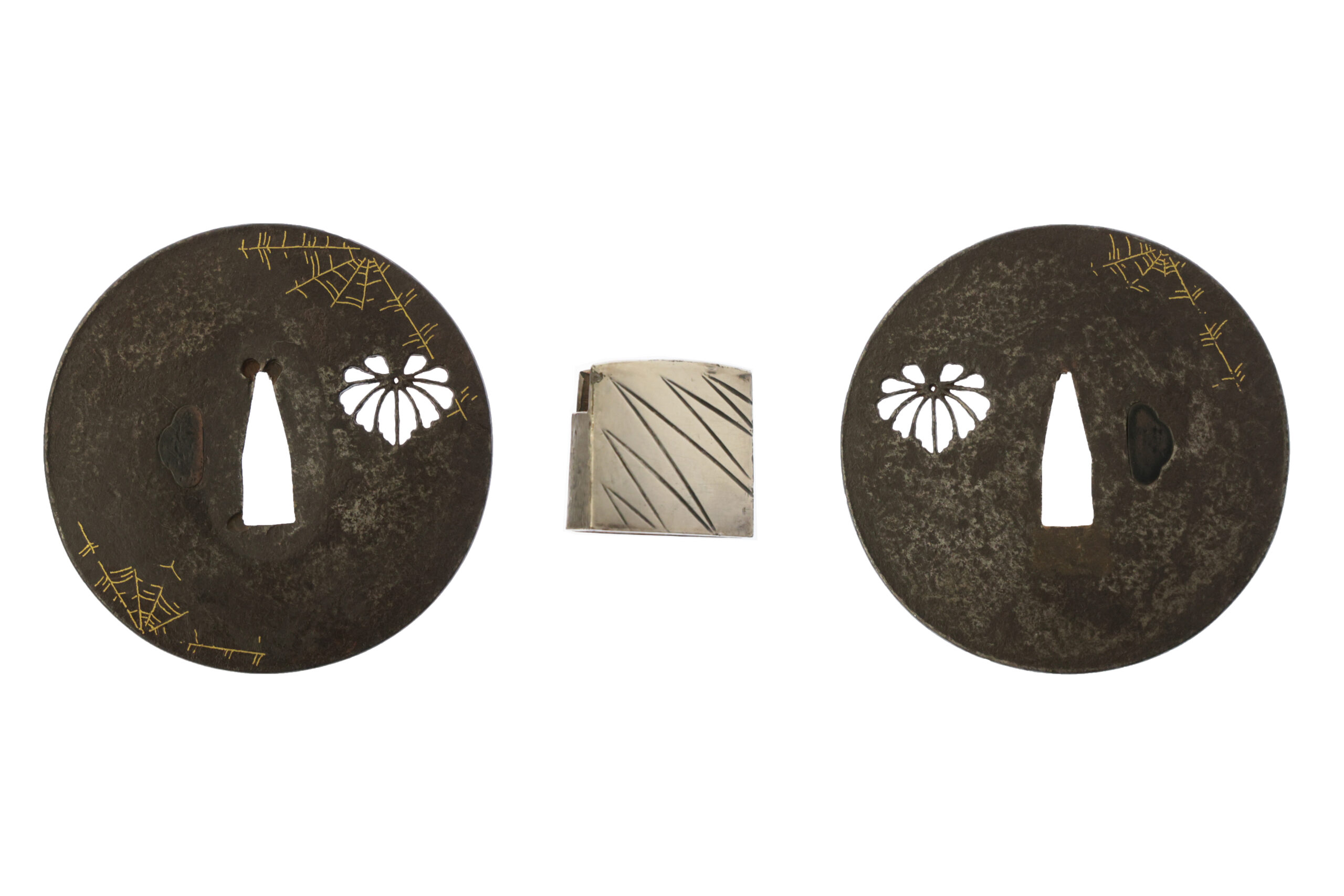
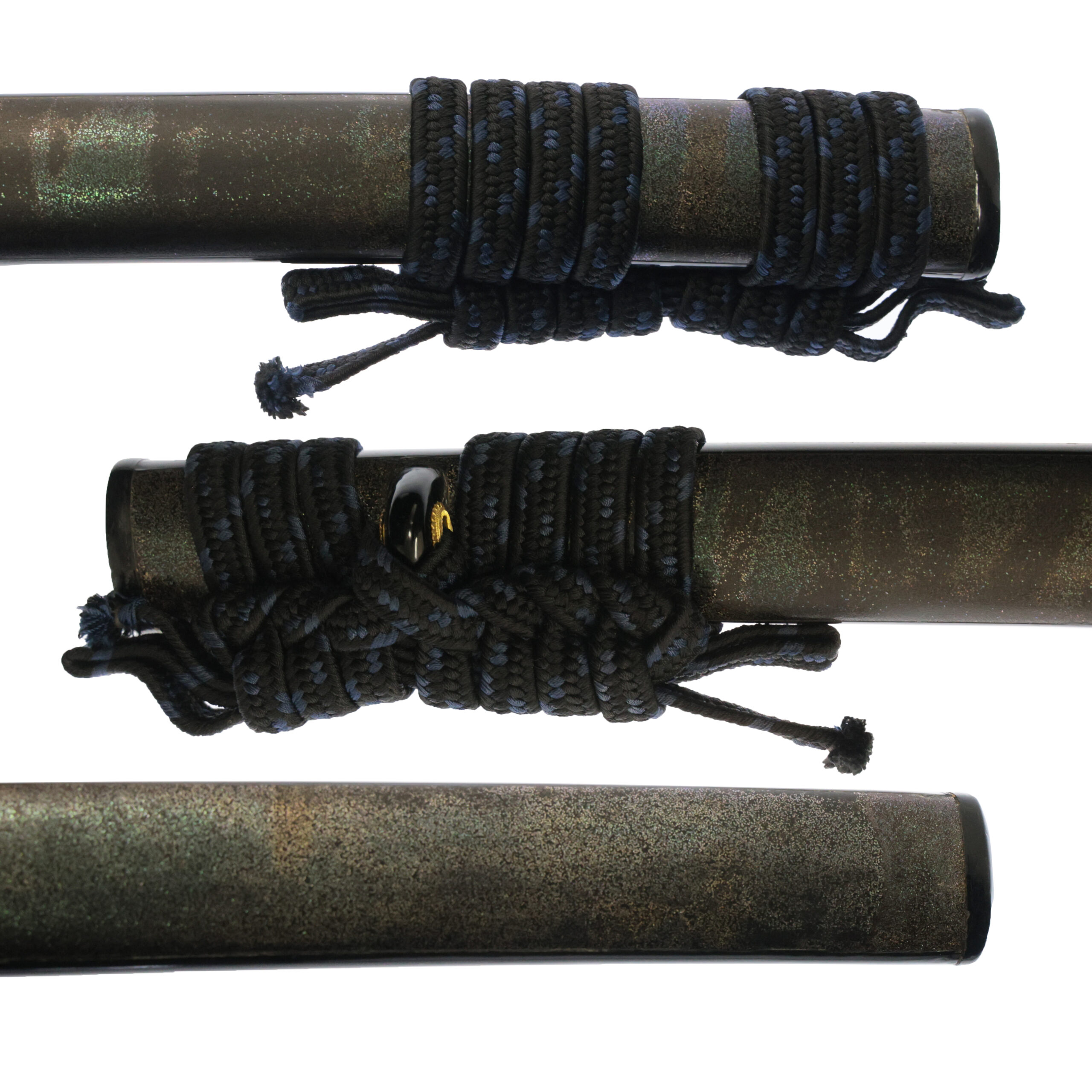
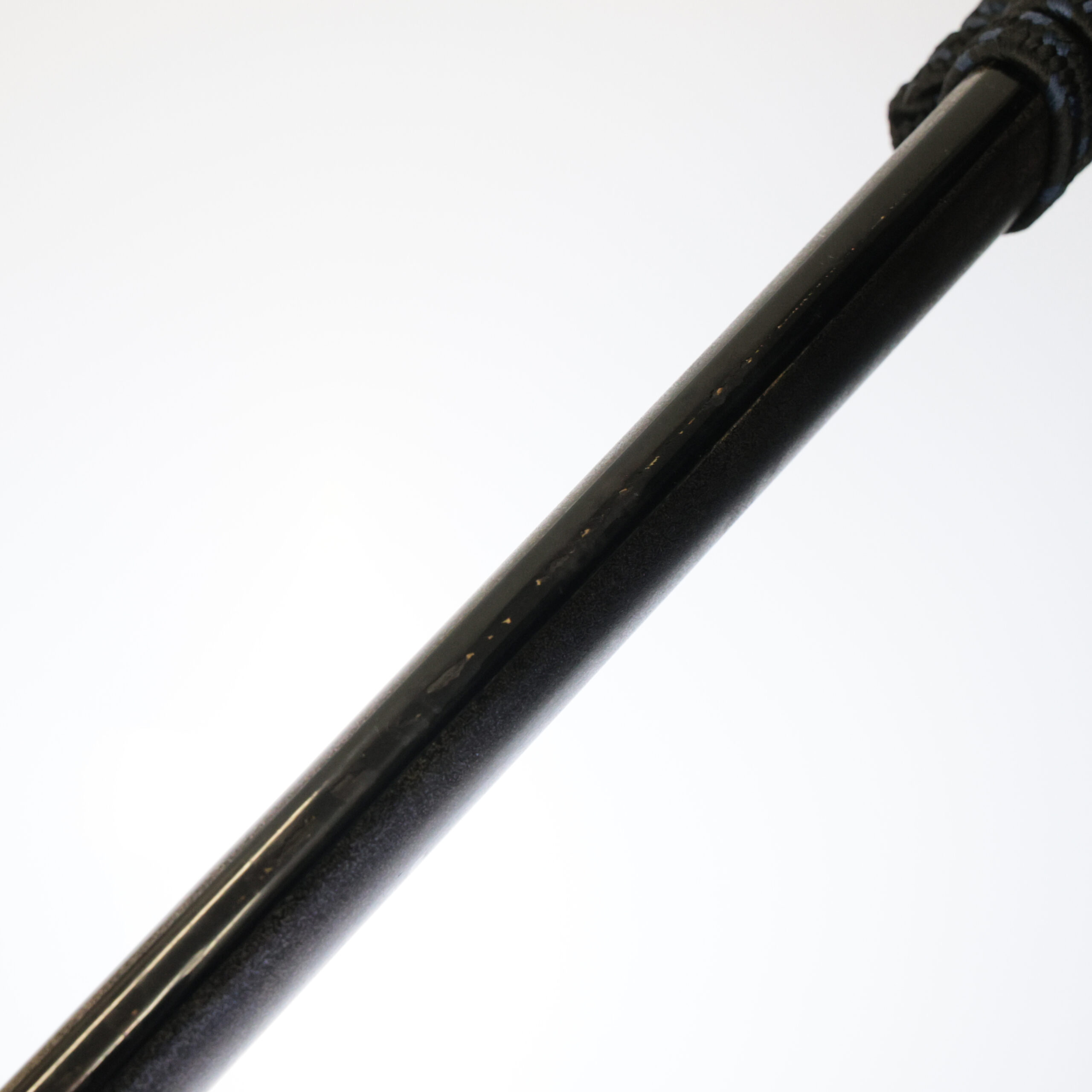
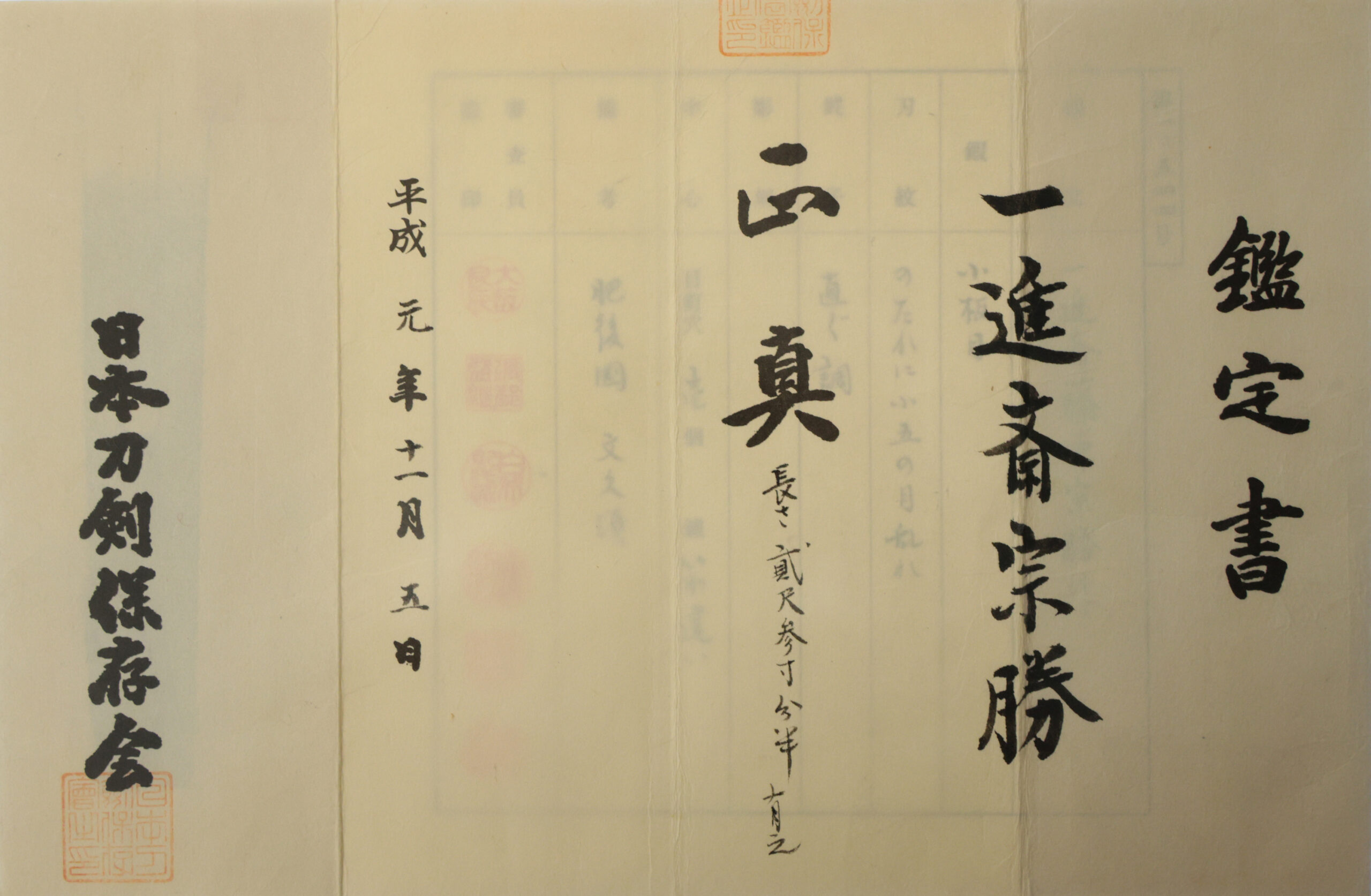
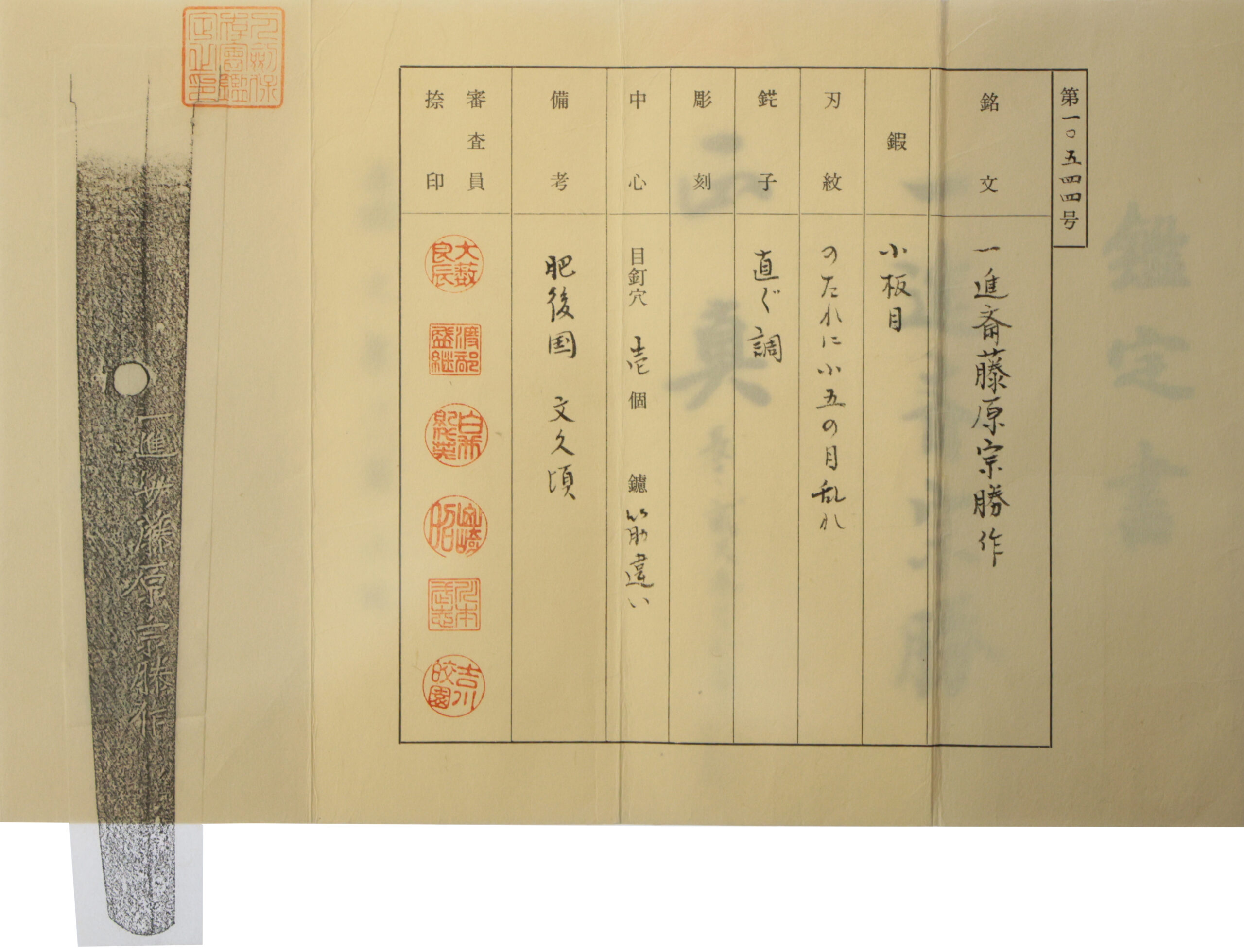
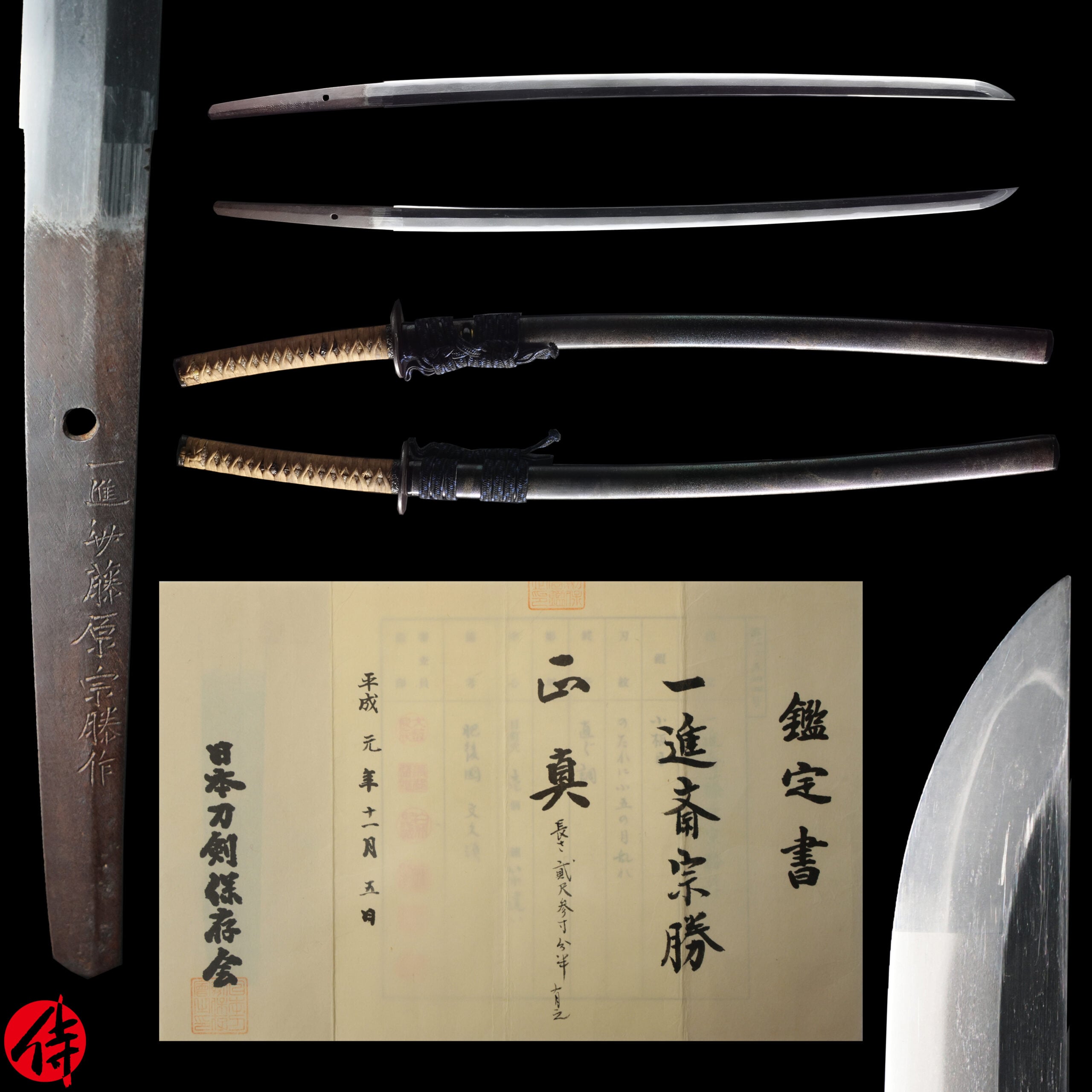
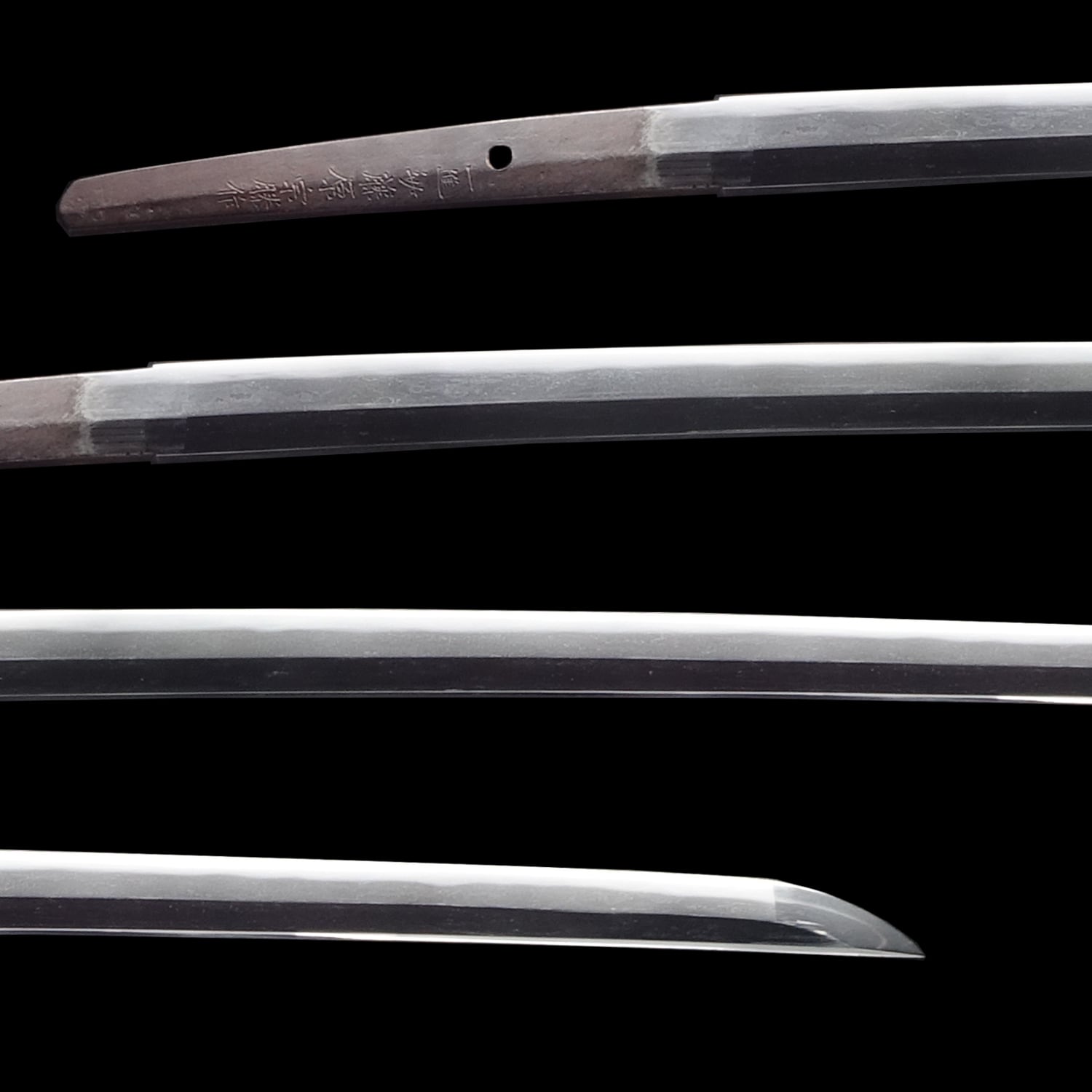
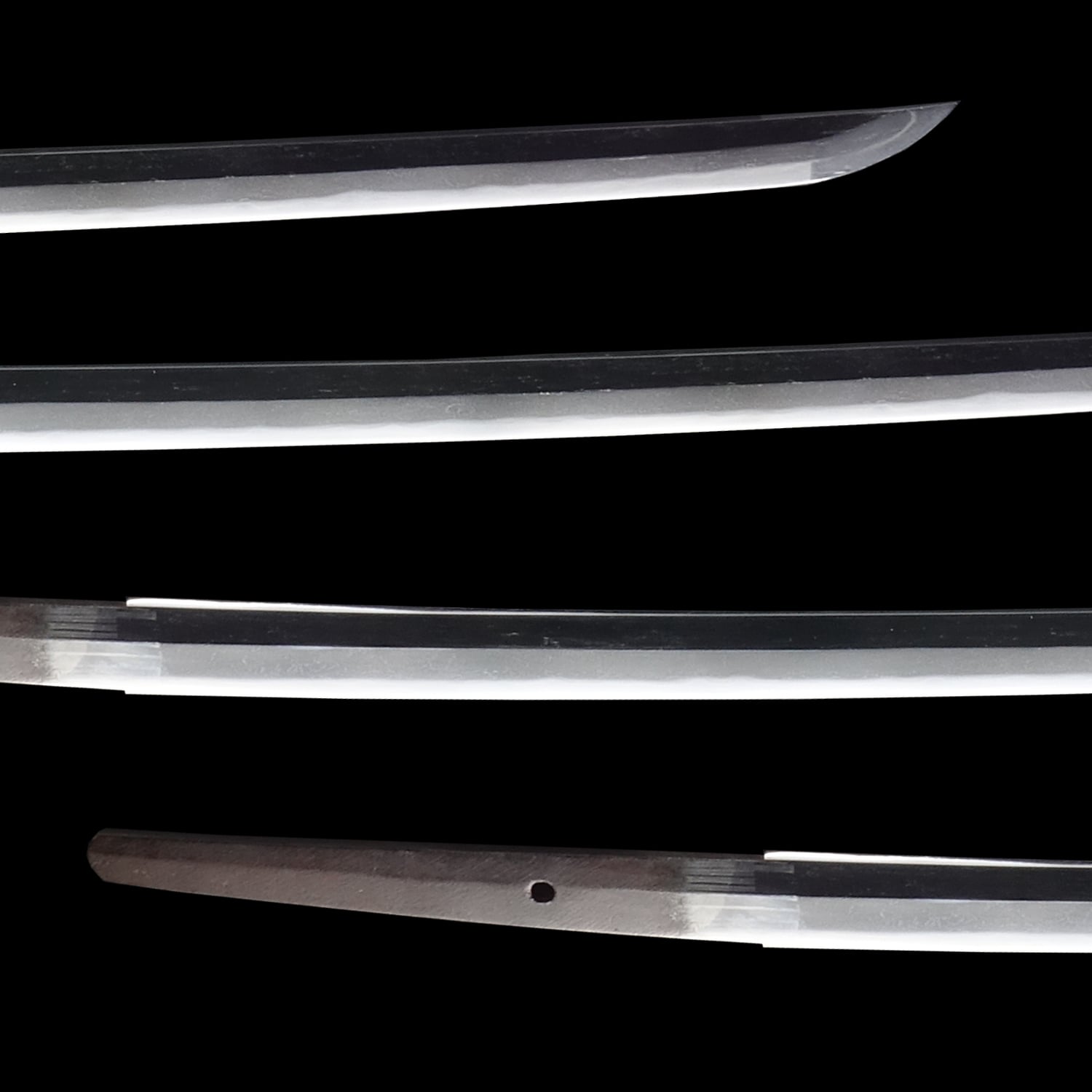
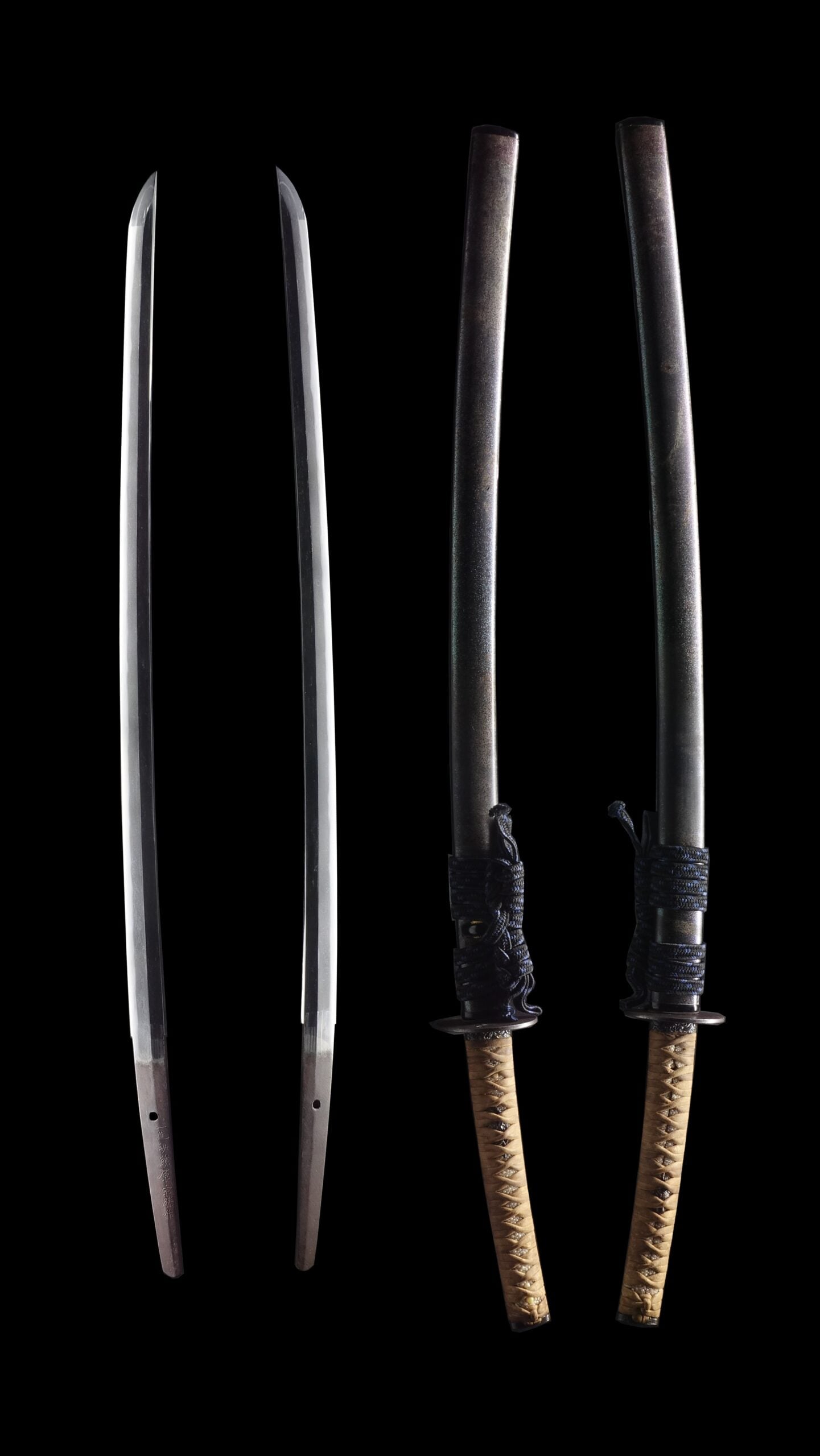
This blade was forged by Isshinsai Fujiwara Munekatsu (一進斉藤原宗勝) during the Bunkyū era (1861–1864) in Higo Province (present-day Kumamoto Prefecture). Munekatsu also signed his works as Higo Hitoyoshi Jū Munekatsu (肥後人吉住宗勝) and was a swordsmith active in Hitoyoshi, a castle town in the southern part of Higo Province. This blade was created during the final years of the Edo period, known as the Bakumatsu period, when Japan was undergoing major political and social changes. During this turbulent time, tensions between the Tokugawa Shogunate and those seeking to restore imperial rule increased, leading to a renewed demand for Japanese swords. Munekatsu was among the swordsmiths who continued the traditional art of Japanese swordmaking during this historically significant period. The Background History Japan enjoyed a relatively peaceful time from the early Edo period to the mid-Edo period (the 1600s-1760s) because of the stable economy and the powerful government run by Tokugawa Shogun. Samurai didn’t have many opportunities to utilize his Katana sword in public or on battlefields during this time. Thus, they carried their swords more as a symbol of their social status. The demand for weapons decreased accordingly compared to the previous Warring state period called Sengoku Jidai (1467-1600). As the end of the Edo period (1764-1876) approached, the Japanese sword’s role underwent a dramatic transformation. With the spread of poverty in Japan and the ensuing civil unrest, the sword became a crucial tool in maintaining public safety, a stark contrast to its symbolic role in the earlier, more peaceful periods. The mounting pressure from foreign countries to open Japanese borders, coupled with internal strife, forced the Samurai to order swords that not only served as symbols of their status but also as practical tools for survival. Many swordsmiths, including Munekatsu, dedicated their efforts to forging high-quality, practical blades for their masters, preparing for the battles that seemed inevitable in those tumultuous times. There was a civil war between Tokugawa’s military government and the new Meiji government at the end of the Edo period. That means the original owner of this Katana might have seen the moment when Samurai’s life changed forever. This blade has a strong looking and must have been practical to use in that demanding time. *Please keep in mind that there are a couple of Kitae Kizu as well as scratches on this blade. Fuchi-Kashira The theme of the Fuchi-Kashira is the dragon (龍, Ryū). The dragon is an imaginary creature that originated in ancient Chinese mythology and has long been regarded as an auspicious symbol associated with power, wisdom, and good fortune. According to traditional descriptions, its body combines the characteristics of nine different animals: the antlers of a deer, the head of a camel, the eyes of a demon, the neck of a snake, the belly of a Mizuchi (蛟, a Japanese mythical serpent-like creature with horns and four legs), the scales of a fish, the claws of a falcon, the paws of a tiger, and the ears of a cow. Because it embodies the finest qualities of many creatures, the dragon was believed to reign supreme over all animals. In Japan, dragons have also been revered as water deities through the tradition known as Ryūjin Shinkō (竜神信仰, Dragon God Worship). As rice cultivation has always depended on a stable water supply, dragons came to symbolize rain, rivers, fertility, and prosperity. For this reason, dragon motifs have remained one of the most popular and auspicious designs in Japanese sword mountings for centuries. Tsuba and Habaki This Tsuba features a floral openwork design, believed to represent a chrysanthemum (Kiku, 菊), surrounded by spiderweb patterns in gold inlay. In Japanese culture, the chrysanthemum symbolizes longevity and nobility, while spiderwebs can represent good fortune and the opportunity to capture luck. The delicate gold inlay creates an elegant contrast against the dark iron surface, highlighting the beauty of traditional Japanese craftsmanship. Saya The surface of this saya is finished in Ishime-ji (石目地), also known as Ishime-nuri (石目塗), a traditional red lacquer technique. Its base was textured using a tagane (鏨)—a small metalworking chisel—to create a fine, stone-like surface that gives the lacquer a distinctive sense of depth and refinement. Authentication Paper NTHK, also known as Nihon Touken Hozon Kai, is the oldest organization for sword authentication of Japanese swords in modern times. It was established in 1910 during the post-Samurai era. They authenticated the blade on Nov 5th in the 1th year of Heisei (1989).
取扱店 サムライミュージアム

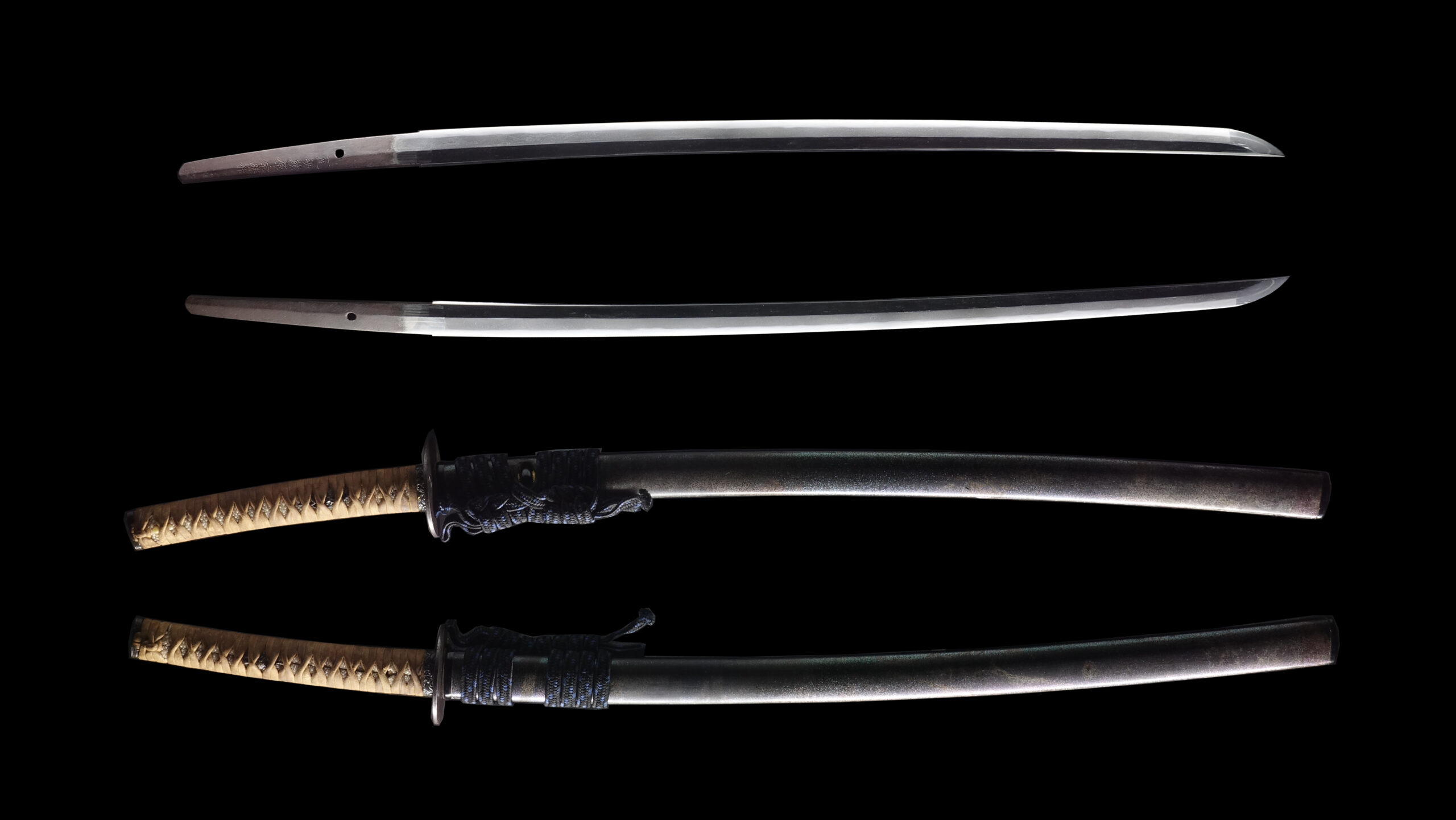
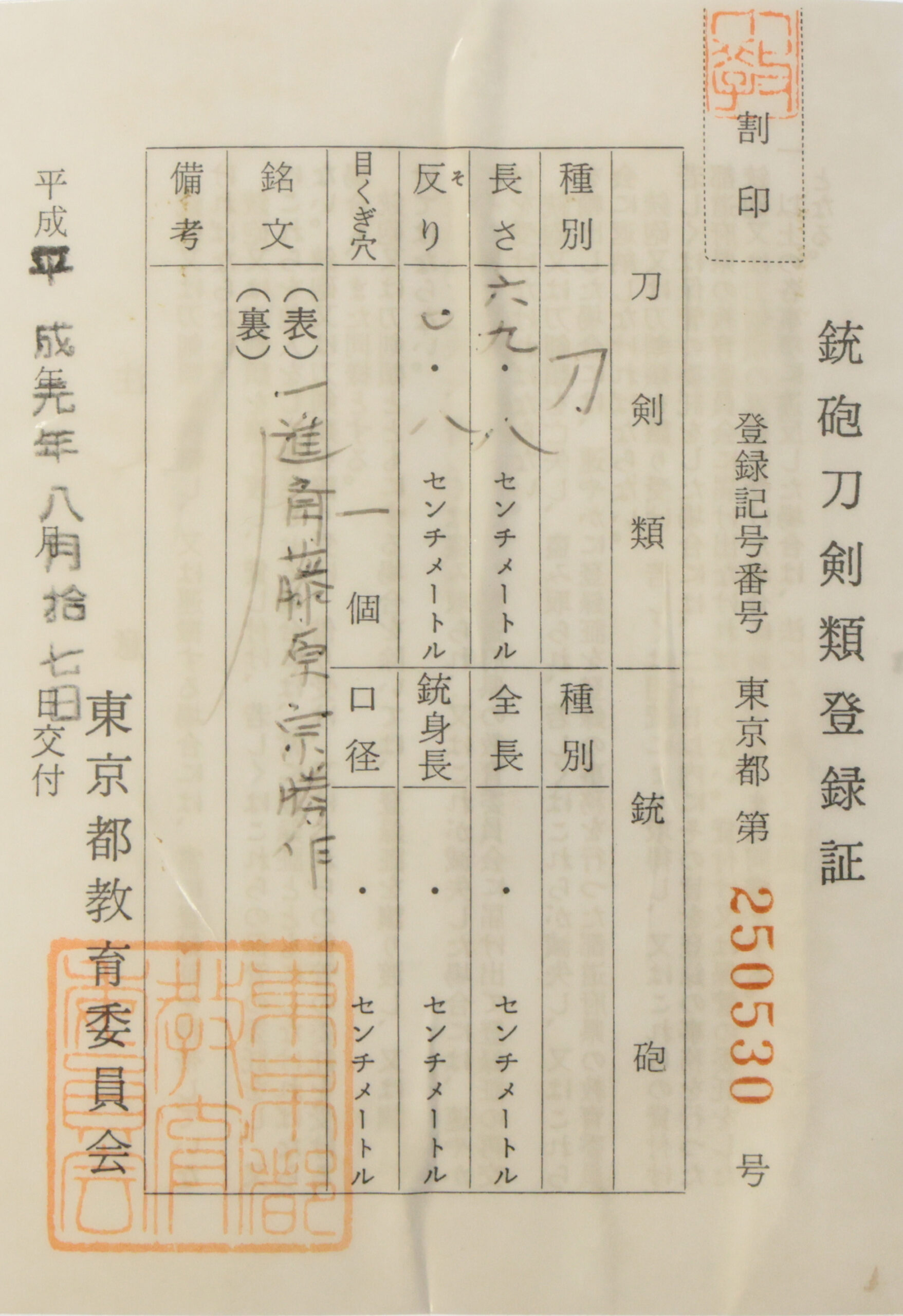
販売店の記載のまま
(翻訳なし) 店主の原文のまま表示しています。正確さの確認を通った翻訳のみを表示します。
新々刀 復古の運動
1800年前後、水心子正秀は著述をもって、鍛刀は古作の法に立ち返るべしと説いた。復古刀の運動である。最大の後継者直胤は、数百年絶えていた備前伝と相州伝を確信をもって再現した。
日本刀剣保存会の中心的な鑑定書で、相応の出来を備えた刀剣に発行されます。在銘作は銘の正真を、無銘作は審査員による刀工・流派の極めを示します。点数を記す詳細な審査表が付されます。
日本刀剣保存会は、日本美術刀剣保存協会(1948年設立)に先立つ1910年に創立された、日本で最も古い刀剣鑑定団体です。長く会を率いた会長の没後、日本刀剣保存会と特定非営利活動法人日本刀剣保存会の二つに分かれ、いずれも審査を続けています。刀剣に対する日本刀剣保存会の鑑定書は、点数と審査員の所見を併記する詳細な審査表が特徴です(刀装具の鑑定書に点数は付されません)。特に無銘作の極めに定評があります。
Returns/exchanges limited to defects caused by shipping (except willful misconduct or gross negligence by the company); customers must contact within 72 hours of receiving the product.
¥550,000