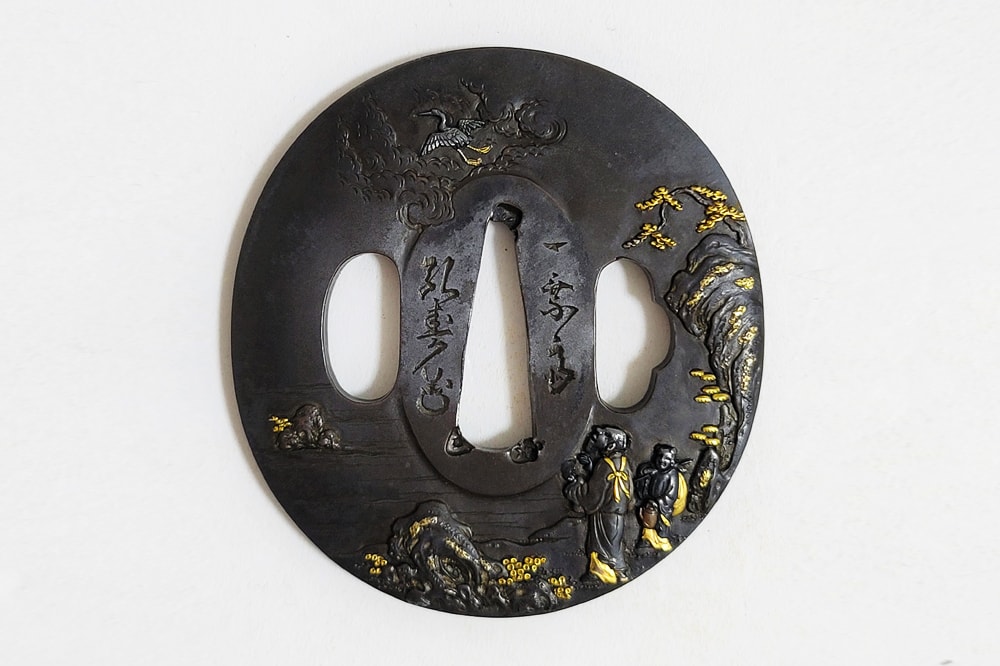
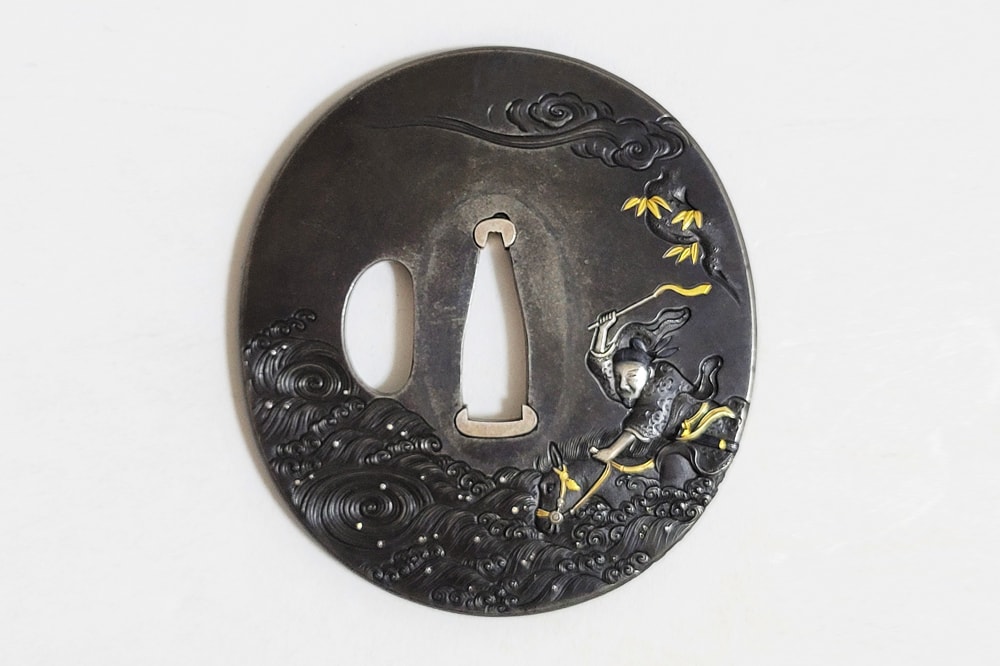
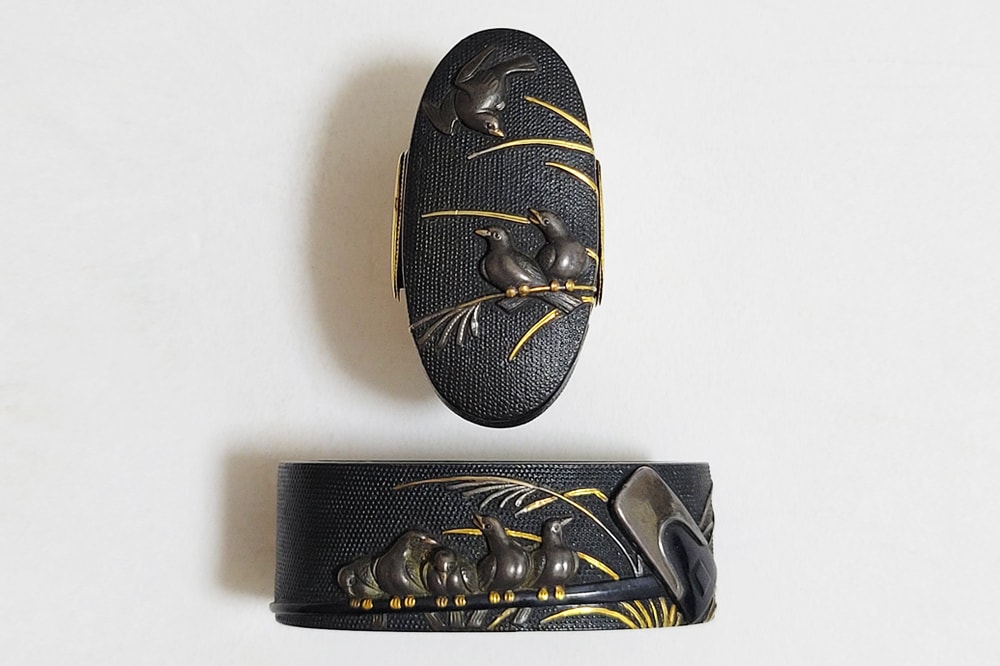
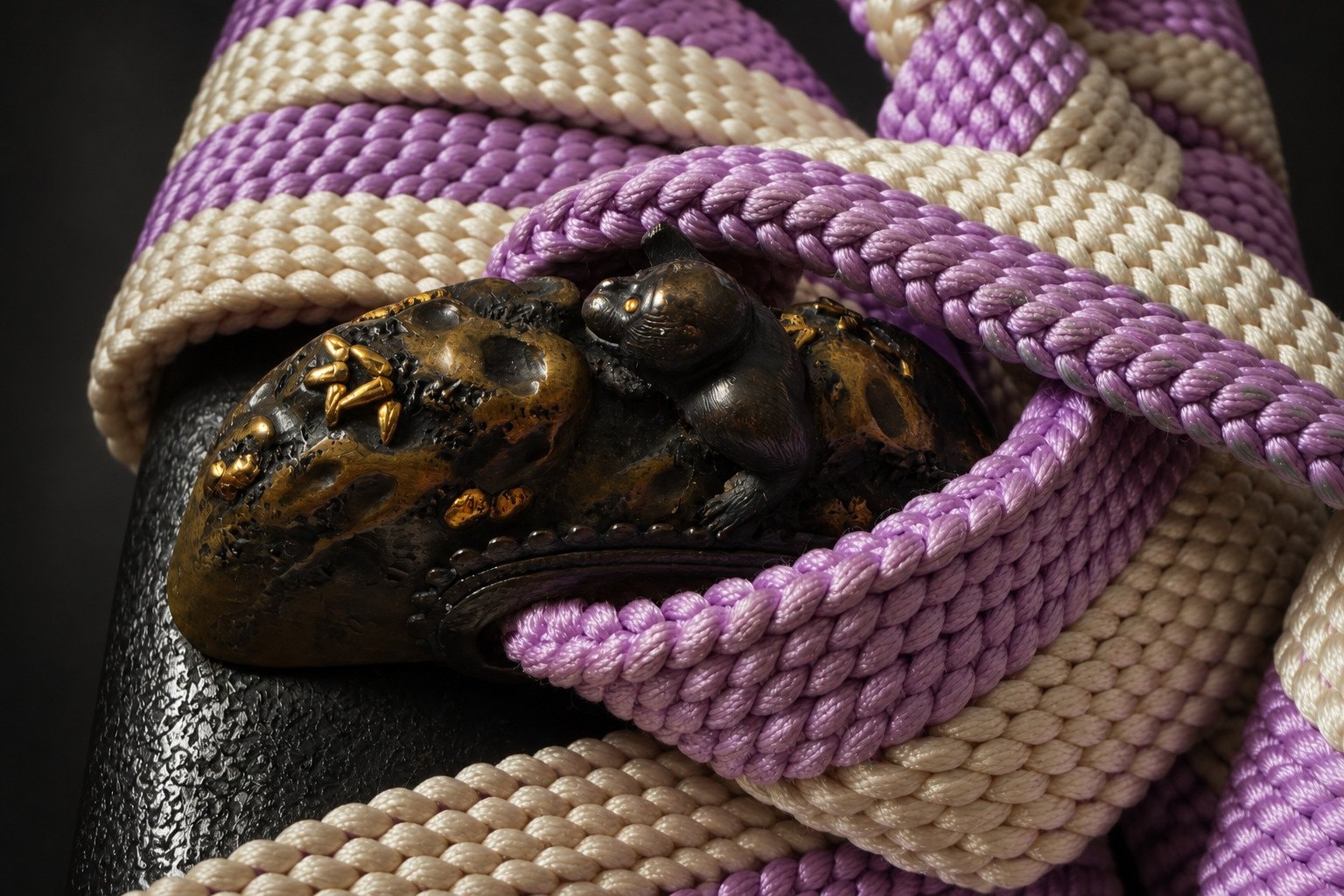
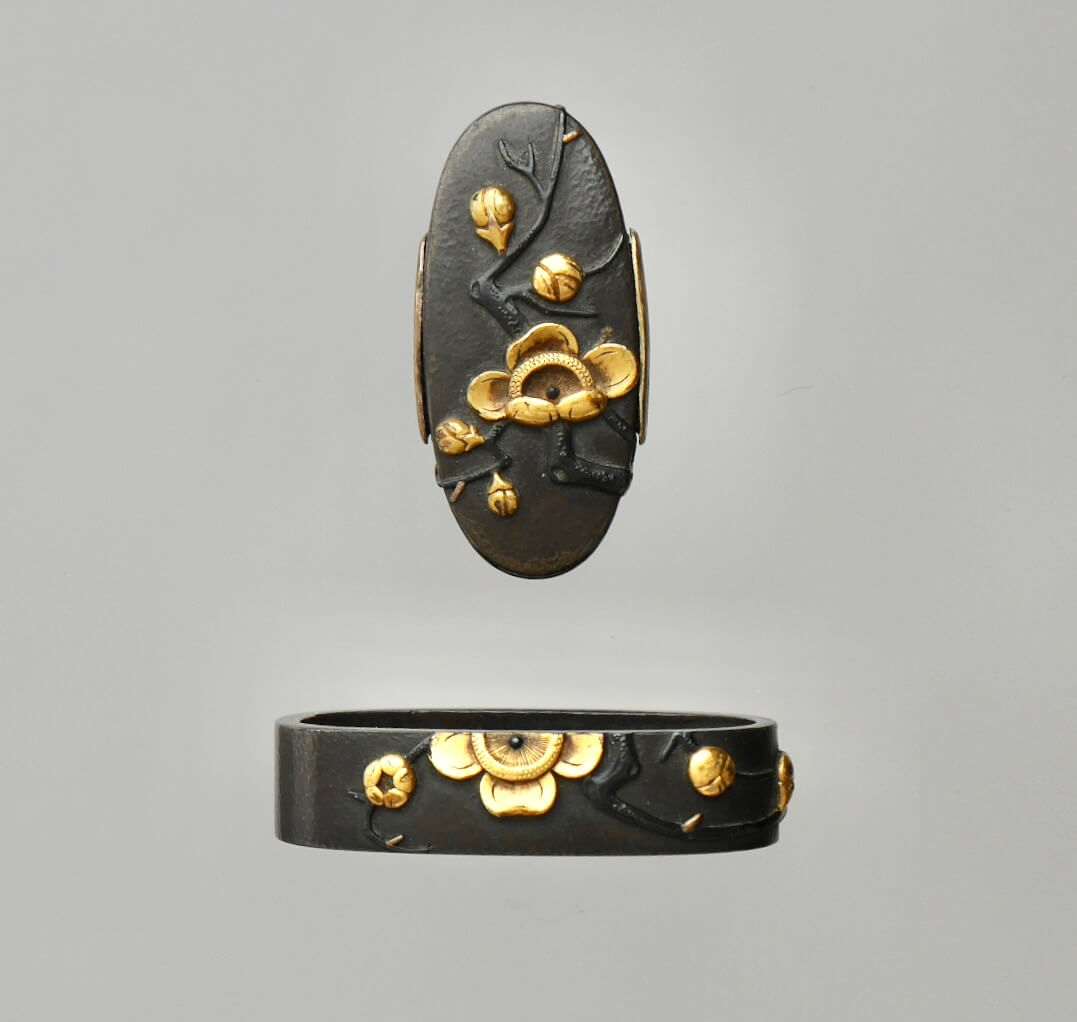
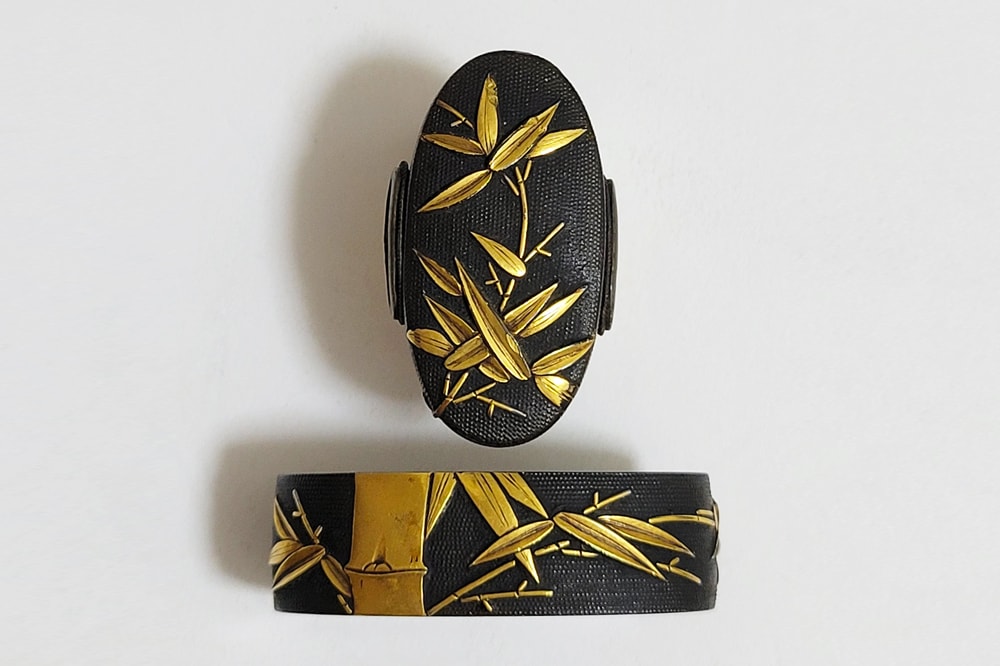
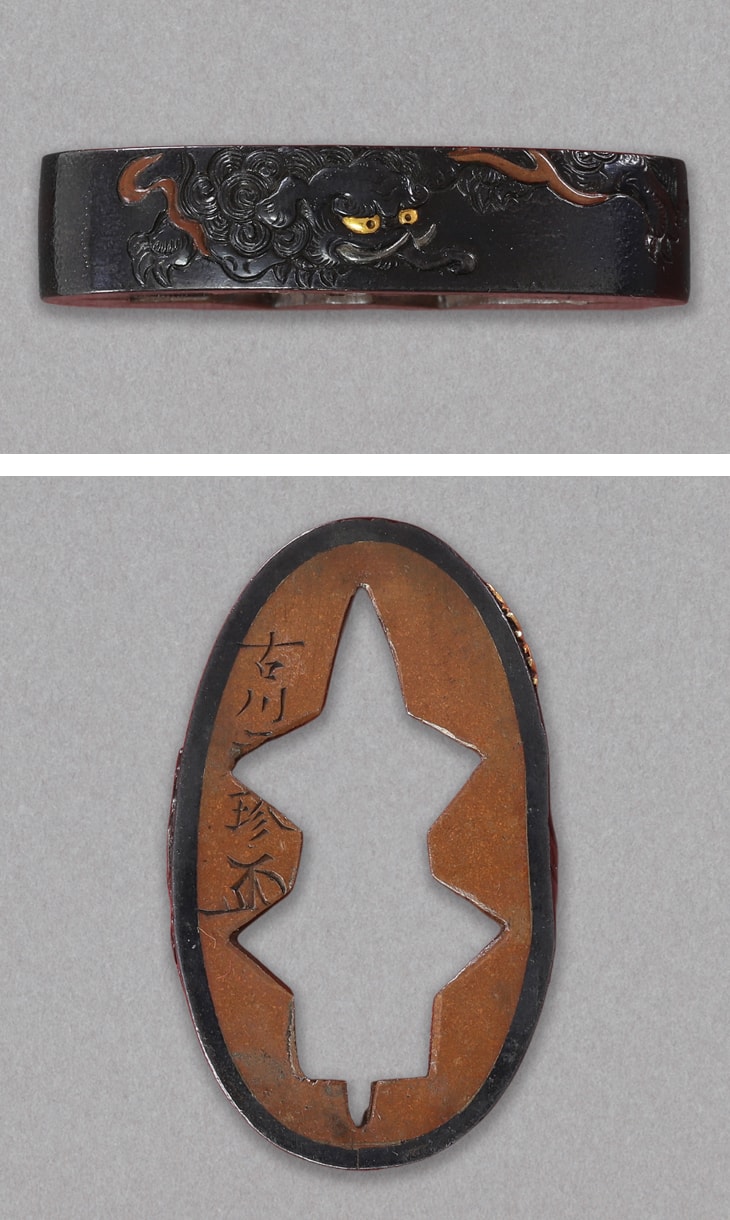
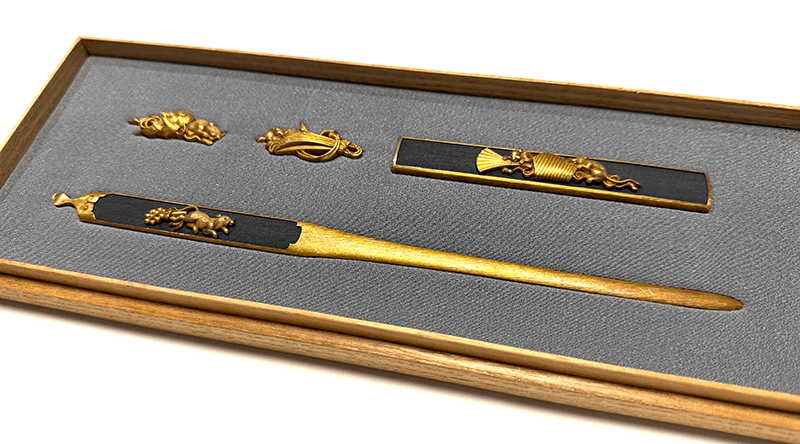
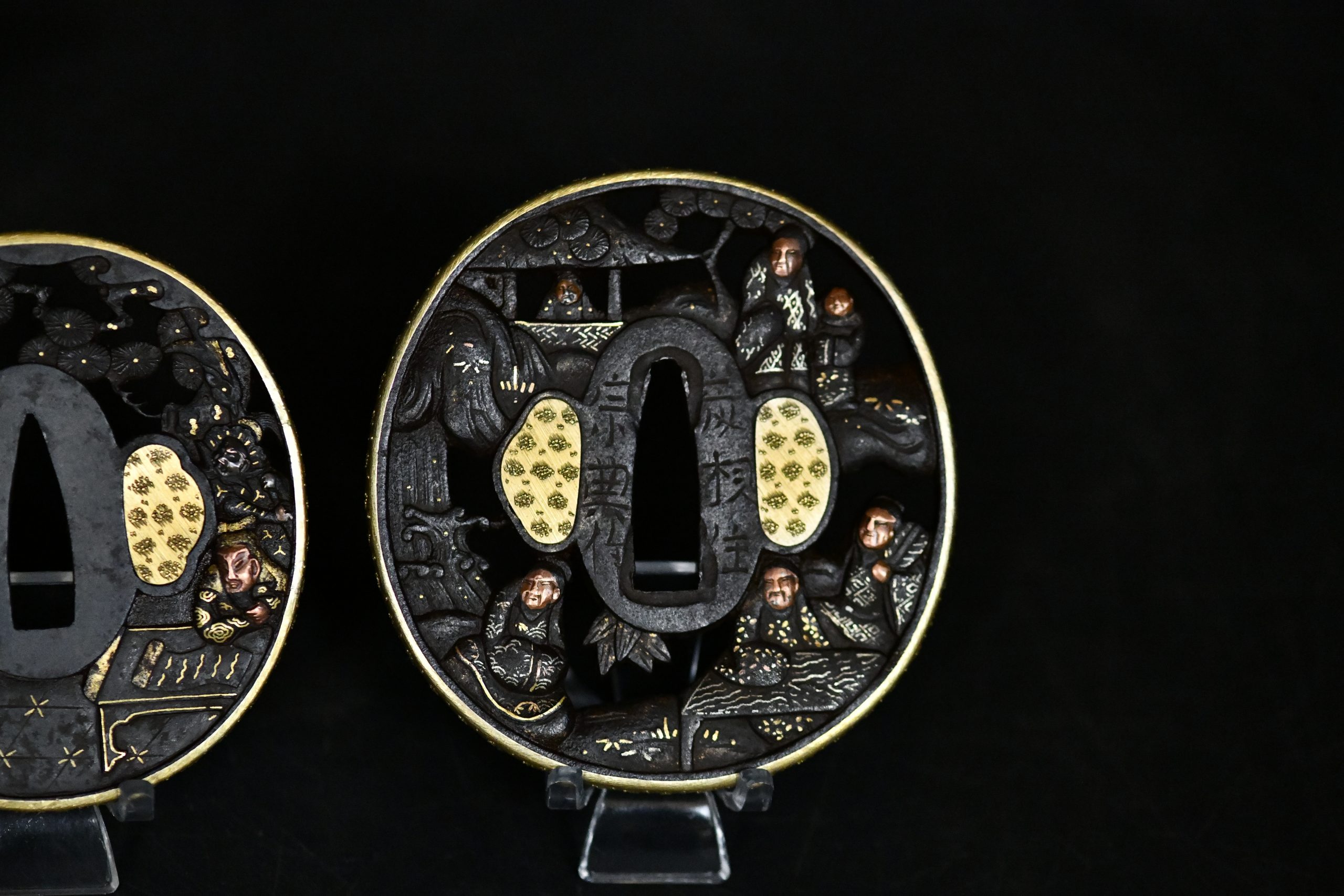
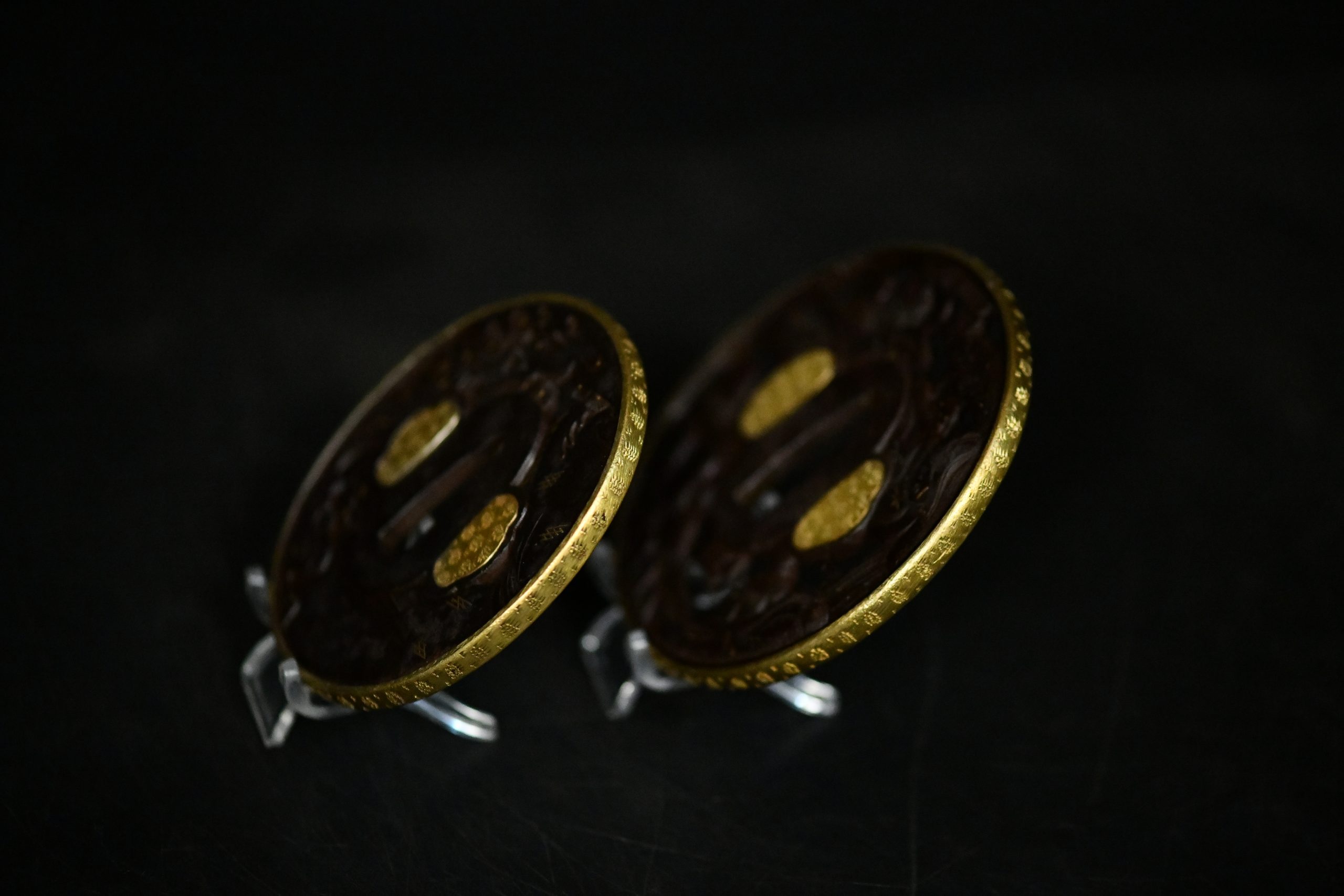
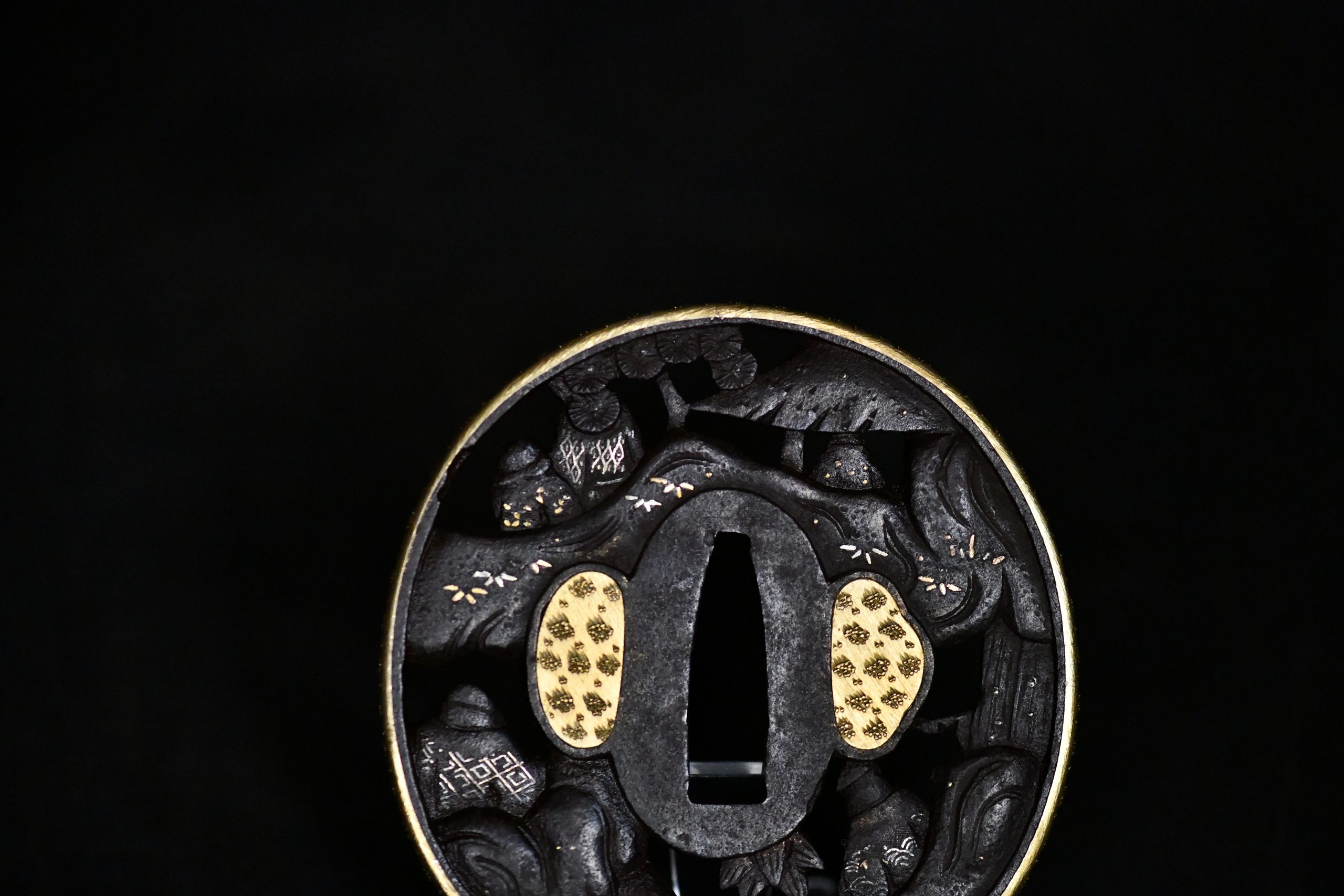
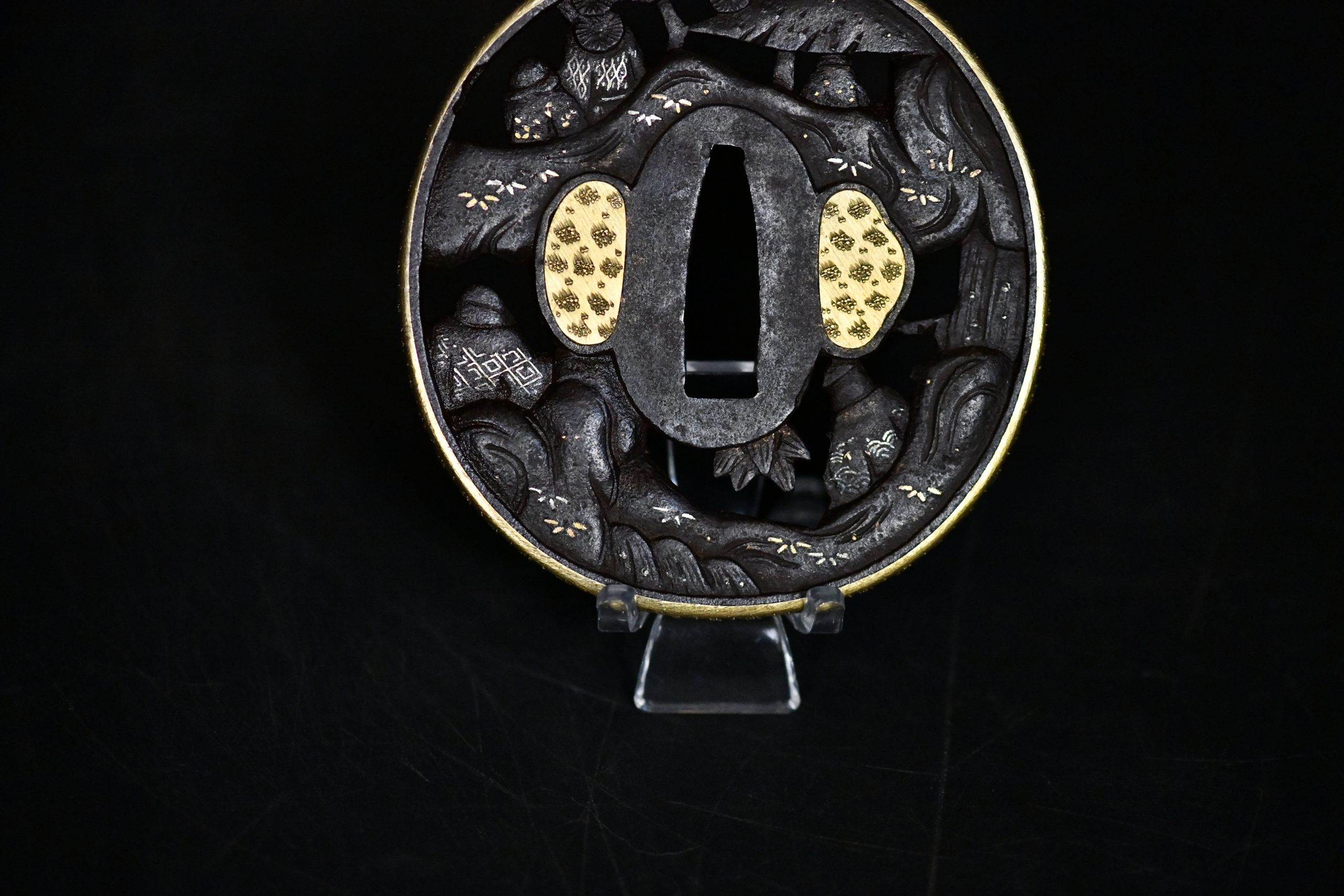
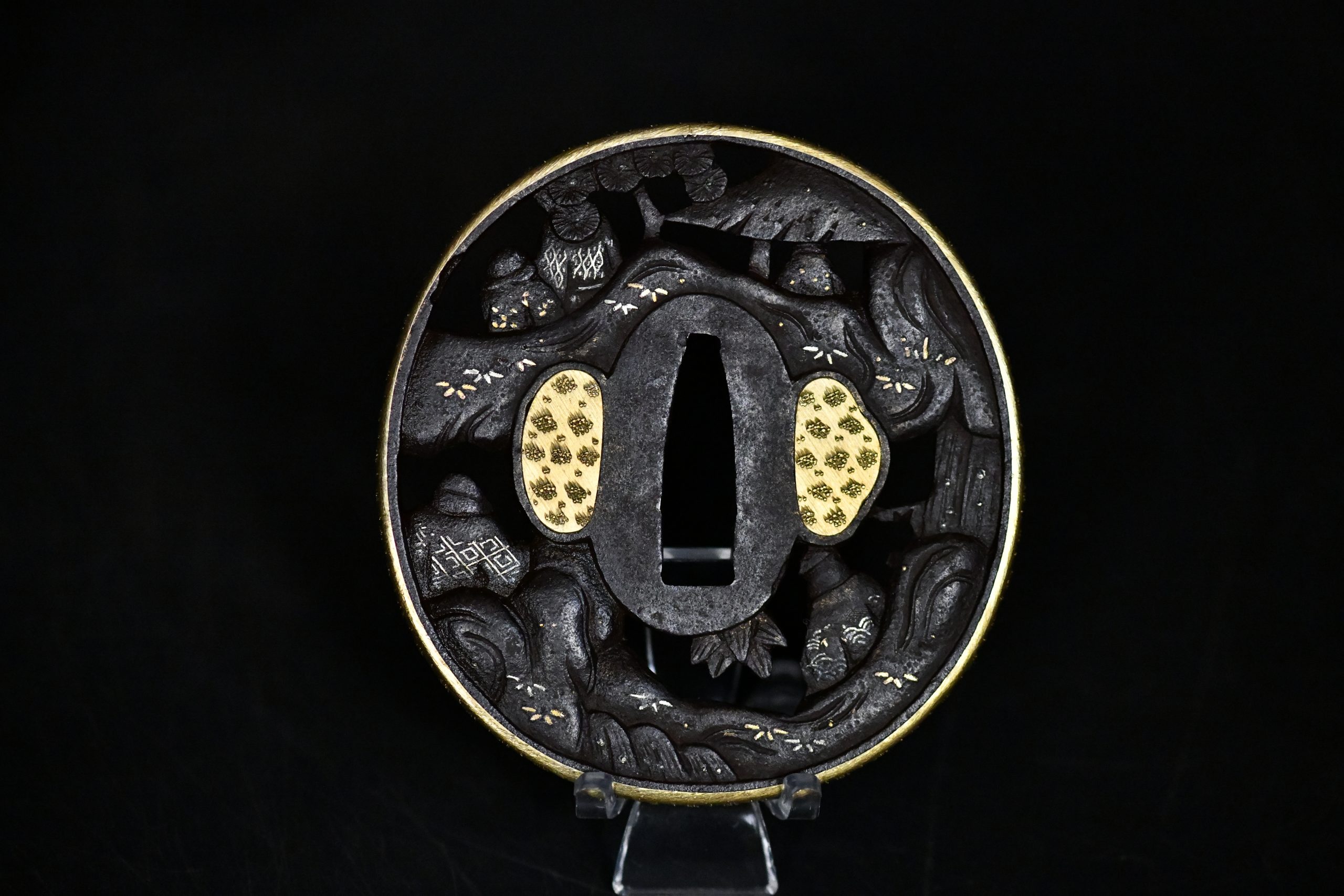
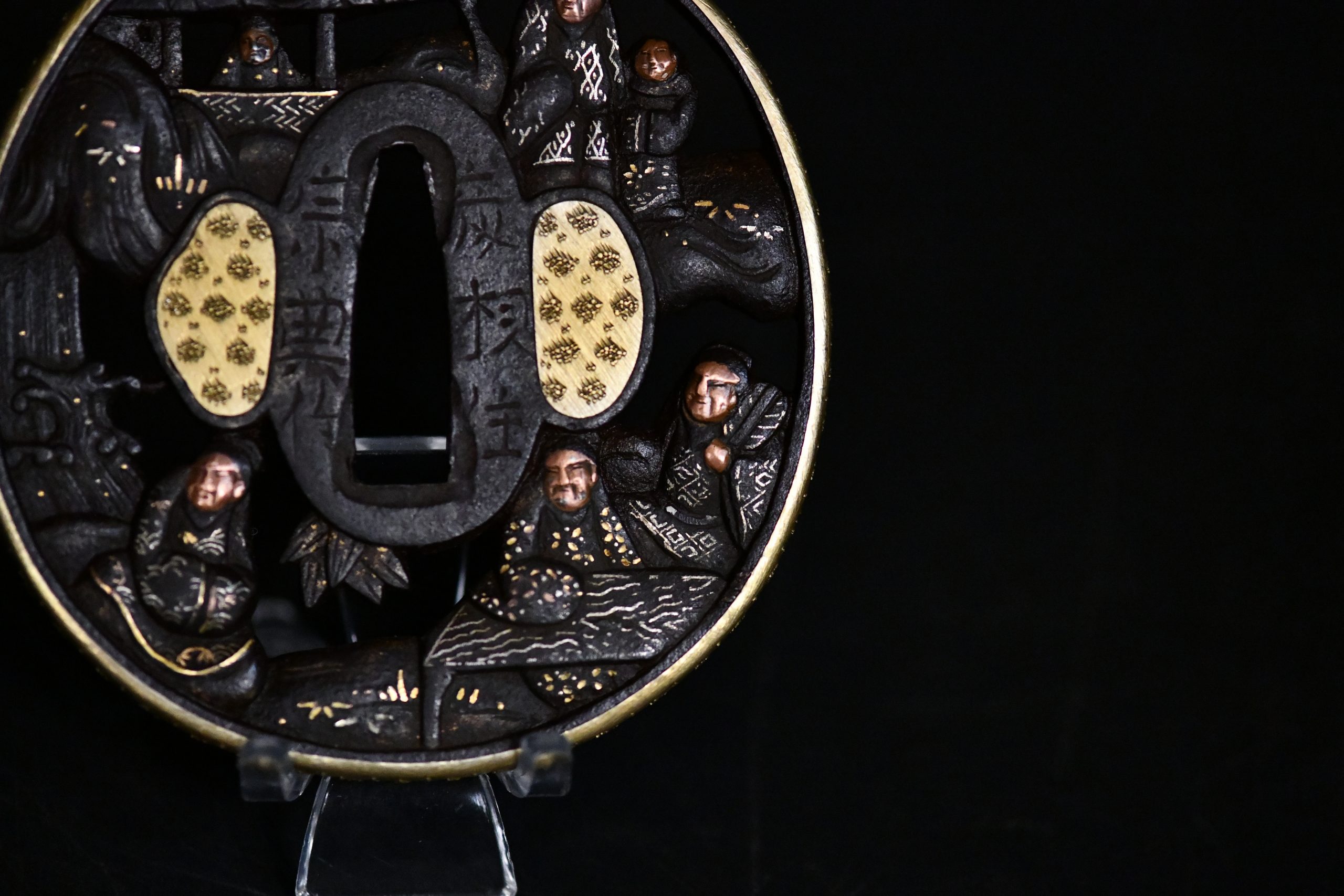
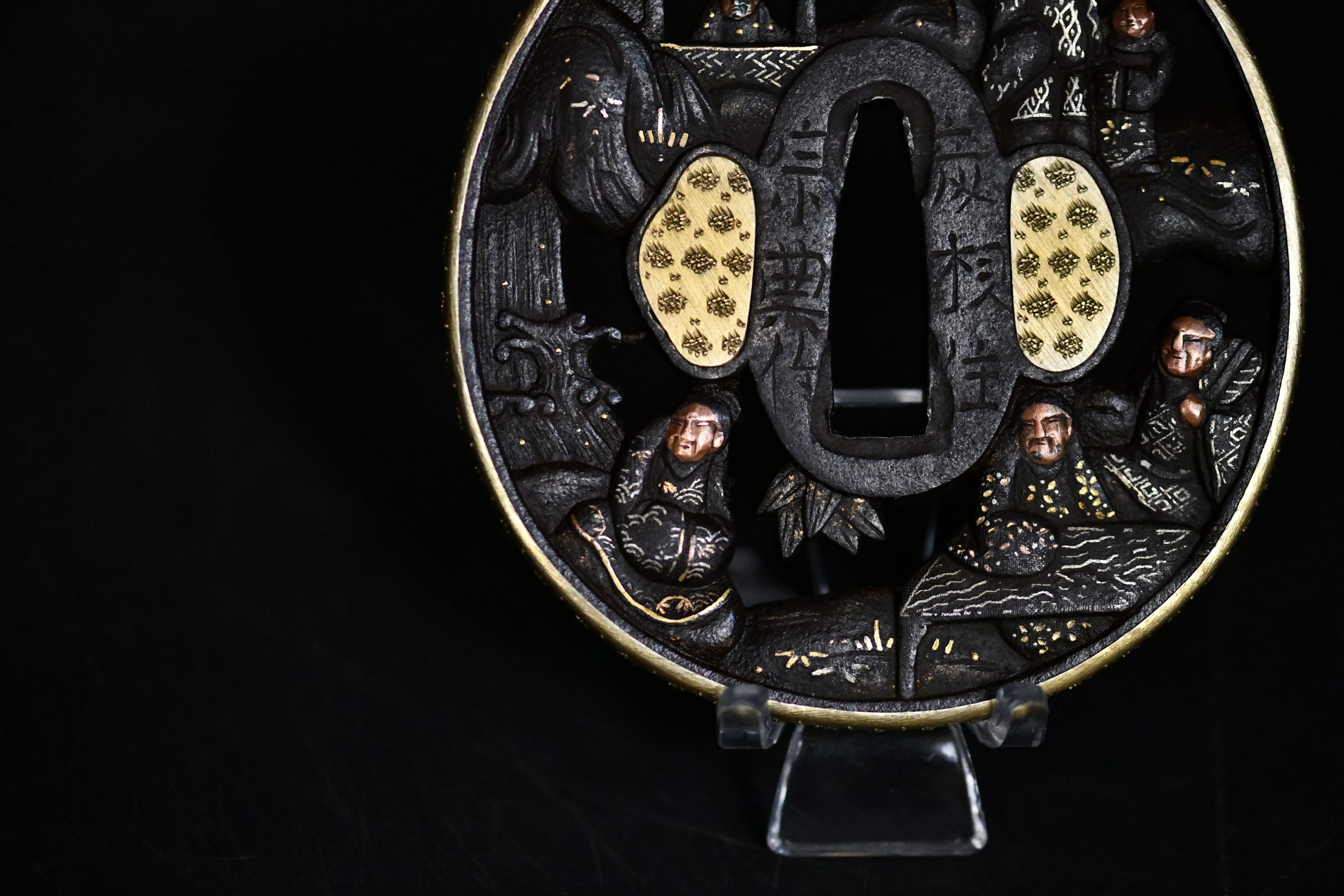
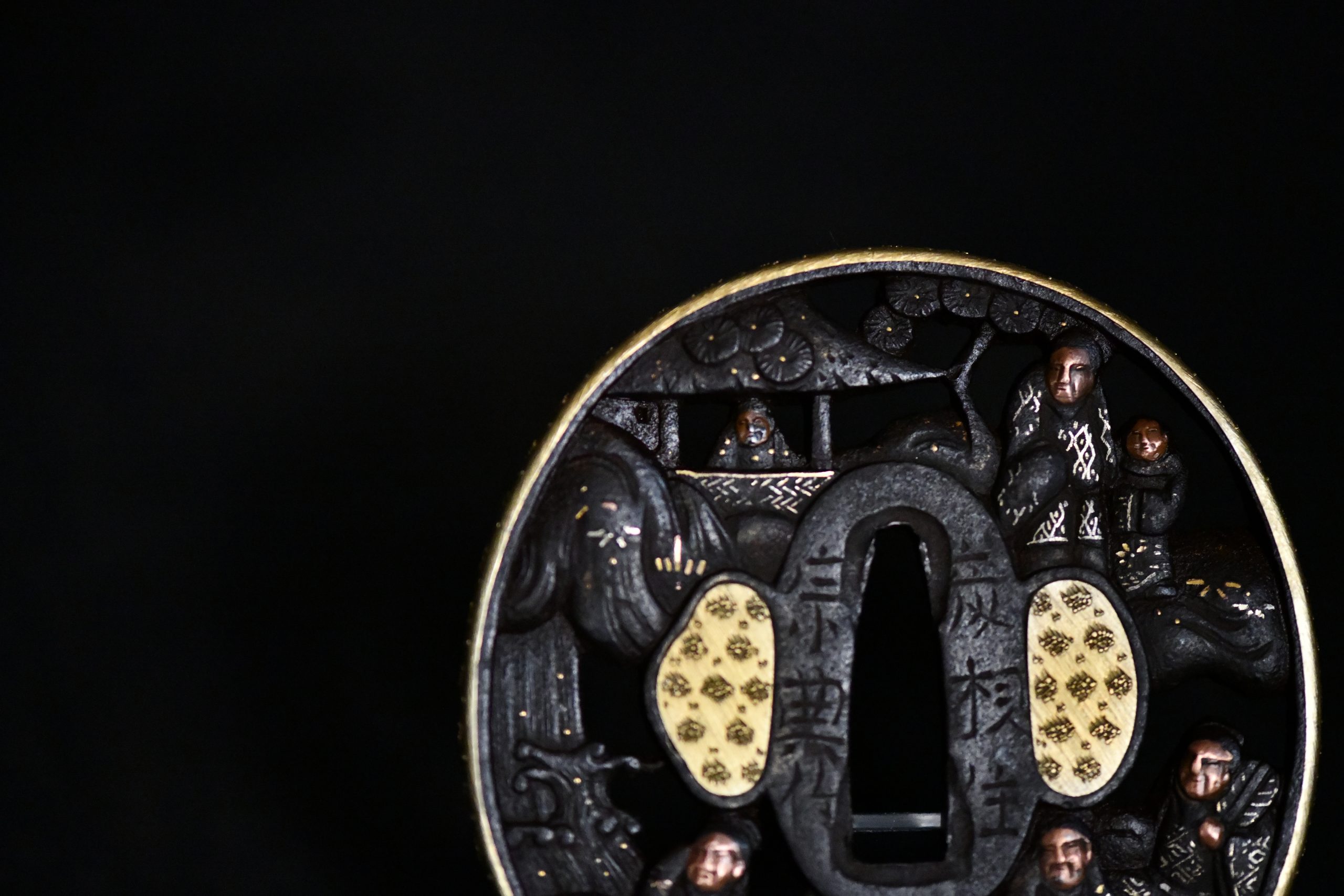
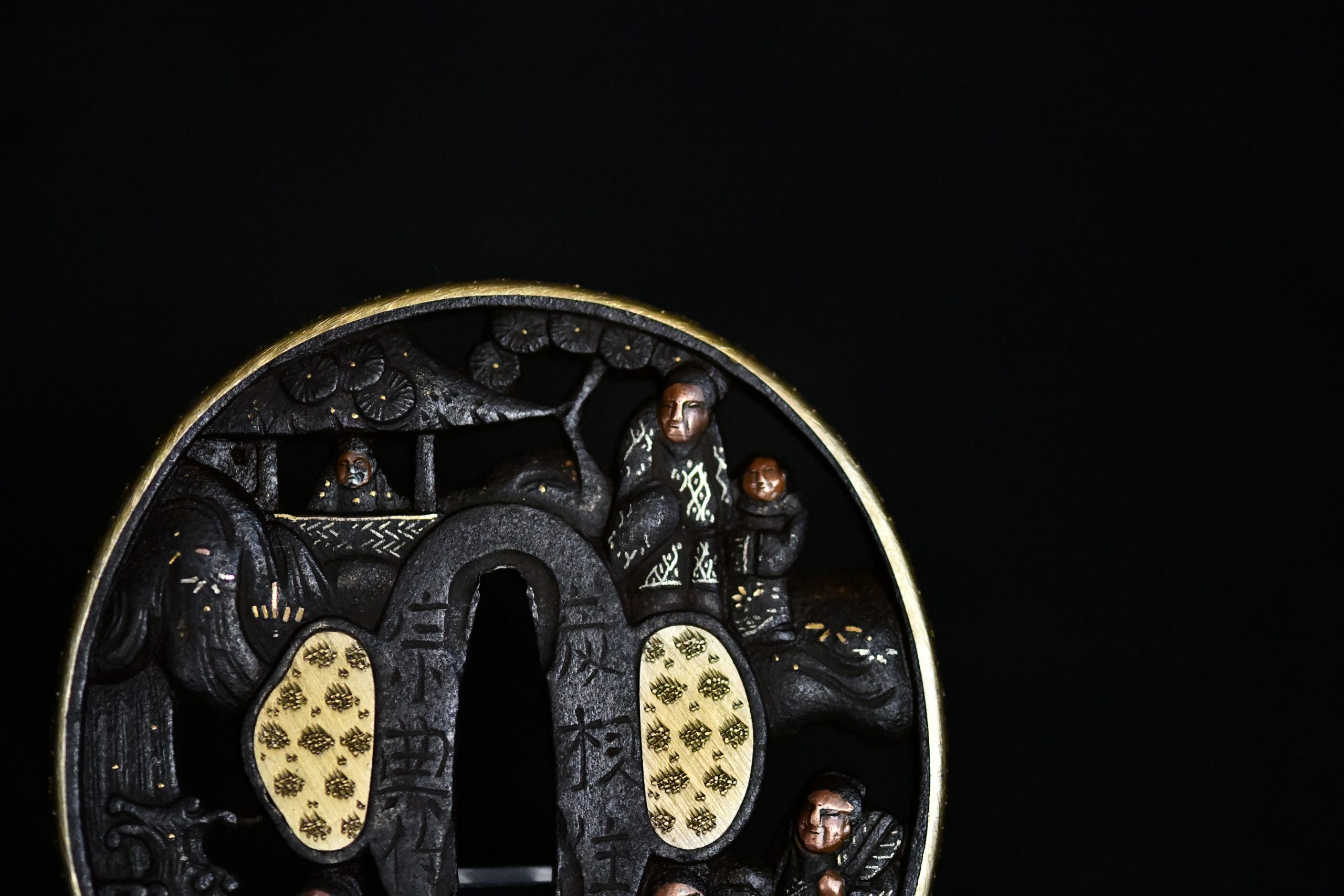
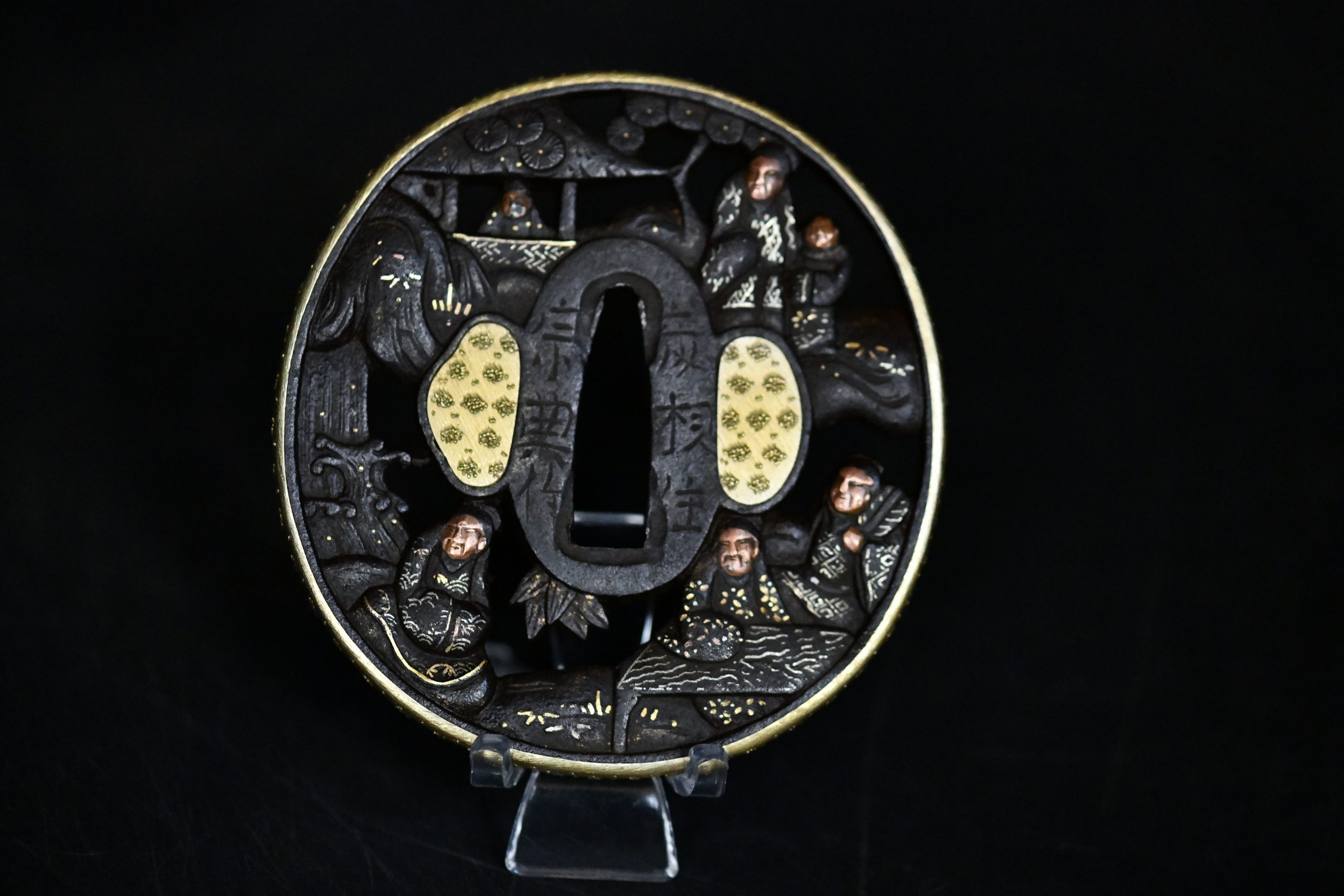
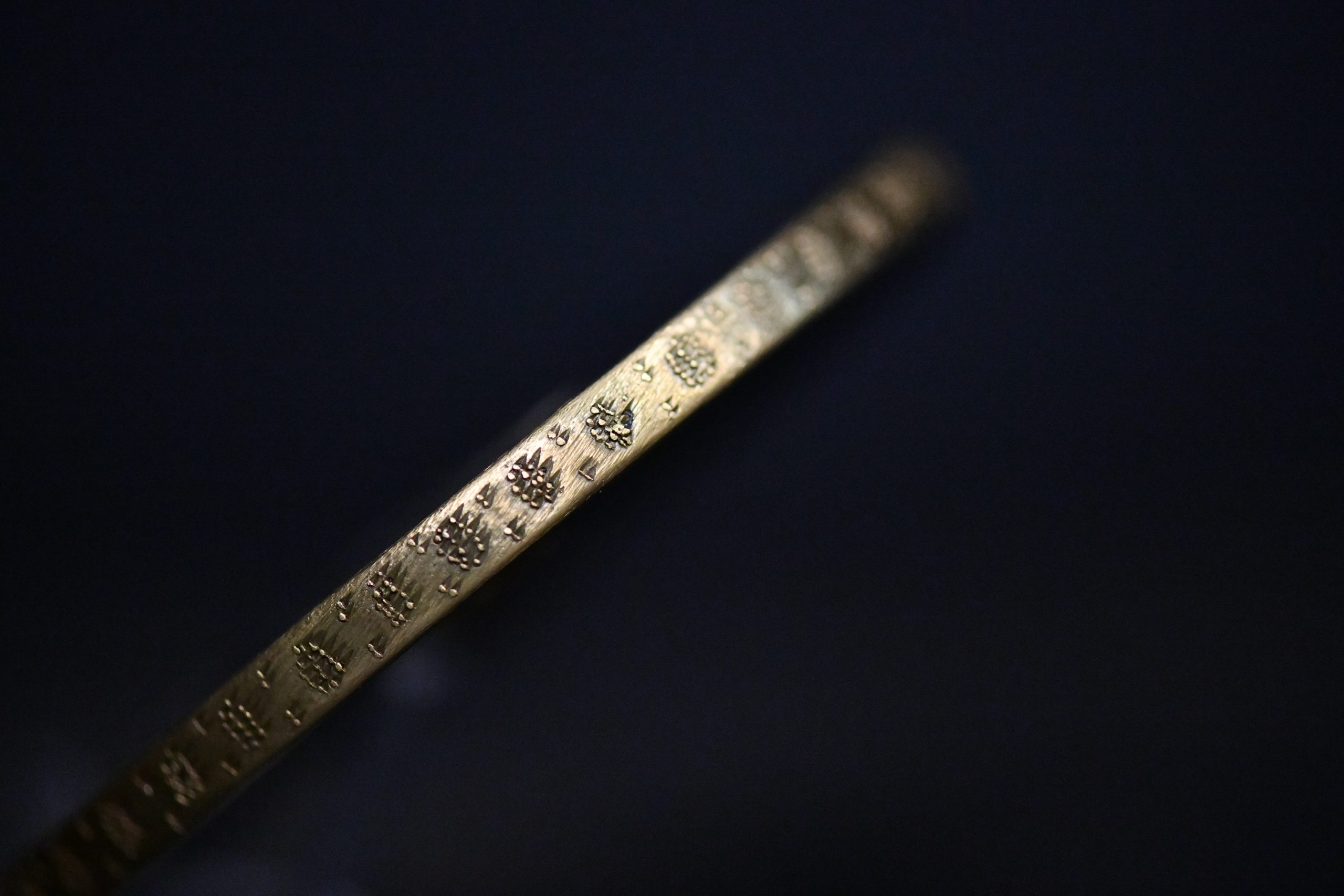
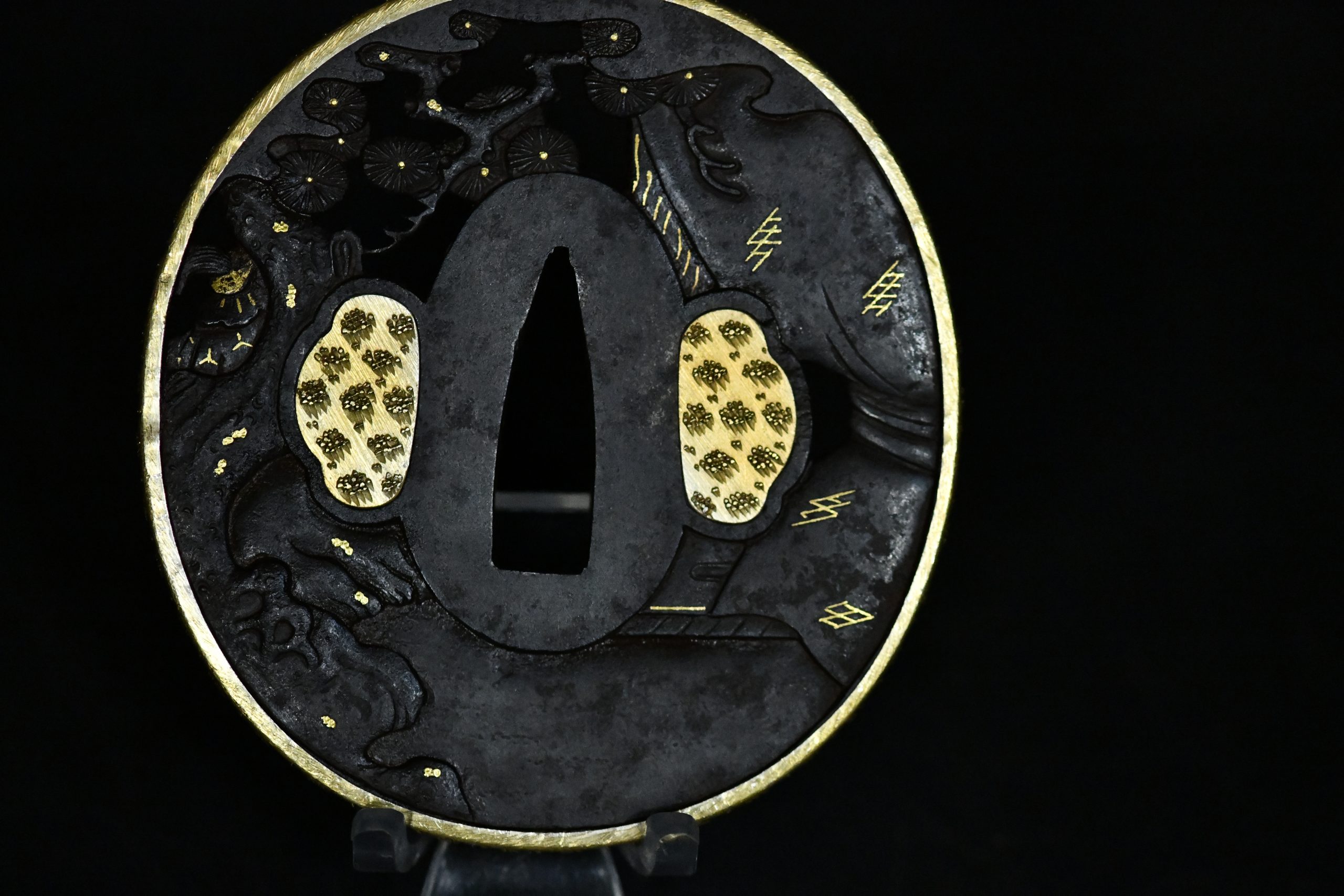
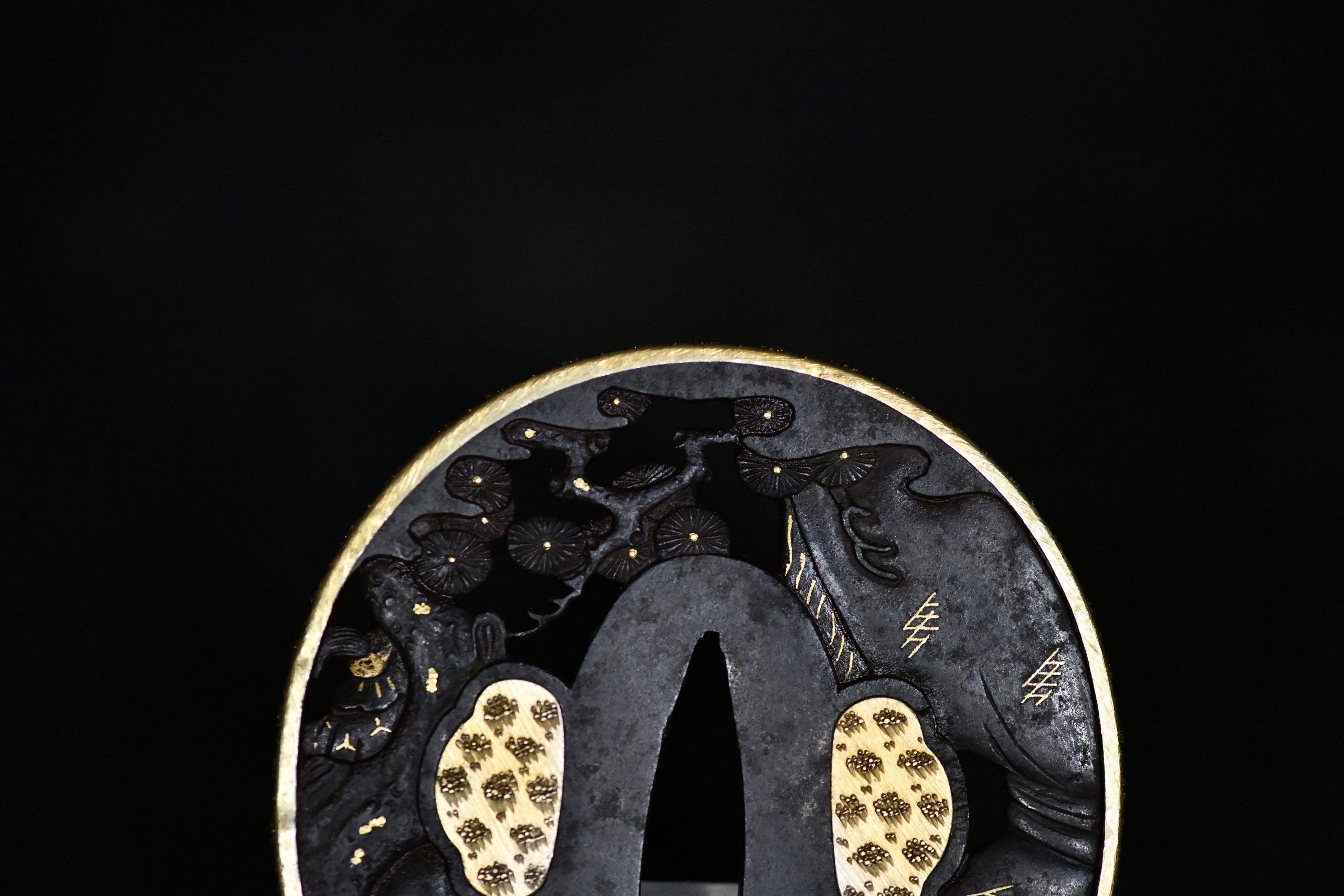
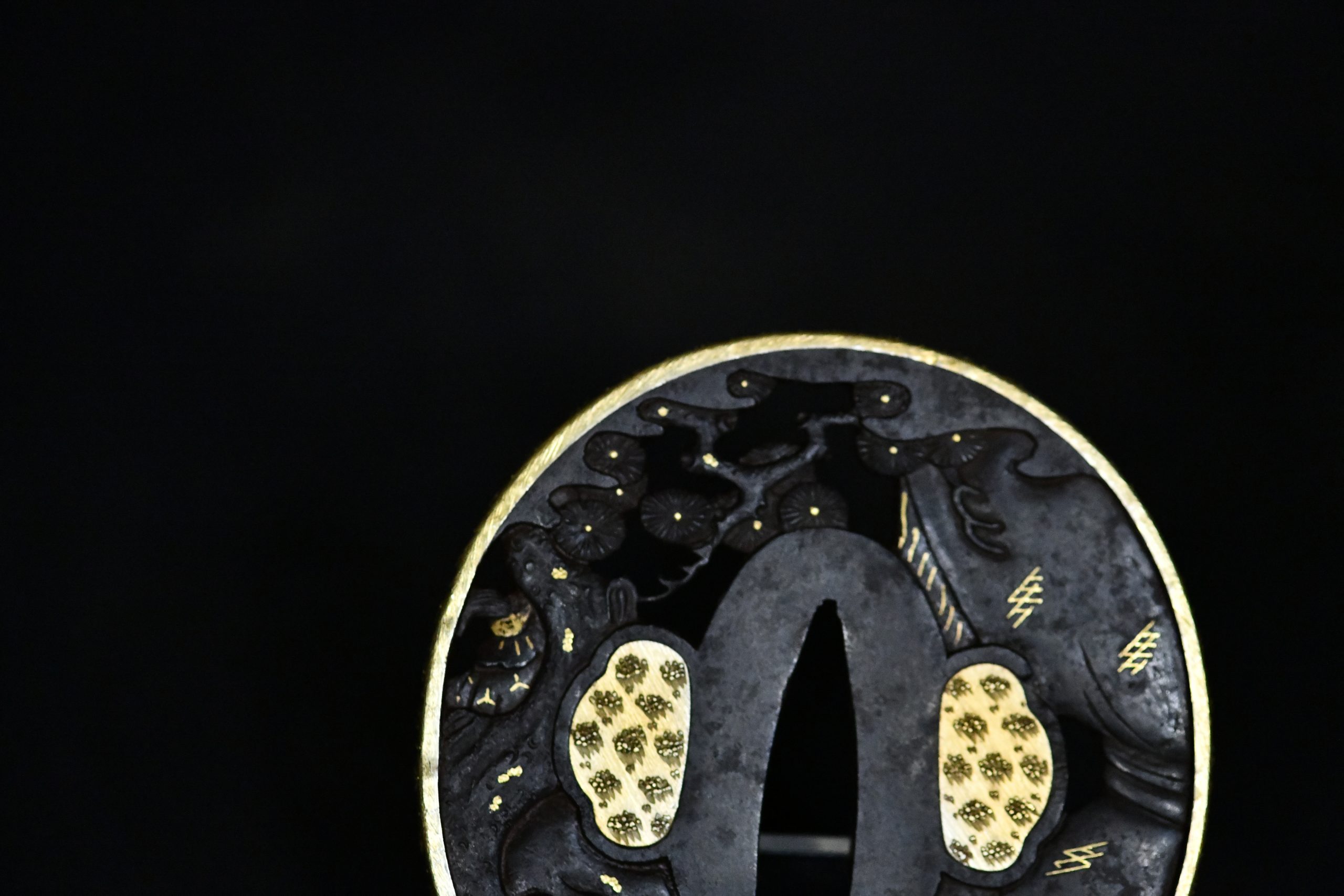
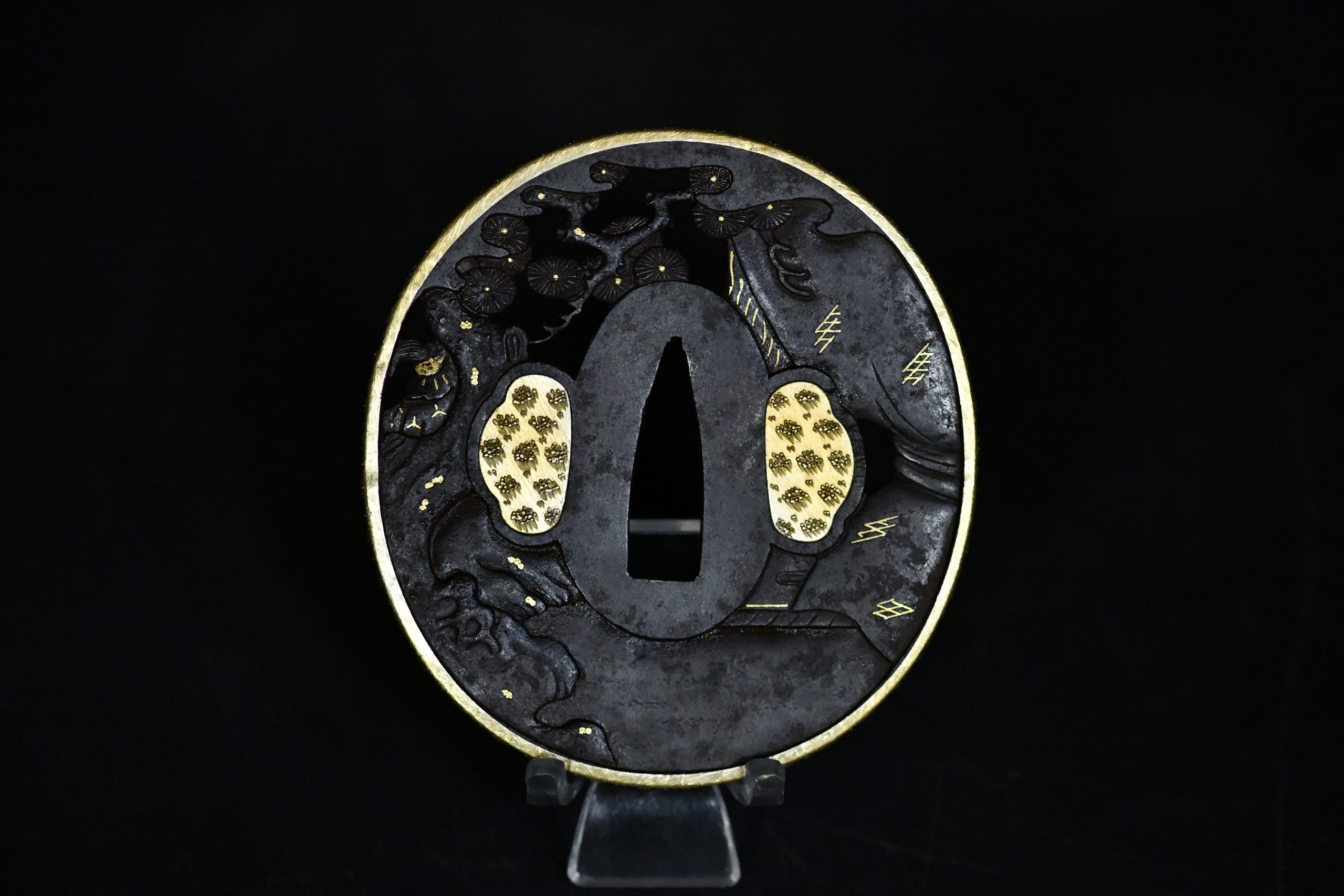
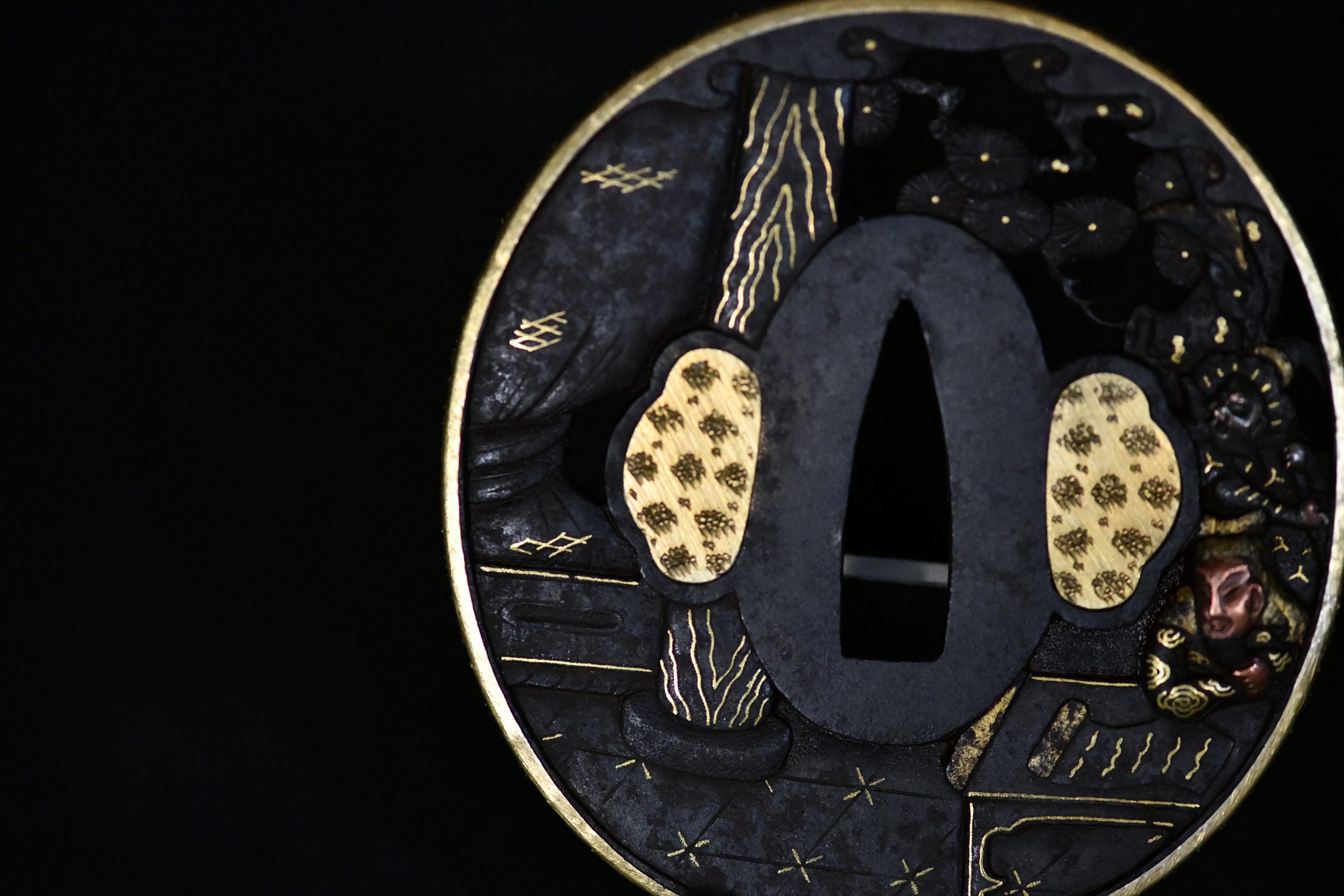
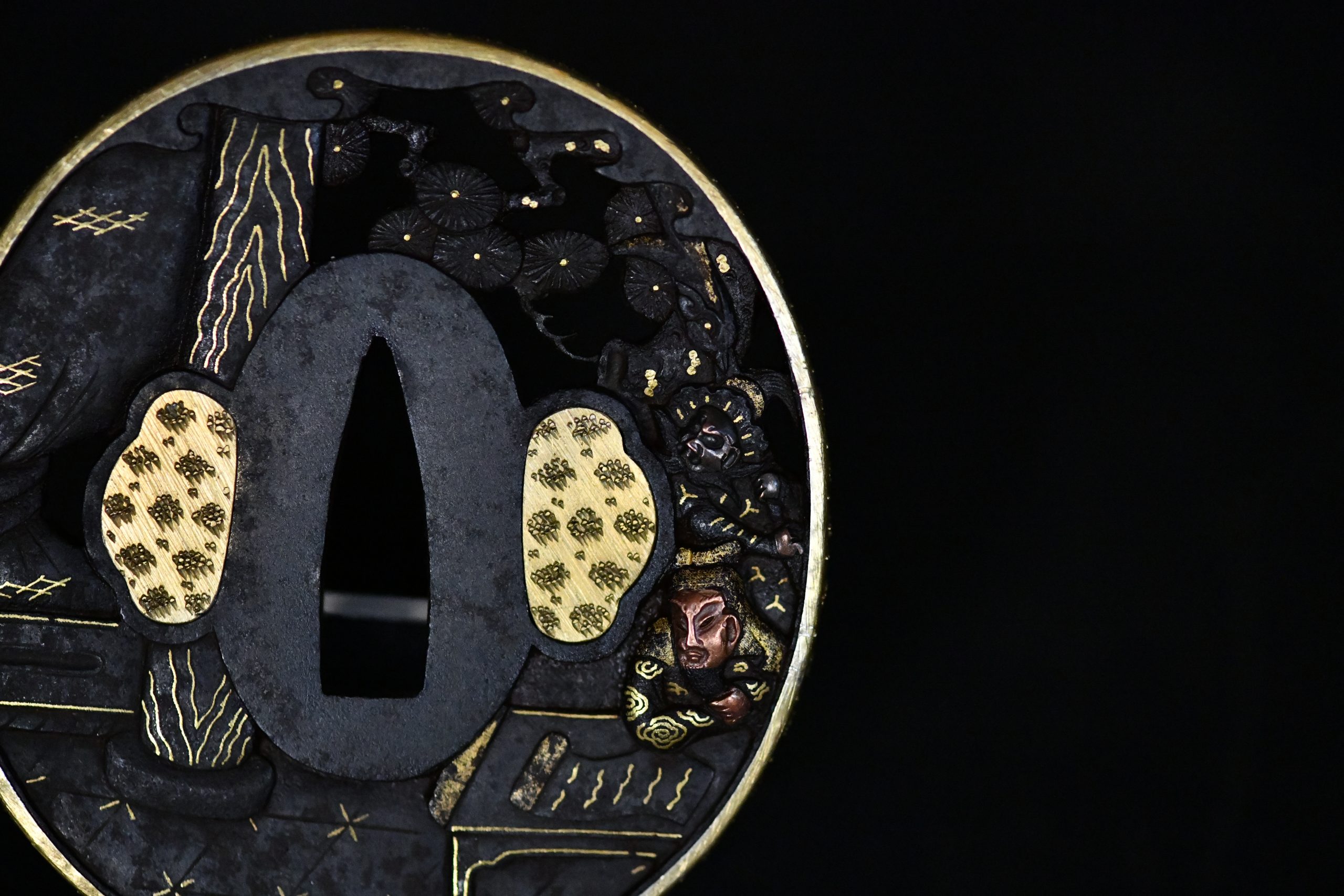
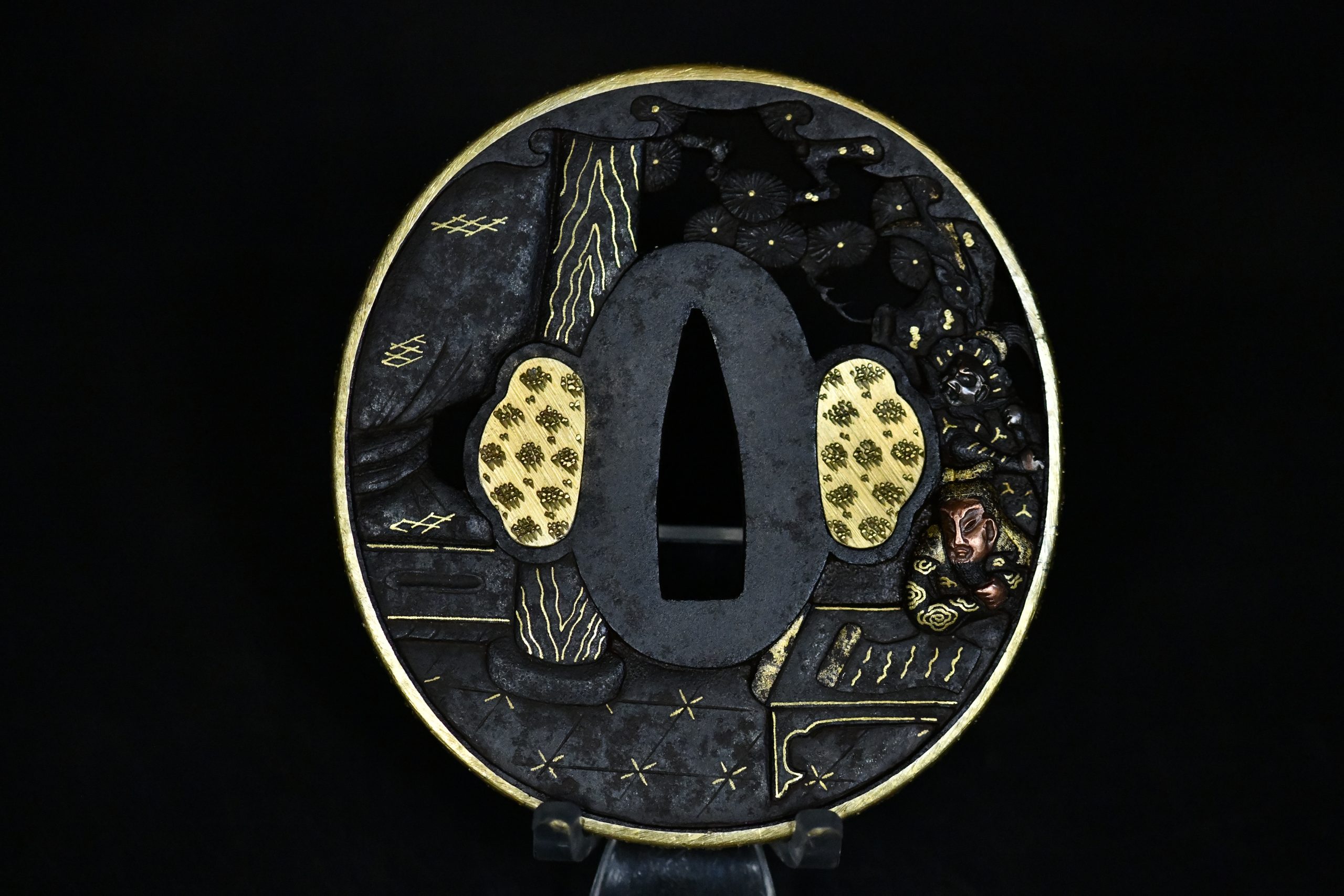
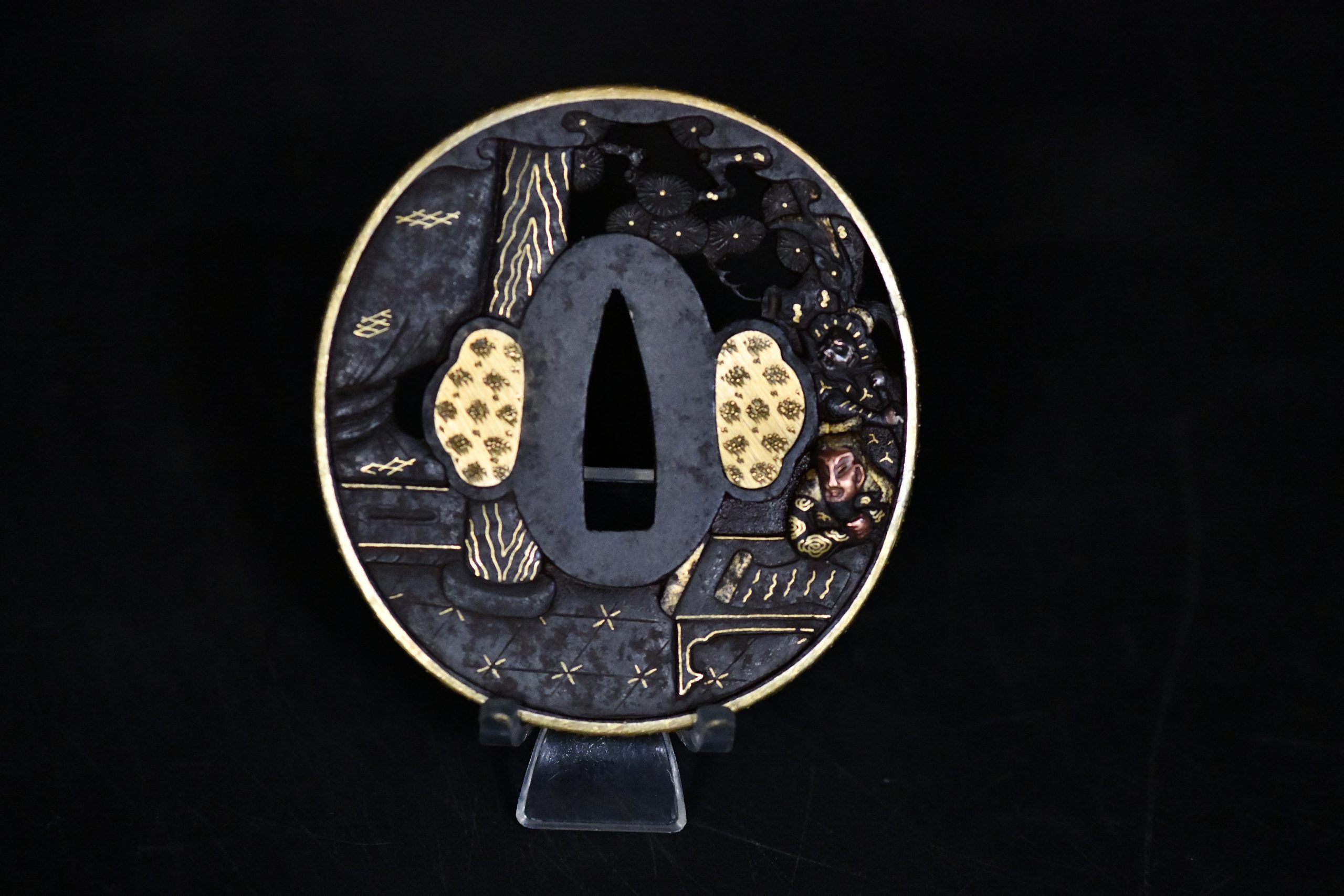
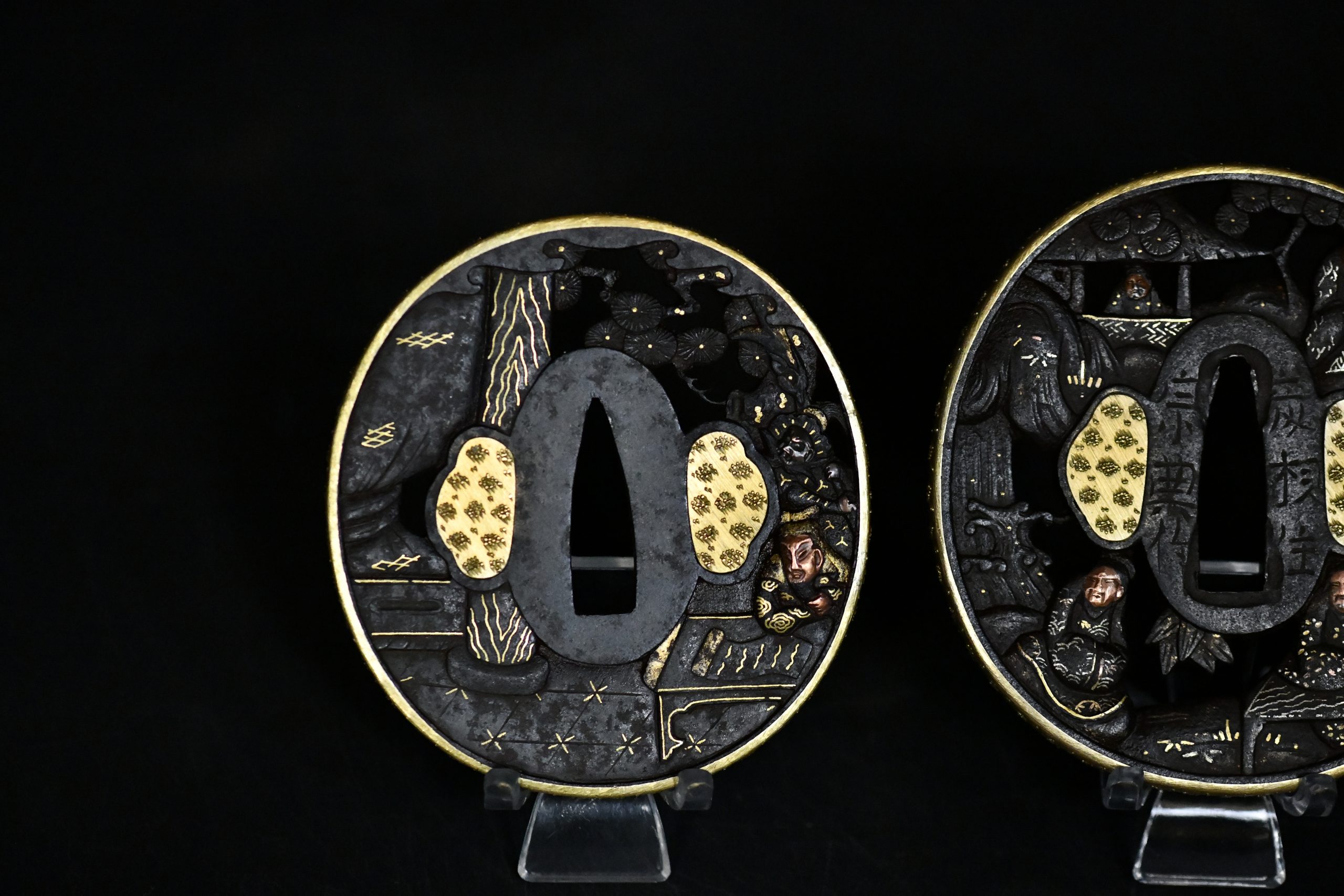
【商品概要】 スペイン日本刀(SupeinNihonto)鑑定書付属、木箱入。 大小鍔 本作は、当初より大小一腰として製作された、鉄地高彫に豊かな金彩を施した揃いの大小鍔です。その作風は、江戸時代における水戸彫の洗練された美意識を色濃く反映しています。 【意匠と構成】 両鍔ともに、文人好みの山水風景の中に物語性豊かな人物図を高彫で描き出しています。 大鍔は、樹木や建築物、そして主役となる人物を配し、細やかな金彩の遠景が奥行きを添えています。小鍔は、中心穴(茎穴)の周囲に複数の人物を密度高く配した構成です。主題、技法、そして錆色の完璧な一致は、本作が本来の共鉄(ともがね)による大小一対であることを物語っています。 【材質と技法】 地鉄:良質の鉄地に、よく練れた黒々とした錆色がついています。 耳:金無垢の袋耳(金覆輪)が施されており、精緻な仕立てが全体の品格を高めています。 装飾:繊細な金布目象嵌に加え、高彫部分への色絵、さらに櫃穴の地板には魚々子(ななこ)風の鏨を打った金地を嵌めています。 彫り:肉厚な高彫により、人物の表情や衣紋のひだまで詳細に表現されています。 これら贅沢な金工作業と彫りの質の高さは、江戸時代の装飾刀装具の中でも優れた水準にあります。 【銘】 小鍔の切羽台に縦銘があります。その鏨運びや銘振りは、江戸時代の水戸彫工の作法と完全に一致しており、様式的な鑑定を裏付けています。 【様式と極め】 中国の故事に倣った文人的な画題、密度の高い高彫、そして黒鉄地に映える豊かな金彩から、本作は水戸彫の伝統に確固たる地位を占める優品と判断されます。 制作年代:江戸時代(18世紀〜19世紀) 【状態】 保存状態は極めて良好です。鉄地の錆色は美しく保たれ、金無垢の覆輪も欠損なく完存しています。色絵の剥落も僅かで、高彫の細部も鮮明に残っており、経年相応の僅かな擦れが見られる程度です。 格調高い拵への仕込み、あるいは上級のコレクションとして、自信を持ってお勧めできる一組です。
 NihontoWatch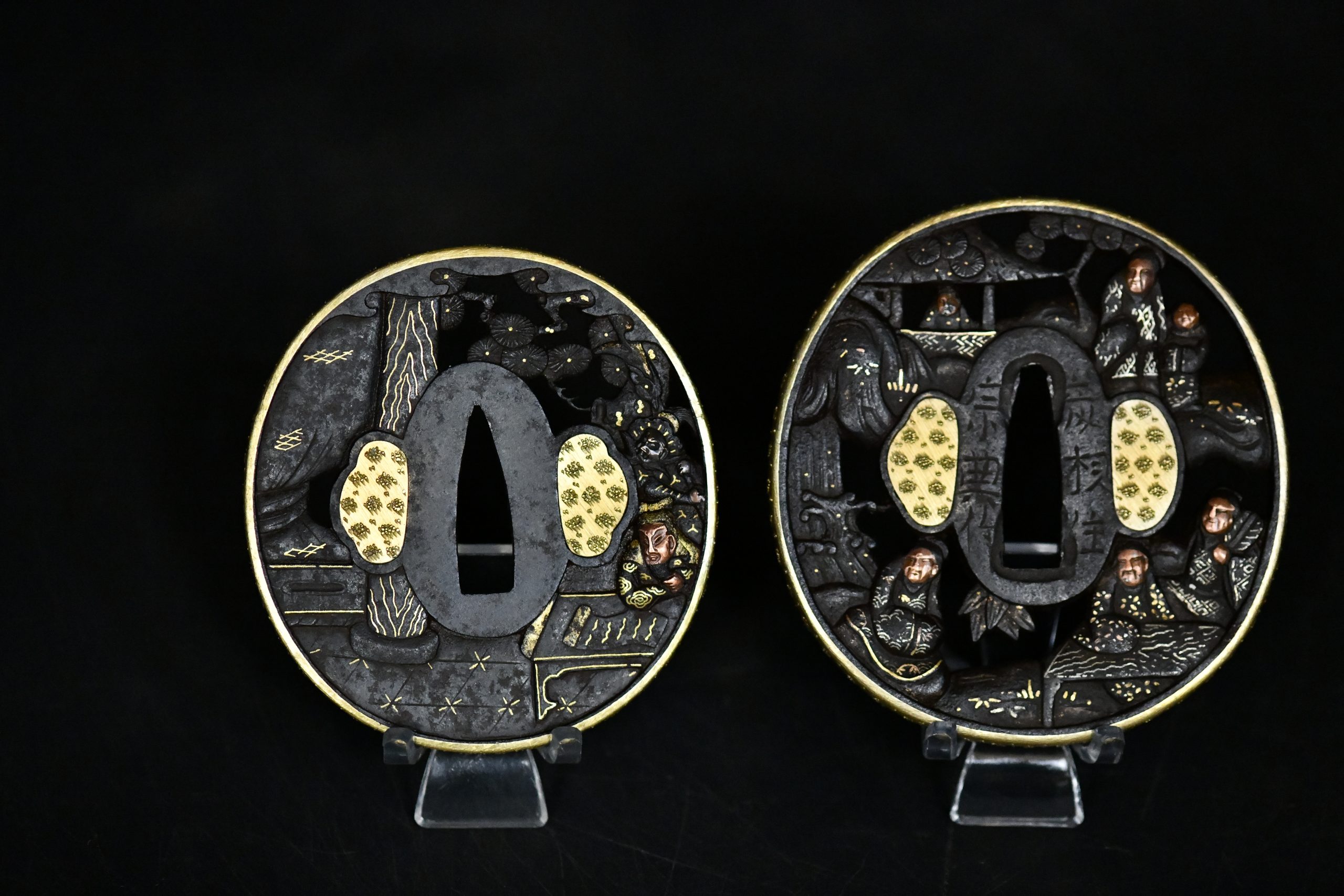
水戸派
町彫 · 常陸
現在78点販売中
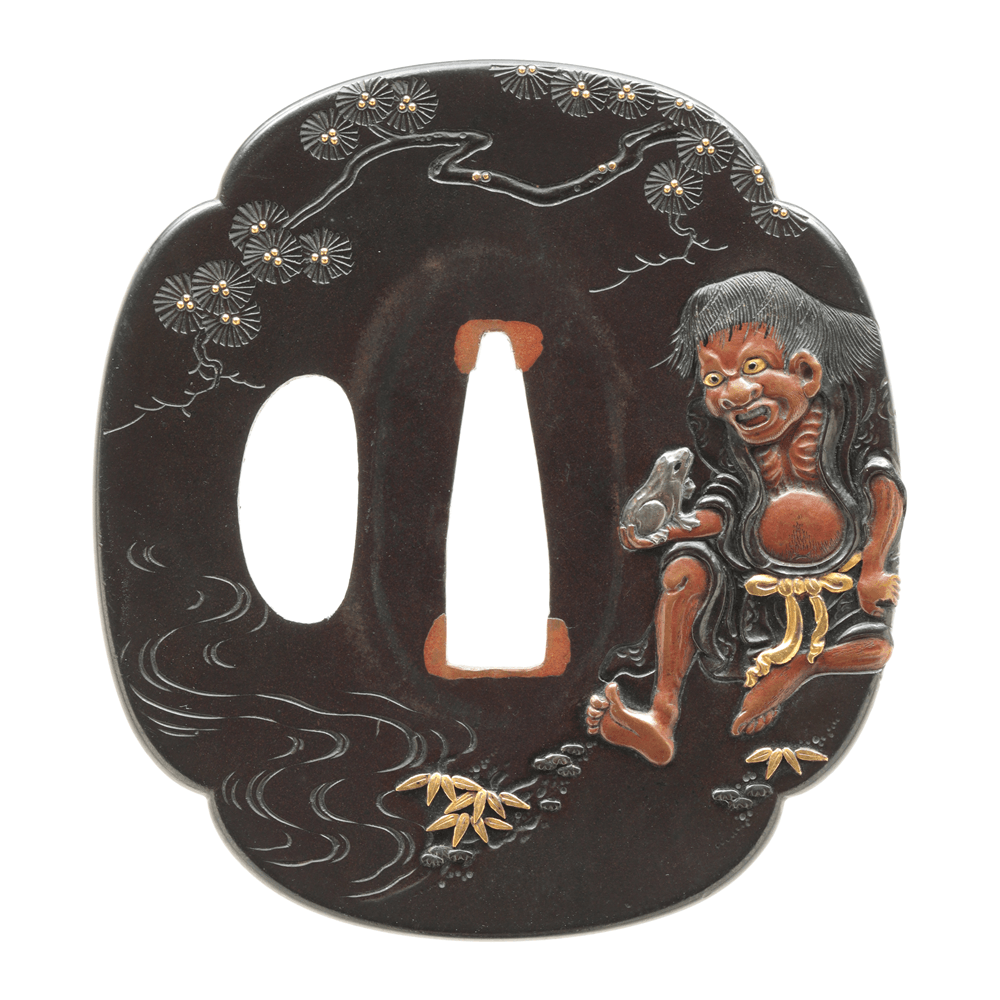
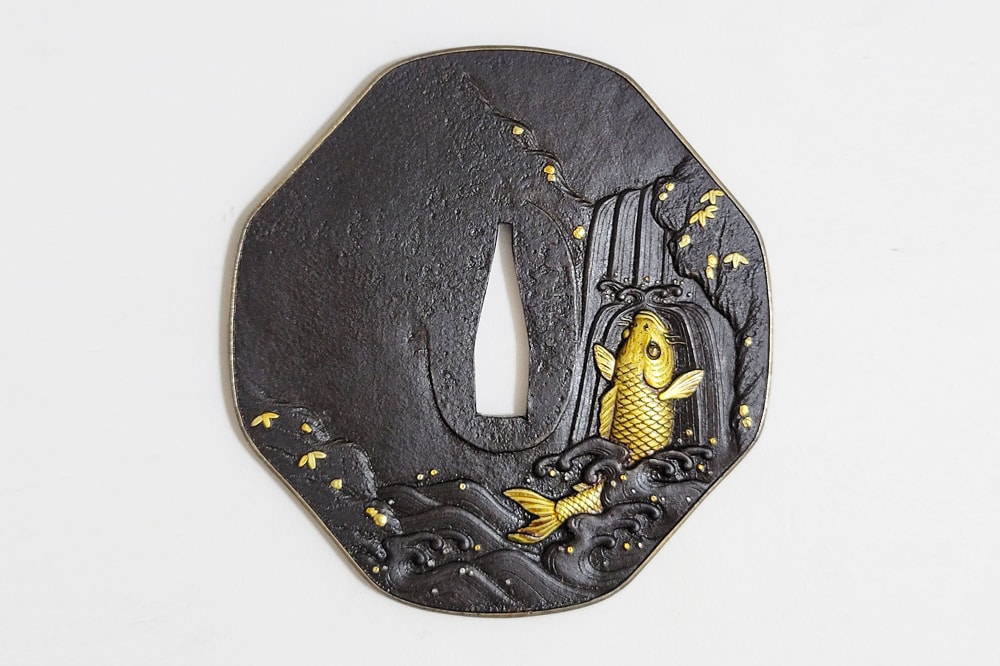
水戸派は江戸時代後期から幕末にかけて、常陸国水戸藩を中心に発展した刀装金工の一派である。篠崎勝茂を直系とする水戸金工群は、藩の庇護のもとで御用彫物師の地位を確立し、赤銅魚子地に高彫という手法を用いた作品を数多く制作した。横谷派の影響を受けつつも独自の様式を展開し、人物図を得意とする玉川派の系譜を引く工人たちが、牡丹獅子図や七福神図などの吉祥文様を立体的な彫技で表現した。 代表的な工人である生涼軒萩谷勝平は、文化元年に水戸に生まれ、篠崎勝茂の門に学んだ後、天保十五年より藩の御用彫物師となった。通称を弥介といい、門人にこの一字を与えたことでも知られる。勝平の作品は赤銅魚子地に高彫という技法を用い、銀象嵌や金布目象嵌を豊富に施した華麗な作風を特徴とする。獅子の巻毛や牡丹の花弁を実に立体的に彫り上げ、色絵も的確で隙のない工法により、質感に富んだ鮮やかな仕上がりを見せる。竜田川図や流水紅葉散図などの自然文様においても、高い技術による完成度の高い表現を残している。 水戸派は多くの優れた門人を育成し、勝平の門からは滑川貞勝、海野勝珉、鈴木勝容などの名工が輩出している。海野美盛の門人である海野美秋、海野美春も人物表現に巧みで、師の玉川派の流れを汲む丁寧な色絵技法を受け継いだ。額川保誠のような後期の工人たちは、家紋散図など正統的な形式による作品を制作し、幕末の水戸金工群の充実ぶりを示している。水戸派の作品は堅実丁寧な技が光り、幕末金工史における重要な位置を占めている。 詳しく見る →
刀剣商の出品ページで鑑定書を確認できませんでした。日本刀および刀装具は通常、NBTHK(または NTHK)の鑑定を受けます。鑑定書がない場合、極めは刀剣商の見解にとどまり、第三者による確認は行われていません。ご購入前に刀剣商へ鑑定書の有無をお問い合わせのうえ、慎重にご判断ください。
14-day return if items arrive damaged or in unexpected condition; customer bears return shipping + insurance; items returned in original condition with all accessories; antique armour non-returnable; only regular priced items refundable; shipping costs non-refundable.




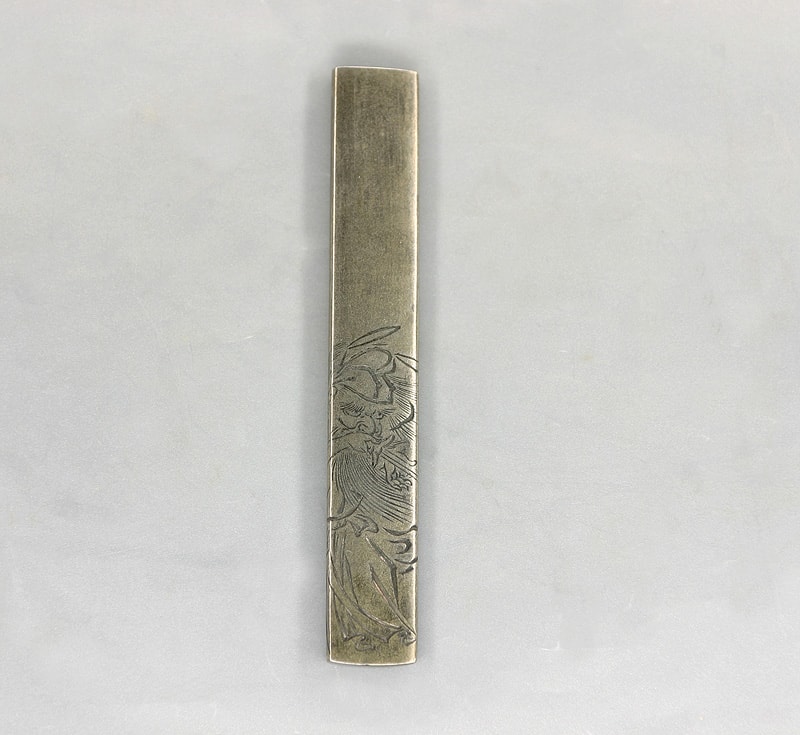
![小柄 - 保存 - 作 水戸派 - 小柄[無銘 水戸初期 鬼遣図][日本美術刀剣保存協会]保存刀装具](/_next/image?url=https%3A%2F%2Fitbhfhyptogxcjbjfzwx.supabase.co%2Fstorage%2Fv1%2Fobject%2Fpublic%2Flisting-images%2Fworld-seiyudo%2FL32901%2F00.jpg&w=2560&q=90)