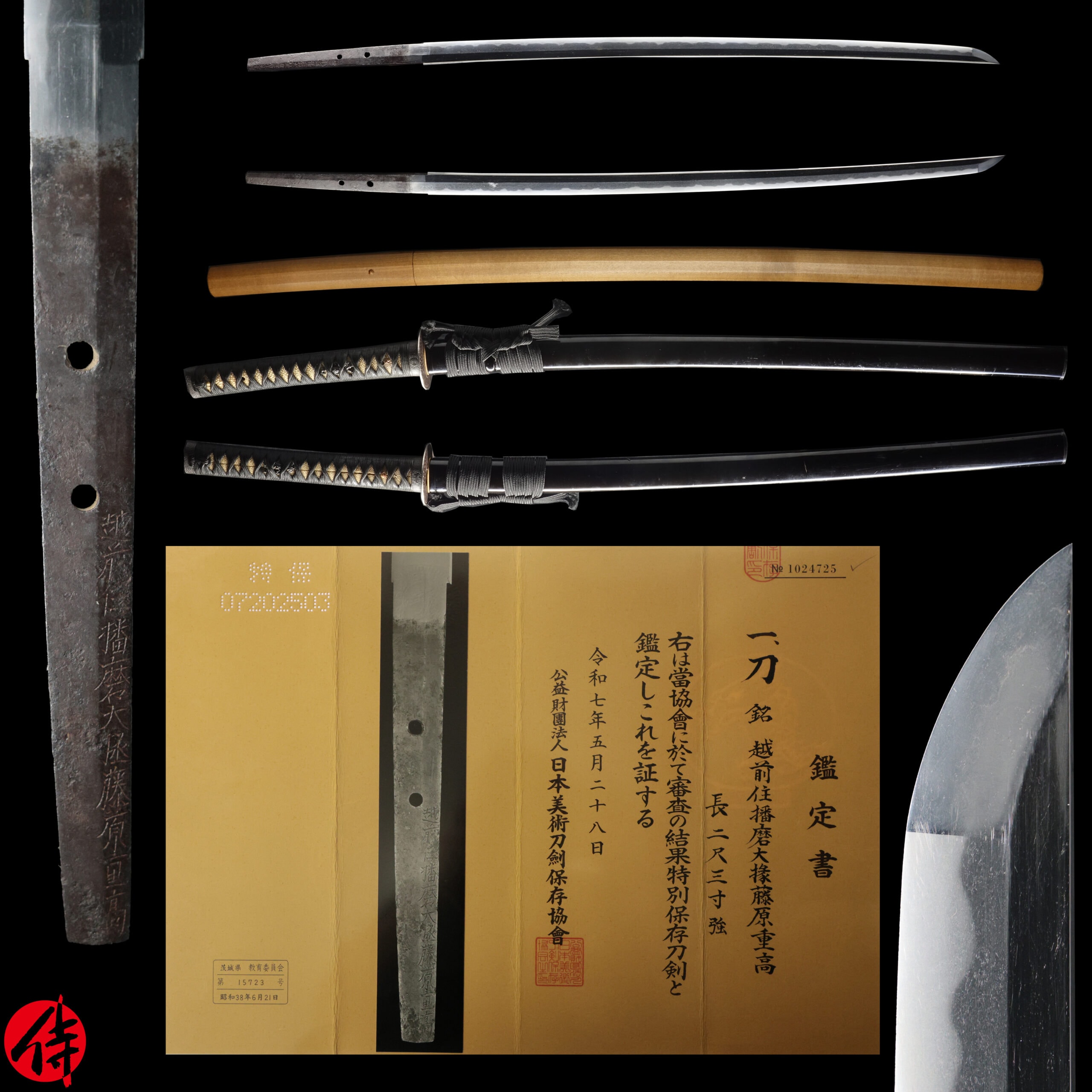
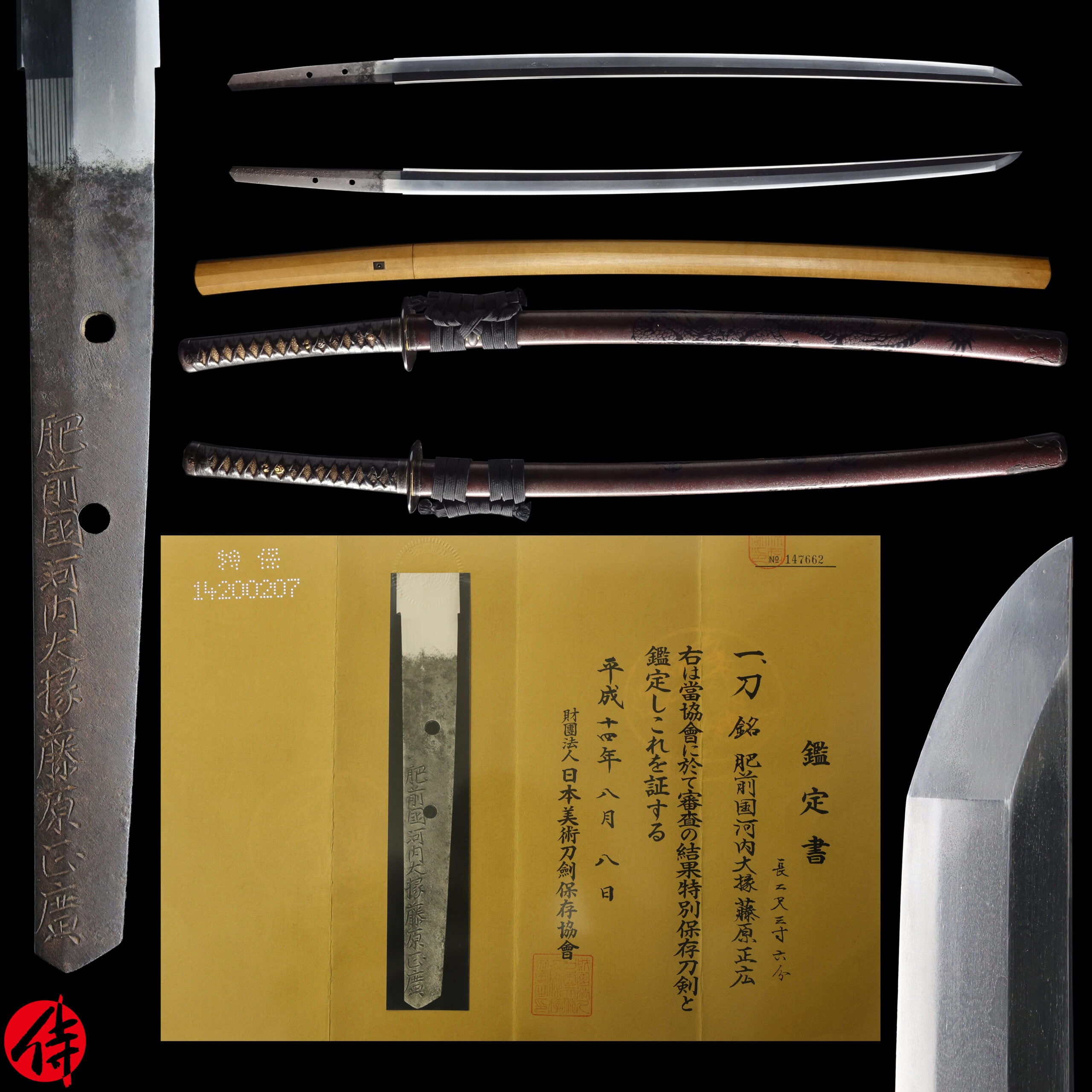
説明
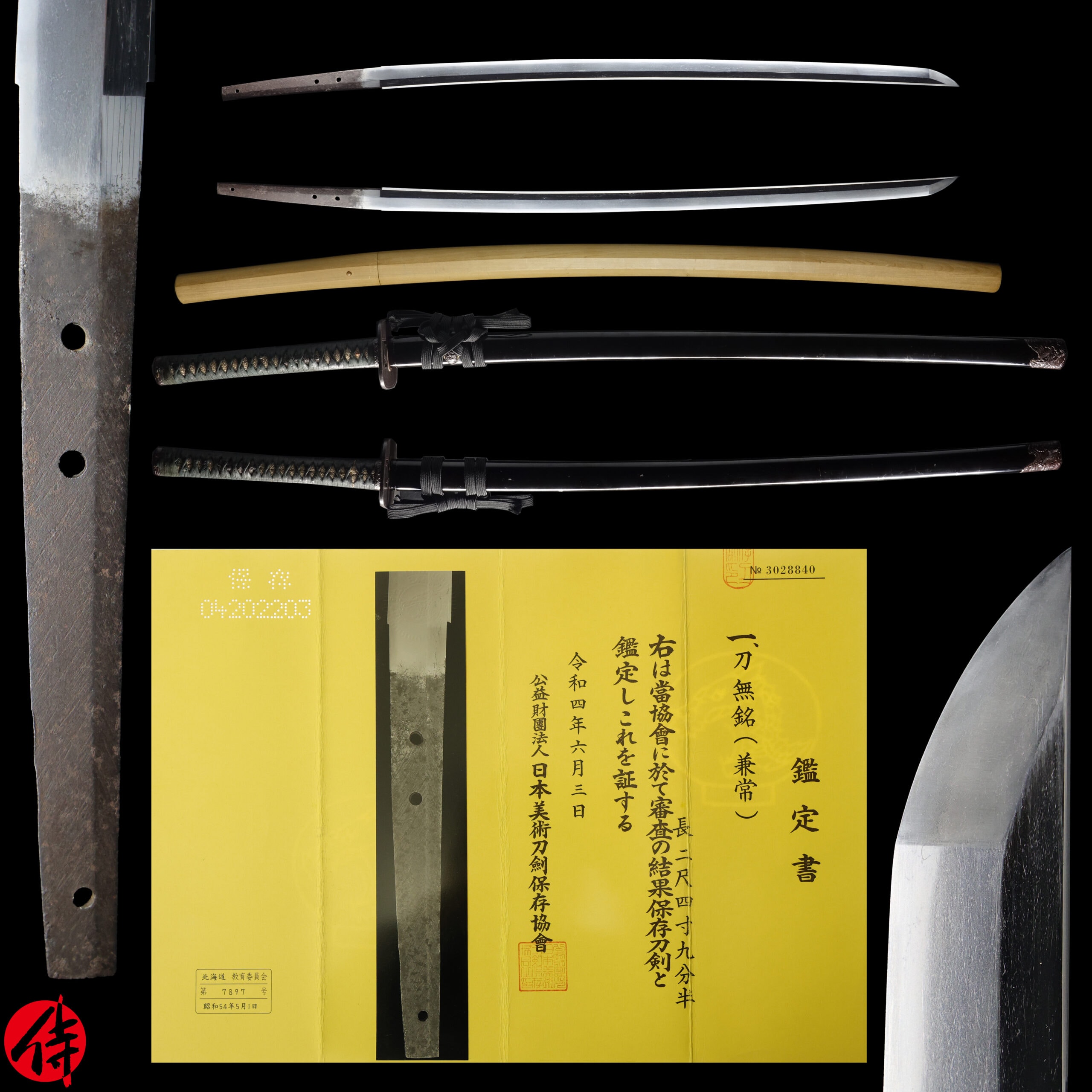
Antique Japanese Sword Katana attributed to Kanetsune with
Hozon
Certificate
【Description】
Summary
This blade is attributed to Kanetsune(兼常). According to historical records, a few swordsmiths used Kanetsune as his maker’s name during the early-Muromachi period- early Edo period(1394-1644). Based on this blade’s characteristics, we believe the attribution was given to one of Kanetsune in the late Muromachi period(1492-1569) in Mino province( Gifu prefecture today).
It is said that the first-gen Kanetsune(初代兼常) belonged to Yamato school in Nara prefecture. And he moved to Mino province in O-Ei era(1394-1428: Early Muromachi period). Since then, the school had flourished for generations. The school’s fame was close to that of Magoroku Kanemoto, Izumono kami Kanesada, prestigious swordsmiths.
The MINO swordsmiths style, also known as MINO-DEN, basically has the TOGARI(Pointed shapes protruding from the Hamon )in a classic straight line and random temper line with some white Utsuri. MINO-DEN had its origin from YAMATO-DEN in the late KAMAKURA period(1280-1330). It flourished in the MUROMACHI period(1333-1573) and continued until the EDO period(1603-1868).
MINO DEN
MINO-DEN exceedingly prospered during Sengoku Jidai (Warring State period) due to the high demand for weapons. And the location of Mino province beat others. Akechi Mitsuhide controlled Mino province, and Nobunaga Oda ruled Owari province. Tokugawa Ieyasu was the lord of Suruga (Neighboring areas). There was high demand from those powerful feudal lords and their retainers.
Furthermore, so many wars occurred between the Kanto region and the Kyoto area. Mino is located in the middle, making feudal lords feel convenient to order swords from MINO-DEN. The blades forged in MINO provinces also had the reputation of their practical design and sharpness. Many feudal lords demanded swords forged in the Mino province. This highly skilled sword-forging technique has been passed down for generations. The smith’s name “Kanetsune” was one of the most famous ones even after the warring state ended.
It is appraised as a
Hozon Token
(保存刀剣) issued by NBTHK (Nihon Bijutsu Touken Hozon Kyokai: 日本美術刀剣保存協会). This authentication paper was only given to authentic Japanese swords,well preserved and high quality with artistic value.
*Please keep in mind that there are couple of Kizu on the Shinogi ji of this blade. If you like to see the detailed condition, please feel free to contact us.
【 Blade】
Cutting Edge Length(Nagasa)
:
75.5 cm (29.7 inches)
Curvature(Sori)
:
0 cm (0 inches)
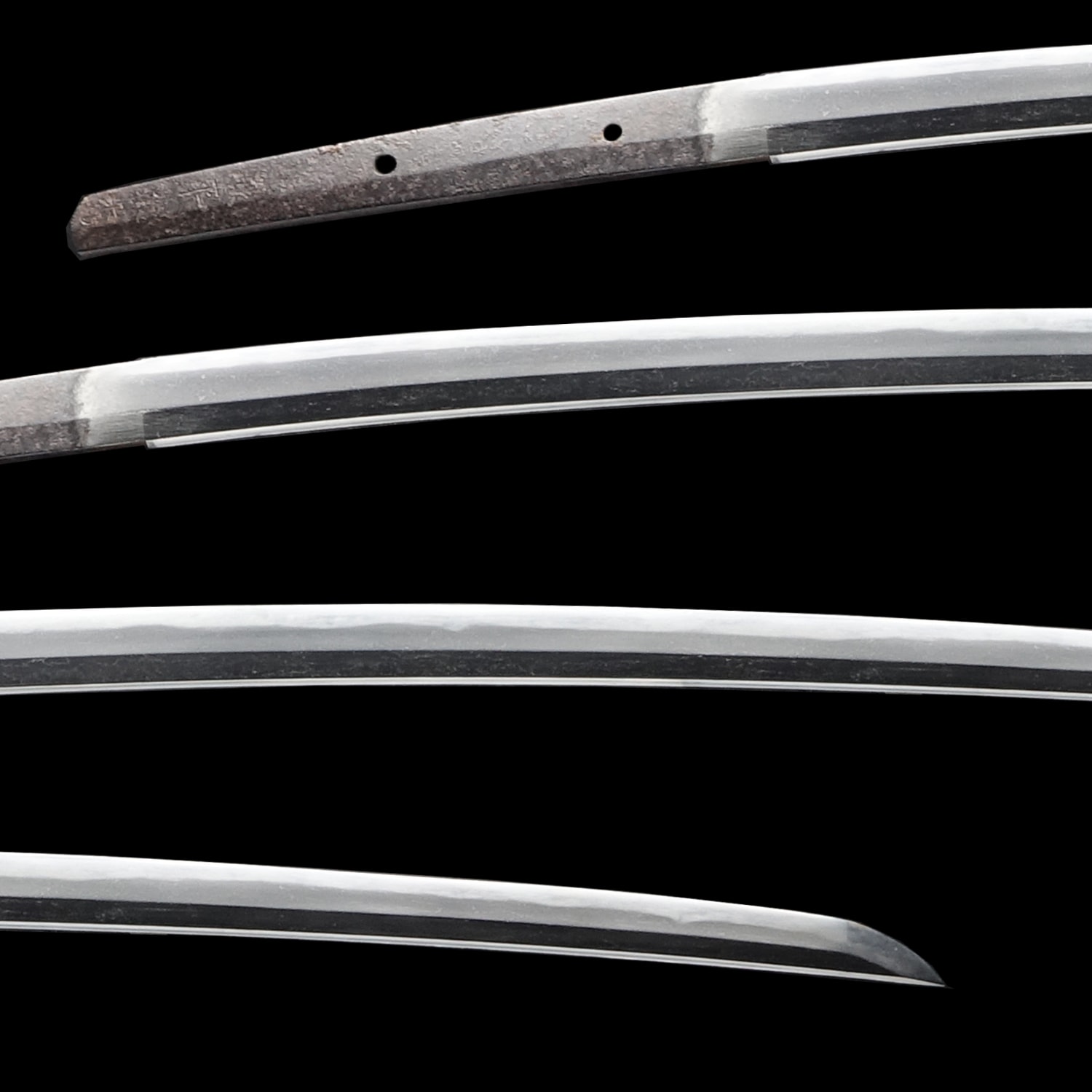
Hamon
:
The crystalline structure which forms along the cutting edge of a blade as a result of the hardening process
Jimon(Jihada)
:
visible steel surface pattern created by folding and hammering during forging process
Kissaki
:
Kissaki is the tip of the Japanese sword.
Nakago
:
Nakago is the tang of the Japanese sword.
Japanese swordsmiths left the black rust on the tang because it prevents red rust while the tang is in its handle. And the discoloration of the tang was created over time, and it is a great indicator for a Japanese sword specialist to estimate when the sword was forged.
Koshirae
:
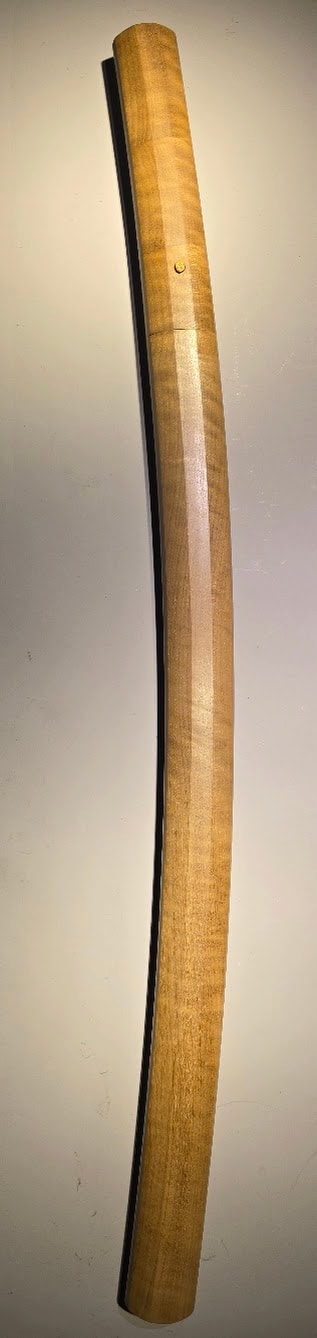
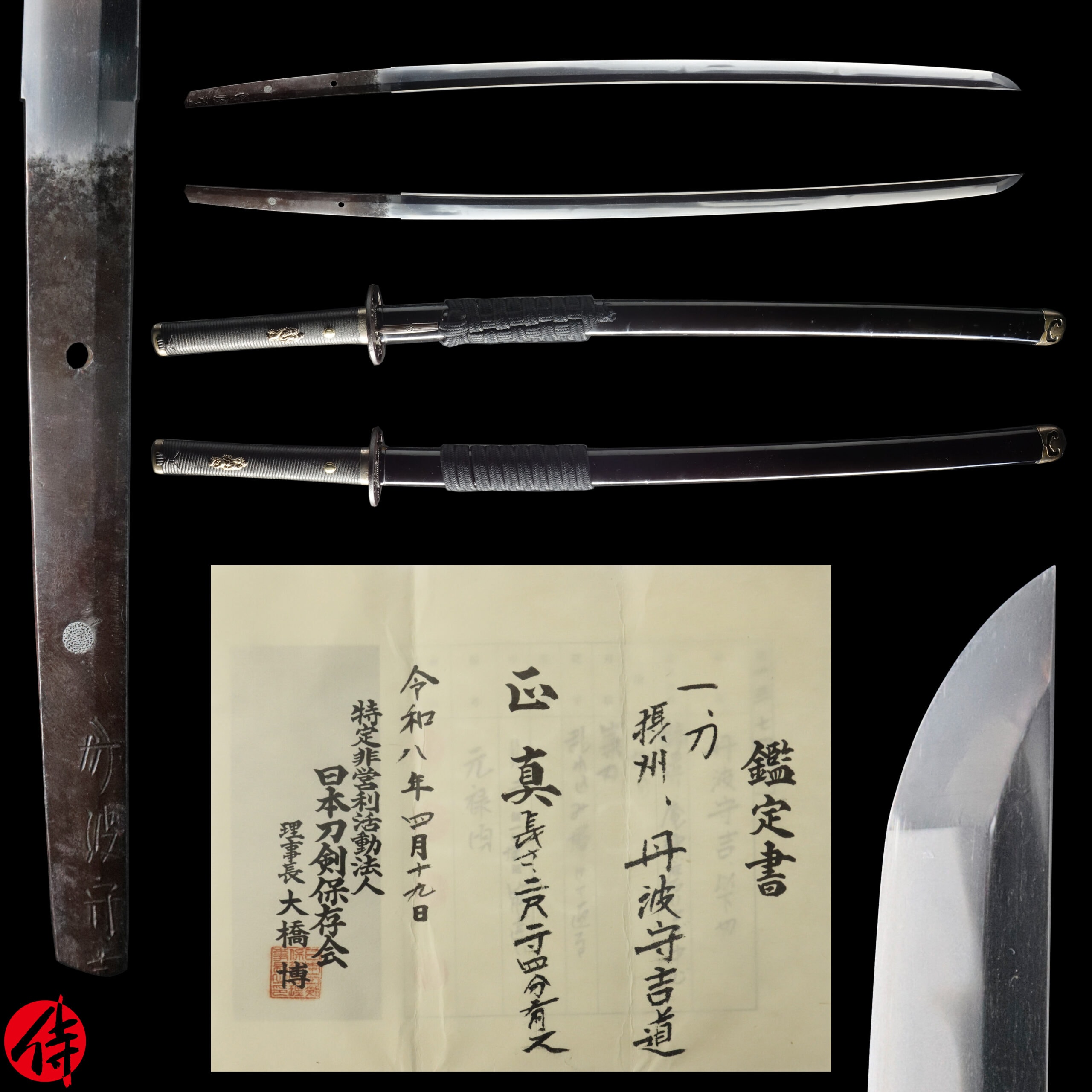
Koshirae is the mounting of the Japanese sword. There are several parts that consist of Koshirae such as Saya (Scabbard), Tsuka (Handle), Tsuba (Handguard).
Fuchi-Kashira
:
A pair of matching sword fittings that cover the upper and bottom parts of its sword hilt.
The theme of this fuchi-kashira is a dragon, matching the design of the menuki.
Tsuka and Menuki
:
Tsuka is the handle of the Japanese sword and Menuki is its decoration.
The motif of this Menuki is a dragon (龍, Ryū). The dragon is an imaginary creature originating from ancient Chinese mythology, later introduced to Japan through cultural exchange. In East Asian tradition, dragons are revered as auspicious, divine beings that control water, rain, and fertility, symbolizing strength, wisdom, and good fortune.
Its body is likened to nine animals: antlers are deer, the h