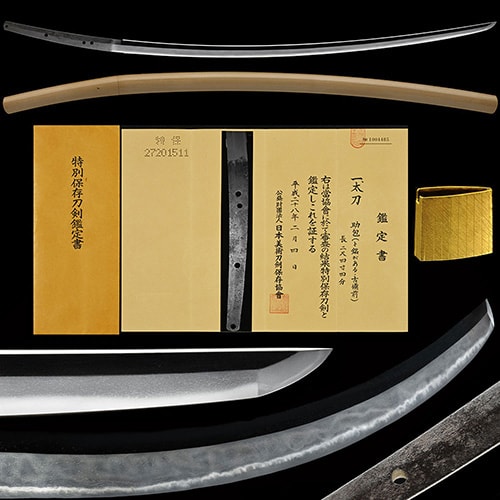
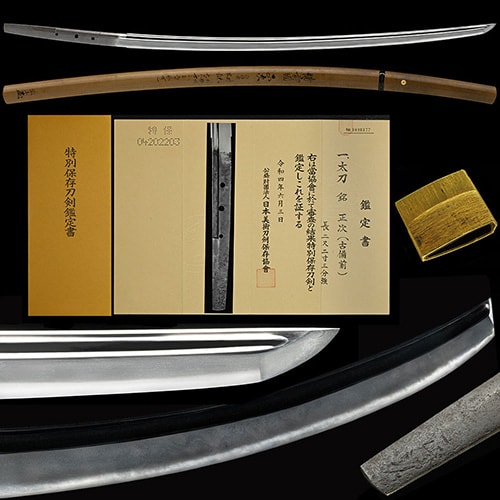
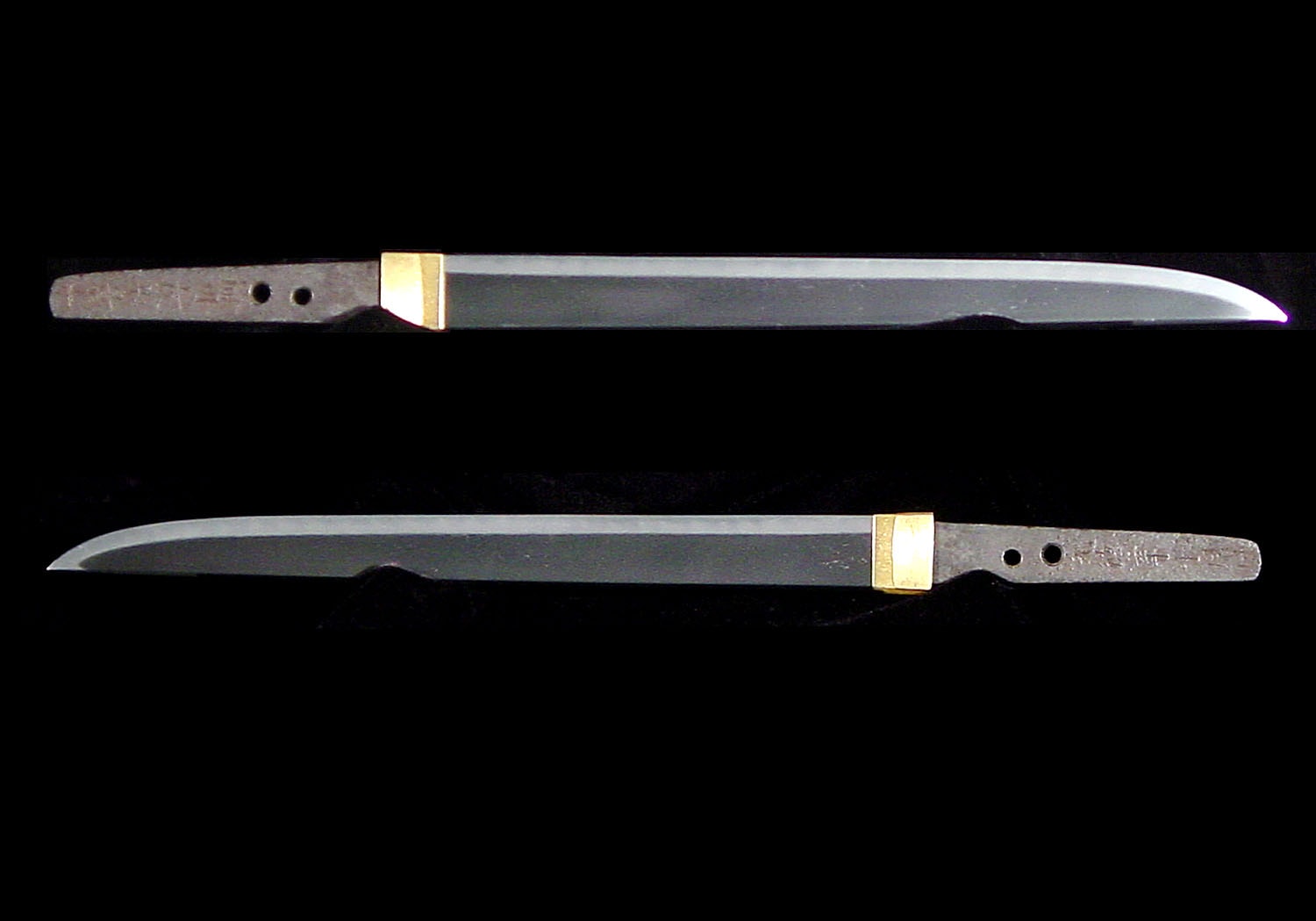
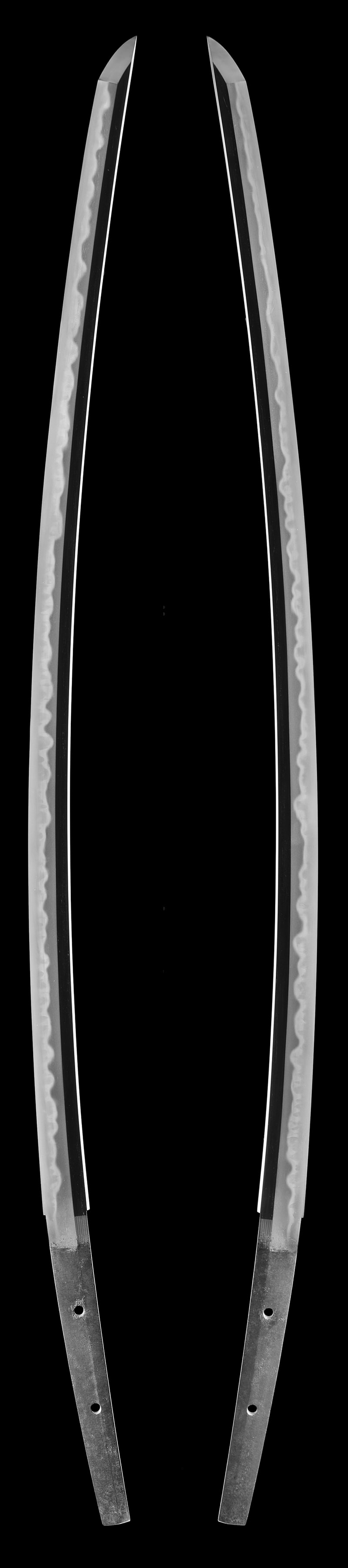
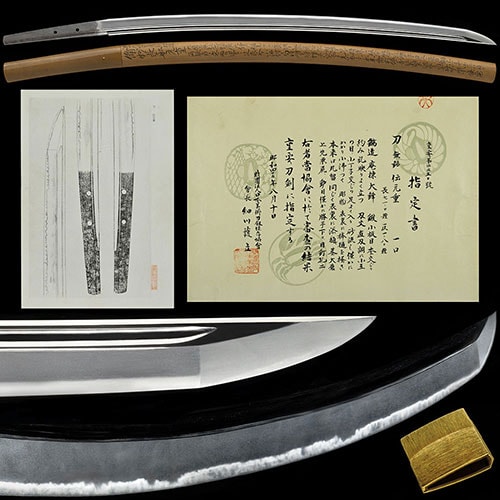
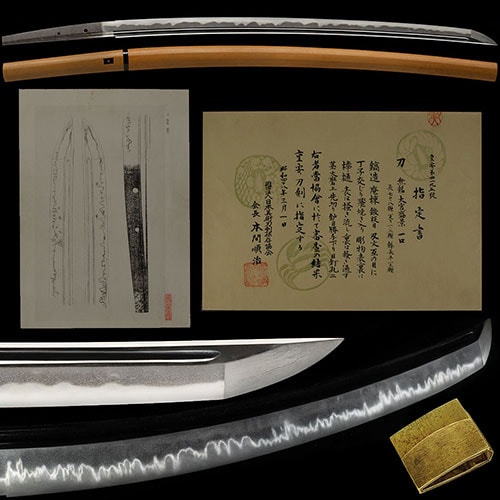
Tsunetsugu is traditionally held to be the son of Masatsune and a swordsmith of the late period, placing him among the earliest generation of the group. A smith of the name was active at nearly the time among the Senoo kaji of neighboring Province, and a later smith bearing the court title Sakon Shogen also used the name Tsunetsugu during the late period. These overlapping identities have historically invited confusion, particularly in the case of two-character signatures, which the has occasionally noted may be mistaken for works of the school.
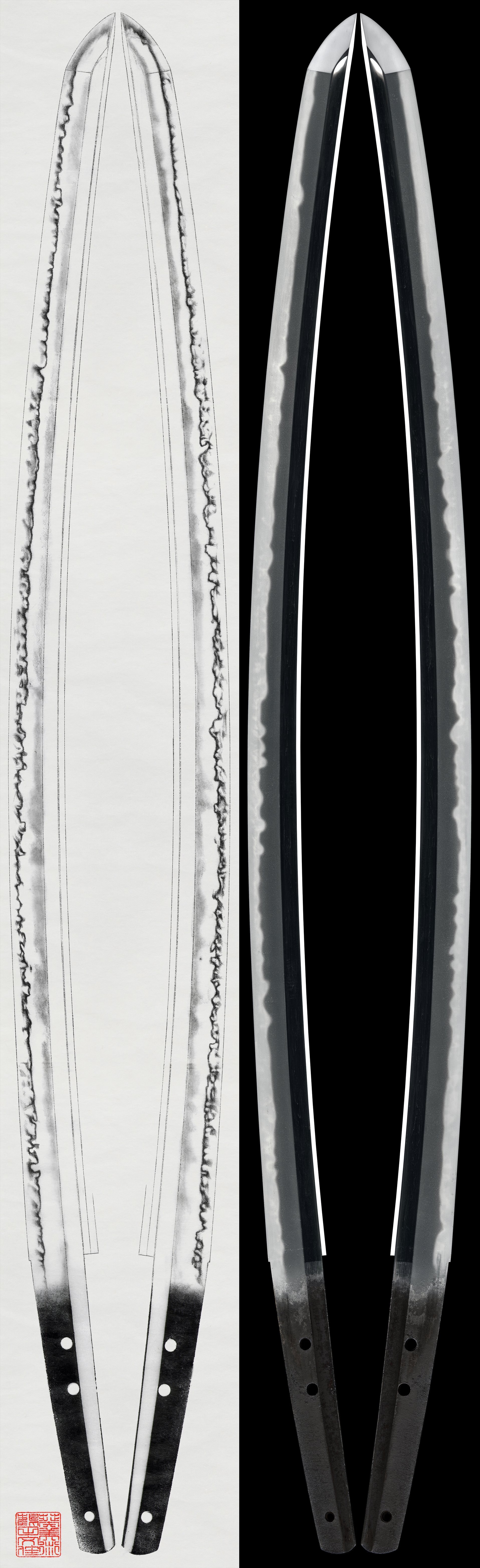
In workmanship, the Tsunetsugu is described as "in general, calmer than those of Masatsune," with a style "constructed chiefly in a -based" manner. His characteristically shows a closely forged with well-adhering and prominent . The is typically a -based temper mixed with small , enlivened by and ; gathers especially in the lower half, with and appearing to varied and engaging effect. Even in blades that have been greatly shortened (), the forging quality and clarity of the remain distinguishing hallmarks.
The consistently praises the superlative condition of his surviving works, describing them as — "sound and well-preserved" — and singles out the "superbly clear" () quality of the as "remarkable." That his blades retain their integrity across centuries of shortening and transmission speaks to an exceptional standard of craft. Historical provenance further attests to this esteem: one example carries a Kochu of Shotoku 5 (1715) with a valuation of ten gold pieces, and the attribution on surviving works has been accepted as reliable by the , affirming Tsunetsugu's place as a distinguished smith within the founding generation of the tradition.