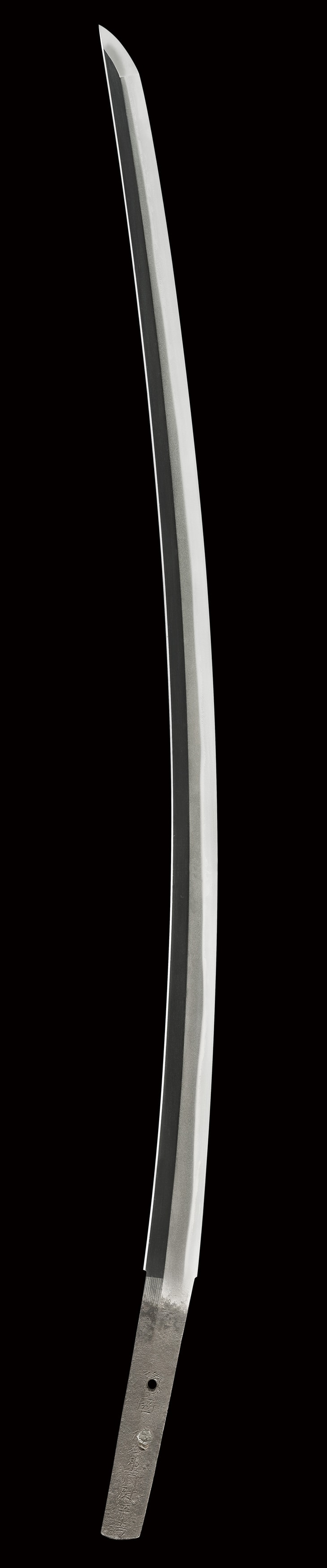
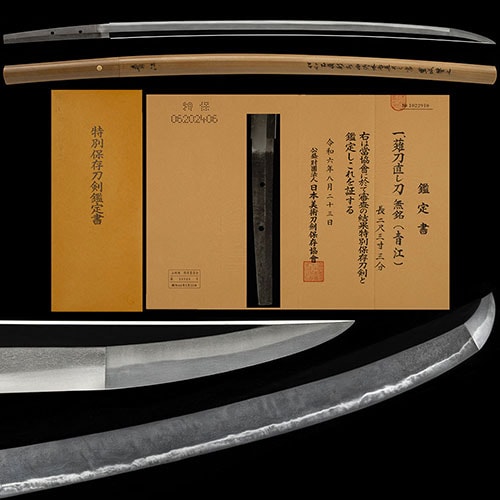
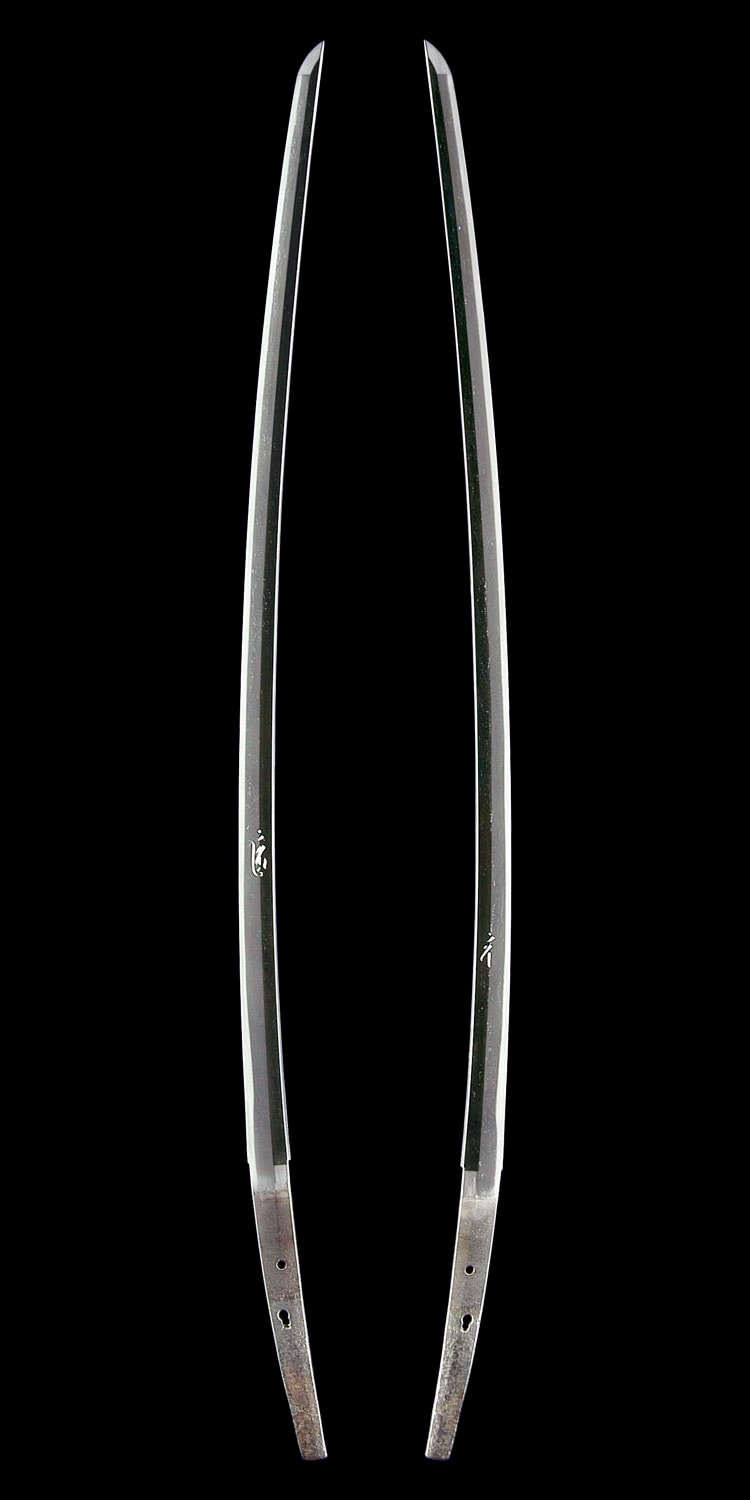
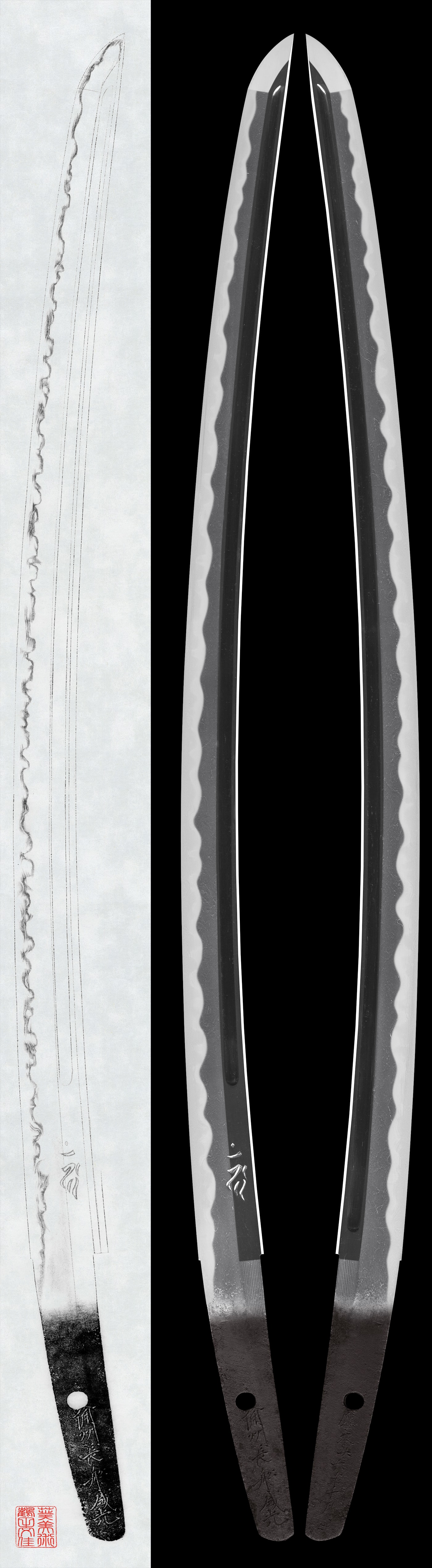
Sukeyori was a swordsmith of the school of Province, active during the early period. The lineage is traditionally traced to Yasutsugu of the Joan era (1171--1175) and thereafter produced many noted craftsmen through the late period; works dating no later than approximately the mid- period are especially distinguished as . Representative smiths of this early group include Moritsugu, Tametsugu, Tsugie, Tsugutada, Sadatsugu, Yasutsugu, Kanetsugu, Tsunetsugu, Toshitsugu, and Suketsugu, among others. In the , Sukeyori is recorded with a Shoo-era dating that is regarded as probably not greatly in error. All blades bearing the Sukeyori signature that have been confirmed in to date have been limited to , and all share the consistent two-character and common features in both workmanship and manner of cutting the inscription.
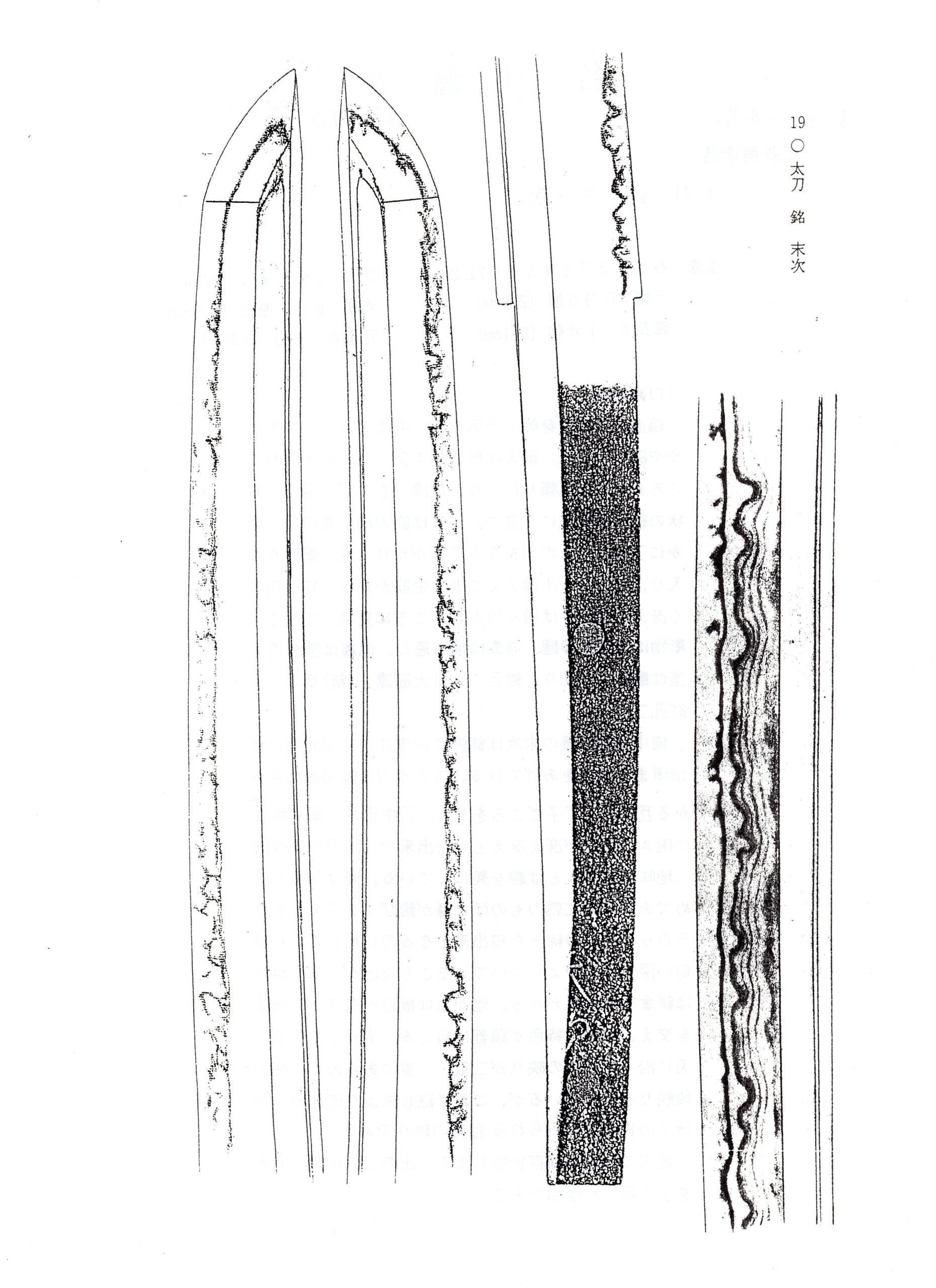
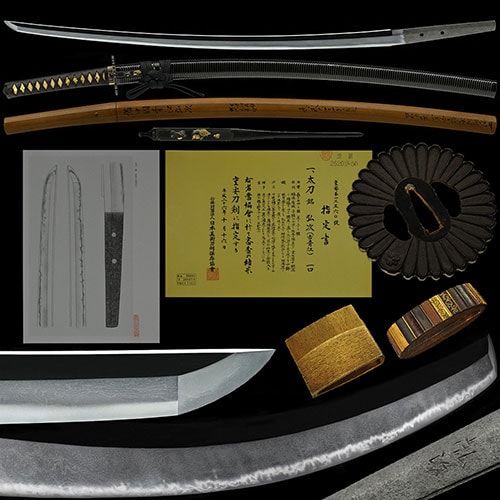
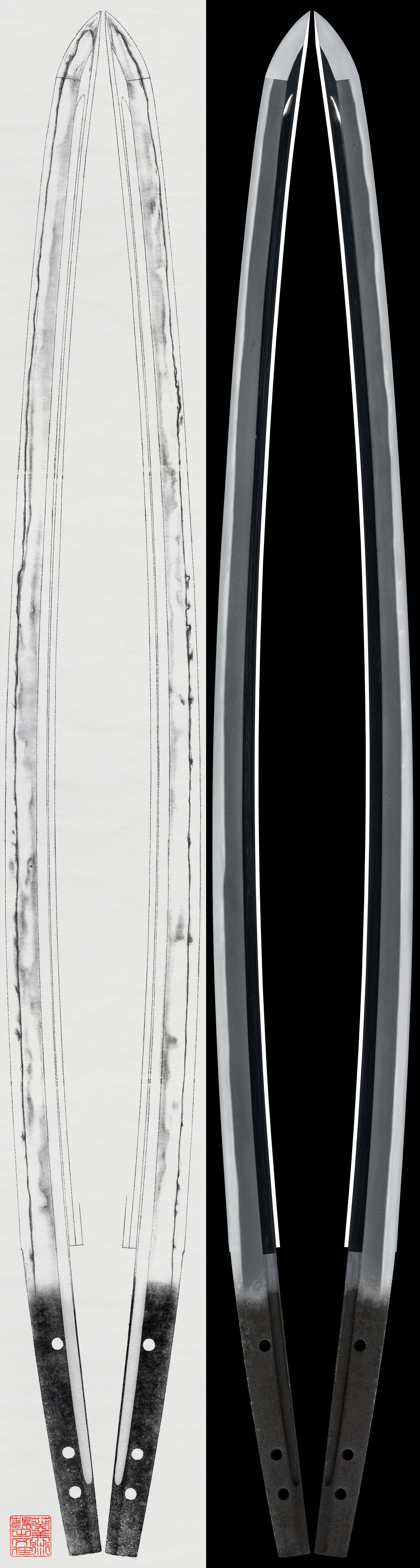
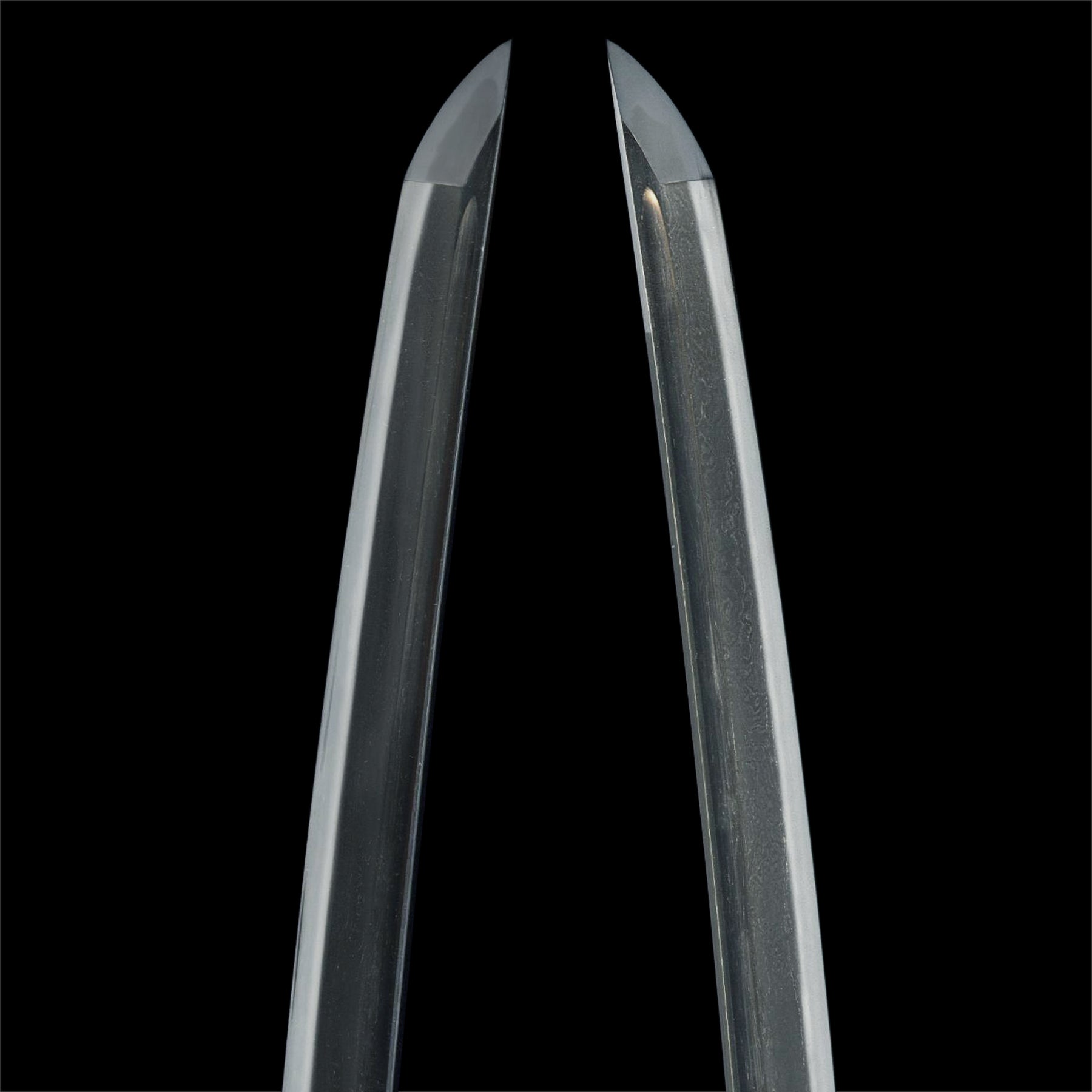
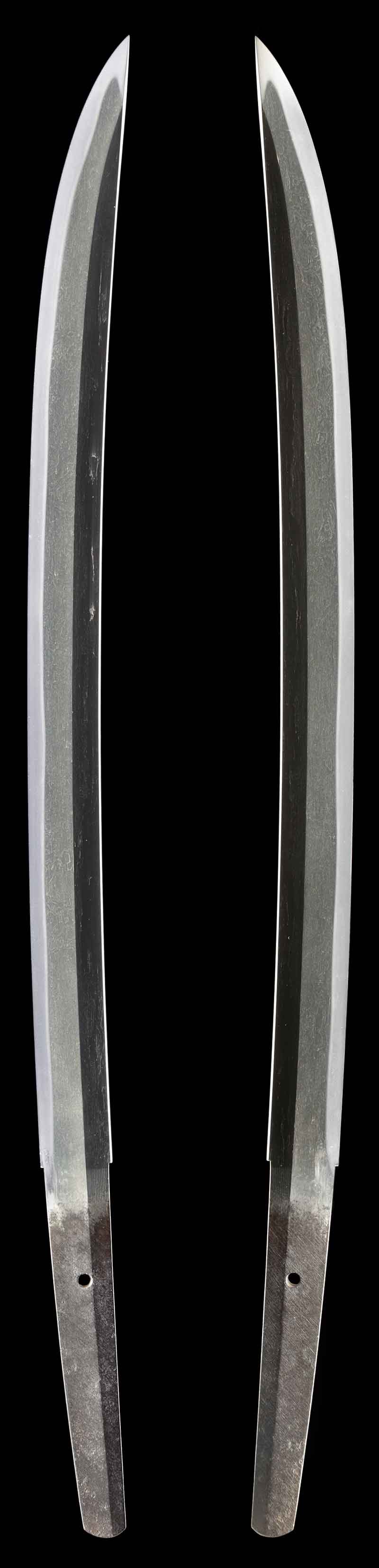
Sukeyori's forging characteristically displays mixed with , tending toward standing grain and producing the so-called --- the crepe-like texture regarded as diagnostic of the group. The is rich in and , with fine, thick adhering throughout. A faint may stand up within the surface. The is based on with slight shallow or , sometimes mixed with ; the shows a somewhat tendency, and thick adheres, with , , and occasional -streak-like activity producing a deep and resonant character. The typically enters , at times with . The bears the distinctive filemarks and signature placement on the , centered below the --- conventions characteristic of the school as a whole and clearly distinguishing these works from contemporary production.
Compared with the forging usually encountered in this school, Sukeyori's finest works show a that is uniformly tight, presenting a well-refined and notably elegant texture. The has observed that both and clearly express the workmanship typical of this group, while conveying the subdued, austere flavor that sets apart from and related traditions. Extant works by Sukeyori are few, and retaining an are especially scarce, rendering authenticated examples exceedingly valuable as documentary material. His superior pieces are praised for a dignified form well complemented by an archaic .