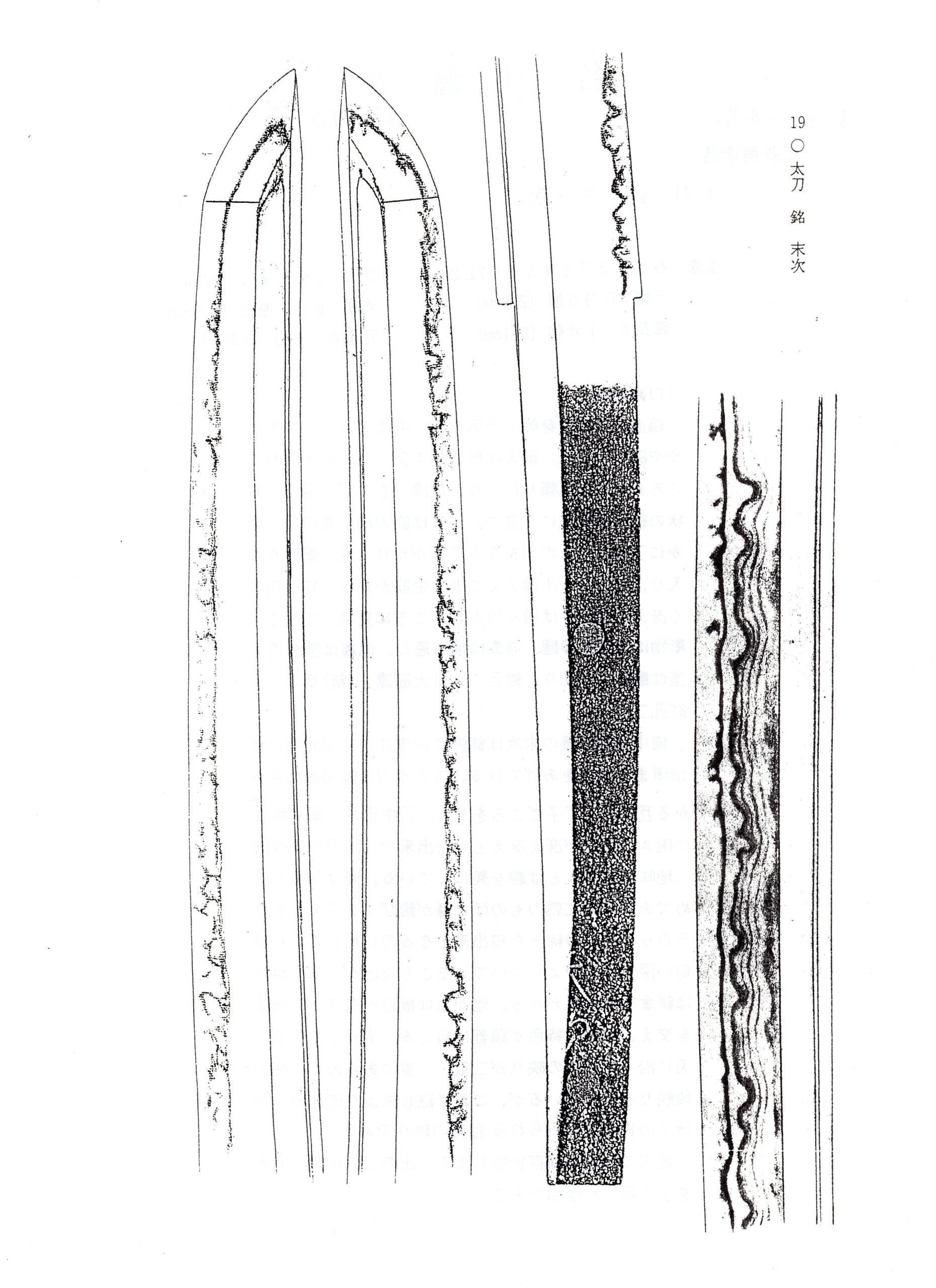
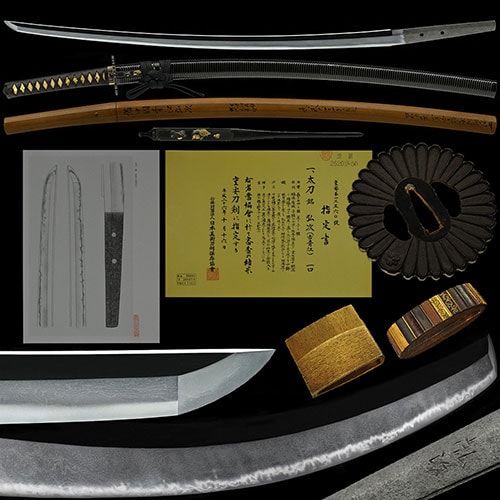
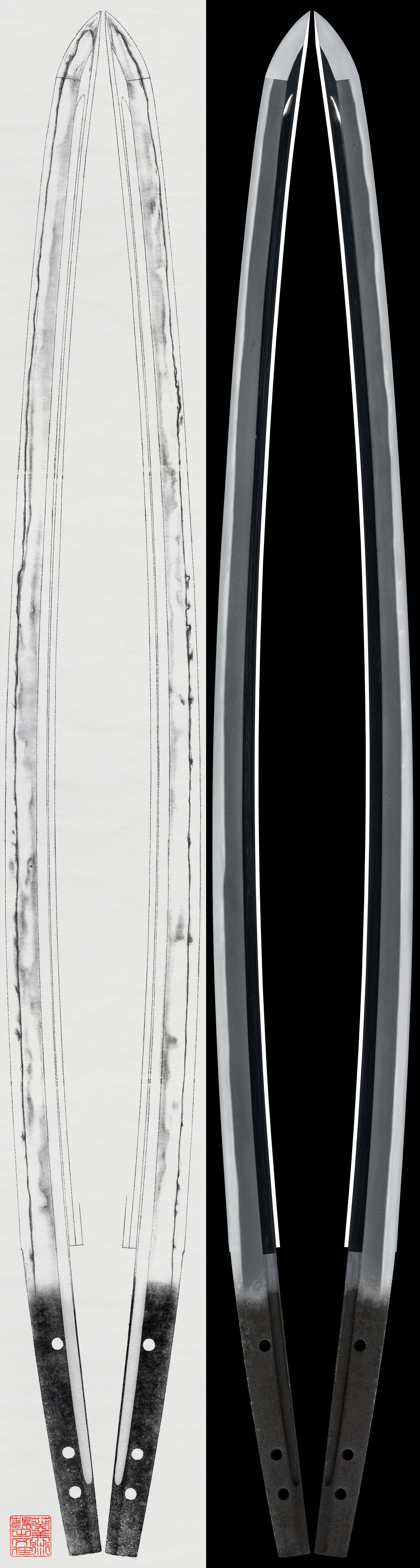
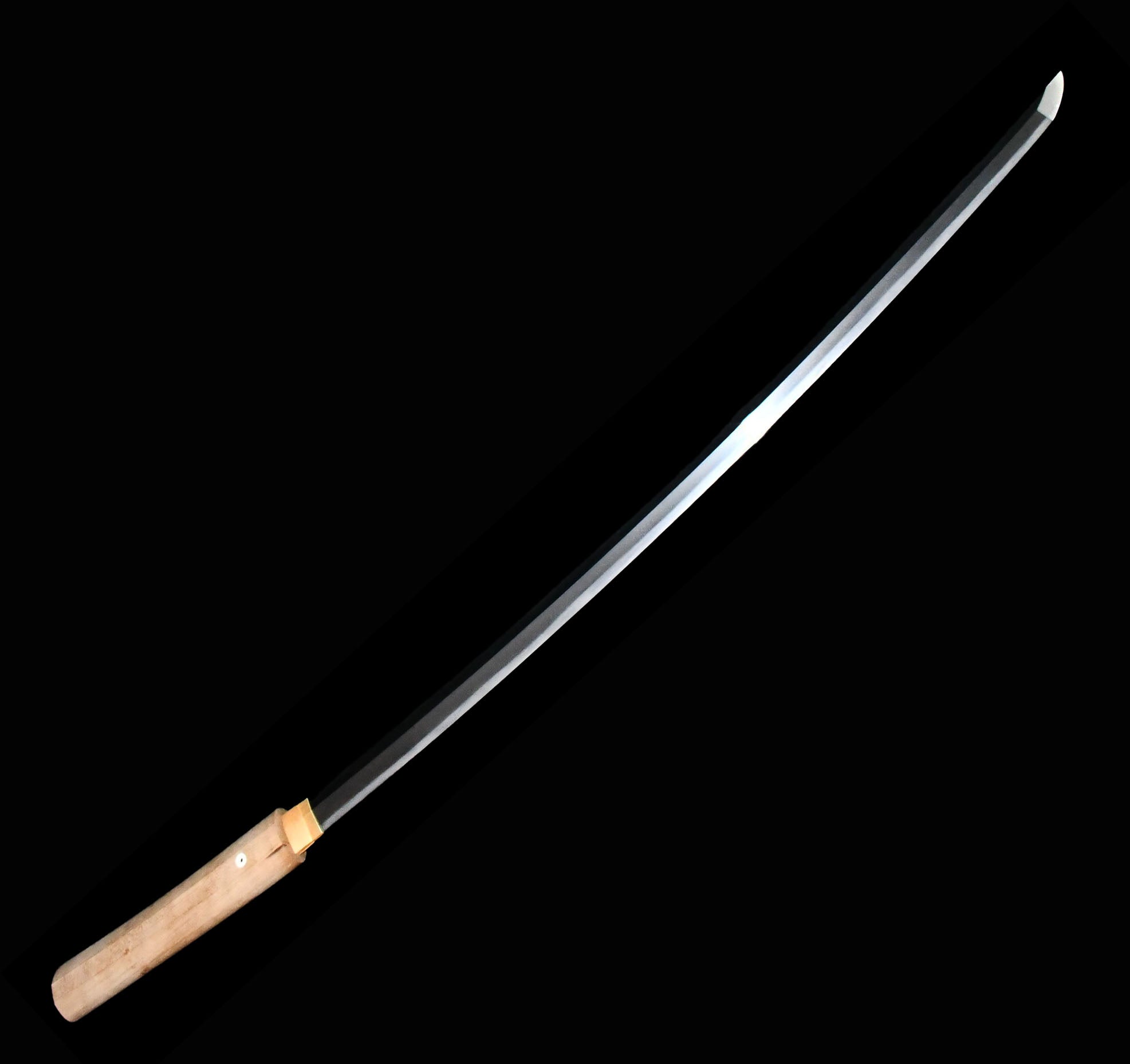
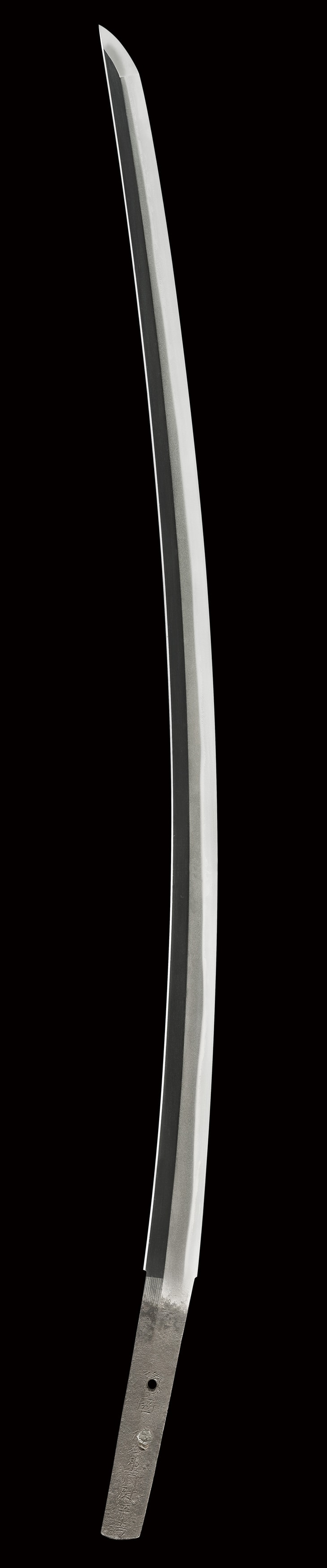
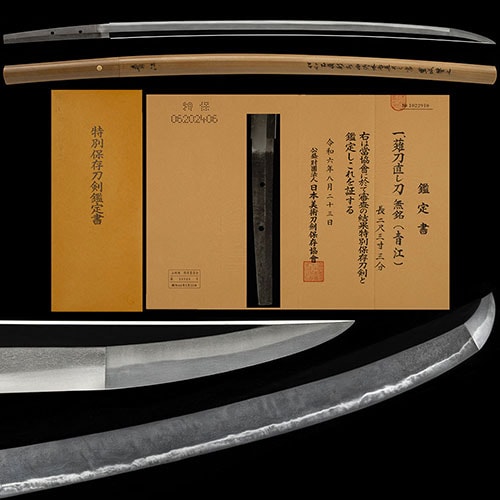
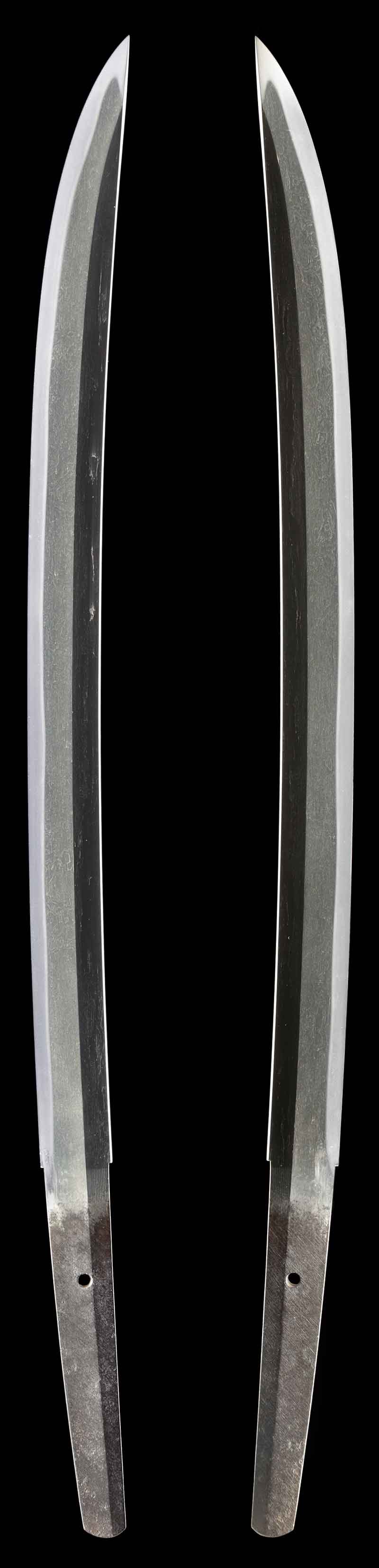
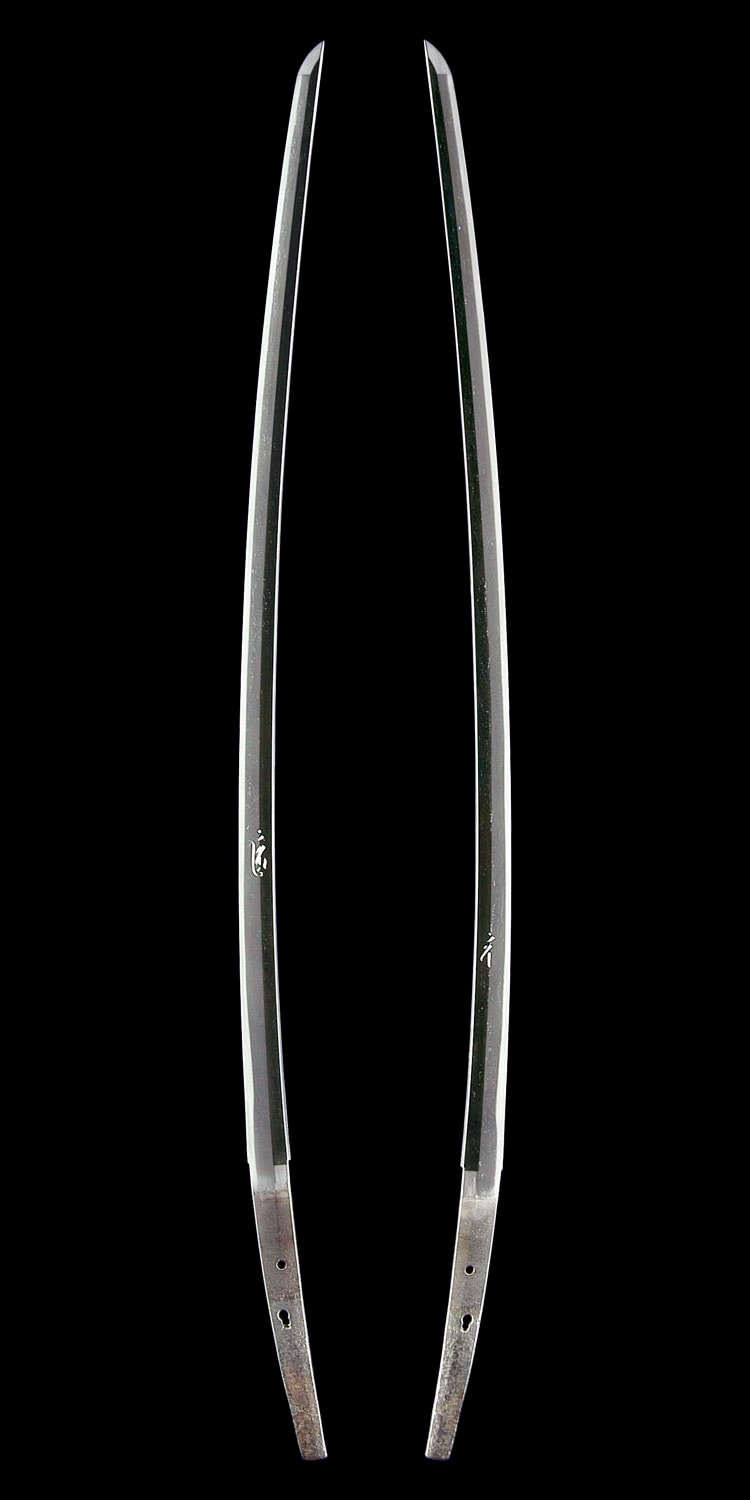
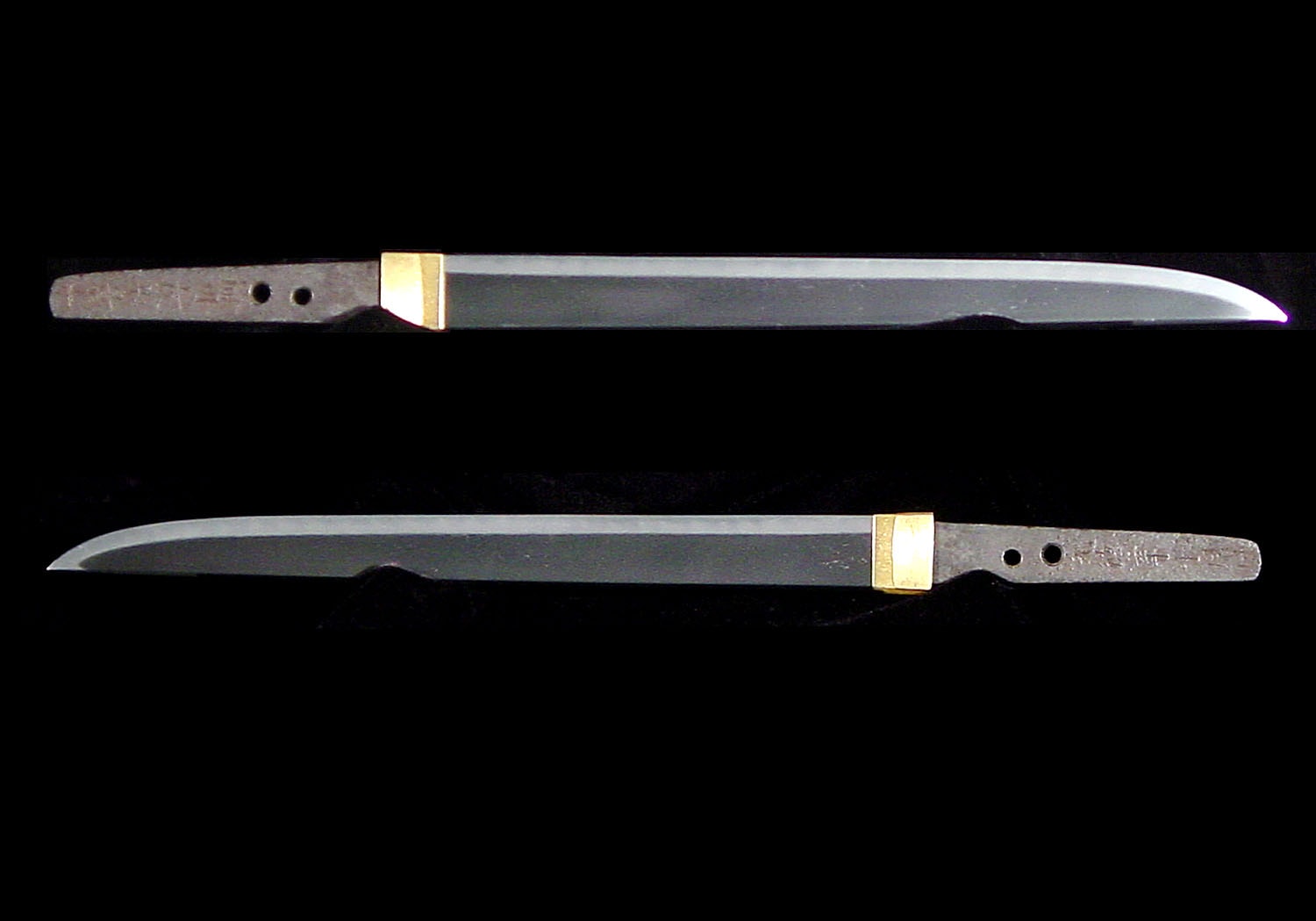
The name Sadatsuna (貞綱) is borne by swordsmiths of three distinct lineages working across several provinces from the late period into the early era. The earliest and most celebrated is Ko-Hoki Sadatsuna, a member of the group collectively known as Ko-Hoki, which begins with Yasutsuna and includes Sanemori (traditionally said to be Yasutsuna's son), Aritsuna, Yasuie, and Sanekage. Sadatsuna is traditionally transmitted as the son of Ohara Sanemori of Hoki Province, and his period of activity spans the late through early periods. A separate Sadatsuna belongs to the group of Province, likewise active in the late period; signed works by this smith are exceedingly rare, and his display the principal features of the tradition, including refined and bold file marks. A third lineage of Sekishu Sadatsuna descends from Naotsuna of Iwami Province, with residence recorded at Izuha. Reference works count as many as four generations bearing this name, the first placed in the Shohei era and successors continuing through the Meitoku, Oei, and Kosho eras. Later smiths of this Iwami line, including Shomatsu, Shosada, and Rinsho, are found at Nagahama within the province.
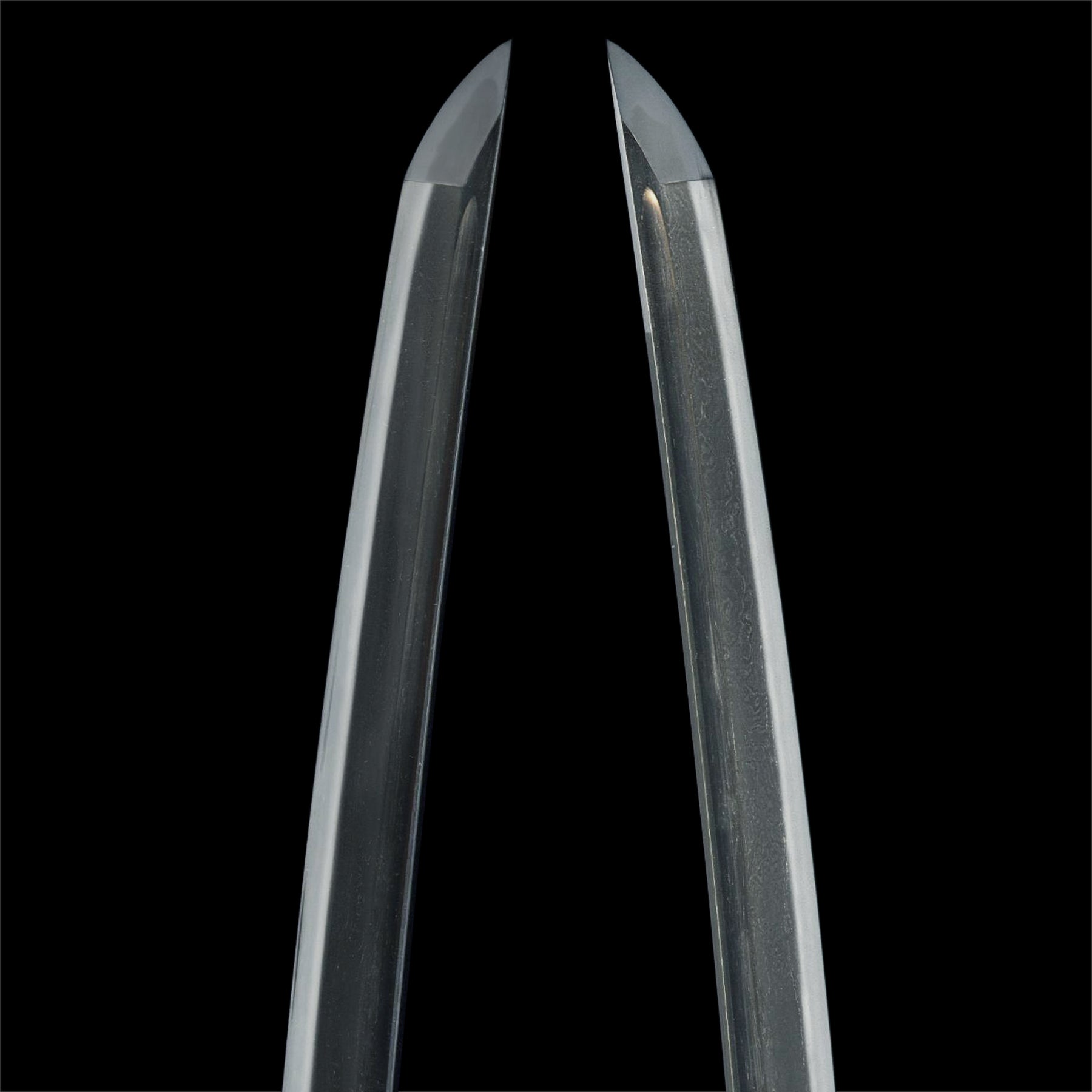
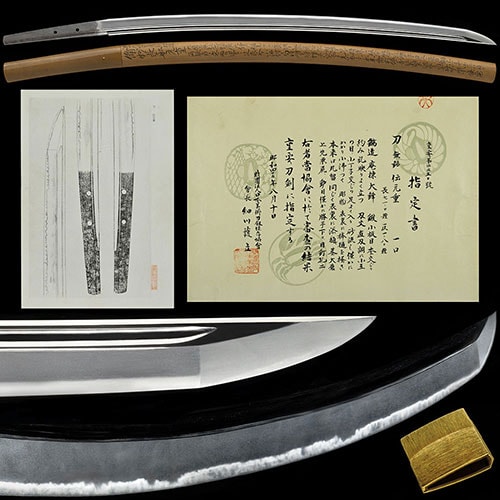
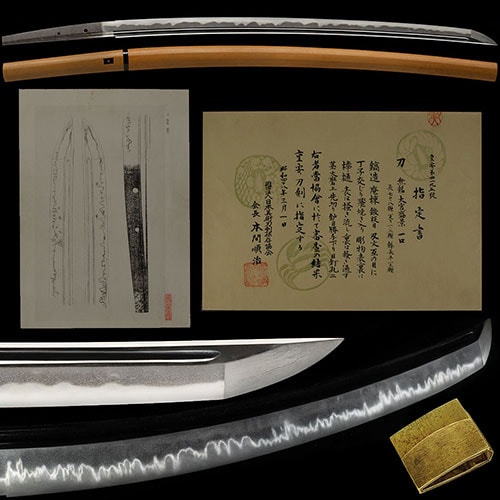
The Ko-Hoki works attributed to Sadatsuna share the broader characteristics of the Yasutsuna group while differing somewhat in flavor from contemporaneous . The forging is typically mixed with and , tending toward a boldly patterned standing grain; fine forms thickly, enters well, and the ground steel takes on a darkened kana-iro tone, sometimes incorporating -like mottling. The is commonly based on mixed with and , with adhering thickly and in places becoming especially strong; the shows , and the raised edge surface, intertwined with conspicuous , , and , is readily observed. The characteristically tends toward -- a moist, soft quality -- or toward , lending these works a distinctly rustic character. One signed , however, displays an unusually refined manner: a tightened forging texture with vividly standing and a that is tight and clear, presenting a degree of polish exceptional even within the broader Yasutsuna group. The Sekishu line resembles Naotsuna in style, producing works in both a -based manner and a -based manner; in either case adheres well and is applied vigorously, with deep and frequent contributing to works of striking internal activity.
Signed examples by Sadatsuna of any lineage are extremely rare. The Ko-Hoki pieces preserve archaic, dignified signatures cut in bold strokes with a thick chisel, accompanied by file marks also seen on Arikuni and Aritsuna of the group; an signed among these is noted as extremely valuable as documentary material. Several works across both lineages are praised as -- sound and well-preserved in both and -- and the finest examples are recognized for abundant throughout, earning the designation yuhin. The Sadatsuna, though represented by very few extant works, contributes an important dimension to the name, with tight , refined mixed with , and characteristic features. One ceremonial hosodachi mounting associated with the Sekishu line, executed entirely in solid gold with the Tokugawa -ni crest, is recorded as having been worn by the fifth shogun Tokugawa Tsunayoshi, attesting to the esteem in which works bearing this name were held across centuries of Japanese sword culture.