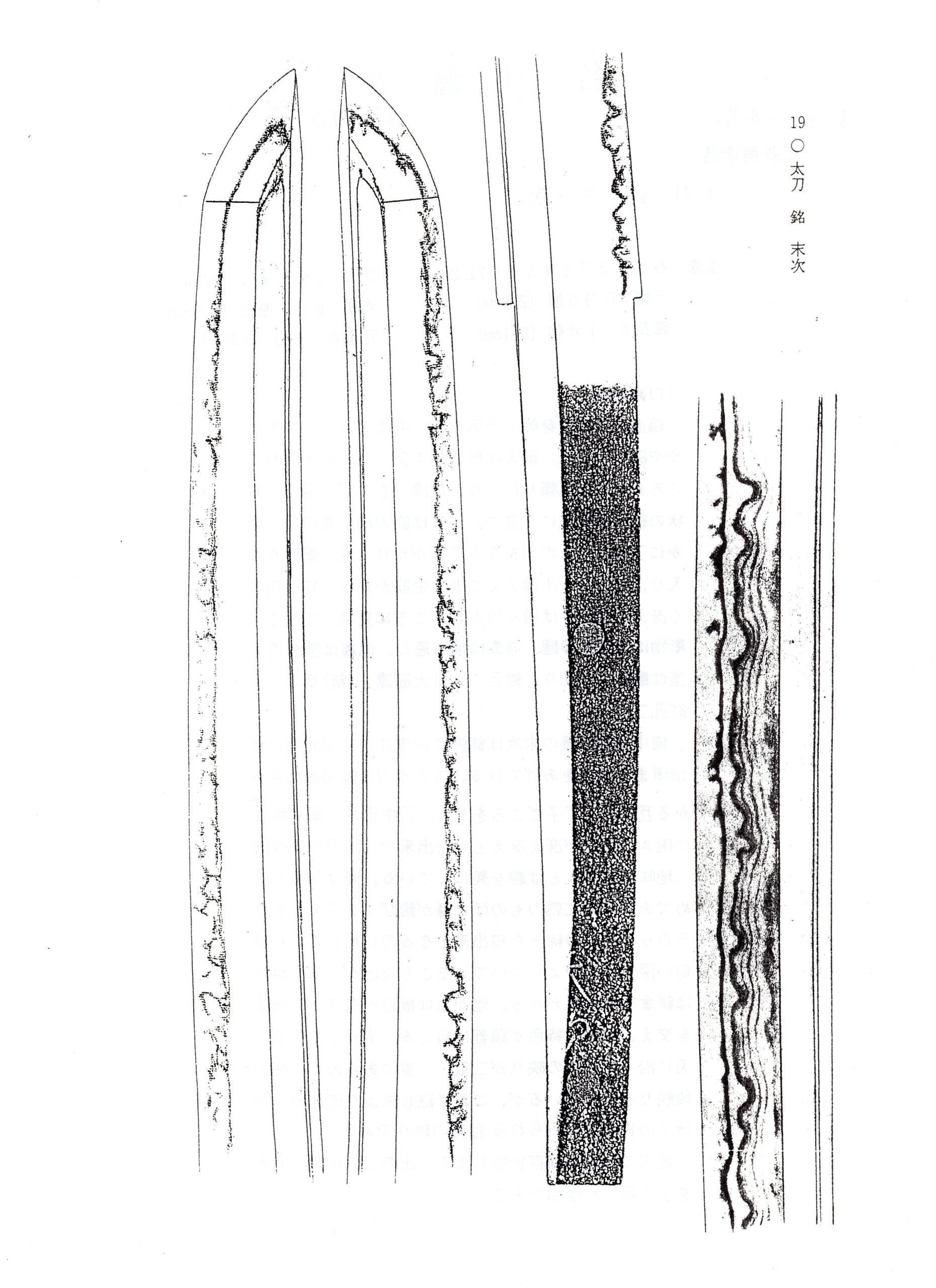
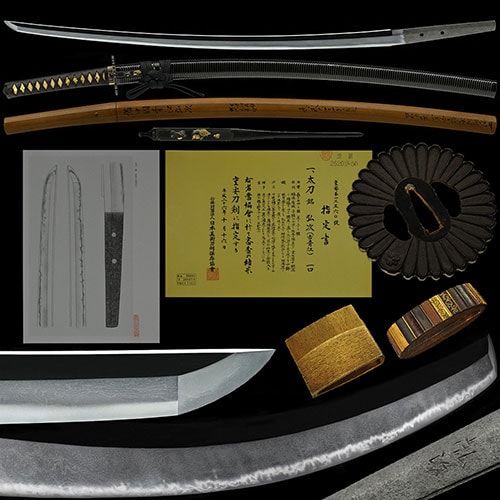
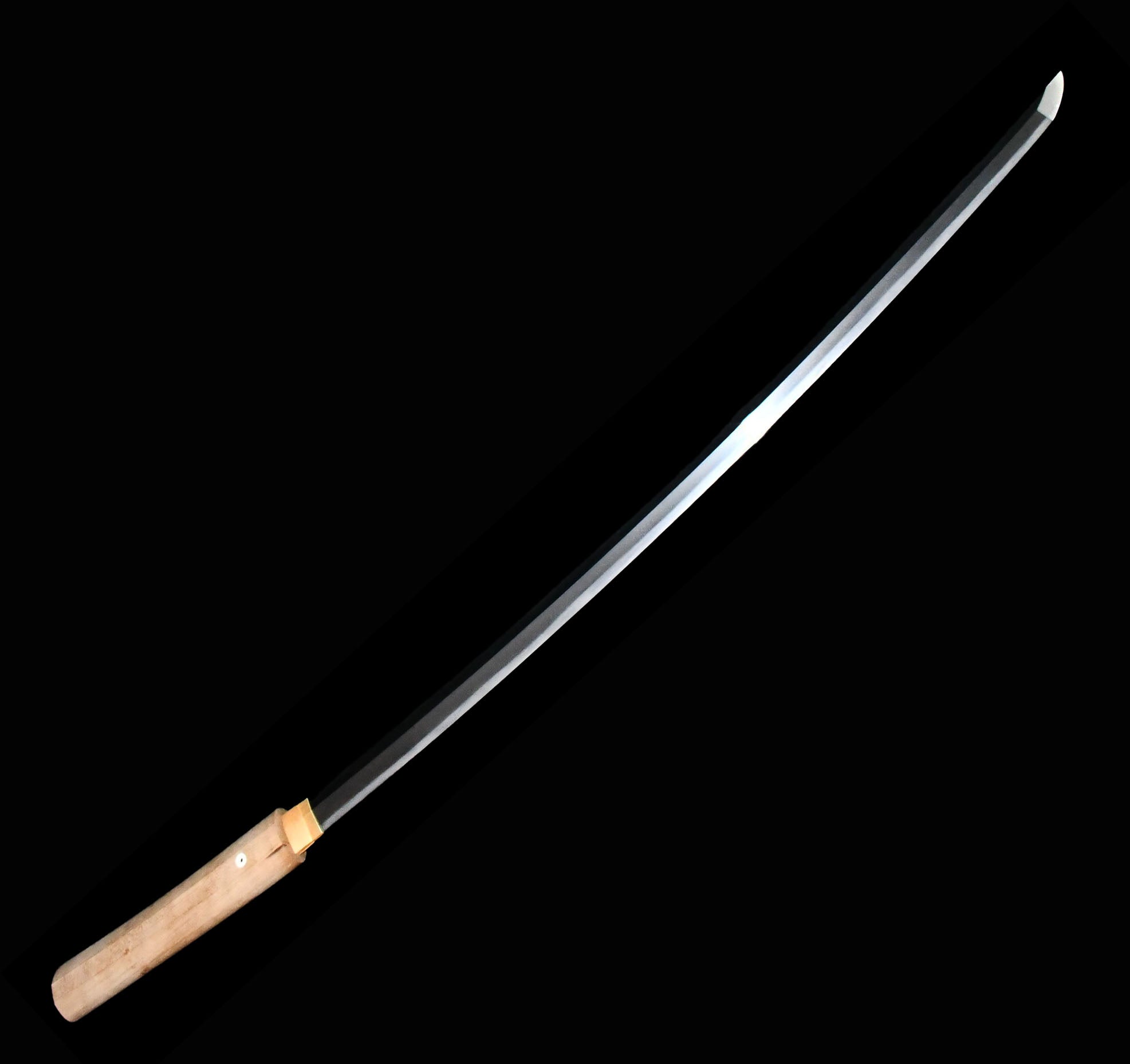
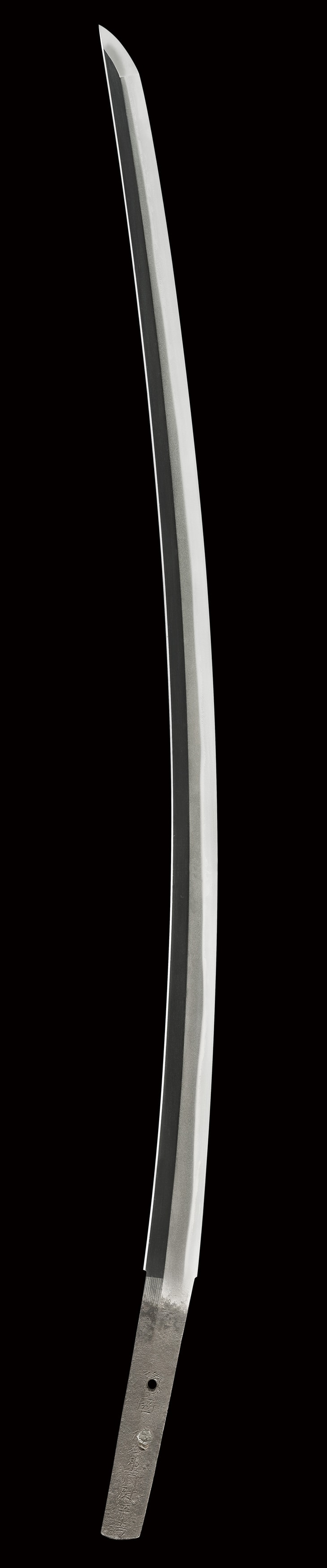
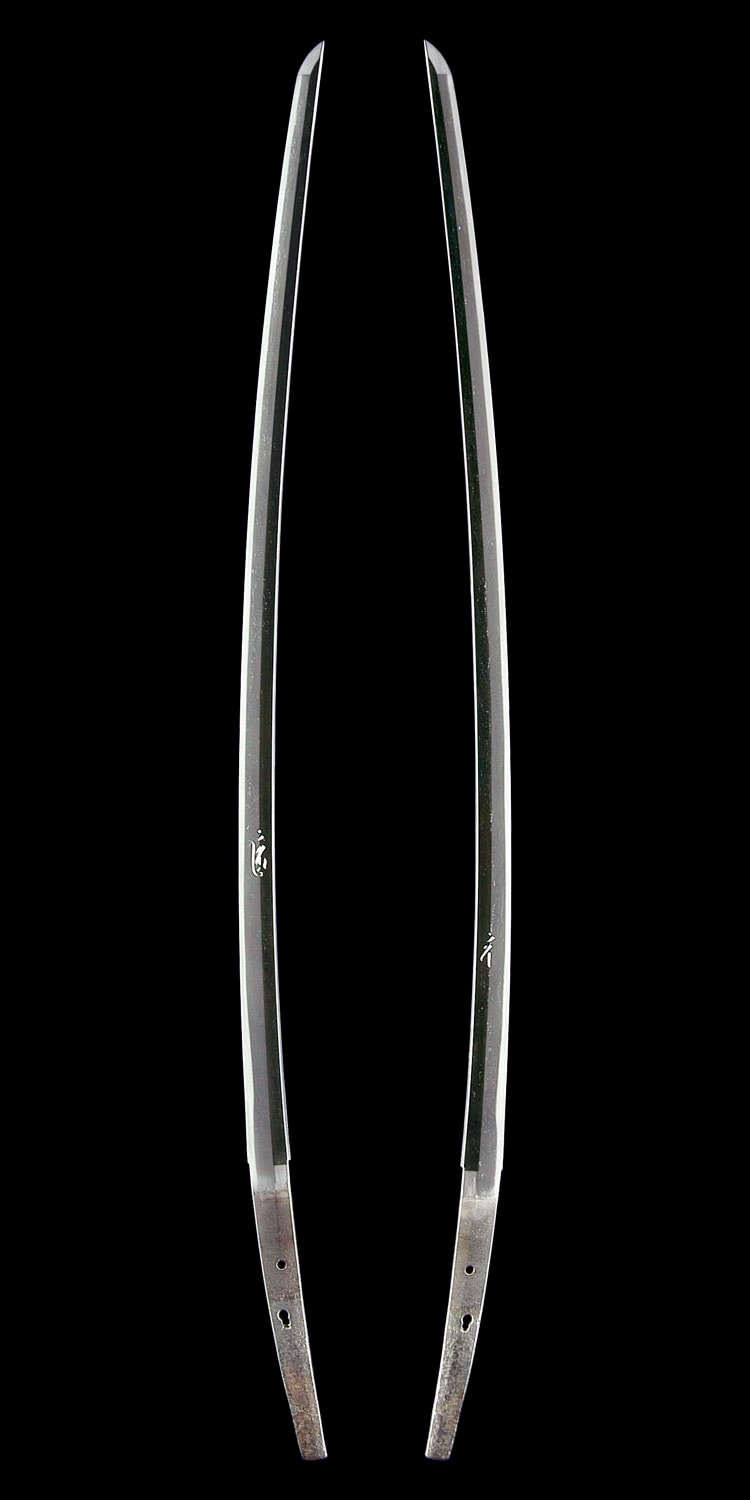
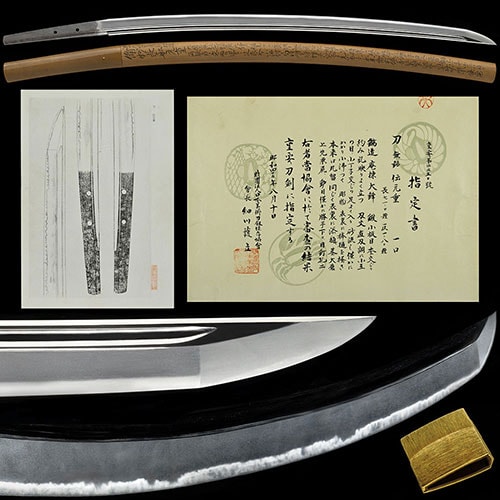
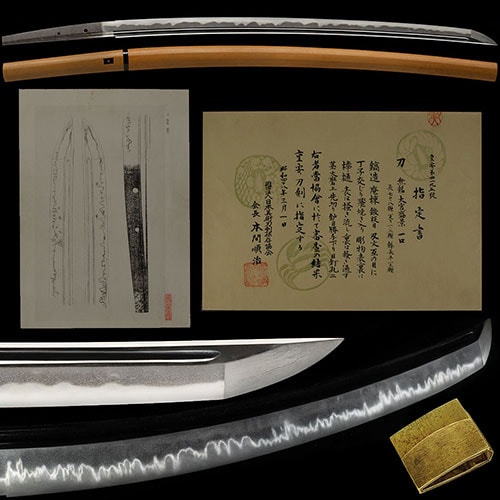
Sadatsugu worked in from the early period, one of the representative smiths of the school that forged along the lower Takahashi River in the districts of Ko'i and Manju, where the province's iron had long been worked. The published sources name him beside Moritsugu, Yasutsugu and Tsunetsugu among the leading hands, all of them sharing the character tsugu that runs through the line. He is remembered, too, in an older tradition: since the Kanchiin-bon Meizukushi he has been counted, in the published record's words, among the swordsmiths in monthly attendance on the retired sovereign Go-Toba In, one of the . Which Sadatsugu of the several who bore the name was that earliest smith is a question the sources leave open, but the standing of the name is not in doubt: the published commentary holds him to be, in its phrase, particularly skilled within the school, and notes in the breath that his signed work survives only in a handful, a few pieces that can be counted on the fingers.
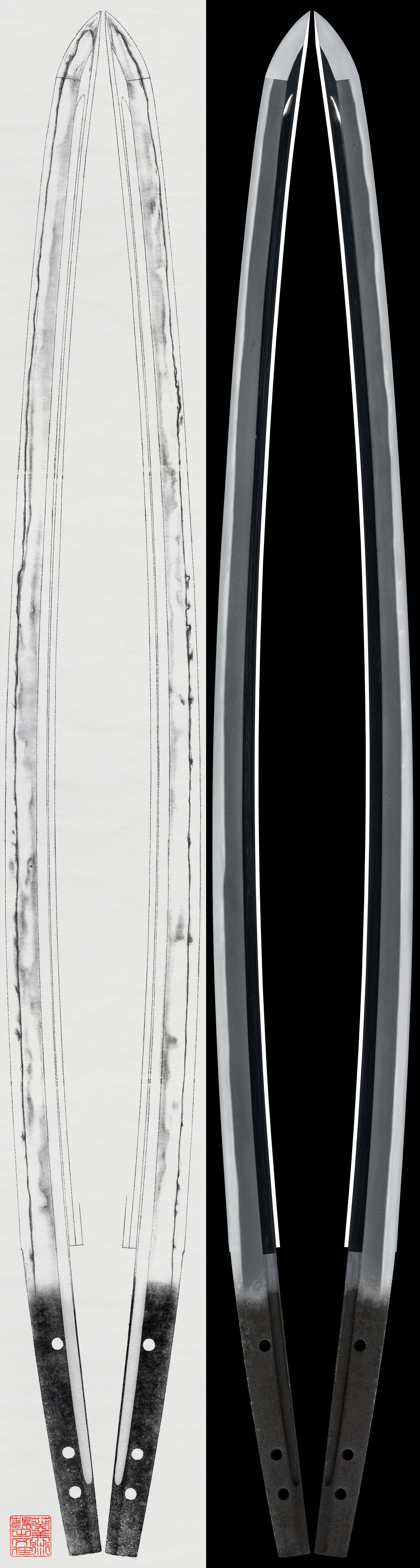
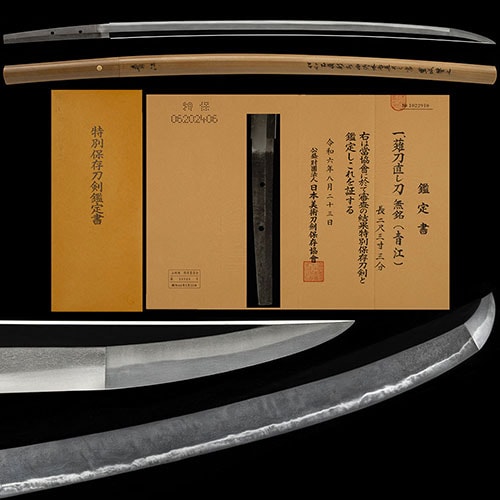
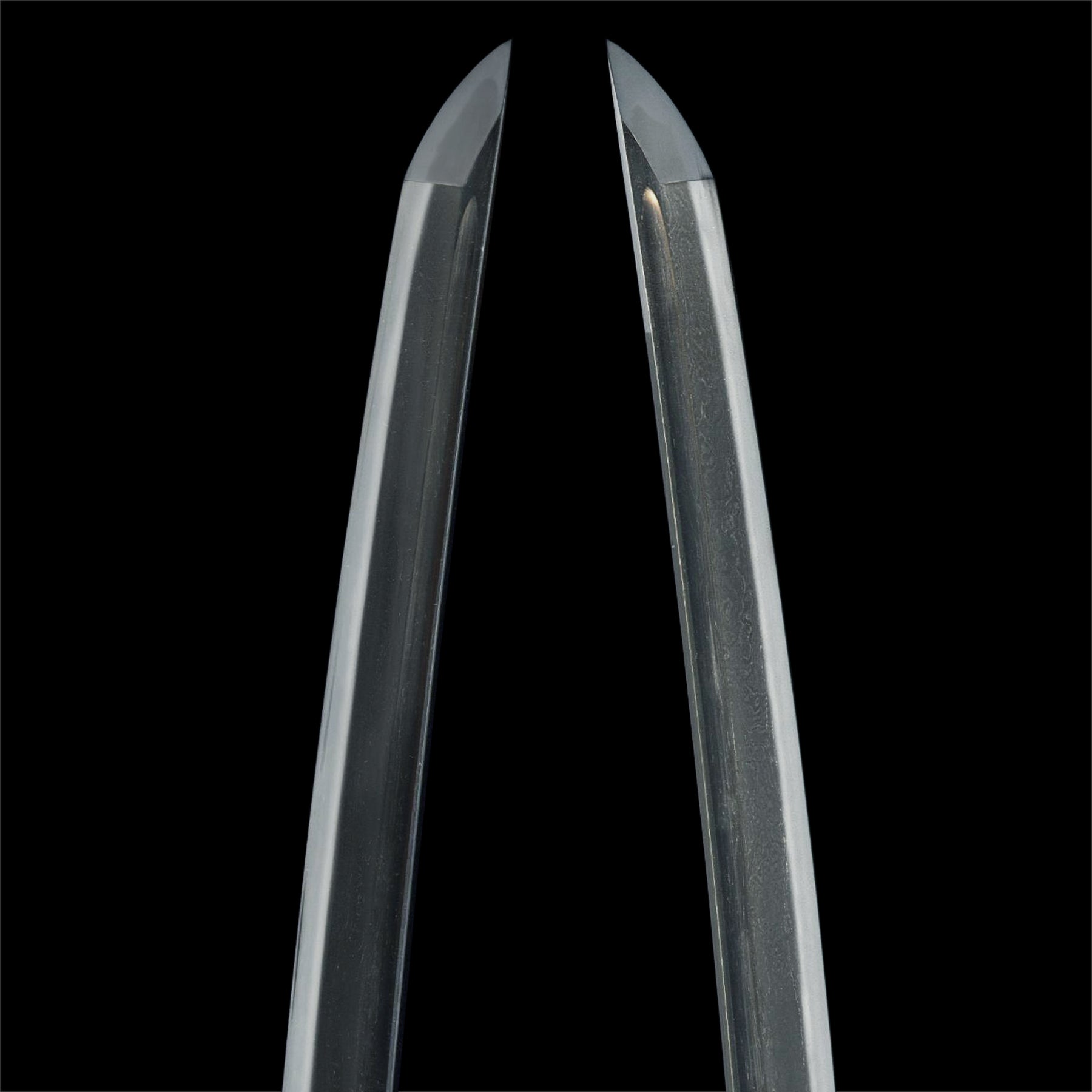
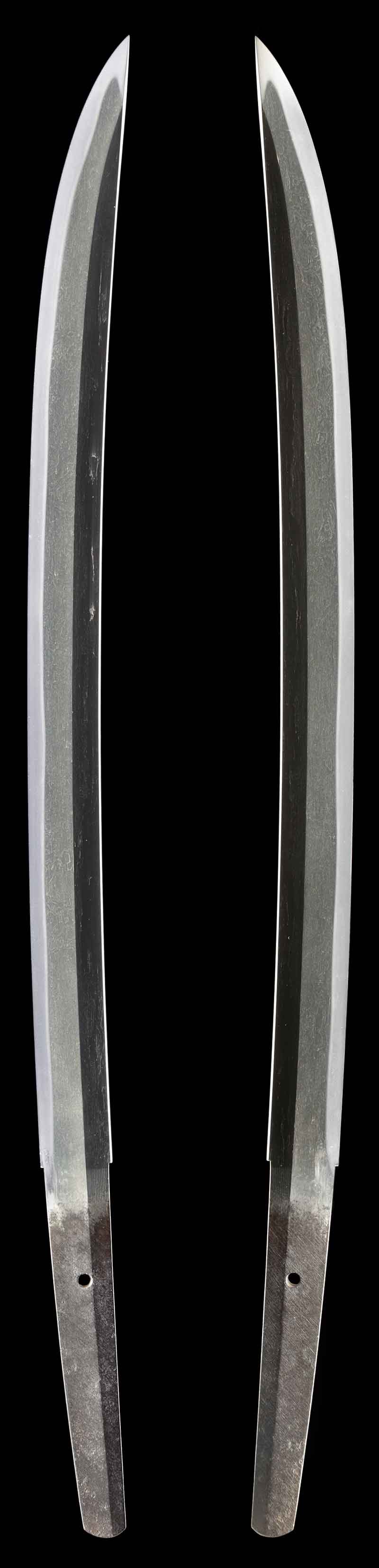
His recognized hand is the slender , with , mostly shortened in later centuries yet keeping a high and a compact , the archaic dignity of an old court . The is the constant and the tell. Over a well-packed mixed with , the steel stands a little into the crepe-like texture the school is known for, the so-called , with adhering well, fine , and patches of in the . The published sources fix on exactly this, calling the the mark of the school on his work. It is the feature that separates him from the smiths whose work his otherwise resembles, the steel showing its own grain where the neighbouring province runs cleaner.
Over that the temper stays comparatively calm. A -toned base carries a into which , , and a touch of enter, with and well in, gathering thickly, and and running through. On the finest of his the turns bright, and spilling into the , while another keeps the line low and quiet. The runs straight and turns back in a round or large-round on the and a small-round on the , often with a little . This is the character the published sources describe at length: set against contemporary , the work shows, in their words, a somewhat plain and astringent taste, the well formed but the whole register held back from the open clove-flower flamboyance of the great ateliers.
The carries the rest of the signature. Sadatsugu and the smiths cut the on the , the side worn inward, and finish the tang in steeply slanted file marks, both points by which, the published sources note, the school differs from and its . His own two-character signatures are cut with a fine or a thick chisel and carry the reverse-chisel strokes the commentary singles out as characteristic. The convention is firm enough that its exceptions are worth recording: one is, in the published record's phrase, an exceptionally rare example in which Sadatsugu cut his authentic signature on the obverse, differing a little in nuance from his usual hand. Such variation, and the differing signatures across the few surviving blades, belong to the larger problem of how many smiths bore the name and over how long, a matter the sources hand on to further study.
What sets the Sadatsugu apart from his neighbours is exactly what the judges name. He is held apart from the mainstream by the quiet of his temper and the crepe of his , his and riding a base rather than mounting into the towering clove clusters of or . He is held apart from the plainer old work, in turn, by the level of his skill and the brightness of the his best blades carry. The published sources place his finest signed in direct relation to the summit of the name, observing that it closely resembles the National Treasure Sadatsugu, the long transmitted in the Sō family of Tsushima. He stands, in short, at the high end of his own line, the calm and astringent answer that gave to the splendour of .
For the collector he is a rare early name, graded Jō-jō by Fujishiro. His record is crowned by that National Treasure and includes work designated Important Cultural Property, with several signed pieces papered to the and ranks. These higher blades are patrimony, held in museums and long-kept collections grounded in their own provenance, among them the Sano Art Museum and the Aomori City Museum, with one recorded in the Taigarasu family. Of the surviving signed Sadatsugu, the published commentary speaks plainly: extant works are extremely few, and one is called, within so rare a signed corpus, valuable also as reference material, one of them indeed the most precious single key to the unresolved question of the smith. Only a small number fall in the and tiers, so a signed Sadatsugu comes to light only seldom, with patience and at the very top of the market; a privately held example is a notable thing for a collector to encounter, a document of how answered in the first age of the Japanese sword.