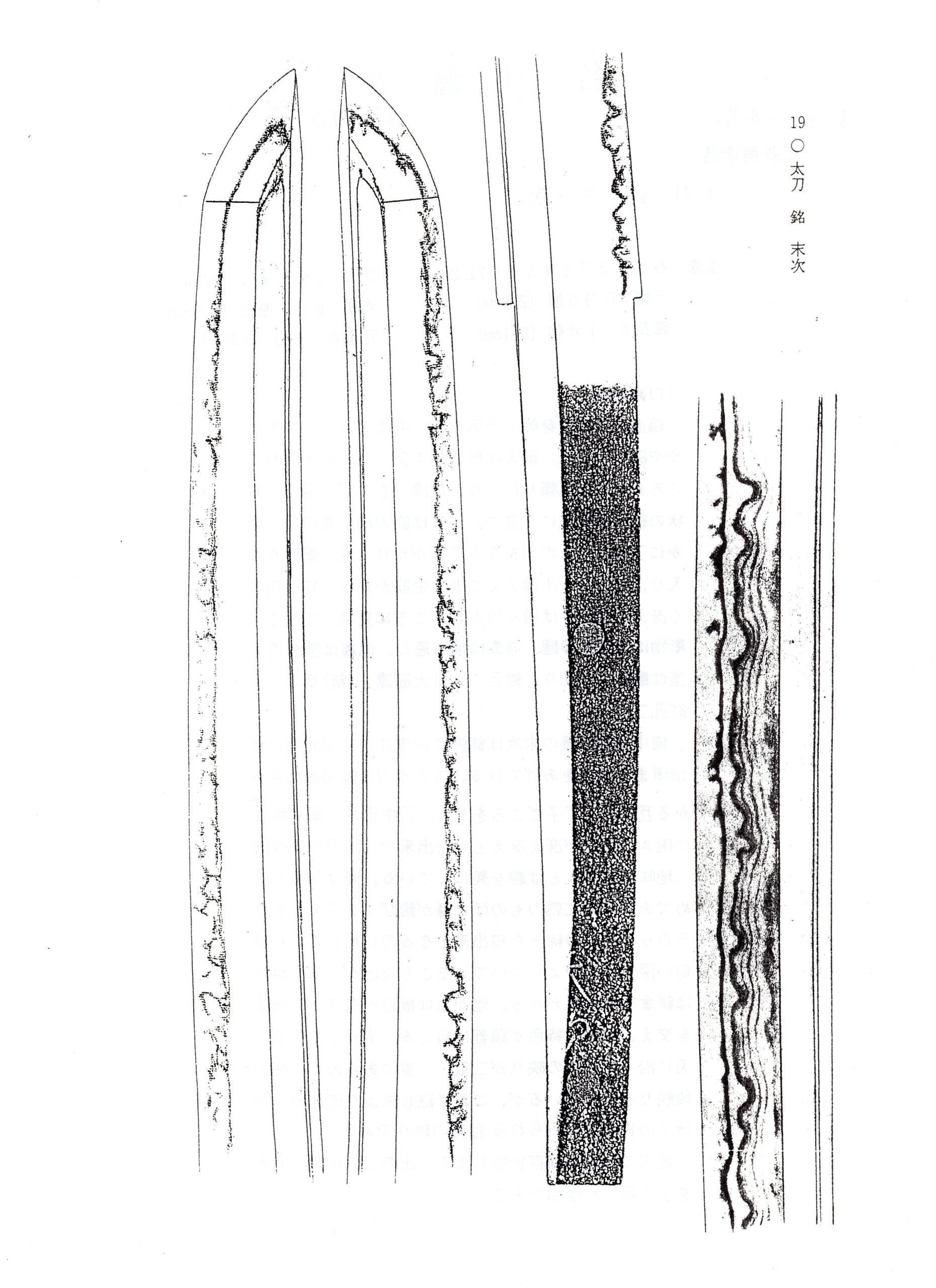
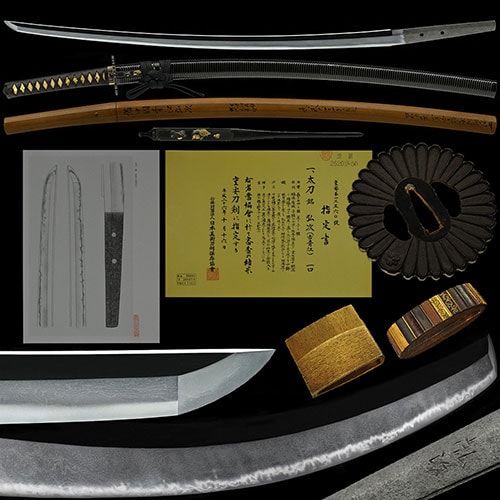
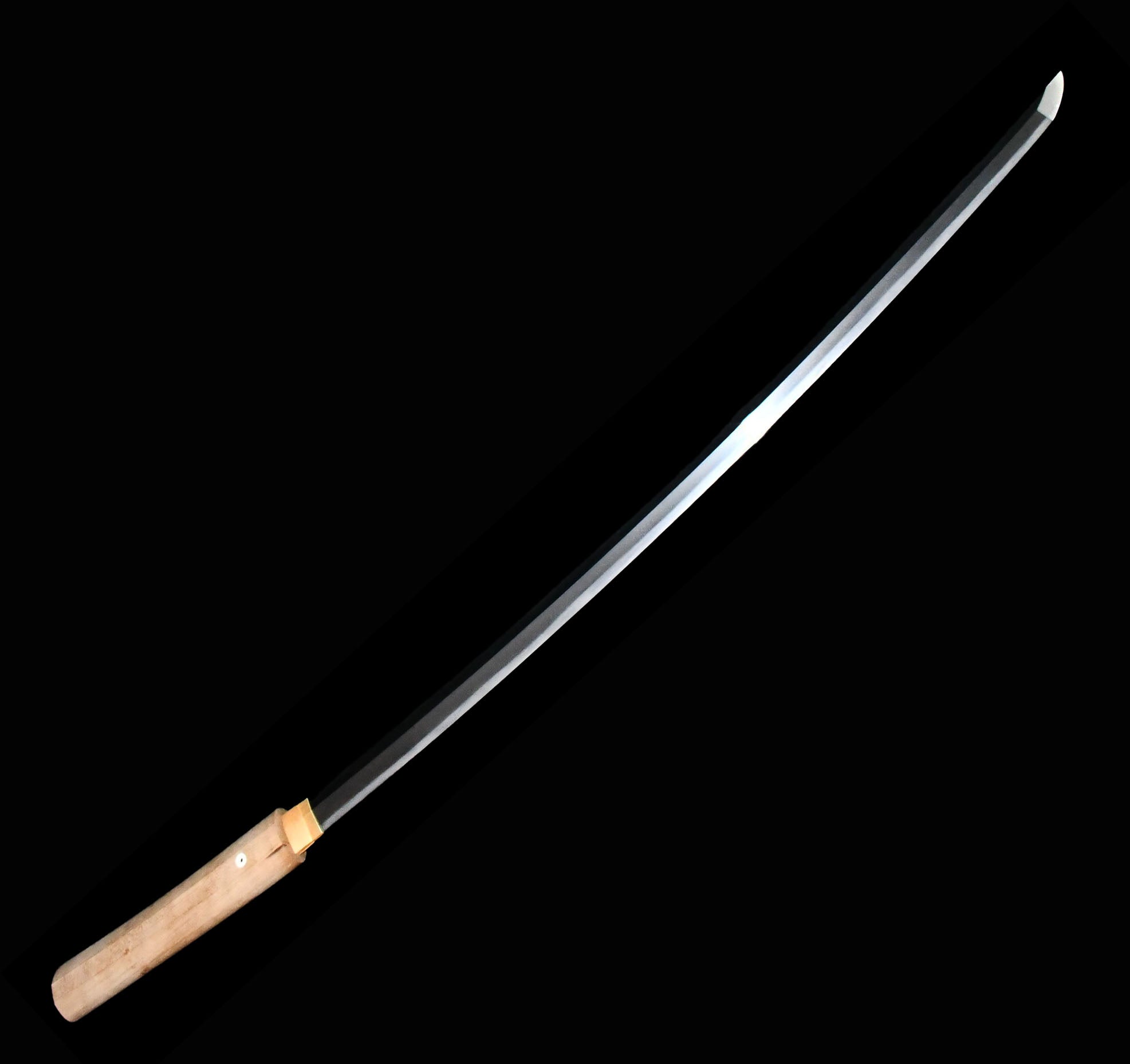
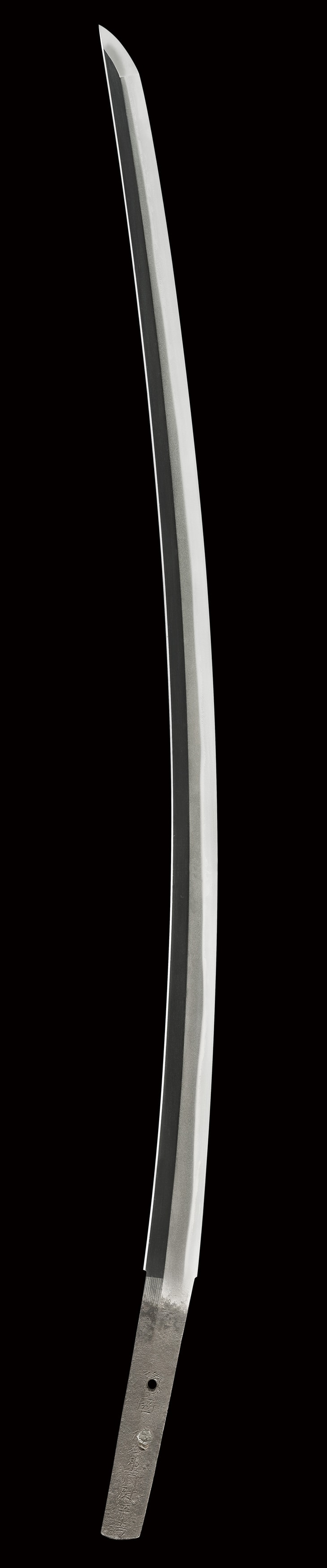
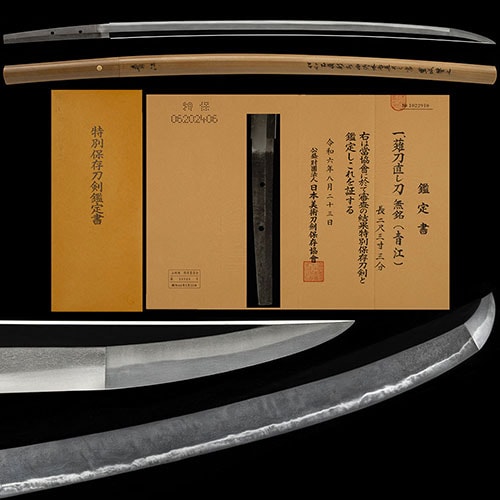
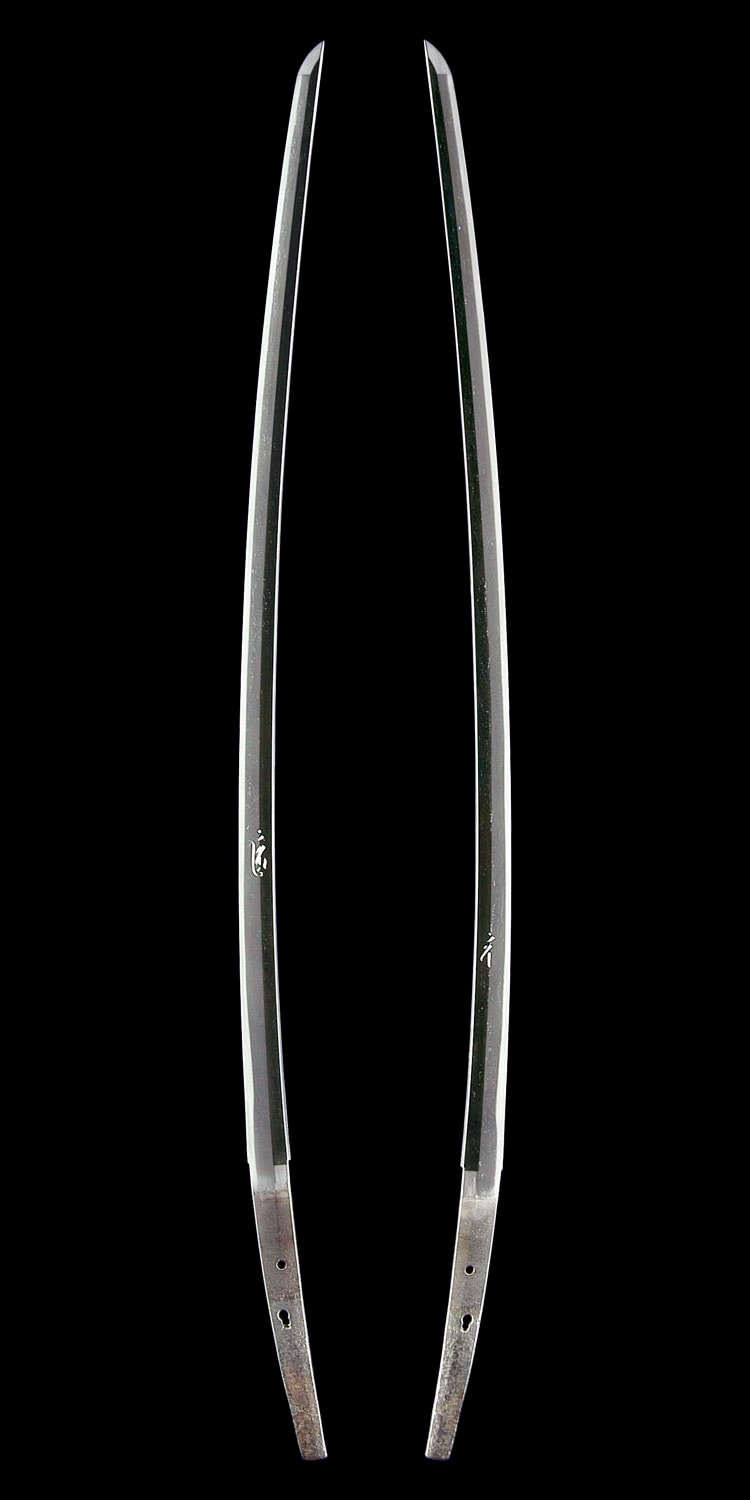
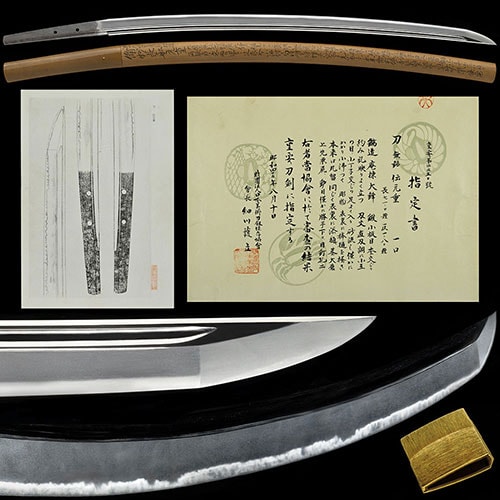
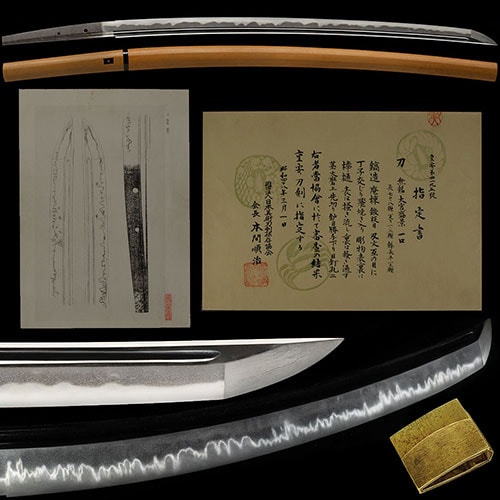
Moritsugu (守次) was a smith of the school of Province, traditionally regarded as the son of Yasutsugu, who is held to be the founder of the lineage. The name "Moritsugu" was inherited by successive smiths down into the period, with extant works spanning from the early period through the Bunwa and Enbun eras of the mid-. Among signed works appraised as , scholarship distinguishes two signature types: a two-character gyōsho (semi-cursive) form, powerfully struck and incorporating (reverse chisel work), and a characteristically elongated, flowing sōsho (cursive) form. The former type appears to date slightly earlier. While works are typically signed on the , Moritsugu is a noted exception, customarily signing on the .
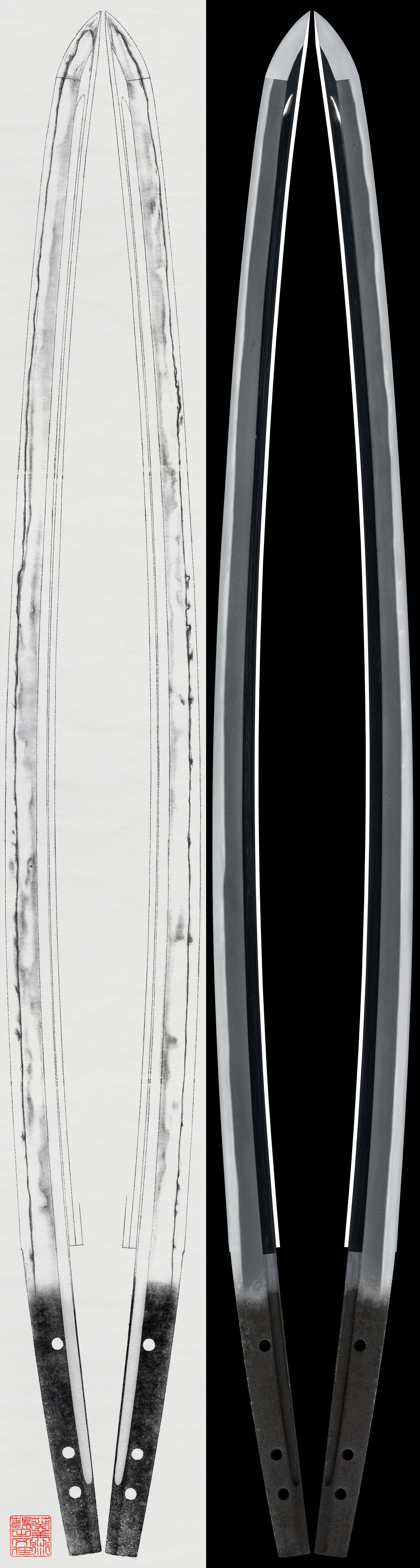
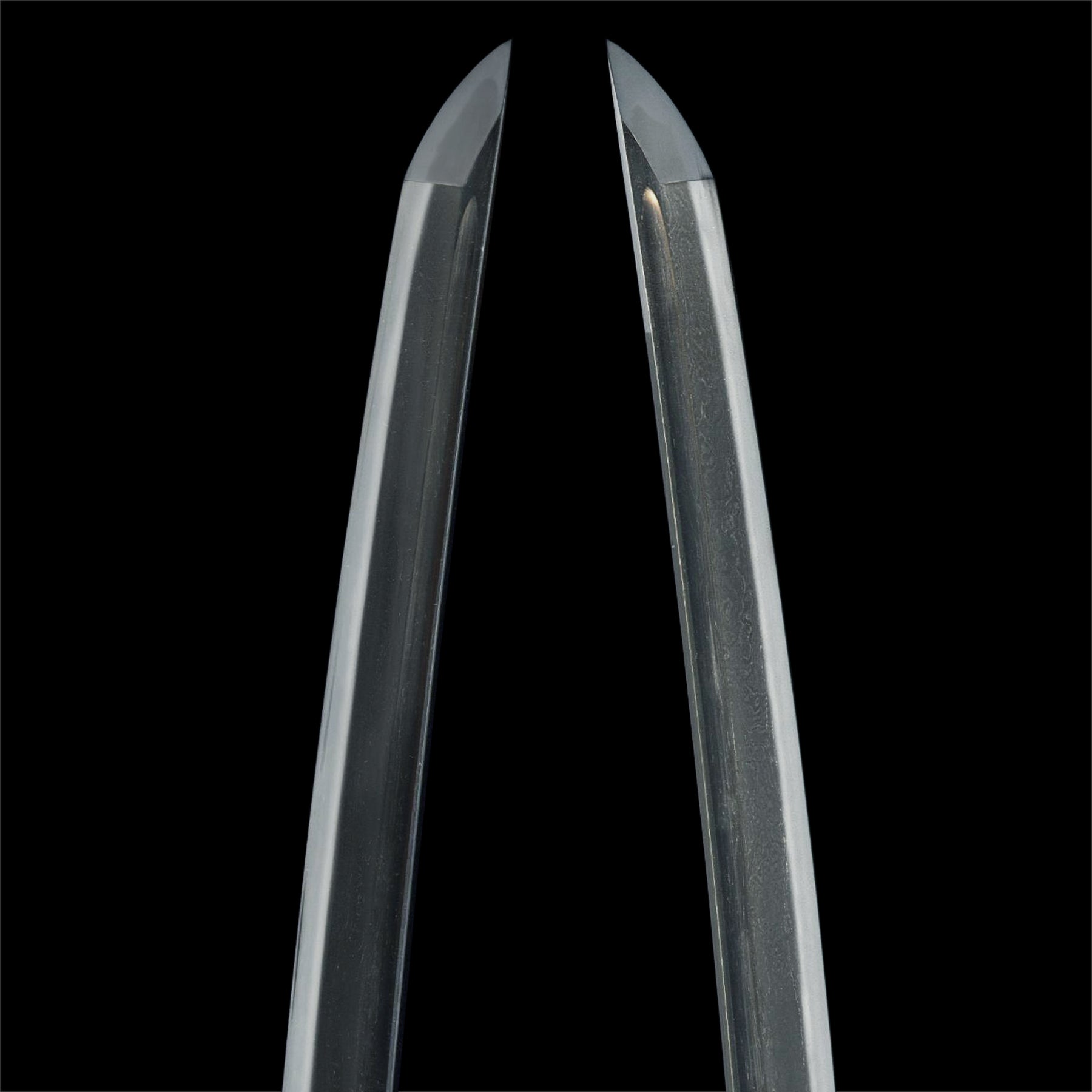
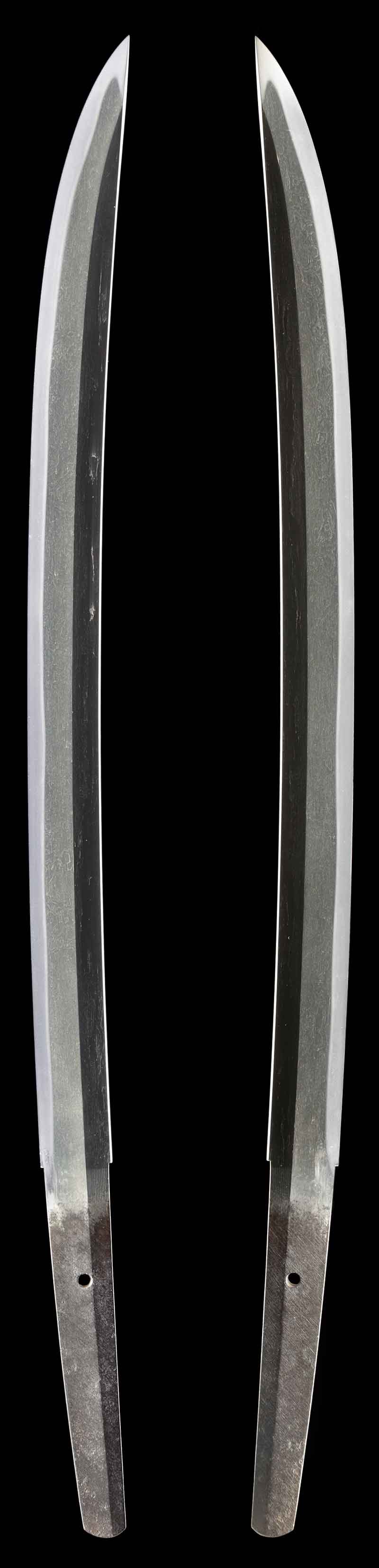
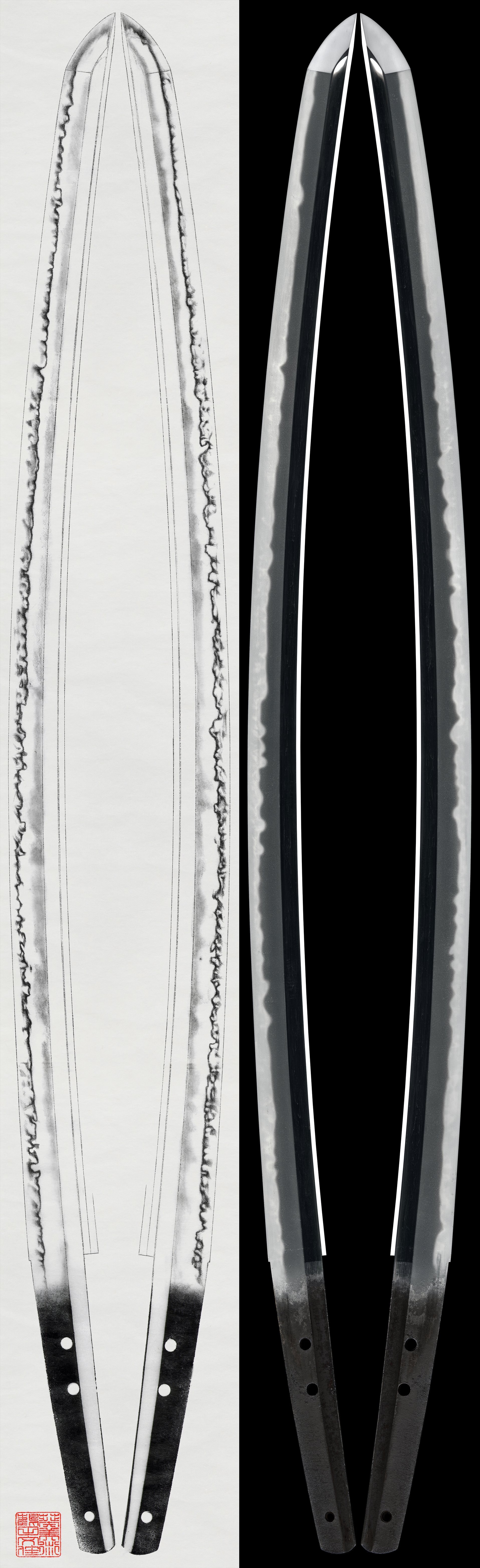
Moritsugu's forging characteristically shows with vigorous admixture that tends toward finely raised grain, frequently producing the distinctive (crêpe-like texture) associated with the tradition. Dense adheres thickly, with conspicuous throughout, and a -like reflection or faint mottled appears. His is grounded in , mixed with and ; small enter actively, and the shows a (tightened tendency) with adhering. Along the , features such as , , , and uchi-noke appear, with and running through, yielding a bright .
The characterizes Moritsugu's workmanship as displaying an archaic (kochō) manner that conveys a high level of dignity, combining grandeur with elegance. His blades are praised for richly varied workmanship and a "notably superior appearance." As rare extant examples from the group, works by Moritsugu are assessed as possessing extremely high documentary value for the study of the school, and those found in both and are termed "precious works."