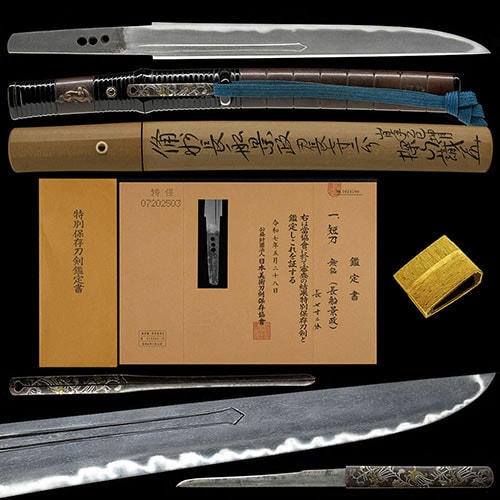
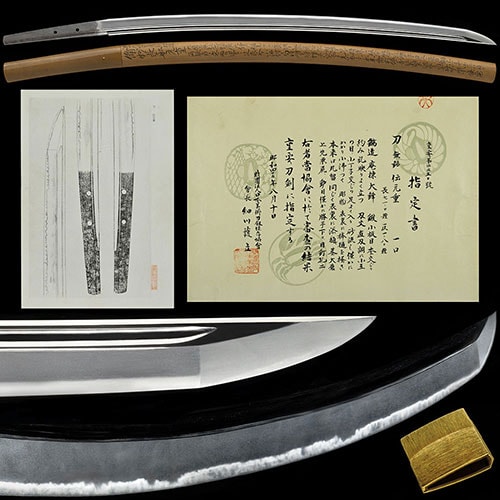
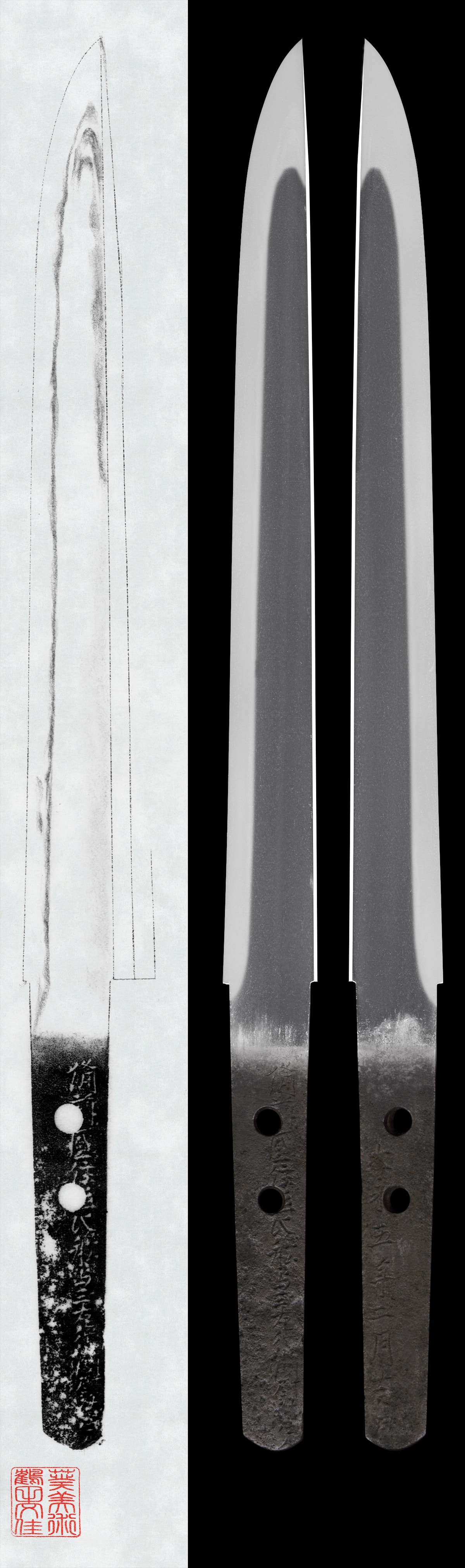
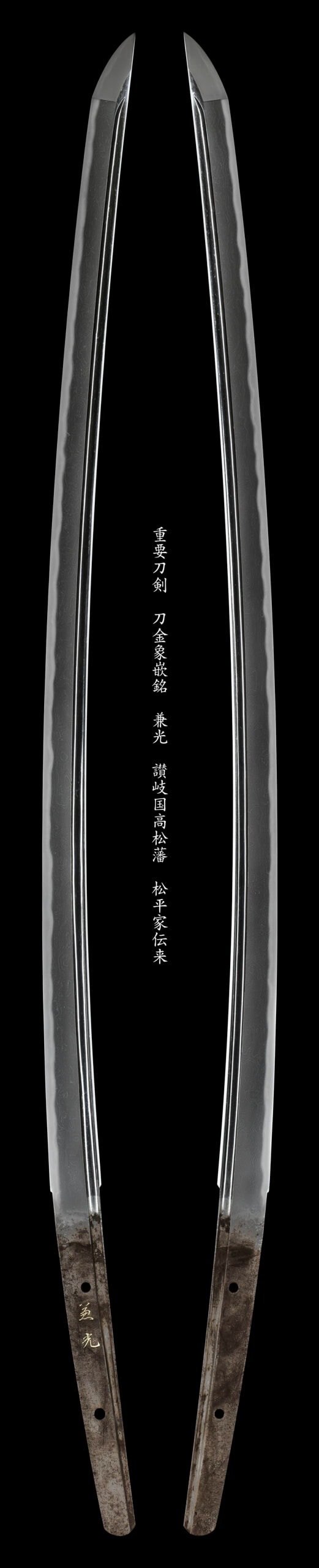
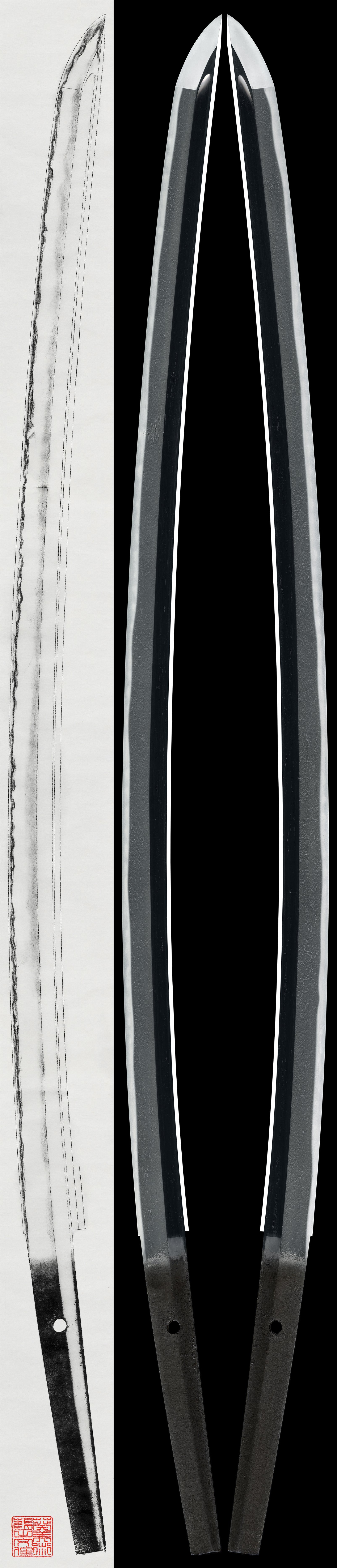
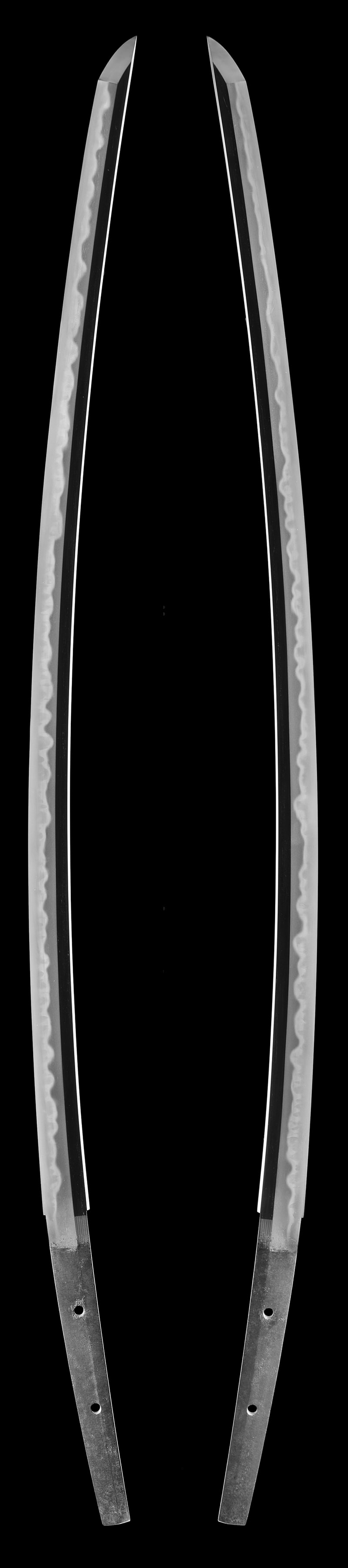
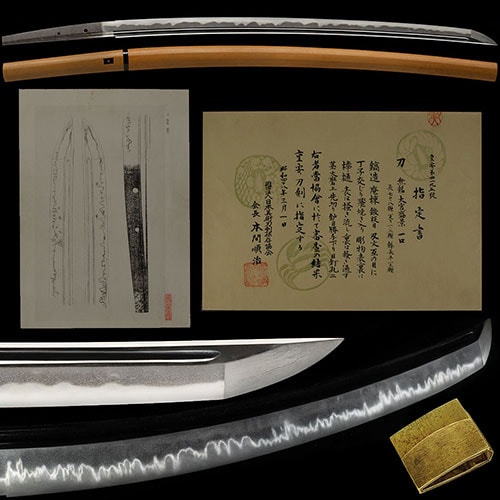
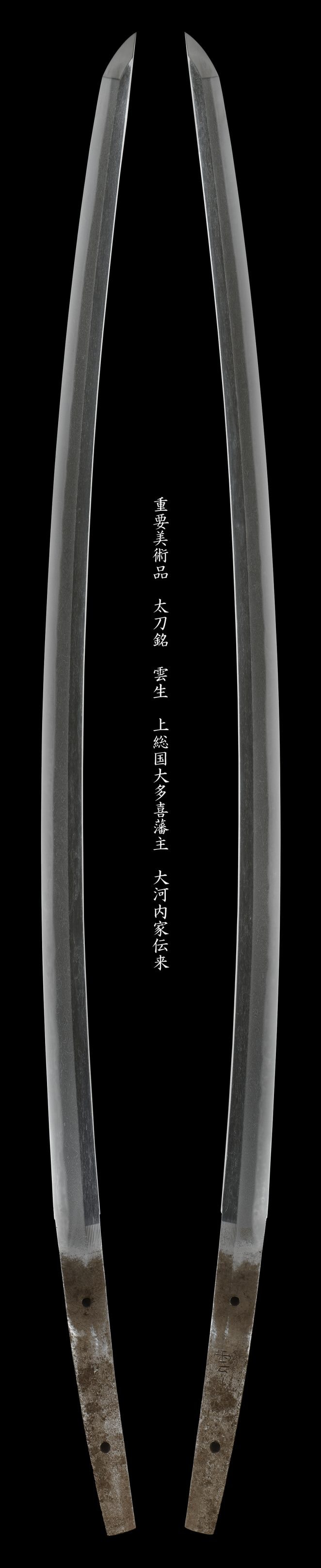
Kageyasu is a smith recorded in genealogical compilations such as the Kokon Meizukushi, the Meizukushi Taizen, and the Tensho-bon Meizukushi, where he appears alongside Kagehide and Kagenori among the smiths. He is variously described as either a son or a disciple of Kagehide, who is said to have been a younger brother of Mitsutada. However, because Kageyasu's workmanship does not resemble that of Kagehide and instead displays stylistic features shared with the group, he has generally been handled as belonging to , though his lineage and related details are not clearly established. His period of activity is placed no later than the early period, with some sources assigning him to around the Genryaku or Einin eras of .
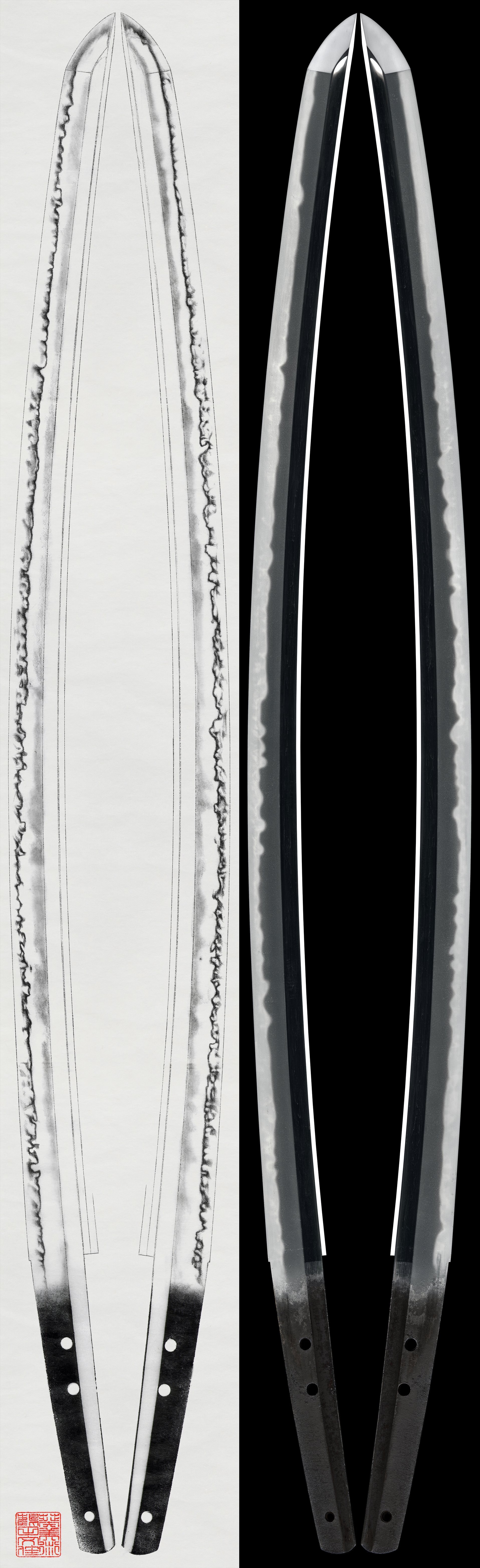
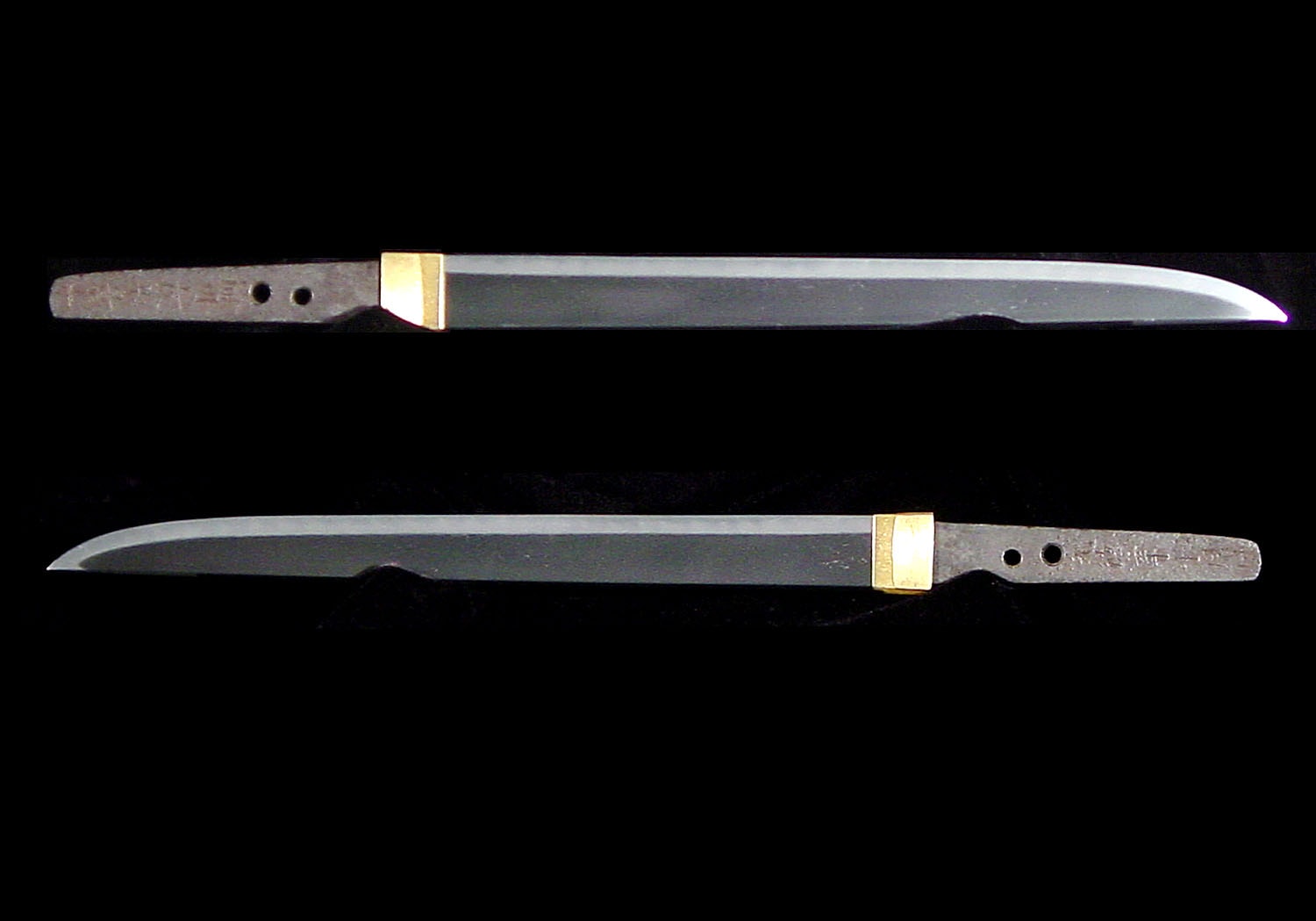
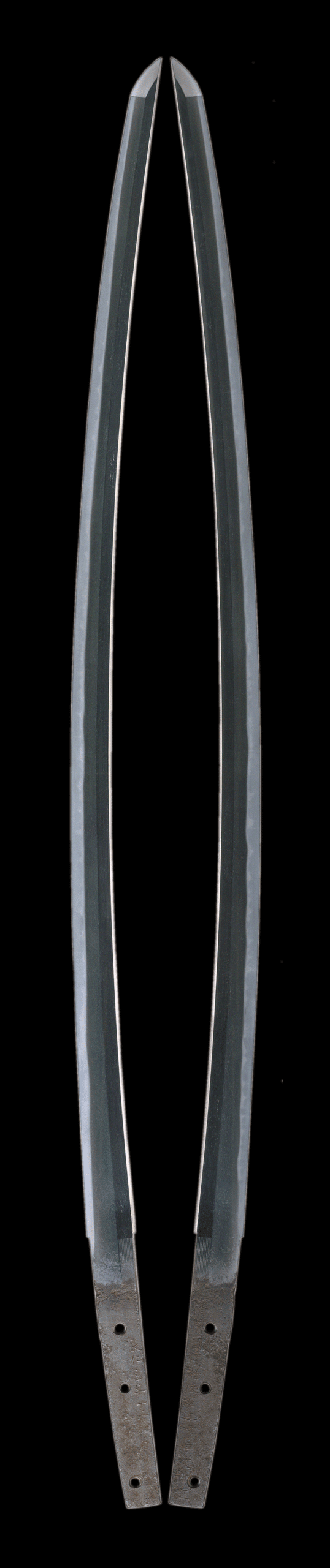
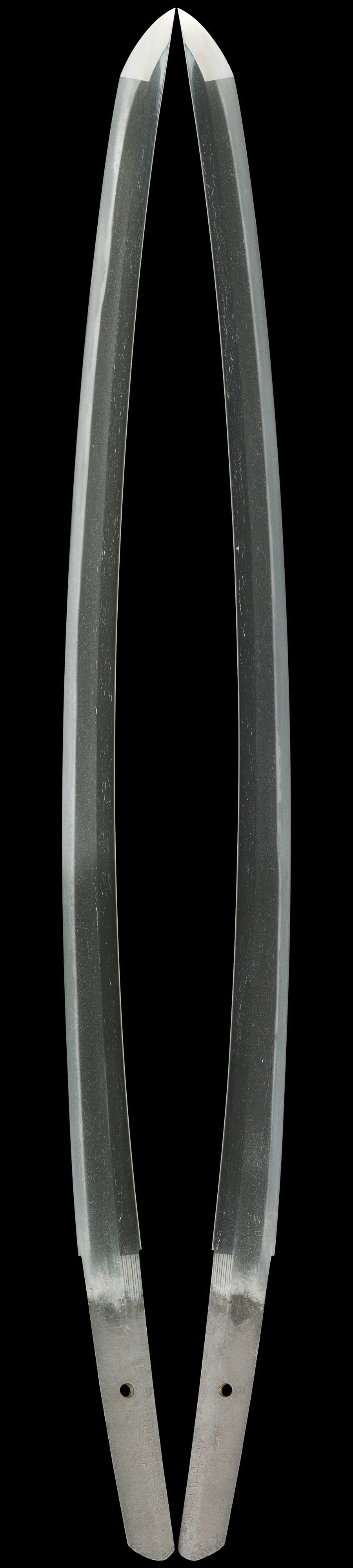
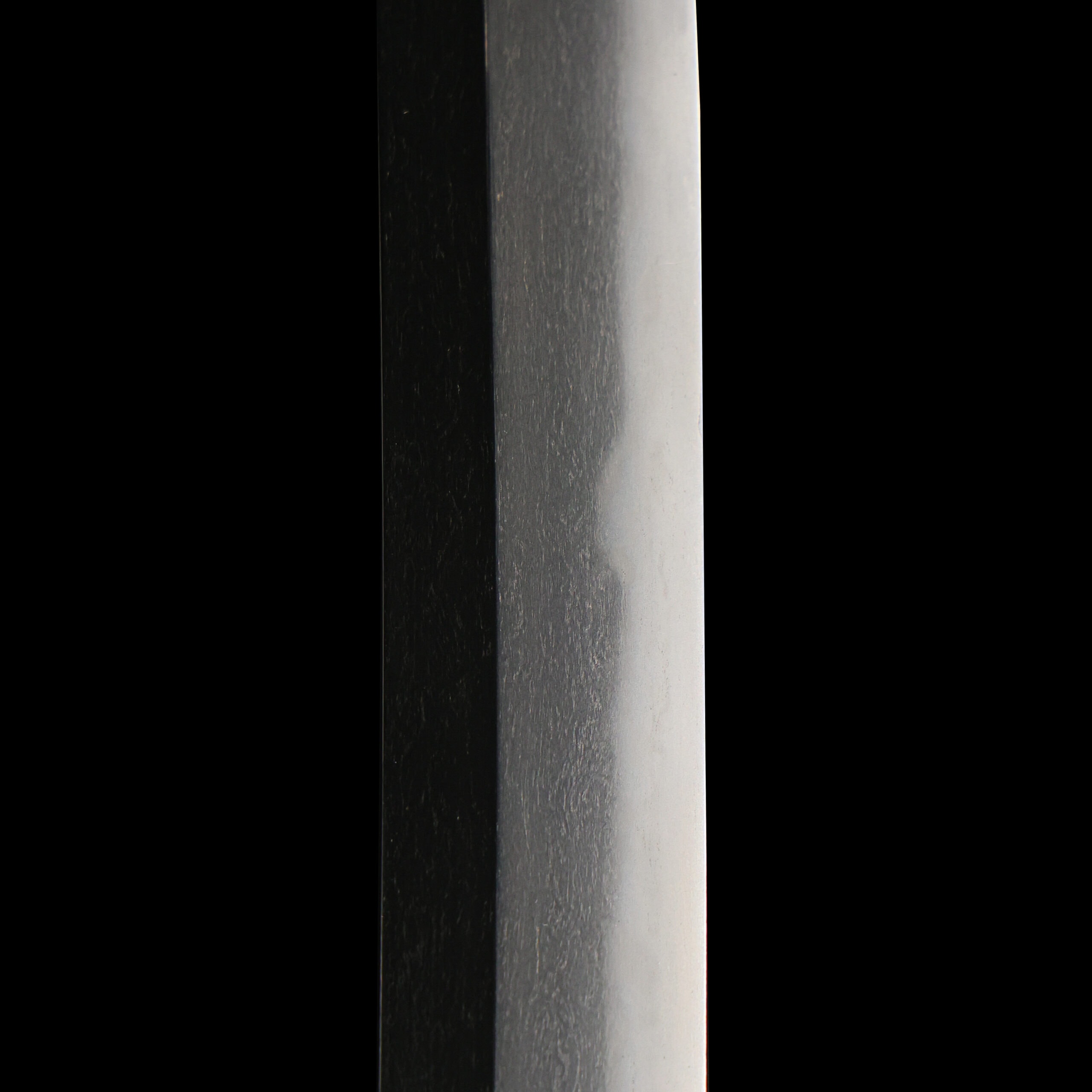
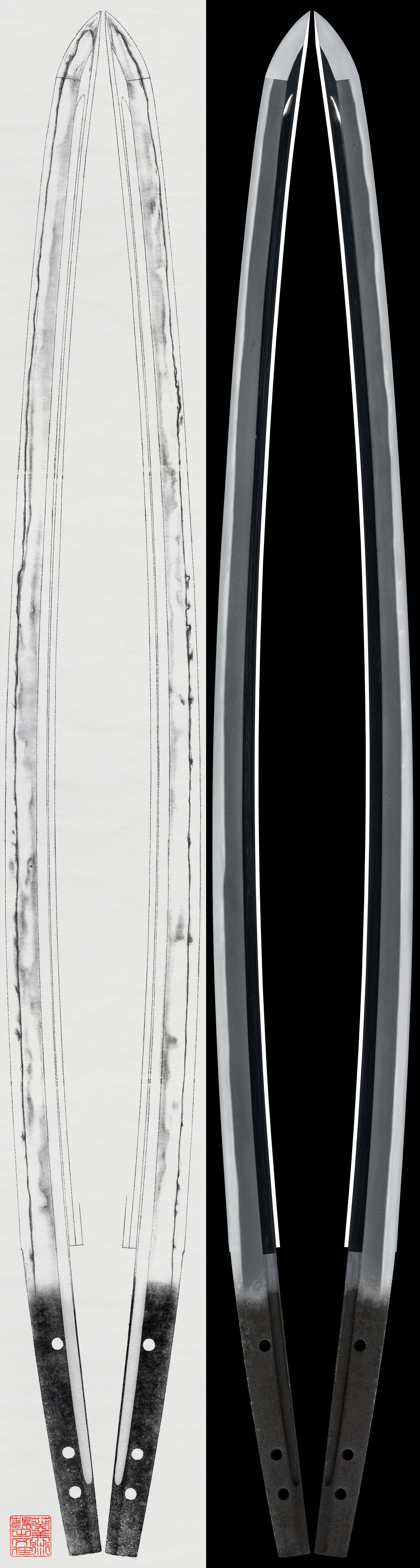
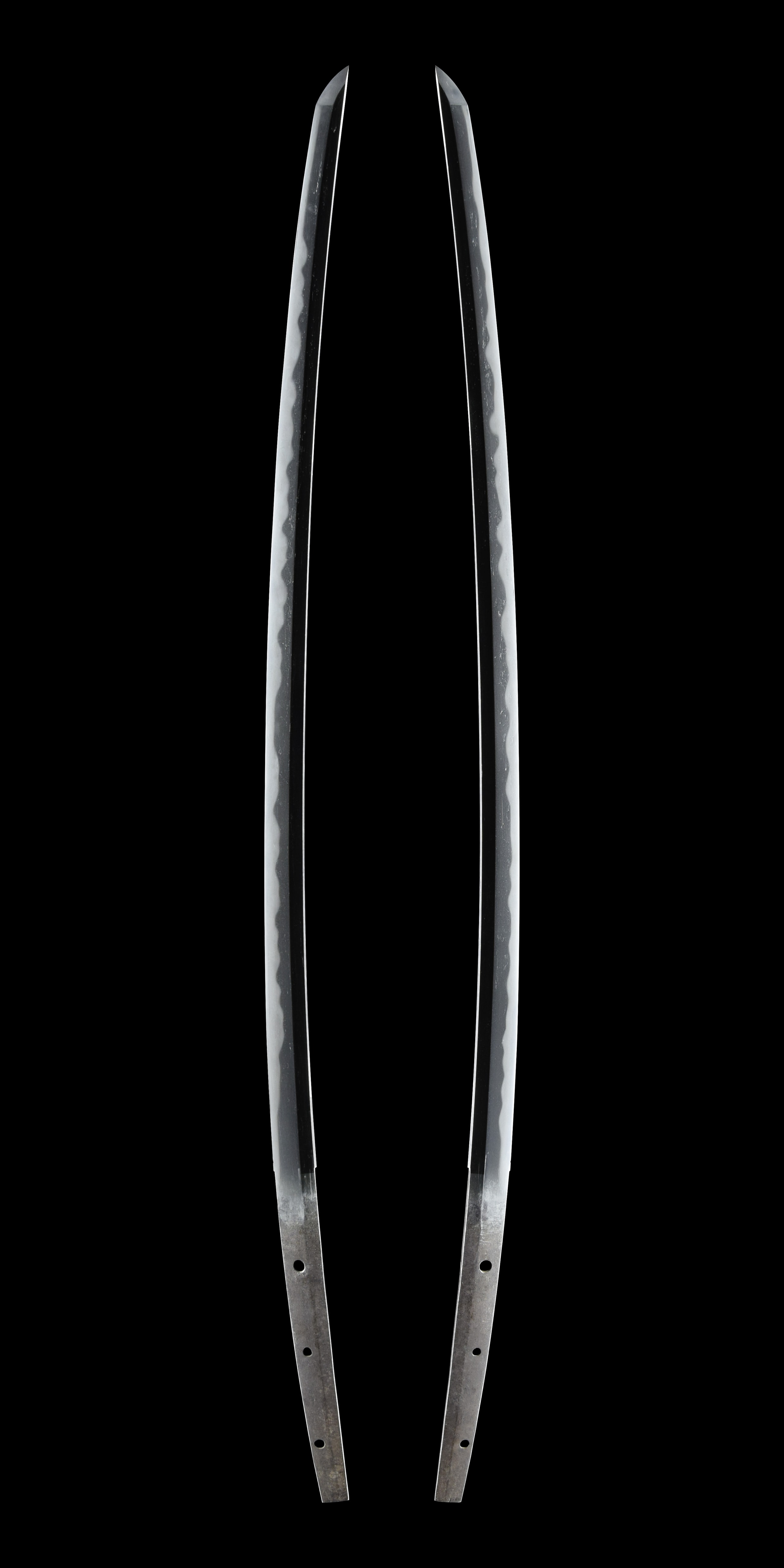
Kageyasu's forging is characteristically a tightly compact , at times mixed with , in which conspicuous stands out. His temper line displays considerable range: -based examples show with well-adhering , while his more animated works present mixed with angular small in a manner, richly animated by frequent and . and appear in the tempered area, and in certain works a (striped effect) is intermingled. His is typically a shallow turning to or, in , . The signature is a bold two-character inscription cut with rather thick chisel strokes.
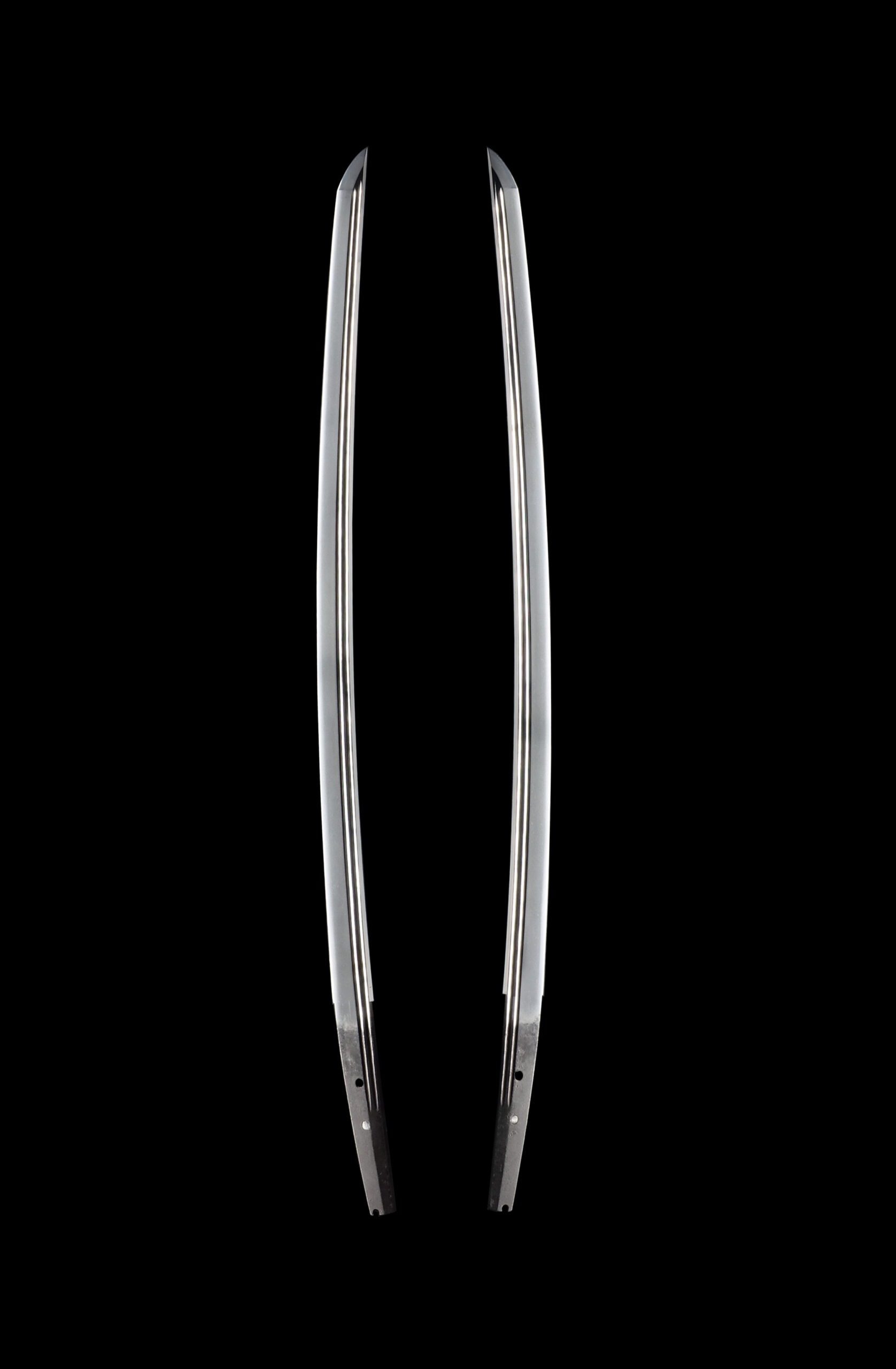
Kageyasu occupies a distinctive position within the early lineage — his name appears consistently in the genealogies, yet his workmanship places him stylistically closer to the idiom. This ambiguity itself has become a defining point of scholarly interest. His preserve the classic -period form with pronounced and , and his best blades are noted for their unmistakably antique flavor. Works attributed to Kageyasu have been transmitted in distinguished collections, including those of the Hosokawa, Yanagisawa, and Mori families, attesting to the esteem in which this enigmatic smith has long been held.