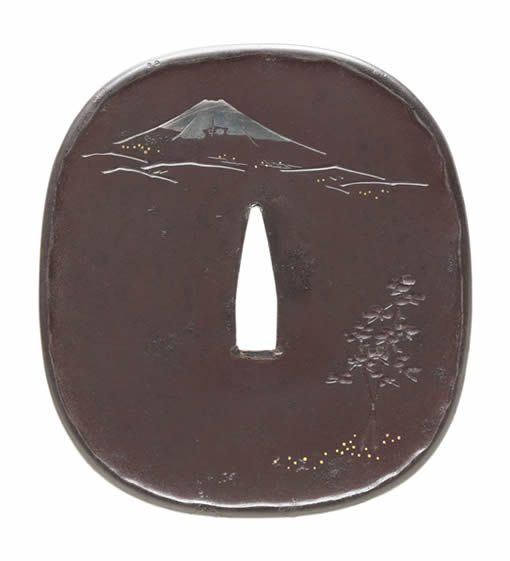
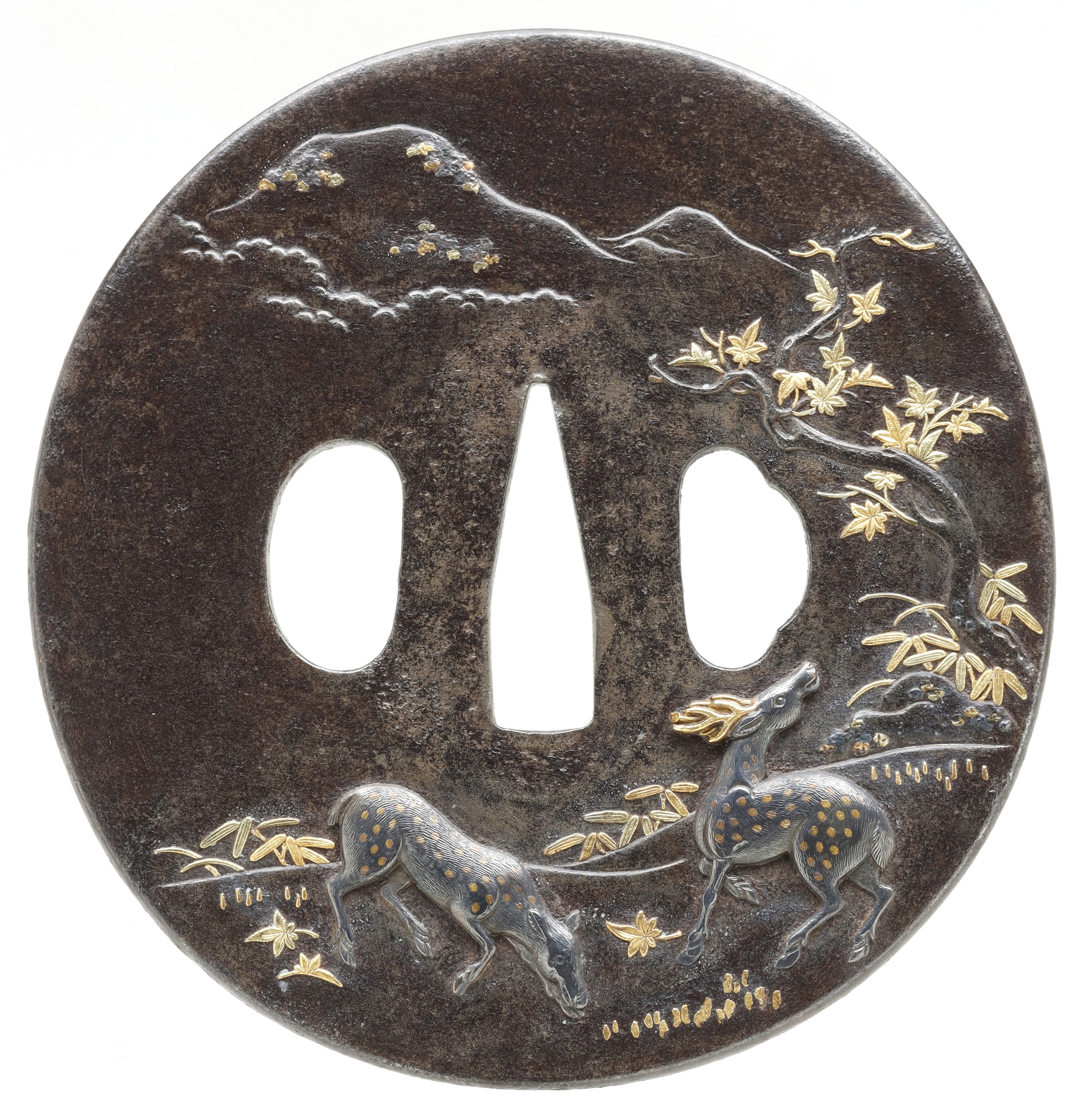
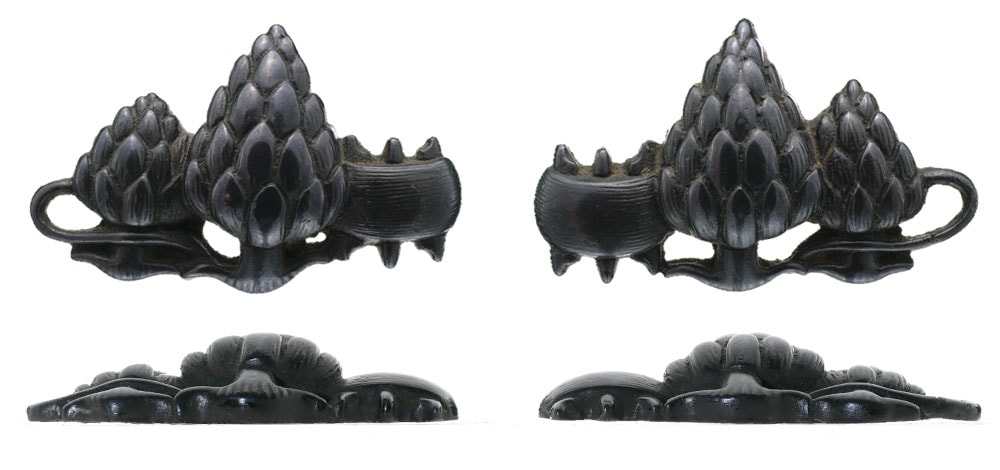
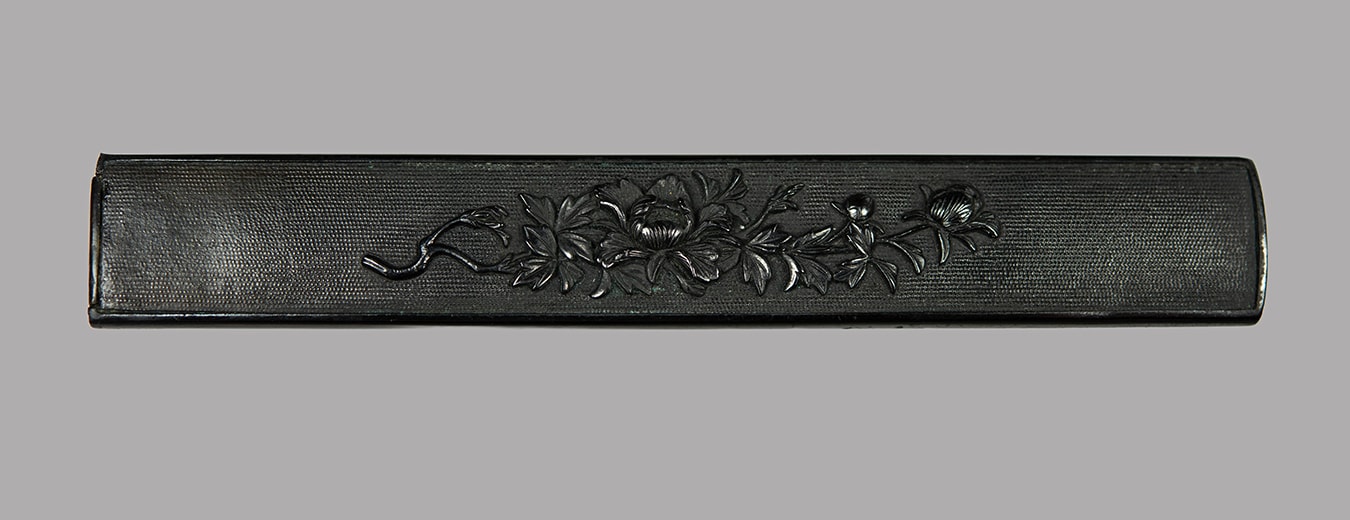
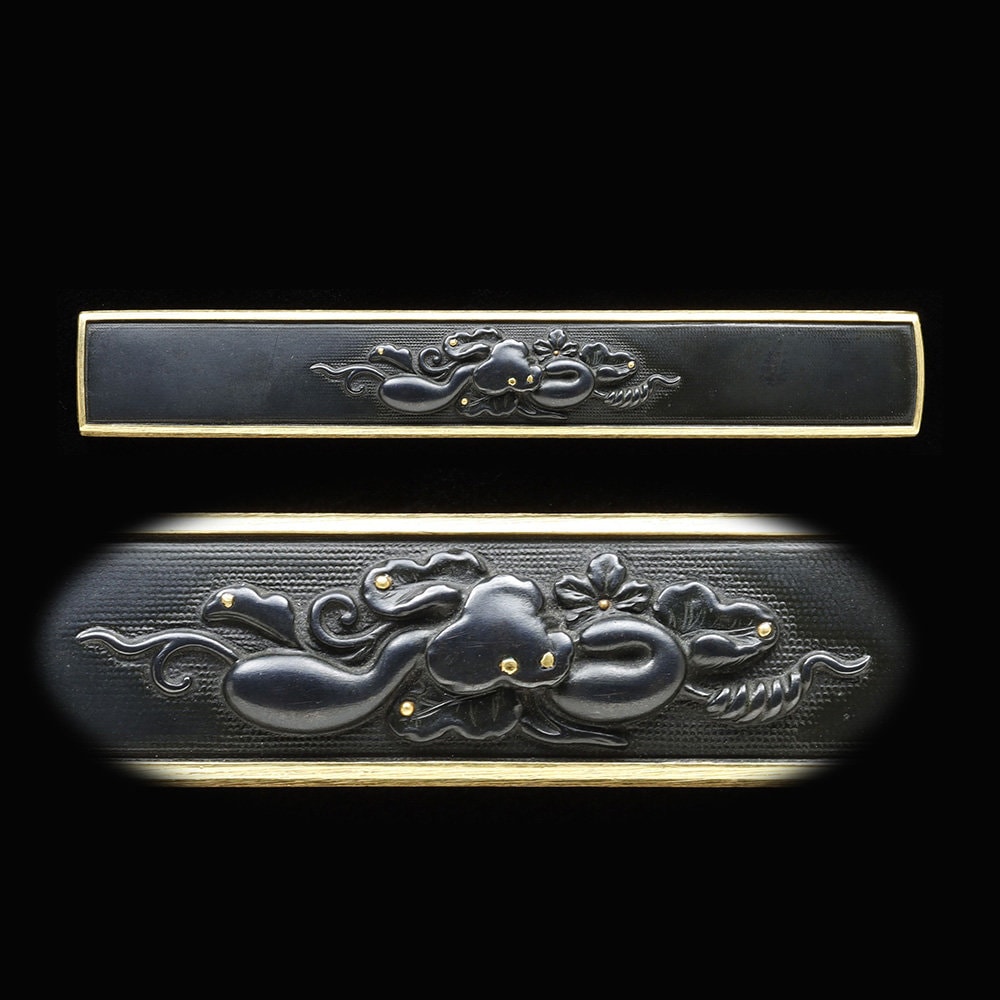
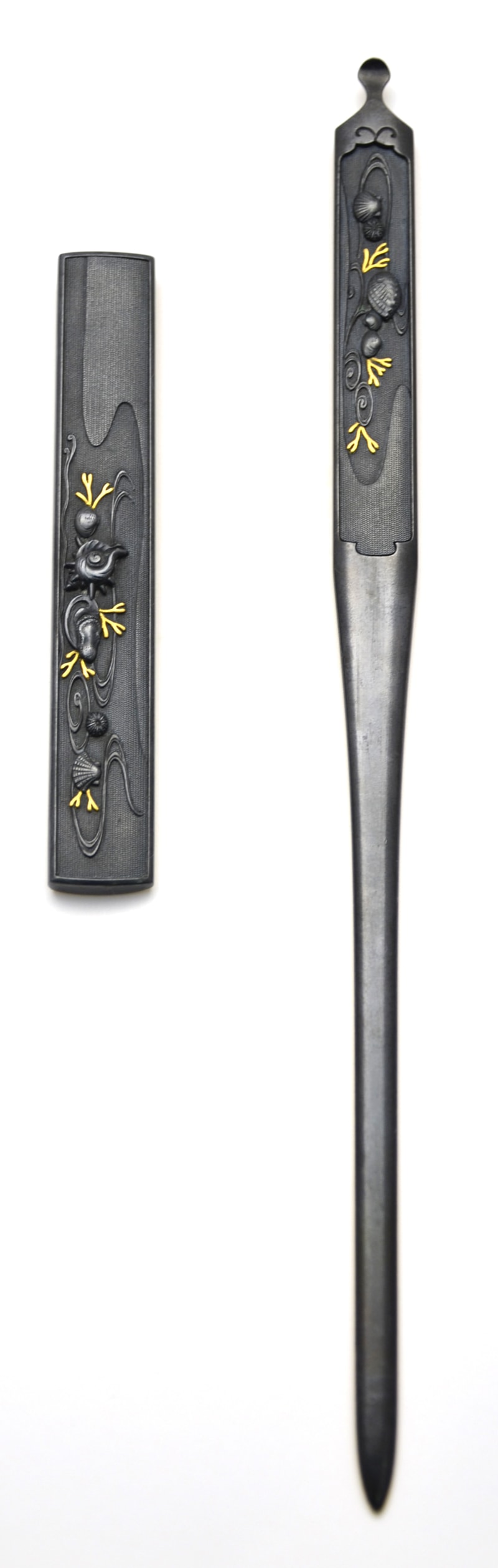
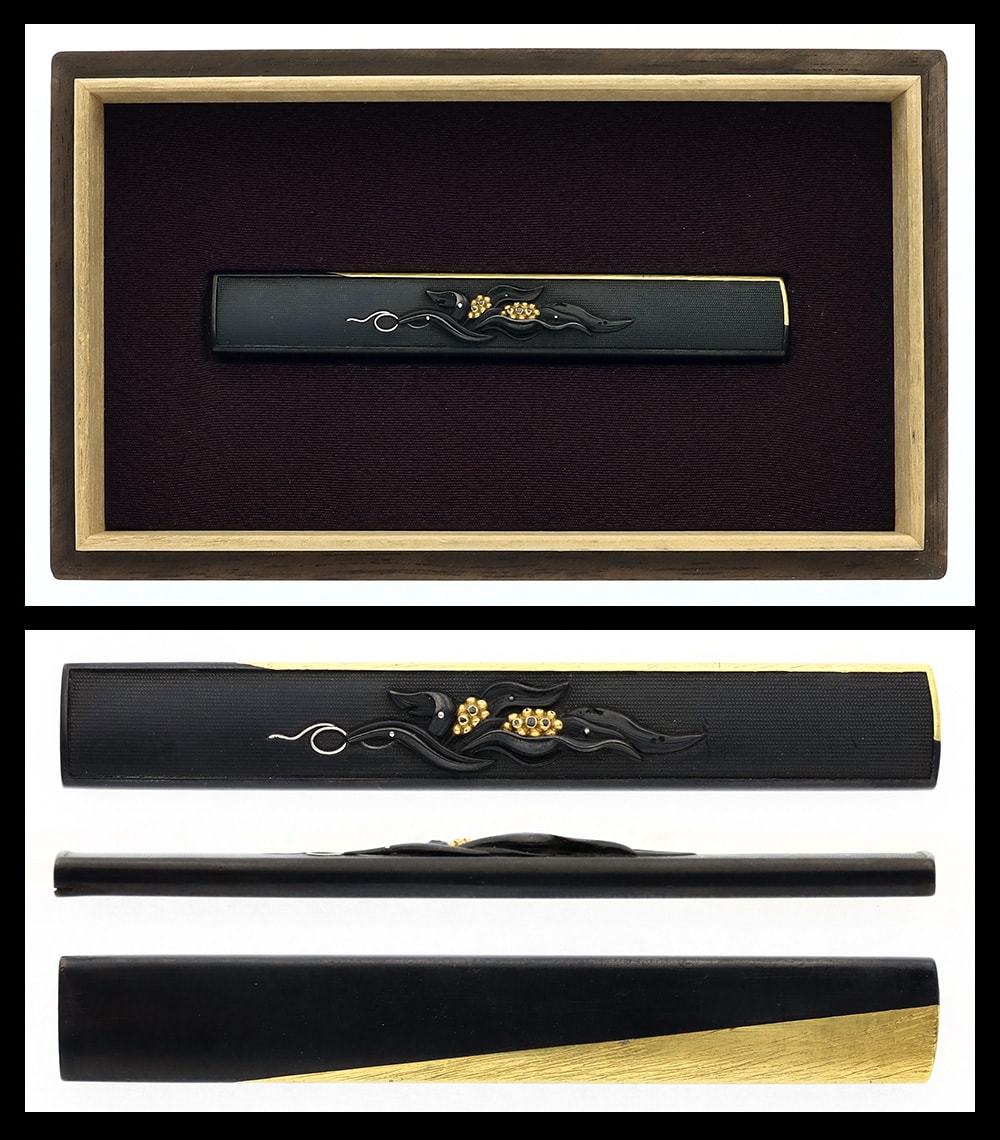
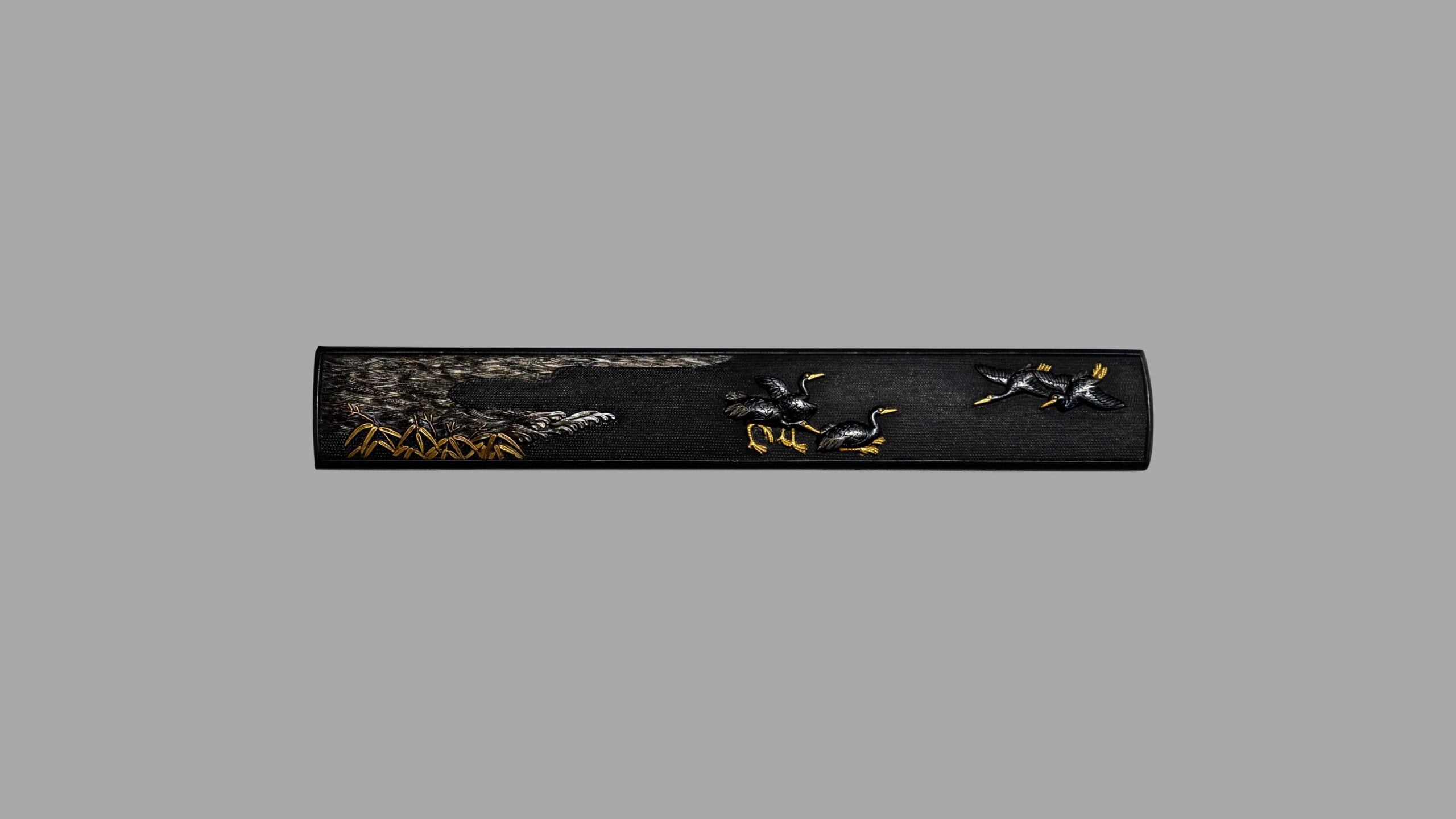
Goto Kojo, his formal name Mitsuie, was the fourth head of the Goto mainline, the eldest son of the third master Joshin, born in Kyoroku 2 (1529). He first served the Ashikaga shoguns, and when that house fell he and his heir Mitsumoto, the fifth head Tokujo, entered the service of Oda Nobunaga; in Tensho 9 (1581), by Nobunaga's command, the two made the great unmarked ten- , which the published sources call the largest gold coin in the world. The Goto were the principal house of sword-fitting metalwork, serving successive shoguns from the period through the period, so that their work is called iebori, house carving, as distinct from the made for ordinary demand. Within that house his standing is stated plainly: he is a master of high repute, "said to be a craftsman second only to Yujo".
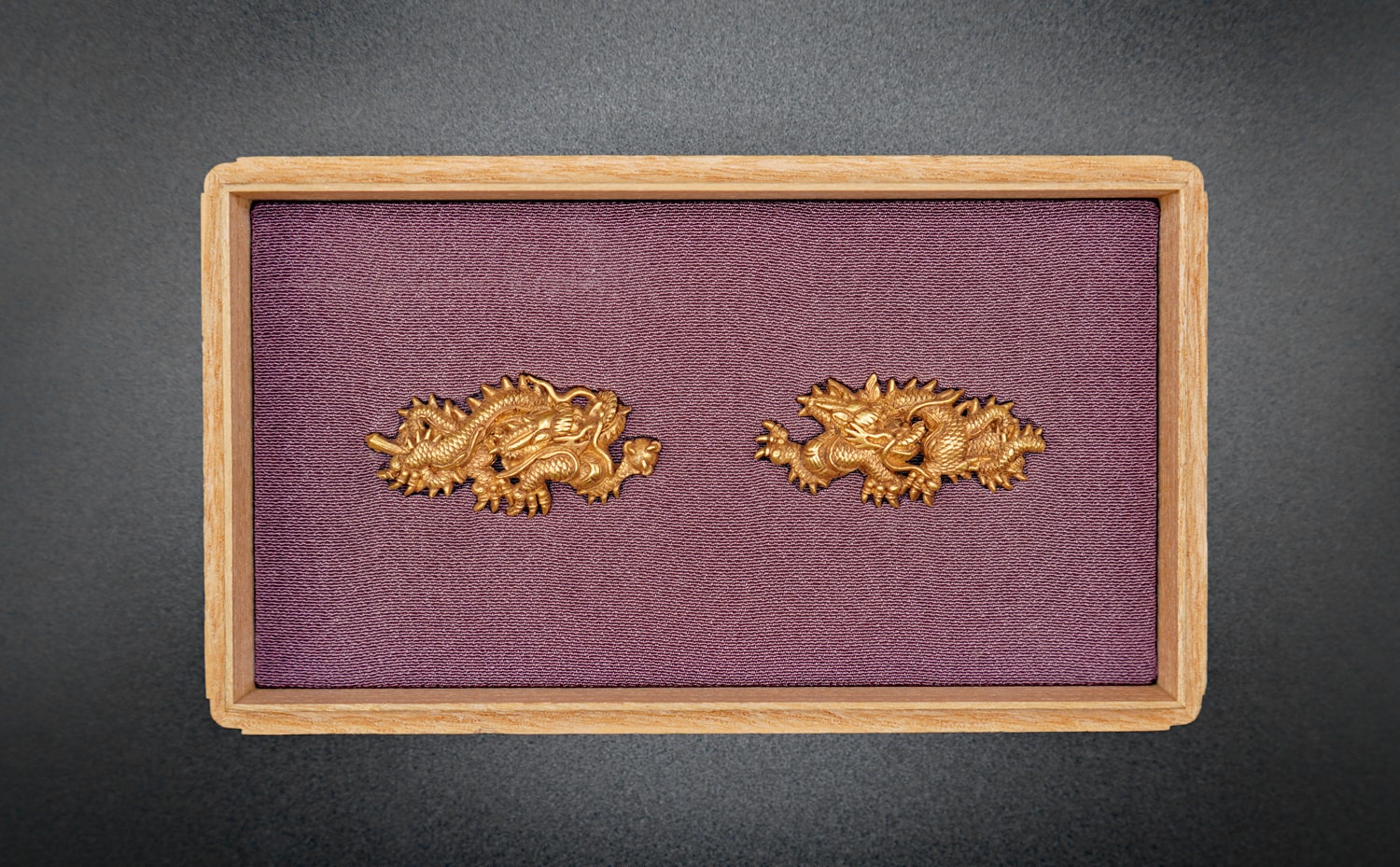
Two features of his work are named as his own. The published sources record that "many of his works are pictorial, since he used underdrawings by Kano Motonobu and Eitoku", and that "within the Goto house he is said to have been the first to take up warrior carving and the dragon-and-tiger design". A dragon with a tiger and leopard family in solid gold, the stripes and spots set in inlay, shows that program at its fullest, and a set of tiger-and-leopard carries five beasts, parents and young, the carving high on the peaks and deep in the valleys, the eyes and coats picked out in gold.
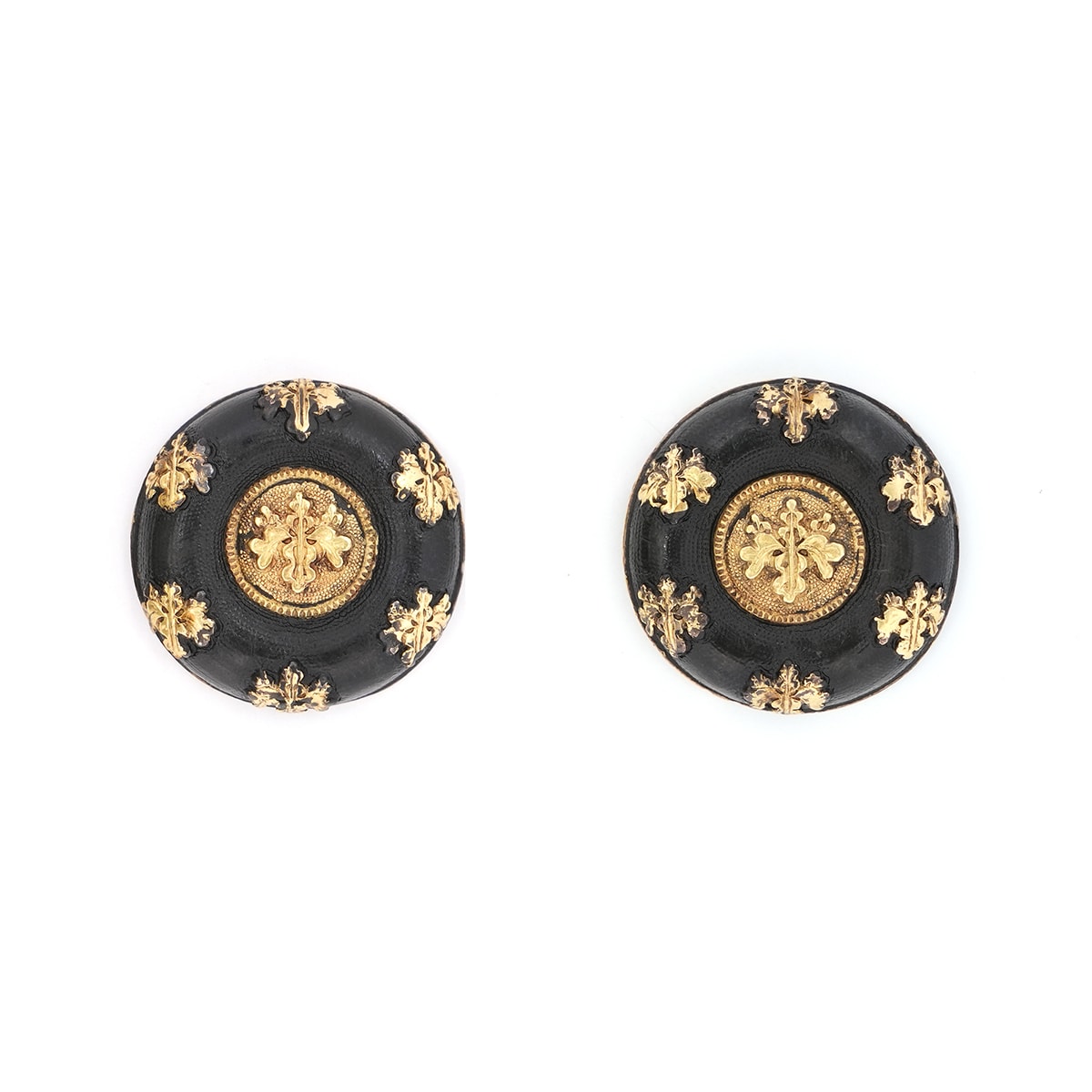
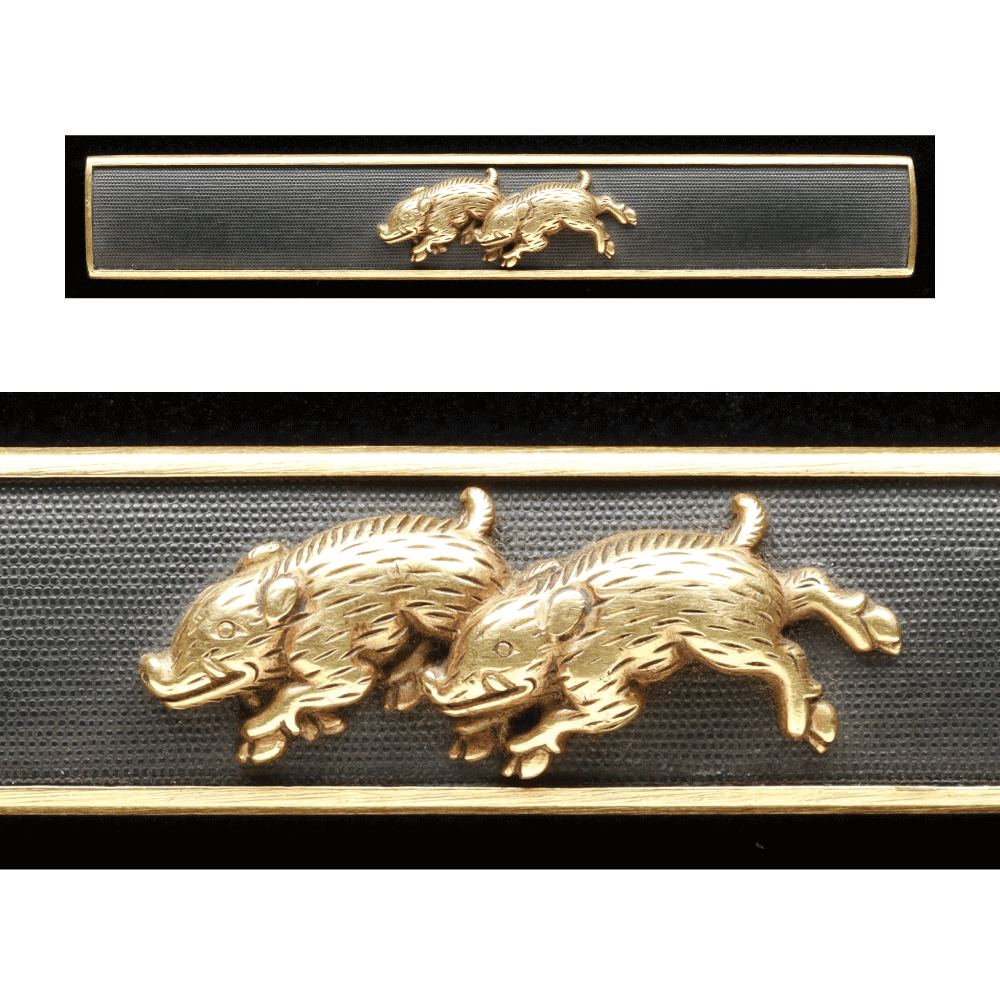
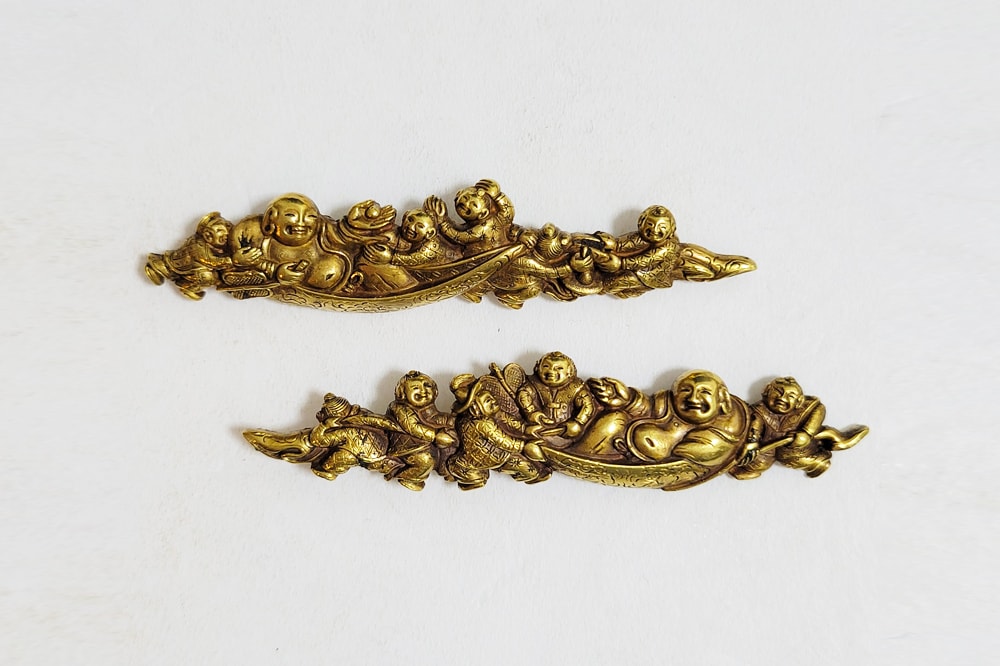
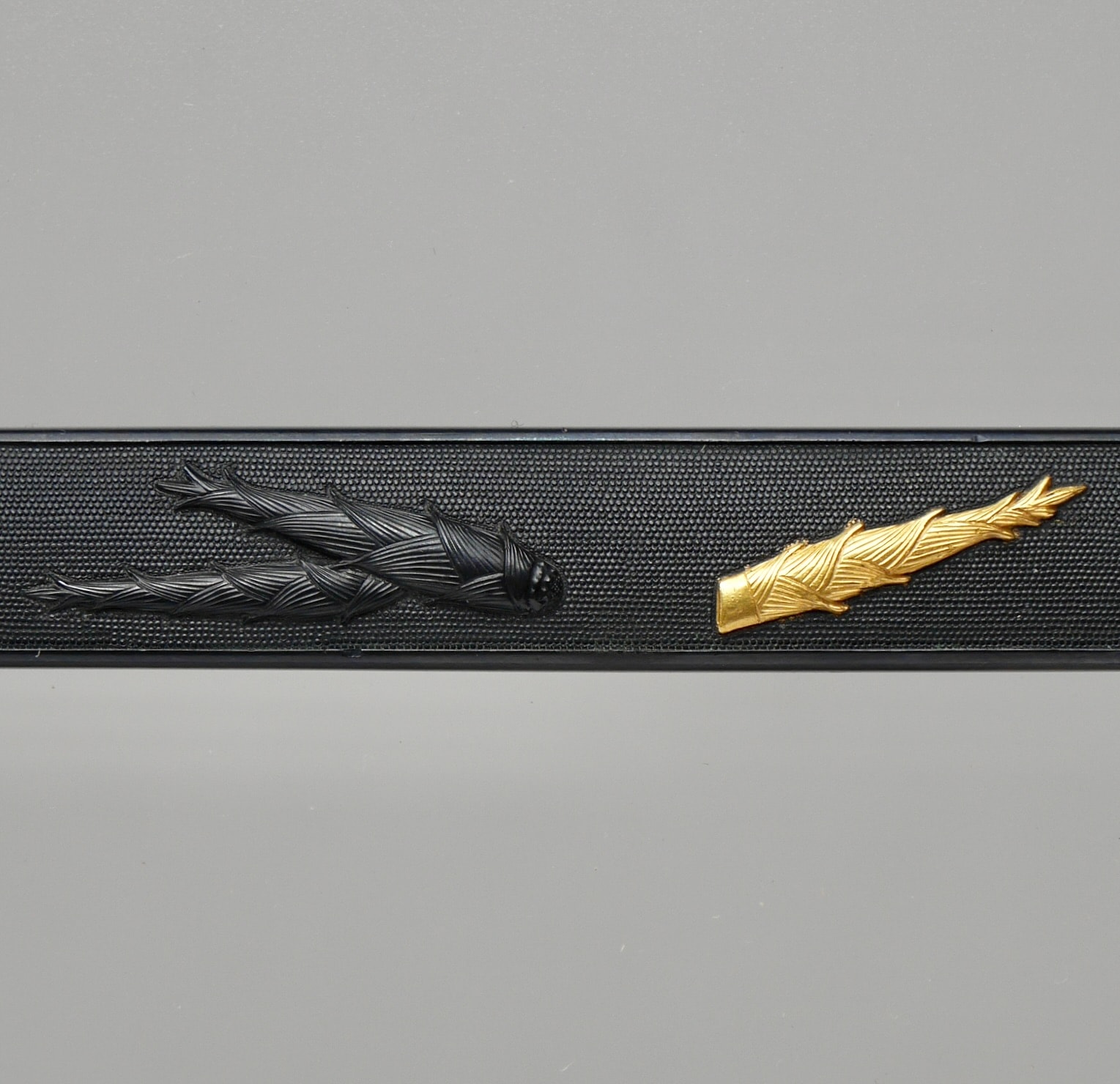
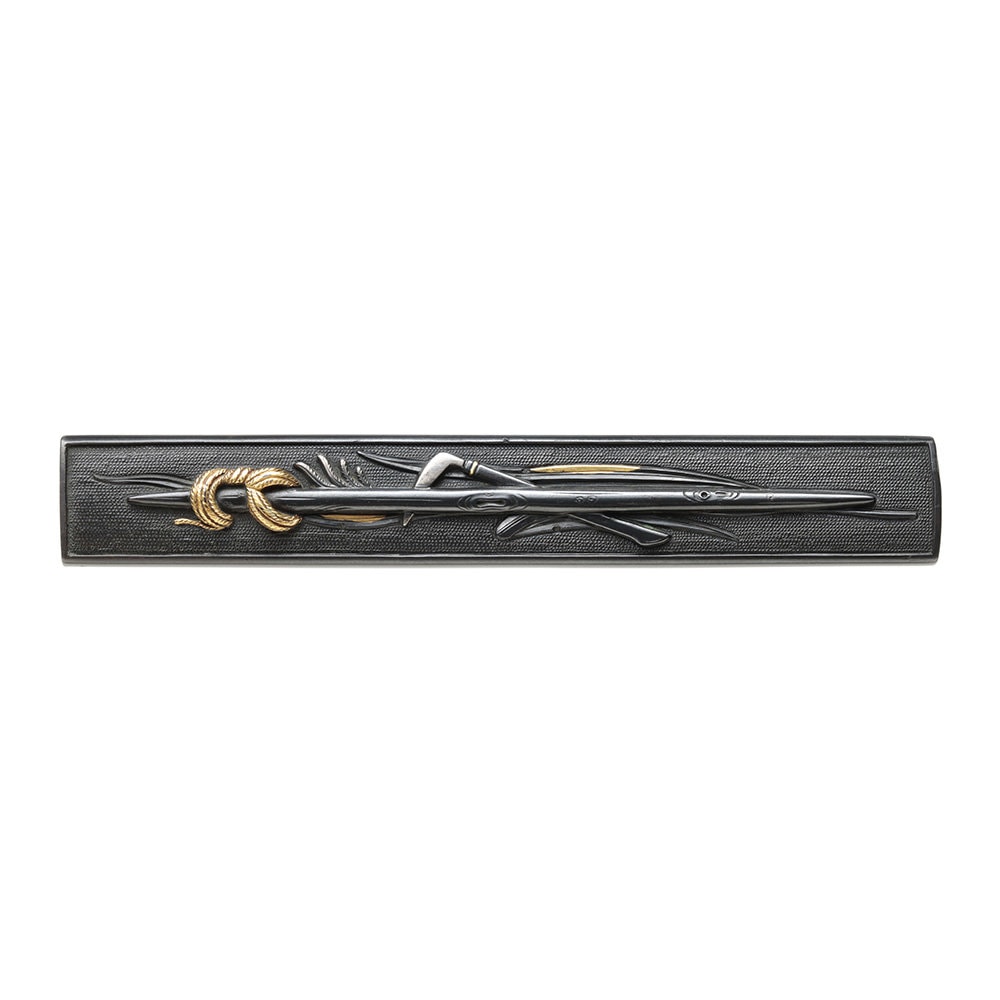
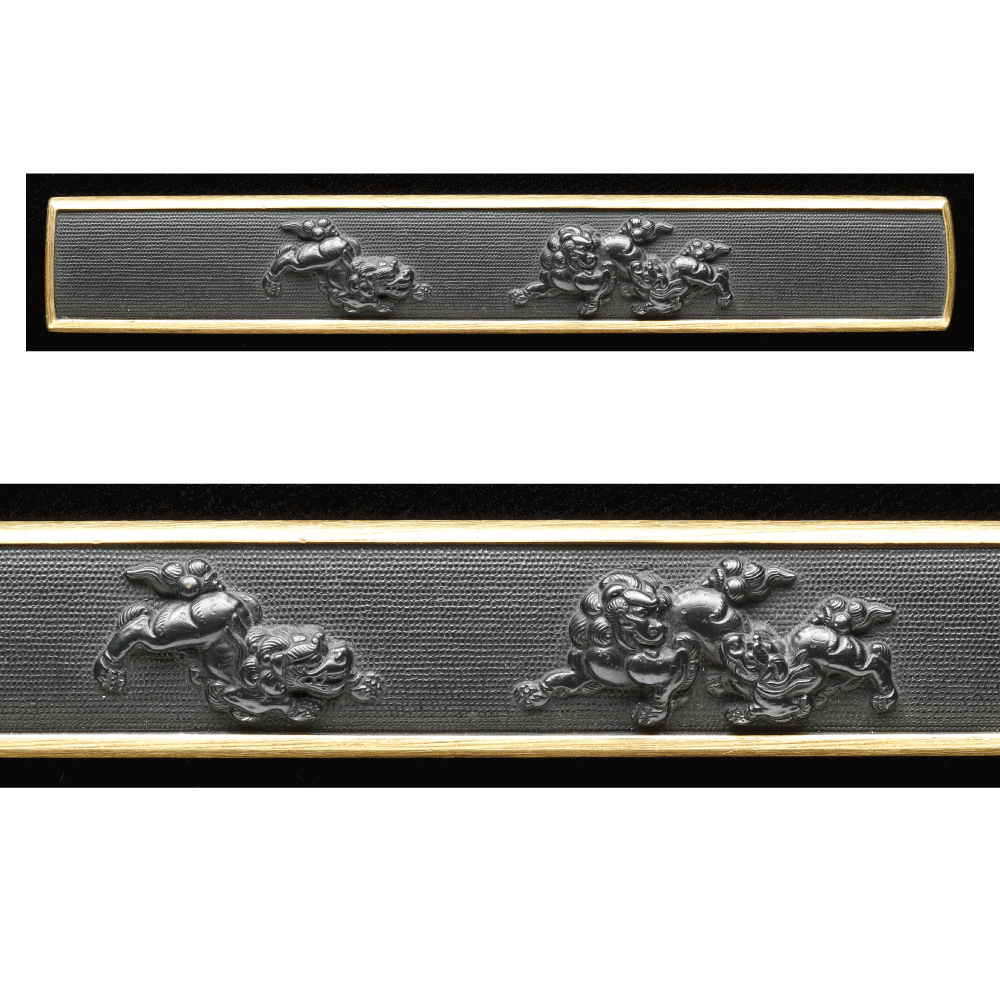
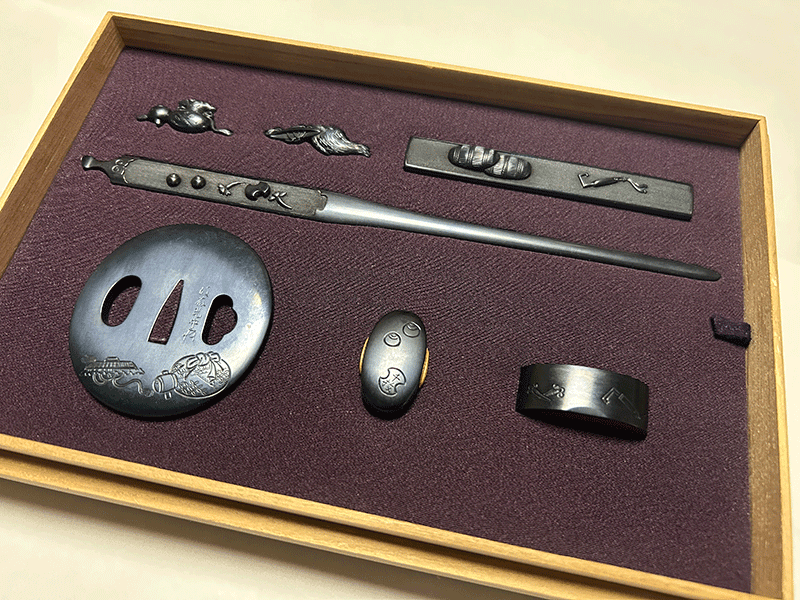
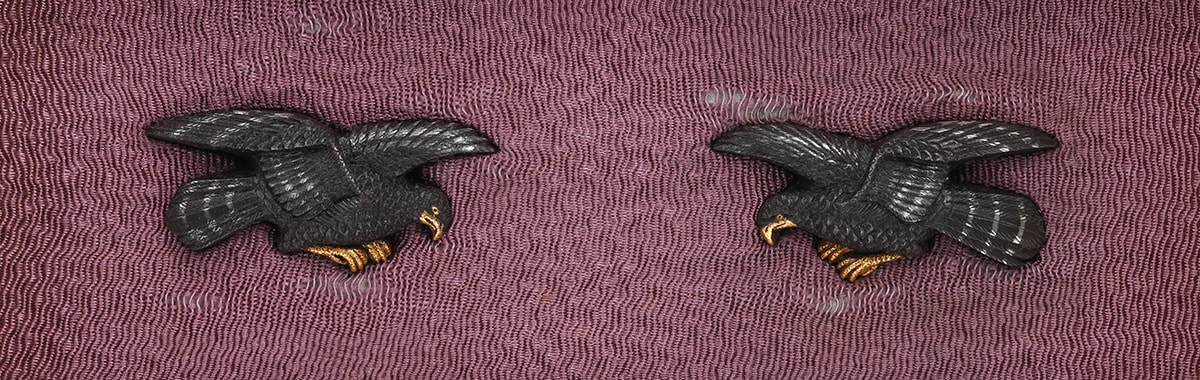
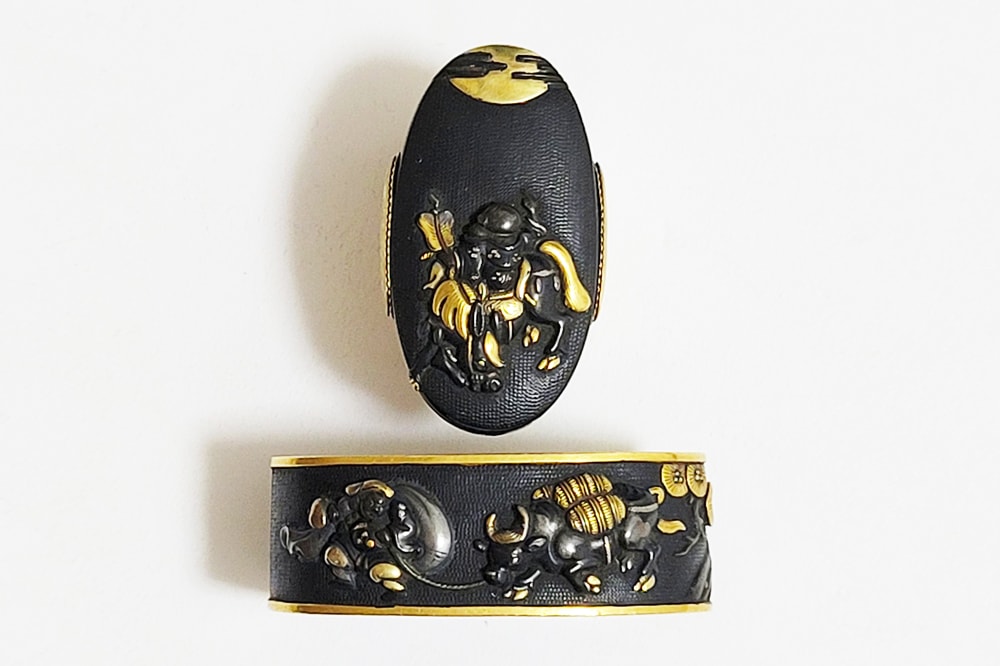
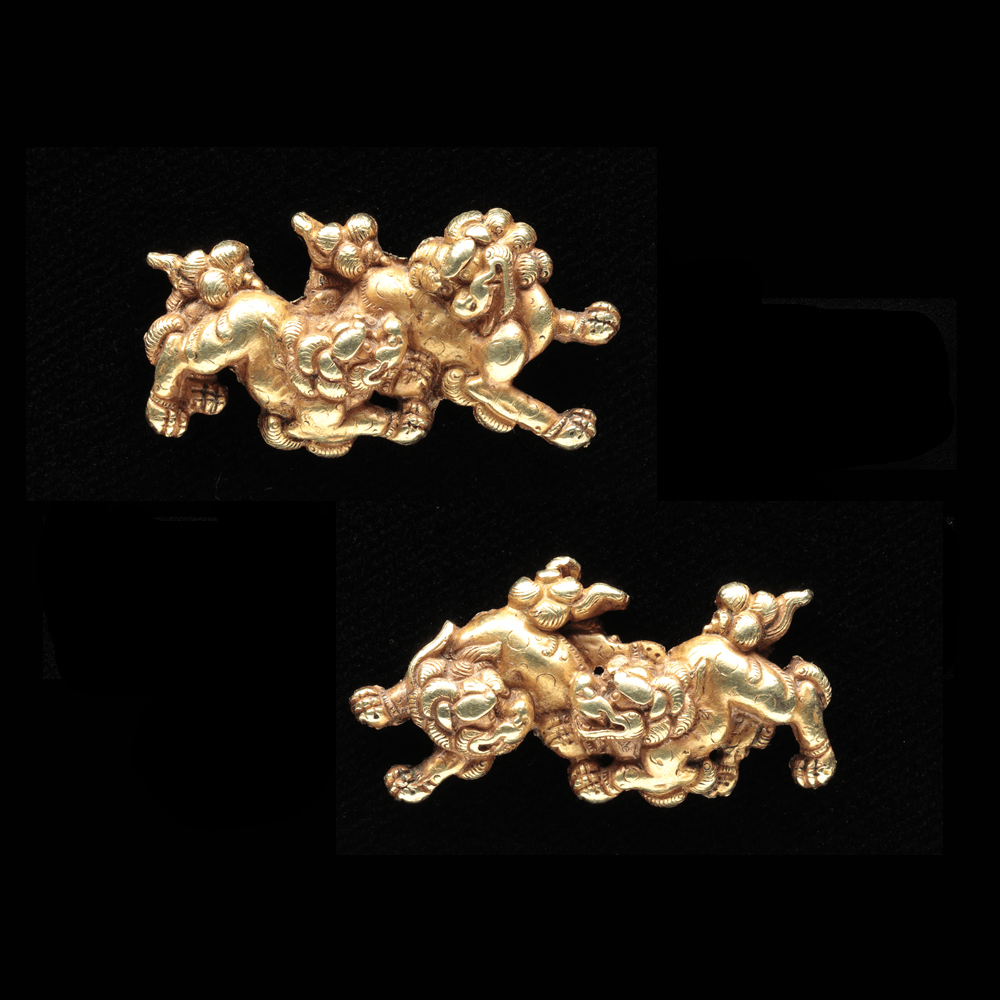
His materials are those of the house at its most luxurious. The are cut in , full sculptural relief, very often in -muku, solid gold, with the paired in'-ne stems on the back that later appraisers read as a mark of period and hand. The and are with figures and gold applied crests over a gold-covered reverse, enriched with gold and silver . Of an all-gold set showing Xuanzong of Tang and Yang Guifei the judges write that "to express so modulated, rich and sharply contrasted a modelling in gold alone is truly the work of a master". His lions take a particular form that "is said to be frequent in the first three generations and in Kojo", and on a dragon-and-tiger the crest is praised for its modelling, "the triangular chisel used to strong effect". His subjects run through lions, tigers and leopards, the twelve zodiac animals, oxen and horses, the dragon, a temple bell, Huang Shigong and Zhang Liang, and the Twenty-four Paragons of Filial Piety.
Most of the record is unsigned, its attribution resting on the later heads of the house. Mitsutaka, the thirteenth head, inscribed attribution signatures of the form "crest by Kojo, Mitsutaka" on several and and issued for them; earlier come from Teijo, Jujo and Mitsumori, and on a two-piece set of the Twenty-four Paragons the published sources judge the valuation "probably the highest ever given for a colour-inlay work". Genuine self-signed works are few. Kojo is the first Goto head to leave one, a gold-inlay signature Goto with a , and of a pair of works signed this way the judges note that "they are known to be Kojo's work by the identical " (同一の花押によって光乗の作品であることがわかり). The of Ushiwaka and Benkei on the Gojo bridge carries that inlaid signature, and the published sources call it, "together with the documentary value of its precious inlaid signature, an outstanding work even among his own".
What sets him apart is the scale he brought into the house style. The texts describe work "showing the spirit of and the dignity of house carving, splendid and powerful", the large horizontal forcefully struck up from the back, a manner they say was "called within the house a technique close to the first master Yujo". He stands between the first three generations, whose lion forms he shares, and his son Tokujo, with whom he is sometimes paired in a single set.
His record runs through thirty designated works, one and twenty-nine . Recorded provenance runs through the Shimazu, Hachisuka and Tsugaru houses, the Shonai Sakai family, whose lord Tadanori wrote the outer wrapper of a dragon pair, and the Osaka merchant house of Konoike, which held three of his works. For the collector a Kojo piece is among the most documented hands of early Goto work, and with only thirty pieces in the two upper tiers a papered example appears only from time to time, the self-signed works rarest of all.