The twentieth century nearly killed the craft twice: wartime distortion, then the occupation ban. The NBTHK’s founding in 1948 and licensed forging from 1953 rebuilt the sword as an art, crowned by Living National Treasures and the mukansa rank.
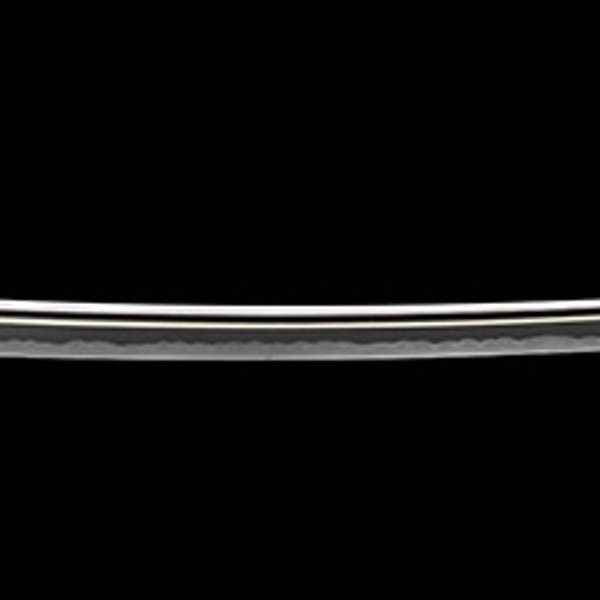
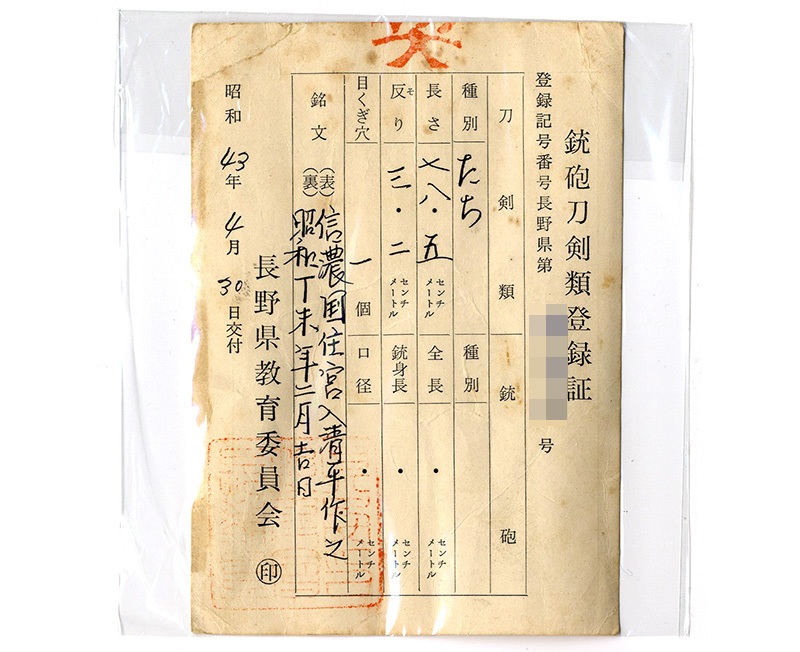
This is a tachi made by Miyairi Kiyohira in Shinano province during the Showa period. Kiyohira, whose real name was Miyairi Eizo, was the younger brother of the Living National Treasure Miyairi Kohei. He studied under his brother and specialized in the style of Kiyomaro. This particular piece is a long blade that emulates the style of Kiyomaro.
 NihontoWatch
Showa (1926-1989) · sori 3.2cm


Nagano · around 1926-1989
Tōken Taikan top 60%
6 pieces on the market now
Shōwa to the present: destruction and revival
The twentieth century nearly killed the craft twice: wartime distortion, then the occupation ban. The NBTHK’s founding in 1948 and licensed forging from 1953 rebuilt the sword as an art, crowned by Living National Treasures and the mukansa rank.
We could not find an authenticity certificate on the seller’s listing. Japanese swords and fittings are normally papered by the NBTHK (or the NTHK). Without one, the attribution is the seller’s own assessment and has not been independently verified — treat it with caution and ask the dealer about certification before buying.
Cooling-off (returns or exchanges) is accepted within 3 days of the item's arrival. Return shipping and refund transfer fees are the customer's responsibility. Fees other than the item price (transfer fees, credit card fees, etc.) cannot be refunded. Returns and refunds are not available for overseas destinations.
This is a tachi made by Miyairi Kiyohira in Shinano province during the Showa period. Kiyohira, whose real name was Miyairi Eizo, was the younger brother of the Living National Treasure Miyairi Kohei. He studied under his brother and specialized in the style of Kiyomaro. This particular piece is a long blade that emulates the style of Kiyomaro.
NihontoWatchShowa (1926-1989) · sori 3.2cm
Nagano · around 1926-1989
Tōken Taikan top 60%
6 pieces on the market now
Shōwa to the present: destruction and revival
The twentieth century nearly killed the craft twice: wartime distortion, then the occupation ban. The NBTHK’s founding in 1948 and licensed forging from 1953 rebuilt the sword as an art, crowned by Living National Treasures and the mukansa rank.
We could not find an authenticity certificate on the seller’s listing. Japanese swords and fittings are normally papered by the NBTHK (or the NTHK). Without one, the attribution is the seller’s own assessment and has not been independently verified — treat it with caution and ask the dealer about certification before buying.
Cooling-off (returns or exchanges) is accepted within 3 days of the item's arrival. Return shipping and refund transfer fees are the customer's responsibility. Fees other than the item price (transfer fees, credit card fees, etc.) cannot be refunded. Returns and refunds are not available for overseas destinations.