The Miyairi family has been engaged in the blacksmithing trade since ancient times in Sakaki-machi, Hanishina-gun, Nagano Prefecture, a town known for its swordsmiths. In Taisho 2 (1913), the future Living National Treasure Miyairi Akihira (Yukihira) was born, and in Taisho 13 (1924), Akihira's younger brother Miyairi Kiyohira was born. The elder brother Akihira went to Tokyo in Showa 12 (1937), entered the Nihonto Tanren Denshusho to learn sword-making techniques, and in Showa 15 (1945), he exhibited at the Shinsaku Nihonto Ten and received the Sosai-sho. During the Great War, he returned to Sakaki as a designated smith for the Japanese Army and devoted himself to forging swords alongside his younger brother Kiyohira. After the end of the war, the production of Japanese swords was prohibited by order of the GHQ, and both brothers moved to Tateshina-machi in the same prefecture, living as agricultural blacksmiths and spending a period of misfortune. The catalyst for their comeback was Showa 25 (1950). At the request of the Nippon Bijutsu Token Hozon Kyokai (NBTHK), they were to create hounoto for the Ise Jingu Gosen-gu ceremony, and using this as an opportunity, they resumed full-scale sword making. Subsequently, in Showa 30 (1955), Akihira won the Tokusho at the 1st Bijutsu Shinsakai sponsored by the NBTHK, and continued to win for four consecutive years thereafter. Excelling in Soshu-den, including the style of Minamoto Kiyomaro, he continued his vigorous activities, was honored as a Living National Treasure (Juyo Mukei Bunkazai) in Showa 38 (1963), and passed away at the young age of sixty-four in Showa 52 (1977). The younger brother Kiyohira studied under his elder brother Akihira from his teens and became independent as an agricultural blacksmith in Tateshina. Around Showa 42 (1967), he returned to Sakaki to concentrate on sword making, receiving awards such as the Nagano-ken Geijutsu Bunka Koro-sho and the Mainichi Shimbun-sha Sho; he was even appraised as surpassing his Living National Treasure brother and received the Sakaki-machi Mukei Bunkazai designation. In his later years, he changed his mei to Kiyomune and passed away in Heisei 15 (2003) at the age of seventy-nine.
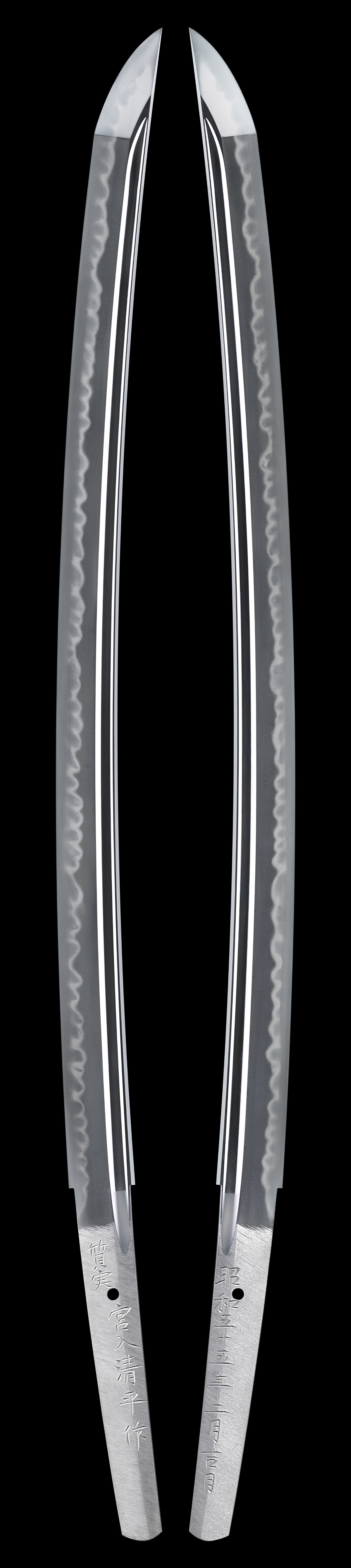
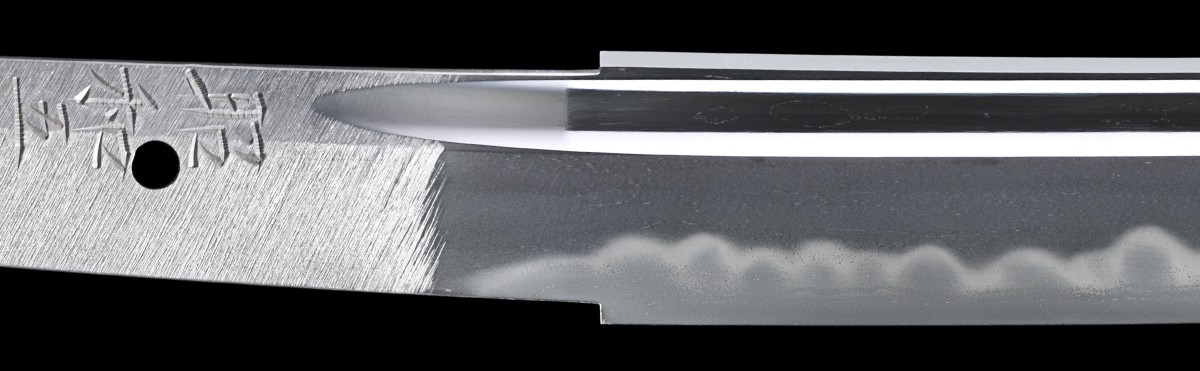
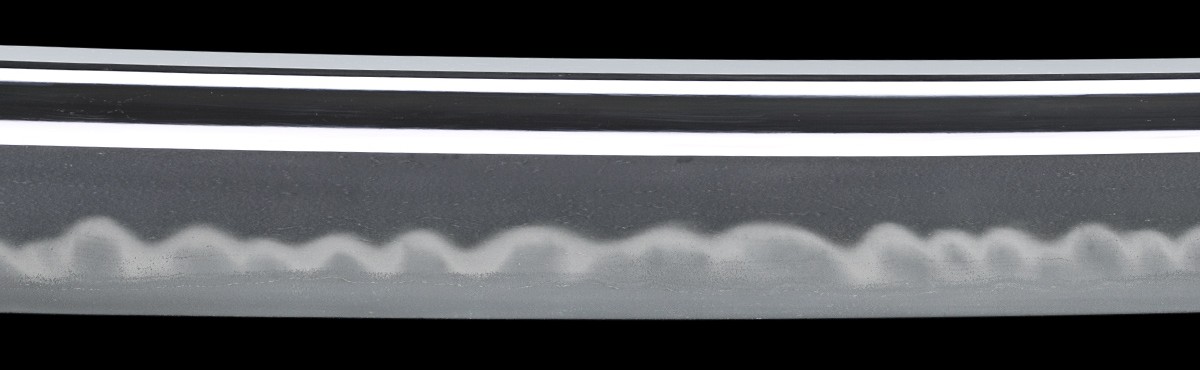
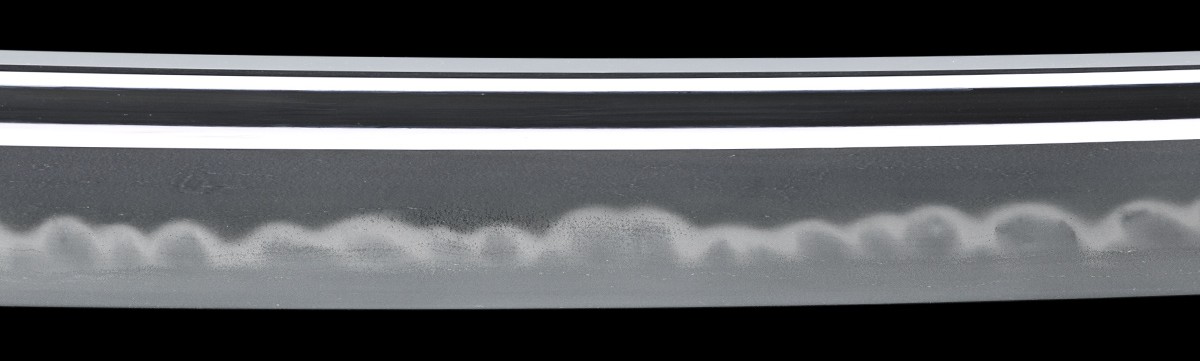
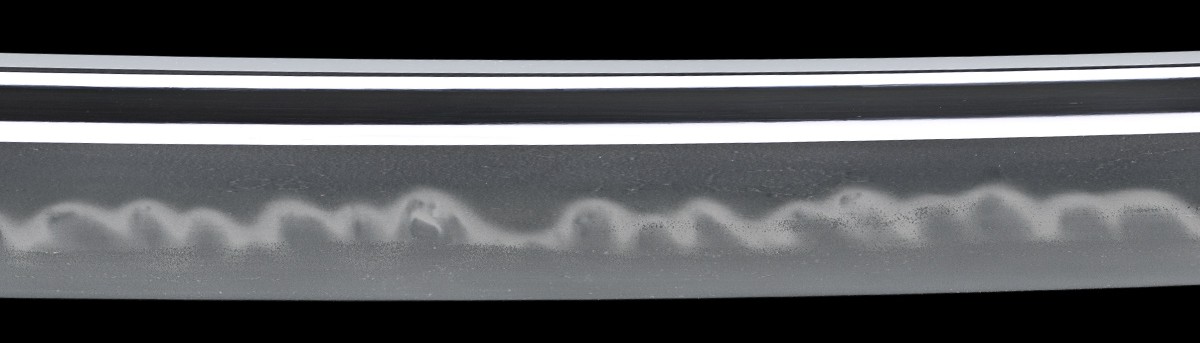
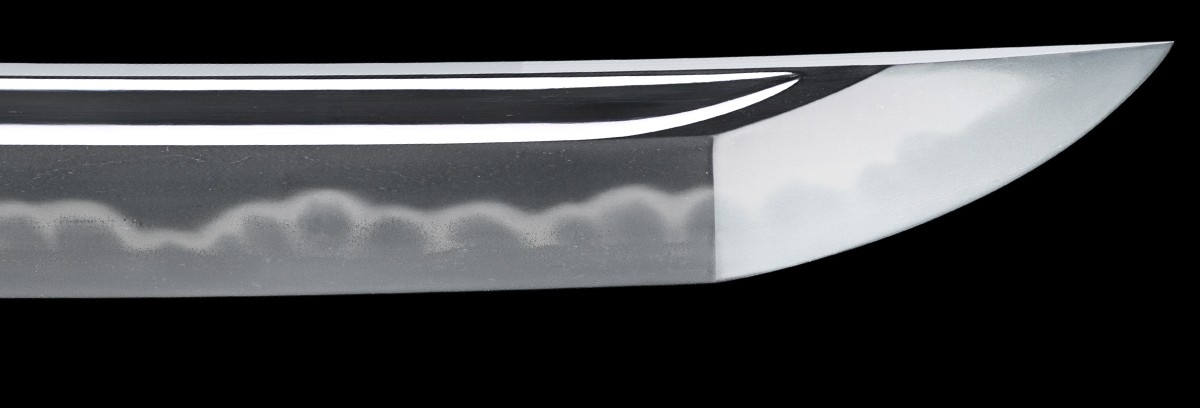
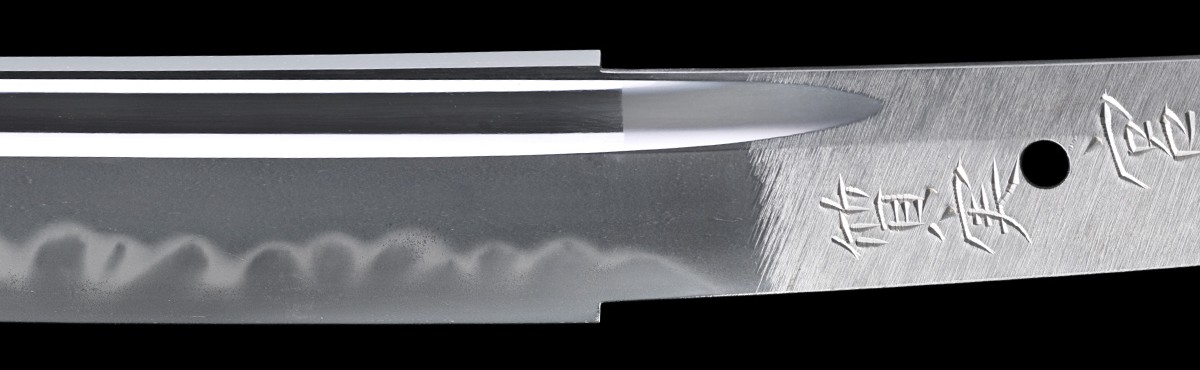
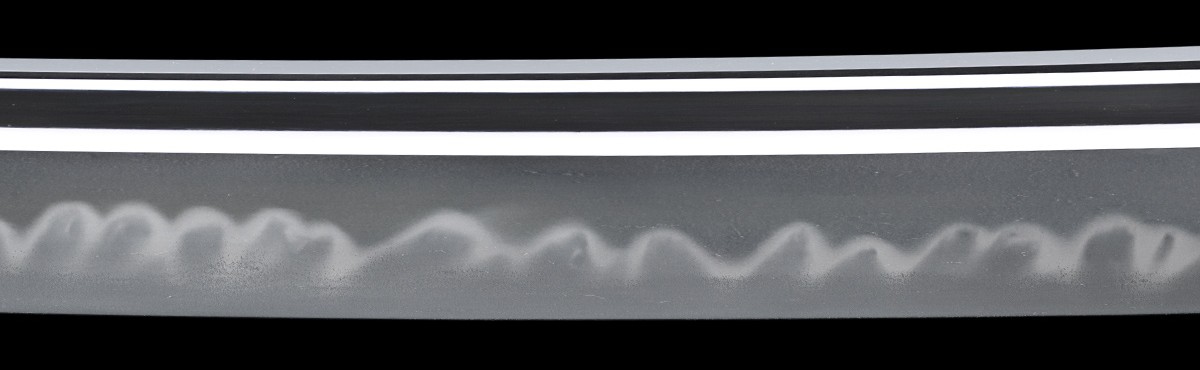
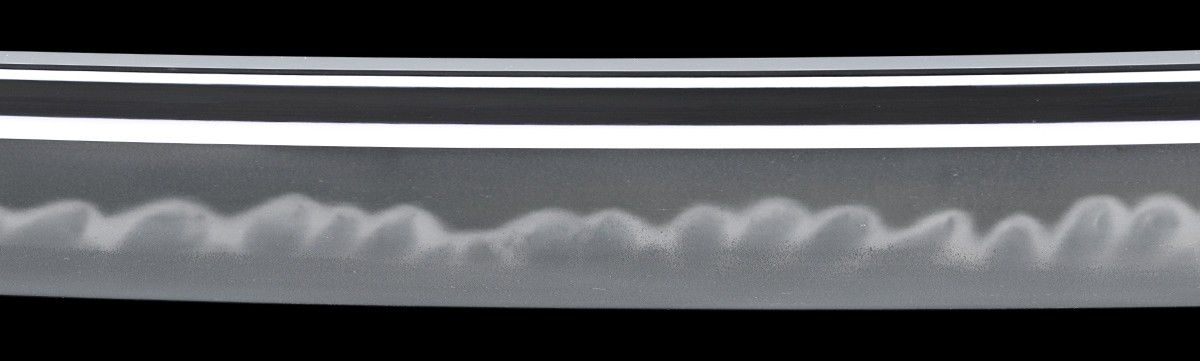
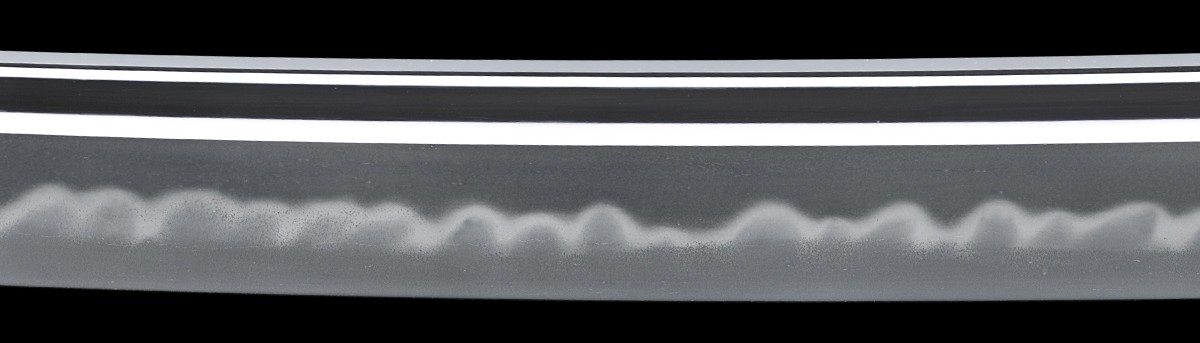
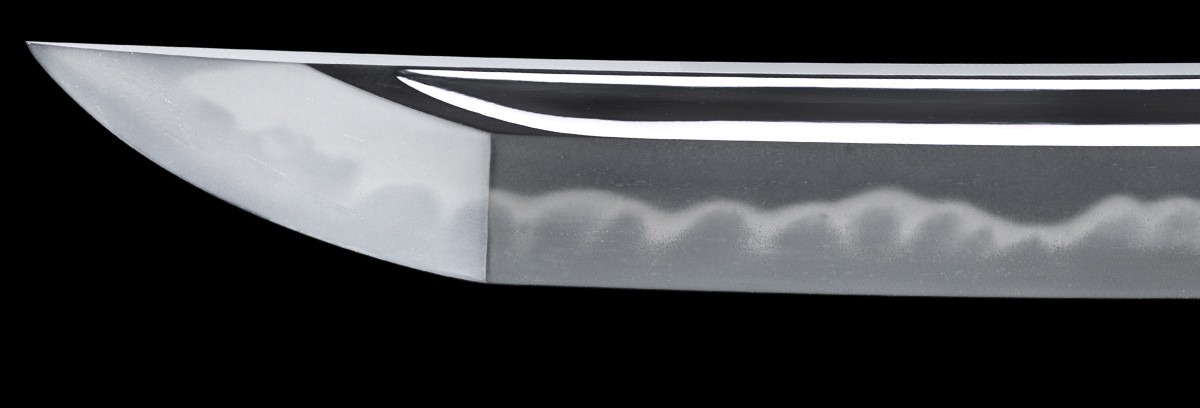
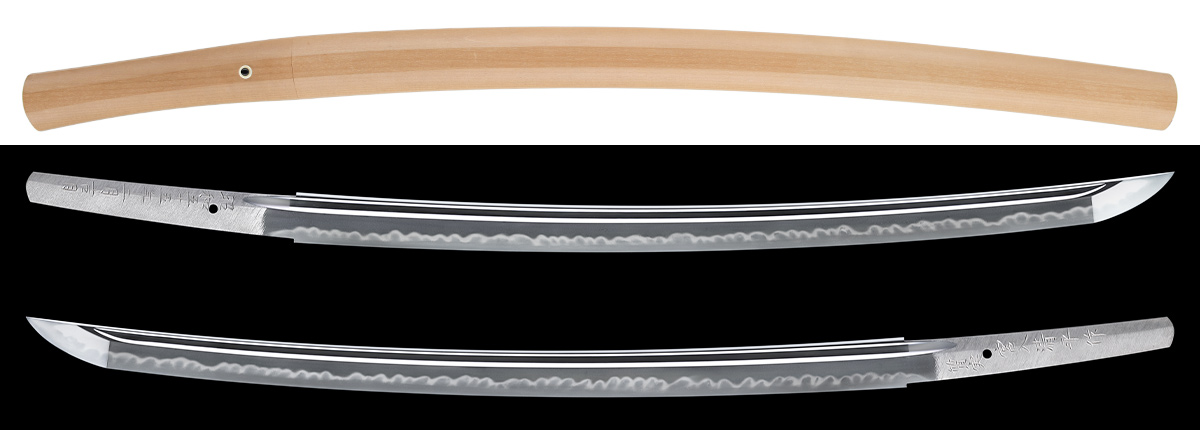
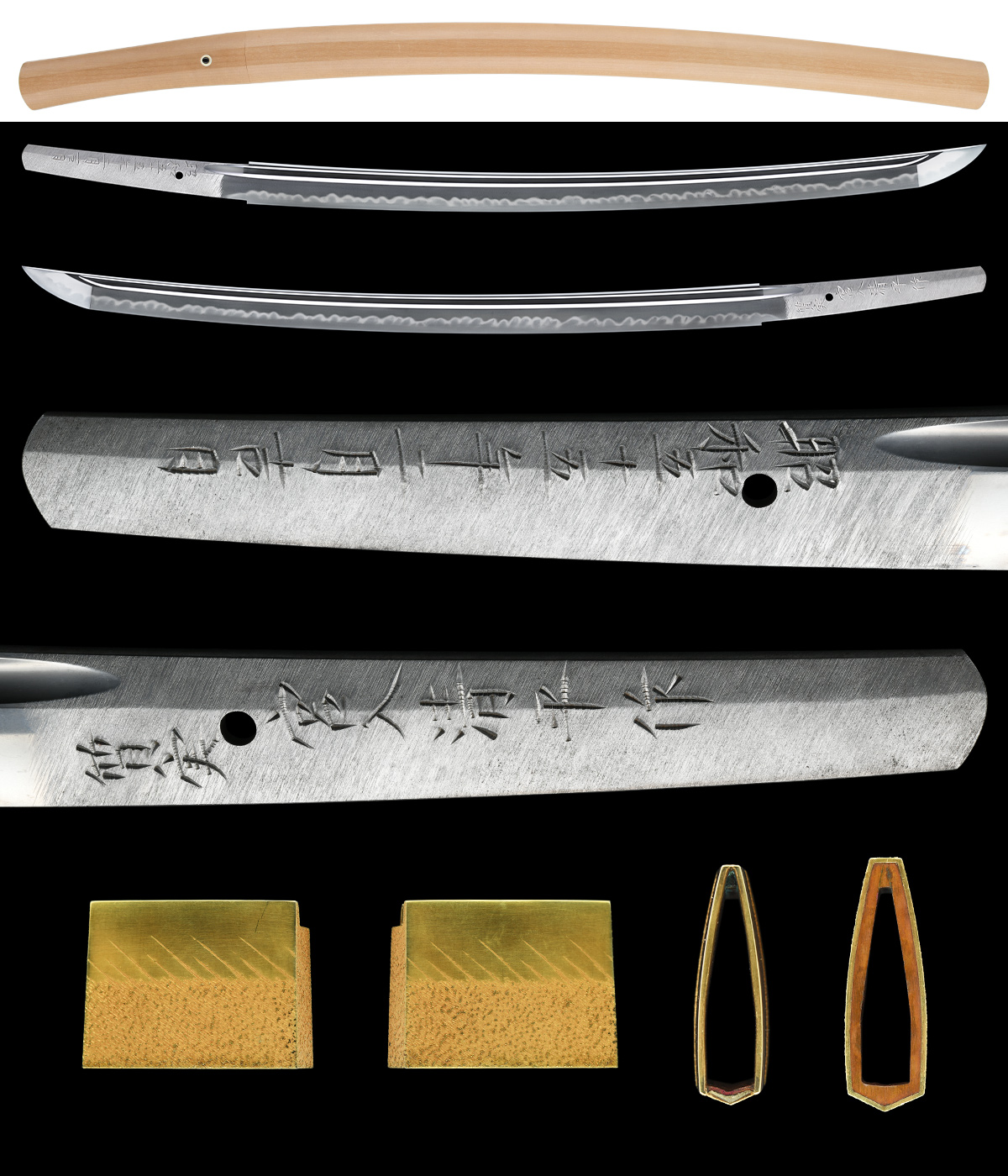
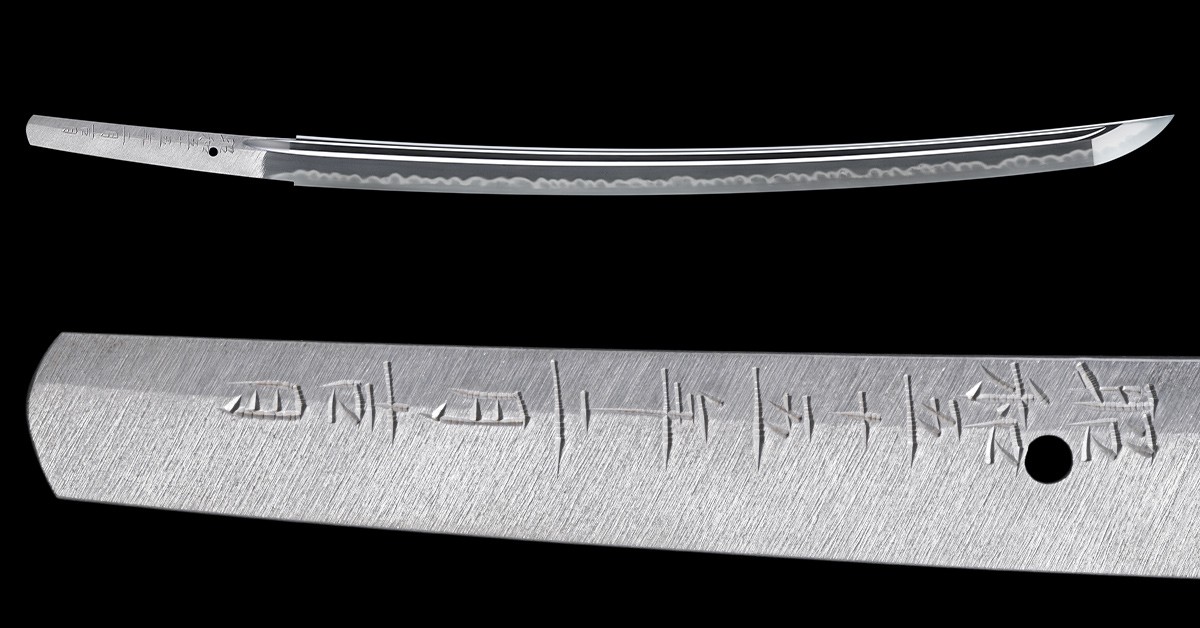
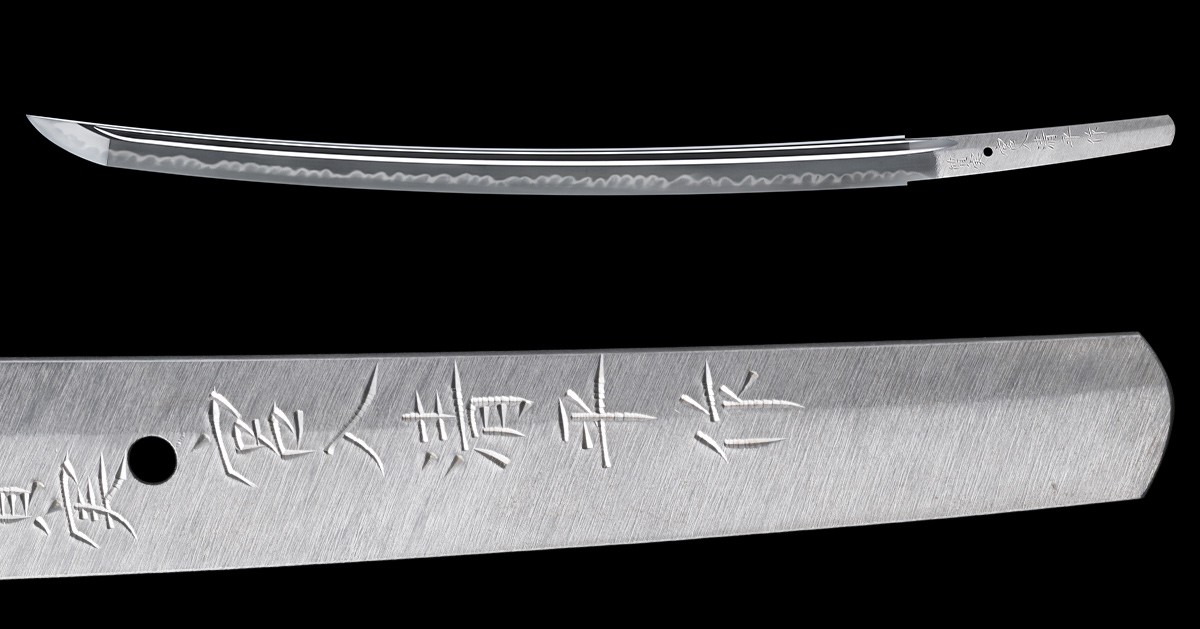
The taihai of this sword has a nagasa of 1 shaku 9 sun 7 bu, a length approaching that of a katana, with a wide mihaba at the moto and saki, ordinary kasane, a moderate sori, and a sharply extended kissaki, presenting a massive sugata. The jigane is a well-tightened itame-hada with thick jinie, making it refined. The hamon is gunome mixed with choji and togari-ba, which are sakagakari in places, with fine nie well-attached to the habuchi, and the nioiguchi is bright and clear. The boshi continues as midare-komi, with a pointed saki and kaeri. This work is a single sword by the swordsmith Miyairi Kiyohira, one of the representative smiths of Nagano Prefecture. As if embodying the characters "Shitsujitsu" (Simplicity and Integrity) inscribed in the soemei, it is a superior sword full of honesty and a sense of power. Shirasaya, gold-clad ichiju habaki.
Machine translation from the shop's Japanese · may contain errors ·
The Miyairi family has been engaged in the blacksmithing trade since ancient times in Sakaki-machi, Hanishina-gun, Nagano Prefecture, a town known for its swordsmiths. In Taisho 2 (1913), the future Living National Treasure Miyairi Akihira (Yukihira) was born, and in Taisho 13 (1924), Akihira's younger brother Miyairi Kiyohira was born. The elder brother Akihira went to Tokyo in Showa 12 (1937), entered the Nihonto Tanren Denshusho to learn sword-making techniques, and in Showa 15 (1945), he exhibited at the Shinsaku Nihonto Ten and received the Sosai-sho. During the Great War, he returned to Sakaki as a designated smith for the Japanese Army and devoted himself to forging swords alongside his younger brother Kiyohira. After the end of the war, the production of Japanese swords was prohibited by order of the GHQ, and both brothers moved to Tateshina-machi in the same prefecture, living as agricultural blacksmiths and spending a period of misfortune. The catalyst for their comeback was Showa 25 (1950). At the request of the Nippon Bijutsu Token Hozon Kyokai (NBTHK), they were to create hounoto for the Ise Jingu Gosen-gu ceremony, and using this as an opportunity, they resumed full-scale sword making. Subsequently, in Showa 30 (1955), Akihira won the Tokusho at the 1st Bijutsu Shinsakai sponsored by the NBTHK, and continued to win for four consecutive years thereafter. Excelling in Soshu-den, including the style of Minamoto Kiyomaro, he continued his vigorous activities, was honored as a Living National Treasure (Juyo Mukei Bunkazai) in Showa 38 (1963), and passed away at the young age of sixty-four in Showa 52 (1977). The younger brother Kiyohira studied under his elder brother Akihira from his teens and became independent as an agricultural blacksmith in Tateshina. Around Showa 42 (1967), he returned to Sakaki to concentrate on sword making, receiving awards such as the Nagano-ken Geijutsu Bunka Koro-sho and the Mainichi Shimbun-sha Sho; he was even appraised as surpassing his Living National Treasure brother and received the Sakaki-machi Mukei Bunkazai designation. In his later years, he changed his mei to Kiyomune and passed away in Heisei 15 (2003) at the age of seventy-nine.
The taihai of this sword has a nagasa of 1 shaku 9 sun 7 bu, a length approaching that of a katana, with a wide mihaba at the moto and saki, ordinary kasane, a moderate sori, and a sharply extended kissaki, presenting a massive sugata. The jigane is a well-tightened itame-hada with thick jinie, making it refined. The hamon is gunome mixed with choji and togari-ba, which are sakagakari in places, with fine nie well-attached to the habuchi, and the nioiguchi is bright and clear. The boshi continues as midare-komi, with a pointed saki and kaeri. This work is a single sword by the swordsmith Miyairi Kiyohira, one of the representative smiths of Nagano Prefecture. As if embodying the characters "Shitsujitsu" (Simplicity and Integrity) inscribed in the soemei, it is a superior sword full of honesty and a sense of power. Shirasaya, gold-clad ichiju habaki.
The twentieth century nearly killed the craft twice: wartime distortion, then the occupation ban. The NBTHK’s founding in 1948 and licensed forging from 1953 rebuilt the sword as an art, crowned by Living National Treasures and the mukansa rank.
Certifies a genuine blade worth preserving: a signature confirmed correct, or, if unsigned, an era, province, and school that the NBTHK can reliably identify.
About the NBTHK›
The NBTHK (Nihon Bijutsu Tōken Hozon Kyōkai, the Society for the Preservation of Japanese Art Swords) is a public-interest incorporated foundation founded in 1948 and supervised by Japan’s Agency for Cultural Affairs (Bunkachō); it is based at the Japanese Sword Museum in Tokyo. Its expert panels physically examine each submitted work (shinsa) and issue a certificate (kanteishō) ranking it by artistic and historical merit. NBTHK papers are the most widely recognized standard of authentication for Japanese swords and fittings.
No cooling-off period or returns; refund only if the purchased sword is proven fake, capped at purchase price (excludes commission sales, accessories, auction items).

 NihontoWatch