 NihontoWatchNihontoWatch
In the Choshu domain, the production of tsuba was actively encouraged as a means to export them to other domains and bolster the domain's finances. As a result, the metalworking culture flourished greatly, centered around Hagi, and Choshu produced so many tsuba-ko and works that it eventually became known as a major production center, ranked alongside Aizu in the east as "Aizu of the East, Choshu of the West." The styles of Choshu tsuba are so diverse that they cannot be categorized into one, and while there are few schools that share only a specific style, the Kawaji, Nakai, Okamoto, Okada, Kaneko, Nakahara, Fujii, Inoue, and Yado families are relatively famous. Each family applied its own unique ingenuity to iron-ji carving, sukashi, and zogan, leaving behind a wide variety of works. The Tomohisa of this mei was a tsuba-ko active in Choshu during the middle of the Edo period, counted as the third generation of a branch of the Kawaji school, and was a master craftsman who excelled at precise nikubori sukashi. This work is a gorgeous piece featuring multiple chrysanthemum flowers arranged on a tatemaru-gata iron-ji, depicted in nikubori ji-sukashi while connecting buds, leaves, and branches. The overlapping petals are each carefully carved in nikubori, and by combining the blooming flowers with tightly closed buds and supplely winding branches and leaves, a scene of chrysanthemums full of depth and vitality is composed within the vertically elongated silhouette, with the mimi finished as a maru-mimi. Gold zogan is added to the centers of the flowers, the buds, and key points of the leaves, scattering bright colors within the iron-ji that exhibits a deep blackish-brown color. The branches and leaves continuing from the omote to the ura and the large and small sukashi change their shadows with every viewing angle, allowing one to fully appreciate the sophisticated tagane work and balanced composition characteristic of Choshu metalwork. This is a Choshu tsuba with excellent aesthetic qualities that conveys the skill of Tomohisa and the dignity of the chrysanthemum design.
NihontoWatchOffered by Toushin
5 on the market

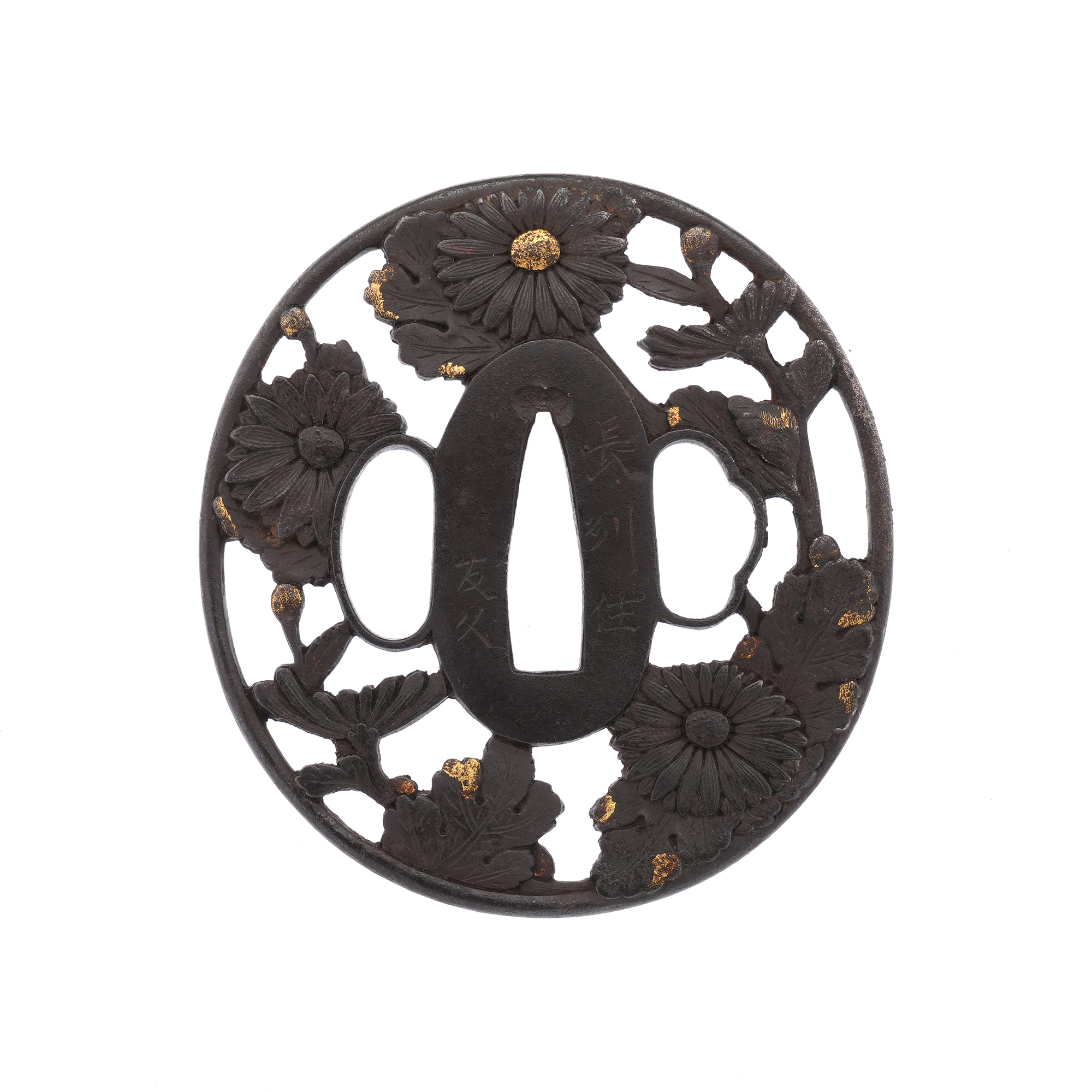
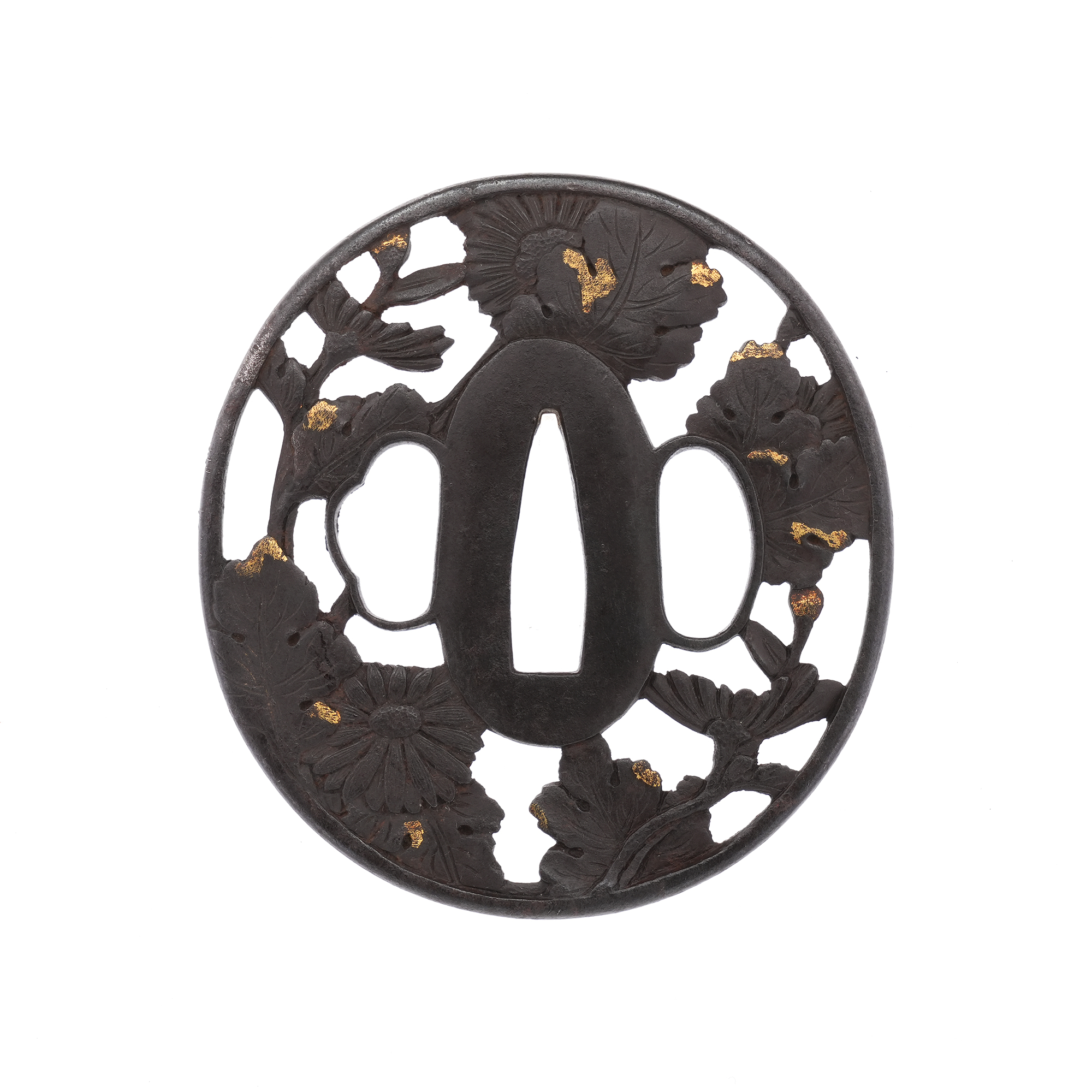
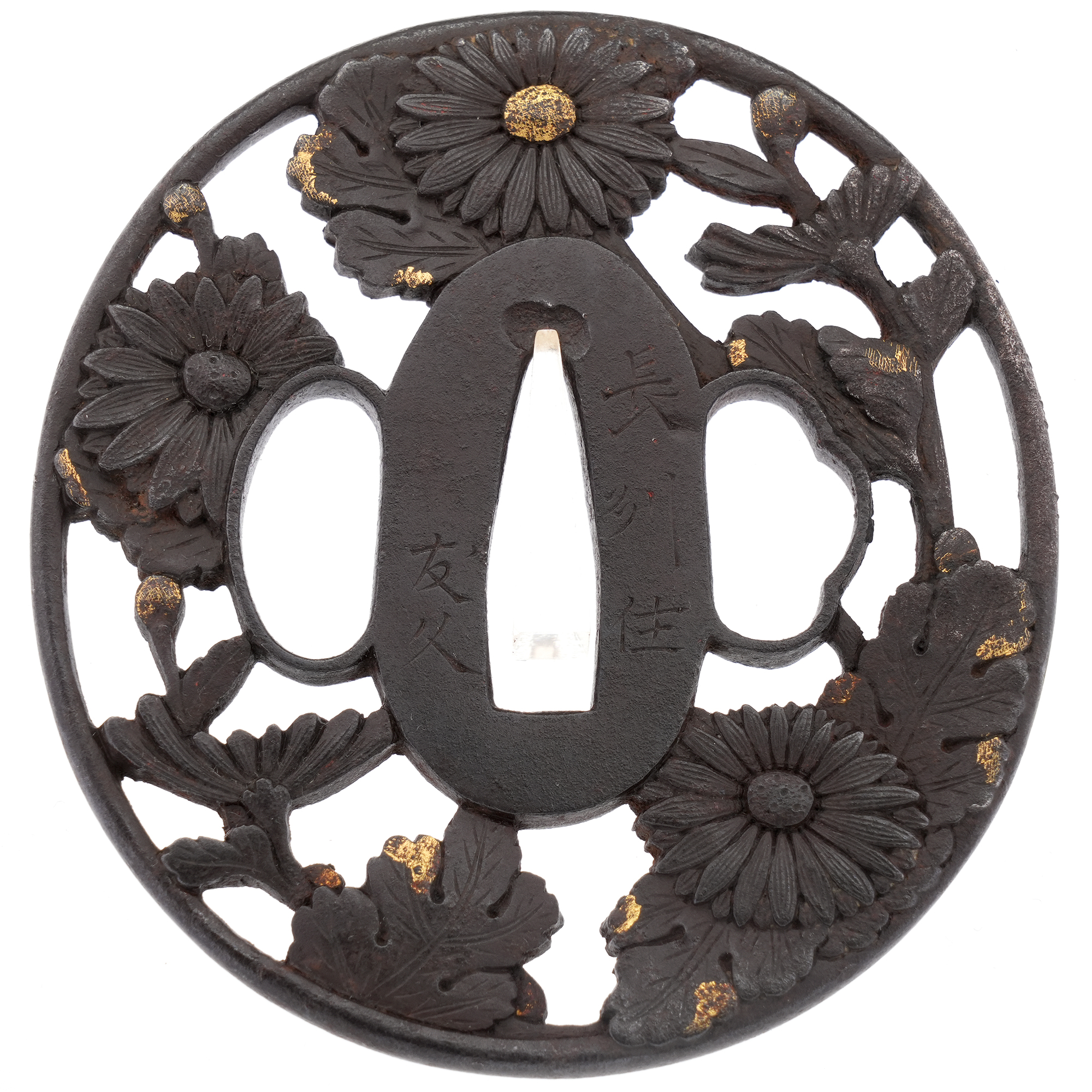
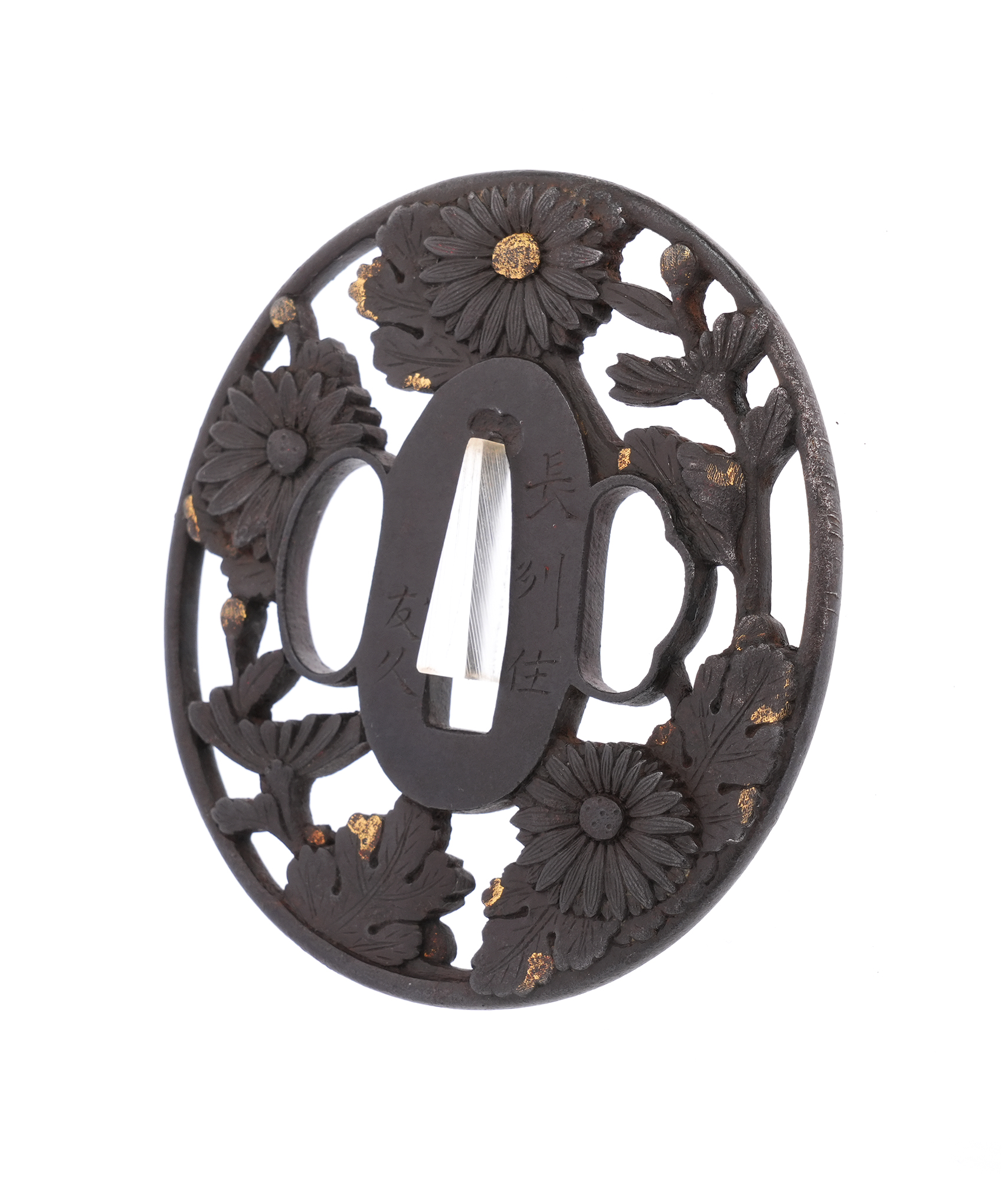
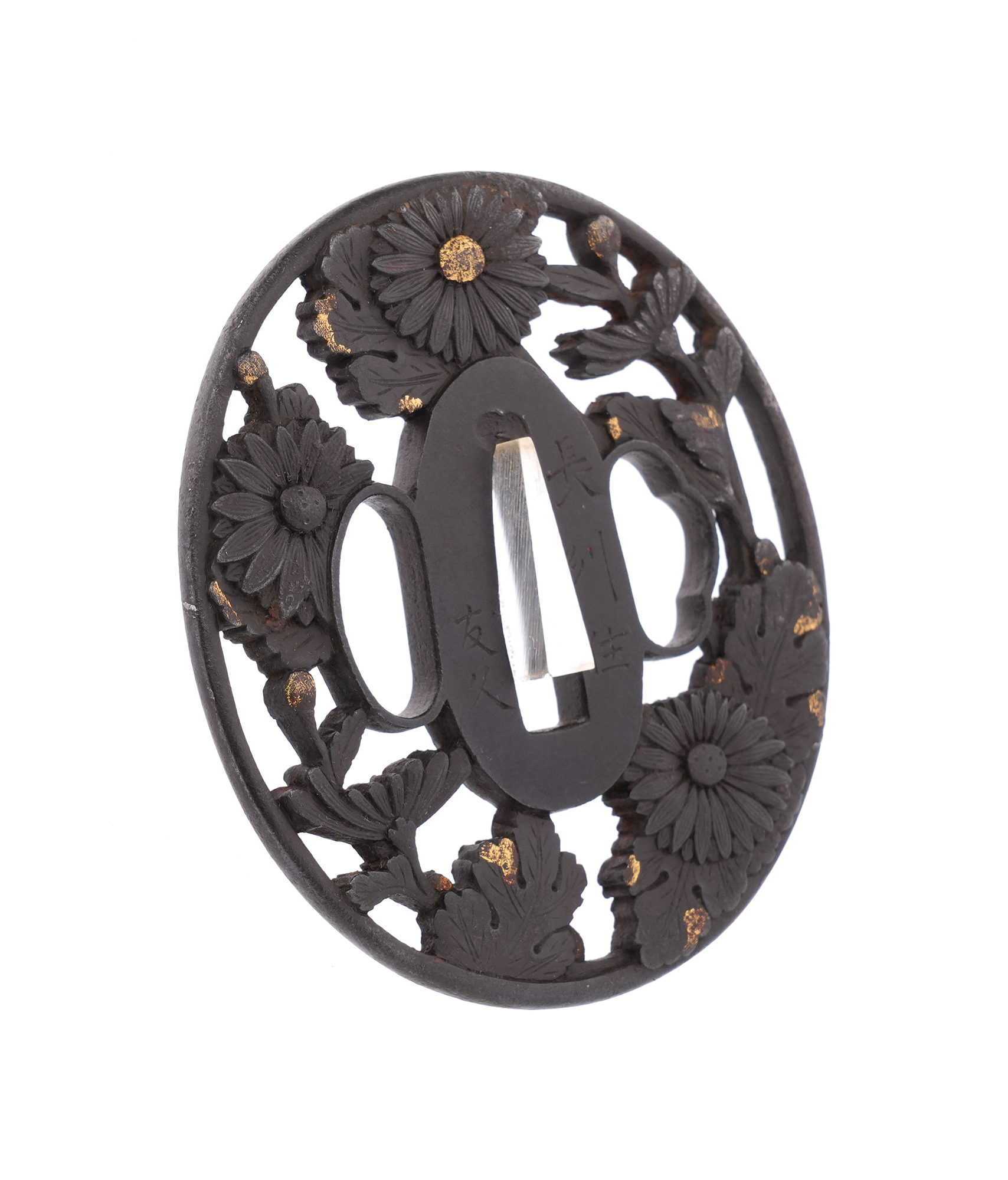
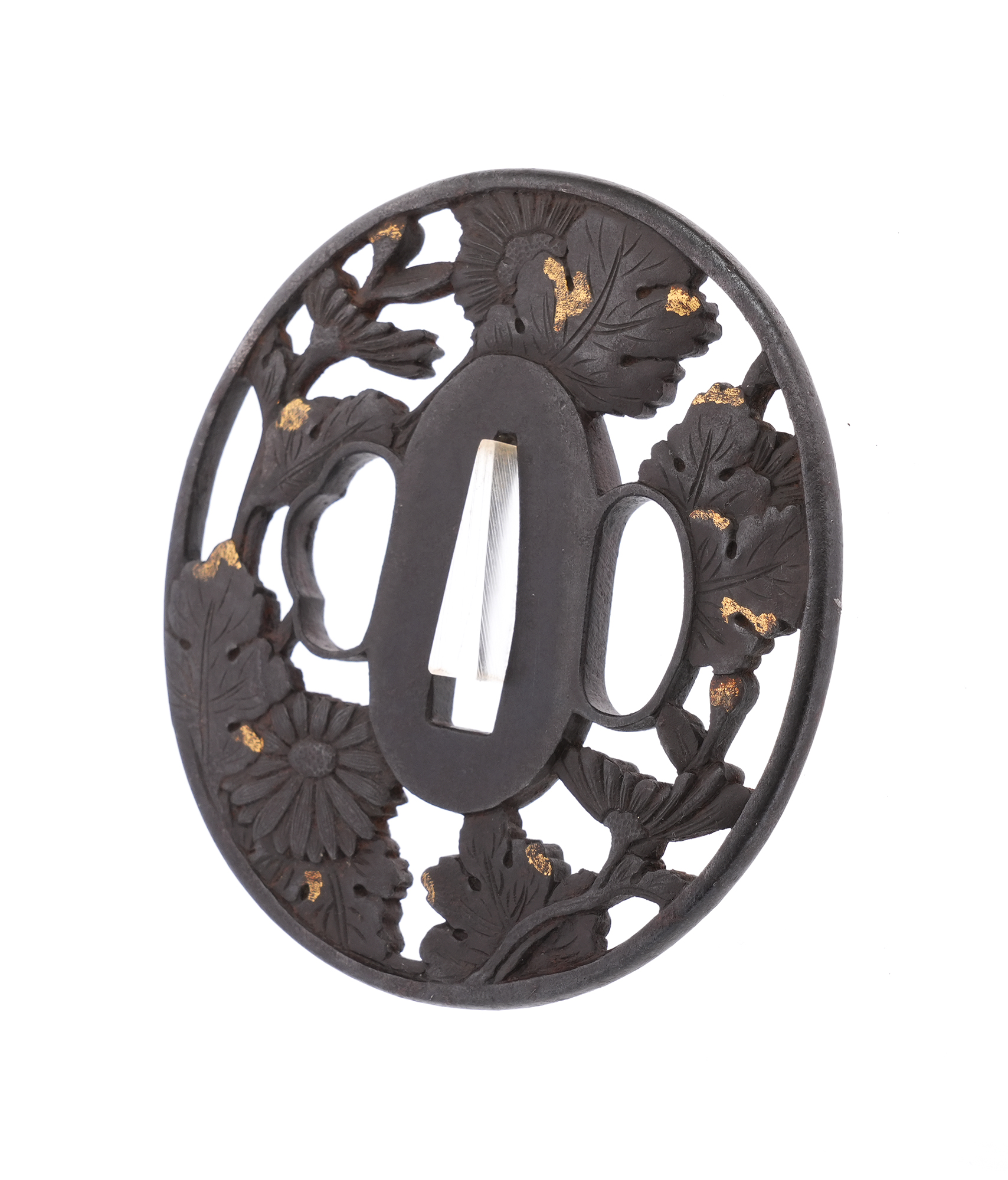
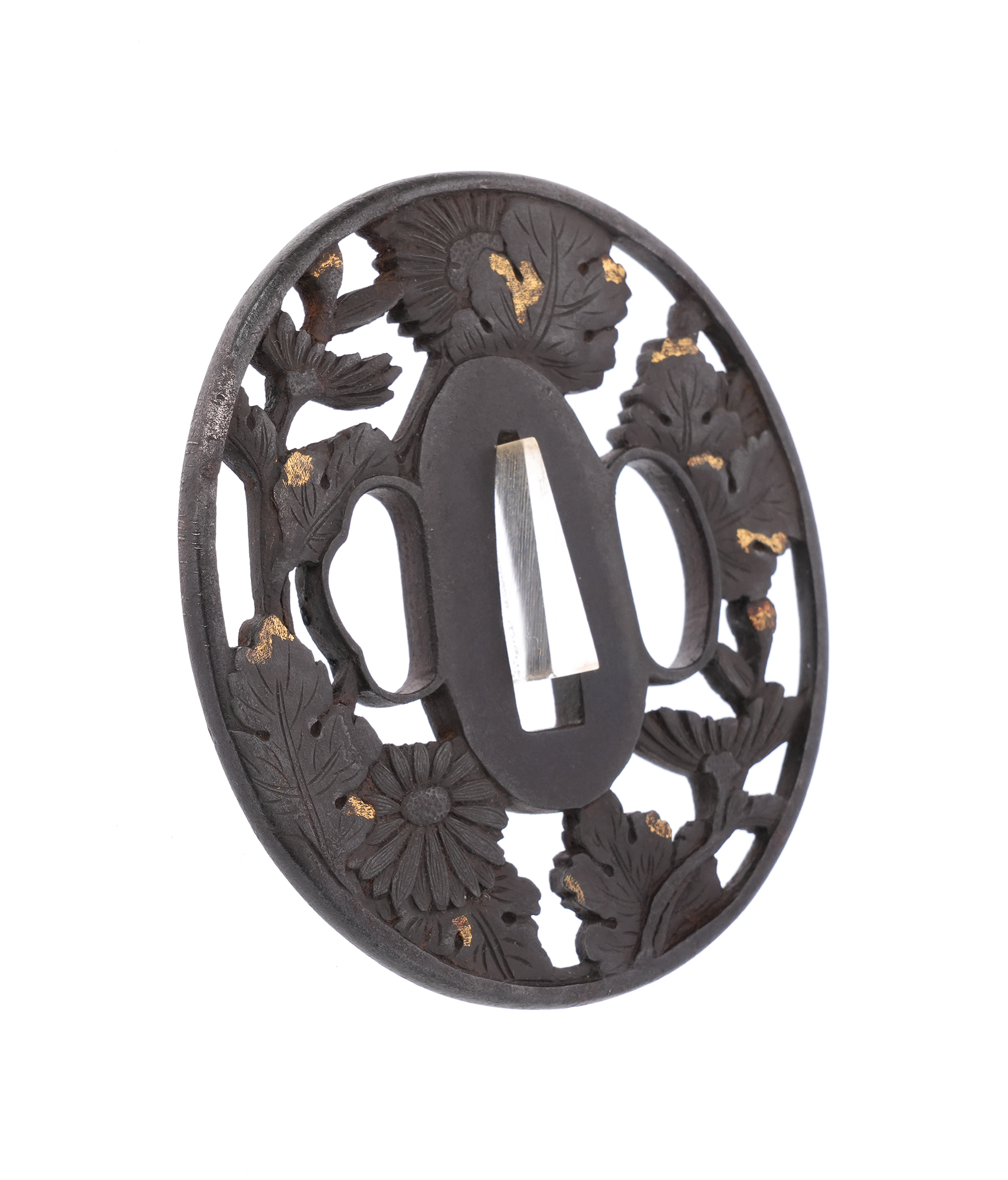
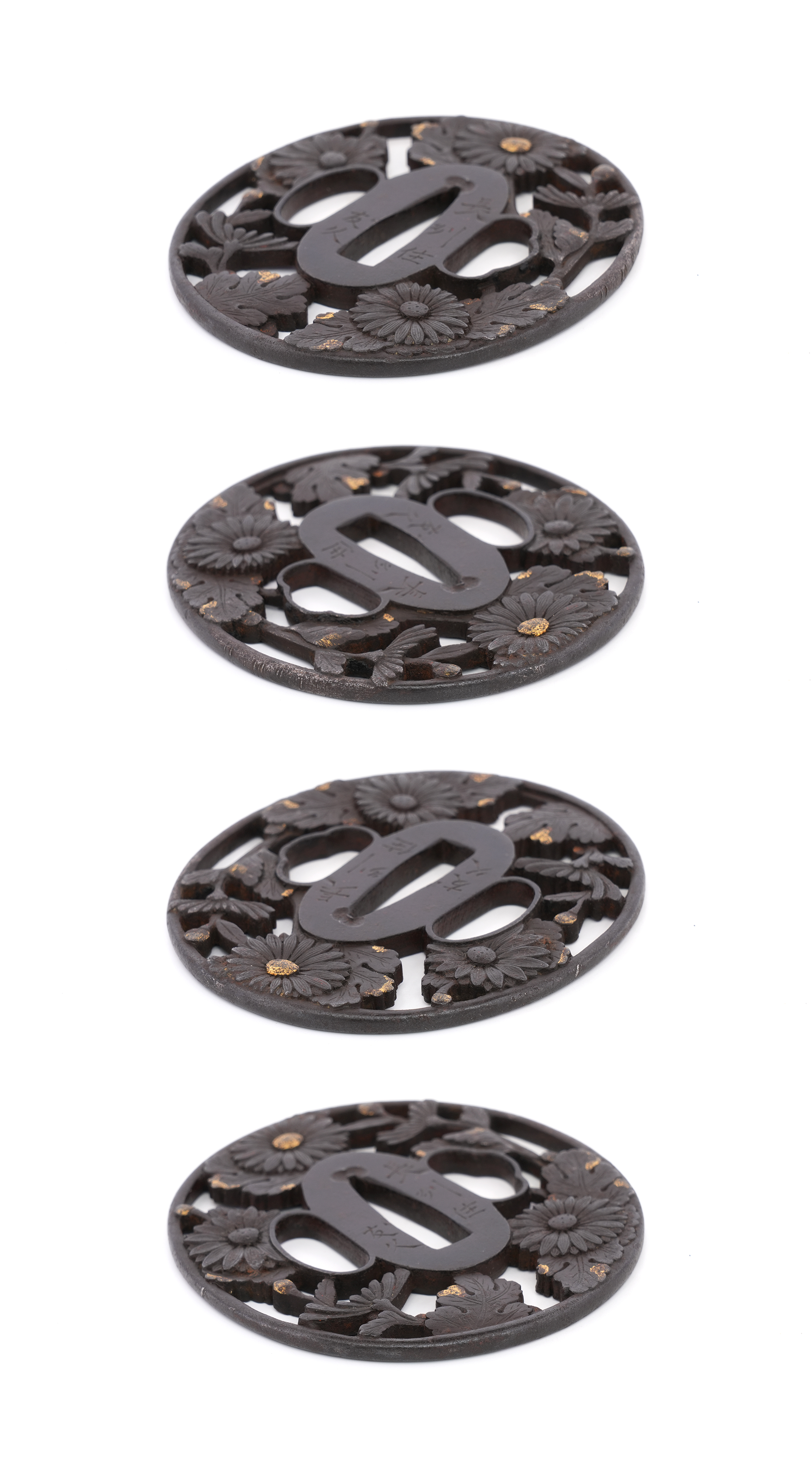
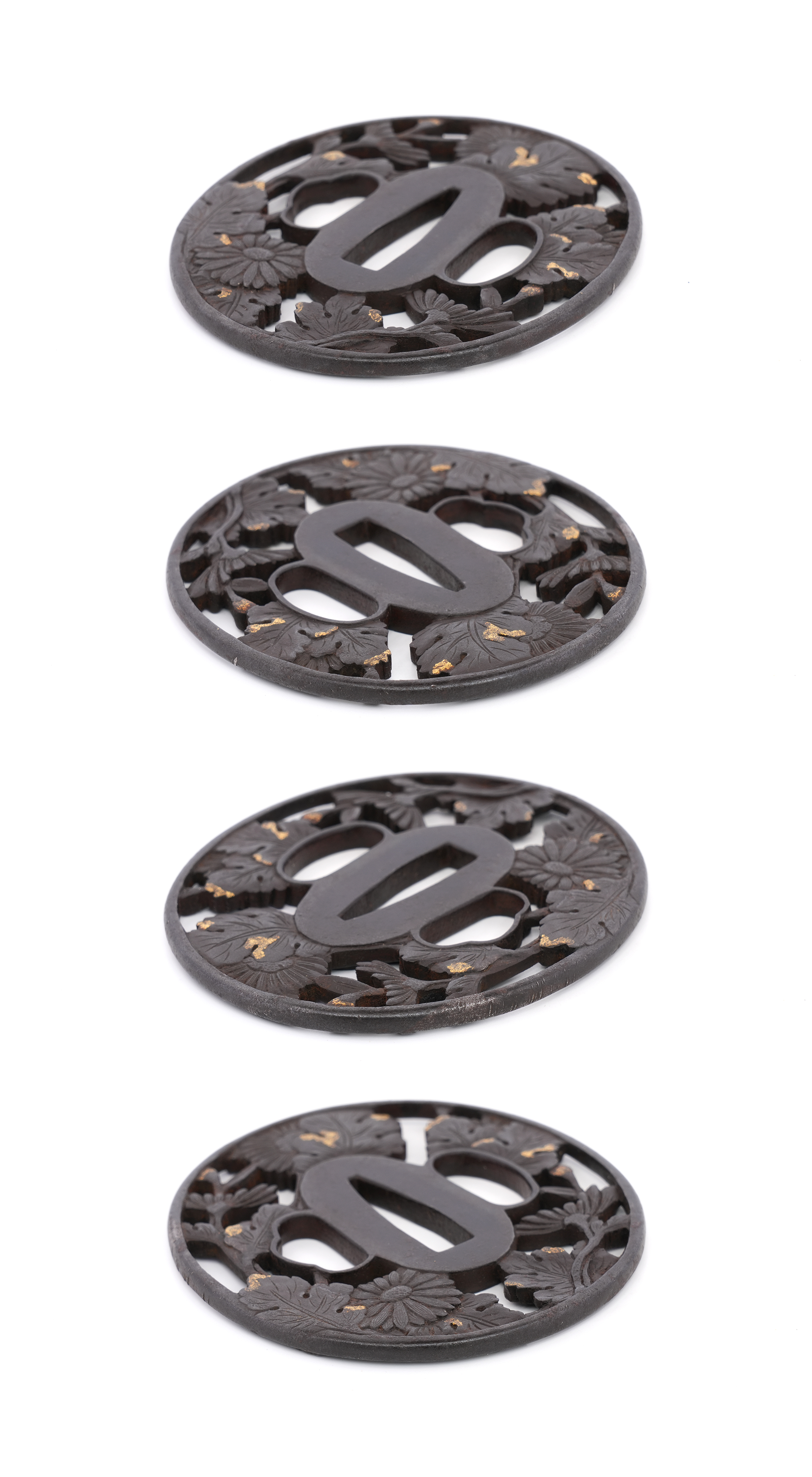
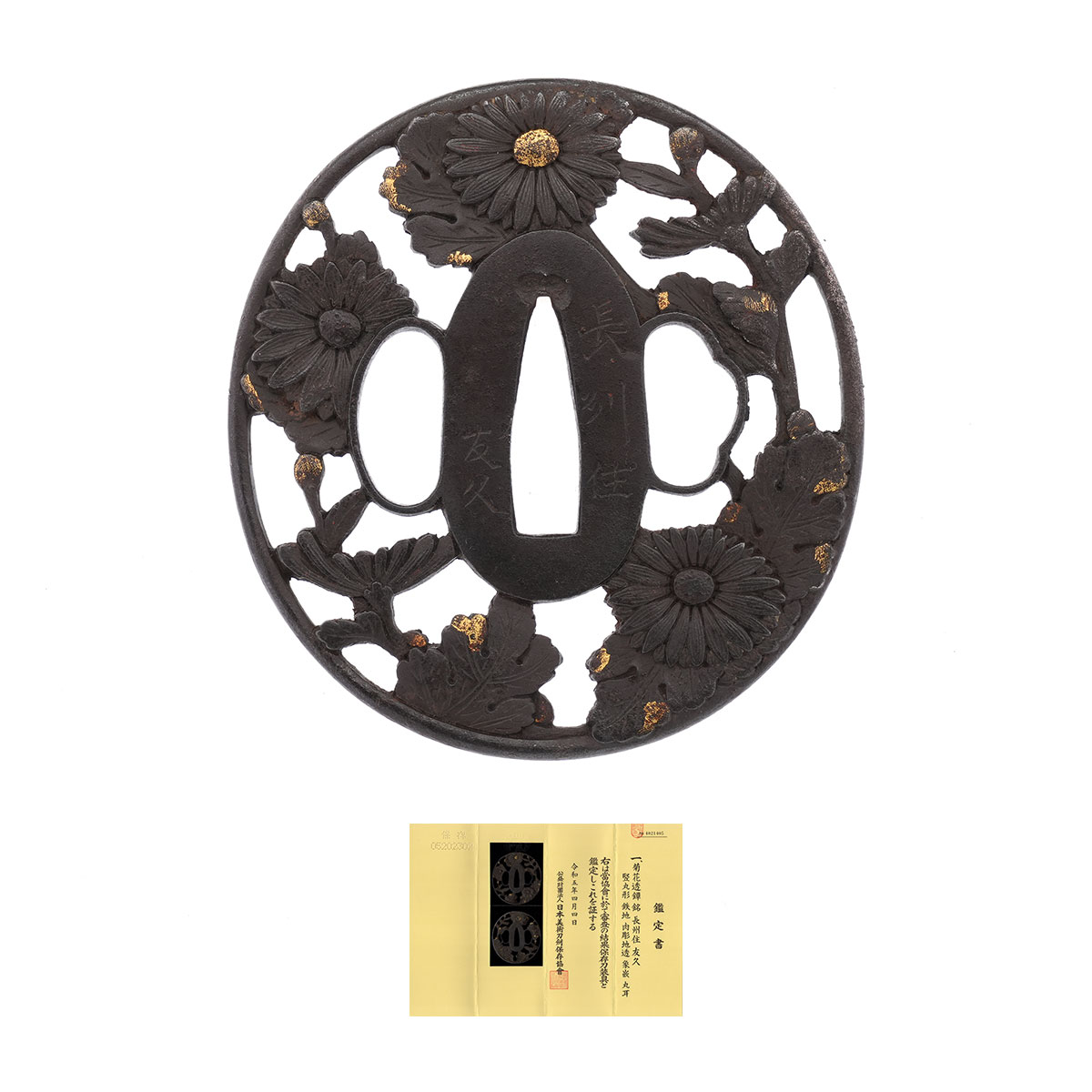
As written by the shop
Machine translation from the shop's Japanese · may contain errors ·
Nagato
5 pieces on the market now
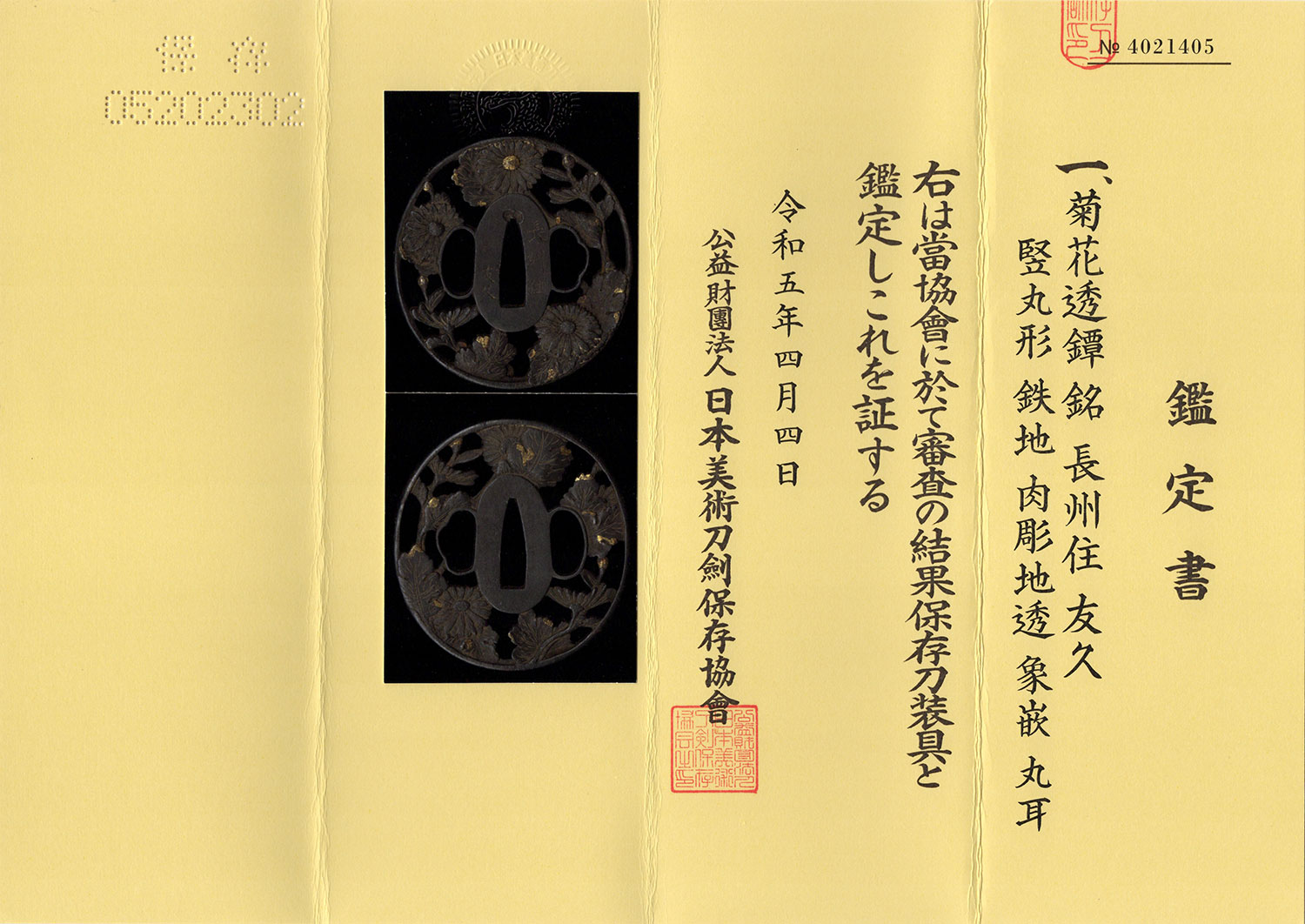
Certifies a genuine fitting worth preserving: a correct signature, or, if unsigned, an identifiable era and school, with recognized artistic and craft value.
The NBTHK (Nihon Bijutsu Tōken Hozon Kyōkai, the Society for the Preservation of Japanese Art Swords) is a public-interest incorporated foundation founded in 1948 and supervised by Japan’s Agency for Cultural Affairs (Bunkachō); it is based at the Japanese Sword Museum in Tokyo. Its expert panels physically examine each submitted work (shinsa) and issue a certificate (kanteishō) ranking it by artistic and historical merit. NBTHK papers are the most widely recognized standard of authentication for Japanese swords and fittings.
NBTHK official siteAs a rule we do not accept returns, except when we have sent a different item from the one ordered or when there is a significant discrepancy between the description and the item. If you wish to return an item, please contact us within 3 days of its arrival and then send it back.
¥275,000