 NihontoWatchNihontoWatch
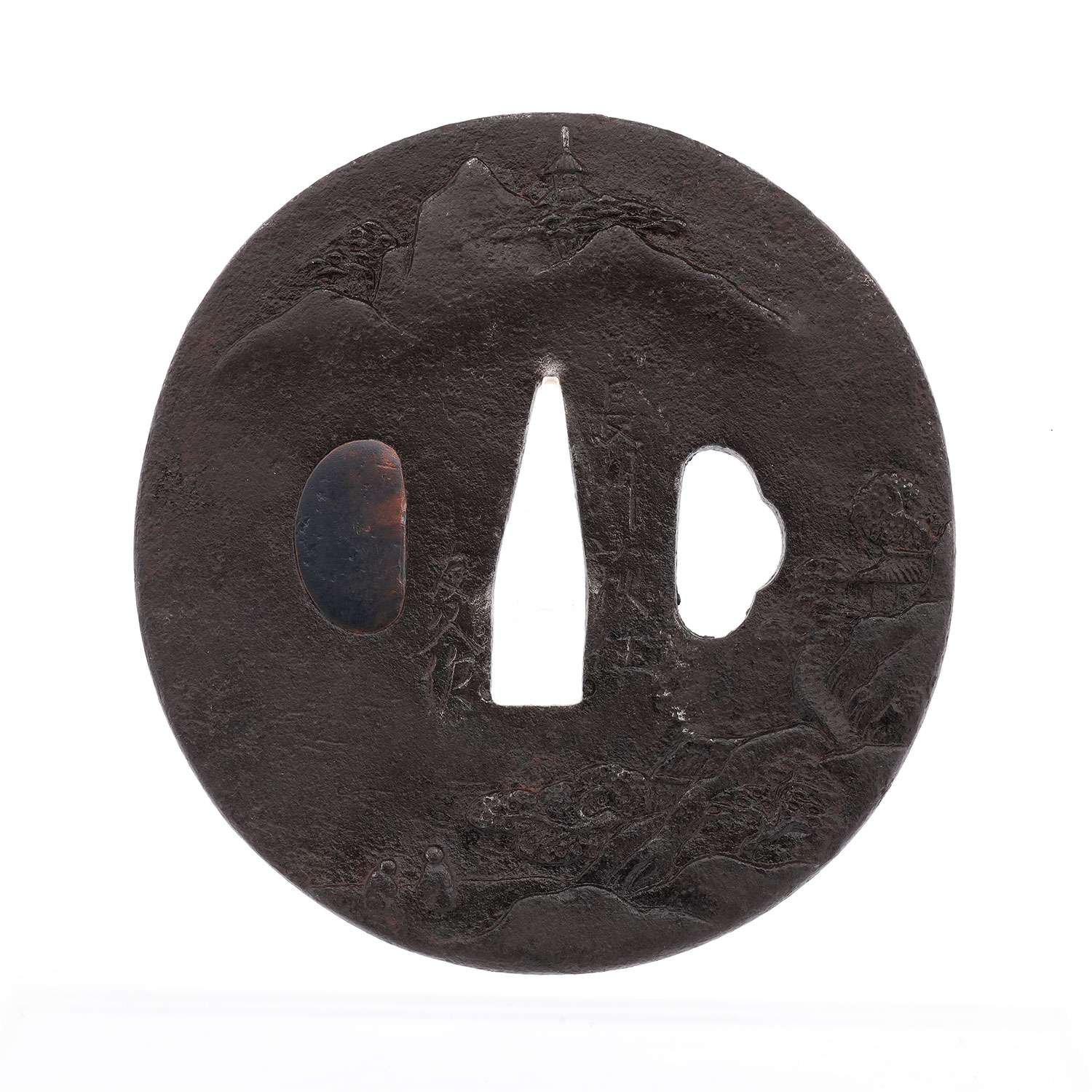
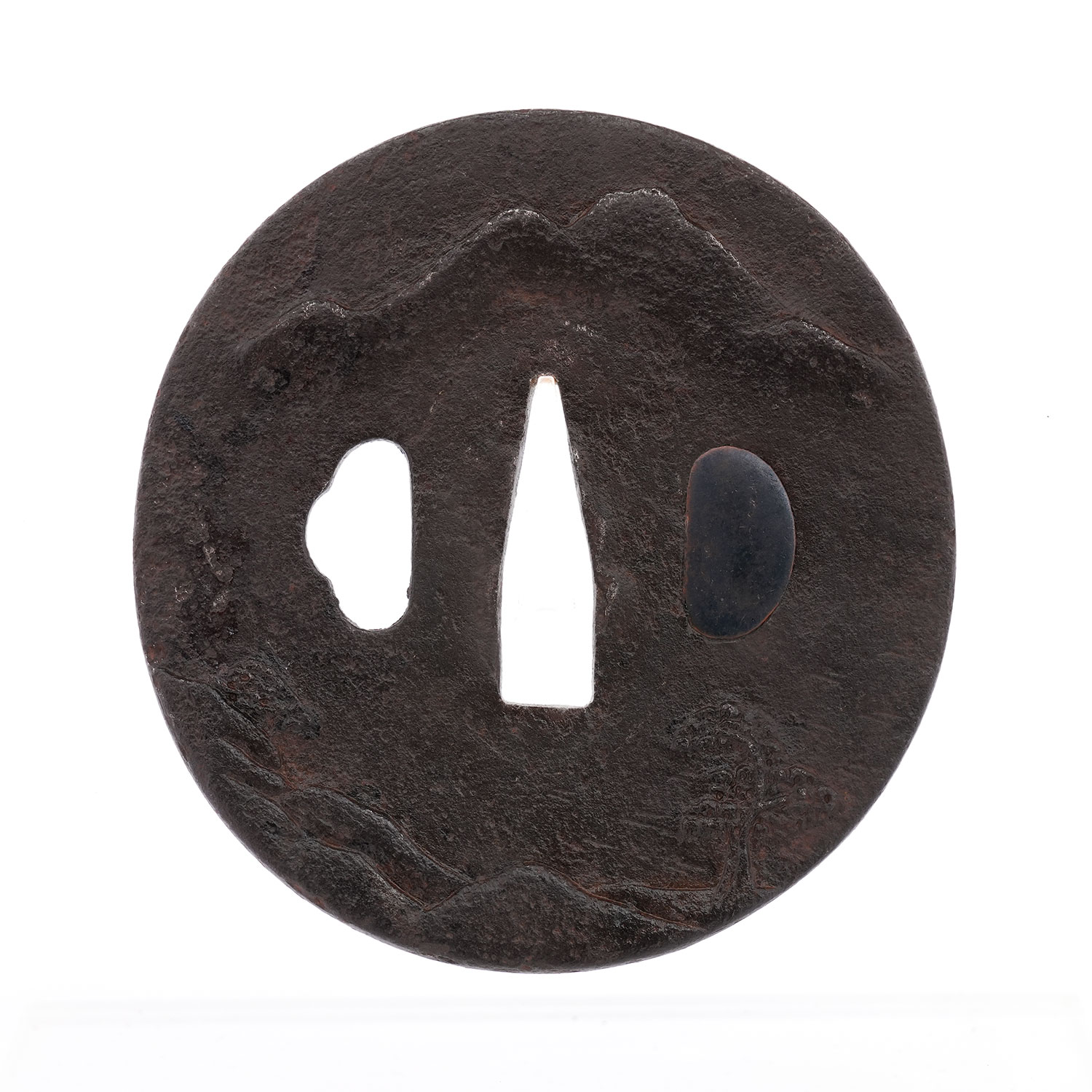
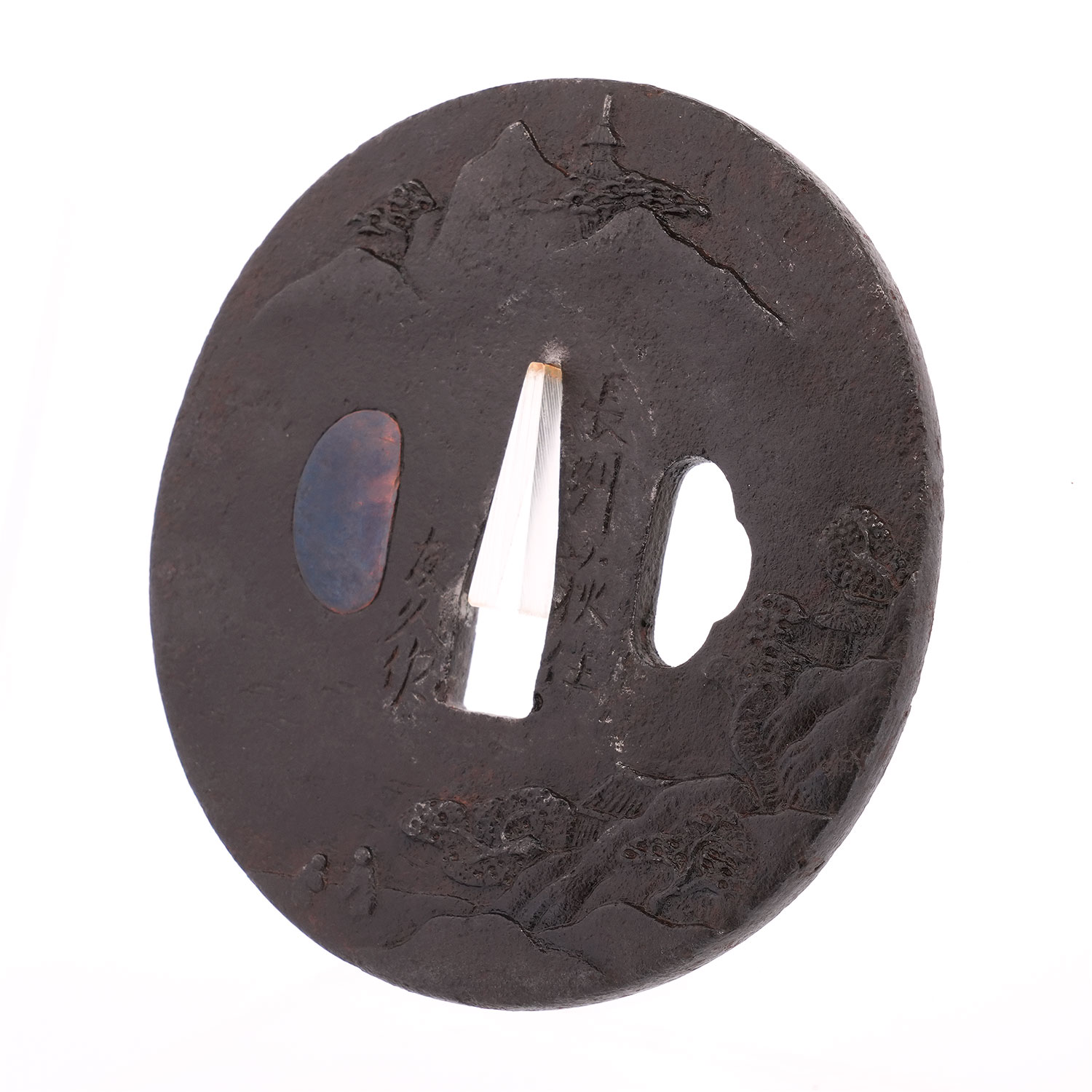
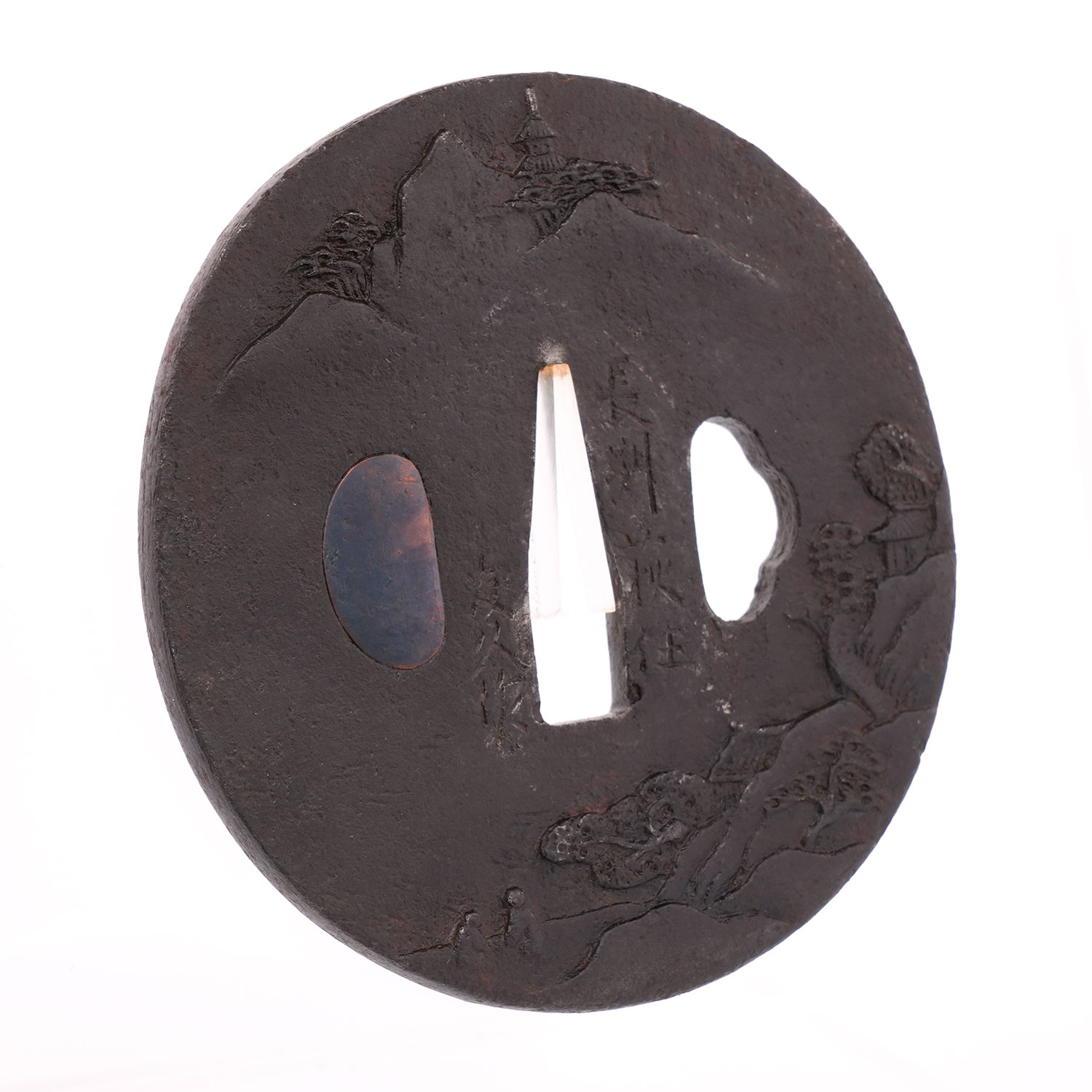
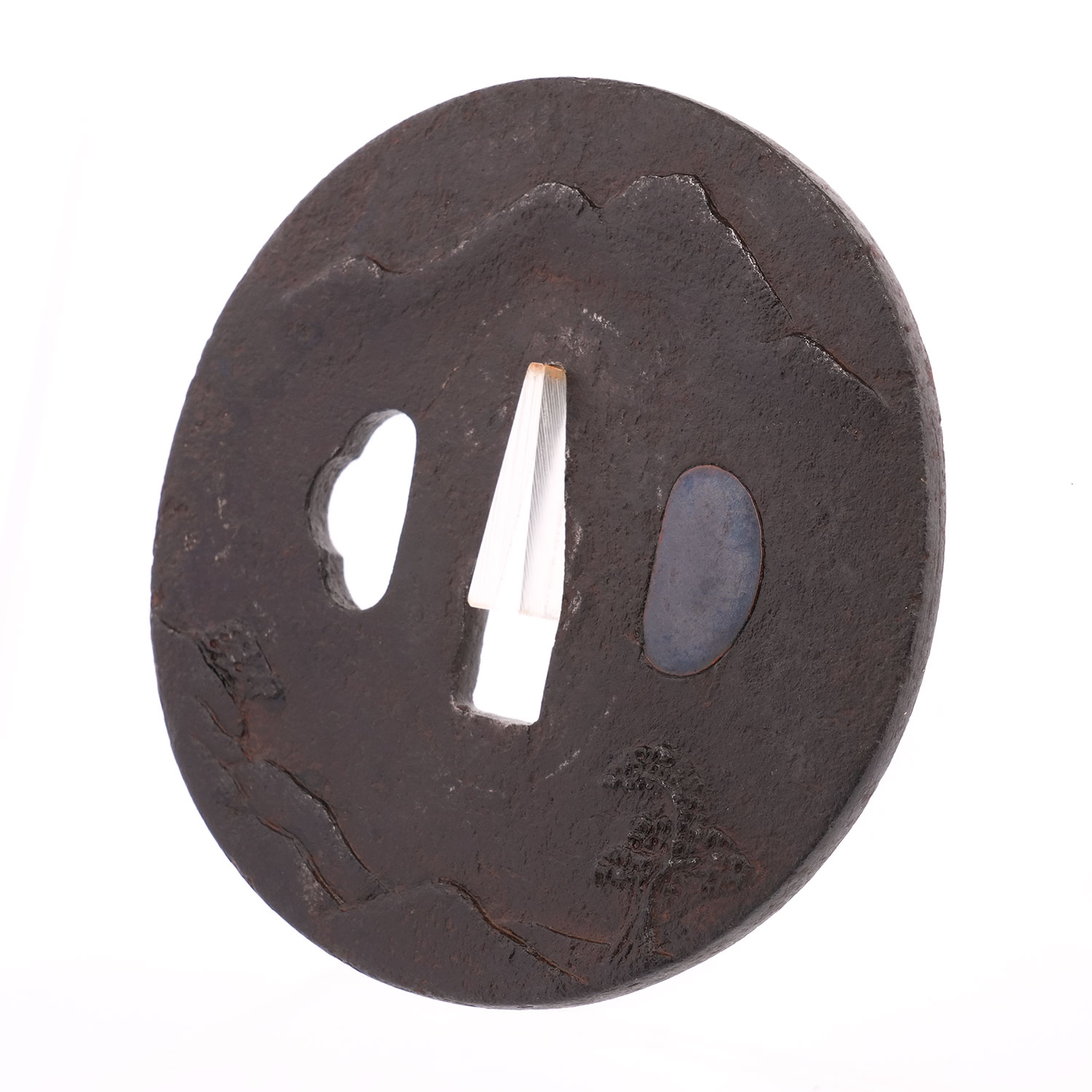
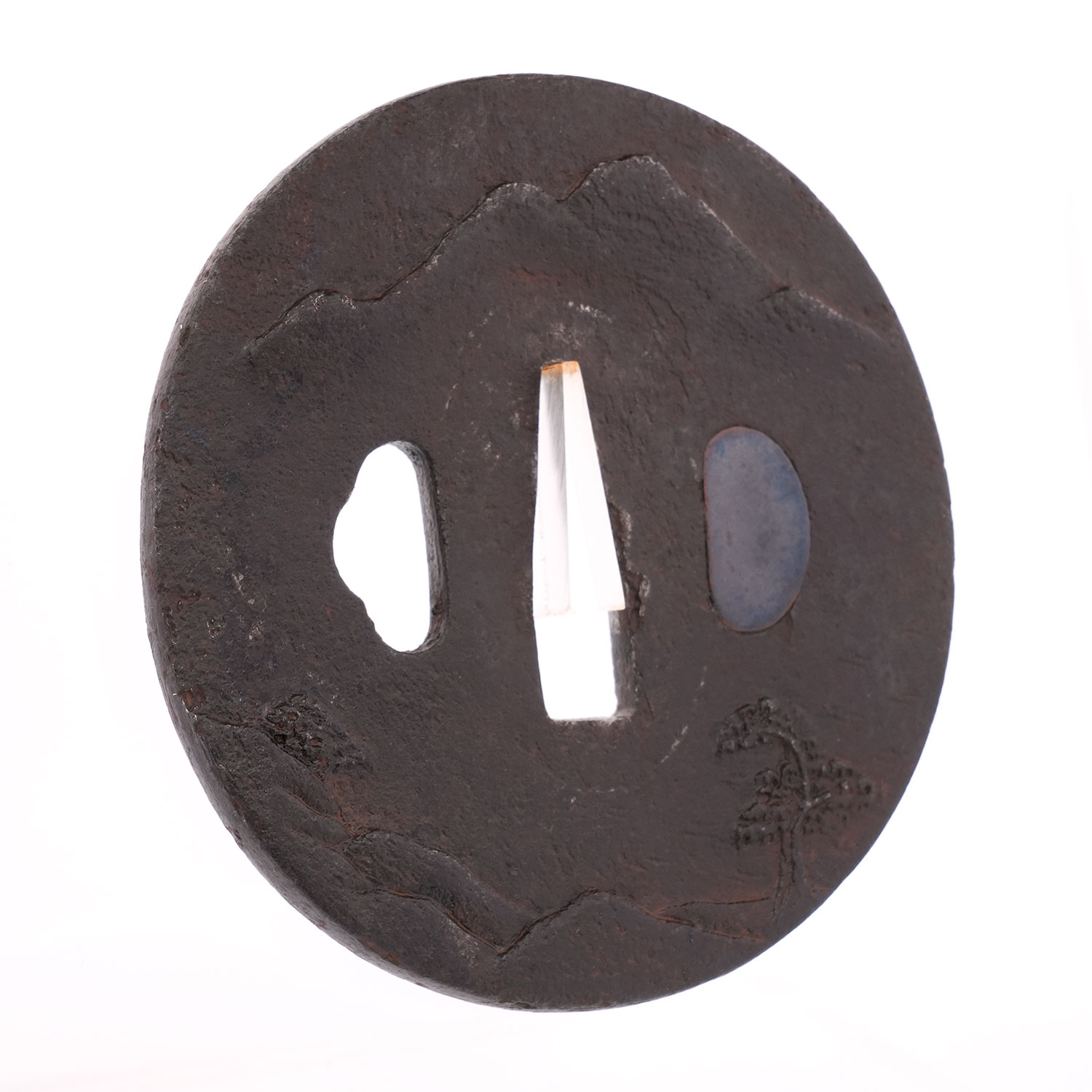
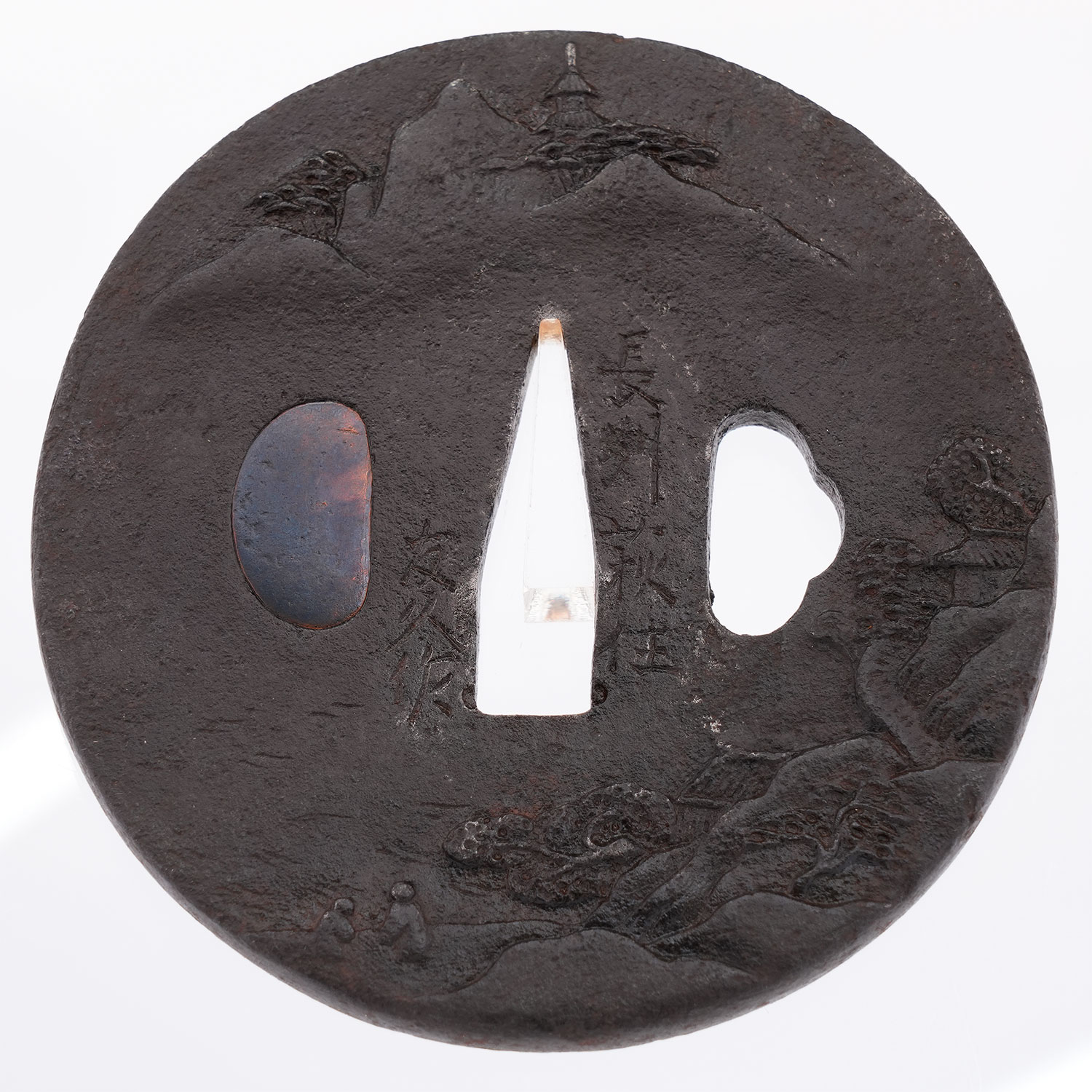
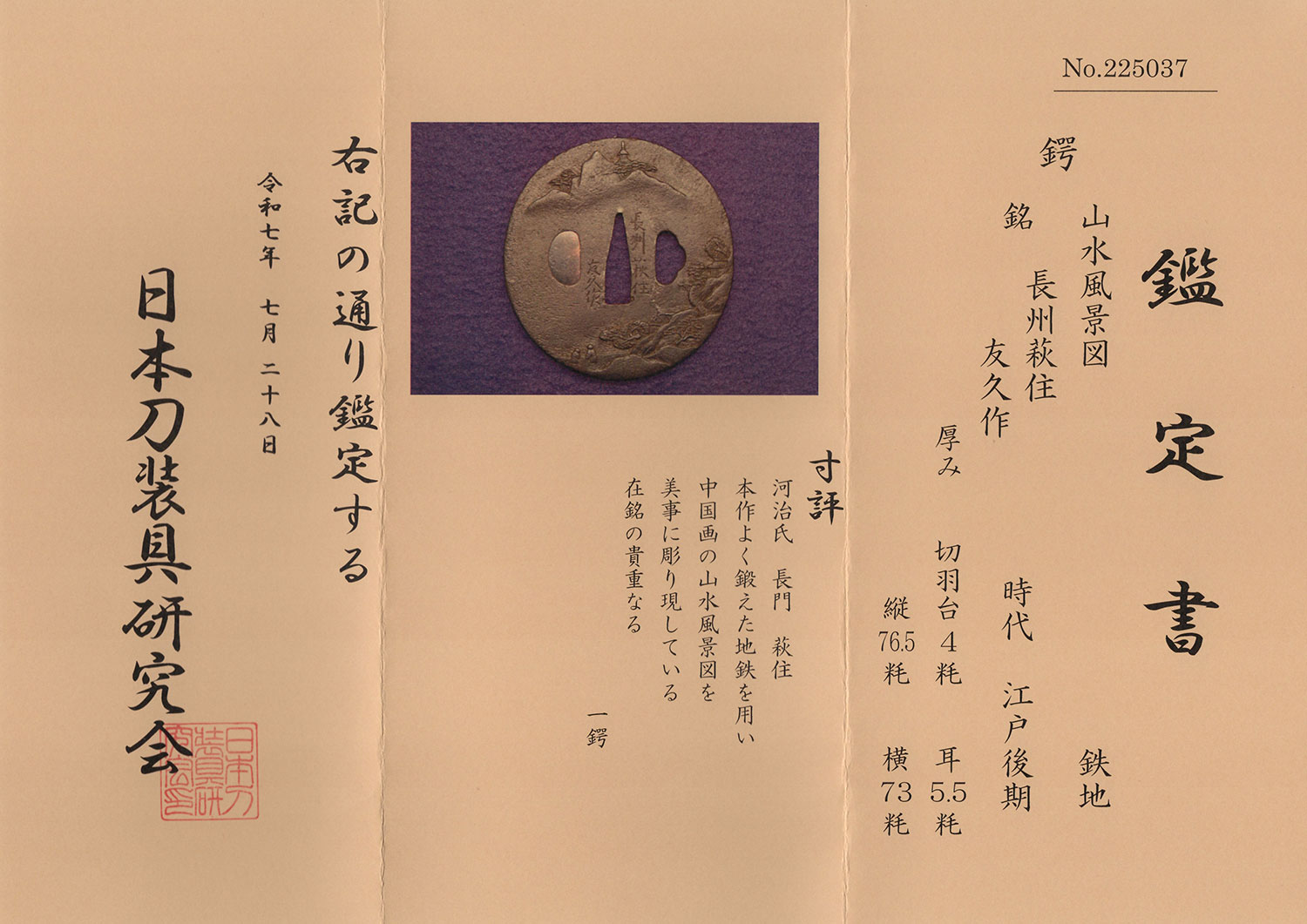
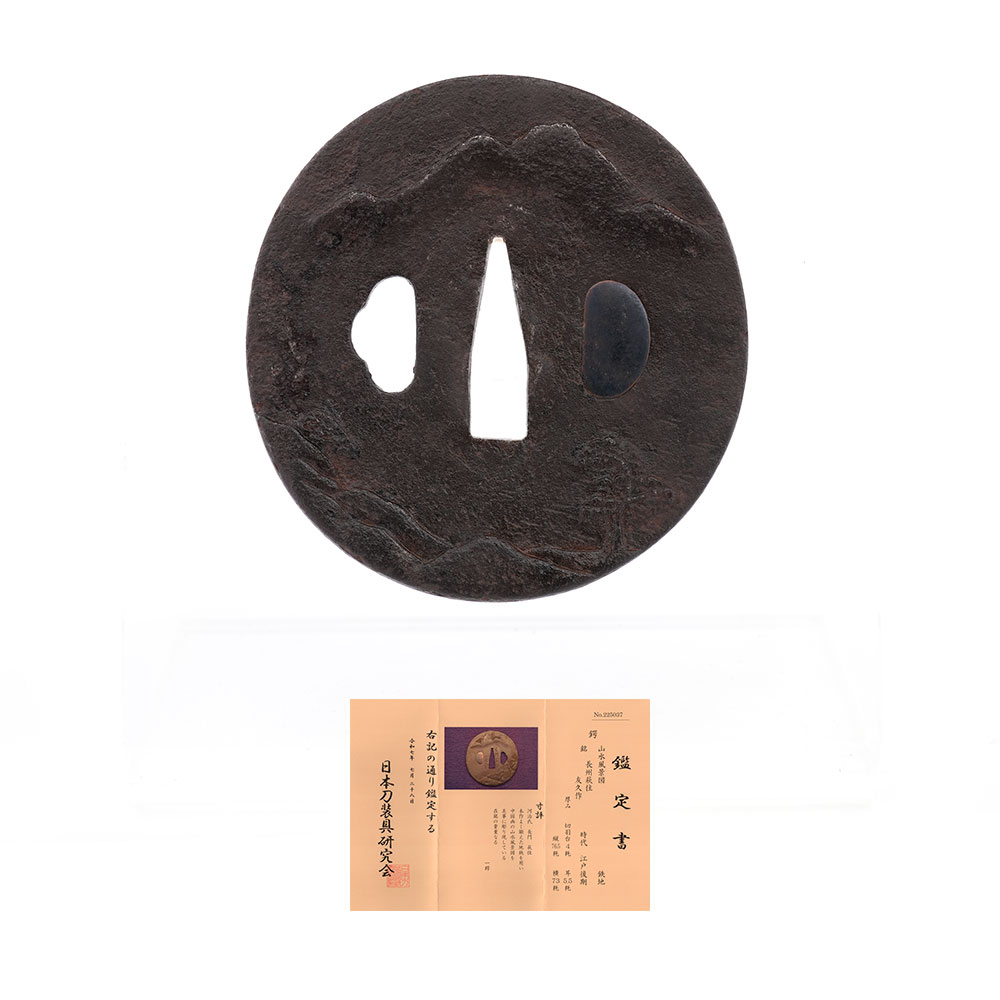
The Choshu han actively encouraged the production of tsuba in order to export them to other domains and secure financial resources for the han; as a result, Choshu became a place with so many tsubako and works that it was said to be "Choshu in the West" against "Aizu in the East." The style of Choshu tsuba is so diverse that it cannot be generalized, and there are few schools with a single characteristic style, though families such as Kawaji, Nakai, Okamoto, Okada, Kaneko, Nakahara, Fujii, Inoue, and Yaji are relatively famous. Furthermore, many sansui-zu are seen among Choshu tsuba, the source of which lies with the Muromachi period master painter Sesshu; having studied suiboku-ga in Ming China under the patronage of the Shugo Daimyo Ouchi clan who ruled Suo, Nagato, Chikuzen, Buzen, and Hizen, Sesshu settled at the Unkoku-an in Tenka, Yamaguchi upon his return and painted masterpieces including the "Sansui Chokan." That painting style was inherited by Hara Jibei Naoharu (later Unkoku Togan), who was ordered to revive the Sesshu school by the preeminent daimyo of the western provinces, Mori Terumoto, and continued as the Unkoku school until the Bakumatsu. This tsuba features a sansui landscape reminiscent of Chinese paintings masterfully carved into a well-forged tetsu-ji; the expression, which condenses grand nature and a sense of tranquility into a single tsuba, is truly a realm of yugen. The more one gazes at it, the more new scenes emerge, as if being invited into the world of a painting. If fitted to a koshirae, it will further enhance the dignity of the owner, and as a piece for appreciation, it is a work that one will never tire of.
NihontoWatchOffered by Toushin
Its photos show a certificate that isn’t in our records yet. Papers can come from different bodies (the NBTHK, the NTHK and smaller societies), and only current NBTHK or NTHK shinsa papers are the independent check we rely on. Please ask the dealer which body issued them. — Hoshi
5 on the market

As written by the shop
Machine translation from the shop's Japanese · may contain errors ·
Nagato
5 pieces on the market now
We could not find an authenticity certificate on the seller’s listing. Japanese swords and fittings are normally papered by the NBTHK (or the NTHK). Without one, the attribution is the seller’s own assessment and has not been independently verified — treat it with caution and ask the dealer about certification before buying.
As a rule we do not accept returns, except when we have sent a different item from the one ordered or when there is a significant discrepancy between the description and the item. If you wish to return an item, please contact us within 3 days of its arrival and then send it back.
¥33,000