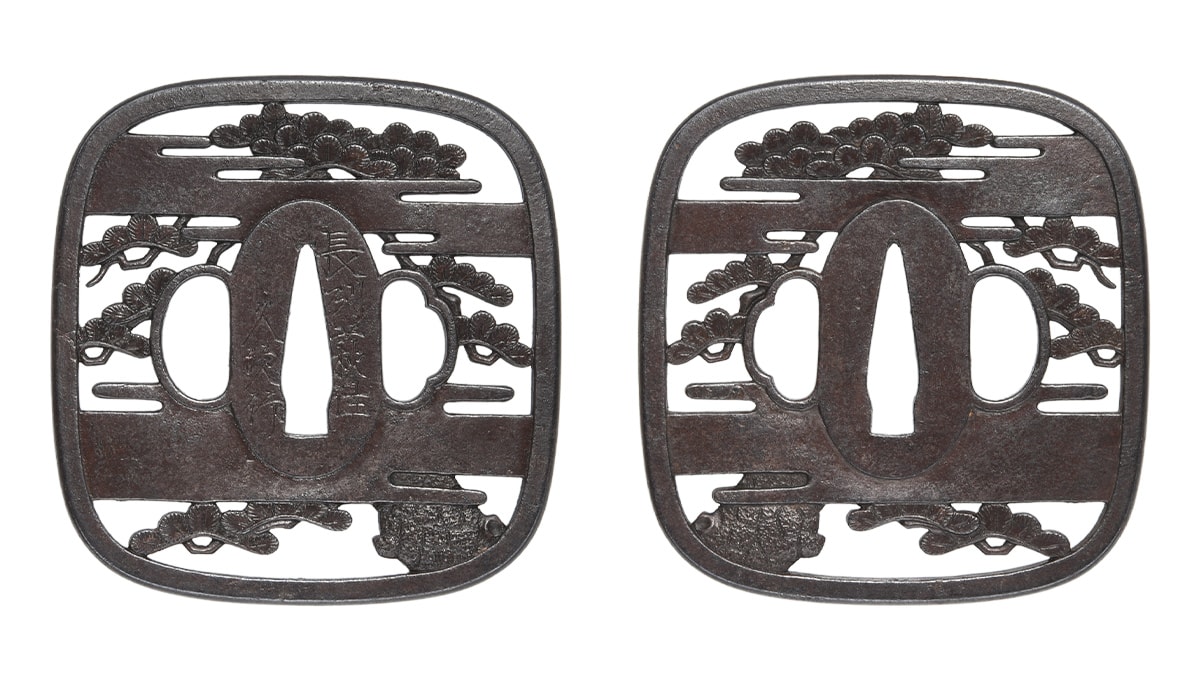
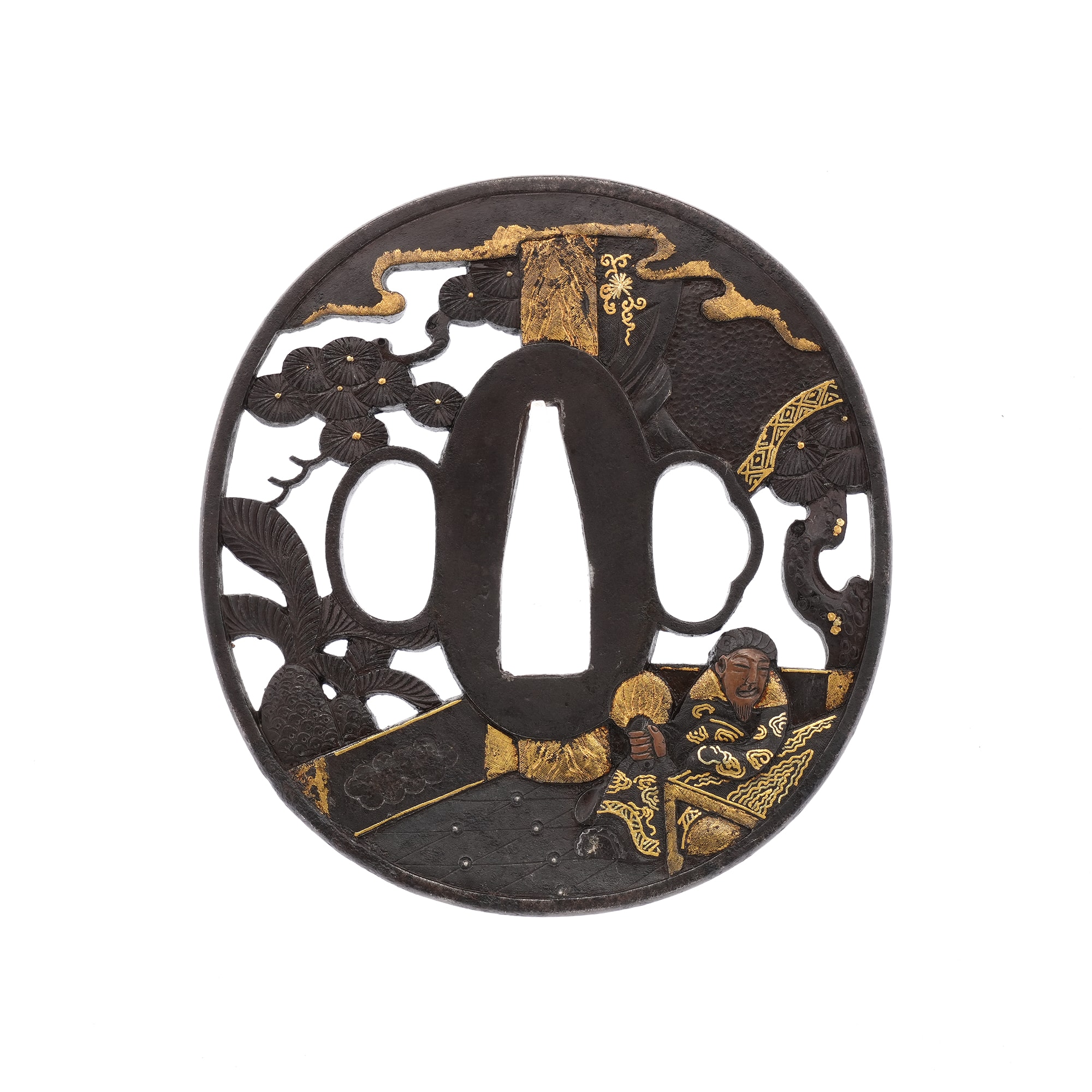
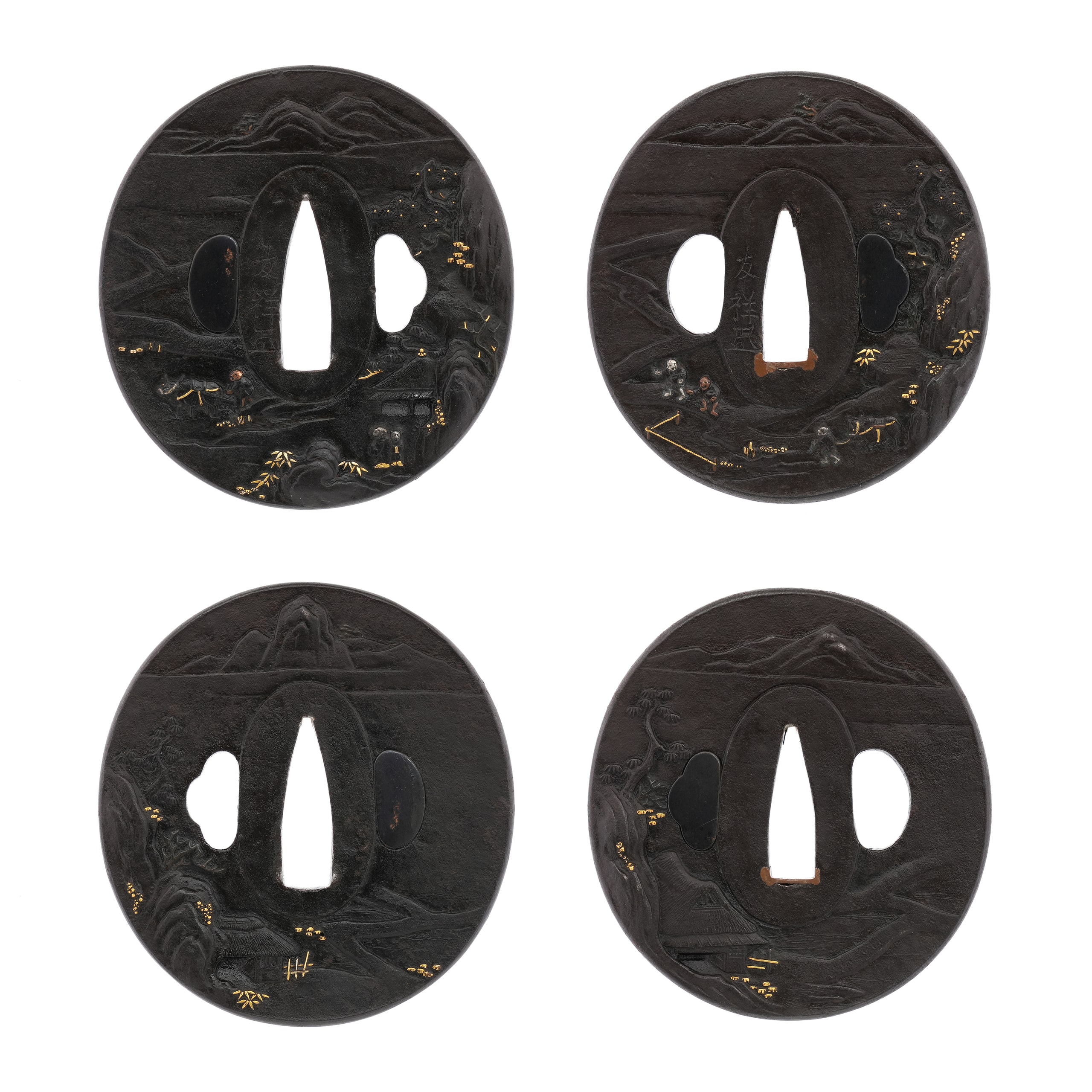
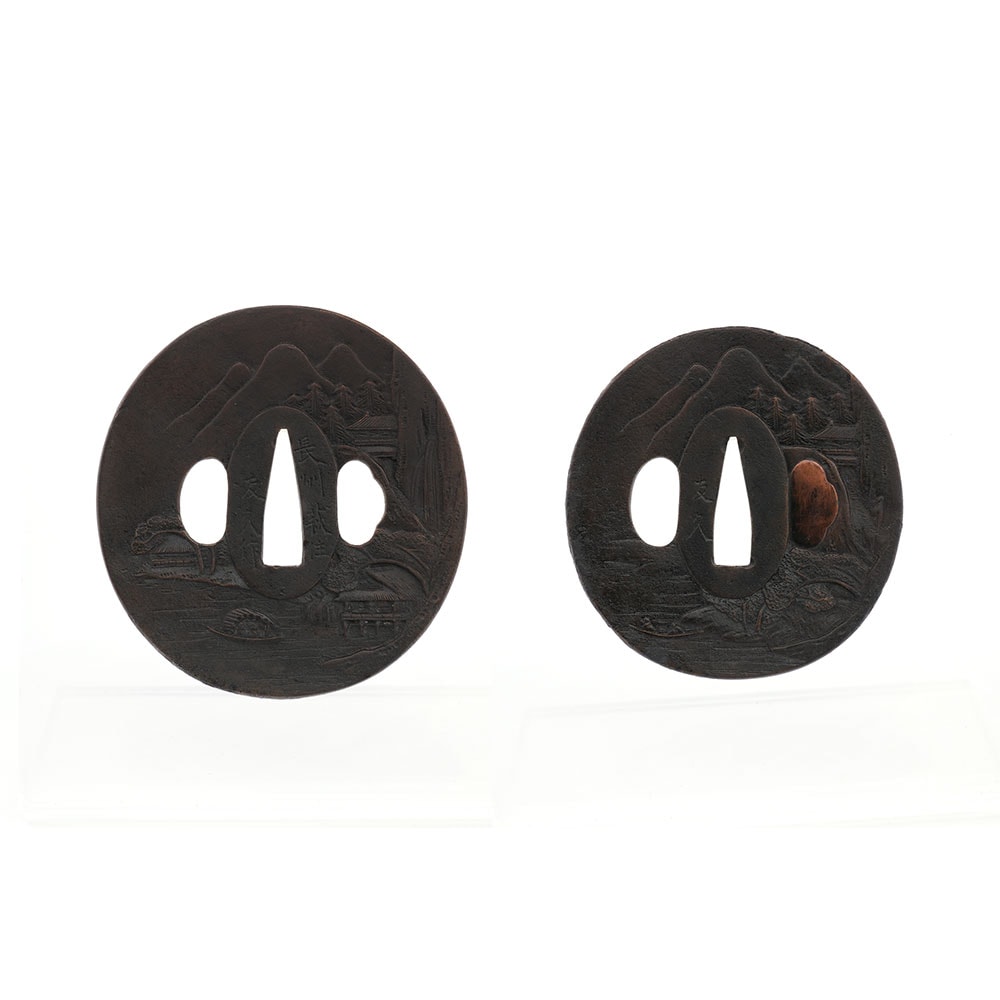
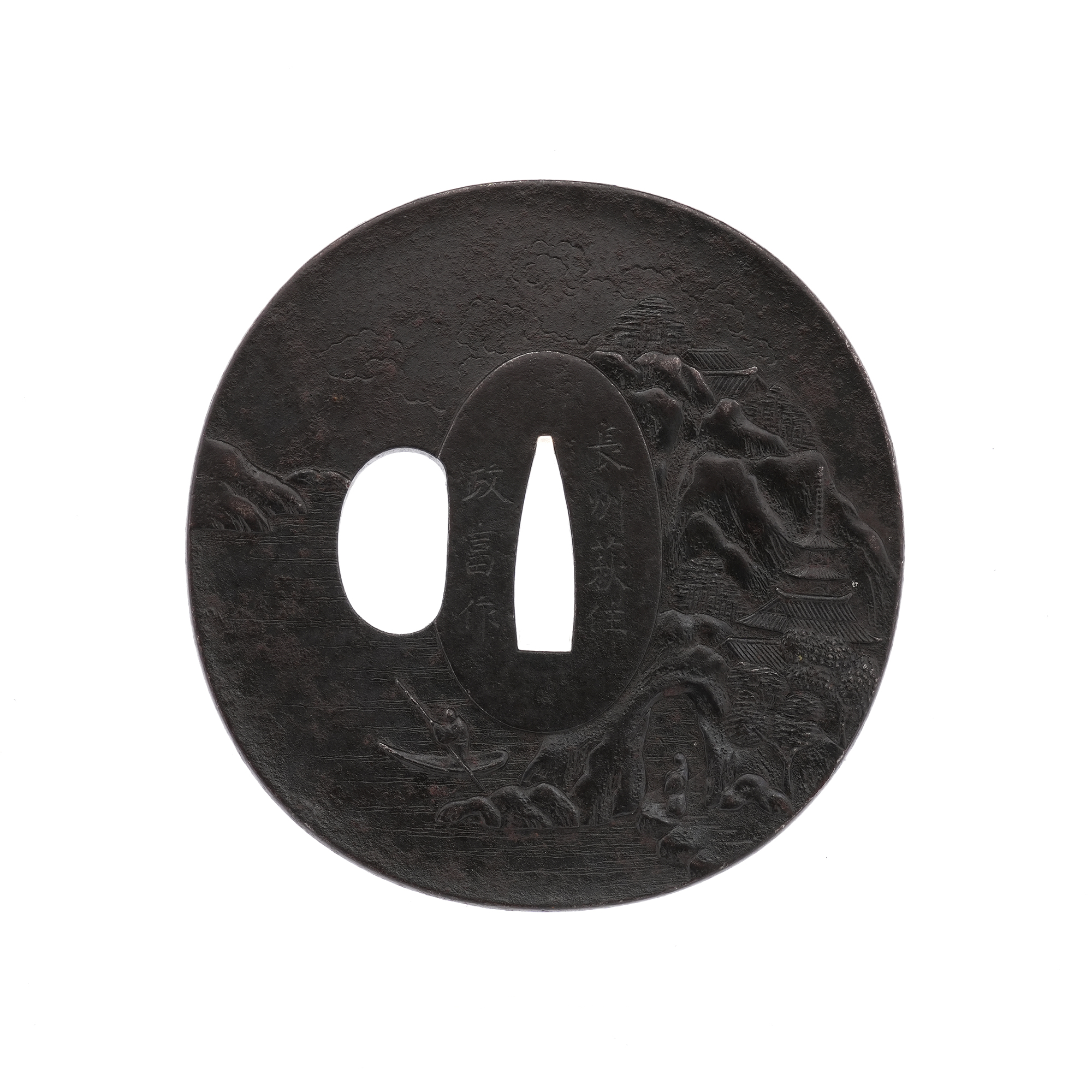
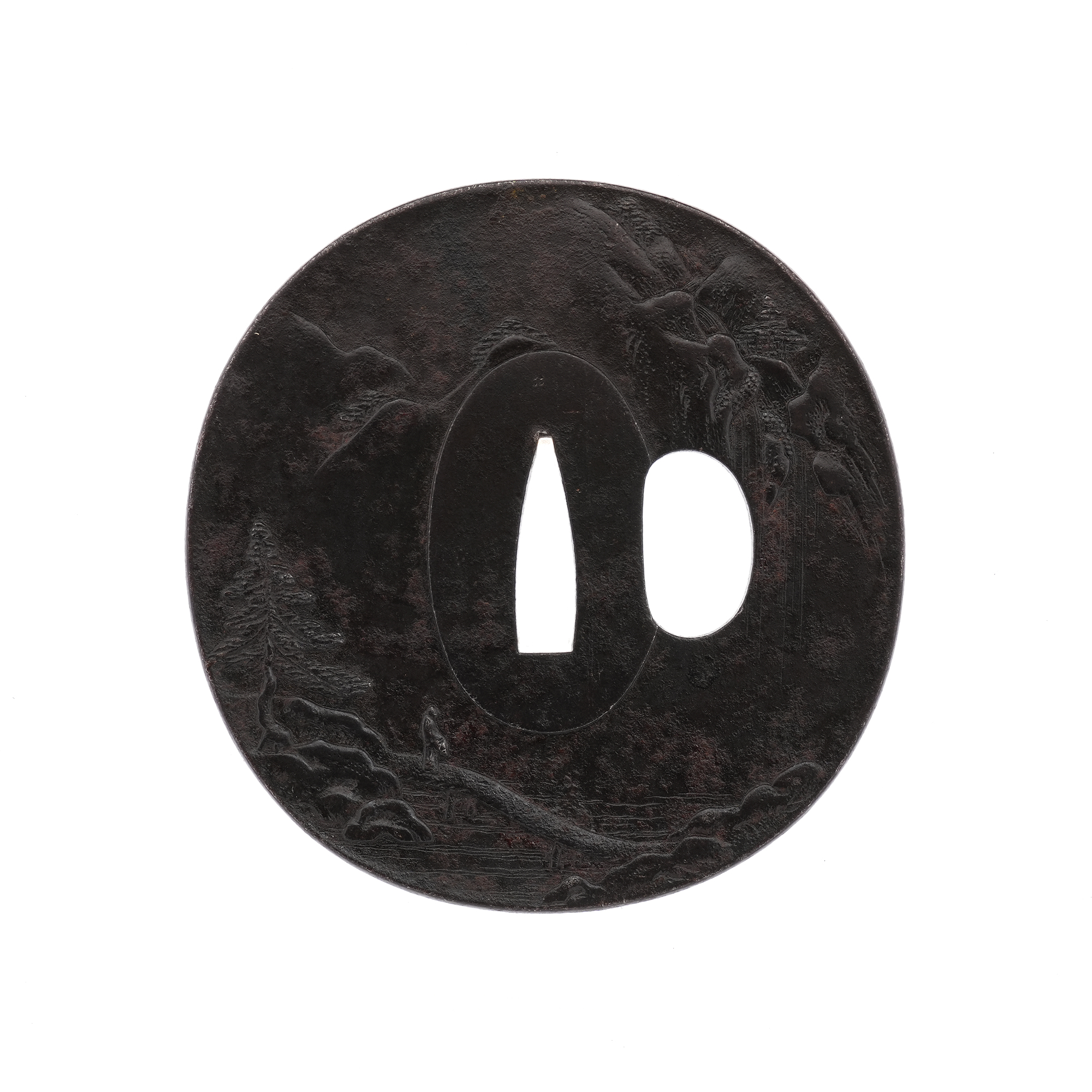
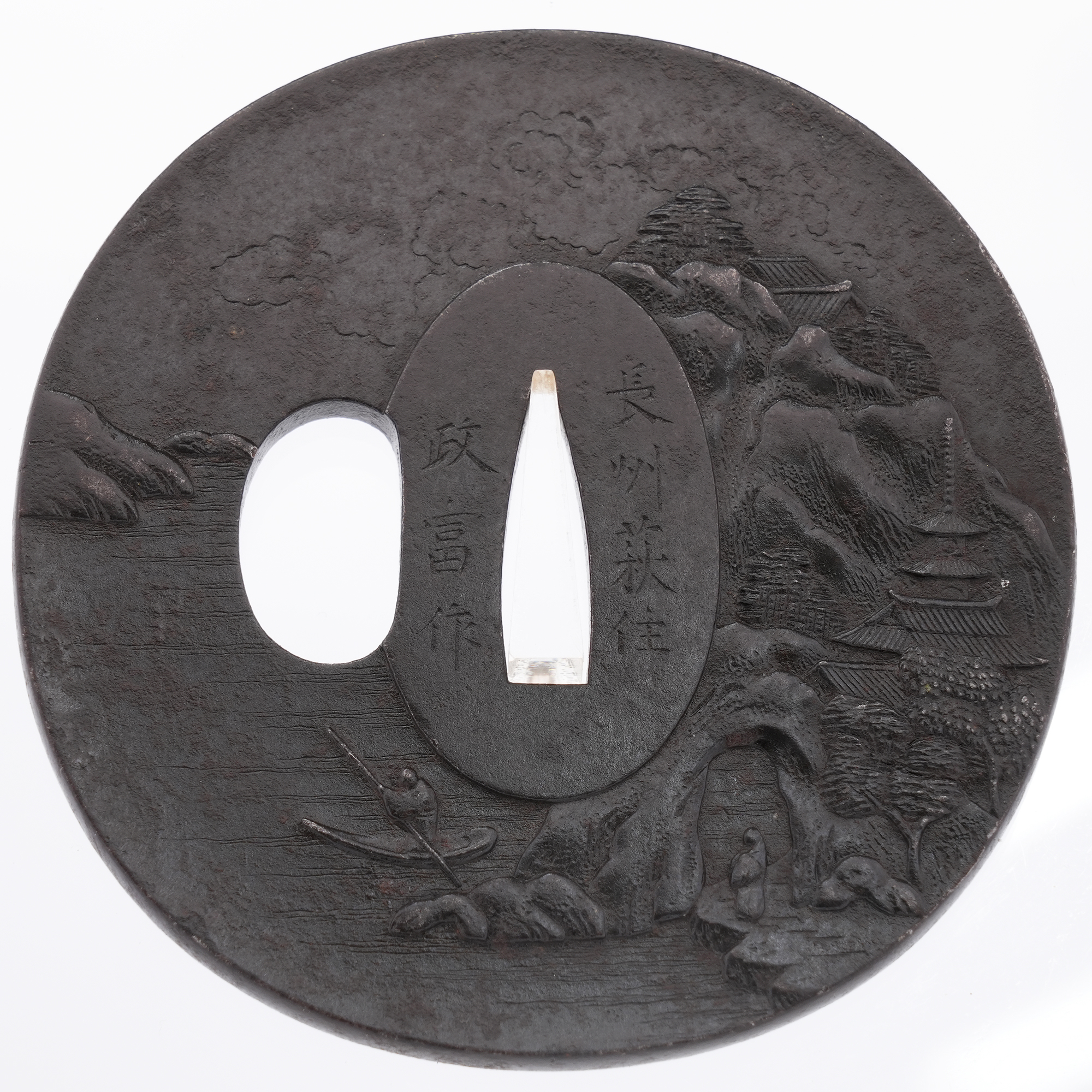
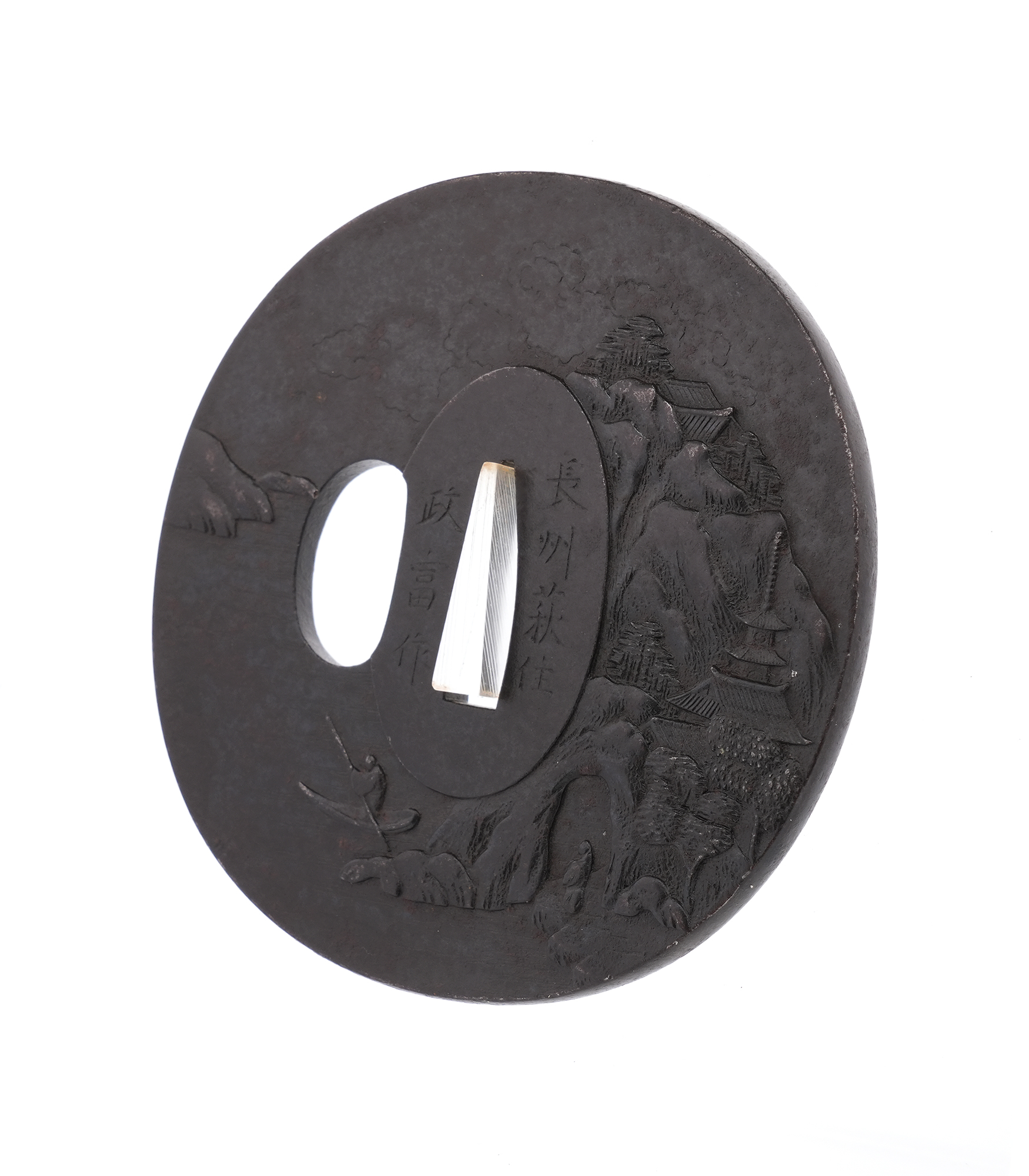
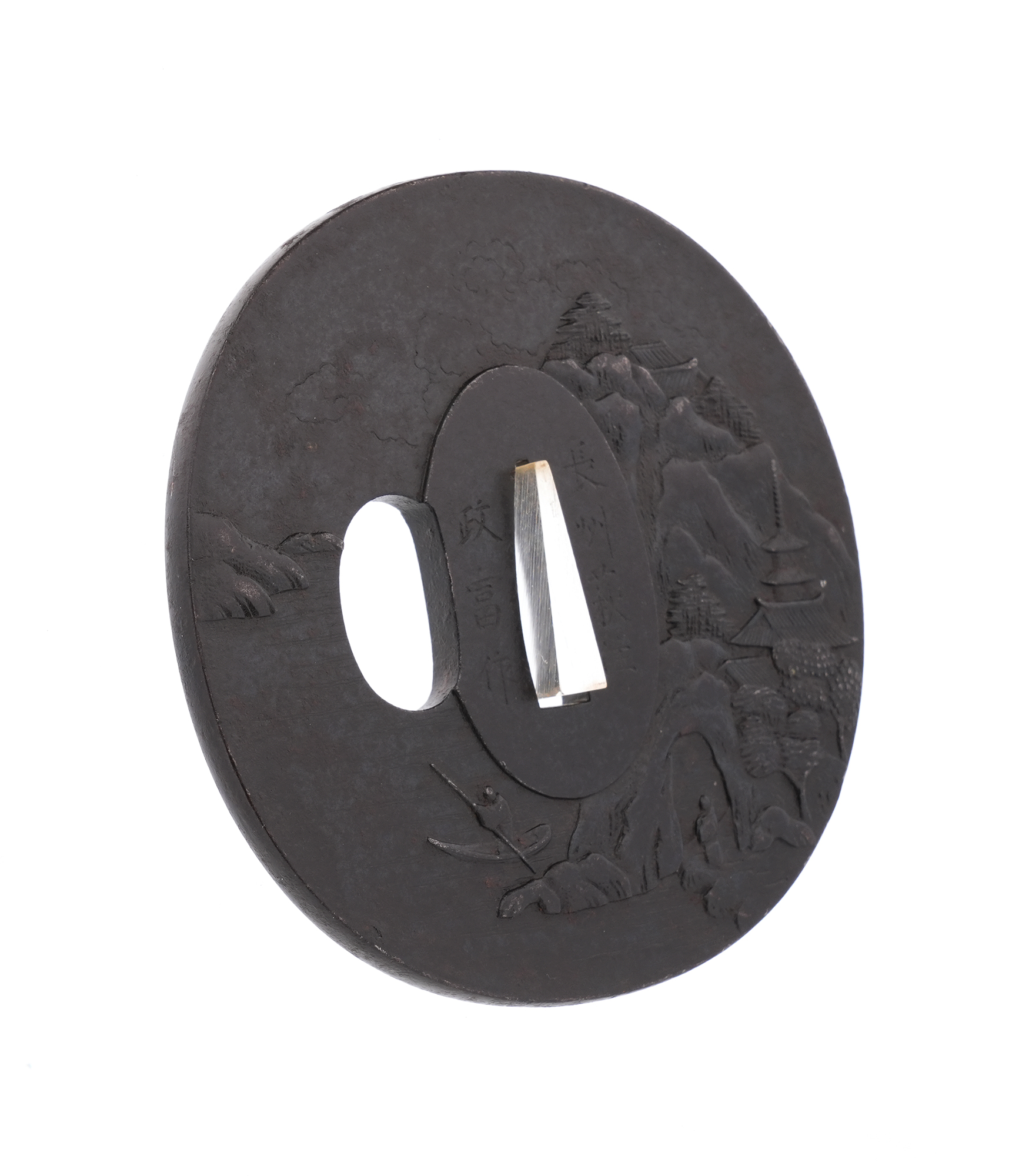
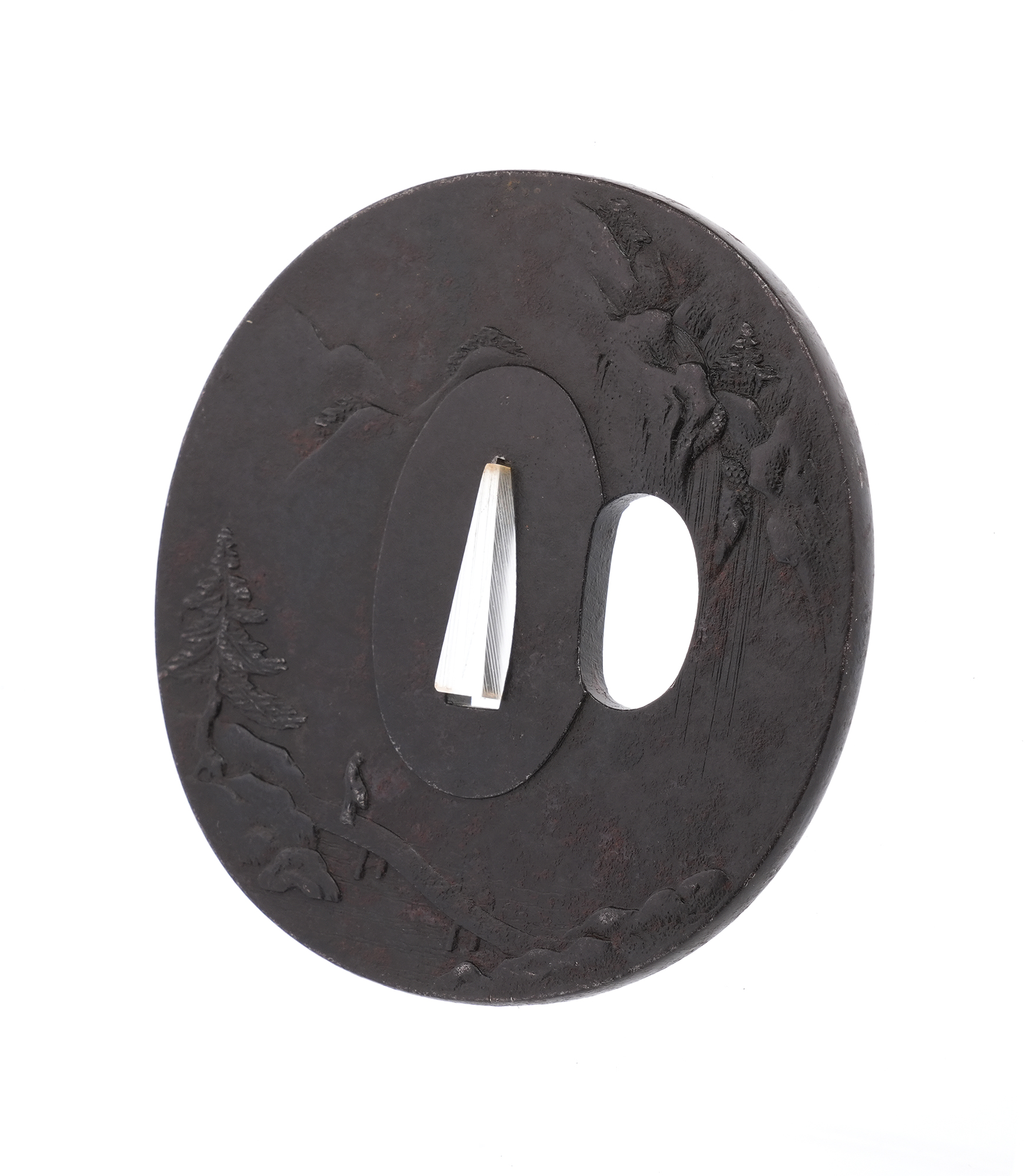
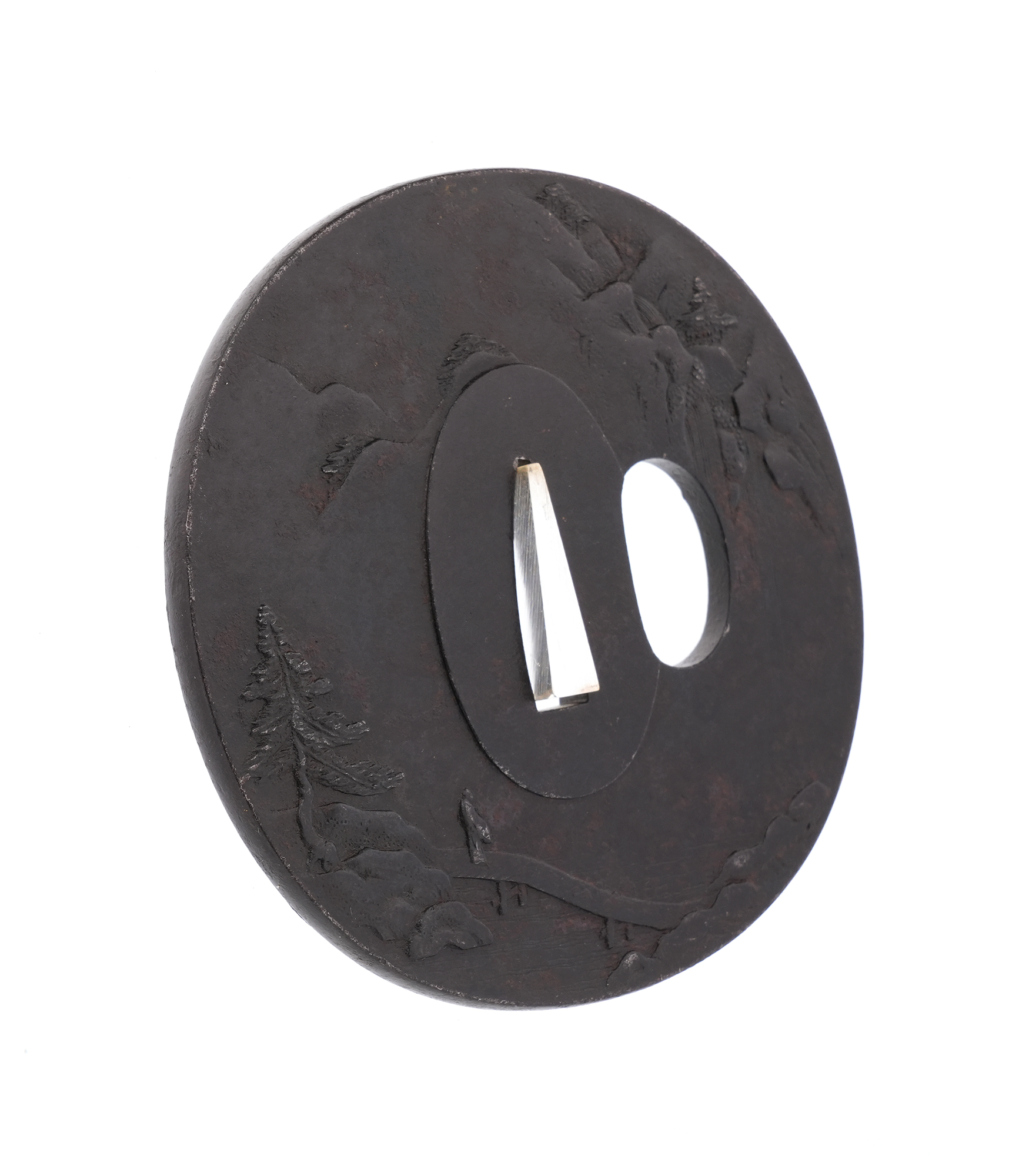
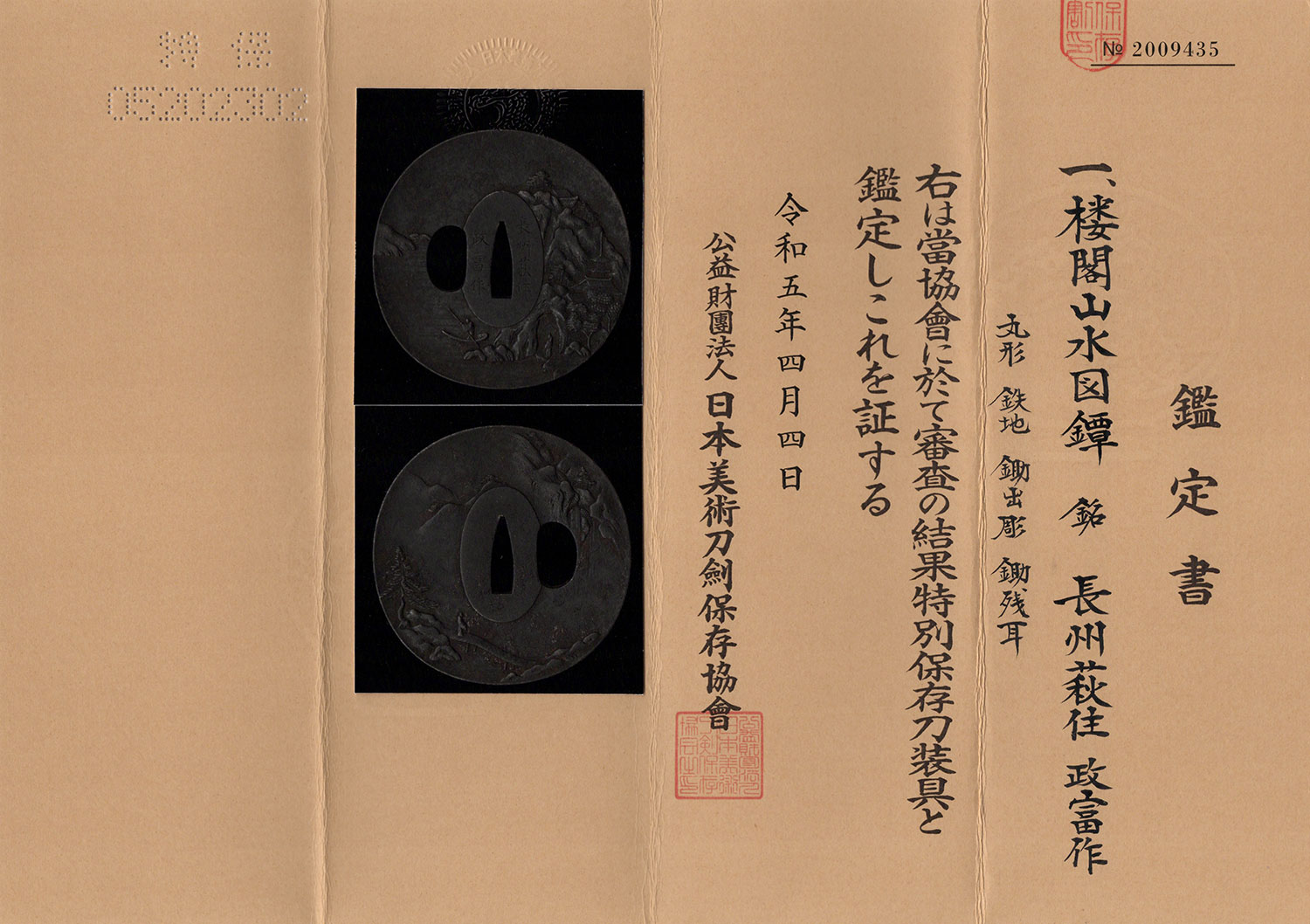
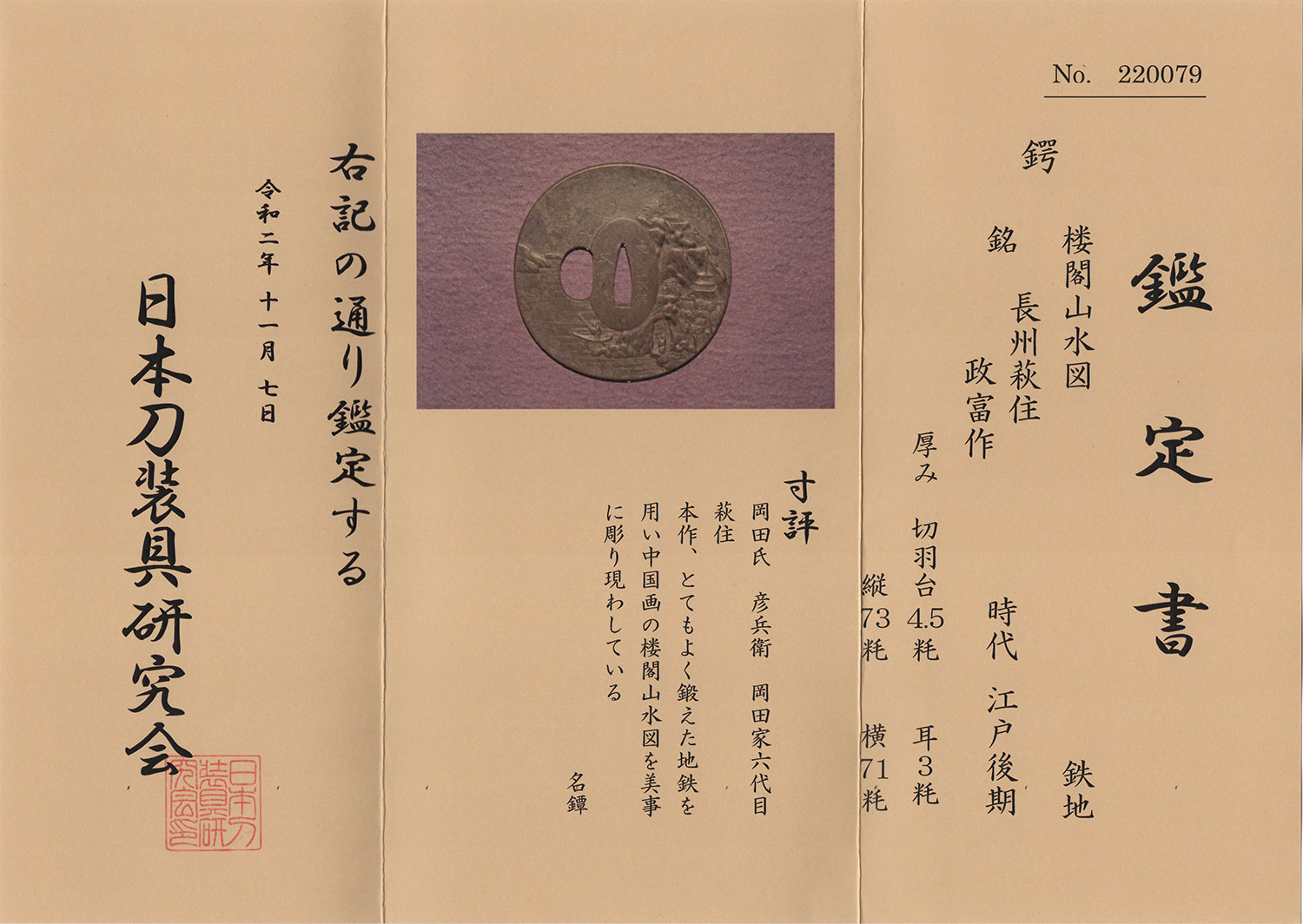
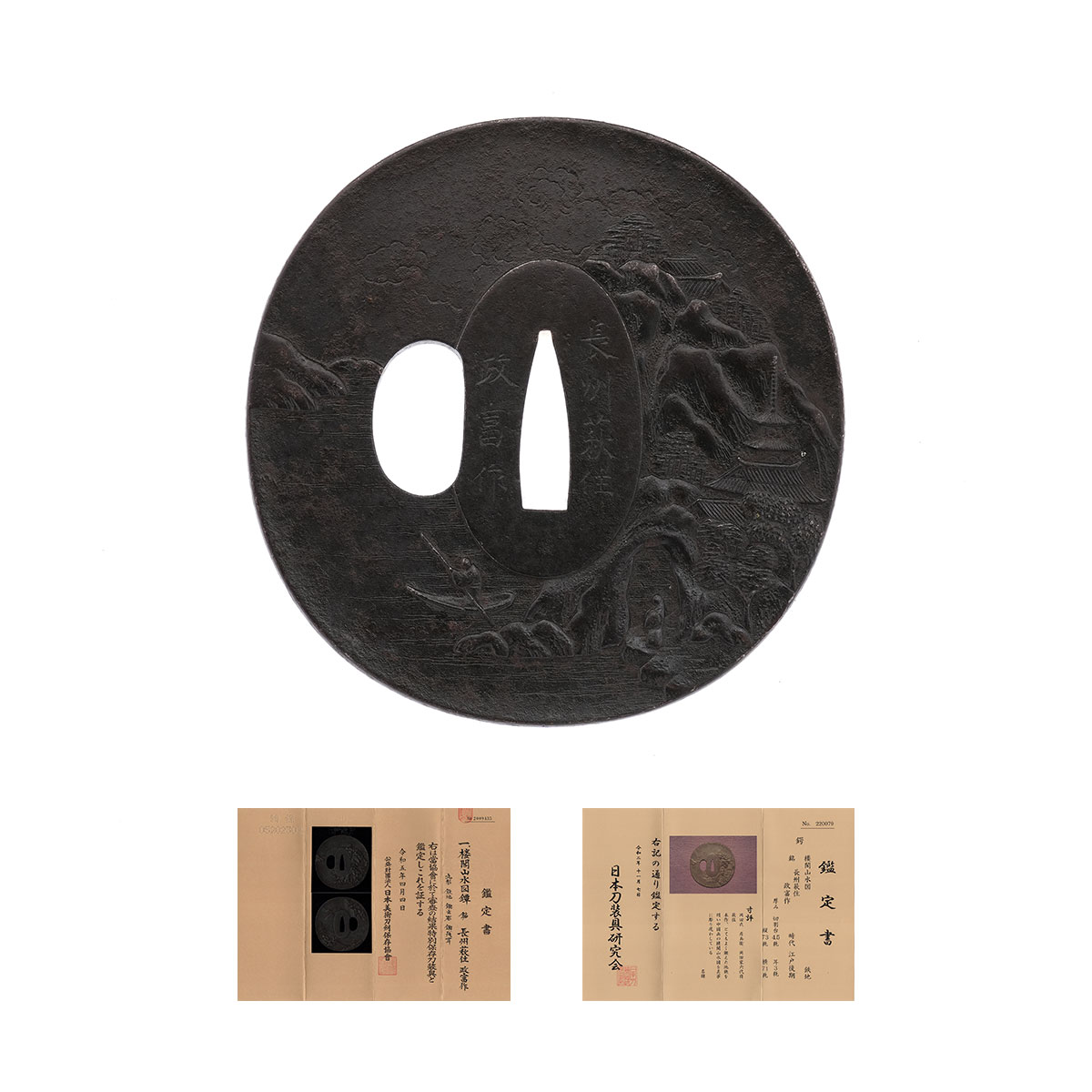
This is a tsuba featuring a pavilion and landscape design, crafted by Masatomi of Choshu Hagi. Masatomi, also known as Hikoemon, was the 6th generation head of the Okada family and a representative master of late Edo period Choshu metalwork. The tsuba is accompanied by both an NBTHK Tokubetsu Hozon Tosogu certificate and a Nihon Tosogu Kenkyukai certificate.
 NihontoWatch
mei · Choshu · Edo
Nagato
2 pieces on the market now
A Hozon-certified fitting of notably superior craftsmanship and condition, often with signature or workmanship of high reference value.
The NBTHK (Nihon Bijutsu Tōken Hozon Kyōkai, the Society for the Preservation of Japanese Art Swords) is a public-interest incorporated foundation founded in 1948 and supervised by Japan’s Agency for Cultural Affairs (Bunkachō); it is based at the Japanese Sword Museum in Tokyo. Its expert panels physically examine each submitted work (shinsa) and issue a certificate (kanteishō) ranking it by artistic and historical merit. NBTHK papers are the most widely recognized standard of authentication for Japanese swords and fittings.
NBTHK official siteReturns accepted within 3 days of delivery for defective items or significant discrepancies; customer bears return shipping and bank fees.
¥550,000
This is a tsuba featuring a pavilion and landscape design, crafted by Masatomi of Choshu Hagi. Masatomi, also known as Hikoemon, was the 6th generation head of the Okada family and a representative master of late Edo period Choshu metalwork. The tsuba is accompanied by both an NBTHK Tokubetsu Hozon Tosogu certificate and a Nihon Tosogu Kenkyukai certificate.
NihontoWatchmei · Choshu · Edo
Nagato
2 pieces on the market now
A Hozon-certified fitting of notably superior craftsmanship and condition, often with signature or workmanship of high reference value.
The NBTHK (Nihon Bijutsu Tōken Hozon Kyōkai, the Society for the Preservation of Japanese Art Swords) is a public-interest incorporated foundation founded in 1948 and supervised by Japan’s Agency for Cultural Affairs (Bunkachō); it is based at the Japanese Sword Museum in Tokyo. Its expert panels physically examine each submitted work (shinsa) and issue a certificate (kanteishō) ranking it by artistic and historical merit. NBTHK papers are the most widely recognized standard of authentication for Japanese swords and fittings.
NBTHK official siteReturns accepted within 3 days of delivery for defective items or significant discrepancies; customer bears return shipping and bank fees.
¥550,000