 NihontoWatchNihontoWatch
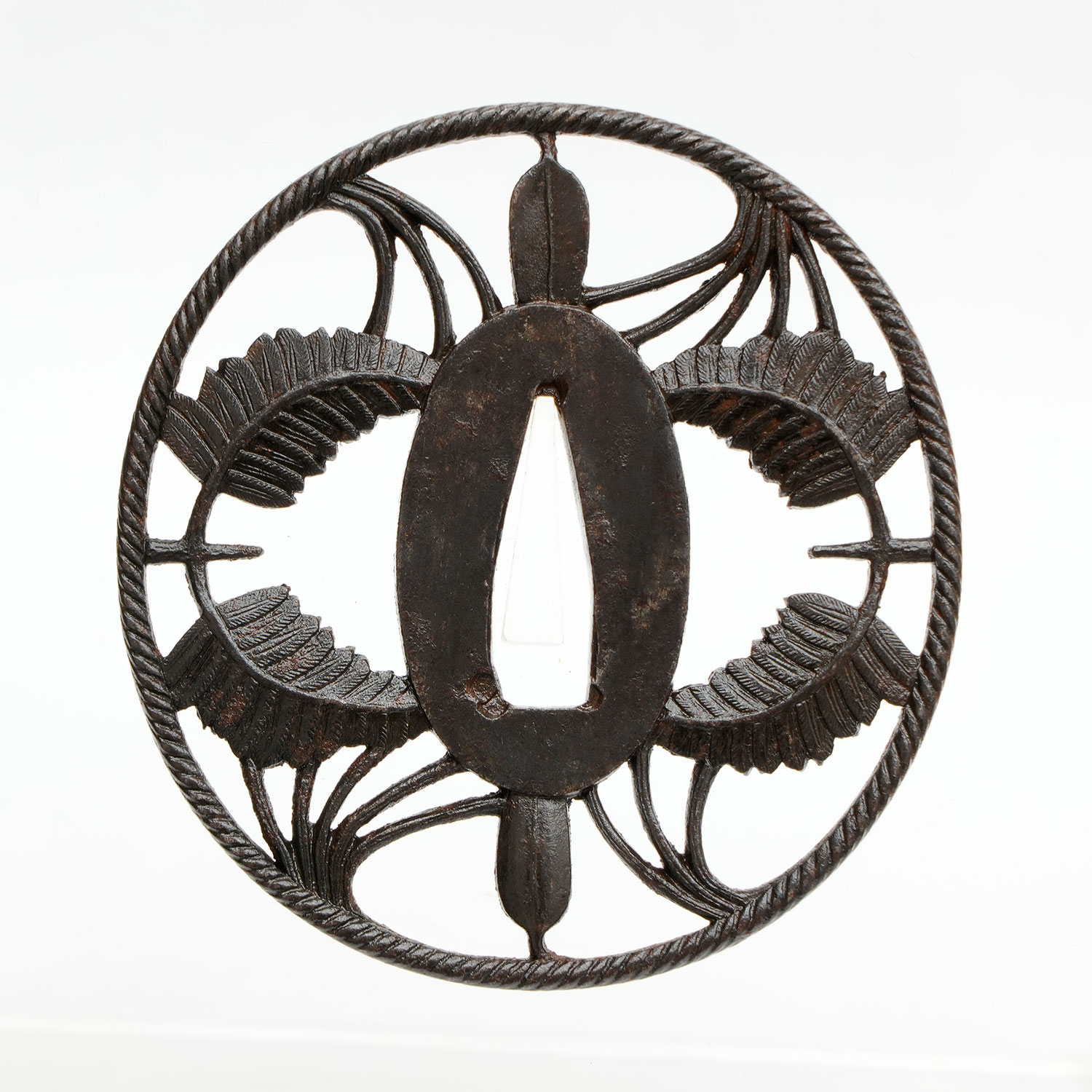
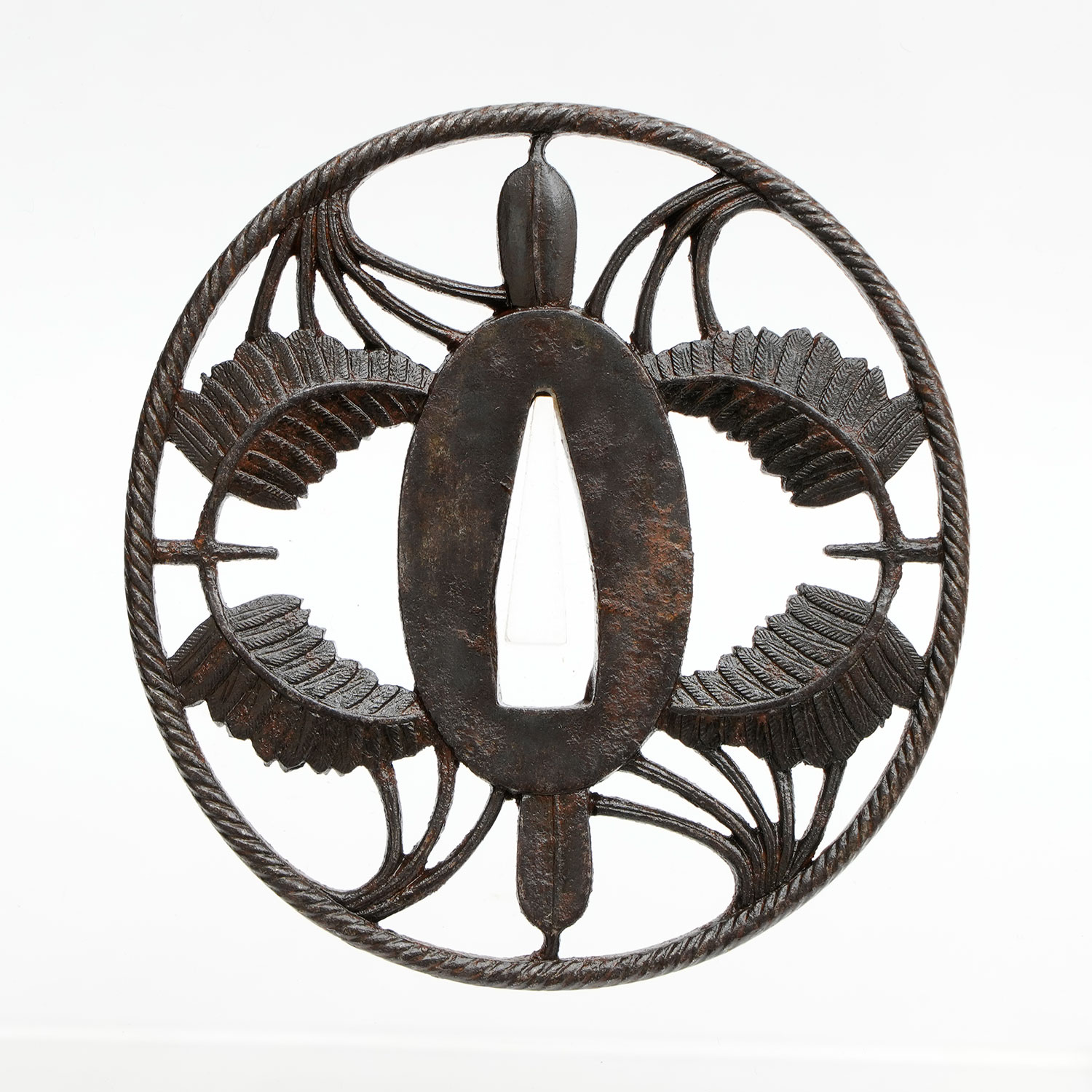
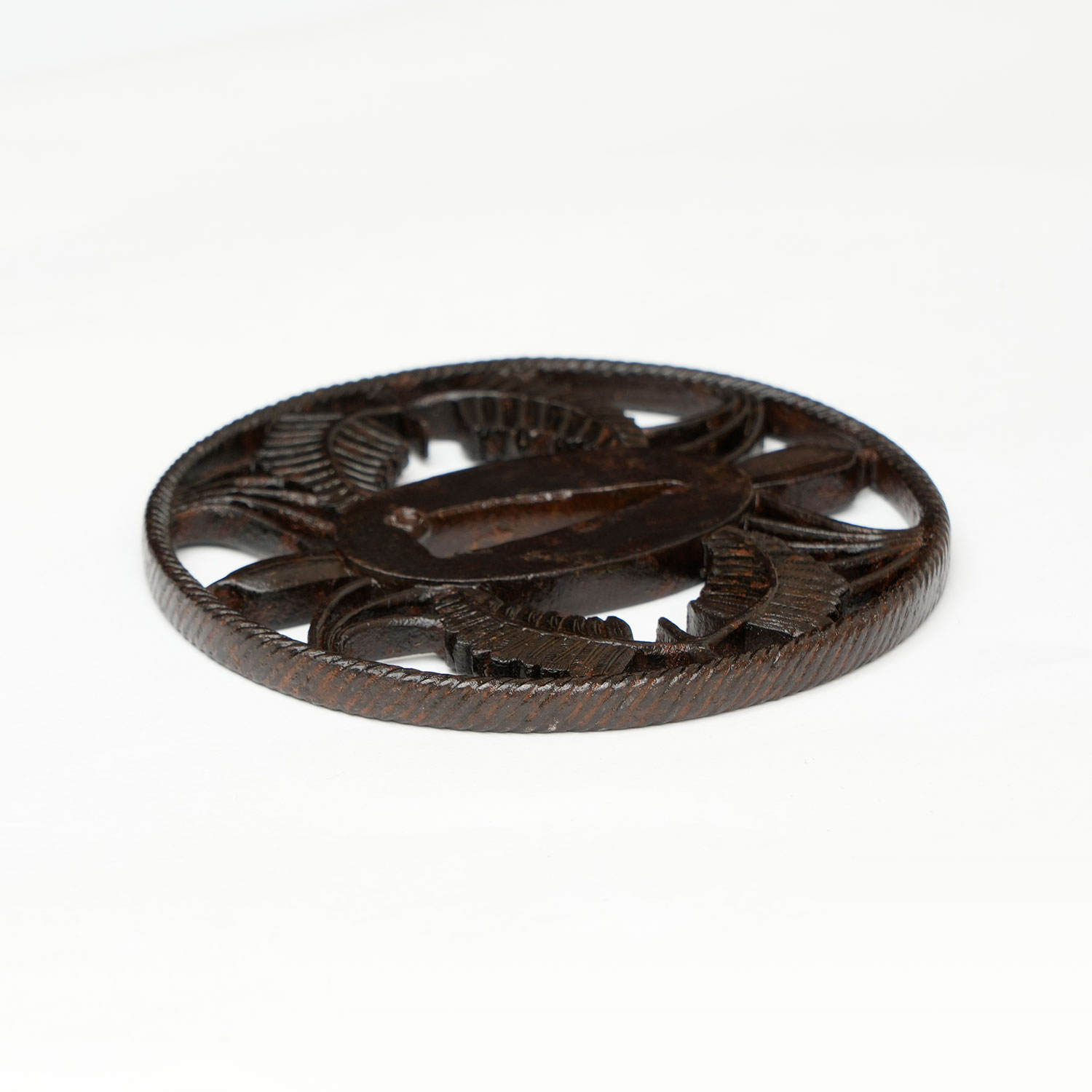
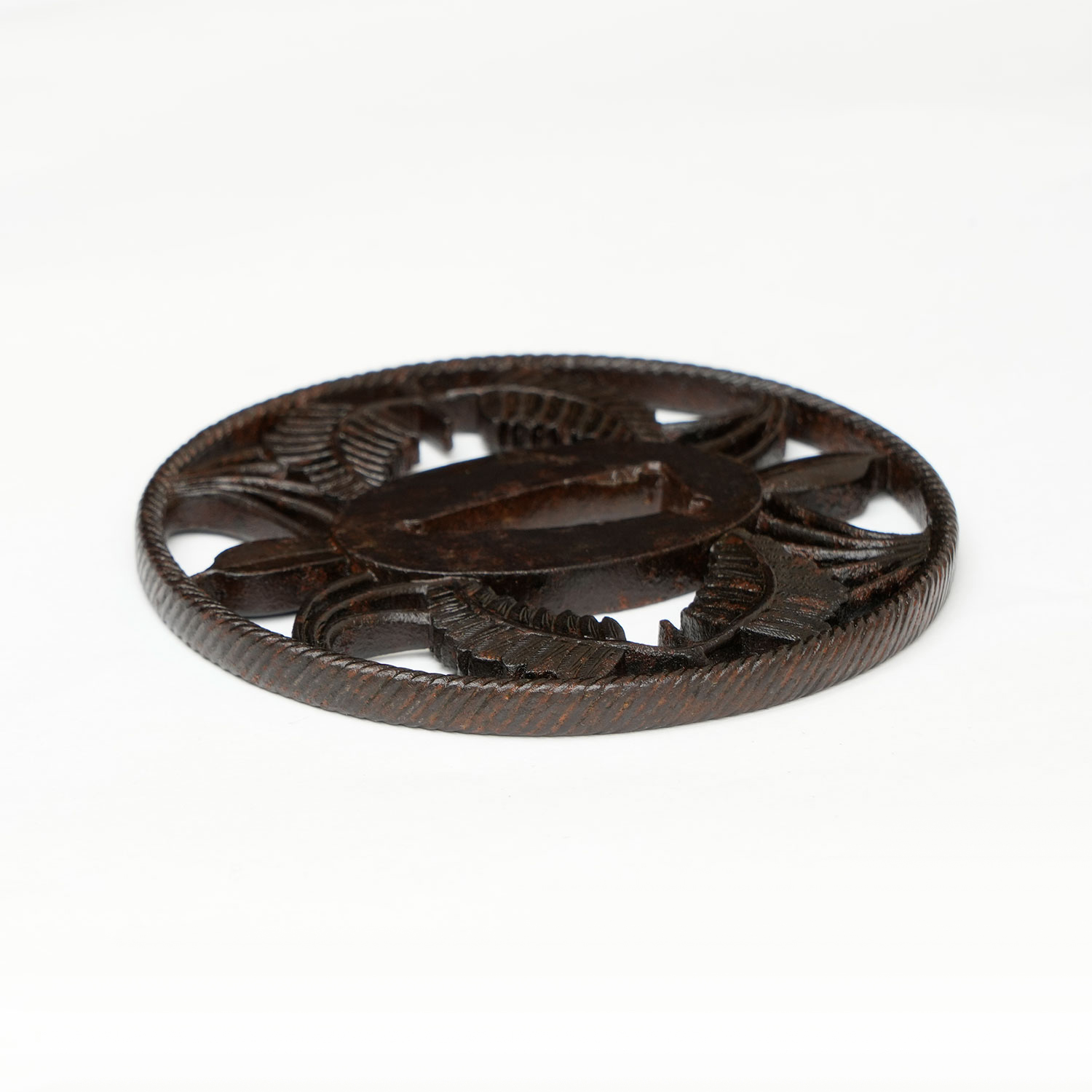
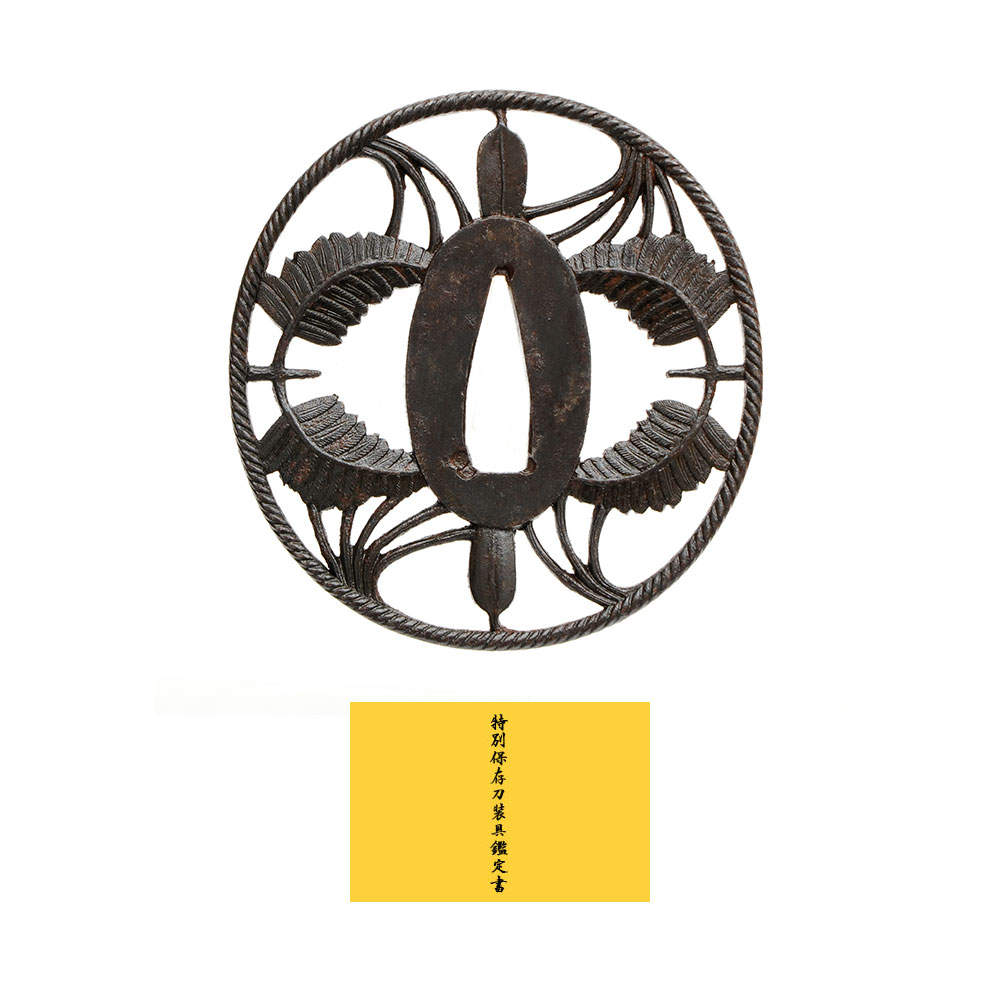
The Choshu Domain actively encouraged the production of tsuba in order to export them to other domains and secure financial resources for the domain, and as a result, Choshu became a place with so many tsubako and works that it was said to be Choshu in the west against Aizu in the east. The style of Choshu tsuba is so diverse that it cannot be generalized, and there are not many schools with a characteristic style. The various families such as Kawaji, Nakai, Okamoto, Okada, Kaneko, Nakahara, Fujii, Inoue, and Yaji are relatively famous. This tsuba is a work of very elaborate construction, featuring a shimekazari masterfully rendered in sukashibori on a tetsu-ji, with fine tsuname carved even into the mimi; not only are the composition and workmanship excellent, but the tetsu-aji is also good, making it a masterpiece perfectly suited for appreciation.
NihontoWatchOffered by Toushin

As written by the shop
Machine translation from the shop's Japanese · may contain errors ·
A Hozon-certified fitting of notably superior craftsmanship and condition, often with signature or workmanship of high reference value.
The NBTHK (Nihon Bijutsu Tōken Hozon Kyōkai, the Society for the Preservation of Japanese Art Swords) is a public-interest incorporated foundation founded in 1948 and supervised by Japan’s Agency for Cultural Affairs (Bunkachō); it is based at the Japanese Sword Museum in Tokyo. Its expert panels physically examine each submitted work (shinsa) and issue a certificate (kanteishō) ranking it by artistic and historical merit. NBTHK papers are the most widely recognized standard of authentication for Japanese swords and fittings.
NBTHK official siteAs a rule we do not accept returns, except when we have sent a different item from the one ordered or when there is a significant discrepancy between the description and the item. If you wish to return an item, please contact us within 3 days of its arrival and then send it back.
¥440,000