 NihontoWatchNihontoWatch
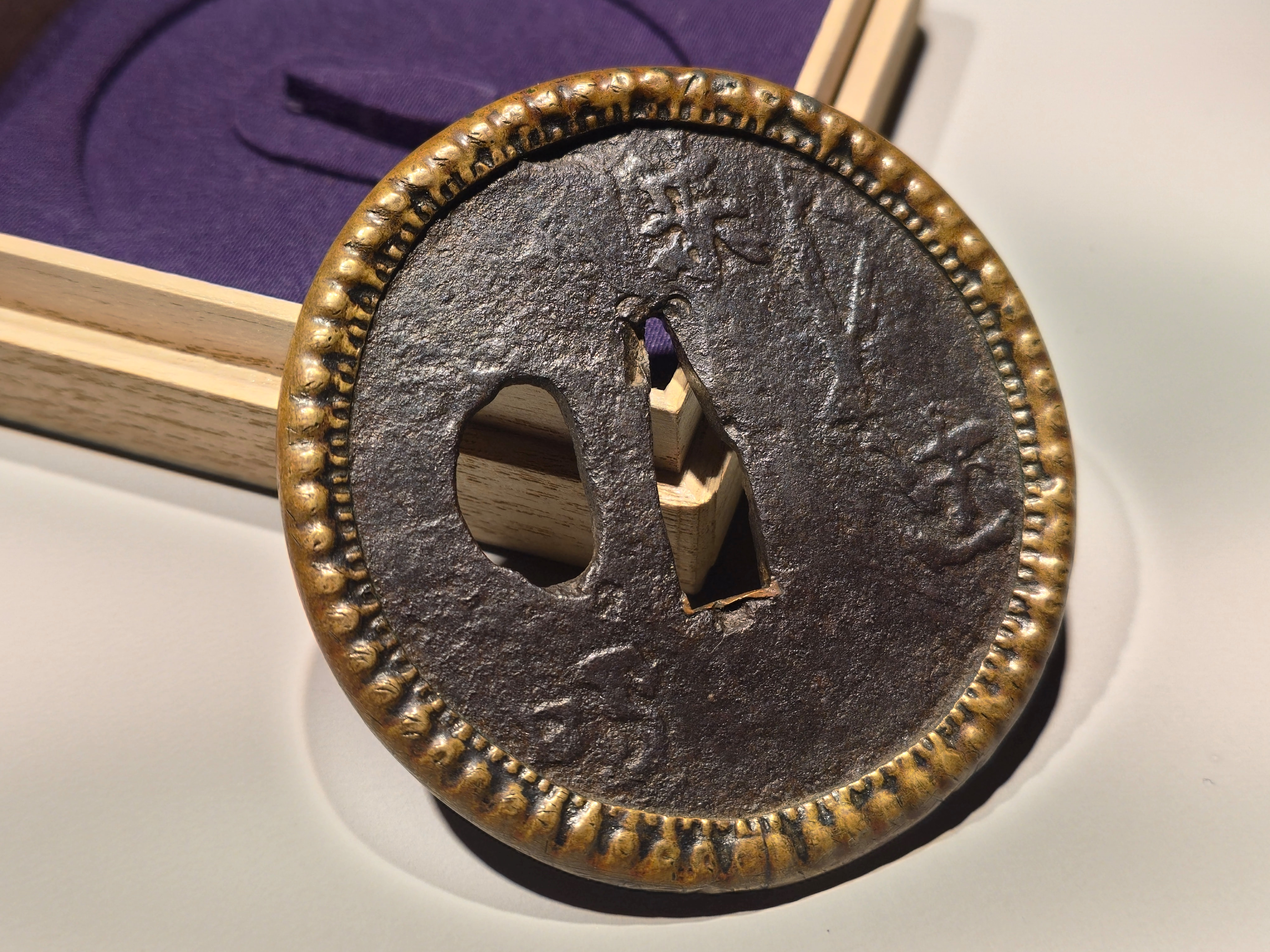
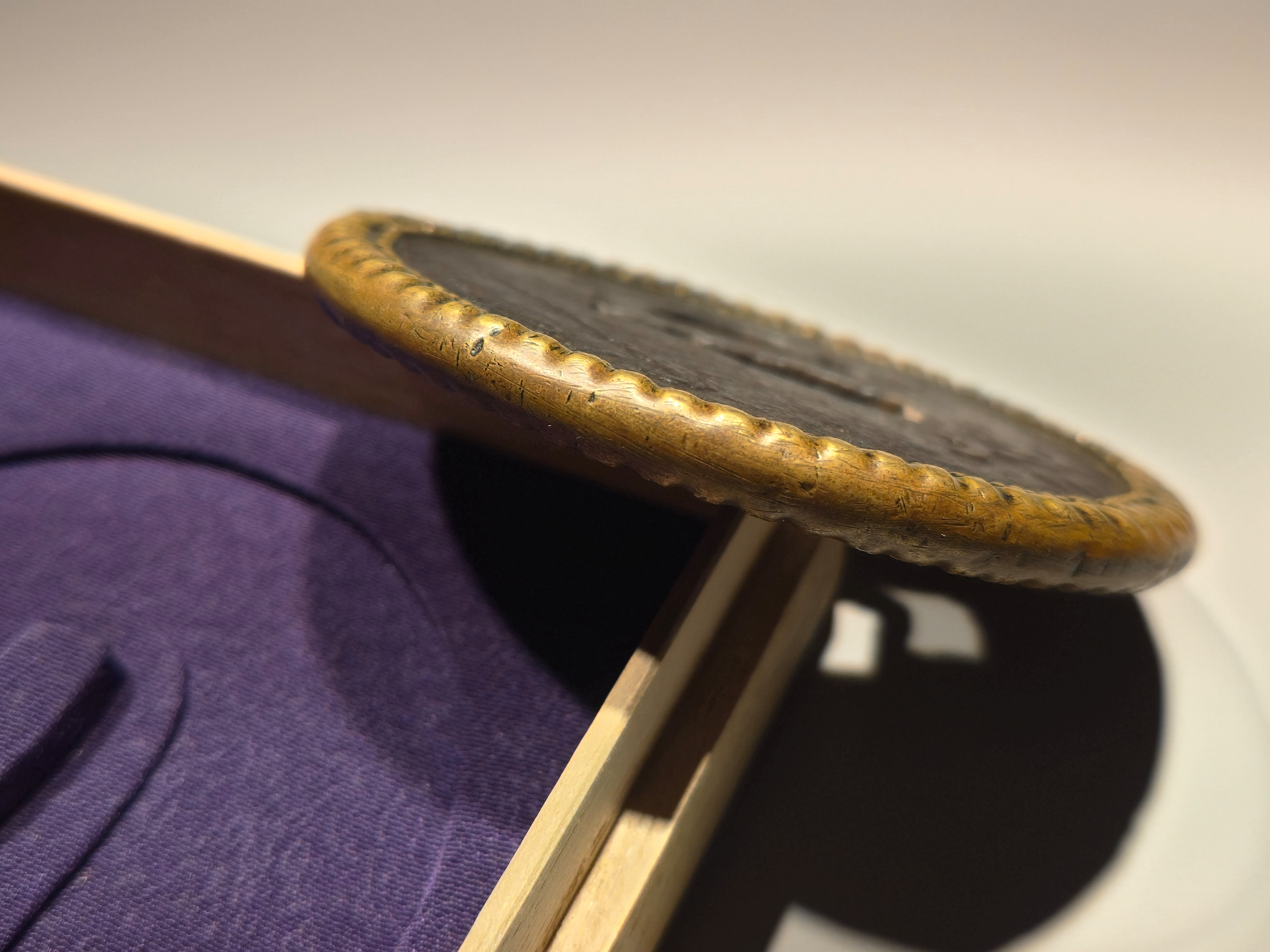
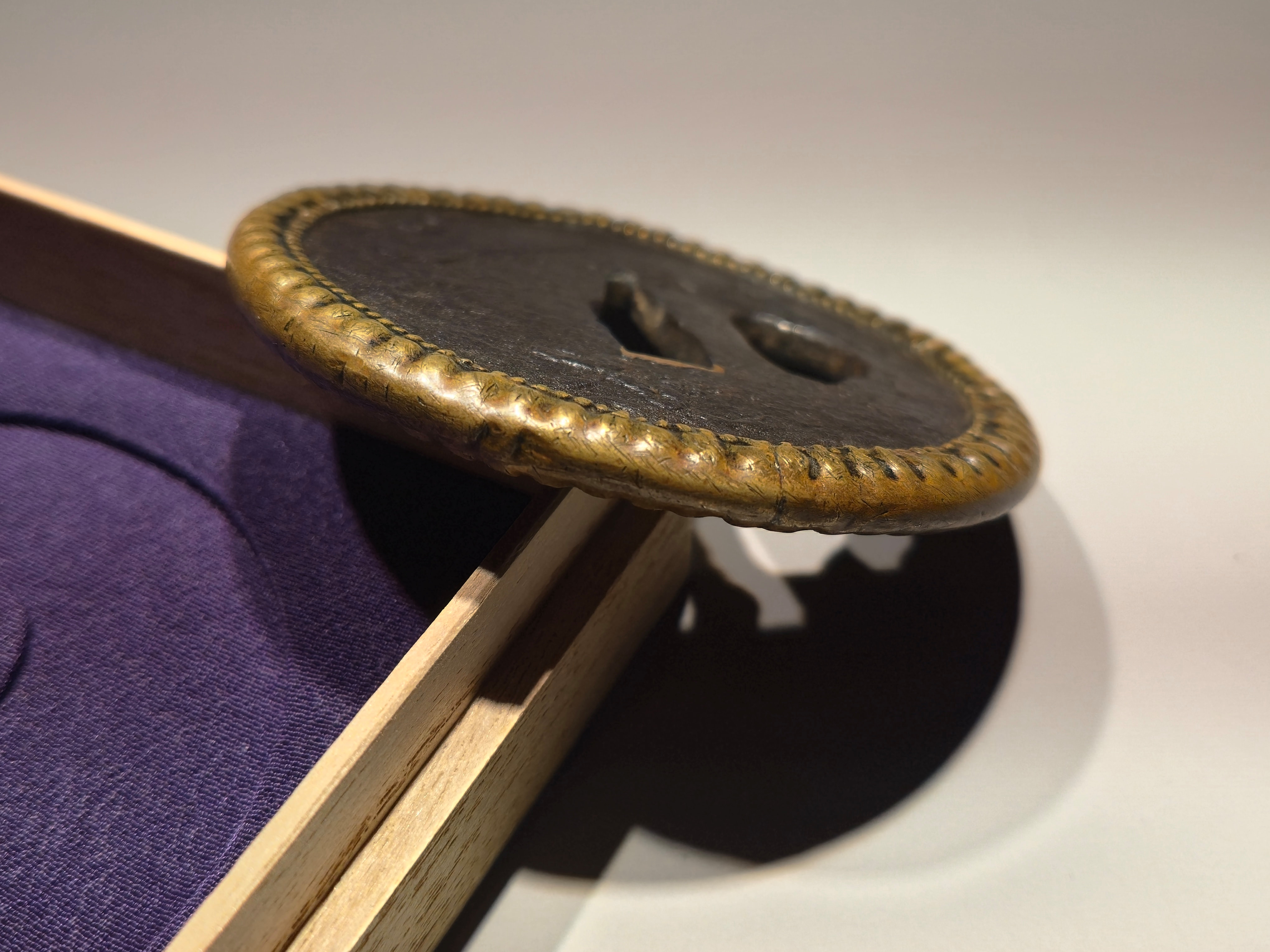
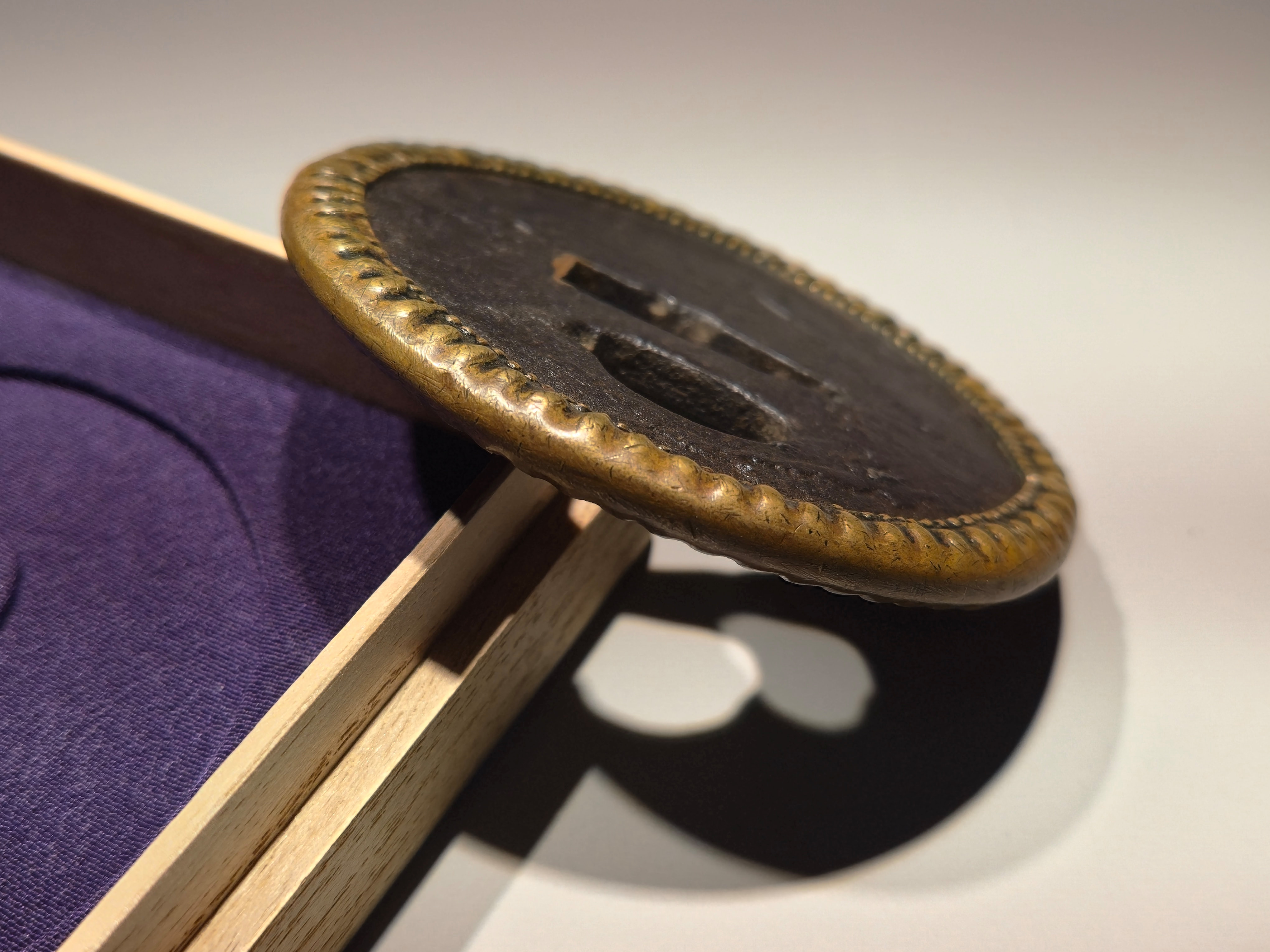
This is a wonderful Hoan tsuba featuring a unique Odawara rim, often seen on Hirata Hikozo tsubas. Made by Shodai Hoan, an arms-smith from Owari Province, it exhibits a simple yet powerful design finished with the yakite-kusarashi technique, resulting in a distinctive gloss and lustrous iron. The tsuba's motif includes various kanjis on the front and possibly bone or fish bones on the back, retaining partial amida yasurime.
NihontoWatchOffered by Bushido Antique Japanese Swords

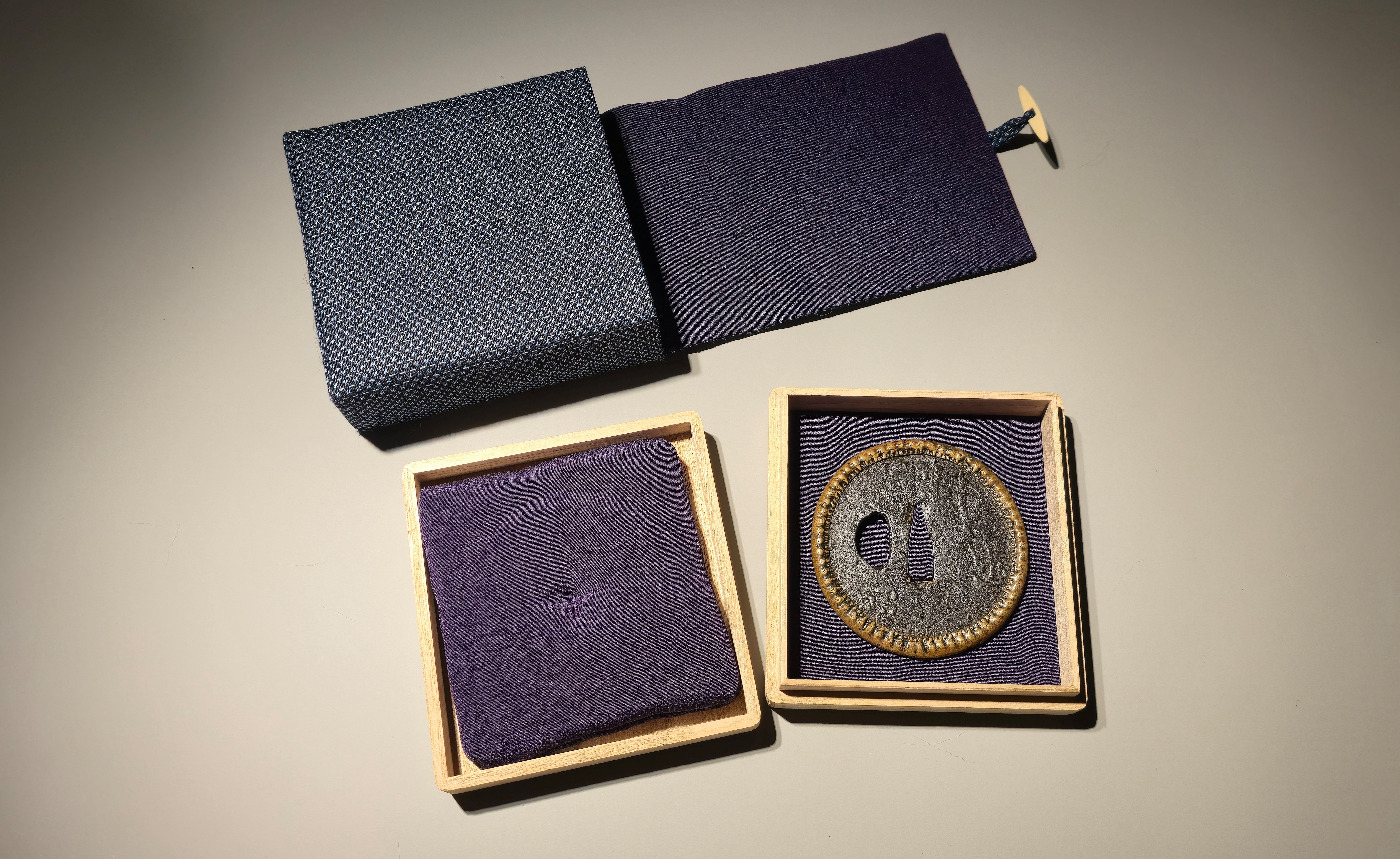
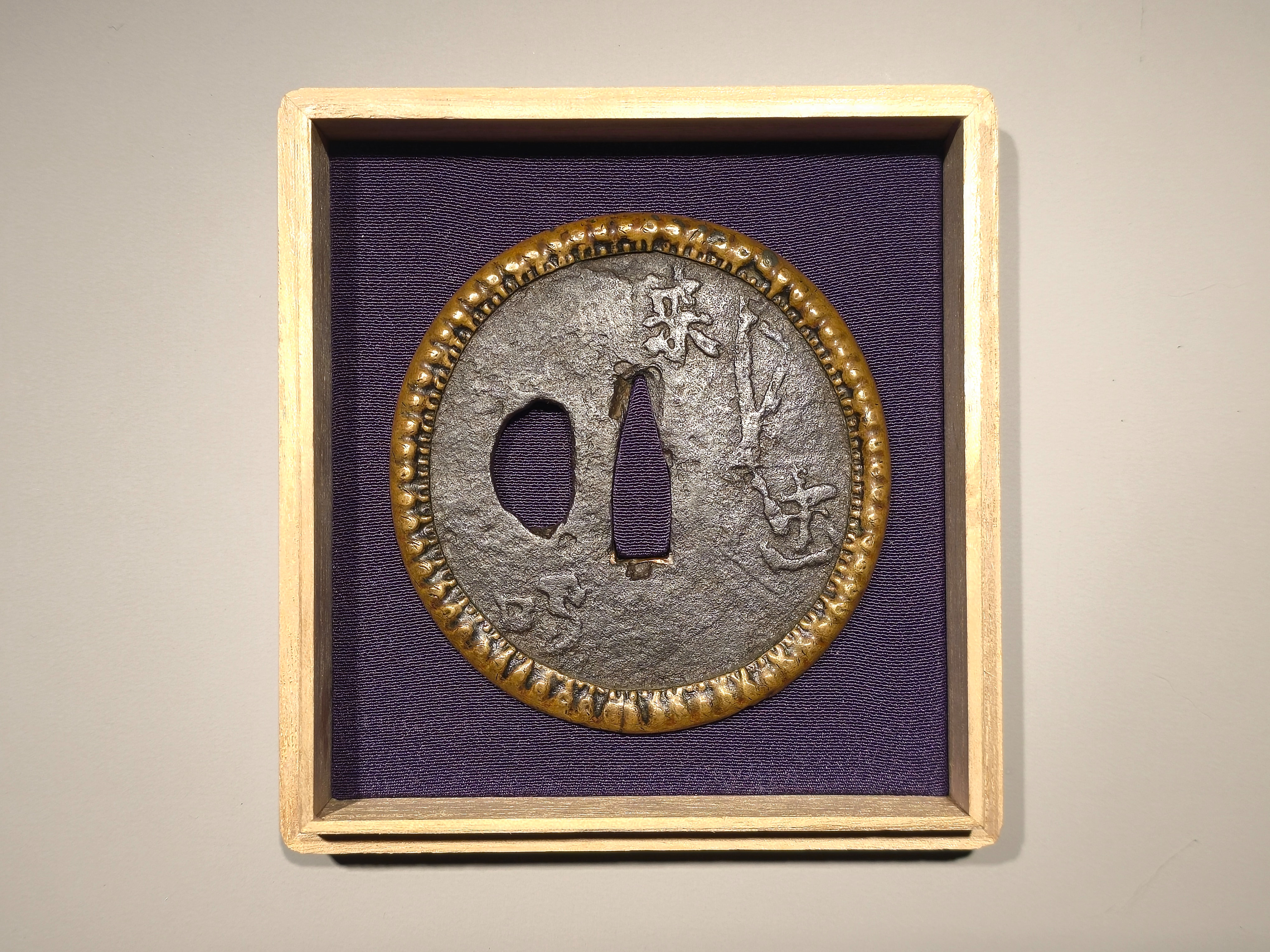
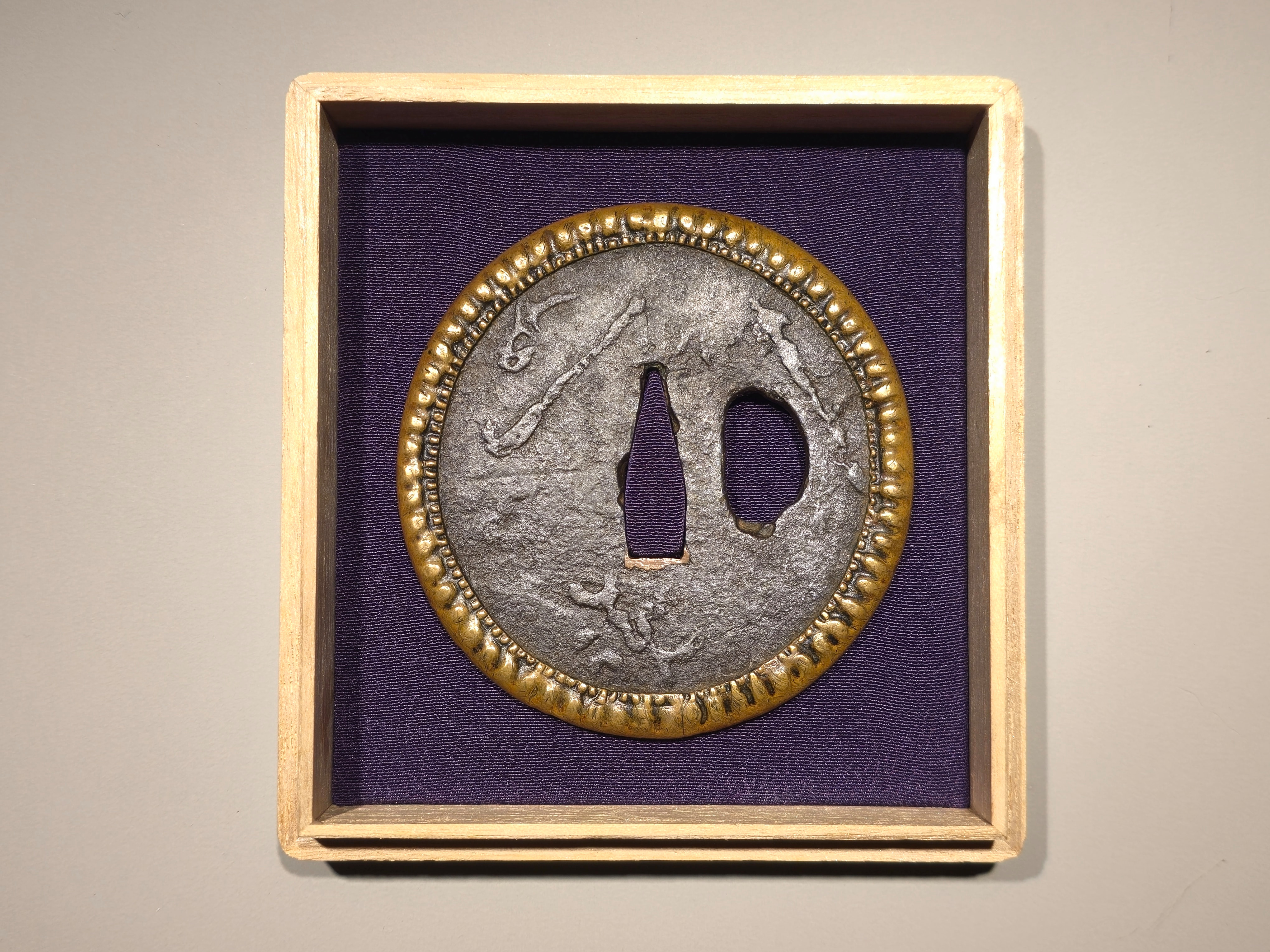
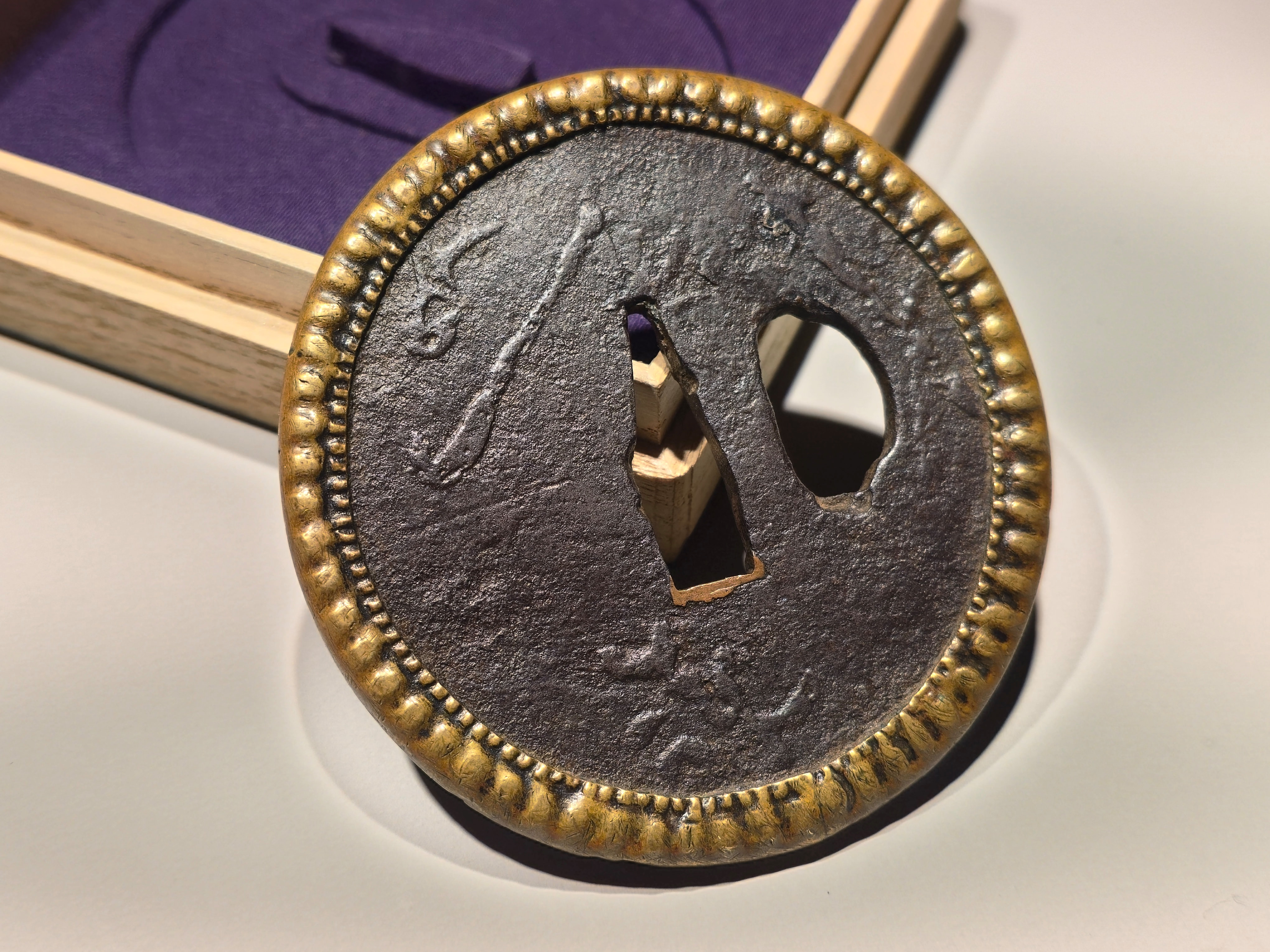
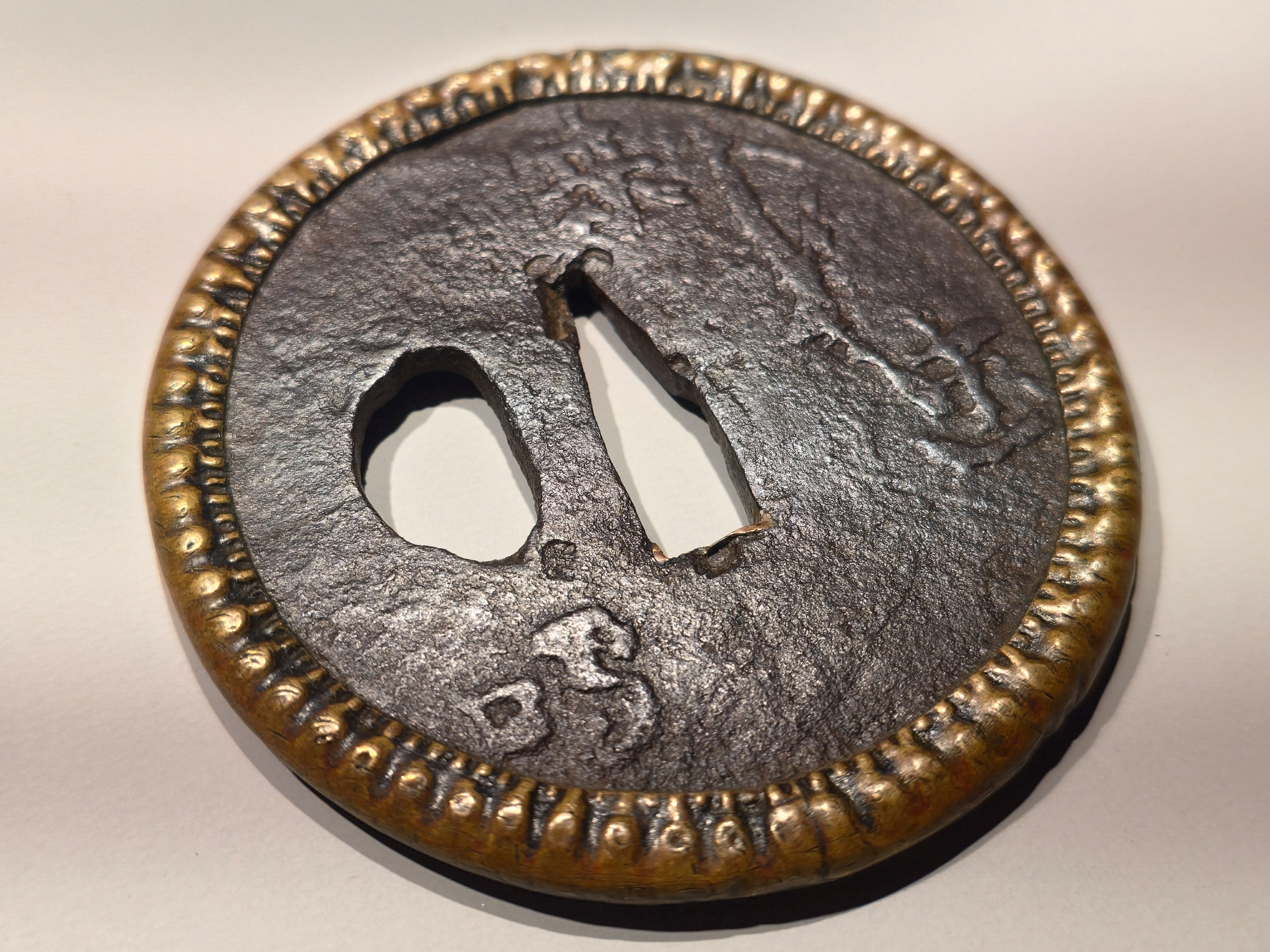
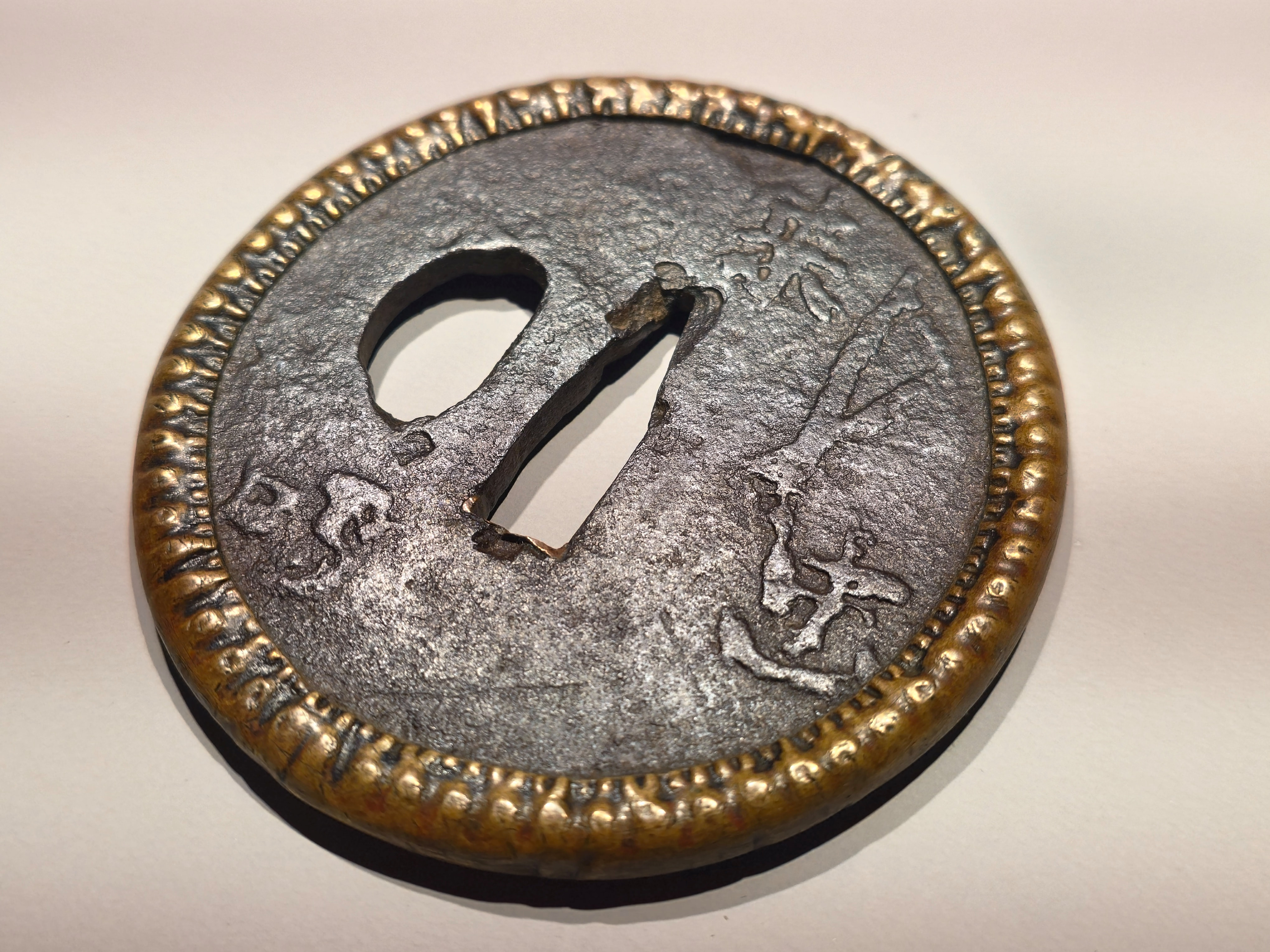
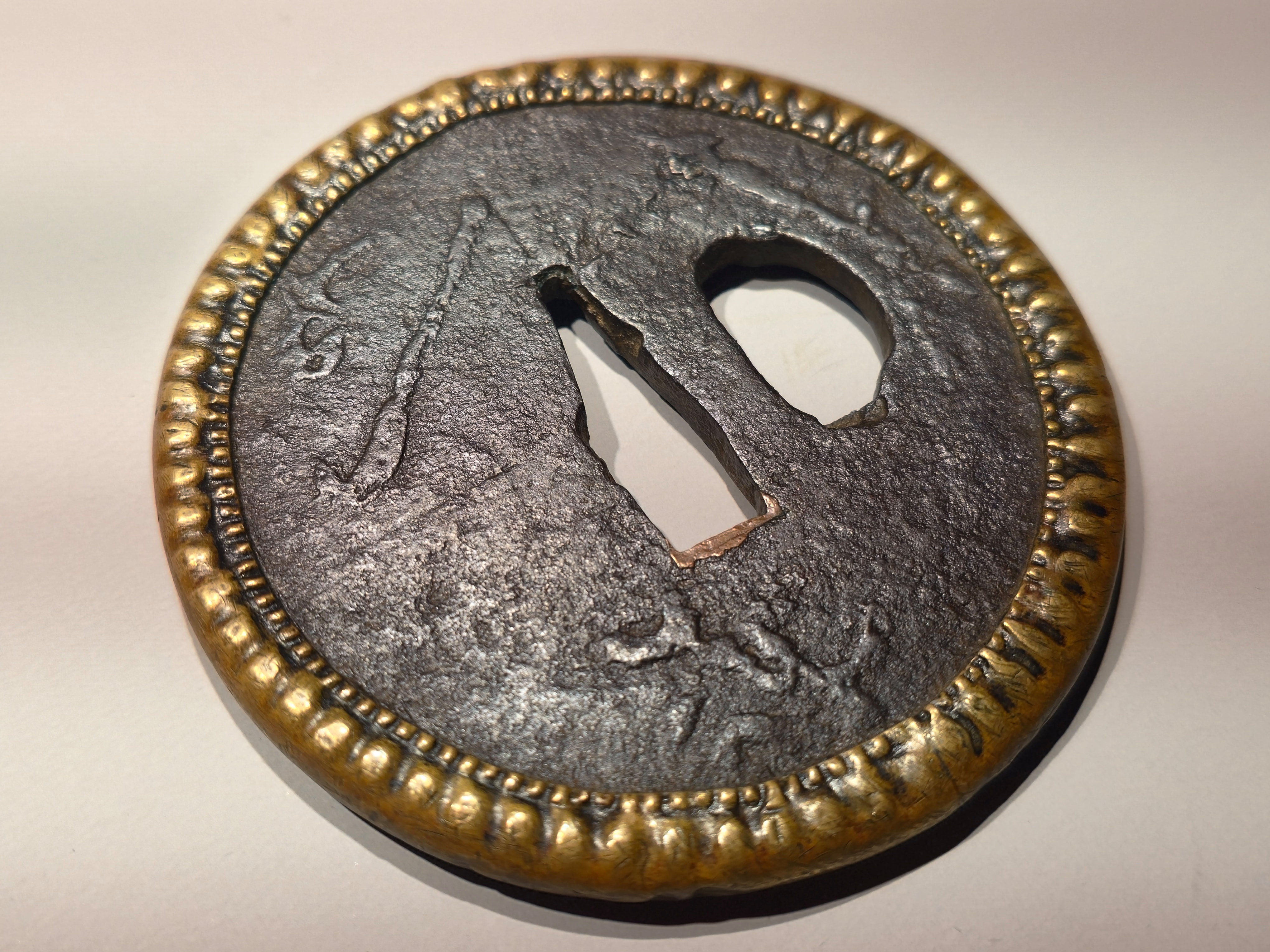
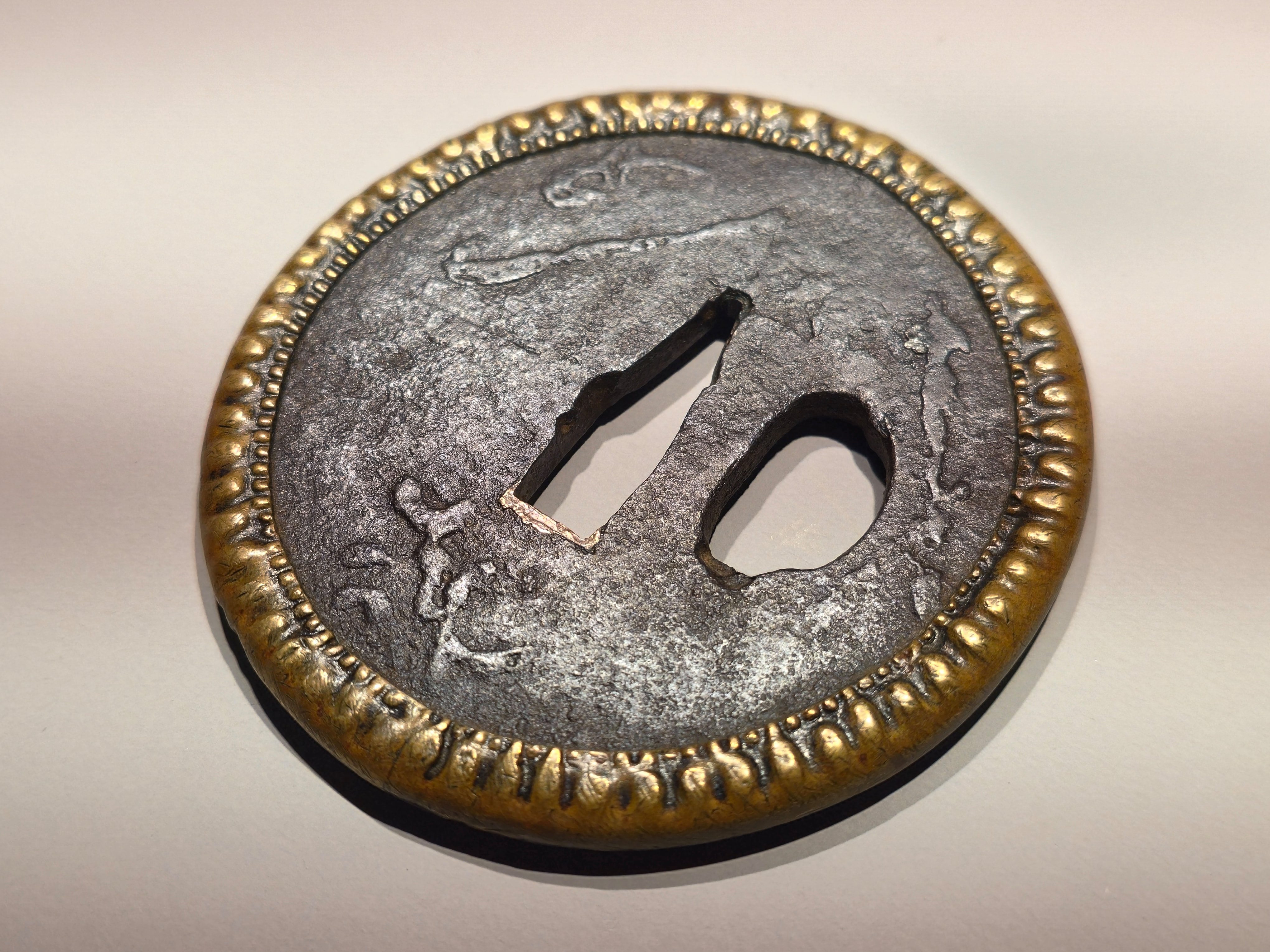
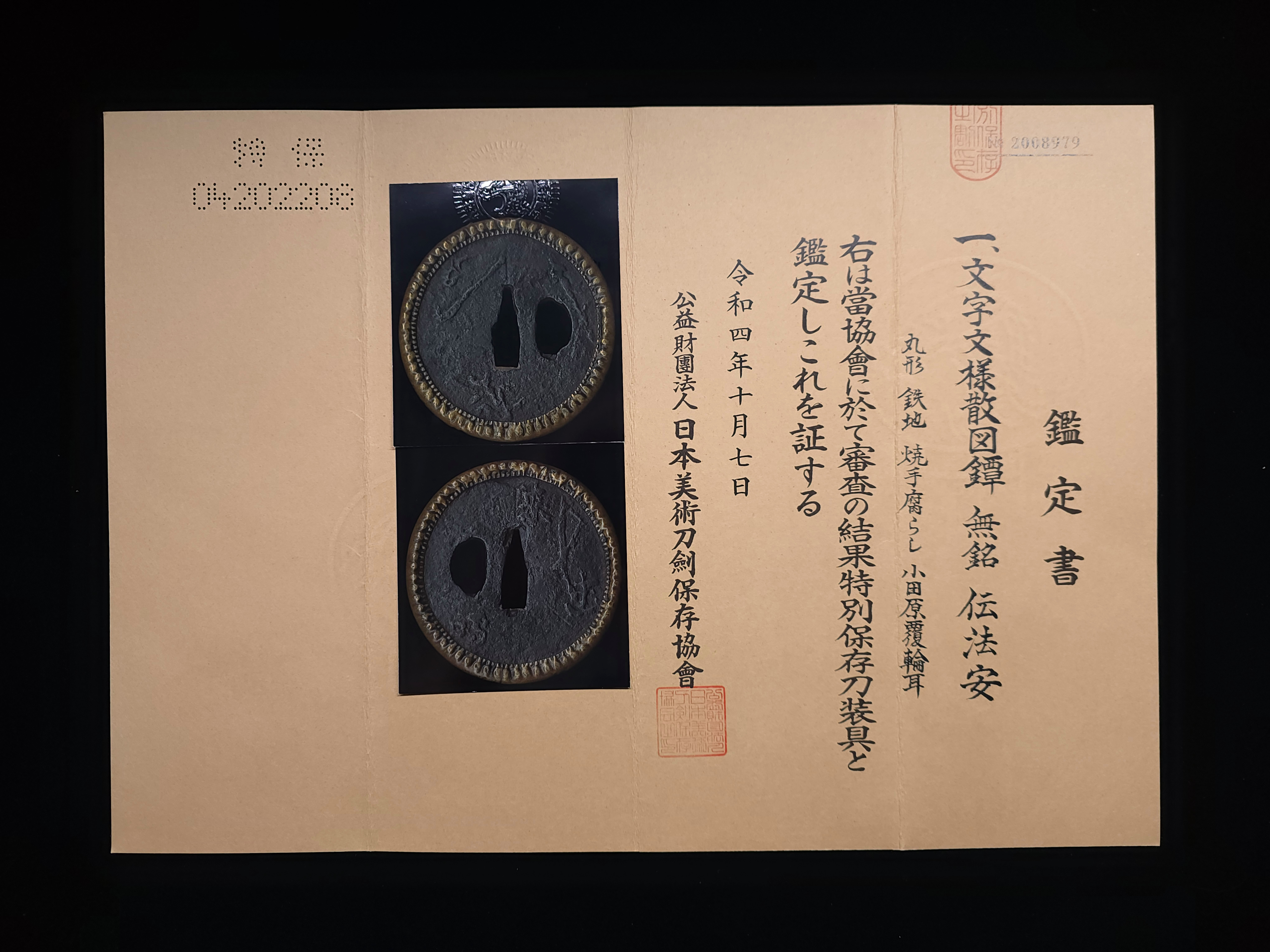
Iron-tsuba · Owari
3 pieces on the market now
The Hoan school takes its name from its founder Hoan (法安), whose personal name was Kawaguchi Saburuemon, an arms-smith (bugu-kaji) active in Kiyosu, Owari Province, from the late Muromachi into the Momoyama period. Originally an armorer by trade, Hoan entered the service of the Asano family as a retained craftsman, residing successively at Kofu in Kai Province and at Wakayama in Kii Province before his death on the twentieth day of the fifth month of Keicho 18 (1613). His posthumous Buddhist name was Honpoin Soan Nisshin Koji. " Within this triad, Hoan is distinguished as "somewhat more technical in execution" than Nobuie and "a step more polished and sophisticated" than Yamakichi[[c:2]]. Following Hoan's death, his son-in-law Hisatsugu relocated to Hiroshima in Aki Province during the Genna era in connection with the Asano family's transfer of fief, establishing the Hiroshima branch of the lineage; the family cemetery remains at Kokuzen-ji Temple in that city. Hoan's plate iron was celebrated for its extraordinary toughness, "to the extent that it was also known by the epithet uwabami-tetsu" ("great-serpent iron").
Across the designated corpus, this iron is described as possessing a distinctive "viscous" (nettori) and tenacious character, with the forged texture (kitae-hada) emerging "here and there with lively animation" and tekkotsu (iron bones) appearing prominently at the surface. " This technique was deployed both for surface treatment across the ji and for the depiction of figural subjects, as in the long-eared rabbit rendered at the rim of one designated tsuba. Hoan's repertoire further embraced kuruma-sukashi (wheel openwork), amida-yasuri file-mark patterning employed as a deliberate design element, tsuchime-ji (hammered ground), and sukidashi-bori (raised carving). " The Hoan school occupies a position of high regard within the Owari iron-tsuba tradition. The NBTHK observes that "because there exist fine examples of kuruma-sukashi, the name Hoan is held in high regard[[c:4]]," and the designated works consistently display what the examiners characterize as a unique artistic world realized within a single tsuba. Learn more →
| Smith | Era | Designated |
|---|---|---|
| Hoan法安 | — | 5 |
| Hoan法安 | — | 0 |
| Kanenobu兼信 | — | 0 |
| Hisatsugu久次 | — | 0 |
A Hozon-certified fitting of notably superior craftsmanship and condition, often with signature or workmanship of high reference value.
The NBTHK (Nihon Bijutsu Tōken Hozon Kyōkai, the Society for the Preservation of Japanese Art Swords) is a public-interest incorporated foundation founded in 1948 and supervised by Japan’s Agency for Cultural Affairs (Bunkachō); it is based at the Japanese Sword Museum in Tokyo. Its expert panels physically examine each submitted work (shinsa) and issue a certificate (kanteishō) ranking it by artistic and historical merit. NBTHK papers are the most widely recognized standard of authentication for Japanese swords and fittings.
NBTHK official site