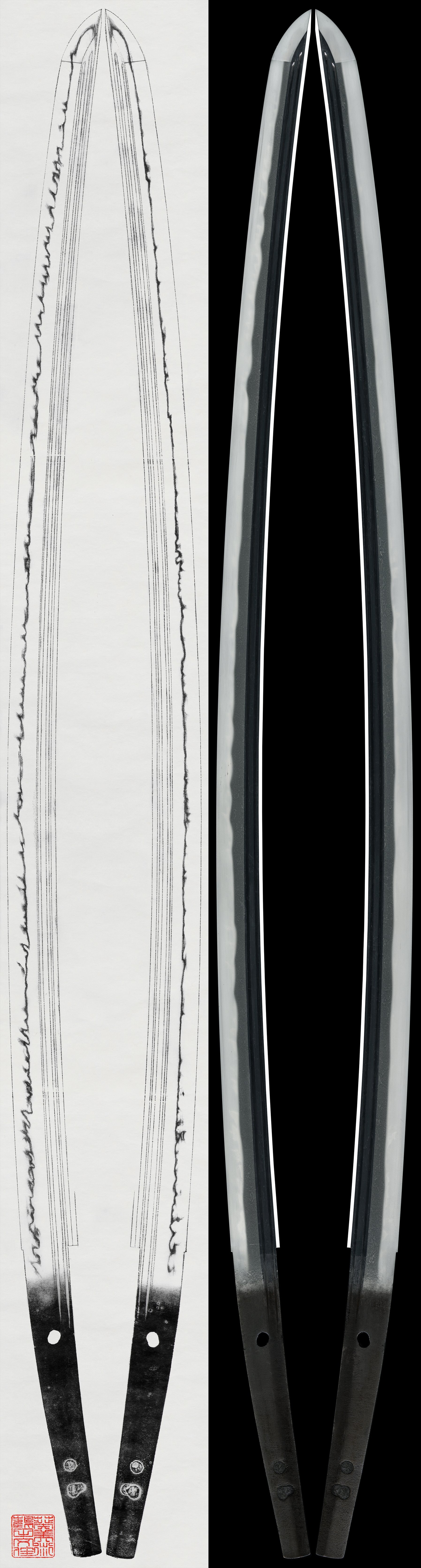
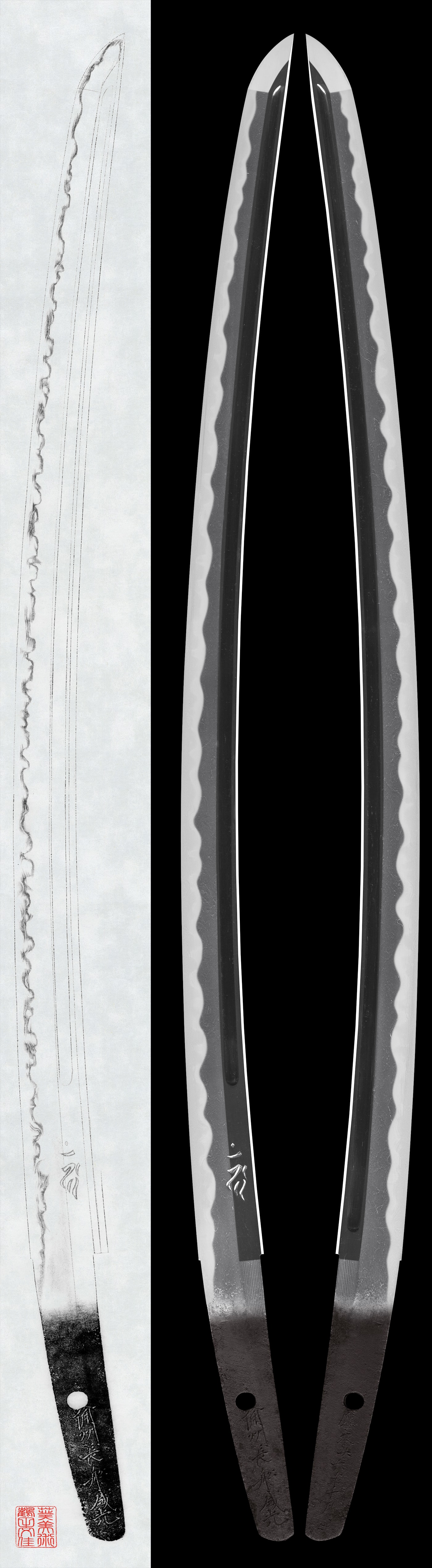
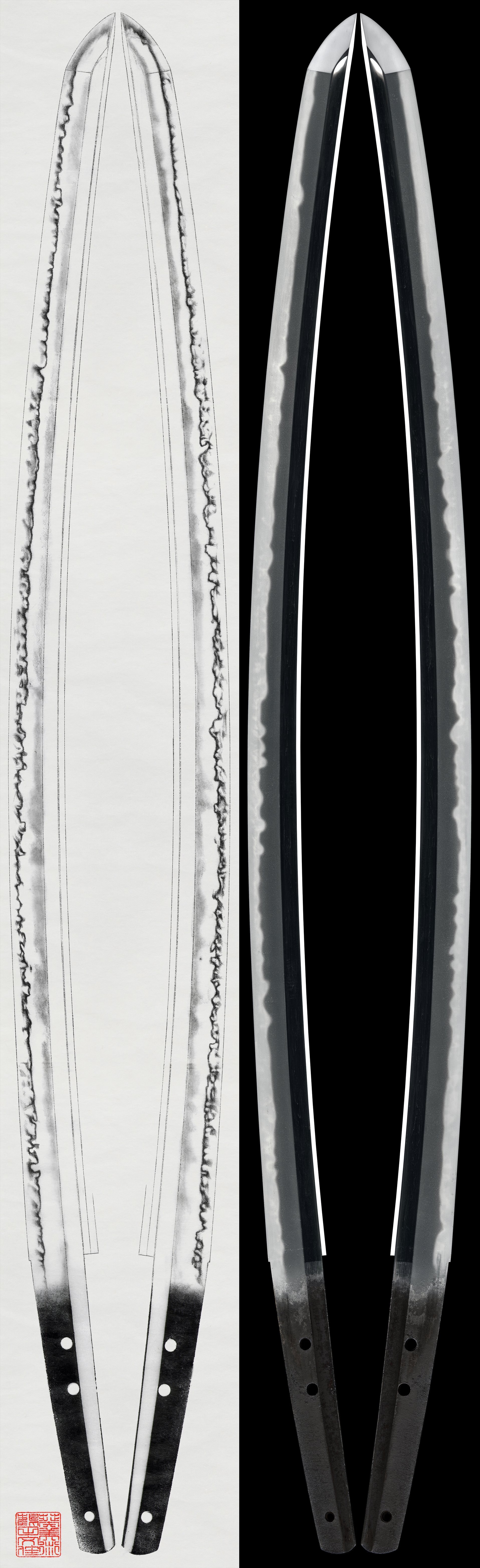
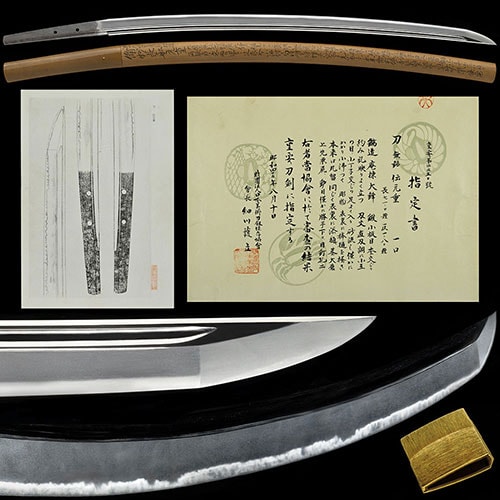
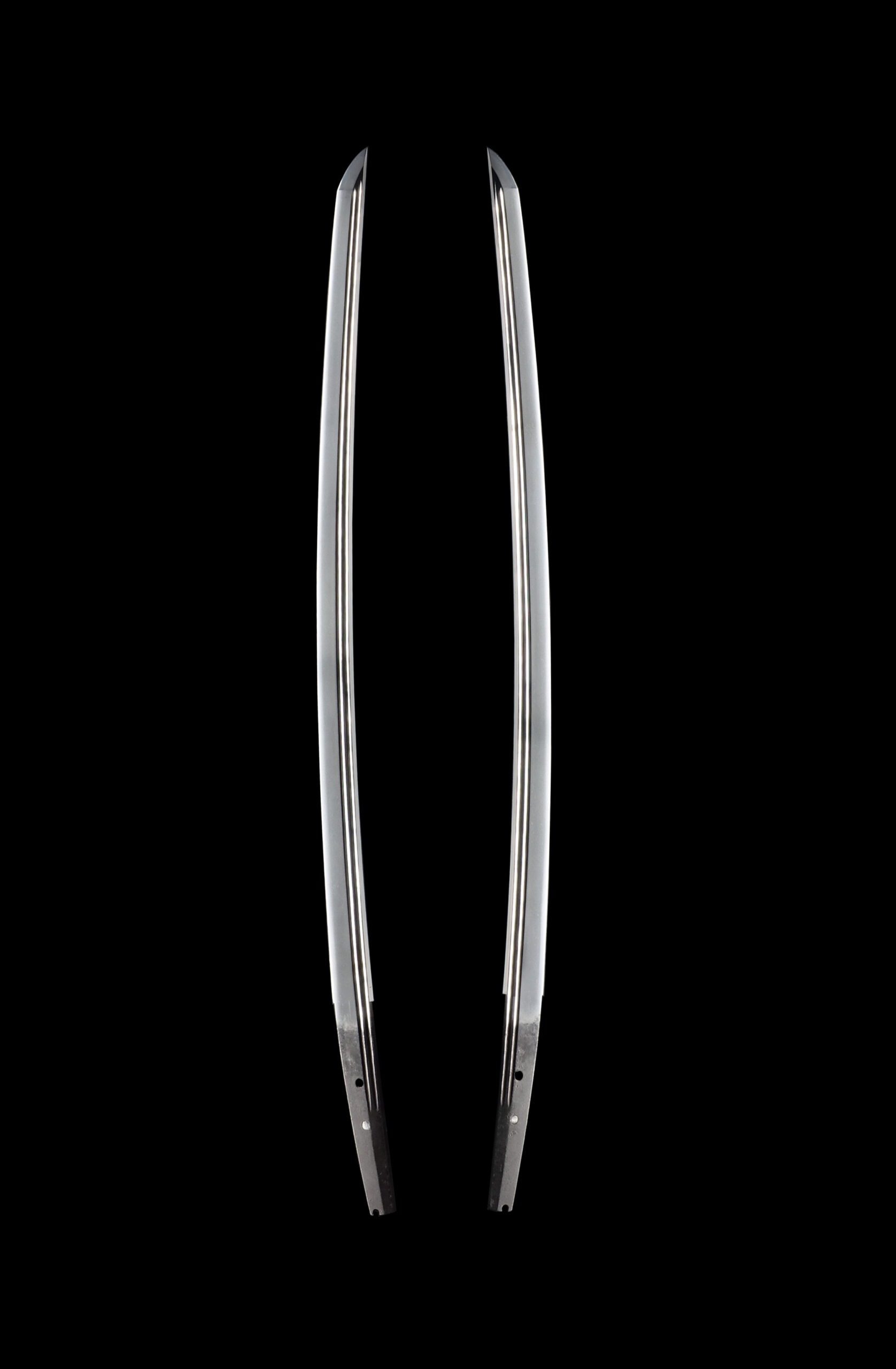
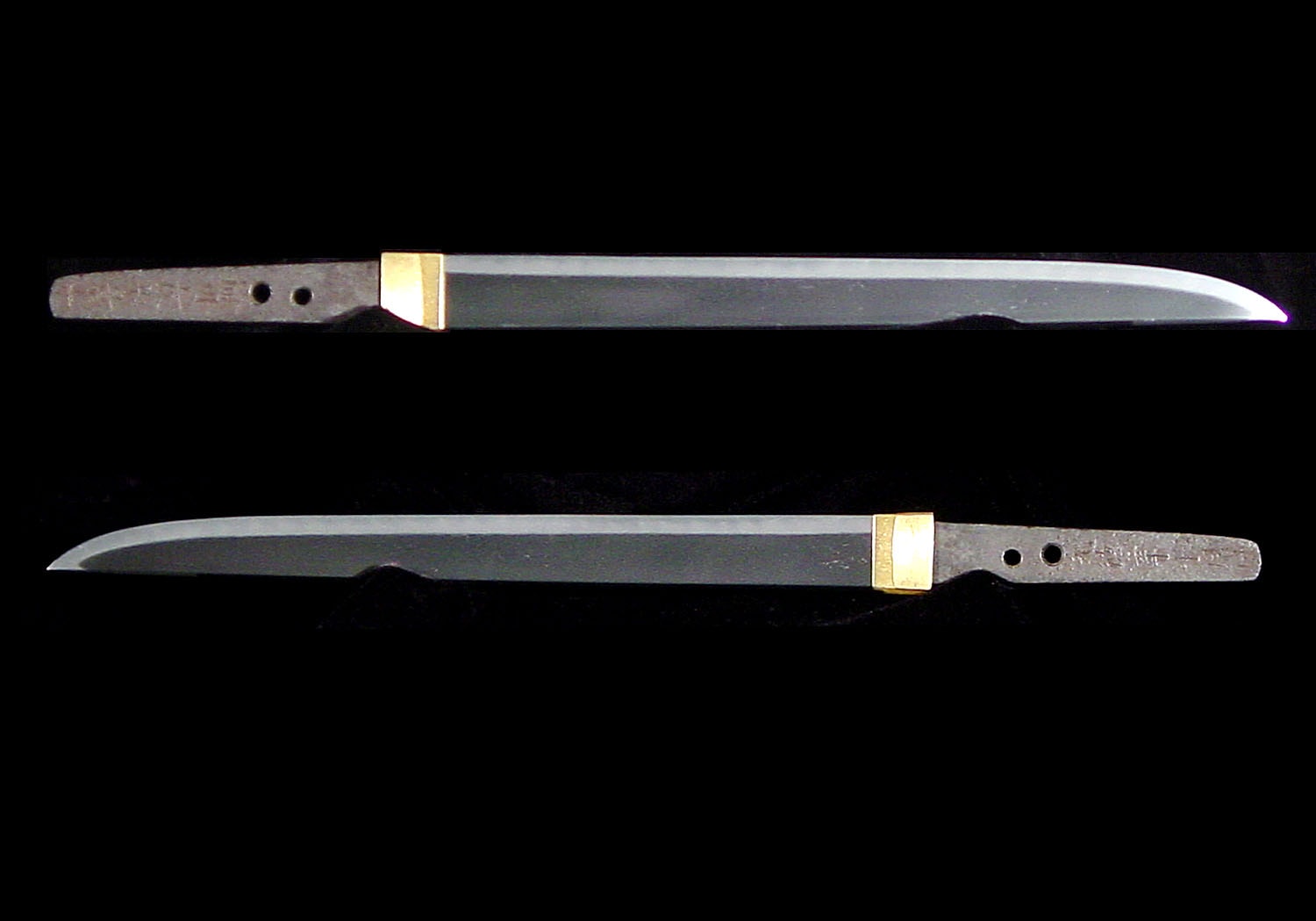
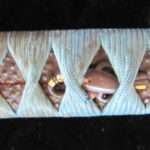
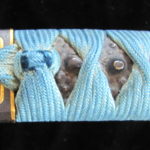
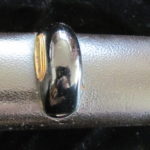
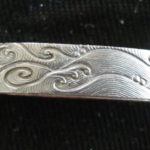
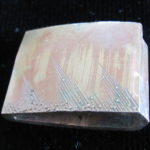
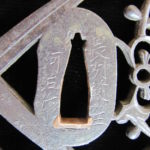
This is a suriage katana signed 'Wa', likely indicating Wakasa Province, with a nagasa of 70.5 cm. The blade features an active hamon with notare, choji, and tobi-yaki, all covered in prominent nie. It comes in a good condition koshirae with a signed iron tsuba and shakudo and gold menuki.
 NihontoWatch
Bizen-den · Bizen
1 piece on the market now
Among the swordsmiths of late Kamakura Bizen, the setsumei place the Wake group at Wake-shō (和気庄), a manor in Bizen Province, and the names that recur across the blades are two: Shigenori (重則) and Shigesuke (重助). Their working dates are fixed by surviving signed and dated pieces, with Shigenori represented by inscriptions of Genkō 4 (1324), Shōchū 3 (1326) and Karyaku 3 (1328), and Shigesuke by a Karyaku 1 (1326) tantō and a Karyaku 3 (1328) tachi. The setsumei repeatedly note that Wake is cited as one of the presumed locales of the old Ko-Bizen smiths, and that one view holds these makers drew upon the Ko-Bizen lineage, while cautioning in each case that the details are not clearly known. Throughout, the register frames the group not as a single transmitted house but as two distinct contemporary hands working the same district within the broader Bizen-den sphere. The shared vocabulary the blades present is consistent. The forging is ko-itame or itame, often mixed with mokume and a nagare (flowing) tendency, with a slightly standing grain (hada-dachi), dense ji-nie, chikei, and areas of jifu; across nearly every piece midare-utsuri stands out distinctly, though a few works show only a faint utsuri. The hamon rests on a suguha-chō base into which ko-gunome enters, joined variously by ko-chōji, saka-ashi, and pointed or angular gunome; ko-ashi enter well, the temper is nioi-predominant with ko-nie, and the nioiguchi tends toward a tight or urumi (moist) character, with kinsuji and sunagashi appearing in places. The bōshi characteristically runs shallowly notare and turns back in ko-maru, though yakitsume and hakikake finishes are recorded on individual blades.
The setsumei state plainly that this workmanship lies close to contemporary Osafune; the points of divergence they single out are a somewhat subdued midare, the persistent intermixture of ko-gunome, and a slight rustic vigor in ji and ha, which is where the distinctive character of the Wake line is said to be revealed. One Shigesuke tachi carries a gunome-dominant temper with kawazu-ko and a notably crisp nioiguchi, and a Shigesuke tantō shows a kataochi-style gunome. For kantei, the blades supply concrete anchors. Signed works by both smiths are described as exceedingly rare, so the dated tachi and the truncated-but-attributed tantō serve as reference material for the group, and several mumei ō-suriage katana are appraised to Shigesuke on the strength of these shared traits. The setsumei draw direct comparison to the Osafune masters Kagemitsu and Sanenaga, noting that one Shigesuke blade is judged not inferior to, and possibly exceeding, Kagemitsu's customary work, and one Shigenori tachi is likened to Sanenaga and Kagemitsu and rated a jōjō-saku. The careful discriminator they give is that a Wake piece can at first glance suggest the orthodox Osafune main line, yet close inspection of the fine, slightly standing grain and the minute nie hotsure along the habuchi affirms the Wake attribution. In provenance, a Shigesuke tachi bears a former-scabbard account that in the eleventh month of Genroku 14 (1701) Tokugawa Tsunayoshi bestowed it upon Mizuno Katsunaga, after which it was transmitted in the Mizuno family, lords of Yūki Domain in Shimōsa Province. The standing the setsumei accord the group is that of a Bizen line working at the level of, and easily confused with, late Kamakura Osafune, known chiefly through Shigenori and Shigesuke. Learn more →
| Smith | Era | Designated |
|---|---|---|
| Shigesuke重助 | 1326-1329 | 12 |
| Shigenori重則 | 1324-1326 | 4 |
We could not find an authenticity certificate on the seller’s listing. Japanese swords and fittings are normally papered by the NBTHK (or the NTHK). Without one, the attribution is the seller’s own assessment and has not been independently verified — treat it with caution and ask the dealer about certification before buying.
3-day return window from receipt.

This is a suriage katana signed 'Wa', likely indicating Wakasa Province, with a nagasa of 70.5 cm. The blade features an active hamon with notare, choji, and tobi-yaki, all covered in prominent nie. It comes in a good condition koshirae with a signed iron tsuba and shakudo and gold menuki.
NihontoWatchBizen-den · Bizen
1 piece on the market now
Among the swordsmiths of late Kamakura Bizen, the setsumei place the Wake group at Wake-shō (和気庄), a manor in Bizen Province, and the names that recur across the blades are two: Shigenori (重則) and Shigesuke (重助). Their working dates are fixed by surviving signed and dated pieces, with Shigenori represented by inscriptions of Genkō 4 (1324), Shōchū 3 (1326) and Karyaku 3 (1328), and Shigesuke by a Karyaku 1 (1326) tantō and a Karyaku 3 (1328) tachi. The setsumei repeatedly note that Wake is cited as one of the presumed locales of the old Ko-Bizen smiths, and that one view holds these makers drew upon the Ko-Bizen lineage, while cautioning in each case that the details are not clearly known. Throughout, the register frames the group not as a single transmitted house but as two distinct contemporary hands working the same district within the broader Bizen-den sphere. The shared vocabulary the blades present is consistent. The forging is ko-itame or itame, often mixed with mokume and a nagare (flowing) tendency, with a slightly standing grain (hada-dachi), dense ji-nie, chikei, and areas of jifu; across nearly every piece midare-utsuri stands out distinctly, though a few works show only a faint utsuri. The hamon rests on a suguha-chō base into which ko-gunome enters, joined variously by ko-chōji, saka-ashi, and pointed or angular gunome; ko-ashi enter well, the temper is nioi-predominant with ko-nie, and the nioiguchi tends toward a tight or urumi (moist) character, with kinsuji and sunagashi appearing in places. The bōshi characteristically runs shallowly notare and turns back in ko-maru, though yakitsume and hakikake finishes are recorded on individual blades.
The setsumei state plainly that this workmanship lies close to contemporary Osafune; the points of divergence they single out are a somewhat subdued midare, the persistent intermixture of ko-gunome, and a slight rustic vigor in ji and ha, which is where the distinctive character of the Wake line is said to be revealed. One Shigesuke tachi carries a gunome-dominant temper with kawazu-ko and a notably crisp nioiguchi, and a Shigesuke tantō shows a kataochi-style gunome. For kantei, the blades supply concrete anchors. Signed works by both smiths are described as exceedingly rare, so the dated tachi and the truncated-but-attributed tantō serve as reference material for the group, and several mumei ō-suriage katana are appraised to Shigesuke on the strength of these shared traits. The setsumei draw direct comparison to the Osafune masters Kagemitsu and Sanenaga, noting that one Shigesuke blade is judged not inferior to, and possibly exceeding, Kagemitsu's customary work, and one Shigenori tachi is likened to Sanenaga and Kagemitsu and rated a jōjō-saku. The careful discriminator they give is that a Wake piece can at first glance suggest the orthodox Osafune main line, yet close inspection of the fine, slightly standing grain and the minute nie hotsure along the habuchi affirms the Wake attribution. In provenance, a Shigesuke tachi bears a former-scabbard account that in the eleventh month of Genroku 14 (1701) Tokugawa Tsunayoshi bestowed it upon Mizuno Katsunaga, after which it was transmitted in the Mizuno family, lords of Yūki Domain in Shimōsa Province. The standing the setsumei accord the group is that of a Bizen line working at the level of, and easily confused with, late Kamakura Osafune, known chiefly through Shigenori and Shigesuke. Learn more →
| Smith | Era | Designated |
|---|---|---|
| Shigesuke重助 | 1326-1329 | 12 |
| Shigenori重則 | 1324-1326 | 4 |
We could not find an authenticity certificate on the seller’s listing. Japanese swords and fittings are normally papered by the NBTHK (or the NTHK). Without one, the attribution is the seller’s own assessment and has not been independently verified — treat it with caution and ask the dealer about certification before buying.
3-day return window from receipt.