The Shintō era was largely invented in Kyōto: Umetada Myōju’s workshop trained the movement, Horikawa Kunihiro raised a generation, and the Hon’ami appraisers, who held no forge, governed the meaning of famous blades.
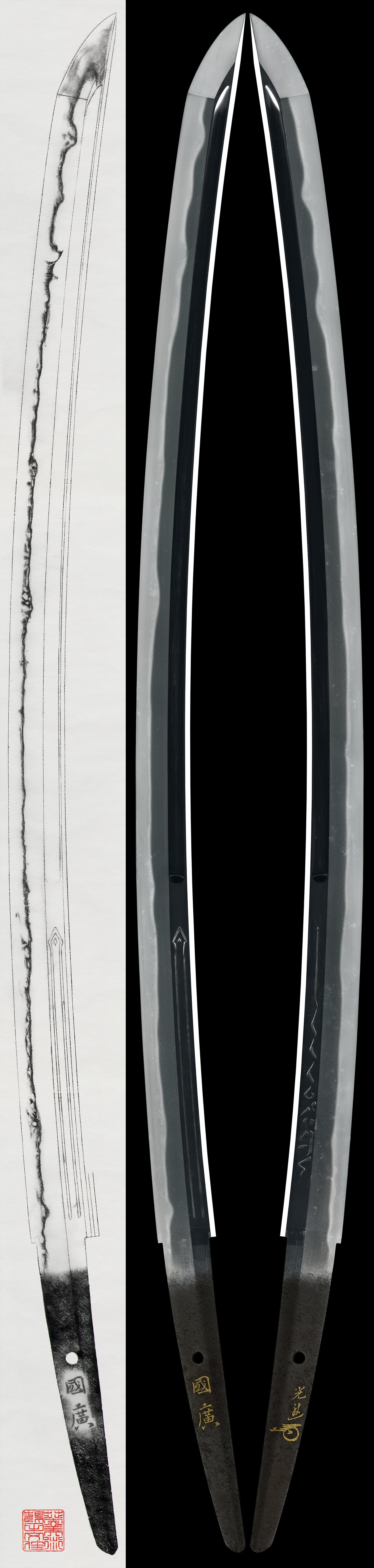
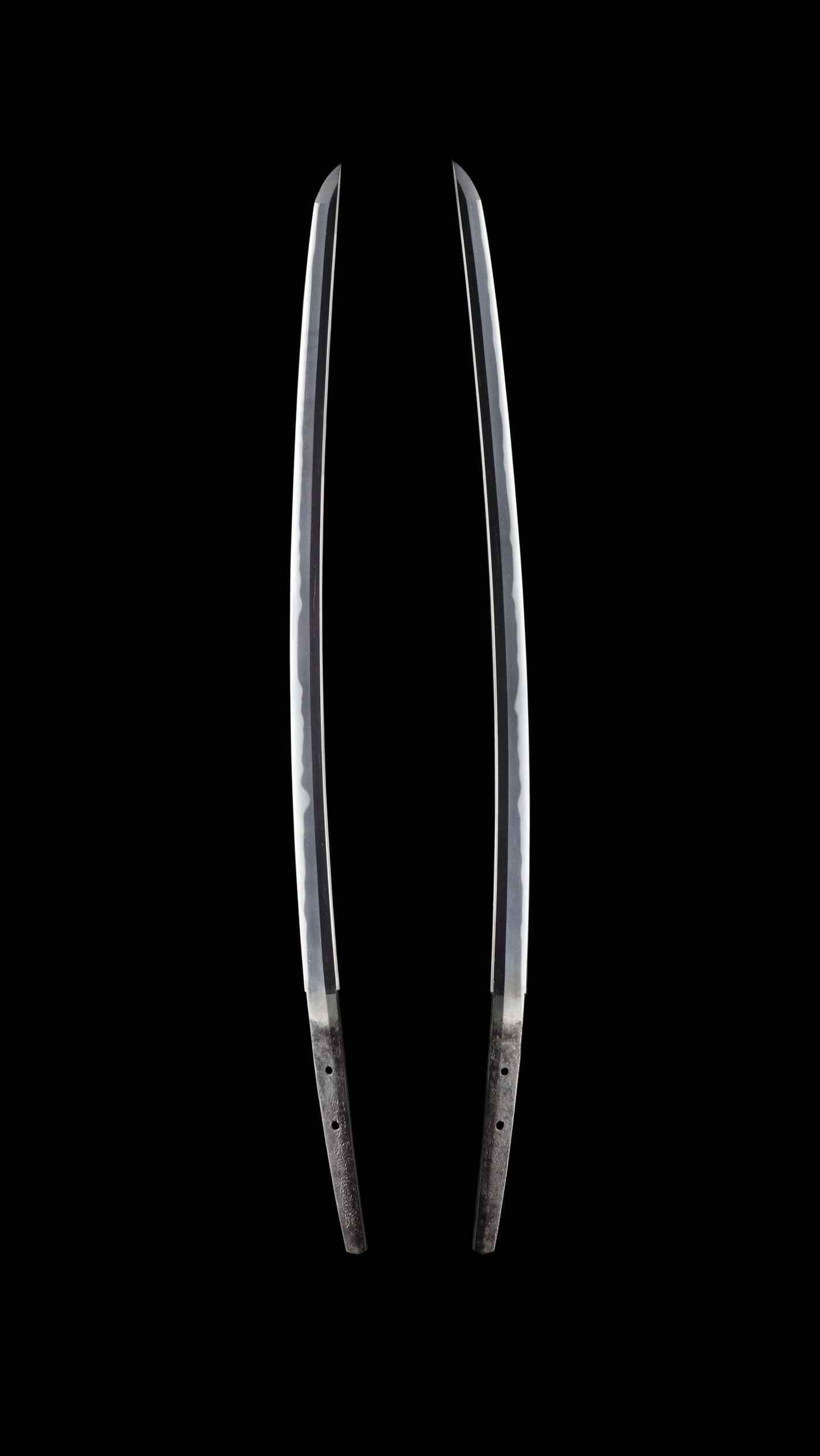
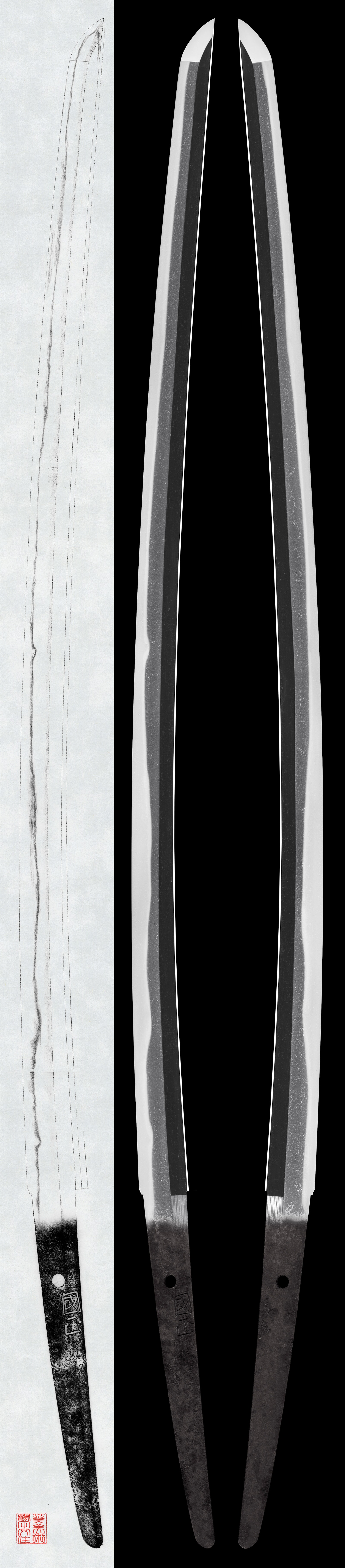
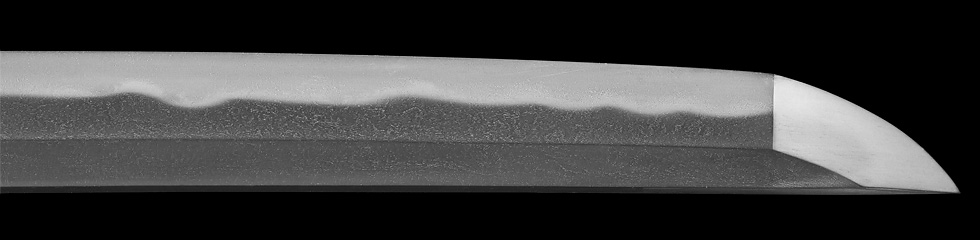
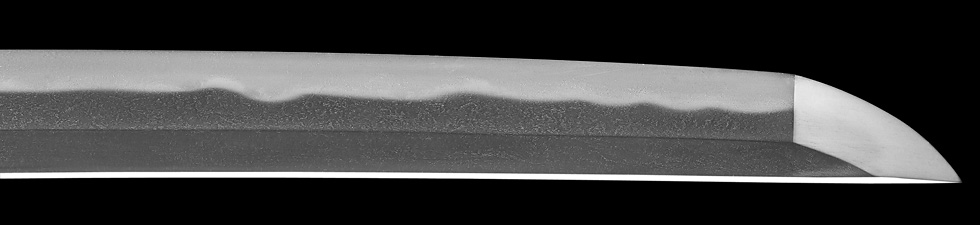
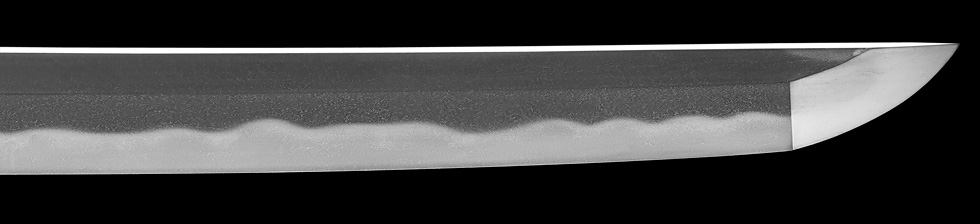
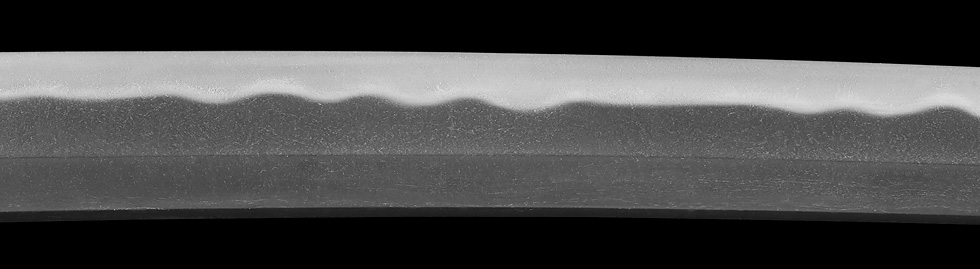
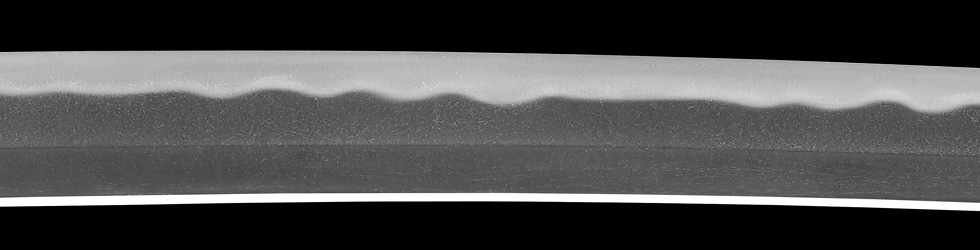
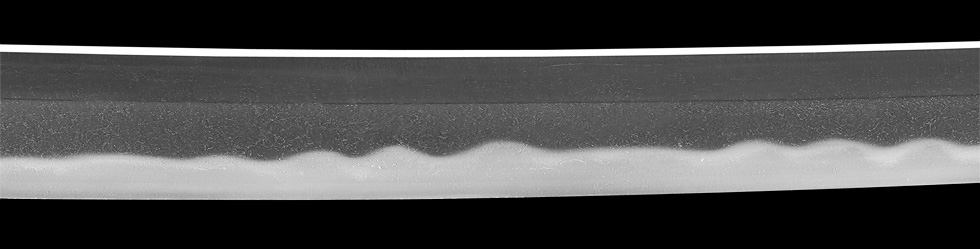
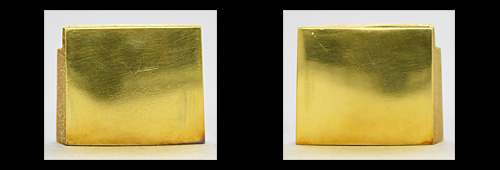
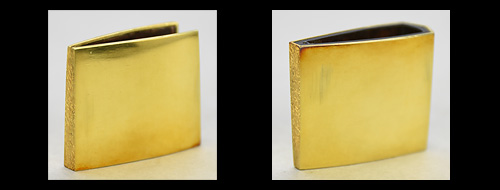
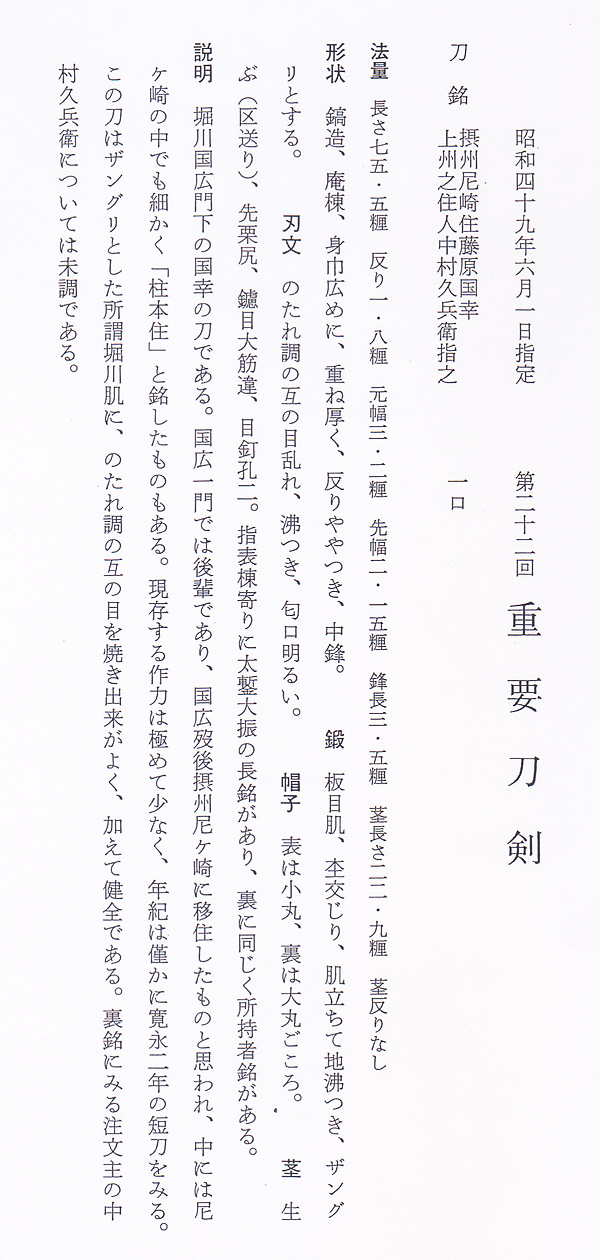
A katana by Fujiwara Kuniyuki from Settsu Amagasaki. The blade is from the Shinto period and has been designated as Juyo Token (Important Sword). It features an itame hada and a hamon of wavy and irregular patterns with nie and kinsuji.
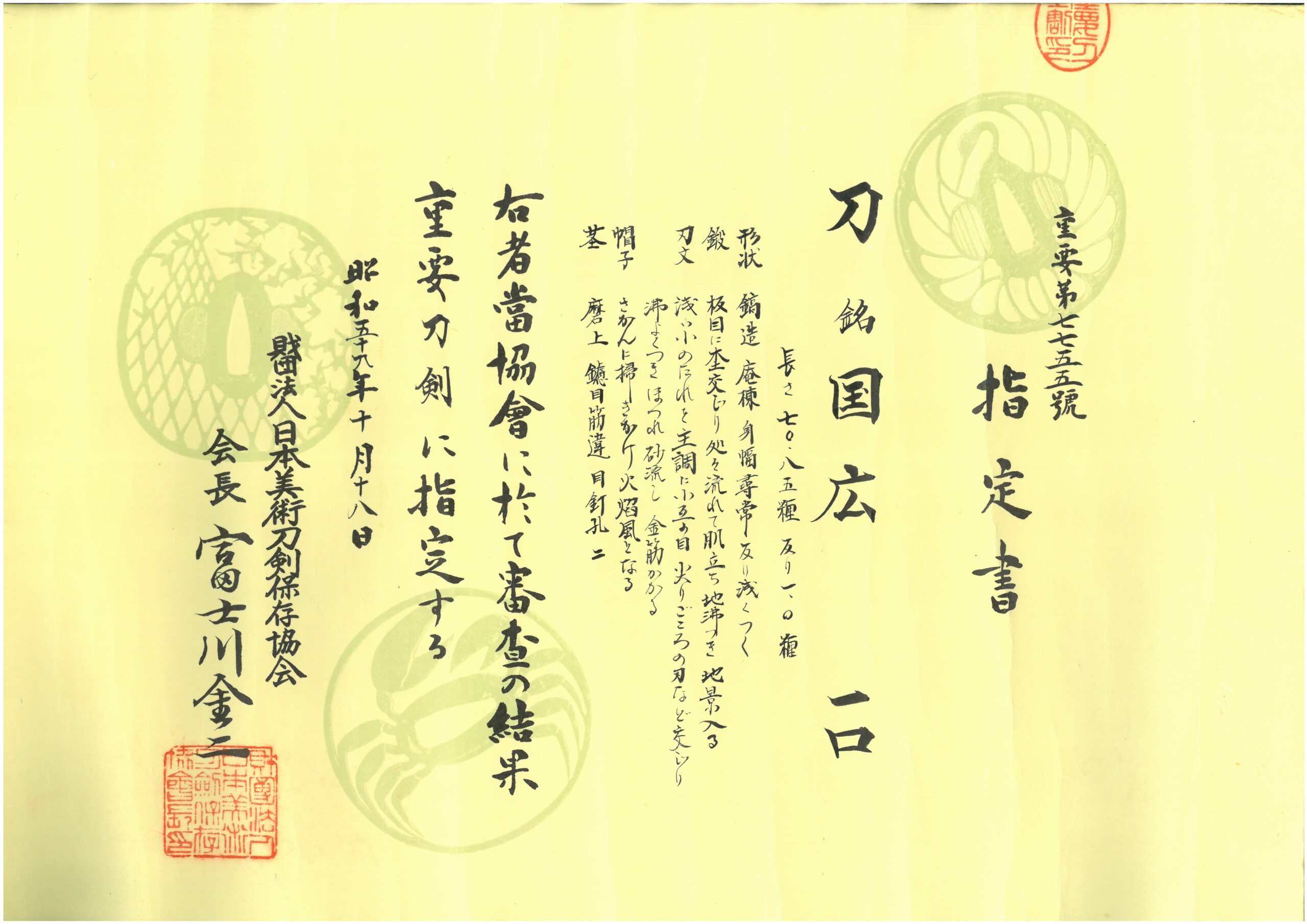
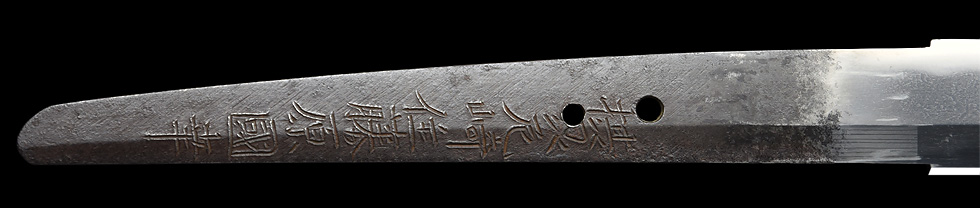
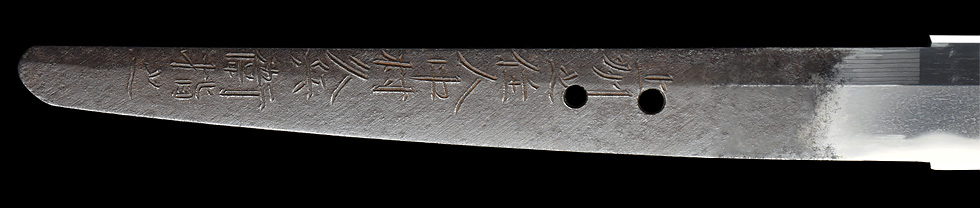
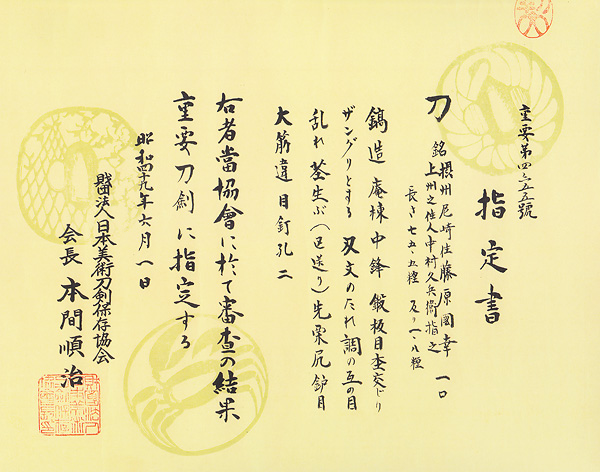
Certificate reading — 銘 摂州尼崎住藤原国幸 上州之住人中村久兵衛指之
 NihontoWatch
mei · Keicho (1596-1615)



Horikawa school (Kyoto, then Settsu); a later pupil of Horikawa Kunihiro who settled at Amagasaki · Yamashiro · around 1596-1615
Fujishiro Jo saku · Tōken Taikan top 39%
1 piece on the market now
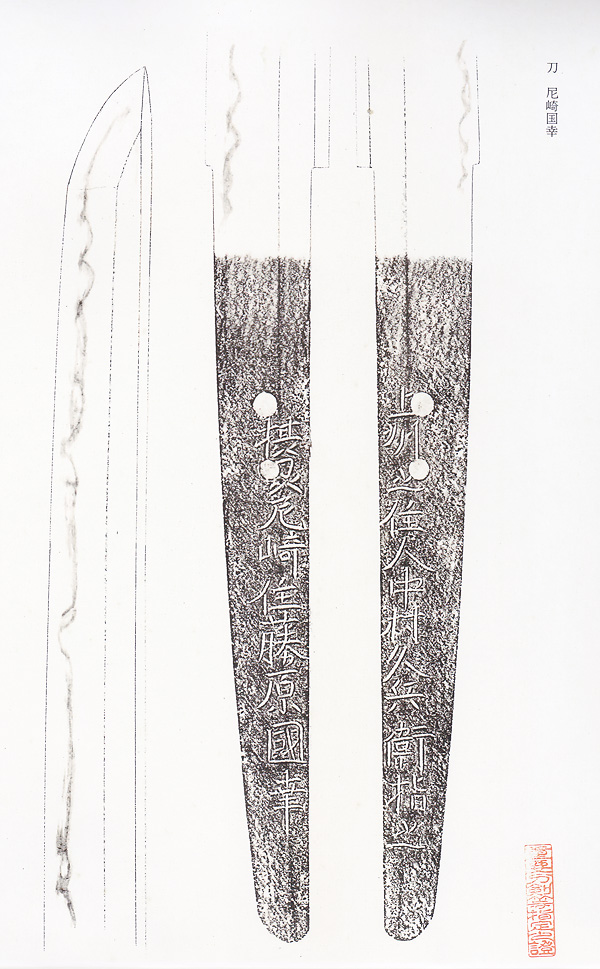
Kuniyuki signed himself Settsu Amagasaki-jū Fujiwara Kuniyuki, and that long signature, cut in bold thick chisel strokes on the omote of an ubu nakago below the mekugi-ana, is where his small surviving record begins. He was a later pupil in the circle of Horikawa Kunihiro, the Kyoto founder whose school carried the Sōshū-revival manner into the early Edo period. After Kunihiro's death in Keichō 19 (1614) he is thought to have left Kyoto for Settsu and settled at Amagasaki, and a handful of his blades narrow the address further to Hashiramoto, a place within the modern city. The published sources are careful about that name: the old sword-signature books had invariably miswritten it, and the forty-fourth-session commentary states plainly that 「柱本が正しく, 現在の尼ヶ崎市内の地名である」, that Hashiramoto is the correct reading. His work is best understood not as a dated chronology but as the Horikawa hand at its most legible, read by where he signed and by which form he chose, because his blades carry no dates beyond one Kan'ei 2 (1625) piece the sources cite.
The feature that identifies him most reliably is the jigane. He forges an itame mixed with mokume that stands open in the school's manner, the grain running flowing toward the edge and roughening into the loose, granular surface the published sources call the so-called Horikawa-hada[[c:1]], with ji-nie attaching and, on one katana, fine chikei entering. The twenty-second-session katana names that jigane outright, its rough zanguri forging carrying the qualities of Horikawa work, and the same surface recurs across the corpus, named or implied on most of his blades. It is not a personal invention but the inheritance from Kunihiro, so it places him within the line as surely as it marks his own hand; for a smith of whom the sources repeatedly note that 「現存する作刀は極めて少く」, his extant works are exceedingly few, the standing zanguri ji is the steadiest thing to hold to.
Over that jigane his katana temper a notare as the main motif, mixed with gunome and angular ko-notare, ko-nie attaching well and fine sunagashi running through the ha. Ashi enter, and the nioiguchi most often settles into a subdued shizumi, sinking rather than standing bright, though on the twenty-second-session blade it is read as clear and bright instead. The bōshi runs ko-maru, on one katana with an ō-maru-inclined turnback on the ura, on others slightly pointed with hakikake and a deep kaeri. The shapes are sober: shinogi-zukuri with iori-mune, the mihaba normal to rather wide and the kasane thick, the curvature shallow to moderate with a chū-kissaki that on one long-bodied piece tightens toward the tip. Taken together the ji and ha give the quiet, astringent make the sources read as characteristic Horikawa-mono rather than anything showy.
Within so small a body of work the clearest division is by form. His shinogi-zukuri katana hold the notare-based gunome described above, while his hira-zukuri wakizashi form a distinct register of the same hand: built mitsu-mune, wide in the mihaba and sun-nobi, the kasane somewhat thick, with sakizori and at times funbari. On the earlier of these the temper is a gunome mixed with large gunome, ashi entering with tobiyaki, deep nioi and sunagashi; on the latest, designated in the forty-fourth session, the ha settles instead into a chū-suguha base bearing only a slight hint of notare, the nie somewhat uneven, the nioiguchi sinking, and the temper carried down into the hamachi. That last wakizashi is the one the commentary lingers over, finding that the rough zanguri forging and the subdued habuchi together display the Horikawa character well[[c:2]]; it calls the piece an altogether restrained make that yet yields a subdued, astringent flavor, 「総じて地味な作柄に仕上げているが, 渋い味わいを醸し出している」.
Kuniyuki stands at no head of a school. His teacher is Horikawa Kunihiro, and the line runs to him rather than from him: no pupil is recorded, and his place is that of a late, minor hand of the Kyoto school carried into Settsu. The Shintō Ichiran, quoted in the forty-fourth-session commentary, fixes the connection outright, noting that he signed 「摂州住藤原国幸ト切ル」, that he at times resided in Kyoto, worked in the Genna and Kan'ei eras, and was a disciple of Kunihiro; from the surviving work the sources judge his membership in the Kunihiro group certain. His worth to the line is documentary rather than generative, the same forty-fourth-session blade singled out as valuable material for understanding the breadth of his own production and, through it, the reach of the Kunihiro school down into Amagasaki. What sets him apart on a blade is not a flamboyant signature trait but the consistency of the quiet Horikawa make: the standing zanguri ji, the notare-gunome, and the sinking nioiguchi held together in a sober, well-finished whole.
Six of his blades have reached Jūyō-Tōken, an unusual concentration for a smith whose signed work the sources call exceedingly few, and these six Jūyō pieces are the whole of his designated record, none of them raised to a higher tier. Fujishiro rates him Jō-saku, a solid second rank, and one of his katana carries its connoisseurship in the inscription itself, the patron Nakamura Kyūbei of Jōshū named on the ura, a record the commentary notes has not yet been traced. Recorded provenance is thin, one of the Jūyō pieces carrying a documented descent through a long-held family collection. None of these blades is patrimony locked forever in a museum or shrine, yet none reaches the market with any frequency; for a smith this scarce, a signed Kuniyuki is something a collector encounters only rarely, from time to time and with patience, a Jūyō piece of the Horikawa school rather than a famous name. The published sources weigh him honestly, neither inflating a minor pupil nor overlooking him, and judge the best of his work, in their own phrase, 「同工の作域を知る上で, 資料的にも貴重である」, valuable for the light it throws on the breadth of his hand.
Where Kuniyuki stands among comparable artisans: across all of nihontō, and within tradition, era, and period. The tiers (Foremost · Leading · Major · Notable) weigh official designations from the NBTHK and Japan's Agency for Cultural Affairs, together with historical honors of lasting repute such as the Sansaku and Meibutsu-chō.
Select a lens to see how it's measured.
Shinto · Yamashiro
79 pieces on the market now
At Ichijo Horikawa in Kyoto, from Keicho 4 (1599), Horikawa Kunihiro gathered the pupils whose work the published sources name with his own as the opening of the shinto age. Kunihiro himself reached forging late and by a roundabout road. Born Tanaka and serving as a warrior under the Ito of Obi castle in Hyuga, he wandered the provinces after that house fell, forging where he stopped, his earliest dated blade cut in Hyuga in Tensho 4 (1576); his itinerant Tensho-uchi looked to late Soshu and late Seki, often run toward a hitatsura-like effect over devotional carving. The settlement in Kyoto changed that. There his stated aim, the sources write, lay in the revival of the Soshu-den tradition, the leaning strongest toward Shizu, and around that ideal he trained the men who carried his manner forward: Dewa no Kami Kunimichi, Kuniyasu, Osumi no Jo Masahiro, Echigo no Kami Kunitomo, the elder Kunisada and Kunisuke, with later and minor hands reaching Settsu, Echizen and Edo. Many of them, born like the master at Obi, followed him from Hyuga to the capital. The shared vocabulary is read first in the steel. The school forges an itame mixed with mokume that stands up, the grain raised into the loose, granular surface the commentaries name outright, the zanguri hada particular to Horikawa work, with ji-nie lying thick and chikei entering; on many blades a mizukage rises obliquely from the machi. Over that ground the prime manner is the Keicho-shinto sugata, wide with little taper and an extended chu-kissaki or o-kissaki, the build likened to a Nanbokucho odachi cut down, tempered in a notare and gunome with thick nie, sunagashi and long kinsuji, the nioiguchi often sinking into shizumi. Within that frame the pupils diverge sharply.
Kunimichi runs the flamboyant Shizu copy fully out and turns his boshi pointed in the Mishina manner, the Sanpin boshi the school otherwise does not show. Masahiro keeps the same Soshu-den worked at lower temperature, his temper calm and his mokume conspicuous; Kuniyasu and Kunitsugu stand closest of all to the master and signed for him. Kunitomo turns alone toward late Seki, his gunome round-headed and his chisel the finest in the group, and the elder Kunisada and Kunisuke carry the zanguri steel south into Osaka, the latter keeping the Ishido clove he was born to. Hiroyuki holds suguha over a blackish steel that recalls old Yamato, and the two Echizen Kunikiyo forge a dark, dense hokkoku-gane under a calm chu-suguha. A collector seeks Horikawa because the school stands at a hinge: Kunihiro is read as the first hand of the new-sword age, and the line he taught runs forward into the Osaka tradition through Kunisada and Kunisuke and into Echizen through Kunikiyo. To kantei the work, read the steel first, the standing zanguri surface and the oblique mizukage, then the sinking nioiguchi and the Soshu-revival notare with its sunagashi and kinsuji; the individual hand declares itself in the departures, Kunimichi's pointed boshi, Kunitomo's Seki gunome and compact tang, Kuniyasu's reversed file marks and two-character mei, Hiroyuki's kiri-yasuri. The founder and his closest pupils sit at the top of the line, Kunihiro signing almost everything he made, the large kata-ochi two-character mei beside his long residence signatures; because Kuniyasu, Masahiro, Kunitsugu and Hiromi worked as his daisaku, a share of the blades signed Kunihiro are in fact theirs. Provenance runs through the houses of the founder's own story and of the country, the Hyuga Ito he had served, the Shimazu of Kagoshima, the Imperial Family and Toyotomi Hideyori, with the tachi Kunihiro dedicated to the Hataeda Hachimangu still in the shrine's keeping. A signed Horikawa blade reaches a private collection only from time to time, carrying on its nakago the hand with which the new sword begins. Learn more →
| Smith | Era | Designated |
|---|---|---|
| Kunihiro國廣 | 1573-1613 | 148 |
| Kunimichi國路 | 1615-1624 | 74 |
| Kunisada國貞 | 1624-1646 | 88 |
| Masahiro正弘 | 1596-1615 | 14 |
| Kunitomo國儔 | 1596-1615 | 27 |
Kyōto: the revival workshop
The Shintō era was largely invented in Kyōto: Umetada Myōju’s workshop trained the movement, Horikawa Kunihiro raised a generation, and the Hon’ami appraisers, who held no forge, governed the meaning of famous blades.
A blade of top-grade workmanship and condition, formally judged to rank with a nationally recognized Important Art Object (Jūyō Bijutsuhin). Awarded only at the NBTHK’s competitive annual examination.
Of Japan’s roughly 2.5 million registered swords, only 12,307 (about 1 in 203) have ever attained Jūyō.
The NBTHK (Nihon Bijutsu Tōken Hozon Kyōkai, the Society for the Preservation of Japanese Art Swords) is a public-interest incorporated foundation founded in 1948 and supervised by Japan’s Agency for Cultural Affairs (Bunkachō); it is based at the Japanese Sword Museum in Tokyo. Its expert panels physically examine each submitted work (shinsa) and issue a certificate (kanteishō) ranking it by artistic and historical merit. NBTHK papers are the most widely recognized standard of authentication for Japanese swords and fittings.
NBTHK official siteWithin one week of the item's arrival (cooling-off is possible within Japan only). For defects that differ from the purchase conditions, we will accept the return and refund the payment. For other cases such as overseas, we will consult separately.
¥5,500,000
A katana by Fujiwara Kuniyuki from Settsu Amagasaki. The blade is from the Shinto period and has been designated as Juyo Token (Important Sword). It features an itame hada and a hamon of wavy and irregular patterns with nie and kinsuji.
Certificate reading — 銘 摂州尼崎住藤原国幸 上州之住人中村久兵衛指之
NihontoWatchmei · Keicho (1596-1615)
Horikawa school (Kyoto, then Settsu); a later pupil of Horikawa Kunihiro who settled at Amagasaki · Yamashiro · around 1596-1615
Fujishiro Jo saku · Tōken Taikan top 39%
1 piece on the market now
Kuniyuki signed himself Settsu Amagasaki-jū Fujiwara Kuniyuki, and that long signature, cut in bold thick chisel strokes on the omote of an ubu nakago below the mekugi-ana, is where his small surviving record begins. He was a later pupil in the circle of Horikawa Kunihiro, the Kyoto founder whose school carried the Sōshū-revival manner into the early Edo period. After Kunihiro's death in Keichō 19 (1614) he is thought to have left Kyoto for Settsu and settled at Amagasaki, and a handful of his blades narrow the address further to Hashiramoto, a place within the modern city. The published sources are careful about that name: the old sword-signature books had invariably miswritten it, and the forty-fourth-session commentary states plainly that 「柱本が正しく, 現在の尼ヶ崎市内の地名である」, that Hashiramoto is the correct reading. His work is best understood not as a dated chronology but as the Horikawa hand at its most legible, read by where he signed and by which form he chose, because his blades carry no dates beyond one Kan'ei 2 (1625) piece the sources cite.
The feature that identifies him most reliably is the jigane. He forges an itame mixed with mokume that stands open in the school's manner, the grain running flowing toward the edge and roughening into the loose, granular surface the published sources call the so-called Horikawa-hada[[c:1]], with ji-nie attaching and, on one katana, fine chikei entering. The twenty-second-session katana names that jigane outright, its rough zanguri forging carrying the qualities of Horikawa work, and the same surface recurs across the corpus, named or implied on most of his blades. It is not a personal invention but the inheritance from Kunihiro, so it places him within the line as surely as it marks his own hand; for a smith of whom the sources repeatedly note that 「現存する作刀は極めて少く」, his extant works are exceedingly few, the standing zanguri ji is the steadiest thing to hold to.
Over that jigane his katana temper a notare as the main motif, mixed with gunome and angular ko-notare, ko-nie attaching well and fine sunagashi running through the ha. Ashi enter, and the nioiguchi most often settles into a subdued shizumi, sinking rather than standing bright, though on the twenty-second-session blade it is read as clear and bright instead. The bōshi runs ko-maru, on one katana with an ō-maru-inclined turnback on the ura, on others slightly pointed with hakikake and a deep kaeri. The shapes are sober: shinogi-zukuri with iori-mune, the mihaba normal to rather wide and the kasane thick, the curvature shallow to moderate with a chū-kissaki that on one long-bodied piece tightens toward the tip. Taken together the ji and ha give the quiet, astringent make the sources read as characteristic Horikawa-mono rather than anything showy.
Within so small a body of work the clearest division is by form. His shinogi-zukuri katana hold the notare-based gunome described above, while his hira-zukuri wakizashi form a distinct register of the same hand: built mitsu-mune, wide in the mihaba and sun-nobi, the kasane somewhat thick, with sakizori and at times funbari. On the earlier of these the temper is a gunome mixed with large gunome, ashi entering with tobiyaki, deep nioi and sunagashi; on the latest, designated in the forty-fourth session, the ha settles instead into a chū-suguha base bearing only a slight hint of notare, the nie somewhat uneven, the nioiguchi sinking, and the temper carried down into the hamachi. That last wakizashi is the one the commentary lingers over, finding that the rough zanguri forging and the subdued habuchi together display the Horikawa character well[[c:2]]; it calls the piece an altogether restrained make that yet yields a subdued, astringent flavor, 「総じて地味な作柄に仕上げているが, 渋い味わいを醸し出している」.
Kuniyuki stands at no head of a school. His teacher is Horikawa Kunihiro, and the line runs to him rather than from him: no pupil is recorded, and his place is that of a late, minor hand of the Kyoto school carried into Settsu. The Shintō Ichiran, quoted in the forty-fourth-session commentary, fixes the connection outright, noting that he signed 「摂州住藤原国幸ト切ル」, that he at times resided in Kyoto, worked in the Genna and Kan'ei eras, and was a disciple of Kunihiro; from the surviving work the sources judge his membership in the Kunihiro group certain. His worth to the line is documentary rather than generative, the same forty-fourth-session blade singled out as valuable material for understanding the breadth of his own production and, through it, the reach of the Kunihiro school down into Amagasaki. What sets him apart on a blade is not a flamboyant signature trait but the consistency of the quiet Horikawa make: the standing zanguri ji, the notare-gunome, and the sinking nioiguchi held together in a sober, well-finished whole.
Six of his blades have reached Jūyō-Tōken, an unusual concentration for a smith whose signed work the sources call exceedingly few, and these six Jūyō pieces are the whole of his designated record, none of them raised to a higher tier. Fujishiro rates him Jō-saku, a solid second rank, and one of his katana carries its connoisseurship in the inscription itself, the patron Nakamura Kyūbei of Jōshū named on the ura, a record the commentary notes has not yet been traced. Recorded provenance is thin, one of the Jūyō pieces carrying a documented descent through a long-held family collection. None of these blades is patrimony locked forever in a museum or shrine, yet none reaches the market with any frequency; for a smith this scarce, a signed Kuniyuki is something a collector encounters only rarely, from time to time and with patience, a Jūyō piece of the Horikawa school rather than a famous name. The published sources weigh him honestly, neither inflating a minor pupil nor overlooking him, and judge the best of his work, in their own phrase, 「同工の作域を知る上で, 資料的にも貴重である」, valuable for the light it throws on the breadth of his hand.
Where Kuniyuki stands among comparable artisans: across all of nihontō, and within tradition, era, and period. The tiers (Foremost · Leading · Major · Notable) weigh official designations from the NBTHK and Japan's Agency for Cultural Affairs, together with historical honors of lasting repute such as the Sansaku and Meibutsu-chō.
Select a lens to see how it's measured.
Shinto · Yamashiro
79 pieces on the market now
At Ichijo Horikawa in Kyoto, from Keicho 4 (1599), Horikawa Kunihiro gathered the pupils whose work the published sources name with his own as the opening of the shinto age. Kunihiro himself reached forging late and by a roundabout road. Born Tanaka and serving as a warrior under the Ito of Obi castle in Hyuga, he wandered the provinces after that house fell, forging where he stopped, his earliest dated blade cut in Hyuga in Tensho 4 (1576); his itinerant Tensho-uchi looked to late Soshu and late Seki, often run toward a hitatsura-like effect over devotional carving. The settlement in Kyoto changed that. There his stated aim, the sources write, lay in the revival of the Soshu-den tradition, the leaning strongest toward Shizu, and around that ideal he trained the men who carried his manner forward: Dewa no Kami Kunimichi, Kuniyasu, Osumi no Jo Masahiro, Echigo no Kami Kunitomo, the elder Kunisada and Kunisuke, with later and minor hands reaching Settsu, Echizen and Edo. Many of them, born like the master at Obi, followed him from Hyuga to the capital. The shared vocabulary is read first in the steel. The school forges an itame mixed with mokume that stands up, the grain raised into the loose, granular surface the commentaries name outright, the zanguri hada particular to Horikawa work, with ji-nie lying thick and chikei entering; on many blades a mizukage rises obliquely from the machi. Over that ground the prime manner is the Keicho-shinto sugata, wide with little taper and an extended chu-kissaki or o-kissaki, the build likened to a Nanbokucho odachi cut down, tempered in a notare and gunome with thick nie, sunagashi and long kinsuji, the nioiguchi often sinking into shizumi. Within that frame the pupils diverge sharply.
Kunimichi runs the flamboyant Shizu copy fully out and turns his boshi pointed in the Mishina manner, the Sanpin boshi the school otherwise does not show. Masahiro keeps the same Soshu-den worked at lower temperature, his temper calm and his mokume conspicuous; Kuniyasu and Kunitsugu stand closest of all to the master and signed for him. Kunitomo turns alone toward late Seki, his gunome round-headed and his chisel the finest in the group, and the elder Kunisada and Kunisuke carry the zanguri steel south into Osaka, the latter keeping the Ishido clove he was born to. Hiroyuki holds suguha over a blackish steel that recalls old Yamato, and the two Echizen Kunikiyo forge a dark, dense hokkoku-gane under a calm chu-suguha. A collector seeks Horikawa because the school stands at a hinge: Kunihiro is read as the first hand of the new-sword age, and the line he taught runs forward into the Osaka tradition through Kunisada and Kunisuke and into Echizen through Kunikiyo. To kantei the work, read the steel first, the standing zanguri surface and the oblique mizukage, then the sinking nioiguchi and the Soshu-revival notare with its sunagashi and kinsuji; the individual hand declares itself in the departures, Kunimichi's pointed boshi, Kunitomo's Seki gunome and compact tang, Kuniyasu's reversed file marks and two-character mei, Hiroyuki's kiri-yasuri. The founder and his closest pupils sit at the top of the line, Kunihiro signing almost everything he made, the large kata-ochi two-character mei beside his long residence signatures; because Kuniyasu, Masahiro, Kunitsugu and Hiromi worked as his daisaku, a share of the blades signed Kunihiro are in fact theirs. Provenance runs through the houses of the founder's own story and of the country, the Hyuga Ito he had served, the Shimazu of Kagoshima, the Imperial Family and Toyotomi Hideyori, with the tachi Kunihiro dedicated to the Hataeda Hachimangu still in the shrine's keeping. A signed Horikawa blade reaches a private collection only from time to time, carrying on its nakago the hand with which the new sword begins. Learn more →
| Smith | Era | Designated |
|---|---|---|
| Kunihiro國廣 | 1573-1613 | 148 |
| Kunimichi國路 | 1615-1624 | 74 |
| Kunisada國貞 | 1624-1646 | 88 |
| Masahiro正弘 | 1596-1615 | 14 |
| Kunitomo國儔 | 1596-1615 | 27 |
Kyōto: the revival workshop
The Shintō era was largely invented in Kyōto: Umetada Myōju’s workshop trained the movement, Horikawa Kunihiro raised a generation, and the Hon’ami appraisers, who held no forge, governed the meaning of famous blades.
A blade of top-grade workmanship and condition, formally judged to rank with a nationally recognized Important Art Object (Jūyō Bijutsuhin). Awarded only at the NBTHK’s competitive annual examination.
Of Japan’s roughly 2.5 million registered swords, only 12,307 (about 1 in 203) have ever attained Jūyō.
The NBTHK (Nihon Bijutsu Tōken Hozon Kyōkai, the Society for the Preservation of Japanese Art Swords) is a public-interest incorporated foundation founded in 1948 and supervised by Japan’s Agency for Cultural Affairs (Bunkachō); it is based at the Japanese Sword Museum in Tokyo. Its expert panels physically examine each submitted work (shinsa) and issue a certificate (kanteishō) ranking it by artistic and historical merit. NBTHK papers are the most widely recognized standard of authentication for Japanese swords and fittings.
NBTHK official siteWithin one week of the item's arrival (cooling-off is possible within Japan only). For defects that differ from the purchase conditions, we will accept the return and refund the payment. For other cases such as overseas, we will consult separately.
¥5,500,000