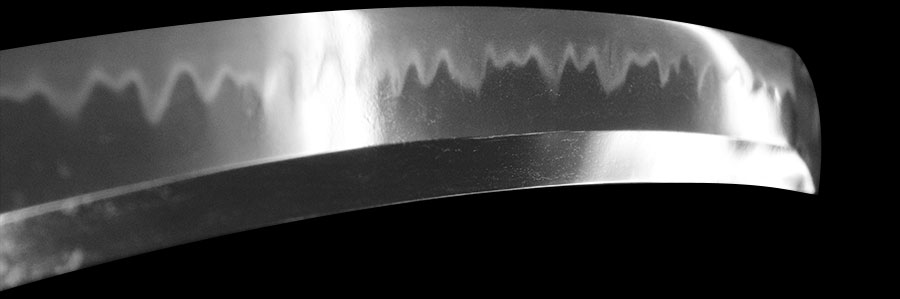
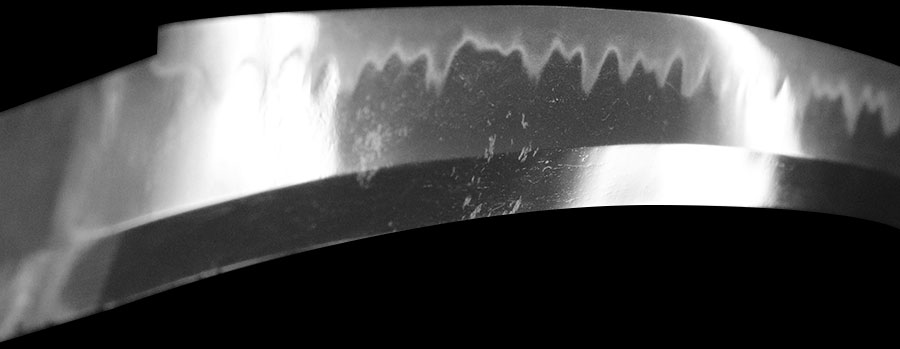
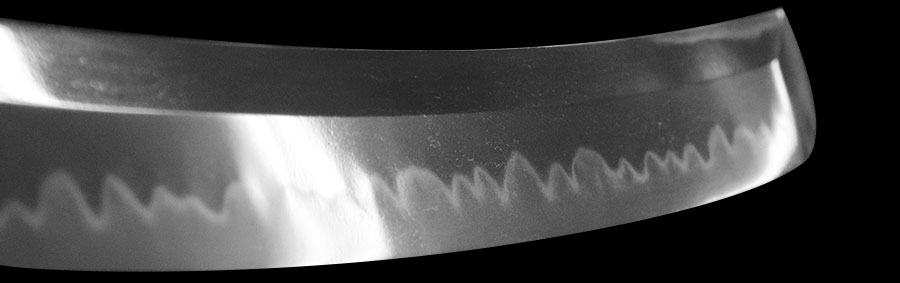
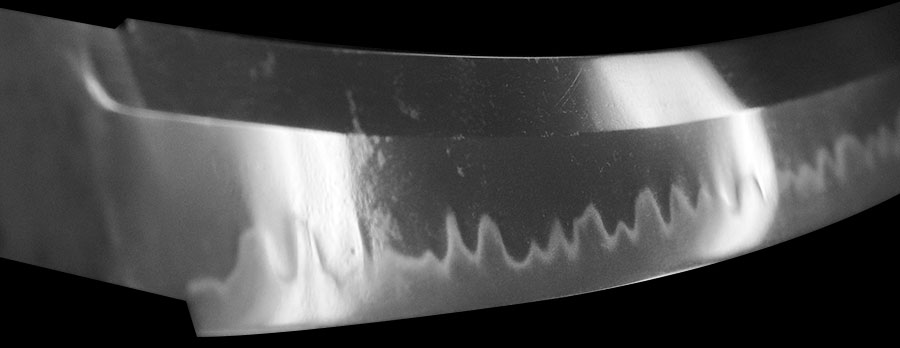
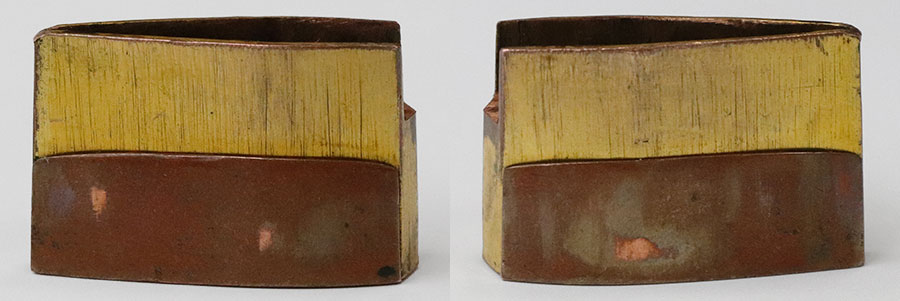
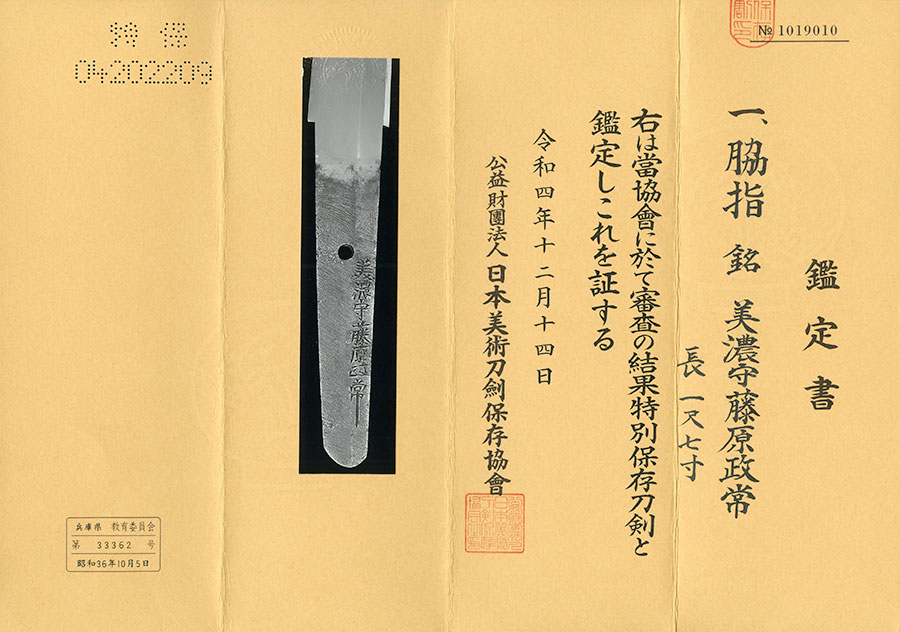
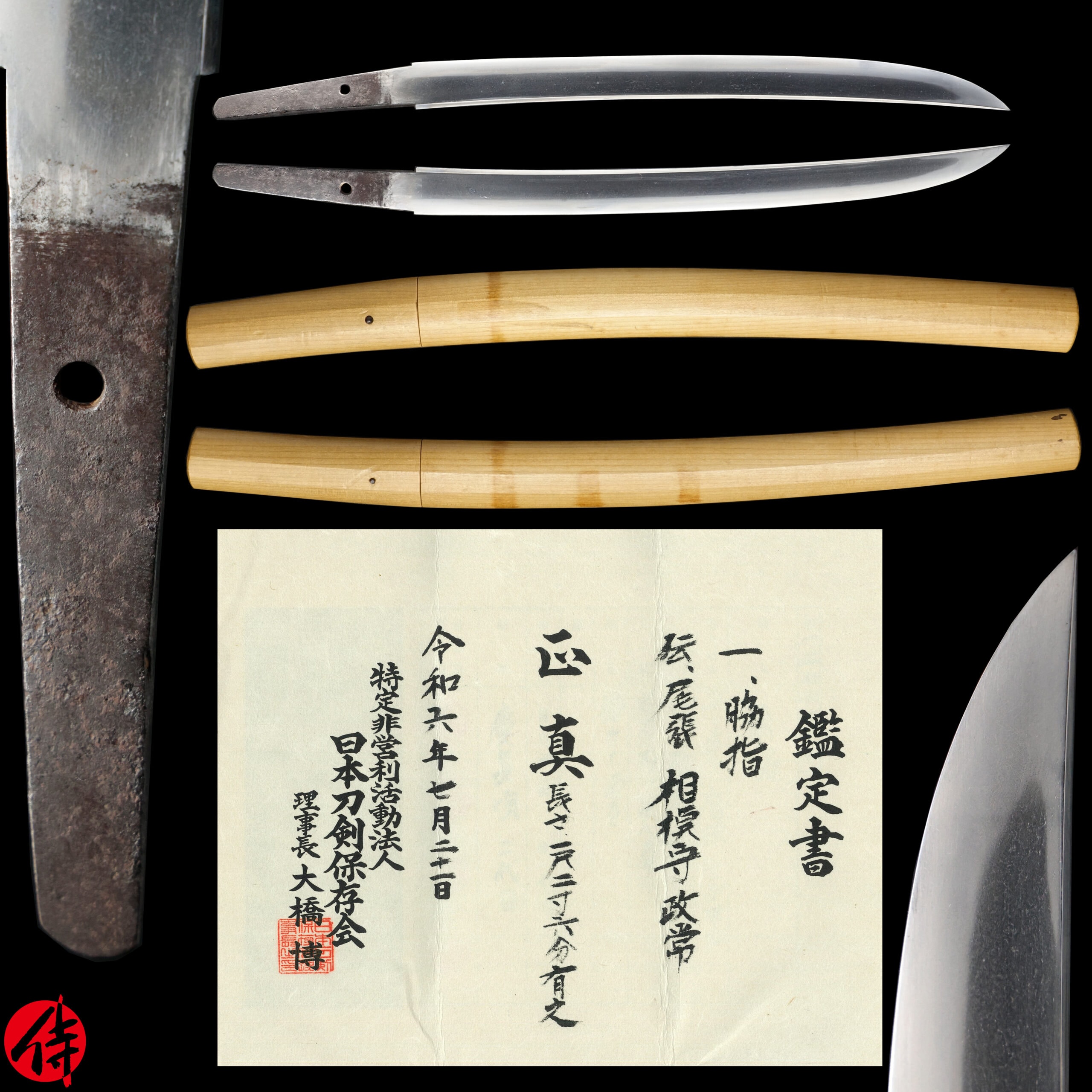
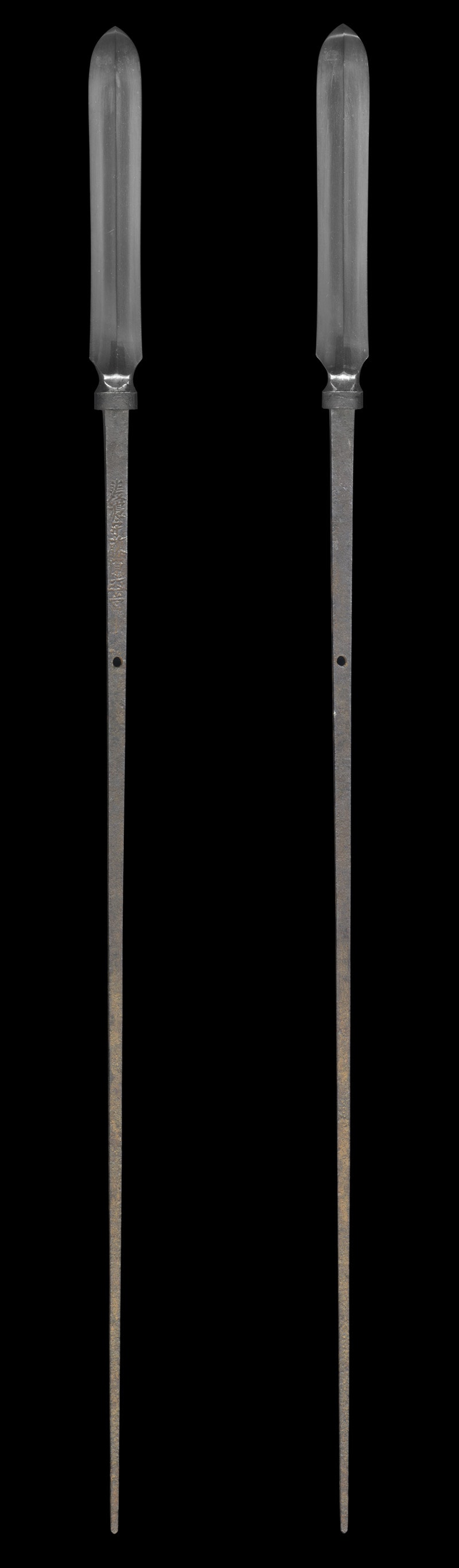
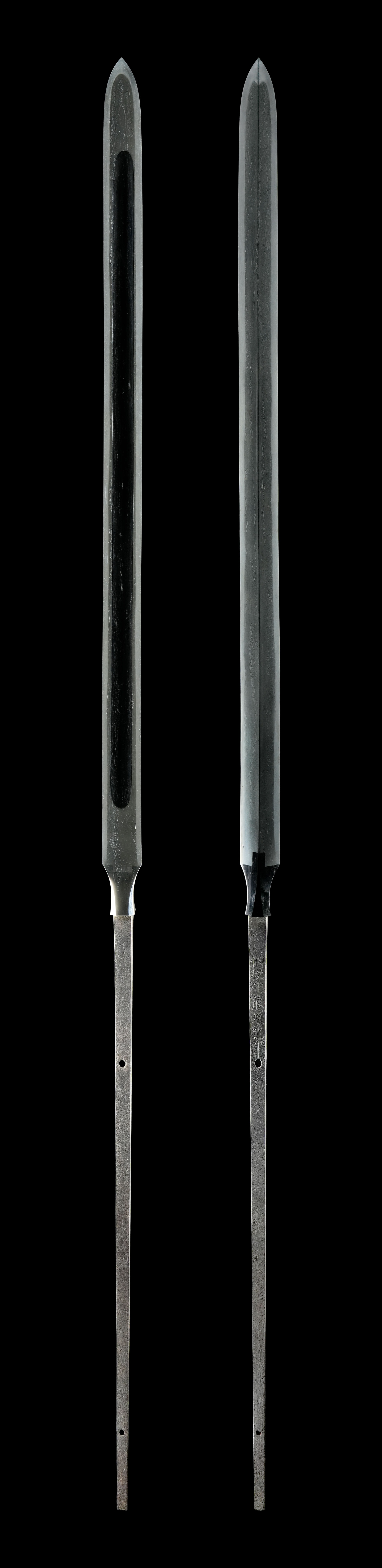
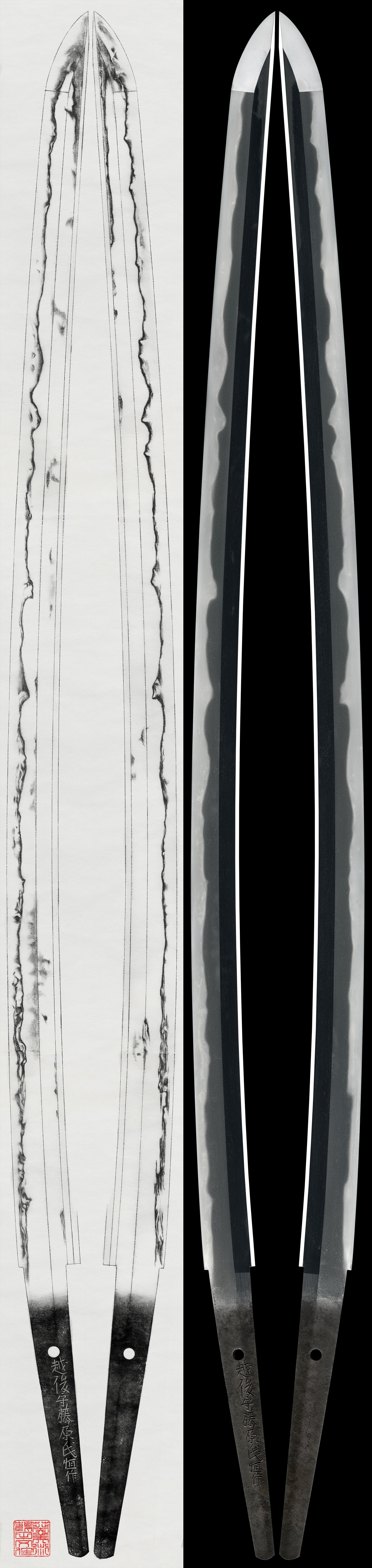
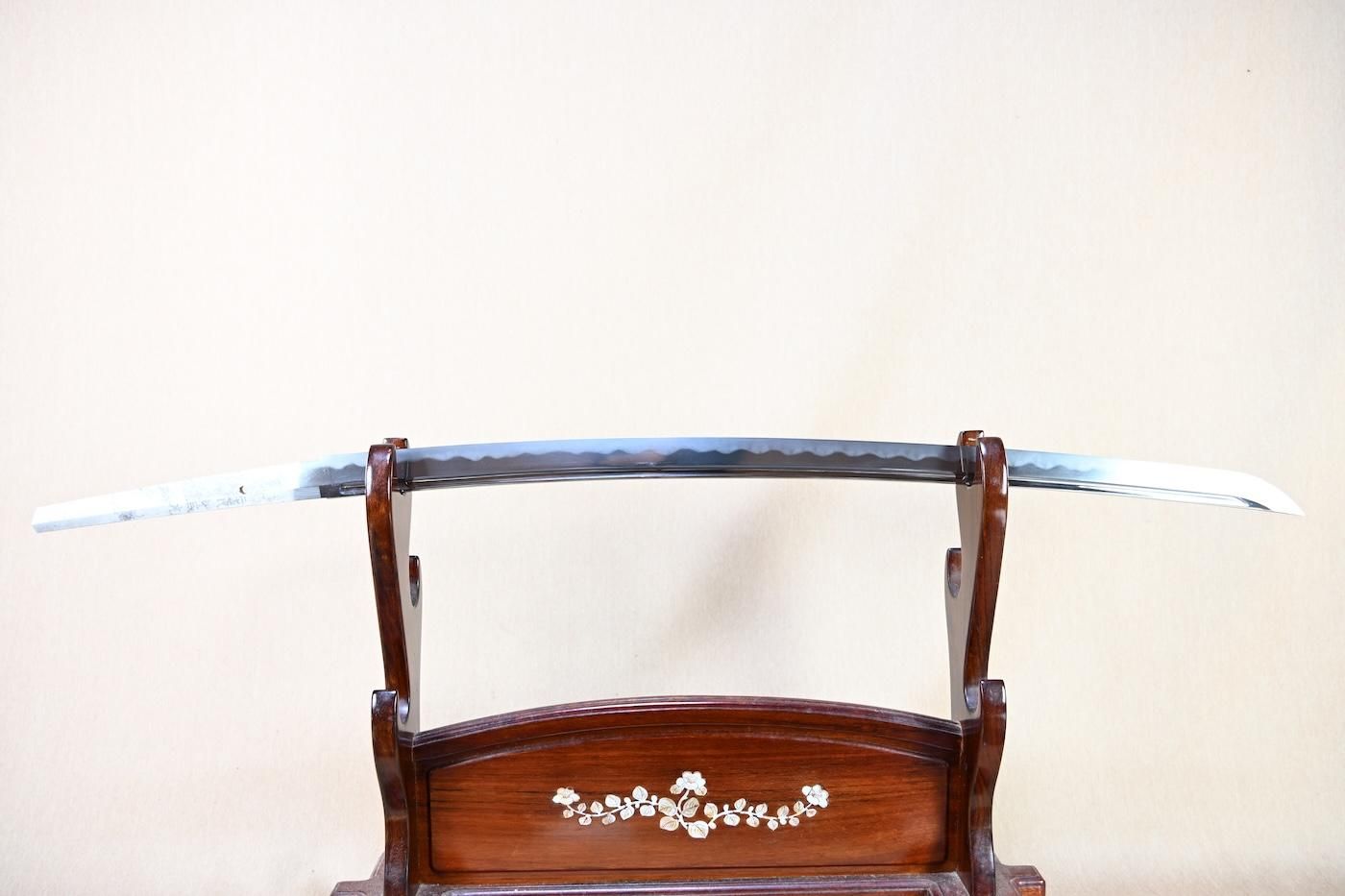
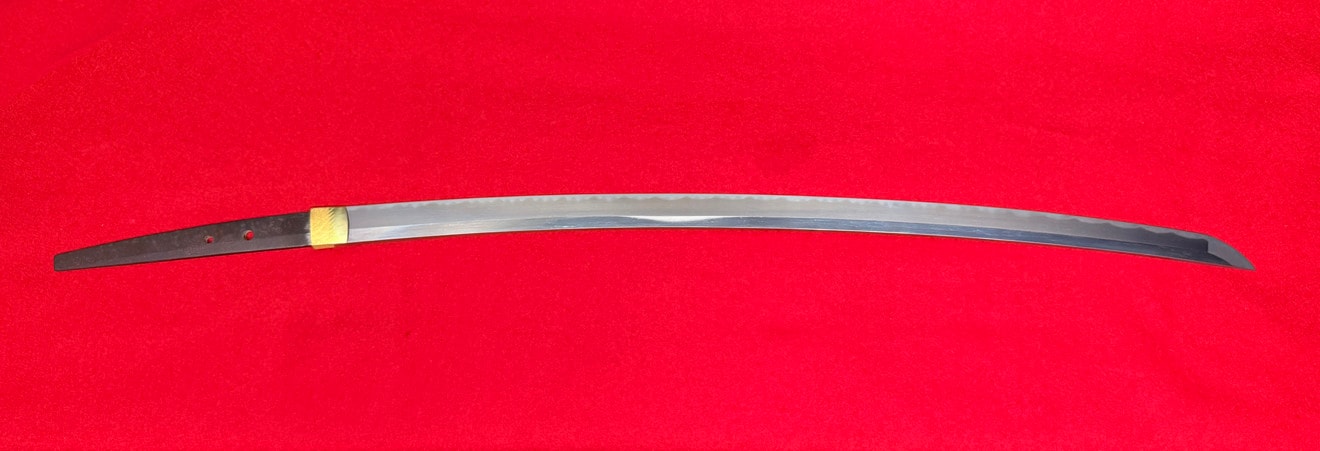
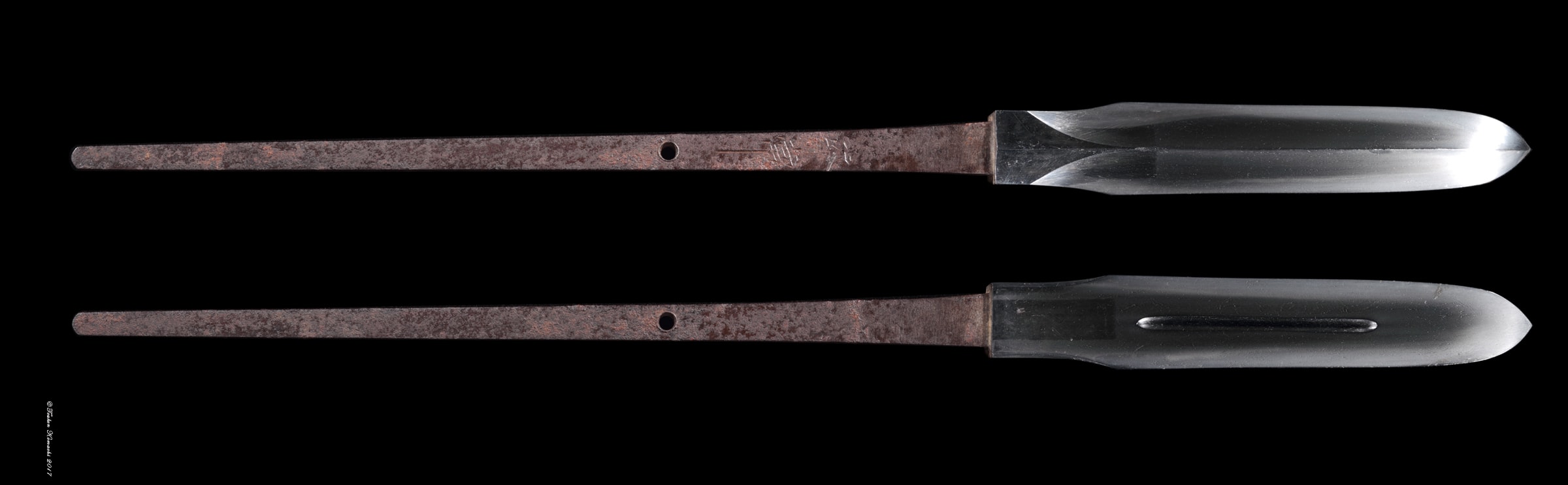
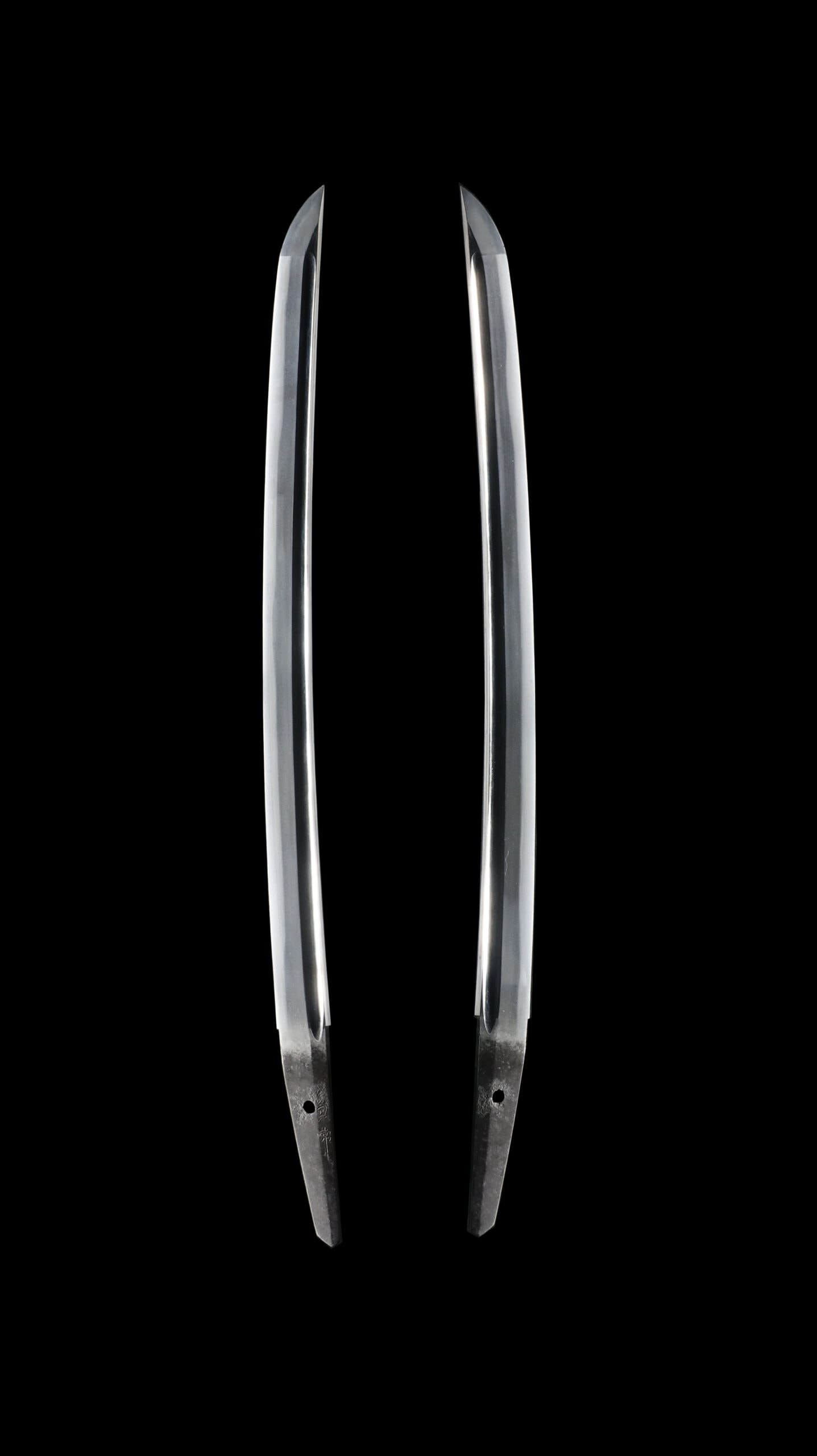
Here it is, it has arrived! While we occasionally see works such as yari or naginata, for reasons unknown, we almost never have the opportunity to see a precious wakizashi by Masatsune until now. This Mino no Kami Fujiwara Masatsune was the son of the prestigious Mino Gifu Daido; because the second generation Sagami no Kami Masatsune died young, he was requested to become an adopted son and changed his name to Masatsune. The famous first generation Sagami no Kami Masatsune was employed by Fukushima Masanori—the most successful of the "Seven Spears of Shizugatake" and a young military commander who was a cousin to Toyotomi Hideyoshi. In Tensho 19 (1591) (432 years ago), the three swordsmiths of Owari—Masatsune, Ujifusa, and Nobutaka—traveled from Kiyosu to the Jurakudai in Kyoto to have an audience with the Kanpaku Hidetsugu. Through Hidetsugu's mediation, he received the title of Sagami no Kami from the Imperial Court in Tensho 20. The smith of this wakizashi, the third generation Mino no Kami Masatsune, received the title of Mino no Kami in Genna 5 (1619) (404 years ago), just four years after Toyotomi Hideyori was defeated in the Osaka Summer Campaign and the Toyotomi clan perished, during a time when the spirit of the Sengoku period still remained. His skill was outstanding, not inferior to the first generation Masatsune. The sugata of this wakizashi shows a wide moto-mihaba and wide saki-mihaba with sori and a large kissaki, representing the magnificent Keicho Shinto style. The jigane is forged in itame-hada with jinie, creating a powerful steel. The hamon is finished in nioi-deki with konie, tempering a gunome-midare ba. It includes round-topped ha, angular ha, yahazu-style ha, and togari-ba mixed in; the inside of the ha is bright and exceptionally well-executed. This is a precious wakizashi by Mino no Kami Masatsune, who is famous as a wazamono. In the sword world, it is a masterpiece of longing, often said to be a "Masatsune one wishes to own at least once." On this occasion, we received this piece from an old collector with the request to "pass it on to the next generation at a low price," so we are offering it at a special bargain price. Please do enjoy it.
Edo · nagasa 51.6cm · sori 1.2cm


Mino-den · Owari
12 pieces on the market now
The line begins with a Mino man. The setsumei record that Sagami no Kami Masatsune (政常) was born at Nōdo in Mino Province, where he first signed Kanetsune (兼常) and is variously said to have been the son or a disciple of Kanetsune of Seki. Learn more →
| Smith | Era | Designated |
|---|---|---|
| Masatsune政常 | 1615-1624 | 20 |
| Masatsune政常 | 1661-1673 | 0 |
| Masatsune政常 | 1688-1704 | 0 |
| Masatsune政常 | 1661-1673 | 0 |
| Kanetsune兼常 | 1573-1592 | 1 |
A Hozon-certified blade judged to show notably superior workmanship and a better state of preservation. The bar is higher: re-tempered blades and most unsigned Muromachi/Edo works are excluded.
The NBTHK (Nihon Bijutsu Tōken Hozon Kyōkai, the Society for the Preservation of Japanese Art Swords) is a public-interest incorporated foundation founded in 1948 and supervised by Japan’s Agency for Cultural Affairs (Bunkachō); it is based at the Japanese Sword Museum in Tokyo. Its expert panels physically examine each submitted work (shinsa) and issue a certificate (kanteishō) ranking it by artistic and historical merit. NBTHK papers are the most widely recognized standard of authentication for Japanese swords and fittings.
NBTHK official siteFor returns due to customer circumstances, the cost is the customer's responsibility. For returns due to our mis-shipment or a defective item, we bear the cost.
Here it is, it has arrived! While we occasionally see works such as yari or naginata, for reasons unknown, we almost never have the opportunity to see a precious wakizashi by Masatsune until now. This Mino no Kami Fujiwara Masatsune was the son of the prestigious Mino Gifu Daido; because the second generation Sagami no Kami Masatsune died young, he was requested to become an adopted son and changed his name to Masatsune. The famous first generation Sagami no Kami Masatsune was employed by Fukushima Masanori—the most successful of the "Seven Spears of Shizugatake" and a young military commander who was a cousin to Toyotomi Hideyoshi. In Tensho 19 (1591) (432 years ago), the three swordsmiths of Owari—Masatsune, Ujifusa, and Nobutaka—traveled from Kiyosu to the Jurakudai in Kyoto to have an audience with the Kanpaku Hidetsugu. Through Hidetsugu's mediation, he received the title of Sagami no Kami from the Imperial Court in Tensho 20. The smith of this wakizashi, the third generation Mino no Kami Masatsune, received the title of Mino no Kami in Genna 5 (1619) (404 years ago), just four years after Toyotomi Hideyori was defeated in the Osaka Summer Campaign and the Toyotomi clan perished, during a time when the spirit of the Sengoku period still remained. His skill was outstanding, not inferior to the first generation Masatsune. The sugata of this wakizashi shows a wide moto-mihaba and wide saki-mihaba with sori and a large kissaki, representing the magnificent Keicho Shinto style. The jigane is forged in itame-hada with jinie, creating a powerful steel. The hamon is finished in nioi-deki with konie, tempering a gunome-midare ba. It includes round-topped ha, angular ha, yahazu-style ha, and togari-ba mixed in; the inside of the ha is bright and exceptionally well-executed. This is a precious wakizashi by Mino no Kami Masatsune, who is famous as a wazamono. In the sword world, it is a masterpiece of longing, often said to be a "Masatsune one wishes to own at least once." On this occasion, we received this piece from an old collector with the request to "pass it on to the next generation at a low price," so we are offering it at a special bargain price. Please do enjoy it.
Edo · nagasa 51.6cm · sori 1.2cm


Mino-den · Owari
12 pieces on the market now
The line begins with a Mino man. The setsumei record that Sagami no Kami Masatsune (政常) was born at Nōdo in Mino Province, where he first signed Kanetsune (兼常) and is variously said to have been the son or a disciple of Kanetsune of Seki. Learn more →
| Smith | Era | Designated |
|---|---|---|
| Masatsune政常 | 1615-1624 | 20 |
| Masatsune政常 | 1661-1673 | 0 |
| Masatsune政常 | 1688-1704 | 0 |
| Masatsune政常 | 1661-1673 | 0 |
| Kanetsune兼常 | 1573-1592 | 1 |
A Hozon-certified blade judged to show notably superior workmanship and a better state of preservation. The bar is higher: re-tempered blades and most unsigned Muromachi/Edo works are excluded.
The NBTHK (Nihon Bijutsu Tōken Hozon Kyōkai, the Society for the Preservation of Japanese Art Swords) is a public-interest incorporated foundation founded in 1948 and supervised by Japan’s Agency for Cultural Affairs (Bunkachō); it is based at the Japanese Sword Museum in Tokyo. Its expert panels physically examine each submitted work (shinsa) and issue a certificate (kanteishō) ranking it by artistic and historical merit. NBTHK papers are the most widely recognized standard of authentication for Japanese swords and fittings.
NBTHK official siteFor returns due to customer circumstances, the cost is the customer's responsibility. For returns due to our mis-shipment or a defective item, we bear the cost.