Sengoku Seki was an industry: smiths organized under their tutelary Kasuga shrine, arming the war bands of central Japan. Magoroku Kanemoto’s sanbonsugi and the finest Kanesada work prove quality survived inside mass production.
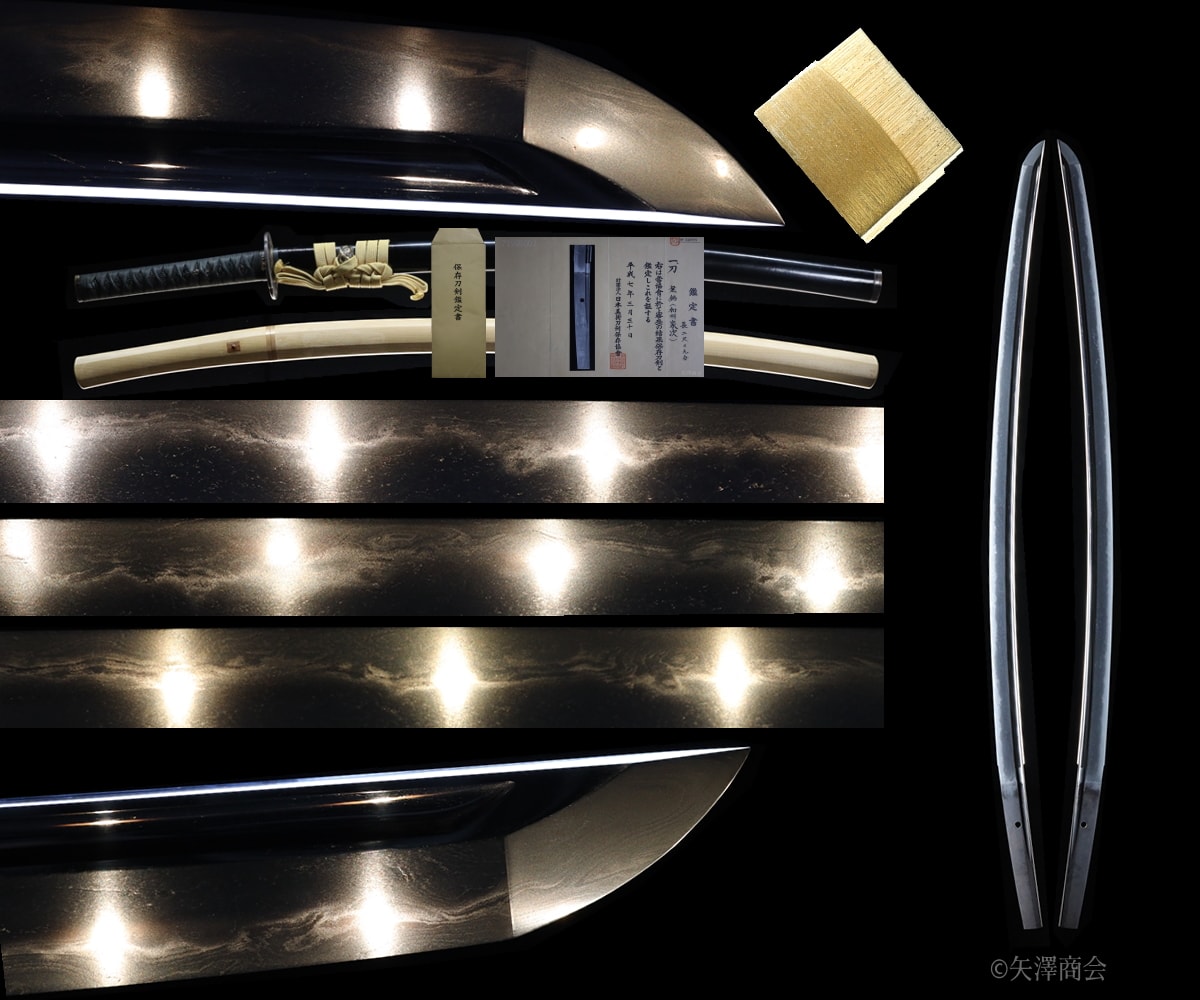
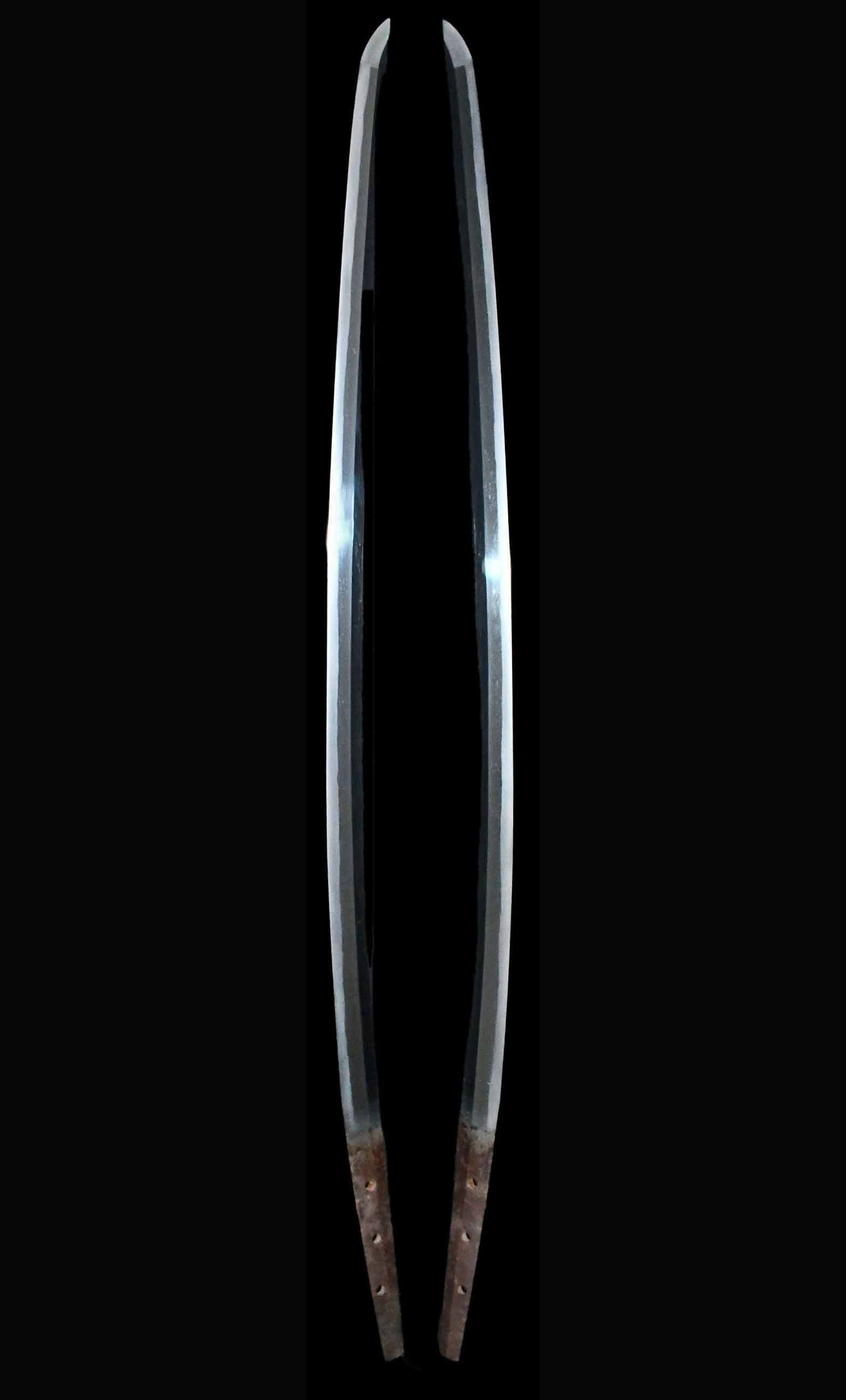
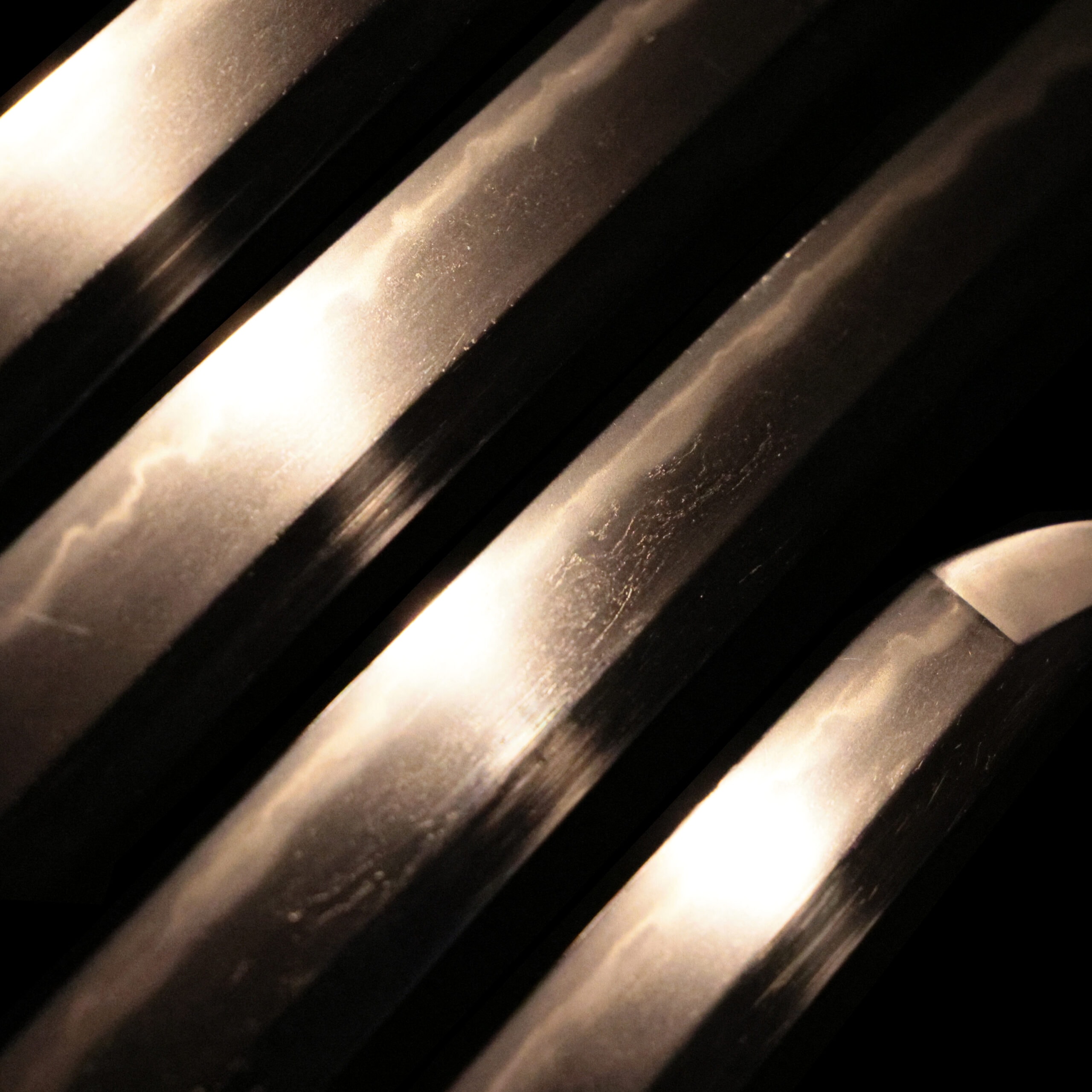
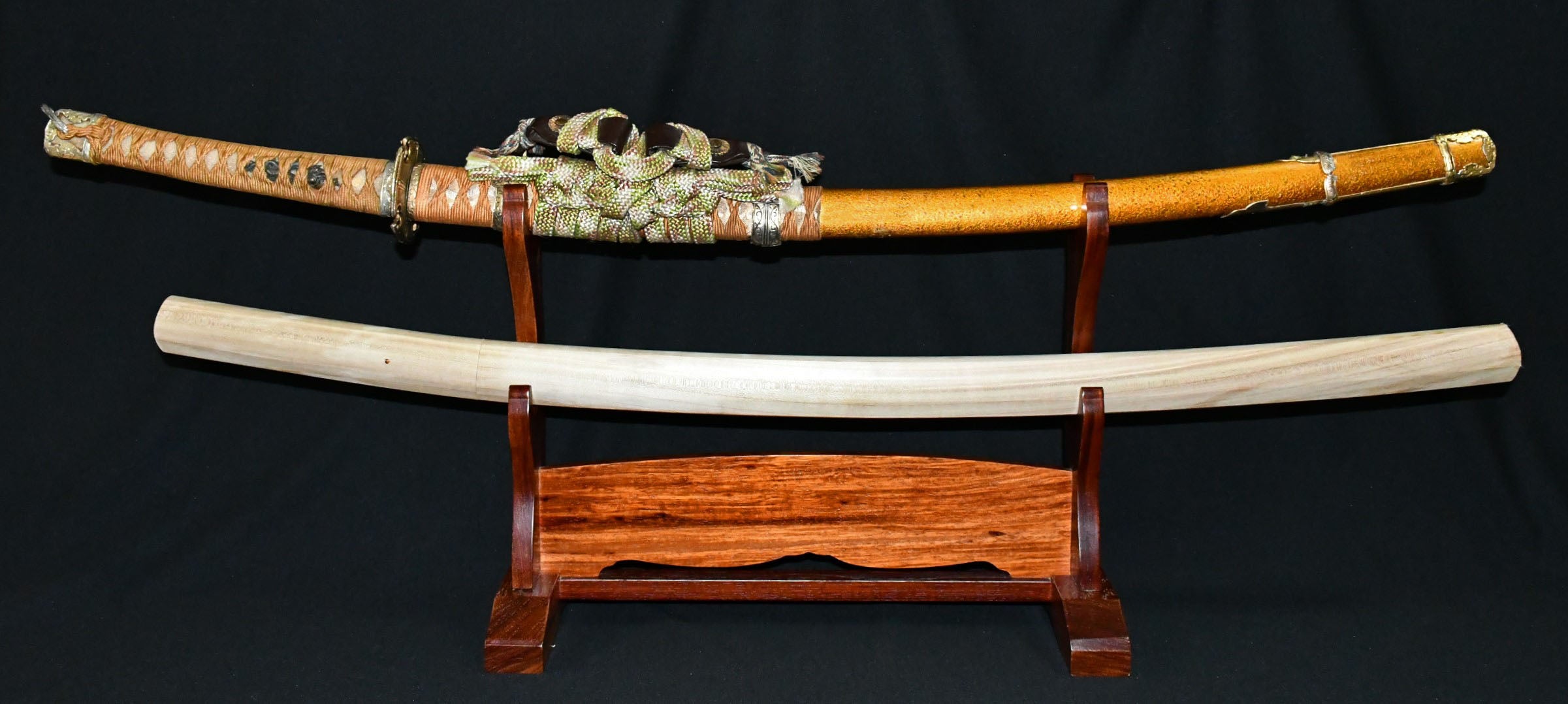
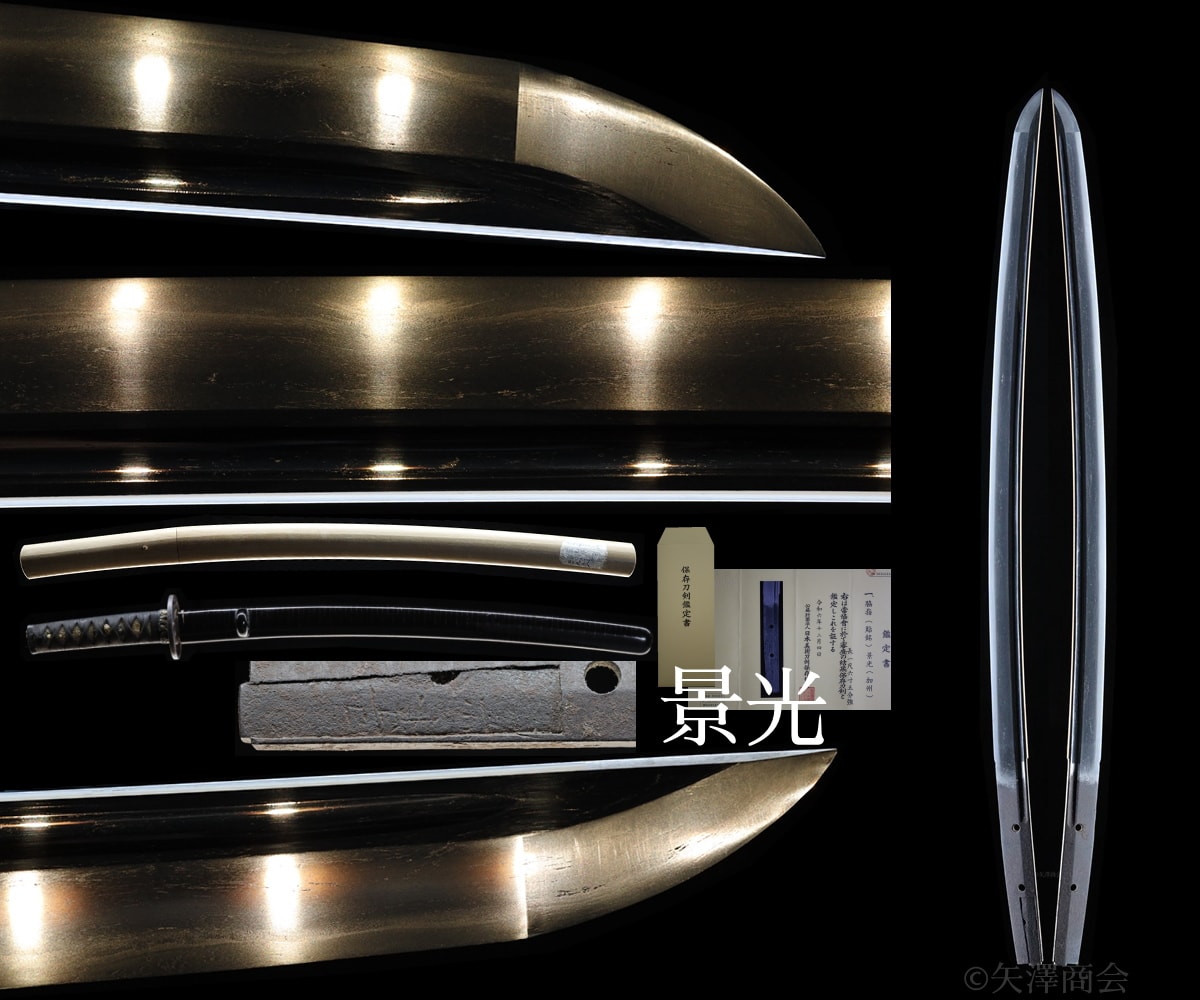
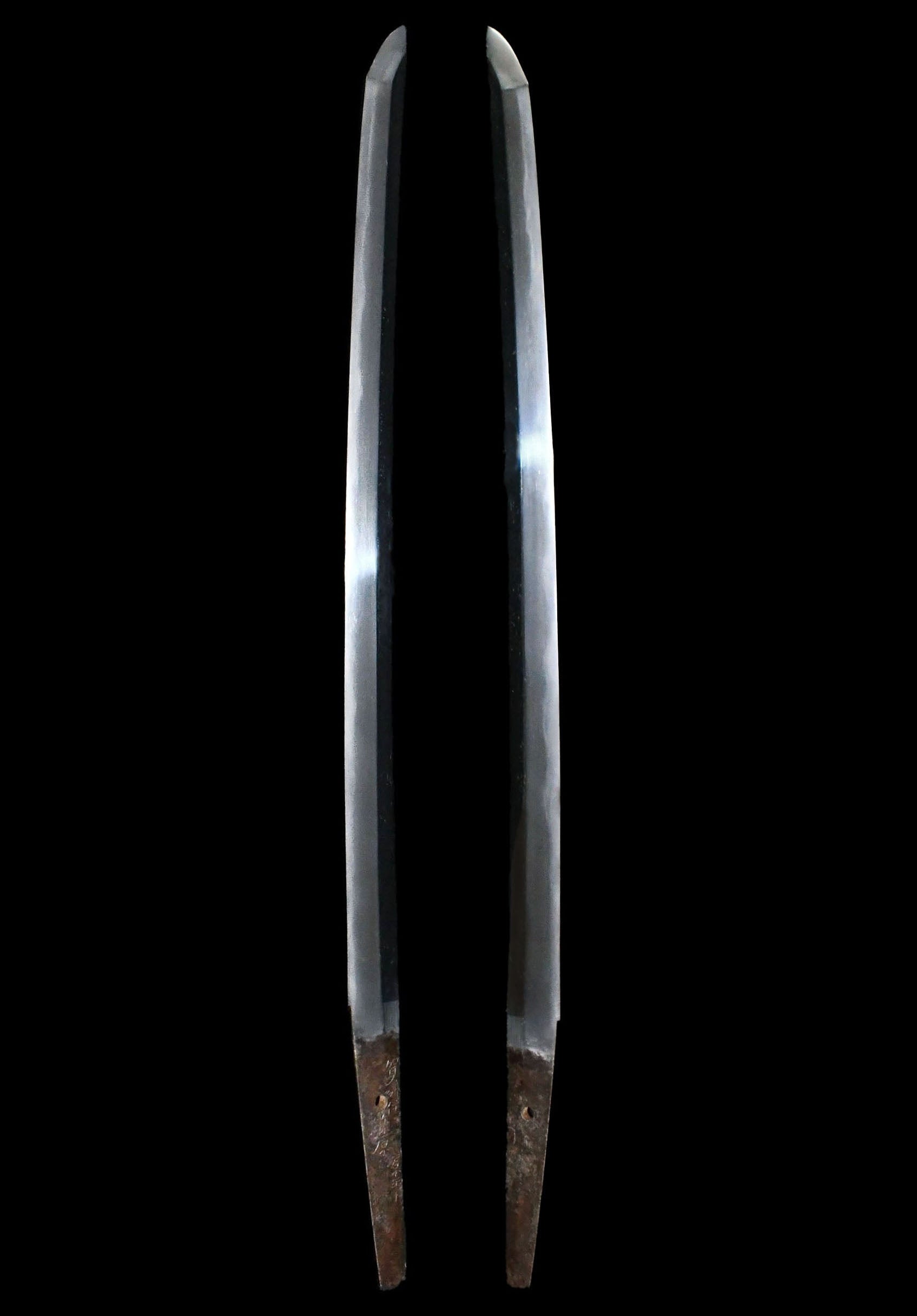
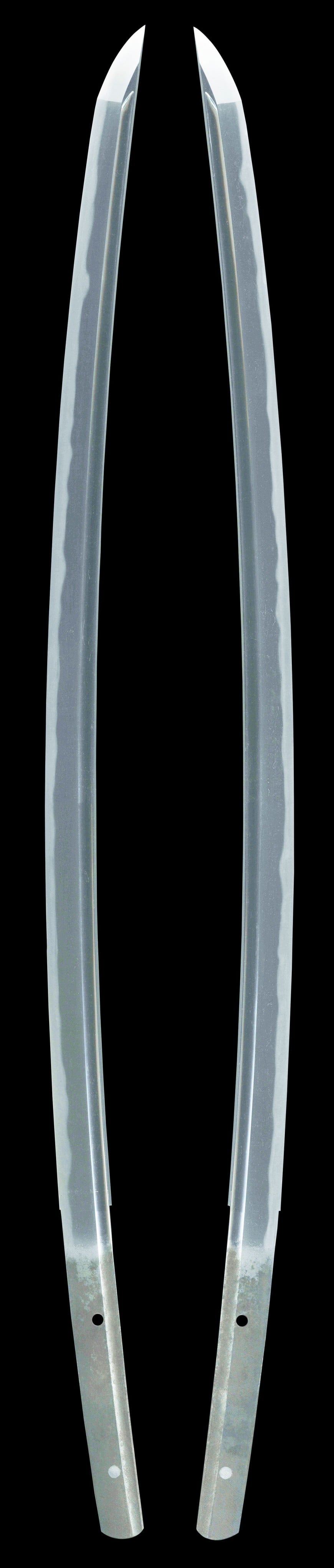
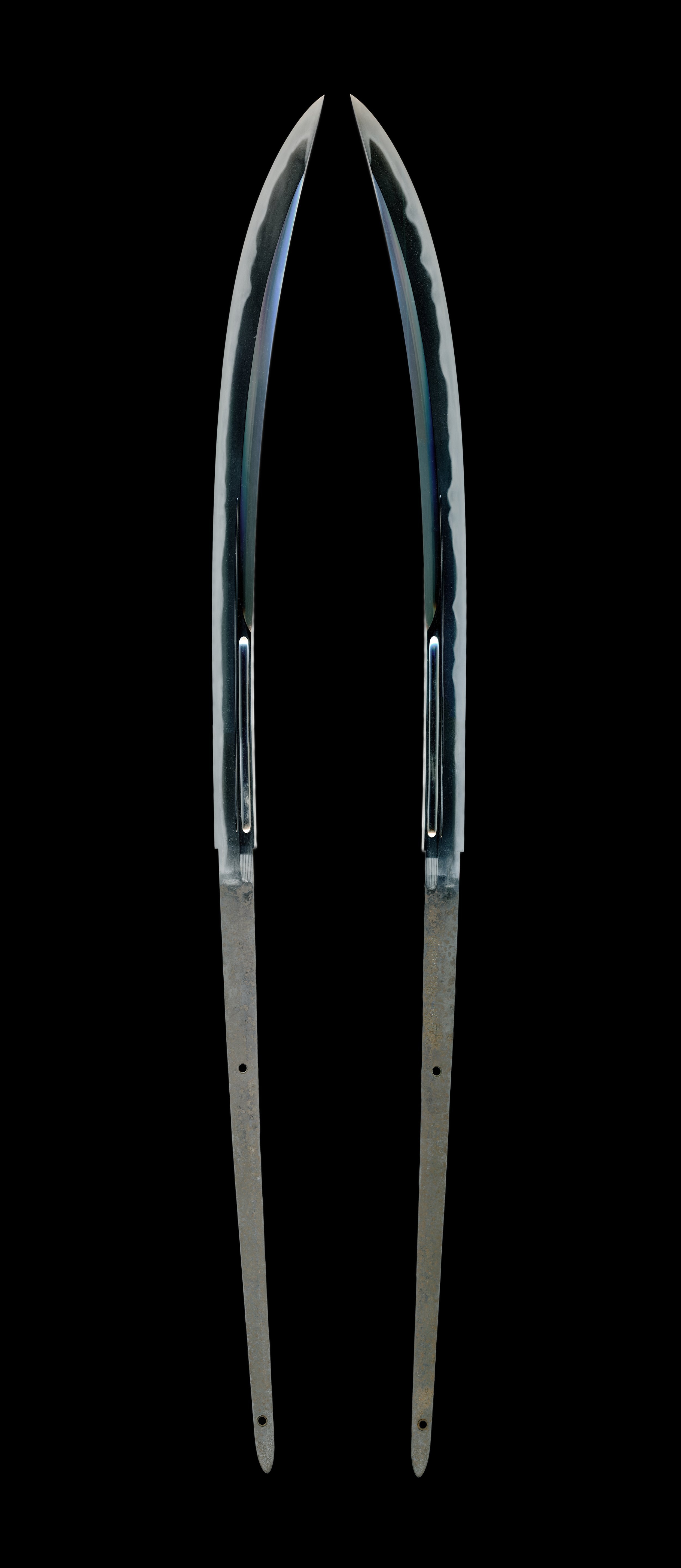
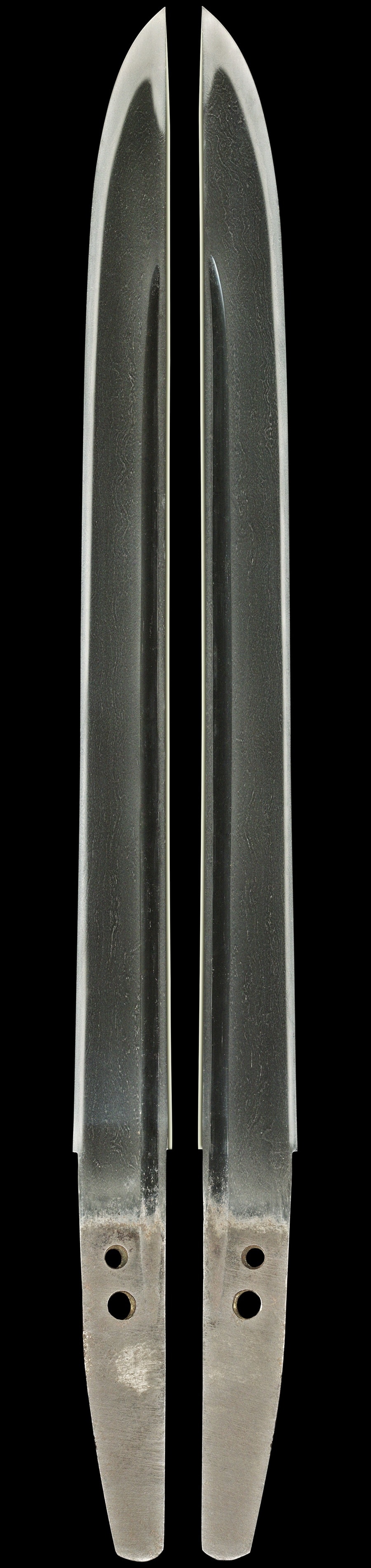
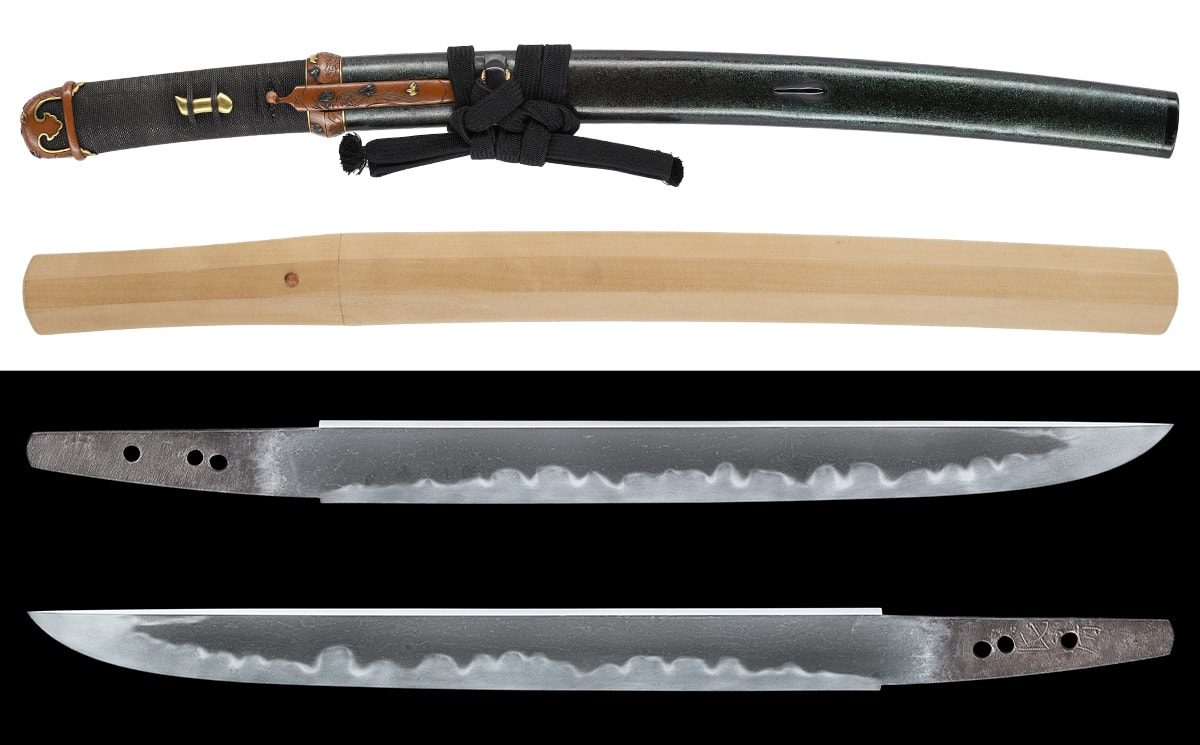
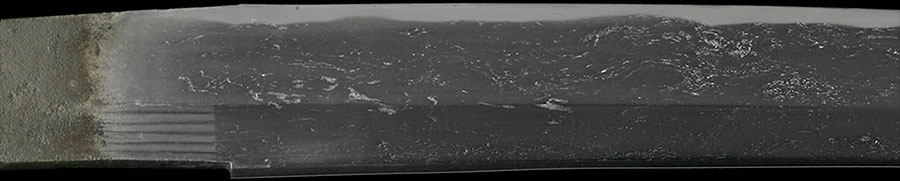
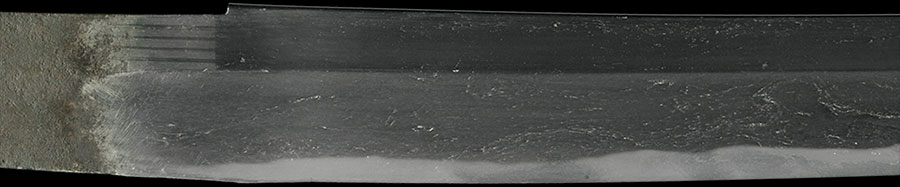
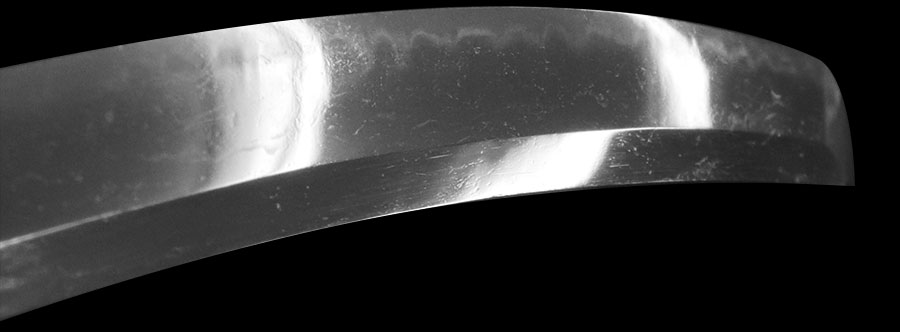
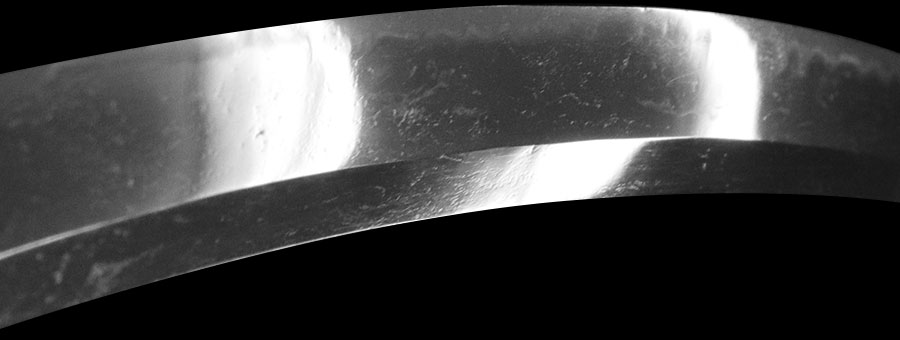
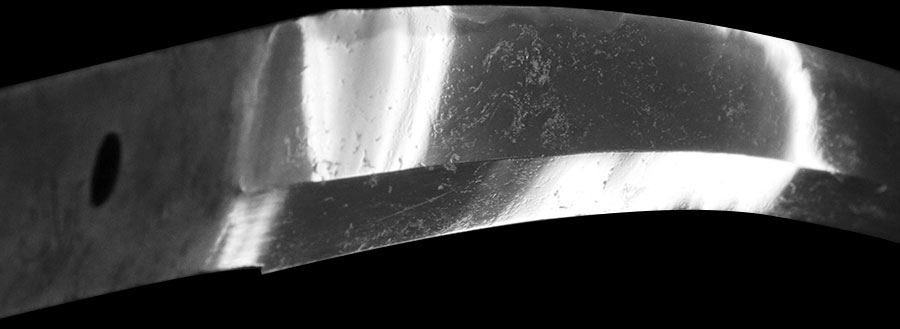
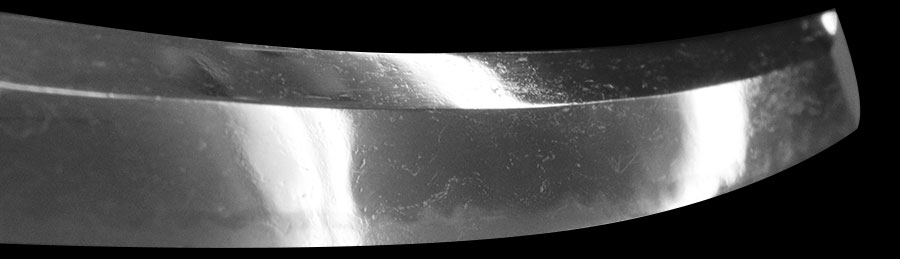
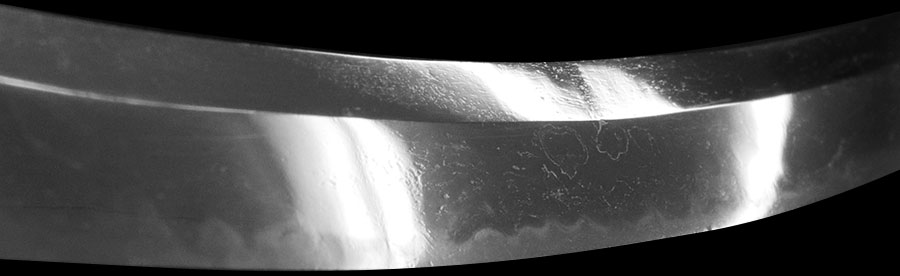
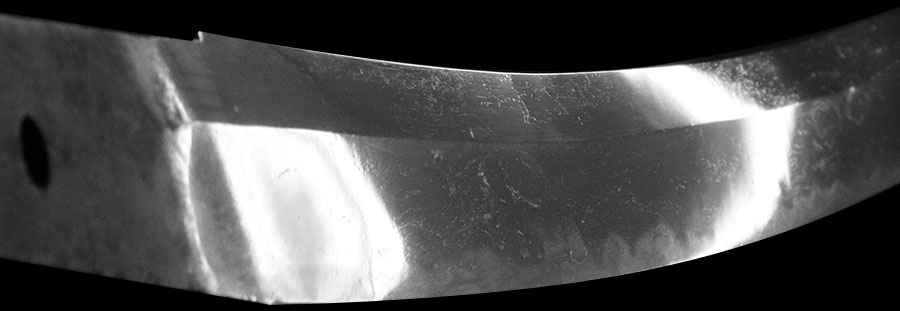
Kashu Ietsugu has been famous since ancient times as a sword that cuts remarkably well. He was a swordsmith of the renowned Fujishima Tomoshige school and has been honored with the title "Kaga Aoe" since antiquity. This sword is an exceptionally old koto by Ietsugu, dating back to the Koji era of the Muromachi period (circa 1555, 468 years ago). It is a very old sword crafted exactly when Uesugi Kenshin and Takeda Shingen fought at Kawanakajima, around the time Mori Motonari won the Battle of Itsukushima to establish his foothold as the lord of the Chugoku region, and six years before Oda Nobunaga defeated the emerging Imagawa Yoshimoto at the Battle of Okehazama. The sugata of this sword exhibits funbari at the moto, a koshi-zori curve, a wide moto-mihaba with a distinct difference from the saki-mihaba, and an extended kissaki, presenting a grand and powerful appearance. The jigane is itame-hada mixed with masame-hada. The hamon is nioi-deki with ko-nie, featuring a turbulent and violent gunome-choji midare-ba; it is a sword that vividly calls to mind the kacho (antique style) Bizen Osafune tachi of the earlier Nanbokucho period. It is a wazamono masterpiece crafted to fulfill a special order for a high-ranking samurai commander of the Sengoku period. On this occasion, an elderly collector has entrusted us with this masterpiece by Ietsugu—revered as Kaga Aoe—with the request to pass it on to the next generation at an affordable price. Therefore, we are offering it at a special discount. Please enjoy this opportunity.
 NihontoWatch
Oei (1394-1428) · nagasa 70.1cm · sori 2.2cm












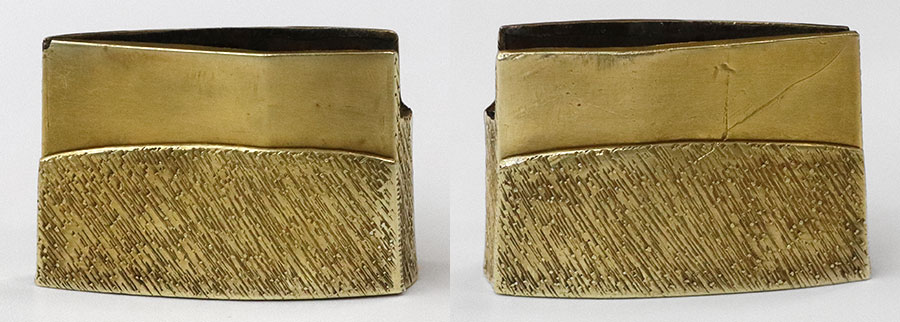
Mino-den · Kaga · around 1528-1558
Fujishiro Chu-jo saku · Tōken Taikan top 60%
6 pieces on the market now
Where Ietsugu stands among comparable artisans: across all of nihontō, and within tradition, era, and period. The tiers (Foremost · Leading · Major · Notable) weigh official designations from the NBTHK and Japan's Agency for Cultural Affairs, together with historical honors of lasting repute such as the Sansaku and Meibutsu-chō.
Select a lens to see how it's measured.
Mino-den · Kaga
27 pieces on the market now
The Kaga inlay tradition (Kaga zōgan) emerged in Kaga Province during the early Edo period, centered on the castle town of Kanazawa under the patronage of the Maeda clan. This distinctive form of hira-zōgan is said to have developed when craftsmen specializing in stirrup decoration (abumi-shi) adapted their metalworking techniques to tsuba and other sword fittings, flourishing from the early seventeenth century through the Kyōhō era (1716–1736). Working against polished grounds of shakudō, shibuichi, or occasionally refined copper (suaka), these artisans created works characterized by their compositional sophistication and technical precision, establishing a regional aesthetic that would influence later generations of metalworkers. The hallmark of Kaga workmanship lies in its masterful deployment of multiple colored metals—gold, silver, copper, shakudō, and shibuichi—inlaid in flat relief against dark, highly polished grounds. Motifs range from naturalistic subjects such as autumn grasses, butterflies, and mandarin ducks beneath willows to more formal designs including paulownia crests and brocade wrappers, all rendered with meticulous kebori line engraving that adds refinement to the broader inlay work.
The compositions typically extend across the entire surface of the guard, creating an effect of visual richness and decorative abundance. Against jet-black shakudō or the warm tonality of suaka, the multicolored inlays achieve a luminous clarity, producing works of elegant splendor (fūryū) that balance technical virtuosity with restrained taste. The tradition's influence extended beyond its geographic center, with works attributed to Kaga methods appearing in collections throughout Japan. Large-scale presentation pieces demonstrate the school's capacity for ambitious design, while the consistent quality of execution across surviving examples suggests a well-established workshop system with shared technical standards. Though individual makers within the tradition rarely signed their work, the distinctive aesthetic—characterized by full-surface compositions, polished dark grounds, and precise multicolor inlay—remains immediately recognizable, preserving the legacy of Kanazawa's metalworking excellence through the Edo period. Learn more →
| Smith | Era | Designated |
|---|---|---|
| Sanekage真景 | 1362-1368 | 47 |
| Takahira高平 | 1621-1644 | 9 |
| Kagemitsu景光 | 1362-1368 | 3 |
| Ietsugu家次 | 1528-1558 | 1 |
| Kagehira景平 | 1661-1673 | 1 |
Mino in the Muromachi period
Sengoku Seki was an industry: smiths organized under their tutelary Kasuga shrine, arming the war bands of central Japan. Magoroku Kanemoto’s sanbonsugi and the finest Kanesada work prove quality survived inside mass production.
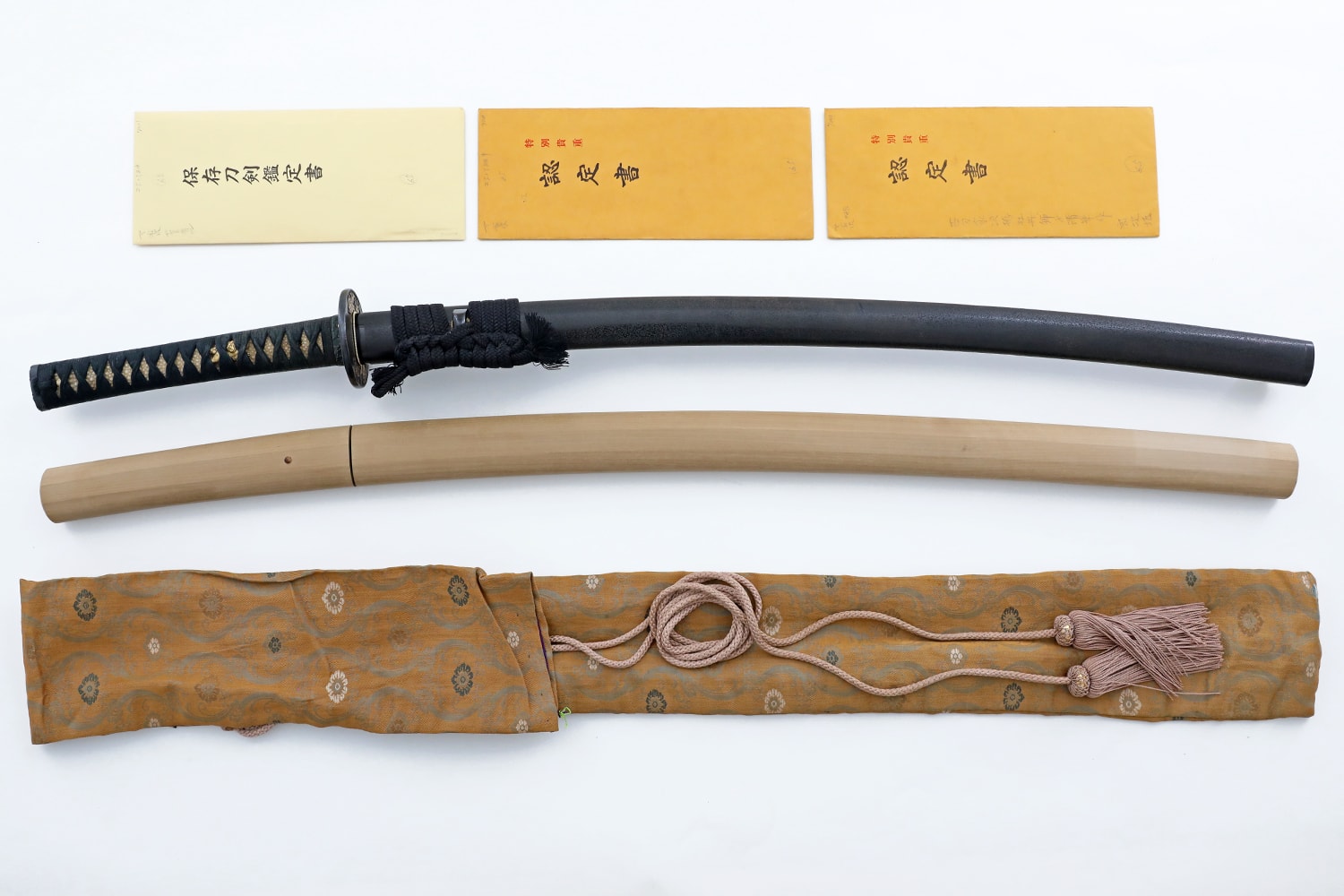
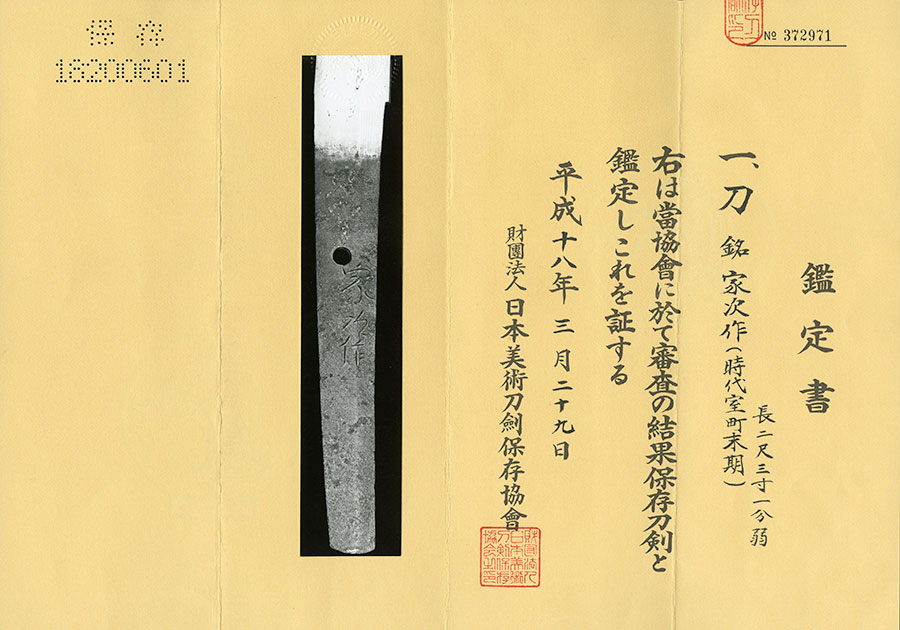
Certifies a genuine blade worth preserving: a signature confirmed correct, or, if unsigned, an era, province, and school that the NBTHK can reliably identify.
The NBTHK (Nihon Bijutsu Tōken Hozon Kyōkai, the Society for the Preservation of Japanese Art Swords) is a public-interest incorporated foundation founded in 1948 and supervised by Japan’s Agency for Cultural Affairs (Bunkachō); it is based at the Japanese Sword Museum in Tokyo. Its expert panels physically examine each submitted work (shinsa) and issue a certificate (kanteishō) ranking it by artistic and historical merit. NBTHK papers are the most widely recognized standard of authentication for Japanese swords and fittings.
NBTHK official siteFor returns due to customer circumstances, the cost is the customer's responsibility. For returns due to our mis-shipment or a defective item, we bear the cost.
¥530,000
Kashu Ietsugu has been famous since ancient times as a sword that cuts remarkably well. He was a swordsmith of the renowned Fujishima Tomoshige school and has been honored with the title "Kaga Aoe" since antiquity. This sword is an exceptionally old koto by Ietsugu, dating back to the Koji era of the Muromachi period (circa 1555, 468 years ago). It is a very old sword crafted exactly when Uesugi Kenshin and Takeda Shingen fought at Kawanakajima, around the time Mori Motonari won the Battle of Itsukushima to establish his foothold as the lord of the Chugoku region, and six years before Oda Nobunaga defeated the emerging Imagawa Yoshimoto at the Battle of Okehazama. The sugata of this sword exhibits funbari at the moto, a koshi-zori curve, a wide moto-mihaba with a distinct difference from the saki-mihaba, and an extended kissaki, presenting a grand and powerful appearance. The jigane is itame-hada mixed with masame-hada. The hamon is nioi-deki with ko-nie, featuring a turbulent and violent gunome-choji midare-ba; it is a sword that vividly calls to mind the kacho (antique style) Bizen Osafune tachi of the earlier Nanbokucho period. It is a wazamono masterpiece crafted to fulfill a special order for a high-ranking samurai commander of the Sengoku period. On this occasion, an elderly collector has entrusted us with this masterpiece by Ietsugu—revered as Kaga Aoe—with the request to pass it on to the next generation at an affordable price. Therefore, we are offering it at a special discount. Please enjoy this opportunity.
NihontoWatchOei (1394-1428) · nagasa 70.1cm · sori 2.2cm
Mino-den · Kaga · around 1528-1558
Fujishiro Chu-jo saku · Tōken Taikan top 60%
6 pieces on the market now
Where Ietsugu stands among comparable artisans: across all of nihontō, and within tradition, era, and period. The tiers (Foremost · Leading · Major · Notable) weigh official designations from the NBTHK and Japan's Agency for Cultural Affairs, together with historical honors of lasting repute such as the Sansaku and Meibutsu-chō.
Select a lens to see how it's measured.
Mino-den · Kaga
27 pieces on the market now
The Kaga inlay tradition (Kaga zōgan) emerged in Kaga Province during the early Edo period, centered on the castle town of Kanazawa under the patronage of the Maeda clan. This distinctive form of hira-zōgan is said to have developed when craftsmen specializing in stirrup decoration (abumi-shi) adapted their metalworking techniques to tsuba and other sword fittings, flourishing from the early seventeenth century through the Kyōhō era (1716–1736). Working against polished grounds of shakudō, shibuichi, or occasionally refined copper (suaka), these artisans created works characterized by their compositional sophistication and technical precision, establishing a regional aesthetic that would influence later generations of metalworkers. The hallmark of Kaga workmanship lies in its masterful deployment of multiple colored metals—gold, silver, copper, shakudō, and shibuichi—inlaid in flat relief against dark, highly polished grounds. Motifs range from naturalistic subjects such as autumn grasses, butterflies, and mandarin ducks beneath willows to more formal designs including paulownia crests and brocade wrappers, all rendered with meticulous kebori line engraving that adds refinement to the broader inlay work.
The compositions typically extend across the entire surface of the guard, creating an effect of visual richness and decorative abundance. Against jet-black shakudō or the warm tonality of suaka, the multicolored inlays achieve a luminous clarity, producing works of elegant splendor (fūryū) that balance technical virtuosity with restrained taste. The tradition's influence extended beyond its geographic center, with works attributed to Kaga methods appearing in collections throughout Japan. Large-scale presentation pieces demonstrate the school's capacity for ambitious design, while the consistent quality of execution across surviving examples suggests a well-established workshop system with shared technical standards. Though individual makers within the tradition rarely signed their work, the distinctive aesthetic—characterized by full-surface compositions, polished dark grounds, and precise multicolor inlay—remains immediately recognizable, preserving the legacy of Kanazawa's metalworking excellence through the Edo period. Learn more →
| Smith | Era | Designated |
|---|---|---|
| Sanekage真景 | 1362-1368 | 47 |
| Takahira高平 | 1621-1644 | 9 |
| Kagemitsu景光 | 1362-1368 | 3 |
| Ietsugu家次 | 1528-1558 | 1 |
| Kagehira景平 | 1661-1673 | 1 |
Mino in the Muromachi period
Sengoku Seki was an industry: smiths organized under their tutelary Kasuga shrine, arming the war bands of central Japan. Magoroku Kanemoto’s sanbonsugi and the finest Kanesada work prove quality survived inside mass production.
Certifies a genuine blade worth preserving: a signature confirmed correct, or, if unsigned, an era, province, and school that the NBTHK can reliably identify.
The NBTHK (Nihon Bijutsu Tōken Hozon Kyōkai, the Society for the Preservation of Japanese Art Swords) is a public-interest incorporated foundation founded in 1948 and supervised by Japan’s Agency for Cultural Affairs (Bunkachō); it is based at the Japanese Sword Museum in Tokyo. Its expert panels physically examine each submitted work (shinsa) and issue a certificate (kanteishō) ranking it by artistic and historical merit. NBTHK papers are the most widely recognized standard of authentication for Japanese swords and fittings.
NBTHK official siteFor returns due to customer circumstances, the cost is the customer's responsibility. For returns due to our mis-shipment or a defective item, we bear the cost.
¥530,000