Muromachi turned sword making into an industry: the uchigatana rose with massed infantry warfare, Osafune and Seki produced bundle swords beside custom orders, and the Ming trade carried Japanese blades abroad by the tens of thousands.
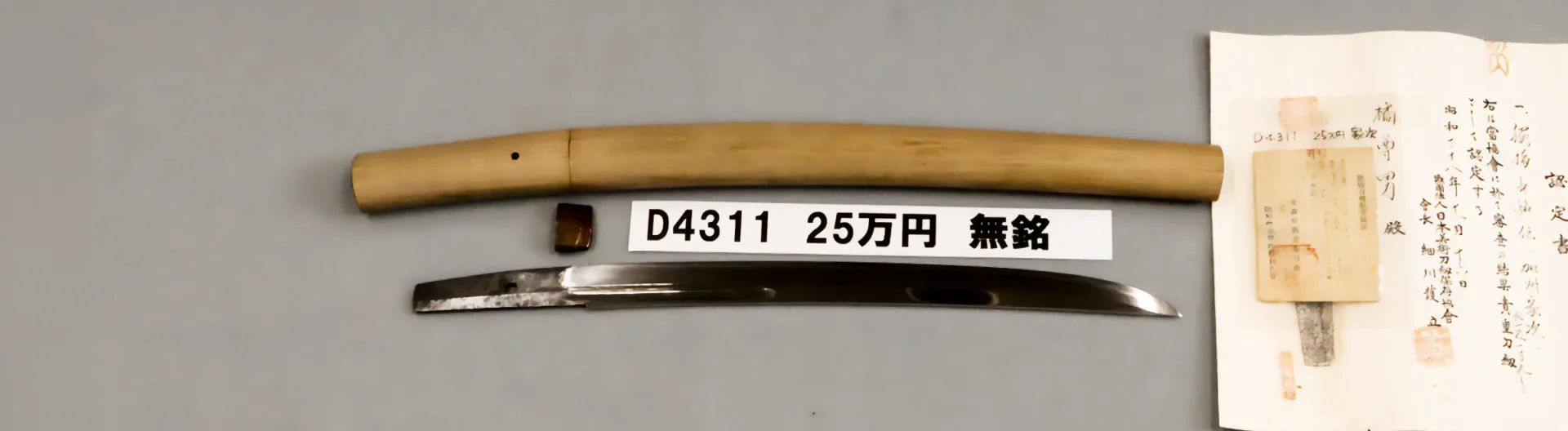
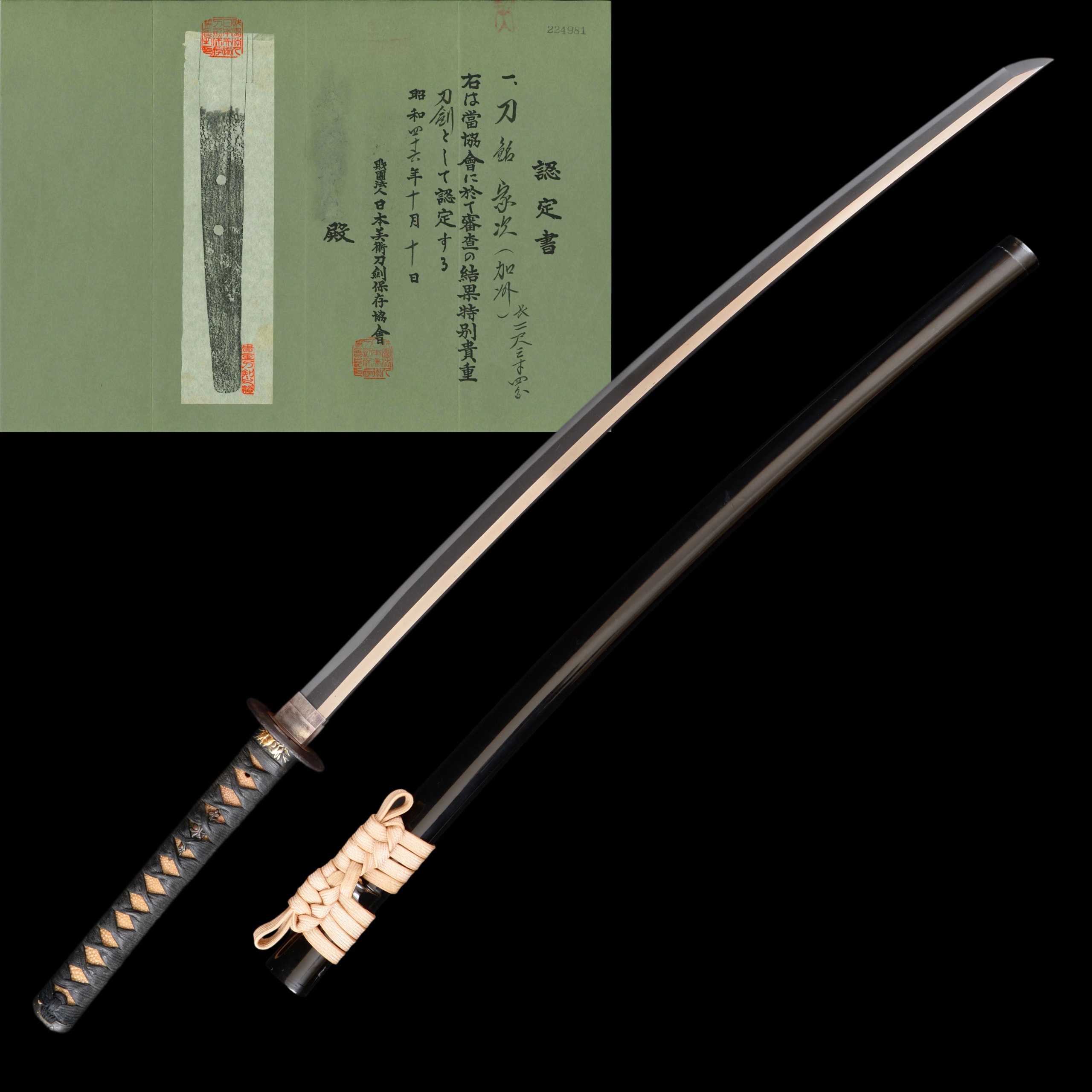
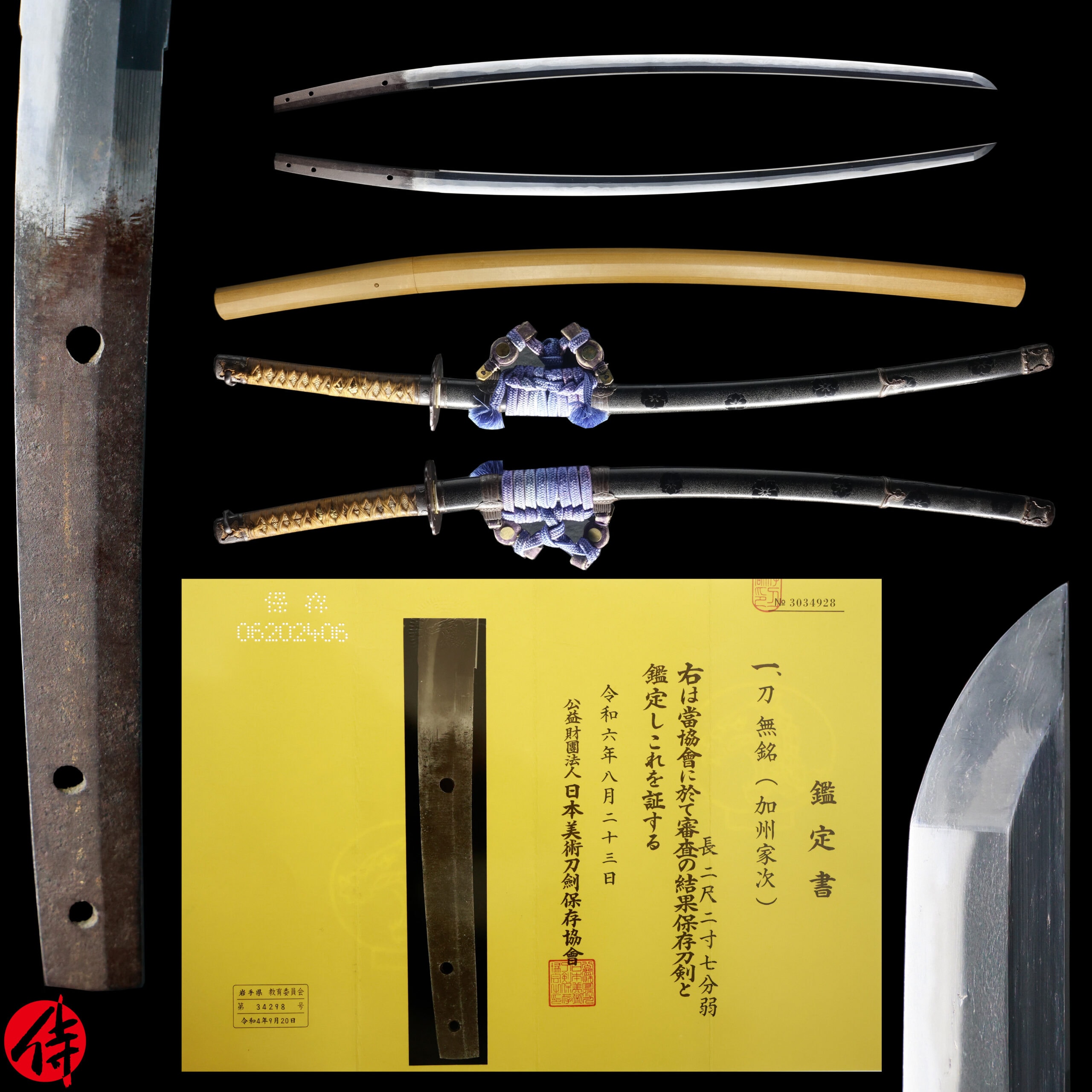
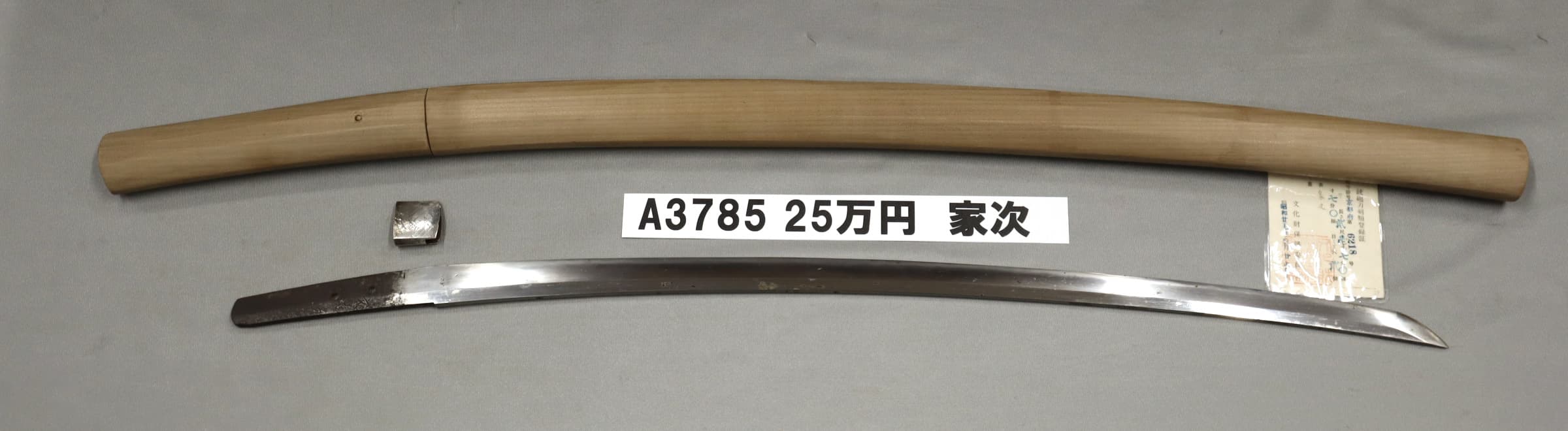
This katana by Ietsugu from Kaga province dates to the late Muromachi period. It features a straight hamon, shinogi-zukuri construction, and an ubu nakago with a kurijiri tip. The blade is housed in a good condition shirasaya and has a silver habaki by Yujo. There are numerous small rust spots across the blade, but no chips.
 NihontoWatch
mei · Muromachi · nagasa 65.7cm · sori 2cm
Kaga · around 1469-1487
Fujishiro Chu-jo saku · Tōken Taikan top 37%
2 pieces on the market now
The Muromachi period (1392 to 1573)
Muromachi turned sword making into an industry: the uchigatana rose with massed infantry warfare, Osafune and Seki produced bundle swords beside custom orders, and the Ming trade carried Japanese blades abroad by the tens of thousands.
We could not find an authenticity certificate on the seller’s listing. Japanese swords and fittings are normally papered by the NBTHK (or the NTHK). Without one, the attribution is the seller’s own assessment and has not been independently verified — treat it with caution and ask the dealer about certification before buying.
¥250,000
This katana by Ietsugu from Kaga province dates to the late Muromachi period. It features a straight hamon, shinogi-zukuri construction, and an ubu nakago with a kurijiri tip. The blade is housed in a good condition shirasaya and has a silver habaki by Yujo. There are numerous small rust spots across the blade, but no chips.
NihontoWatchmei · Muromachi · nagasa 65.7cm · sori 2cm
Kaga · around 1469-1487
Fujishiro Chu-jo saku · Tōken Taikan top 37%
2 pieces on the market now
The Muromachi period (1392 to 1573)
Muromachi turned sword making into an industry: the uchigatana rose with massed infantry warfare, Osafune and Seki produced bundle swords beside custom orders, and the Ming trade carried Japanese blades abroad by the tens of thousands.
We could not find an authenticity certificate on the seller’s listing. Japanese swords and fittings are normally papered by the NBTHK (or the NTHK). Without one, the attribution is the seller’s own assessment and has not been independently verified — treat it with caution and ask the dealer about certification before buying.
¥250,000