Sengoku Seki was an industry: smiths organized under their tutelary Kasuga shrine, arming the war bands of central Japan. Magoroku Kanemoto’s sanbonsugi and the finest Kanesada work prove quality survived inside mass production.
 NihontoWatchNihontoWatch
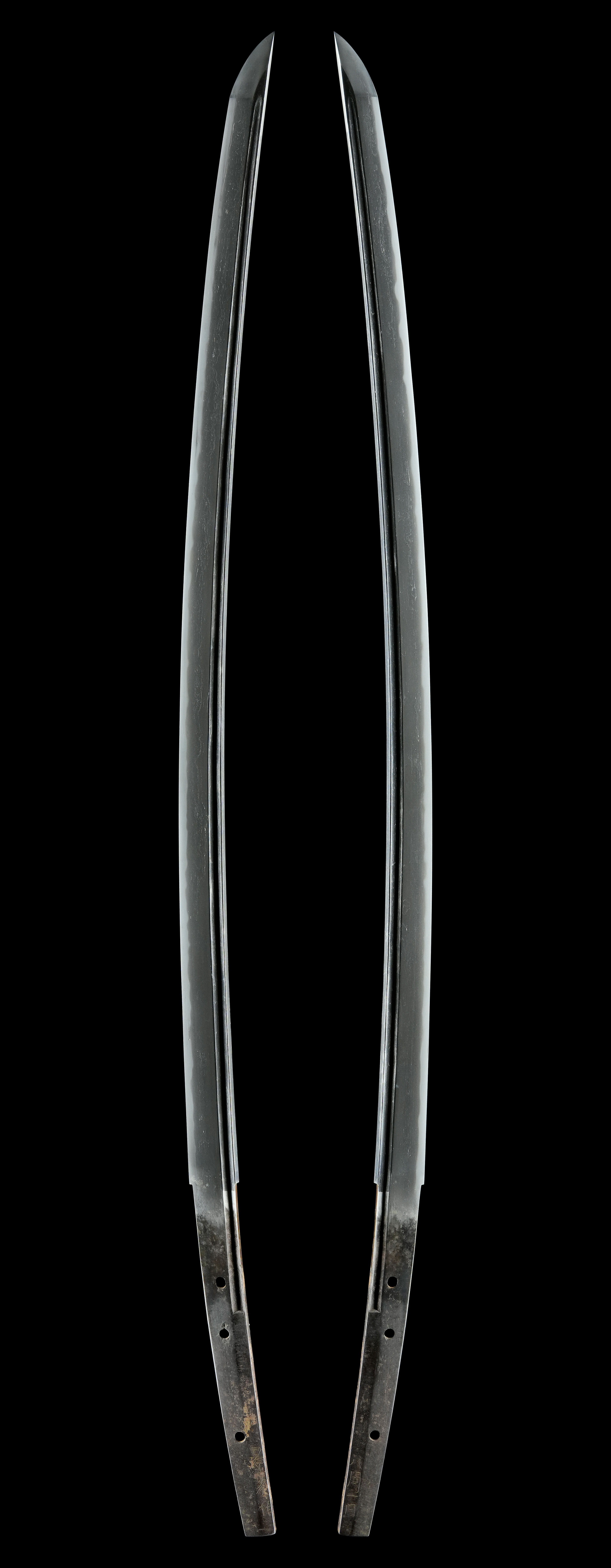
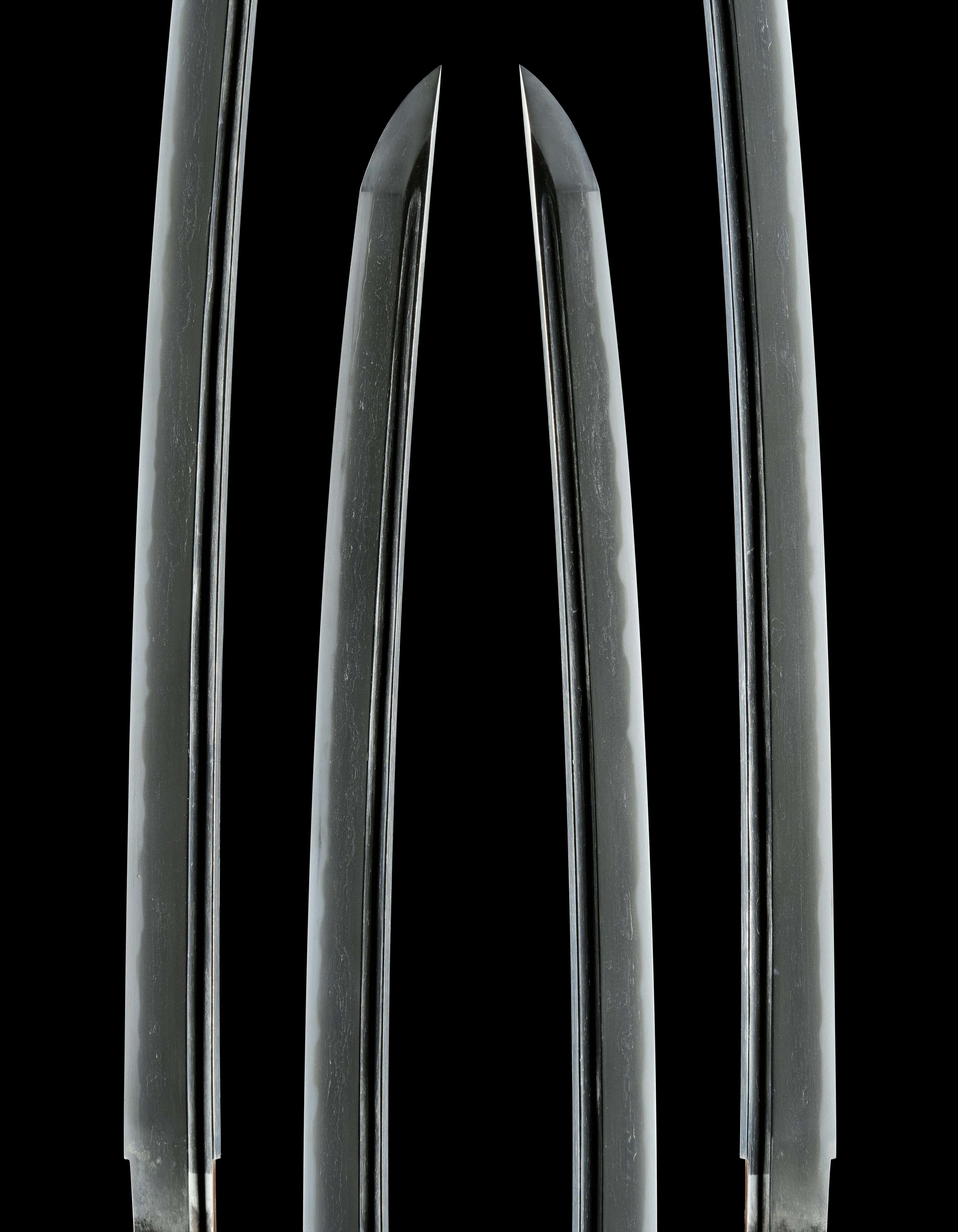
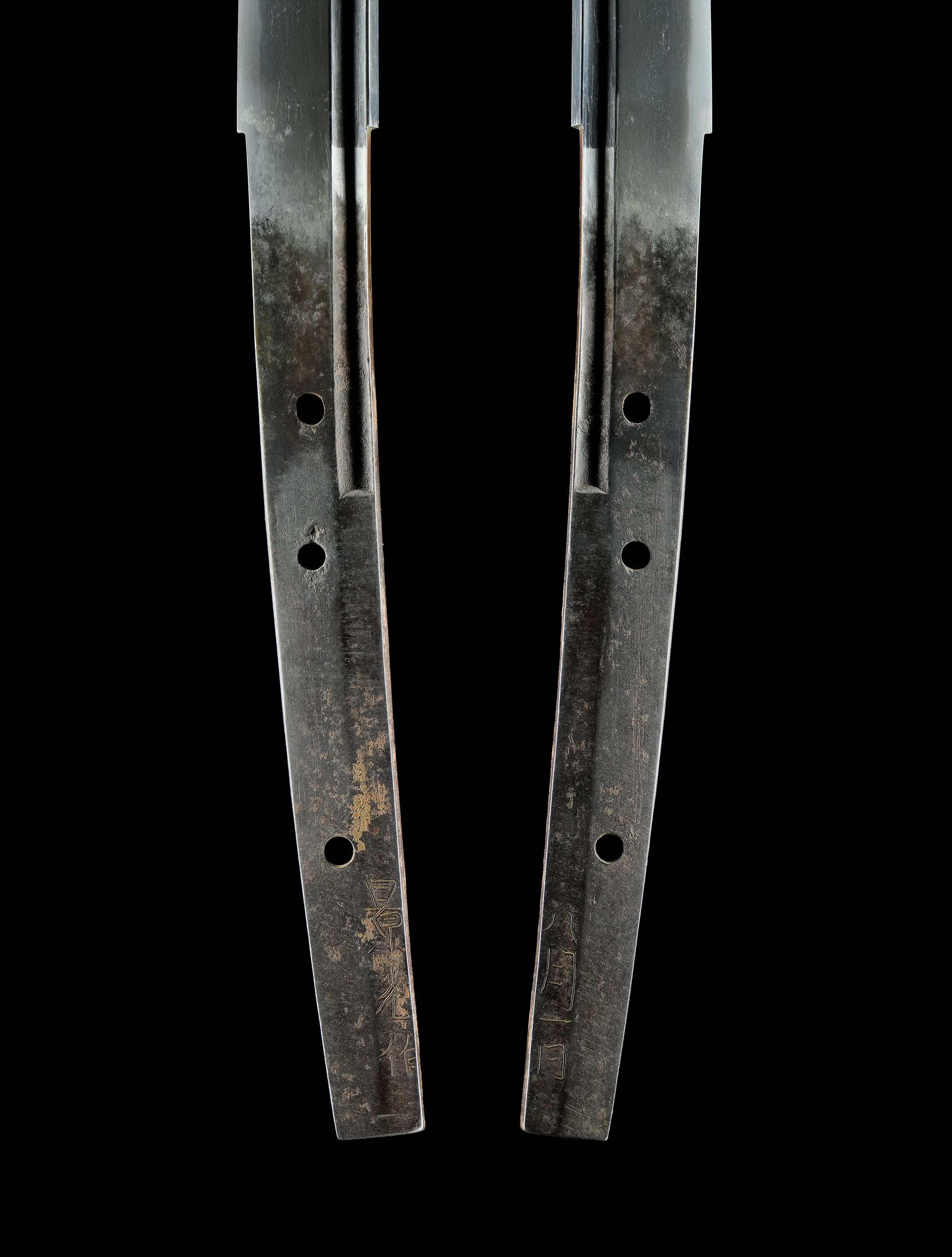
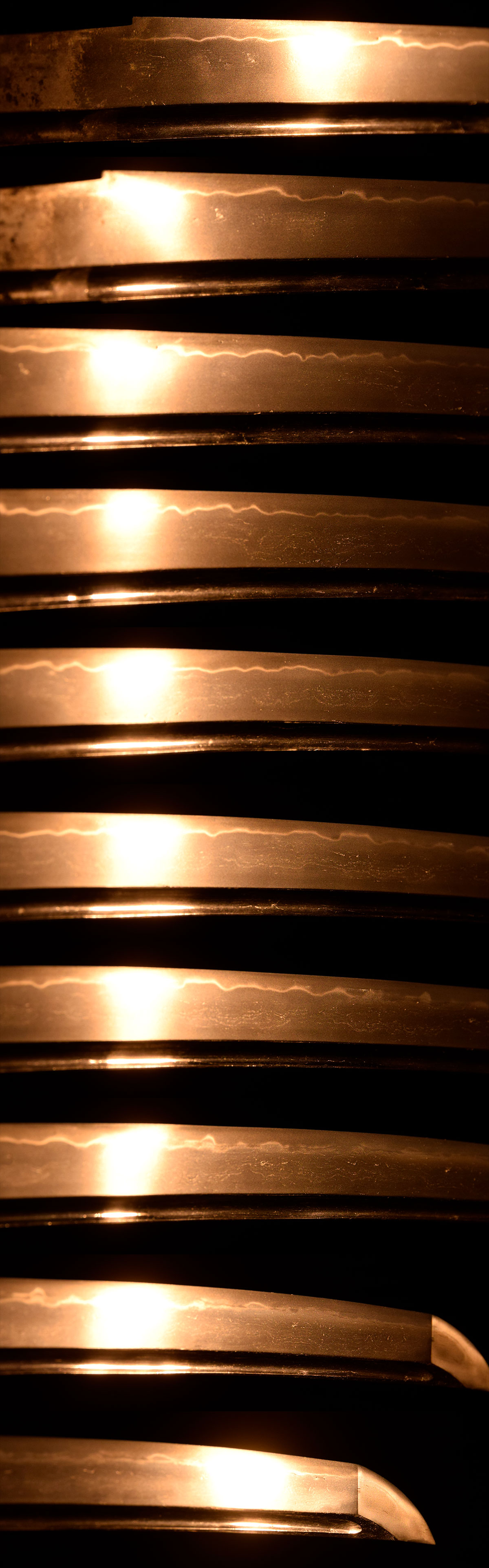
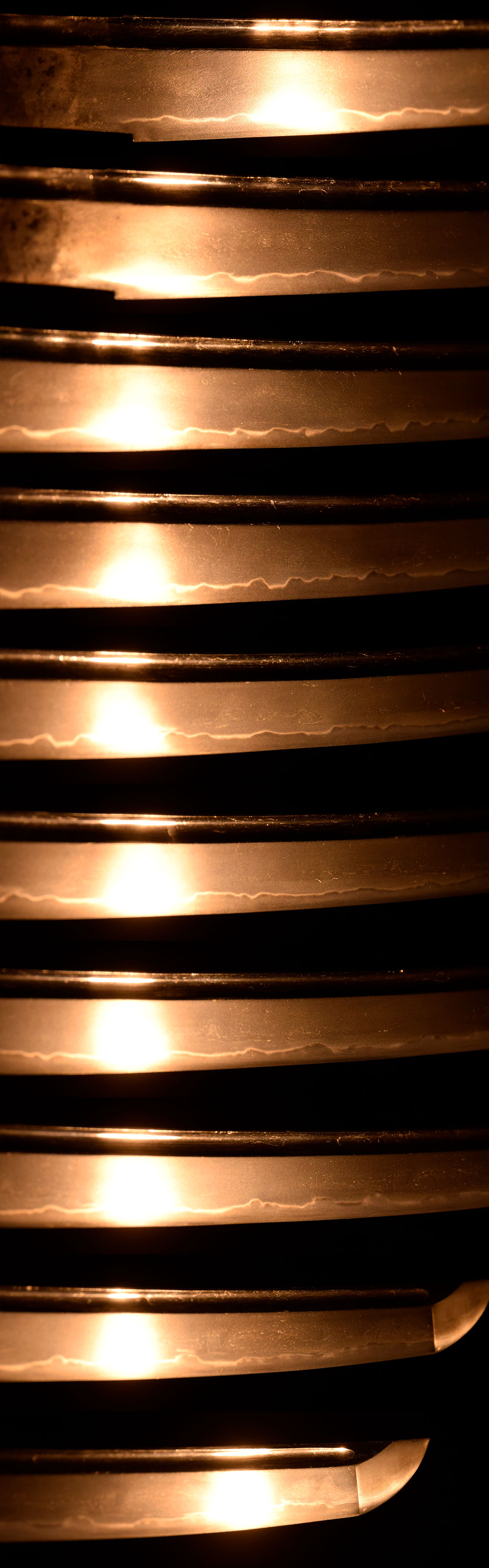
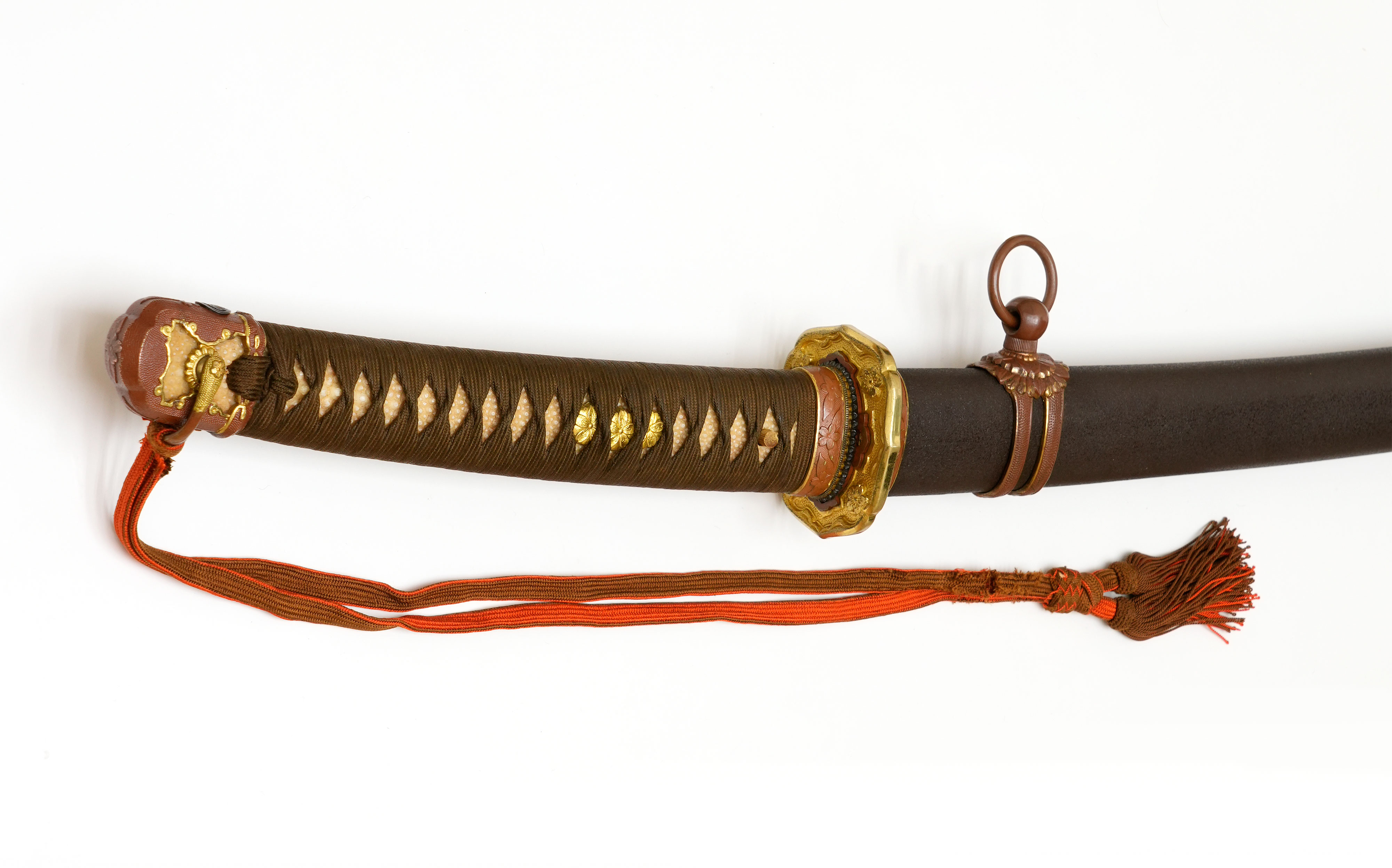
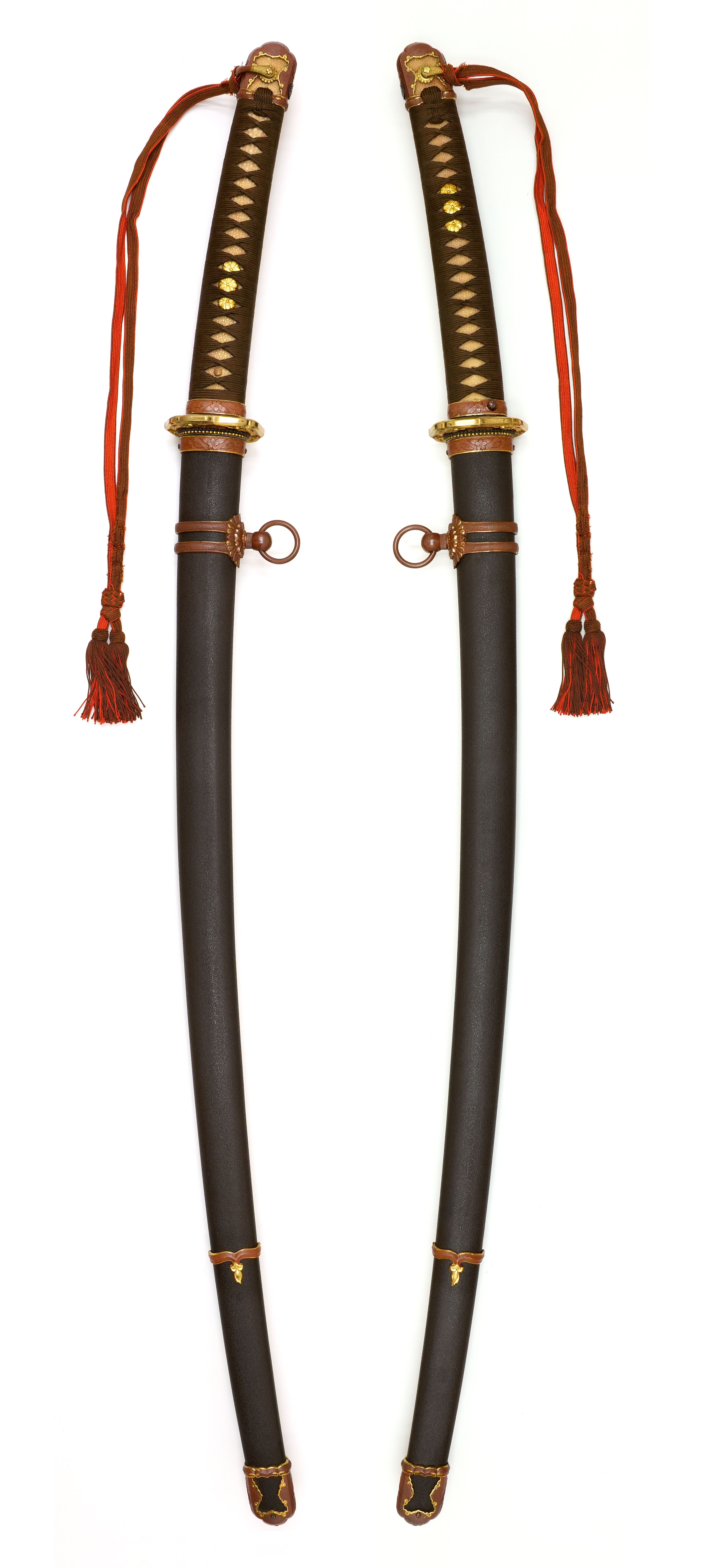
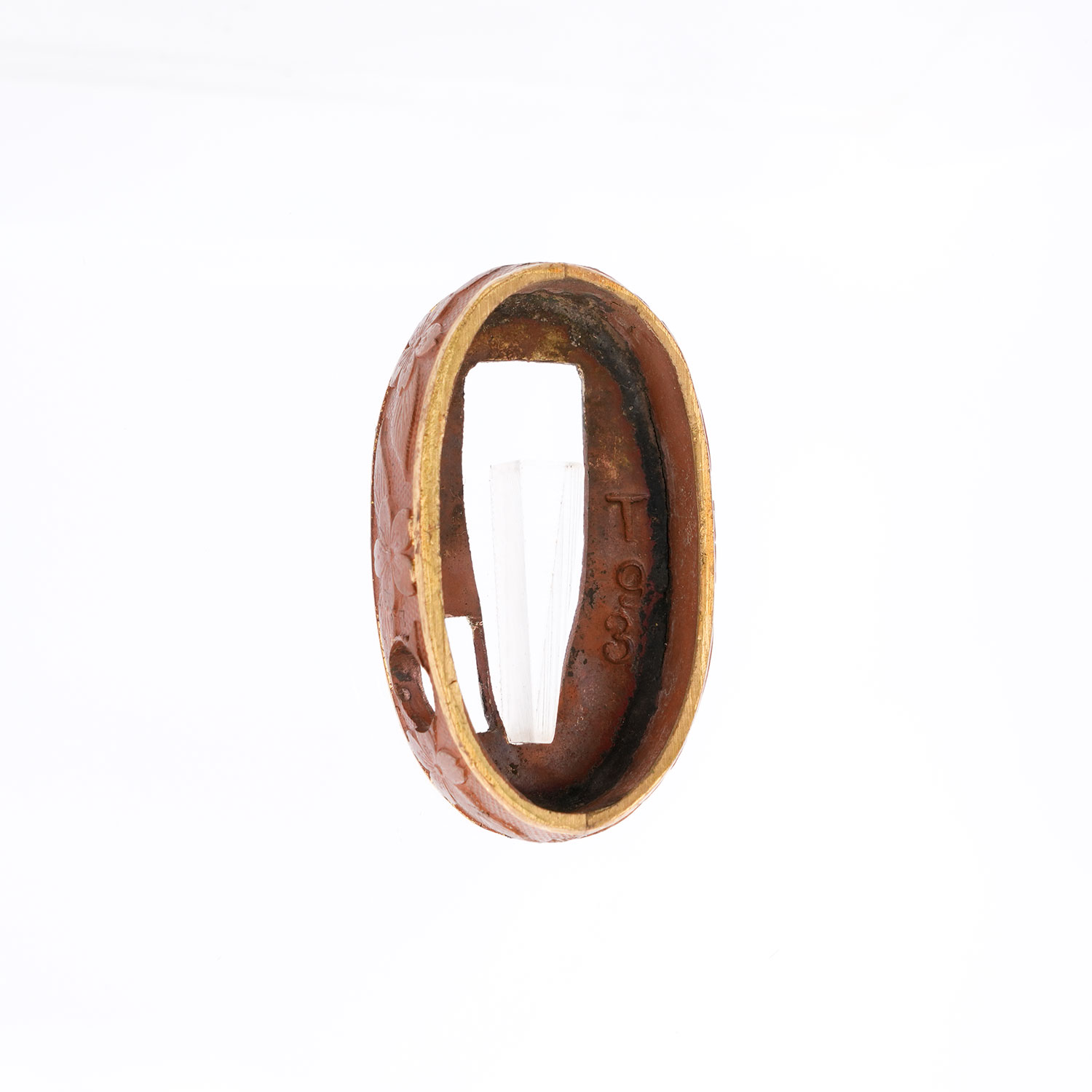
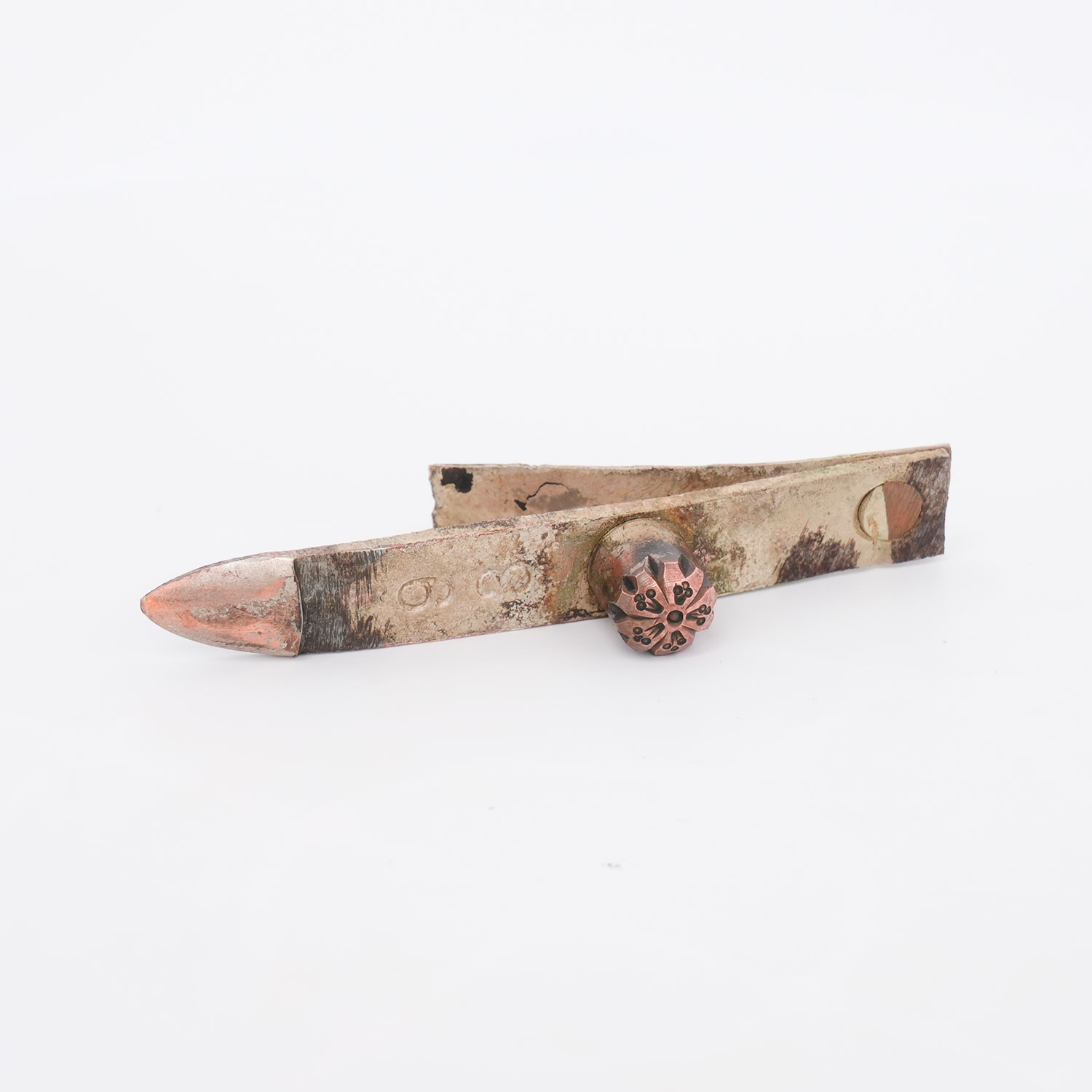
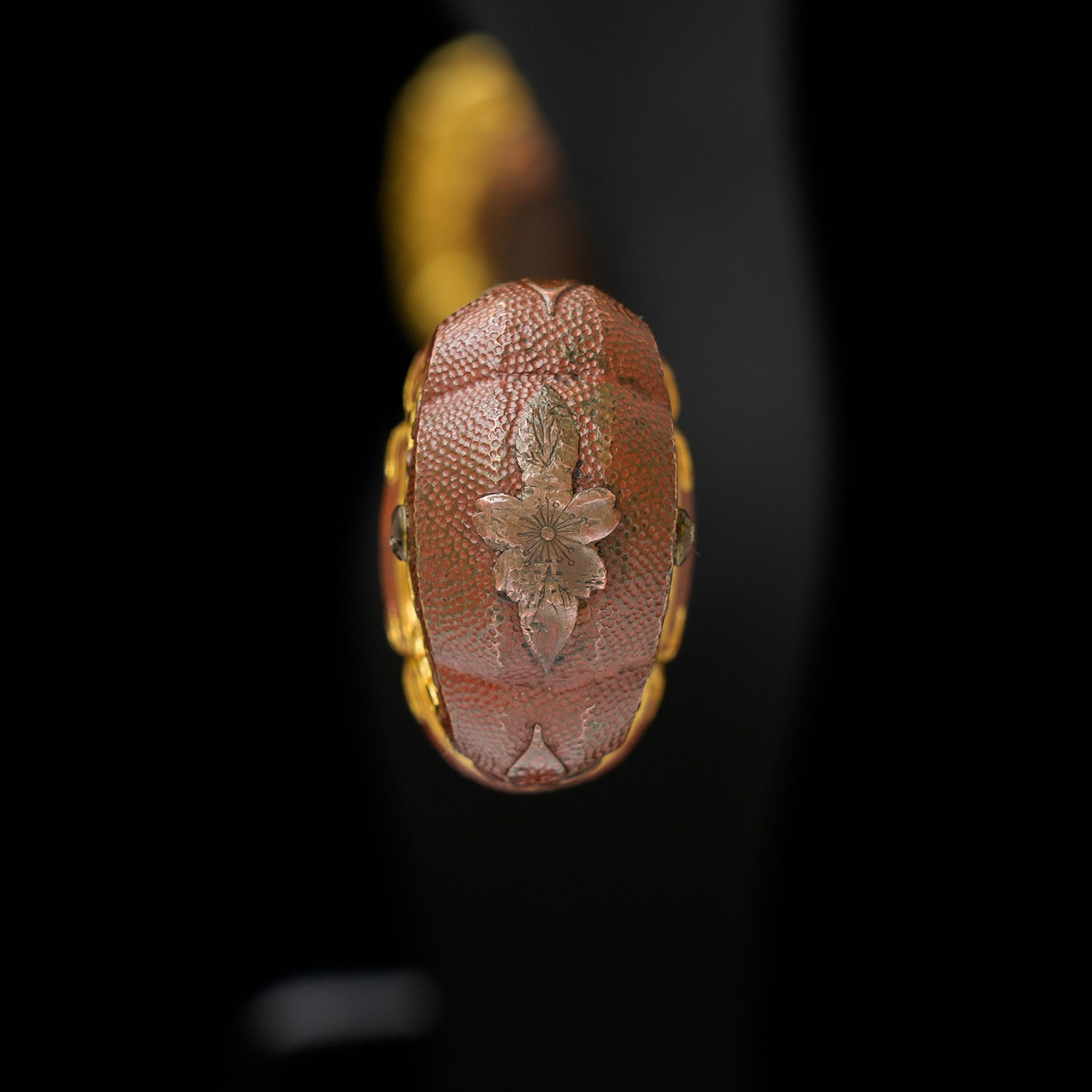
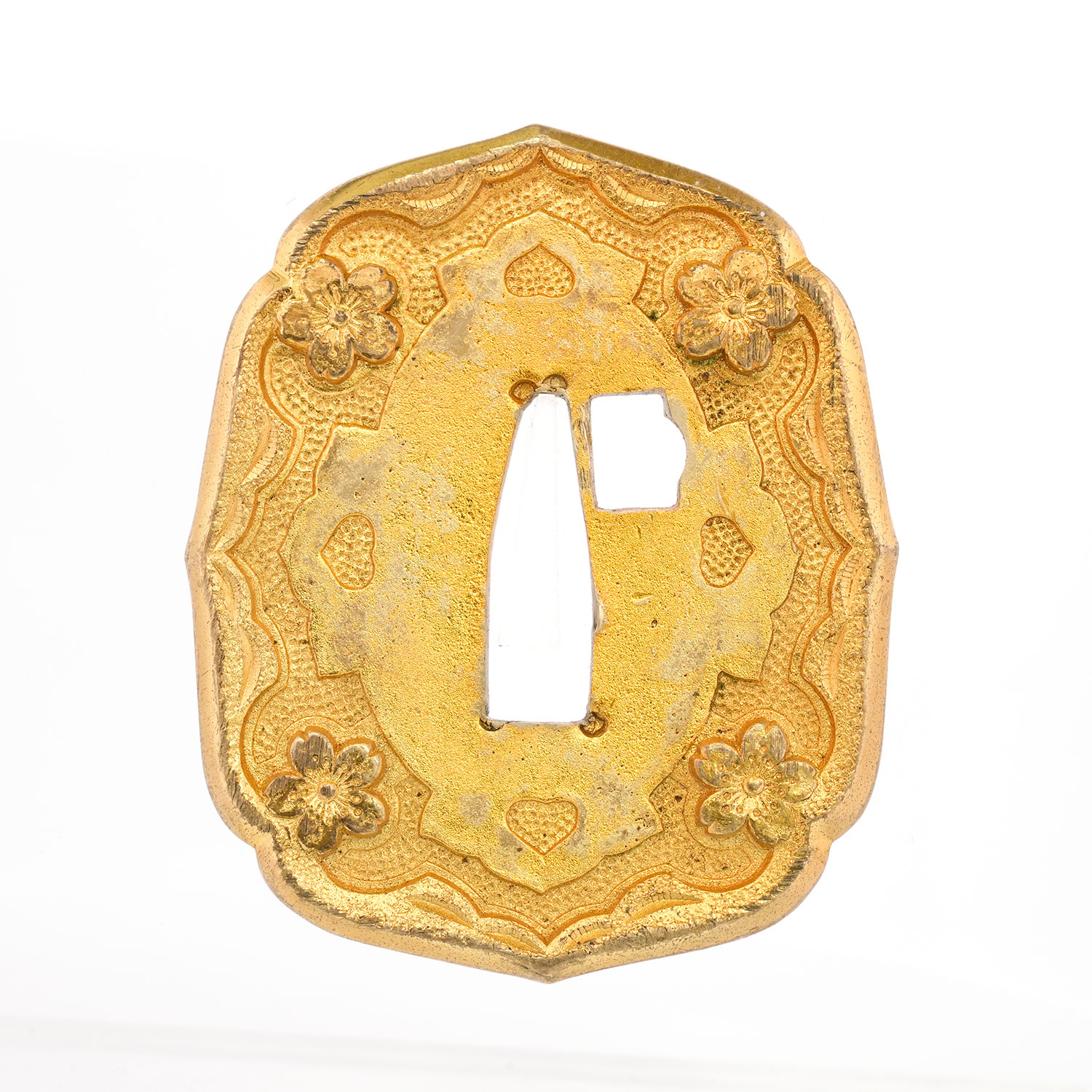
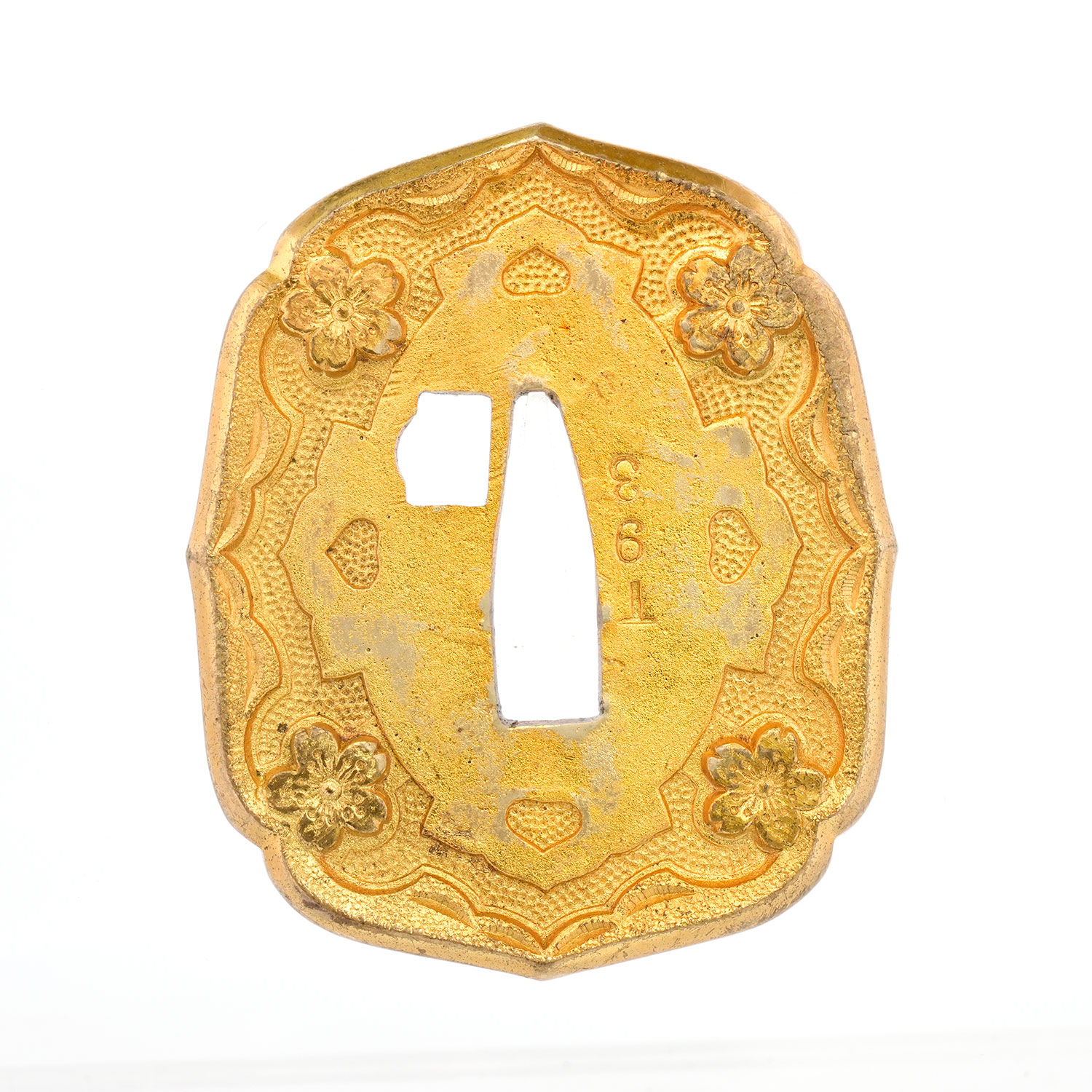
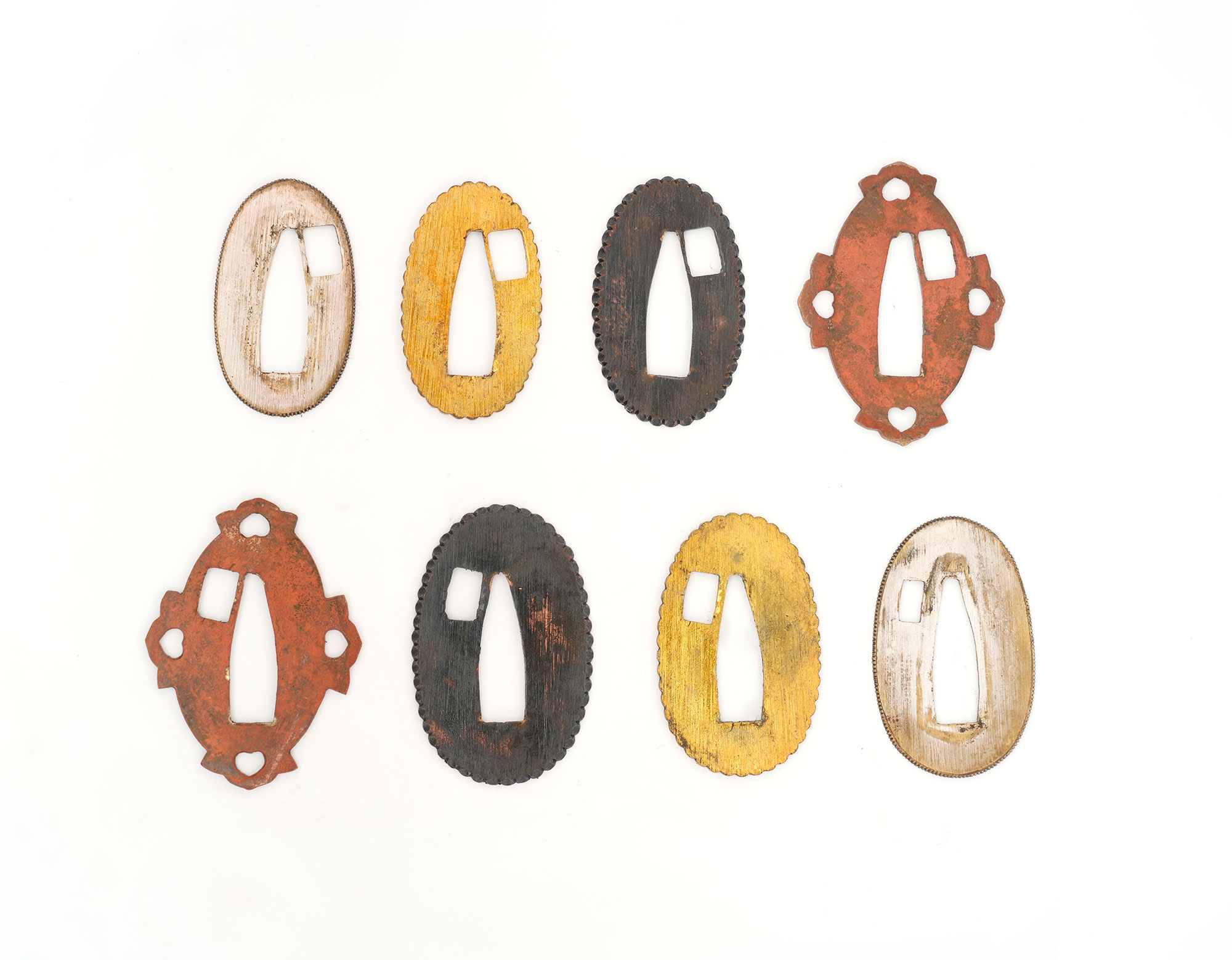
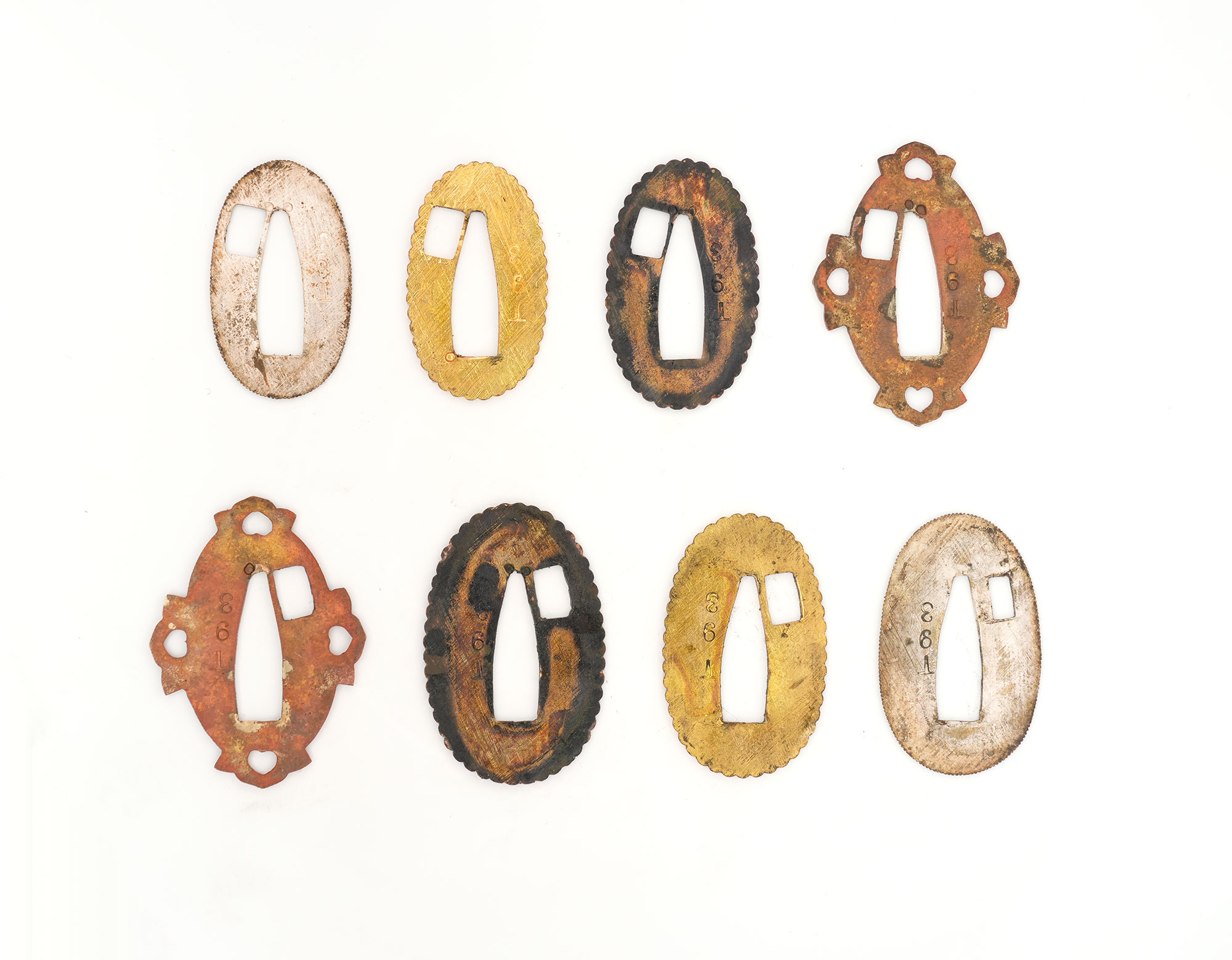
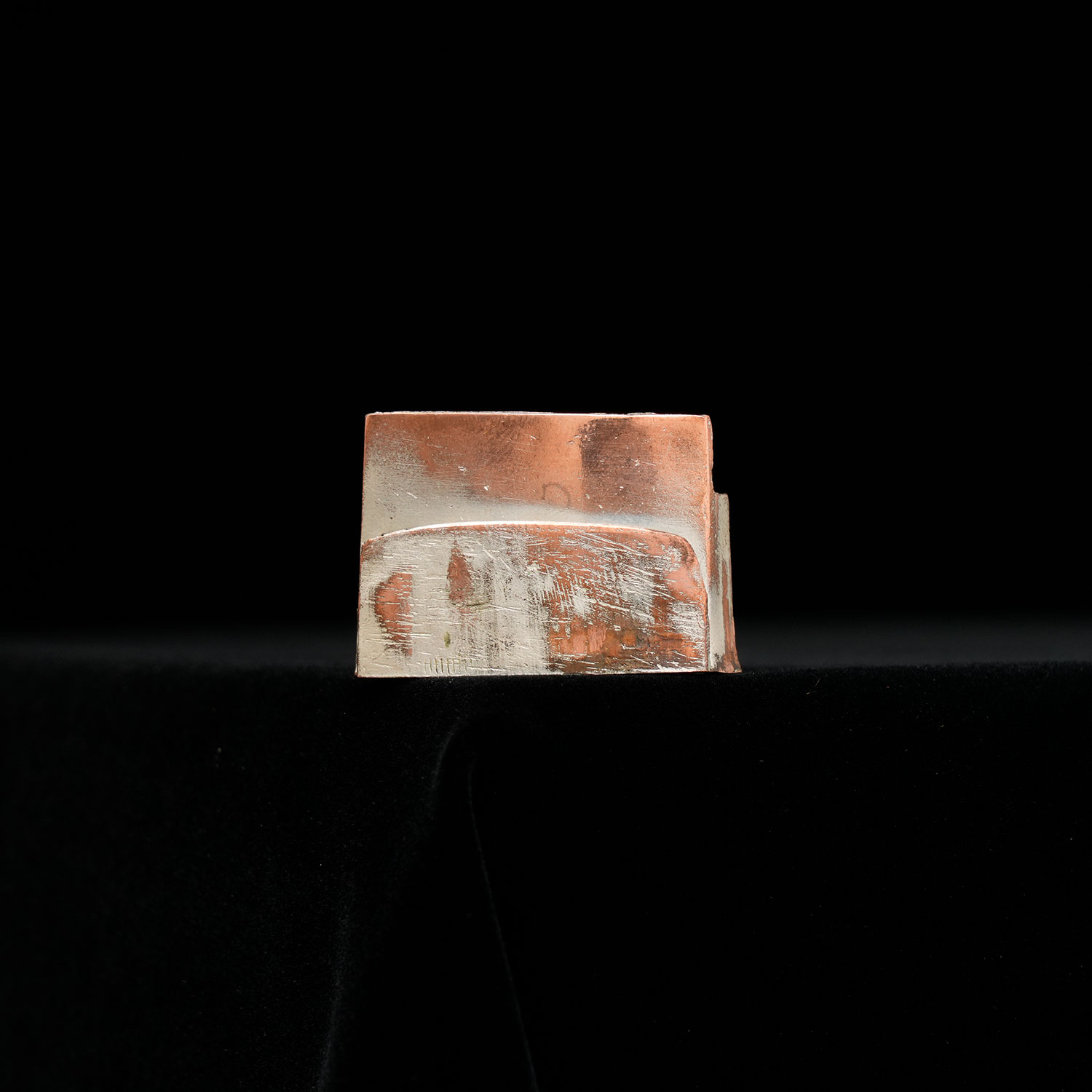
Accompanied by origami, suaka-ji gin-tokin niju habaki, uchigatana koshirae. Kaga Kagemitsu continued from around the Enbun era (around 1356) in the Nanbokucho period, through Koryaku, Oei, Kosho to Bunmei, Eisho, and the lineage of Kashu Kagemitsu continued until around the Kanbun era in the early Edo period. The school is of the Sanekage lineage, called the Hashizume school, and for generations they tempered ko-gunome reminiscent of Yoshii Bizen. From ancient times, the rank of Kaga Kagemitsu has been high, and it is said that the sword Hojo Ujiteru gave to Date Masamune was also by Kaga Kagemitsu; it is known as a high-ranking meito. This katana, although the machi have been moved up significantly, is a work that powerfully retains its appearance from the time of manufacture; the difference between the moto-haba and saki-haba is not conspicuously wide, boasting a grand taihai with an extended kissaki, with katanahi on the omote and ura with kado-dome, the jitetsu is itame with nagare and hadatachi, the hamon has a bright and clear nioiguchi, tempered in a notare style with gunome, with ashi, yo, and sunagashi visible, and when viewed minutely, the habuchi has strong nie in a niju-ba style, and the boshi is in a sugu style with niju-ba style mixed in, returning maru. The accompanying koshirae is a Type 98 gunto, but it is a high-grade specification with a wooden saya coated in hon-urushi rather than an iron or aluminum saya, which is often seen on the swords worn by high-ranking officers who took command in the mainland rather than the battlefield. The state of preservation is good, and furthermore, the fact that it is accompanied by a sakan-tosho with a red reverse side conveys the status of this sword to the present; the golden color remaining on the tsuba and kanagu is also healthy as it was in the past, making it an exquisite item that can be particularly recommended to military equipment collectors as well as sword enthusiasts. Also, although I do not know the details due to my lack of study, it is noteworthy that an old origami issued in Showa 16 is attached. It can be said to be a single sword of high historical and archival value, with the old lineage of Kaga Kagemitsu and a gunto koshirae for high-ranking officers complete. No rattling in the tsuka. There is tsuba-nari.
Offered by Toushin
Kagemitsu is a name with Jūyō-designated work, and we couldn’t find current papers for this piece. Treat the name as unproven until papers say otherwise. Its photos show a certificate that isn’t in our records yet; only current NBTHK or NTHK shinsa papers would settle the name. — Hoshi Ask me first
21 on the market

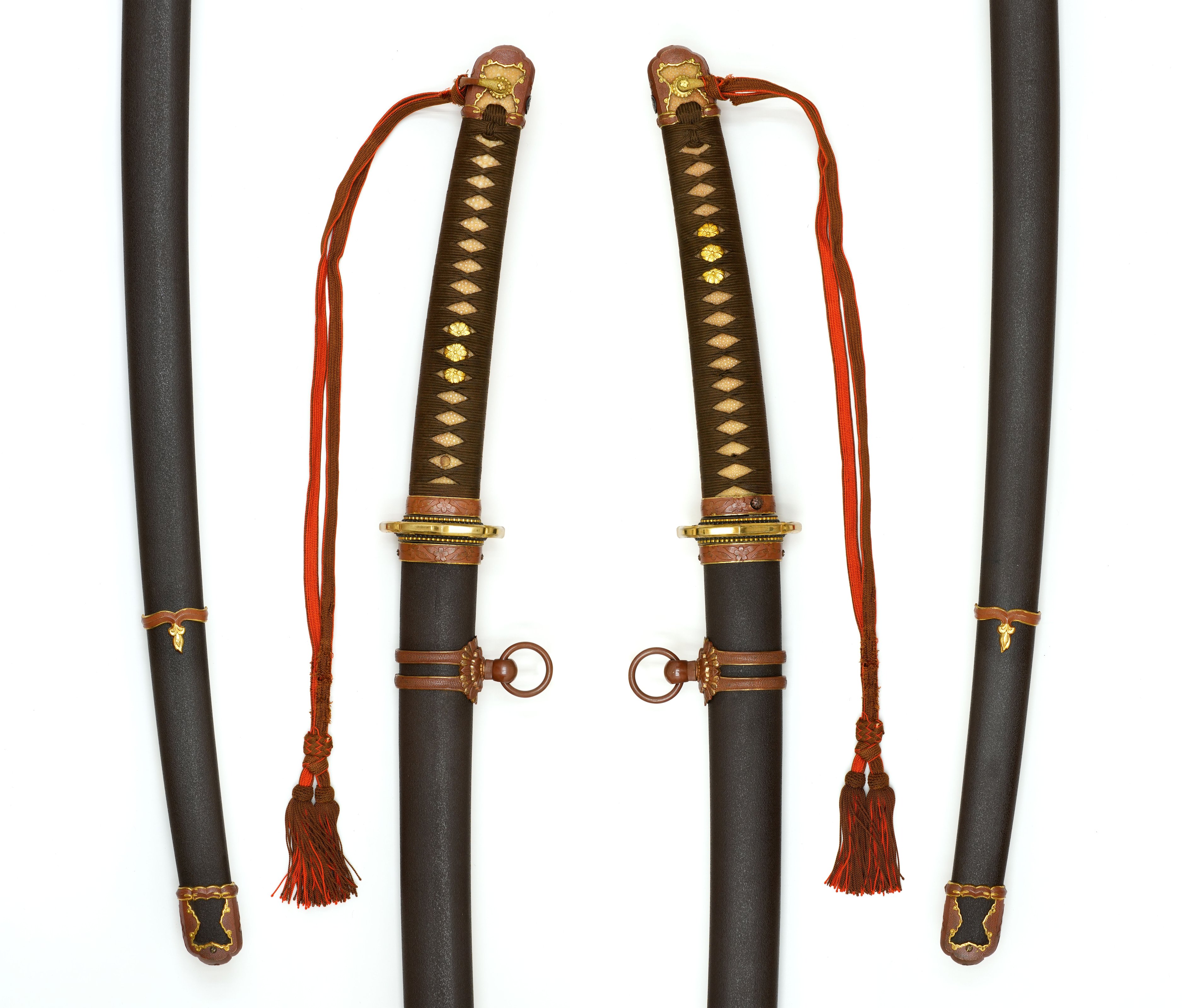
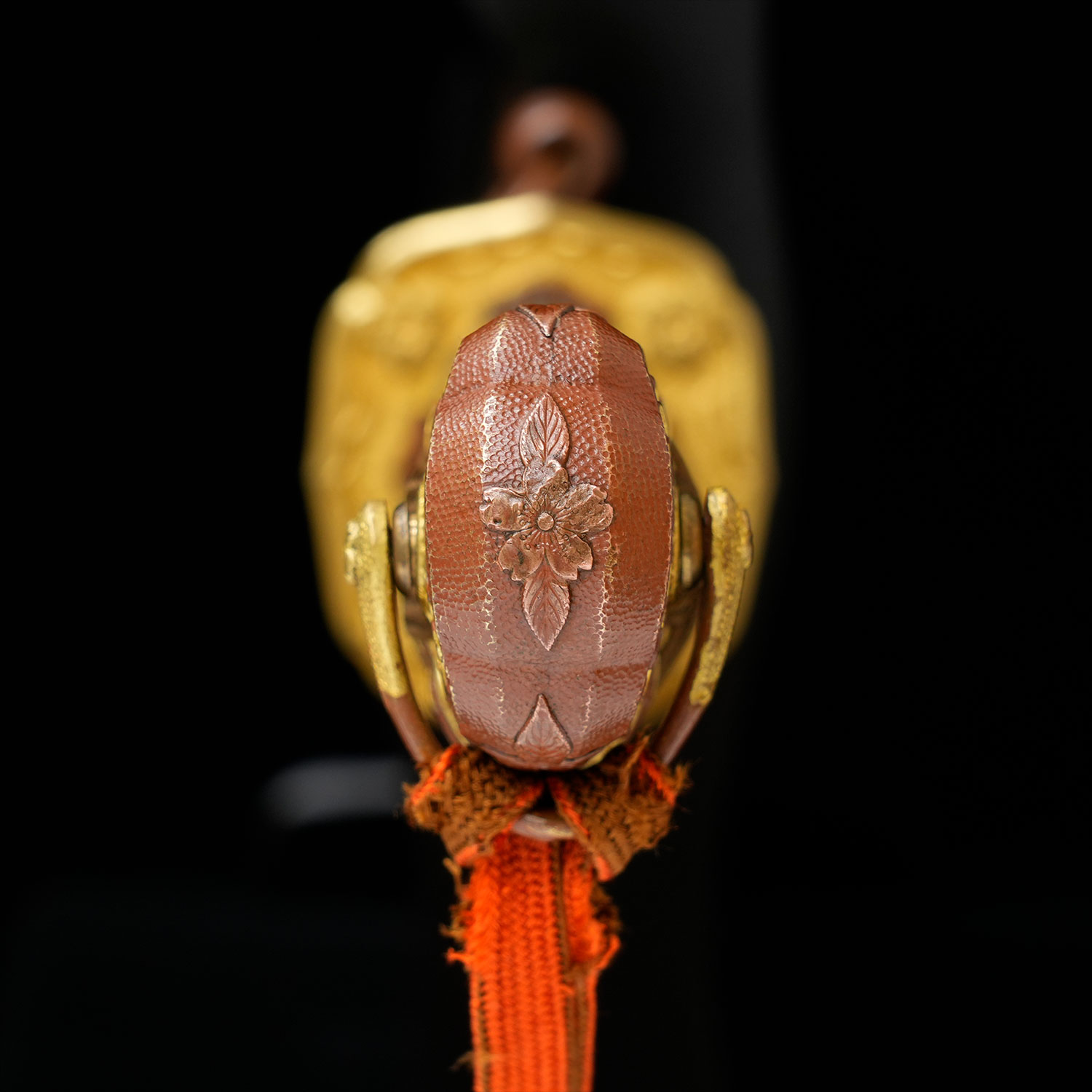
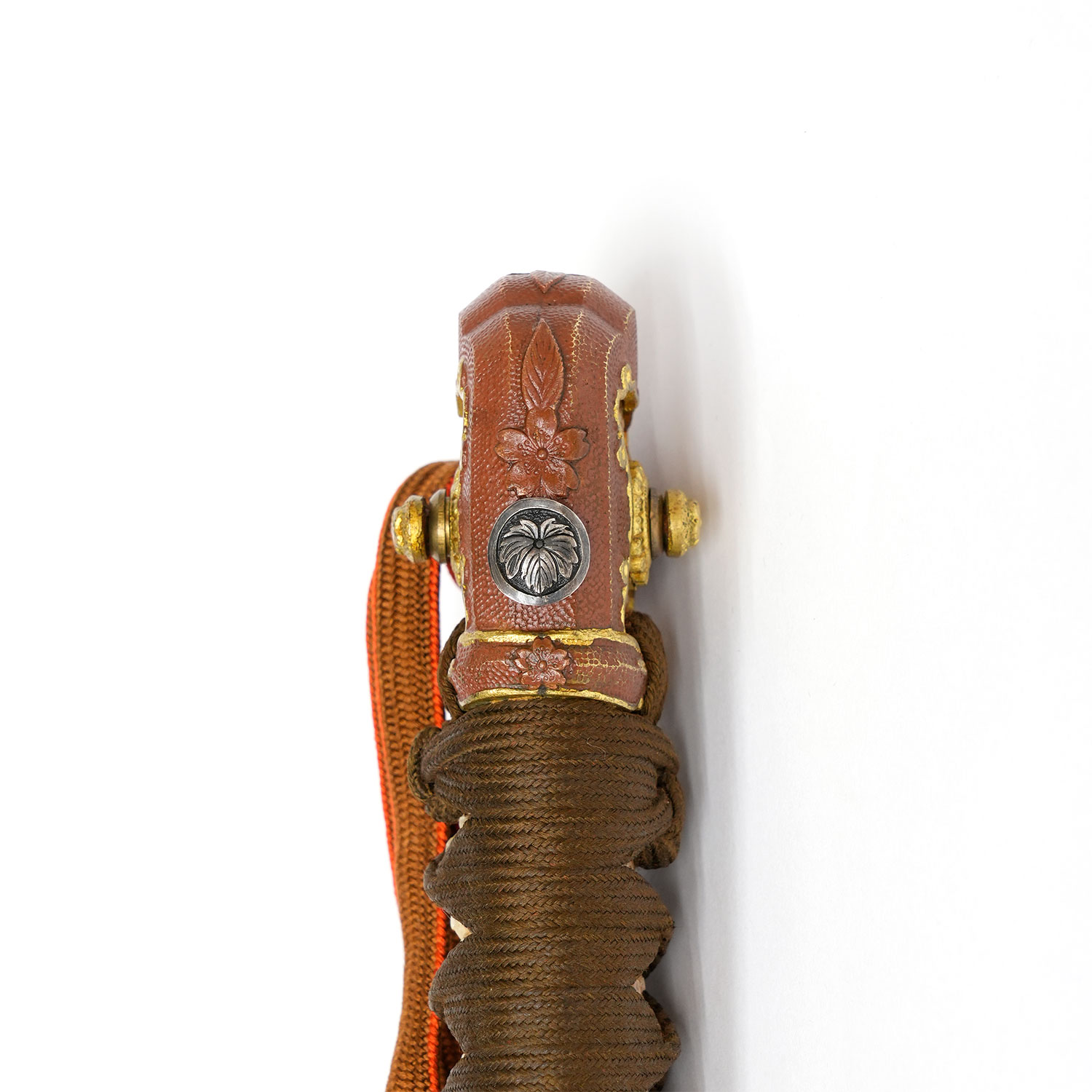
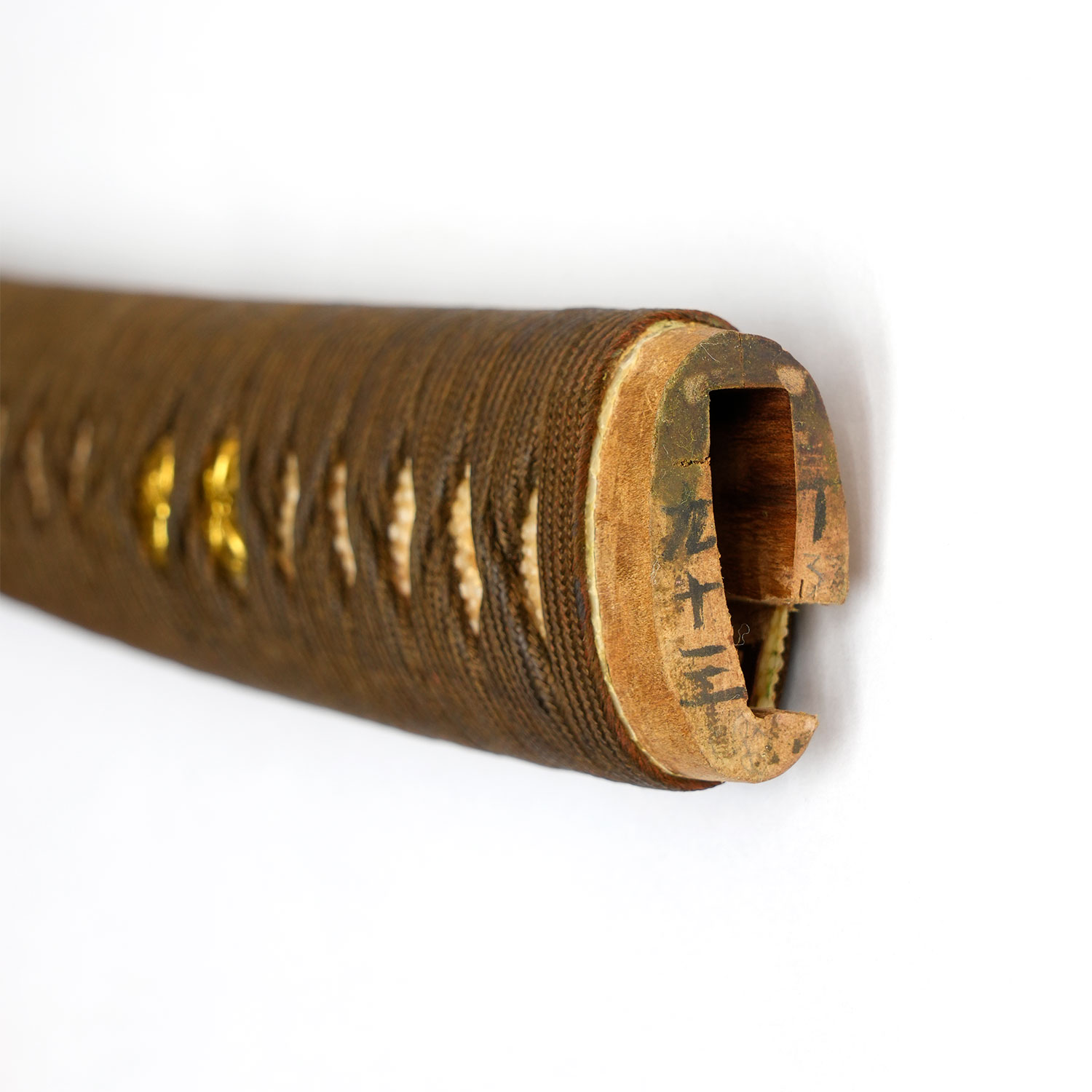
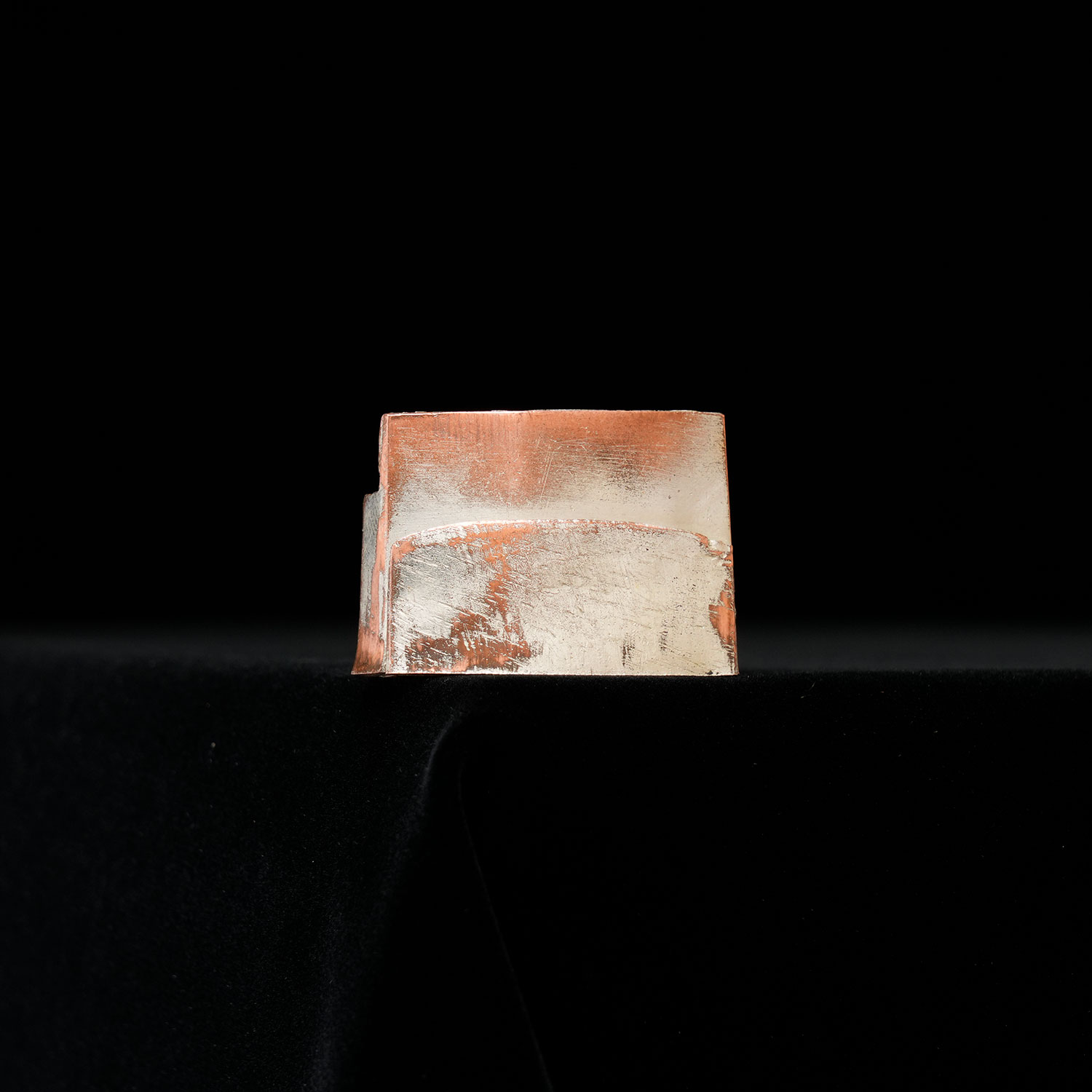
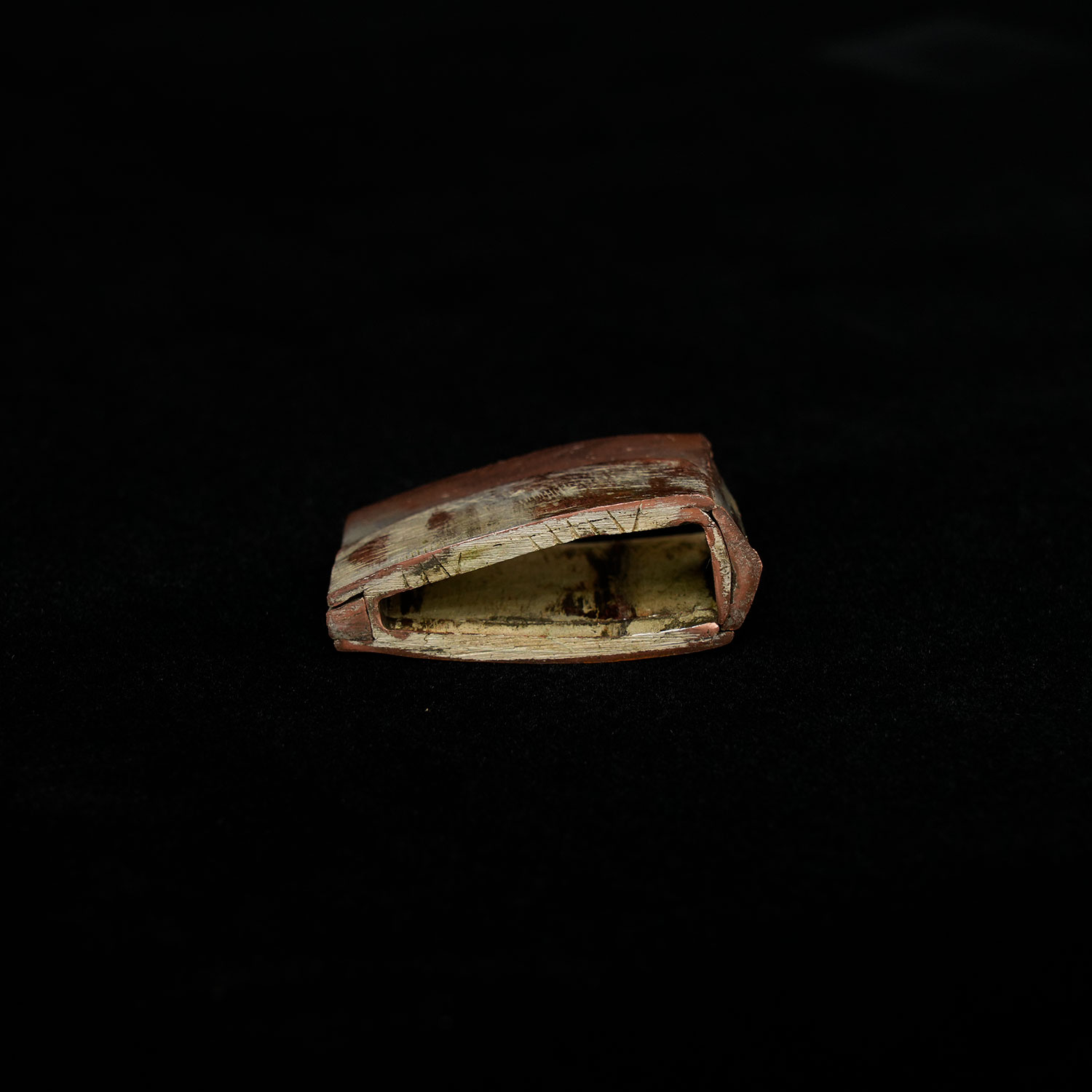
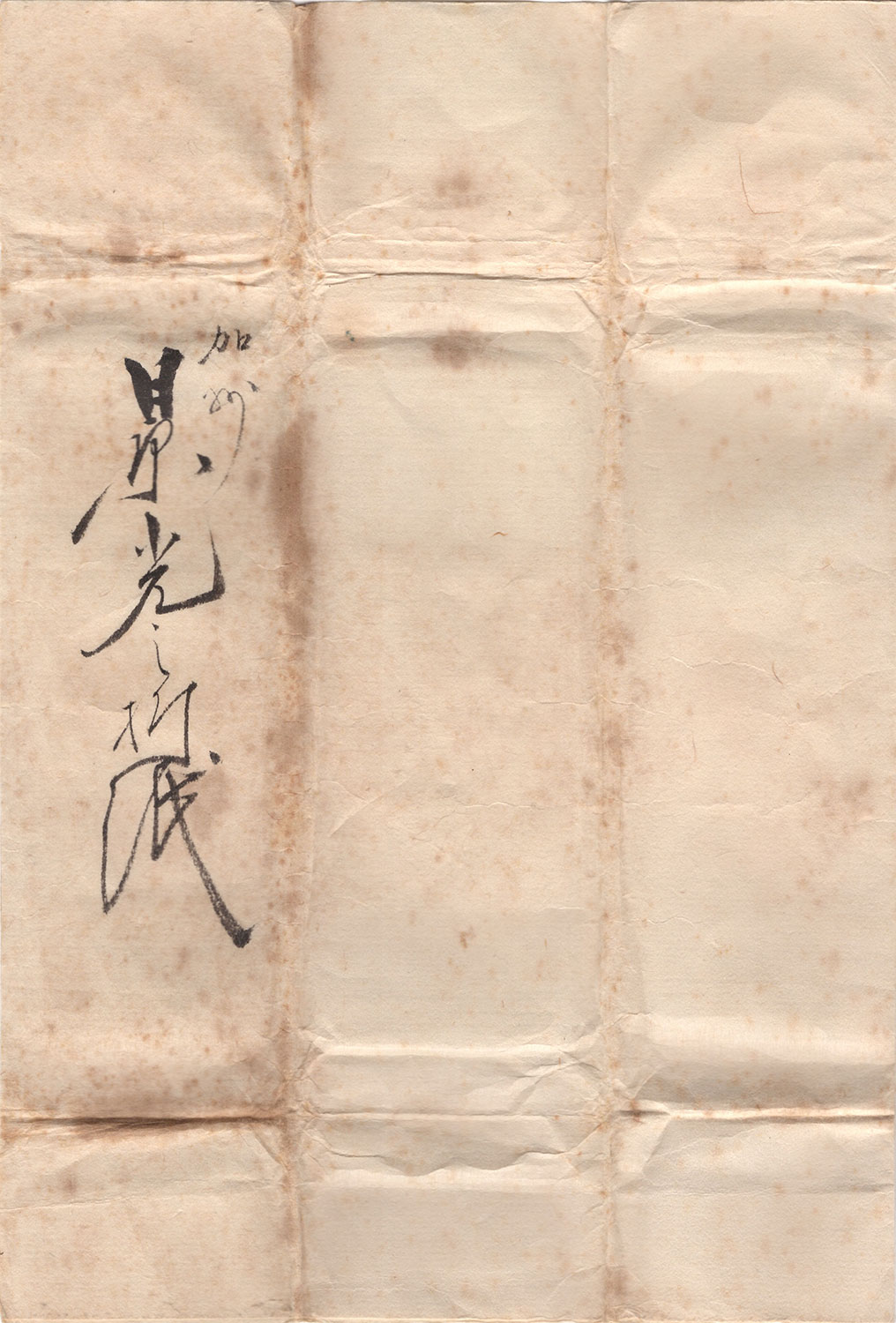
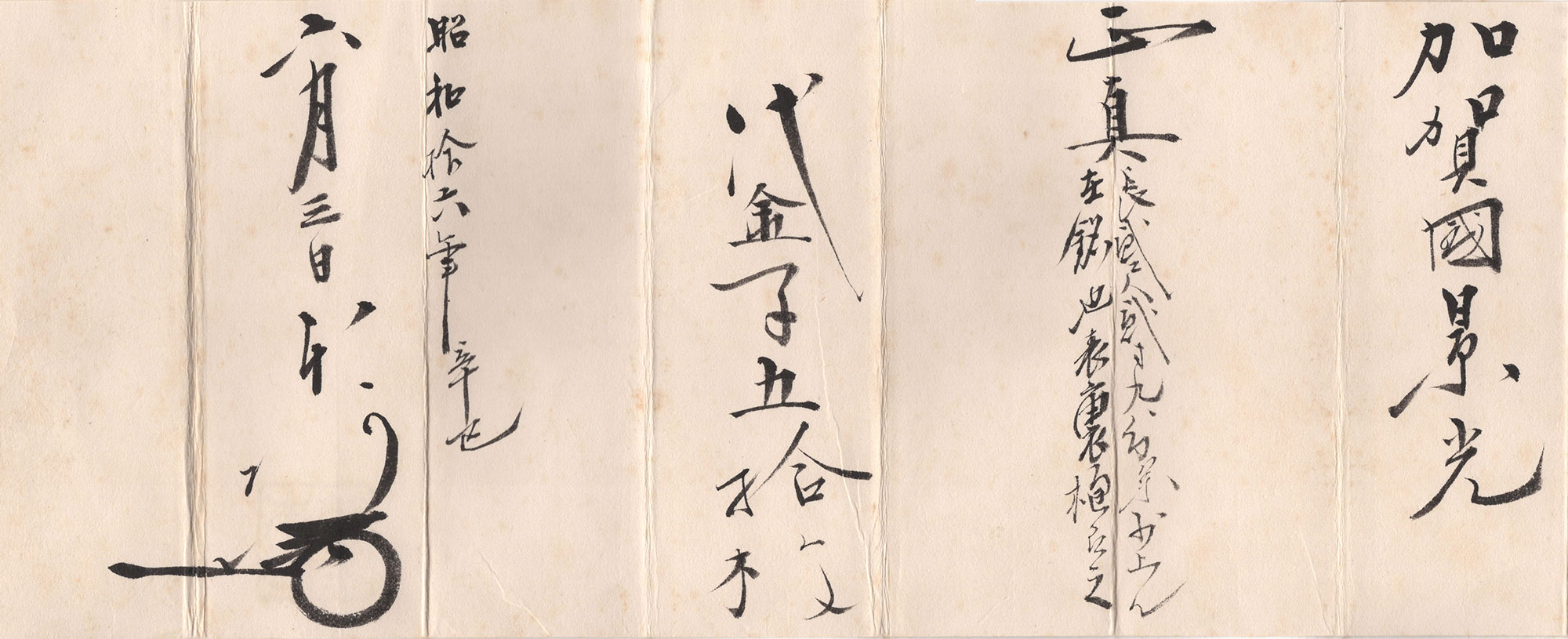
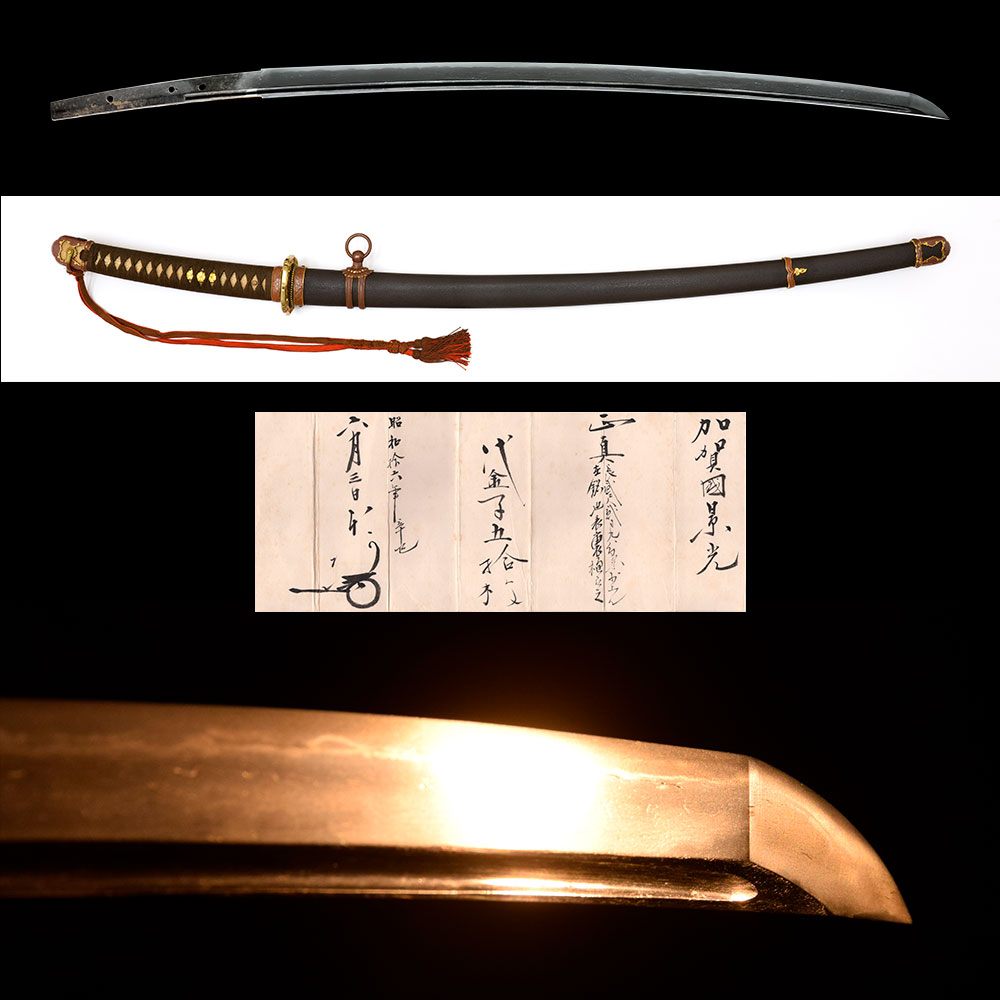
As written by the shop
Machine translation from the shop's Japanese · may contain errors ·
Mino-den · Kaga · around 1362-1368
Tōken Taikan top 37%
Where Kagemitsu stands among comparable artisans: across all of nihontō, and within tradition, era, and period. The tiers (Foremost · Leading · Major · Notable) weigh official designations from the NBTHK and Japan's Agency for Cultural Affairs, together with historical honors of lasting repute such as the Sansaku and Meibutsu-chō.
Select a lens to see how it's measured.
Mino-den · Kaga
21 pieces on the market now
The Kaga inlay tradition (Kaga zōgan) emerged in Kaga Province during the early Edo period, centered on the castle town of Kanazawa under the patronage of the Maeda clan. This distinctive form of hira-zōgan is said to have developed when craftsmen specializing in stirrup decoration (abumi-shi) adapted their metalworking techniques to tsuba and other sword fittings, flourishing from the early seventeenth century through the Kyōhō era (1716–1736). Working against polished grounds of shakudō, shibuichi, or occasionally refined copper (suaka), these artisans created works characterized by their compositional sophistication and technical precision, establishing a regional aesthetic that would influence later generations of metalworkers. The hallmark of Kaga workmanship lies in its masterful deployment of multiple colored metals—gold, silver, copper, shakudō, and shibuichi—inlaid in flat relief against dark, highly polished grounds. Motifs range from naturalistic subjects such as autumn grasses, butterflies, and mandarin ducks beneath willows to more formal designs including paulownia crests and brocade wrappers, all rendered with meticulous kebori line engraving that adds refinement to the broader inlay work.
The compositions typically extend across the entire surface of the guard, creating an effect of visual richness and decorative abundance. Against jet-black shakudō or the warm tonality of suaka, the multicolored inlays achieve a luminous clarity, producing works of elegant splendor (fūryū) that balance technical virtuosity with restrained taste. The tradition's influence extended beyond its geographic center, with works attributed to Kaga methods appearing in collections throughout Japan. Large-scale presentation pieces demonstrate the school's capacity for ambitious design, while the consistent quality of execution across surviving examples suggests a well-established workshop system with shared technical standards. Though individual makers within the tradition rarely signed their work, the distinctive aesthetic—characterized by full-surface compositions, polished dark grounds, and precise multicolor inlay—remains immediately recognizable, preserving the legacy of Kanazawa's metalworking excellence through the Edo period. Learn more →
| Smith | Era | Designated |
|---|---|---|
| Sanekage真景 | 1362-1368 | 47 |
| Takahira高平 | 1621-1644 | 9 |
| Kagemitsu景光 | 1362-1368 | 4 |
| Ietsugu家次 | 1528-1558 | 2 |
| Kagehira景平 | 1661-1673 | 1 |
Mino in the Muromachi period
Sengoku Seki was an industry: smiths organized under their tutelary Kasuga shrine, arming the war bands of central Japan. Magoroku Kanemoto’s sanbonsugi and the finest Kanesada work prove quality survived inside mass production.
We could not find an authenticity certificate on the seller’s listing. Japanese swords and fittings are normally papered by the NBTHK (or the NTHK). Without one, the attribution is the seller’s own assessment and has not been independently verified — treat it with caution and ask the dealer about certification before buying.
As a rule we do not accept returns, except when we have sent a different item from the one ordered or when there is a significant discrepancy between the description and the item. If you wish to return an item, please contact us within 3 days of its arrival and then send it back.
¥880,000