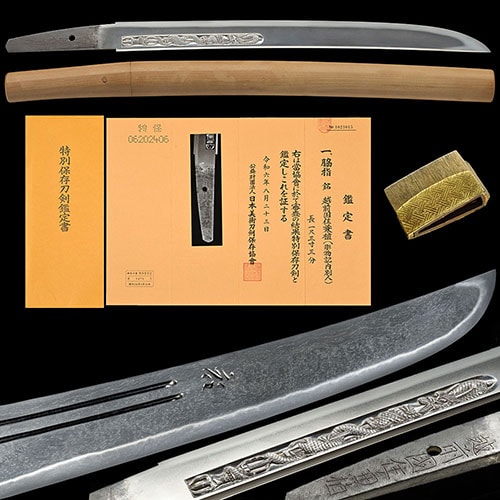
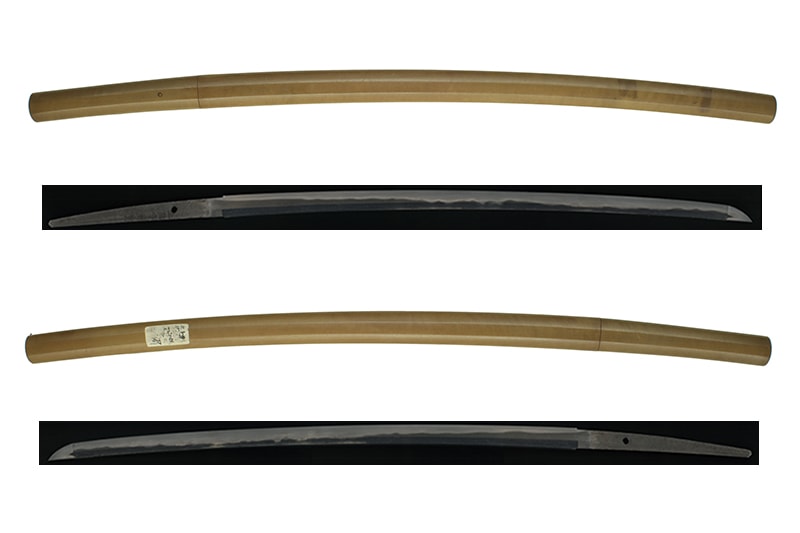
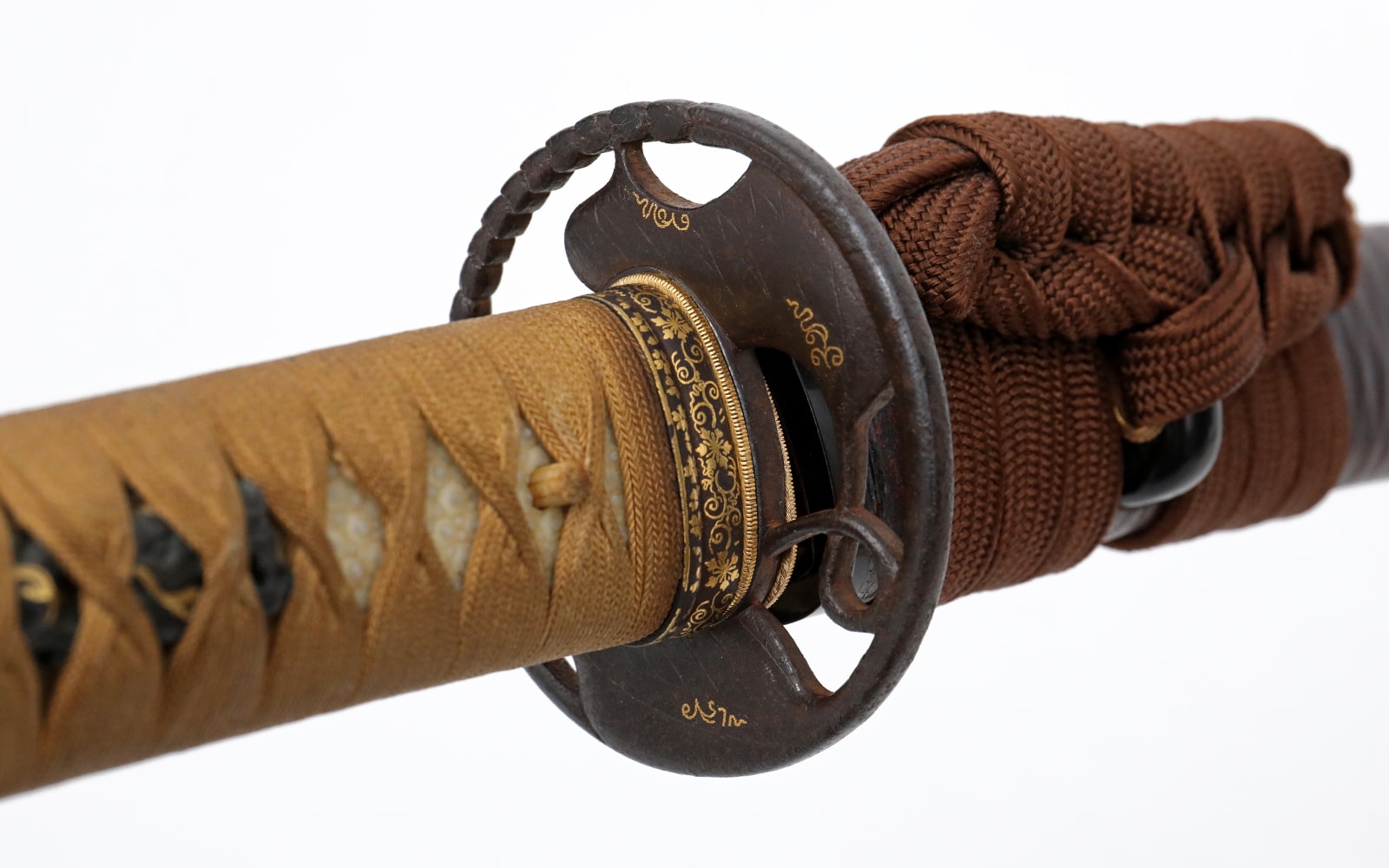
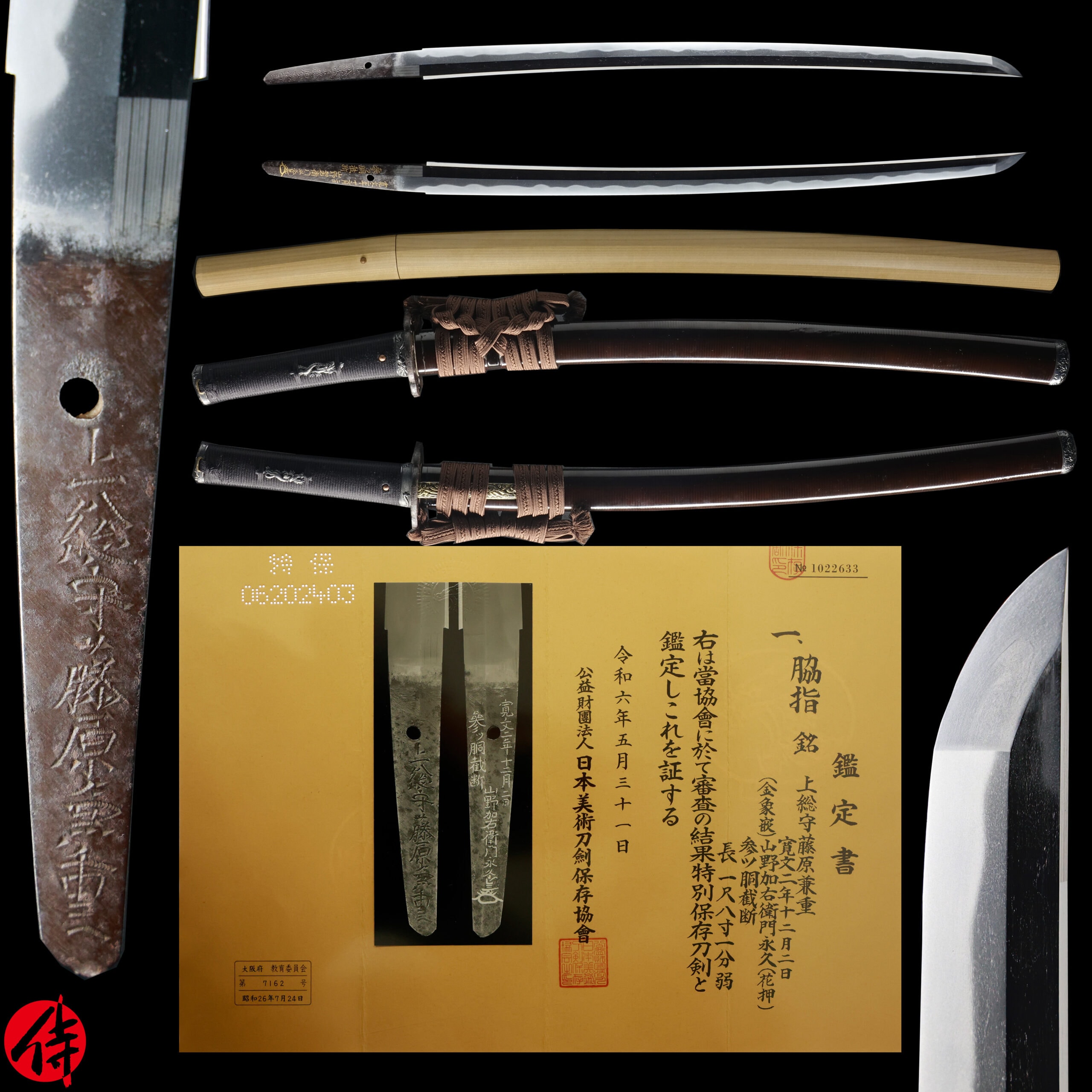
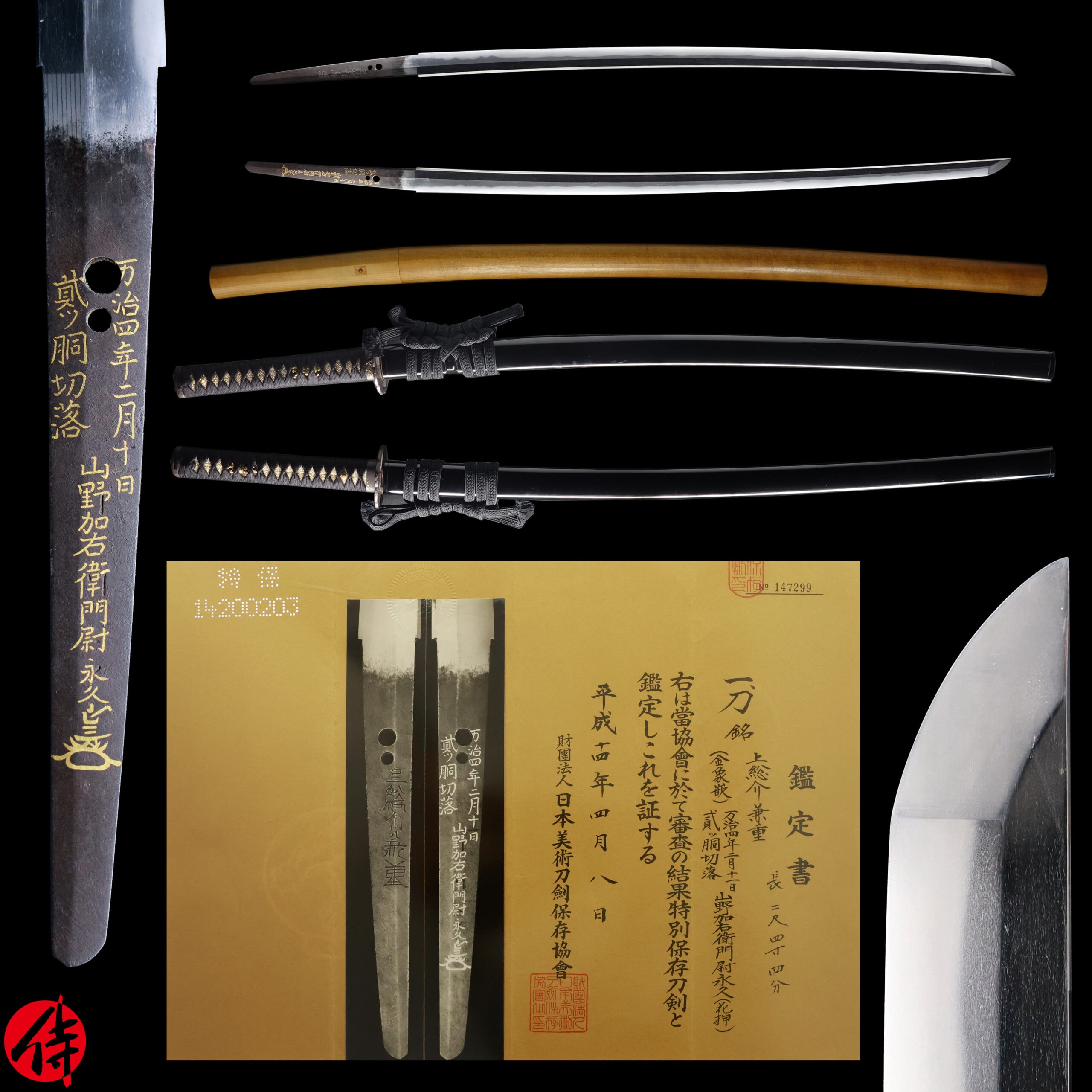
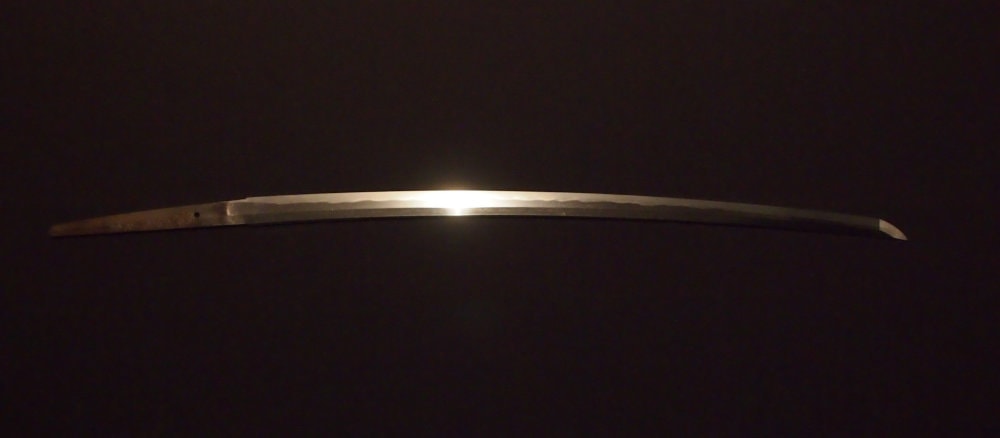
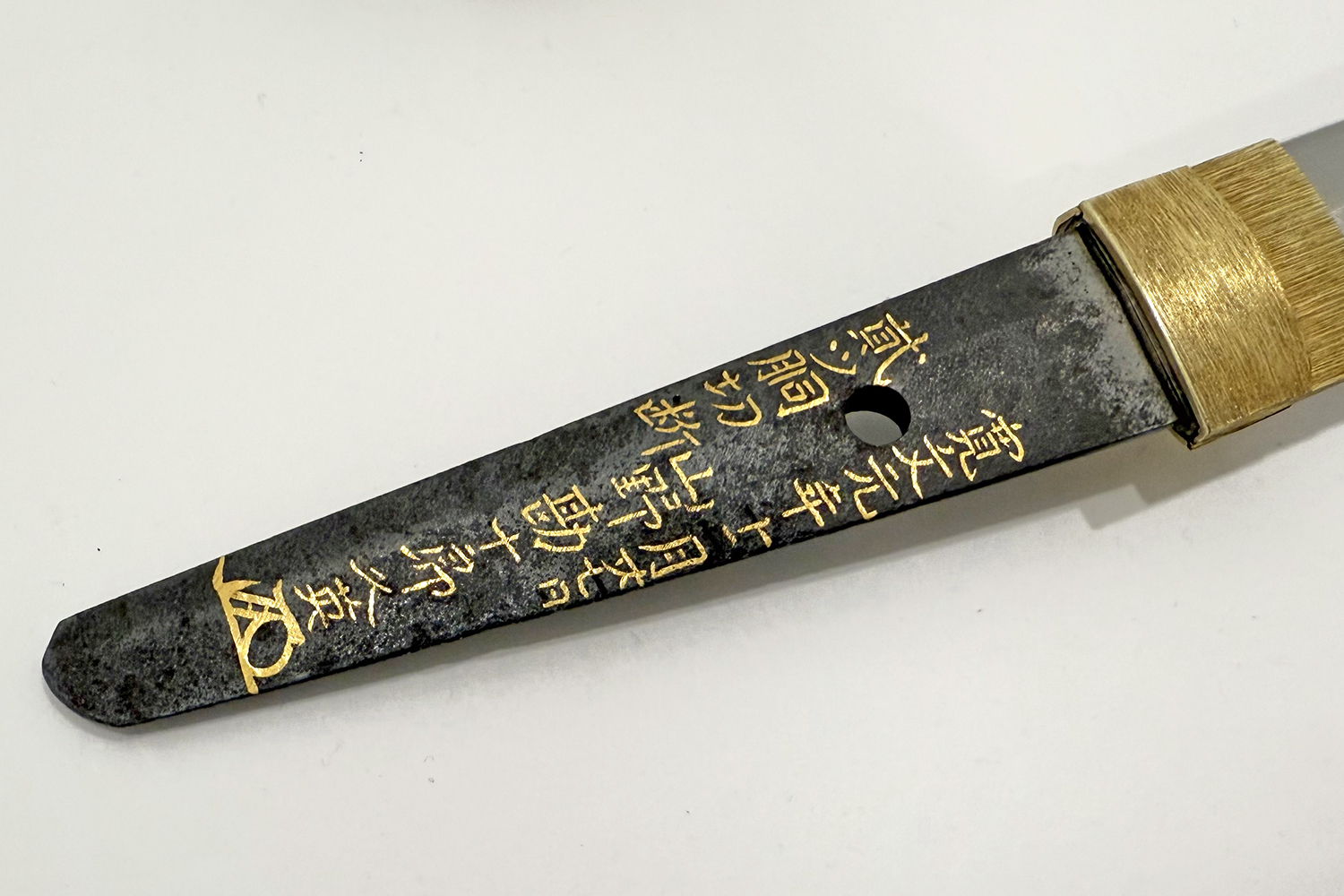
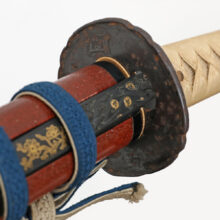
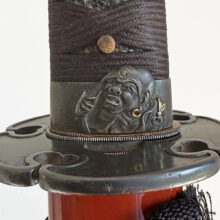
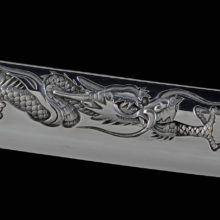
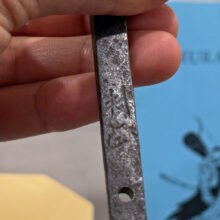
This is a wakizashi made by Kaneshige, a smith ranked Ryo-wazamono for sharpness. The blade features a two-body test cut (futatsu dou) by Yamano Kanjuro Hisahide, dated 1661 AD. The koshirae is subtle but superb with carefully executed carving of the raw iron fittings.
 NihontoWatch
mei · Shoho (1644-1648) · nagasa 48.5cm
Edo Kaneshige (Musashi, Shinto) · Musashi · around 1661-1673
Fujishiro Jo saku · Tōken Taikan top 21%
2 pieces on the market now
The earliest dated work that survives under the name Kaneshige is a naginata inscribed Kan'ei 2, 1625, by Izumi no Kami Fujiwara Kaneshige, the Edo smith whom the published sources place directly after the shodai Yasutsugu and Hankei. Tradition holds that he came from Echizen, where he had been a yanone-kaji, a maker of arrowheads, before going to Edo and turning to forging blades; the Kokon Kajibikō records as much, though it is unproven. The name then carries a second smith, Kazusa no Suke Fujiwara Kaneshige, who also signed Kazusa no Kami, the son or pupil of the first and a contemporary of Nagasone Kotetsu. The two were long treated as a single man, the old account explaining the change of title as deference: retained by Tōdō Izumi no Kami, the smith is said to have ceded that title to his lord and taken Kazusa no Suke instead. The published sources set that story aside. Signed and age-stated works show Kazusa no Suke was born in Kan'ei 3, 1626, while Izumi no Kami already bears Kan'ei dates, so the two are different individuals. What binds the line is its standing among the Edo cutting-testers and the tradition that the shodai was the teacher of Kotetsu.
The hand by which the line is best recognized is the juzu-ba, the rosary-bead temper of round gunome linked in series, brought to its full form by the second generation. Over a tightly forged ko-itame, slightly standing and thick with dust-fine ji-nie and entering chikei, set on the standard-width, shallow-sori, compact chū-kissaki form of the Kanbun shintō years, the temper rises from a suguha-toned base into which gunome run linked until they become juzu-ba. The published sources isolate the mechanism of his hand: the gunome are tempered in a fixed rhythm in which one element is followed by two, then one and two again, and they name this his chief point of appreciation, the feature an observer reads first. Thick ashi enter, the nioi is deep, the nie lies thick, and long kinsuji and sunagashi run vigorously through the temper with a bright nioiguchi. So closely does the result follow Kotetsu that the published sources, on one of his katana, judge it of workmanship that could nearly be mistaken for him, 「殆んど馬徹に見紛う程の出来」[[c:1]].
The jigane under that temper is the close, well-packed ko-itame of an Edo master, in places mixed with mokume and nagare-hada and tending to hada-dachi, with very fine ji-nie applied densely and chikei entering well. It is a controlled, urban steel, and on the second generation's larger katana it carries a faint standing of the grain that keeps the surface alive without breaking it up. The bōshi runs straight into a ko-maru with hakikake at the point, sometimes returning rather deeply or, on his most midare pieces, entering the point a little before it turns. The nakago is ubu, finished with sujikai file marks that already carry a decorative tendency the published sources read as a prototype of the later ornamental keshō-yasuri, and the long signature is cut in a distinctive reisho clerical script, the chisel growing finer and the characters smaller in his later years.
The published sources draw the first generation's range as two manners, a distinction worth holding because it governs how his work is read. The one is a notare-based gunome-midare: a yakidashi at the base, a shallow notare with gunome and yō intermingled, ashi entering well, the nioiguchi deep and bright with fine sunagashi. The other is a suguha base, broad and bearing only the faintest notare, the nioi deep and the nie thick with nie-suji set within the temper, the nioiguchi exceptionally clear. This second register the published sources describe as a wet nure-gokoro suguha whose interior activity is especially well developed, and on a thick-kasane katana of 1657 they note that, straight temper though it is, the broad tempered band is filled with vigor and the blade 「直刃といえども迫力を感じさせる」[[c:2]], conveying palpable forcefulness. The second generation took the linked gunome of the first and raised it to the completed juzu-ba, and much recent attention has gone to sorting the two hands: the generational transition has been placed in the Keian era, the nidai is thought to have used the Izumi no Kami title first before alternating Kazusa no Kami and Kazusa no Suke, and a dai-mei signing on his behalf by Sukekurō Kanetsune, transmitted as his son, has been proposed.
What sets the line apart is best stated from its own grounded features. Its tell is the juzu-ba with the one-then-two rhythm, 「互の目を一つ焼くと次は二つ焼くというふうに, 一つ二つと繰り返して焼く」[[c:3]], carried over a calm suguha-toned base with deep nioi and a clear nioiguchi, the kinsuji and sunagashi running long. The published sources frame the Kotetsu connection from both ends of the relationship. The shodai they call, by the traditional account, the teacher of Kotetsu, his workmanship entirely Kotetsu-like with both ji and ha deep in nioi and clear, 「全く虎徹のように地刃の出来が匂深く冴えている」[[c:4]]. The nidai they place at the source of the juzu-ba itself: a fully realized juzu-ba appears on his cutting-test wakizashi of Manji 4, 1661, ahead of Kotetsu's own, and from this they hold his manner influenced Kotetsu's later development of the style. The same sources note the line's resemblance to the Hōjōji group active in the same quarter of Edo, with whom Kaneshige made a joint cutting-test blade, so the juzu-ba reads less as a single invention than as a shared current among the swordsmiths around Asakusa.
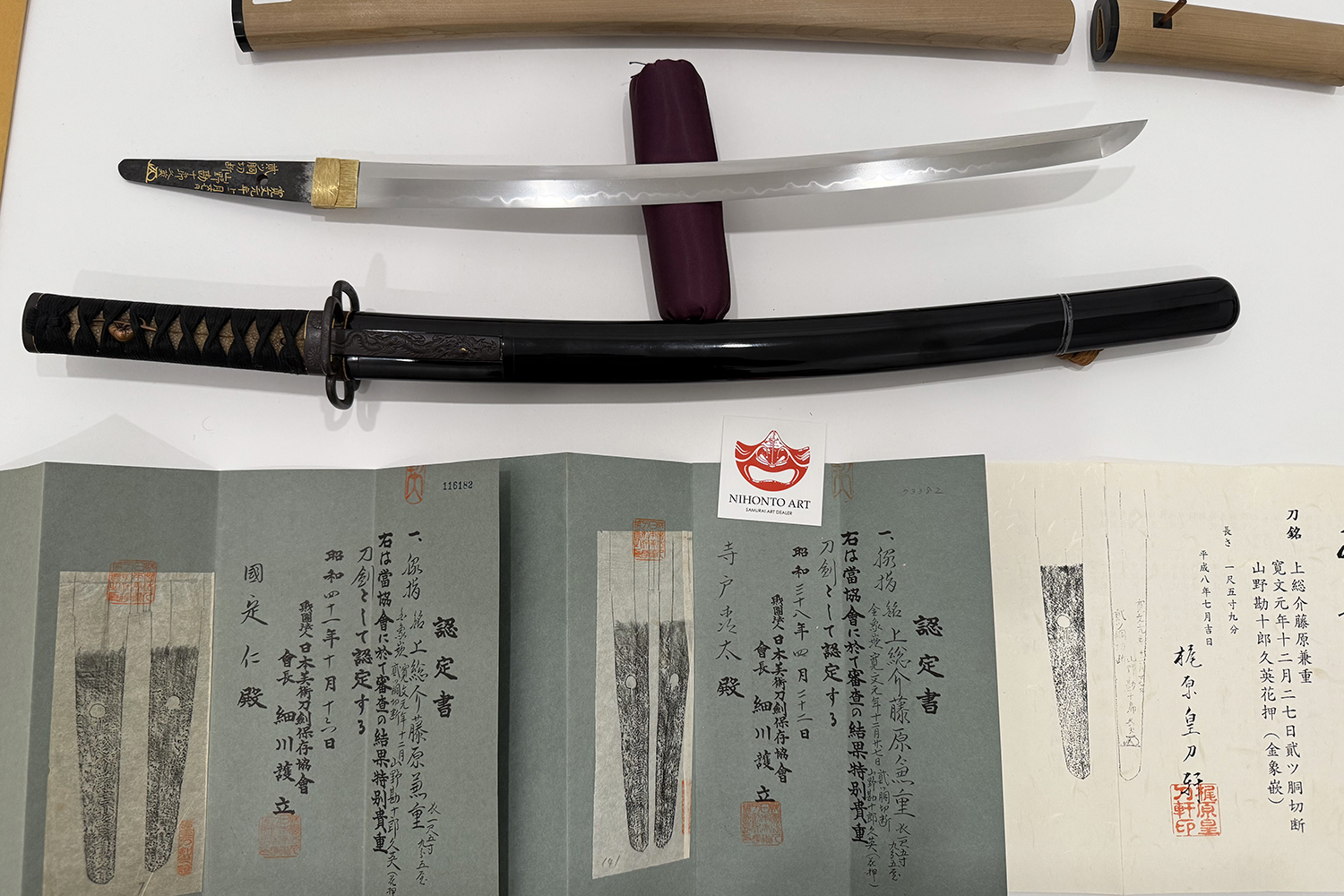
Kaneshige is rated Jō-saku by Fujishiro and is among the leading Edo shintō names, his reputation inseparable from the cutting-tests that ride on so many of his blades. The gold-inlaid setsudan-mei of Yamano Kaemon no Jō Nagahisa recurs across his work, recording mitsu-dō and futatsu-dō cuts performed at Asakusa, and one katana carries a joint inscription pairing the Kaneshige line with the Hōjōji smiths over a test cut three times. On record under his name stand twenty blades at the Jūyō rank, almost all shinogi-zukuri katana and wakizashi with tantō scarcely seen, and one Important Cultural Property, a large signed ōdachi held at Futarasan Jinja in Nikkō, which by its designation is patrimony preserved rather than anything that trades. The remaining Jūyō blades are the realm a private collector may realistically encounter, held mostly in long-standing collections and reaching the market only at times. A signed Kaneshige bearing one of the famous Yamano cutting-test inscriptions is the example most sought, joining a documented sword to one of the most recognizable temper-lines of early Edo.
Where Kaneshige stands among comparable artisans: across all of nihontō, and within tradition, era, and period. The tiers (Foremost · Leading · Major · Notable) weigh official designations from the NBTHK and Japan's Agency for Cultural Affairs, together with historical honors of lasting repute such as the Sansaku and Meibutsu-chō.
Select a lens to see how it's measured.
Shinto · Musashi
12 pieces on the market now
Edo was the base of the Kaneshige line, whose first master, Izumi no Kami Fujiwara Kaneshige, emerged among the city's swordsmiths after the shodai Yasutsugu and Hankei. The setsumei follow the account in the Kokon Kajibikō that he began as an arrowhead smith (yanone-kaji) in Echizen, then moved to Edo and turned to forging blades; his earliest dated work is a naginata inscribed Kan'ei 2 (1625), with dated pieces running into the Meireki era. Learn more →
| Smith | Era | Designated |
|---|---|---|
| Kaneshige兼重 | 1661-1673 | 21 |
| Kaneshige兼重 | 1624-1661 | 7 |
A Hozon-certified blade judged to show notably superior workmanship and a better state of preservation. The bar is higher: re-tempered blades and most unsigned Muromachi/Edo works are excluded.
The NBTHK (Nihon Bijutsu Tōken Hozon Kyōkai, the Society for the Preservation of Japanese Art Swords) is a public-interest incorporated foundation founded in 1948 and supervised by Japan’s Agency for Cultural Affairs (Bunkachō); it is based at the Japanese Sword Museum in Tokyo. Its expert panels physically examine each submitted work (shinsa) and issue a certificate (kanteishō) ranking it by artistic and historical merit. NBTHK papers are the most widely recognized standard of authentication for Japanese swords and fittings.
NBTHK official siteIf the item fails to meet the description, it may be eligible for a return (at the seller's discretion). Item(s) must be shipped back only via FedEx or UPS within 48 hours of receipt, in original undamaged state. Costs are the purchaser's responsibility.
This is a wakizashi made by Kaneshige, a smith ranked Ryo-wazamono for sharpness. The blade features a two-body test cut (futatsu dou) by Yamano Kanjuro Hisahide, dated 1661 AD. The koshirae is subtle but superb with carefully executed carving of the raw iron fittings.
NihontoWatchmei · Shoho (1644-1648) · nagasa 48.5cm
Edo Kaneshige (Musashi, Shinto) · Musashi · around 1661-1673
Fujishiro Jo saku · Tōken Taikan top 21%
2 pieces on the market now
The earliest dated work that survives under the name Kaneshige is a naginata inscribed Kan'ei 2, 1625, by Izumi no Kami Fujiwara Kaneshige, the Edo smith whom the published sources place directly after the shodai Yasutsugu and Hankei. Tradition holds that he came from Echizen, where he had been a yanone-kaji, a maker of arrowheads, before going to Edo and turning to forging blades; the Kokon Kajibikō records as much, though it is unproven. The name then carries a second smith, Kazusa no Suke Fujiwara Kaneshige, who also signed Kazusa no Kami, the son or pupil of the first and a contemporary of Nagasone Kotetsu. The two were long treated as a single man, the old account explaining the change of title as deference: retained by Tōdō Izumi no Kami, the smith is said to have ceded that title to his lord and taken Kazusa no Suke instead. The published sources set that story aside. Signed and age-stated works show Kazusa no Suke was born in Kan'ei 3, 1626, while Izumi no Kami already bears Kan'ei dates, so the two are different individuals. What binds the line is its standing among the Edo cutting-testers and the tradition that the shodai was the teacher of Kotetsu.
The hand by which the line is best recognized is the juzu-ba, the rosary-bead temper of round gunome linked in series, brought to its full form by the second generation. Over a tightly forged ko-itame, slightly standing and thick with dust-fine ji-nie and entering chikei, set on the standard-width, shallow-sori, compact chū-kissaki form of the Kanbun shintō years, the temper rises from a suguha-toned base into which gunome run linked until they become juzu-ba. The published sources isolate the mechanism of his hand: the gunome are tempered in a fixed rhythm in which one element is followed by two, then one and two again, and they name this his chief point of appreciation, the feature an observer reads first. Thick ashi enter, the nioi is deep, the nie lies thick, and long kinsuji and sunagashi run vigorously through the temper with a bright nioiguchi. So closely does the result follow Kotetsu that the published sources, on one of his katana, judge it of workmanship that could nearly be mistaken for him, 「殆んど馬徹に見紛う程の出来」[[c:1]].
The jigane under that temper is the close, well-packed ko-itame of an Edo master, in places mixed with mokume and nagare-hada and tending to hada-dachi, with very fine ji-nie applied densely and chikei entering well. It is a controlled, urban steel, and on the second generation's larger katana it carries a faint standing of the grain that keeps the surface alive without breaking it up. The bōshi runs straight into a ko-maru with hakikake at the point, sometimes returning rather deeply or, on his most midare pieces, entering the point a little before it turns. The nakago is ubu, finished with sujikai file marks that already carry a decorative tendency the published sources read as a prototype of the later ornamental keshō-yasuri, and the long signature is cut in a distinctive reisho clerical script, the chisel growing finer and the characters smaller in his later years.
The published sources draw the first generation's range as two manners, a distinction worth holding because it governs how his work is read. The one is a notare-based gunome-midare: a yakidashi at the base, a shallow notare with gunome and yō intermingled, ashi entering well, the nioiguchi deep and bright with fine sunagashi. The other is a suguha base, broad and bearing only the faintest notare, the nioi deep and the nie thick with nie-suji set within the temper, the nioiguchi exceptionally clear. This second register the published sources describe as a wet nure-gokoro suguha whose interior activity is especially well developed, and on a thick-kasane katana of 1657 they note that, straight temper though it is, the broad tempered band is filled with vigor and the blade 「直刃といえども迫力を感じさせる」[[c:2]], conveying palpable forcefulness. The second generation took the linked gunome of the first and raised it to the completed juzu-ba, and much recent attention has gone to sorting the two hands: the generational transition has been placed in the Keian era, the nidai is thought to have used the Izumi no Kami title first before alternating Kazusa no Kami and Kazusa no Suke, and a dai-mei signing on his behalf by Sukekurō Kanetsune, transmitted as his son, has been proposed.
What sets the line apart is best stated from its own grounded features. Its tell is the juzu-ba with the one-then-two rhythm, 「互の目を一つ焼くと次は二つ焼くというふうに, 一つ二つと繰り返して焼く」[[c:3]], carried over a calm suguha-toned base with deep nioi and a clear nioiguchi, the kinsuji and sunagashi running long. The published sources frame the Kotetsu connection from both ends of the relationship. The shodai they call, by the traditional account, the teacher of Kotetsu, his workmanship entirely Kotetsu-like with both ji and ha deep in nioi and clear, 「全く虎徹のように地刃の出来が匂深く冴えている」[[c:4]]. The nidai they place at the source of the juzu-ba itself: a fully realized juzu-ba appears on his cutting-test wakizashi of Manji 4, 1661, ahead of Kotetsu's own, and from this they hold his manner influenced Kotetsu's later development of the style. The same sources note the line's resemblance to the Hōjōji group active in the same quarter of Edo, with whom Kaneshige made a joint cutting-test blade, so the juzu-ba reads less as a single invention than as a shared current among the swordsmiths around Asakusa.
Kaneshige is rated Jō-saku by Fujishiro and is among the leading Edo shintō names, his reputation inseparable from the cutting-tests that ride on so many of his blades. The gold-inlaid setsudan-mei of Yamano Kaemon no Jō Nagahisa recurs across his work, recording mitsu-dō and futatsu-dō cuts performed at Asakusa, and one katana carries a joint inscription pairing the Kaneshige line with the Hōjōji smiths over a test cut three times. On record under his name stand twenty blades at the Jūyō rank, almost all shinogi-zukuri katana and wakizashi with tantō scarcely seen, and one Important Cultural Property, a large signed ōdachi held at Futarasan Jinja in Nikkō, which by its designation is patrimony preserved rather than anything that trades. The remaining Jūyō blades are the realm a private collector may realistically encounter, held mostly in long-standing collections and reaching the market only at times. A signed Kaneshige bearing one of the famous Yamano cutting-test inscriptions is the example most sought, joining a documented sword to one of the most recognizable temper-lines of early Edo.
Where Kaneshige stands among comparable artisans: across all of nihontō, and within tradition, era, and period. The tiers (Foremost · Leading · Major · Notable) weigh official designations from the NBTHK and Japan's Agency for Cultural Affairs, together with historical honors of lasting repute such as the Sansaku and Meibutsu-chō.
Select a lens to see how it's measured.
Shinto · Musashi
12 pieces on the market now
Edo was the base of the Kaneshige line, whose first master, Izumi no Kami Fujiwara Kaneshige, emerged among the city's swordsmiths after the shodai Yasutsugu and Hankei. The setsumei follow the account in the Kokon Kajibikō that he began as an arrowhead smith (yanone-kaji) in Echizen, then moved to Edo and turned to forging blades; his earliest dated work is a naginata inscribed Kan'ei 2 (1625), with dated pieces running into the Meireki era. Learn more →
| Smith | Era | Designated |
|---|---|---|
| Kaneshige兼重 | 1661-1673 | 21 |
| Kaneshige兼重 | 1624-1661 | 7 |
A Hozon-certified blade judged to show notably superior workmanship and a better state of preservation. The bar is higher: re-tempered blades and most unsigned Muromachi/Edo works are excluded.
The NBTHK (Nihon Bijutsu Tōken Hozon Kyōkai, the Society for the Preservation of Japanese Art Swords) is a public-interest incorporated foundation founded in 1948 and supervised by Japan’s Agency for Cultural Affairs (Bunkachō); it is based at the Japanese Sword Museum in Tokyo. Its expert panels physically examine each submitted work (shinsa) and issue a certificate (kanteishō) ranking it by artistic and historical merit. NBTHK papers are the most widely recognized standard of authentication for Japanese swords and fittings.
NBTHK official siteIf the item fails to meet the description, it may be eligible for a return (at the seller's discretion). Item(s) must be shipped back only via FedEx or UPS within 48 hours of receipt, in original undamaged state. Costs are the purchaser's responsibility.