NihontoWatch MonNihontoWatch
Market
Encyclopedia
Kantei
NihontoWatch MonNihontoWatch
Market
Encyclopedia
Kantei

Description

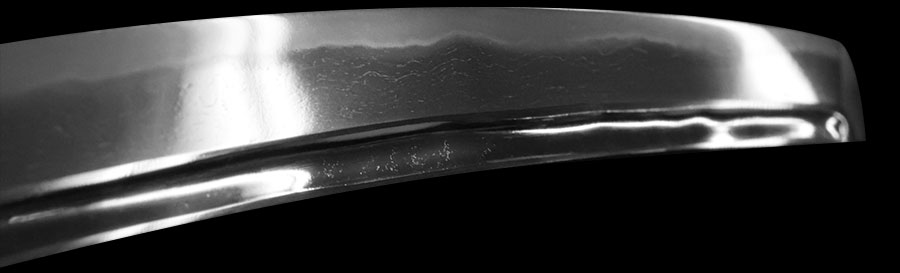
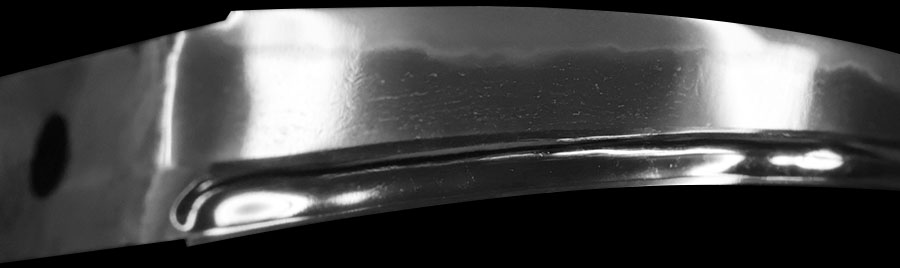
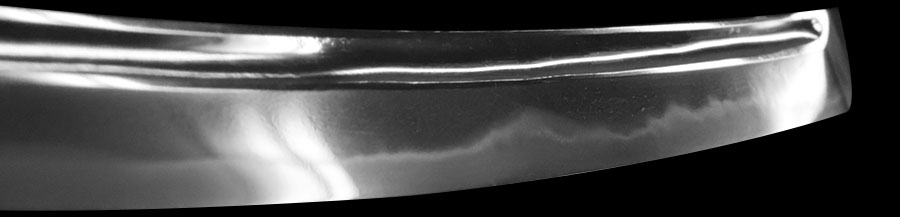
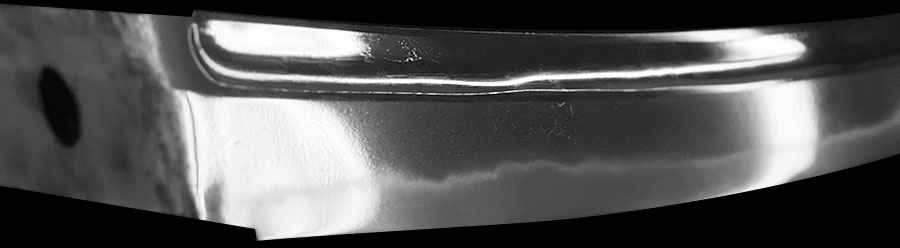
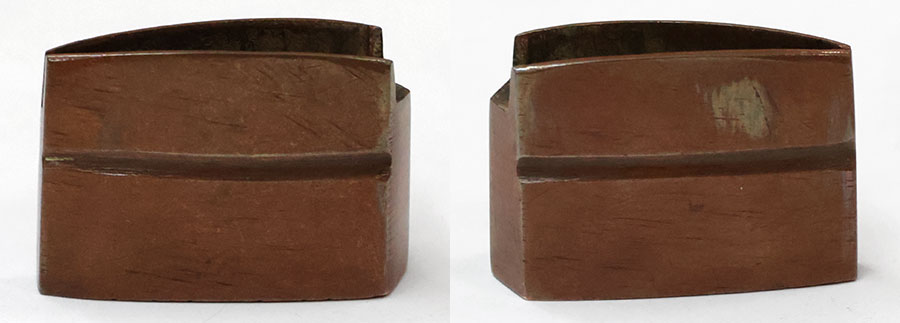
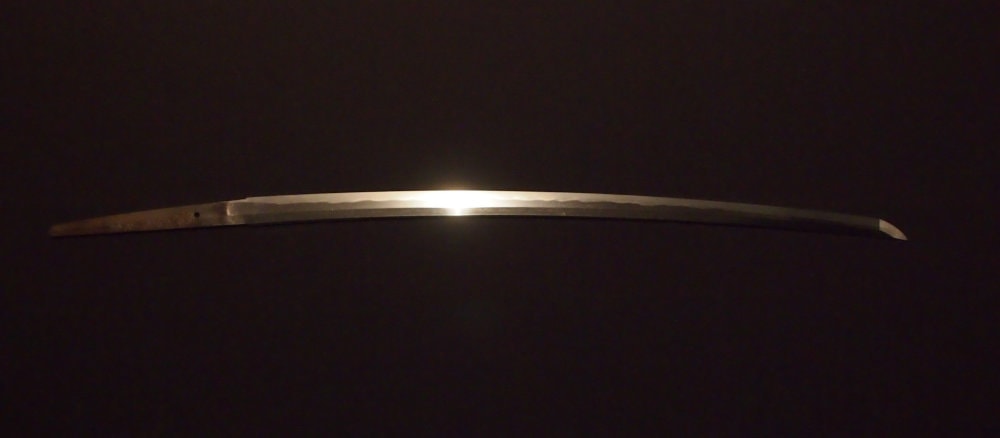
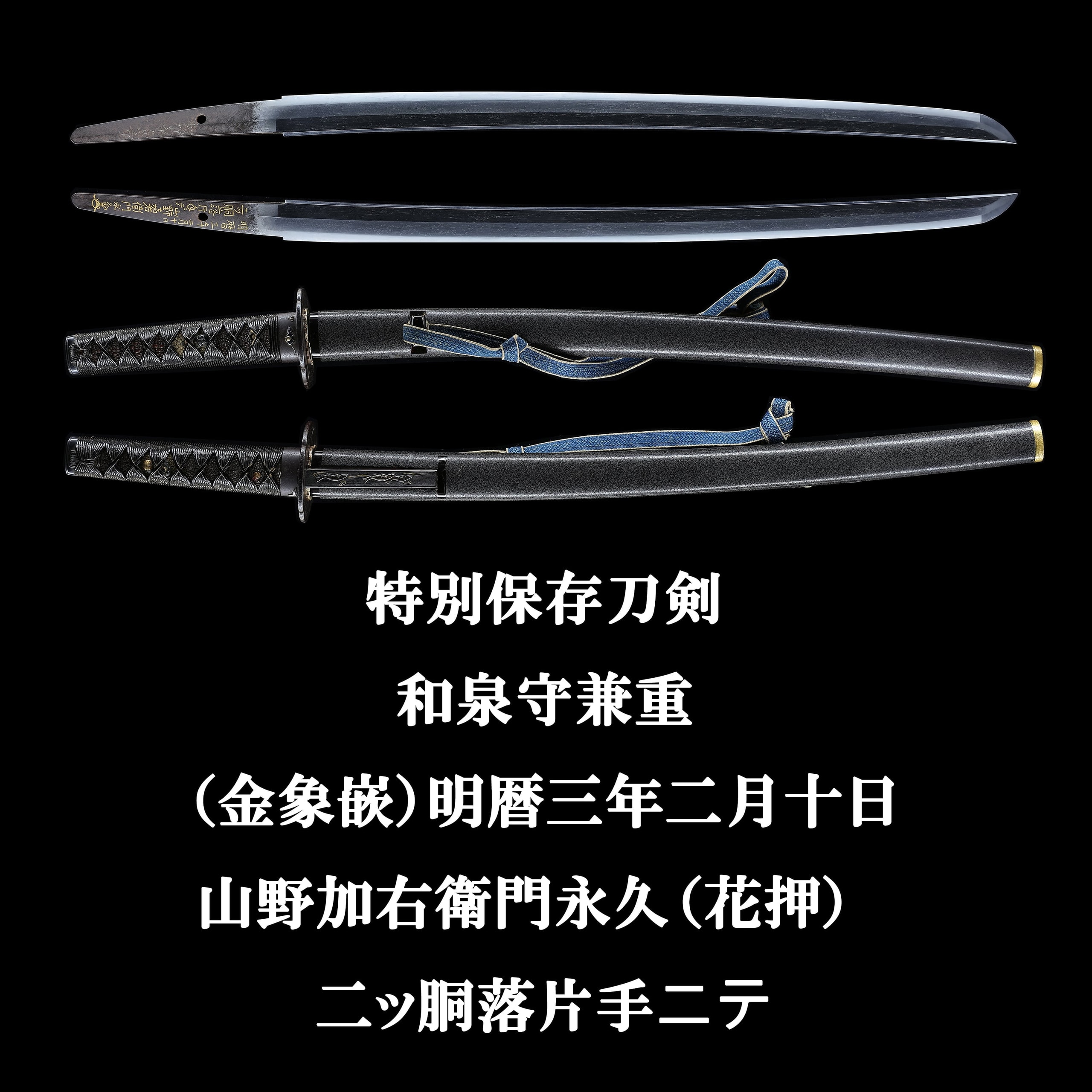
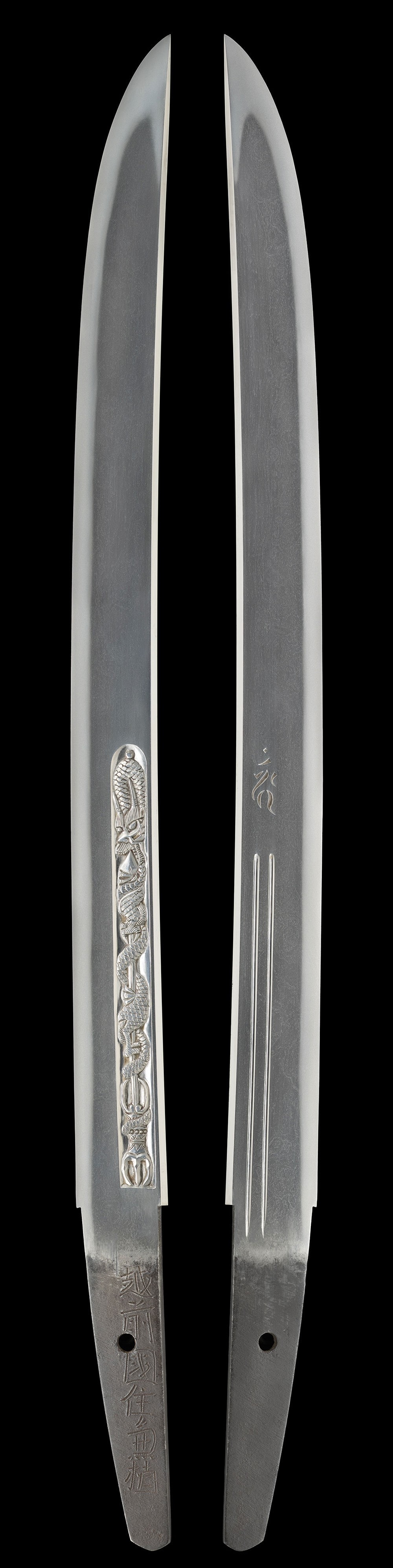
(Recommended by the Kensei Miyamoto Musashi, he became the o-kakae tosho for Todo Izumi-no-kami Takatora—lord of the 323,000 koku Mie-Tsu Domain and one of the three masters of castle construction alongside Kuroda Kanbei and Kato Kiyomasa, who contributed greatly to the reconstruction of Edo Castle. He is particularly famous as the maker of Miyamoto Musashi's favorite katana, an Izumi-no-kami Fujiwara Kaneshige with a nagasa of 2 shaku 7 sun 6 bu housed in a Musashi-koshirae.) It has arrived, it has arrived! Following the Shodai Echizen Yasutsugu and Hankei, a work by Izumi-no-kami Fujiwara Kaneshige has appeared—the man said to be the teacher of Kotetsu and whose extant works are so few he is called a phantom smith. Kaneshige came to Edo from Echizen in the early Kan'ei era (1624, 401 years ago). Through an introduction by Miyamoto Musashi, he was employed by the Todo family. It was previously thought that because Todo Takatora held the title Izumi-no-kami, Kaneshige changed his name to Kazusa-no-suke out of deference to his lord; however, recent research shows that Izumi-no-kami Kaneshige was the father and Kazusa-no-suke Kaneshige was the son. This work is a wakizashi by Izumi-no-kami Fujiwara Kaneshige, the teacher of Kotetsu, whose surviving works are extremely rare and precious. The sugata of this wakizashi shows a difference between the moto-mihaba and saki-mihaba with shallow sori. The jigane on the omote shows itame-hada mixed with masame-hada, while the ura is forged in ko-itame-hada, displaying a powerful jigane. The horimono consists of a bo-hi with maru-dome, showing skillful carving. The hamon on the omote is a notare-ba in nioi-deki with ko-nie; the ura is a o-notare-ba mixed with gunome. The boshi is a skillfully tempered "tiger's jaw" (tora-no-ago) style; one can clearly see that Kotetsu likely modeled his own boshi after this. There are many tameshi-mei by Yamano Kaemon Nagahisa found on the blades of this Izumi-no-kami Fujiwara Kaneshige, as well as on Nagasone Kotetsu Nyudo Okisato and Yamato-no-kami Yasusada, which clearly demonstrates that Izumi-no-kami Fujiwara Kaneshige was the teacher of Kotetsu. Please enjoy this wakizashi by the phantom teacher of Kotetsu, an indispensable figure in Edo Shinto.

Certificate Reading

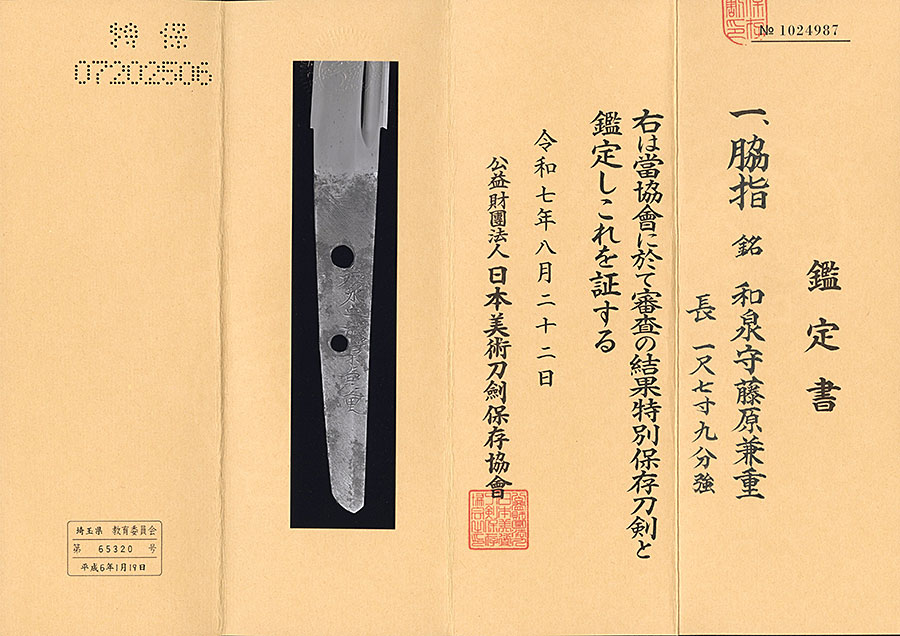
Certificate reading — 銘 和泉守藤原兼重

NihontoWatch MonNihontoWatch
MarketEncyclopediaKantei
Swords›Edo Kaneshige›Kaneshige›Wakizashi by Izuminokami Fujiwara Kaneshige with Tokubetsu Hozon Certificate
wakizashiTokubetsu Hozon
Edo Kaneshige

Wakizashi by Izuminokami Fujiwara Kaneshige with Tokubetsu Hozon Certificate

Edo · nagasa 54.3cm · sori 0.8cm

Price on request
Visit seller website →
Edo Kaneshige (兼重) · Edo4 works for sale →
Wakizashi
Could you name the smith from the blade alone? Today’s kantei →
Edo Kaneshige — 1 of 16
Edo Kaneshige — 2 of 16
Edo Kaneshige — 3 of 16
Edo Kaneshige — 4 of 16
Edo Kaneshige — 5 of 16
Edo Kaneshige — 6 of 16
Edo Kaneshige — 7 of 16
Edo Kaneshige — 8 of 16
Edo Kaneshige — 9 of 16
Edo Kaneshige — 10 of 16
Edo Kaneshige — 11 of 16
Edo Kaneshige — 12 of 16
Edo Kaneshige — 13 of 16
Edo Kaneshige — 14 of 16
Edo Kaneshige — 15 of 16
Edo Kaneshige — 16 of 16
1 / 16
1 / 16
Edo Kaneshige — 1 of 16Edo Kaneshige — 2 of 16Edo Kaneshige — 3 of 16Edo Kaneshige — 4 of 16Edo Kaneshige — 5 of 16Edo Kaneshige — 6 of 16Edo Kaneshige — 7 of 16Edo Kaneshige — 8 of 16Edo Kaneshige — 9 of 16Edo Kaneshige — 10 of 16Edo Kaneshige — 11 of 16Edo Kaneshige — 12 of 16Edo Kaneshige — 13 of 16Edo Kaneshige — 14 of 16Edo Kaneshige — 15 of 16Edo Kaneshige — 16 of 16
Edo Kaneshige (兼重) · Edo4 works for sale →
Wakizashi
Could you name the smith from the blade alone? Today’s kantei →
Measurements & details
Smith
Edo Kaneshige
Type
Wakizashi
School
Edo Kaneshige
Period
Around 1624–1661(Kanei-Manji)
Province
武蔵
Measurements
Nagasa 54.3cmSori 0.8cmMotohaba 2.96cmSakihaba 1.92cmKasane 0.6cm
Description

(Recommended by the Kensei Miyamoto Musashi, he became the o-kakae tosho for Todo Izumi-no-kami Takatora—lord of the 323,000 koku Mie-Tsu Domain and one of the three masters of castle construction alongside Kuroda Kanbei and Kato Kiyomasa, who contributed greatly to the reconstruction of Edo Castle. He is particularly famous as the maker of Miyamoto Musashi's favorite katana, an Izumi-no-kami Fujiwara Kaneshige with a nagasa of 2 shaku 7 sun 6 bu housed in a Musashi-koshirae.) It has arrived, it has arrived! Following the Shodai Echizen Yasutsugu and Hankei, a work by Izumi-no-kami Fujiwara Kaneshige has appeared—the man said to be the teacher of Kotetsu and whose extant works are so few he is called a phantom smith. Kaneshige came to Edo from Echizen in the early Kan'ei era (1624, 401 years ago). Through an introduction by Miyamoto Musashi, he was employed by the Todo family. It was previously thought that because Todo Takatora held the title Izumi-no-kami, Kaneshige changed his name to Kazusa-no-suke out of deference to his lord; however, recent research shows that Izumi-no-kami Kaneshige was the father and Kazusa-no-suke Kaneshige was the son. This work is a wakizashi by Izumi-no-kami Fujiwara Kaneshige, the teacher of Kotetsu, whose surviving works are extremely rare and precious. The sugata of this wakizashi shows a difference between the moto-mihaba and saki-mihaba with shallow sori. The jigane on the omote shows itame-hada mixed with masame-hada, while the ura is forged in ko-itame-hada, displaying a powerful jigane. The horimono consists of a bo-hi with maru-dome, showing skillful carving. The hamon on the omote is a notare-ba in nioi-deki with ko-nie; the ura is a o-notare-ba mixed with gunome. The boshi is a skillfully tempered "tiger's jaw" (tora-no-ago) style; one can clearly see that Kotetsu likely modeled his own boshi after this. There are many tameshi-mei by Yamano Kaemon Nagahisa found on the blades of this Izumi-no-kami Fujiwara Kaneshige, as well as on Nagasone Kotetsu Nyudo Okisato and Yamato-no-kami Yasusada, which clearly demonstrates that Izumi-no-kami Fujiwara Kaneshige was the teacher of Kotetsu. Please enjoy this wakizashi by the phantom teacher of Kotetsu, an indispensable figure in Edo Shinto.

About the maker

Kaneshige

兼重

Edo Kaneshige (Izumi no Kami, Musashi, Shinto) · Musashi · around 1624-1661

Fujishiro Jo saku · Tōken Taikan top 23%

4 pieces on the market now

›

The earliest dated work that survives under this smith's hand is a naginata inscribed Kan'ei 2, 1625, and the seven blades gathered here, all signed Izumi no Kami or Izumi no Kami Fujiwara Kaneshige, are the work of the shodai alone. The published sources place him directly after the shodai Yasutsugu and Hankei as the next Edo smith of consequence; tradition holds that he came from Echizen, where he had been a yanone-kaji, a maker of arrowheads, before going to Edo and turning to forging blades, an account the Kokon Kajibikō preserves. He is rated Jō-saku by Fujishiro, and by long tradition he is the teacher of Nagasone Kotetsu. The name carries a second smith after him, his pupil Kazusa no Suke, also Kazusa no Kami, Fujiwara Kaneshige, and the two were for centuries treated as a single man, the change of title explained as deference to his lord Tōdō Izumi no Kami. The published sources set that story aside: signed and age-stated works, among them a katana of Kanbun 6, 1666, show the younger smith was born in Kan'ei 3, 1626, while the elder already bears Kan'ei dates, so the two are different individuals, and this profile is the first generation only.

The published sources draw his range as two manners, and the distinction governs how his work is read. The first is a notare-based temper carrying linked gunome, with ashi entering well, the nioi deep and the nie laid thick, and in his fullest pieces fine kinsuji and sunagashi running through the band with patches of coarser ara-nie, the nioiguchi bright and clear. On a katana of this manner the published sources find the workmanship so close to Kotetsu that it recalls him at a glance, 「一見徹を髣髴させる作域」[[c:1]], and read in the hardened edge a sense of strength and spirit. The second manner is a suguha base, sometimes a wide straight temper bearing the faintest notare and sometimes a chū-suguha of almost no movement at all, the nioi deep and the ko-nie well gathered, with a slight yakikomi at the machi and a bright, clearly defined nioiguchi. The constant across both is that clarity of the nioiguchi, the saeru quality the published sources tie to his Kotetsu-like character and name as the mark of Kaneshige at his best.

The jigane beneath both manners is a ko-itame, closely and well forged, with fine ji-nie laid thickly and chikei entering, in places flowing into nagare-hada and tending slightly to stand, mokume mixed in here and there. It is the controlled urban steel of an Edo master, the faint standing of the grain keeping the surface alive without breaking it open. The bōshi runs straight to a ko-maru, the kaeri at times long, the point swept with hakikake. The sugata is the transitional form of the Kan'ei and Shōhō years, of standard mihaba with a markedly pronounced taper, a retained funbari, rather deep sori and a compact chū-kissaki, which the published sources read as the passage from Keichō shintō to Kanbun shintō form and offer as a point of appreciation of his shape. The nakago is ubu, finished with ō-sujikai file marks already carrying a kesho-like tendency the published sources read as an early prototype of the later ornamental kesho-yasuri, and the long signature is cut with a fine chisel in a distinctive reisho clerical script of seven characters.

The two manners are registers, not periods, and the published sources name which a given blade exemplifies. The wide-suguha katana of the 61st Jūyō session they call a typical example of the former, the notare-gunome hand, its broad straight band mixed with notare and ko-gunome conveying an overflowing vigor; the deep-nioi suguha of the 43rd session they call a typical example of the latter, where the nioi runs especially deep and the nioiguchi becomes vividly clear. A third register is form rather than temper: his work is almost wholly shinogi-zukuri katana and wakizashi with tantō unseen, so that the broad, sun-nobi hira-zukuri wakizashi of the 31st session is a rare construction in which, the published sources note, its ko-notare mixed with gunome and bright nioiguchi show his true forte. Even within the notare-gunome manner there are blades of an entirely pure straight temper, 「純然たる直刃」, as the published sources remark of a Yamano cutting-test katana, so that the two hands shade into one another rather than dividing his career.

What sets him apart is best stated from his own grounded features. His tell is the pairing of a deep nioi with a bright, clear nioiguchi, carried equally over the calm wide suguha and the more active notare-gunome, and beneath it the densely ji-nie-laden ko-itame with its fine chikei and slight standing of the grain. The published sources frame his place in the school through Kotetsu at every turn: he is by tradition the teacher, his ji and ha deep in nioi and clear in the Kotetsu manner, and a katana of his is judged to recall Kotetsu at a glance. The line he founded ran on past him, his pupil Kazusa no Suke carrying it into the Kanbun years and perfecting the juzu-ba, the rosary-bead temper for which the second generation is best known and which the published sources hold could be mistaken for Kotetsu, so that the shodai's restrained two manners stand at the head of a school whose later fame rests on a temper he himself did not work. Recent study has gone to sorting the two hands apart, by which the elder's seven blades here are now read as the first generation's alone.

Kaneshige is among the leading Edo shintō names, and the shodai's reputation is inseparable from the cutting-tests that ride on his blades. Two of the seven here carry the gold-inlaid setsudan-mei of Yamano Kanjūrō, the name the great tester Kaemon used before the Shōhō era, recording a mitsu-dō three-body cut felled in two strokes and the inscription 「前代未聞剣 山野勘十郎切之」[[c:2]], an unprecedented sharpness cut by Yamano Kanjūrō, a provenance as much as an honor. On record under his name stand seven blades at the Jūyō rank and no higher designation, almost all shinogi-zukuri katana and wakizashi, with no National Treasure or Important Cultural Property among them and no recorded daimyō provenance, which is to say that what survives of him is the designated Jūyō blade rather than the museum-held icon. These are held mostly in long-standing private collections and come to market only from time to time, a signed Kaneshige bearing one of the famous Yamano cutting-test inscriptions the example most sought. He is not beyond the reach of a patient collector, but a piece of his, and above all one carrying the Yamano inlay, is a landmark when it appears.


Historical importance

Where Kaneshige stands among comparable artisans: across all of nihontō, and within tradition, era, and period. The tiers (Foremost · Leading · Major · Notable) weigh official designations from the NBTHK and Japan's Agency for Cultural Affairs, together with historical honors of lasting repute such as the Sansaku and Meibutsu-chō.

随一
Foremost
屈指
Leading
有数
Major
著名
Notable

Select a lens to see how it's measured.

Designation record
7 designated works
Jūyō
7
4 works by Kaneshige on the market→
Kaneshige — full profileEdo Kaneshige (Izumi no Kami, Musashi, Shinto) school

Dated Works

Years he was demonstrably active, proven by signed-and-dated blades

Active period
1640Editorial estimate: 1624–1661
1 of 5 designated works carry a date

Study this maker →

About the school

Edo Kaneshige

和泉守兼重

Shinto · Musashi

8 pieces on the market now

›

Edo was the base of the Kaneshige line, whose first master, Izumi no Kami Fujiwara Kaneshige, emerged among the city's swordsmiths after the shodai Yasutsugu and Hankei. The setsumei follow the account in the Kokon Kajibikō that he began as an arrowhead smith (yanone-kaji) in Echizen, then moved to Edo and turned to forging blades; his earliest dated work is a naginata inscribed Kan'ei 2 (1625), with dated pieces running into the Meireki era. A second smith signing Kazusa no Suke (and at times Kazusa no Kami) Fujiwara Kaneshige, whose common name is given as Tsuji Sukeemon, is treated as the son or pupil of the first and the second generation, born in Kan'ei 3 (1626) and most active in the Kanbun and Enpō years. The two were long held to be one man, the story being that, retained by the Tōdō house under Izumi no Kami, he changed his title to avoid sharing his lord's court designation; signed and age-dated works by Tsuji Kazusa no Suke alongside Yasutsugu and Shimosaka Ichinojō have since shown them to be separate individuals. The second generation also worked Ise pieces inscribed "made at Anotsu in Seshū," and recent comparison of the signatures has raised the possibility of substitute signing by Sukekurō Kanetsune. Recognition of the hand rests on a small set of recurring traits. The jihada is a tight ko-itame, sometimes standing or flowing toward masame, with fine ji-nie densely applied and chikei entering.

The first generation divides into two modes: a notare base carrying linked gunome and entering ashi, and a wide suguha bearing shallow notare in which the nioi is deep, the nie thick, and the nioiguchi bright and saeru, with kinsuji and sunagashi. The second generation concentrates on juzu-ba, a suguha-toned temper of linked gunome with aligned heads; the setsumei single out a fixed one-two rhythm, in which a single gunome is followed by two, as a principal point of appreciation, together with thick ashi, deep nioi, abundant nie, and fine kinsuji and sunagashi. Across both hands the sugata is the standard width with marked taper, shallow sori, and a compact chū-kissaki of the Kanbun shintō period, the bōshi mostly sugu with ko-maru and hakikake, and the long signature cut in a reishō clerical script with sujikai keshō-tending file marks read as an early form of the later decorative finish. The setsumei repeatedly place Kaneshige beside Nagasone Kotetsu, rendered also as Tōru, Batetsu, and Matetsu in these records, and beside the Hōjōji group of the same Edo circle; one notes the tradition that the second generation was Kotetsu's teacher, and a wakizashi with a Yamano cutting-test inscription dated Manji 4 (1661) carries a fully realized juzu-ba held to precede Kotetsu's own. Cutting-test inscriptions are a frequent feature of the line: gold-inlaid setsudan-mei by Yamano Ka'emon no Jō Nagahisa appear often, with Yamano Kanjūrō named as Ka'emon's earlier form before the Shōhō era, alongside mitsudō and stacked-body tests by Shibasaki Denzaemon Masatsugu and Maejima Hachirō Tomotsugu. The dated and provenanced blades in the NBTHK register, signed Izumi no Kami, Kazusa no Suke, and Kazusa no Kami, document a coherent two-generation Edo workshop whose juzu-ba and bright nie secured its standing among the leading shinto smiths of Musashi. Learn more →

2 recorded smiths28 designated works
Leading smiths
SmithEraDesignated
Kaneshige兼重1661-167321
Kaneshige兼重1624-16617
Explore the Edo Kaneshige school →

Historical context

Edo: the shogun’s market

›

Edo held Japan’s largest sword-wearing population, gathered by the alternate attendance system. The shogunal smith Yasutsugu was granted the Aoi crest for his tangs; many of Kotetsu’s blades carry gold-inlaid cutting attestations. Proof mattered here.

Edo: the shogun’s market →

NBTHK Certificate
Tokubetsu Hozon Tōken特別保存刀剣
Sword Especially Worthy of Preservation
›

A Hozon-certified blade judged to show notably superior workmanship and a better state of preservation. The bar is higher: re-tempered blades and most unsigned Muromachi/Edo works are excluded.

Signed: 和泉守藤原兼重 (Edo Kaneshige)
As written on the certificate
About the NBTHK›

The NBTHK (Nihon Bijutsu Tōken Hozon Kyōkai, the Society for the Preservation of Japanese Art Swords) is a public-interest incorporated foundation founded in 1948 and supervised by Japan’s Agency for Cultural Affairs (Bunkachō); it is based at the Japanese Sword Museum in Tokyo. Its expert panels physically examine each submitted work (shinsa) and issue a certificate (kanteishō) ranking it by artistic and historical merit. NBTHK papers are the most widely recognized standard of authentication for Japanese swords and fittings.

NBTHK official site→
Seller
N
Nipponto
Established 1953 · 73 yrs on the market
🇯🇵Ships from Japan
›
✓Verified dealernipponto.co.jp
✓Ships worldwide✓English supportPayPalCredit card
Return policy

For returns due to customer circumstances, the cost is the customer's responsibility. For returns due to our mis-shipment or a defective item, we bear the cost.

View all of Nipponto’s listings→View this item on the dealer’s site→

More works by Edo Kaneshige

View all →
Kanda Toukodo
Jūyō
Katana - Jūyō - by Edo Kaneshige - Izumi no Kami Fujiwara KaneshigeKatana - Jūyō - by Edo Kaneshige - Izumi no Kami Fujiwara Kaneshige

Katana

ByEdo Kaneshige
Ask
Nihonto Australia
Tokuho
Wakizashi - Tokuho - by Edo Kaneshige - KaneshigeWakizashi - Tokuho - by Edo Kaneshige - Kaneshige

Wakizashi

ByEdo Kaneshige
Ask
Nipponto
Tokuho
Katana - Tokuho - by Edo Kaneshige - Izuminokami Kaneshige (Master of Kotetsu), Kanei 21st year, 2nd month, 8th day. Cutting test at Bushu Kanda: Kenashiwaki, offender Tsujimura Denzaemon Masatsugu (Kaō).Katana - Tokuho - by Edo Kaneshige - Izuminokami Kaneshige (Master of Kotetsu), Kanei 21st year, 2nd month, 8th day. Cutting test at Bushu Kanda: Kenashiwaki, offender Tsujimura Denzaemon Masatsugu (Kaō).

Katana

ByEdo Kaneshige
Ask

Previously sold by Edo Kaneshige

View all →
Samurai Store
Tokuho
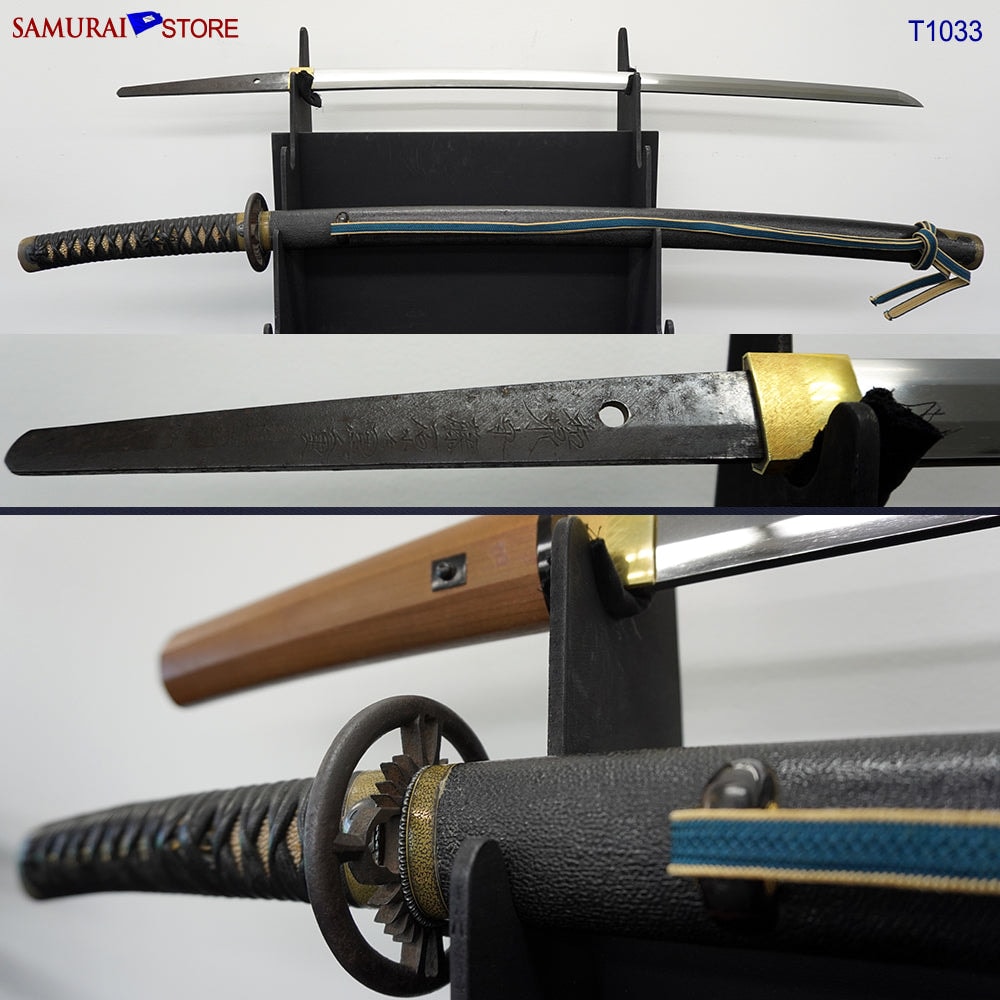
Katana - Tokuho - by Edo Kaneshige - Antique Katana sword in ornate mountingsKatana - Tokuho - by Edo Kaneshige - Antique Katana sword in ornate mountings
Sold

Katana

ByEdo Kaneshige
SOLD
Ayakashi
Tokuho
Wakizashi - Tokuho - by Edo Kaneshige - Izumi no Kami KaneshigeWakizashi - Tokuho - by Edo Kaneshige - Izumi no Kami Kaneshige
Sold

Wakizashi

ByEdo Kaneshige
SOLD
Nihonto.com
Katana - by Edo Kaneshige - Katana by Izumi no Kami KaneshigeKatana - by Edo Kaneshige - Katana by Izumi no Kami Kaneshige
Sold

Katana

ByEdo Kaneshige
SOLD
Choshuya
Katana - by Edo Kaneshige - Japanese Sword for Sale | Ginza Choshuya | O-suriage Mumei Izumi no Kami Kaneshige, 1684Katana - by Edo Kaneshige - Japanese Sword for Sale | Ginza Choshuya | O-suriage Mumei Izumi no Kami Kaneshige, 1684
Sold

Katana

ByEdo Kaneshige
SOLD
Choshuya
Hozon
Katana - Hozon - by Edo Kaneshige - Izumi no kami Kaneshige - Unsigned (O-suriage)Katana - Hozon - by Edo Kaneshige - Izumi no kami Kaneshige - Unsigned (O-suriage)
Sold

Katana

ByEdo Kaneshige
SOLD
Aoi Art
Tokuho
Katana - Tokuho - by Edo Kaneshige - Izumi Kami KaneshigeKatana - Tokuho - by Edo Kaneshige - Izumi Kami Kaneshige
Sold

Katana

ByEdo Kaneshige
SOLD
Tokka Biz
Tokuho
Katana - Tokuho - by Edo Kaneshige - Izumi no Kami KaneshigeKatana - Tokuho - by Edo Kaneshige - Izumi no Kami Kaneshige
Sold

Katana

ByEdo Kaneshige
SOLD
Kusanagi
Tokuho
Katana - Tokuho - by Edo Kaneshige - Near National Treasure Level: Kanashige (Kotetsu's Teacher) & 2nd Gen Kotetsu (Nagasone Okimasa)'s Masterpieces, with Masterpiece Koshirae - Tokubetsu Hozon TokenKatana - Tokuho - by Edo Kaneshige - Near National Treasure Level: Kanashige (Kotetsu's Teacher) & 2nd Gen Kotetsu (Nagasone Okimasa)'s Masterpieces, with Masterpiece Koshirae - Tokubetsu Hozon Token
Sold

Katana

ByEdo Kaneshige
SOLD

More from the Edo Kaneshige school

View all →
Eirakudo
Tokuho
Wakizashi - Tokuho - by Edo Kaneshige - Kanetane Wakizashi - Tokubetsu Hozon TokenWakizashi - Tokuho - by Edo Kaneshige - Kanetane Wakizashi - Tokubetsu Hozon Token

Wakizashi

ByEdo Kaneshige
¥800,000
Nipponto
Tokuho
Wakizashi - Tokuho - by Edo Kaneshige School - Wakizashi by Kazusanosuke Fujiwara KaneshigeWakizashi - Tokuho - by Edo Kaneshige School - Wakizashi by Kazusanosuke Fujiwara Kaneshige

Wakizashi

ByEdo Kaneshige School
¥580,000
Nihonto Australia
Yari - by Edo Kaneshige School - Mumei Omi Yari Attributed to Kaneshige With NTHK CertificateYari - by Edo Kaneshige School - Mumei Omi Yari Attributed to Kaneshige With NTHK Certificate

Yari

ByEdo Kaneshige School
¥4,500
Nipponto
Tokuho
Wakizashi - Tokuho - by Edo Kaneshige School - Wakizashi by Kazusanokami Kaneshige, Kotetsu's senior apprentice, Tokubetsu HozonWakizashi - Tokuho - by Edo Kaneshige School - Wakizashi by Kazusanokami Kaneshige, Kotetsu's senior apprentice, Tokubetsu Hozon

Wakizashi

ByEdo Kaneshige School
¥1,100,000

Swords

  • Katana
  • Wakizashi
  • Tantō
  • Tachi
  • Naginata
  • Yari
  • Japanese Swords
  • Samurai Swords

Fittings

  • Tsuba
  • Fuchi-Kashira
  • Kozuka
  • Menuki
  • Sword Guards (Tsuba)

Armor

  • Kabuto
  • Samurai Armor
  • All Samurai Armor

By Certification

  • Tokujū
  • Jūyō
  • Tokuho
  • Hozon

Resources

  • Dealer Directory
  • Artist Directory
  • The Daily Kantei
  • Glossary
  • Browse All
Nihontowatch© 2026
TermsPrivacyCookiesAbout

Price on request

View on Nipponto

Description

(Recommended by the Kensei Miyamoto Musashi, he became the o-kakae tosho for Todo Izumi-no-kami Takatora—lord of the 323,000 koku Mie-Tsu Domain and one of the three masters of castle construction alongside Kuroda Kanbei and Kato Kiyomasa, who contributed greatly to the reconstruction of Edo Castle. He is particularly famous as the maker of Miyamoto Musashi's favorite katana, an Izumi-no-kami Fujiwara Kaneshige with a nagasa of 2 shaku 7 sun 6 bu housed in a Musashi-koshirae.) It has arrived, it has arrived! Following the Shodai Echizen Yasutsugu and Hankei, a work by Izumi-no-kami Fujiwara Kaneshige has appeared—the man said to be the teacher of Kotetsu and whose extant works are so few he is called a phantom smith. Kaneshige came to Edo from Echizen in the early Kan'ei era (1624, 401 years ago). Through an introduction by Miyamoto Musashi, he was employed by the Todo family. It was previously thought that because Todo Takatora held the title Izumi-no-kami, Kaneshige changed his name to Kazusa-no-suke out of deference to his lord; however, recent research shows that Izumi-no-kami Kaneshige was the father and Kazusa-no-suke Kaneshige was the son. This work is a wakizashi by Izumi-no-kami Fujiwara Kaneshige, the teacher of Kotetsu, whose surviving works are extremely rare and precious. The sugata of this wakizashi shows a difference between the moto-mihaba and saki-mihaba with shallow sori. The jigane on the omote shows itame-hada mixed with masame-hada, while the ura is forged in ko-itame-hada, displaying a powerful jigane. The horimono consists of a bo-hi with maru-dome, showing skillful carving. The hamon on the omote is a notare-ba in nioi-deki with ko-nie; the ura is a o-notare-ba mixed with gunome. The boshi is a skillfully tempered "tiger's jaw" (tora-no-ago) style; one can clearly see that Kotetsu likely modeled his own boshi after this. There are many tameshi-mei by Yamano Kaemon Nagahisa found on the blades of this Izumi-no-kami Fujiwara Kaneshige, as well as on Nagasone Kotetsu Nyudo Okisato and Yamato-no-kami Yasusada, which clearly demonstrates that Izumi-no-kami Fujiwara Kaneshige was the teacher of Kotetsu. Please enjoy this wakizashi by the phantom teacher of Kotetsu, an indispensable figure in Edo Shinto.

Certificate Reading

Certificate reading — 銘 和泉守藤原兼重

NihontoWatch MonNihontoWatch
MarketEncyclopediaKantei
Swords›Edo Kaneshige›Kaneshige›Wakizashi by Izuminokami Fujiwara Kaneshige with Tokubetsu Hozon Certificate
wakizashiTokubetsu Hozon
Edo Kaneshige

Wakizashi by Izuminokami Fujiwara Kaneshige with Tokubetsu Hozon Certificate

Edo · nagasa 54.3cm · sori 0.8cm

Price on request
Visit seller website →
Edo Kaneshige (兼重) · Edo4 works for sale →
Wakizashi
Could you name the smith from the blade alone? Today’s kantei →
Edo Kaneshige — 1 of 16
Edo Kaneshige — 2 of 16
Edo Kaneshige — 3 of 16
Edo Kaneshige — 4 of 16
Edo Kaneshige — 5 of 16
Edo Kaneshige — 6 of 16
Edo Kaneshige — 7 of 16
Edo Kaneshige — 8 of 16
Edo Kaneshige — 9 of 16
Edo Kaneshige — 10 of 16
Edo Kaneshige — 11 of 16
Edo Kaneshige — 12 of 16
Edo Kaneshige — 13 of 16
Edo Kaneshige — 14 of 16
Edo Kaneshige — 15 of 16
Edo Kaneshige — 16 of 16
1 / 16
1 / 16
Edo Kaneshige — 1 of 16Edo Kaneshige — 2 of 16Edo Kaneshige — 3 of 16Edo Kaneshige — 4 of 16Edo Kaneshige — 5 of 16Edo Kaneshige — 6 of 16Edo Kaneshige — 7 of 16Edo Kaneshige — 8 of 16Edo Kaneshige — 9 of 16Edo Kaneshige — 10 of 16Edo Kaneshige — 11 of 16Edo Kaneshige — 12 of 16Edo Kaneshige — 13 of 16Edo Kaneshige — 14 of 16Edo Kaneshige — 15 of 16Edo Kaneshige — 16 of 16
Edo Kaneshige (兼重) · Edo4 works for sale →
Wakizashi
Could you name the smith from the blade alone? Today’s kantei →
Measurements & details
Smith
Edo Kaneshige
Type
Wakizashi
School
Edo Kaneshige
Period
Around 1624–1661(Kanei-Manji)
Province
武蔵
Measurements
Nagasa 54.3cmSori 0.8cmMotohaba 2.96cmSakihaba 1.92cmKasane 0.6cm
Description

(Recommended by the Kensei Miyamoto Musashi, he became the o-kakae tosho for Todo Izumi-no-kami Takatora—lord of the 323,000 koku Mie-Tsu Domain and one of the three masters of castle construction alongside Kuroda Kanbei and Kato Kiyomasa, who contributed greatly to the reconstruction of Edo Castle. He is particularly famous as the maker of Miyamoto Musashi's favorite katana, an Izumi-no-kami Fujiwara Kaneshige with a nagasa of 2 shaku 7 sun 6 bu housed in a Musashi-koshirae.) It has arrived, it has arrived! Following the Shodai Echizen Yasutsugu and Hankei, a work by Izumi-no-kami Fujiwara Kaneshige has appeared—the man said to be the teacher of Kotetsu and whose extant works are so few he is called a phantom smith. Kaneshige came to Edo from Echizen in the early Kan'ei era (1624, 401 years ago). Through an introduction by Miyamoto Musashi, he was employed by the Todo family. It was previously thought that because Todo Takatora held the title Izumi-no-kami, Kaneshige changed his name to Kazusa-no-suke out of deference to his lord; however, recent research shows that Izumi-no-kami Kaneshige was the father and Kazusa-no-suke Kaneshige was the son. This work is a wakizashi by Izumi-no-kami Fujiwara Kaneshige, the teacher of Kotetsu, whose surviving works are extremely rare and precious. The sugata of this wakizashi shows a difference between the moto-mihaba and saki-mihaba with shallow sori. The jigane on the omote shows itame-hada mixed with masame-hada, while the ura is forged in ko-itame-hada, displaying a powerful jigane. The horimono consists of a bo-hi with maru-dome, showing skillful carving. The hamon on the omote is a notare-ba in nioi-deki with ko-nie; the ura is a o-notare-ba mixed with gunome. The boshi is a skillfully tempered "tiger's jaw" (tora-no-ago) style; one can clearly see that Kotetsu likely modeled his own boshi after this. There are many tameshi-mei by Yamano Kaemon Nagahisa found on the blades of this Izumi-no-kami Fujiwara Kaneshige, as well as on Nagasone Kotetsu Nyudo Okisato and Yamato-no-kami Yasusada, which clearly demonstrates that Izumi-no-kami Fujiwara Kaneshige was the teacher of Kotetsu. Please enjoy this wakizashi by the phantom teacher of Kotetsu, an indispensable figure in Edo Shinto.

About the maker

Kaneshige

兼重

Edo Kaneshige (Izumi no Kami, Musashi, Shinto) · Musashi · around 1624-1661

Fujishiro Jo saku · Tōken Taikan top 23%

4 pieces on the market now

›

The earliest dated work that survives under this smith's hand is a naginata inscribed Kan'ei 2, 1625, and the seven blades gathered here, all signed Izumi no Kami or Izumi no Kami Fujiwara Kaneshige, are the work of the shodai alone. The published sources place him directly after the shodai Yasutsugu and Hankei as the next Edo smith of consequence; tradition holds that he came from Echizen, where he had been a yanone-kaji, a maker of arrowheads, before going to Edo and turning to forging blades, an account the Kokon Kajibikō preserves. He is rated Jō-saku by Fujishiro, and by long tradition he is the teacher of Nagasone Kotetsu. The name carries a second smith after him, his pupil Kazusa no Suke, also Kazusa no Kami, Fujiwara Kaneshige, and the two were for centuries treated as a single man, the change of title explained as deference to his lord Tōdō Izumi no Kami. The published sources set that story aside: signed and age-stated works, among them a katana of Kanbun 6, 1666, show the younger smith was born in Kan'ei 3, 1626, while the elder already bears Kan'ei dates, so the two are different individuals, and this profile is the first generation only.

The published sources draw his range as two manners, and the distinction governs how his work is read. The first is a notare-based temper carrying linked gunome, with ashi entering well, the nioi deep and the nie laid thick, and in his fullest pieces fine kinsuji and sunagashi running through the band with patches of coarser ara-nie, the nioiguchi bright and clear. On a katana of this manner the published sources find the workmanship so close to Kotetsu that it recalls him at a glance, 「一見徹を髣髴させる作域」[[c:1]], and read in the hardened edge a sense of strength and spirit. The second manner is a suguha base, sometimes a wide straight temper bearing the faintest notare and sometimes a chū-suguha of almost no movement at all, the nioi deep and the ko-nie well gathered, with a slight yakikomi at the machi and a bright, clearly defined nioiguchi. The constant across both is that clarity of the nioiguchi, the saeru quality the published sources tie to his Kotetsu-like character and name as the mark of Kaneshige at his best.

The jigane beneath both manners is a ko-itame, closely and well forged, with fine ji-nie laid thickly and chikei entering, in places flowing into nagare-hada and tending slightly to stand, mokume mixed in here and there. It is the controlled urban steel of an Edo master, the faint standing of the grain keeping the surface alive without breaking it open. The bōshi runs straight to a ko-maru, the kaeri at times long, the point swept with hakikake. The sugata is the transitional form of the Kan'ei and Shōhō years, of standard mihaba with a markedly pronounced taper, a retained funbari, rather deep sori and a compact chū-kissaki, which the published sources read as the passage from Keichō shintō to Kanbun shintō form and offer as a point of appreciation of his shape. The nakago is ubu, finished with ō-sujikai file marks already carrying a kesho-like tendency the published sources read as an early prototype of the later ornamental kesho-yasuri, and the long signature is cut with a fine chisel in a distinctive reisho clerical script of seven characters.

The two manners are registers, not periods, and the published sources name which a given blade exemplifies. The wide-suguha katana of the 61st Jūyō session they call a typical example of the former, the notare-gunome hand, its broad straight band mixed with notare and ko-gunome conveying an overflowing vigor; the deep-nioi suguha of the 43rd session they call a typical example of the latter, where the nioi runs especially deep and the nioiguchi becomes vividly clear. A third register is form rather than temper: his work is almost wholly shinogi-zukuri katana and wakizashi with tantō unseen, so that the broad, sun-nobi hira-zukuri wakizashi of the 31st session is a rare construction in which, the published sources note, its ko-notare mixed with gunome and bright nioiguchi show his true forte. Even within the notare-gunome manner there are blades of an entirely pure straight temper, 「純然たる直刃」, as the published sources remark of a Yamano cutting-test katana, so that the two hands shade into one another rather than dividing his career.

What sets him apart is best stated from his own grounded features. His tell is the pairing of a deep nioi with a bright, clear nioiguchi, carried equally over the calm wide suguha and the more active notare-gunome, and beneath it the densely ji-nie-laden ko-itame with its fine chikei and slight standing of the grain. The published sources frame his place in the school through Kotetsu at every turn: he is by tradition the teacher, his ji and ha deep in nioi and clear in the Kotetsu manner, and a katana of his is judged to recall Kotetsu at a glance. The line he founded ran on past him, his pupil Kazusa no Suke carrying it into the Kanbun years and perfecting the juzu-ba, the rosary-bead temper for which the second generation is best known and which the published sources hold could be mistaken for Kotetsu, so that the shodai's restrained two manners stand at the head of a school whose later fame rests on a temper he himself did not work. Recent study has gone to sorting the two hands apart, by which the elder's seven blades here are now read as the first generation's alone.

Kaneshige is among the leading Edo shintō names, and the shodai's reputation is inseparable from the cutting-tests that ride on his blades. Two of the seven here carry the gold-inlaid setsudan-mei of Yamano Kanjūrō, the name the great tester Kaemon used before the Shōhō era, recording a mitsu-dō three-body cut felled in two strokes and the inscription 「前代未聞剣 山野勘十郎切之」[[c:2]], an unprecedented sharpness cut by Yamano Kanjūrō, a provenance as much as an honor. On record under his name stand seven blades at the Jūyō rank and no higher designation, almost all shinogi-zukuri katana and wakizashi, with no National Treasure or Important Cultural Property among them and no recorded daimyō provenance, which is to say that what survives of him is the designated Jūyō blade rather than the museum-held icon. These are held mostly in long-standing private collections and come to market only from time to time, a signed Kaneshige bearing one of the famous Yamano cutting-test inscriptions the example most sought. He is not beyond the reach of a patient collector, but a piece of his, and above all one carrying the Yamano inlay, is a landmark when it appears.

Historical importance

Where Kaneshige stands among comparable artisans: across all of nihontō, and within tradition, era, and period. The tiers (Foremost · Leading · Major · Notable) weigh official designations from the NBTHK and Japan's Agency for Cultural Affairs, together with historical honors of lasting repute such as the Sansaku and Meibutsu-chō.

随一
Foremost
屈指
Leading
有数
Major
著名
Notable

Select a lens to see how it's measured.

Designation record
7 designated works
Jūyō
7
4 works by Kaneshige on the market→
Kaneshige — full profileEdo Kaneshige (Izumi no Kami, Musashi, Shinto) school

Dated Works

Years he was demonstrably active, proven by signed-and-dated blades

Active period
1640Editorial estimate: 1624–1661
1 of 5 designated works carry a date

Study this maker →

About the school

Edo Kaneshige

和泉守兼重

Shinto · Musashi

8 pieces on the market now

›

Edo was the base of the Kaneshige line, whose first master, Izumi no Kami Fujiwara Kaneshige, emerged among the city's swordsmiths after the shodai Yasutsugu and Hankei. The setsumei follow the account in the Kokon Kajibikō that he began as an arrowhead smith (yanone-kaji) in Echizen, then moved to Edo and turned to forging blades; his earliest dated work is a naginata inscribed Kan'ei 2 (1625), with dated pieces running into the Meireki era. A second smith signing Kazusa no Suke (and at times Kazusa no Kami) Fujiwara Kaneshige, whose common name is given as Tsuji Sukeemon, is treated as the son or pupil of the first and the second generation, born in Kan'ei 3 (1626) and most active in the Kanbun and Enpō years. The two were long held to be one man, the story being that, retained by the Tōdō house under Izumi no Kami, he changed his title to avoid sharing his lord's court designation; signed and age-dated works by Tsuji Kazusa no Suke alongside Yasutsugu and Shimosaka Ichinojō have since shown them to be separate individuals. The second generation also worked Ise pieces inscribed "made at Anotsu in Seshū," and recent comparison of the signatures has raised the possibility of substitute signing by Sukekurō Kanetsune. Recognition of the hand rests on a small set of recurring traits. The jihada is a tight ko-itame, sometimes standing or flowing toward masame, with fine ji-nie densely applied and chikei entering.

The first generation divides into two modes: a notare base carrying linked gunome and entering ashi, and a wide suguha bearing shallow notare in which the nioi is deep, the nie thick, and the nioiguchi bright and saeru, with kinsuji and sunagashi. The second generation concentrates on juzu-ba, a suguha-toned temper of linked gunome with aligned heads; the setsumei single out a fixed one-two rhythm, in which a single gunome is followed by two, as a principal point of appreciation, together with thick ashi, deep nioi, abundant nie, and fine kinsuji and sunagashi. Across both hands the sugata is the standard width with marked taper, shallow sori, and a compact chū-kissaki of the Kanbun shintō period, the bōshi mostly sugu with ko-maru and hakikake, and the long signature cut in a reishō clerical script with sujikai keshō-tending file marks read as an early form of the later decorative finish. The setsumei repeatedly place Kaneshige beside Nagasone Kotetsu, rendered also as Tōru, Batetsu, and Matetsu in these records, and beside the Hōjōji group of the same Edo circle; one notes the tradition that the second generation was Kotetsu's teacher, and a wakizashi with a Yamano cutting-test inscription dated Manji 4 (1661) carries a fully realized juzu-ba held to precede Kotetsu's own. Cutting-test inscriptions are a frequent feature of the line: gold-inlaid setsudan-mei by Yamano Ka'emon no Jō Nagahisa appear often, with Yamano Kanjūrō named as Ka'emon's earlier form before the Shōhō era, alongside mitsudō and stacked-body tests by Shibasaki Denzaemon Masatsugu and Maejima Hachirō Tomotsugu. The dated and provenanced blades in the NBTHK register, signed Izumi no Kami, Kazusa no Suke, and Kazusa no Kami, document a coherent two-generation Edo workshop whose juzu-ba and bright nie secured its standing among the leading shinto smiths of Musashi. Learn more →

2 recorded smiths28 designated works
Leading smiths
SmithEraDesignated
Kaneshige兼重1661-167321
Kaneshige兼重1624-16617
Explore the Edo Kaneshige school →

Historical context

Edo: the shogun’s market

›

Edo held Japan’s largest sword-wearing population, gathered by the alternate attendance system. The shogunal smith Yasutsugu was granted the Aoi crest for his tangs; many of Kotetsu’s blades carry gold-inlaid cutting attestations. Proof mattered here.

Edo: the shogun’s market →

NBTHK Certificate
Tokubetsu Hozon Tōken特別保存刀剣
Sword Especially Worthy of Preservation
›

A Hozon-certified blade judged to show notably superior workmanship and a better state of preservation. The bar is higher: re-tempered blades and most unsigned Muromachi/Edo works are excluded.

Signed: 和泉守藤原兼重 (Edo Kaneshige)
As written on the certificate
About the NBTHK›

The NBTHK (Nihon Bijutsu Tōken Hozon Kyōkai, the Society for the Preservation of Japanese Art Swords) is a public-interest incorporated foundation founded in 1948 and supervised by Japan’s Agency for Cultural Affairs (Bunkachō); it is based at the Japanese Sword Museum in Tokyo. Its expert panels physically examine each submitted work (shinsa) and issue a certificate (kanteishō) ranking it by artistic and historical merit. NBTHK papers are the most widely recognized standard of authentication for Japanese swords and fittings.

NBTHK official site→
Seller
N
Nipponto
Established 1953 · 73 yrs on the market
🇯🇵Ships from Japan
›
✓Verified dealernipponto.co.jp
✓Ships worldwide✓English supportPayPalCredit card
Return policy

For returns due to customer circumstances, the cost is the customer's responsibility. For returns due to our mis-shipment or a defective item, we bear the cost.

View all of Nipponto’s listings→View this item on the dealer’s site→

More works by Edo Kaneshige

View all →
Kanda Toukodo
Jūyō
Katana - Jūyō - by Edo Kaneshige - Izumi no Kami Fujiwara KaneshigeKatana - Jūyō - by Edo Kaneshige - Izumi no Kami Fujiwara Kaneshige

Katana

ByEdo Kaneshige
Ask
Nihonto Australia
Tokuho
Wakizashi - Tokuho - by Edo Kaneshige - KaneshigeWakizashi - Tokuho - by Edo Kaneshige - Kaneshige

Wakizashi

ByEdo Kaneshige
Ask
Nipponto
Tokuho
Katana - Tokuho - by Edo Kaneshige - Izuminokami Kaneshige (Master of Kotetsu), Kanei 21st year, 2nd month, 8th day. Cutting test at Bushu Kanda: Kenashiwaki, offender Tsujimura Denzaemon Masatsugu (Kaō).Katana - Tokuho - by Edo Kaneshige - Izuminokami Kaneshige (Master of Kotetsu), Kanei 21st year, 2nd month, 8th day. Cutting test at Bushu Kanda: Kenashiwaki, offender Tsujimura Denzaemon Masatsugu (Kaō).

Katana

ByEdo Kaneshige
Ask

Previously sold by Edo Kaneshige

View all →
Samurai Store
Tokuho
Katana - Tokuho - by Edo Kaneshige - Antique Katana sword in ornate mountingsKatana - Tokuho - by Edo Kaneshige - Antique Katana sword in ornate mountings
Sold

Katana

ByEdo Kaneshige
SOLD
Ayakashi
Tokuho
Wakizashi - Tokuho - by Edo Kaneshige - Izumi no Kami KaneshigeWakizashi - Tokuho - by Edo Kaneshige - Izumi no Kami Kaneshige
Sold

Wakizashi

ByEdo Kaneshige
SOLD
Nihonto.com
Katana - by Edo Kaneshige - Katana by Izumi no Kami KaneshigeKatana - by Edo Kaneshige - Katana by Izumi no Kami Kaneshige
Sold

Katana

ByEdo Kaneshige
SOLD
Choshuya
Katana - by Edo Kaneshige - Japanese Sword for Sale | Ginza Choshuya | O-suriage Mumei Izumi no Kami Kaneshige, 1684Katana - by Edo Kaneshige - Japanese Sword for Sale | Ginza Choshuya | O-suriage Mumei Izumi no Kami Kaneshige, 1684
Sold

Katana

ByEdo Kaneshige
SOLD
Choshuya
Hozon
Katana - Hozon - by Edo Kaneshige - Izumi no kami Kaneshige - Unsigned (O-suriage)Katana - Hozon - by Edo Kaneshige - Izumi no kami Kaneshige - Unsigned (O-suriage)
Sold

Katana

ByEdo Kaneshige
SOLD
Aoi Art
Tokuho
Katana - Tokuho - by Edo Kaneshige - Izumi Kami KaneshigeKatana - Tokuho - by Edo Kaneshige - Izumi Kami Kaneshige
Sold

Katana

ByEdo Kaneshige
SOLD
Tokka Biz
Tokuho
Katana - Tokuho - by Edo Kaneshige - Izumi no Kami KaneshigeKatana - Tokuho - by Edo Kaneshige - Izumi no Kami Kaneshige
Sold

Katana

ByEdo Kaneshige
SOLD
Kusanagi
Tokuho
Katana - Tokuho - by Edo Kaneshige - Near National Treasure Level: Kanashige (Kotetsu's Teacher) & 2nd Gen Kotetsu (Nagasone Okimasa)'s Masterpieces, with Masterpiece Koshirae - Tokubetsu Hozon TokenKatana - Tokuho - by Edo Kaneshige - Near National Treasure Level: Kanashige (Kotetsu's Teacher) & 2nd Gen Kotetsu (Nagasone Okimasa)'s Masterpieces, with Masterpiece Koshirae - Tokubetsu Hozon Token
Sold

Katana

ByEdo Kaneshige
SOLD

More from the Edo Kaneshige school

View all →
Eirakudo
Tokuho
Wakizashi - Tokuho - by Edo Kaneshige - Kanetane Wakizashi - Tokubetsu Hozon TokenWakizashi - Tokuho - by Edo Kaneshige - Kanetane Wakizashi - Tokubetsu Hozon Token

Wakizashi

ByEdo Kaneshige
¥800,000
Nipponto
Tokuho
Wakizashi - Tokuho - by Edo Kaneshige School - Wakizashi by Kazusanosuke Fujiwara KaneshigeWakizashi - Tokuho - by Edo Kaneshige School - Wakizashi by Kazusanosuke Fujiwara Kaneshige

Wakizashi

ByEdo Kaneshige School
¥580,000
Nihonto Australia
Yari - by Edo Kaneshige School - Mumei Omi Yari Attributed to Kaneshige With NTHK CertificateYari - by Edo Kaneshige School - Mumei Omi Yari Attributed to Kaneshige With NTHK Certificate

Yari

ByEdo Kaneshige School
¥4,500
Nipponto
Tokuho
Wakizashi - Tokuho - by Edo Kaneshige School - Wakizashi by Kazusanokami Kaneshige, Kotetsu's senior apprentice, Tokubetsu HozonWakizashi - Tokuho - by Edo Kaneshige School - Wakizashi by Kazusanokami Kaneshige, Kotetsu's senior apprentice, Tokubetsu Hozon

Wakizashi

ByEdo Kaneshige School
¥1,100,000

Swords

  • Katana
  • Wakizashi
  • Tantō
  • Tachi
  • Naginata
  • Yari
  • Japanese Swords
  • Samurai Swords

Fittings

  • Tsuba
  • Fuchi-Kashira
  • Kozuka
  • Menuki
  • Sword Guards (Tsuba)

Armor

  • Kabuto
  • Samurai Armor
  • All Samurai Armor

By Certification

  • Tokujū
  • Jūyō
  • Tokuho
  • Hozon

Resources

  • Dealer Directory
  • Artist Directory
  • The Daily Kantei
  • Glossary
  • Browse All
Nihontowatch© 2026
TermsPrivacyCookiesAbout

Price on request

View on Nipponto
NihontoWatch MonNihontoWatch
Market
Encyclopedia
Kantei
NihontoWatch MonNihontoWatch
Market
Encyclopedia
Kantei