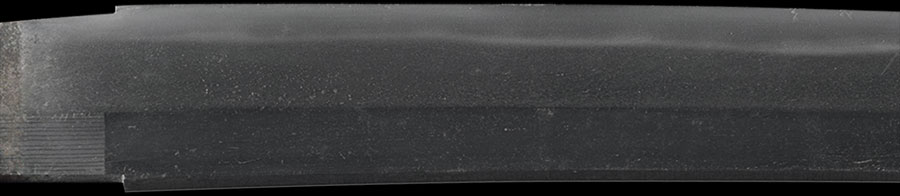
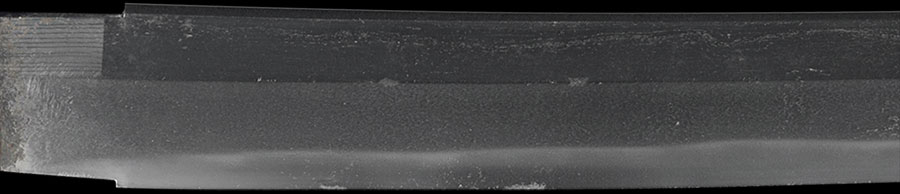
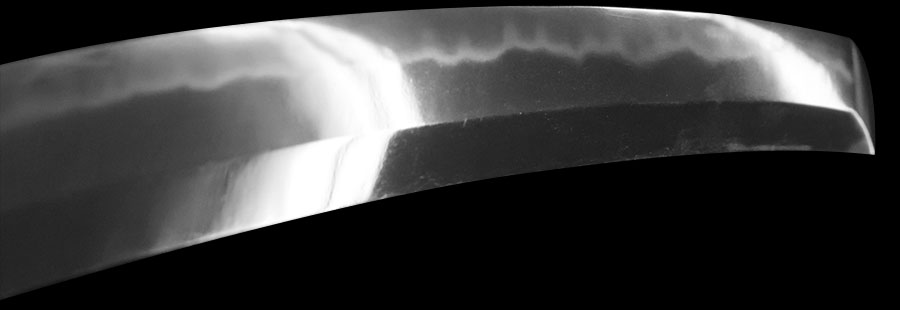
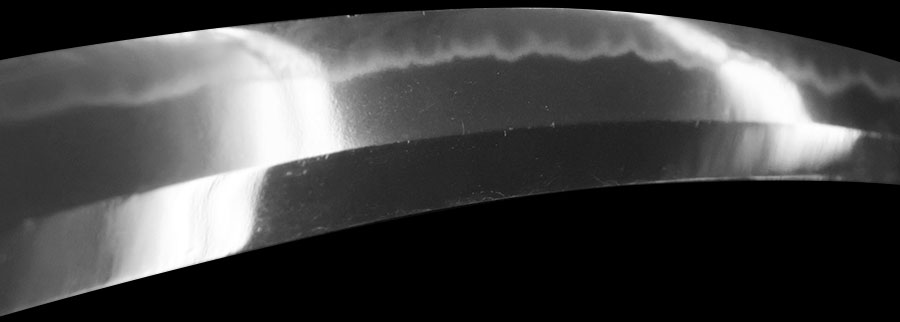
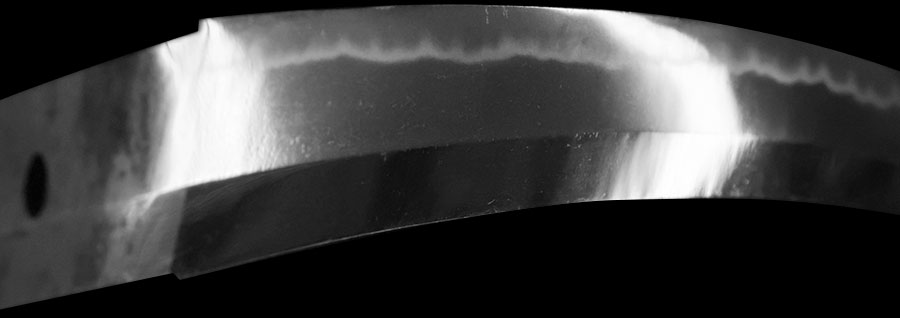
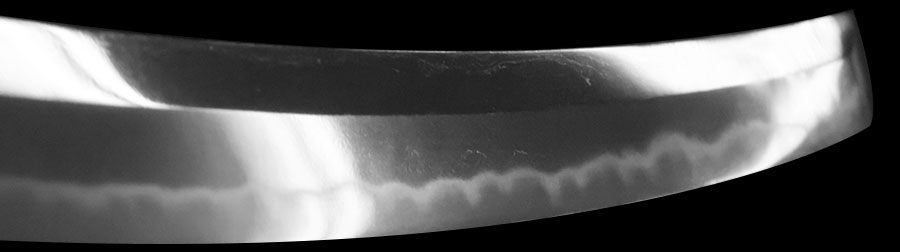
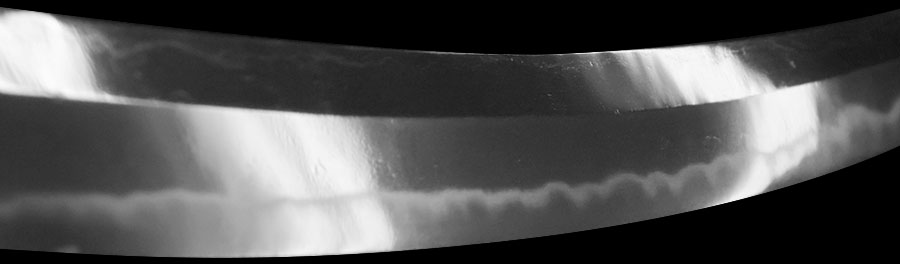
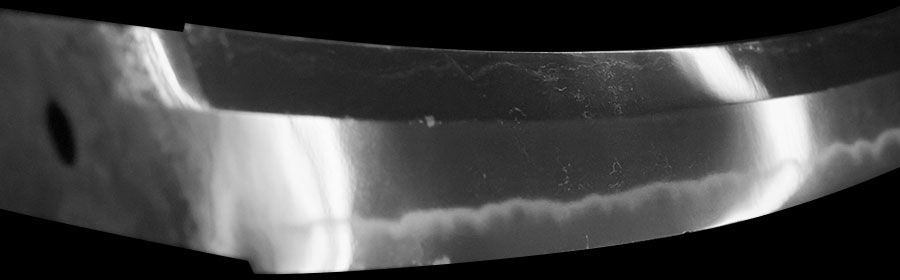
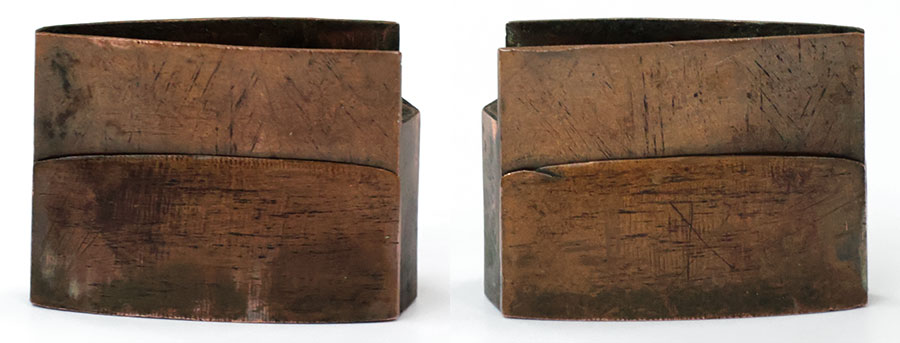
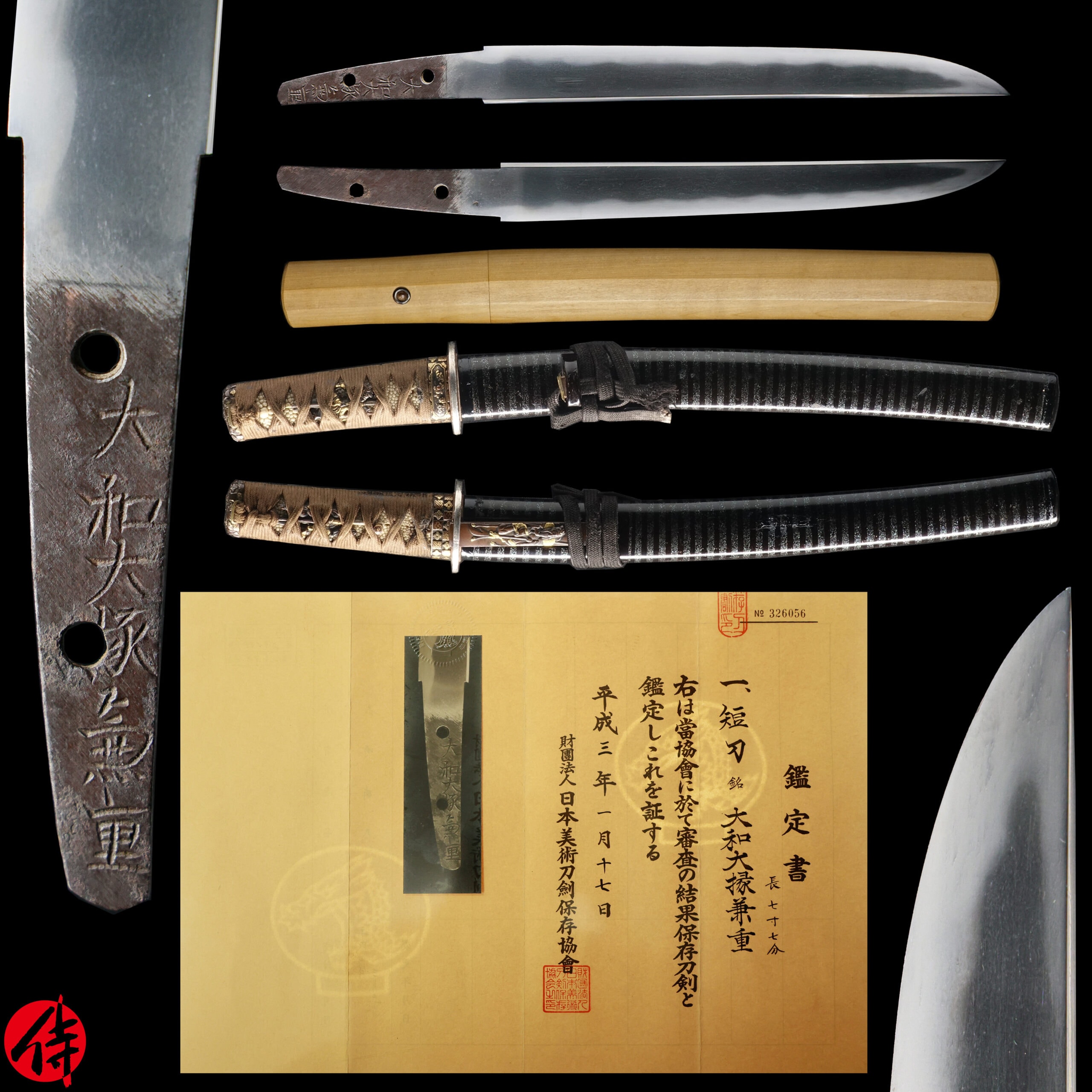
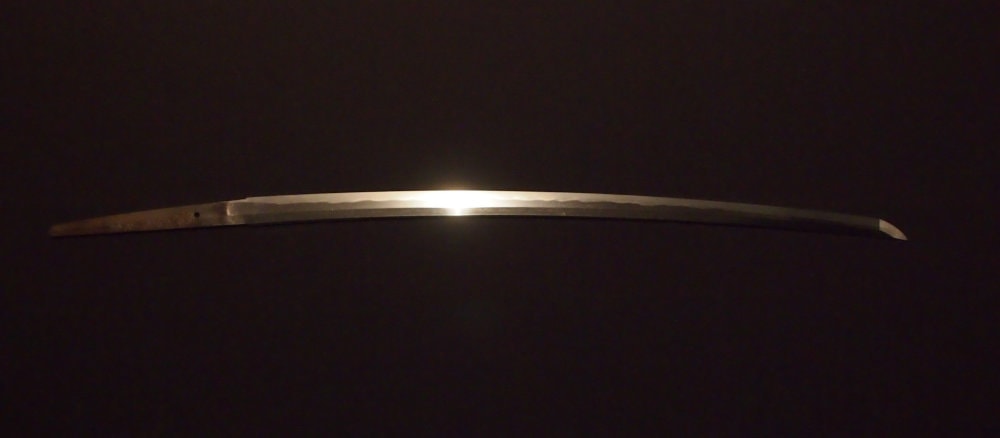
It has arrived, it has arrived—a precious *meito* *wakizashi* by Kazusa no Suke Fujiwara Kaneshige, which bears a striking resemblance to the masterpieces of Kotetsu. He is famous as the *saryo* of Todo Heisuke, the captain of the Shinsengumi's 8th unit. Todo Heisuke possessed a brave and daring character; in the Ikedaya Incident and other Shinsengumi battles in Kyoto, his nature of being the first to charge in earned him the nickname "Sakigake Sensei" (Master Pioneer). His skill with the sword reached the *mokuroku* level in Hokushin Itto-ryu, and he was counted among the Shinsengumi Shitenno (Four Heavenly Kings) alongside Okita Soji, Nagakura Shinpachi, and Saito Hajime. A handsome man who was well-educated, he was an Edokko accomplished in both literary and military arts, beloved by Kondo Isami and Hijikata Toshizo. It is said that Todo Heisuke was an illegitimate child of the Todo family, which is why he was able to carry a *meito* by Kazusa no Suke Kaneshige, which was among the most expensive blades at the time. Works by Kazusa no Suke Kaneshige are rarely seen today; it has long been said this is because they so closely resemble the work of Kotetsu that many had Kotetsu *mei* added to them in later generations. Kotetsu's teacher's father, Izumi no Kami Kaneshige, was active as an arrowhead smith during the Echizen era, later moving to Edo to become a swordsmith and flourishing as the *kakae-kaji* (retained smith) for Todo Takatora. The *mei* of Kotetsu was initially carved as "Kotetsu" (Old Iron), but he later adopted the character "Ko" (Tiger) from Lord Todo Takatora out of respect. It was once said that Todo Takatora, famous as a master castle builder favored by Toyotomi Hideyoshi and Tokugawa Ieyasu, received the title Izumi no Kami, and thus Kaneshige changed his name from Izumi no Kami to Kazusa no Suke out of deference to Takatora. However, subsequent research shows that this Kazusa no Suke Kaneshige was the son of Izumi no Kami Kaneshige and the senior apprentice to Nagasone Okisato Nyudo Kotetsu, teaching Kotetsu forging techniques while the two greatly refined their skills together. This *wakizashi* exhibits the *Kanbun Shinto* *sugata* identical to Kotetsu, with a distinct difference between the *moto-mihaba* and *saki-mihaba* and shallow *sori*. The *jigane* is forged in *ko-itame hada*, revealing a bright, fine, and powerful steel. The *hamon* is in *nioi-deki* with abundant *nie*, featuring a *notare-ba* mixed with *gunome-ba*. The *ashi* of the *gunome* are thick, and the *gunome* are continuous, forming a *juzu-ba*. It is a magnificent *wakizashi* where one can see the masterpiece style of Nagasone Okisato Nyudo Kotetsu. One can only be grateful that it survived without having its *mei* changed to Kotetsu. This time, we received this from an old family of the Kishu Domain who said, "We have grown old; this is a *wakizashi* we have cherished as a Kotetsu, but please pass it on at a low price to someone who will treasure it." Because there is some slight wear due to age, we are offering it at a special bargain price. If polished and submitted for *Tokubetsu Hozon Token* certification, one can expect it to rise even further in status. Please enjoy this masterpiece *wakizashi* that rivals Kotetsu.
Edo · nagasa 55.4cm · sori 1.3cm


Shinto · Musashi
12 pieces on the market now
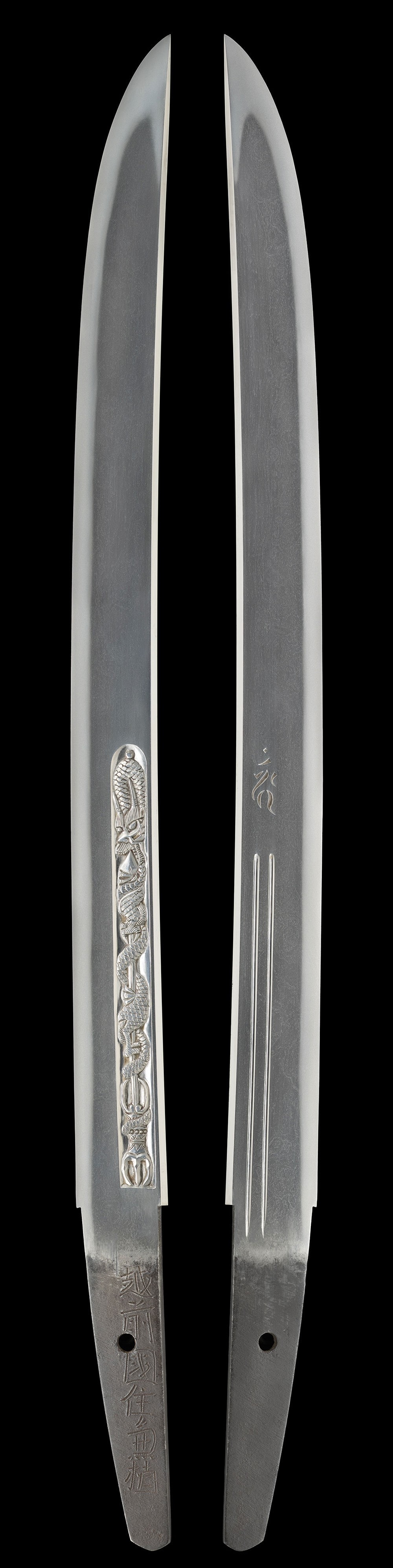
Edo was the base of the Kaneshige line, whose first master, Izumi no Kami Fujiwara Kaneshige, emerged among the city's swordsmiths after the shodai Yasutsugu and Hankei. The setsumei follow the account in the Kokon Kajibikō that he began as an arrowhead smith (yanone-kaji) in Echizen, then moved to Edo and turned to forging blades; his earliest dated work is a naginata inscribed Kan'ei 2 (1625), with dated pieces running into the Meireki era. Learn more →
| Smith | Era | Designated |
|---|---|---|
| Kaneshige兼重 | 1661-1673 | 21 |
| Kaneshige兼重 | 1624-1661 | 7 |
A Hozon-certified blade judged to show notably superior workmanship and a better state of preservation. The bar is higher: re-tempered blades and most unsigned Muromachi/Edo works are excluded.
The NBTHK (Nihon Bijutsu Tōken Hozon Kyōkai, the Society for the Preservation of Japanese Art Swords) is a public-interest incorporated foundation founded in 1948 and supervised by Japan’s Agency for Cultural Affairs (Bunkachō); it is based at the Japanese Sword Museum in Tokyo. Its expert panels physically examine each submitted work (shinsa) and issue a certificate (kanteishō) ranking it by artistic and historical merit. NBTHK papers are the most widely recognized standard of authentication for Japanese swords and fittings.
NBTHK official siteFor returns due to customer circumstances, the cost is the customer's responsibility. For returns due to our mis-shipment or a defective item, we bear the cost.
It has arrived, it has arrived—a precious *meito* *wakizashi* by Kazusa no Suke Fujiwara Kaneshige, which bears a striking resemblance to the masterpieces of Kotetsu. He is famous as the *saryo* of Todo Heisuke, the captain of the Shinsengumi's 8th unit. Todo Heisuke possessed a brave and daring character; in the Ikedaya Incident and other Shinsengumi battles in Kyoto, his nature of being the first to charge in earned him the nickname "Sakigake Sensei" (Master Pioneer). His skill with the sword reached the *mokuroku* level in Hokushin Itto-ryu, and he was counted among the Shinsengumi Shitenno (Four Heavenly Kings) alongside Okita Soji, Nagakura Shinpachi, and Saito Hajime. A handsome man who was well-educated, he was an Edokko accomplished in both literary and military arts, beloved by Kondo Isami and Hijikata Toshizo. It is said that Todo Heisuke was an illegitimate child of the Todo family, which is why he was able to carry a *meito* by Kazusa no Suke Kaneshige, which was among the most expensive blades at the time. Works by Kazusa no Suke Kaneshige are rarely seen today; it has long been said this is because they so closely resemble the work of Kotetsu that many had Kotetsu *mei* added to them in later generations. Kotetsu's teacher's father, Izumi no Kami Kaneshige, was active as an arrowhead smith during the Echizen era, later moving to Edo to become a swordsmith and flourishing as the *kakae-kaji* (retained smith) for Todo Takatora. The *mei* of Kotetsu was initially carved as "Kotetsu" (Old Iron), but he later adopted the character "Ko" (Tiger) from Lord Todo Takatora out of respect. It was once said that Todo Takatora, famous as a master castle builder favored by Toyotomi Hideyoshi and Tokugawa Ieyasu, received the title Izumi no Kami, and thus Kaneshige changed his name from Izumi no Kami to Kazusa no Suke out of deference to Takatora. However, subsequent research shows that this Kazusa no Suke Kaneshige was the son of Izumi no Kami Kaneshige and the senior apprentice to Nagasone Okisato Nyudo Kotetsu, teaching Kotetsu forging techniques while the two greatly refined their skills together. This *wakizashi* exhibits the *Kanbun Shinto* *sugata* identical to Kotetsu, with a distinct difference between the *moto-mihaba* and *saki-mihaba* and shallow *sori*. The *jigane* is forged in *ko-itame hada*, revealing a bright, fine, and powerful steel. The *hamon* is in *nioi-deki* with abundant *nie*, featuring a *notare-ba* mixed with *gunome-ba*. The *ashi* of the *gunome* are thick, and the *gunome* are continuous, forming a *juzu-ba*. It is a magnificent *wakizashi* where one can see the masterpiece style of Nagasone Okisato Nyudo Kotetsu. One can only be grateful that it survived without having its *mei* changed to Kotetsu. This time, we received this from an old family of the Kishu Domain who said, "We have grown old; this is a *wakizashi* we have cherished as a Kotetsu, but please pass it on at a low price to someone who will treasure it." Because there is some slight wear due to age, we are offering it at a special bargain price. If polished and submitted for *Tokubetsu Hozon Token* certification, one can expect it to rise even further in status. Please enjoy this masterpiece *wakizashi* that rivals Kotetsu.
Edo · nagasa 55.4cm · sori 1.3cm


Shinto · Musashi
12 pieces on the market now
Edo was the base of the Kaneshige line, whose first master, Izumi no Kami Fujiwara Kaneshige, emerged among the city's swordsmiths after the shodai Yasutsugu and Hankei. The setsumei follow the account in the Kokon Kajibikō that he began as an arrowhead smith (yanone-kaji) in Echizen, then moved to Edo and turned to forging blades; his earliest dated work is a naginata inscribed Kan'ei 2 (1625), with dated pieces running into the Meireki era. Learn more →
| Smith | Era | Designated |
|---|---|---|
| Kaneshige兼重 | 1661-1673 | 21 |
| Kaneshige兼重 | 1624-1661 | 7 |
A Hozon-certified blade judged to show notably superior workmanship and a better state of preservation. The bar is higher: re-tempered blades and most unsigned Muromachi/Edo works are excluded.
The NBTHK (Nihon Bijutsu Tōken Hozon Kyōkai, the Society for the Preservation of Japanese Art Swords) is a public-interest incorporated foundation founded in 1948 and supervised by Japan’s Agency for Cultural Affairs (Bunkachō); it is based at the Japanese Sword Museum in Tokyo. Its expert panels physically examine each submitted work (shinsa) and issue a certificate (kanteishō) ranking it by artistic and historical merit. NBTHK papers are the most widely recognized standard of authentication for Japanese swords and fittings.
NBTHK official siteFor returns due to customer circumstances, the cost is the customer's responsibility. For returns due to our mis-shipment or a defective item, we bear the cost.