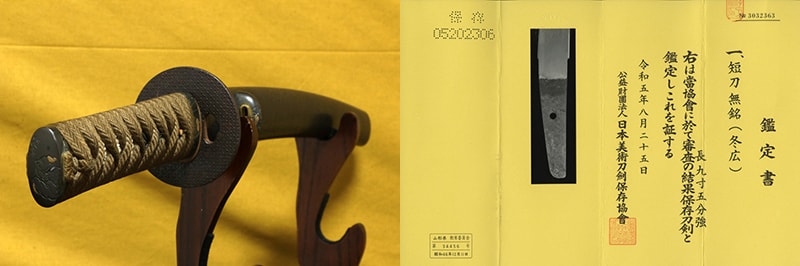
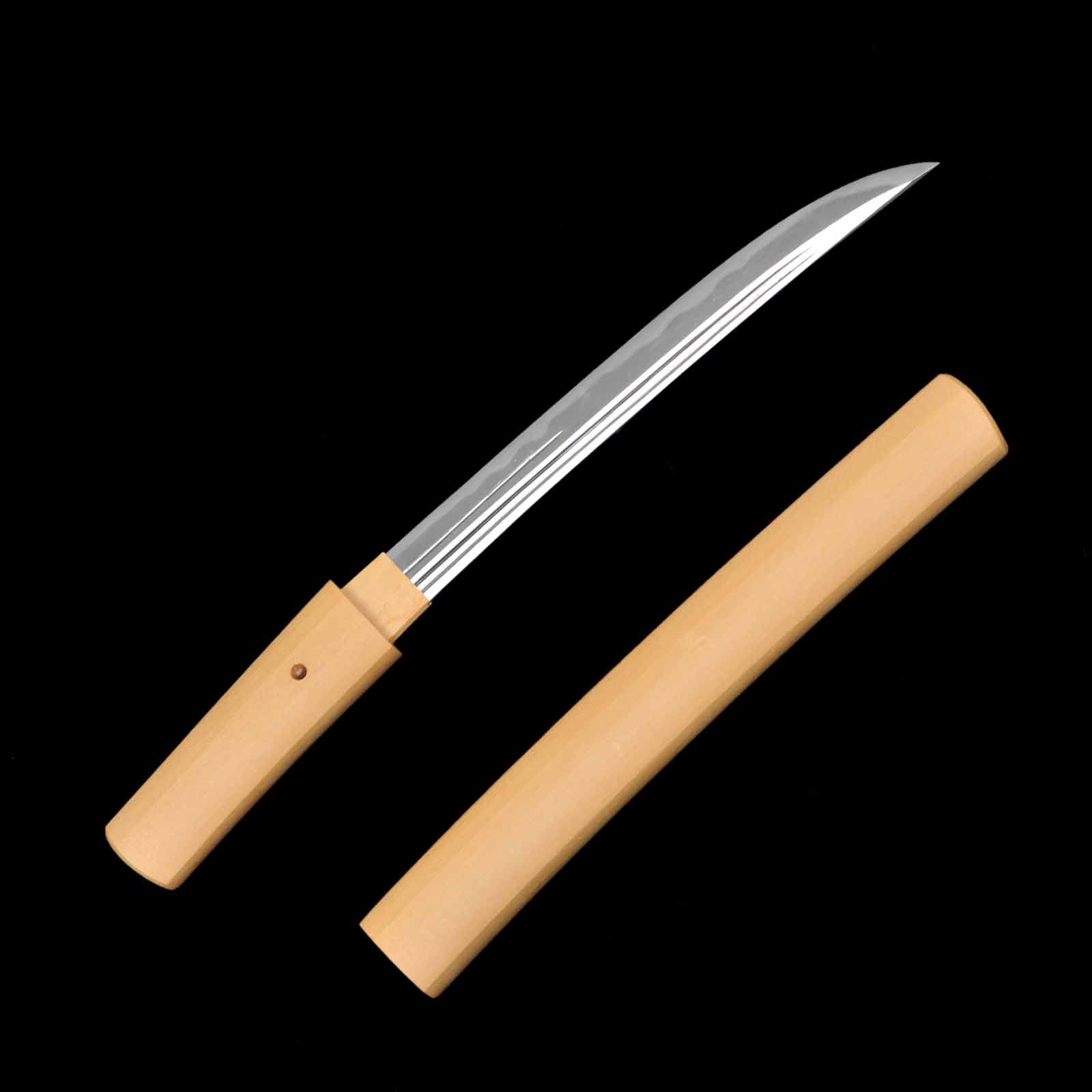
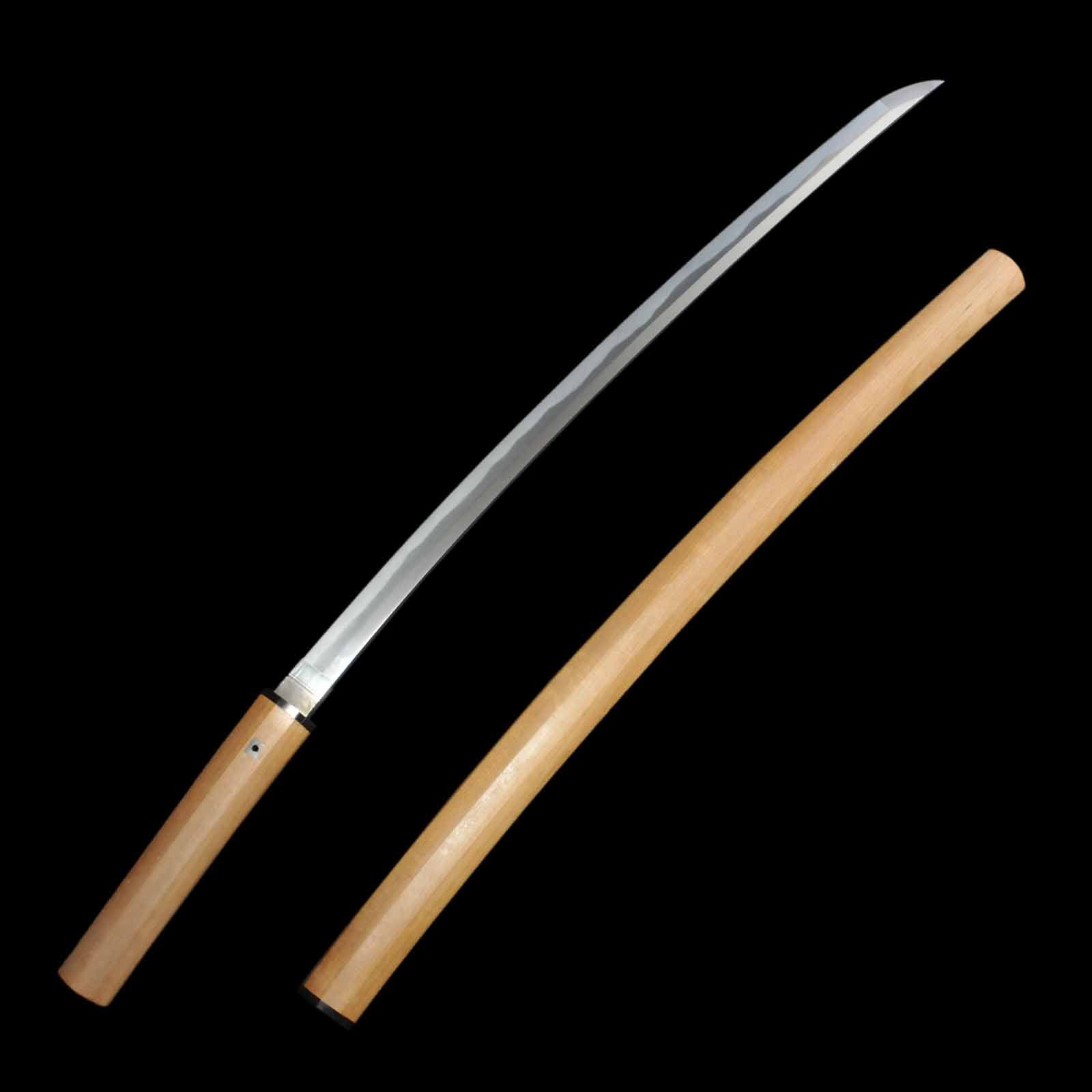
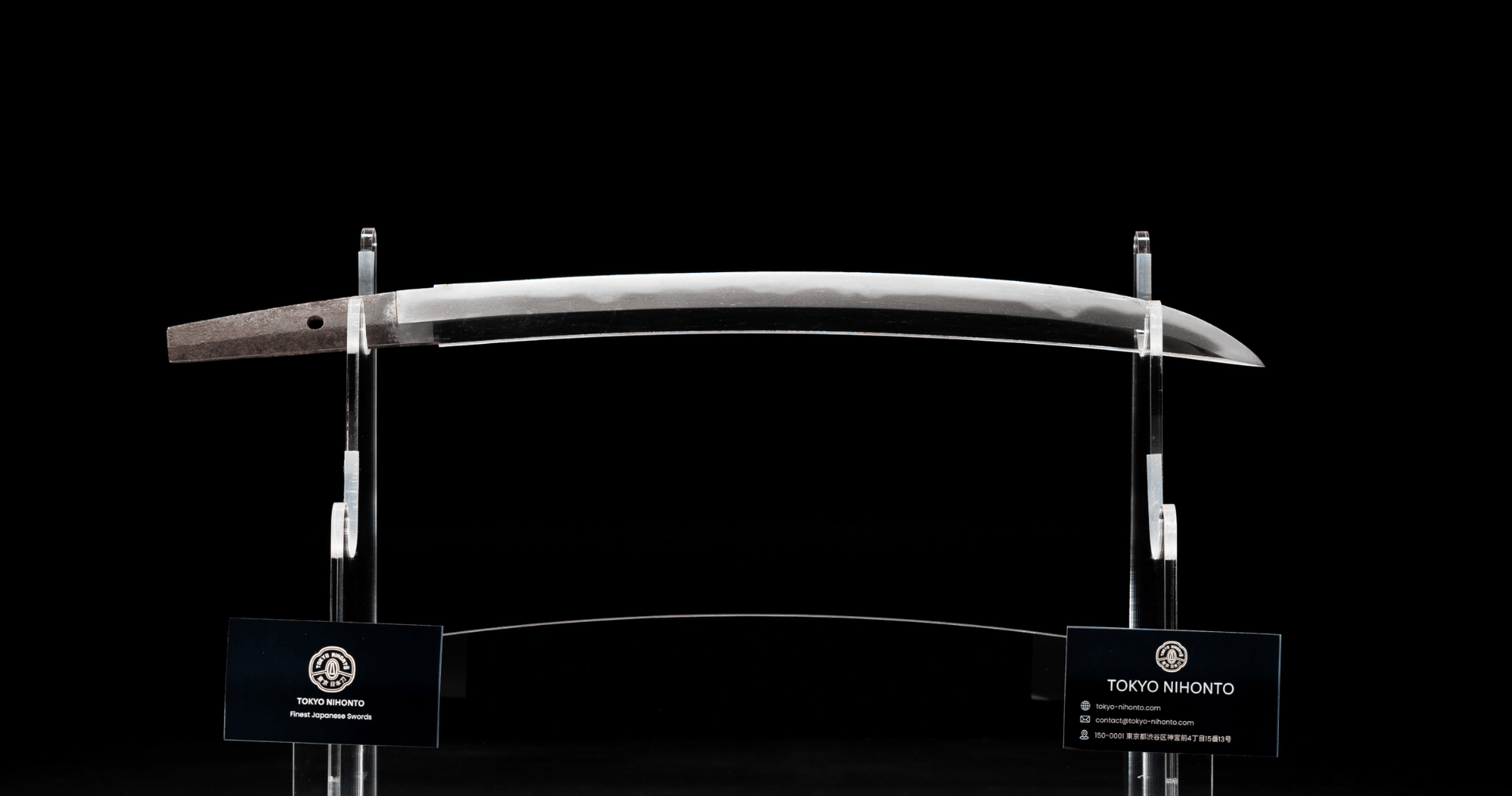
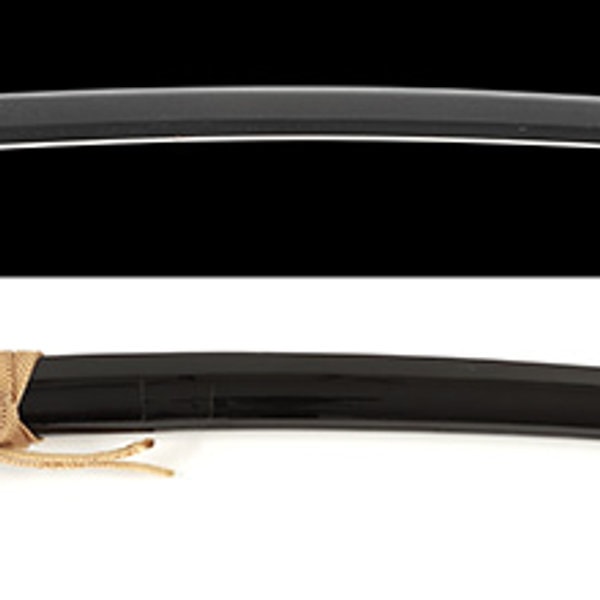
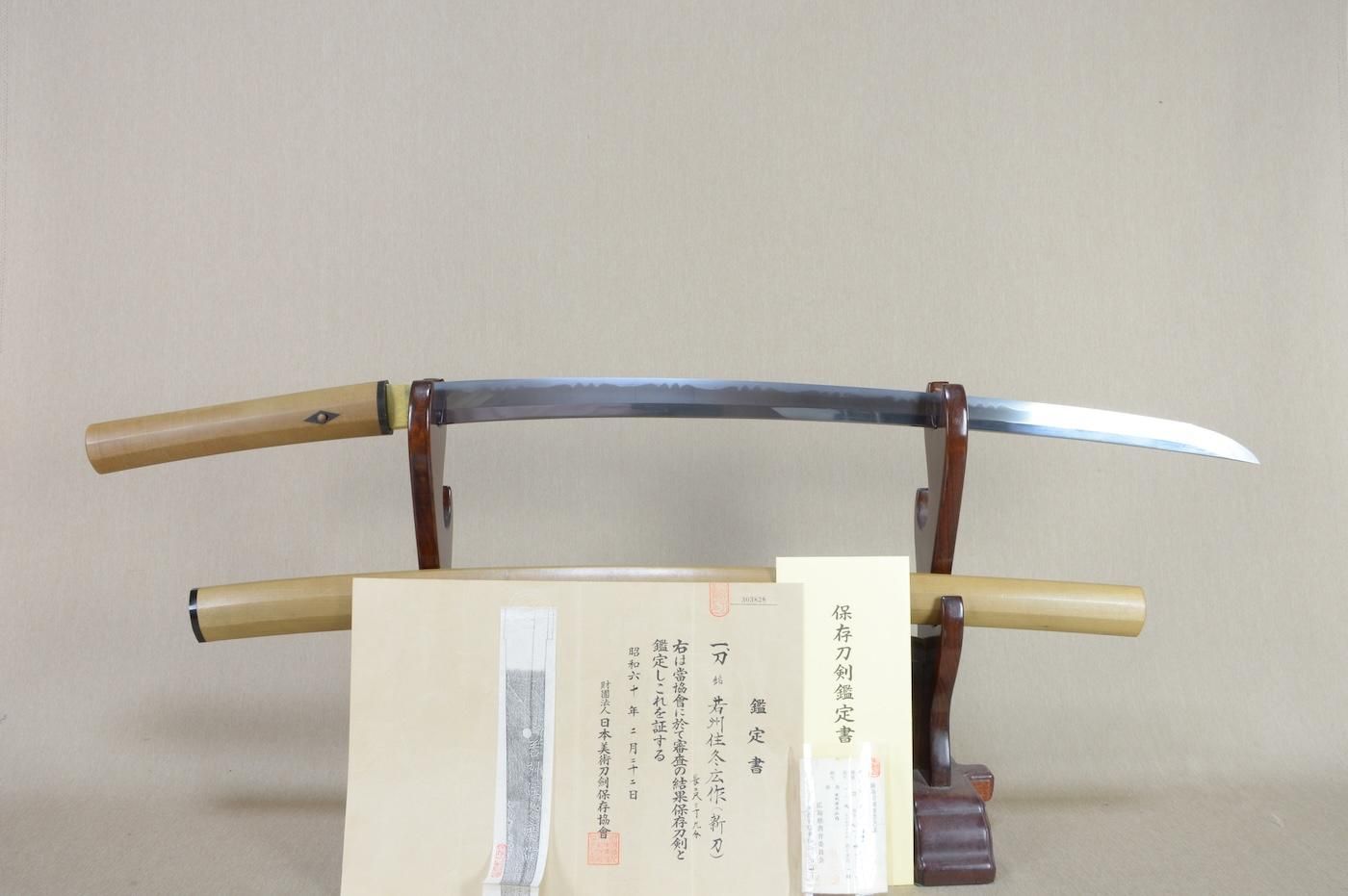
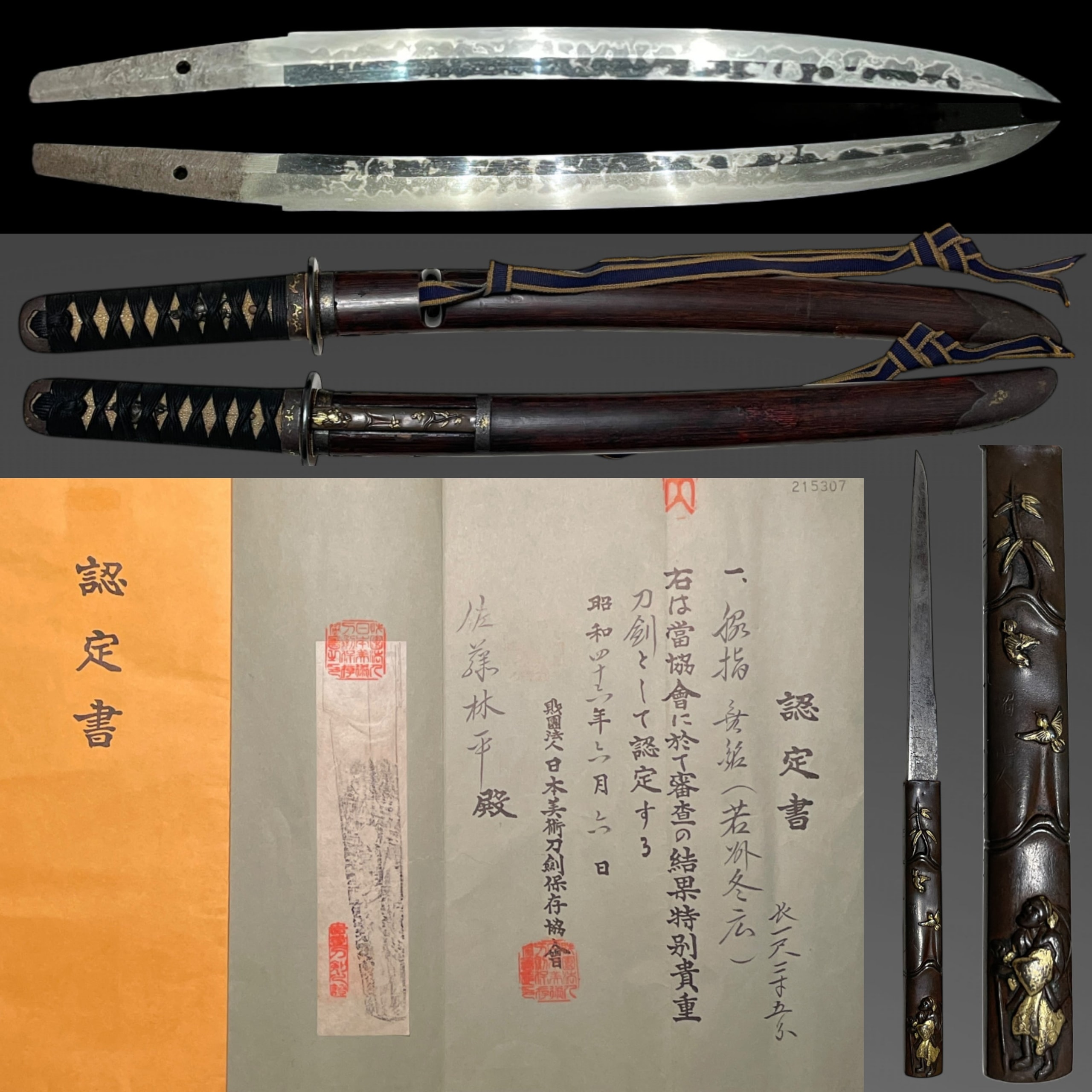
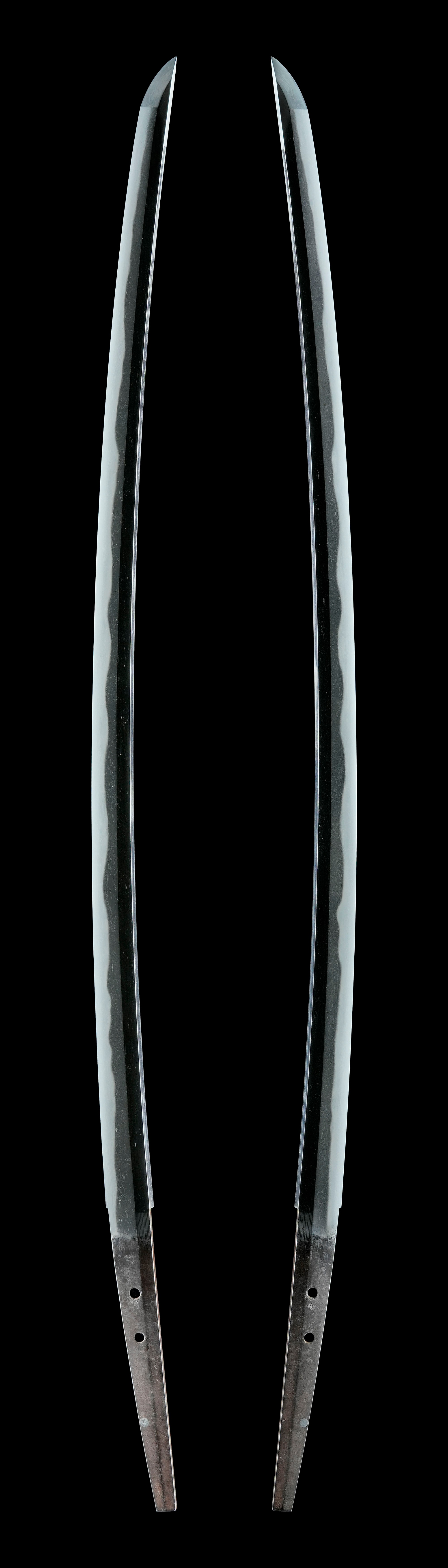
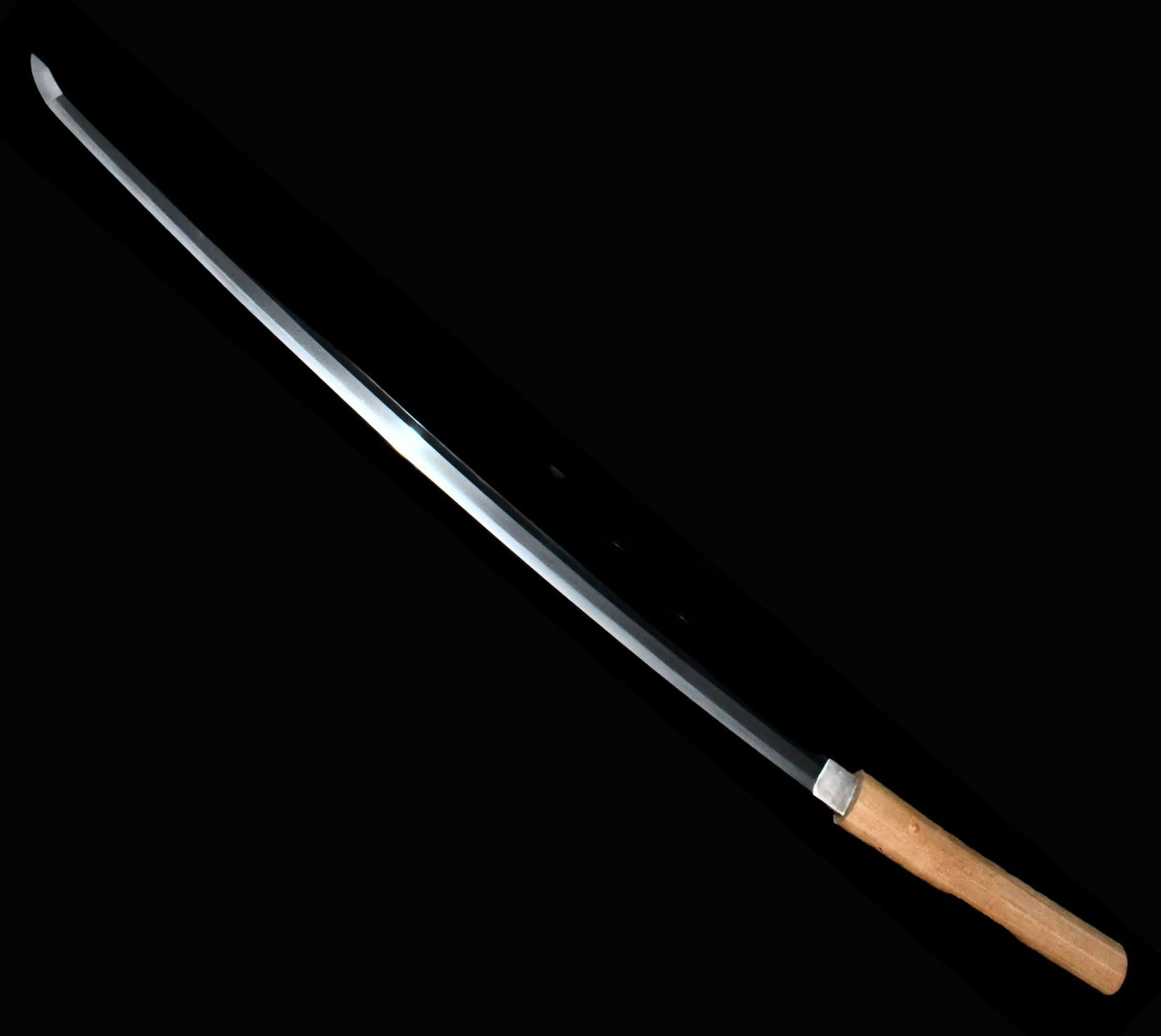
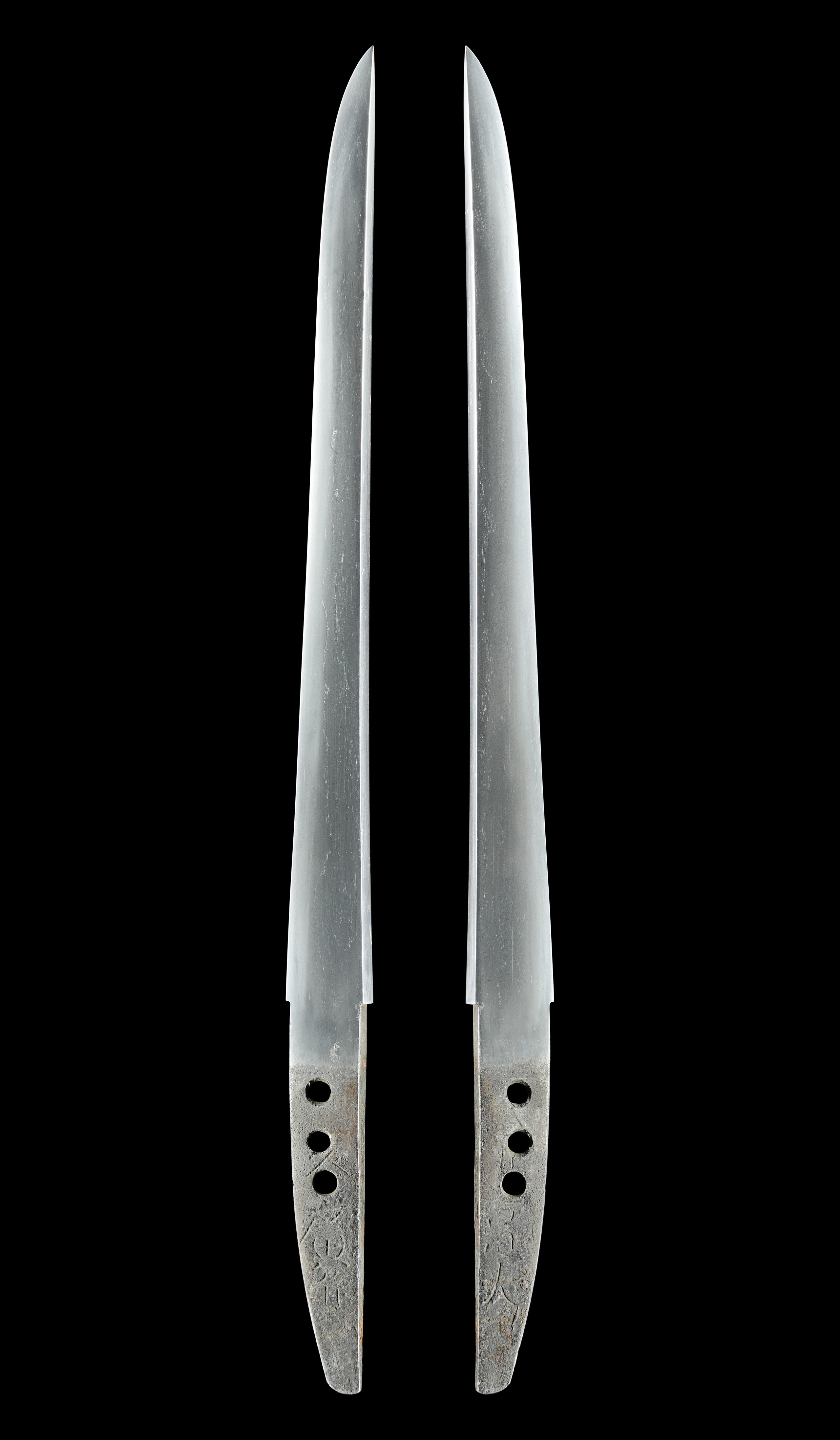
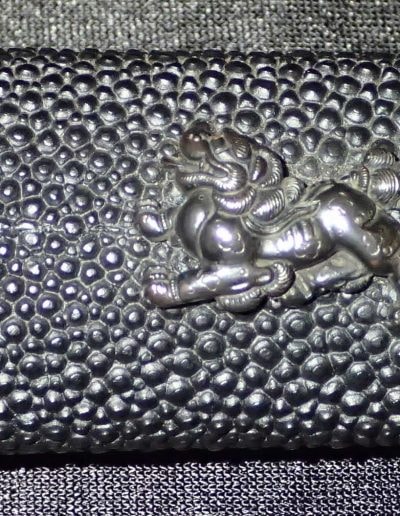
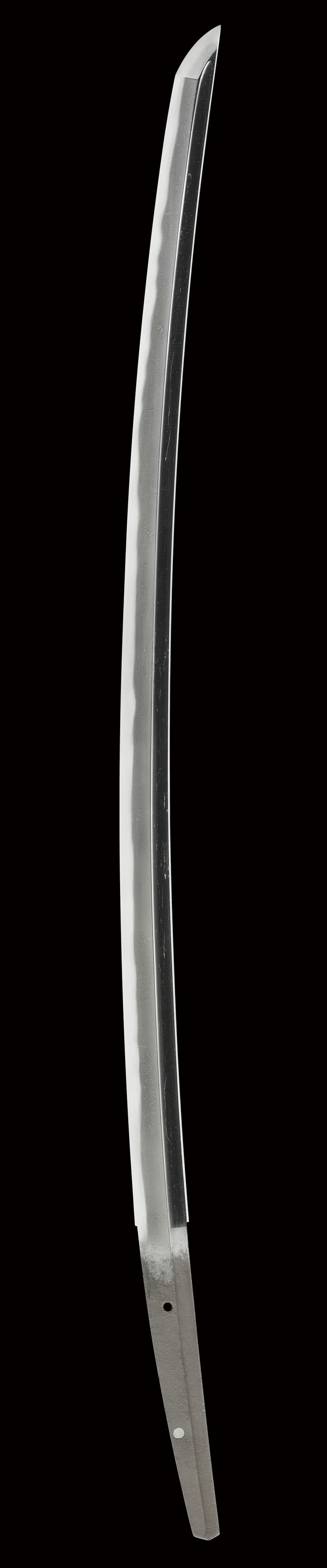
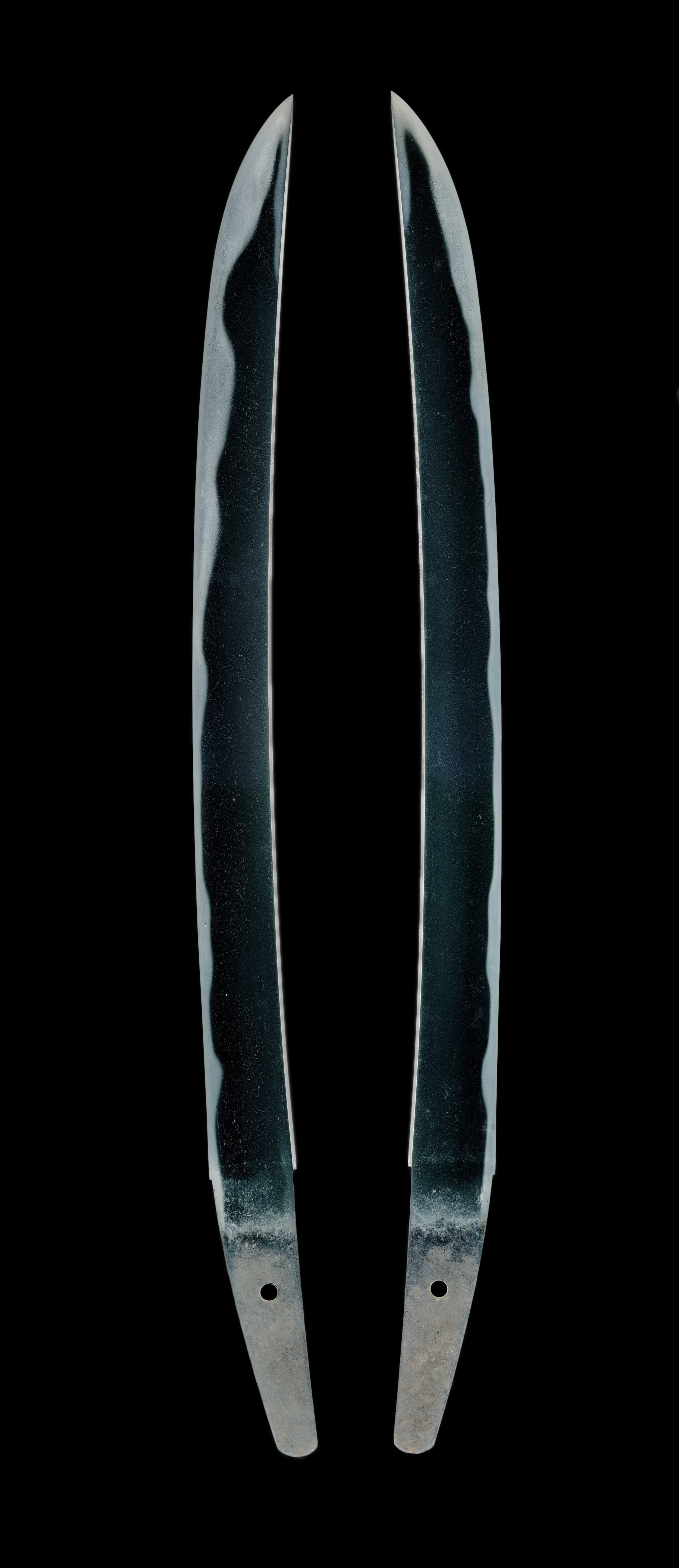
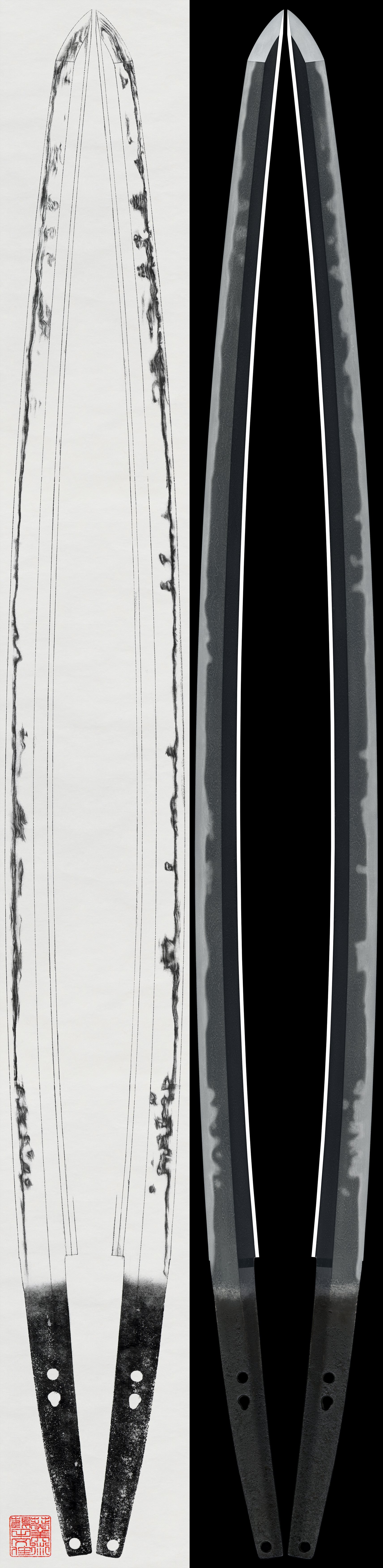
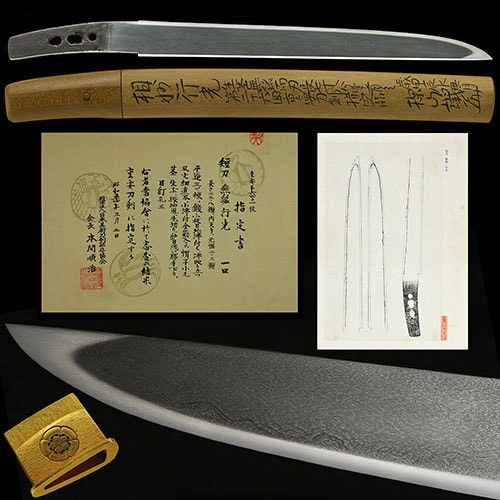
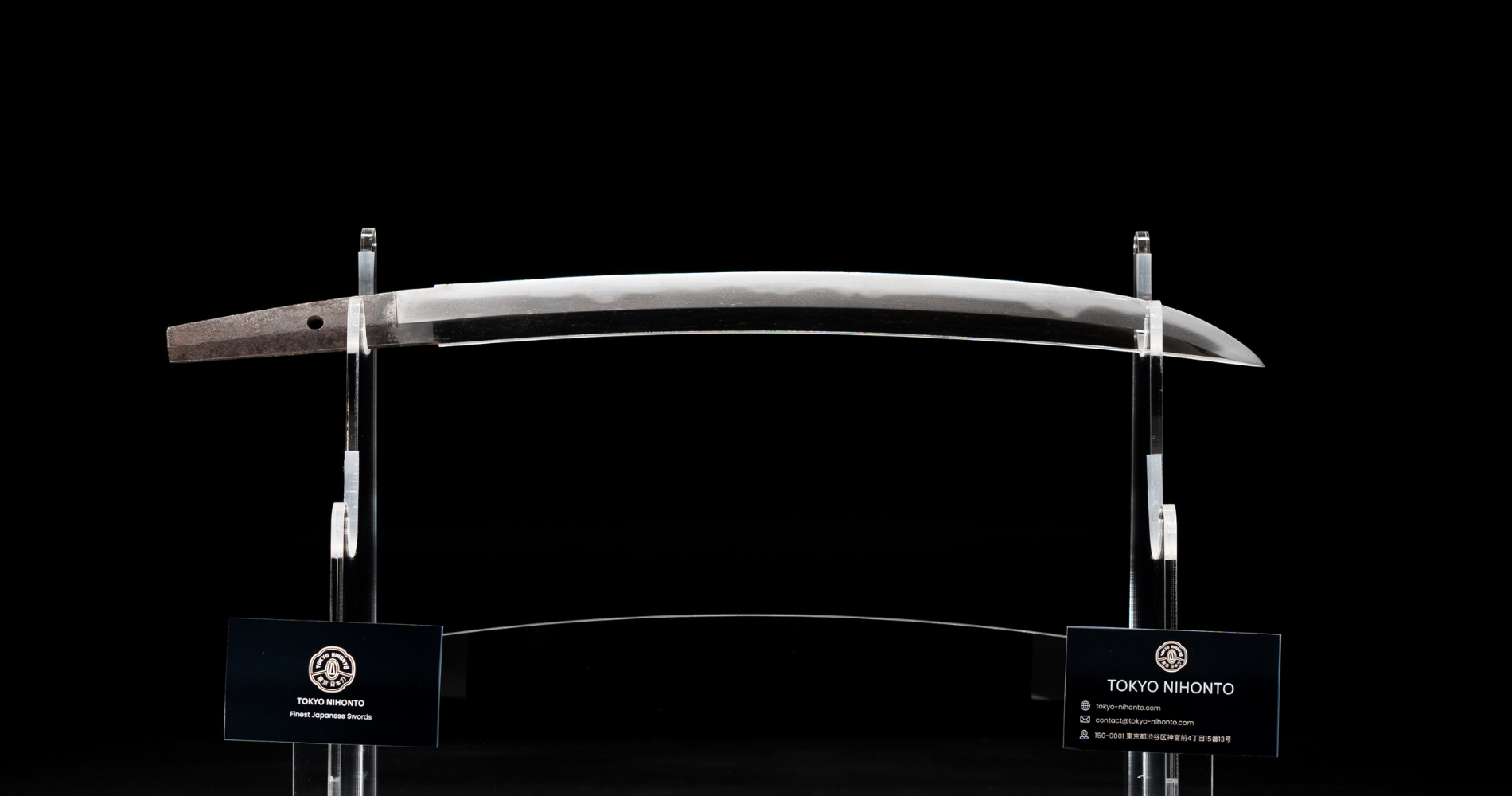
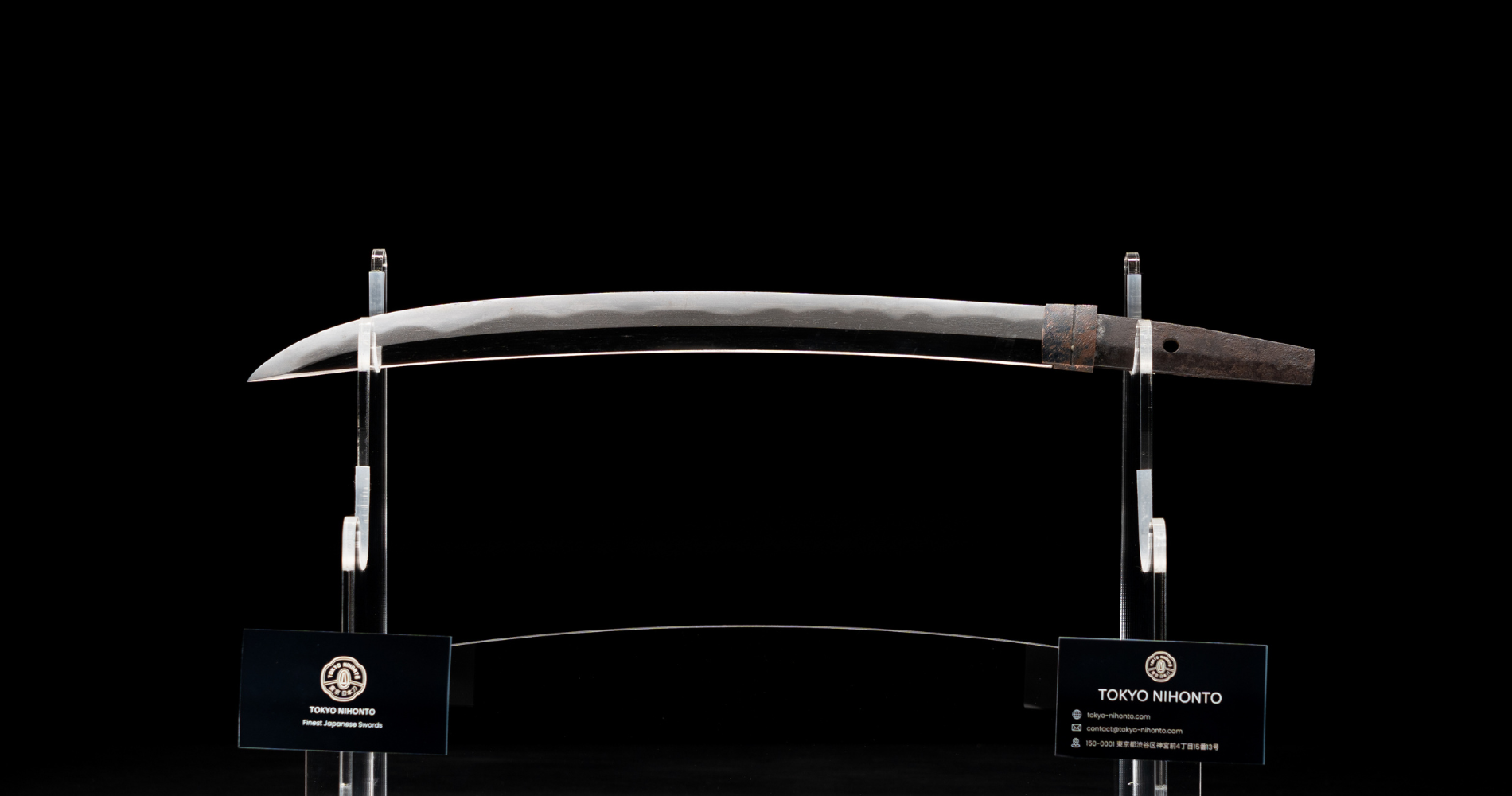
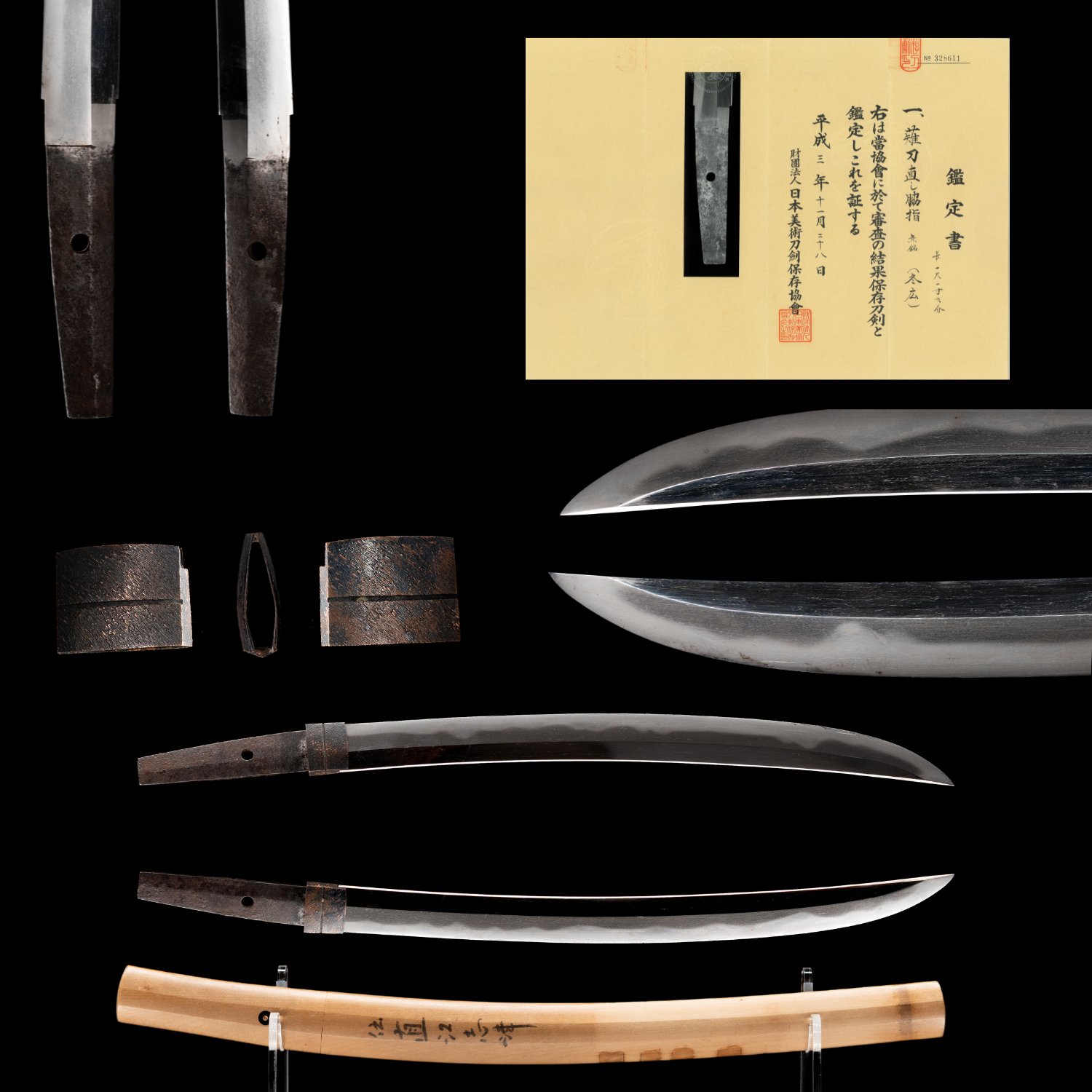
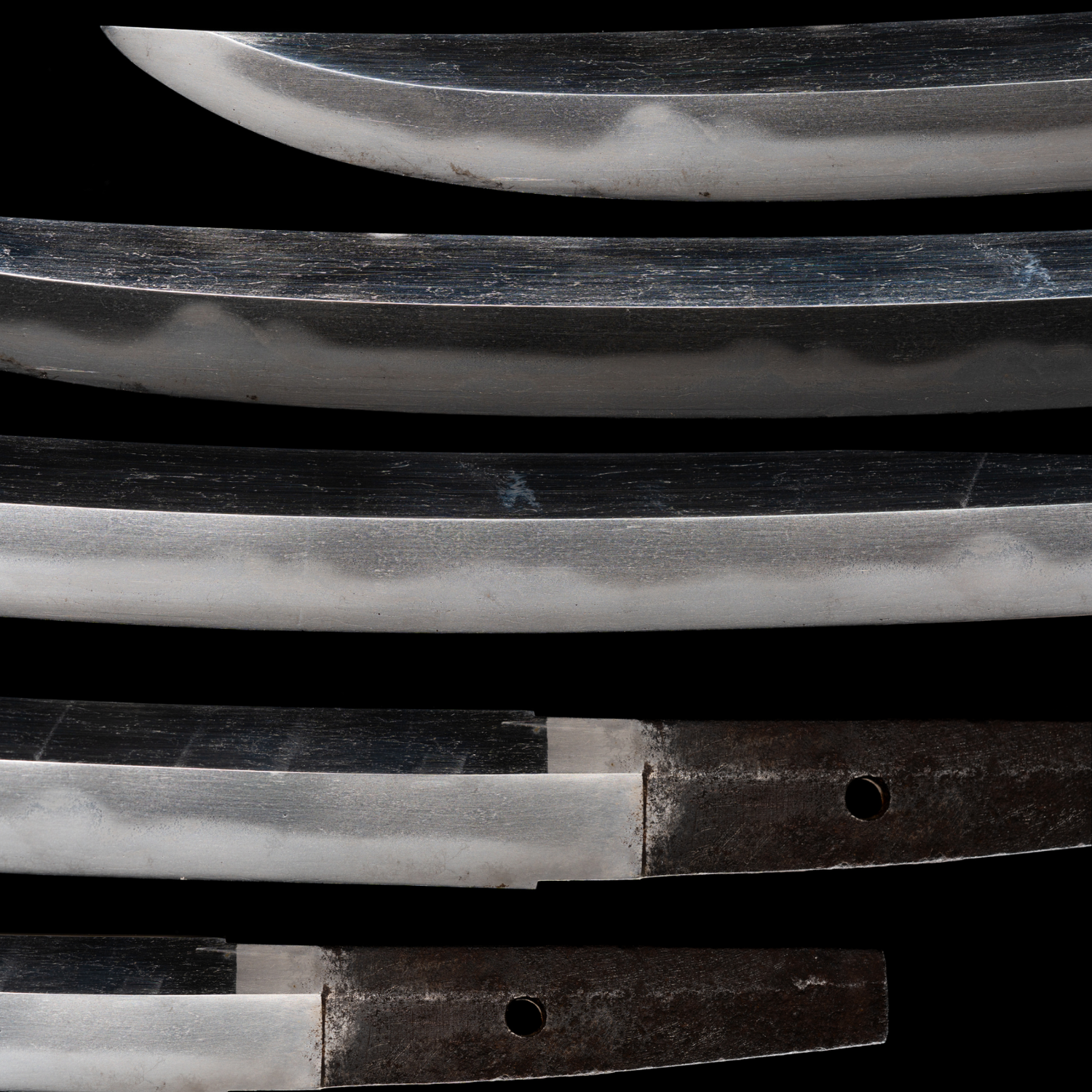
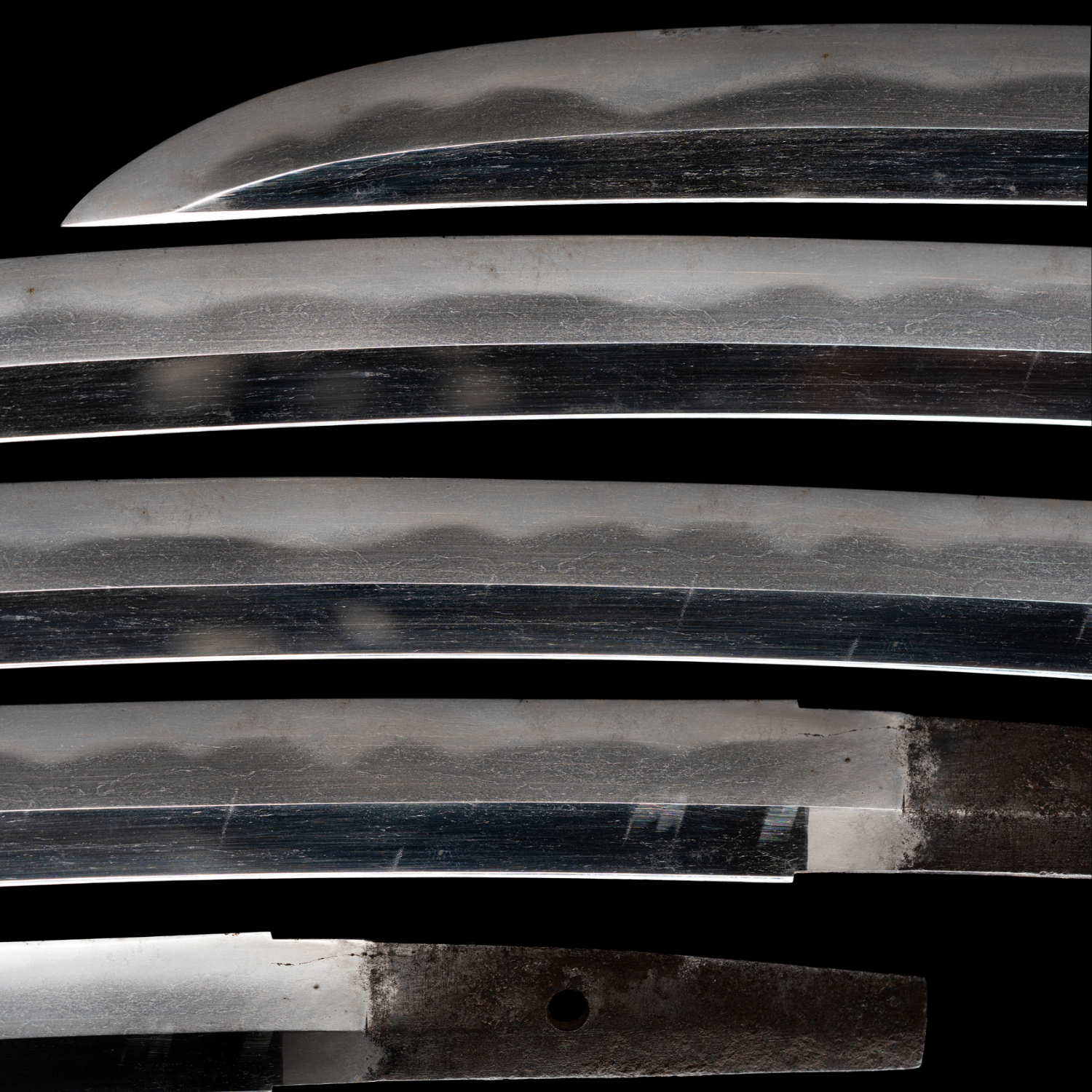
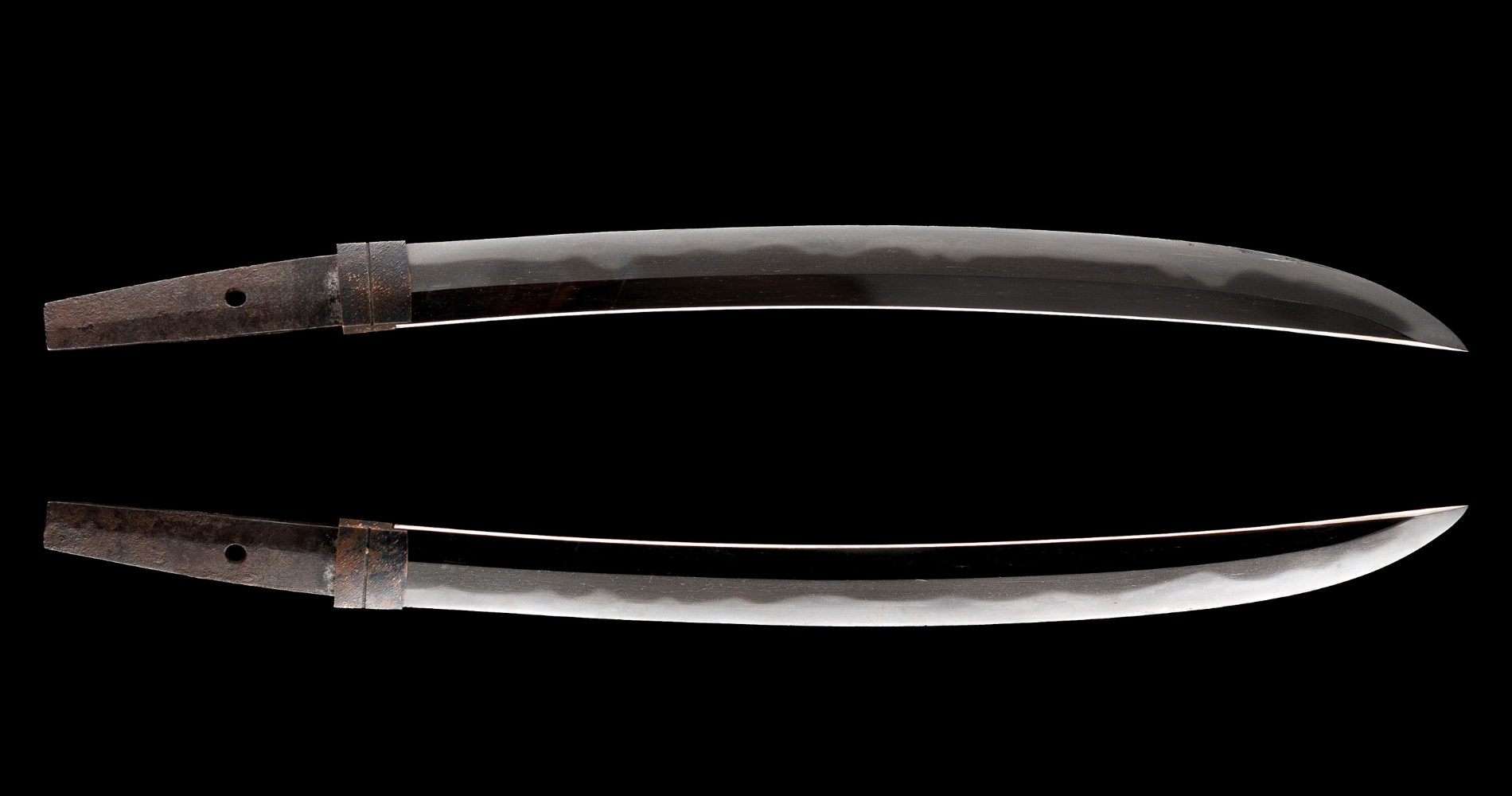
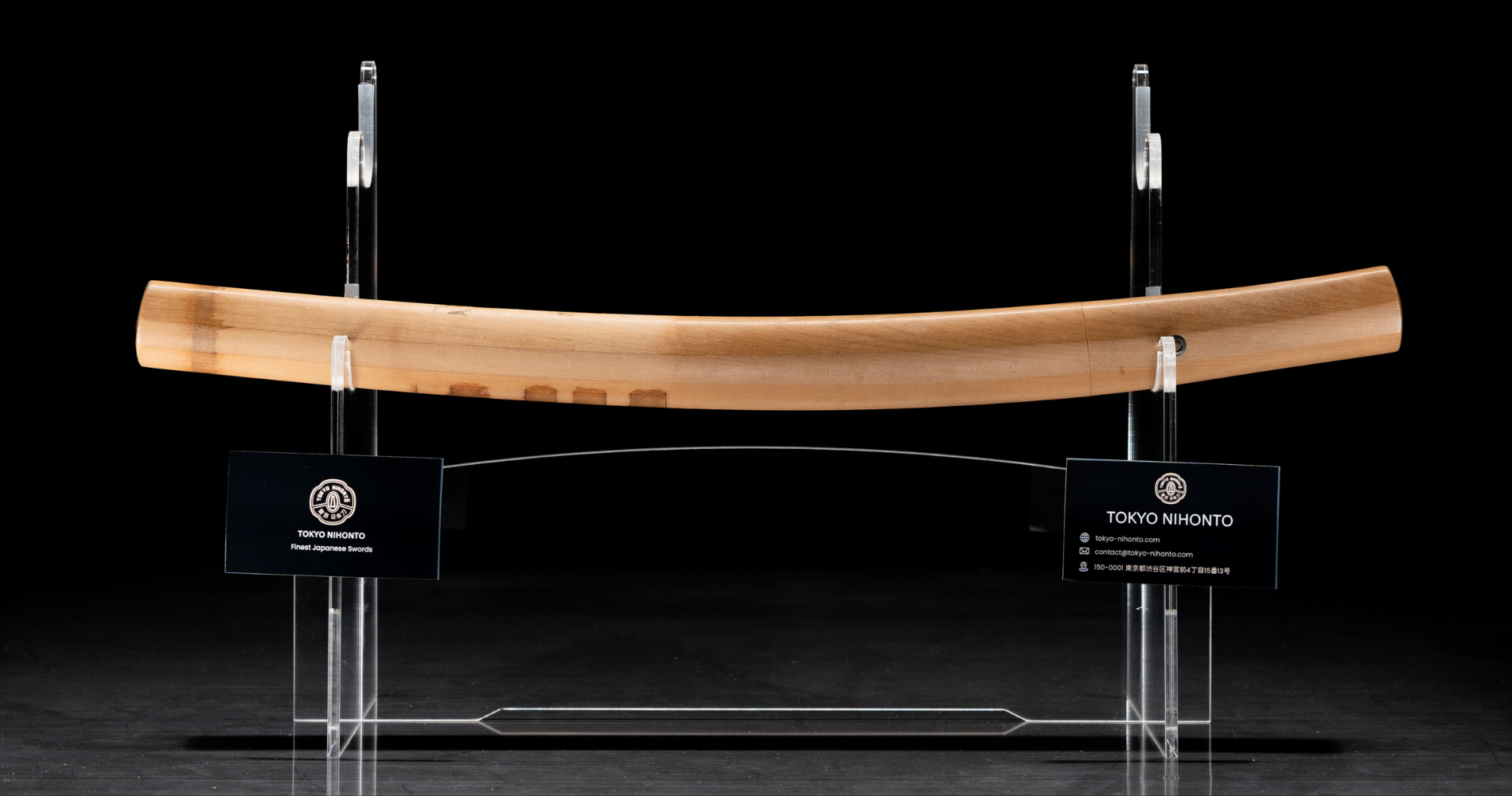
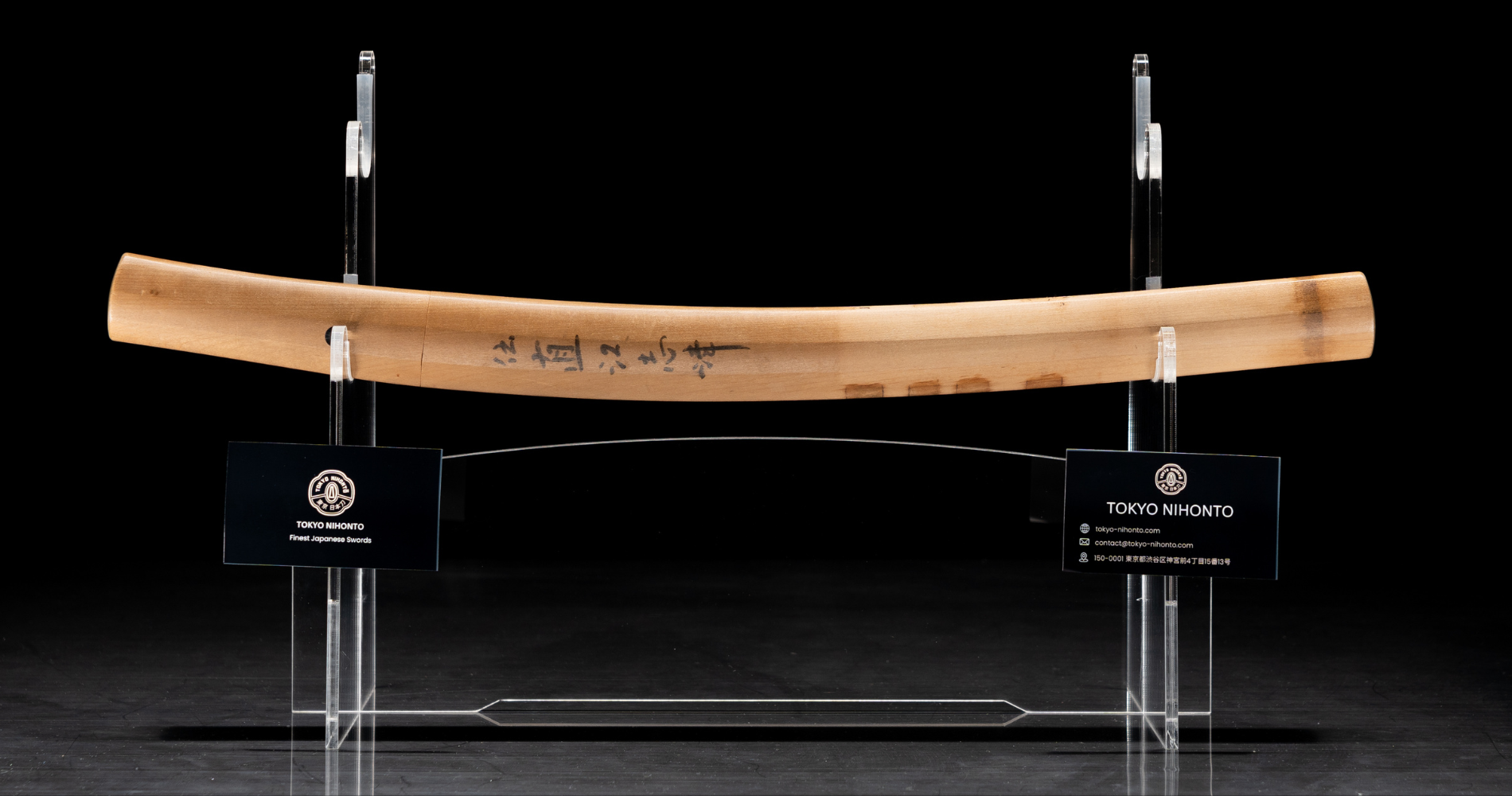
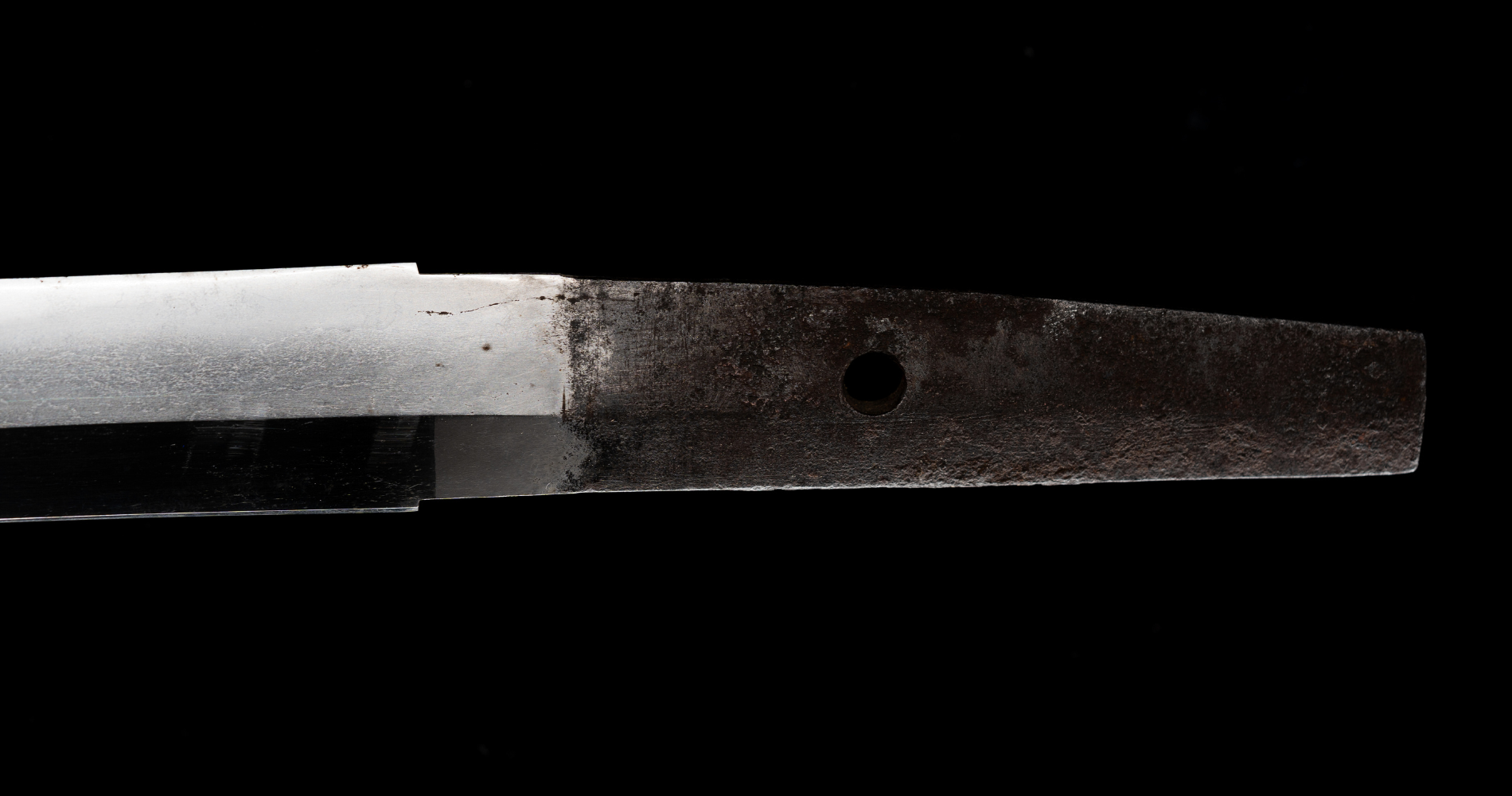
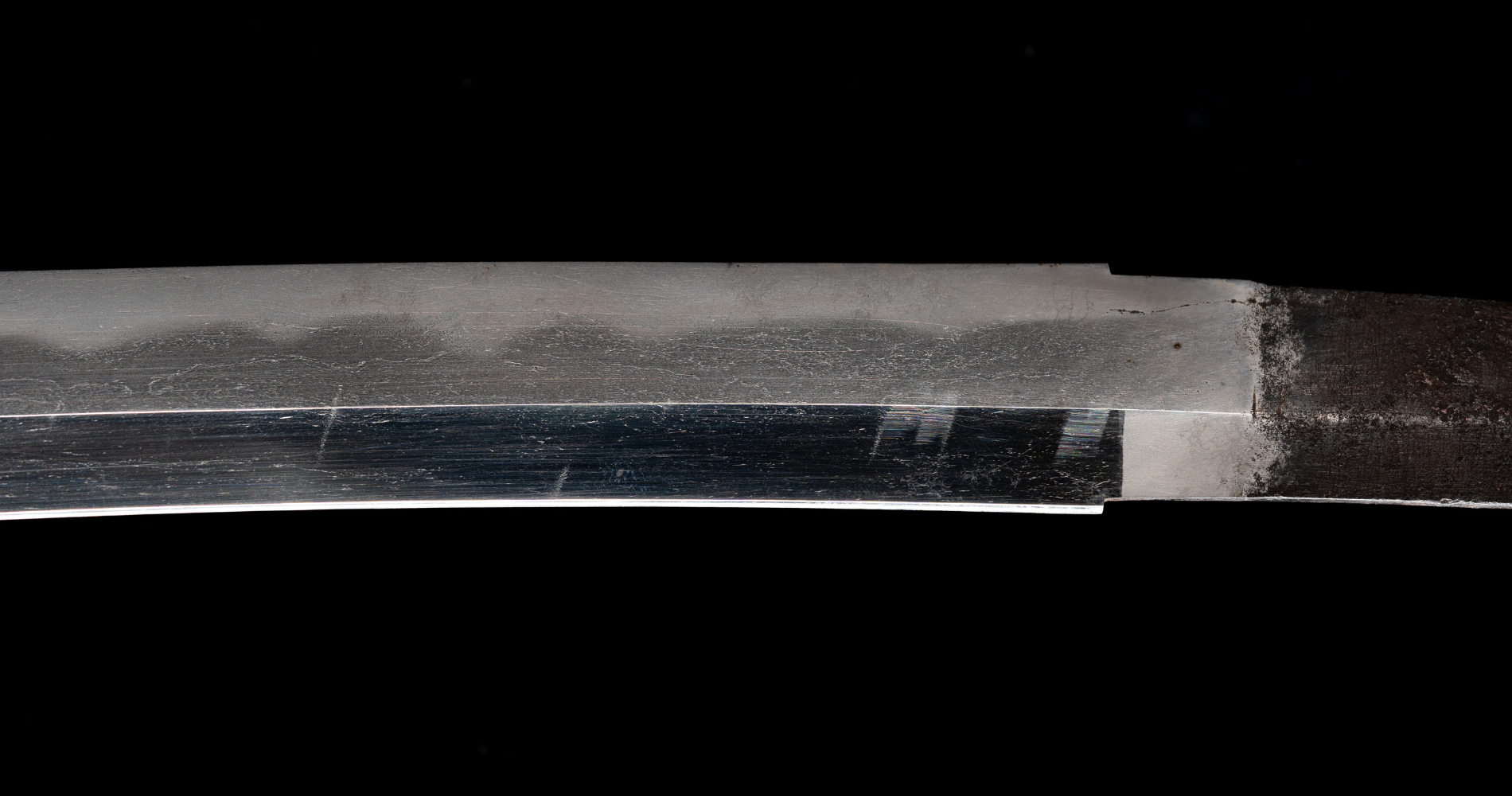
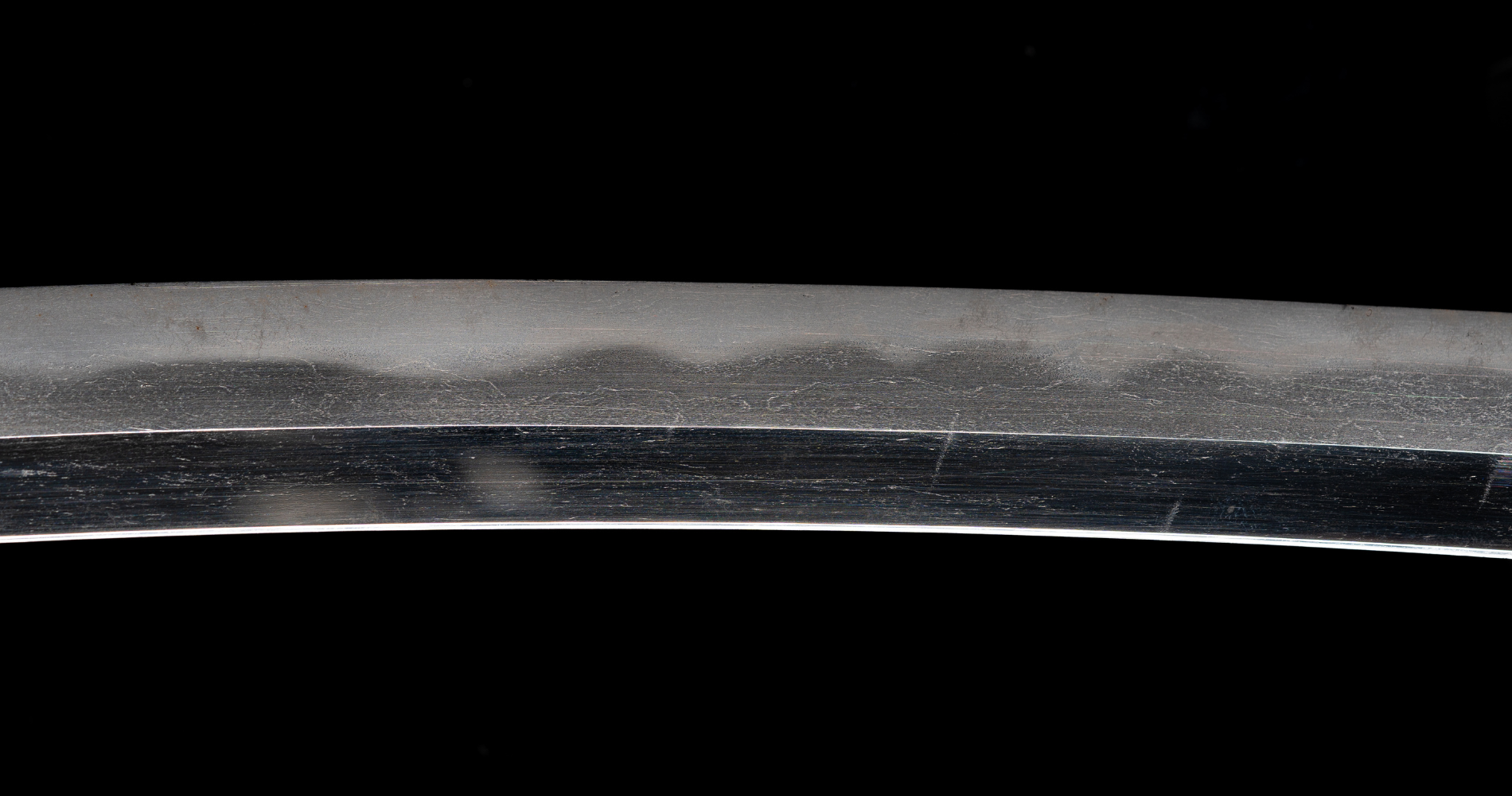
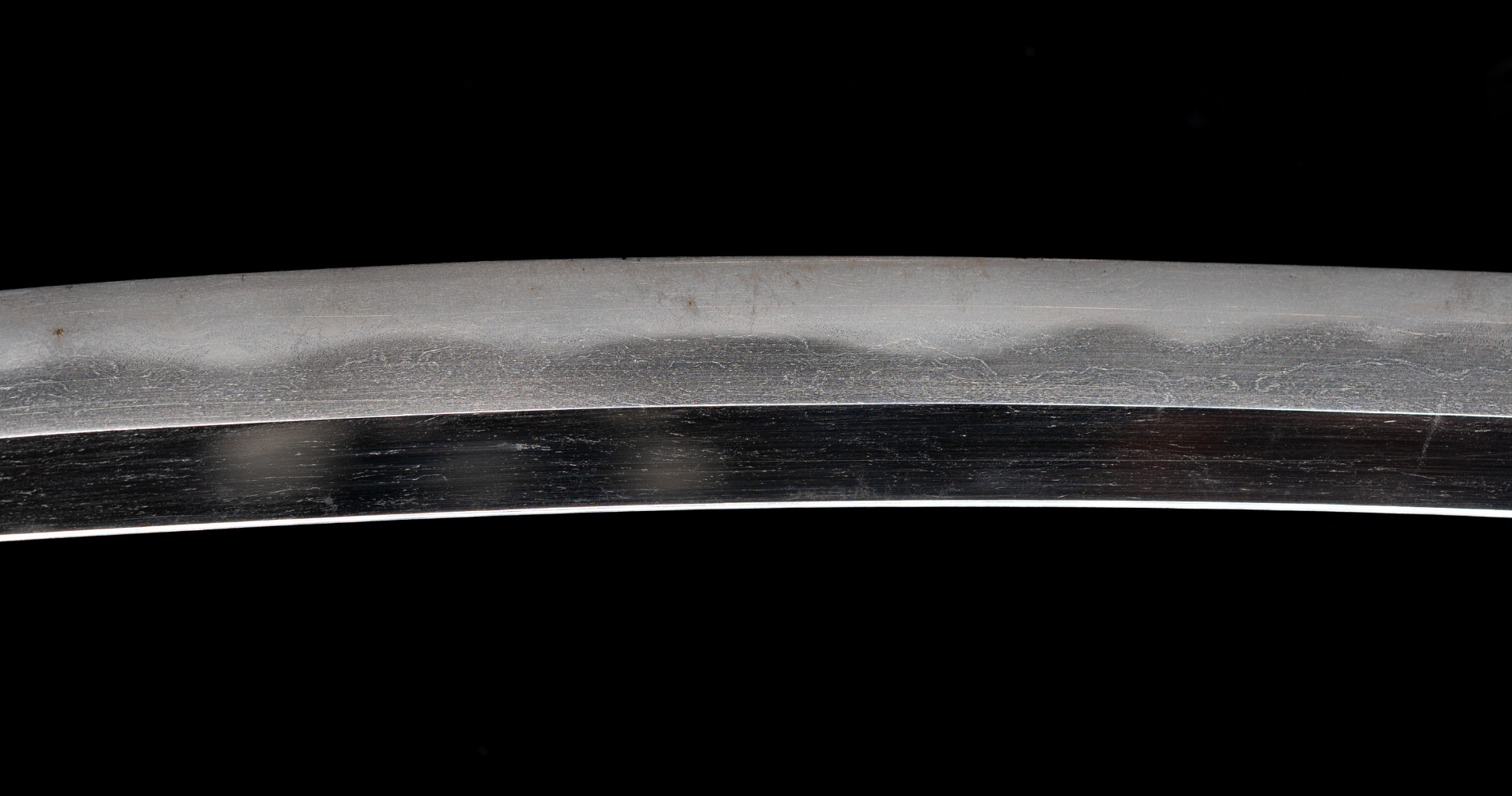
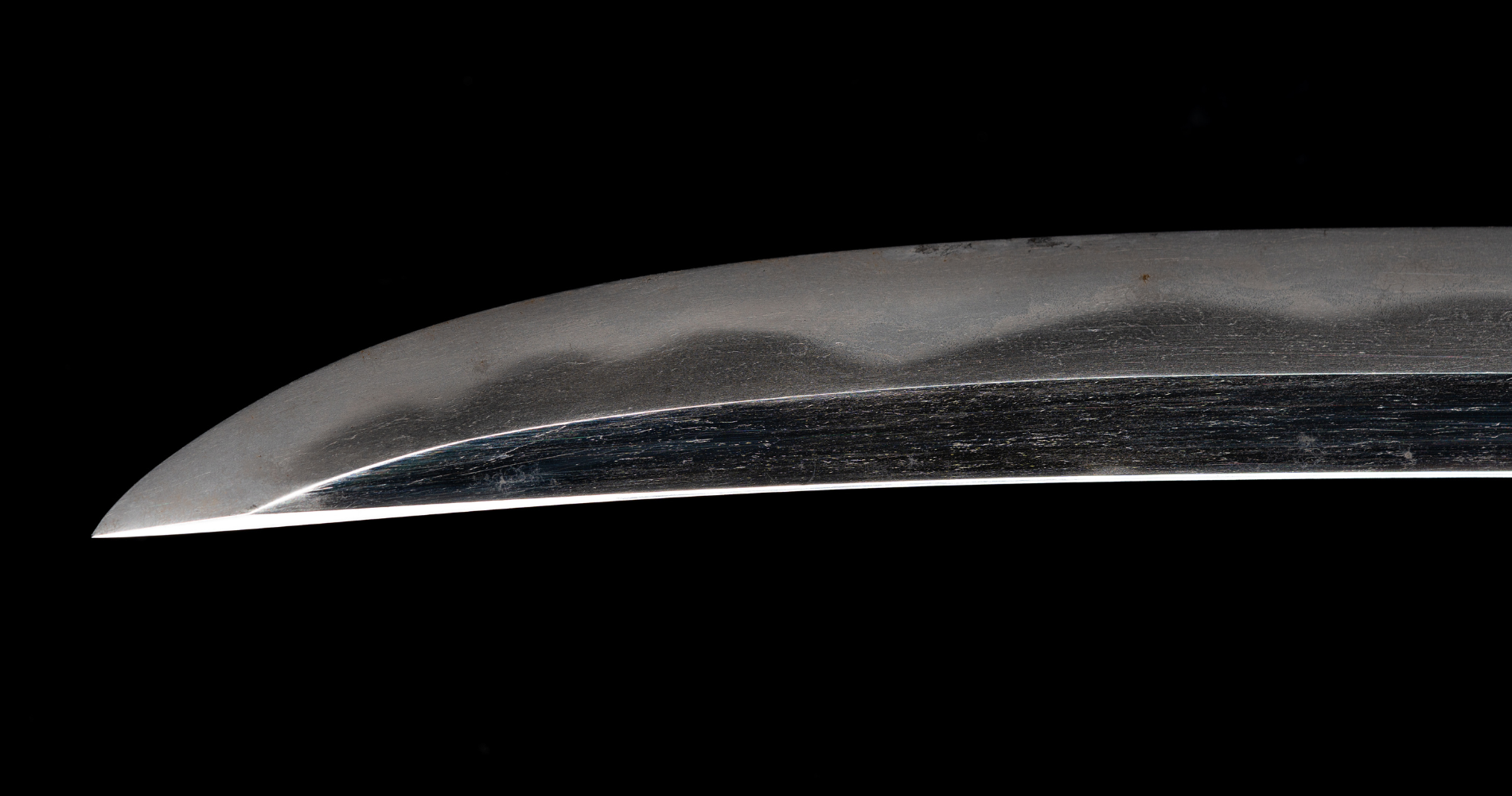
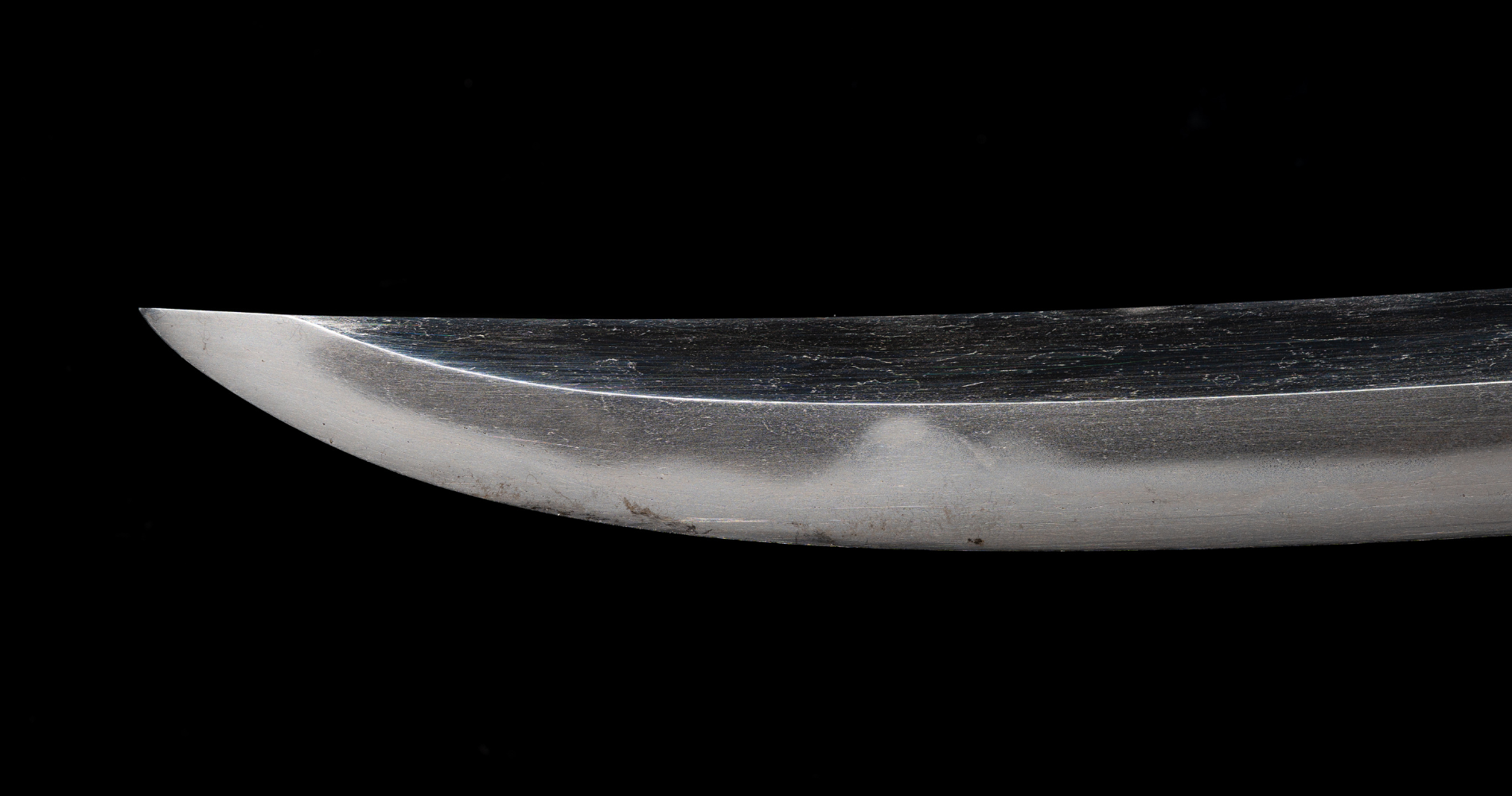
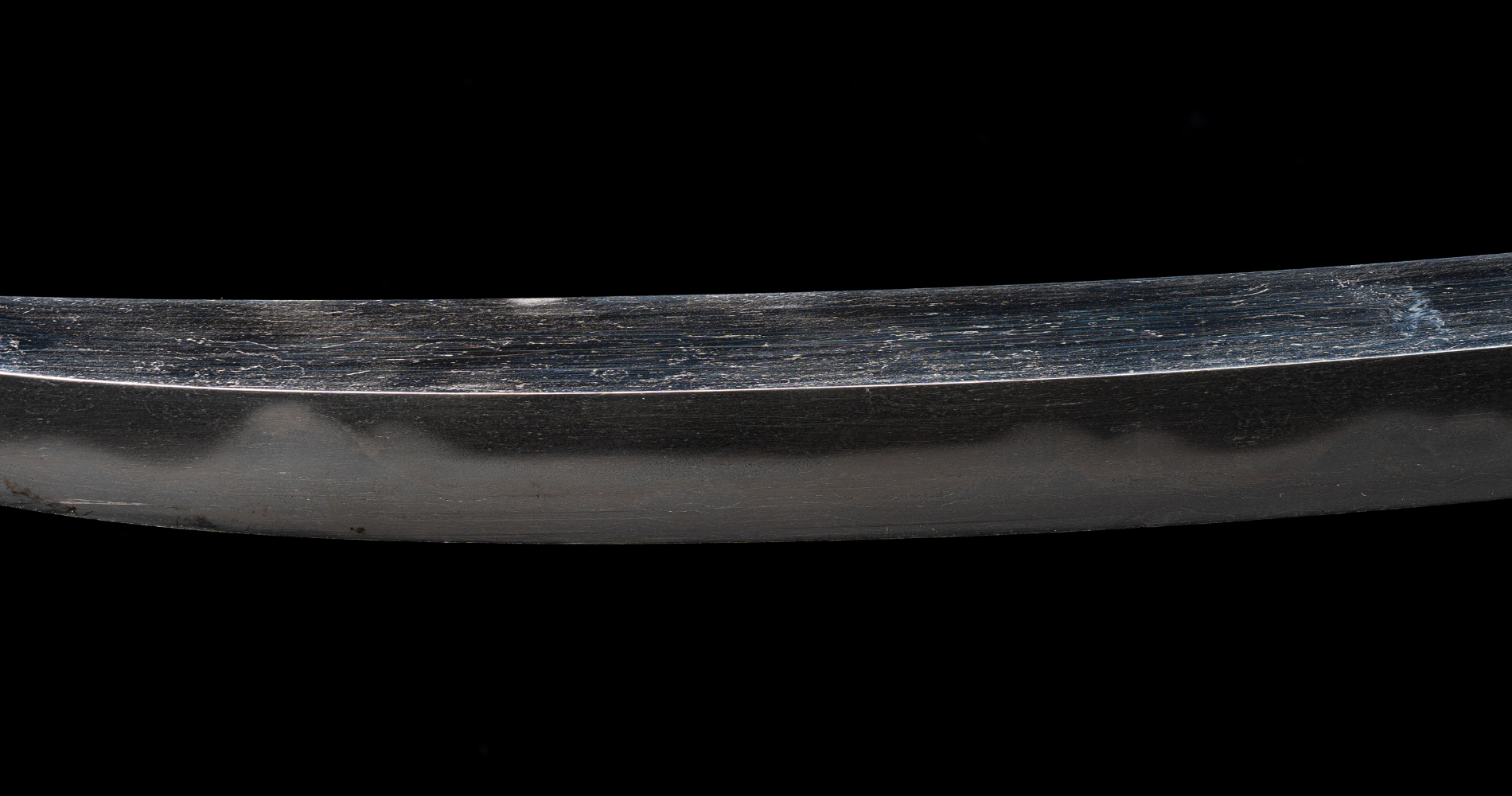
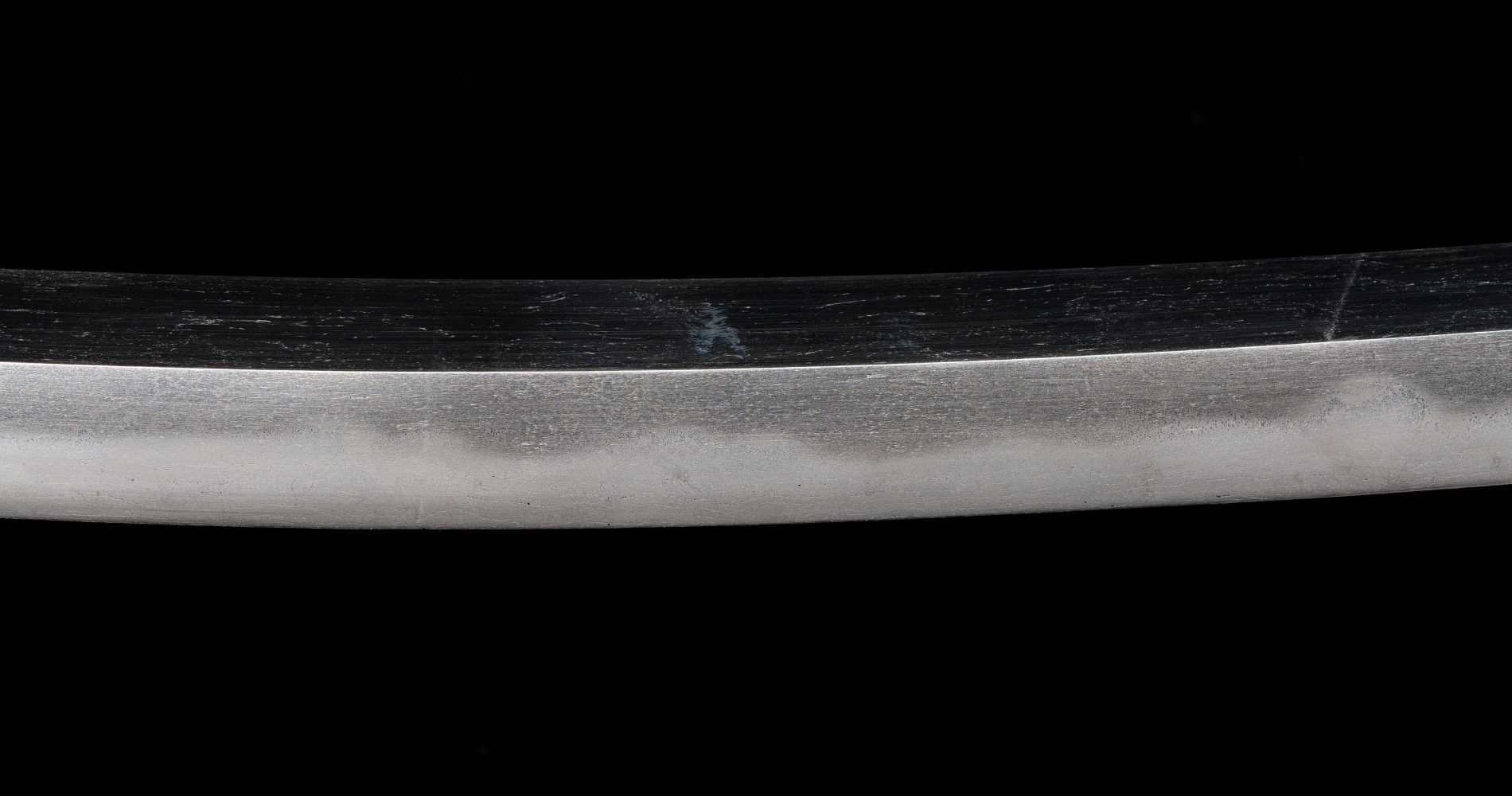
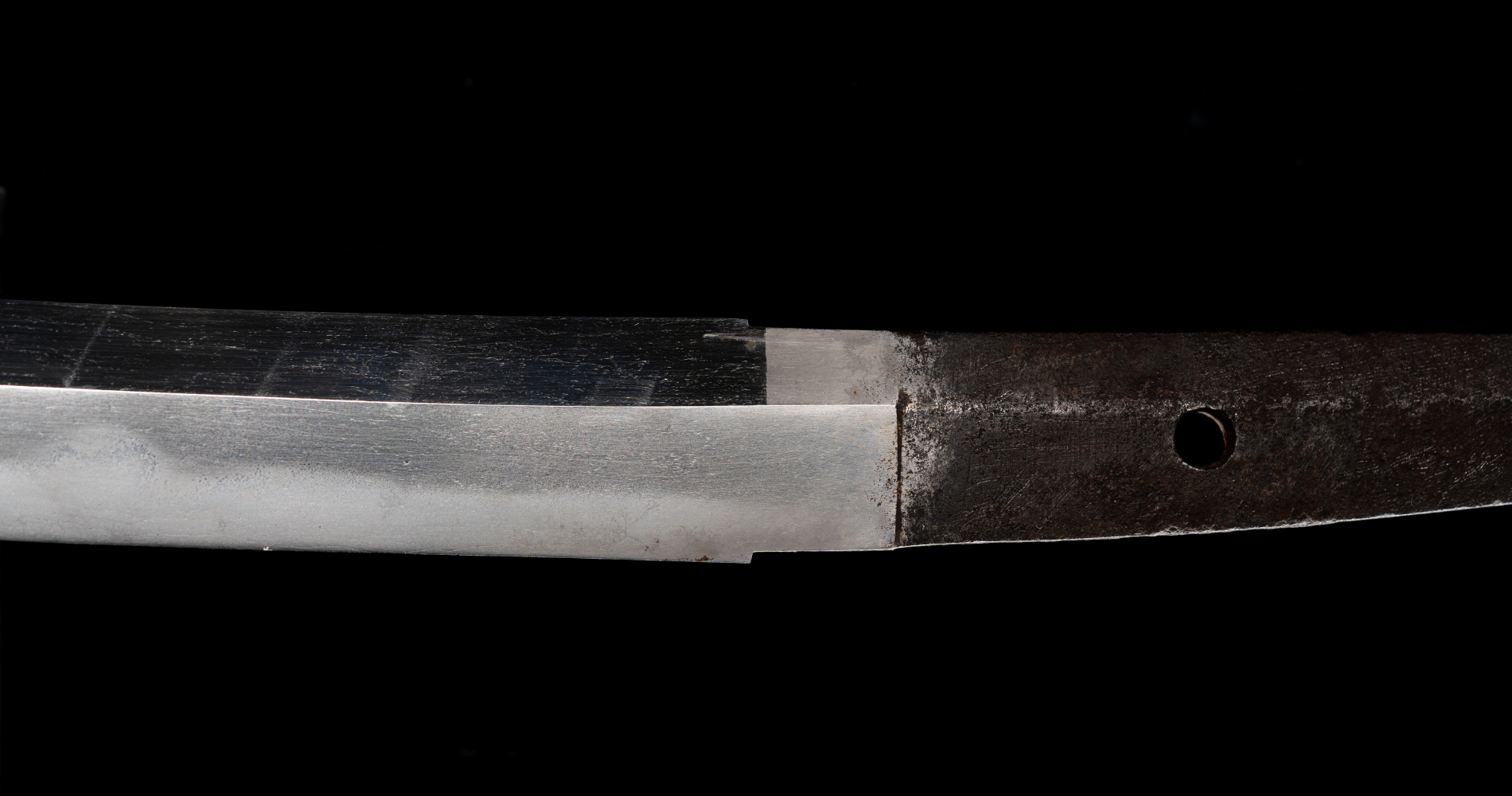
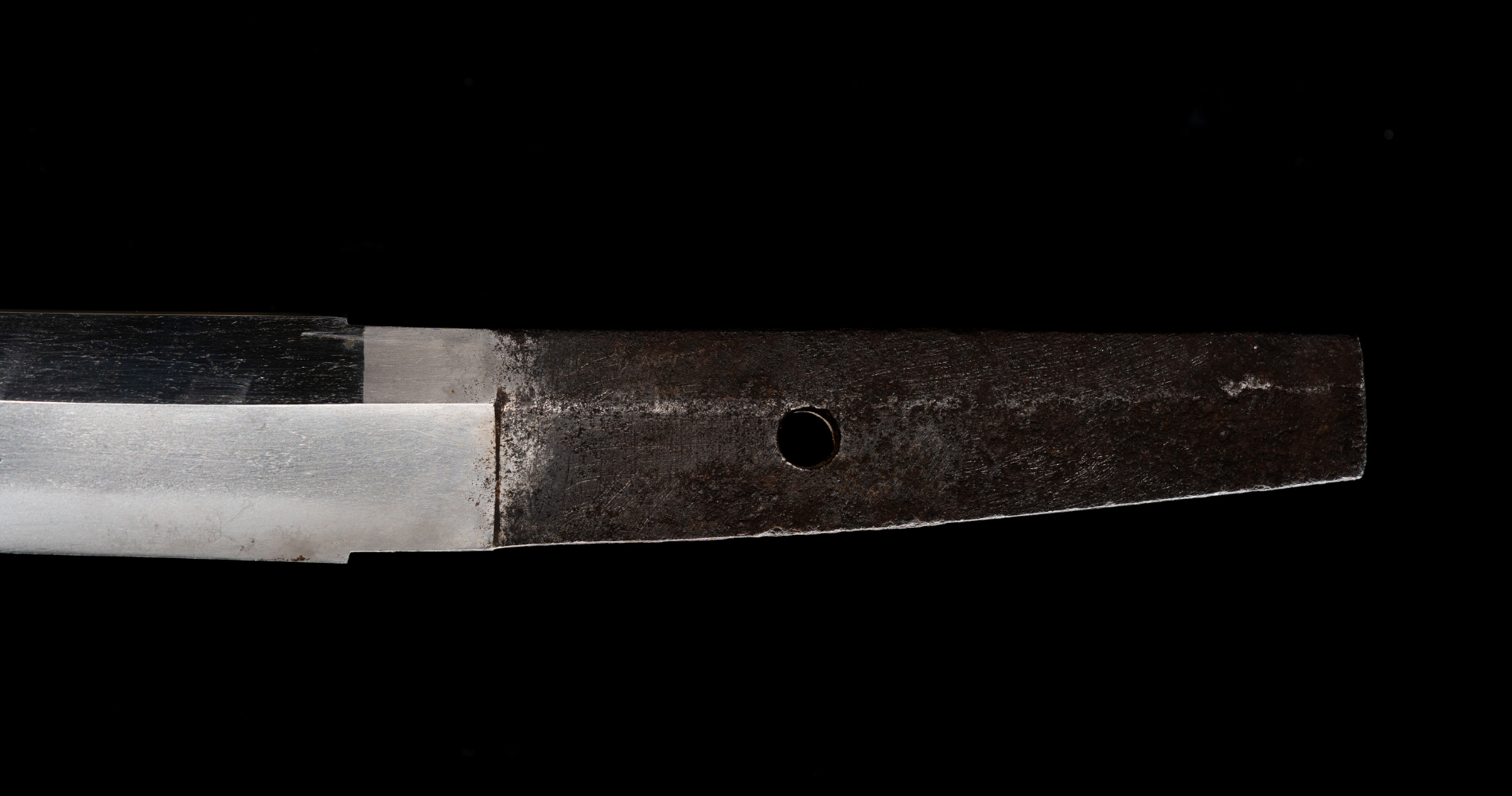
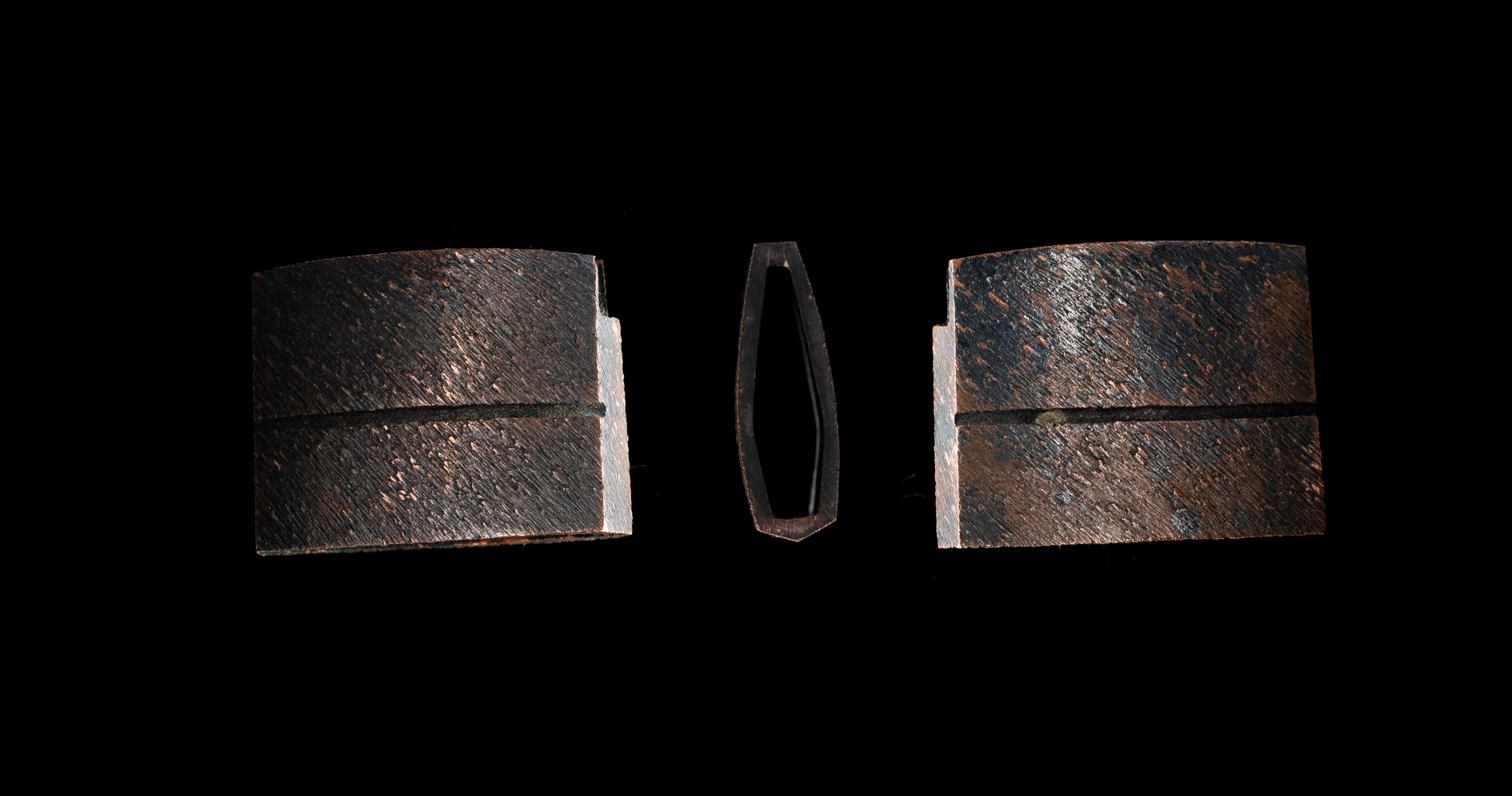
This wakizashi is attributed to the smith Fuyuhiro and was transformed from a Naginata. The blade showcases a Gunome Midare pattern with Nie and a lively Sunagashi. The steel features a fine Ko-Mokume grain with Ji-Nie, demonstrating a well-forged piece with a visible landscape on the steel. It has NBTHK Hozon Token certification.
 NihontoWatchBETA
mumei · Muromachi · nagasa 36.2cm
Soshu-den · Wakasa
5 pieces on the market now
The Fuyuhiro line worked at Obama in Wakasa Province, and the setsumei consistently trace its founder to Sagami. He is recorded as the son of the third-generation Hirotsugu of Sagami, said to have relocated to Obama around the Kōshō era (1455 to 1457), with one blade instead reporting that he studied under Tsunahiro of Sagami. Learn more →
| Smith | Era | Designated |
|---|---|---|
| Fuyuhiro冬廣 | 1521-1568 | 5 |
| Fuyuhiro冬廣 | 1487-1489 | 0 |
| Fuyuhiro冬廣 | 1501-1504 | 0 |
| Fuyuhiro冬廣 | 1460-1466 | 0 |
| Fuyuhiro冬廣 | 1624-1644 | 0 |
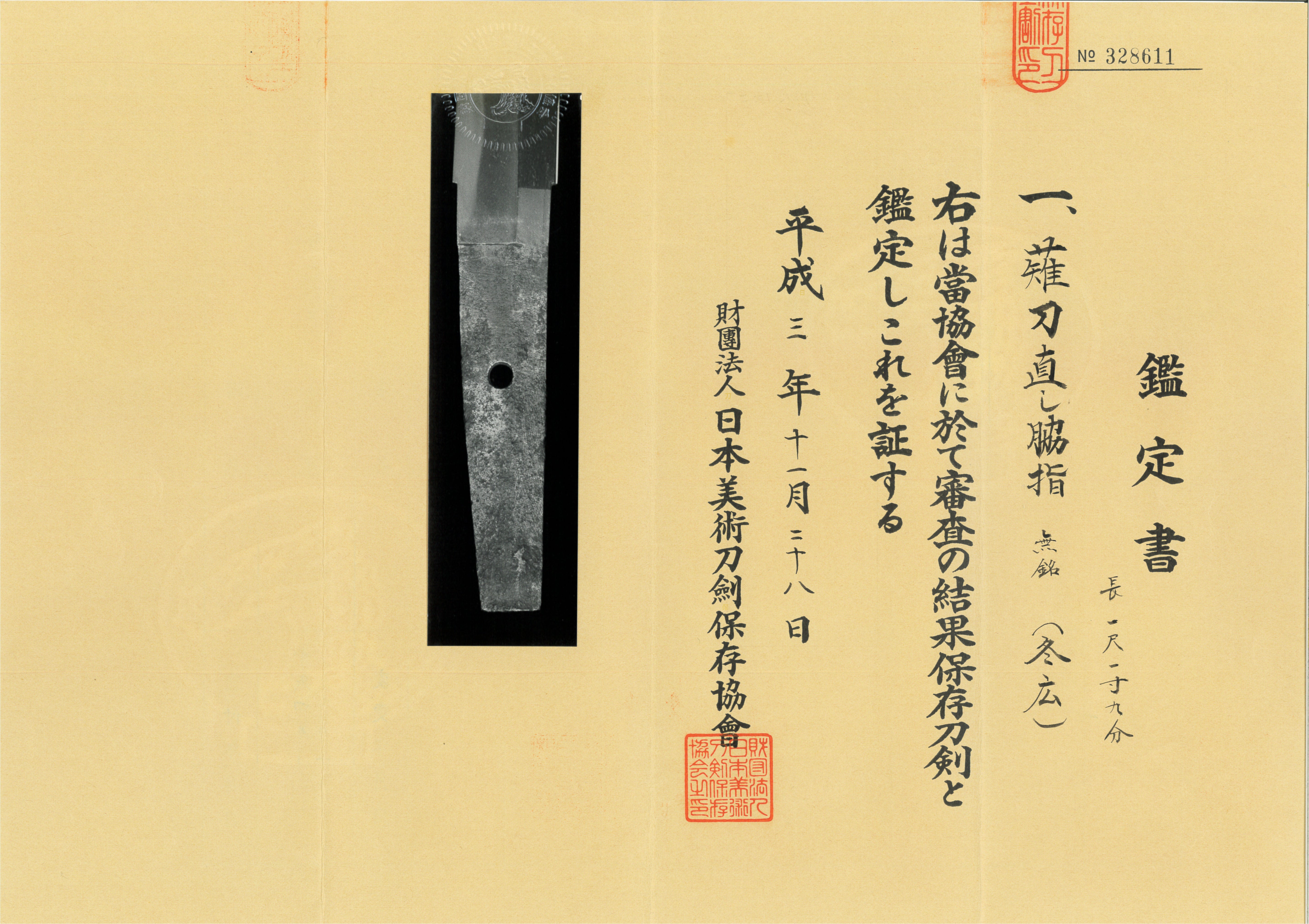
Certifies a genuine blade worth preserving: a signature confirmed correct, or, if unsigned, an era, province, and school that the NBTHK can reliably identify.
The NBTHK (Nihon Bijutsu Tōken Hozon Kyōkai, the Society for the Preservation of Japanese Art Swords) is a public-interest incorporated foundation founded in 1948 and supervised by Japan’s Agency for Cultural Affairs (Bunkachō); it is based at the Japanese Sword Museum in Tokyo. Its expert panels physically examine each submitted work (shinsa) and issue a certificate (kanteishō) ranking it by artistic and historical merit. NBTHK papers are the most widely recognized standard of authentication for Japanese swords and fittings.
NBTHK official site30-day money-back guarantee from receipt; items must be unused, complete, in original packaging. Sale items Final Sale. Antique swords non-returnable (Japanese export law). Damage reported within 72 hours. Customer pays return shipping unless seller error/defect. Refunds within 14 days of inspection.
This wakizashi is attributed to the smith Fuyuhiro and was transformed from a Naginata. The blade showcases a Gunome Midare pattern with Nie and a lively Sunagashi. The steel features a fine Ko-Mokume grain with Ji-Nie, demonstrating a well-forged piece with a visible landscape on the steel. It has NBTHK Hozon Token certification.
NihontoWatchBETAmumei · Muromachi · nagasa 36.2cm
Soshu-den · Wakasa
5 pieces on the market now
The Fuyuhiro line worked at Obama in Wakasa Province, and the setsumei consistently trace its founder to Sagami. He is recorded as the son of the third-generation Hirotsugu of Sagami, said to have relocated to Obama around the Kōshō era (1455 to 1457), with one blade instead reporting that he studied under Tsunahiro of Sagami. Learn more →
| Smith | Era | Designated |
|---|---|---|
| Fuyuhiro冬廣 | 1521-1568 | 5 |
| Fuyuhiro冬廣 | 1487-1489 | 0 |
| Fuyuhiro冬廣 | 1501-1504 | 0 |
| Fuyuhiro冬廣 | 1460-1466 | 0 |
| Fuyuhiro冬廣 | 1624-1644 | 0 |
Certifies a genuine blade worth preserving: a signature confirmed correct, or, if unsigned, an era, province, and school that the NBTHK can reliably identify.
The NBTHK (Nihon Bijutsu Tōken Hozon Kyōkai, the Society for the Preservation of Japanese Art Swords) is a public-interest incorporated foundation founded in 1948 and supervised by Japan’s Agency for Cultural Affairs (Bunkachō); it is based at the Japanese Sword Museum in Tokyo. Its expert panels physically examine each submitted work (shinsa) and issue a certificate (kanteishō) ranking it by artistic and historical merit. NBTHK papers are the most widely recognized standard of authentication for Japanese swords and fittings.
NBTHK official site30-day money-back guarantee from receipt; items must be unused, complete, in original packaging. Sale items Final Sale. Antique swords non-returnable (Japanese export law). Damage reported within 72 hours. Customer pays return shipping unless seller error/defect. Refunds within 14 days of inspection.