In the Sengoku era the school served a second warrior court: the Later Hōjō at Odawara, whose patronage kept the Tsunahiro line forging hitatsura for the uchigatana age until the castle fell to Hideyoshi in 1590.
 NihontoWatchNihontoWatch
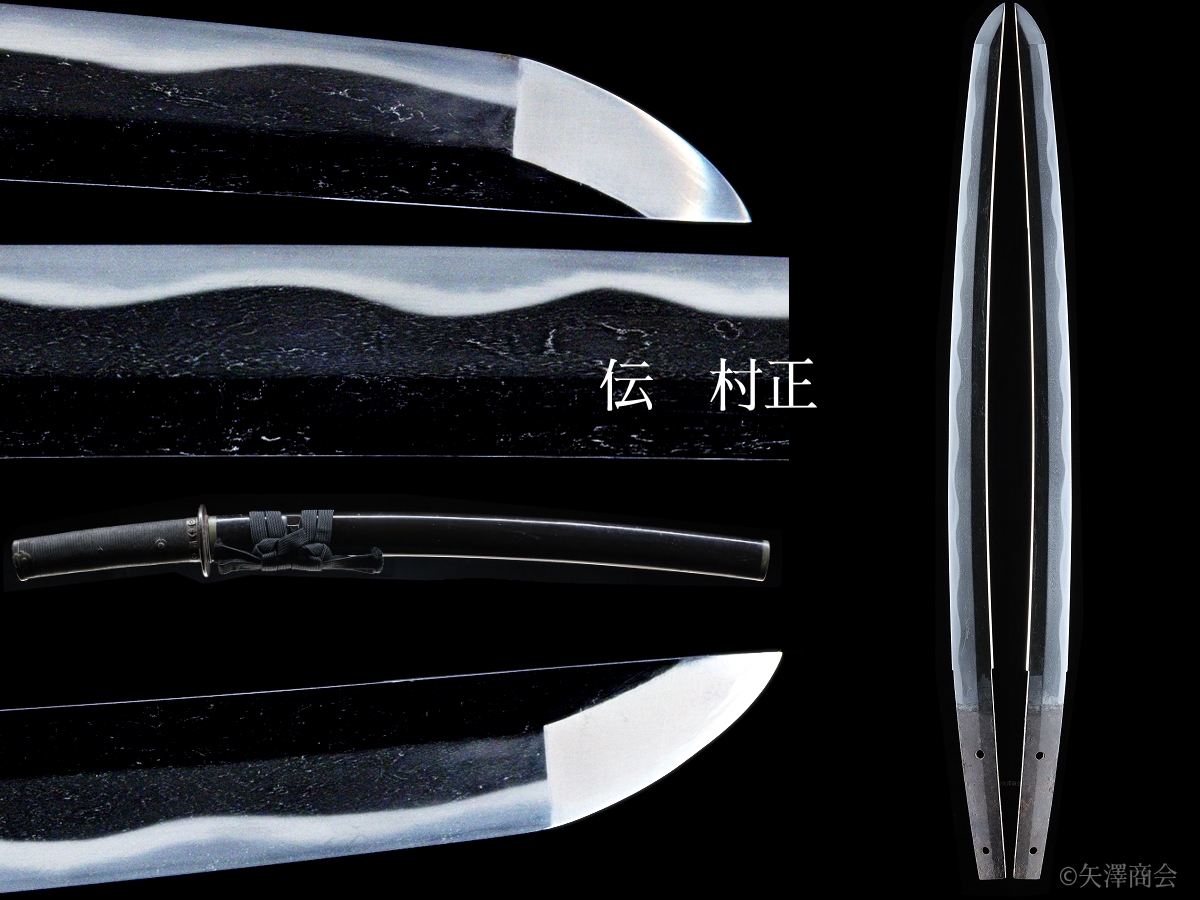
委託出品 伝村正 拵入り 刀身室町時代後期と見受けられ、刃文表裏揃い、鑑定に期待できる一振り ひょっとするとひょとします。 村正について 村正は千子村正を始祖とする伊勢国桑名で活躍した刀工での一派で、妖刀村正と名高い。 日本刀名鑑には古刀期に四人(現存する刀剣)、現存しない刀剣含めると八項記載あり。 その鋭い切れ味や表裏揃う刃文は当時から需要があるも、江戸時代になると、家康の祖父清康と父広忠が暗殺された時に村正の刀が用いられたり、 長男の信康が切腹させられた際の介錯に村正が用いられたりした経緯から、村正は徳川家で忌み嫌われたことにより、処分されたり、銘が削り取られたと言われている。 本刀膨れ破れあるも他欠点なく雰囲気があり、面白い御刀でございます。 (無銘) 鑑定に期待の無銘でございます。無銘に偽物なしと言われ見る目のある一部の方に好まれる刀になります。 正宗もほとんどが無銘で、鑑定後、正宗と認定されております。無銘に贋物がないのでこれだ!と思うような是非ビビッとくる無銘の刀を狙ってみてください。 (鑑定書発行代行) 保存、特別保存鑑定書(協会)、正真鑑定書(NPO法人保存会)など必要な方は鑑定費用(実費)と代行費用1万円、鑑定書発行まで数カ月のお時間頂きますが、受付可能でございます。 商品の状態 *膨れ破れ有り 刃切れ・刃絡み・目視上の刃こぼれ・撓え・匂い切れ・駆け出ございません。 *時代による、汚れ、細かな擦れ傷,劣化等はご了承ください。写真を参考にしてください。
NihontoWatchOffered by Yazawa Shokai




Machine translation of the shop's Japanese ·
Rows still in Japanese are as written by the shop
(Translation unavailable) Shown in the shop's own words: we only show a translation once it passes our accuracy check.
Soshu-den · Ise
5 pieces on the market now
Kuwana, in Ise Province, gave the Sengo line its base, and from there the Muramasa (村正) name carried the work of late-Muromachi Ise into the Sengoku decades. The oldest extant date in the whole line is Bunki 1 (1501), carried by a katana signed "Seshu Kuwana-ju Uemon-no-jo Fujiwara Muramasa saku"[[c:1]]; from that anchor the prevailing scheme reads the Bunki pieces as the first generation, the Tenbun as the second, and the Tensho as the third, with the second master held the most skillful and most prolific of the three. The published sources set aside the popular tale that the founder studied under Masamune, calling it an unfounded tradition; the line begins instead near the close of the Muromachi period. Its hand shares common features with Mino, Shimada, and Sue-Soshu, and resembles Heianjo Nagayoshi of Kyoto so closely that the judges presume some relationship between the two, while a likeness to the Shimada smiths and to the Sue-Seki Kanesada is noted as a thing that can confuse a first reading. From the workshop issued the disciples Masashige (正重) and Masazane (正眞), filed by tradition as students of the shodai, who carried the manner forward alongside the Muramasa name itself. The feature the commentary names again and again as the school's own is the matched temper: the hamon on omote and ura align to one mirror-image pattern (omote-ura soroi), and the valleys of the midare press in toward the cutting edge. To this the masters add box-shaped elements (hako-midare), a gunome and notare base mixed with compound gunome, togariba, and yamagata figures, the nioiguchi drawn tight with patchy ko-nie in mura, and sunagashi running frequently; the boshi runs midare-komi or sugu to a ko-maru, often swept with hakikake. The forms that carry it are the wide hira-zukuri tanto and sunnobi ko-wakizashi with mitsu-mune, and the short, strongly saki-zori uchigatana; the jigane is itame tending to stand, mixed with flowing and masame-inclined grain, the steel dark at times and showing the whitish shirake cast the descriptions repeatedly note. Beneath sits the tanago-bara nakago, the fish-belly swelling that grows pronounced from the second generation, cut with a thick-chisel two-character mei.
The successors diverge by proportion rather than trick: Masashige opens the same vocabulary out, his grain standing more openly and his o-gunome and nie carried further; Masazane draws it in, holding box teeth low at the koshimoto under a calm suguha, his jihada closing tighter than his fellow pupil's. Beside the flamboyant rule each smith keeps a quiet register, tanto in suguha aimed at the Rai manner, and an occasional reach toward hitatsura with tobiyaki and muneyaki, never the rule of the work. To kantei the school, the matched faces are the first tell: the aligned omote and ura, the box figures, the valleys pressing to the edge, the tight nioiguchi with its patchy nie, and the tanago-bara nakago under the thick mei part Muramasa from the Mino, Shimada, and Heianjo hands it otherwise resembles. Within the line the nakago-mune decides: cut angular on Muramasa, it rounds out fleshily on Masashige, while Masazane is told from Masashige by his tighter steel. The Sengo reputation for cutting sharpness, with the midare valleys driven toward the ha, drew the Tokugawa legend that the blades brought calamity on the house; the sources handle it as recorded fact, noting that from the Edo period many signatures were effaced for fear of the name, so that signed katana in particular grew comparatively rare, and that one of Masazane's katana was cut "Yamashiro Province Masazane" as a deliberate screen for a daimyo recipient. Provenance runs through private and daimyo hands rather than institutional holdings: a first-generation wakizashi transmitted as a possession of Oda Nobunaga, a Masazane descended in the Mizuno and Tosa Yamauchi houses, a Lotus Sutra katana held in the Nabeshima line. The Nichiren devotion read off some blades, the title Myoho-renge-kyo cut into the steel, ties the work to its Ise region. A signed, ubu Sengo blade of secure date and matched temper comes to notice only from time to time, the legend that thinned the signatures adding to the call for those that remain. Learn more →
| Smith | Era | Designated |
|---|---|---|
| Muramasa村正 | 1521-1528 | 41 |
| Muramasa村正 | 1501-1521 | 17 |
| Masashige正重 | 1521-1528 | 12 |
| Masazane正眞 | 1501-1504 | 4 |
| Muramasa村正 | 1573-1592 | 1 |
Sōshū in the Muromachi period
In the Sengoku era the school served a second warrior court: the Later Hōjō at Odawara, whose patronage kept the Tsunahiro line forging hitatsura for the uchigatana age until the castle fell to Hideyoshi in 1590.