NihontoWatch Mon

NihontoWatch

Market
Encyclopedia
Kantei
NihontoWatch Mon

NihontoWatch

Market
Encyclopedia
Kantei

Description

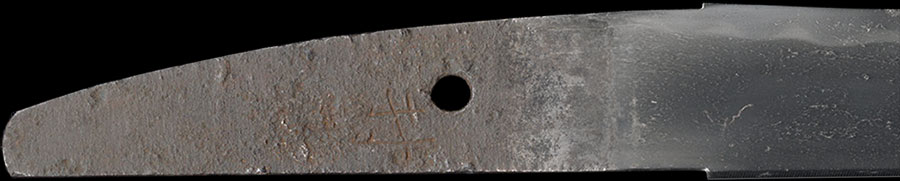
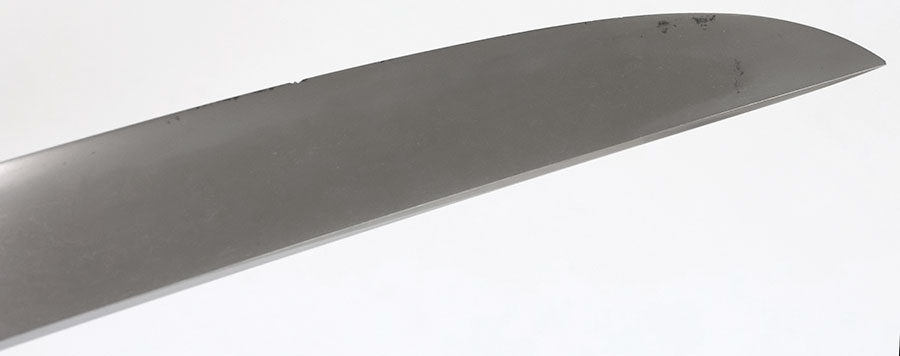
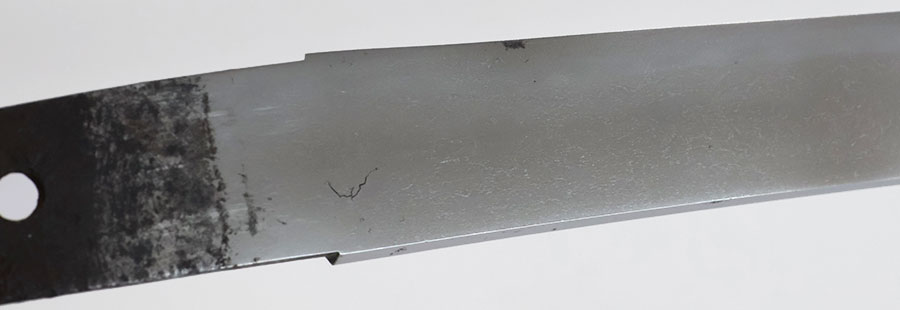
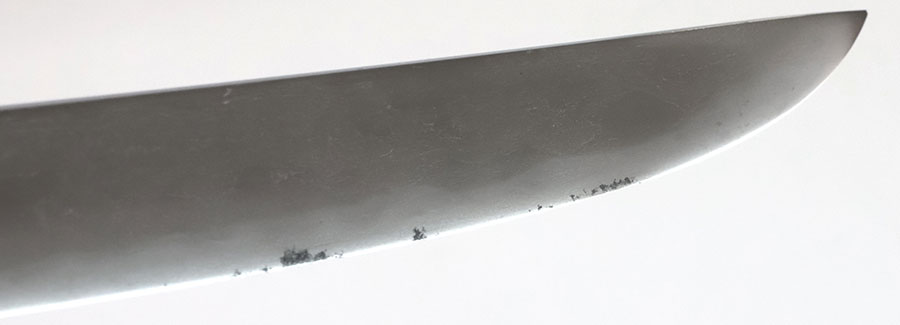
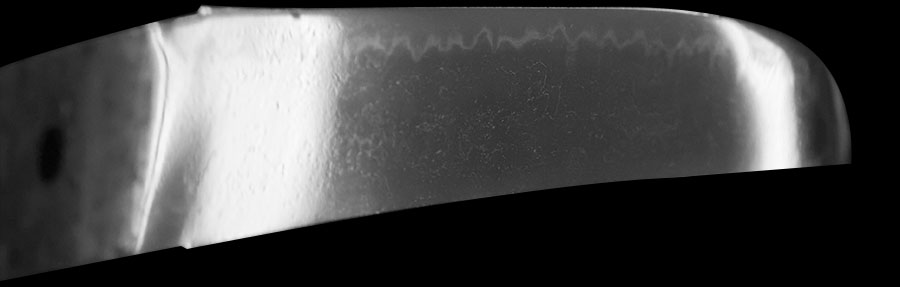
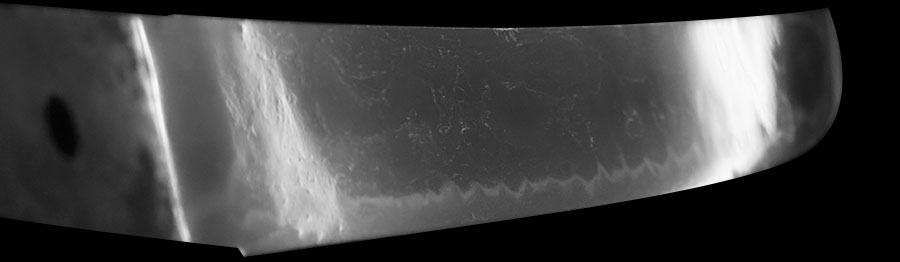
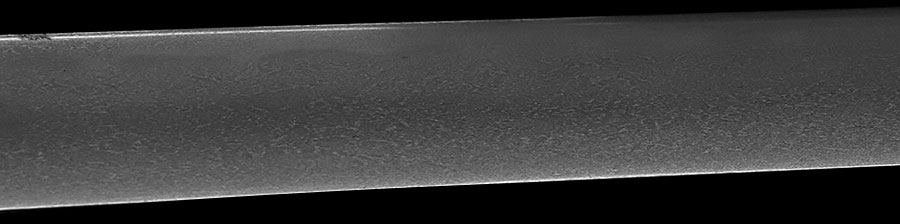
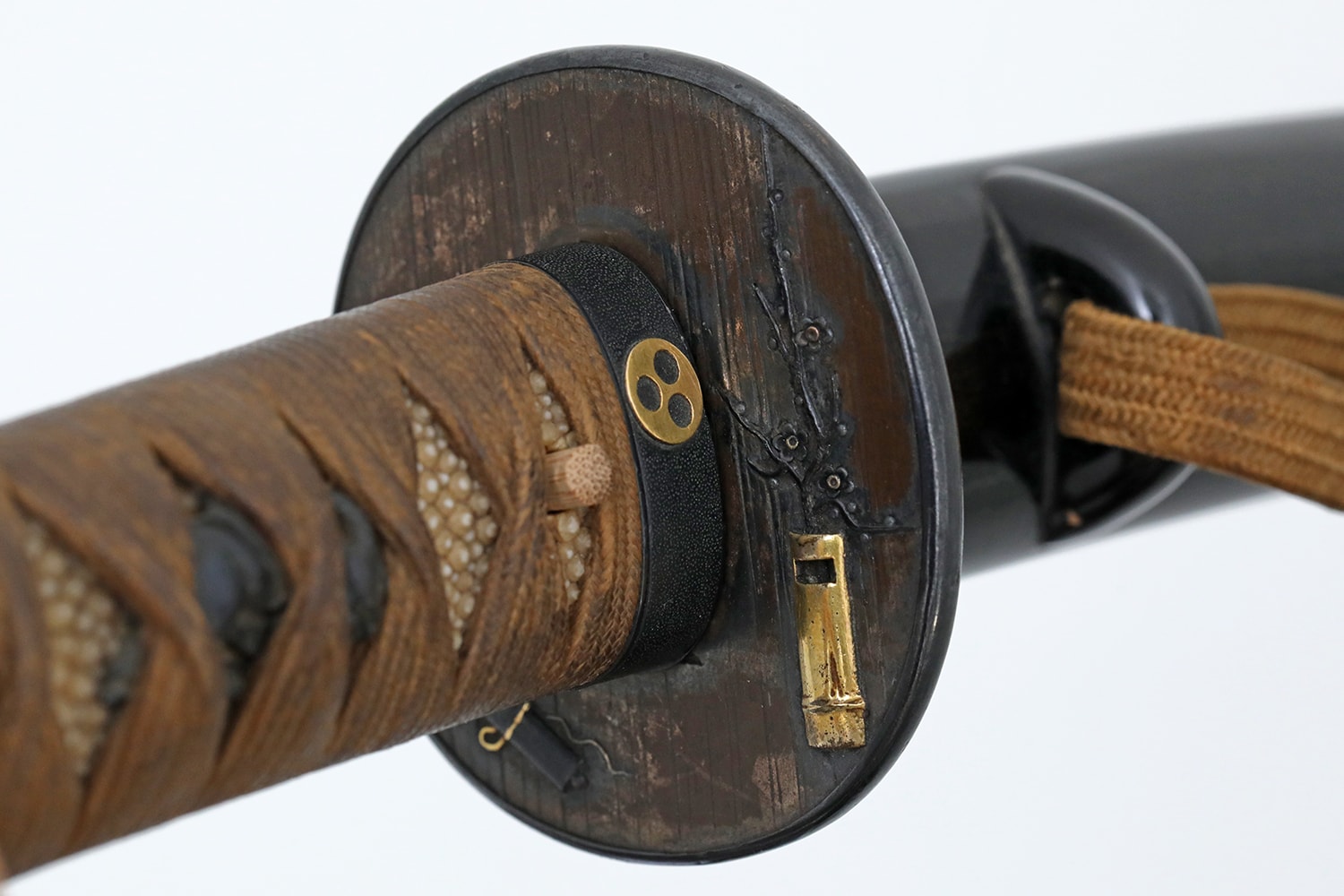
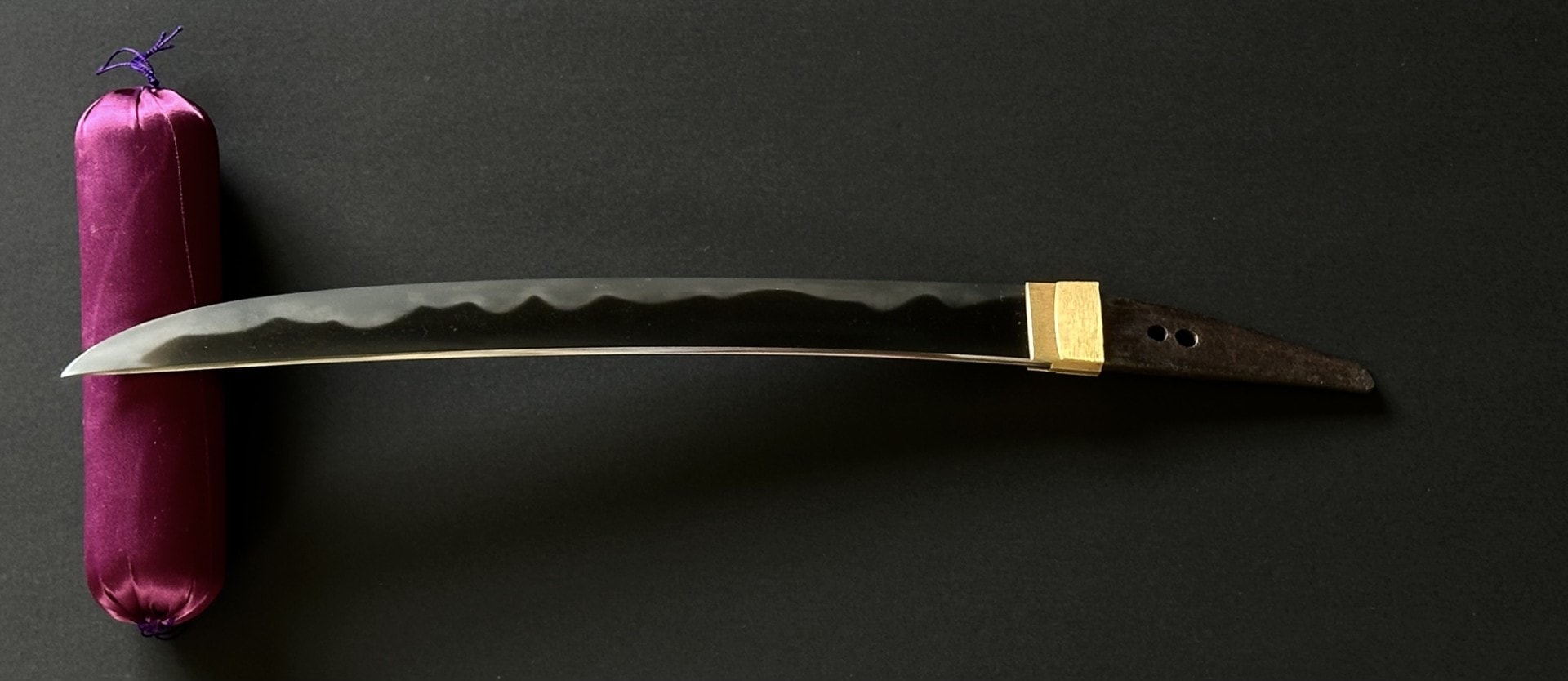
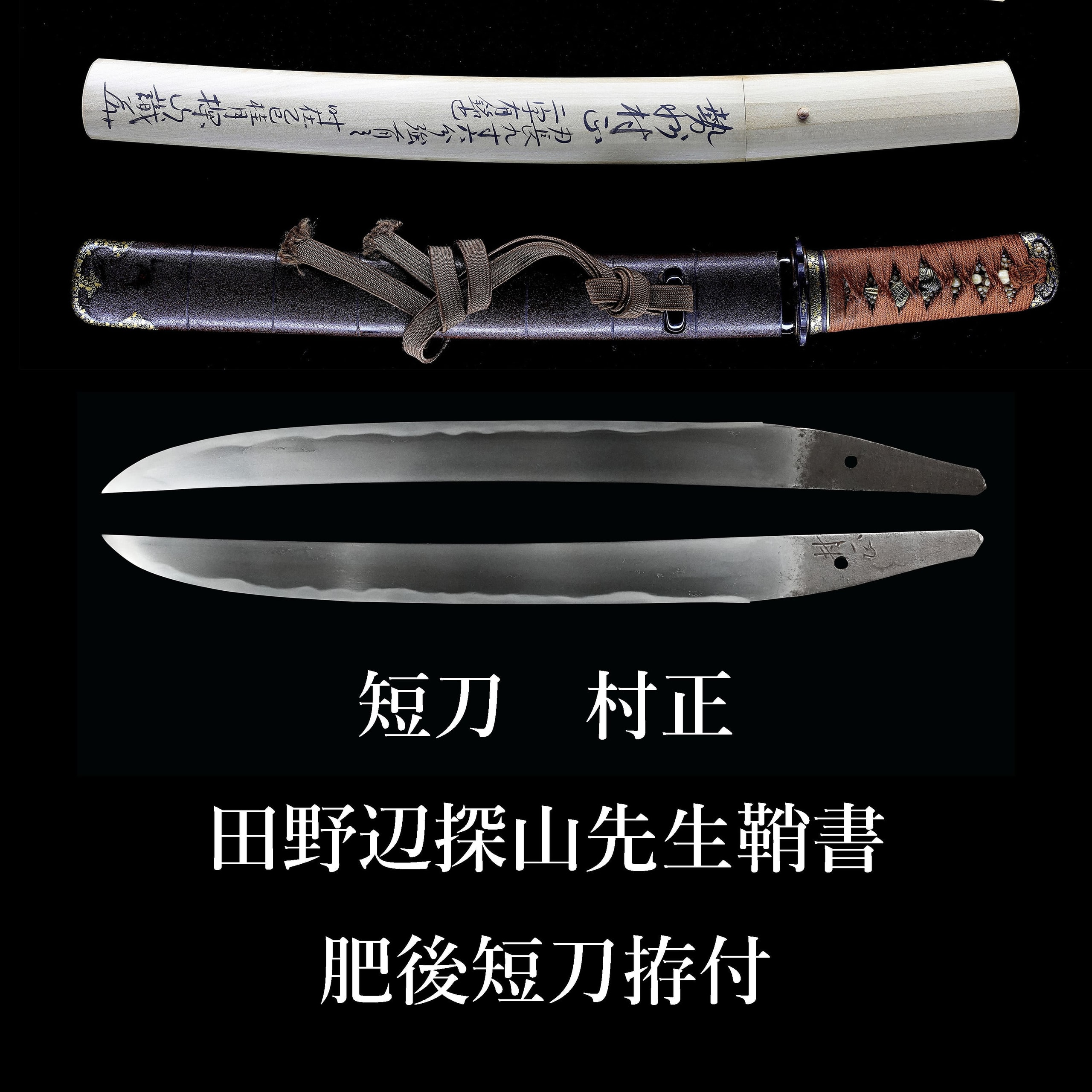
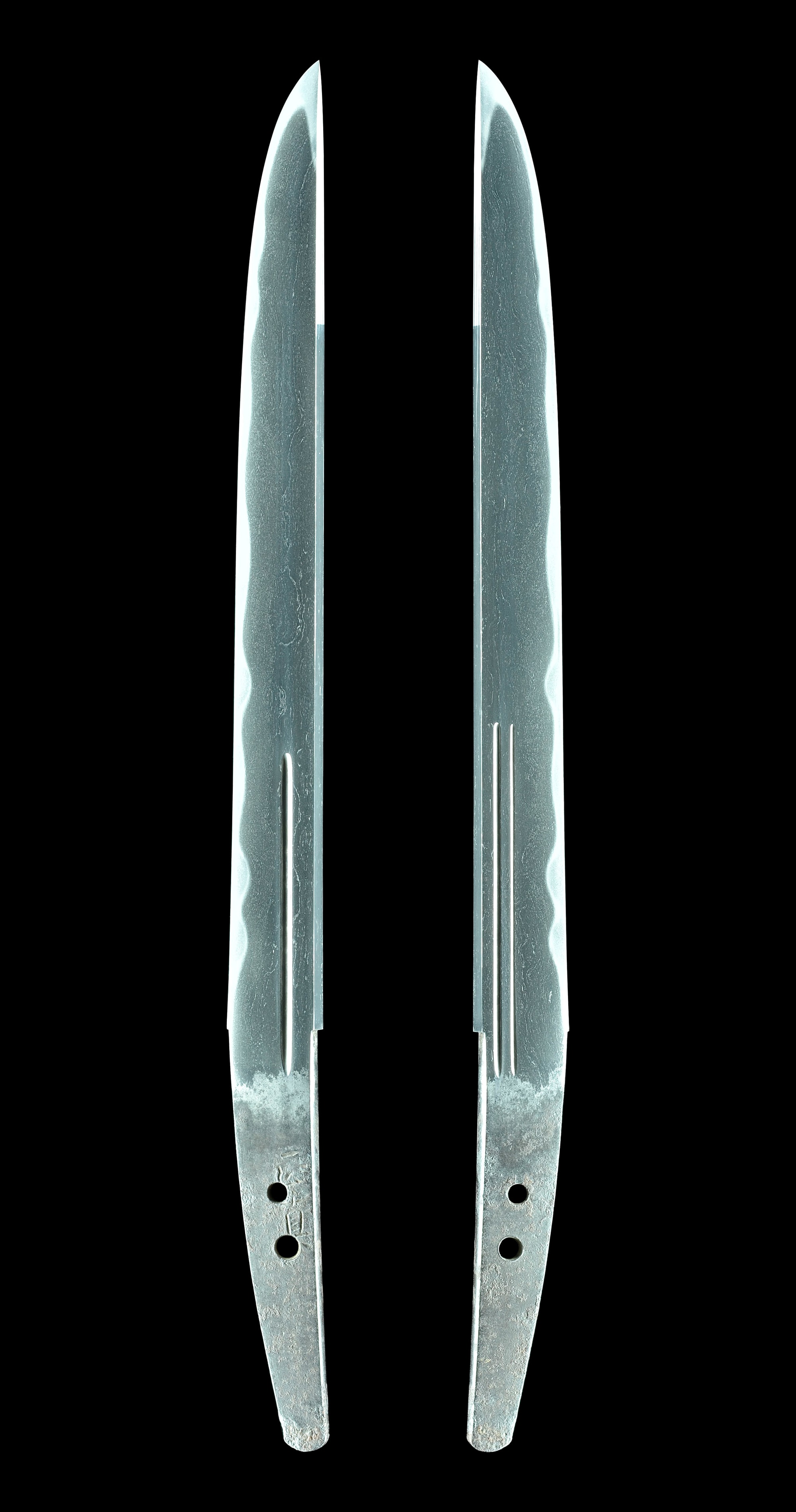
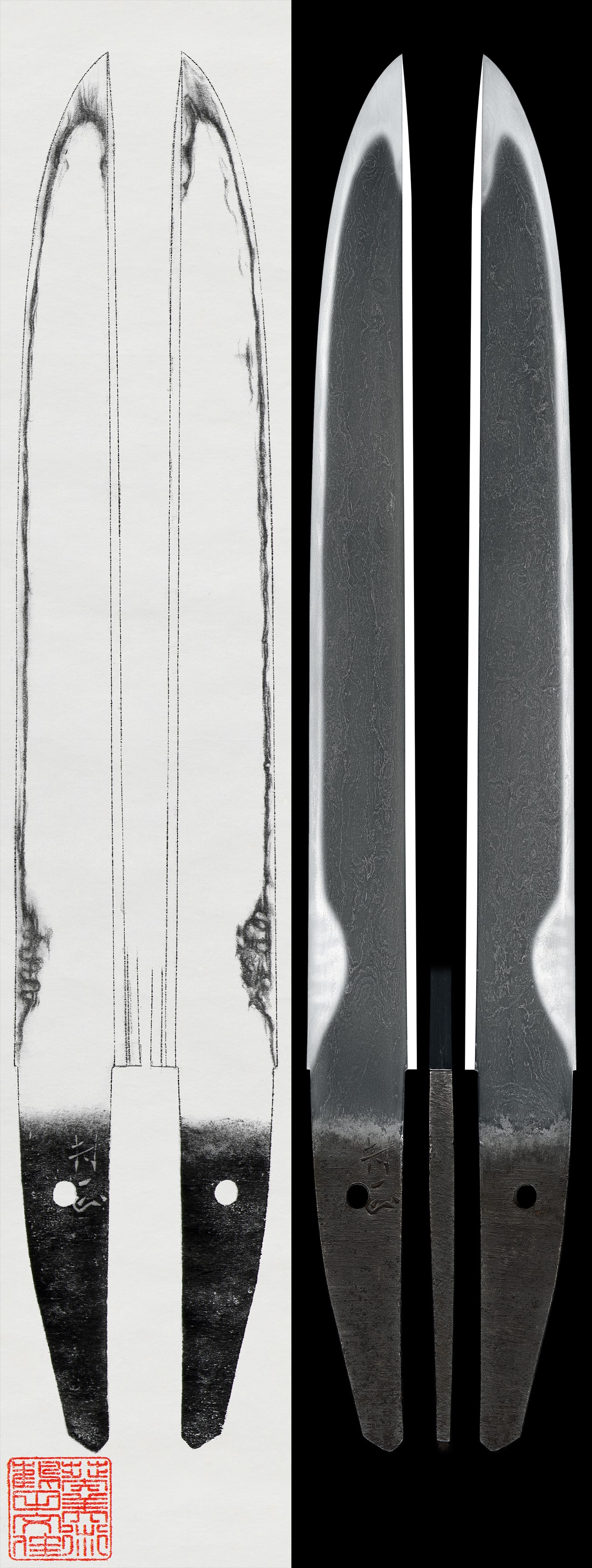
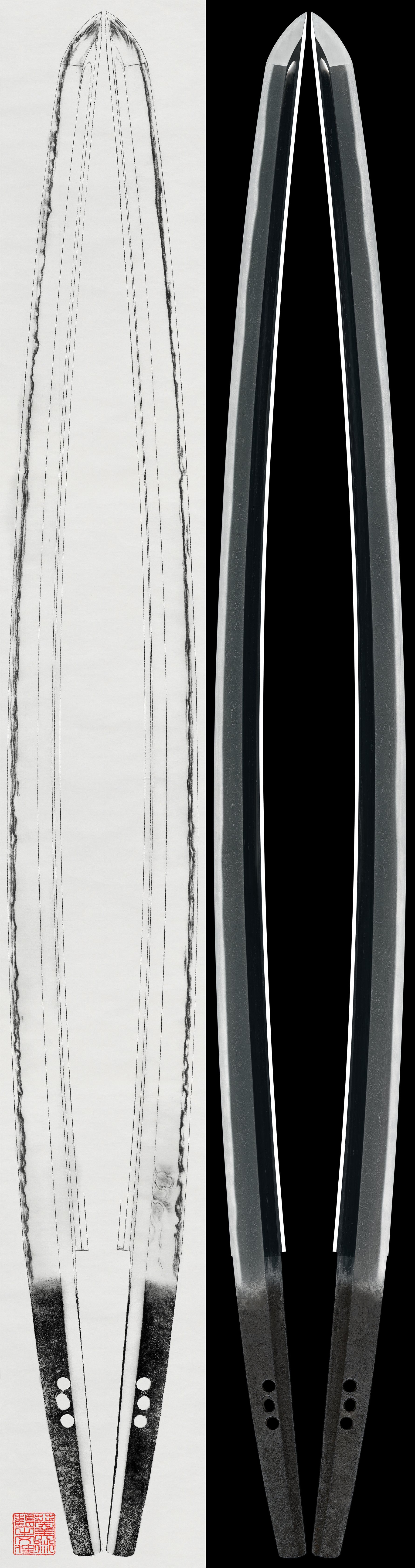
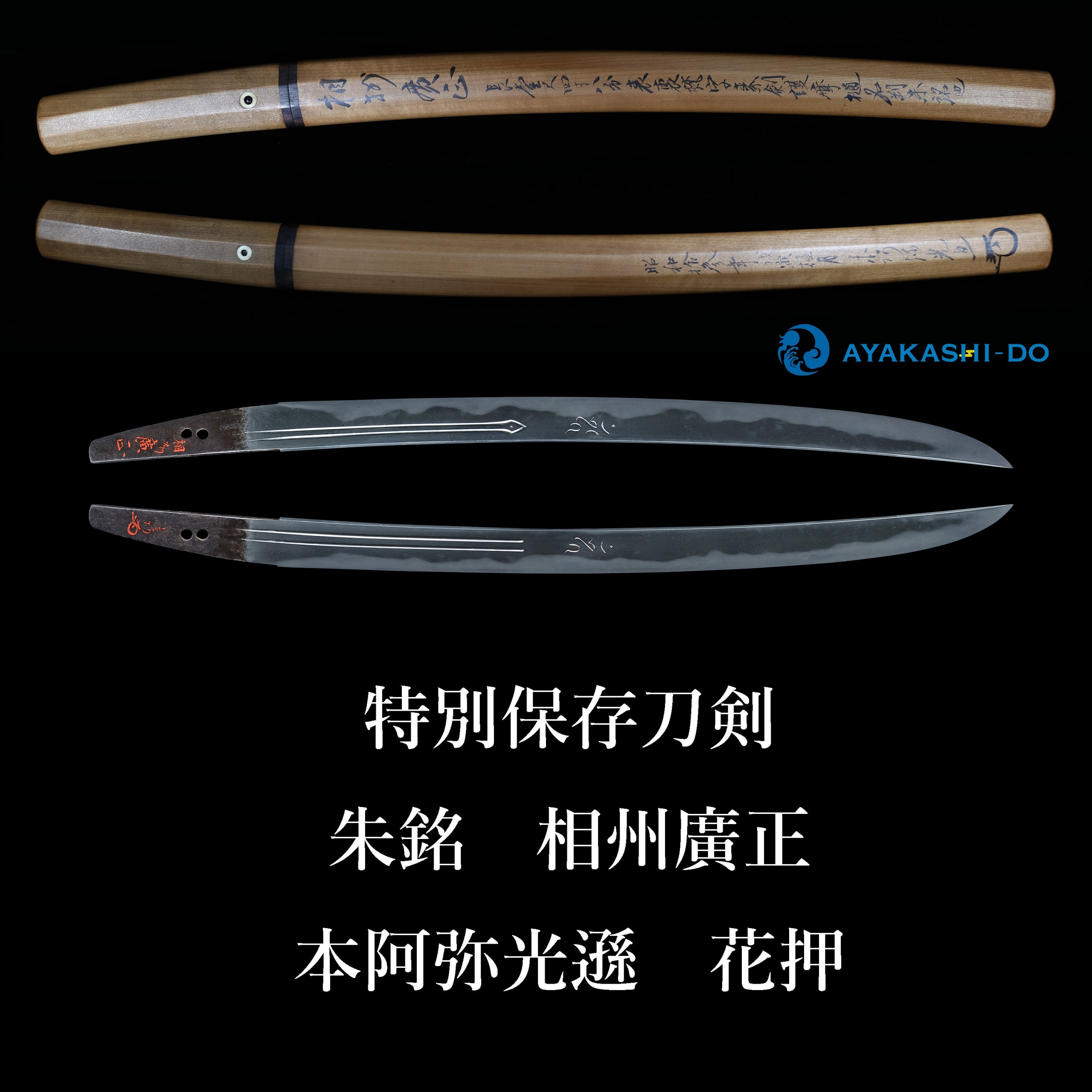
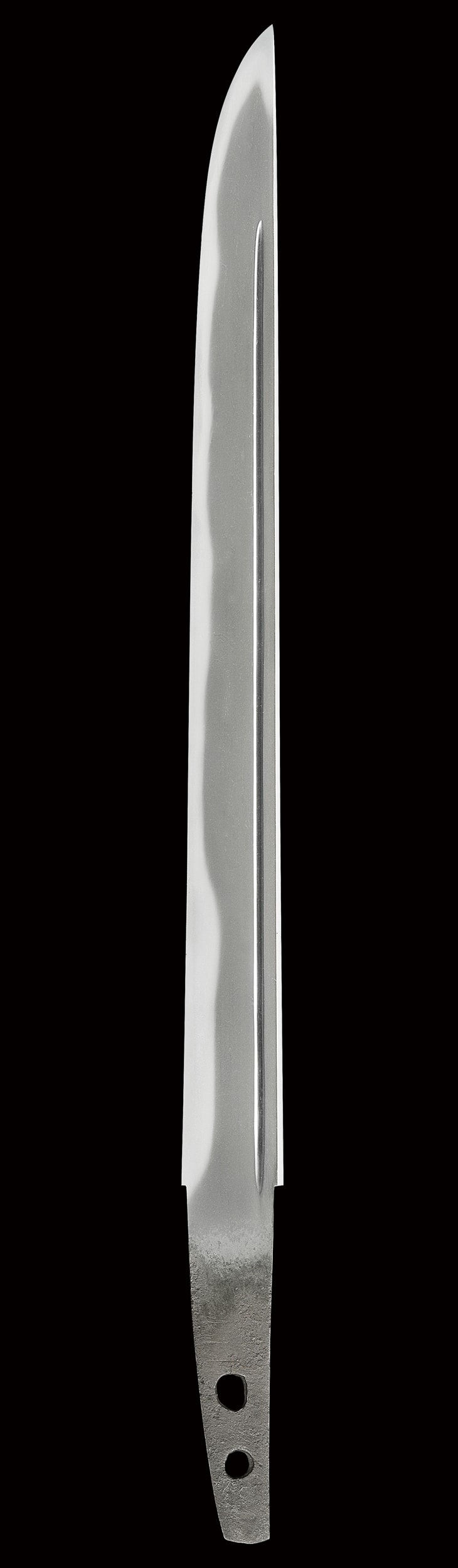
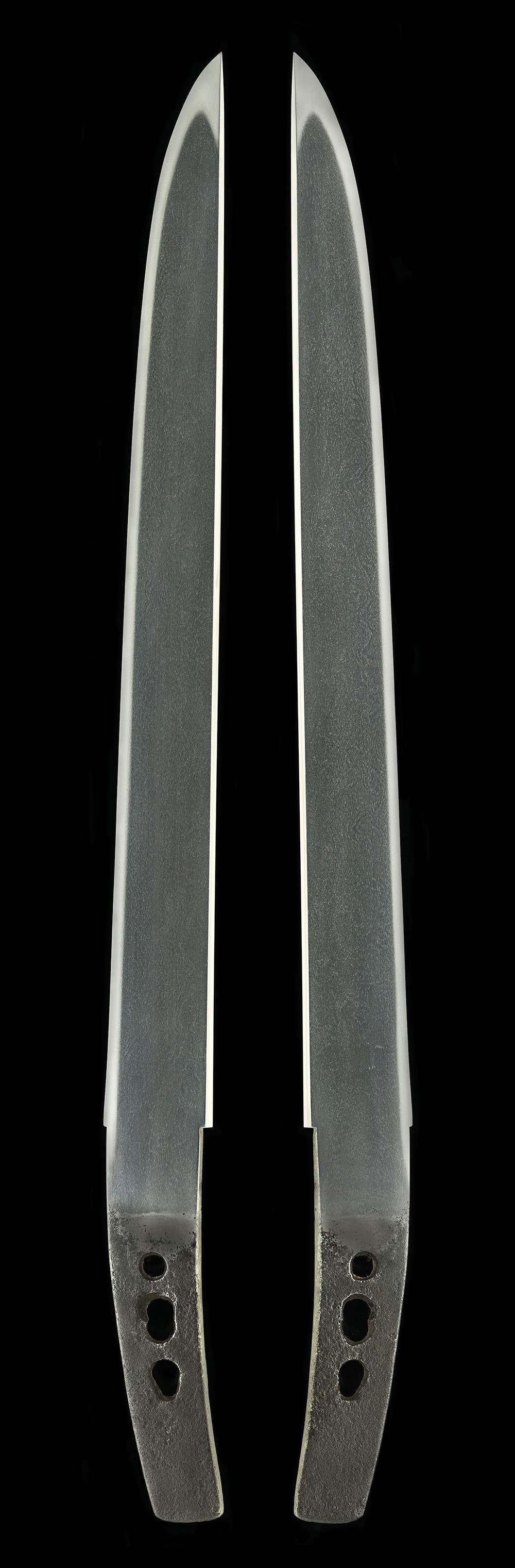
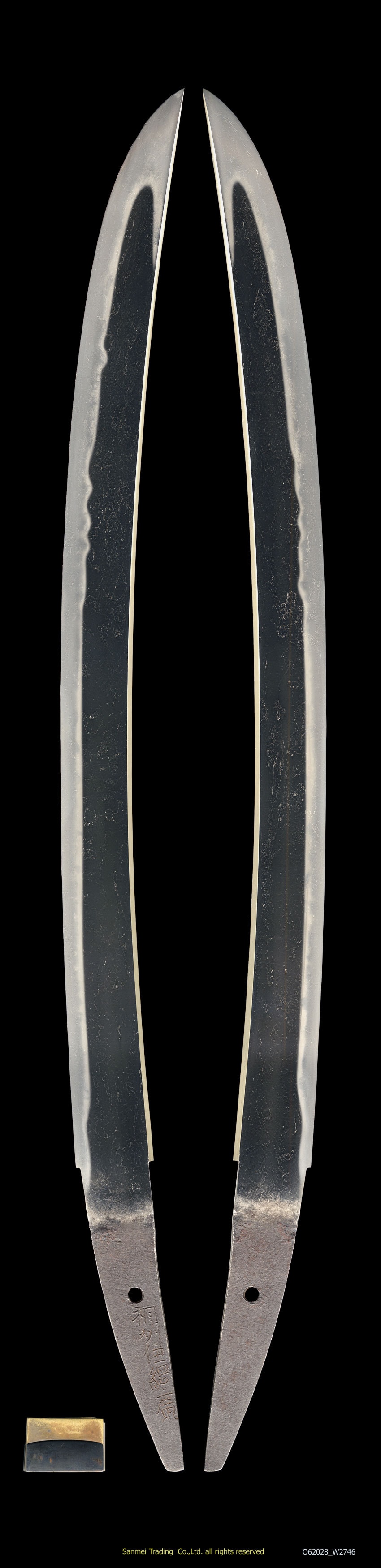
It has appeared, it has appeared! A Muramasa wakizashi that has been cherished for generations in an old family has appeared. However, as it has not yet been submitted for shinsa (formal appraisal), please treat it for now as a kibomei (hoped-for signature) Muramasa. The famous Saigo Takamori, aiming to overthrow the Tokugawa Shogunate, particularly treasured Muramasa swords. This wakizashi, popular as Sengo Muramasa in Touken Ranbu, may be a work where the "Masa" character of the mei was made difficult to see out of deference to the Tokugawa family in later generations; it is a dream piece for "Touken Joshi" (sword girls). While this wakizashi closely resembles the mei of the first generation Muramasa—who is world-famous for the name "Yoto" (demon blade)—please keep it strictly as a kibomei. The sugata of this wakizashi shows a hira-zukuri wakizashi form with a wide moto-mihaba and saki-mihaba with sori. The nakago exhibits the tanago-hara style shape known as "Muramasa nakago." The jigane is itame-hada mixed with mokume-hada. The hamon is nioi-deki with nie, featuring gunome-ba mixed with togari-ba, tempering a blade full of haki (spirit). Muramasa was a swordsmith from Ise in Mie Prefecture. Because his swords were said to bring misfortune to the Tokugawa family, many had their mei destroyed out of deference to the Tokugawa during the Edo period, and they were particularly detested by the Tokugawa Shogunate. However, it is a very famous story that when Prince Arisugawa became the Commander-in-Chief of the Expeditionary Force to the East during the Boshin War, he carried a Muramasa sword with the intent of overthrowing the Tokugawa Shogunate. On this occasion, we received this Muramasa wakizashi from an old family who has cherished it for generations, with the request: "We have grown old, so please pass this on at a low price to someone who will treasure it." Therefore, for those who absolutely want a work by Muramasa even as a kibomei, as there is some sabi (rust) from age, we are offering this wakizashi at a special, ultra-low price to someone who will take good care of it. Please enjoy it.

NihontoWatch MonNihontoWatch
MarketEncyclopediaKantei
Swords›Sōshū-den›Muramasa›Wakizashi by Muramasa
katana
Muramasa School

Wakizashi by Muramasa

Edo · nagasa 31.8cm · sori 0.2cm

SOLD
Muramasa School — 1 of 15
Muramasa School — 2 of 15
Muramasa School — 3 of 15
Muramasa School — 4 of 15
Muramasa School — 5 of 15
Muramasa School — 6 of 15
Muramasa School — 7 of 15
Muramasa School — 8 of 15
Muramasa School — 9 of 15
Muramasa School — 10 of 15
Muramasa School — 11 of 15
Muramasa School — 12 of 15
Muramasa School — 13 of 15
Muramasa School — 14 of 15
Muramasa School — 15 of 15
1 / 15
1 / 15
Muramasa School — 1 of 15Muramasa School — 2 of 15Muramasa School — 3 of 15Muramasa School — 4 of 15Muramasa School — 5 of 15Muramasa School — 6 of 15Muramasa School — 7 of 15Muramasa School — 8 of 15Muramasa School — 9 of 15Muramasa School — 10 of 15Muramasa School — 11 of 15Muramasa School — 12 of 15Muramasa School — 13 of 15Muramasa School — 14 of 15Muramasa School — 15 of 15
Measurements & details
Smith
Muramasa School
Type
Katana
School
Muramasa
Period
Edo(1501-1592)
Measurements
Nagasa 31.8cmSori 0.2cmMotohaba 2.97cmSakihaba 1.83cmKasane 0.59cm
Description

It has appeared, it has appeared! A Muramasa wakizashi that has been cherished for generations in an old family has appeared. However, as it has not yet been submitted for shinsa (formal appraisal), please treat it for now as a kibomei (hoped-for signature) Muramasa. The famous Saigo Takamori, aiming to overthrow the Tokugawa Shogunate, particularly treasured Muramasa swords. This wakizashi, popular as Sengo Muramasa in Touken Ranbu, may be a work where the "Masa" character of the mei was made difficult to see out of deference to the Tokugawa family in later generations; it is a dream piece for "Touken Joshi" (sword girls). While this wakizashi closely resembles the mei of the first generation Muramasa—who is world-famous for the name "Yoto" (demon blade)—please keep it strictly as a kibomei. The sugata of this wakizashi shows a hira-zukuri wakizashi form with a wide moto-mihaba and saki-mihaba with sori. The nakago exhibits the tanago-hara style shape known as "Muramasa nakago." The jigane is itame-hada mixed with mokume-hada. The hamon is nioi-deki with nie, featuring gunome-ba mixed with togari-ba, tempering a blade full of haki (spirit). Muramasa was a swordsmith from Ise in Mie Prefecture. Because his swords were said to bring misfortune to the Tokugawa family, many had their mei destroyed out of deference to the Tokugawa during the Edo period, and they were particularly detested by the Tokugawa Shogunate. However, it is a very famous story that when Prince Arisugawa became the Commander-in-Chief of the Expeditionary Force to the East during the Boshin War, he carried a Muramasa sword with the intent of overthrowing the Tokugawa Shogunate. On this occasion, we received this Muramasa wakizashi from an old family who has cherished it for generations, with the request: "We have grown old, so please pass this on at a low price to someone who will treasure it." Therefore, for those who absolutely want a work by Muramasa even as a kibomei, as there is some sabi (rust) from age, we are offering this wakizashi at a special, ultra-low price to someone who will take good care of it. Please enjoy it.

About the school

Muramasa

村正

Soshu-den · Ise

5 pieces on the market now

›

Kuwana, in Ise Province, gave the Sengo line its base, and from there the Muramasa (村正) name carried the work of late-Muromachi Ise into the Sengoku decades. The oldest extant date in the whole line is Bunki 1 (1501), carried by a katana signed "Seshu Kuwana-ju Uemon-no-jo Fujiwara Muramasa saku"[[c:1]]; from that anchor the prevailing scheme reads the Bunki pieces as the first generation, the Tenbun as the second, and the Tensho as the third, with the second master held the most skillful and most prolific of the three. The published sources set aside the popular tale that the founder studied under Masamune, calling it an unfounded tradition; the line begins instead near the close of the Muromachi period. Its hand shares common features with Mino, Shimada, and Sue-Soshu, and resembles Heianjo Nagayoshi of Kyoto so closely that the judges presume some relationship between the two, while a likeness to the Shimada smiths and to the Sue-Seki Kanesada is noted as a thing that can confuse a first reading. From the workshop issued the disciples Masashige (正重) and Masazane (正眞), filed by tradition as students of the shodai, who carried the manner forward alongside the Muramasa name itself. The feature the commentary names again and again as the school's own is the matched temper: the hamon on omote and ura align to one mirror-image pattern (omote-ura soroi), and the valleys of the midare press in toward the cutting edge. To this the masters add box-shaped elements (hako-midare), a gunome and notare base mixed with compound gunome, togariba, and yamagata figures, the nioiguchi drawn tight with patchy ko-nie in mura, and sunagashi running frequently; the boshi runs midare-komi or sugu to a ko-maru, often swept with hakikake. The forms that carry it are the wide hira-zukuri tanto and sunnobi ko-wakizashi with mitsu-mune, and the short, strongly saki-zori uchigatana; the jigane is itame tending to stand, mixed with flowing and masame-inclined grain, the steel dark at times and showing the whitish shirake cast the descriptions repeatedly note. Beneath sits the tanago-bara nakago, the fish-belly swelling that grows pronounced from the second generation, cut with a thick-chisel two-character mei.

The successors diverge by proportion rather than trick: Masashige opens the same vocabulary out, his grain standing more openly and his o-gunome and nie carried further; Masazane draws it in, holding box teeth low at the koshimoto under a calm suguha, his jihada closing tighter than his fellow pupil's. Beside the flamboyant rule each smith keeps a quiet register, tanto in suguha aimed at the Rai manner, and an occasional reach toward hitatsura with tobiyaki and muneyaki, never the rule of the work. To kantei the school, the matched faces are the first tell: the aligned omote and ura, the box figures, the valleys pressing to the edge, the tight nioiguchi with its patchy nie, and the tanago-bara nakago under the thick mei part Muramasa from the Mino, Shimada, and Heianjo hands it otherwise resembles. Within the line the nakago-mune decides: cut angular on Muramasa, it rounds out fleshily on Masashige, while Masazane is told from Masashige by his tighter steel. The Sengo reputation for cutting sharpness, with the midare valleys driven toward the ha, drew the Tokugawa legend that the blades brought calamity on the house; the sources handle it as recorded fact, noting that from the Edo period many signatures were effaced for fear of the name, so that signed katana in particular grew comparatively rare, and that one of Masazane's katana was cut "Yamashiro Province Masazane" as a deliberate screen for a daimyo recipient. Provenance runs through private and daimyo hands rather than institutional holdings: a first-generation wakizashi transmitted as a possession of Oda Nobunaga, a Masazane descended in the Mizuno and Tosa Yamauchi houses, a Lotus Sutra katana held in the Nabeshima line. The Nichiren devotion read off some blades, the title Myoho-renge-kyo cut into the steel, ties the work to its Ise region. A signed, ubu Sengo blade of secure date and matched temper comes to notice only from time to time, the legend that thinned the signatures adding to the call for those that remain. Learn more →


6 recorded smiths76 designated works
Leading smiths
SmithEraDesignated
Muramasa村正1521-152841
Muramasa村正1501-152117
Masashige正重1521-152812
Masazane正眞1501-15044
Koretsuna維綱1532-15731
Explore the Muramasa school →

Historical context

For two and a half centuries of peace the sword was the warrior’s legal badge rather than his weapon. Each great city developed its own manner, Edo’s tested strength against Ōsaka’s polished brilliance, until demand thinned in the era’s last decades.

The Edo period (1615 to 1868) →

Warning — certificate not found

We could not find an authenticity certificate on the seller’s listing. Japanese swords and fittings are normally papered by the NBTHK (or the NTHK). Without one, the attribution is the seller’s own assessment and has not been independently verified — treat it with caution and ask the dealer about certification before buying.

Seller
N
Nipponto
Established 1953 · 73 yrs on the market
🇯🇵Ships from Japan
›
✓Verified dealernipponto.co.jp
✓Ships worldwide✓English supportPayPalCredit card
Return policy

For returns due to customer circumstances, the cost is the customer's responsibility. For returns due to our mis-shipment or a defective item, we bear the cost.

View all of Nipponto’s listings→View this item on the dealer’s site→

Previously sold — Muramasa School

View all →
Nipponto
Tokubetsu Kichō
Tanto - Tokubetsu Kichō - by Muramasa School - Tanto by Muramasa with Tokubetsu Kicho CertificateTanto - Tokubetsu Kichō - by Muramasa School - Tanto by Muramasa with Tokubetsu Kicho Certificate
Sold

Tantō

ByMuramasa School
SOLD
Tetsugendo
Hozon
Tanto - Hozon - by Muramasa School - Muramasa (attributed to Sengo Muramasa) - NBTHK HozonTanto - Hozon - by Muramasa School - Muramasa (attributed to Sengo Muramasa) - NBTHK Hozon
Sold

Tantō

ByMuramasa School
SOLD
World Seiyudo
Hozon
Tanto - Hozon - by Muramasa School - Muramasa - Tokubetsu Hozon TokenTanto - Hozon - by Muramasa School - Muramasa - Tokubetsu Hozon Token
Sold

Tantō

ByMuramasa School
SOLD
Shoubudou
Tokuho
Tanto - Tokuho - by Muramasa School - MuramasaTanto - Tokuho - by Muramasa School - Muramasa
Sold

Tantō

ByMuramasa School
SOLD
Aoi Art
Tanto - by Muramasa School - MuramasaTanto - by Muramasa School - Muramasa
Sold

Tantō

ByMuramasa School
SOLD
Shoubudou
Tokuho
Tanto - Tokuho - by Muramasa School - MuramasaTanto - Tokuho - by Muramasa School - Muramasa
Sold

Tantō

ByMuramasa School
SOLD
Kusanagi
Tokubetsu Kichō
Katana - Tokubetsu Kichō - by Muramasa School - Saijo-saku Owazamono Yoto "Murasame" Mumei Tokubetsu Kicho TokenKatana - Tokubetsu Kichō - by Muramasa School - Saijo-saku Owazamono Yoto "Murasame" Mumei Tokubetsu Kicho Token
Sold

Katana

ByMuramasa School
SOLD
Mandarin Mansion
Tanto - by Muramasa School - Muramasa masterpiece tantōTanto - by Muramasa School - Muramasa masterpiece tantō
Sold

Tantō

ByMuramasa School
SOLD

More from the Muramasa school

View all →
Eirakudo
Hozon
Katana - Hozon - by Muramasa Masazane - Masazane (Sengo) - Hozon TokenKatana - Hozon - by Muramasa Masazane - Masazane (Sengo) - Hozon Token

Katana

ByMuramasa Masazane
¥3,500,000
Connoisseur Arms
Jūyō
Tanto - Jūyō - by Muramasa Masashige - Historic Tanto by Sengo Masashige with Outstanding Mid Edo period Issaku Kanagu KoshiraeTanto - Jūyō - by Muramasa Masashige - Historic Tanto by Sengo Masashige with Outstanding Mid Edo period Issaku Kanagu Koshirae

Tantō

ByMuramasa Masashige
Ask
Toushin
Hozon
Tanto - Hozon - by Muramasa Masazane - Masazane (Sengo)Tanto - Hozon - by Muramasa Masazane - Masazane (Sengo)

Tantō

ByMuramasa Masazane
¥1,500,000
Nipponto
Tokubetsu Kichō
Tanto - Tokubetsu Kichō - by Muramasa - Japanese Sword Muramasa (Yoto Muramasa) Tanto with Tokubetsu Kicho CertificateTanto - Tokubetsu Kichō - by Muramasa - Japanese Sword Muramasa (Yoto Muramasa) Tanto with Tokubetsu Kicho Certificate

Tantō

ByMuramasa
¥2,600,000
Aoi Art
Tokuho
Tanto - Tokuho - by Muramasa School - MuramasaTanto - Tokuho - by Muramasa School - Muramasa

Tantō

ByMuramasa School
¥7,500,000

More from the Sōshū tradition

View all →
World Seiyudo
Tokuho
Wakizashi - Tokuho - by Sue-Soshu Masahiro - Mumei Soshu Masahiro - NBTHK Tokubetsu Hozon Token & TosoguWakizashi - Tokuho - by Sue-Soshu Masahiro - Mumei Soshu Masahiro - NBTHK Tokubetsu Hozon Token & Tosogu

Wakizashi

BySue-Soshu Masahiro
¥2,500,000
Tsuruginoya
Tokujū
Katana - Tokuju - by Soshu Yukimitsu - Soshu YukimitsuKatana - Tokuju - by Soshu Yukimitsu - Soshu Yukimitsu

Katana

BySoshu Yukimitsu
Ask
Eirakudo
Jūyō
Tanto - Jūyō - by Soshu Yukimitsu - Soshu Yukimitsu - Juyo TokenTanto - Jūyō - by Soshu Yukimitsu - Soshu Yukimitsu - Juyo Token

Tantō

BySoshu Yukimitsu
Ask
Samurai Nippon
Jūyō
Katana - Jūyō - by Soshu Norishige - Mumei (Attributed to Norishige)Katana - Jūyō - by Soshu Norishige - Mumei (Attributed to Norishige)

Katana

BySoshu Norishige
Ask
Choshuya
Jūyō
Tanto - Jūyō - by Soshu Norishige - Ubu-nakago Mumei NorishigeTanto - Jūyō - by Soshu Norishige - Ubu-nakago Mumei Norishige

Tantō

BySoshu Norishige
¥6,500,000
Aoi Art
Tokuho
Katana - Tokuho - by Gō Yoshihiro - Mumei (Unsigned) Den Go YoshihiroKatana - Tokuho - by Gō Yoshihiro - Mumei (Unsigned) Den Go Yoshihiro

Katana

ByGō Yoshihiro
¥35,000,000
Samurai Nippon
Jūyō
Tanto - Jūyō - by Soshu Yukimitsu - Soshu Yukimitsu (Ubu Mumei)Tanto - Jūyō - by Soshu Yukimitsu - Soshu Yukimitsu (Ubu Mumei)

Tantō

BySoshu Yukimitsu
¥6,700,000
Mandarin Mansion
Jūyō
Tachi - Jūyō - by Soshu Yukimitsu - Juyo Soshu Yukimitsu TachiTachi - Jūyō - by Soshu Yukimitsu - Juyo Soshu Yukimitsu Tachi

Tachi

BySoshu Yukimitsu
Ask

Swords

  • Katana
  • Wakizashi
  • Tantō
  • Tachi
  • Naginata
  • Yari

Fittings

  • Tsuba
  • Fuchi-Kashira
  • Kozuka
  • Menuki

Armor

  • Kabuto
  • Samurai Armor

By Certification

  • Tokujū
  • Jūyō
  • Tokuho
  • Hozon

Resources

  • Dealer Directory
  • Artist Directory
  • The Daily Kantei
  • Glossary
  • Browse All
Nihontowatch© 2026
TermsPrivacyCookiesAbout

Description

It has appeared, it has appeared! A Muramasa wakizashi that has been cherished for generations in an old family has appeared. However, as it has not yet been submitted for shinsa (formal appraisal), please treat it for now as a kibomei (hoped-for signature) Muramasa. The famous Saigo Takamori, aiming to overthrow the Tokugawa Shogunate, particularly treasured Muramasa swords. This wakizashi, popular as Sengo Muramasa in Touken Ranbu, may be a work where the "Masa" character of the mei was made difficult to see out of deference to the Tokugawa family in later generations; it is a dream piece for "Touken Joshi" (sword girls). While this wakizashi closely resembles the mei of the first generation Muramasa—who is world-famous for the name "Yoto" (demon blade)—please keep it strictly as a kibomei. The sugata of this wakizashi shows a hira-zukuri wakizashi form with a wide moto-mihaba and saki-mihaba with sori. The nakago exhibits the tanago-hara style shape known as "Muramasa nakago." The jigane is itame-hada mixed with mokume-hada. The hamon is nioi-deki with nie, featuring gunome-ba mixed with togari-ba, tempering a blade full of haki (spirit). Muramasa was a swordsmith from Ise in Mie Prefecture. Because his swords were said to bring misfortune to the Tokugawa family, many had their mei destroyed out of deference to the Tokugawa during the Edo period, and they were particularly detested by the Tokugawa Shogunate. However, it is a very famous story that when Prince Arisugawa became the Commander-in-Chief of the Expeditionary Force to the East during the Boshin War, he carried a Muramasa sword with the intent of overthrowing the Tokugawa Shogunate. On this occasion, we received this Muramasa wakizashi from an old family who has cherished it for generations, with the request: "We have grown old, so please pass this on at a low price to someone who will treasure it." Therefore, for those who absolutely want a work by Muramasa even as a kibomei, as there is some sabi (rust) from age, we are offering this wakizashi at a special, ultra-low price to someone who will take good care of it. Please enjoy it.

NihontoWatch MonNihontoWatch
MarketEncyclopediaKantei
Swords›Sōshū-den›Muramasa›Wakizashi by Muramasa
katana
Muramasa School

Wakizashi by Muramasa

Edo · nagasa 31.8cm · sori 0.2cm

SOLD
Muramasa School — 1 of 15
Muramasa School — 2 of 15
Muramasa School — 3 of 15
Muramasa School — 4 of 15
Muramasa School — 5 of 15
Muramasa School — 6 of 15
Muramasa School — 7 of 15
Muramasa School — 8 of 15
Muramasa School — 9 of 15
Muramasa School — 10 of 15
Muramasa School — 11 of 15
Muramasa School — 12 of 15
Muramasa School — 13 of 15
Muramasa School — 14 of 15
Muramasa School — 15 of 15
1 / 15
1 / 15
Muramasa School — 1 of 15Muramasa School — 2 of 15Muramasa School — 3 of 15Muramasa School — 4 of 15Muramasa School — 5 of 15Muramasa School — 6 of 15Muramasa School — 7 of 15Muramasa School — 8 of 15Muramasa School — 9 of 15Muramasa School — 10 of 15Muramasa School — 11 of 15Muramasa School — 12 of 15Muramasa School — 13 of 15Muramasa School — 14 of 15Muramasa School — 15 of 15
Measurements & details
Smith
Muramasa School
Type
Katana
School
Muramasa
Period
Edo(1501-1592)
Measurements
Nagasa 31.8cmSori 0.2cmMotohaba 2.97cmSakihaba 1.83cmKasane 0.59cm
Description

It has appeared, it has appeared! A Muramasa wakizashi that has been cherished for generations in an old family has appeared. However, as it has not yet been submitted for shinsa (formal appraisal), please treat it for now as a kibomei (hoped-for signature) Muramasa. The famous Saigo Takamori, aiming to overthrow the Tokugawa Shogunate, particularly treasured Muramasa swords. This wakizashi, popular as Sengo Muramasa in Touken Ranbu, may be a work where the "Masa" character of the mei was made difficult to see out of deference to the Tokugawa family in later generations; it is a dream piece for "Touken Joshi" (sword girls). While this wakizashi closely resembles the mei of the first generation Muramasa—who is world-famous for the name "Yoto" (demon blade)—please keep it strictly as a kibomei. The sugata of this wakizashi shows a hira-zukuri wakizashi form with a wide moto-mihaba and saki-mihaba with sori. The nakago exhibits the tanago-hara style shape known as "Muramasa nakago." The jigane is itame-hada mixed with mokume-hada. The hamon is nioi-deki with nie, featuring gunome-ba mixed with togari-ba, tempering a blade full of haki (spirit). Muramasa was a swordsmith from Ise in Mie Prefecture. Because his swords were said to bring misfortune to the Tokugawa family, many had their mei destroyed out of deference to the Tokugawa during the Edo period, and they were particularly detested by the Tokugawa Shogunate. However, it is a very famous story that when Prince Arisugawa became the Commander-in-Chief of the Expeditionary Force to the East during the Boshin War, he carried a Muramasa sword with the intent of overthrowing the Tokugawa Shogunate. On this occasion, we received this Muramasa wakizashi from an old family who has cherished it for generations, with the request: "We have grown old, so please pass this on at a low price to someone who will treasure it." Therefore, for those who absolutely want a work by Muramasa even as a kibomei, as there is some sabi (rust) from age, we are offering this wakizashi at a special, ultra-low price to someone who will take good care of it. Please enjoy it.

About the school

Muramasa

村正

Soshu-den · Ise

5 pieces on the market now

›

Kuwana, in Ise Province, gave the Sengo line its base, and from there the Muramasa (村正) name carried the work of late-Muromachi Ise into the Sengoku decades. The oldest extant date in the whole line is Bunki 1 (1501), carried by a katana signed "Seshu Kuwana-ju Uemon-no-jo Fujiwara Muramasa saku"[[c:1]]; from that anchor the prevailing scheme reads the Bunki pieces as the first generation, the Tenbun as the second, and the Tensho as the third, with the second master held the most skillful and most prolific of the three. The published sources set aside the popular tale that the founder studied under Masamune, calling it an unfounded tradition; the line begins instead near the close of the Muromachi period. Its hand shares common features with Mino, Shimada, and Sue-Soshu, and resembles Heianjo Nagayoshi of Kyoto so closely that the judges presume some relationship between the two, while a likeness to the Shimada smiths and to the Sue-Seki Kanesada is noted as a thing that can confuse a first reading. From the workshop issued the disciples Masashige (正重) and Masazane (正眞), filed by tradition as students of the shodai, who carried the manner forward alongside the Muramasa name itself. The feature the commentary names again and again as the school's own is the matched temper: the hamon on omote and ura align to one mirror-image pattern (omote-ura soroi), and the valleys of the midare press in toward the cutting edge. To this the masters add box-shaped elements (hako-midare), a gunome and notare base mixed with compound gunome, togariba, and yamagata figures, the nioiguchi drawn tight with patchy ko-nie in mura, and sunagashi running frequently; the boshi runs midare-komi or sugu to a ko-maru, often swept with hakikake. The forms that carry it are the wide hira-zukuri tanto and sunnobi ko-wakizashi with mitsu-mune, and the short, strongly saki-zori uchigatana; the jigane is itame tending to stand, mixed with flowing and masame-inclined grain, the steel dark at times and showing the whitish shirake cast the descriptions repeatedly note. Beneath sits the tanago-bara nakago, the fish-belly swelling that grows pronounced from the second generation, cut with a thick-chisel two-character mei.

The successors diverge by proportion rather than trick: Masashige opens the same vocabulary out, his grain standing more openly and his o-gunome and nie carried further; Masazane draws it in, holding box teeth low at the koshimoto under a calm suguha, his jihada closing tighter than his fellow pupil's. Beside the flamboyant rule each smith keeps a quiet register, tanto in suguha aimed at the Rai manner, and an occasional reach toward hitatsura with tobiyaki and muneyaki, never the rule of the work. To kantei the school, the matched faces are the first tell: the aligned omote and ura, the box figures, the valleys pressing to the edge, the tight nioiguchi with its patchy nie, and the tanago-bara nakago under the thick mei part Muramasa from the Mino, Shimada, and Heianjo hands it otherwise resembles. Within the line the nakago-mune decides: cut angular on Muramasa, it rounds out fleshily on Masashige, while Masazane is told from Masashige by his tighter steel. The Sengo reputation for cutting sharpness, with the midare valleys driven toward the ha, drew the Tokugawa legend that the blades brought calamity on the house; the sources handle it as recorded fact, noting that from the Edo period many signatures were effaced for fear of the name, so that signed katana in particular grew comparatively rare, and that one of Masazane's katana was cut "Yamashiro Province Masazane" as a deliberate screen for a daimyo recipient. Provenance runs through private and daimyo hands rather than institutional holdings: a first-generation wakizashi transmitted as a possession of Oda Nobunaga, a Masazane descended in the Mizuno and Tosa Yamauchi houses, a Lotus Sutra katana held in the Nabeshima line. The Nichiren devotion read off some blades, the title Myoho-renge-kyo cut into the steel, ties the work to its Ise region. A signed, ubu Sengo blade of secure date and matched temper comes to notice only from time to time, the legend that thinned the signatures adding to the call for those that remain. Learn more →

6 recorded smiths76 designated works
Leading smiths
SmithEraDesignated
Muramasa村正1521-152841
Muramasa村正1501-152117
Masashige正重1521-152812
Masazane正眞1501-15044
Koretsuna維綱1532-15731
Explore the Muramasa school →

Historical context

For two and a half centuries of peace the sword was the warrior’s legal badge rather than his weapon. Each great city developed its own manner, Edo’s tested strength against Ōsaka’s polished brilliance, until demand thinned in the era’s last decades.

The Edo period (1615 to 1868) →
Warning — certificate not found

We could not find an authenticity certificate on the seller’s listing. Japanese swords and fittings are normally papered by the NBTHK (or the NTHK). Without one, the attribution is the seller’s own assessment and has not been independently verified — treat it with caution and ask the dealer about certification before buying.

Seller
N
Nipponto
Established 1953 · 73 yrs on the market
🇯🇵Ships from Japan
›
✓Verified dealernipponto.co.jp
✓Ships worldwide✓English supportPayPalCredit card
Return policy

For returns due to customer circumstances, the cost is the customer's responsibility. For returns due to our mis-shipment or a defective item, we bear the cost.

View all of Nipponto’s listings→View this item on the dealer’s site→

Previously sold — Muramasa School

View all →
Nipponto
Tokubetsu Kichō
Tanto - Tokubetsu Kichō - by Muramasa School - Tanto by Muramasa with Tokubetsu Kicho CertificateTanto - Tokubetsu Kichō - by Muramasa School - Tanto by Muramasa with Tokubetsu Kicho Certificate
Sold

Tantō

ByMuramasa School
SOLD
Tetsugendo
Hozon
Tanto - Hozon - by Muramasa School - Muramasa (attributed to Sengo Muramasa) - NBTHK HozonTanto - Hozon - by Muramasa School - Muramasa (attributed to Sengo Muramasa) - NBTHK Hozon
Sold

Tantō

ByMuramasa School
SOLD
World Seiyudo
Hozon
Tanto - Hozon - by Muramasa School - Muramasa - Tokubetsu Hozon TokenTanto - Hozon - by Muramasa School - Muramasa - Tokubetsu Hozon Token
Sold

Tantō

ByMuramasa School
SOLD
Shoubudou
Tokuho
Tanto - Tokuho - by Muramasa School - MuramasaTanto - Tokuho - by Muramasa School - Muramasa
Sold

Tantō

ByMuramasa School
SOLD
Aoi Art
Tanto - by Muramasa School - MuramasaTanto - by Muramasa School - Muramasa
Sold

Tantō

ByMuramasa School
SOLD
Shoubudou
Tokuho
Tanto - Tokuho - by Muramasa School - MuramasaTanto - Tokuho - by Muramasa School - Muramasa
Sold

Tantō

ByMuramasa School
SOLD
Kusanagi
Tokubetsu Kichō
Katana - Tokubetsu Kichō - by Muramasa School - Saijo-saku Owazamono Yoto "Murasame" Mumei Tokubetsu Kicho TokenKatana - Tokubetsu Kichō - by Muramasa School - Saijo-saku Owazamono Yoto "Murasame" Mumei Tokubetsu Kicho Token
Sold

Katana

ByMuramasa School
SOLD
Mandarin Mansion
Tanto - by Muramasa School - Muramasa masterpiece tantōTanto - by Muramasa School - Muramasa masterpiece tantō
Sold

Tantō

ByMuramasa School
SOLD

More from the Muramasa school

View all →
Eirakudo
Hozon
Katana - Hozon - by Muramasa Masazane - Masazane (Sengo) - Hozon TokenKatana - Hozon - by Muramasa Masazane - Masazane (Sengo) - Hozon Token

Katana

ByMuramasa Masazane
¥3,500,000
Connoisseur Arms
Jūyō
Tanto - Jūyō - by Muramasa Masashige - Historic Tanto by Sengo Masashige with Outstanding Mid Edo period Issaku Kanagu KoshiraeTanto - Jūyō - by Muramasa Masashige - Historic Tanto by Sengo Masashige with Outstanding Mid Edo period Issaku Kanagu Koshirae

Tantō

ByMuramasa Masashige
Ask
Toushin
Hozon
Tanto - Hozon - by Muramasa Masazane - Masazane (Sengo)Tanto - Hozon - by Muramasa Masazane - Masazane (Sengo)

Tantō

ByMuramasa Masazane
¥1,500,000
Nipponto
Tokubetsu Kichō
Tanto - Tokubetsu Kichō - by Muramasa - Japanese Sword Muramasa (Yoto Muramasa) Tanto with Tokubetsu Kicho CertificateTanto - Tokubetsu Kichō - by Muramasa - Japanese Sword Muramasa (Yoto Muramasa) Tanto with Tokubetsu Kicho Certificate

Tantō

ByMuramasa
¥2,600,000
Aoi Art
Tokuho
Tanto - Tokuho - by Muramasa School - MuramasaTanto - Tokuho - by Muramasa School - Muramasa

Tantō

ByMuramasa School
¥7,500,000

More from the Sōshū tradition

View all →
World Seiyudo
Tokuho
Wakizashi - Tokuho - by Sue-Soshu Masahiro - Mumei Soshu Masahiro - NBTHK Tokubetsu Hozon Token & TosoguWakizashi - Tokuho - by Sue-Soshu Masahiro - Mumei Soshu Masahiro - NBTHK Tokubetsu Hozon Token & Tosogu

Wakizashi

BySue-Soshu Masahiro
¥2,500,000
Tsuruginoya
Tokujū
Katana - Tokuju - by Soshu Yukimitsu - Soshu YukimitsuKatana - Tokuju - by Soshu Yukimitsu - Soshu Yukimitsu

Katana

BySoshu Yukimitsu
Ask
Eirakudo
Jūyō
Tanto - Jūyō - by Soshu Yukimitsu - Soshu Yukimitsu - Juyo TokenTanto - Jūyō - by Soshu Yukimitsu - Soshu Yukimitsu - Juyo Token

Tantō

BySoshu Yukimitsu
Ask
Samurai Nippon
Jūyō
Katana - Jūyō - by Soshu Norishige - Mumei (Attributed to Norishige)Katana - Jūyō - by Soshu Norishige - Mumei (Attributed to Norishige)

Katana

BySoshu Norishige
Ask
Choshuya
Jūyō
Tanto - Jūyō - by Soshu Norishige - Ubu-nakago Mumei NorishigeTanto - Jūyō - by Soshu Norishige - Ubu-nakago Mumei Norishige

Tantō

BySoshu Norishige
¥6,500,000
Aoi Art
Tokuho
Katana - Tokuho - by Gō Yoshihiro - Mumei (Unsigned) Den Go YoshihiroKatana - Tokuho - by Gō Yoshihiro - Mumei (Unsigned) Den Go Yoshihiro

Katana

ByGō Yoshihiro
¥35,000,000
Samurai Nippon
Jūyō
Tanto - Jūyō - by Soshu Yukimitsu - Soshu Yukimitsu (Ubu Mumei)Tanto - Jūyō - by Soshu Yukimitsu - Soshu Yukimitsu (Ubu Mumei)

Tantō

BySoshu Yukimitsu
¥6,700,000
Mandarin Mansion
Jūyō
Tachi - Jūyō - by Soshu Yukimitsu - Juyo Soshu Yukimitsu TachiTachi - Jūyō - by Soshu Yukimitsu - Juyo Soshu Yukimitsu Tachi

Tachi

BySoshu Yukimitsu
Ask

Swords

  • Katana
  • Wakizashi
  • Tantō
  • Tachi
  • Naginata
  • Yari

Fittings

  • Tsuba
  • Fuchi-Kashira
  • Kozuka
  • Menuki

Armor

  • Kabuto
  • Samurai Armor

By Certification

  • Tokujū
  • Jūyō
  • Tokuho
  • Hozon

Resources

  • Dealer Directory
  • Artist Directory
  • The Daily Kantei
  • Glossary
  • Browse All
Nihontowatch© 2026
TermsPrivacyCookiesAbout
NihontoWatch Mon

NihontoWatch

Market
Encyclopedia
Kantei
NihontoWatch Mon

NihontoWatch

Market
Encyclopedia
Kantei