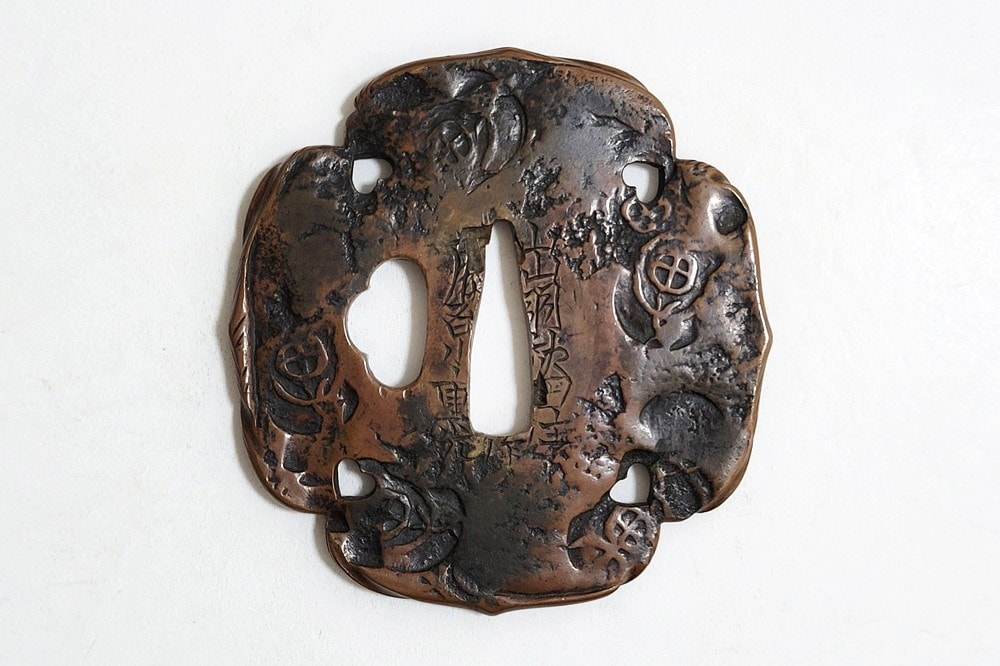
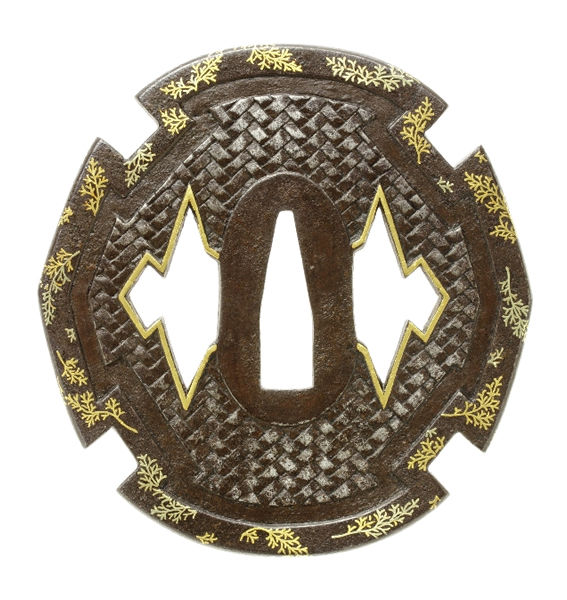
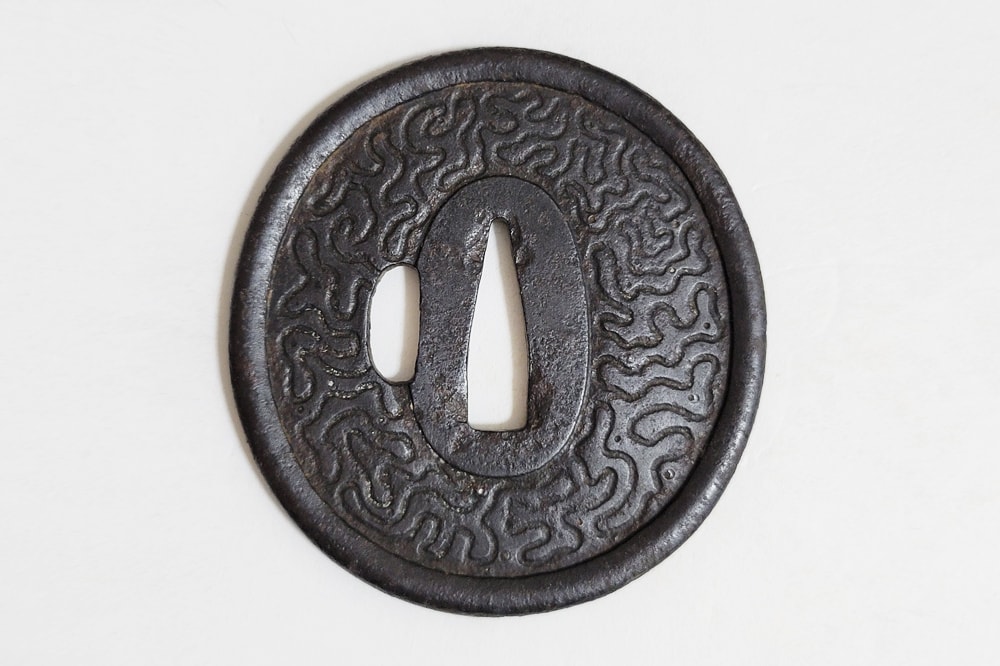
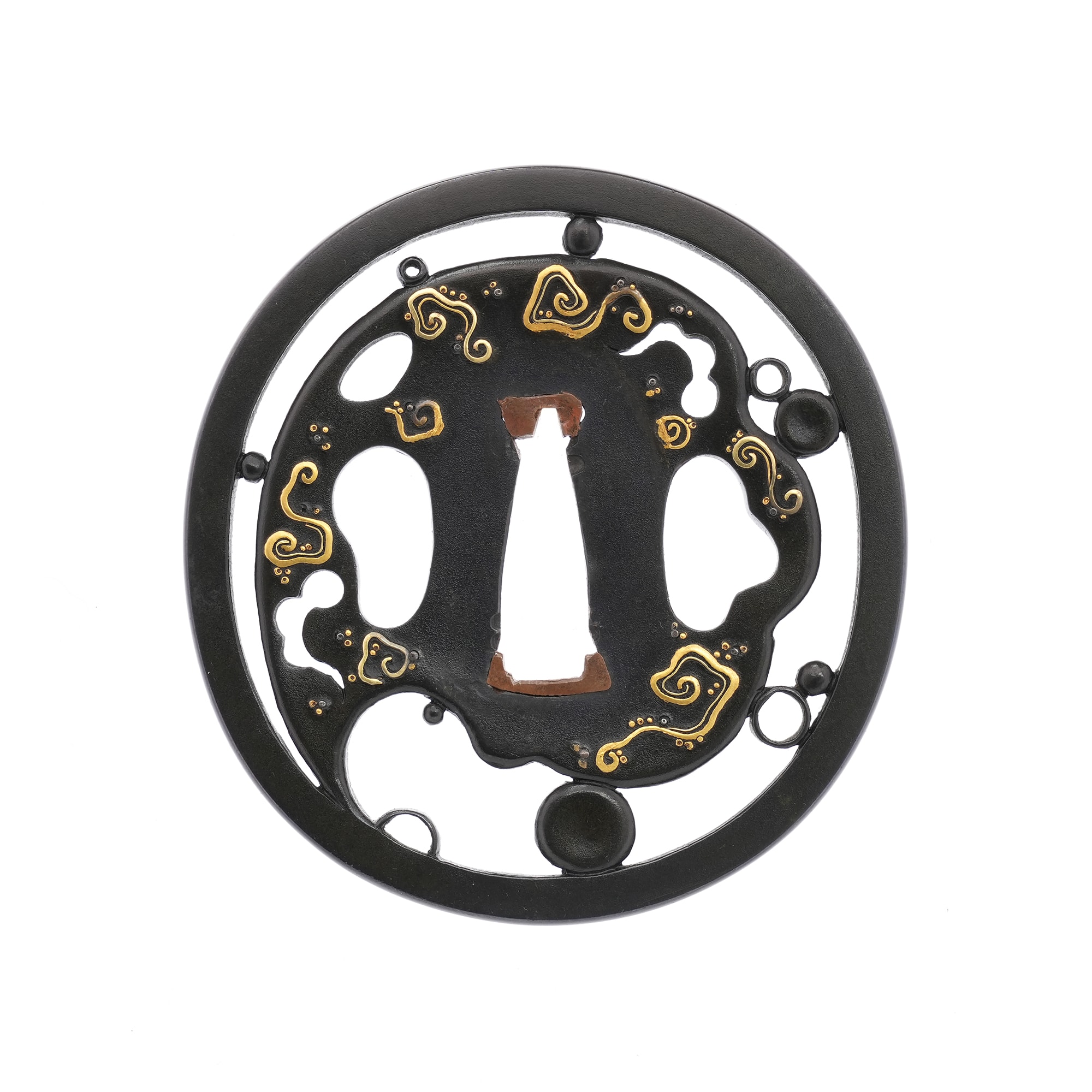
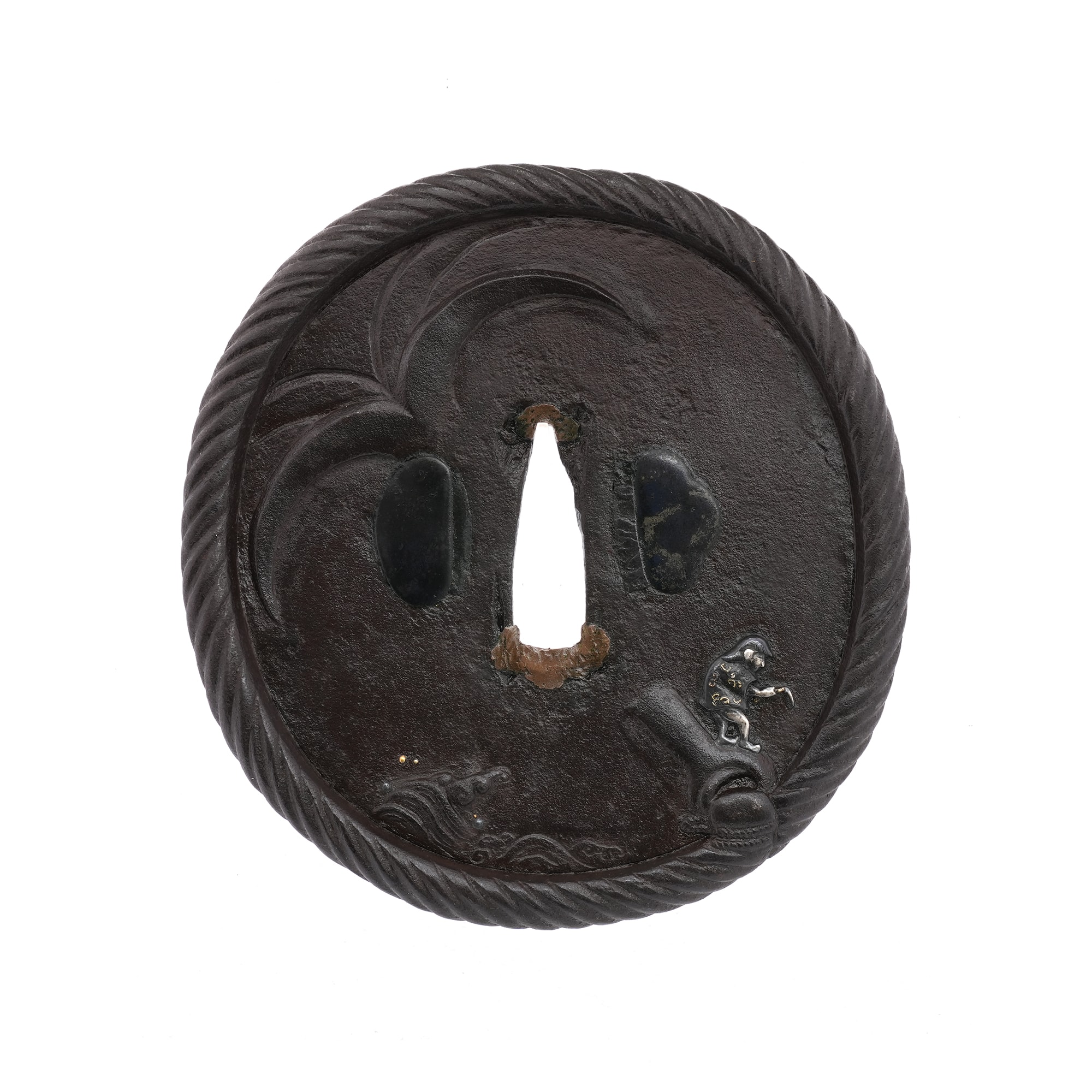
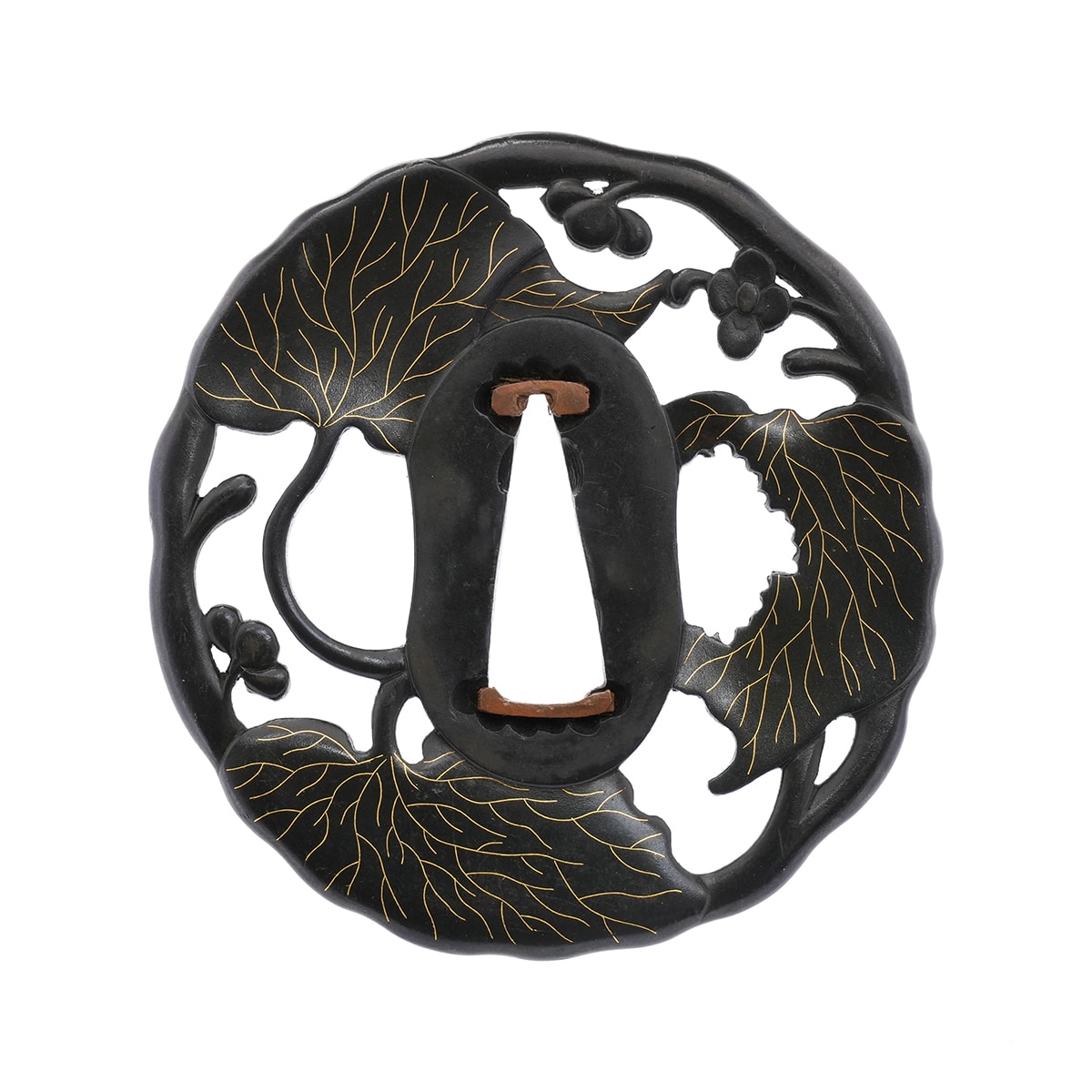
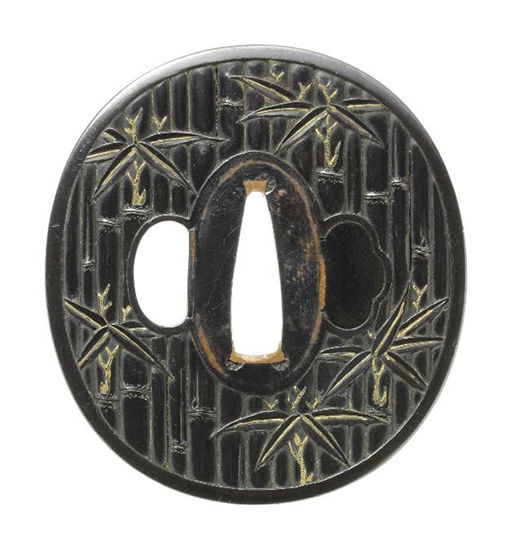
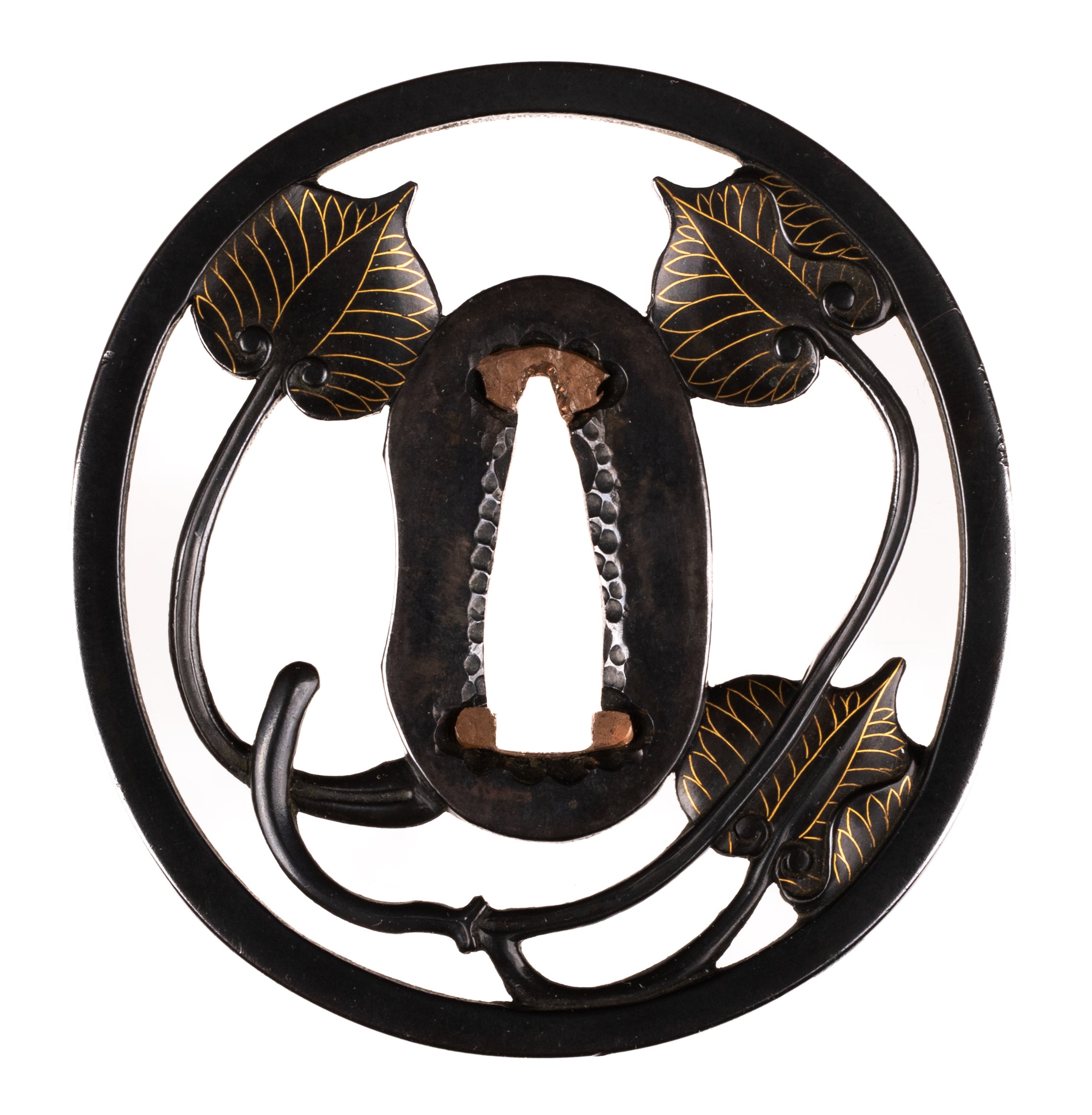
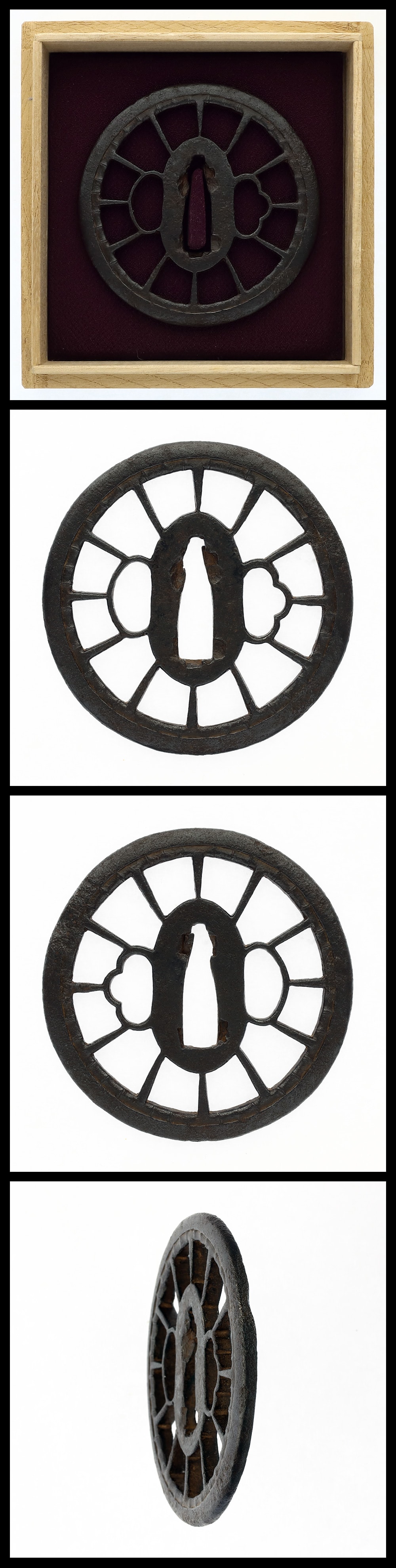
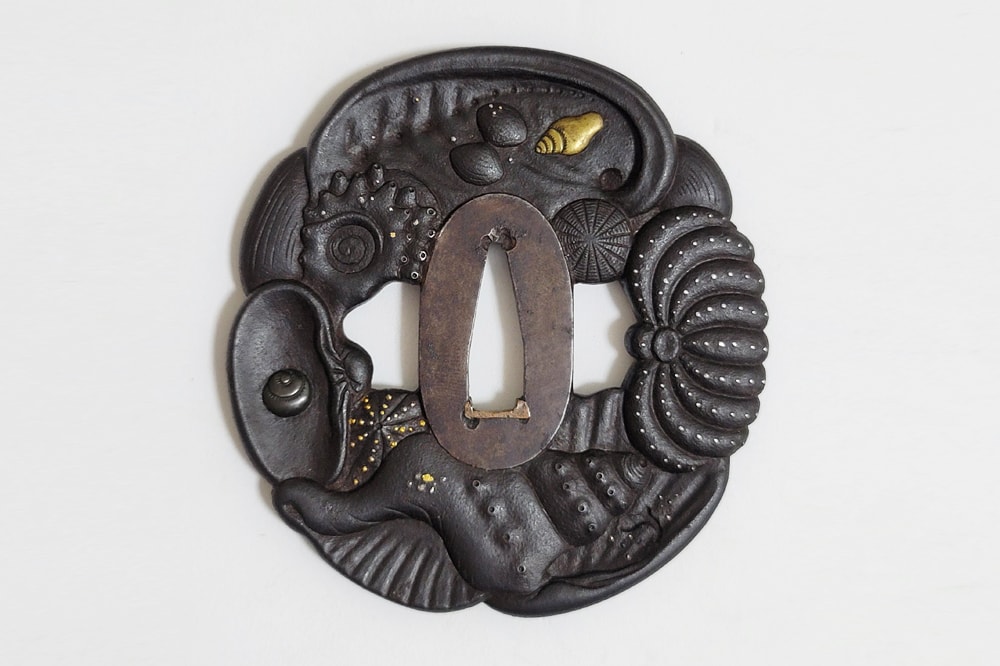
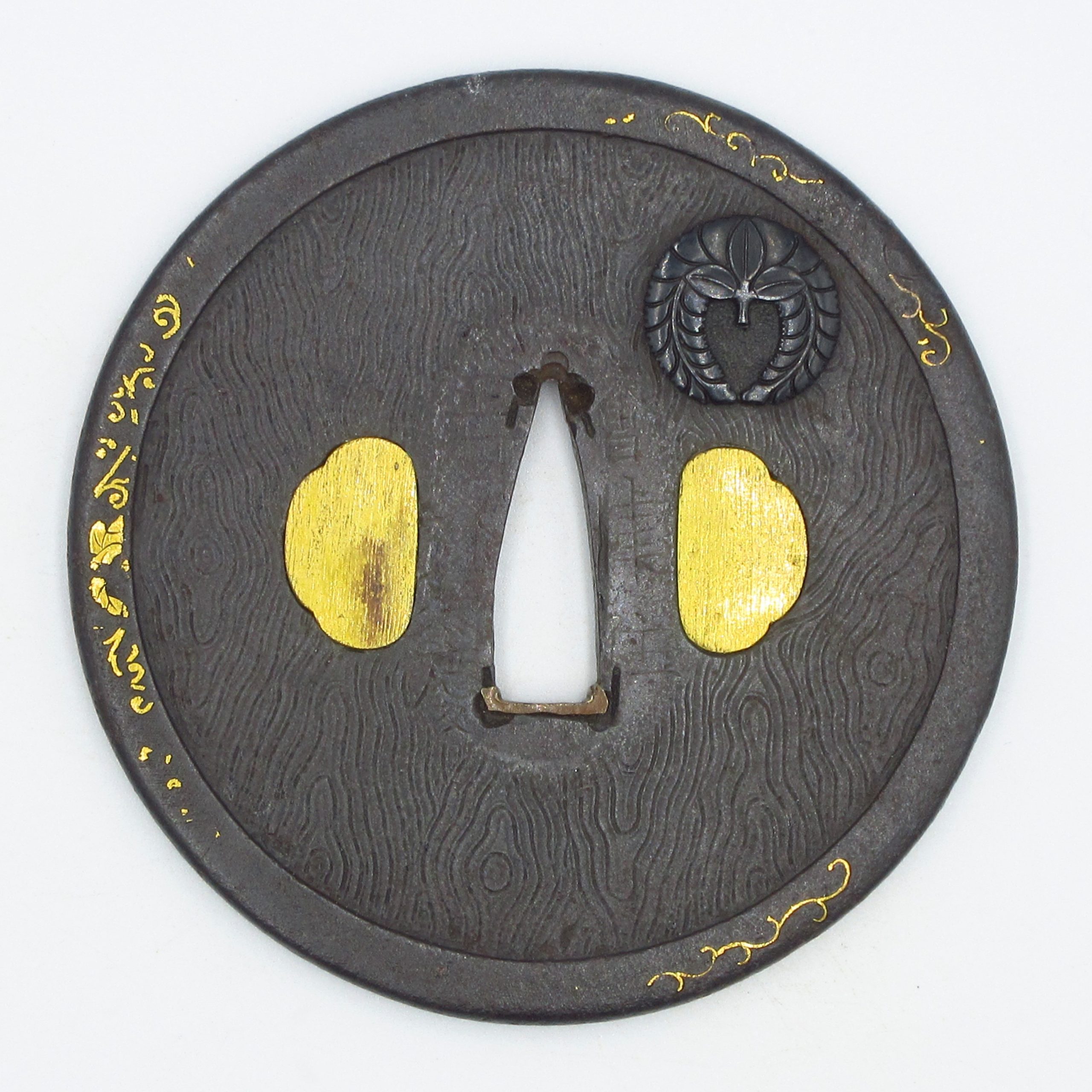
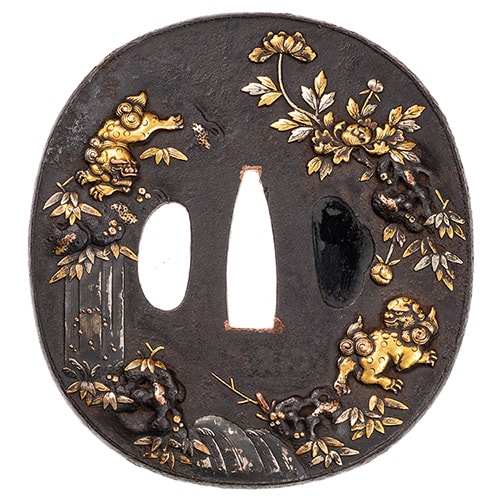
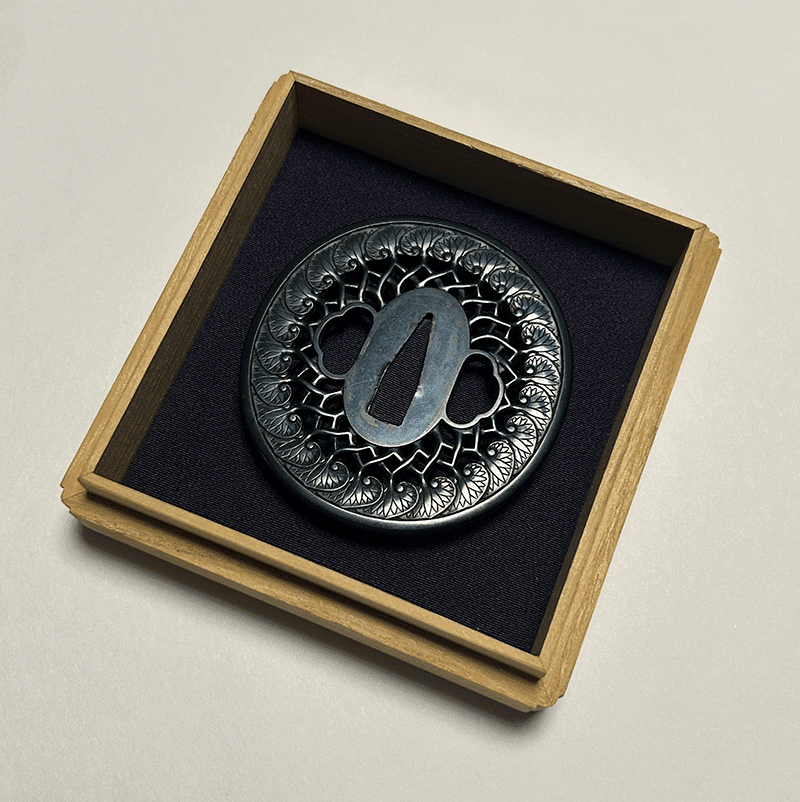
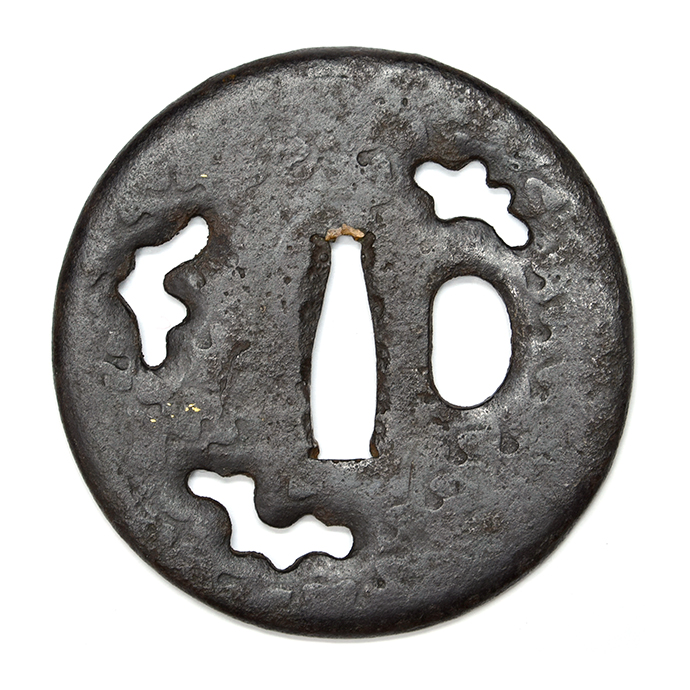
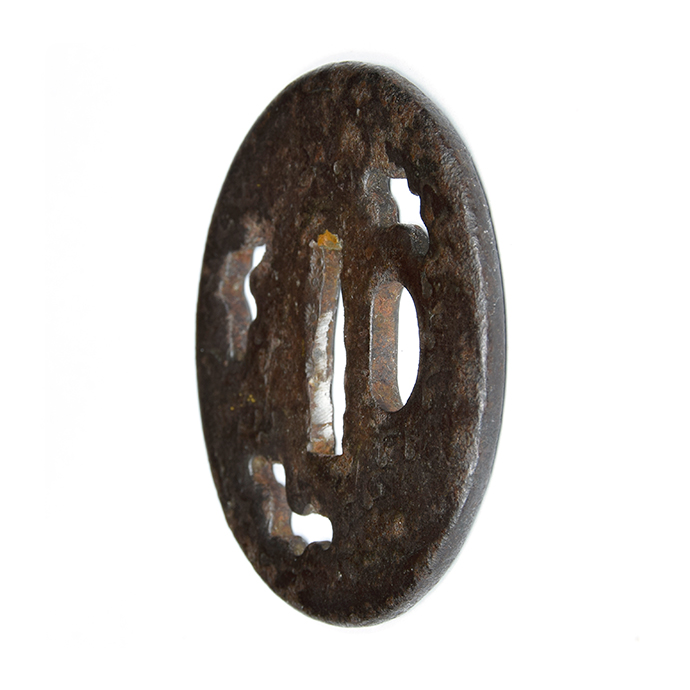
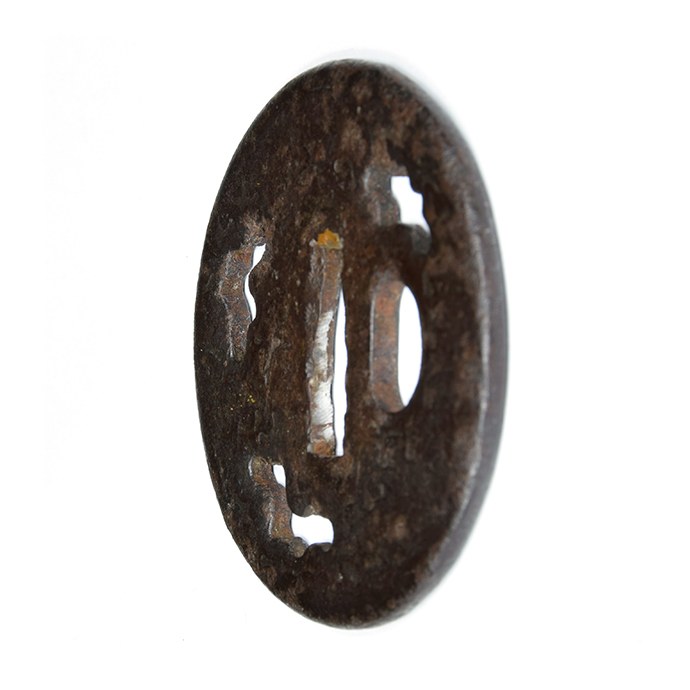
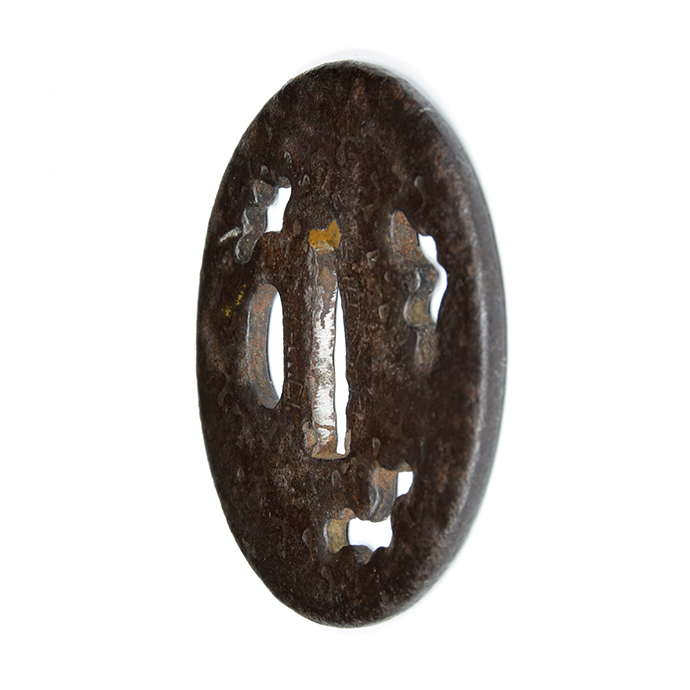
This is a tsuba by Shoami Shigenobu, who resided in Akita, Ugo Province, active during the early Edo period (Enpo/Tenna era, 1673-). It is a practical 'buben tsuba' designed for martial use, with carefully finished openwork and hitsu-ana corners to prevent hand discomfort from rubbing against the tsuba.
 NihontoWatch
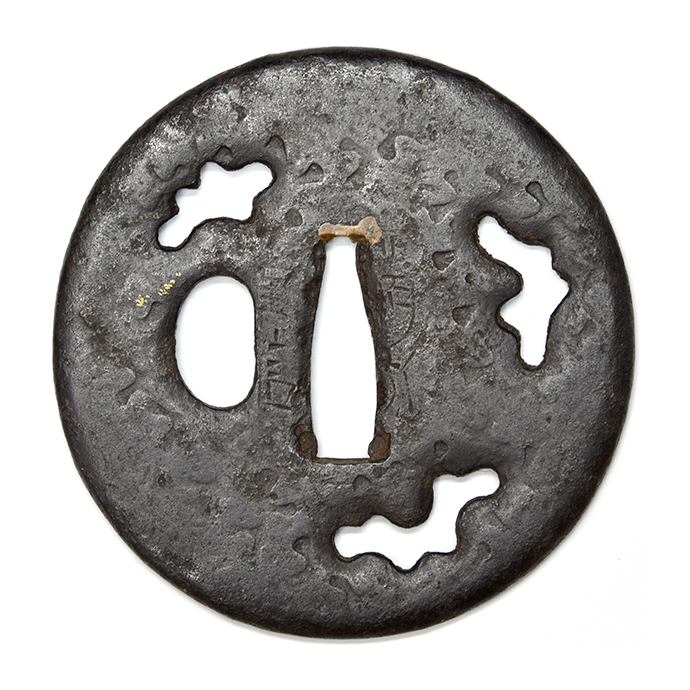
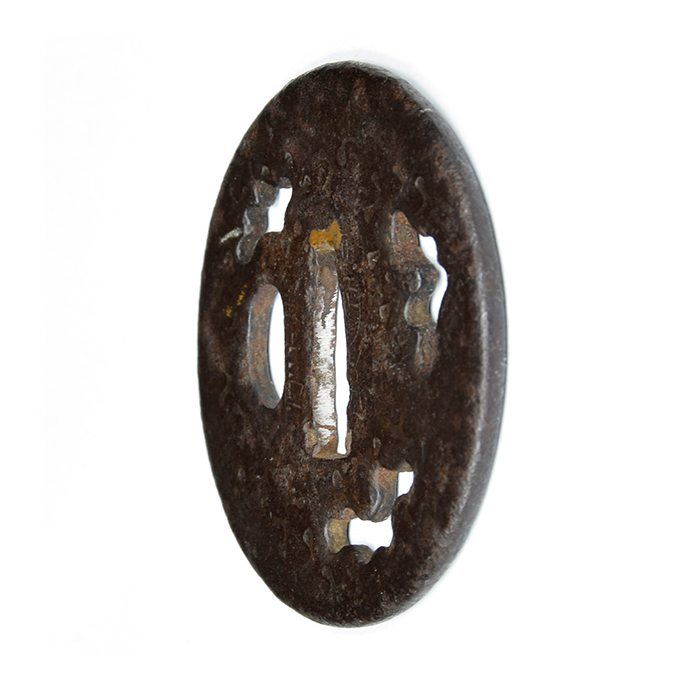
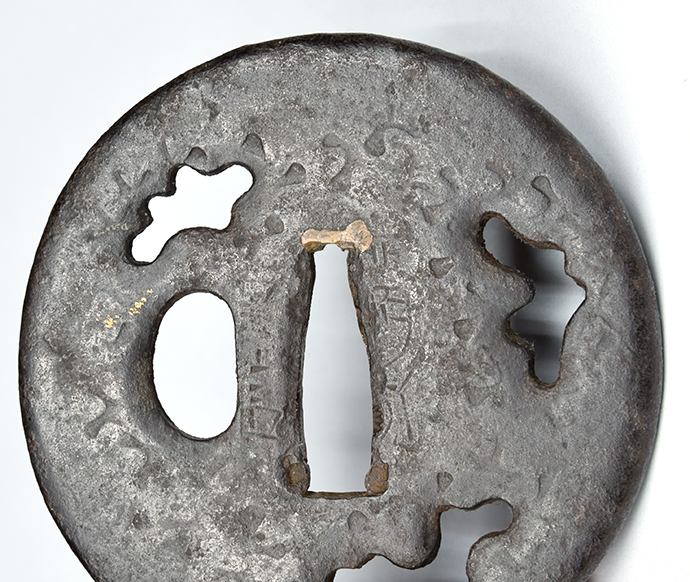
Iron-tsuba · Dewa
11 pieces on the market now
| Smith | Era | Designated |
|---|---|---|
| Denshichi伝七 | 1670 | 1 |
| Shoami Rokuya正阿弥六弥 | — | 1 |
We could not find an authenticity certificate on the seller’s listing. Japanese swords and fittings are normally papered by the NBTHK (or the NTHK). Without one, the attribution is the seller’s own assessment and has not been independently verified — treat it with caution and ask the dealer about certification before buying.
Returns accepted within 3 days of delivery for defective items or significant discrepancies; customer bears return shipping and bank fees.
¥30,800