NihontoWatch Mon

NihontoWatch

Market
Encyclopedia
Kantei
NihontoWatch Mon

NihontoWatch

Market
Encyclopedia
Kantei

Description

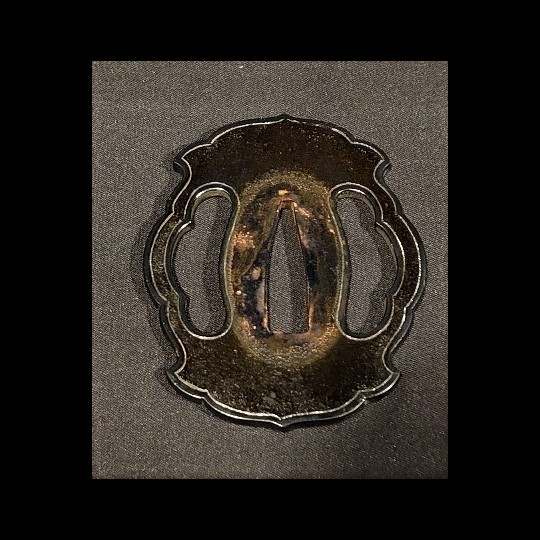
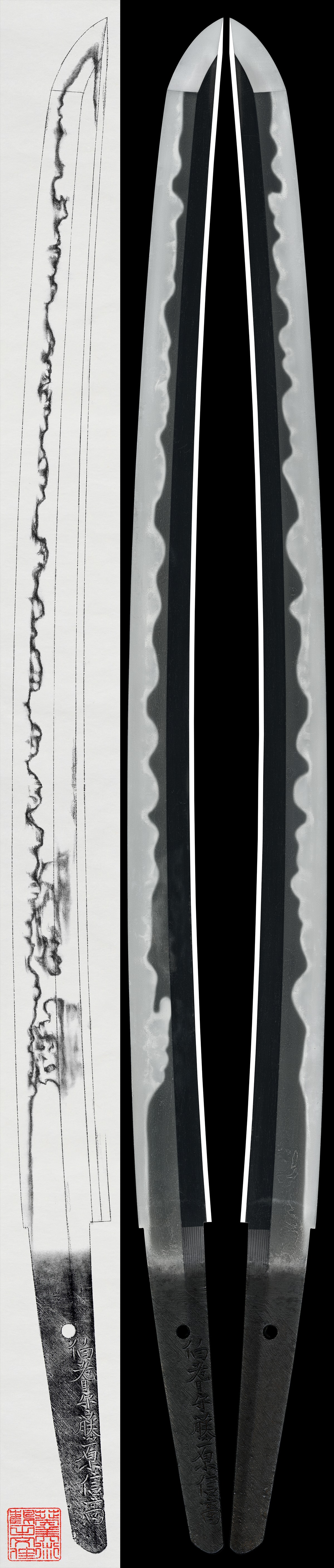
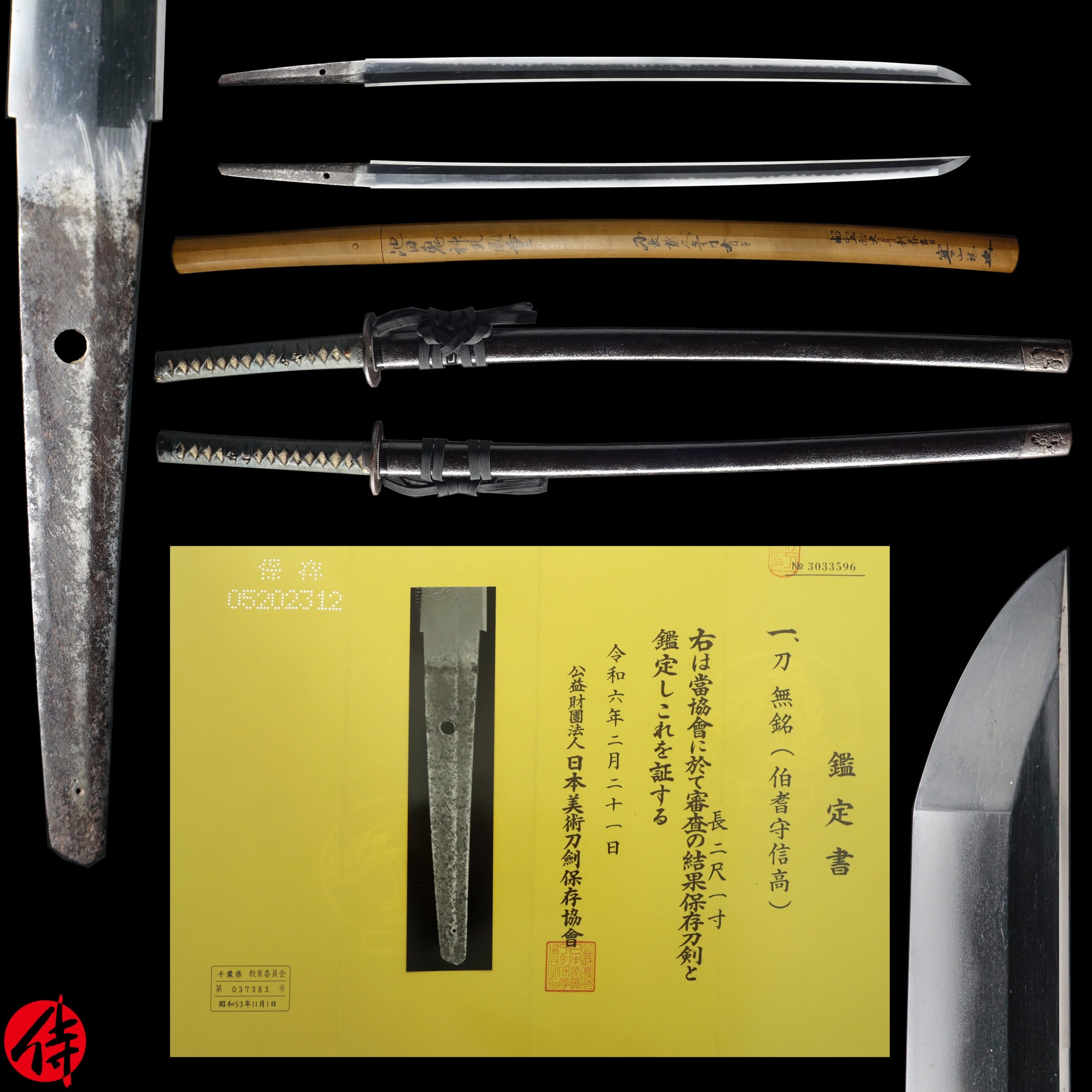
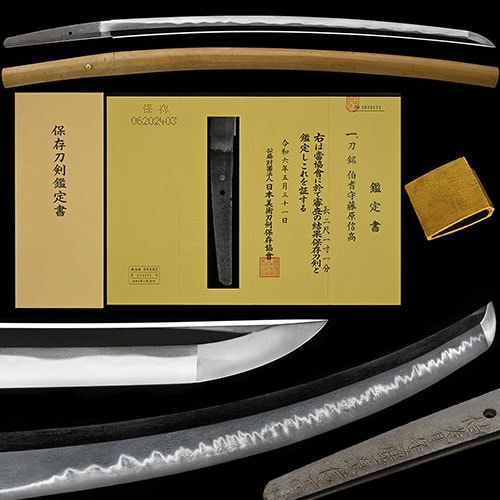
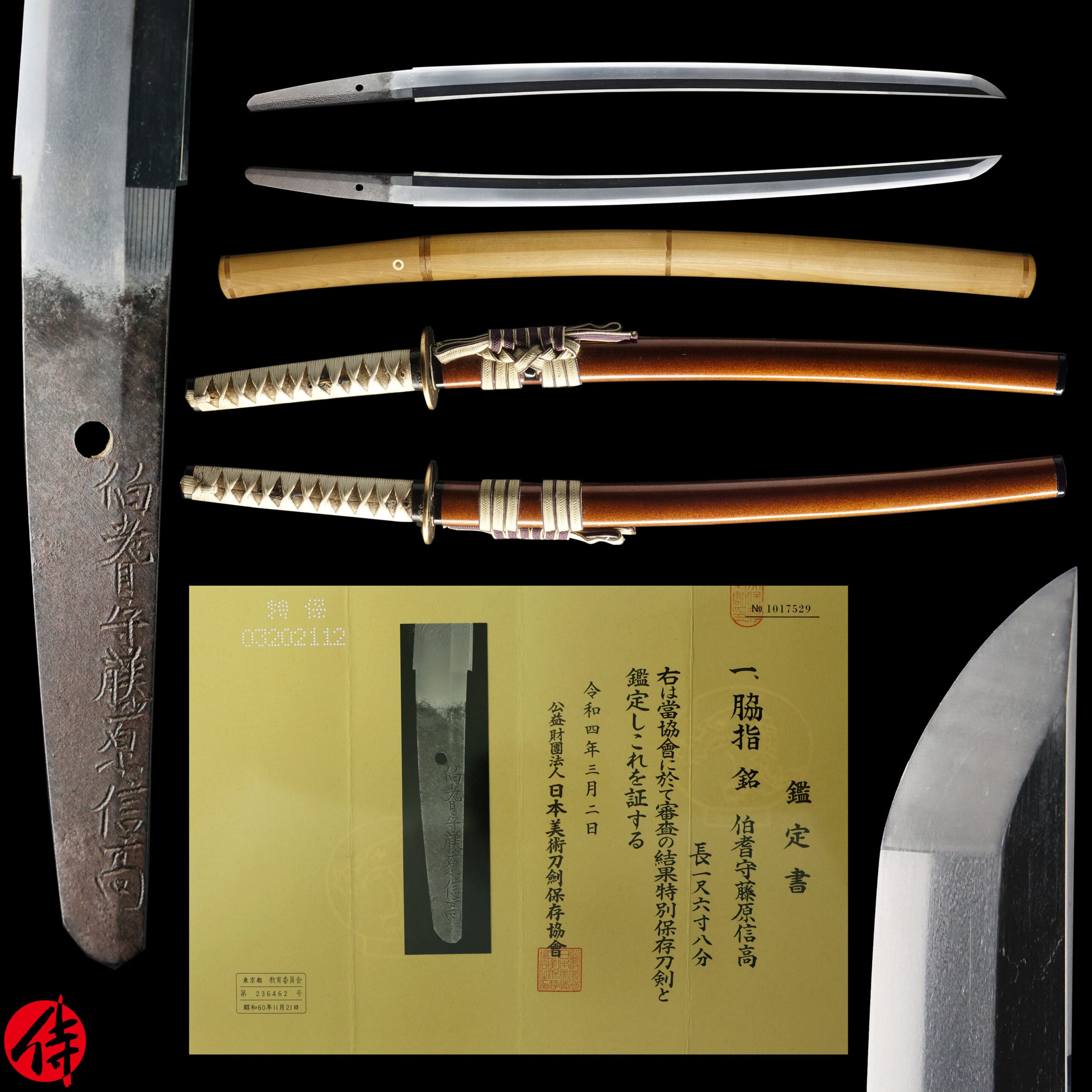
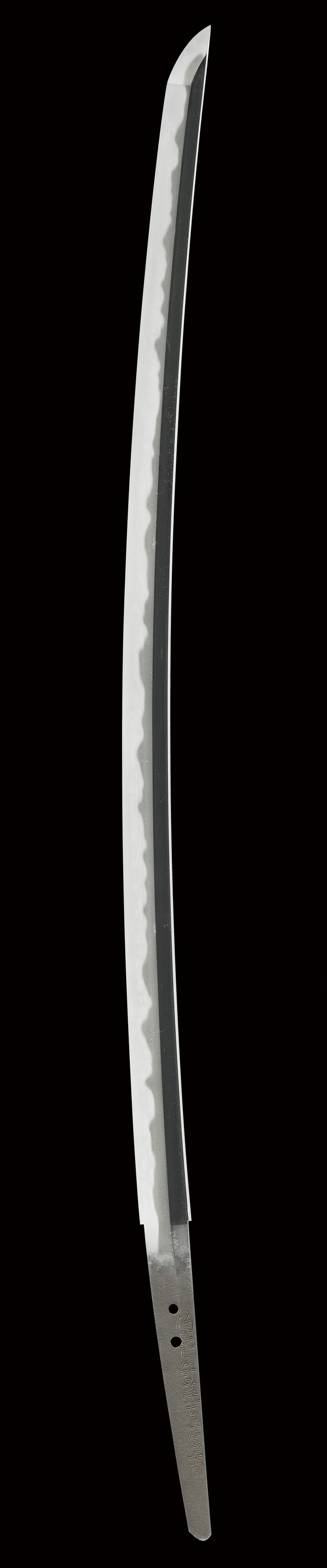
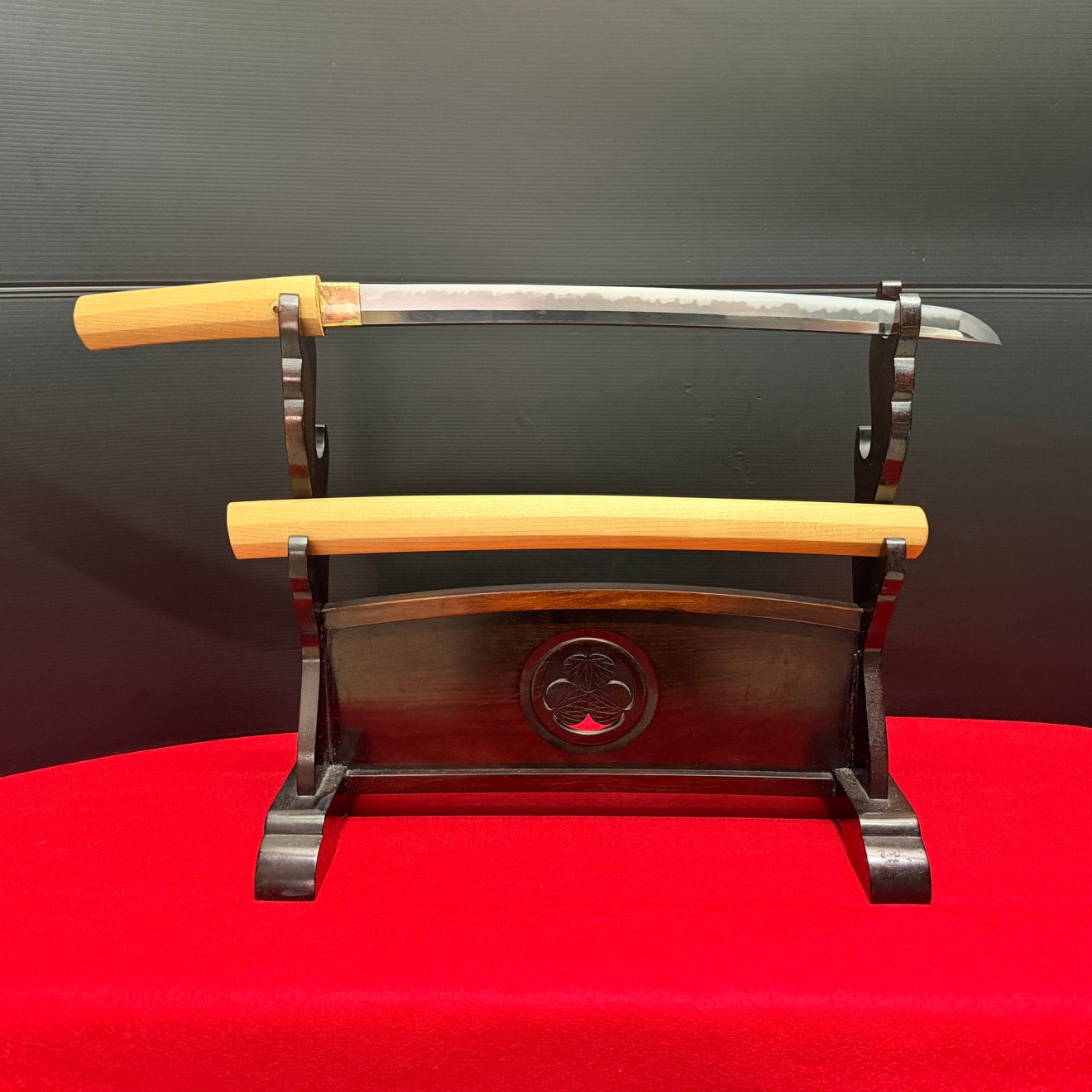
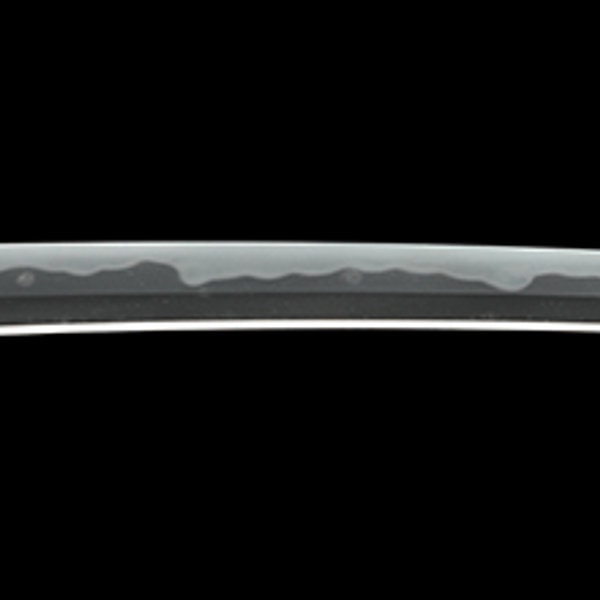
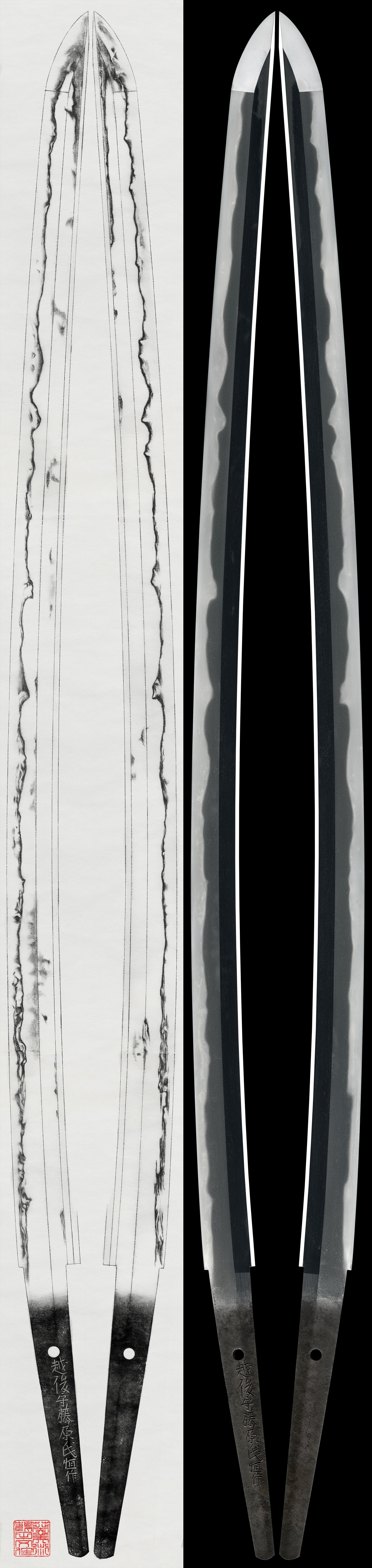
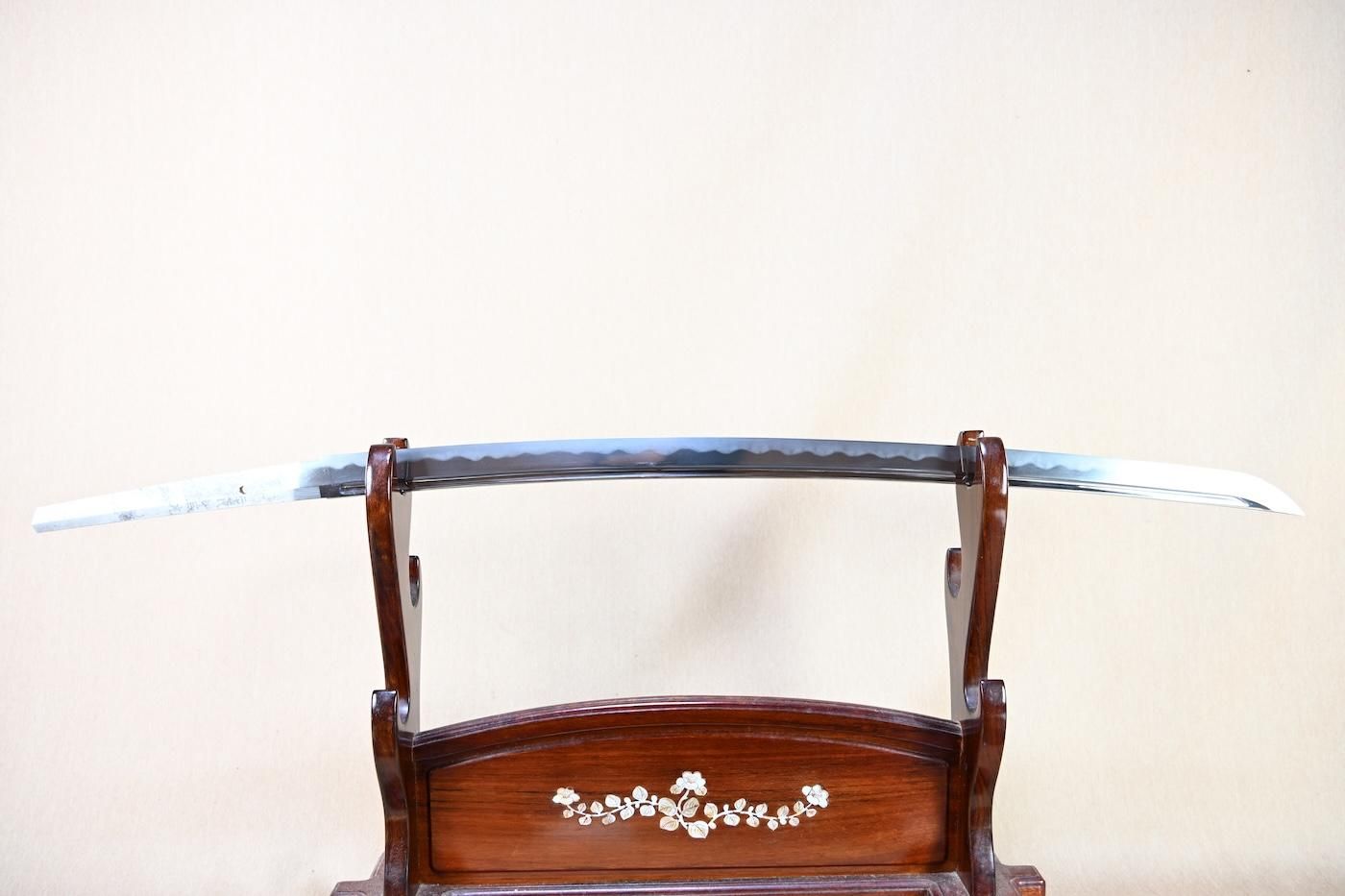
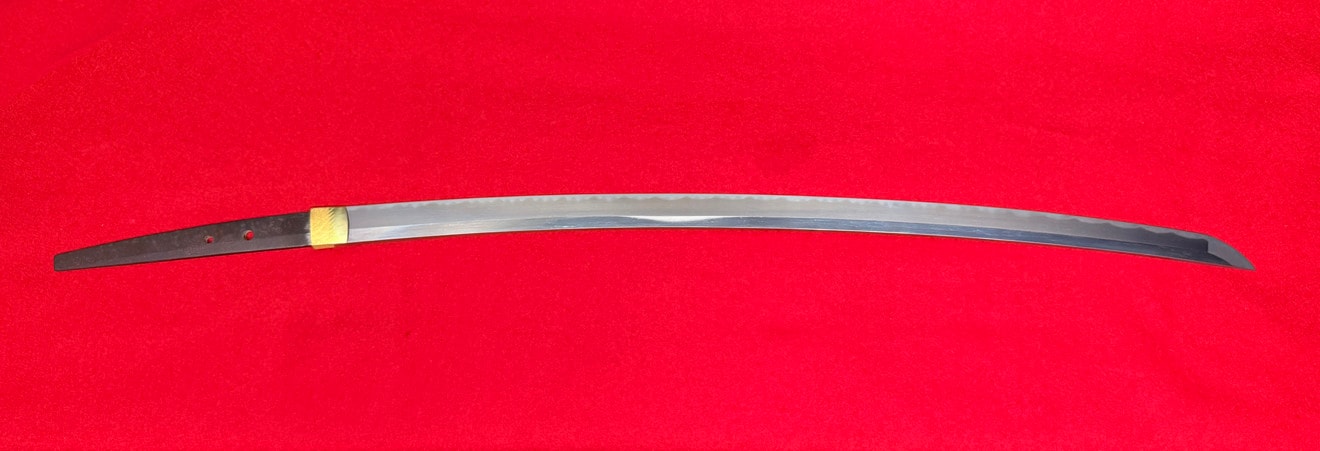
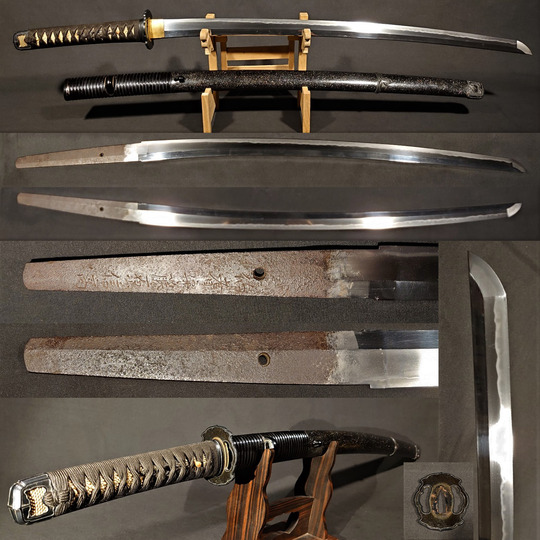
This is a katana by Hoki no Kami Fujiwara Nobutaka, an unappraised Shinto blade. It comes with a rare Satsuma Hantachi koshirae and a shirasaya. The blade features a well-forged itame jigane and a gunome choji hamon, with a robust construction suitable for practical use. The koshirae is particularly notable for its distinctive Satsuma style, including a unique kaeritsuno and shakudo fittings.

NihontoWatch MonNihontoWatch
MarketEncyclopediaKantei
Swords›Mino-den›Sanami›Nobutaka›Katana: Hoki no Kami Fujiwara Nobutaka - Shinto, Unappraised, with Shirasaya and Tsunagi - Satsuma Hantachi Koshirae
katana
Sanami Nobutaka

Katana: Hoki no Kami Fujiwara Nobutaka - Shinto, Unappraised, with Shirasaya and Tsunagi - Satsuma Hantachi Koshirae

mei · Seki · Shinto · nagasa 63.4cm · sori 1.8cm
SOLD
Sanami Nobutaka — 1 of 3
Sanami Nobutaka — 2 of 3
Sanami Nobutaka — 3 of 3
1 / 3
1 / 3
Sanami Nobutaka — 1 of 3Sanami Nobutaka — 2 of 3Sanami Nobutaka — 3 of 3
Measurements & details
Smith
Sanami Nobutaka
Type
Katana
School
Sanami
Period
Around 1581–1615(Keicho)
Province
Owari
Signature
Signed(100% of this smith's designated works are signed)
Measurements
Nagasa 63.4cmSori 1.8cmMotohaba 3.18cmSakihaba 2.2cmKasane 0.8cmWeight 802g
Description

This is a katana by Hoki no Kami Fujiwara Nobutaka, an unappraised Shinto blade. It comes with a rare Satsuma Hantachi koshirae and a shirasaya. The blade features a well-forged itame jigane and a gunome choji hamon, with a robust construction suitable for practical use. The koshirae is particularly notable for its distinctive Satsuma style, including a unique kaeritsuno and shakudo fittings.

About the maker

Nobutaka

信高

Mino-den · Owari · around 1581-1615

Fujishiro Jo-jo saku · Tōken Taikan top 21%

2 pieces on the market now

›

The first-generation Hoki no Kami Fujiwara Nobutaka was born in Eiroku 6 (1563) at Kami-Aruchi in Mino Province. Traditionally said to descend from the San'ami Kanekuni lineage, he received the court title of Hoki no Kami in Tensho 9 (1581) at the age of nineteen. He subsequently moved to Kiyosu in Owari Province and, in Keicho 15 (1610), accompanied Tokugawa Yoshinao to Nagoya, where he became one of the founding figures of the Owari shinto tradition. In Kan'ei 10 (1633) he retired under the Buddhist name Keiyu, dying three years later at seventy-six. His personal name was Kawamura Saemon, and the majority of his extant works are shinogi-zukuri katana and wakizashi, with hira-zukuri tanto and polearms comparatively few.

Nobutaka's forge work reveals the Mino tradition of his origin: itame-hada mixed with nagare-hada, tending toward hada-dachi, with thick ji-nie and chikei. His tempering ranges from tightly controlled notare with clear nioiguchi to bold, spirited compositions in which gunome-midare, tobiyaki, and yubashiri span into the shinogi-ji, developing into hitatsura-like all-over hardening. The nie is deep and sometimes coarsely formed, yielding nie-kuzure at the yakigashira and hotsure along the habuchi, punctuated by frequent kinsuji and sunagashi. His boshi tends to be deeply tempered with long kaeri, at times assuming an ichimai-like boldness.

Among the designated pieces, the Tensho 9 katana is celebrated as an utsushi after the renowned Inabae, executed with natural assurance immediately upon receiving his court title. His imposing o-kissaki katana display the wide-bodied proportions characteristic of the Momoyama period, while even his yari of extraordinary length show no breakdown in execution, demonstrating technical mastery across blade forms.

Historical importance

Where Nobutaka stands among comparable artisans: across all of nihontō, and within tradition, era, and period. The tiers (Foremost · Leading · Major · Notable) weigh official designations from the NBTHK and Japan's Agency for Cultural Affairs, together with historical honors of lasting repute such as the Sansaku and Meibutsu-chō.

随一
Foremost
屈指
Leading
有数
Major
著名
Notable

Select a lens to see how it's measured.

Designation record
3 designated works
Jūyō
3
2 works by Nobutaka on the market→
Nobutaka — full profileMino-den school

Dated Works

Years he was demonstrably active, proven by signed-and-dated blades

Active period
1581Editorial estimate: 1581–1615
1 of 3 designated works carry a date
About the school

Sanami

三阿弥

Mino-den · Mino

9 pieces on the market now

›

The San'ami line takes its root in Mino Province, where its head smith Kanenori (兼則) worked as one of the so-called Seki Seven Schools. The setsumei place Kanenori from the close of the Nanbokuchō period into the Ōei era of the early Muromachi, alongside Kanemoto and Kanesada among the representative hands of Sue-Seki, and the earliest extant signed tachi of his is appraised as no later than Ōei. A second early smith, Kanekuni (兼国), is recorded as belonging to the San'ami lineage and is judged to predate the Sue-Seki group proper; the remote ancestry given for him runs variously to a disciple of Naoe Kanetomo, to Yamato Kanekuni, or to Kanenori, though the setsumei note that nothing survives to confirm so distant a descent. From this Mino stock came Hōki no Kami Fujiwara Nobutaka (信高), born at Kami-Ōchi in Mino in 1563 and said to descend from San'ami Kanekuni. After receiving the title Hōki no Kami in Tenshō 9 (1581) he moved to Kiyosu in Owari and, serving Tokugawa Yoshinao, later settled at Nagoya, carrying the line into the early Shintō era through a second generation who took the tonsure in Kanbun 2 (1662). Across the corpus the jigane is itame, often closely forged and tending to nagare-hada or flowing grain along the edge, with ji-nie and a frequent standing of the grain (hada-dachi); a faint whitish cast (shirake) marks the older Mino work of Kanenori and Kanekuni. The temper rests on suguha as a base. In the early hands it is a tight, clear (saete) suguha in nioi-deki, sometimes mixed with small gunome, angular elements and pointed ha, carrying ashi, hotsure and scattered tobiyaki.

The Nobutaka works open this out: a broad suguha shifting to shallow notare, ko-notare with a gunome-flavored edge, deep nioi with nie unevenly applied and partly coarse, nie-kuzure at the yakigashira, kuichigai-ba, kinsuji, sunagashi, yubashiri and tobiyaki that climb into the shinogi-ji until the upper half reads as hitatsura. The bōshi runs to sugu with ko-maru, at times midare-komi, pointed, or hakikake, and the early swords keep a slender, high-sori tachi shape while Nobutaka's carry the wide-bodied, ō-kissaki form of the Momoyama transition. The hand is recognized in this pairing of a flowing Mino itame with a suguha core that, in the descendants, breaks toward bold hitatsura. For kantei, the setsumei fix several anchors. In Kanenori's signature the scooped chisel at the fourth stroke of the character kane (兼) is read as a trait of late Nanbokuchō through Ōei work, matched in dated Kaneyoshi mei; the clear suguha of Kanekuni is likened to a Zenjō Kaneyoshi masterpiece. The jizō-flavored bōshi and the nagare-mixed itame in Nobutaka are named as the surviving stamp of the Mino root beneath his Owari manner, and one of his katana is recorded as an Inabae-utsushi. Provenance runs through the corpus: a Kanekuni bears kinzōgan recording it as the sashiryō of Ōkubo Genban-no-jō Tadanari, lord of Odawara in Sagami, worn at the age of ninety-three; Kanenori's tachi descended in the Yamanouchi family. Among the Owari yari makers beginning with Masatsune, Nobutaka's yari of extraordinary length is held in particular regard, and the second-generation Nobutaka is judged no less skilled than his father, with the finest extant Nobutaka works counted to his hand. Learn more →

5 recorded smiths7 designated works
Leading smiths
SmithEraDesignated
Nobutaka信高1581-16153
Kanekuni兼國1455-14571
Kanenori兼則1370-13721
Nobutaka信高1624-16441
Nobutaka信高1673-16811
Explore the Sanami school →

Historical context

Unification closed the mass market, and Seki’s smiths moved to where the new money was: the Mishina line to Kyōto with court titles, Daidō smiths to castle towns across the provinces. Mino became the great technical ancestor of the Shintō age.

Mino in the Momoyama period →

Warning — certificate not found

We could not find an authenticity certificate on the seller’s listing. Japanese swords and fittings are normally papered by the NBTHK (or the NTHK). Without one, the attribution is the seller’s own assessment and has not been independently verified — treat it with caution and ask the dealer about certification before buying.

Seller
T
Token Hasegawa
🇯🇵Ships from Japan
›
✓Verified dealertouken-hasegawa.jp
View all of Token Hasegawa’s listings→View this item on the dealer’s site→

More works by Sanami Nobutaka

View all →
Samurai Nippon
Hozon
Wakizashi - Hozon - by Sanami Nobutaka - Houkinokami Fujiwara Nobutaka (1st Gen.)Wakizashi - Hozon - by Sanami Nobutaka - Houkinokami Fujiwara Nobutaka (1st Gen.)

Wakizashi

BySanami Nobutaka
¥498,000
Choshuya
Tokuho
Katana - Tokuho - by Sanami Nobutaka - Signed Saki no Hakushu Nobutaka NyudoKatana - Tokuho - by Sanami Nobutaka - Signed Saki no Hakushu Nobutaka Nyudo

Katana

BySanami Nobutaka
Ask

Previously sold by Sanami Nobutaka

Aoi Art
Tokuho
Wakizashi - Tokuho - by Sanami Nobutaka - Hoki no Kami Fujiwara NobutakaWakizashi - Tokuho - by Sanami Nobutaka - Hoki no Kami Fujiwara Nobutaka
Sold

Wakizashi

BySanami Nobutaka
SOLD
Choshuya
Naginata - by Sanami Nobutaka - Ubu-nakago Mumei: Hoki no Kami NobutakaNaginata - by Sanami Nobutaka - Ubu-nakago Mumei: Hoki no Kami Nobutaka
Sold

Naginata

BySanami Nobutaka
SOLD
Samurai Museum
Tokuho
Wakizashi - Tokuho - by Sanami Nobutaka - Antique Japanese Sword Wakizashi Signed by Hoki no Kami Nobutaka NBTHK Tokubetsu Hozon CertificateWakizashi - Tokuho - by Sanami Nobutaka - Antique Japanese Sword Wakizashi Signed by Hoki no Kami Nobutaka NBTHK Tokubetsu Hozon Certificate
Sold

Wakizashi

BySanami Nobutaka
SOLD
Samurai Museum
Hozon
Katana - Hozon - by Sanami Nobutaka - Antique Japanese Sword Katana Attributed to Hoki no Kami Nobutaka NBTHK Hozon CertificateKatana - Hozon - by Sanami Nobutaka - Antique Japanese Sword Katana Attributed to Hoki no Kami Nobutaka NBTHK Hozon Certificate
Sold

Katana

BySanami Nobutaka
SOLD
Samurai Museum
Hozon
Wakizashi - Hozon - by Sanami Nobutaka - Antique Japanese Sword Wakizashi Attributed to Hoki no Kami Nobutaka NBTHK Hozon CertificateWakizashi - Hozon - by Sanami Nobutaka - Antique Japanese Sword Wakizashi Attributed to Hoki no Kami Nobutaka NBTHK Hozon Certificate
Sold

Wakizashi

BySanami Nobutaka
SOLD
Eirakudo
Hozon
Katana - Hozon - by Sanami Nobutaka - Nobutaka - Hozon TokenKatana - Hozon - by Sanami Nobutaka - Nobutaka - Hozon Token
Sold

Katana

BySanami Nobutaka
SOLD
Unique Japan
Hozon
Wakizashi - Hozon - by Sanami Nobutaka - Hôki no Kami Nobutaka, 1st GenerationWakizashi - Hozon - by Sanami Nobutaka - Hôki no Kami Nobutaka, 1st Generation
Sold

Wakizashi

BySanami Nobutaka
SOLD
Tokyo Sword
Wakizashi - by Sanami Nobutaka - Hokinokami Fujiwara Nobutaka signed, Edo periodWakizashi - by Sanami Nobutaka - Hokinokami Fujiwara Nobutaka signed, Edo period
Sold

Wakizashi

BySanami Nobutaka
SOLD

More from the Sanami school

View all →
Samurai Nippon
Tokuho
Katana - Tokuho - by Sanami Nobutaka - Katana (Father and Son Collaboration): Houkinokami Fujiwarano Nobutaka (3rd Gen.) & Zenhakushu Nobutaka Nyudo (2nd Gen.)Katana - Tokuho - by Sanami Nobutaka - Katana (Father and Son Collaboration): Houkinokami Fujiwarano Nobutaka (3rd Gen.) & Zenhakushu Nobutaka Nyudo (2nd Gen.)

Katana

BySanami Nobutaka
¥1,580,000
Yazawa Shokai
Hozon
Wakizashi - Hozon - by Sanami Nobutaka - Hoki no Kami NobutakaWakizashi - Hozon - by Sanami Nobutaka - Hoki no Kami Nobutaka

Wakizashi

BySanami Nobutaka
¥300,000
Nihontocraft
Tokuho
Wakizashi - Tokuho - by Sanami Nobutaka - Wakizashi by Owari 3rd Generation Hoki no Kami NobutakaWakizashi - Tokuho - by Sanami Nobutaka - Wakizashi by Owari 3rd Generation Hoki no Kami Nobutaka

Wakizashi

BySanami Nobutaka
Ask
Eirakudo
Hozon
Wakizashi - Hozon - by Sanami School - Nobutaka - Hozon TokenWakizashi - Hozon - by Sanami School - Nobutaka - Hozon Token

Wakizashi

BySanami School
¥700,000
Touken Komachi
Hozon
Wakizashi - Hozon - by Sanami School - Hoki-no-kami NobutakaWakizashi - Hozon - by Sanami School - Hoki-no-kami Nobutaka

Wakizashi

BySanami School
¥800,000
Choshuya
Wakizashi - by Sanami Nobutaka - Hoki no Kami Fujiwara Nobutaka (3rd Gen.)Wakizashi - by Sanami Nobutaka - Hoki no Kami Fujiwara Nobutaka (3rd Gen.)

Wakizashi

BySanami Nobutaka
¥800,000
Choshuya
Katana - by Sanami Nobutaka - Japanese Sword for Sale | Ginza Choshuya | Signed: Former Hoki no Kami Nobutaka Nyudo, 1723Katana - by Sanami Nobutaka - Japanese Sword for Sale | Ginza Choshuya | Signed: Former Hoki no Kami Nobutaka Nyudo, 1723

Katana

BySanami Nobutaka
Ask

More from the Mino tradition

View all →
Samurai Nippon
Tokuho
Wakizashi - Tokuho - by Shizu Kaneuji - Naginata-naoshi Wakizashi: Mumei (Attributed to Shizu)Wakizashi - Tokuho - by Shizu Kaneuji - Naginata-naoshi Wakizashi: Mumei (Attributed to Shizu)

Wakizashi

ByShizu Kaneuji
¥1,550,000
Toukentakarado
Tokuho
Naginata - Tokuho - by Aki Teruhiro School - Harima no Kami Fujiwara TeruhiroNaginata - Tokuho - by Aki Teruhiro School - Harima no Kami Fujiwara Teruhiro

Naginata

ByAki Teruhiro School
¥850,000
Samurai Nippon
Jūyō
Katana - Jūyō - by Shizu Kaneuji - Shizu (Mumei)Katana - Jūyō - by Shizu Kaneuji - Shizu (Mumei)

Katana

ByShizu Kaneuji
¥9,500,000
Aoi Art
Tokuho
Katana - Tokuho - by Naoe Shizu School - Mumei (Attributed to Naoe Shizu)Katana - Tokuho - by Naoe Shizu School - Mumei (Attributed to Naoe Shizu)

Katana

ByNaoe Shizu School
¥2,200,000
Supein Nihonto
Tokuho
Katana - Tokuho - by Sakakura Seki Masatoshi - Japanese Katana: Masatoshi – Sakakura Seki | NBTHK Tokubetsu HozonKatana - Tokuho - by Sakakura Seki Masatoshi - Japanese Katana: Masatoshi – Sakakura Seki | NBTHK Tokubetsu Hozon

Katana

BySakakura Seki Masatoshi
¥12,500
Choshuya
Tokuho
Katana - Tokuho - by Naoe Shizu School - O-suriage Mumei, attributed to Naoe ShizuKatana - Tokuho - by Naoe Shizu School - O-suriage Mumei, attributed to Naoe Shizu

Katana

ByNaoe Shizu School
¥2,500,000
Samurai Museum
Tokuho
Katana - Tokuho - by Seki Ujifusa - Wakasa no Kami Fujiwara UjifusaKatana - Tokuho - by Seki Ujifusa - Wakasa no Kami Fujiwara Ujifusa

Katana

BySeki Ujifusa
¥18,862
Aoi Art
Tokuho
Katana - Tokuho - by Yamato Shizu School - Yamato Shizu Kaneuji (with gold-inlaid attribution) Hon'ami (kao) (Koson)Katana - Tokuho - by Yamato Shizu School - Yamato Shizu Kaneuji (with gold-inlaid attribution) Hon'ami (kao) (Koson)

Katana

ByYamato Shizu School
¥2,300,000

Swords

  • Katana
  • Wakizashi
  • Tantō
  • Tachi
  • Naginata
  • Yari

Fittings

  • Tsuba
  • Fuchi-Kashira
  • Kozuka
  • Menuki

Armor

  • Kabuto
  • Samurai Armor

By Certification

  • Tokujū
  • Jūyō
  • Tokuho
  • Hozon

Resources

  • Dealer Directory
  • Artist Directory
  • The Daily Kantei
  • Glossary
  • Browse All
Nihontowatch© 2026
TermsPrivacyCookiesAbout

Description

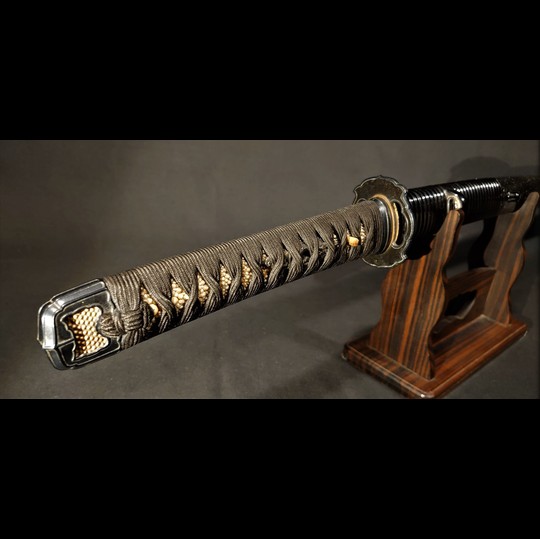
This is a katana by Hoki no Kami Fujiwara Nobutaka, an unappraised Shinto blade. It comes with a rare Satsuma Hantachi koshirae and a shirasaya. The blade features a well-forged itame jigane and a gunome choji hamon, with a robust construction suitable for practical use. The koshirae is particularly notable for its distinctive Satsuma style, including a unique kaeritsuno and shakudo fittings.

NihontoWatch MonNihontoWatch
MarketEncyclopediaKantei
Swords›Mino-den›Sanami›Nobutaka›Katana: Hoki no Kami Fujiwara Nobutaka - Shinto, Unappraised, with Shirasaya and Tsunagi - Satsuma Hantachi Koshirae
katana
Sanami Nobutaka

Katana: Hoki no Kami Fujiwara Nobutaka - Shinto, Unappraised, with Shirasaya and Tsunagi - Satsuma Hantachi Koshirae

mei · Seki · Shinto · nagasa 63.4cm · sori 1.8cm
SOLD
Sanami Nobutaka — 1 of 3
Sanami Nobutaka — 2 of 3
Sanami Nobutaka — 3 of 3
1 / 3
1 / 3
Sanami Nobutaka — 1 of 3Sanami Nobutaka — 2 of 3Sanami Nobutaka — 3 of 3
Measurements & details
Smith
Sanami Nobutaka
Type
Katana
School
Sanami
Period
Around 1581–1615(Keicho)
Province
Owari
Signature
Signed(100% of this smith's designated works are signed)
Measurements
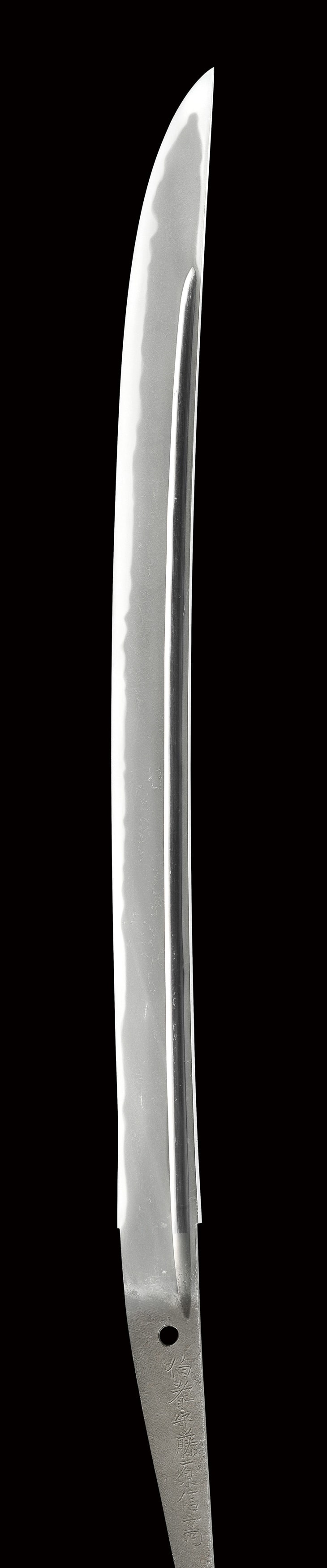
Nagasa 63.4cmSori 1.8cmMotohaba 3.18cmSakihaba 2.2cmKasane 0.8cmWeight 802g
Description

This is a katana by Hoki no Kami Fujiwara Nobutaka, an unappraised Shinto blade. It comes with a rare Satsuma Hantachi koshirae and a shirasaya. The blade features a well-forged itame jigane and a gunome choji hamon, with a robust construction suitable for practical use. The koshirae is particularly notable for its distinctive Satsuma style, including a unique kaeritsuno and shakudo fittings.

About the maker

Nobutaka

信高

Mino-den · Owari · around 1581-1615

Fujishiro Jo-jo saku · Tōken Taikan top 21%

2 pieces on the market now

›

The first-generation Hoki no Kami Fujiwara Nobutaka was born in Eiroku 6 (1563) at Kami-Aruchi in Mino Province. Traditionally said to descend from the San'ami Kanekuni lineage, he received the court title of Hoki no Kami in Tensho 9 (1581) at the age of nineteen. He subsequently moved to Kiyosu in Owari Province and, in Keicho 15 (1610), accompanied Tokugawa Yoshinao to Nagoya, where he became one of the founding figures of the Owari shinto tradition. In Kan'ei 10 (1633) he retired under the Buddhist name Keiyu, dying three years later at seventy-six. His personal name was Kawamura Saemon, and the majority of his extant works are shinogi-zukuri katana and wakizashi, with hira-zukuri tanto and polearms comparatively few.

Nobutaka's forge work reveals the Mino tradition of his origin: itame-hada mixed with nagare-hada, tending toward hada-dachi, with thick ji-nie and chikei. His tempering ranges from tightly controlled notare with clear nioiguchi to bold, spirited compositions in which gunome-midare, tobiyaki, and yubashiri span into the shinogi-ji, developing into hitatsura-like all-over hardening. The nie is deep and sometimes coarsely formed, yielding nie-kuzure at the yakigashira and hotsure along the habuchi, punctuated by frequent kinsuji and sunagashi. His boshi tends to be deeply tempered with long kaeri, at times assuming an ichimai-like boldness.

Among the designated pieces, the Tensho 9 katana is celebrated as an utsushi after the renowned Inabae, executed with natural assurance immediately upon receiving his court title. His imposing o-kissaki katana display the wide-bodied proportions characteristic of the Momoyama period, while even his yari of extraordinary length show no breakdown in execution, demonstrating technical mastery across blade forms.

Historical importance

Where Nobutaka stands among comparable artisans: across all of nihontō, and within tradition, era, and period. The tiers (Foremost · Leading · Major · Notable) weigh official designations from the NBTHK and Japan's Agency for Cultural Affairs, together with historical honors of lasting repute such as the Sansaku and Meibutsu-chō.

随一
Foremost
屈指
Leading
有数
Major
著名
Notable

Select a lens to see how it's measured.

Designation record
3 designated works
Jūyō
3
2 works by Nobutaka on the market→
Nobutaka — full profileMino-den school

Dated Works

Years he was demonstrably active, proven by signed-and-dated blades

Active period
1581Editorial estimate: 1581–1615
1 of 3 designated works carry a date
About the school

Sanami

三阿弥

Mino-den · Mino

9 pieces on the market now

›

The San'ami line takes its root in Mino Province, where its head smith Kanenori (兼則) worked as one of the so-called Seki Seven Schools. The setsumei place Kanenori from the close of the Nanbokuchō period into the Ōei era of the early Muromachi, alongside Kanemoto and Kanesada among the representative hands of Sue-Seki, and the earliest extant signed tachi of his is appraised as no later than Ōei. A second early smith, Kanekuni (兼国), is recorded as belonging to the San'ami lineage and is judged to predate the Sue-Seki group proper; the remote ancestry given for him runs variously to a disciple of Naoe Kanetomo, to Yamato Kanekuni, or to Kanenori, though the setsumei note that nothing survives to confirm so distant a descent. From this Mino stock came Hōki no Kami Fujiwara Nobutaka (信高), born at Kami-Ōchi in Mino in 1563 and said to descend from San'ami Kanekuni. After receiving the title Hōki no Kami in Tenshō 9 (1581) he moved to Kiyosu in Owari and, serving Tokugawa Yoshinao, later settled at Nagoya, carrying the line into the early Shintō era through a second generation who took the tonsure in Kanbun 2 (1662). Across the corpus the jigane is itame, often closely forged and tending to nagare-hada or flowing grain along the edge, with ji-nie and a frequent standing of the grain (hada-dachi); a faint whitish cast (shirake) marks the older Mino work of Kanenori and Kanekuni. The temper rests on suguha as a base. In the early hands it is a tight, clear (saete) suguha in nioi-deki, sometimes mixed with small gunome, angular elements and pointed ha, carrying ashi, hotsure and scattered tobiyaki.

The Nobutaka works open this out: a broad suguha shifting to shallow notare, ko-notare with a gunome-flavored edge, deep nioi with nie unevenly applied and partly coarse, nie-kuzure at the yakigashira, kuichigai-ba, kinsuji, sunagashi, yubashiri and tobiyaki that climb into the shinogi-ji until the upper half reads as hitatsura. The bōshi runs to sugu with ko-maru, at times midare-komi, pointed, or hakikake, and the early swords keep a slender, high-sori tachi shape while Nobutaka's carry the wide-bodied, ō-kissaki form of the Momoyama transition. The hand is recognized in this pairing of a flowing Mino itame with a suguha core that, in the descendants, breaks toward bold hitatsura. For kantei, the setsumei fix several anchors. In Kanenori's signature the scooped chisel at the fourth stroke of the character kane (兼) is read as a trait of late Nanbokuchō through Ōei work, matched in dated Kaneyoshi mei; the clear suguha of Kanekuni is likened to a Zenjō Kaneyoshi masterpiece. The jizō-flavored bōshi and the nagare-mixed itame in Nobutaka are named as the surviving stamp of the Mino root beneath his Owari manner, and one of his katana is recorded as an Inabae-utsushi. Provenance runs through the corpus: a Kanekuni bears kinzōgan recording it as the sashiryō of Ōkubo Genban-no-jō Tadanari, lord of Odawara in Sagami, worn at the age of ninety-three; Kanenori's tachi descended in the Yamanouchi family. Among the Owari yari makers beginning with Masatsune, Nobutaka's yari of extraordinary length is held in particular regard, and the second-generation Nobutaka is judged no less skilled than his father, with the finest extant Nobutaka works counted to his hand. Learn more →

5 recorded smiths7 designated works
Leading smiths
SmithEraDesignated
Nobutaka信高1581-16153
Kanekuni兼國1455-14571
Kanenori兼則1370-13721
Nobutaka信高1624-16441
Nobutaka信高1673-16811
Explore the Sanami school →

Historical context

Unification closed the mass market, and Seki’s smiths moved to where the new money was: the Mishina line to Kyōto with court titles, Daidō smiths to castle towns across the provinces. Mino became the great technical ancestor of the Shintō age.

Mino in the Momoyama period →

Warning — certificate not found

We could not find an authenticity certificate on the seller’s listing. Japanese swords and fittings are normally papered by the NBTHK (or the NTHK). Without one, the attribution is the seller’s own assessment and has not been independently verified — treat it with caution and ask the dealer about certification before buying.
Seller
T
Token Hasegawa
🇯🇵Ships from Japan
›
✓Verified dealertouken-hasegawa.jp
View all of Token Hasegawa’s listings→View this item on the dealer’s site→

More works by Sanami Nobutaka

View all →
Samurai Nippon
Hozon
Wakizashi - Hozon - by Sanami Nobutaka - Houkinokami Fujiwara Nobutaka (1st Gen.)Wakizashi - Hozon - by Sanami Nobutaka - Houkinokami Fujiwara Nobutaka (1st Gen.)

Wakizashi

BySanami Nobutaka
¥498,000
Choshuya
Tokuho
Katana - Tokuho - by Sanami Nobutaka - Signed Saki no Hakushu Nobutaka NyudoKatana - Tokuho - by Sanami Nobutaka - Signed Saki no Hakushu Nobutaka Nyudo

Katana

BySanami Nobutaka
Ask

Previously sold by Sanami Nobutaka

Aoi Art
Tokuho
Wakizashi - Tokuho - by Sanami Nobutaka - Hoki no Kami Fujiwara NobutakaWakizashi - Tokuho - by Sanami Nobutaka - Hoki no Kami Fujiwara Nobutaka
Sold

Wakizashi

BySanami Nobutaka
SOLD
Choshuya
Naginata - by Sanami Nobutaka - Ubu-nakago Mumei: Hoki no Kami NobutakaNaginata - by Sanami Nobutaka - Ubu-nakago Mumei: Hoki no Kami Nobutaka
Sold

Naginata

BySanami Nobutaka
SOLD
Samurai Museum
Tokuho
Wakizashi - Tokuho - by Sanami Nobutaka - Antique Japanese Sword Wakizashi Signed by Hoki no Kami Nobutaka NBTHK Tokubetsu Hozon CertificateWakizashi - Tokuho - by Sanami Nobutaka - Antique Japanese Sword Wakizashi Signed by Hoki no Kami Nobutaka NBTHK Tokubetsu Hozon Certificate
Sold

Wakizashi

BySanami Nobutaka
SOLD
Samurai Museum
Hozon
Katana - Hozon - by Sanami Nobutaka - Antique Japanese Sword Katana Attributed to Hoki no Kami Nobutaka NBTHK Hozon CertificateKatana - Hozon - by Sanami Nobutaka - Antique Japanese Sword Katana Attributed to Hoki no Kami Nobutaka NBTHK Hozon Certificate
Sold

Katana

BySanami Nobutaka
SOLD
Samurai Museum
Hozon
Wakizashi - Hozon - by Sanami Nobutaka - Antique Japanese Sword Wakizashi Attributed to Hoki no Kami Nobutaka NBTHK Hozon CertificateWakizashi - Hozon - by Sanami Nobutaka - Antique Japanese Sword Wakizashi Attributed to Hoki no Kami Nobutaka NBTHK Hozon Certificate
Sold

Wakizashi

BySanami Nobutaka
SOLD
Eirakudo
Hozon
Katana - Hozon - by Sanami Nobutaka - Nobutaka - Hozon TokenKatana - Hozon - by Sanami Nobutaka - Nobutaka - Hozon Token
Sold

Katana

BySanami Nobutaka
SOLD
Unique Japan
Hozon
Wakizashi - Hozon - by Sanami Nobutaka - Hôki no Kami Nobutaka, 1st GenerationWakizashi - Hozon - by Sanami Nobutaka - Hôki no Kami Nobutaka, 1st Generation
Sold

Wakizashi

BySanami Nobutaka
SOLD
Tokyo Sword
Wakizashi - by Sanami Nobutaka - Hokinokami Fujiwara Nobutaka signed, Edo periodWakizashi - by Sanami Nobutaka - Hokinokami Fujiwara Nobutaka signed, Edo period
Sold

Wakizashi

BySanami Nobutaka
SOLD

More from the Sanami school

View all →
Samurai Nippon
Tokuho
Katana - Tokuho - by Sanami Nobutaka - Katana (Father and Son Collaboration): Houkinokami Fujiwarano Nobutaka (3rd Gen.) & Zenhakushu Nobutaka Nyudo (2nd Gen.)Katana - Tokuho - by Sanami Nobutaka - Katana (Father and Son Collaboration): Houkinokami Fujiwarano Nobutaka (3rd Gen.) & Zenhakushu Nobutaka Nyudo (2nd Gen.)

Katana

BySanami Nobutaka
¥1,580,000
Yazawa Shokai
Hozon
Wakizashi - Hozon - by Sanami Nobutaka - Hoki no Kami NobutakaWakizashi - Hozon - by Sanami Nobutaka - Hoki no Kami Nobutaka

Wakizashi

BySanami Nobutaka
¥300,000
Nihontocraft
Tokuho
Wakizashi - Tokuho - by Sanami Nobutaka - Wakizashi by Owari 3rd Generation Hoki no Kami NobutakaWakizashi - Tokuho - by Sanami Nobutaka - Wakizashi by Owari 3rd Generation Hoki no Kami Nobutaka

Wakizashi

BySanami Nobutaka
Ask
Eirakudo
Hozon
Wakizashi - Hozon - by Sanami School - Nobutaka - Hozon TokenWakizashi - Hozon - by Sanami School - Nobutaka - Hozon Token

Wakizashi

BySanami School
¥700,000
Touken Komachi
Hozon
Wakizashi - Hozon - by Sanami School - Hoki-no-kami NobutakaWakizashi - Hozon - by Sanami School - Hoki-no-kami Nobutaka

Wakizashi

BySanami School
¥800,000
Choshuya
Wakizashi - by Sanami Nobutaka - Hoki no Kami Fujiwara Nobutaka (3rd Gen.)Wakizashi - by Sanami Nobutaka - Hoki no Kami Fujiwara Nobutaka (3rd Gen.)

Wakizashi

BySanami Nobutaka
¥800,000
Choshuya
Katana - by Sanami Nobutaka - Japanese Sword for Sale | Ginza Choshuya | Signed: Former Hoki no Kami Nobutaka Nyudo, 1723Katana - by Sanami Nobutaka - Japanese Sword for Sale | Ginza Choshuya | Signed: Former Hoki no Kami Nobutaka Nyudo, 1723

Katana

BySanami Nobutaka
Ask

More from the Mino tradition

View all →
Samurai Nippon
Tokuho
Wakizashi - Tokuho - by Shizu Kaneuji - Naginata-naoshi Wakizashi: Mumei (Attributed to Shizu)Wakizashi - Tokuho - by Shizu Kaneuji - Naginata-naoshi Wakizashi: Mumei (Attributed to Shizu)

Wakizashi

ByShizu Kaneuji
¥1,550,000
Toukentakarado
Tokuho
Naginata - Tokuho - by Aki Teruhiro School - Harima no Kami Fujiwara TeruhiroNaginata - Tokuho - by Aki Teruhiro School - Harima no Kami Fujiwara Teruhiro

Naginata

ByAki Teruhiro School
¥850,000
Samurai Nippon
Jūyō
Katana - Jūyō - by Shizu Kaneuji - Shizu (Mumei)Katana - Jūyō - by Shizu Kaneuji - Shizu (Mumei)

Katana

ByShizu Kaneuji
¥9,500,000
Aoi Art
Tokuho
Katana - Tokuho - by Naoe Shizu School - Mumei (Attributed to Naoe Shizu)Katana - Tokuho - by Naoe Shizu School - Mumei (Attributed to Naoe Shizu)

Katana

ByNaoe Shizu School
¥2,200,000
Supein Nihonto
Tokuho
Katana - Tokuho - by Sakakura Seki Masatoshi - Japanese Katana: Masatoshi – Sakakura Seki | NBTHK Tokubetsu HozonKatana - Tokuho - by Sakakura Seki Masatoshi - Japanese Katana: Masatoshi – Sakakura Seki | NBTHK Tokubetsu Hozon

Katana

BySakakura Seki Masatoshi
¥12,500
Choshuya
Tokuho
Katana - Tokuho - by Naoe Shizu School - O-suriage Mumei, attributed to Naoe ShizuKatana - Tokuho - by Naoe Shizu School - O-suriage Mumei, attributed to Naoe Shizu

Katana

ByNaoe Shizu School
¥2,500,000
Samurai Museum
Tokuho
Katana - Tokuho - by Seki Ujifusa - Wakasa no Kami Fujiwara UjifusaKatana - Tokuho - by Seki Ujifusa - Wakasa no Kami Fujiwara Ujifusa

Katana

BySeki Ujifusa
¥18,862
Aoi Art
Tokuho
Katana - Tokuho - by Yamato Shizu School - Yamato Shizu Kaneuji (with gold-inlaid attribution) Hon'ami (kao) (Koson)Katana - Tokuho - by Yamato Shizu School - Yamato Shizu Kaneuji (with gold-inlaid attribution) Hon'ami (kao) (Koson)

Katana

ByYamato Shizu School
¥2,300,000

Swords

  • Katana
  • Wakizashi
  • Tantō
  • Tachi
  • Naginata
  • Yari

Fittings

  • Tsuba
  • Fuchi-Kashira
  • Kozuka
  • Menuki

Armor

  • Kabuto
  • Samurai Armor

By Certification

  • Tokujū
  • Jūyō
  • Tokuho
  • Hozon

Resources

  • Dealer Directory
  • Artist Directory
  • The Daily Kantei
  • Glossary
  • Browse All
Nihontowatch© 2026
TermsPrivacyCookiesAbout
NihontoWatch Mon

NihontoWatch

Market
Encyclopedia
Kantei
NihontoWatch Mon

NihontoWatch

Market
Encyclopedia
Kantei