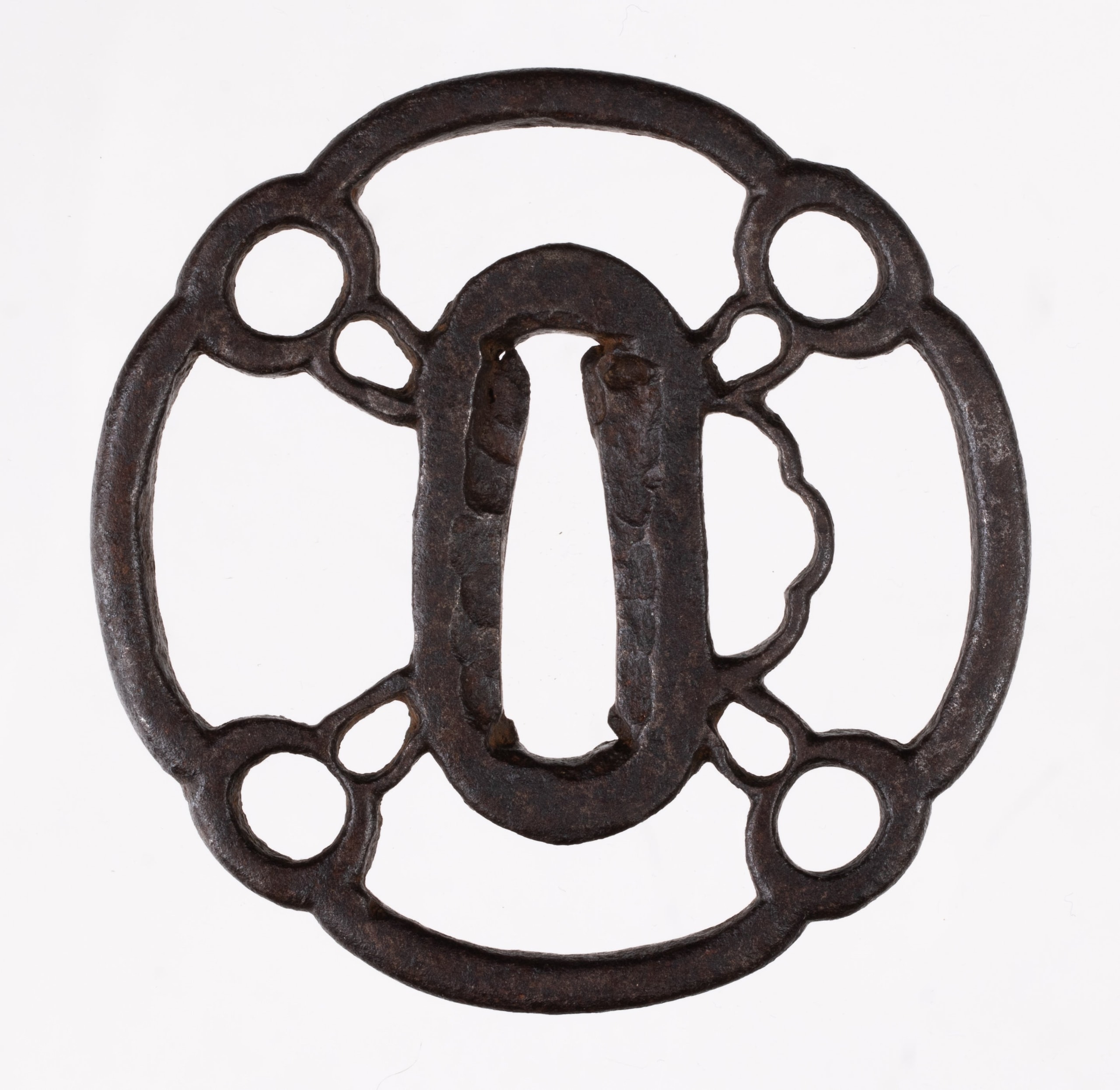
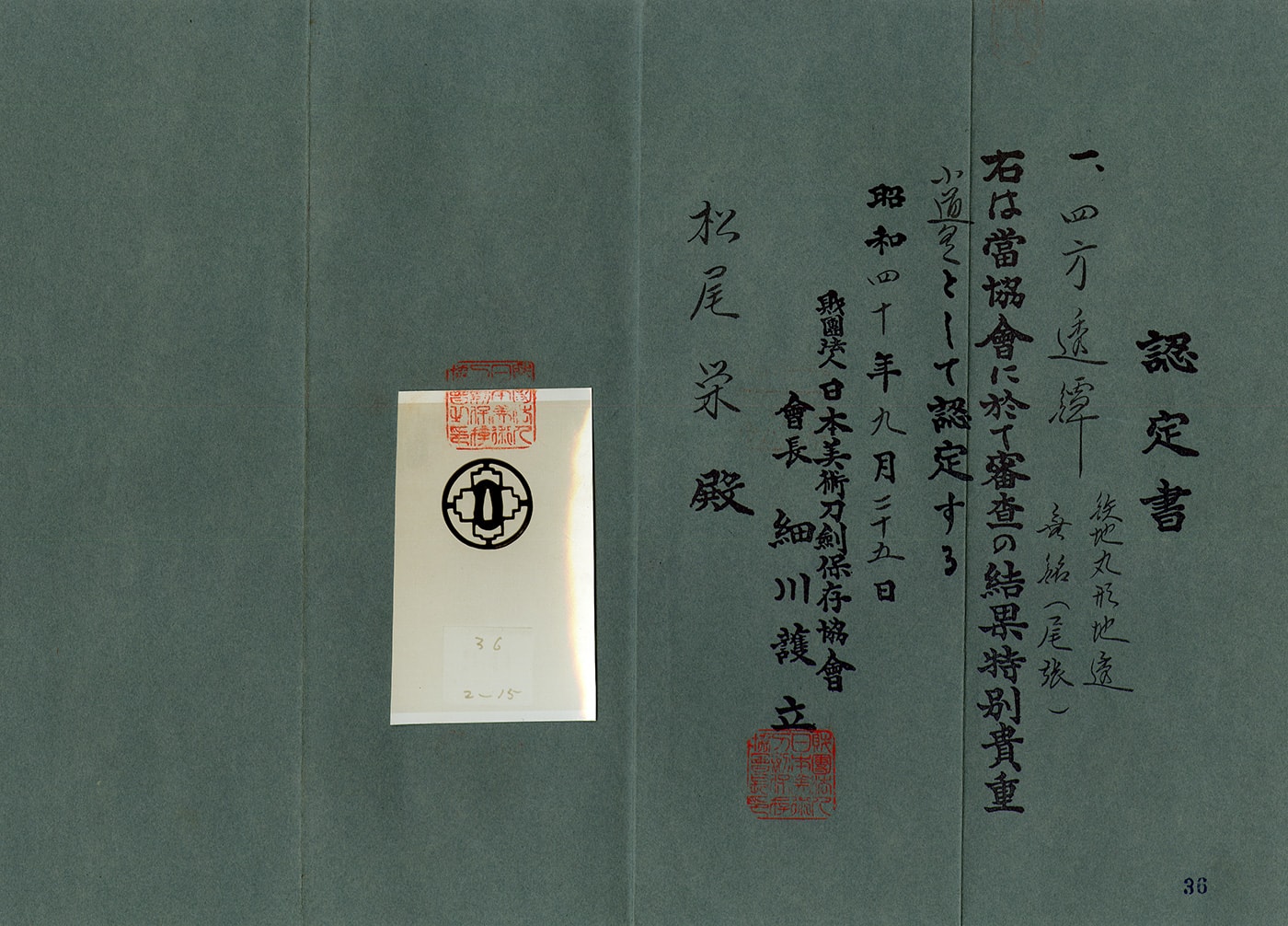
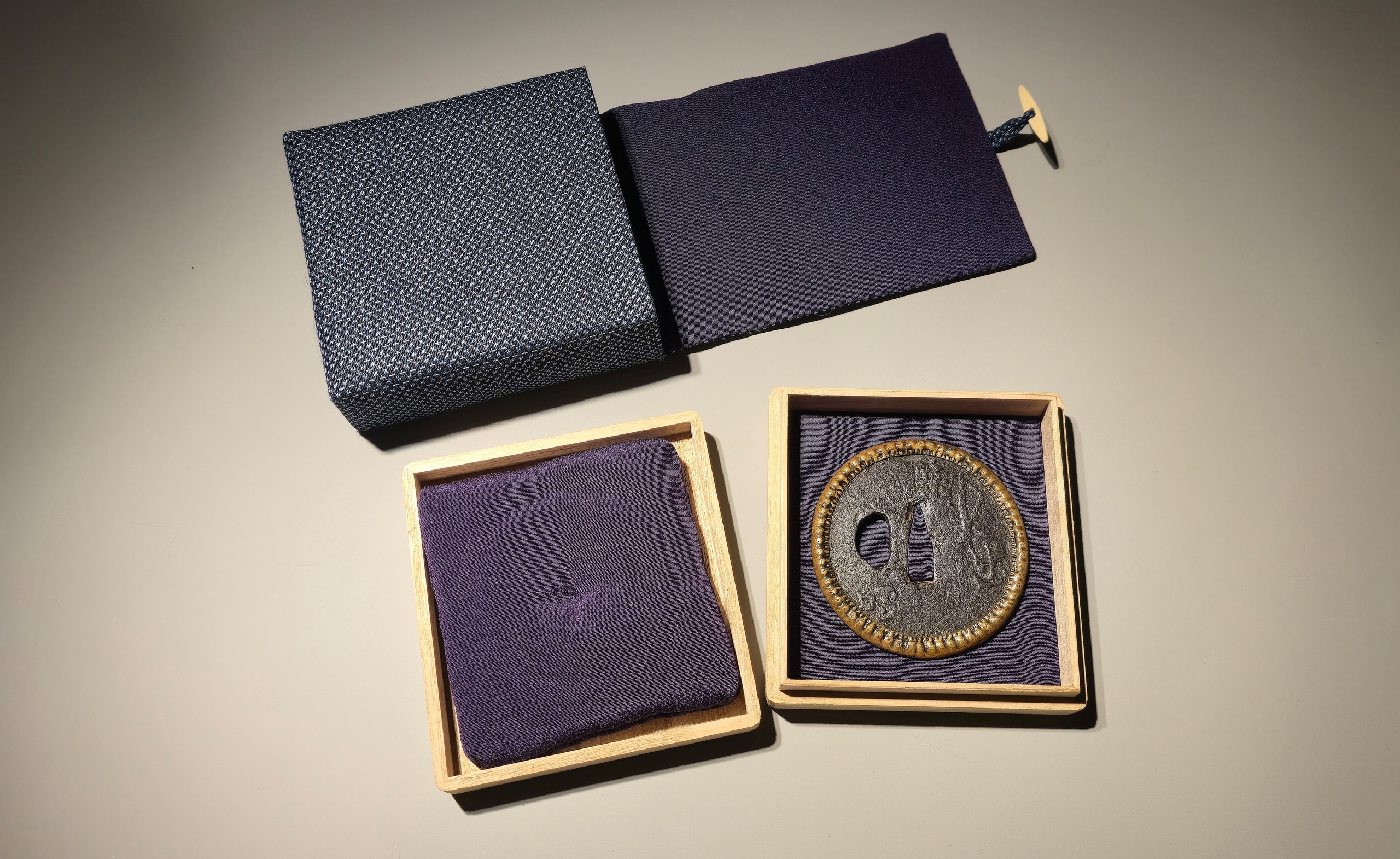
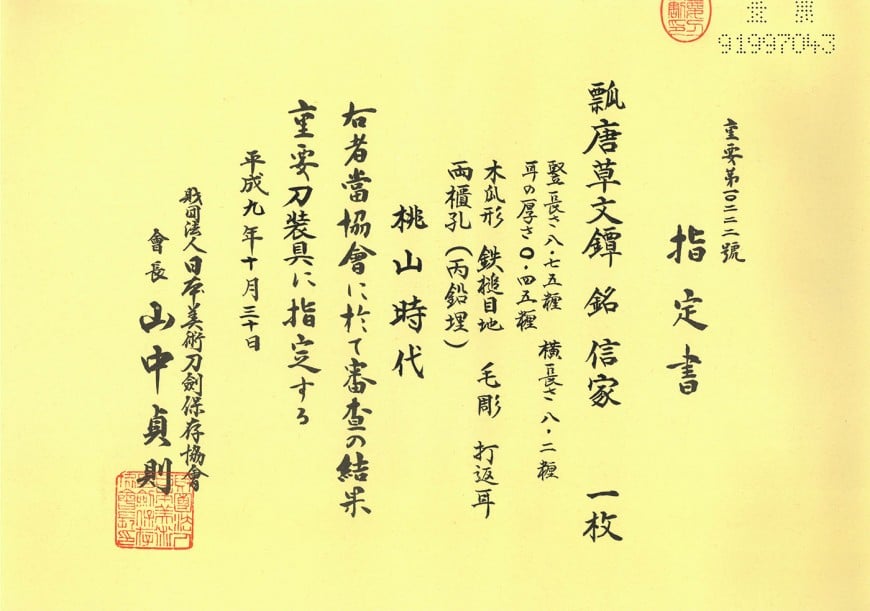
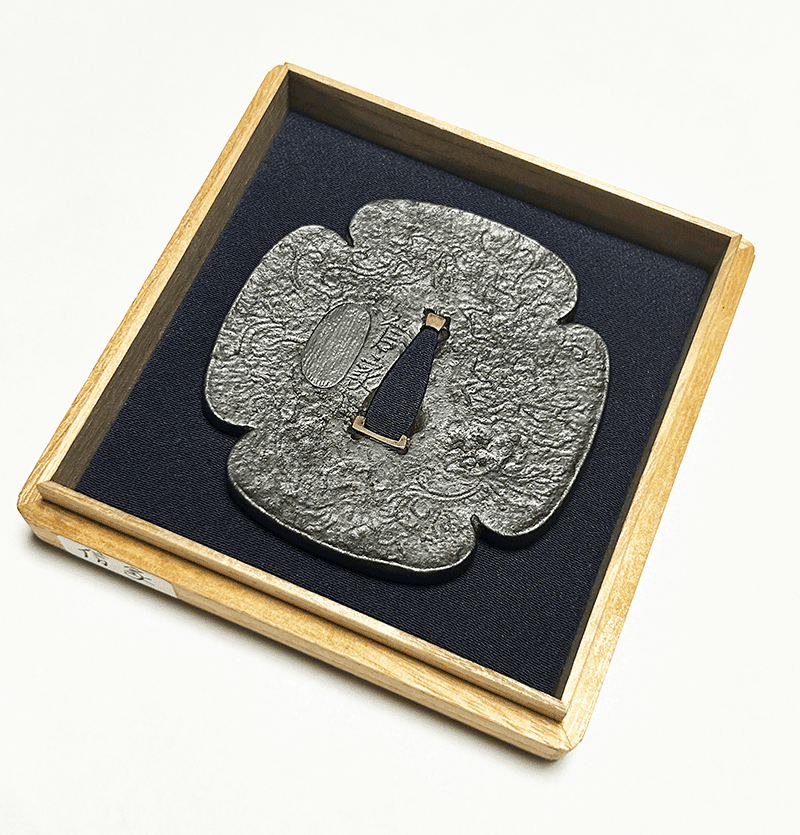
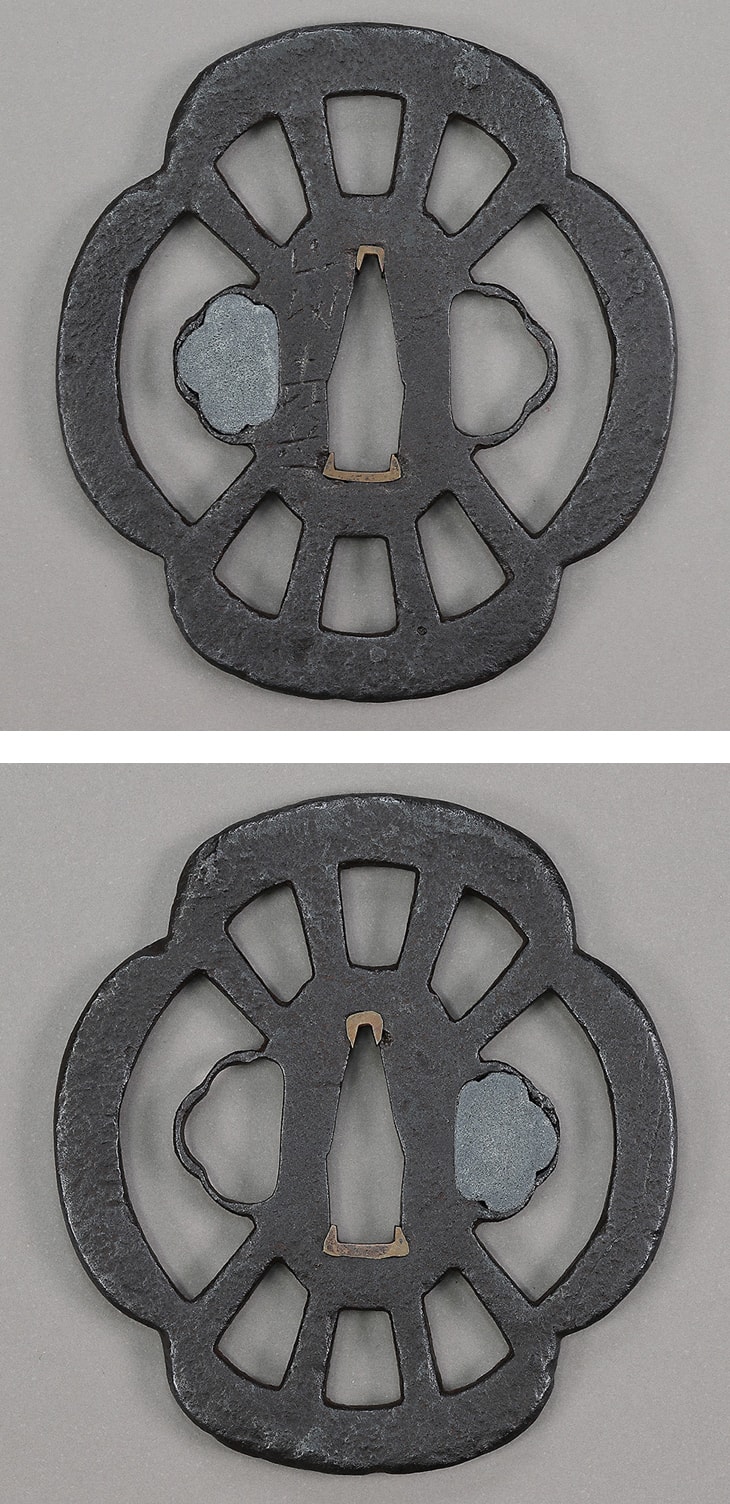
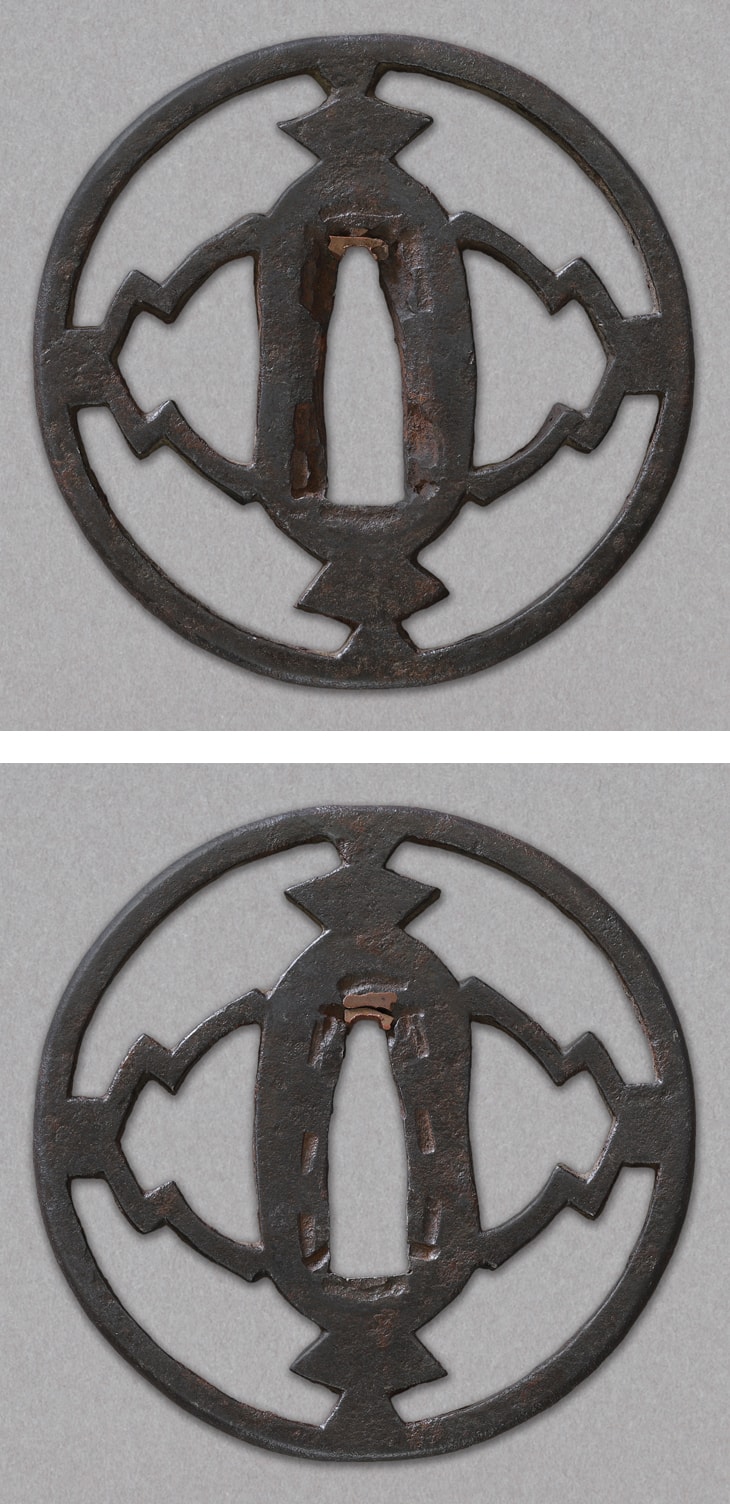
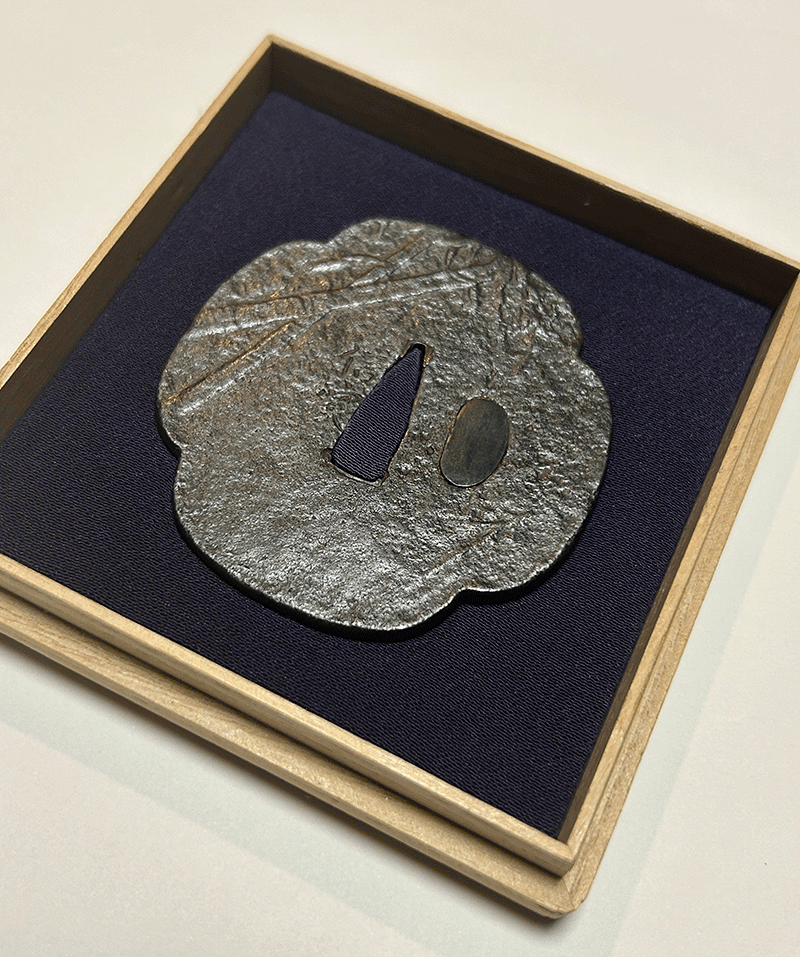
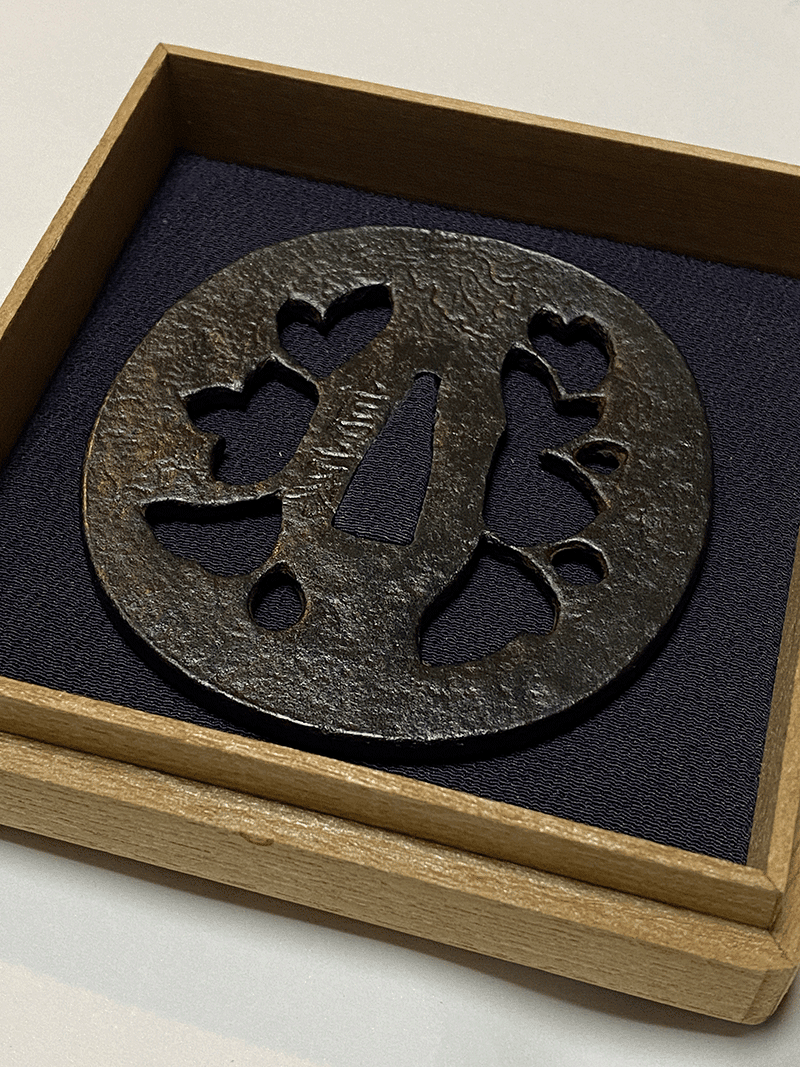
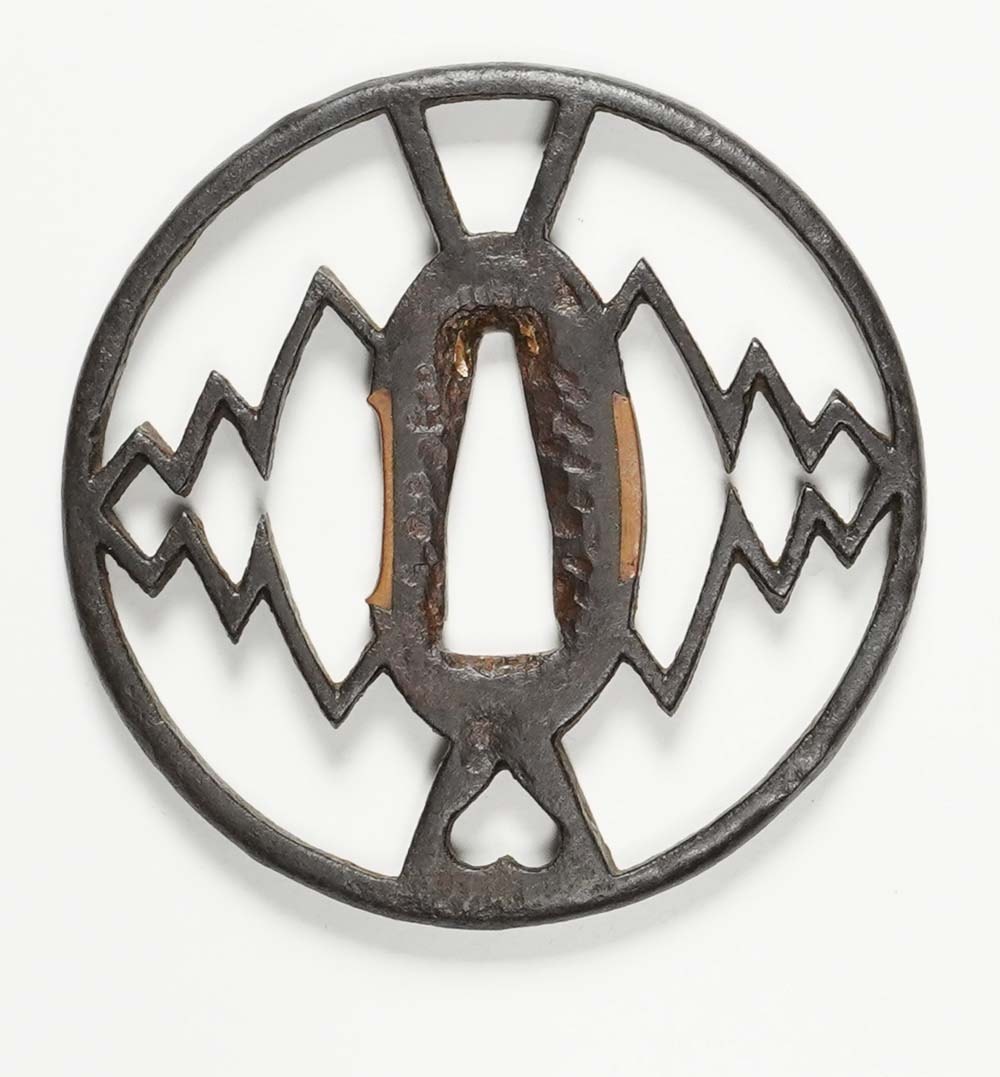
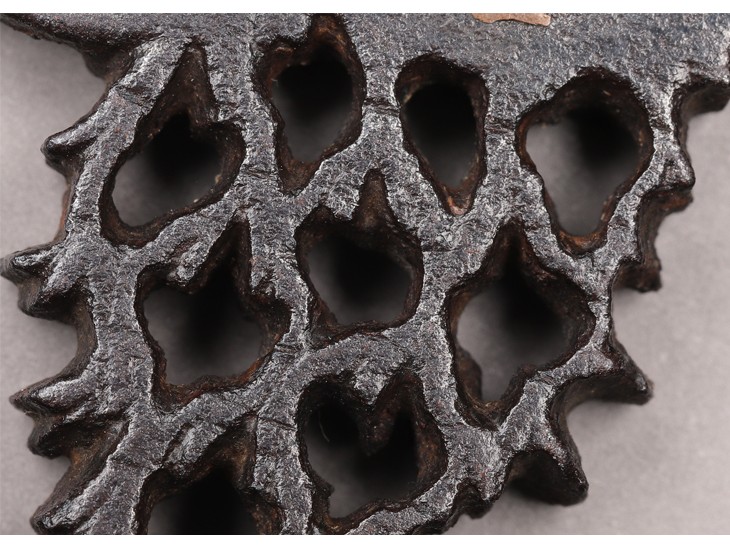
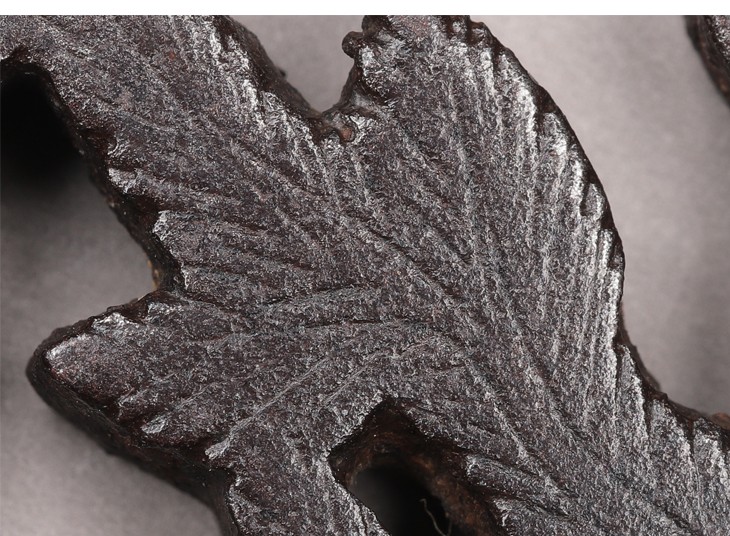
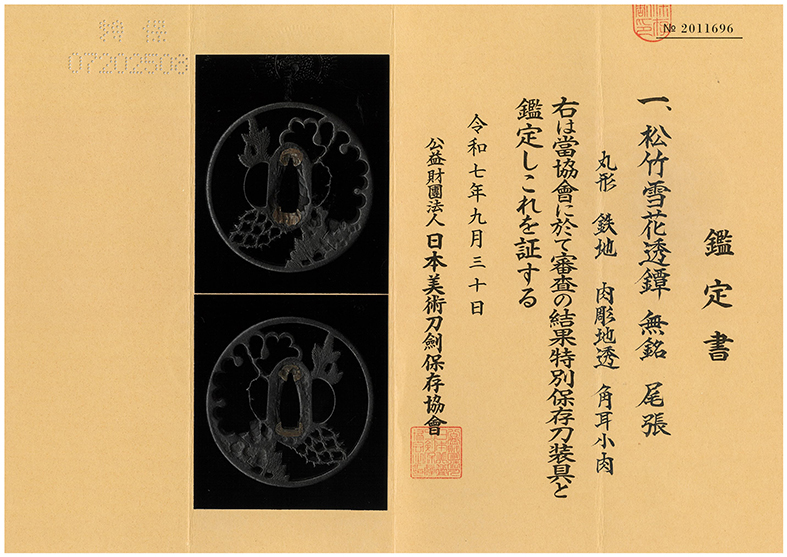
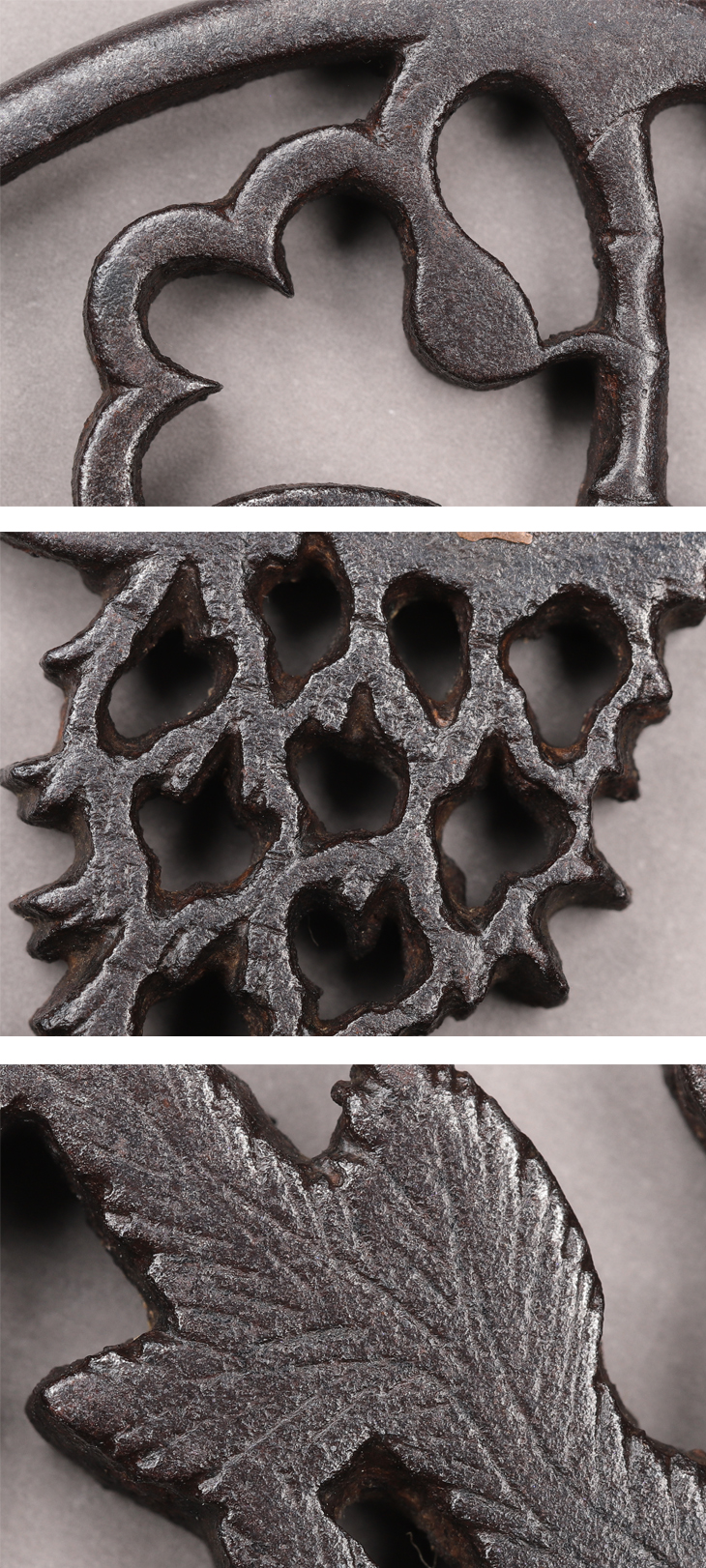
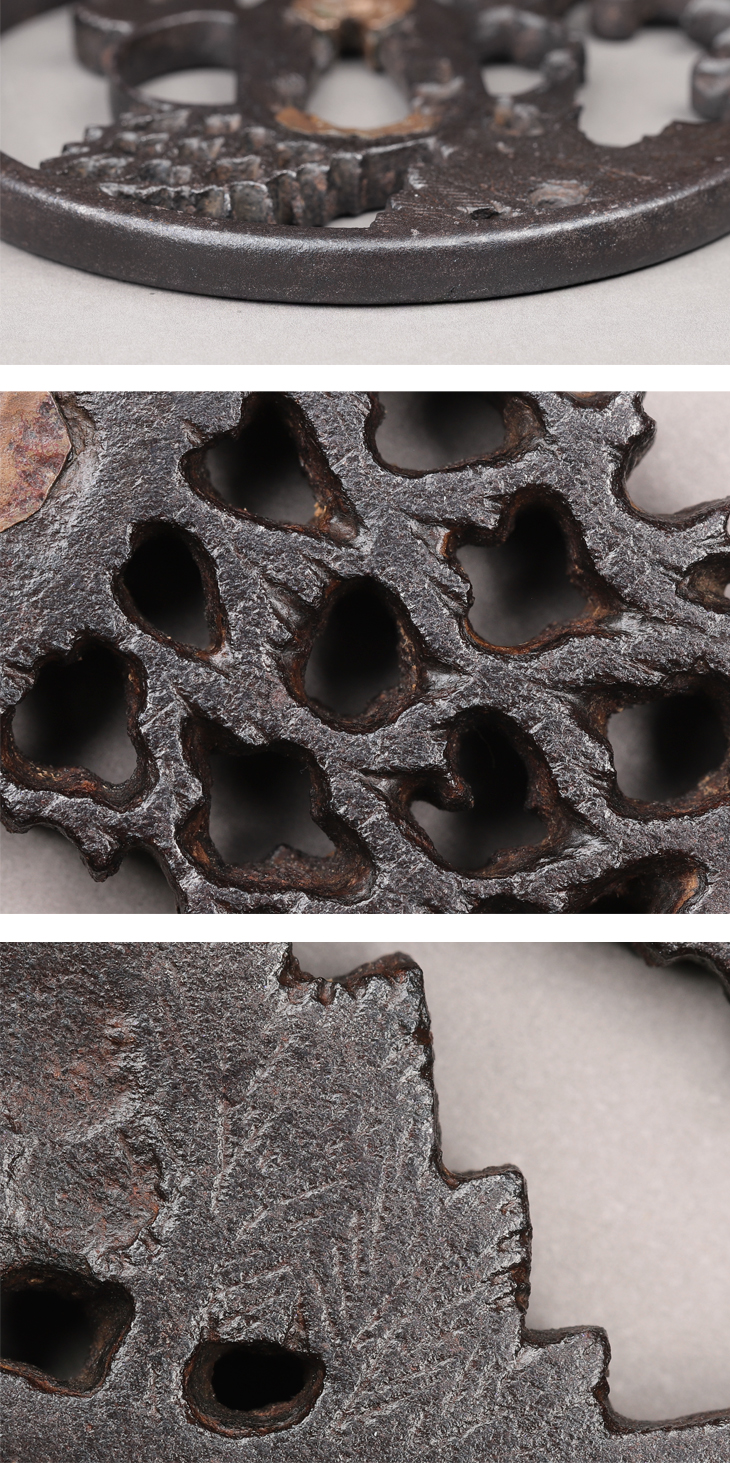
This is an unsigned Owari tsuba featuring a design of pine, bamboo, and snow flowers in openwork on a robust iron ground. Dating from the late Muromachi period, it comes with a Tokubetsu Hozon Tosogu certificate. The tsuba measures 7.92cm in height, 7.87cm in width, and 0.54cm in thickness, weighing 107g.
 NihontoWatch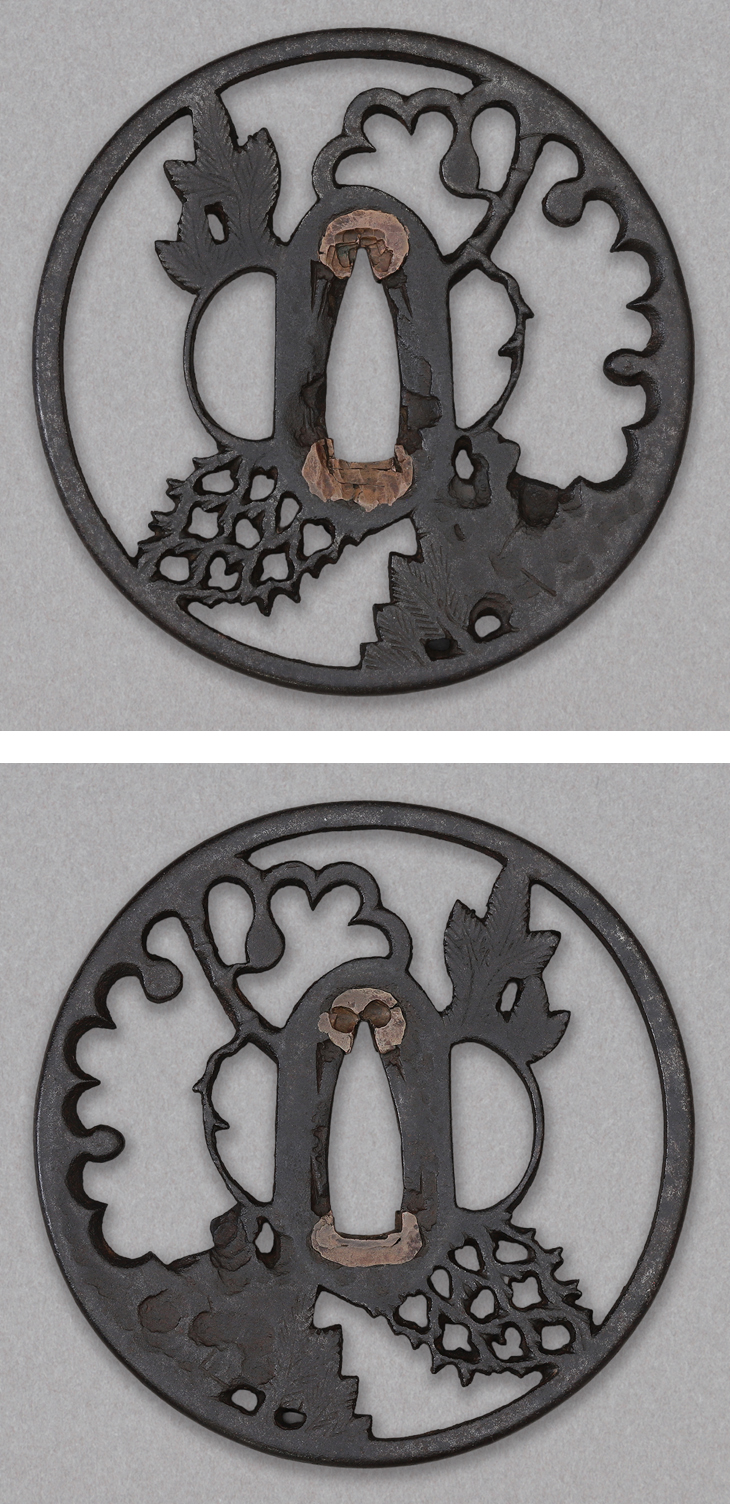
Iron-tsuba · Owari
96 pieces on the market now
The Owari school represents one of the twin pillars of Japanese iron openwork tsuba production, standing alongside the Kyō tradition as a defining force in the art of ji-sukashi (ground openwork) guards. The school's origins lie in the Owari province (modern Aichi prefecture), where production began in the early to middle Muromachi period and continued across a sustained span extending into the Edo period. While Kyō sukashi is characterized by delicacy and graceful elegance, Owari guards distinguish themselves through a tasteful refinement that conceals inner strength—a quality often described as possessing both dignity and rustic vigor. The tradition's most celebrated artisan, Yamakichibee, worked alongside contemporaries such as Hoan to establish technical standards that would define the school's reputation. Early signatures appear in forms such as "Yamasaka Kichibee" and abbreviated variants "Yama Kichibee," with the character へ understood as a shortening of 衛, suggesting generational succession across the late Muromachi and Momoyama periods. The technical achievements of Owari tsuba center on the mastery of iron itself, expressed through distinctive forging methods and surface treatment. The school's craftsmen employed a characteristic modeling technique called nikuoki, in which the central area of the plate is made slightly lower while the outer rim is raised, creating subtle variations in relief that enhance both visual depth and structural integrity.
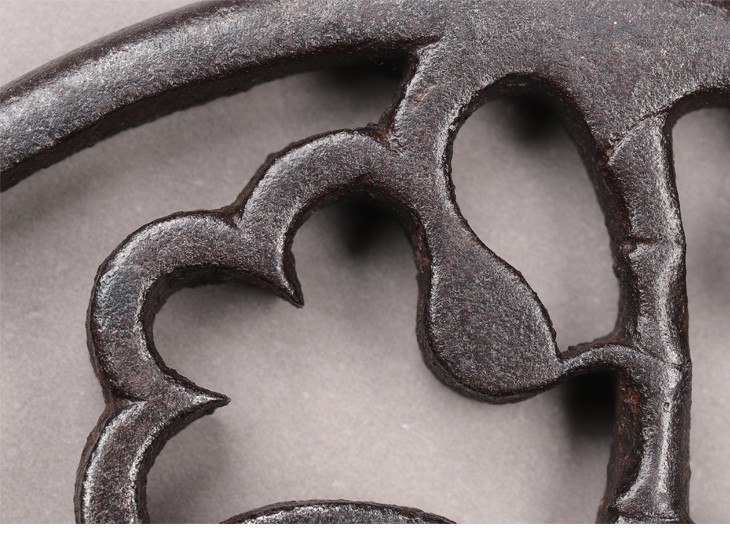
This treatment is complemented by the dramatic appearance of tekkotsu (iron bones)—crystalline grain structures that emerge along the kaku-mimi ko-niku rim (angular rim with slight rounding) through controlled annealing or yakite finishing. These iron bones manifest in multiple forms: granular, clumped, linear, and pronounced masame (straight-grain) patterns, often appearing in lively activity across both the rim and the plate surface. The forged iron develops a deep, thick purple rust patina (murasaki-sabi) of exceptional beauty, while the plate itself may be finished with tsuchime (hammer texturing) or gently dished surfaces that create a melting, softened effect. The school's openwork compositions range from geometric patterned designs—such as flower petals, kozane (lamellar scales), and net patterns (amime-sukashi)—to boldly pictorial narratives incorporating the seppa-dai into unified compositions depicting catfish (namazu), crabs, wild geese (karigane), and literary themes such as the "Mount Utsu" scene from the Ise monogatari. The Owari tradition's influence extended well beyond the technical sphere, establishing aesthetic standards that defined connoisseurship and collecting practices for centuries. The school's guards were prized for what setsumei authors describe as an "antique, tasteful character" (koga no ajiwai)—a quality combining power, compact control, and the subtle fascination of fine iron that set them apart from contemporaneous work. While the school's original strengths began to diminish from the beginning of the Edo period, mature-phase examples from the late Muromachi and Momoyama periods demonstrate the full range of Owari excellence: stately presence achieved through imposing forms and thick construction, dynamic spatial effects created through kage-sukashi (shadow-like silhouette piercing), and an audacious, unconventional character that attracted eccentric taste (sukisha). Learn more →
| Smith | Era | Designated |
|---|---|---|
| Nobuie信家 | — | 56 |
| Sadahiro貞広 | — | 1 |
| Tomoyasu友休 | 1670 | 1 |
| Nobuie信家 | 1588 | 2 |
| Jizaemon次左衛門 | — | 0 |
A Hozon-certified fitting of notably superior craftsmanship and condition, often with signature or workmanship of high reference value.
The NBTHK (Nihon Bijutsu Tōken Hozon Kyōkai, the Society for the Preservation of Japanese Art Swords) is a public-interest incorporated foundation founded in 1948 and supervised by Japan’s Agency for Cultural Affairs (Bunkachō); it is based at the Japanese Sword Museum in Tokyo. Its expert panels physically examine each submitted work (shinsa) and issue a certificate (kanteishō) ranking it by artistic and historical merit. NBTHK papers are the most widely recognized standard of authentication for Japanese swords and fittings.
NBTHK official siteFor one-of-a-kind items such as swords, sword fittings, and antiques, please contact us about a return within 3 days of the item's arrival and ship it back within 8 days. Refunds are issued the same day the returned item arrives.
This is an unsigned Owari tsuba featuring a design of pine, bamboo, and snow flowers in openwork on a robust iron ground. Dating from the late Muromachi period, it comes with a Tokubetsu Hozon Tosogu certificate. The tsuba measures 7.92cm in height, 7.87cm in width, and 0.54cm in thickness, weighing 107g.
NihontoWatchIron-tsuba · Owari
96 pieces on the market now
The Owari school represents one of the twin pillars of Japanese iron openwork tsuba production, standing alongside the Kyō tradition as a defining force in the art of ji-sukashi (ground openwork) guards. The school's origins lie in the Owari province (modern Aichi prefecture), where production began in the early to middle Muromachi period and continued across a sustained span extending into the Edo period. While Kyō sukashi is characterized by delicacy and graceful elegance, Owari guards distinguish themselves through a tasteful refinement that conceals inner strength—a quality often described as possessing both dignity and rustic vigor. The tradition's most celebrated artisan, Yamakichibee, worked alongside contemporaries such as Hoan to establish technical standards that would define the school's reputation. Early signatures appear in forms such as "Yamasaka Kichibee" and abbreviated variants "Yama Kichibee," with the character へ understood as a shortening of 衛, suggesting generational succession across the late Muromachi and Momoyama periods. The technical achievements of Owari tsuba center on the mastery of iron itself, expressed through distinctive forging methods and surface treatment. The school's craftsmen employed a characteristic modeling technique called nikuoki, in which the central area of the plate is made slightly lower while the outer rim is raised, creating subtle variations in relief that enhance both visual depth and structural integrity.
This treatment is complemented by the dramatic appearance of tekkotsu (iron bones)—crystalline grain structures that emerge along the kaku-mimi ko-niku rim (angular rim with slight rounding) through controlled annealing or yakite finishing. These iron bones manifest in multiple forms: granular, clumped, linear, and pronounced masame (straight-grain) patterns, often appearing in lively activity across both the rim and the plate surface. The forged iron develops a deep, thick purple rust patina (murasaki-sabi) of exceptional beauty, while the plate itself may be finished with tsuchime (hammer texturing) or gently dished surfaces that create a melting, softened effect. The school's openwork compositions range from geometric patterned designs—such as flower petals, kozane (lamellar scales), and net patterns (amime-sukashi)—to boldly pictorial narratives incorporating the seppa-dai into unified compositions depicting catfish (namazu), crabs, wild geese (karigane), and literary themes such as the "Mount Utsu" scene from the Ise monogatari. The Owari tradition's influence extended well beyond the technical sphere, establishing aesthetic standards that defined connoisseurship and collecting practices for centuries. The school's guards were prized for what setsumei authors describe as an "antique, tasteful character" (koga no ajiwai)—a quality combining power, compact control, and the subtle fascination of fine iron that set them apart from contemporaneous work. While the school's original strengths began to diminish from the beginning of the Edo period, mature-phase examples from the late Muromachi and Momoyama periods demonstrate the full range of Owari excellence: stately presence achieved through imposing forms and thick construction, dynamic spatial effects created through kage-sukashi (shadow-like silhouette piercing), and an audacious, unconventional character that attracted eccentric taste (sukisha). Learn more →
| Smith | Era | Designated |
|---|---|---|
| Nobuie信家 | — | 56 |
| Sadahiro貞広 | — | 1 |
| Tomoyasu友休 | 1670 | 1 |
| Nobuie信家 | 1588 | 2 |
| Jizaemon次左衛門 | — | 0 |
A Hozon-certified fitting of notably superior craftsmanship and condition, often with signature or workmanship of high reference value.
The NBTHK (Nihon Bijutsu Tōken Hozon Kyōkai, the Society for the Preservation of Japanese Art Swords) is a public-interest incorporated foundation founded in 1948 and supervised by Japan’s Agency for Cultural Affairs (Bunkachō); it is based at the Japanese Sword Museum in Tokyo. Its expert panels physically examine each submitted work (shinsa) and issue a certificate (kanteishō) ranking it by artistic and historical merit. NBTHK papers are the most widely recognized standard of authentication for Japanese swords and fittings.
NBTHK official siteFor one-of-a-kind items such as swords, sword fittings, and antiques, please contact us about a return within 3 days of the item's arrival and ship it back within 8 days. Refunds are issued the same day the returned item arrives.