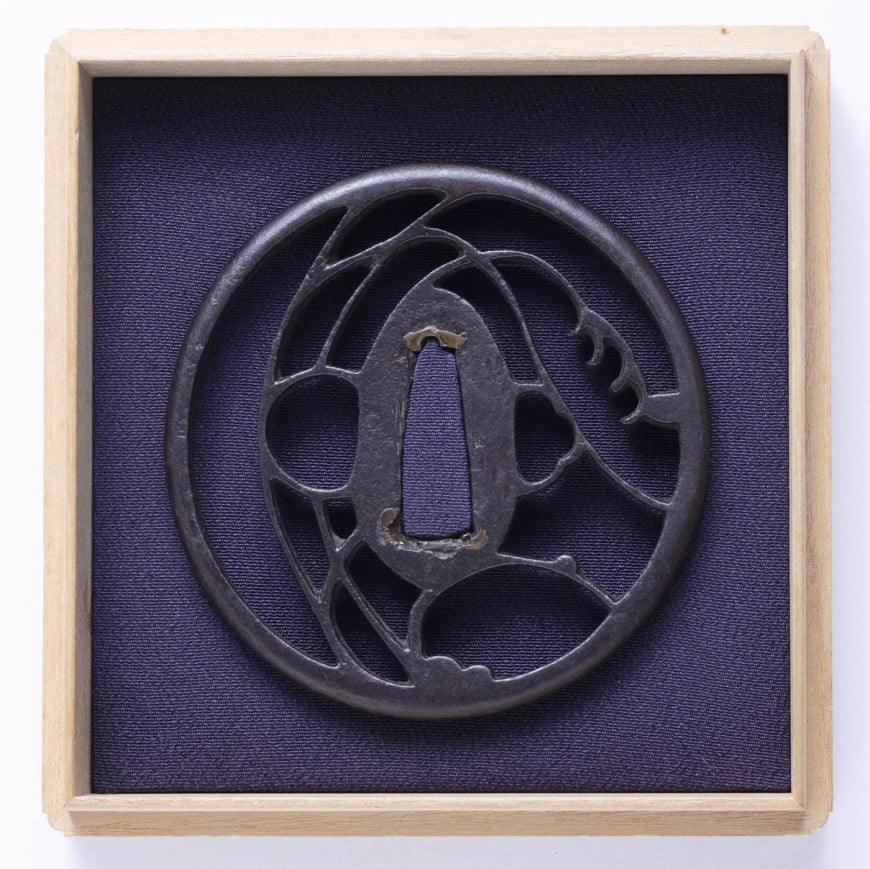
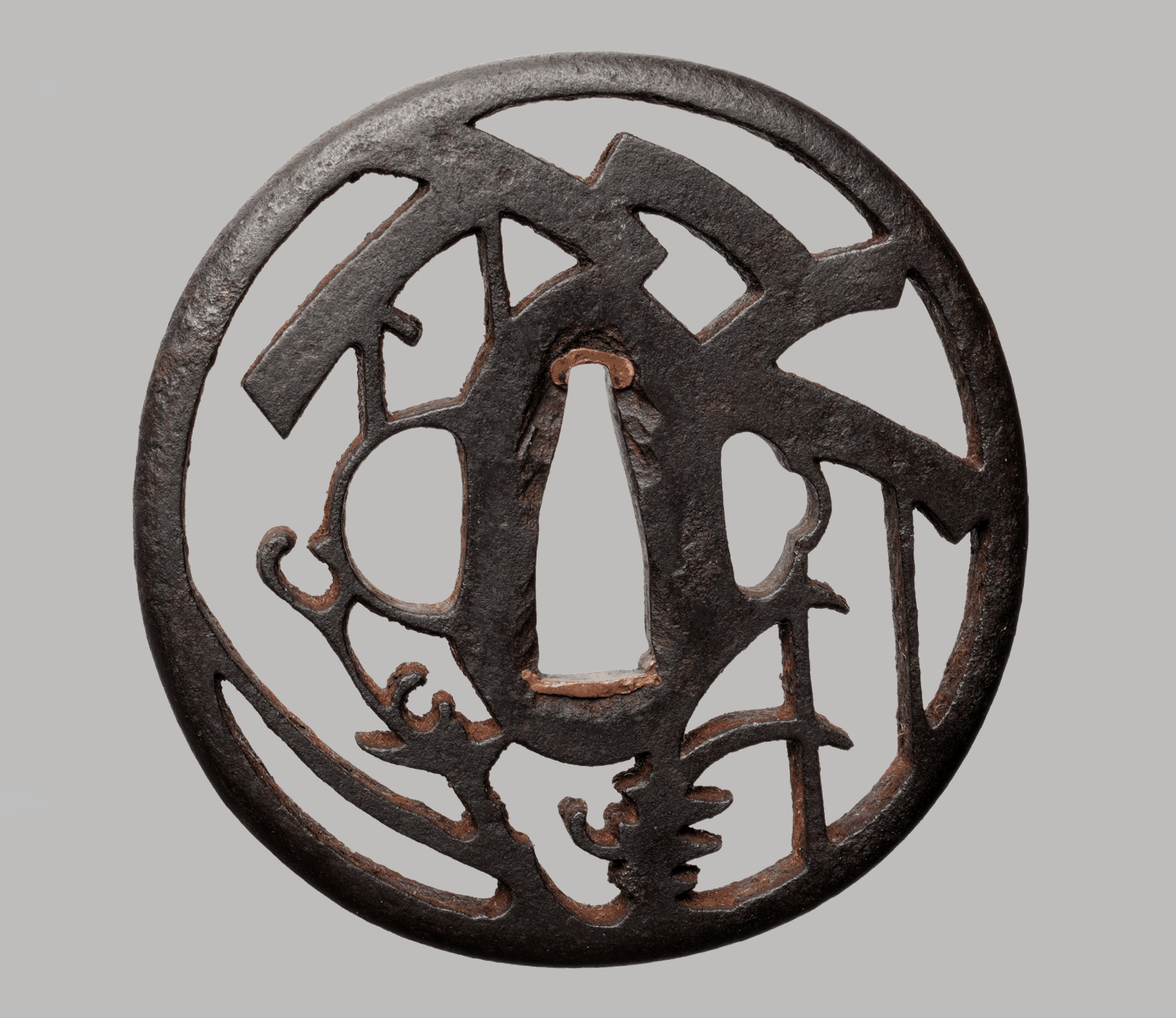
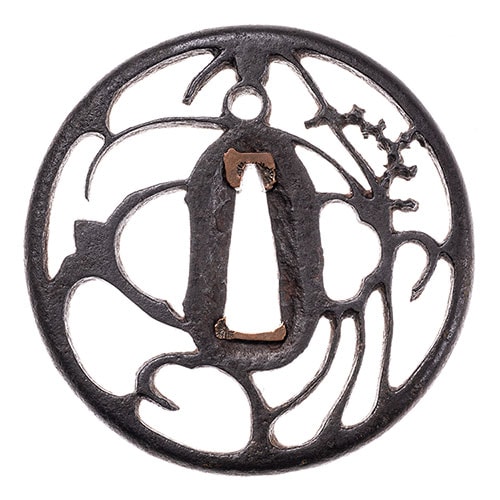
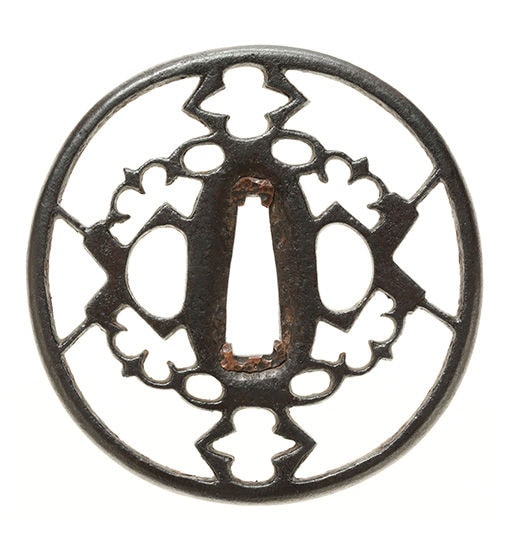
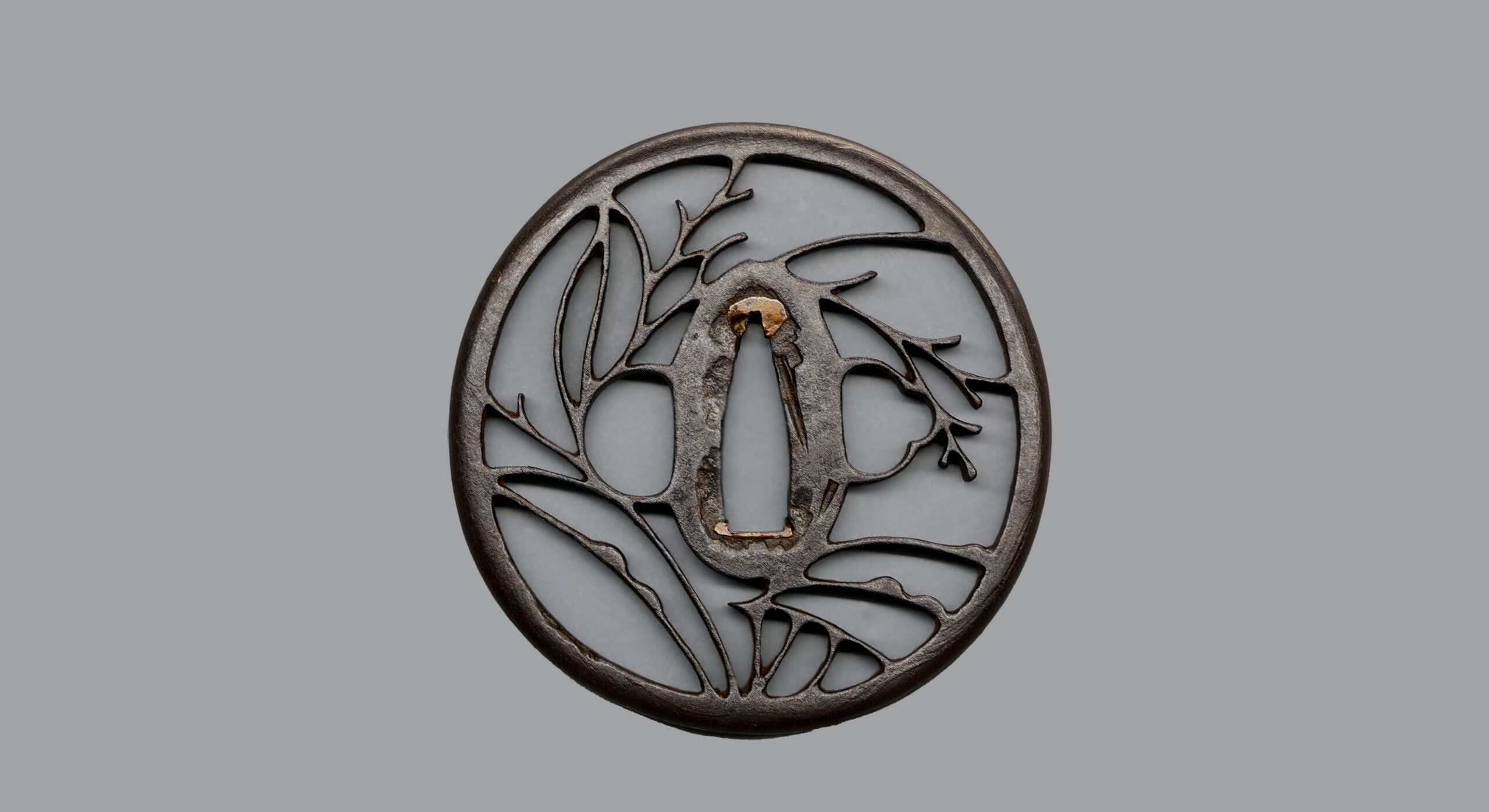
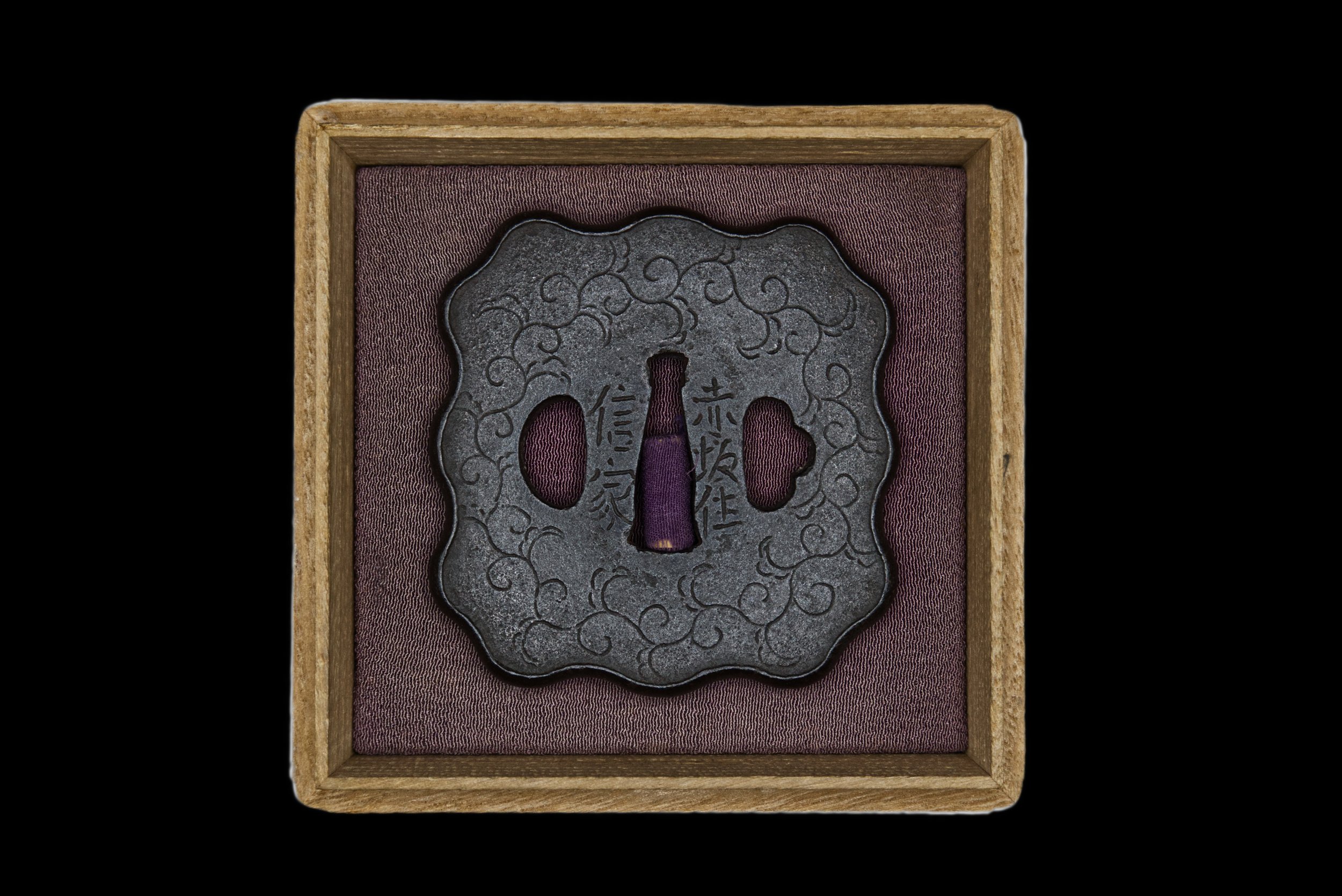
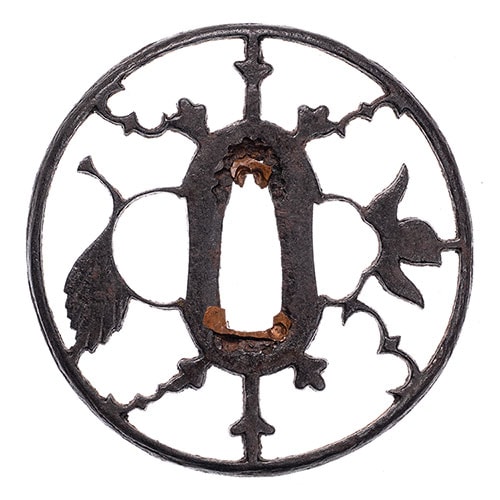
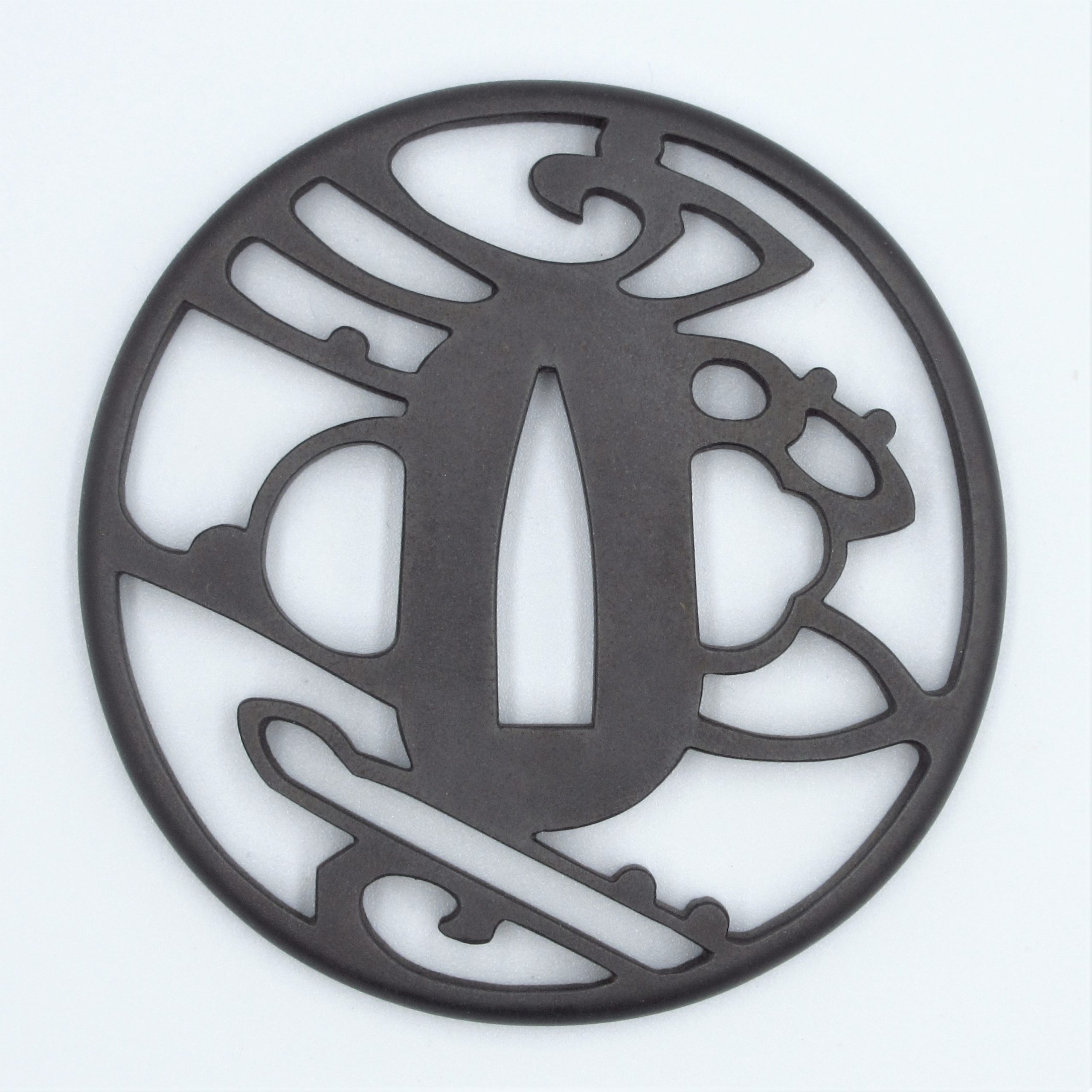
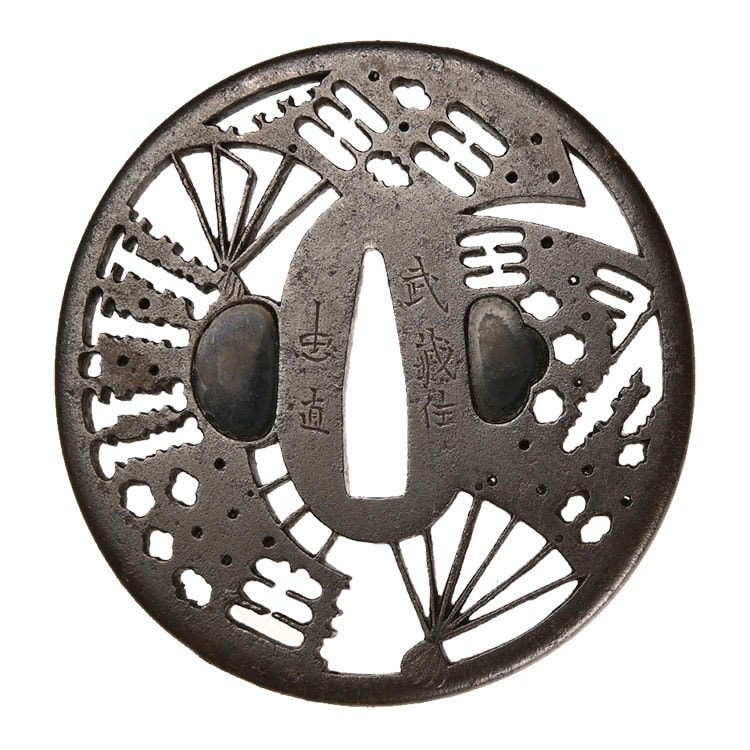
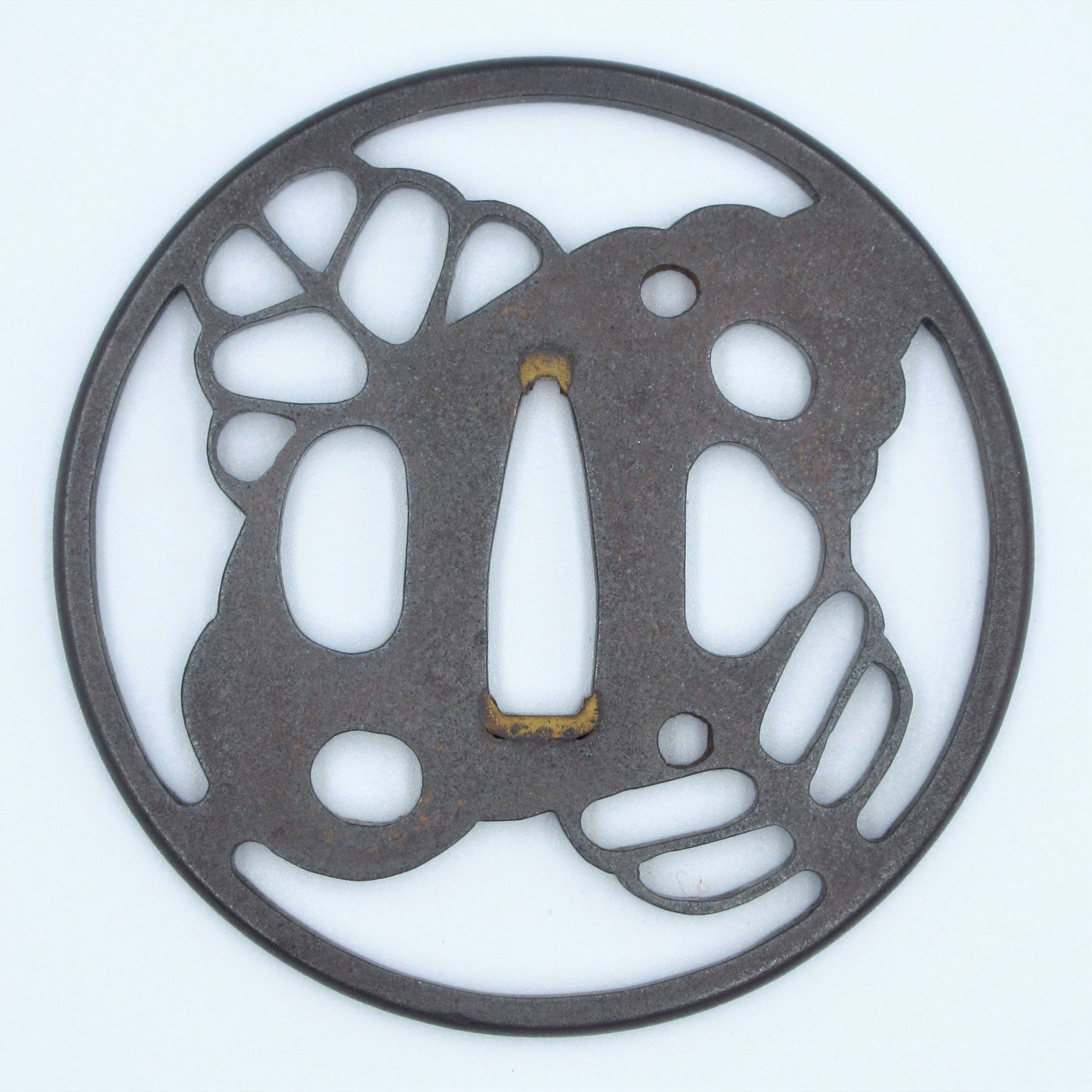
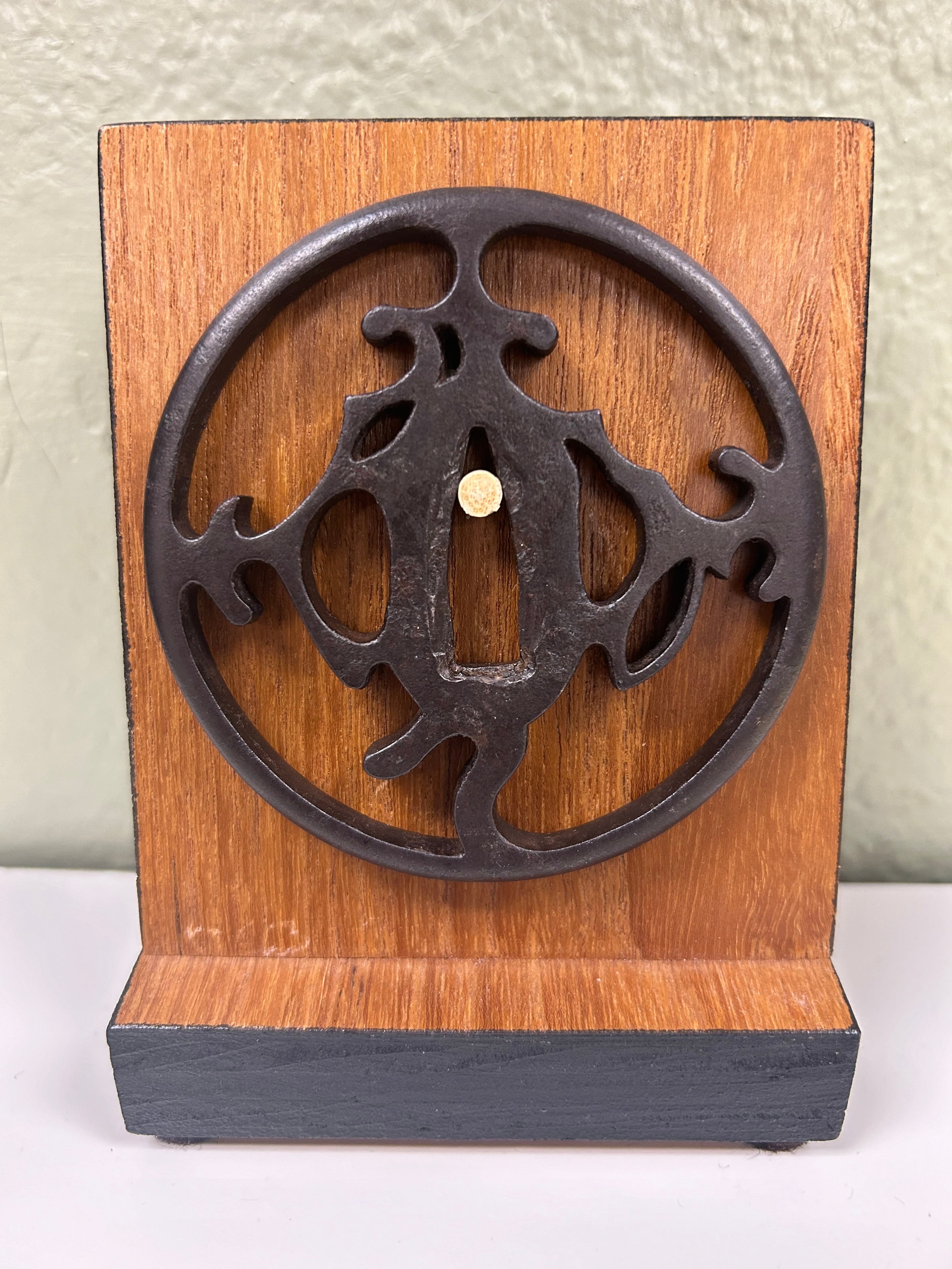
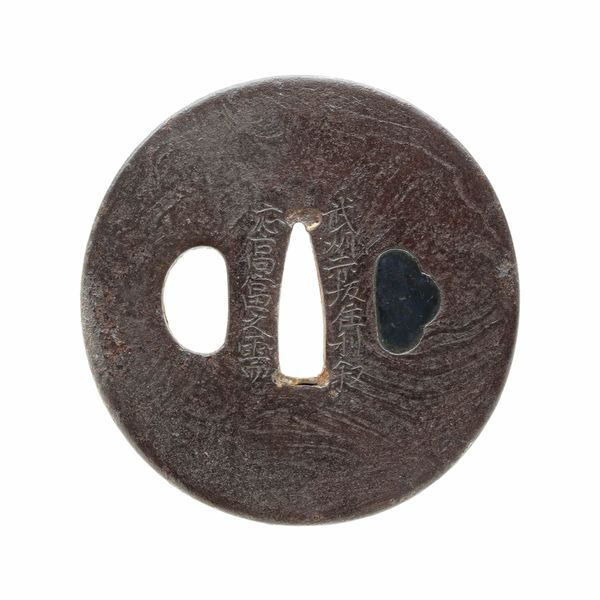
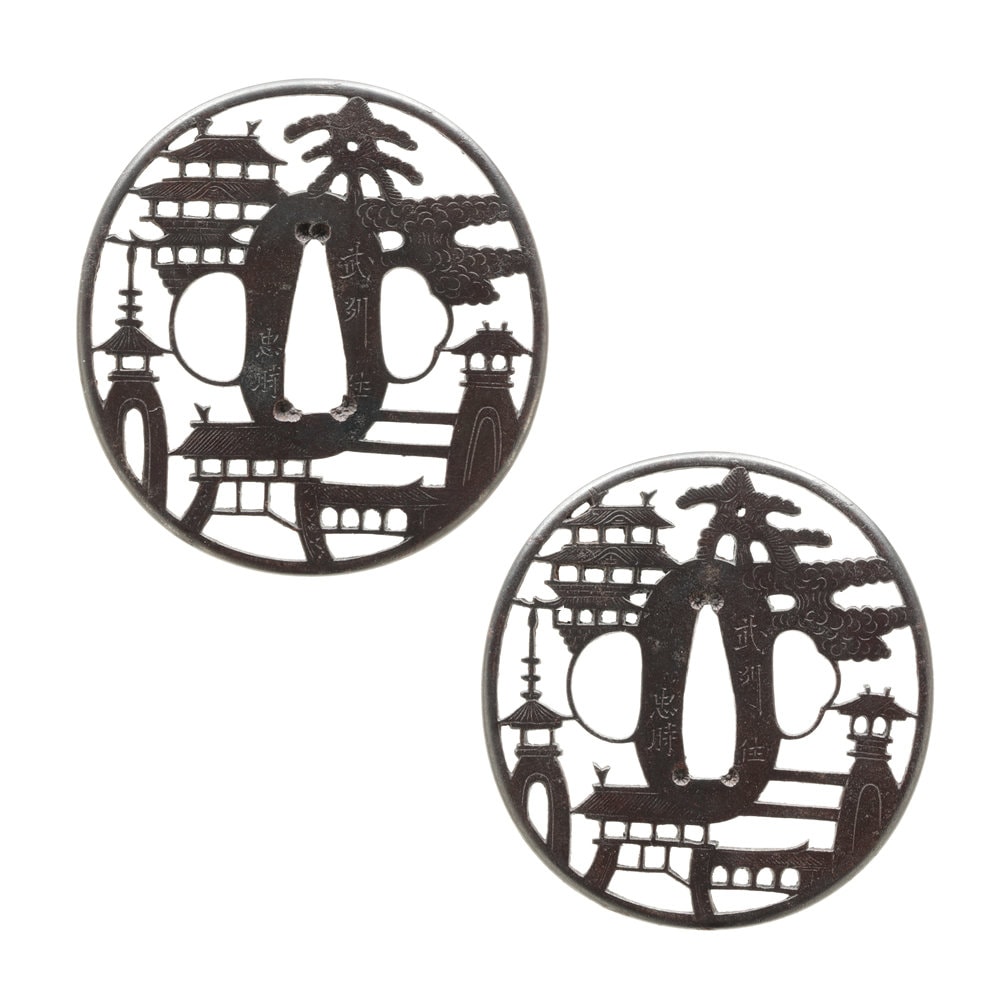
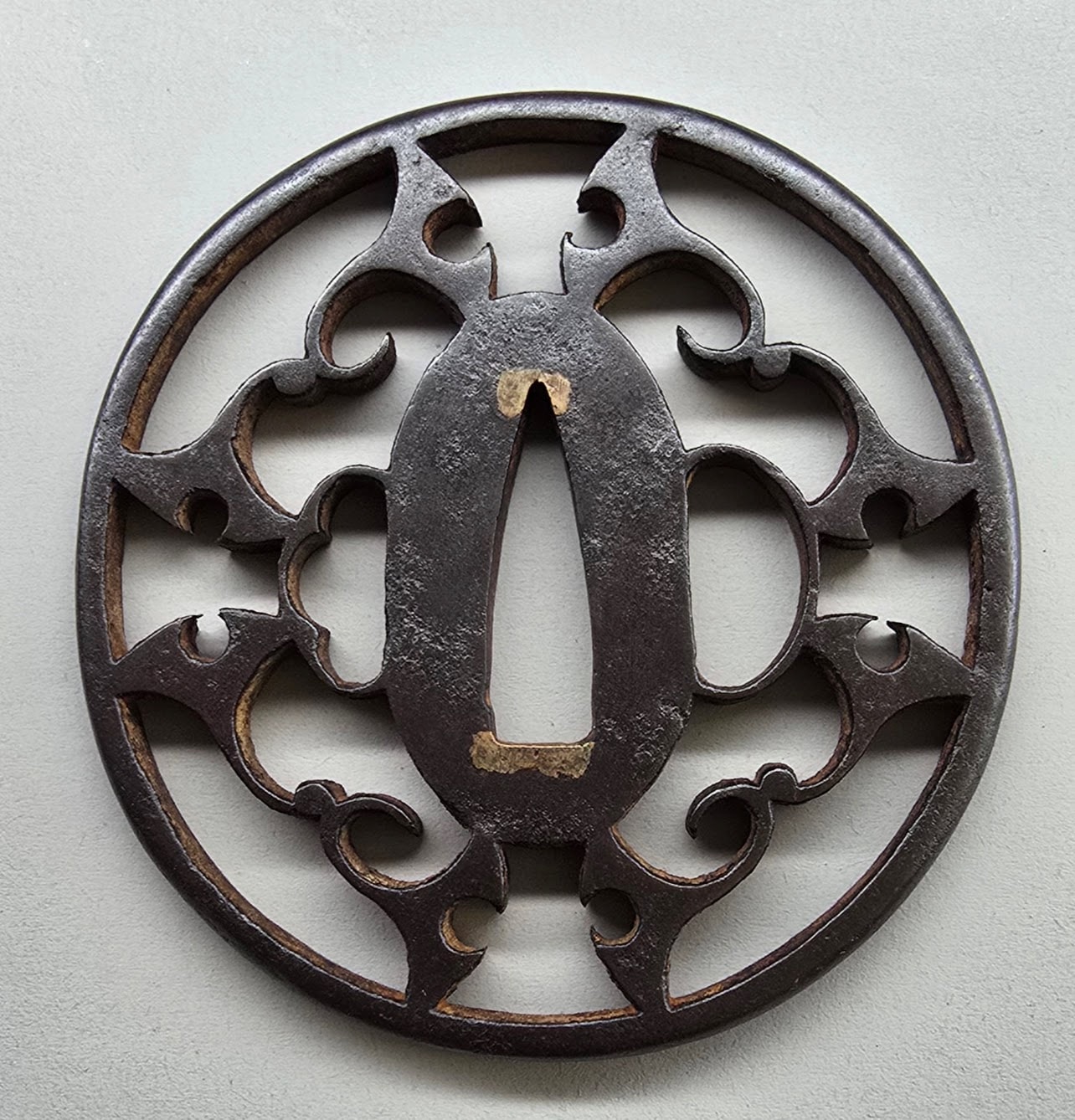
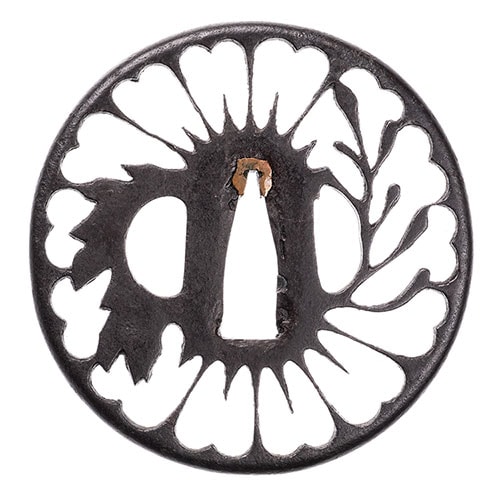
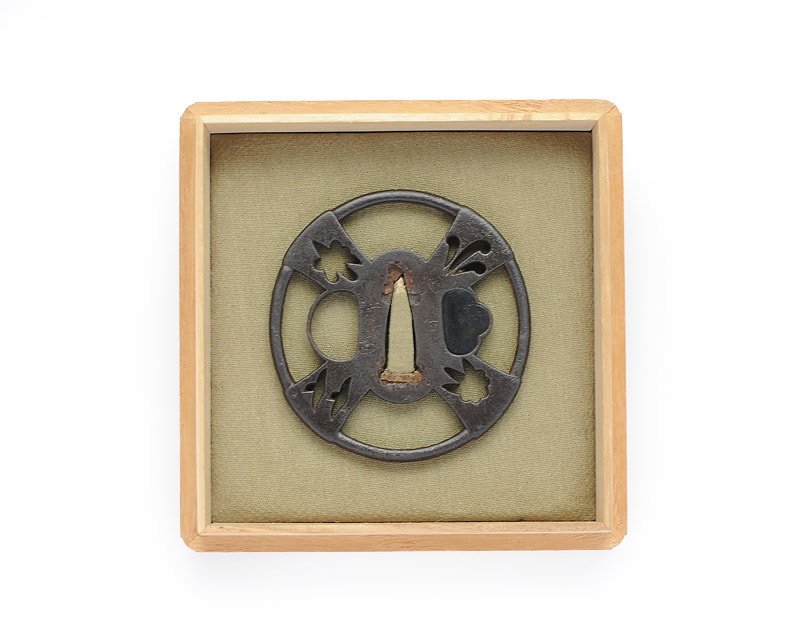
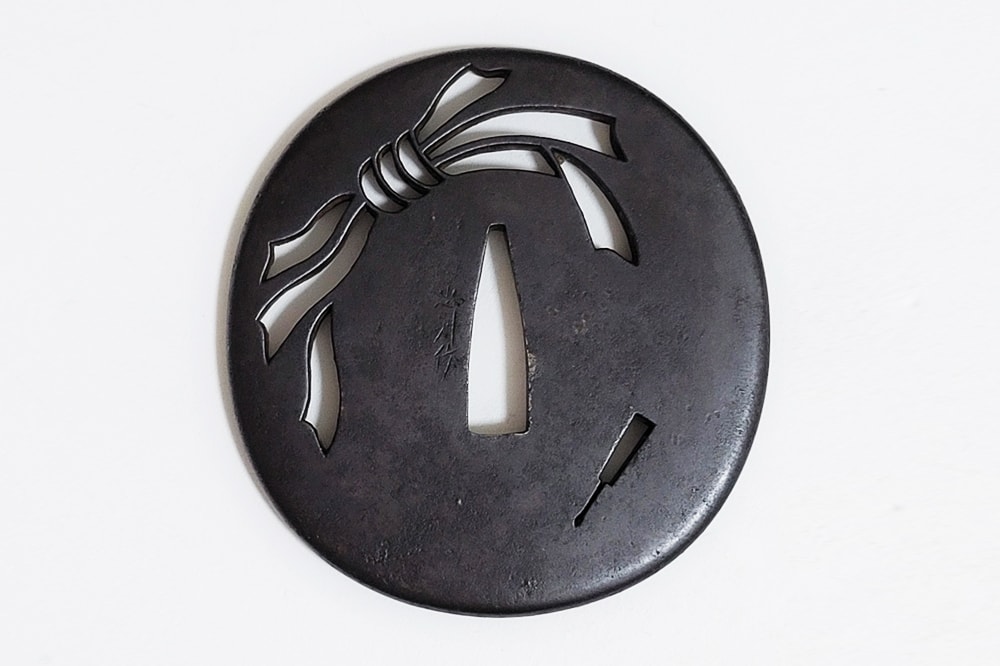
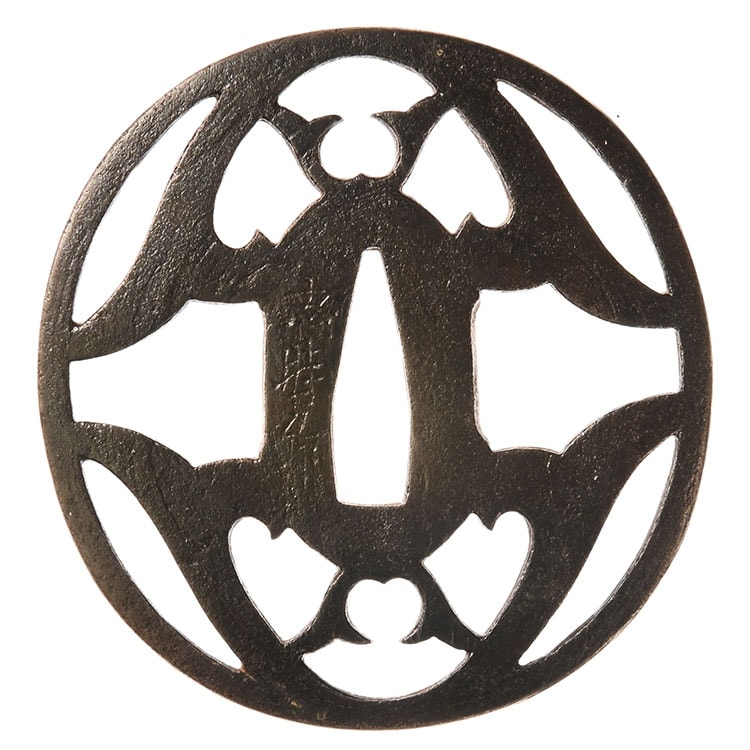
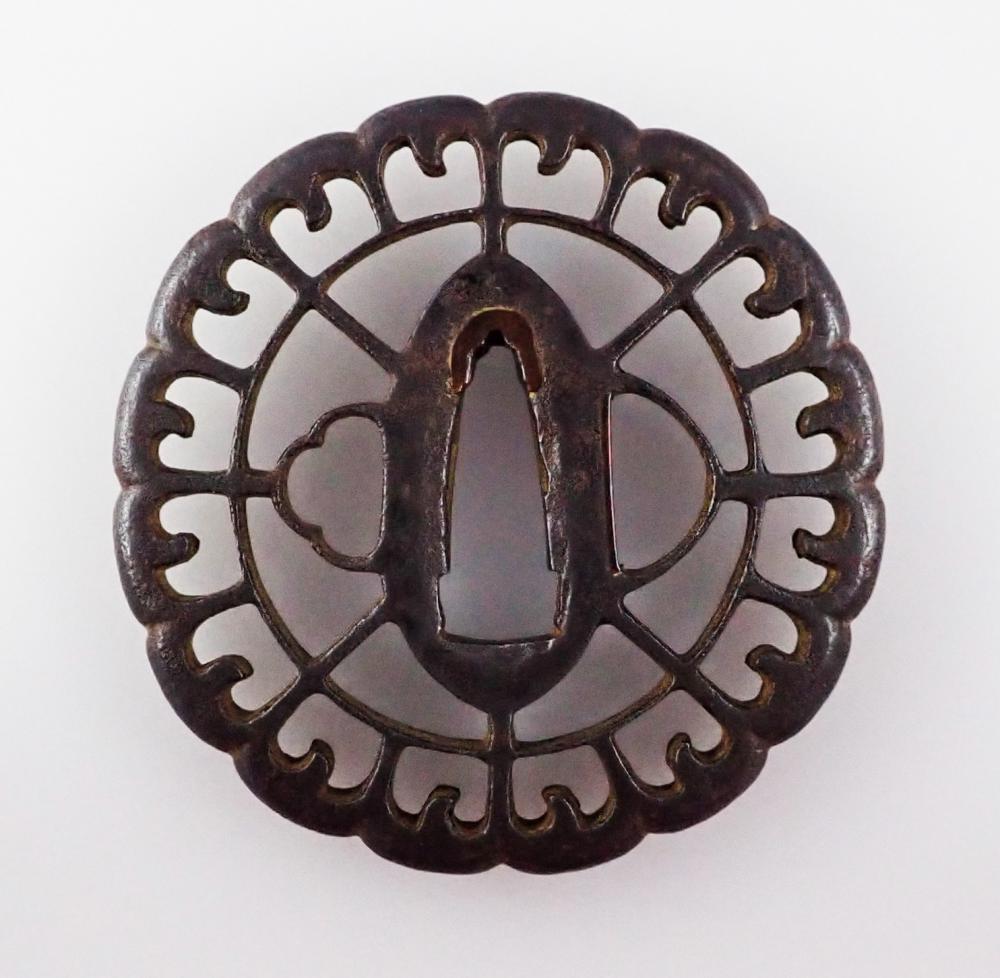
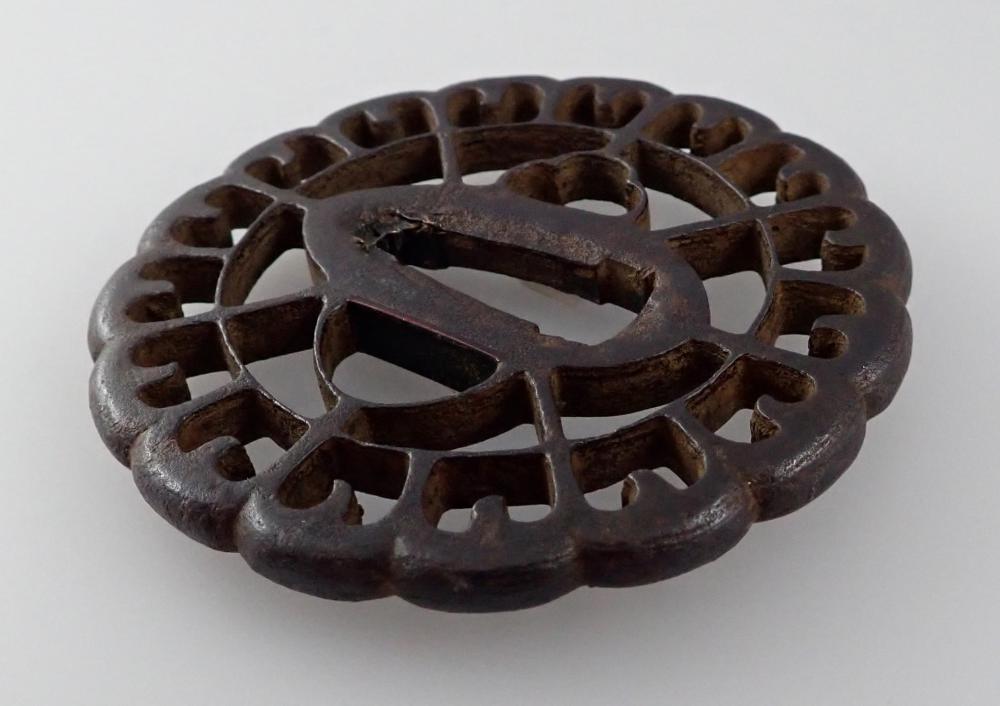
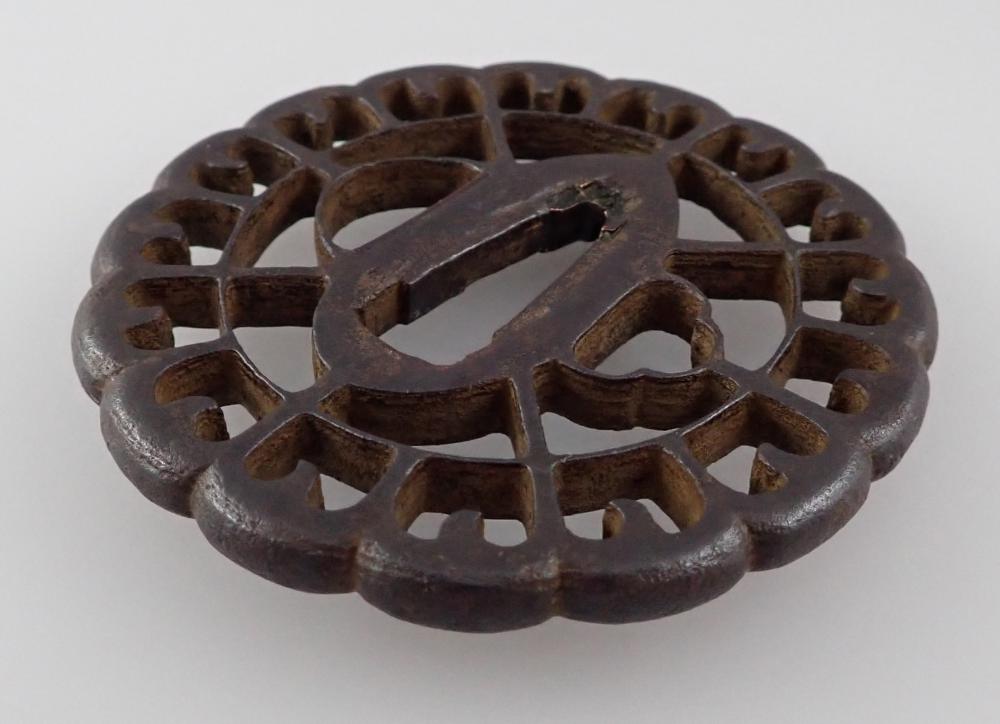
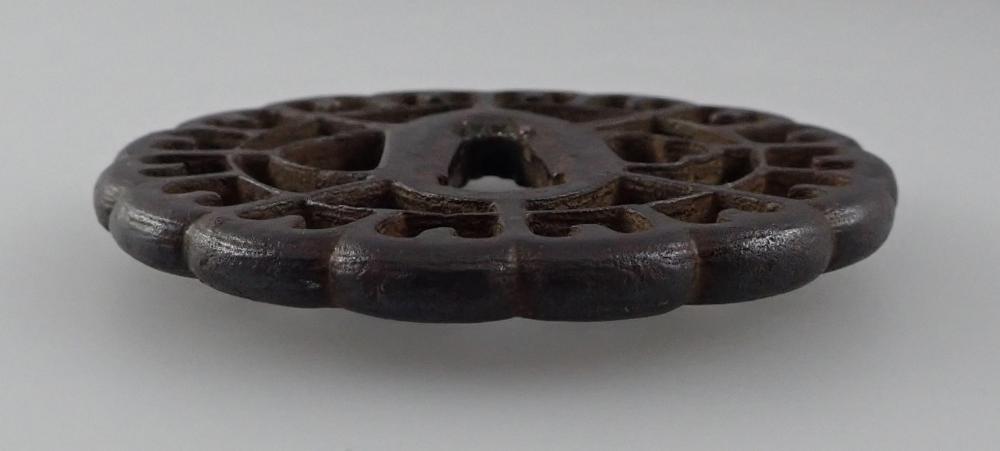
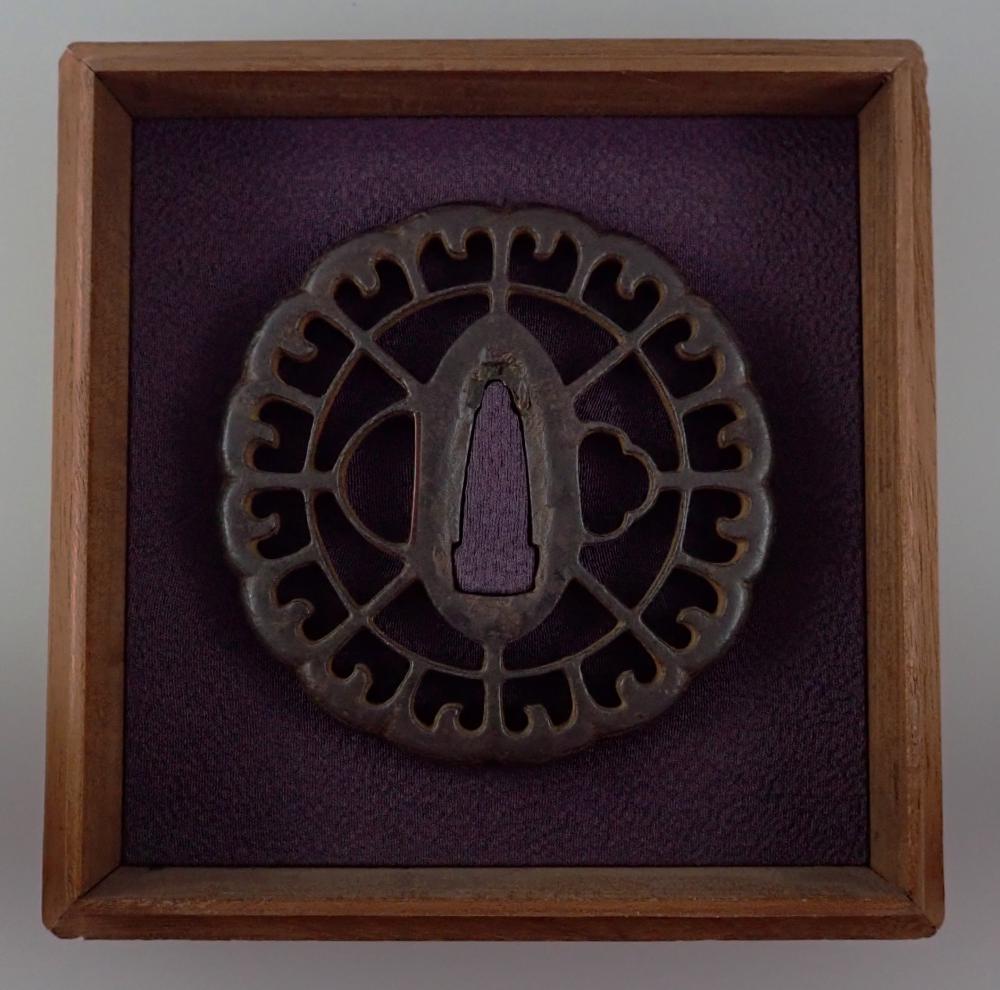
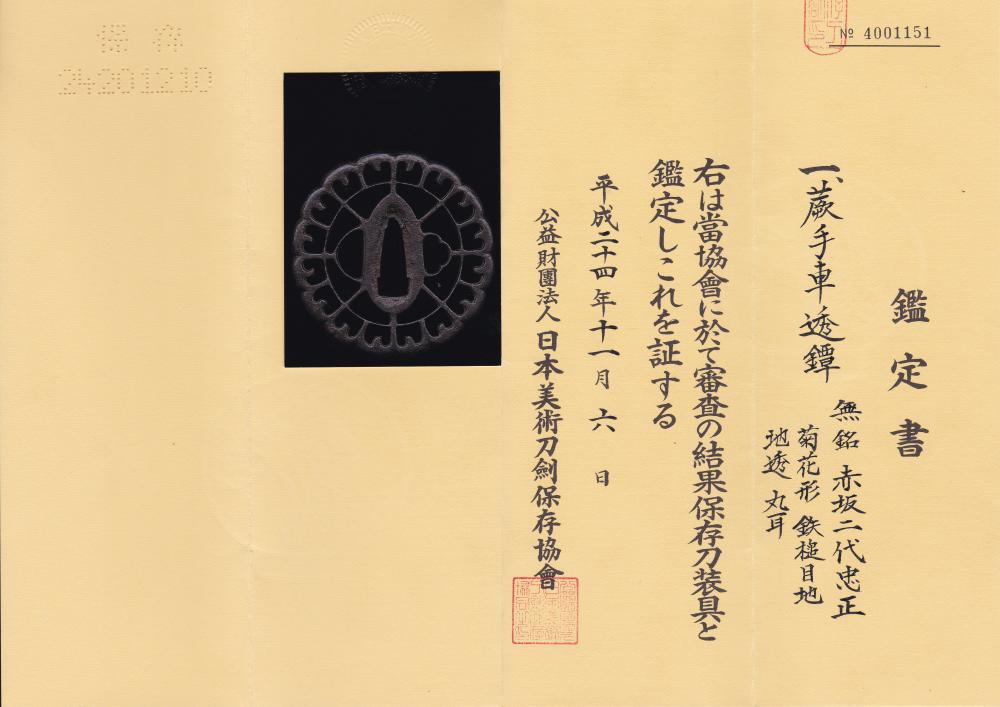
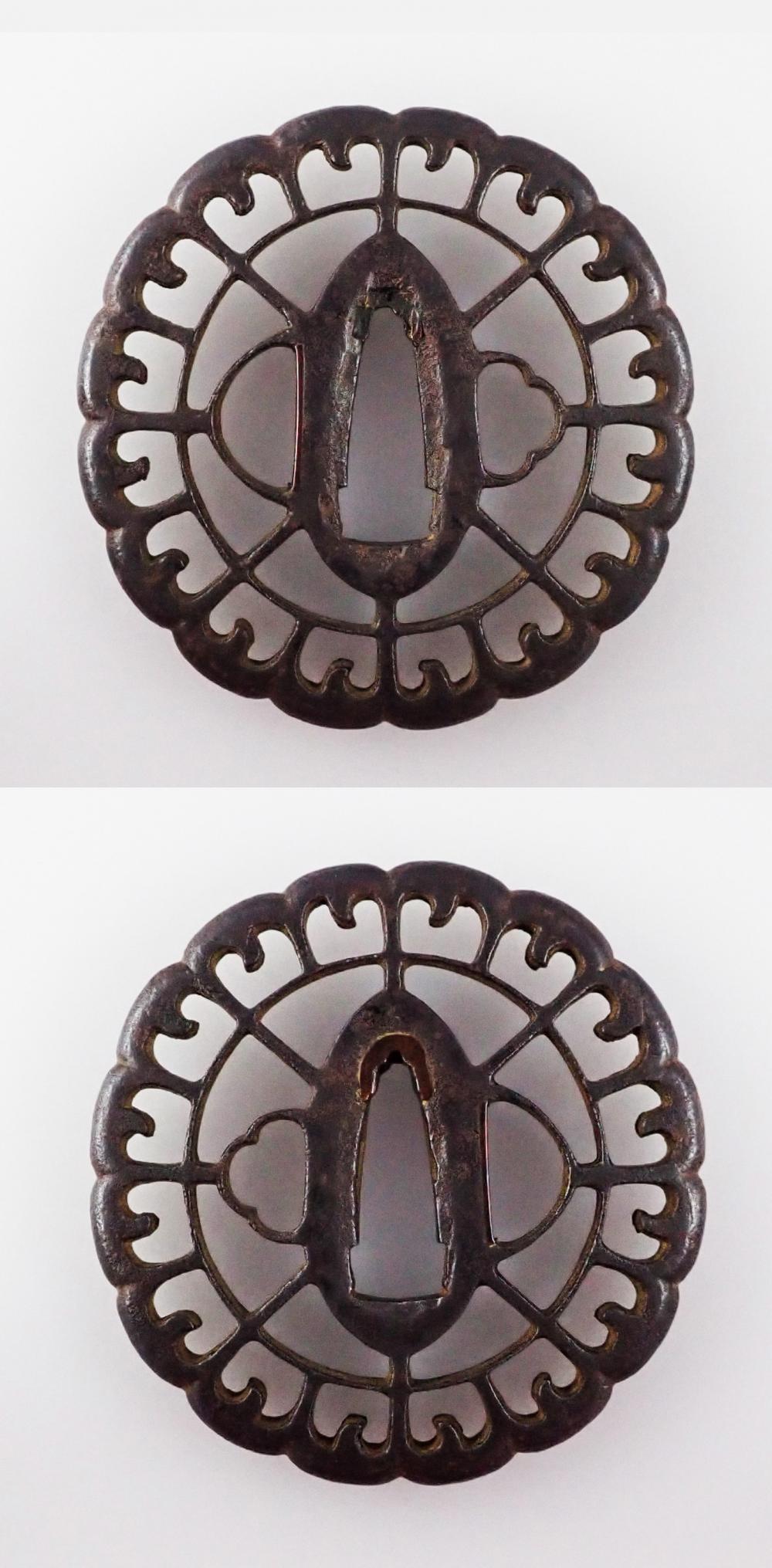
This is an unsigned Akasaka tsuba attributed to the 2nd generation Tadamasa, featuring a Warabite Guruma sukashi (openwork design). Made in Musashi province during the early Edo period, it exhibits the robust strength characteristic of Owari tsuba, combined with the refined openwork of Akasaka. It comes with an NBTHK Hozon Tosogu paper.
 NihontoWatch
mumei · Akasaka · Edo
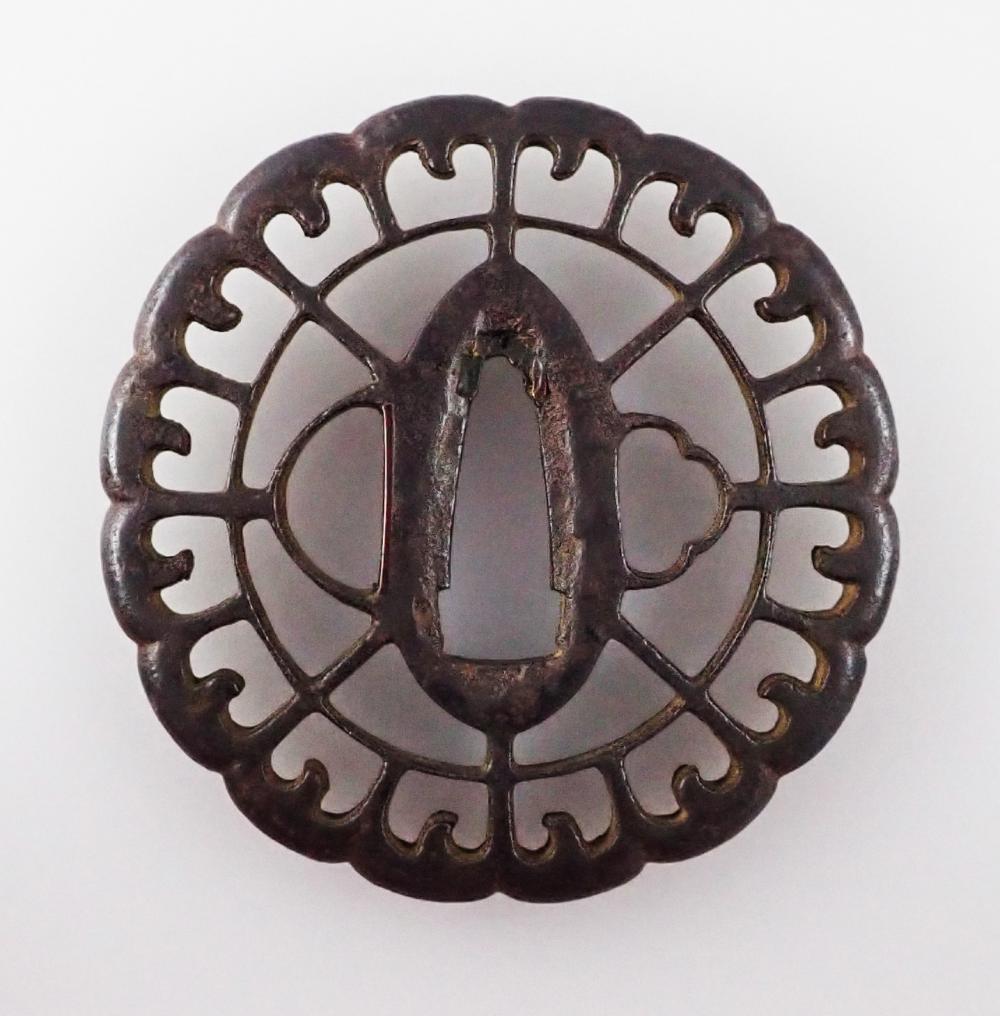
Iron-tsuba · Nagato · around 1624-1658
1 piece on the market now
Tadamasa, called Shozaemon, is the founding hand of the Akasaka school of iron openwork tsuba, a line said in the records to have moved from Kyoto to the Akasaka district of Edo at the start of the Edo period and to have flourished there to the end of the bakufu. He is named with the makers of Kyoto, Owari and Higo as one of the celebrated workers of the pierced iron guard. The first three generations, the so-called old Akasaka or upper three generations (1st Tadamasa, 2nd Tadamasa, 3rd Tadatora), are all unsigned; in-mei work begins only with the fourth generation Tadatoki around Genroku, with the signature Bushu-ju Akasaka Hikojuro Tadatoki saku, and the legitimate line thereafter took the name Tadatoki to the ninth generation. The name Tadamasa was carried by both a first and a second generation, both called Shozaemon; by a genealogy the descendant Tadatoki submitted to the bakufu in the Bunsei era, the first Tadamasa died in Meireki 3 (1657) and the second in Enpo 5 (1677). All accepted work of these upper generations is unsigned, so attribution rests on the iron, the openwork composition and a small set of construction features.
Where Tadamasa stands among comparable artisans: across all of nihontō, and within tradition, era, and period. The tiers (Foremost · Leading · Major · Notable) weigh official designations from the NBTHK and Japan's Agency for Cultural Affairs, together with historical honors of lasting repute such as the Sansaku and Meibutsu-chō.
Select a lens to see how it's measured.
Iron-tsuba · Edo
Phase: Ko-Akasaka古赤坂· 1624–1700
80 pieces on the market now
| Smith | Era | Designated |
|---|---|---|
| Tadamasa忠正 | 1624-1658 | 7 |
| Tadashige忠重 | 1730-1816 | 5 |
| Tadatoki忠時 | 1704-1764 | 0 |
| Tadanao忠直 | 1661-1688 | 0 |
| Tadamune忠宗 | 1707-1746 | 0 |
Certifies a genuine fitting worth preserving: a correct signature, or, if unsigned, an identifiable era and school, with recognized artistic and craft value.
The NBTHK (Nihon Bijutsu Tōken Hozon Kyōkai, the Society for the Preservation of Japanese Art Swords) is a public-interest incorporated foundation founded in 1948 and supervised by Japan’s Agency for Cultural Affairs (Bunkachō); it is based at the Japanese Sword Museum in Tokyo. Its expert panels physically examine each submitted work (shinsa) and issue a certificate (kanteishō) ranking it by artistic and historical merit. NBTHK papers are the most widely recognized standard of authentication for Japanese swords and fittings.
NBTHK official sitePlease contact us by phone within 3 days of the item's arrival and ship it back the next day. The postage and security service fees are the customer's responsibility.
This is an unsigned Akasaka tsuba attributed to the 2nd generation Tadamasa, featuring a Warabite Guruma sukashi (openwork design). Made in Musashi province during the early Edo period, it exhibits the robust strength characteristic of Owari tsuba, combined with the refined openwork of Akasaka. It comes with an NBTHK Hozon Tosogu paper.
NihontoWatchmumei · Akasaka · Edo
Iron-tsuba · Nagato · around 1624-1658
1 piece on the market now
Tadamasa, called Shozaemon, is the founding hand of the Akasaka school of iron openwork tsuba, a line said in the records to have moved from Kyoto to the Akasaka district of Edo at the start of the Edo period and to have flourished there to the end of the bakufu. He is named with the makers of Kyoto, Owari and Higo as one of the celebrated workers of the pierced iron guard. The first three generations, the so-called old Akasaka or upper three generations (1st Tadamasa, 2nd Tadamasa, 3rd Tadatora), are all unsigned; in-mei work begins only with the fourth generation Tadatoki around Genroku, with the signature Bushu-ju Akasaka Hikojuro Tadatoki saku, and the legitimate line thereafter took the name Tadatoki to the ninth generation. The name Tadamasa was carried by both a first and a second generation, both called Shozaemon; by a genealogy the descendant Tadatoki submitted to the bakufu in the Bunsei era, the first Tadamasa died in Meireki 3 (1657) and the second in Enpo 5 (1677). All accepted work of these upper generations is unsigned, so attribution rests on the iron, the openwork composition and a small set of construction features.
Where Tadamasa stands among comparable artisans: across all of nihontō, and within tradition, era, and period. The tiers (Foremost · Leading · Major · Notable) weigh official designations from the NBTHK and Japan's Agency for Cultural Affairs, together with historical honors of lasting repute such as the Sansaku and Meibutsu-chō.
Select a lens to see how it's measured.
Iron-tsuba · Edo
Phase: Ko-Akasaka古赤坂· 1624–1700
80 pieces on the market now
| Smith | Era | Designated |
|---|---|---|
| Tadamasa忠正 | 1624-1658 | 7 |
| Tadashige忠重 | 1730-1816 | 5 |
| Tadatoki忠時 | 1704-1764 | 0 |
| Tadanao忠直 | 1661-1688 | 0 |
| Tadamune忠宗 | 1707-1746 | 0 |
Certifies a genuine fitting worth preserving: a correct signature, or, if unsigned, an identifiable era and school, with recognized artistic and craft value.
The NBTHK (Nihon Bijutsu Tōken Hozon Kyōkai, the Society for the Preservation of Japanese Art Swords) is a public-interest incorporated foundation founded in 1948 and supervised by Japan’s Agency for Cultural Affairs (Bunkachō); it is based at the Japanese Sword Museum in Tokyo. Its expert panels physically examine each submitted work (shinsa) and issue a certificate (kanteishō) ranking it by artistic and historical merit. NBTHK papers are the most widely recognized standard of authentication for Japanese swords and fittings.
NBTHK official sitePlease contact us by phone within 3 days of the item's arrival and ship it back the next day. The postage and security service fees are the customer's responsibility.