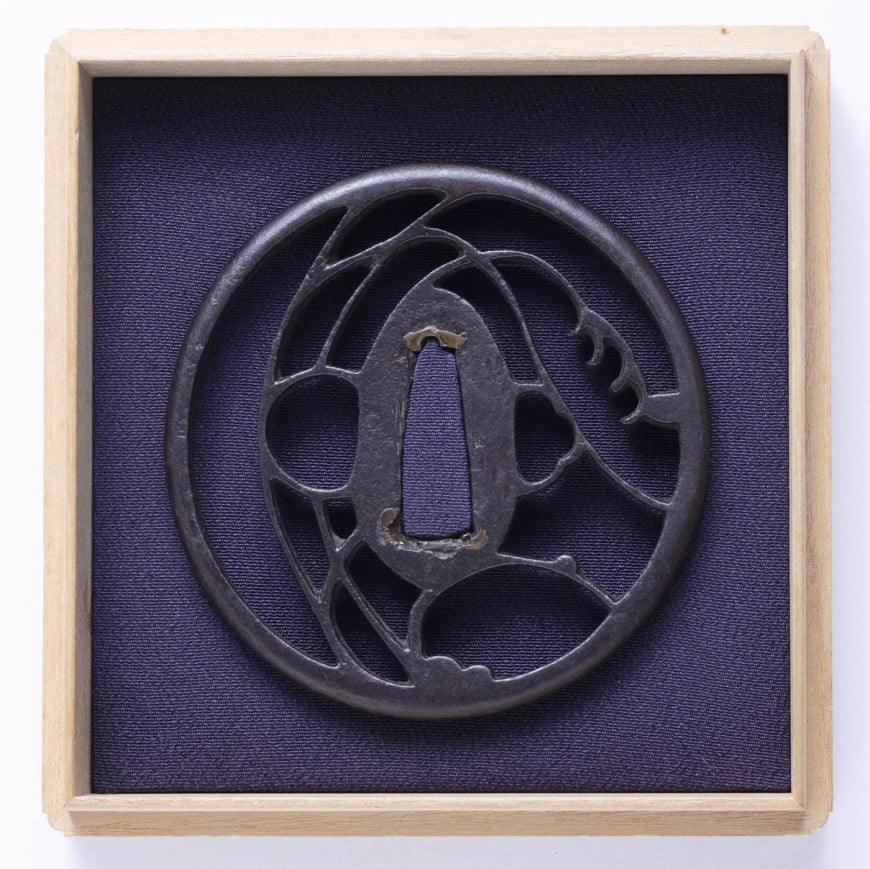
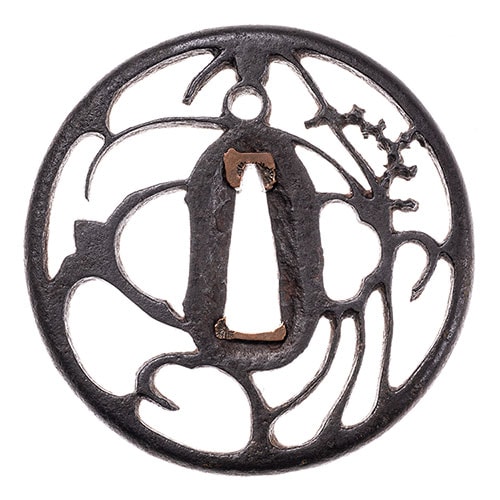
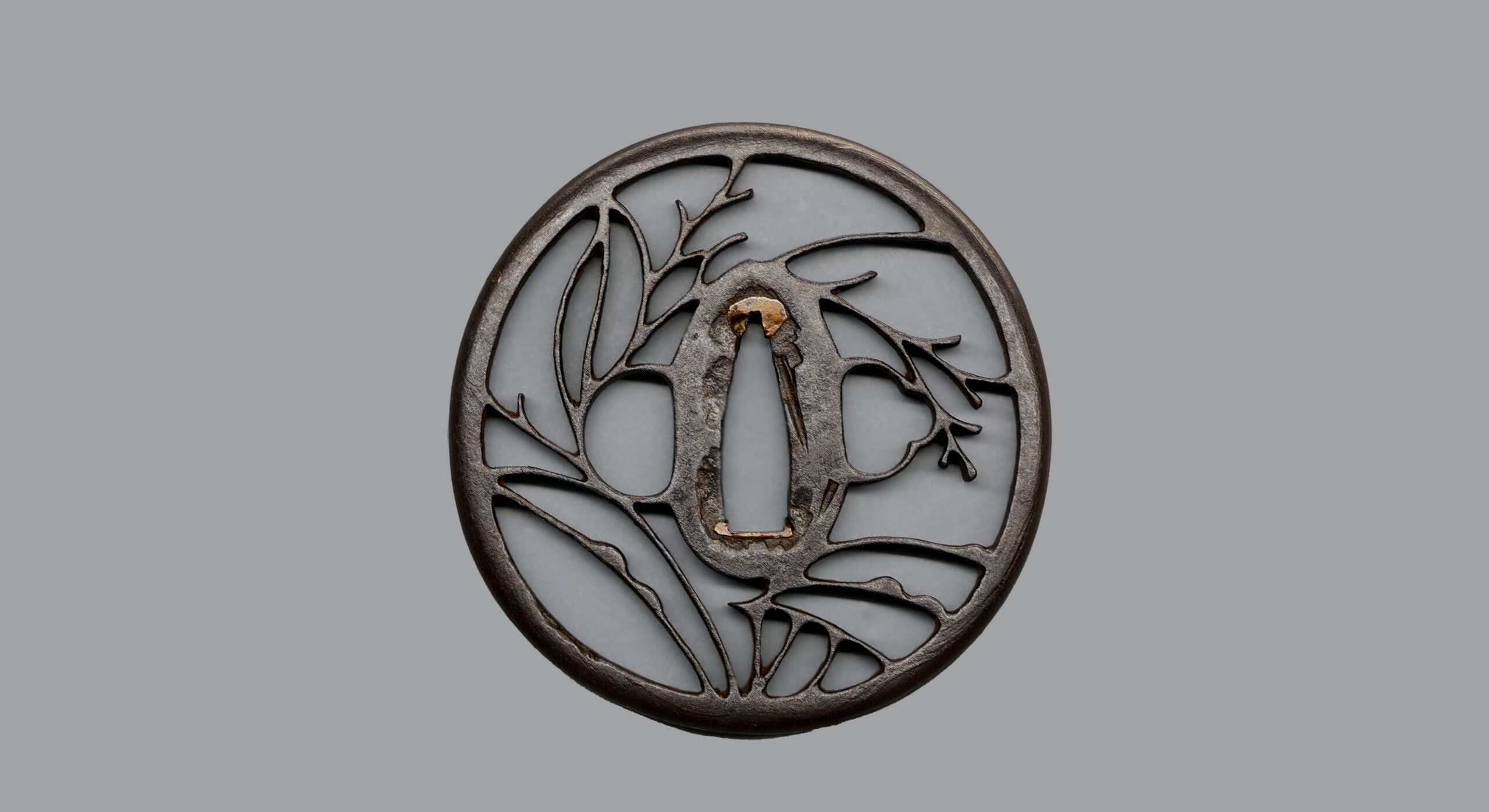
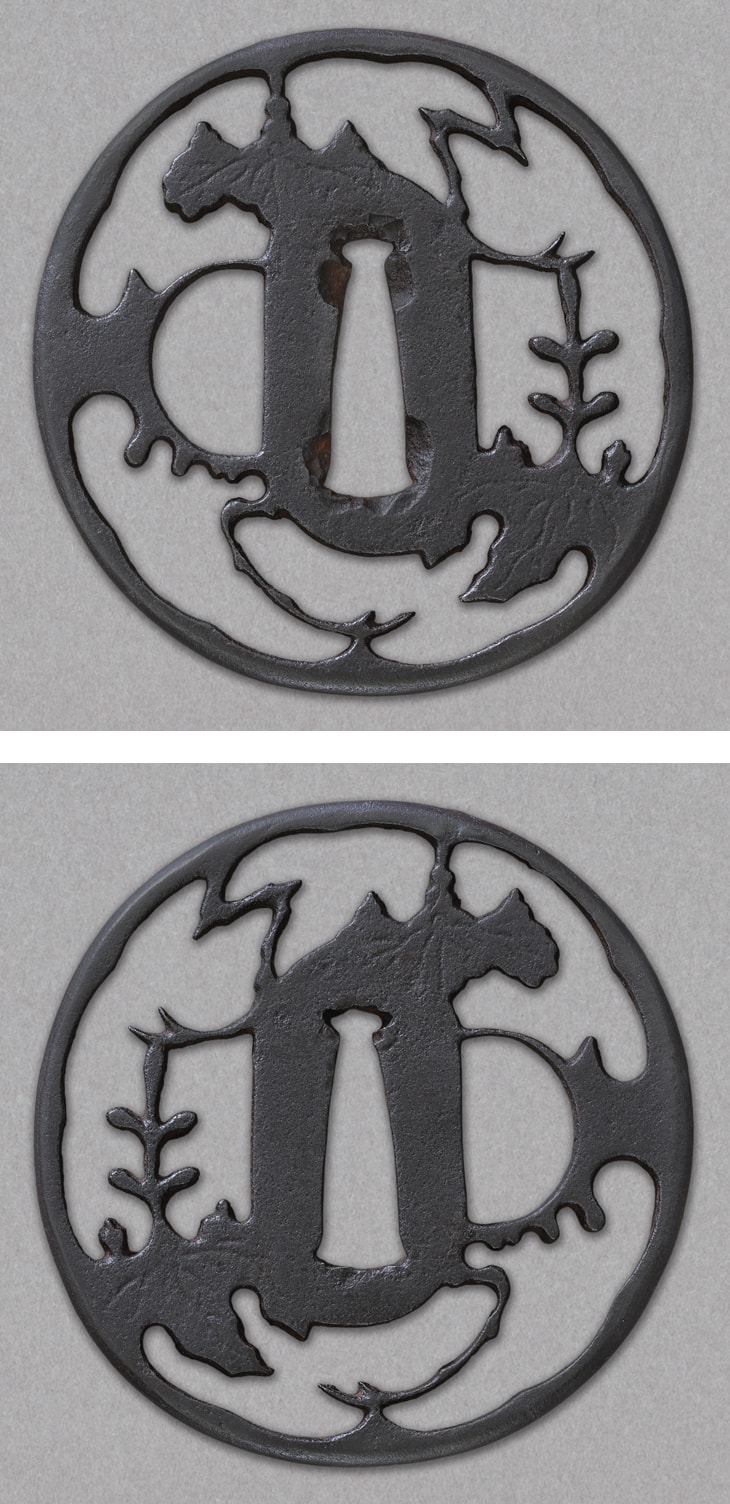
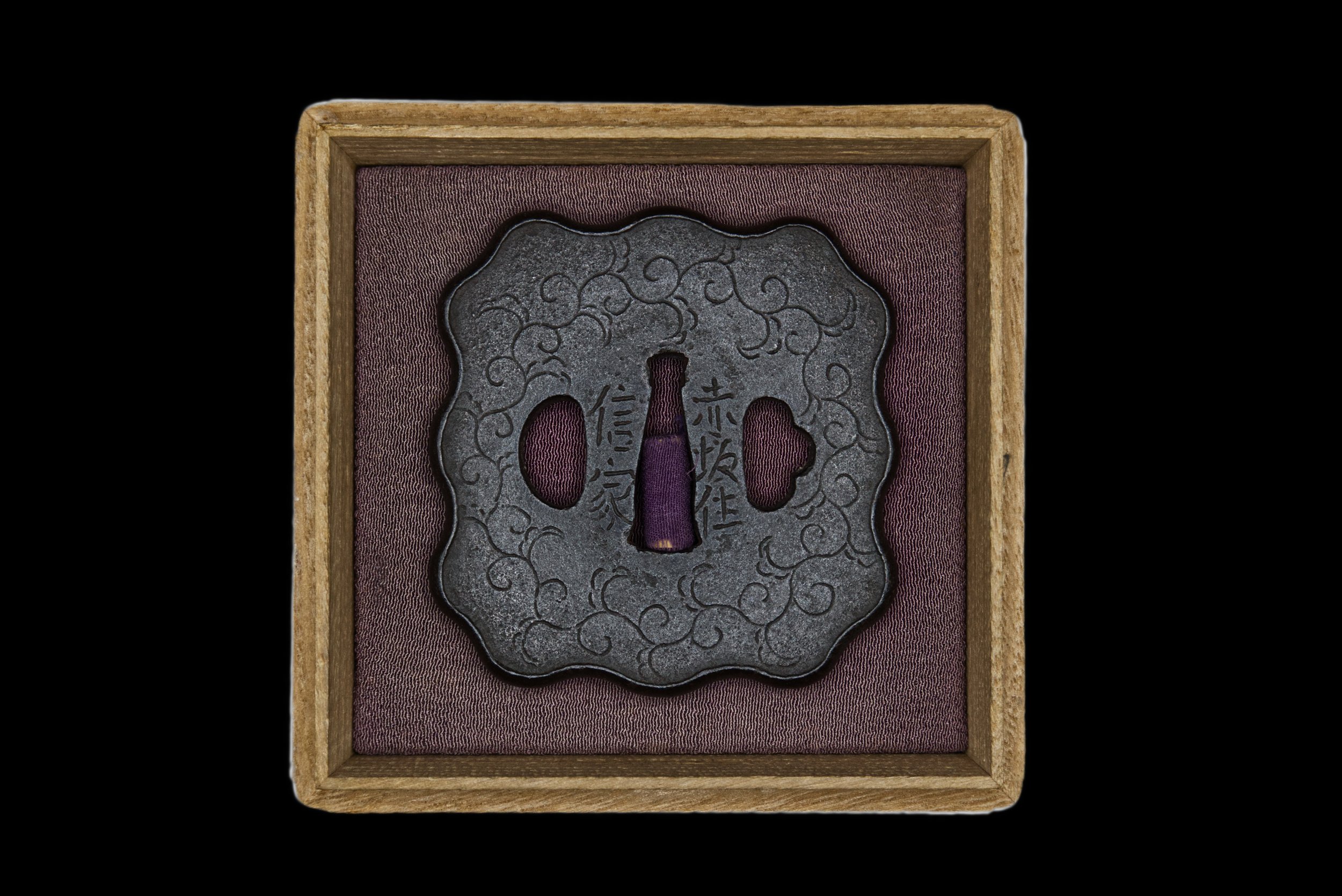
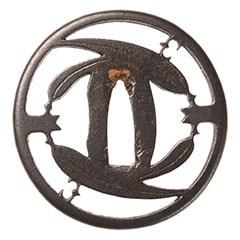
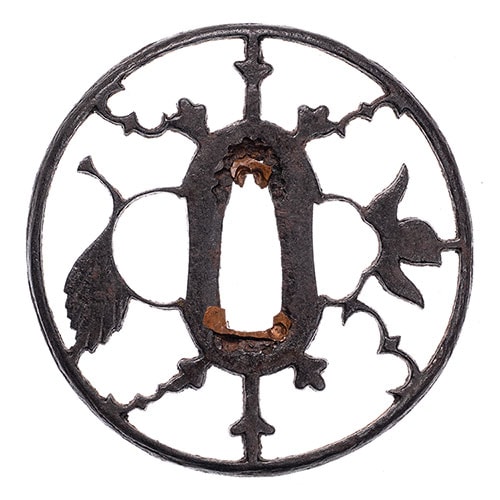
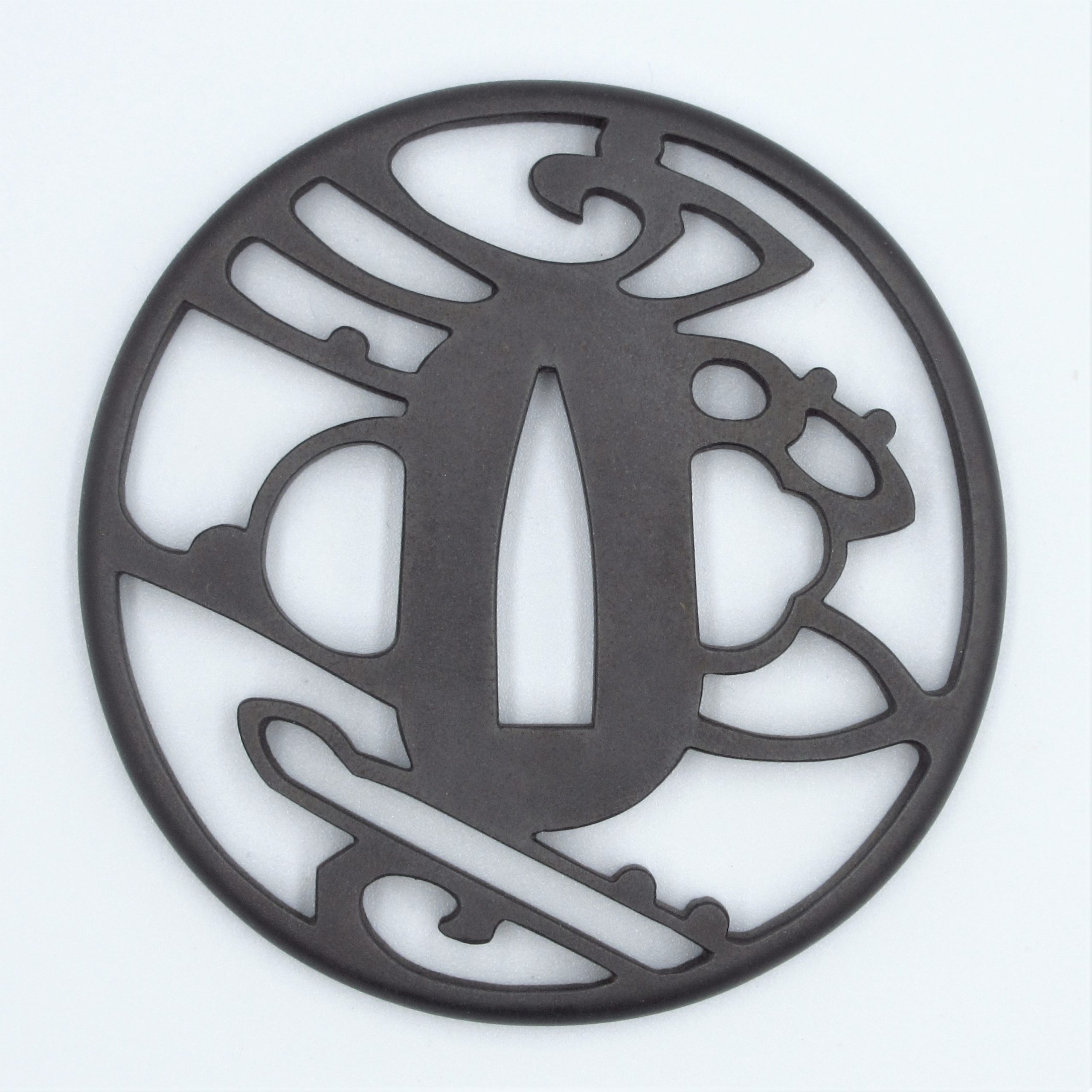
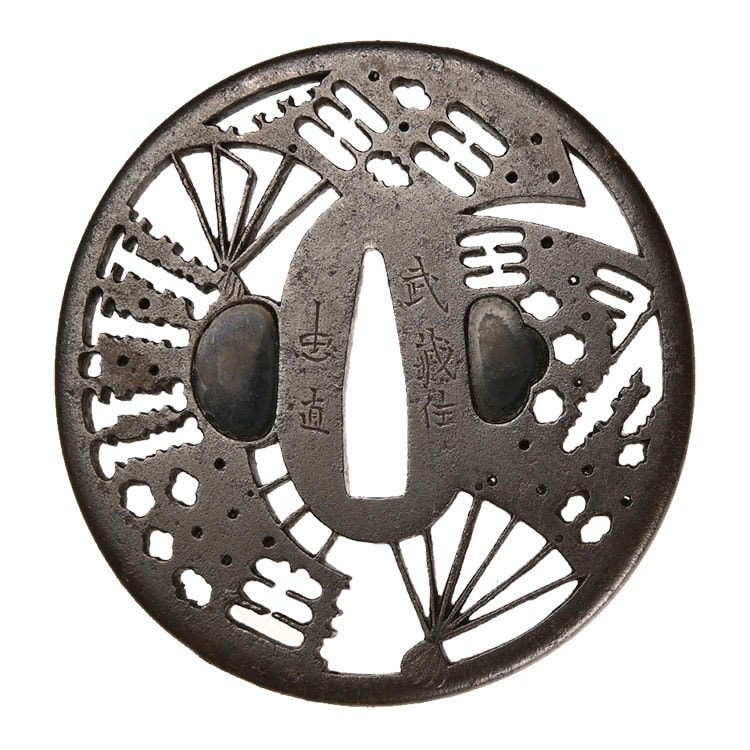
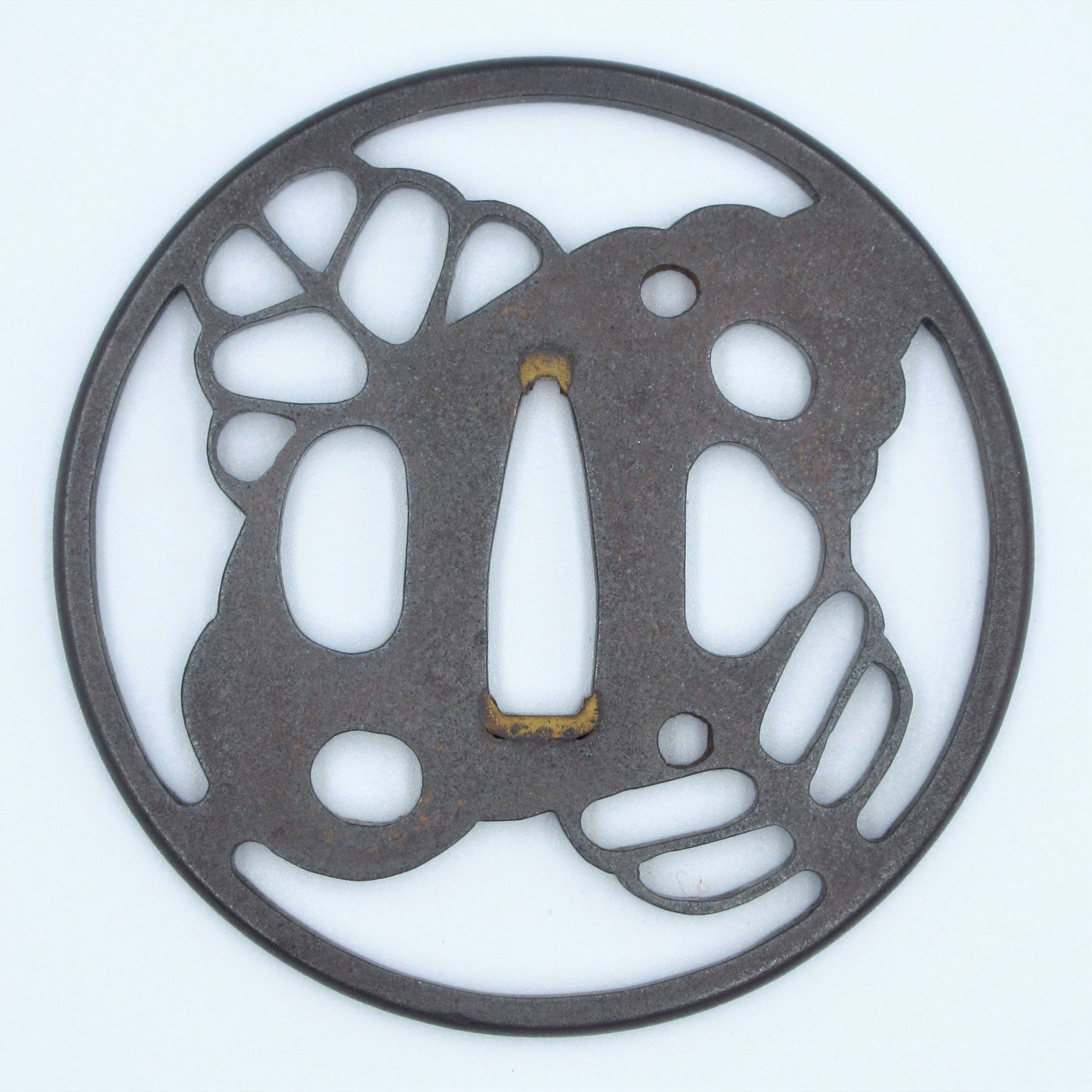
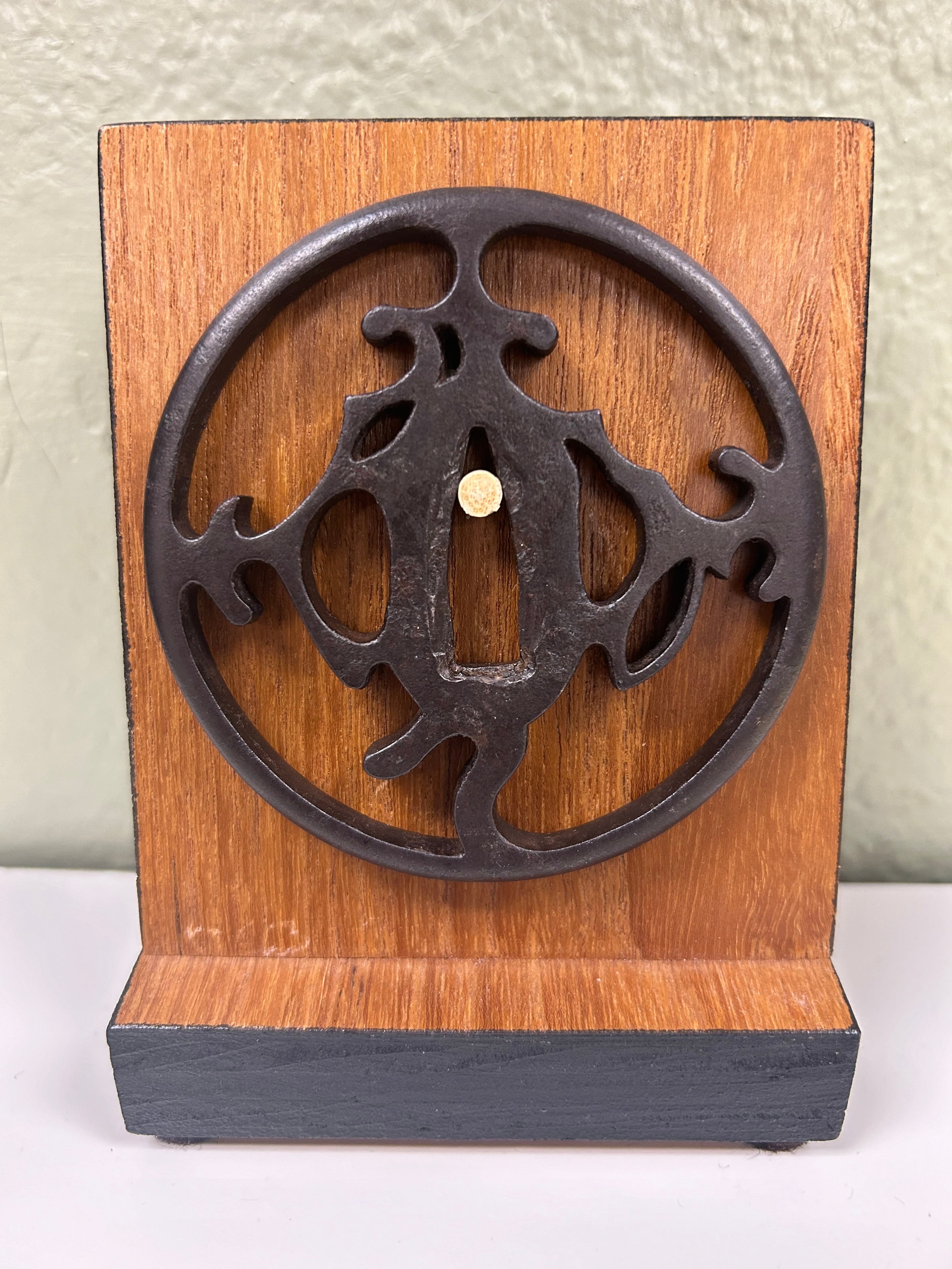
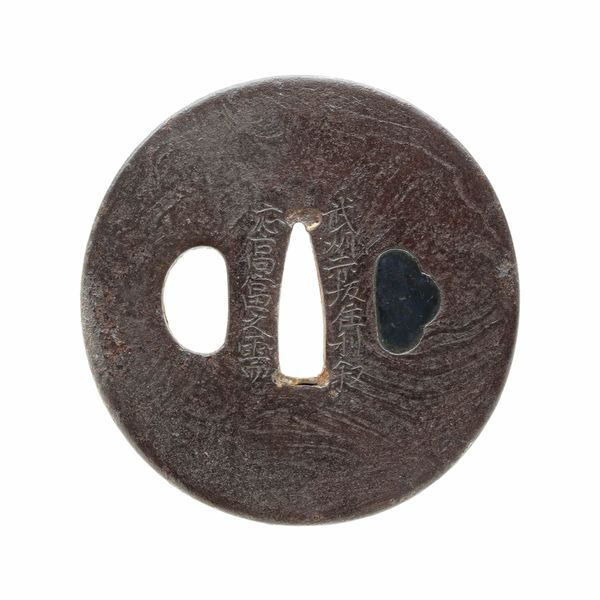
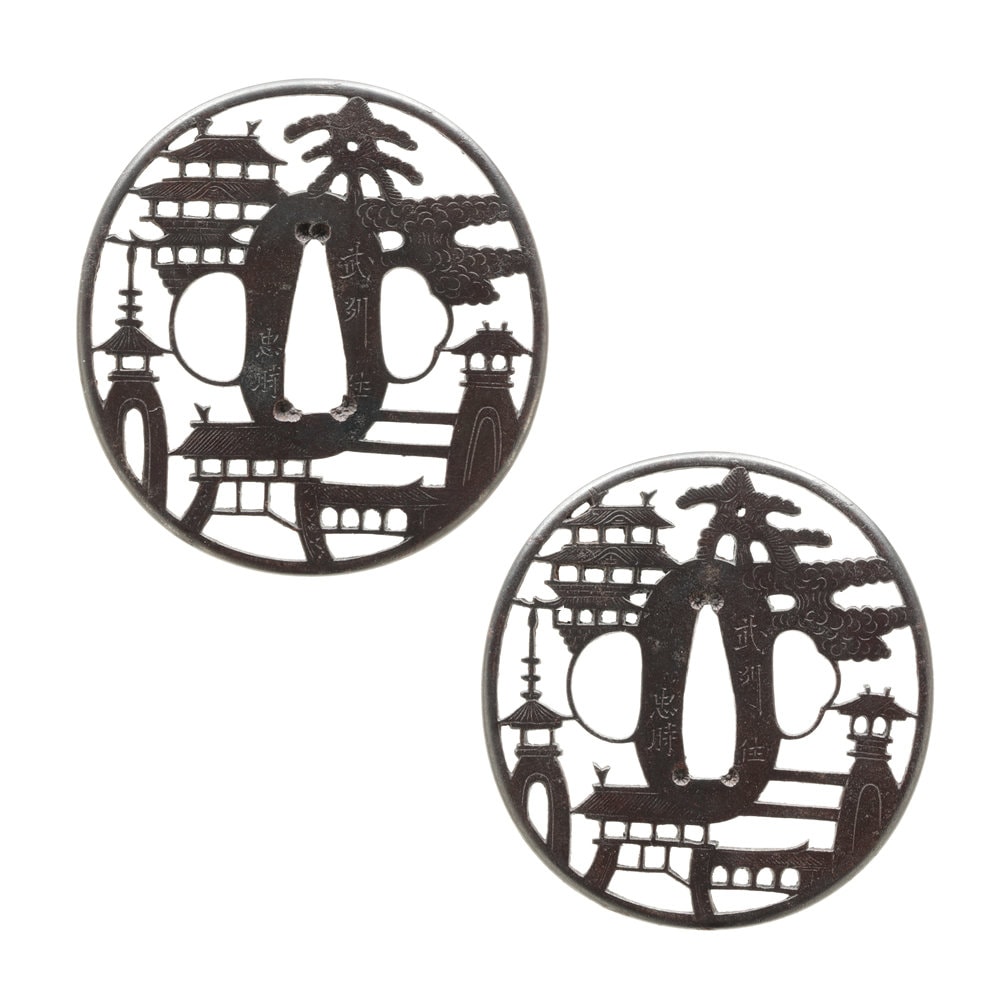
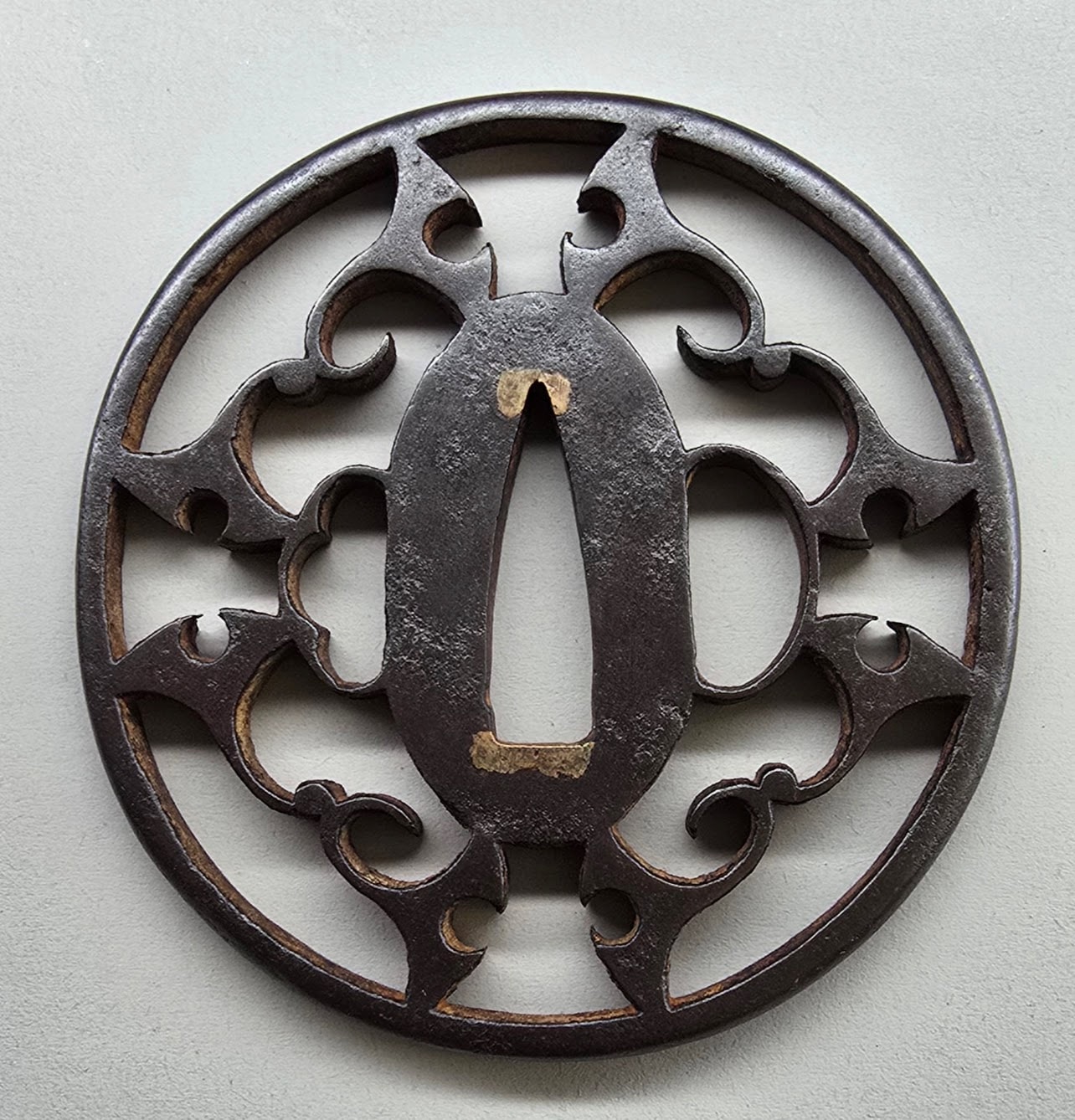
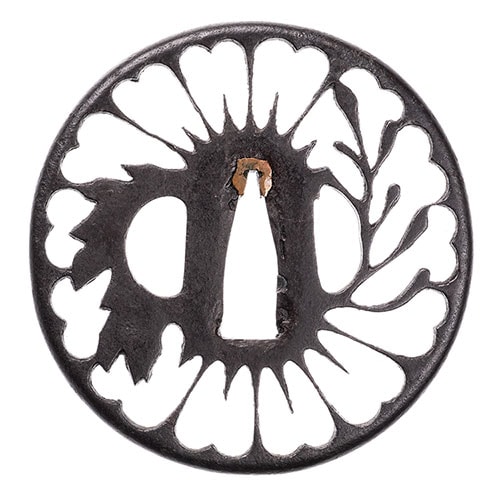
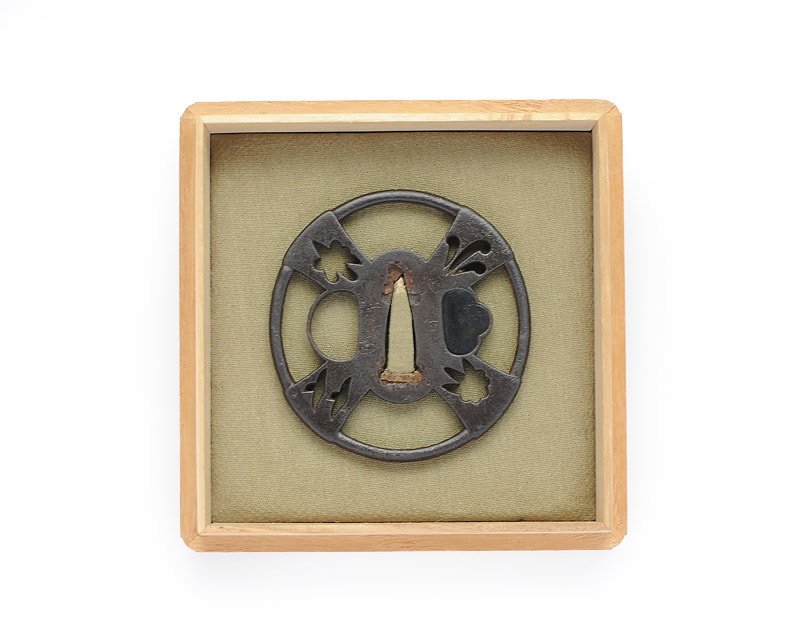
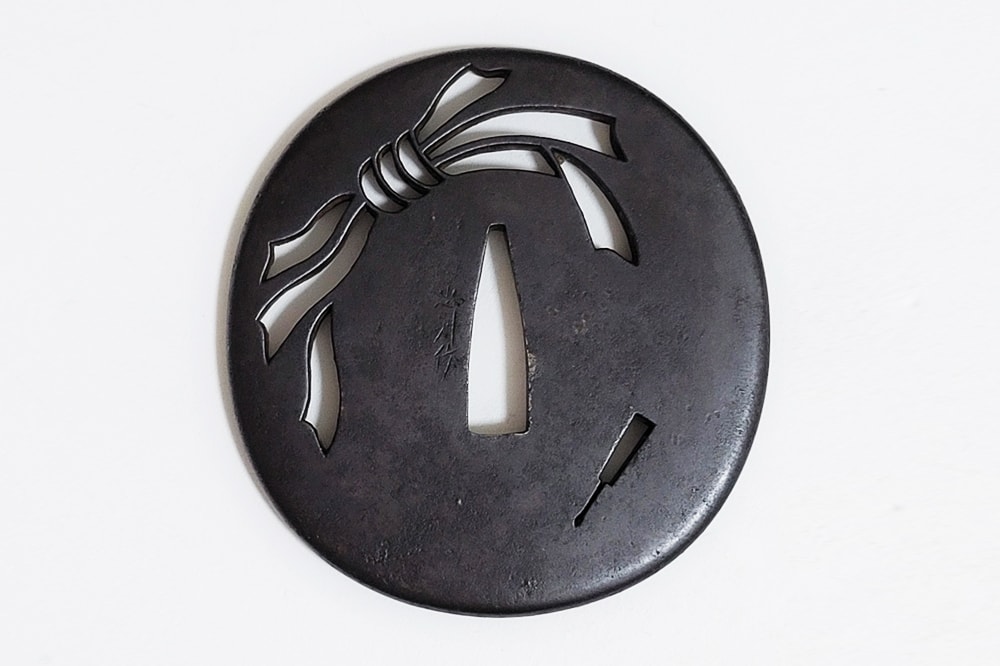
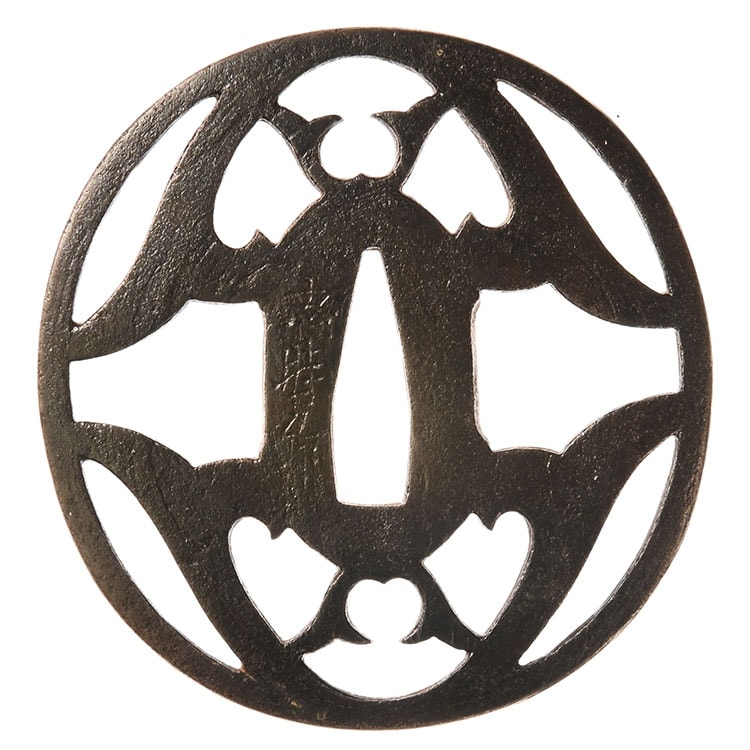
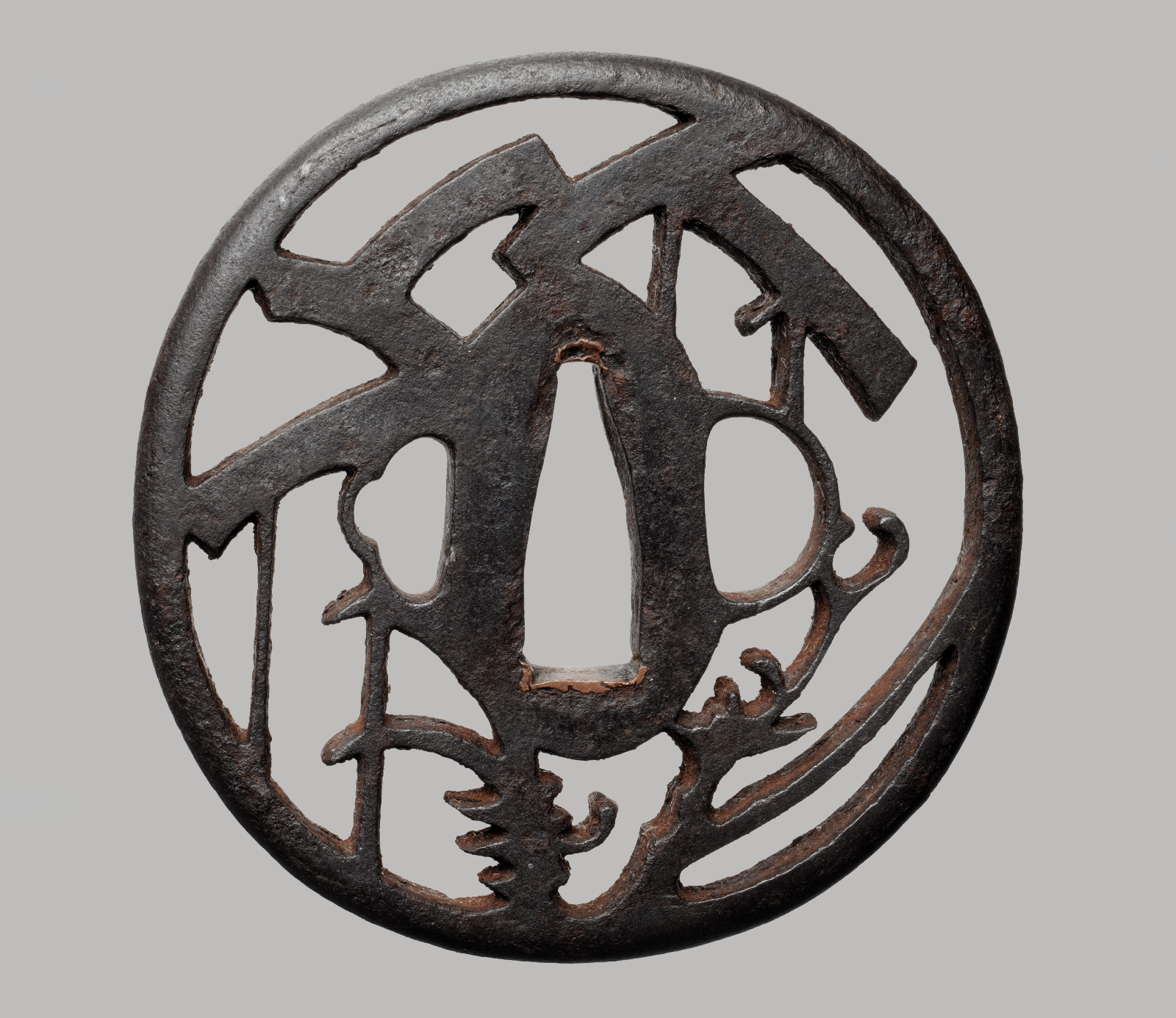
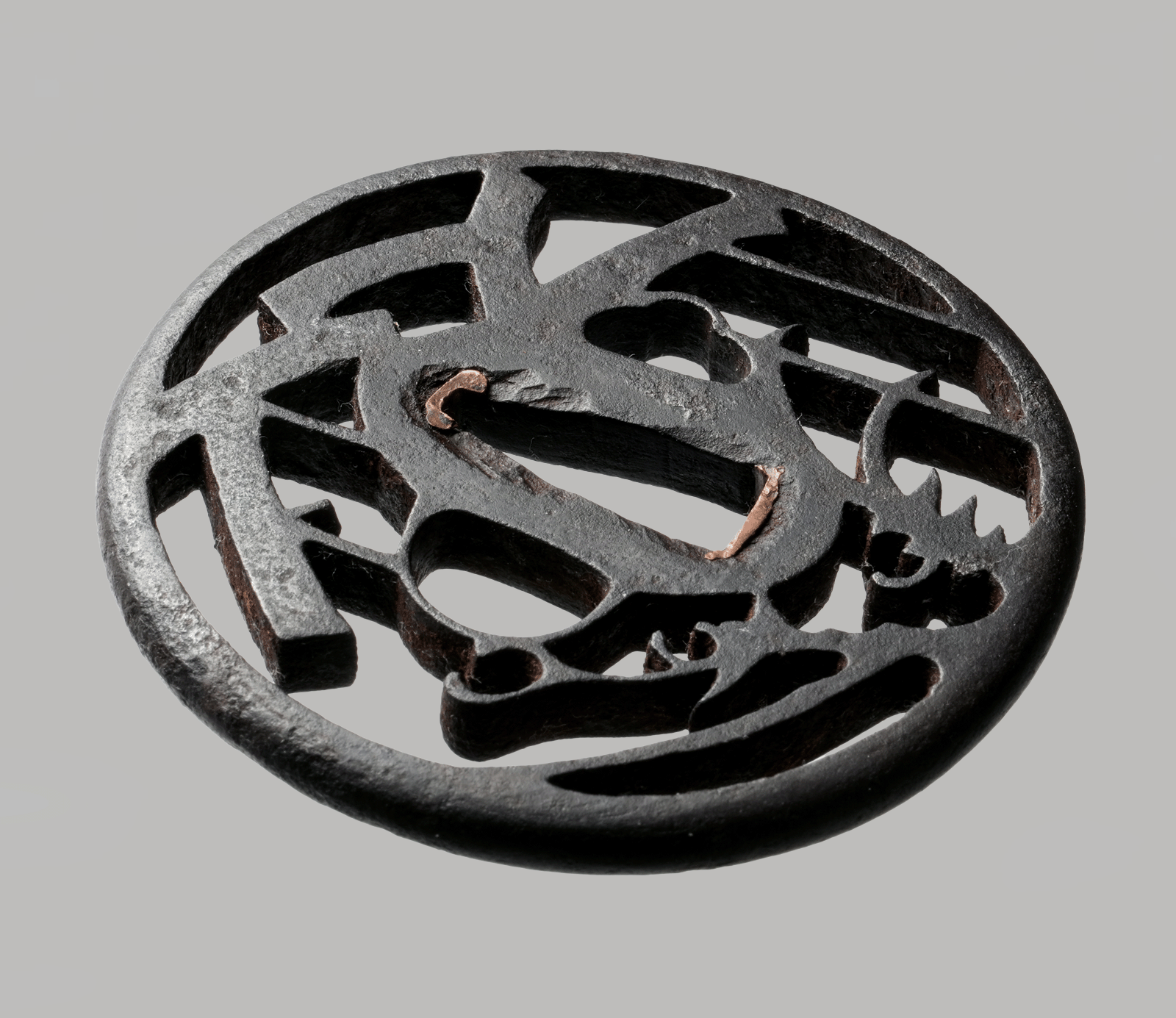
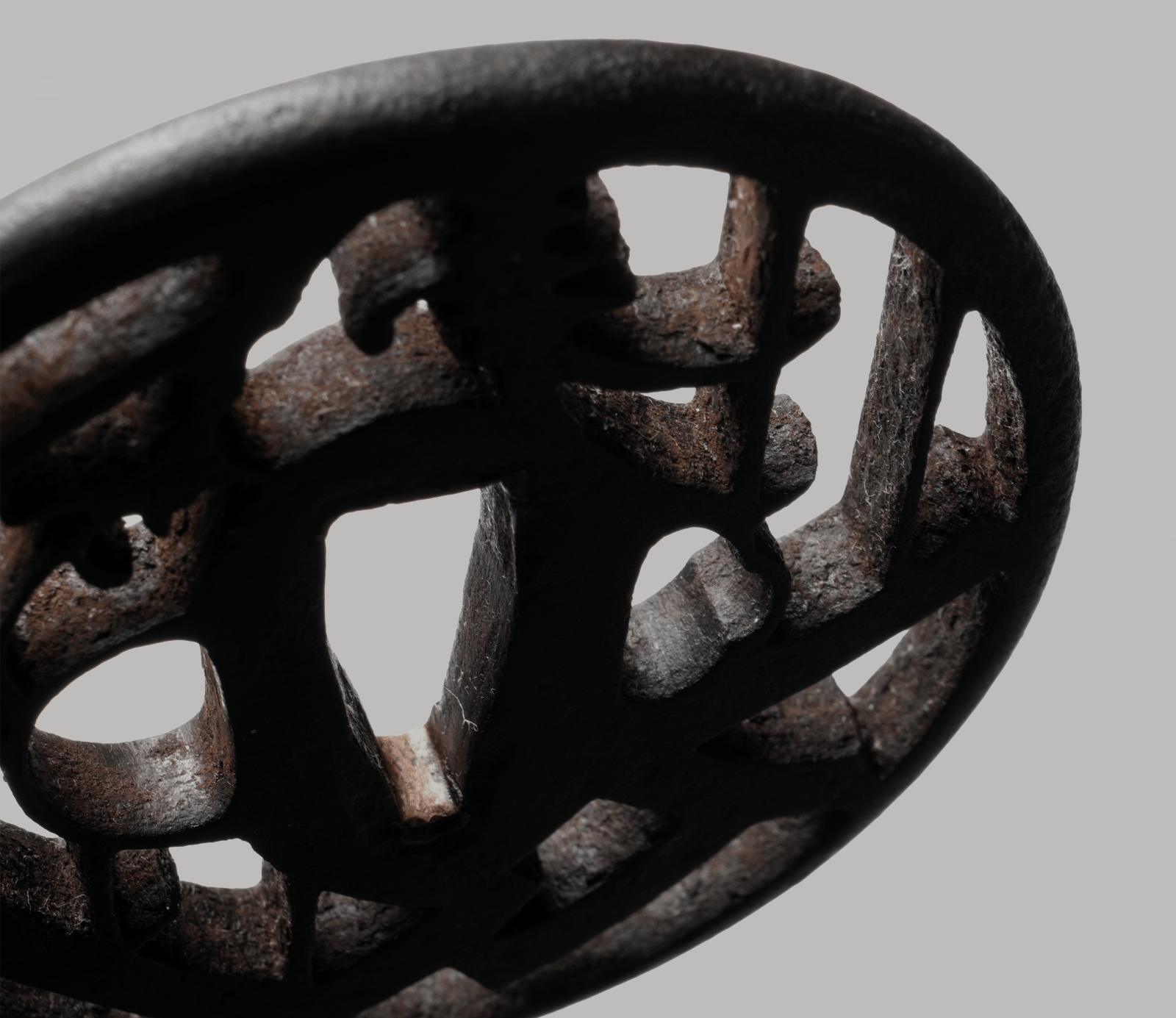
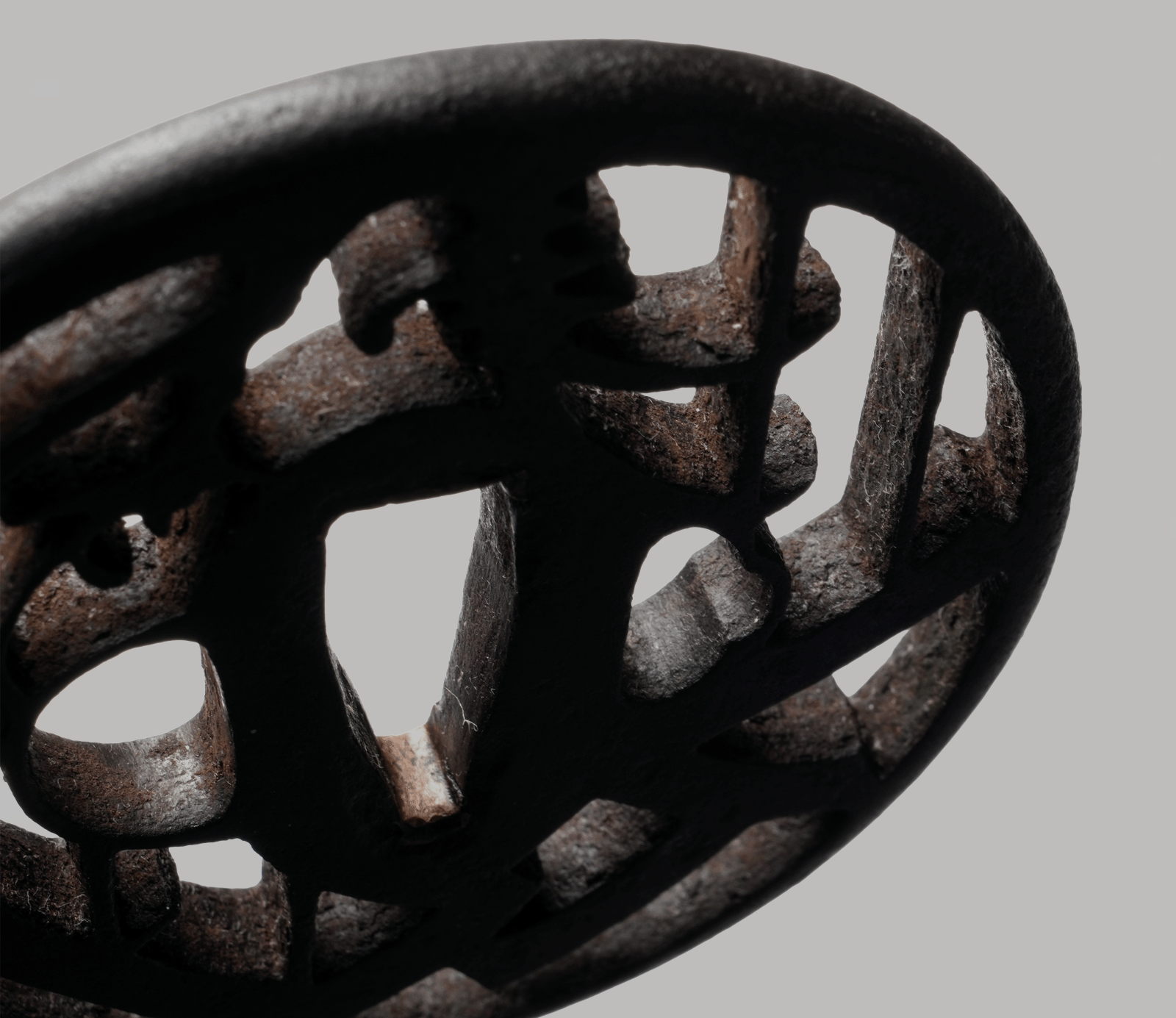
This powerful tsuba by Akasaka Tadamasa II is an outstanding example of mature mid-Edo Akasaka workmanship. The iron plate is dense and resonant, with a deep, dark patina. The sukashi motif depicts Yatsuhashi combined with lilies and possibly elements of Musashino grasses.
 NihontoWatch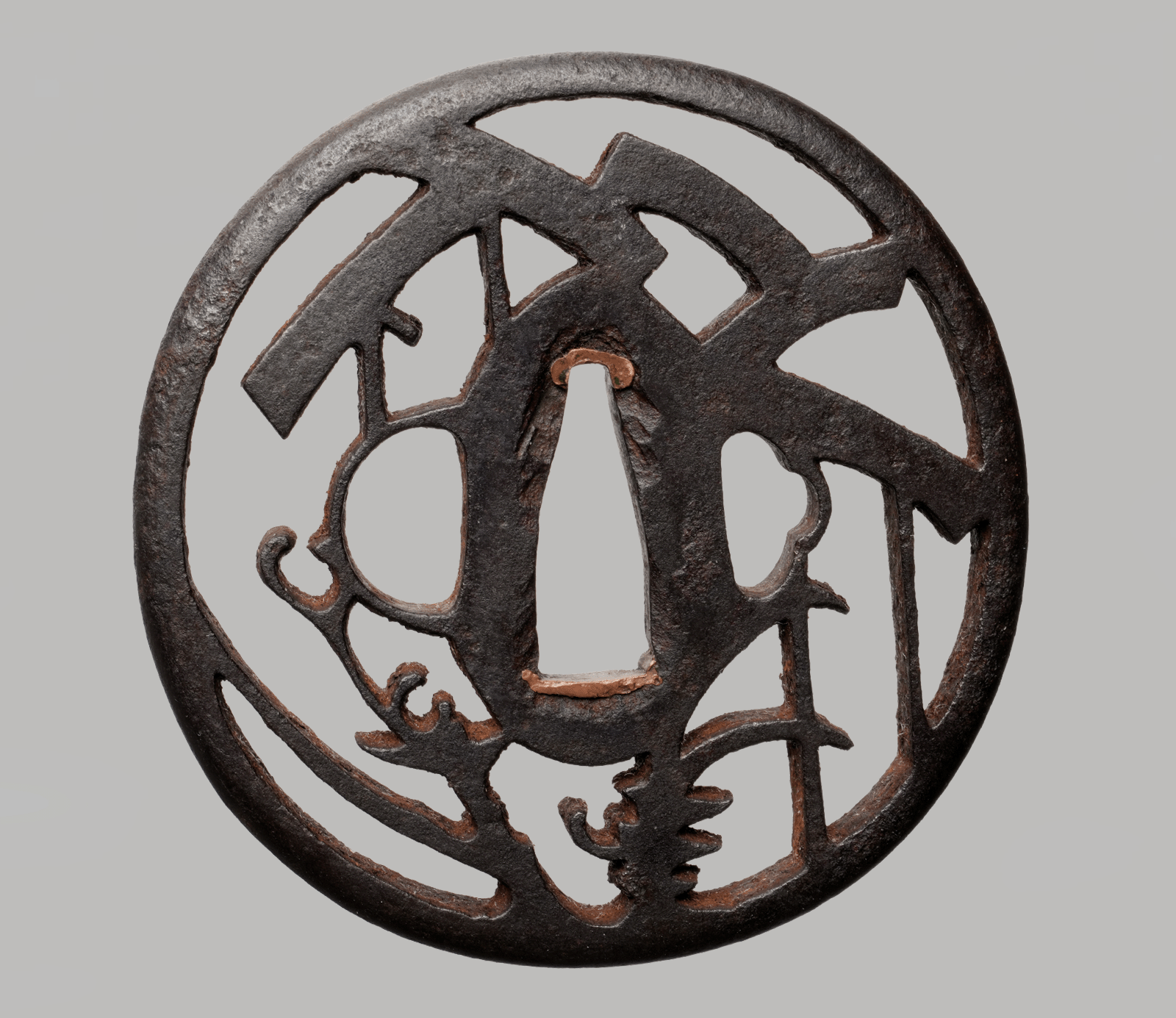
Iron-tsuba · Nagato · around 1624-1658
1 piece on the market now
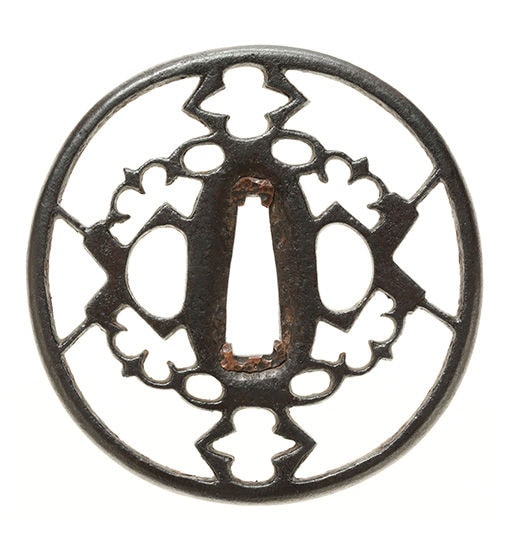
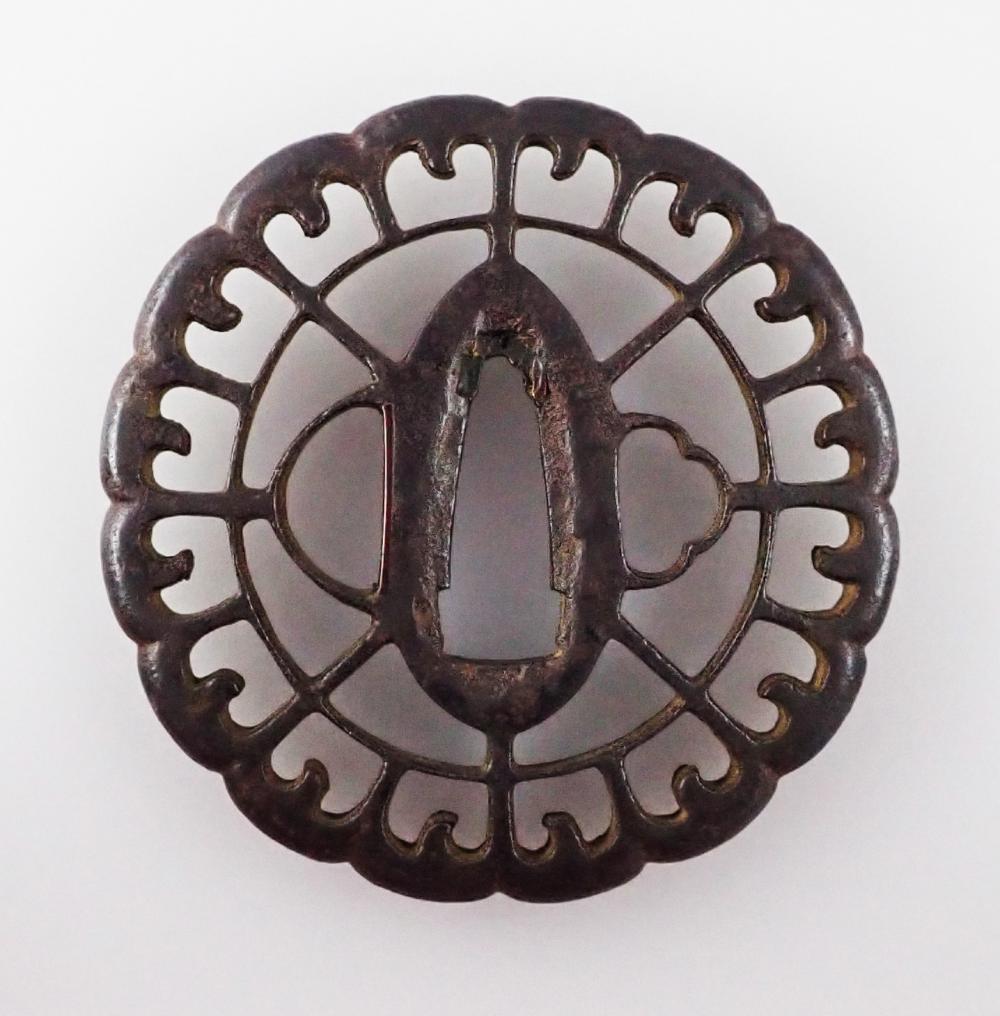
Tadamasa, called Shozaemon, is the founding hand of the Akasaka school of iron openwork tsuba, a line said in the records to have moved from Kyoto to the Akasaka district of Edo at the start of the Edo period and to have flourished there to the end of the bakufu. He is named with the makers of Kyoto, Owari and Higo as one of the celebrated workers of the pierced iron guard. The first three generations, the so-called old Akasaka or upper three generations (1st Tadamasa, 2nd Tadamasa, 3rd Tadatora), are all unsigned; in-mei work begins only with the fourth generation Tadatoki around Genroku, with the signature Bushu-ju Akasaka Hikojuro Tadatoki saku, and the legitimate line thereafter took the name Tadatoki to the ninth generation. The name Tadamasa was carried by both a first and a second generation, both called Shozaemon; by a genealogy the descendant Tadatoki submitted to the bakufu in the Bunsei era, the first Tadamasa died in Meireki 3 (1657) and the second in Enpo 5 (1677). All accepted work of these upper generations is unsigned, so attribution rests on the iron, the openwork composition and a small set of construction features.
Where Tadamasa stands among comparable artisans: across all of nihontō, and within tradition, era, and period. The tiers (Foremost · Leading · Major · Notable) weigh official designations from the NBTHK and Japan's Agency for Cultural Affairs, together with historical honors of lasting repute such as the Sansaku and Meibutsu-chō.
Select a lens to see how it's measured.
Iron-tsuba · Edo
Phase: Ko-Akasaka古赤坂· 1624–1700
80 pieces on the market now
| Smith | Era | Designated |
|---|---|---|
| Tadamasa忠正 | 1624-1658 | 7 |
| Tadashige忠重 | 1730-1816 | 5 |
| Tadatoki忠時 | 1704-1764 | 0 |
| Tadanao忠直 | 1661-1688 | 0 |
| Tadamune忠宗 | 1707-1746 | 0 |
We could not find an authenticity certificate on the seller’s listing. Japanese swords and fittings are normally papered by the NBTHK (or the NTHK). Without one, the attribution is the seller’s own assessment and has not been independently verified — treat it with caution and ask the dealer about certification before buying.
14-day return window in original/unused condition; antique items (swords, menuki, tsuba and similar) are expressly excluded from exchange; EU consumers retain a 14-day cancellation right; refunds within 10 business days of approval.
This powerful tsuba by Akasaka Tadamasa II is an outstanding example of mature mid-Edo Akasaka workmanship. The iron plate is dense and resonant, with a deep, dark patina. The sukashi motif depicts Yatsuhashi combined with lilies and possibly elements of Musashino grasses.
NihontoWatchIron-tsuba · Nagato · around 1624-1658
1 piece on the market now
Tadamasa, called Shozaemon, is the founding hand of the Akasaka school of iron openwork tsuba, a line said in the records to have moved from Kyoto to the Akasaka district of Edo at the start of the Edo period and to have flourished there to the end of the bakufu. He is named with the makers of Kyoto, Owari and Higo as one of the celebrated workers of the pierced iron guard. The first three generations, the so-called old Akasaka or upper three generations (1st Tadamasa, 2nd Tadamasa, 3rd Tadatora), are all unsigned; in-mei work begins only with the fourth generation Tadatoki around Genroku, with the signature Bushu-ju Akasaka Hikojuro Tadatoki saku, and the legitimate line thereafter took the name Tadatoki to the ninth generation. The name Tadamasa was carried by both a first and a second generation, both called Shozaemon; by a genealogy the descendant Tadatoki submitted to the bakufu in the Bunsei era, the first Tadamasa died in Meireki 3 (1657) and the second in Enpo 5 (1677). All accepted work of these upper generations is unsigned, so attribution rests on the iron, the openwork composition and a small set of construction features.
Where Tadamasa stands among comparable artisans: across all of nihontō, and within tradition, era, and period. The tiers (Foremost · Leading · Major · Notable) weigh official designations from the NBTHK and Japan's Agency for Cultural Affairs, together with historical honors of lasting repute such as the Sansaku and Meibutsu-chō.
Select a lens to see how it's measured.
Iron-tsuba · Edo
Phase: Ko-Akasaka古赤坂· 1624–1700
80 pieces on the market now
| Smith | Era | Designated |
|---|---|---|
| Tadamasa忠正 | 1624-1658 | 7 |
| Tadashige忠重 | 1730-1816 | 5 |
| Tadatoki忠時 | 1704-1764 | 0 |
| Tadanao忠直 | 1661-1688 | 0 |
| Tadamune忠宗 | 1707-1746 | 0 |
We could not find an authenticity certificate on the seller’s listing. Japanese swords and fittings are normally papered by the NBTHK (or the NTHK). Without one, the attribution is the seller’s own assessment and has not been independently verified — treat it with caution and ask the dealer about certification before buying.
14-day return window in original/unused condition; antique items (swords, menuki, tsuba and similar) are expressly excluded from exchange; EU consumers retain a 14-day cancellation right; refunds within 10 business days of approval.