 NihontoWatchNihontoWatch
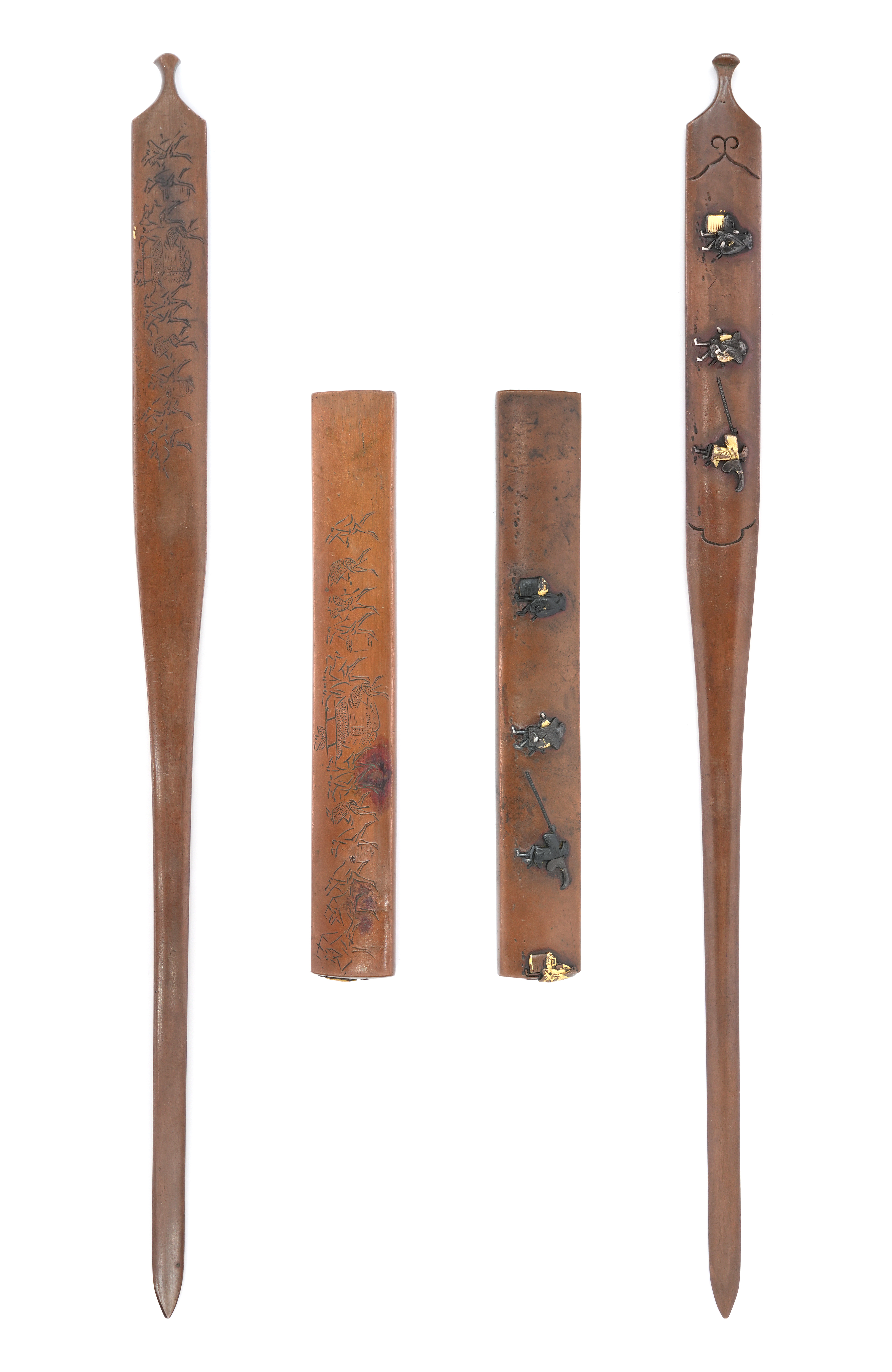
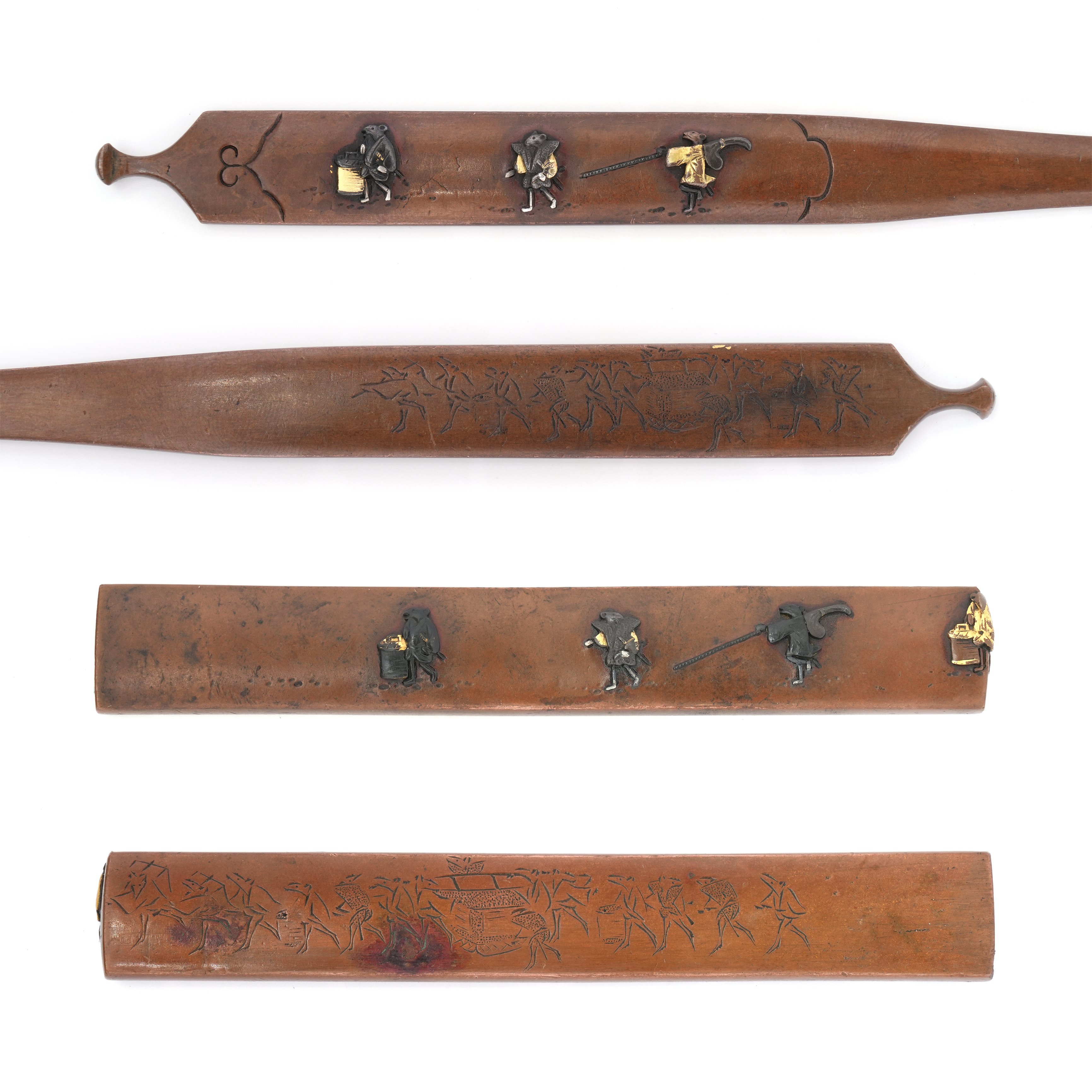
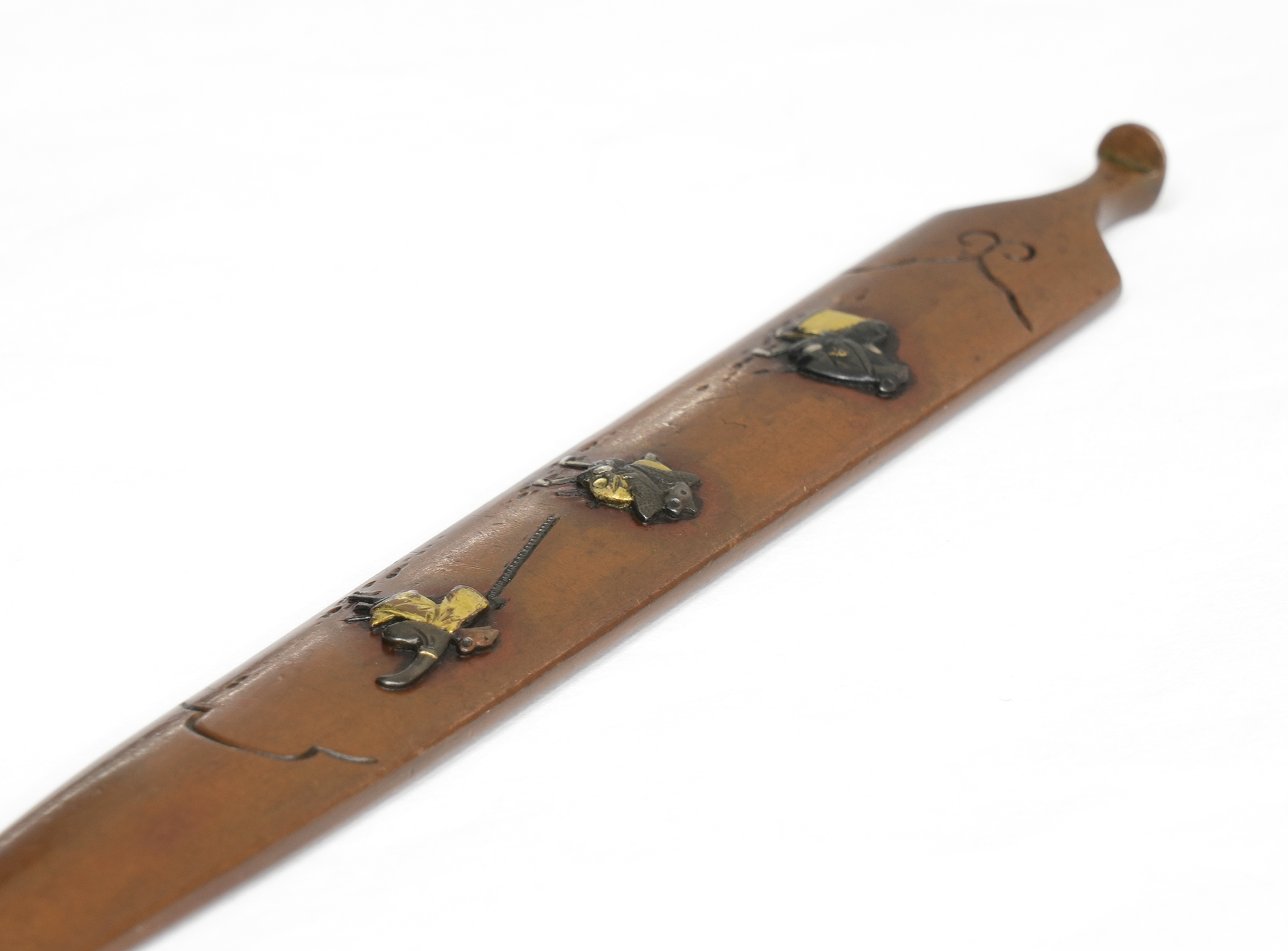
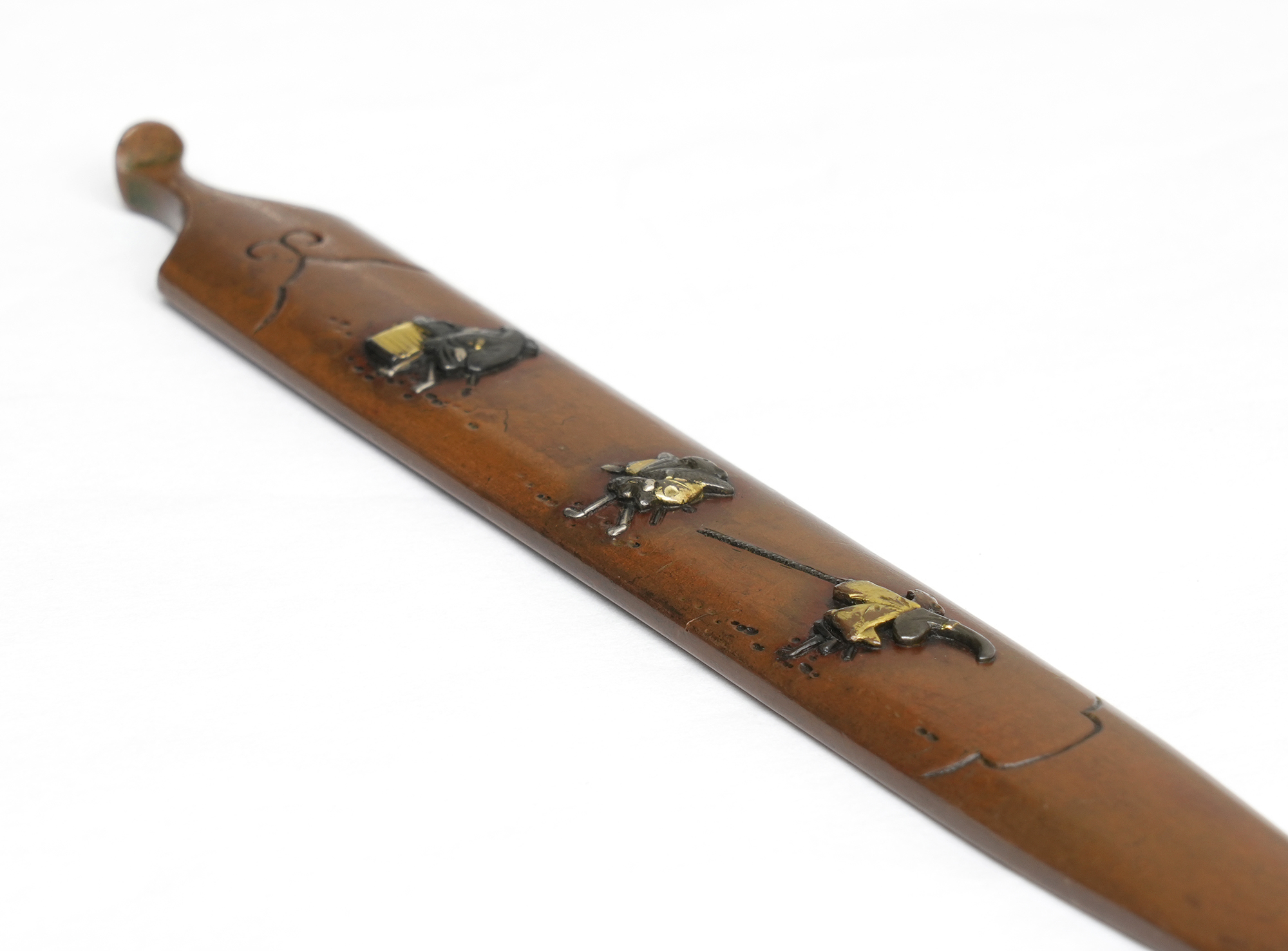
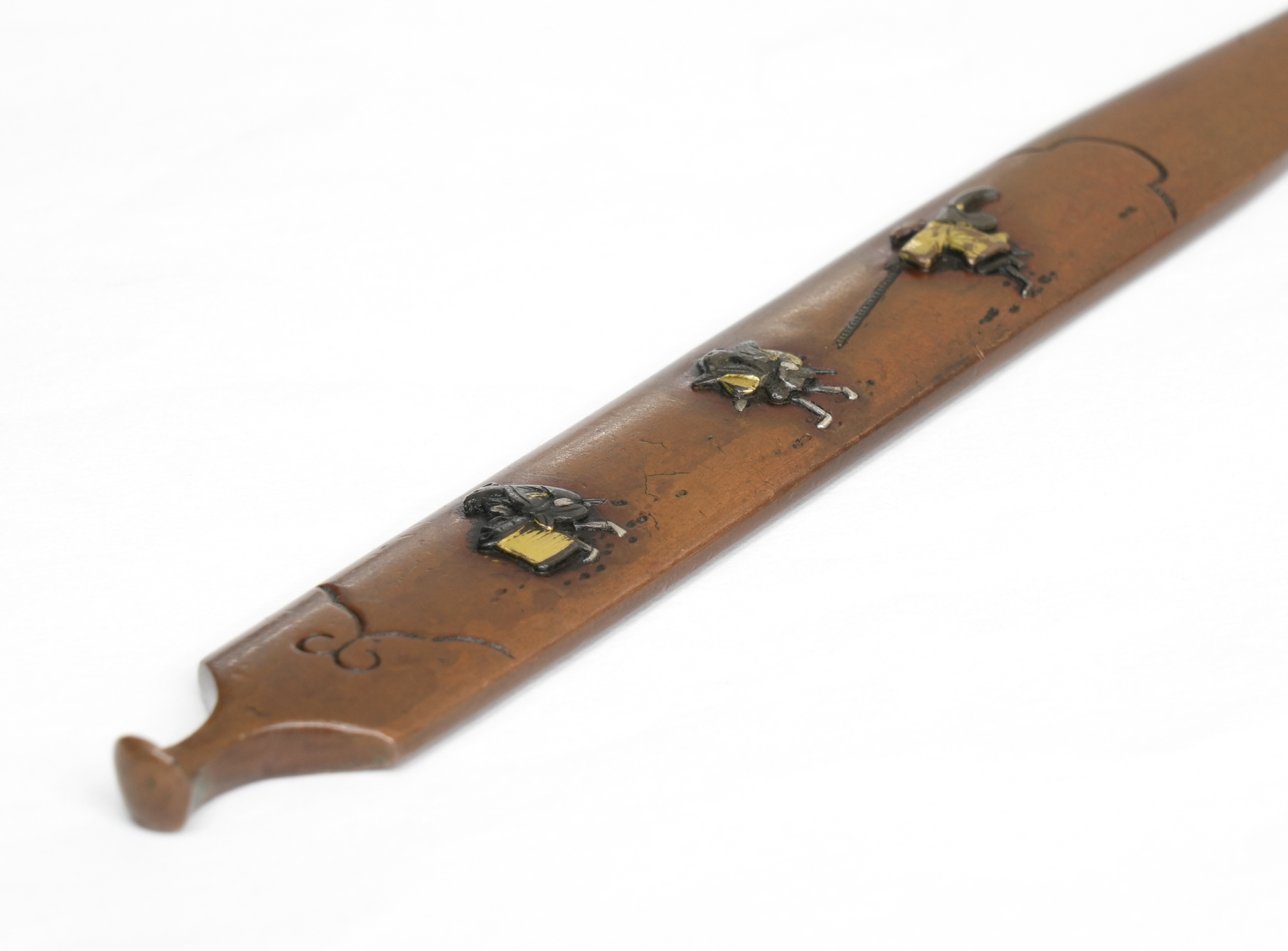
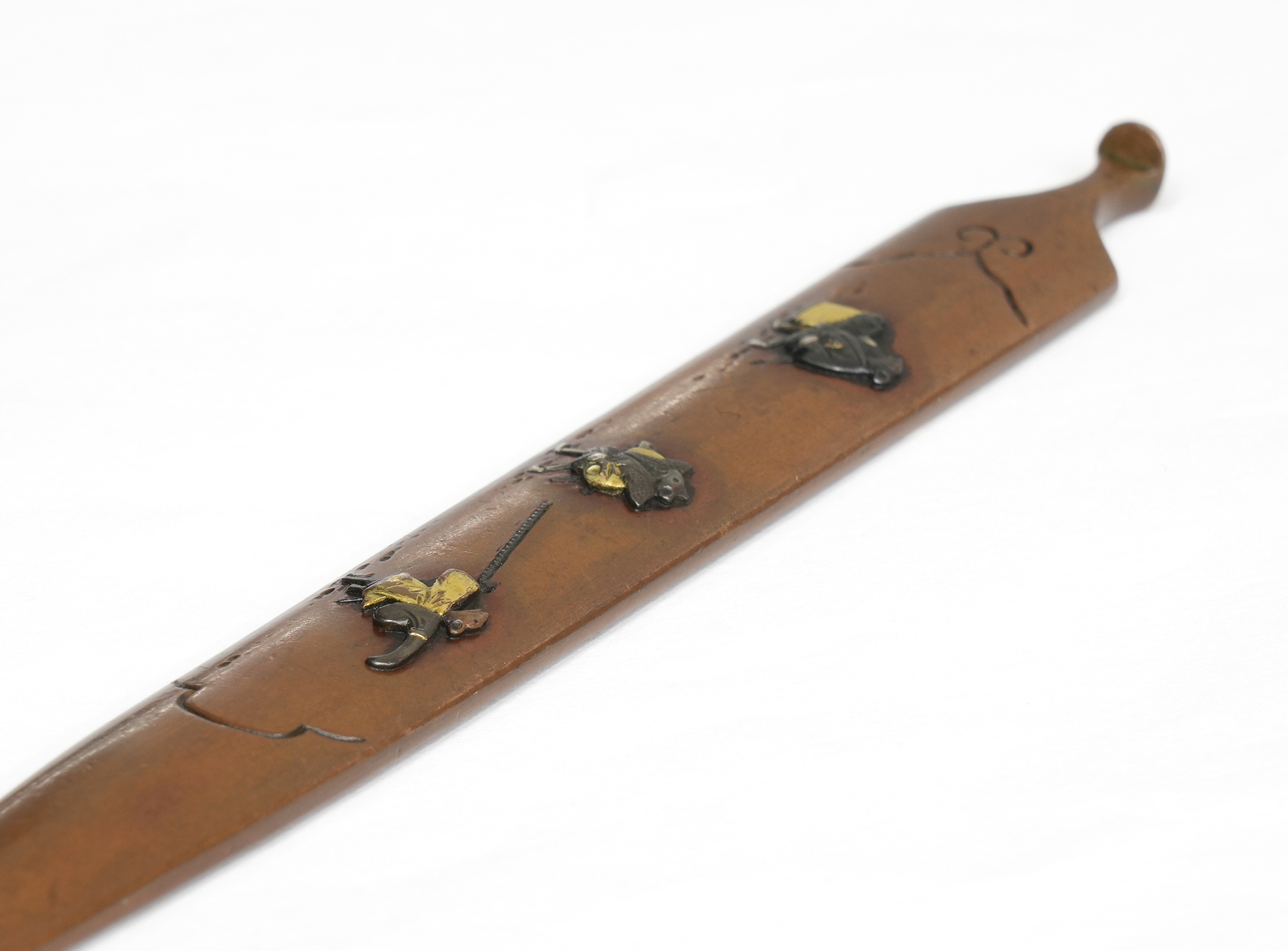
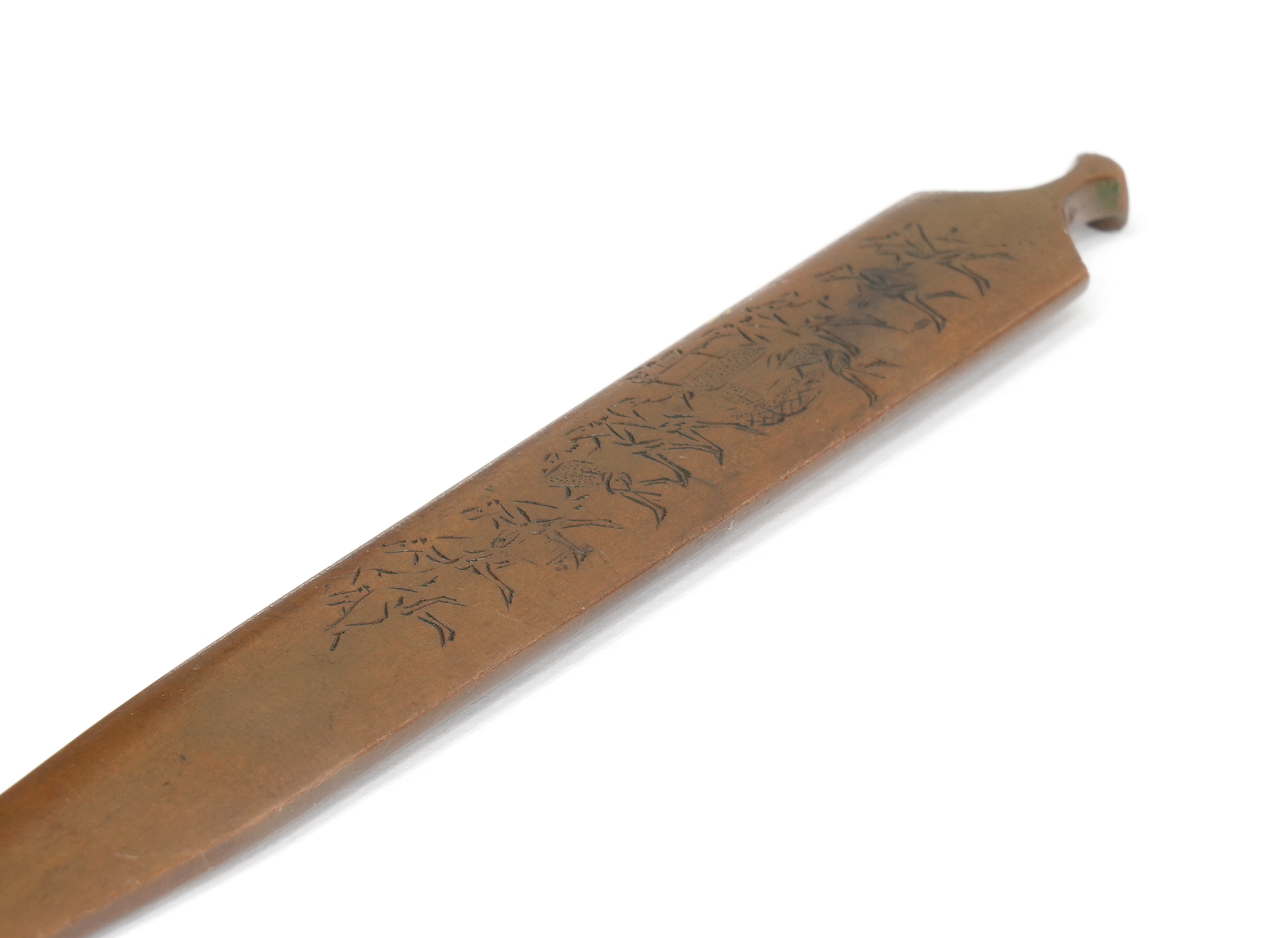
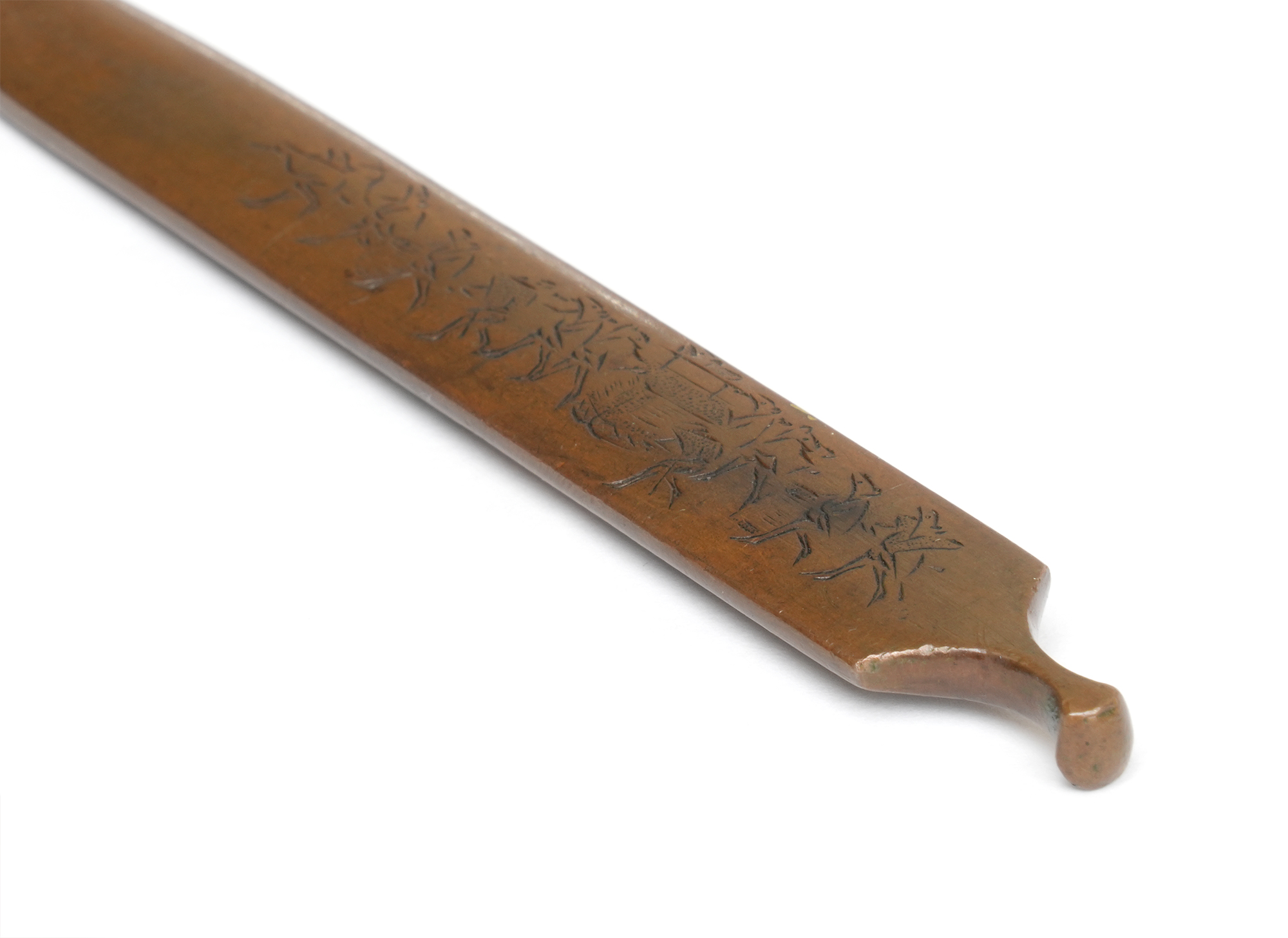
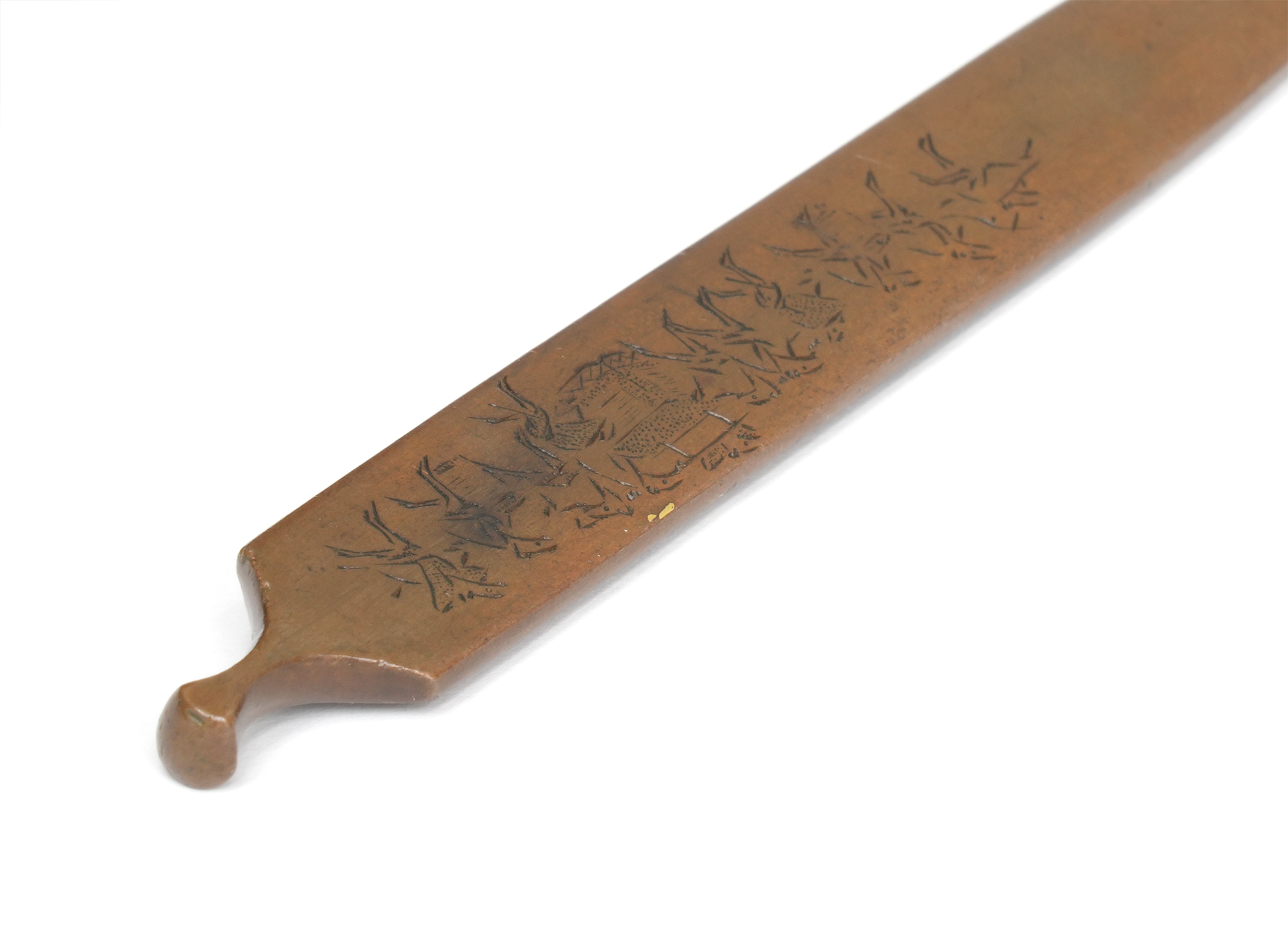
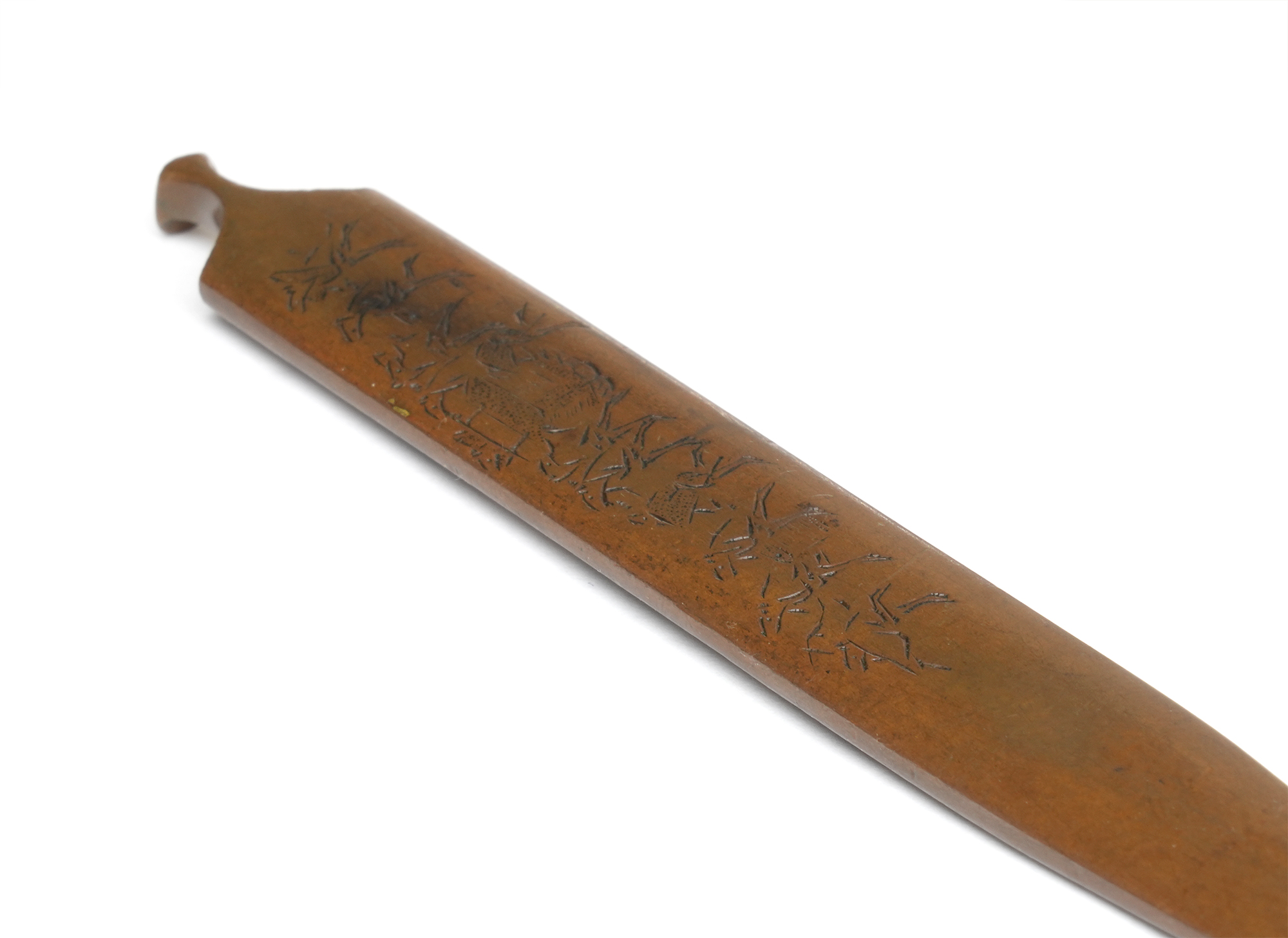
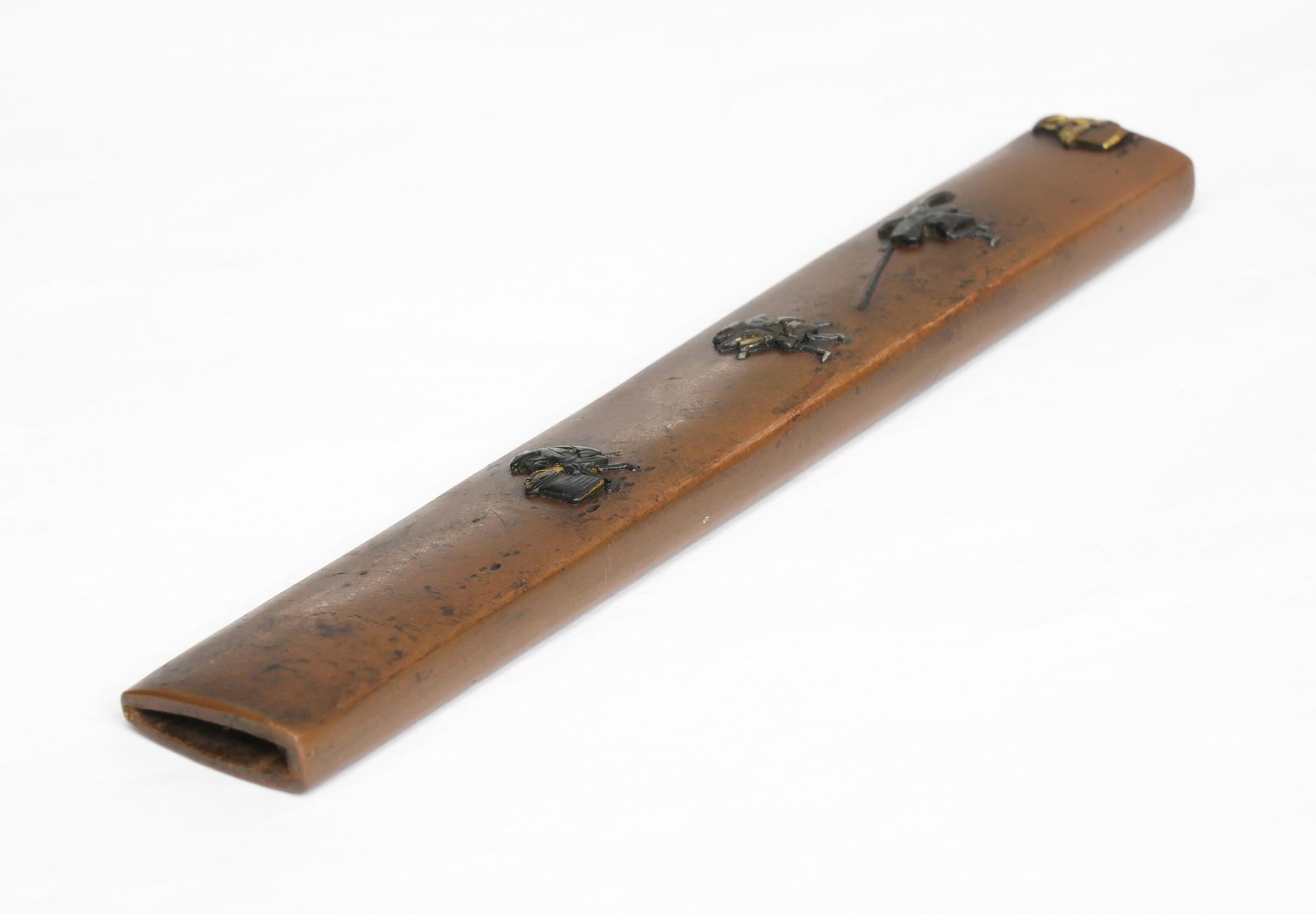
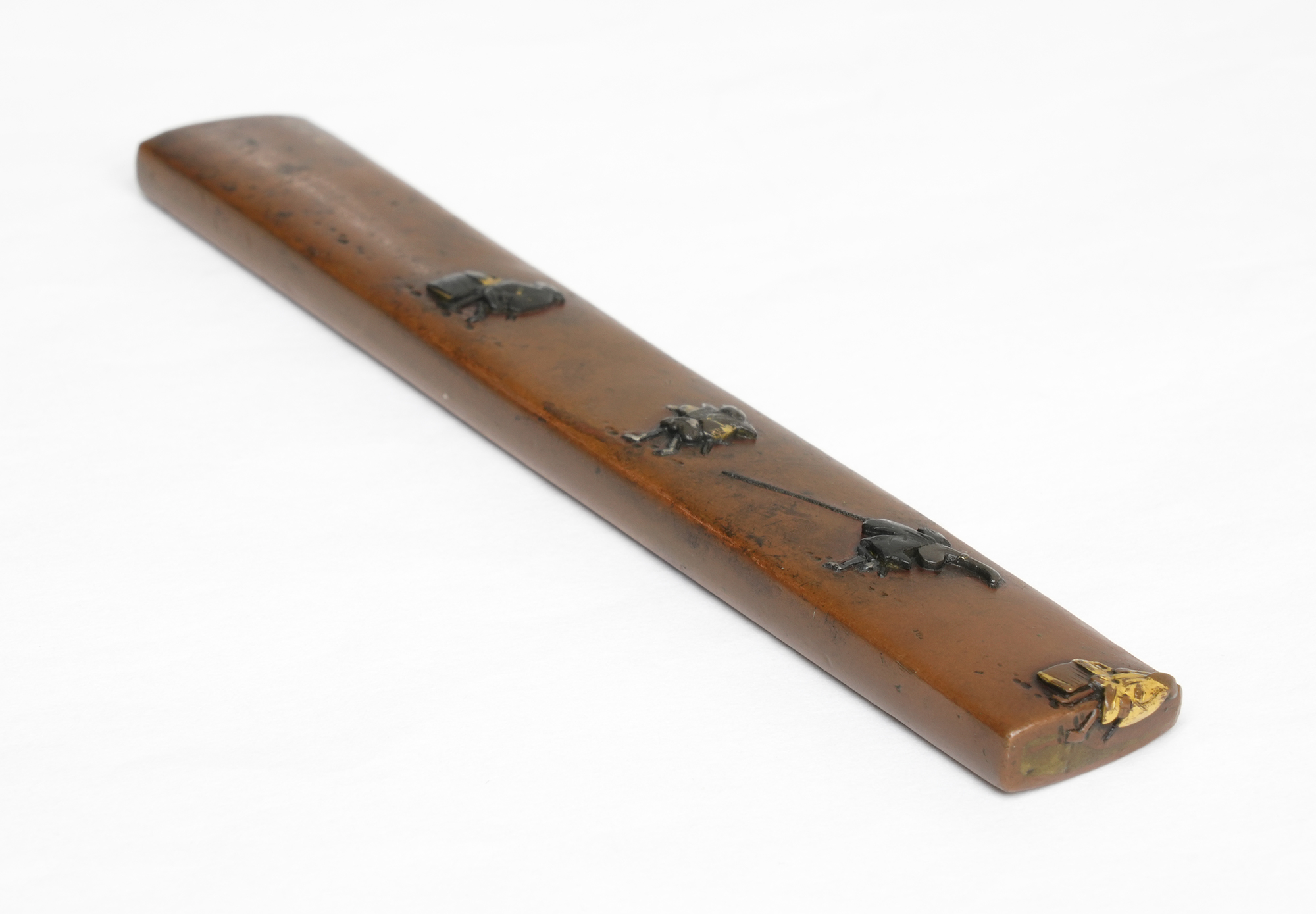
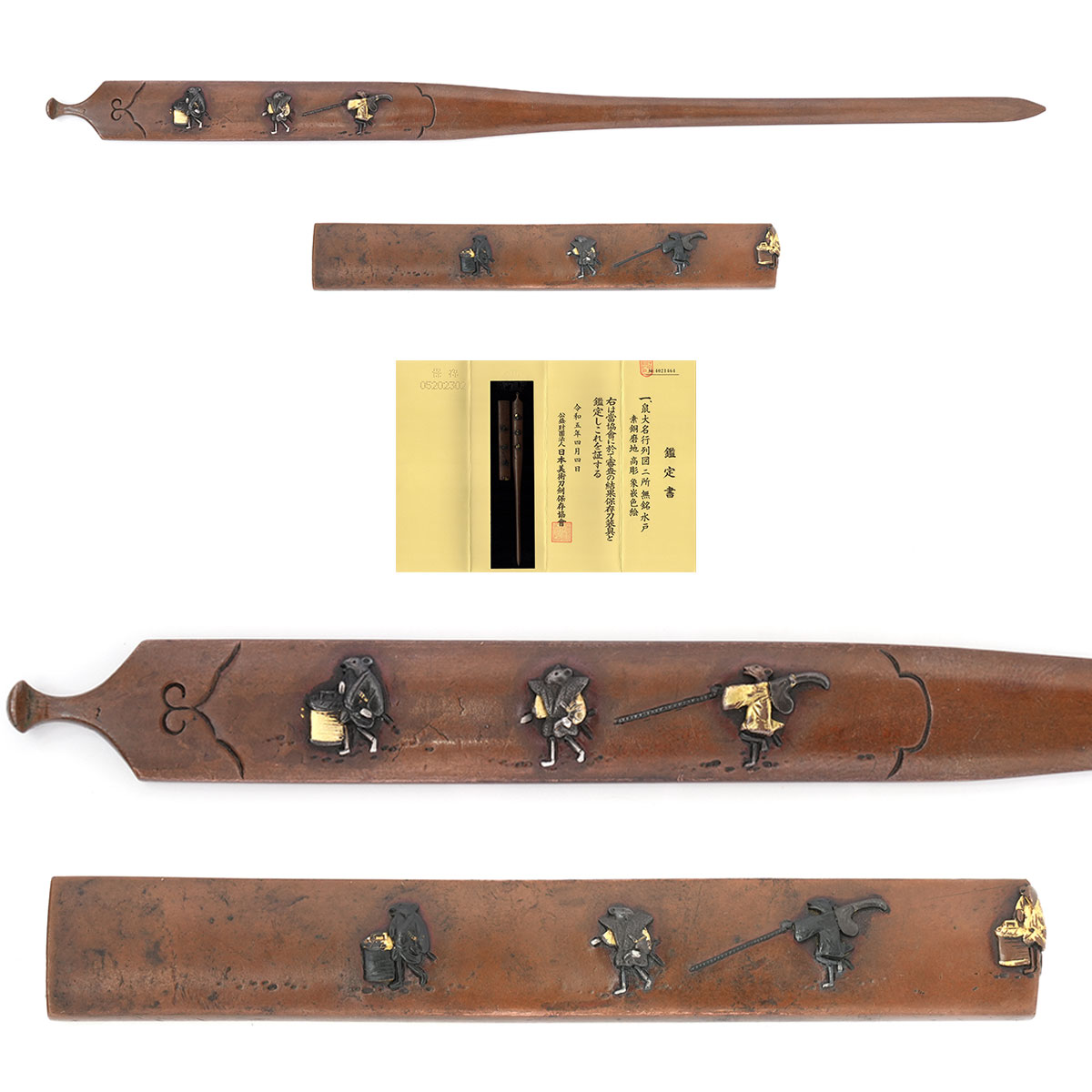
Mito was a castle town boasting 350,000 koku as one of the three branches of the Tokugawa family, and many metalworkers were active there, particularly during the late Edo period. Numerous works created through clever techniques making full use of various metals remain today. In terms of schools, the Sekijoken lineage and the Ichiryu lineage are prominent, both boasting high levels of skill. This is a nisogimono consisting of a kozuka and kogai depicting a daimyo gyoretsu of mice on a suaka ground using skillful carving techniques. The "daimyo gyoretsu of mice" is a genre painting and caricature motif rooted in the commoner culture of the Edo period; it has been popular as a humorous and auspicious design depicting mice, which symbolize prosperity and good fortune, conducting a daimyo gyoretsu just like humans. Mice, with their strong reproductive power, symbolize the prosperity of family fortunes and wealth, and by having these small beings perform a formal daimyo gyoretsu, a unique world is created where elegance and satire intersect within a sense of the comical. In this work as well, the mice enjoying the procession are carved in vivid detail, and in the kozuka in particular, the procession continues from the back to the front, fully demonstrating the chic taste and playful spirit of the Mito kinko craftsmen. It is a masterpiece that invites a smile every time it is held, where the auspicious nature of wishing for prosperity and the artistic quality of enjoying delicate craftsmanship are in perfect harmony.
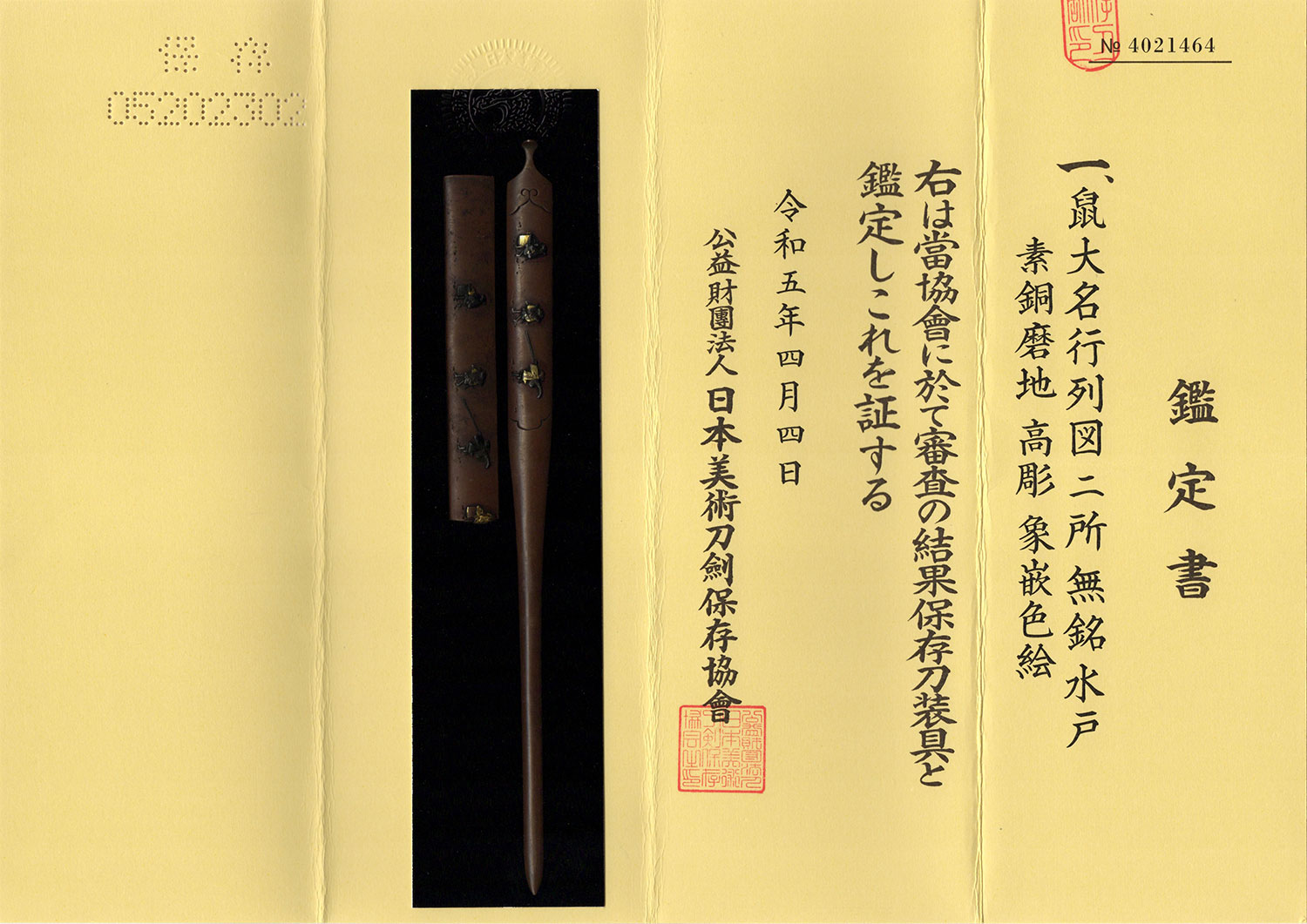
Certificate reading — 無銘(水戸)
NihontoWatchOffered by Toushin

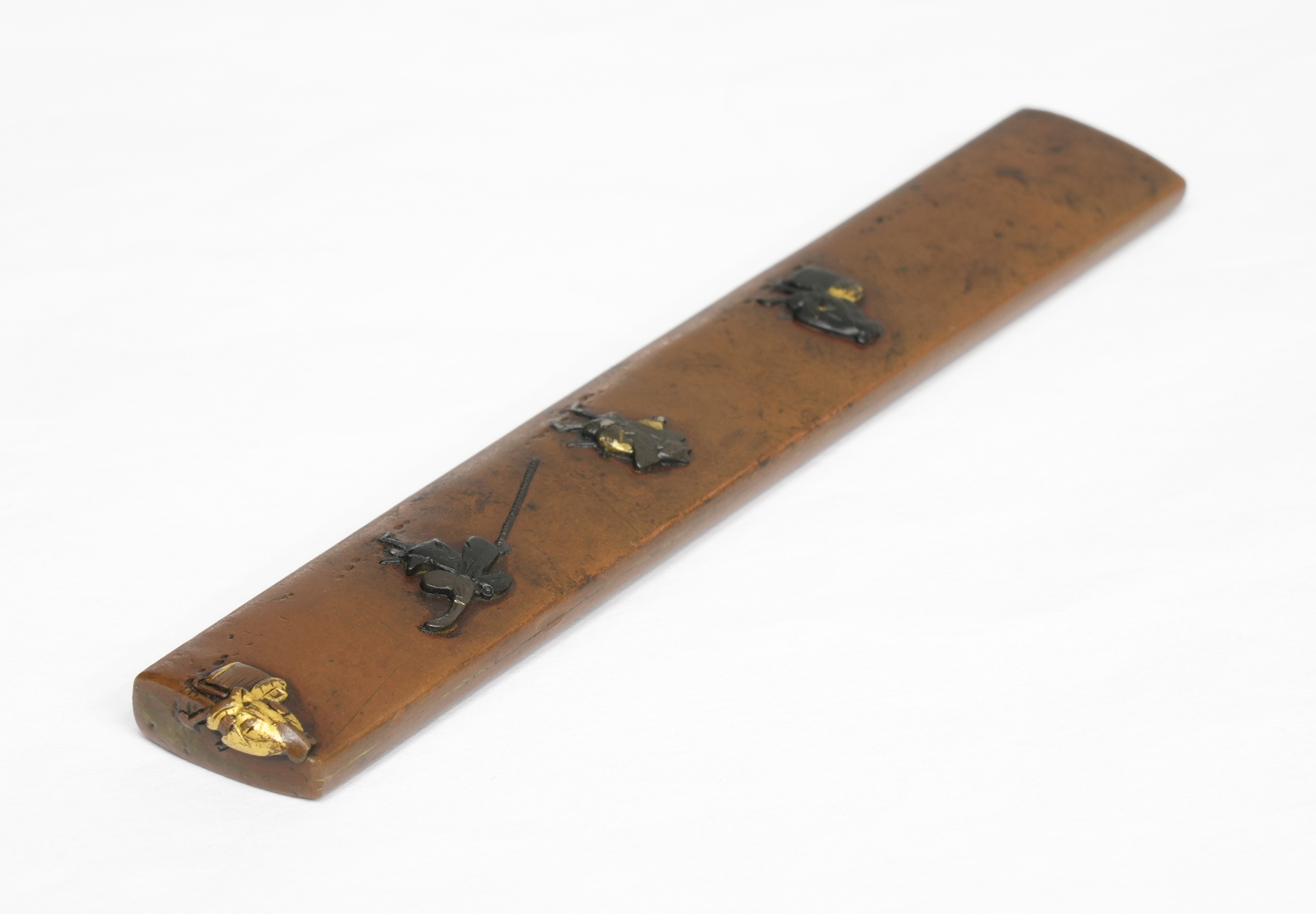
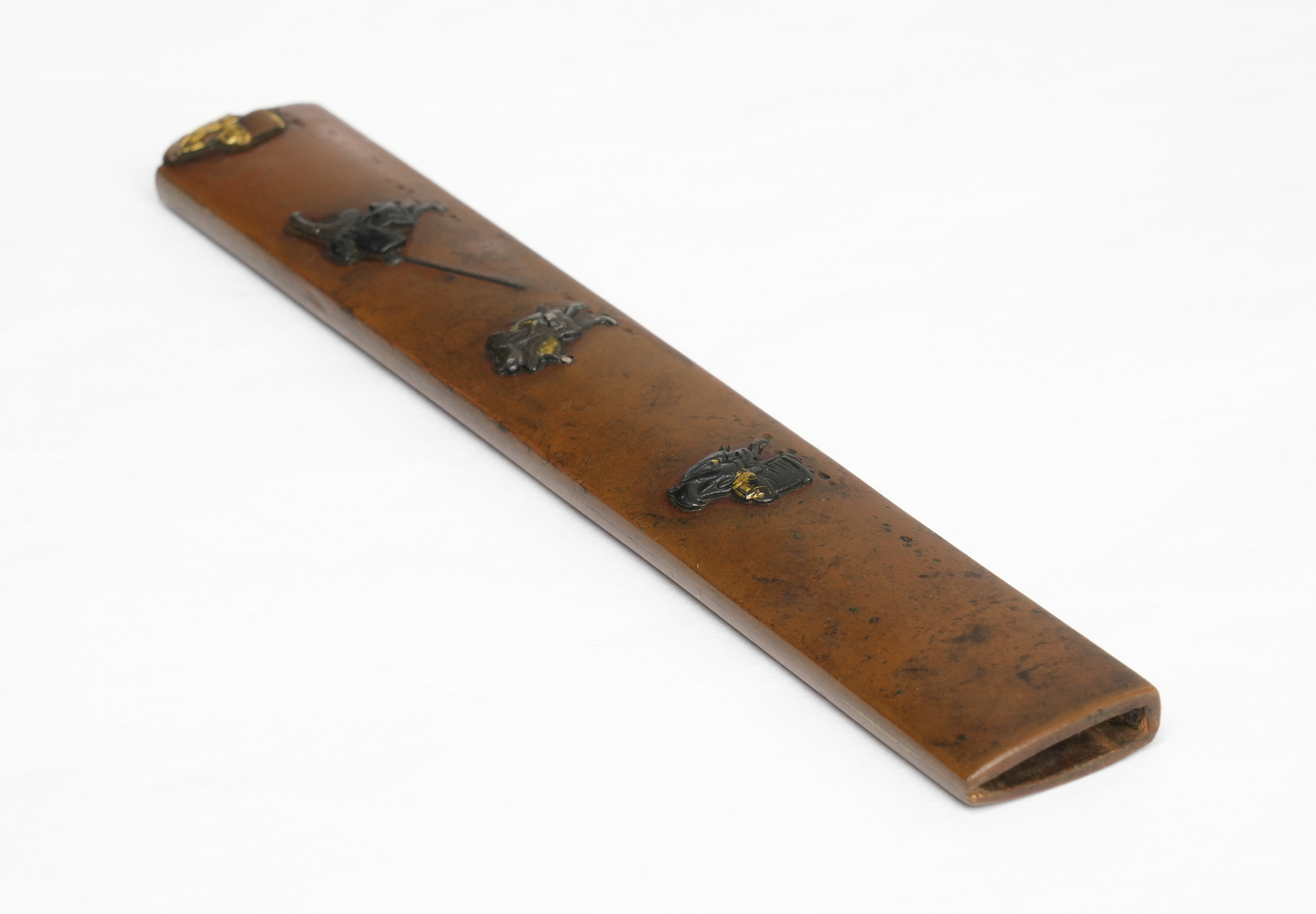
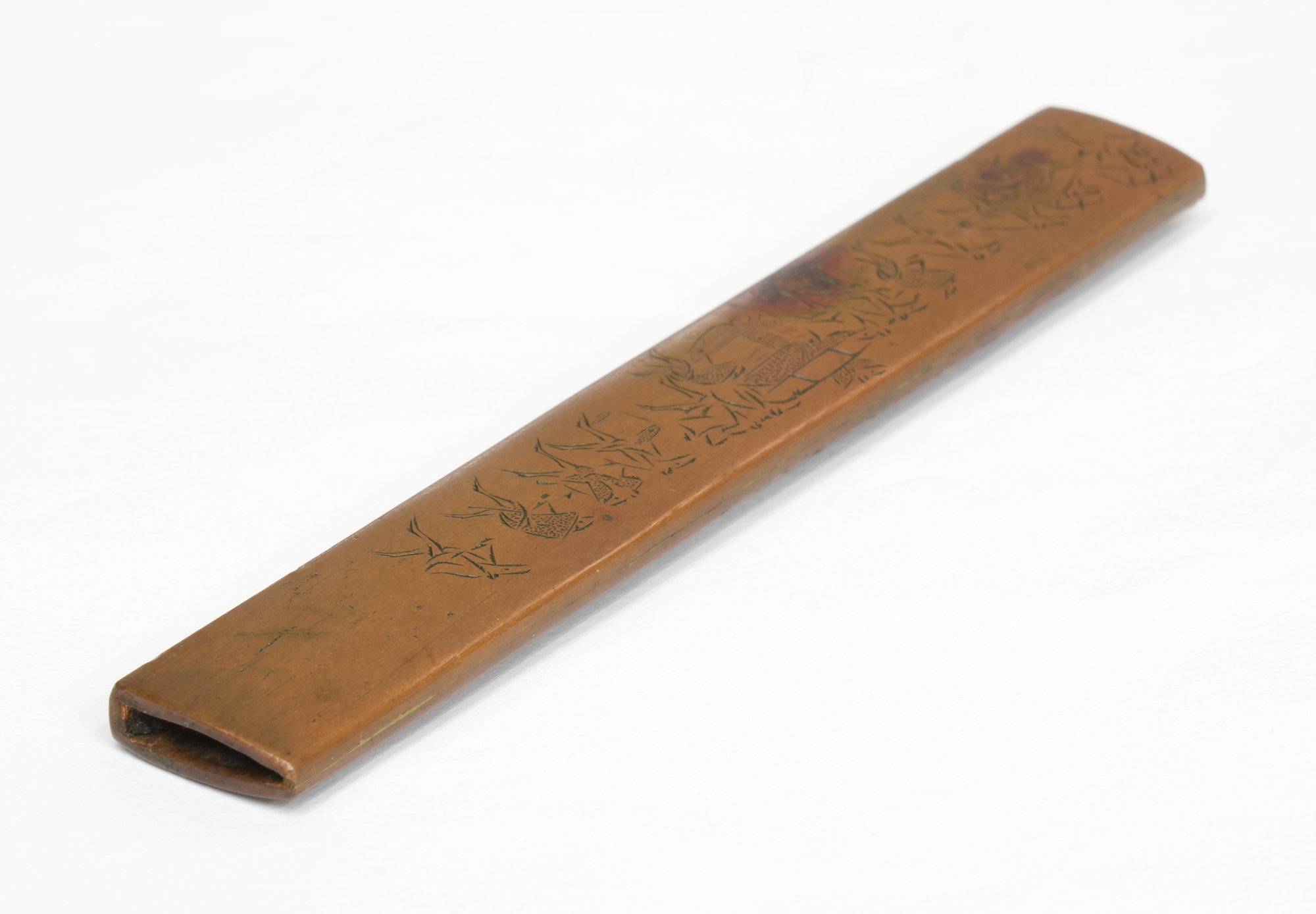
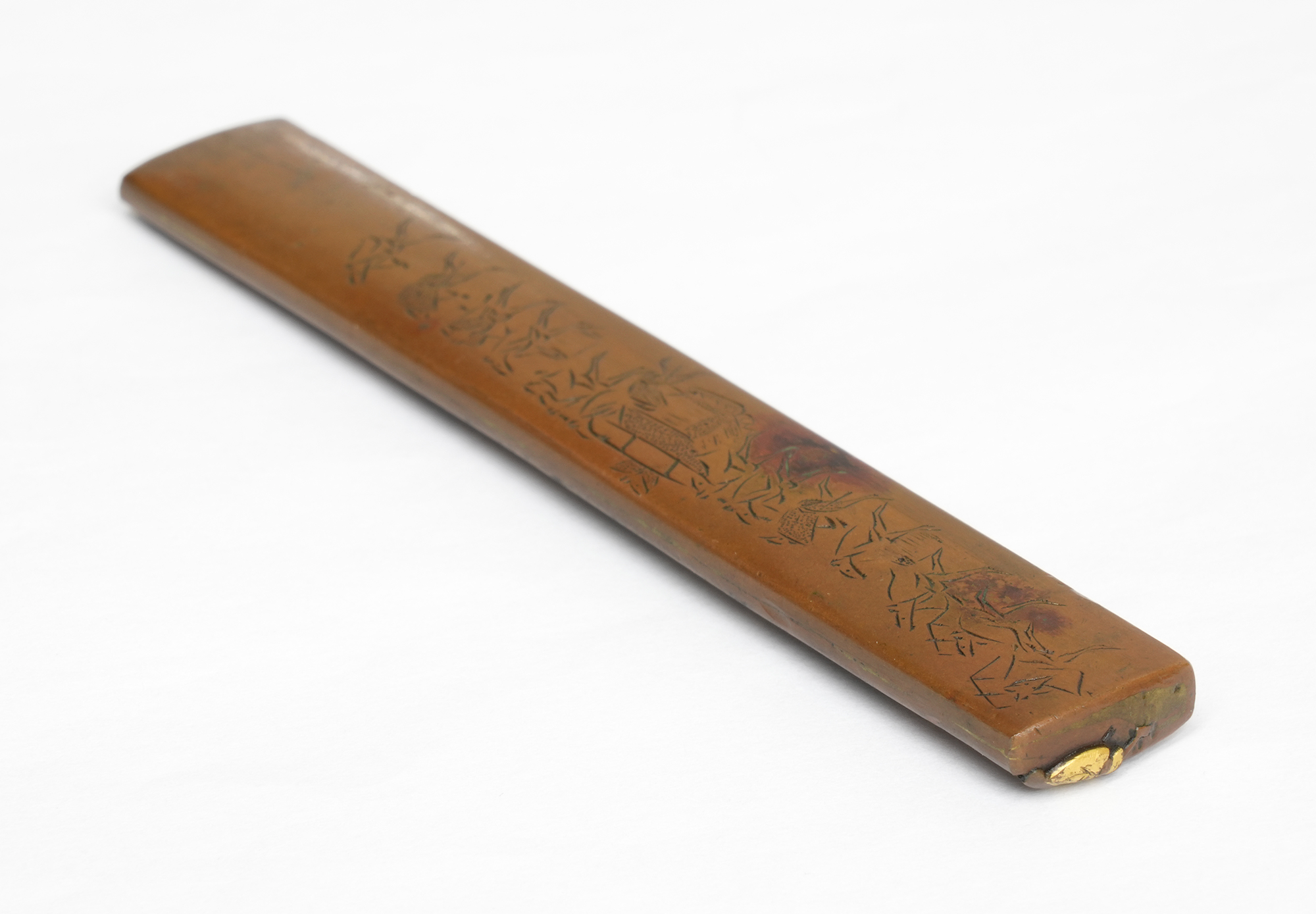
Mito School
Edo
Hitachi
Unsigned
Hozon (NBTHK)
Machine translation of the shop's Japanese ·
Machine translation from the shop's Japanese · may contain errors ·
Machibori · Hitachi
69 pieces on the market now
The Mito school of sword-fitting makers emerged as an officially sponsored tradition in the domains of the Tokugawa family's Mito branch, achieving particular prominence in the late Edo period. The school's lineage traces through Shinozaki Katsushige and his successors, who served as goyō horimonoshi (official engravers) to the domain. Unlike the privately patronized workshops of Edo and Kyoto, Mito metalworkers operated within a system of domain service, producing both presentation fittings for formal occasions and richly decorated works for commission. This institutional foundation fostered both technical rigor and stylistic continuity, as masters such as Hagiya Katsuhei and his pupils transmitted the school's methods through direct apprenticeship. The Mito aesthetic is characterized by meticulous shakudō nanako-ji grounds upon which high-relief carving (takabori) is combined with precise gold and silver iroe to yield compositions of exceptional textural depth. The school showed particular mastery in figural subjects—immortals, deities, and mythological beasts—rendered with close attention to anatomical realism and dynamic poses.
The nanako punch-work is notably disciplined, each grain laid in orderly arrangement, while the relief carving rises to striking heights, with elements such as lion manes and peony petals executed in fully three-dimensional chiselwork. Color inlays are applied with exacting accuracy, and thematic coordination across entire fitting sets demonstrates a sophisticated understanding of decorative unity. The Mito school's influence extended well into the Meiji period through the achievements of second-generation masters. Hagiya Katsuhei's circle produced such celebrated artists as Namekawa Sadakatsu and Unno Shōmin, who carried the school's technical standards and stylistic vocabulary into new contexts. The tradition's emphasis on figural carving, inherited from the Tamagawa lineage, and its adherence to orthodox forms for formal presentation fittings established the Mito school as one of the principal regional traditions of late-period Japanese sword-fitting production. Learn more →
| Smith | Era | Designated |
|---|---|---|
| Katsuhira勝平 | 1804-1886 | 13 |
| Shomin勝珉 | 1844-1915 | 12 |
| Teikan貞幹 | — | 5 |
| Mototane元胤 | — | 0 |
| Unno Bishu海野美秋 | — | 0 |
Certifies a genuine blade worth preserving: a signature confirmed correct, or, if unsigned, an era, province, and school that the NBTHK can reliably identify.
The NBTHK (Nihon Bijutsu Tōken Hozon Kyōkai, the Society for the Preservation of Japanese Art Swords) is a public-interest incorporated foundation founded in 1948 and supervised by Japan’s Agency for Cultural Affairs (Bunkachō); it is based at the Japanese Sword Museum in Tokyo. Its expert panels physically examine each submitted work (shinsa) and issue a certificate (kanteishō) ranking it by artistic and historical merit. NBTHK papers are the most widely recognized standard of authentication for Japanese swords and fittings.
NBTHK official siteAs a rule we do not accept returns, except when we have sent a different item from the one ordered or when there is a significant discrepancy between the description and the item. If you wish to return an item, please contact us within 3 days of its arrival and then send it back.
¥330,000