 NihontoWatchNihontoWatch
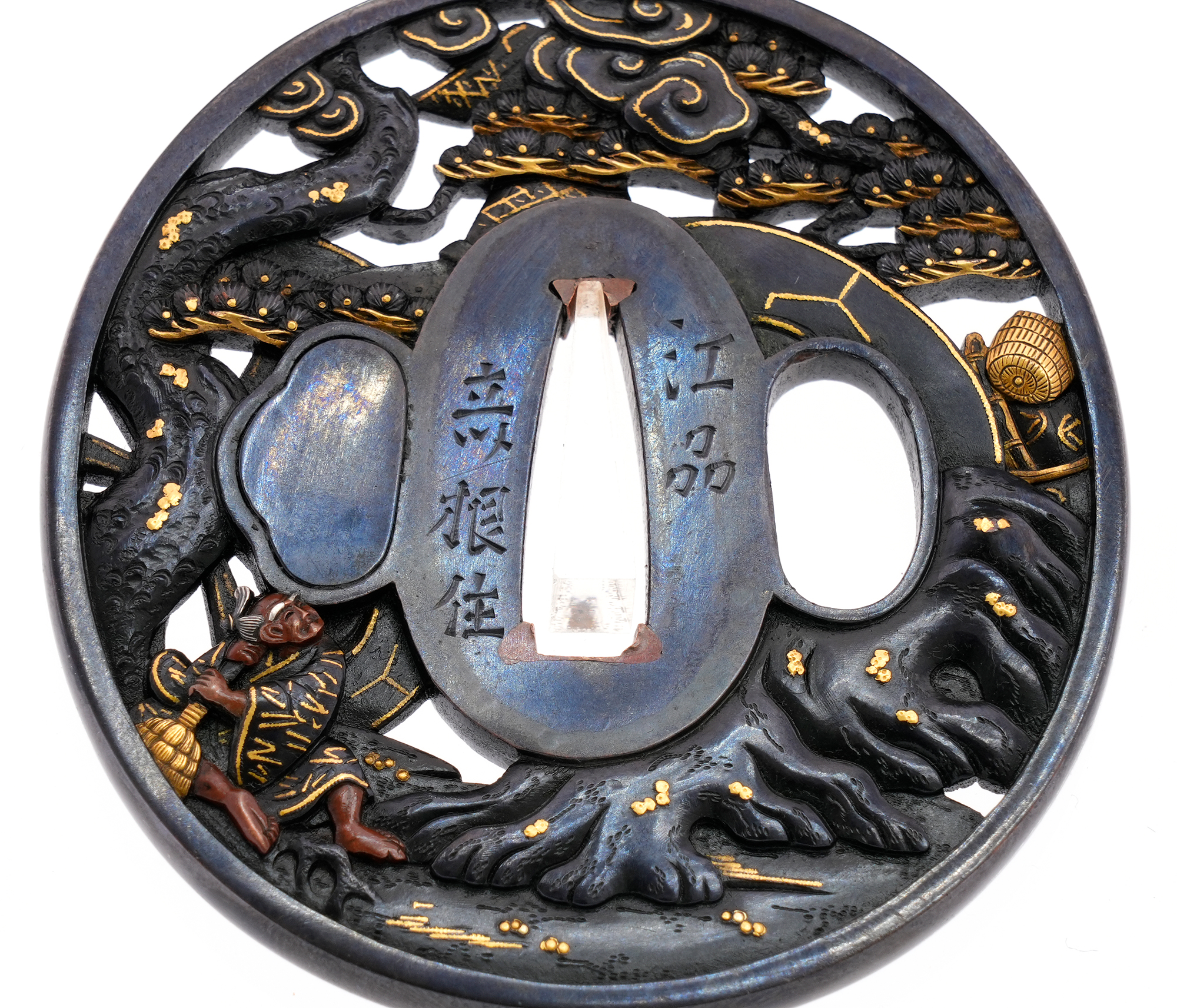
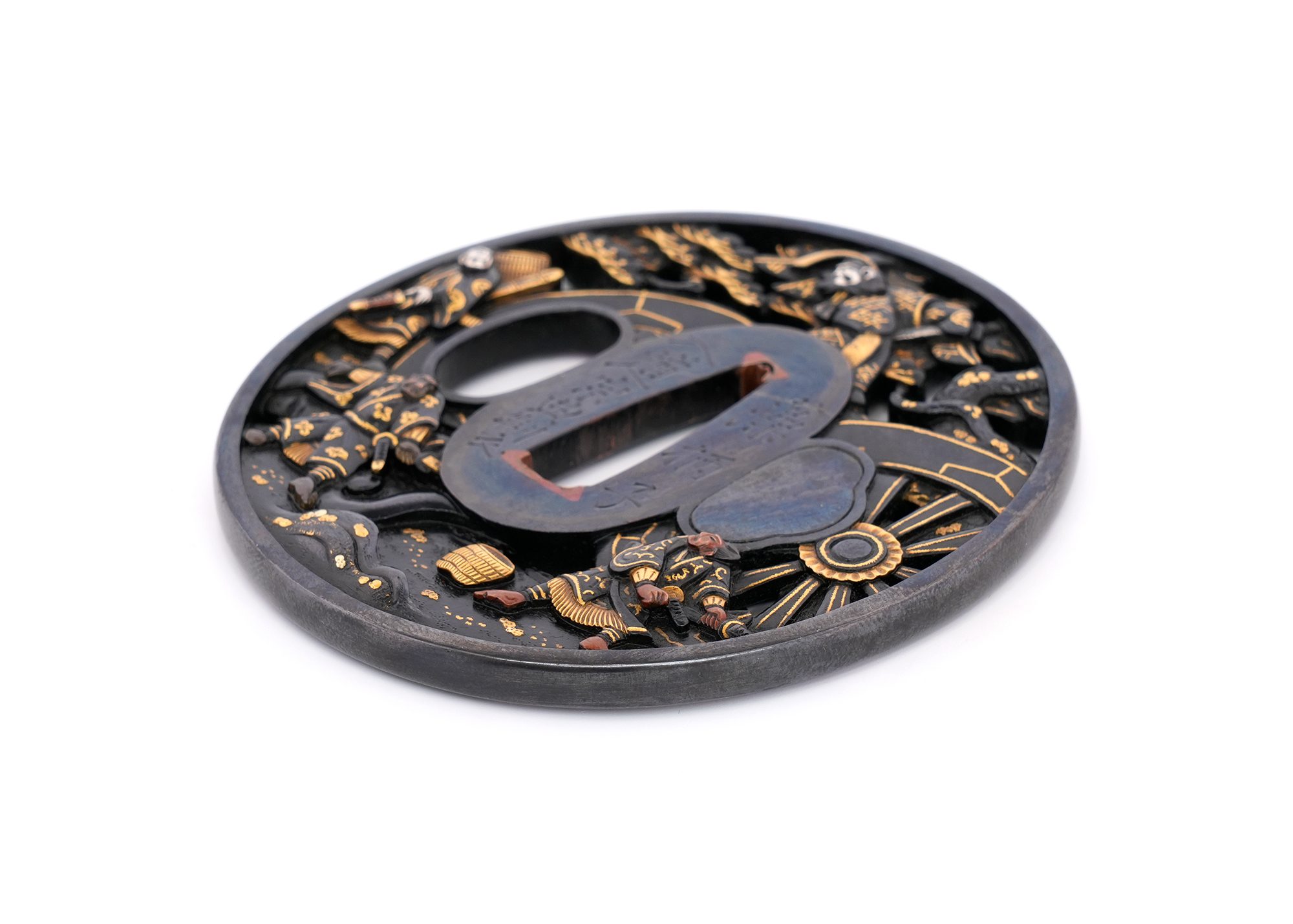
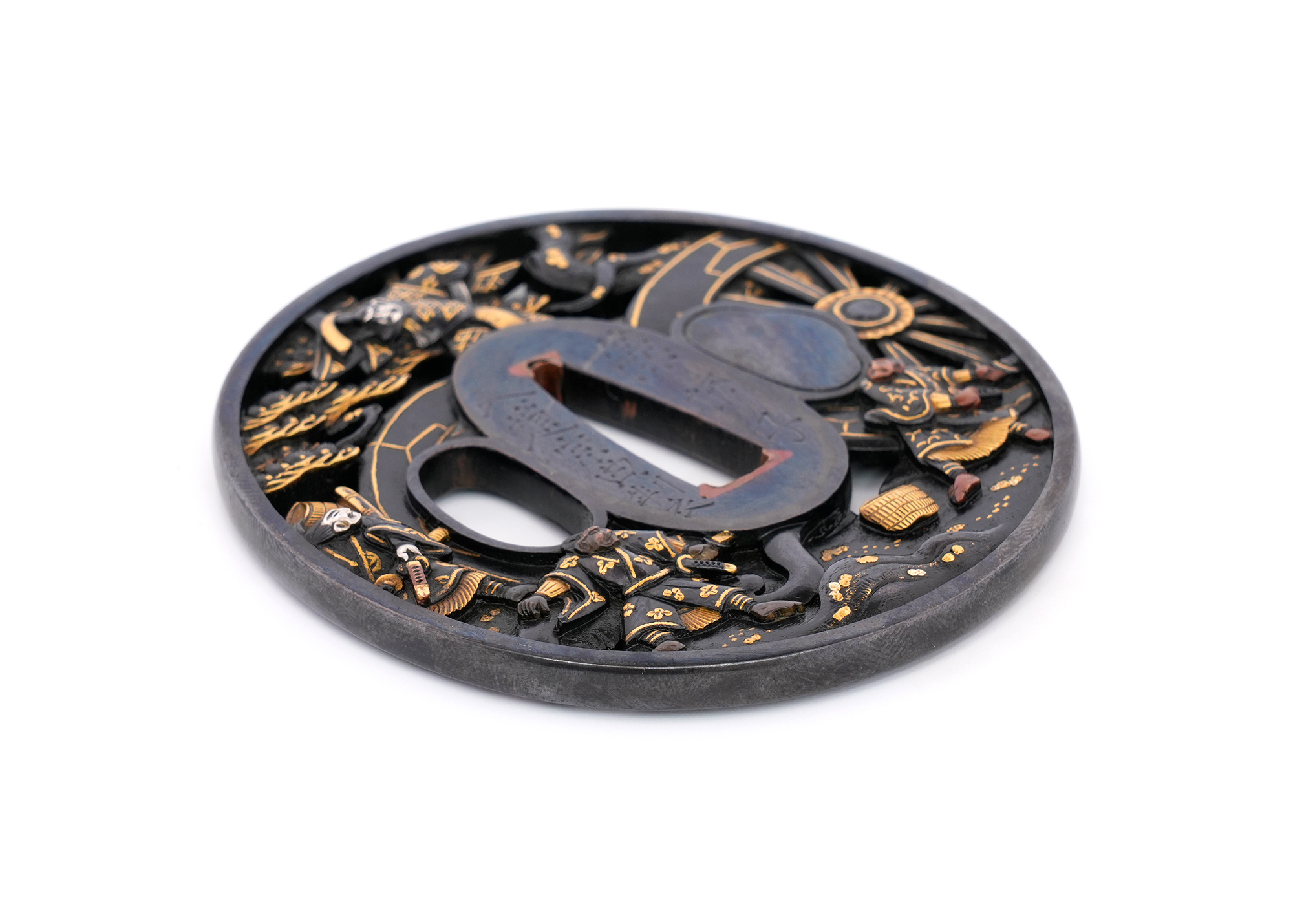
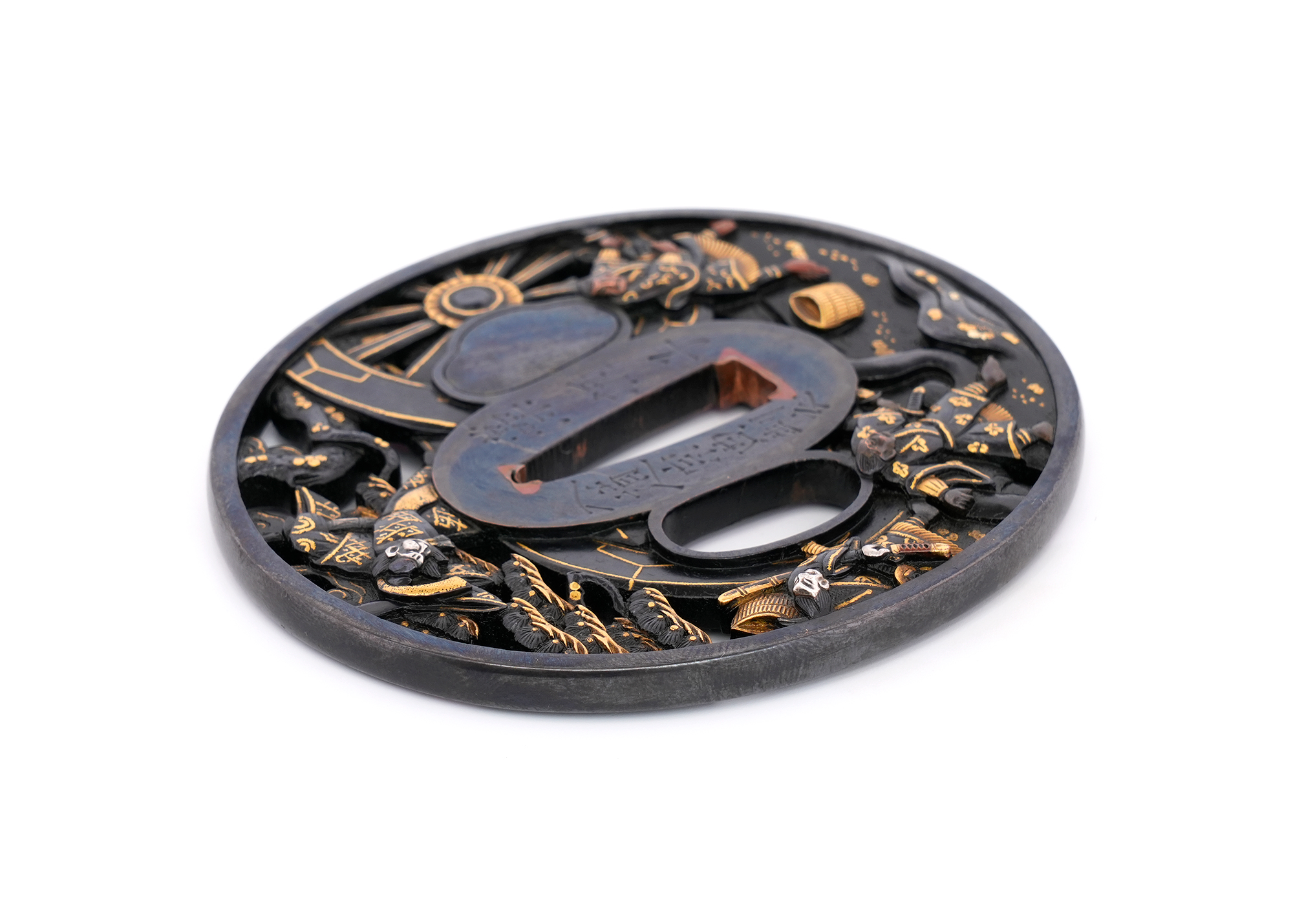
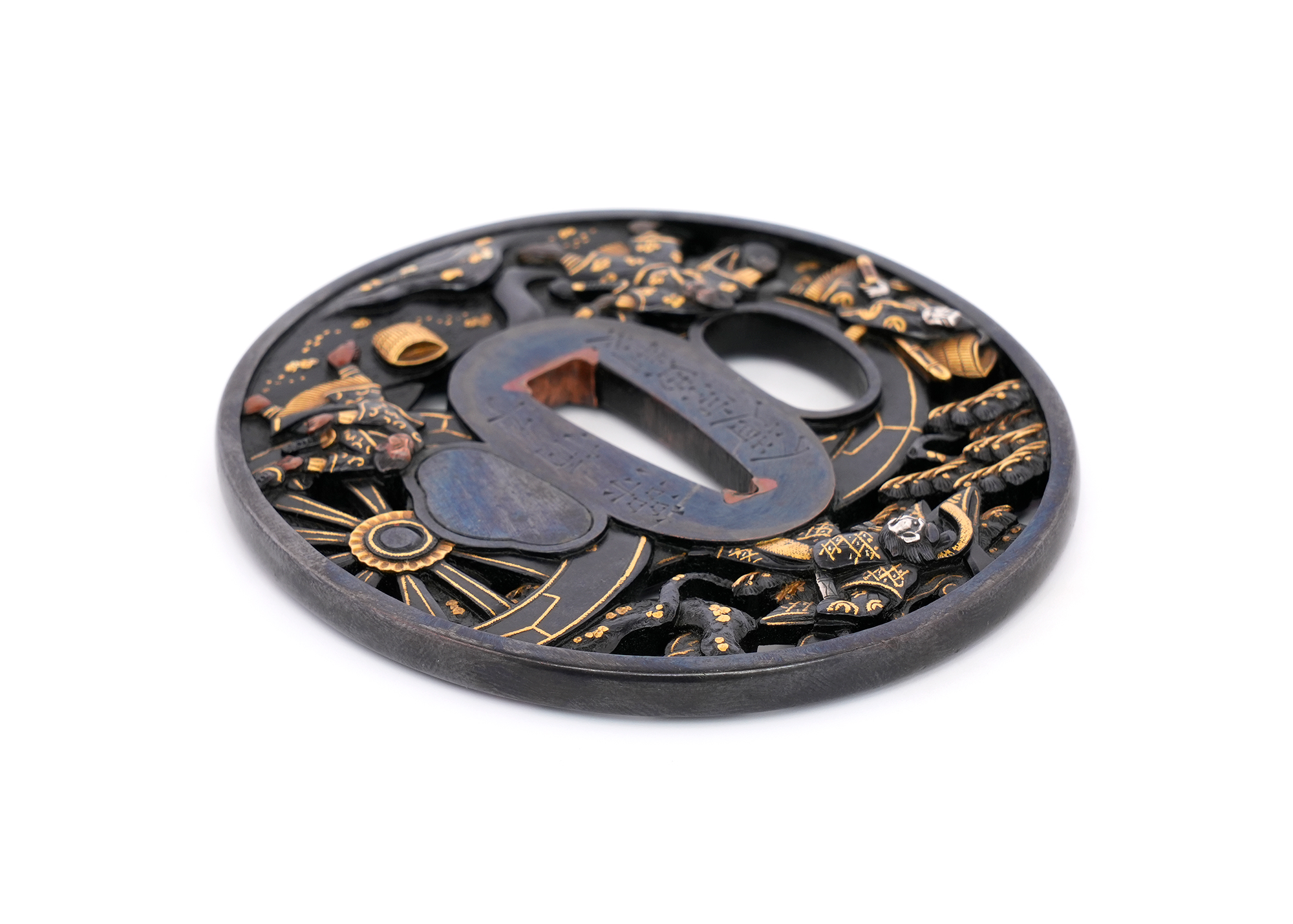
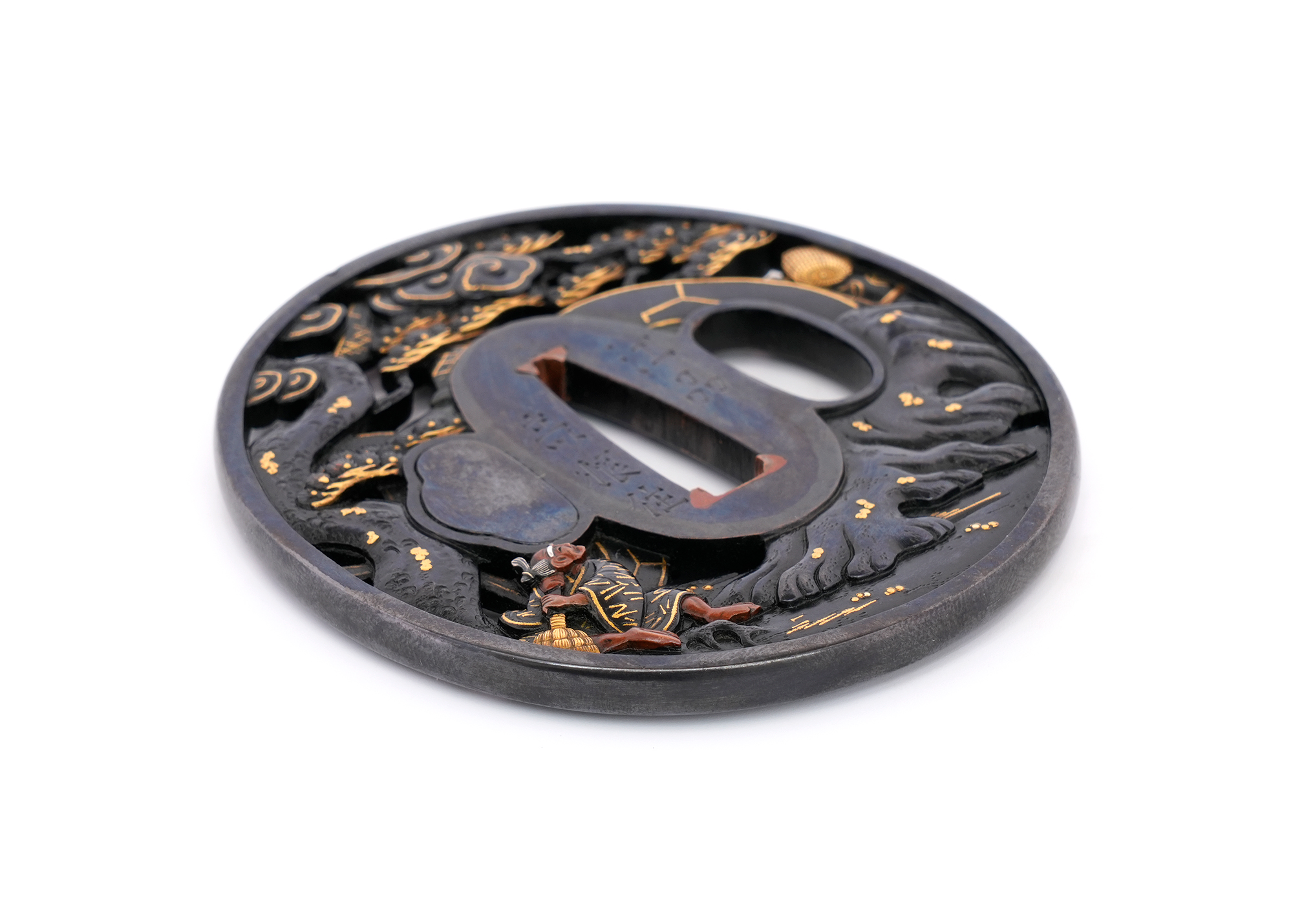
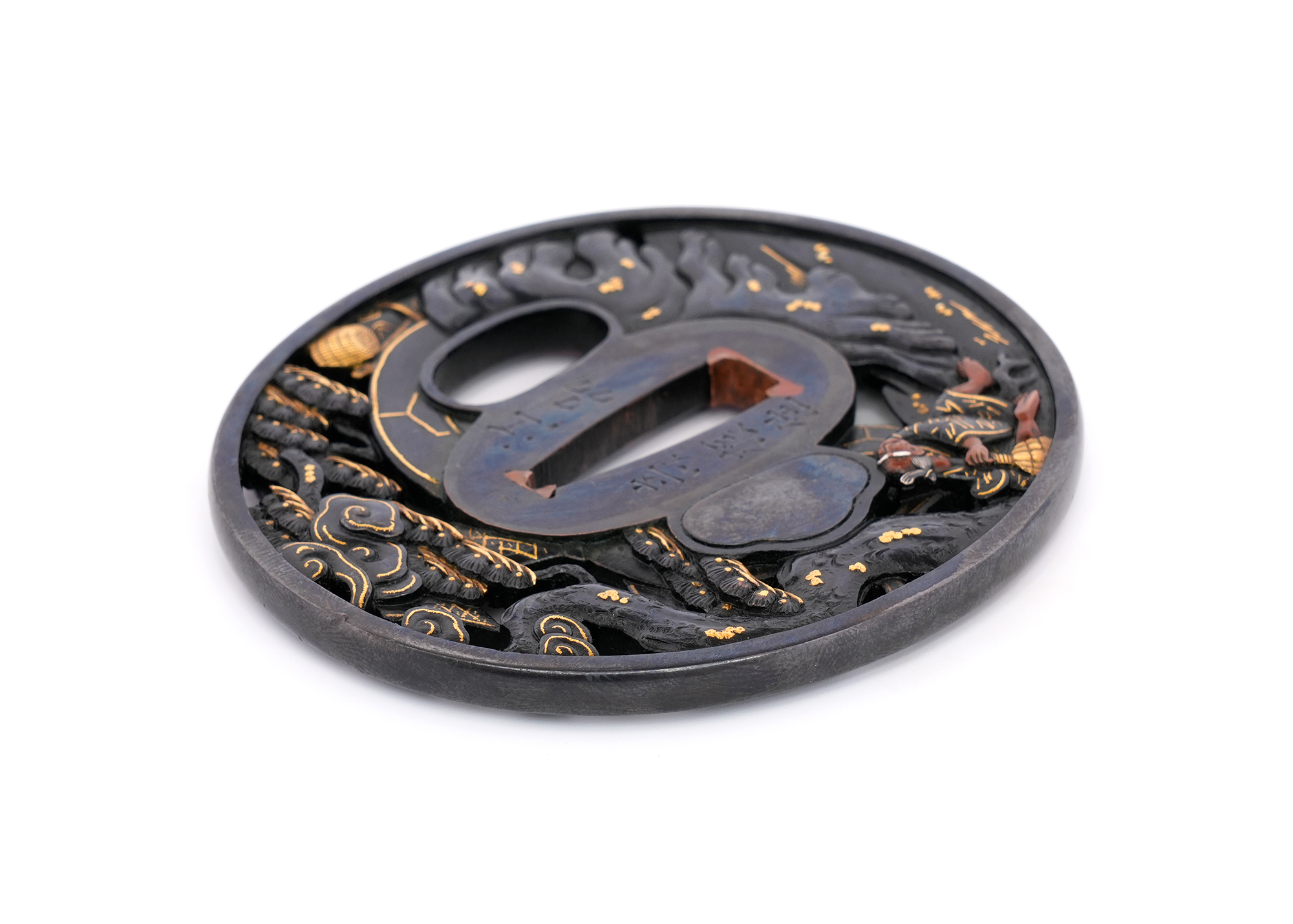
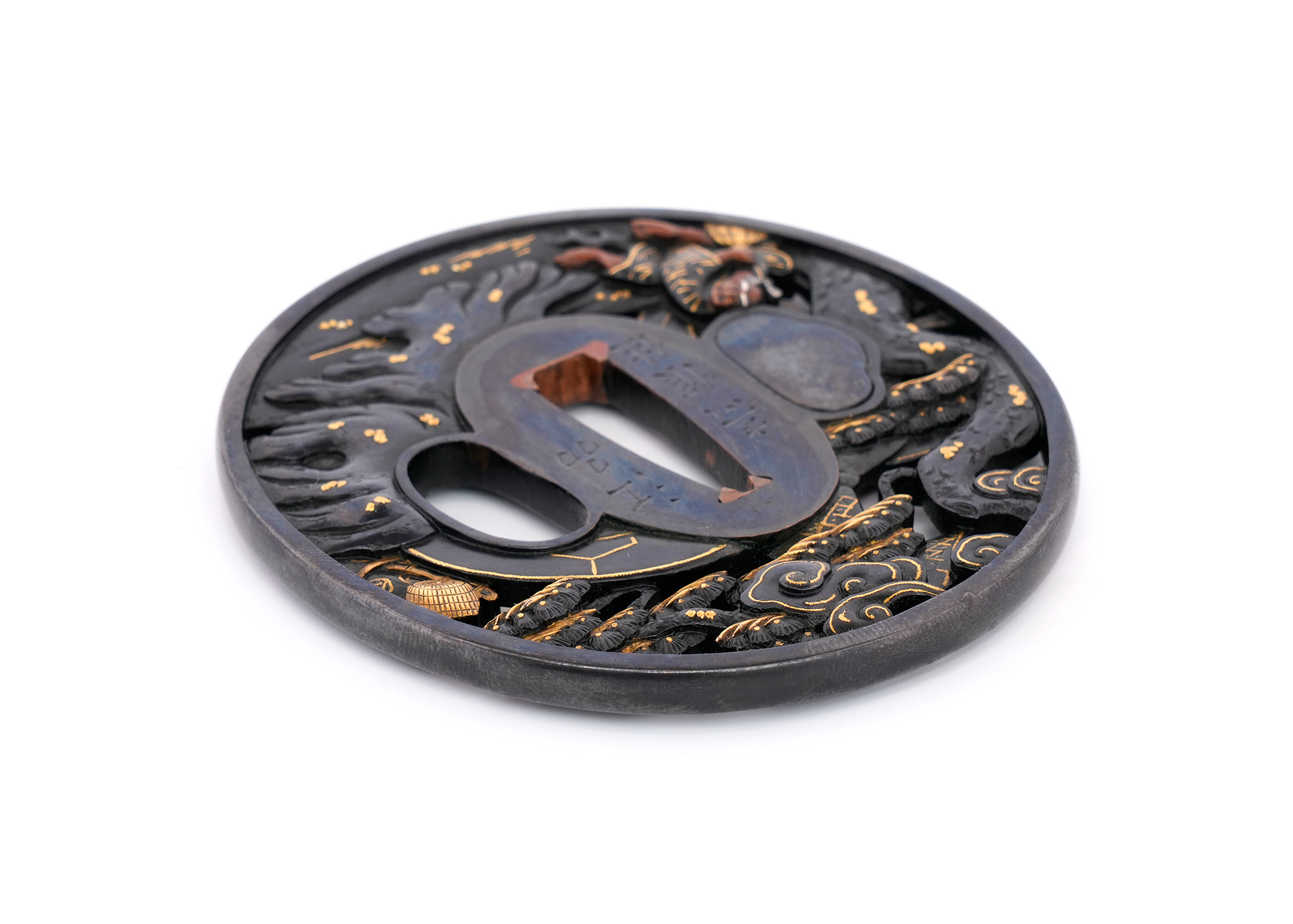
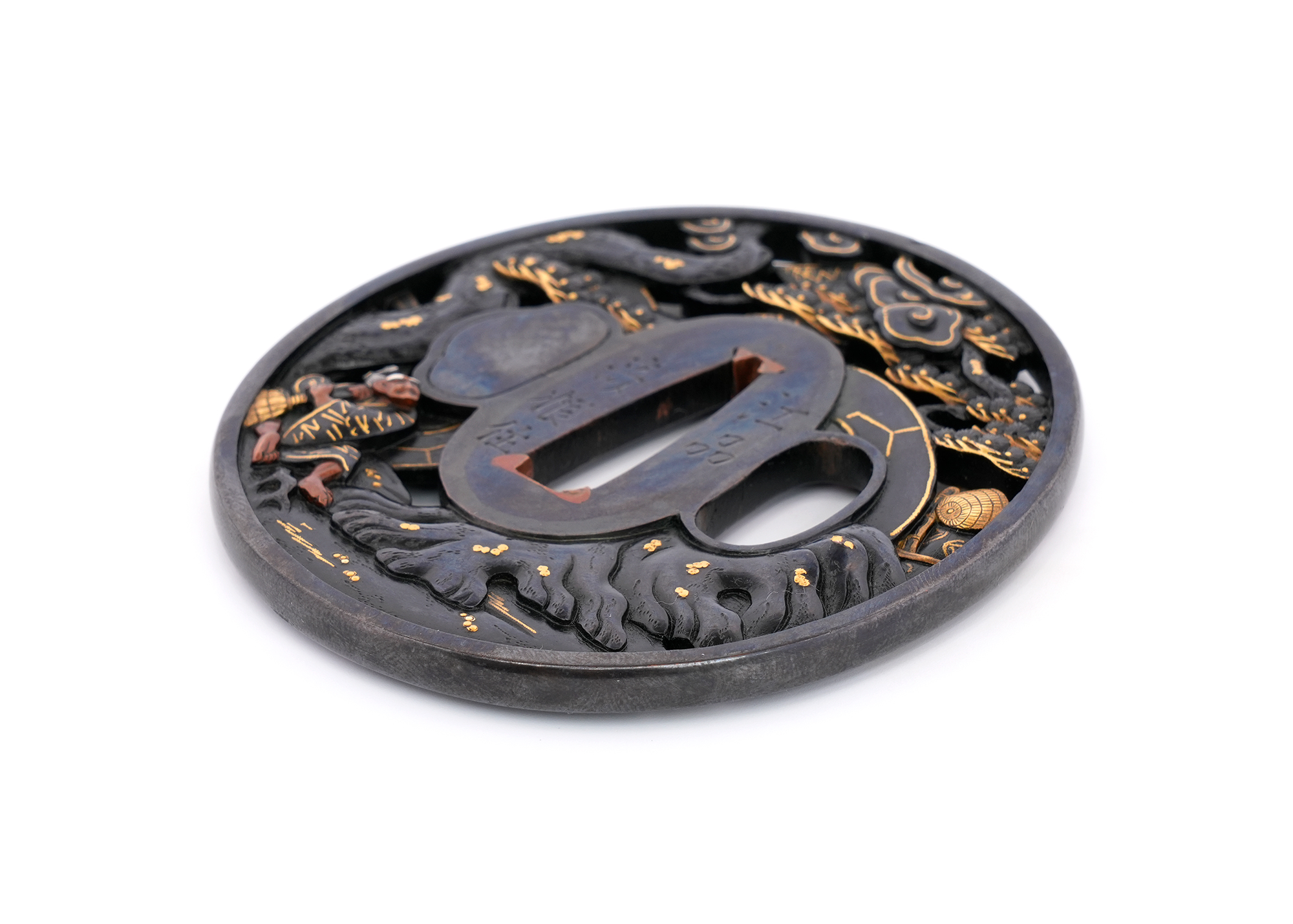
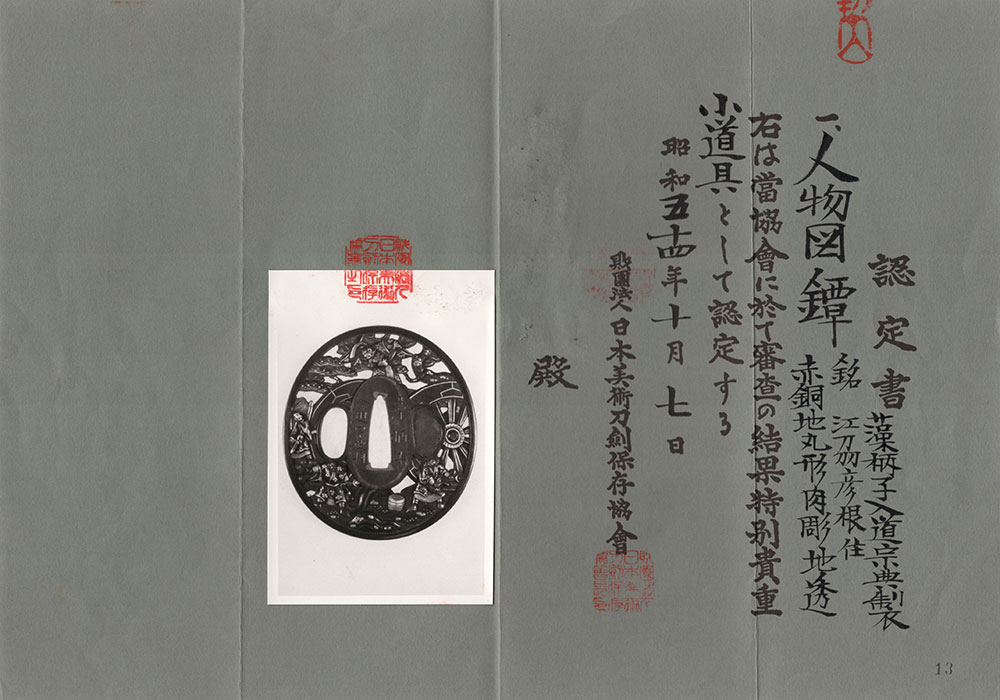
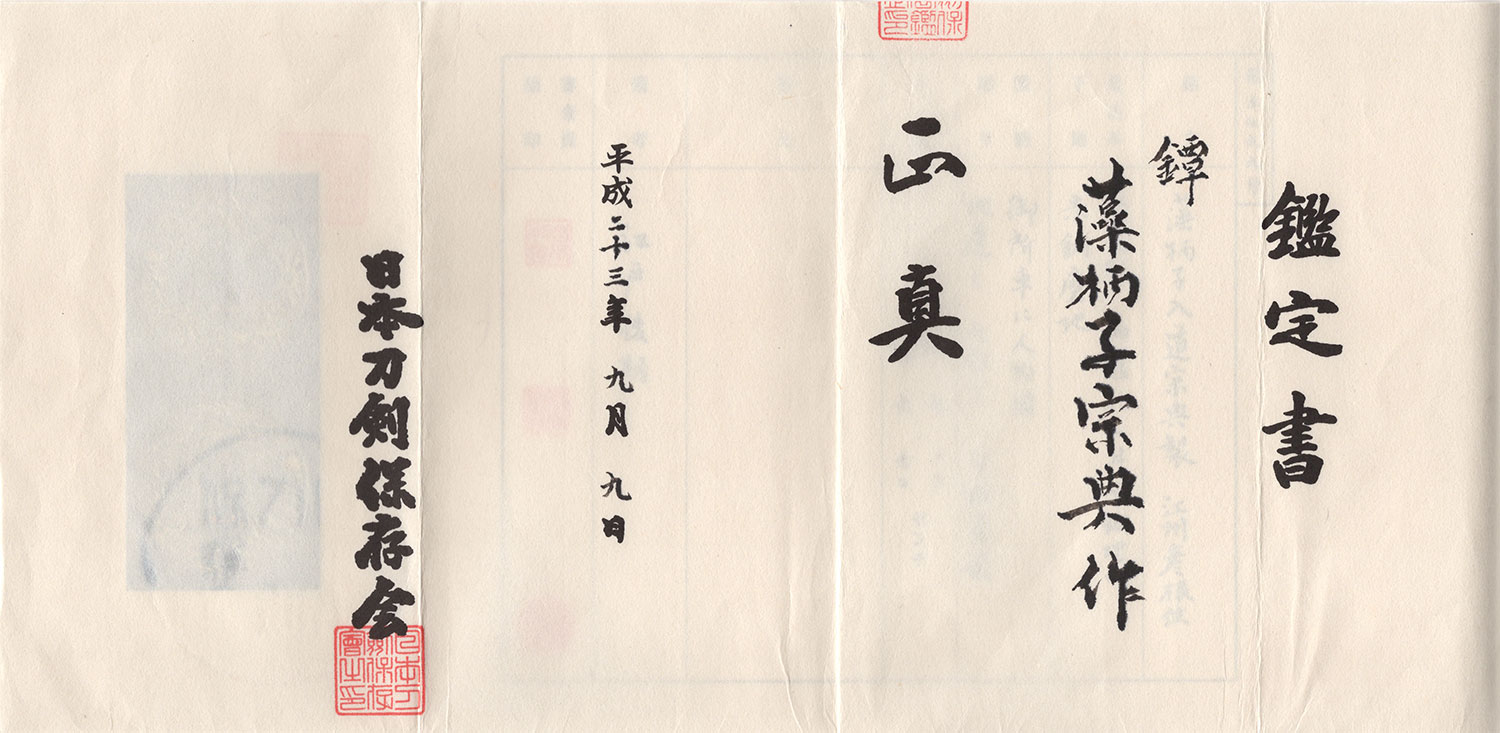
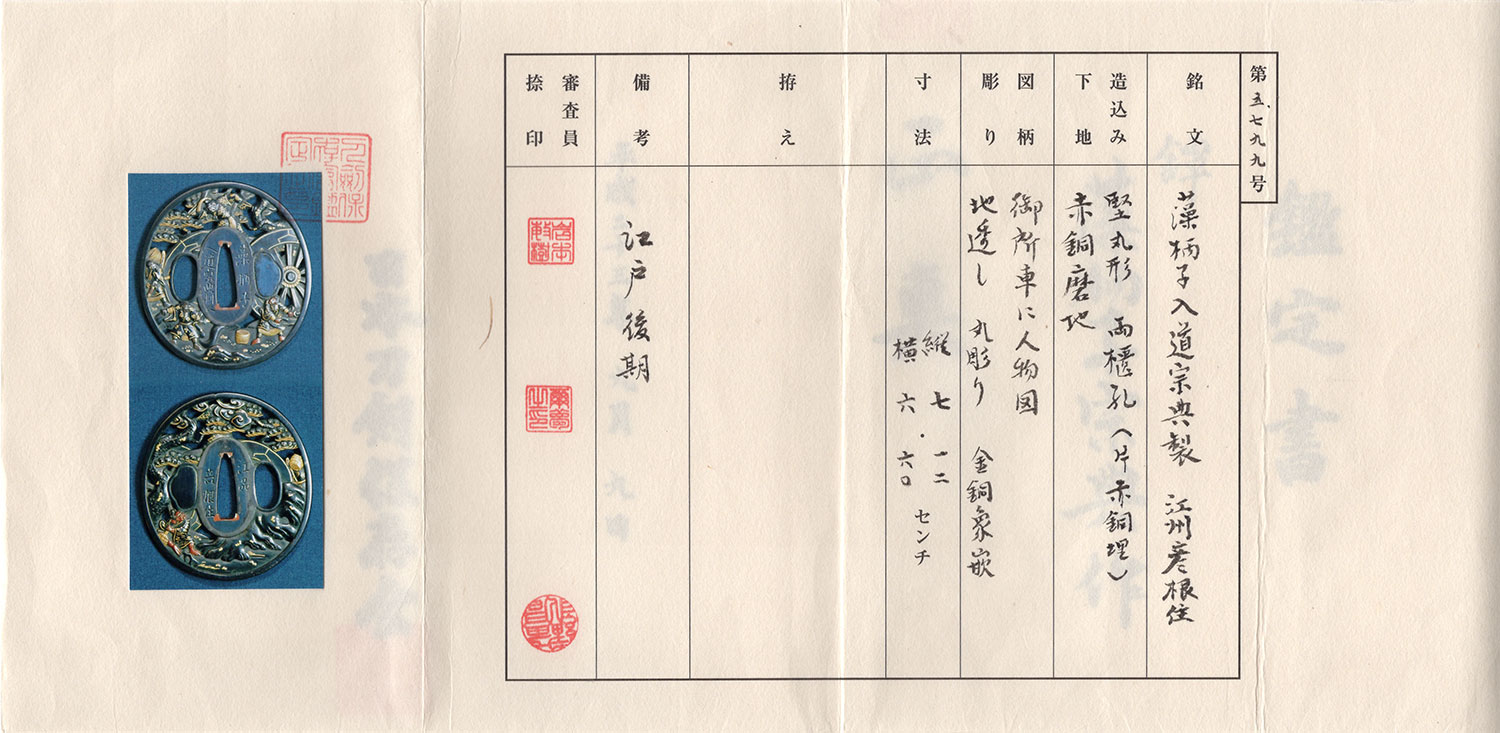
菅原伝授手習鑑車引透鐔 藻柄子入道宗典製 江州彦根住 -Soheishi nyudo Soten, Goshu Hikone ju- 縦72.1ミリ 横66.2ミリ 切羽台厚4.3ミリ 重さ108.0グラム 江戸中期 The middle period of Edo era 附属 特別貴重刀剣認定書、日本刀剣保存会鑑定書、桐箱 本作は彦根宗典派を代表する名工、藻柄子入道宗典による赤銅地の優品です。画題には御所車と人物を配し、松樹や瑞雲を背景として格調高い王朝趣味の世界を表しています。 地金には上質な赤銅を用い、深みのある黒紫色の煮色仕上げが施されています。御所車や人物は高肉彫で立体的に表され、衣服や車輪には金象嵌を巧みに用いて華やかさを添えています。人物の表情や衣紋の細部に至るまで丁寧に彫り上げられており、宗典派ならではの精緻な彫技を堪能することができます。 表には御所車の周囲に人物を配し、裏では老松の根元に人物を表しており、両面を通じて物語性のある構成となっています。透かしを巧みに取り入れながらも画面に密度があり、随所に施された金象嵌が落ち着いた赤銅地に美しく映えています。 宗典派の特色である彫口の鋭さと気品ある意匠がよく示された作品であり、保存状態にも恵まれています。特別貴重刀装具認定書および日本刀剣保存会鑑定書が附属する、鑑賞価値の高い優品です。
NihontoWatchOffered by Toushin

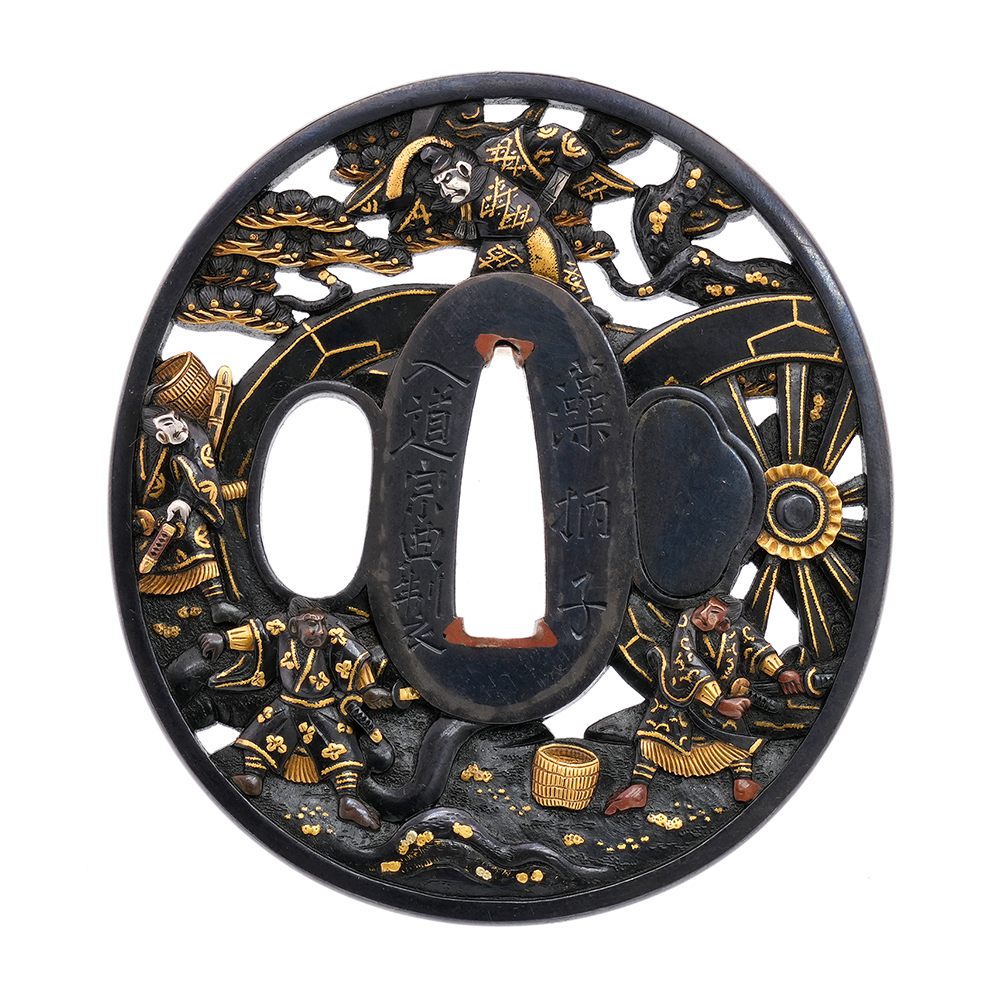
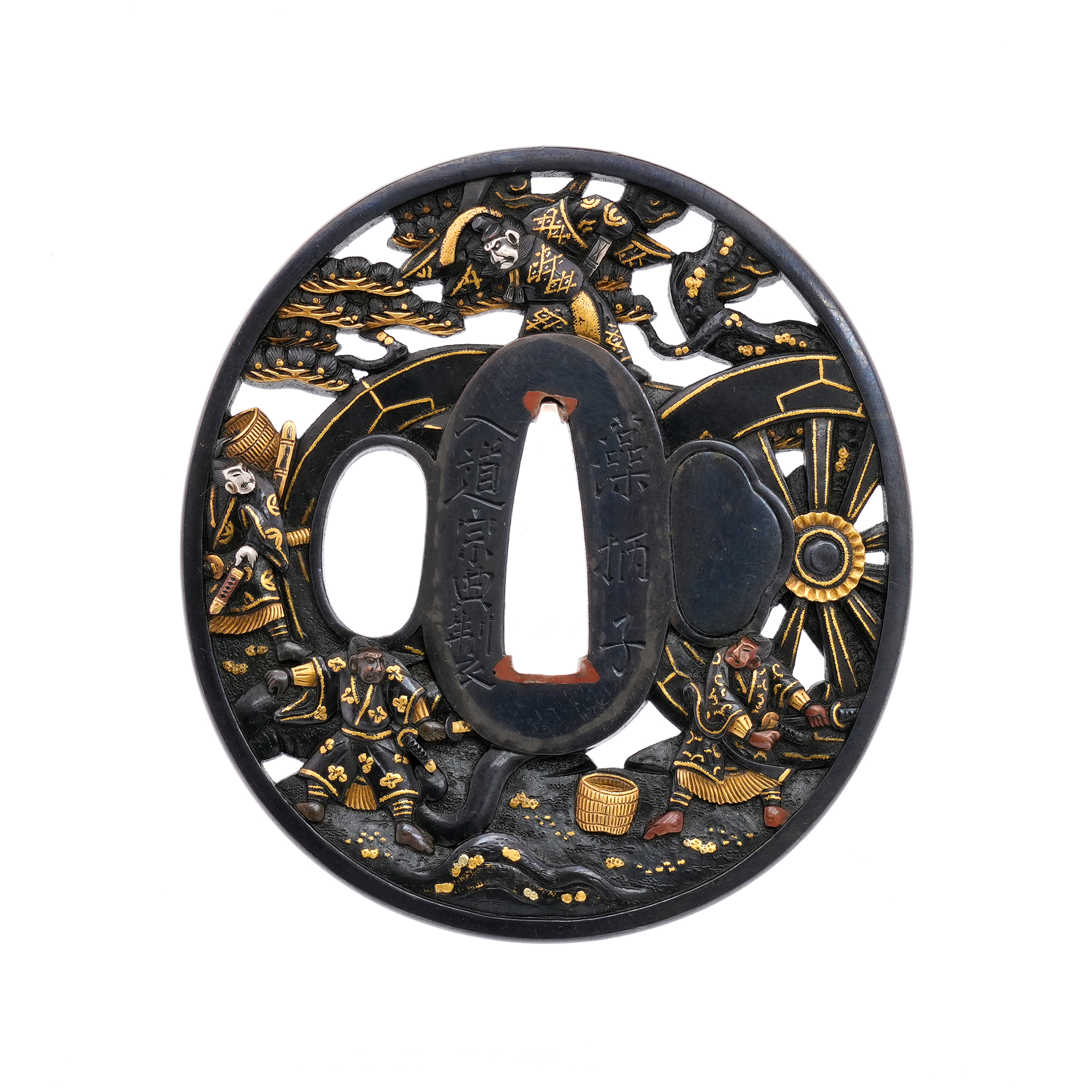
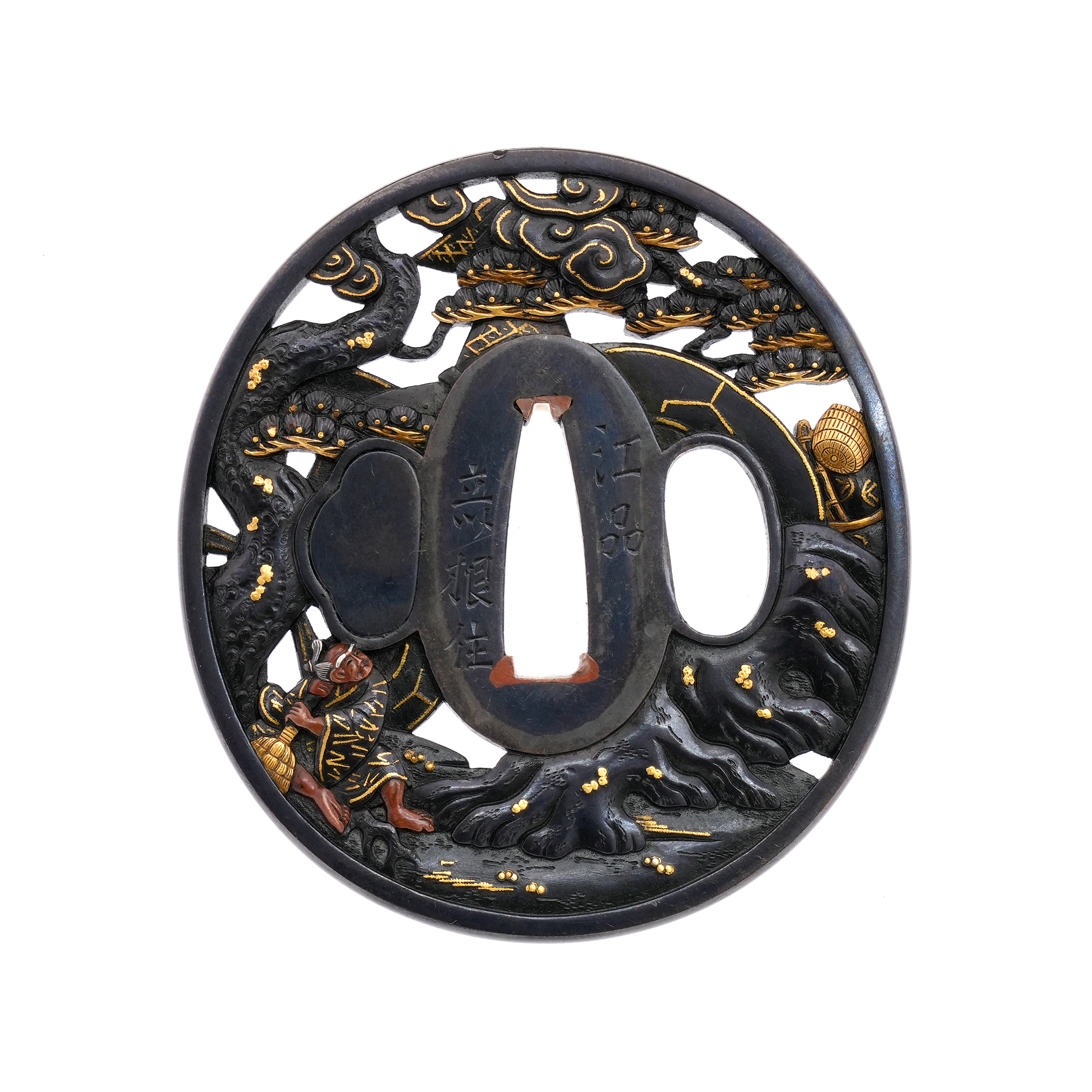
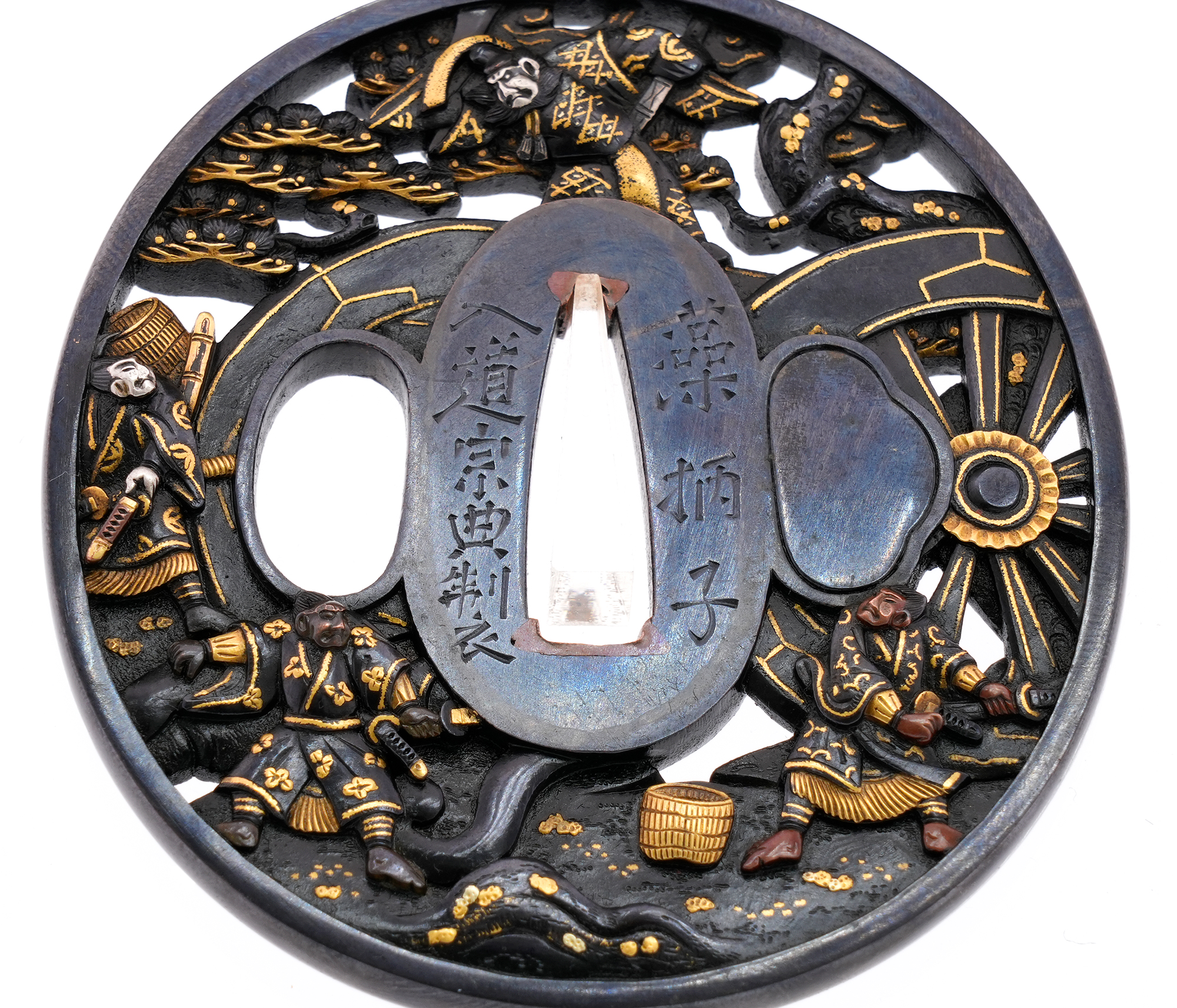
Kinko · Omi
32 pieces on the market now
The Hikone school of sword fittings -- known as Hikone-bori -- was established at Nakayabu in Hikone, Omi Province, by Mogarashi Nyudo Soten, who settled there after leaving Kyoto and entered the service of the Kawakita family, hereditary vassals of the Hikone domain. One source records that Soten initially trained under the Goto family, citing the Kinko Soran for the existence of works signed "made by Kitagawa Hidenori, a disciple of the Goto," before developing the distinctive carving manner that would define his lineage. The school's connection to the broader Mino-bori tradition is also recognized. There were reportedly two generations working under Soten's name, with the first born in Joo 1 (1652) and active from the early through mid-Edo period. From his workshop emerged a circle of accomplished students, chief among them Nomura Kanenori and Munenori, who carried the Hikone-bori manner forward and established it as one of the most distinctive regional styles in the kinko tradition. The technical hallmark of Hikone-bori is sukidashi takabori -- richly modeled high-relief carving executed on generously proportioned iron plates, further enlivened through zogan iroe employing gold, silver, shakudo, and suaka. The NBTHK notes that even among the gold applications, "multiple types of gold are used," producing expansive pictorial fields of considerable chromatic variety.
Subjects encompass warriors, Daoist immortals, elder sages at elegant gatherings, and flowers-and-birds compositions, rendered across the entirety of both surfaces of the guard. The school's masters also demonstrated facility in shakudo work, including nanako-ji plates with high-relief compositions displaying a pronounced Goto-like flavor, as well as nikubori ji-sukashi and polychrome mitokoromono sets. What unifies the school's output is the synthesis of imposing compositional scale with refined polychrome technique. " Munenori's contribution is recognized for its assured command of shakudo nanako-ji ground preparation and boldly modeled takabori, enriched with polychrome iroe employing multiple varieties of gold across both faces -- a sumptuous, animated effect characteristic of the mature Hikone style. The Hikone school's significance within the broader kinko tradition rests on its creation of a distinctively pictorial approach to sword-fitting decoration that stands apart from both the restrained elegance of the Goto mainline and the narrative density of the Yokoya school. The NBTHK's evaluative language converges on a single defining quality: the school's ability to fill expansive iron and shakudo surfaces with ambitious narrative compositions while maintaining compositional coherence and chromatic refinement. " That Soten's overwhelming fame led later makers to adopt his signature on subsequent Hikone-carved works testifies to the enduring authority of the school's founding aesthetic, while the surviving origami documentation -- including one dated Kanbun 5 (1665) from Goto Mitsutomo -- provides valuable evidence for understanding workshop practices and the collaborative production that sustained the Hikone tradition across the early and mid-Edo period. Learn more →
| Smith | Era | Designated |
|---|---|---|
| Soten宗典 | Edo | 10 |
| Kanenori包教 | Edo | 3 |
| Masatsugu政次 | Edo | 0 |
| Mitsuyoshi光義 | Edo | 0 |
| Munekata宗賢 | Edo | 0 |
This work carries older NBTHK “Kichō”-era papers, which the NBTHK no longer issues and largely disavows today. To confirm the attribution, submission to an official Japanese examination body (such as the NBTHK or NTHK) for modern certification could be considered.
As a rule we do not accept returns, except when we have sent a different item from the one ordered or when there is a significant discrepancy between the description and the item. If you wish to return an item, please contact us within 3 days of its arrival and then send it back.