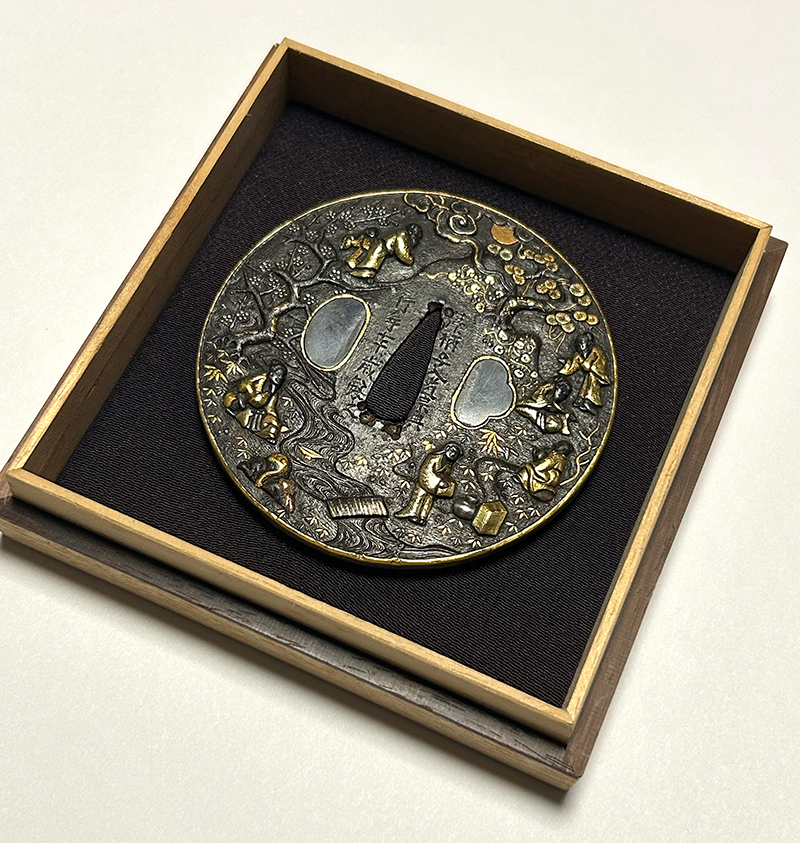
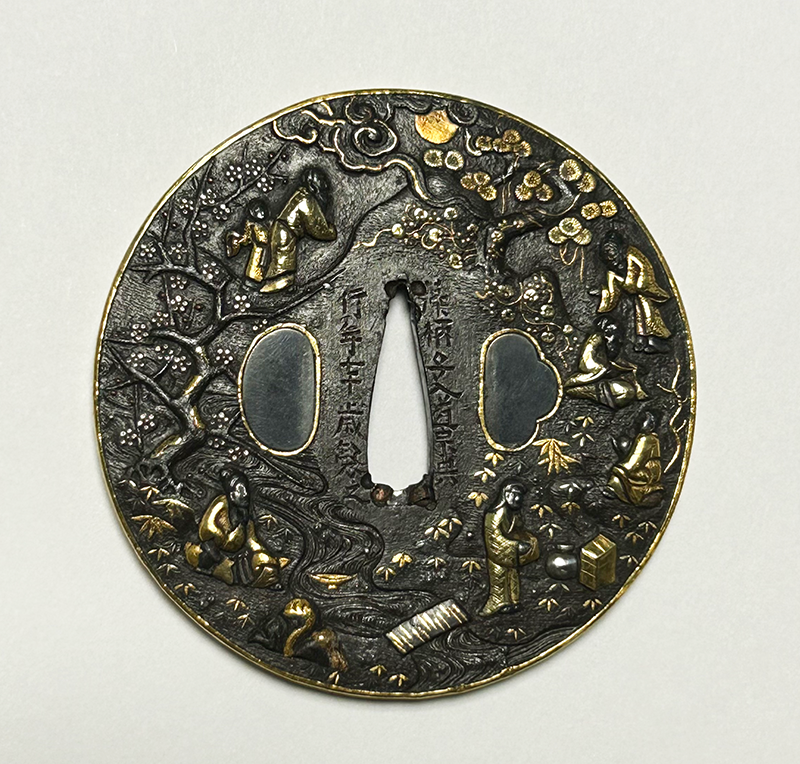
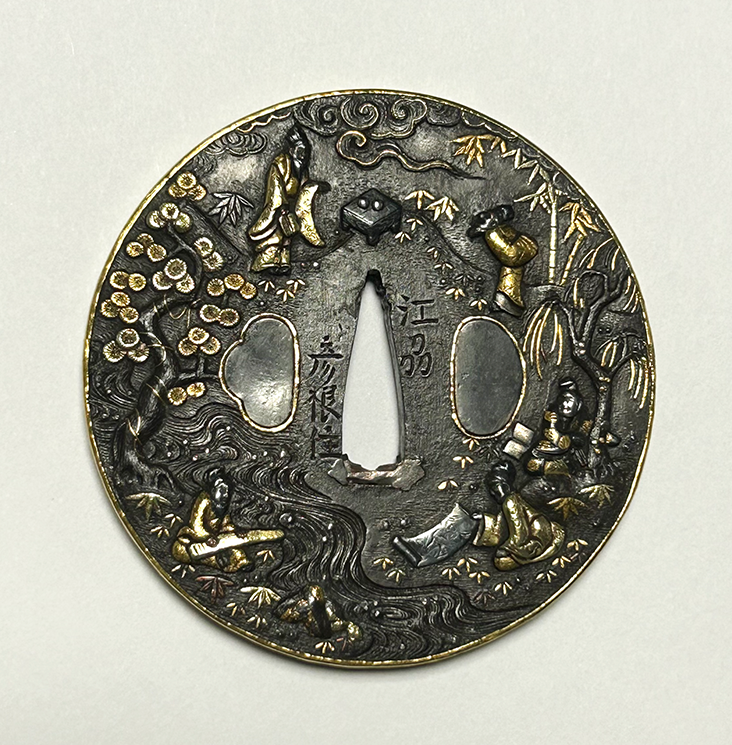
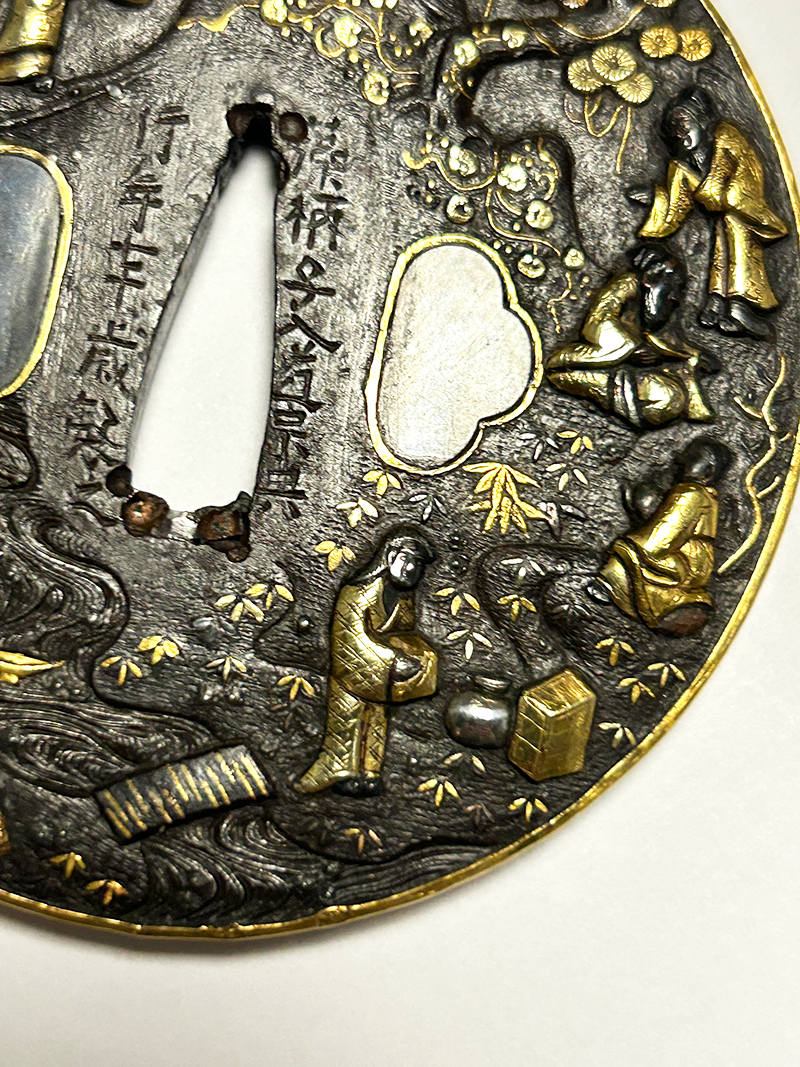
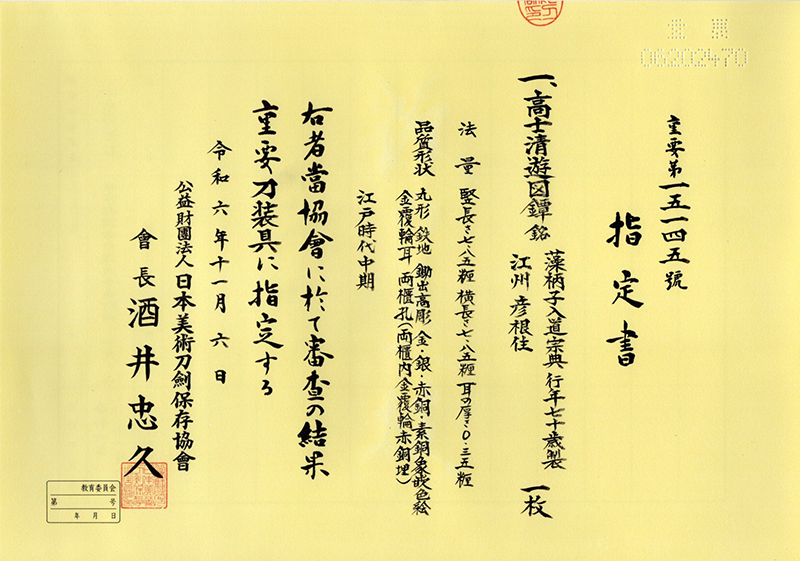
-Tōsōgu, 70th Session — Designated November 6, 2024
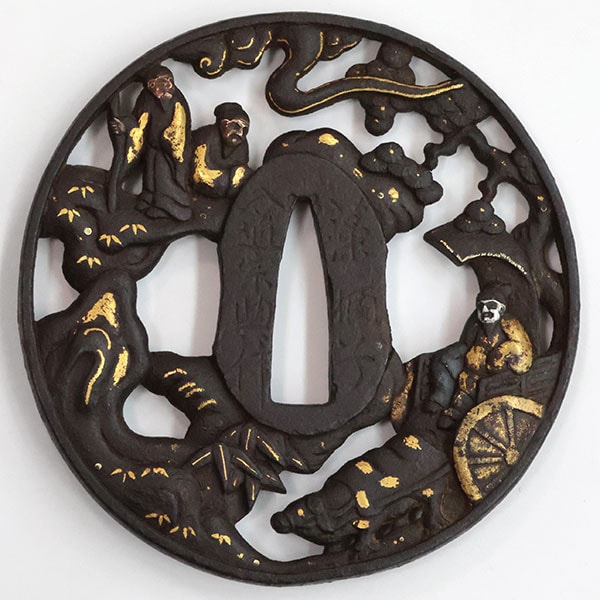
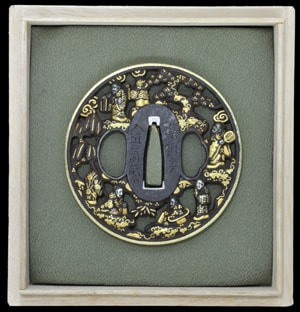
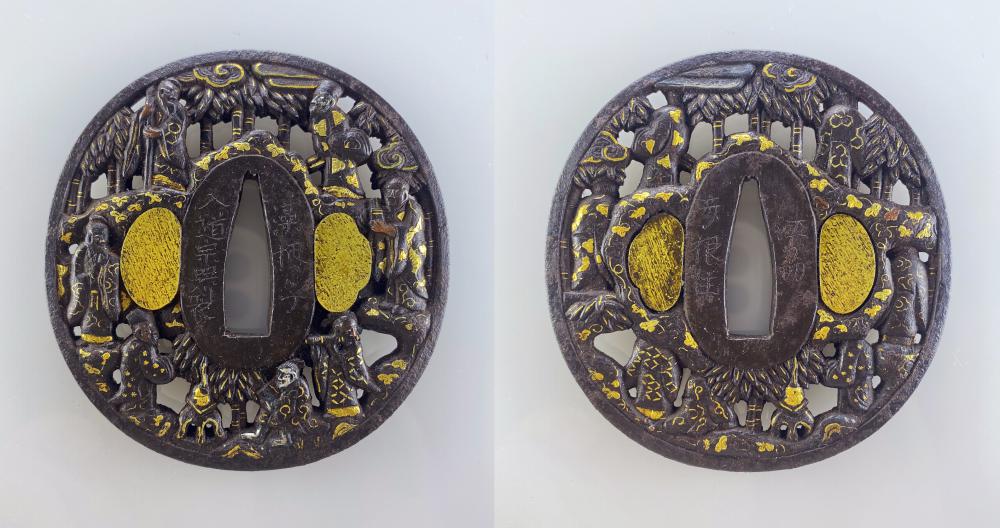
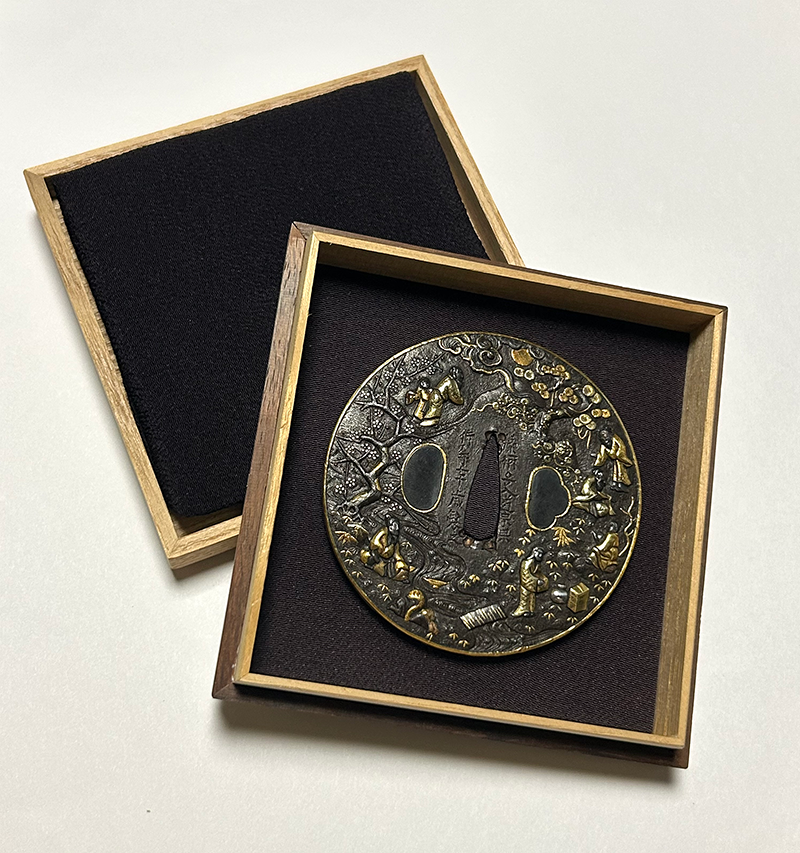
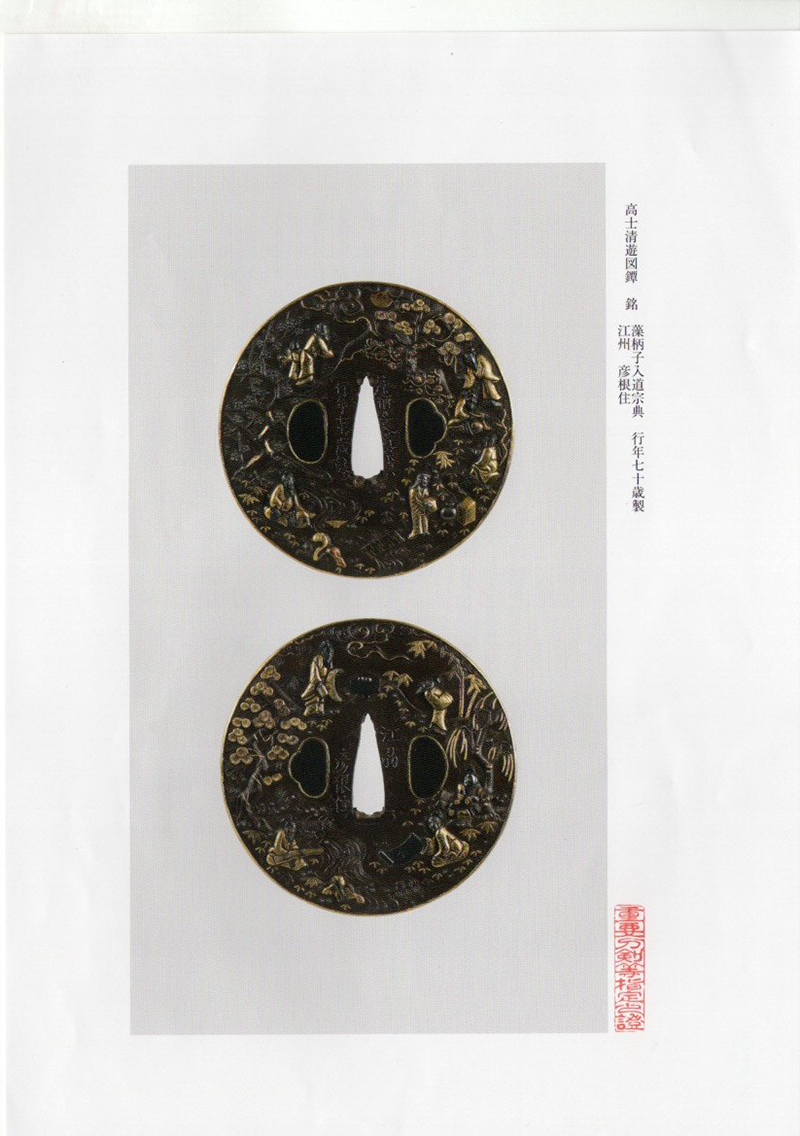
: “ Seiyū” (Elder Sages at Leisure)
Signature: ** Mogarashi Nyūdō Sōten — “made at the age of seventy” — “resident of Hikone”
Author: ** Kojima Tsutomu
Measurements
- (height): 7.85 cm
- (width): 7.85 cm
- Mimi thickness: 0.35 cm
Description
- Form: (round)
- Material: iron ()
- Construction: (single plate)
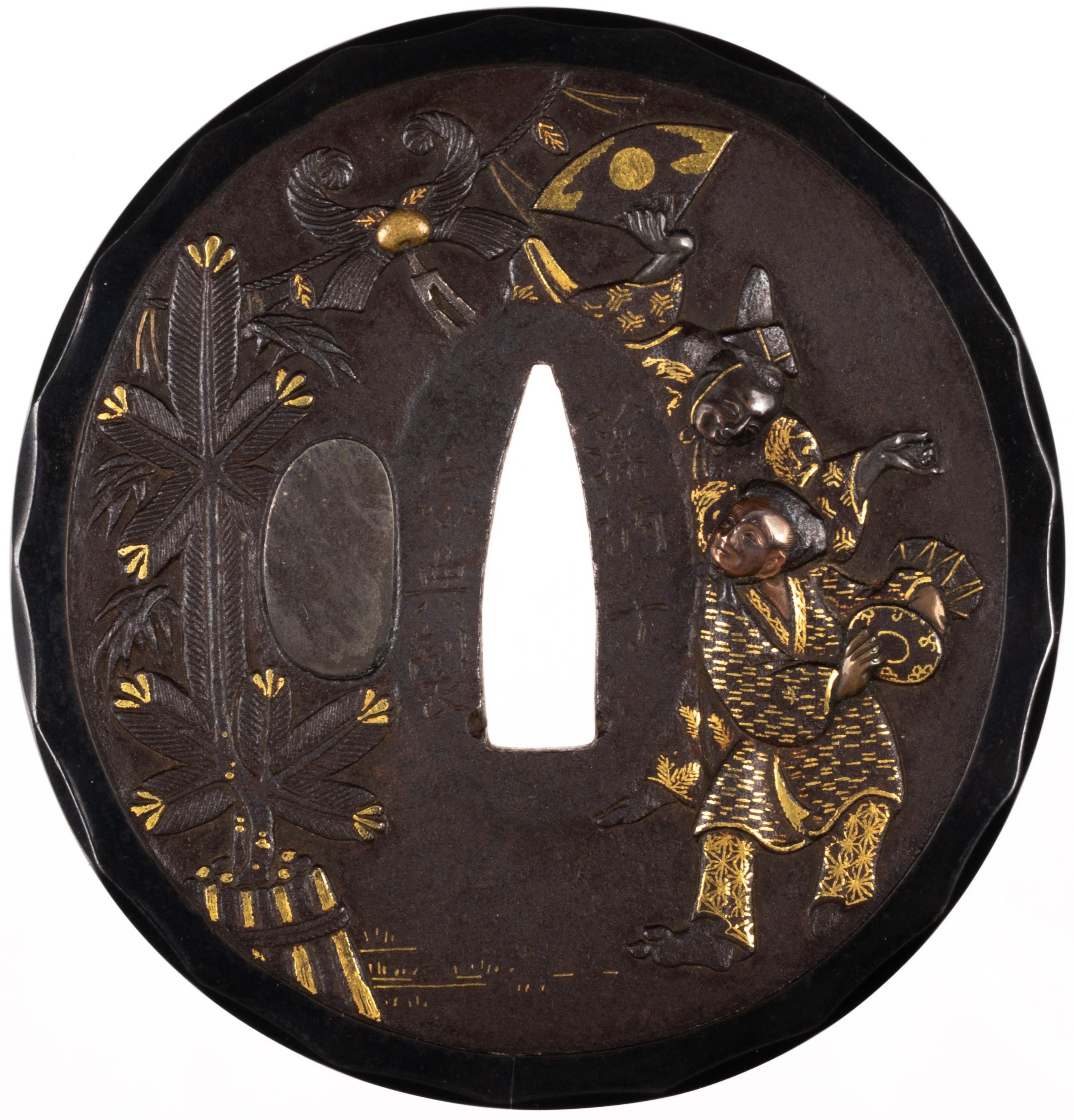
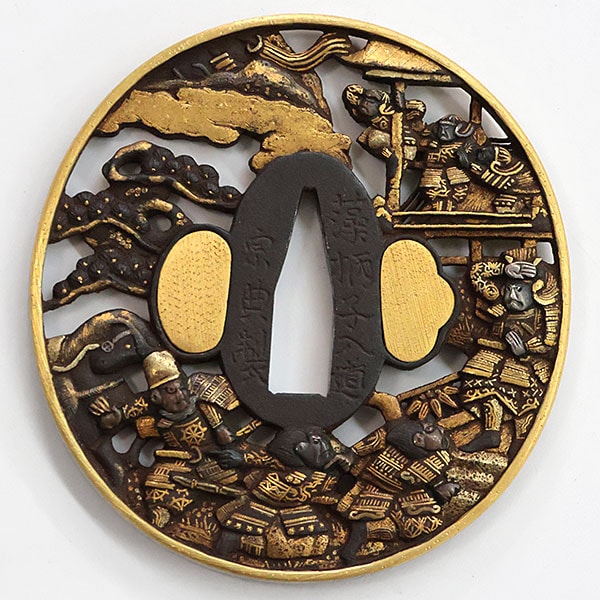
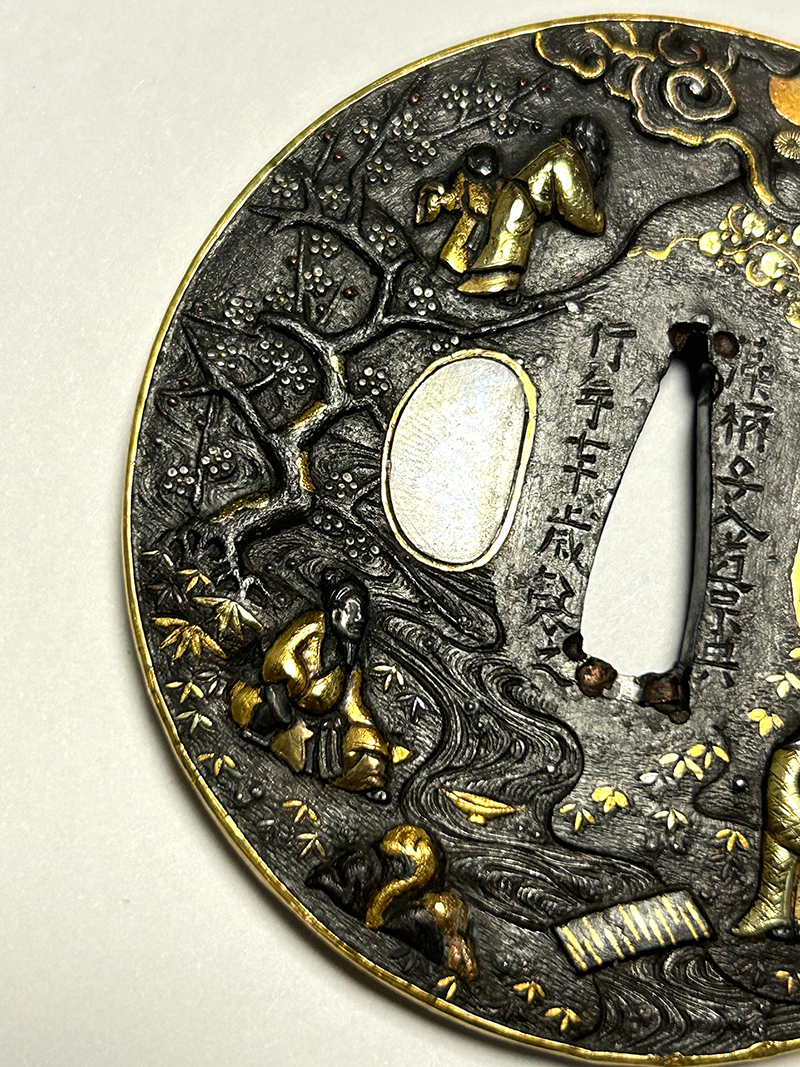
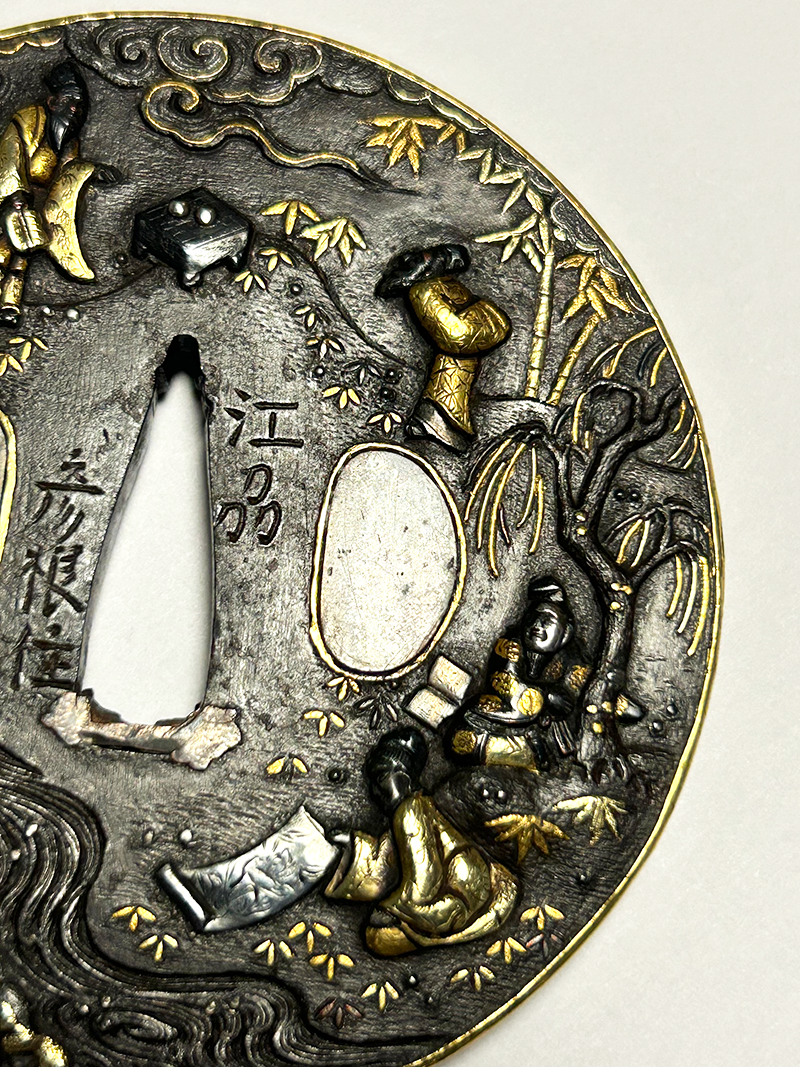
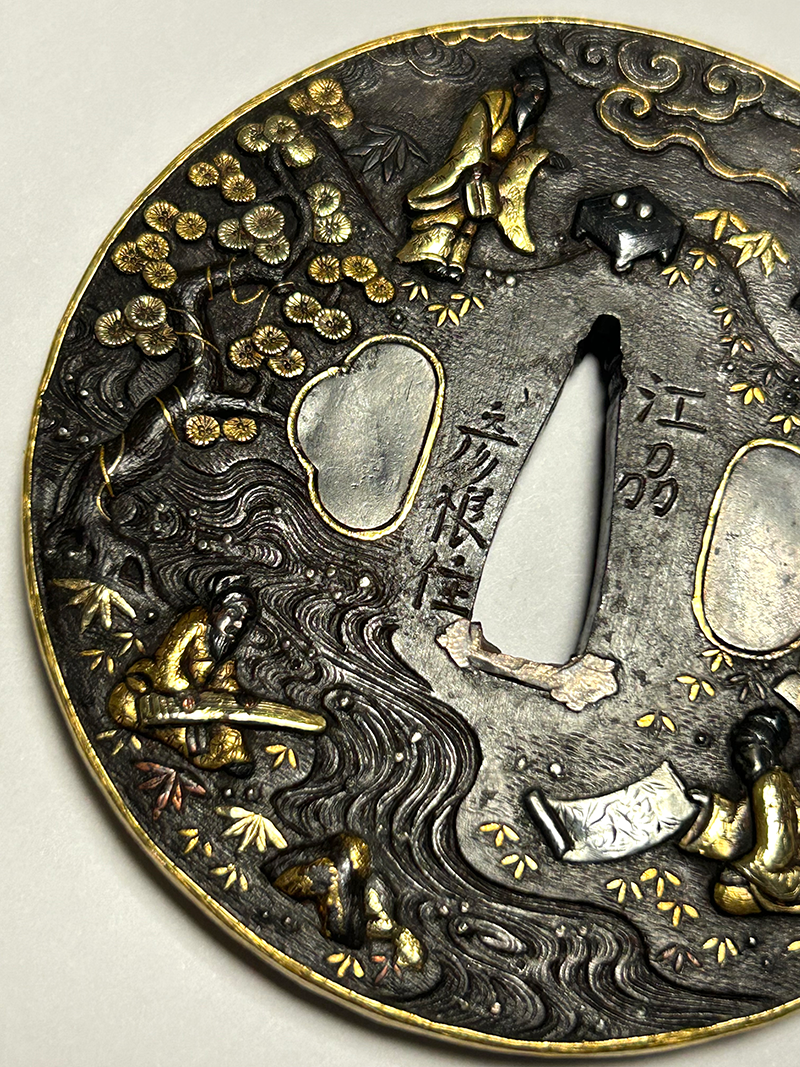
- Design: figures of cultivated gentlemen () enjoying refined pastimes in a quiet, elegant gathering (seiyū)
- Decoration: yajiri-dashi (arrowhead-like, angular modeling in high relief), with / using gold, silver, , and (copper)
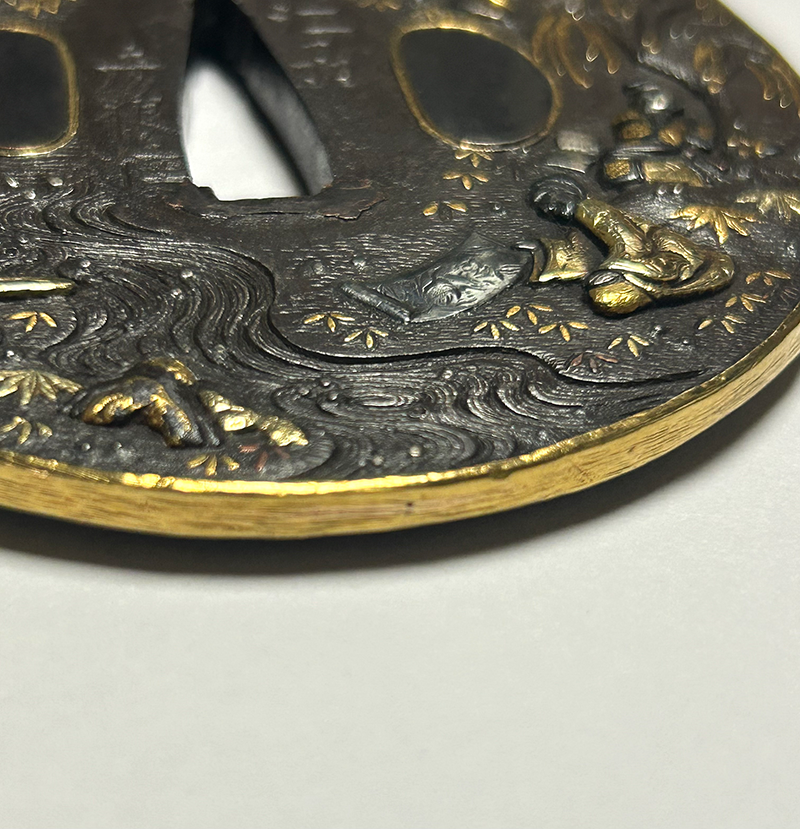
- Rim: gold (rim wrap)
- : two; both openings lined with gold and fitted with liners
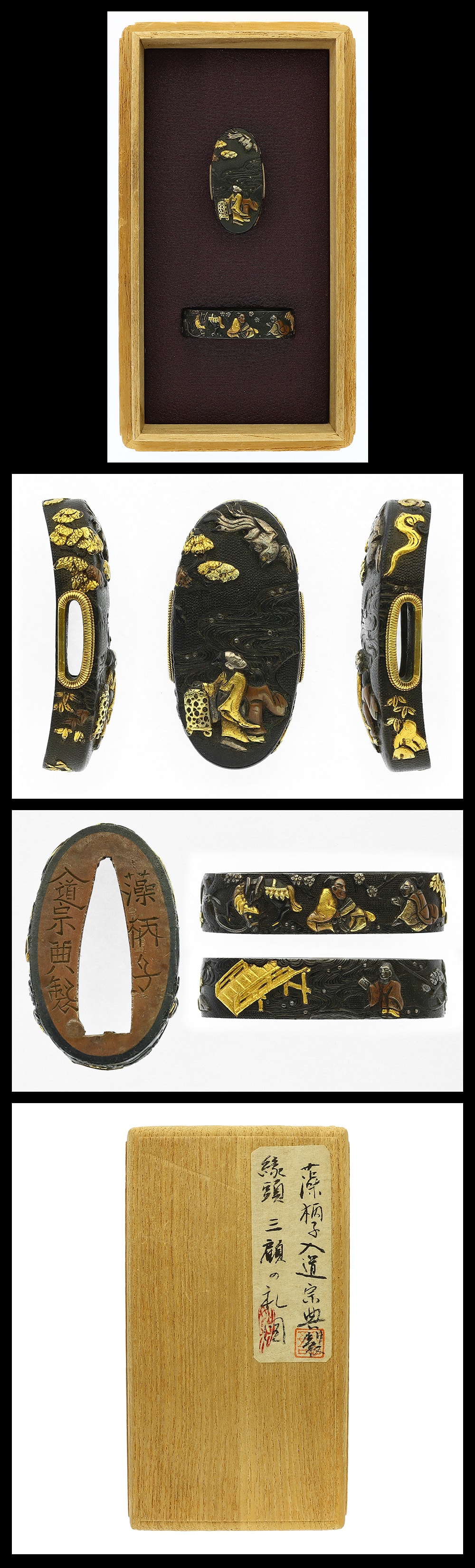
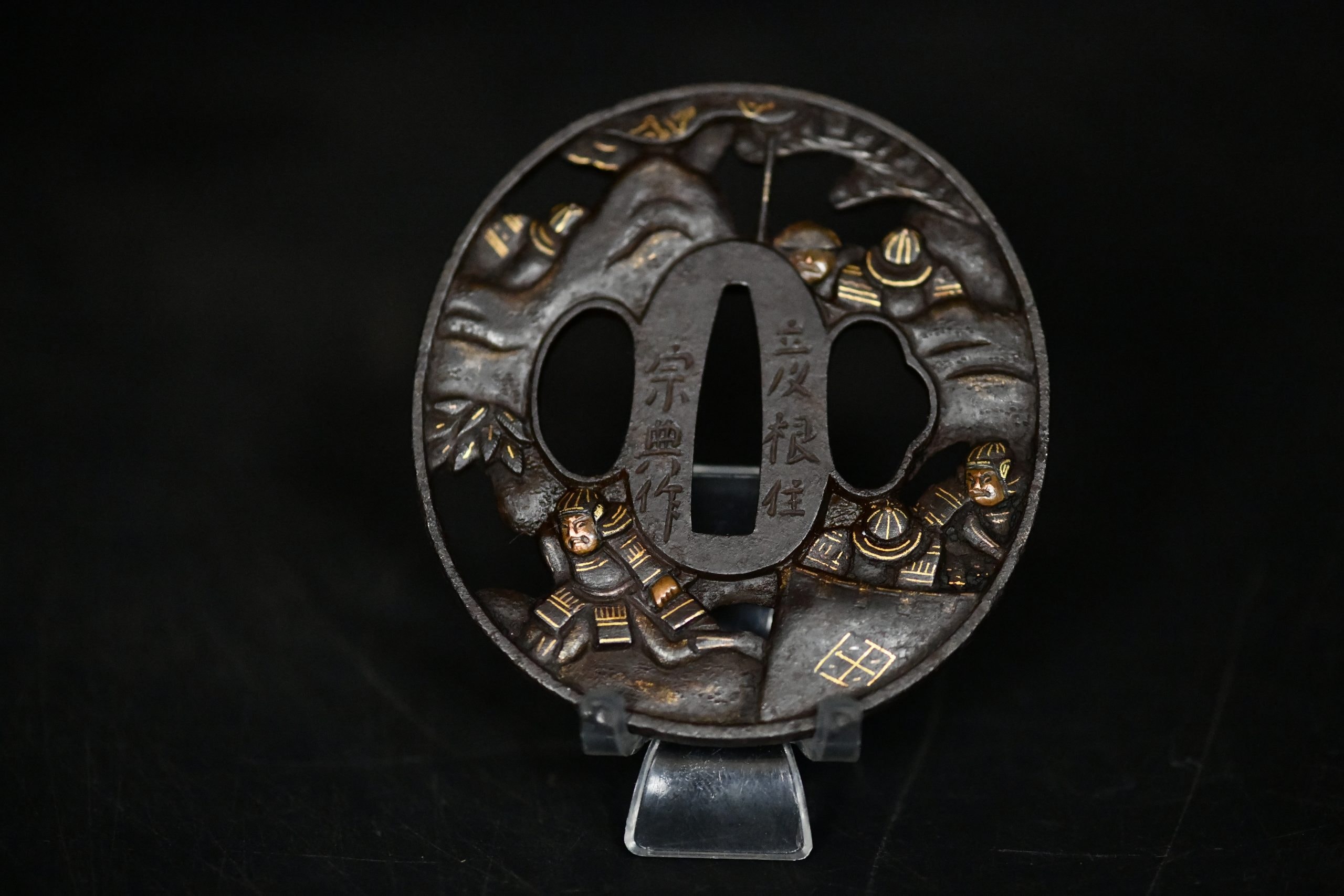
- Signature: 「藻柄子入道宗典 行年七十歳製 彦根住」 (Mogarashi Nyūdō Sōten, made at age seventy, resident of Hikone)
Artisan
Mogarashi Nyūdō Sōten (Hikone carving tradition; founder figure of Hikone-bori per historical sources)
Era
Mid period
Explanation
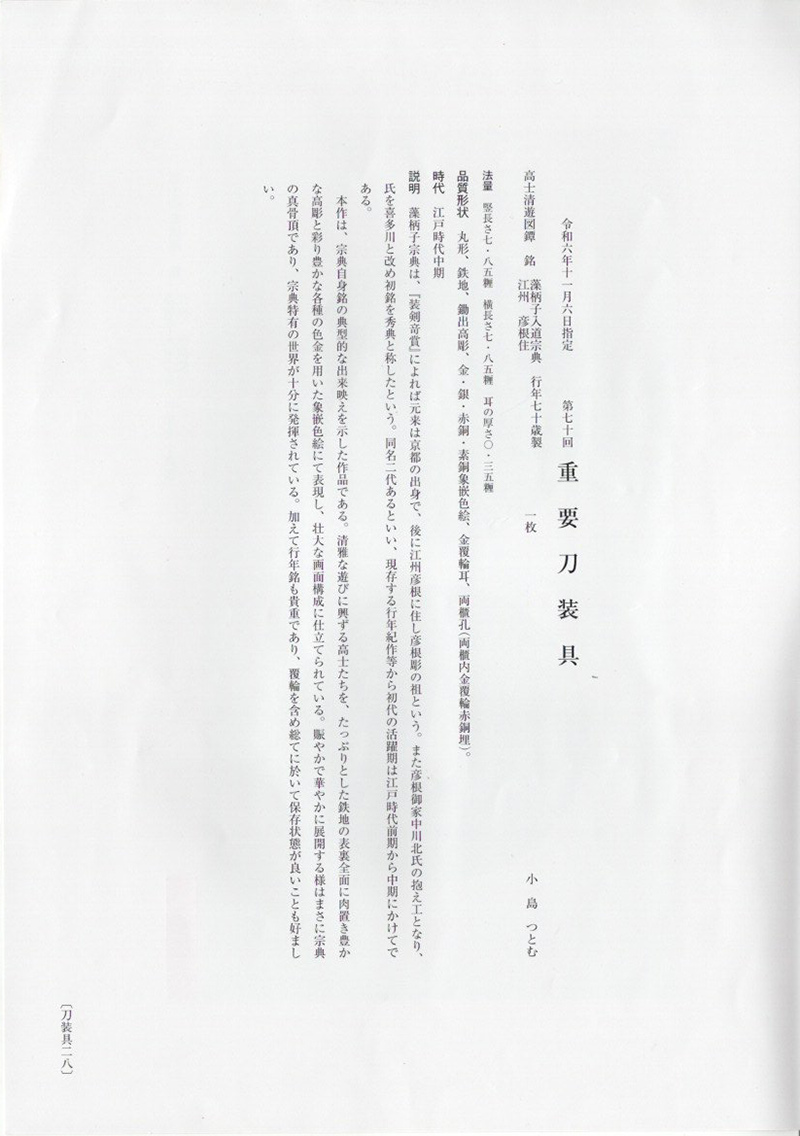
According to the Kishō, Mogarashi Sōten was originally from Kyoto; he later lived in Hikone in Ōmi Province and is regarded as the founder of Hikone-bori. He became an artisan retained by the Kawakita family (a house within the Hikone domain’s retainer band). It is said that he changed his surname to Kitagawa and that his earliest signature was “Hidenori.” There are believed to have been two generations using the name; from extant works bearing age-inscriptions (gyōnen-kisaku), the period of activity of the first generation spans from the early through the mid period.
This piece displays a typical and exemplary workmanship for a signed by Sōten himself. Across the entirety of both sides of a generously forged iron plate, groups of elder sages engaging in elegant pursuits are rendered in abundantly modeled high relief, and further enlivened through inlaid polychrome metalwork (zōgan iroe) employing a rich variety of . The result is a grand, expansive pictorial construction. Its bustling yet splendid unfolding is truly characteristic of Sōten’s greatest strength, and the artist’s distinctive world is fully expressed here.
In addition, the age inscription is valuable, and it is especially pleasing that the overall state of preservation—including the —is good.