 NihontoWatchNihontoWatch
This fuchi-kashira set is a refined example of late-Edo metalwork from the Hamano School, known for its elegant nanako ground and high-relief gold details. The fuchi features a fine nanako-ji surface with delicately carved waves and reeds accented in gold, displaying the school’s characteristic balance between subtle texture and vivid ornamentation. The kashira shows a seated figure in richly decorated robes, executed in shakudō with gold takabori (high-relief carving). The gold patterns on the clothing are typical of Hamano craftsmanship, highlighting expressive character work and lively modeling. The combination of the textured background and the richly gilded carving gives the piece a dynamic yet harmonious visual impression. Overall, the set demonstrates the Hamano School’s strengths: technical precision, tasteful use of precious metals, and expressive figural motifs. Signature: Reading and Translation The inscription on the underside appears to read approximately: 濵堅直保 Hamakata / Hamakane Naoyasu (approximate reading) Because Edo-period signatures vary greatly in style, the exact reading of personal names can differ, but the characters mean: 濵 – Hama (as in Hamano School) 堅 – Ken / Kane 直 – Nao 保 – Yasu / Ho Translation (literal): “Hama-Kane Nao-Yasu” (the personal name of the maker) “Made by (the craftsman) Hamano-school artist Naoyasu.” Two pieces - photographed by different angles. Dimensions: Kashira 31,3 mm x 18,5 mm x 8,6 mm, 9,0 g (outter dimension) 28,8 mm x 13,5 mm x 6,0 mm (inner dimension) Dimensions: Fuchi 37,0 mm x 21,8 mm x 13,4 mm 21,7 g (outter dimension) 33,0 mm x 17,7 mm x 10,7 mm (inner dimension) Antique. Original from Japan
NihontoWatchOffered by Nihonto Art
This piece has sold
32 on the market
Get an email when new Hamano School work hits the market.

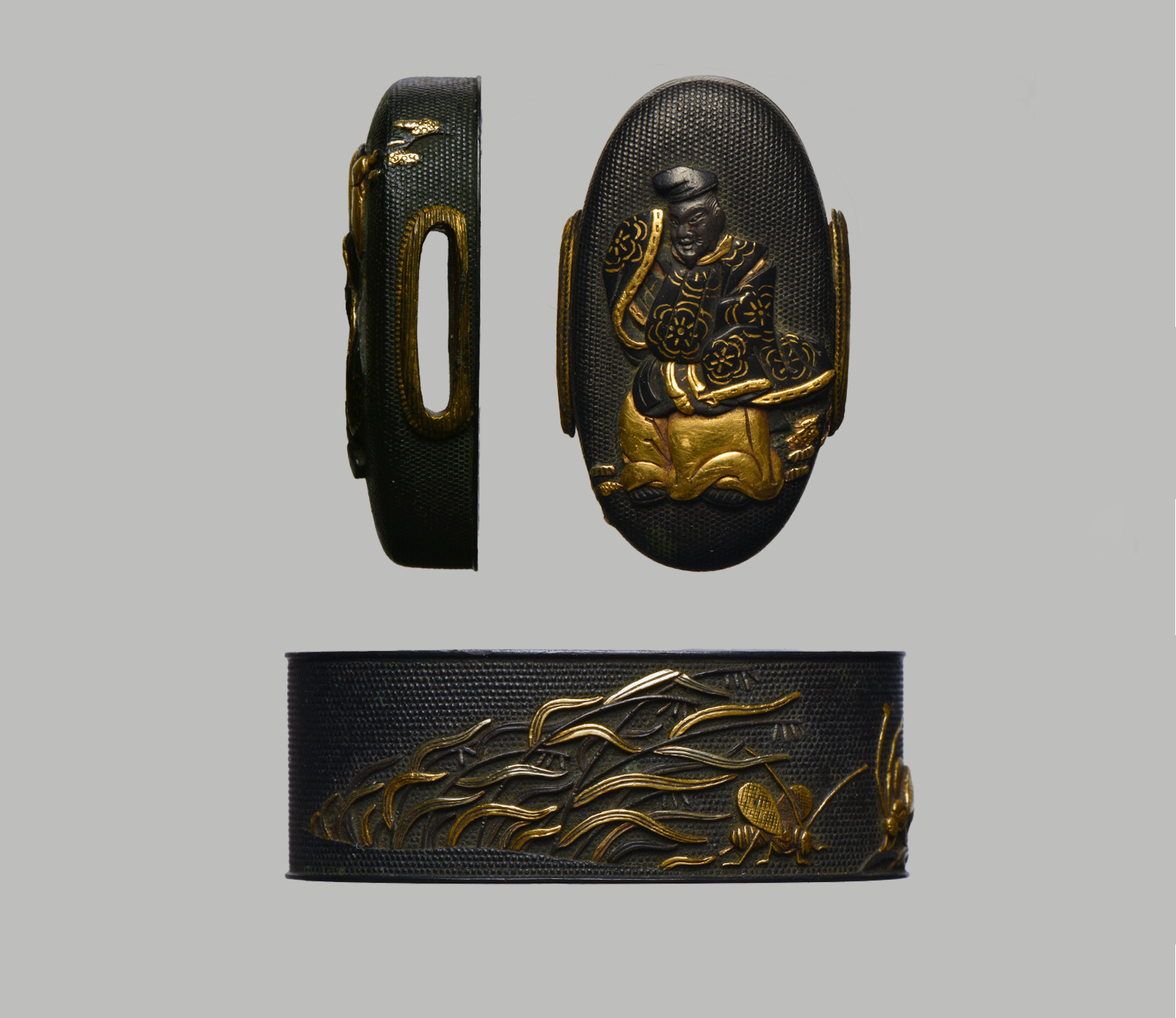
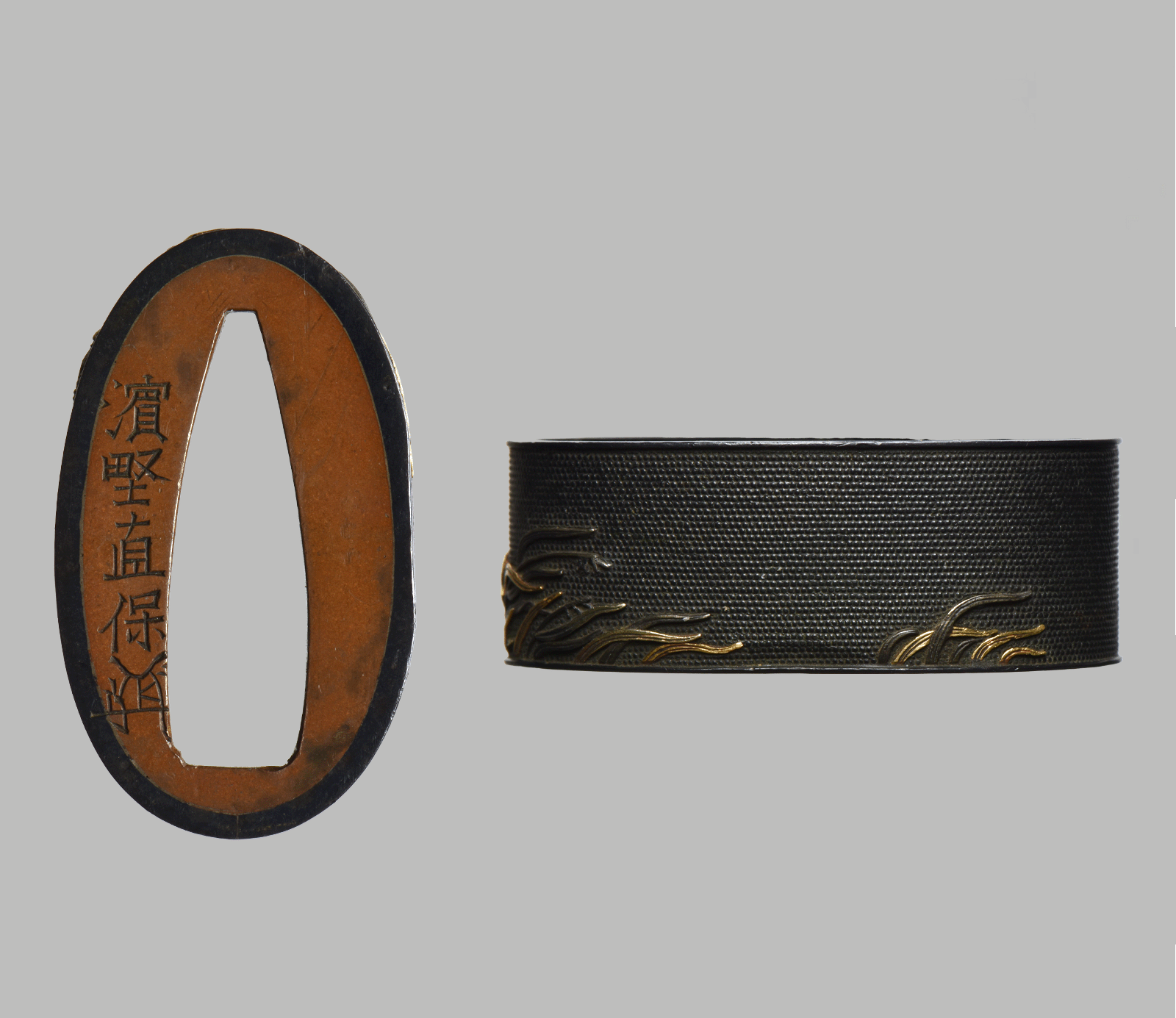
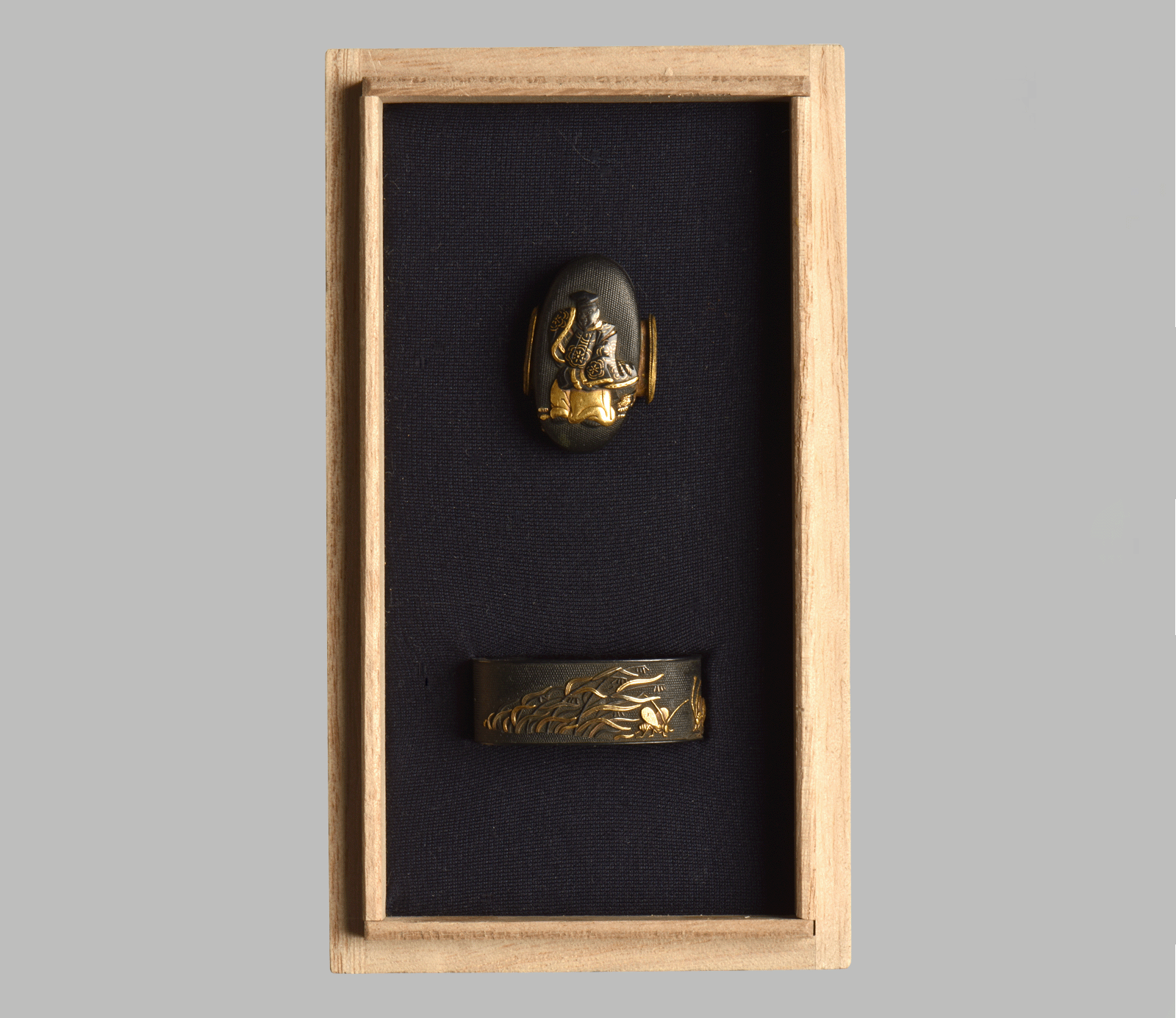
Hamano
Edo
Signed
Machibori · Edo
32 pieces on the market now
The Hamano school of machibori carving was established in mid-Edo Edo by Hamano Masazui (浜野政隨), commonly known as Tarōbei, an exceptionally gifted pupil of Nara Toshihisa. As the Edo Kinkō Meifu states of him that he "thunders through the world," Masazui won widespread renown as one of the "Four Guardian Kings of Nara" (Nara Shitennō). Training many disciples and employing numerous art names—including Otsuryūken, Aji-zumi, Kankei, Rifūdō, Yūkotei, Shūhōsai, Hankei-shi, and Isshunan—he formed what came to be known as the Hamano school, establishing one of the principal lineages of machibori artistry and founding an independent house. " Works are rendered by means of yōbori (sculptural carving) upon varied grounds—gold-and-silver imo-tsugi-ji, solid gold (kinmuku)—with details frequently treated in the in'yō-kon mode, suggesting the early Gotō masters as models.
The carving is executed with "ample, well-judged volume (nikudori)" and "exceptionally full, weighty presence," while applied metal (okigane) in silver and shakudō with shakudō iroe tightens pictorial fields and imparts additional movement. Later Hamano artists such as Katsurano Akafumi maintained this technical versatility, favoring polychrome inlay applied to high-relief compositions. " The NBTHK repeatedly notes that works "clearly demonstrate the high level of technique," "amply demonstrate advanced technical mastery," and possess "a composed dignity"—attestations to the school's sustained excellence across generations and its enduring place within the broader machibori tradition. Learn more →
| Smith | Era | Designated |
|---|---|---|
| Shozui政随 | — | 17 |
| Sekibun赤文 | 1670 | 8 |
| Noriyuki矩随 | — | 4 |
| Naotoshi直寿 | — | 0 |
| Naoharu直春 | — | 0 |
14-day return window in original/unused condition; antique items (swords, menuki, tsuba and similar) are expressly excluded from exchange; EU consumers retain a 14-day cancellation right; refunds within 10 business days of approval.