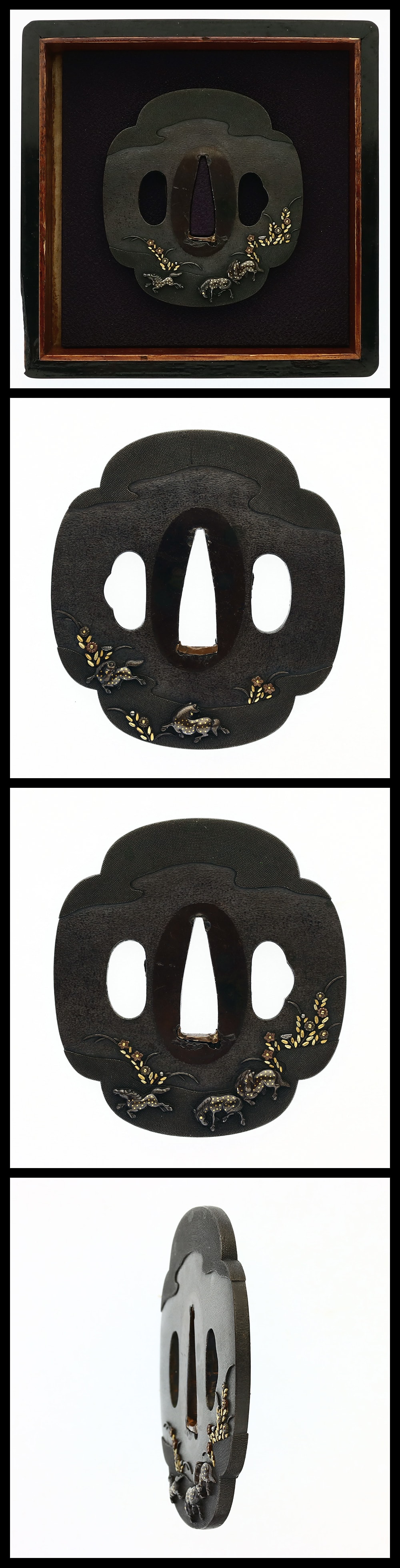
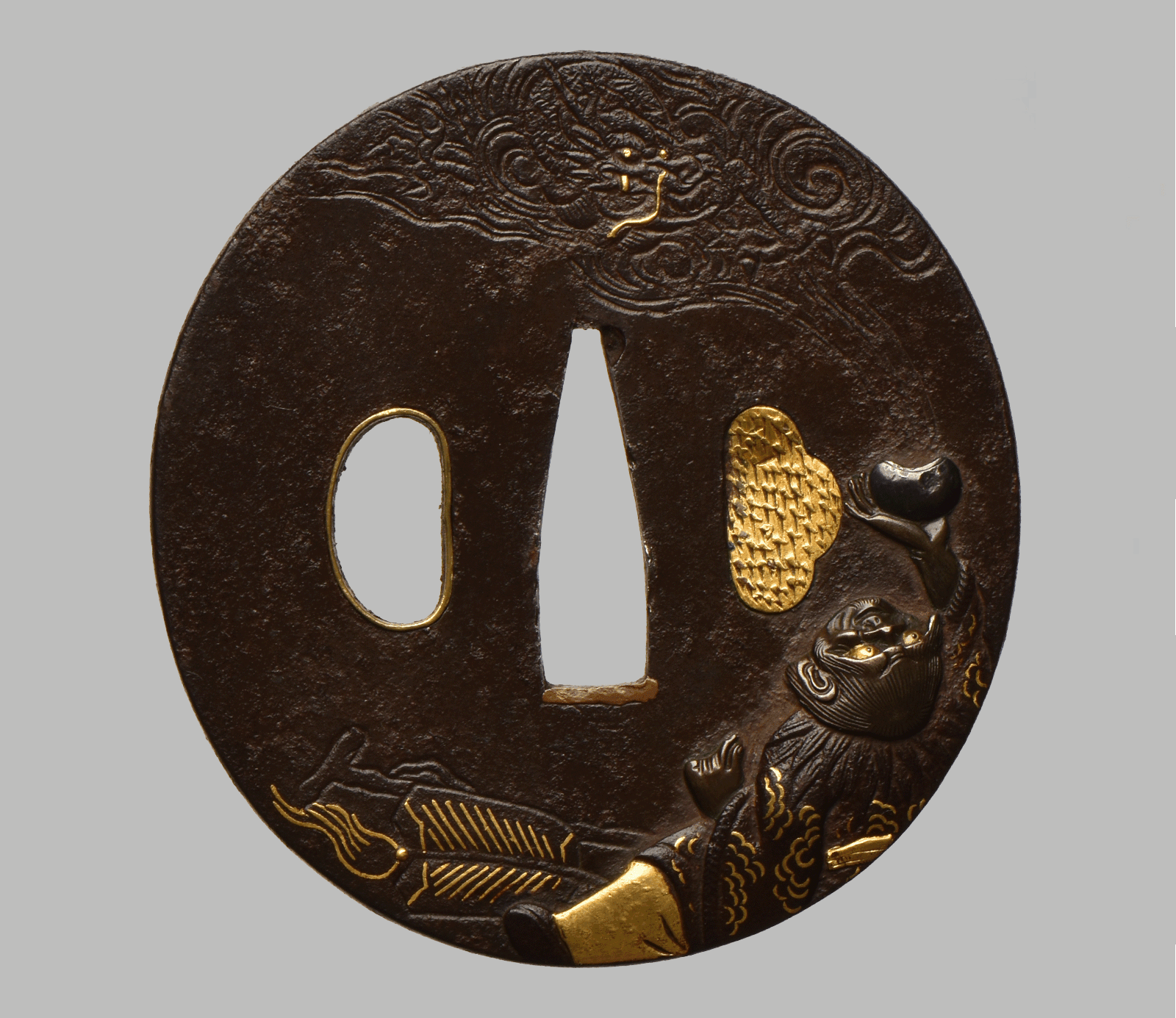
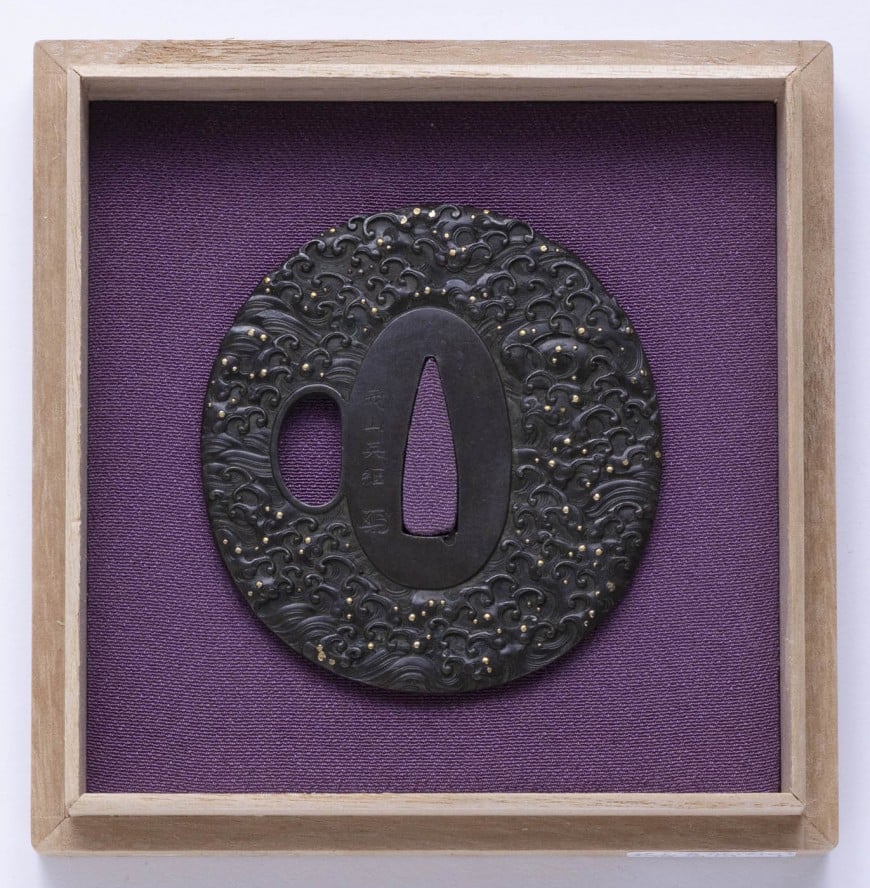
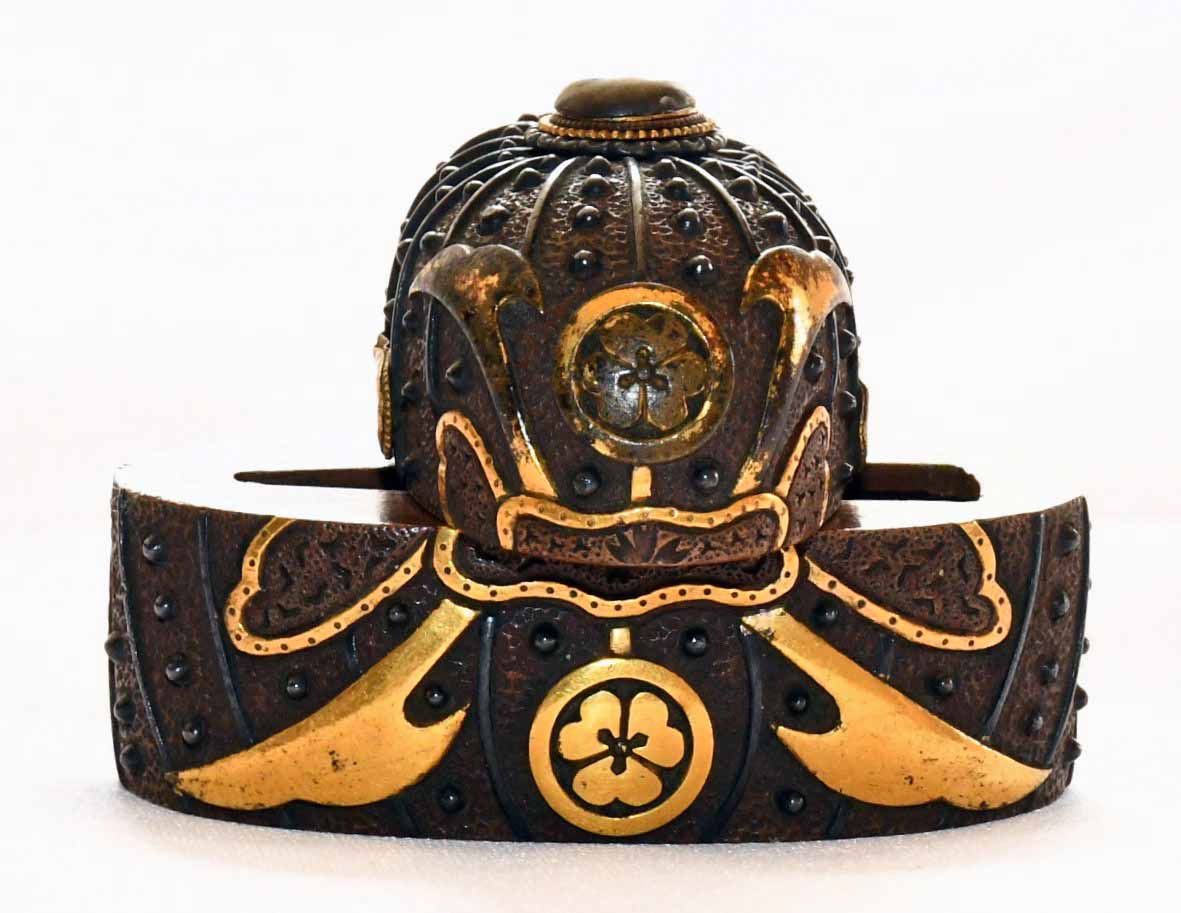
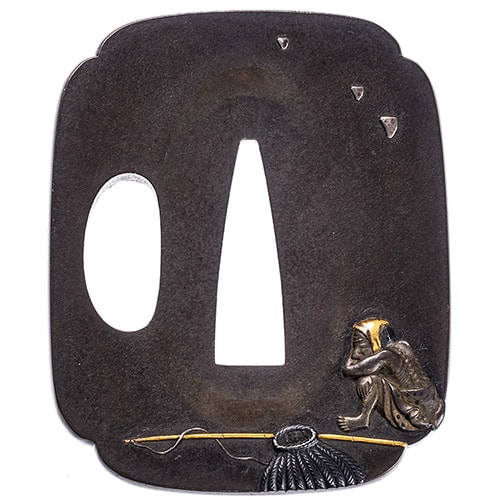
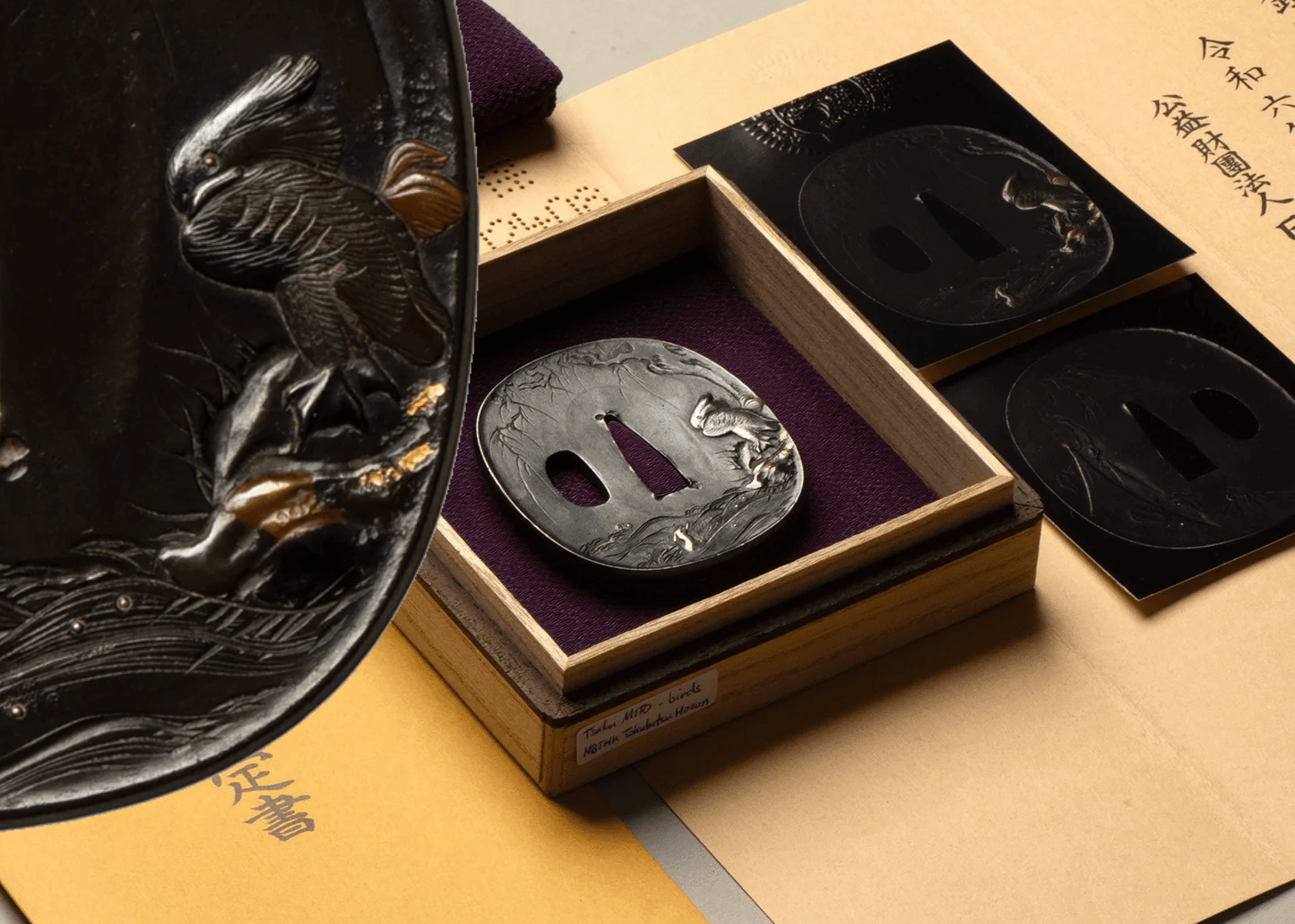
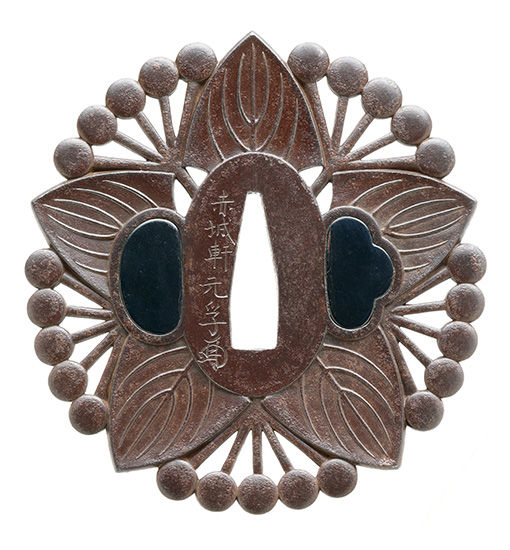
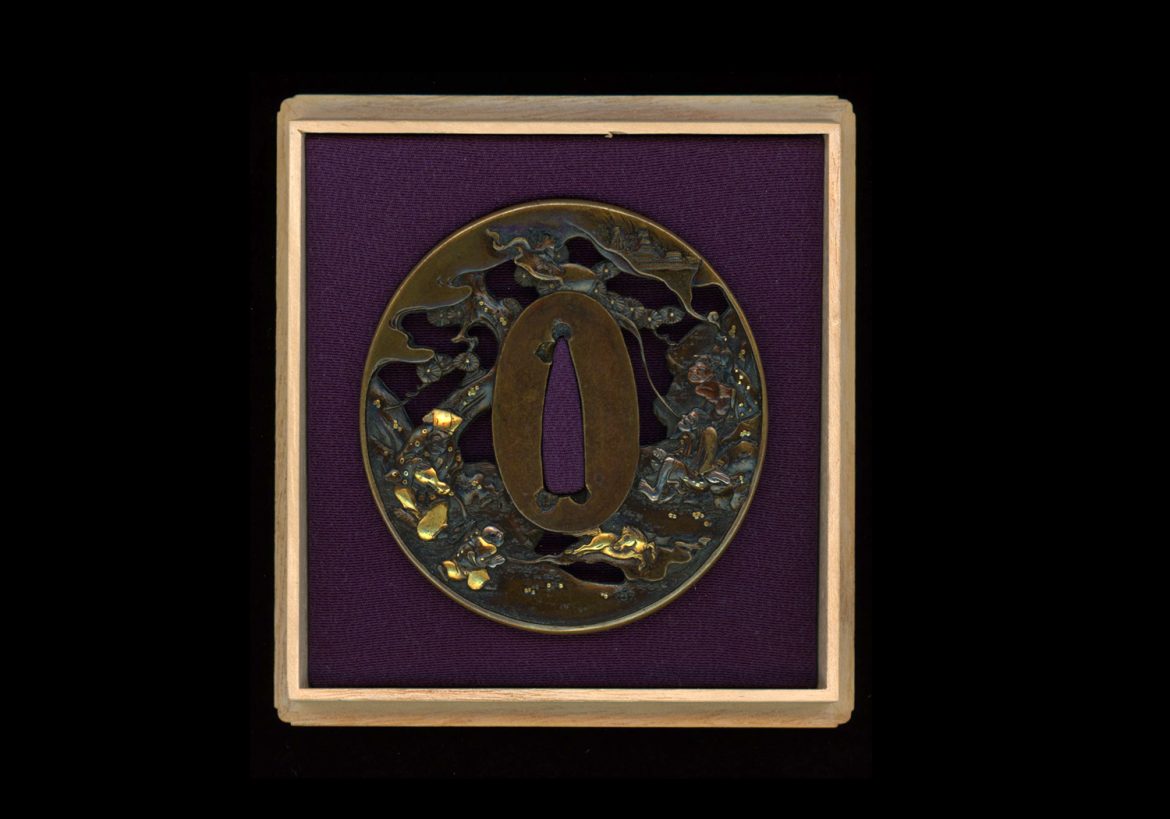
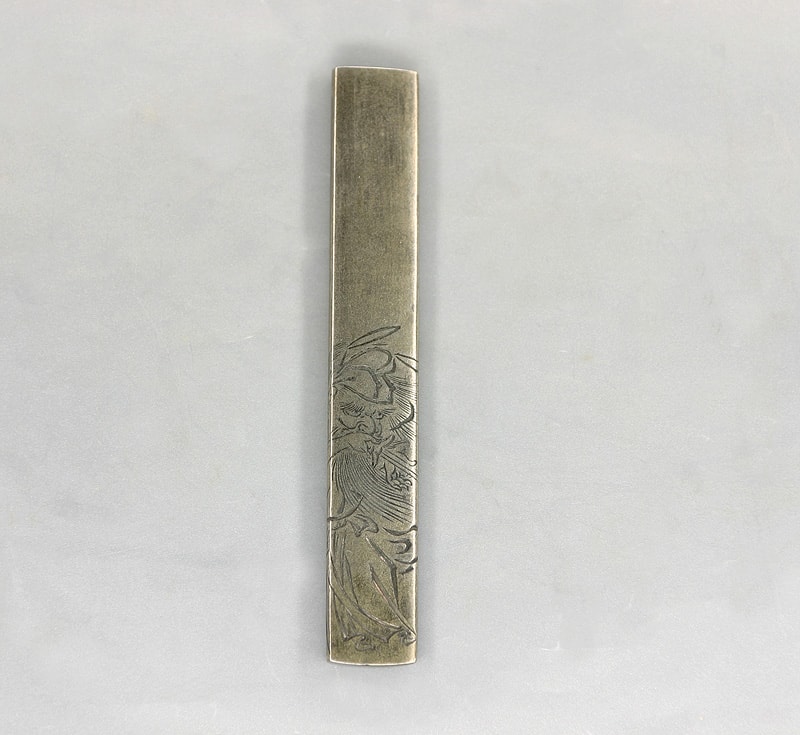
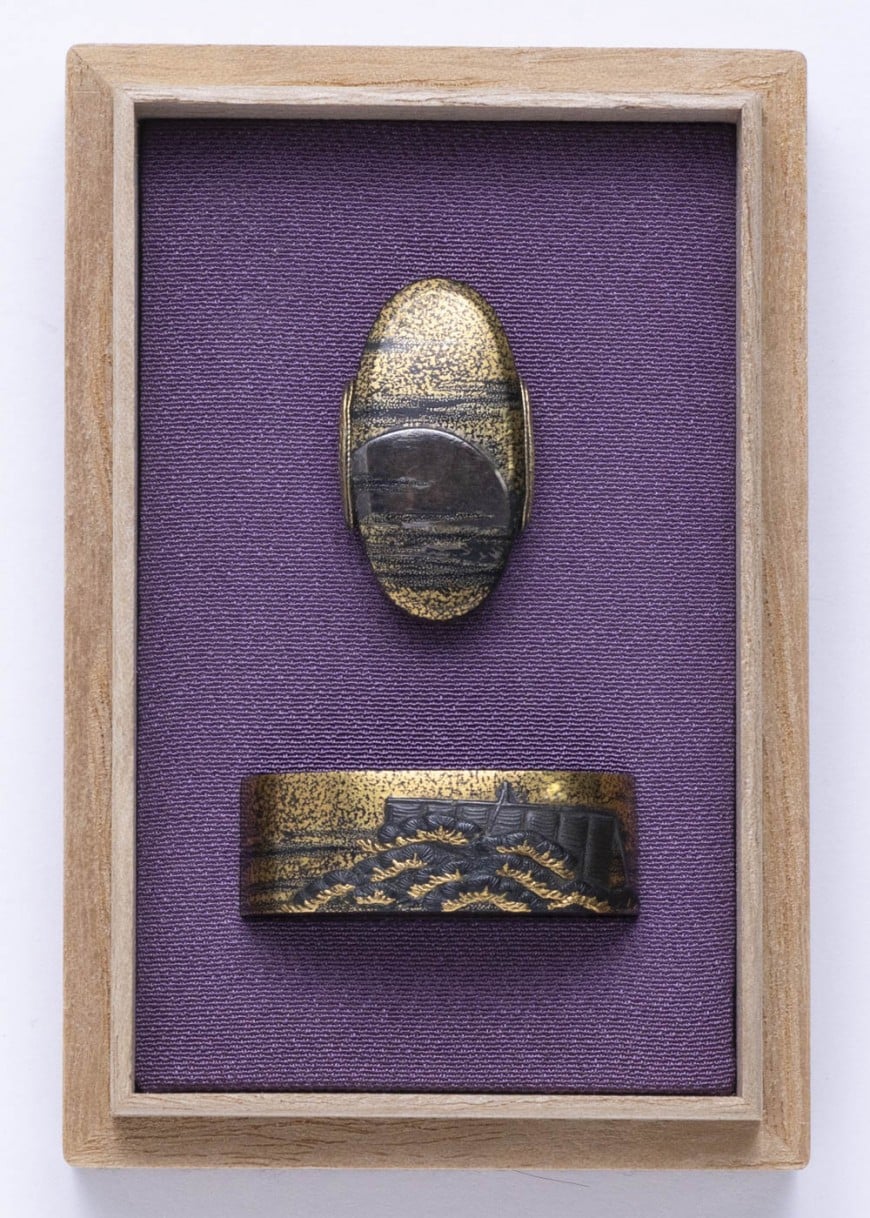
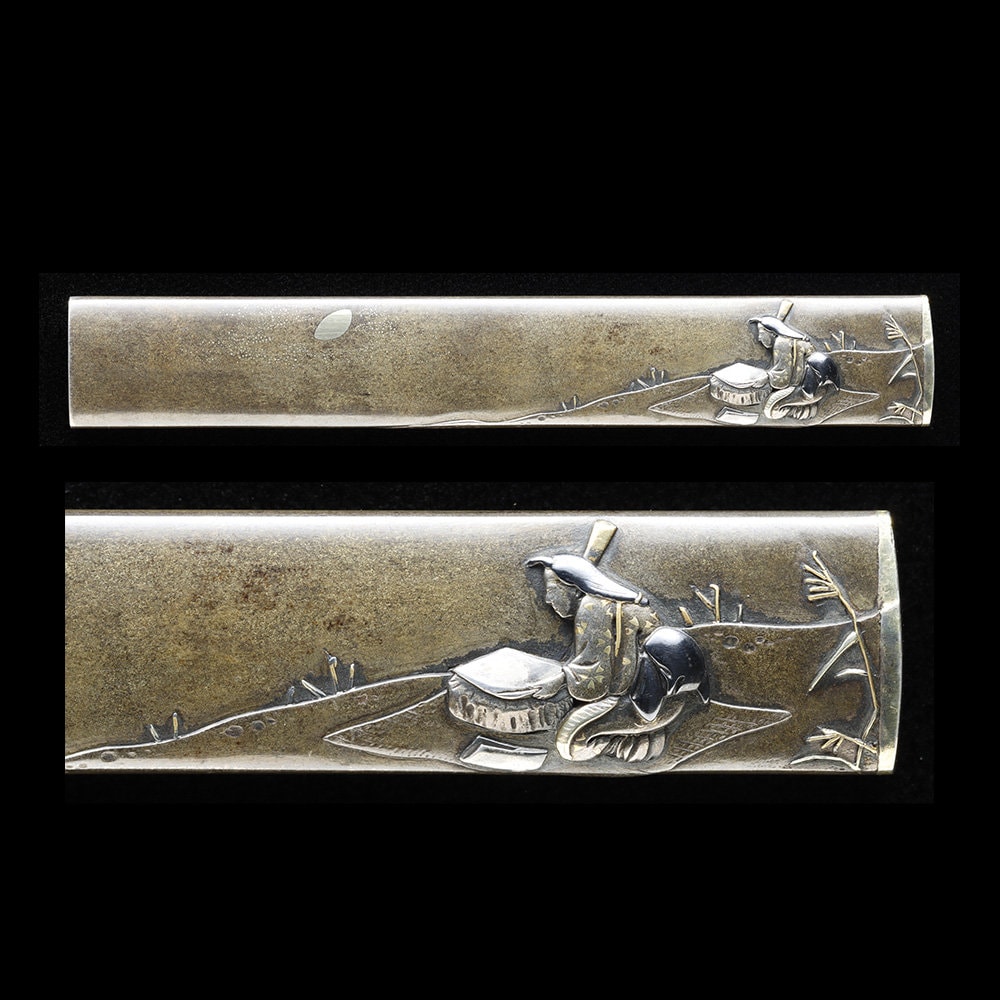
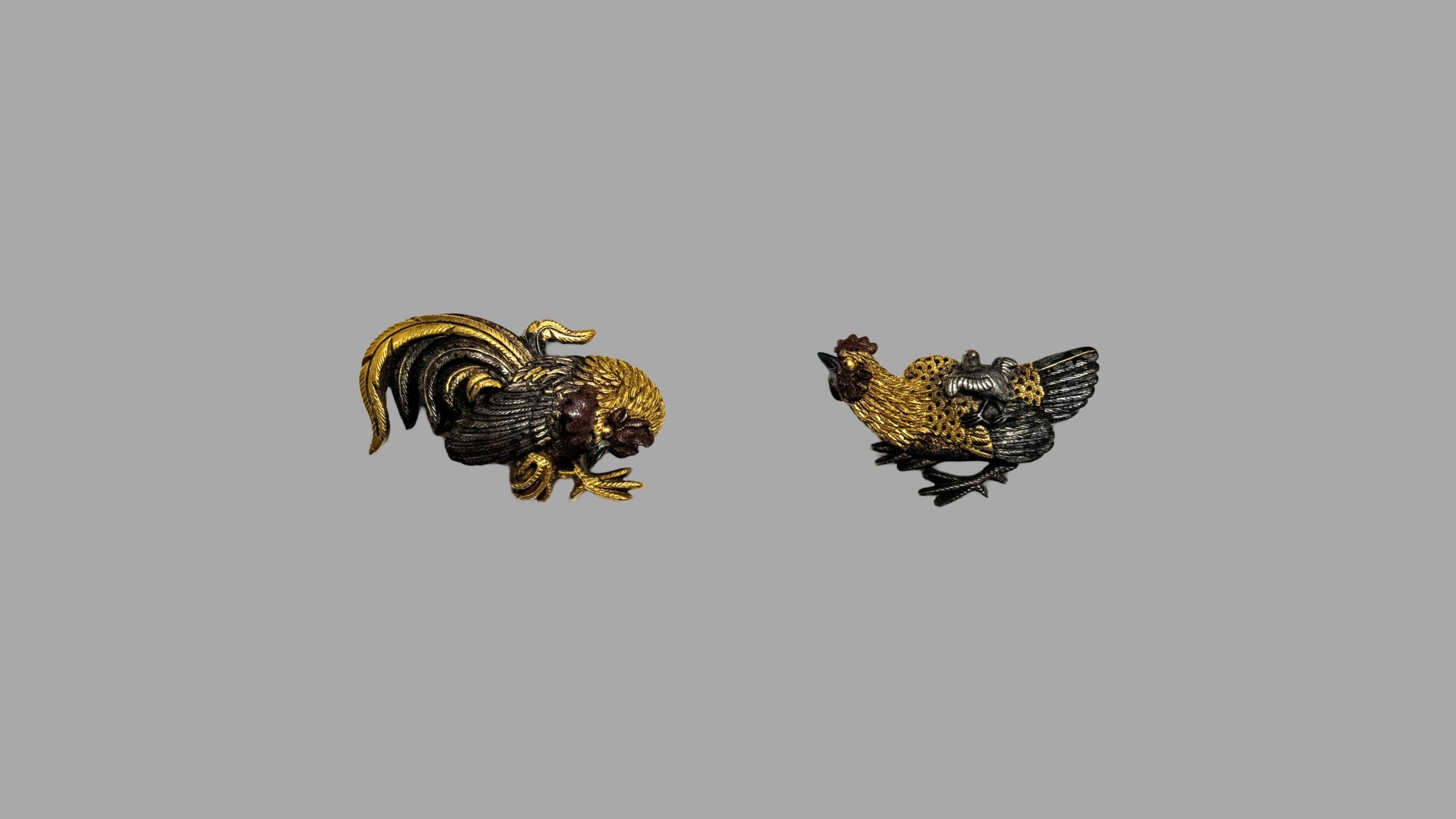
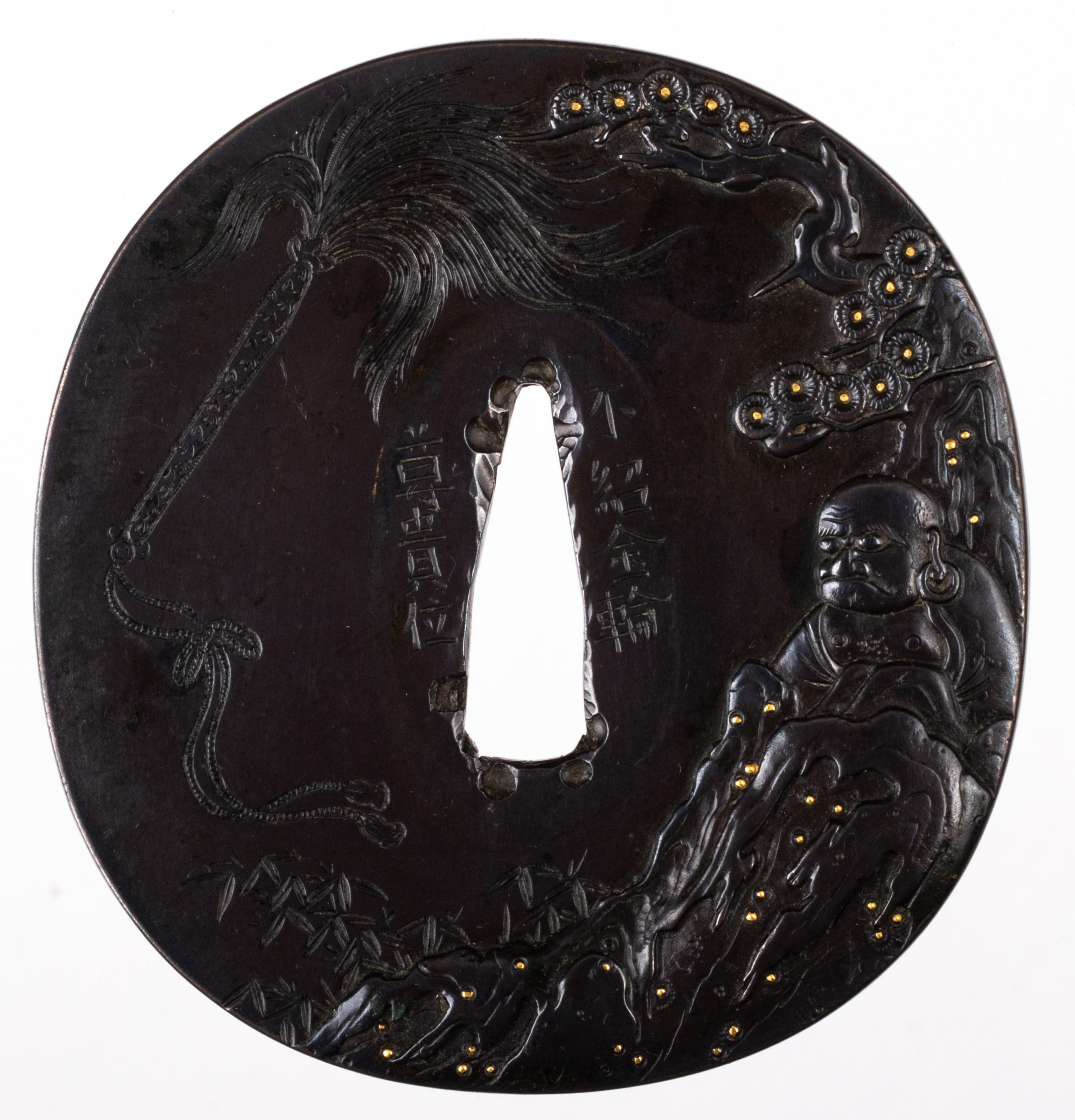
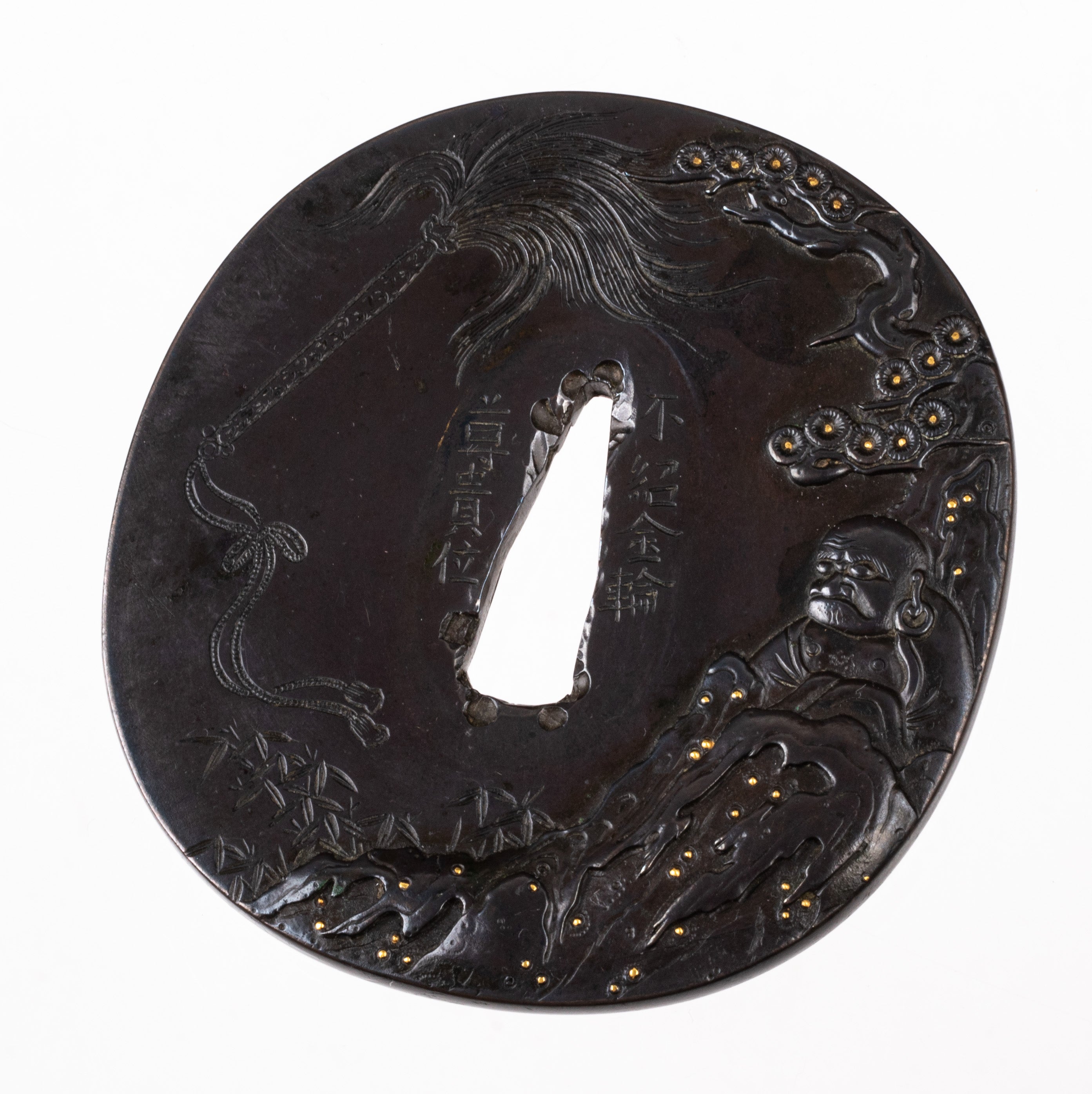
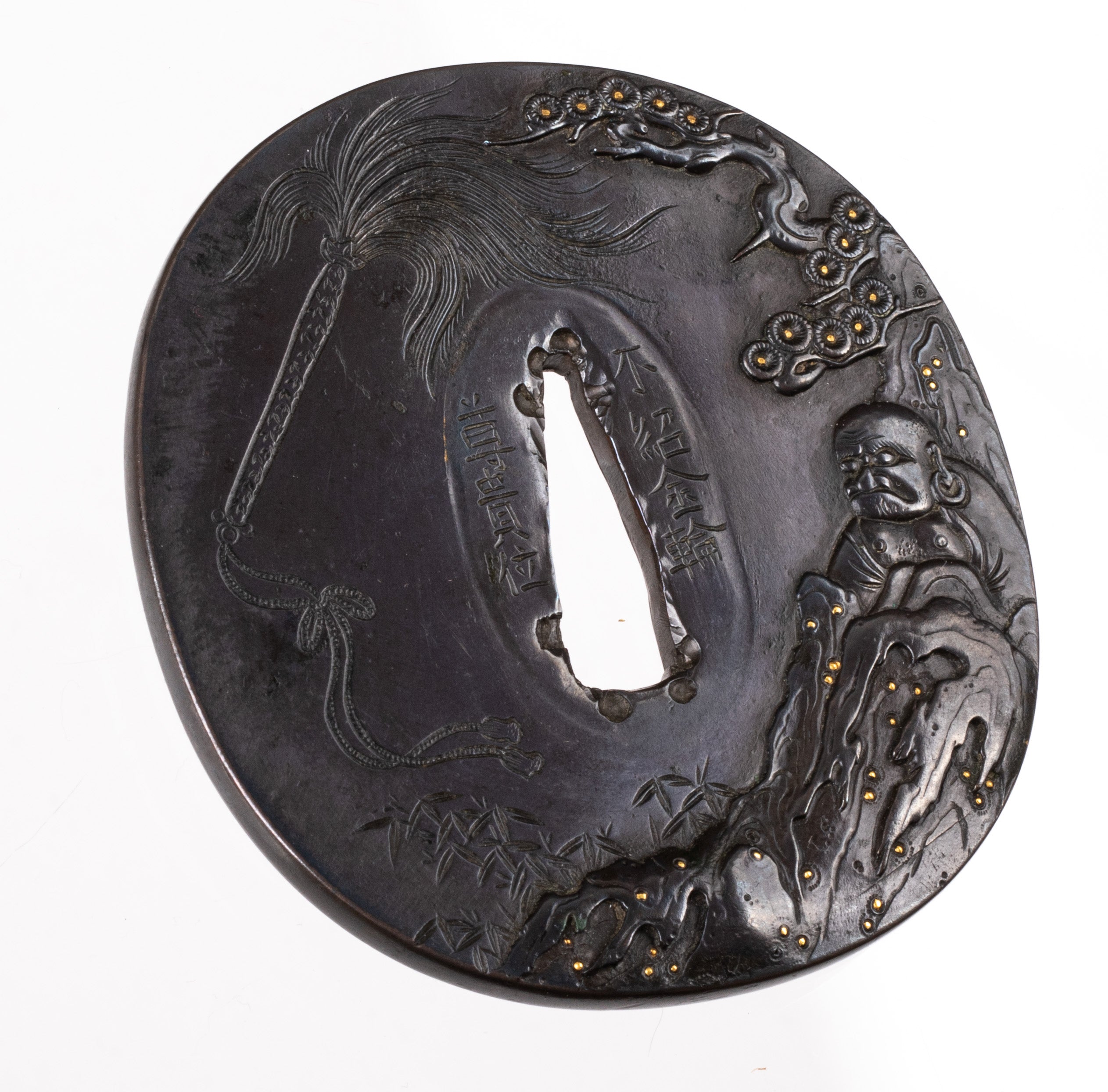
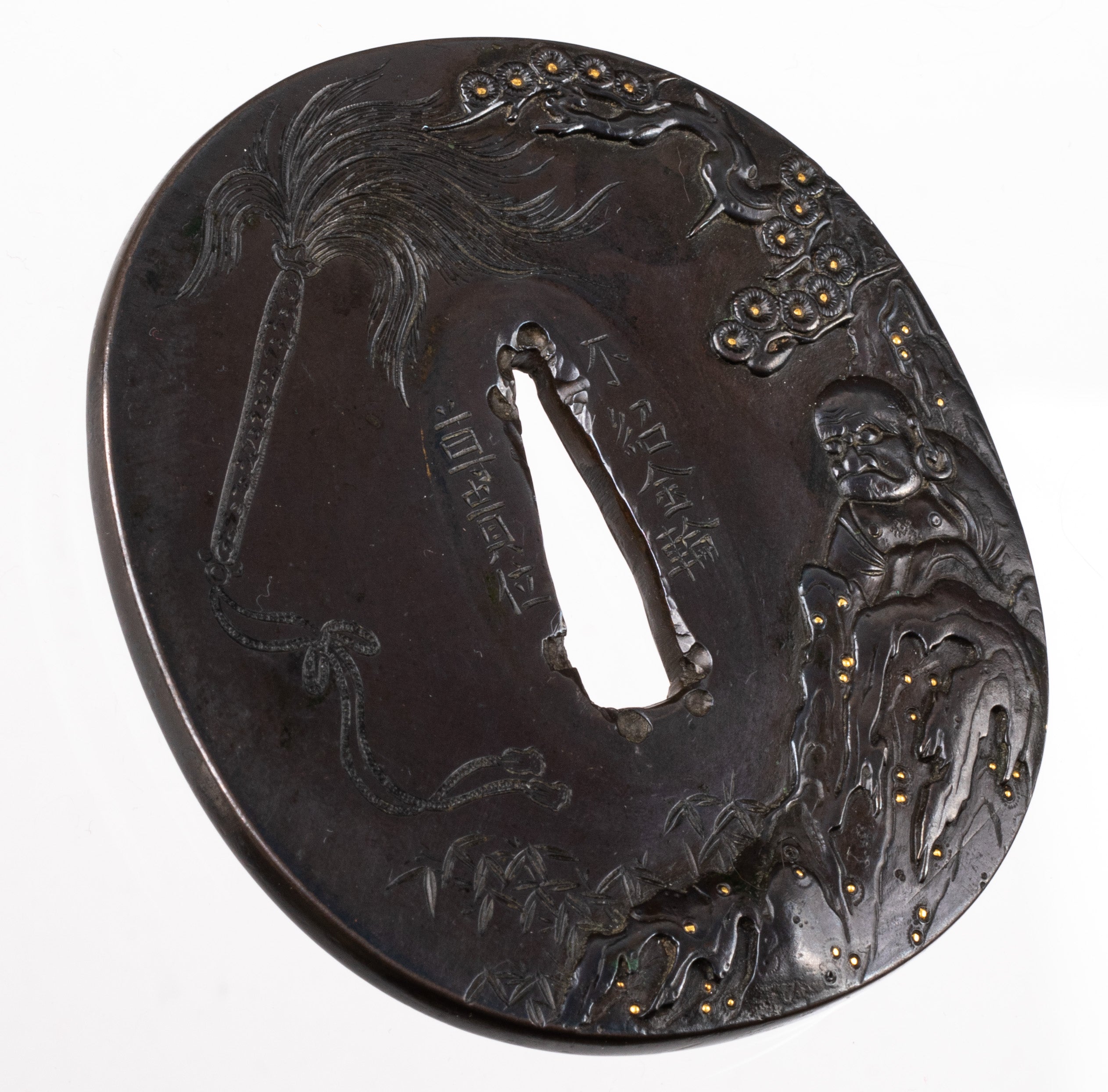
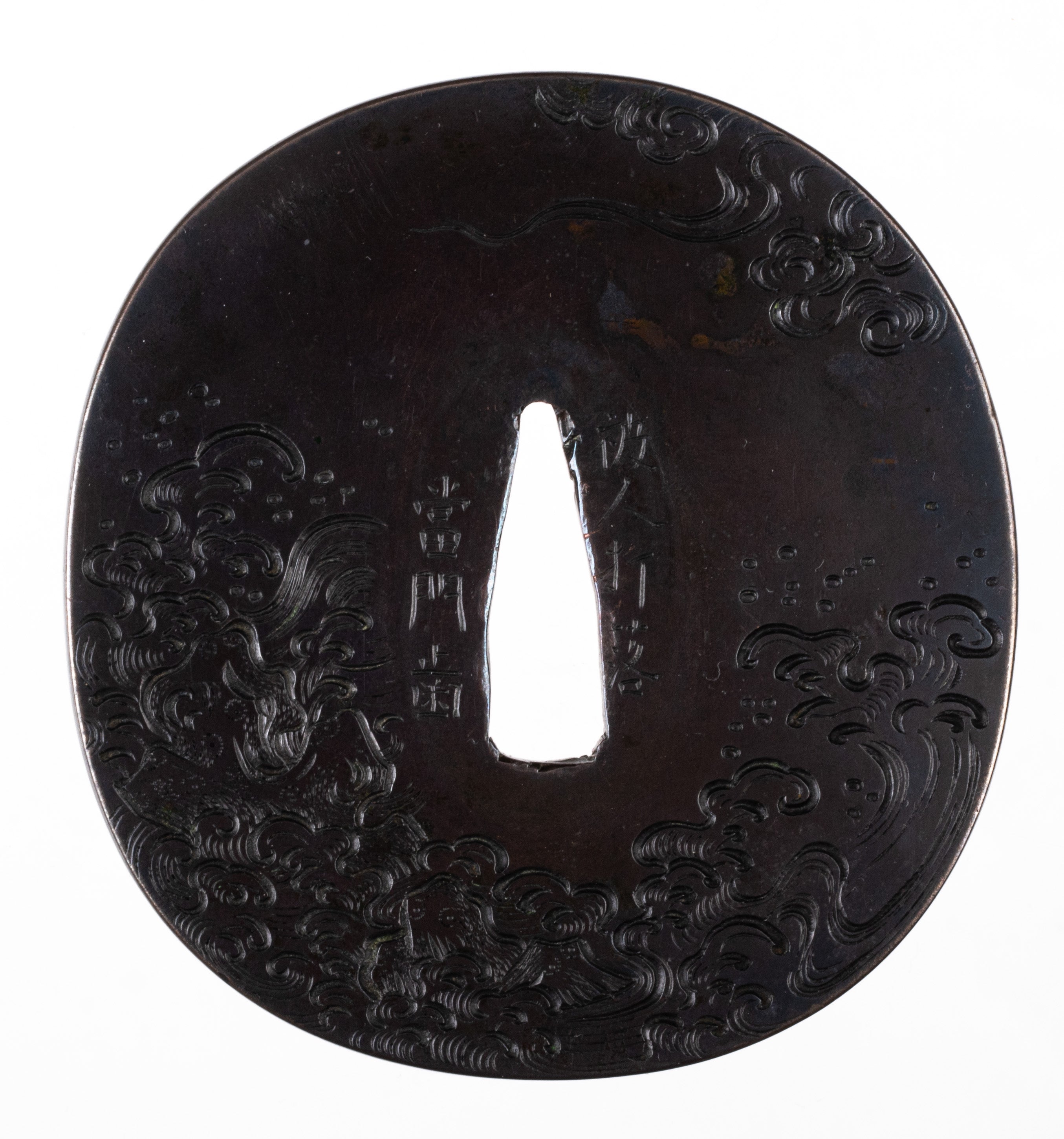
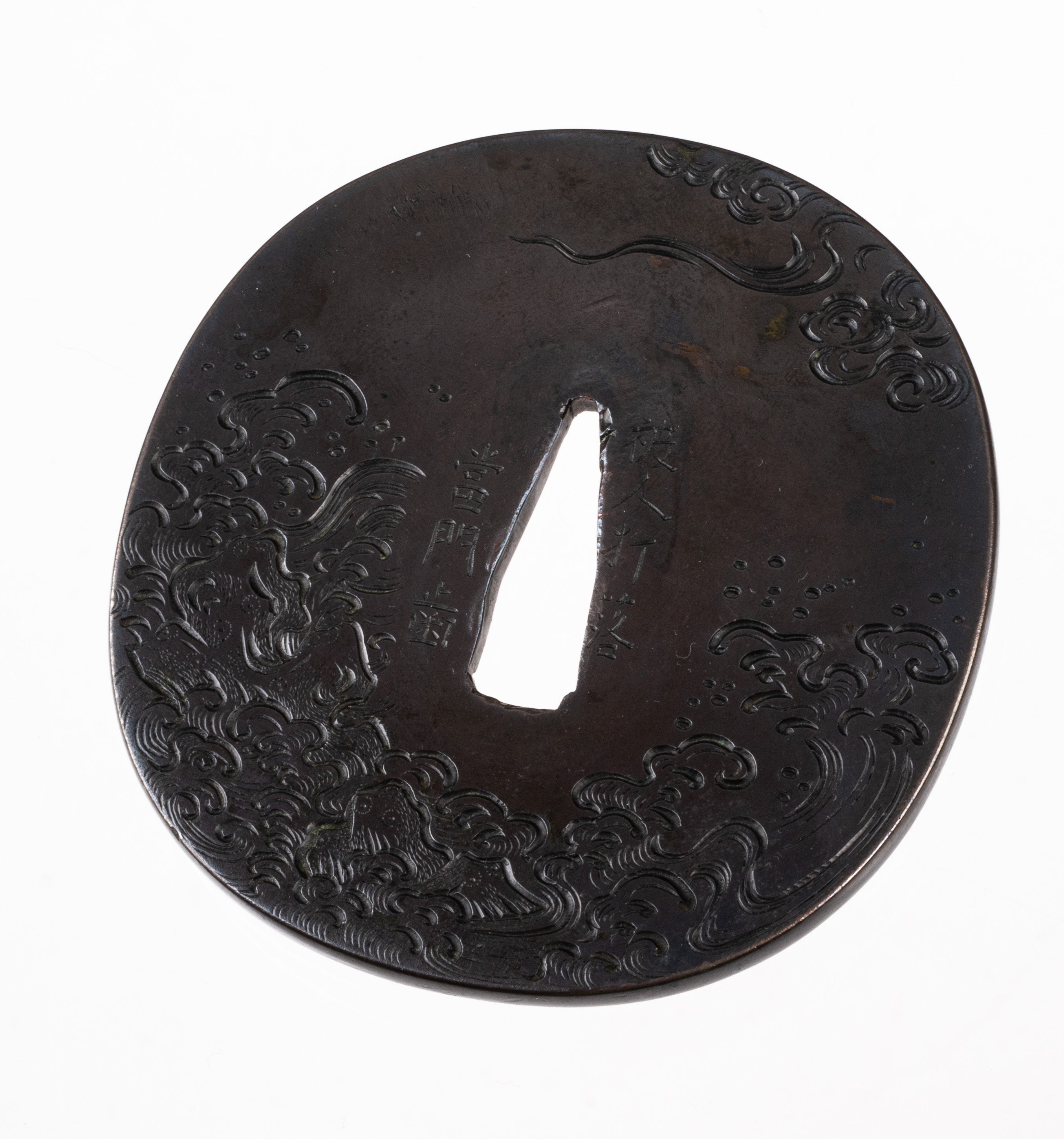
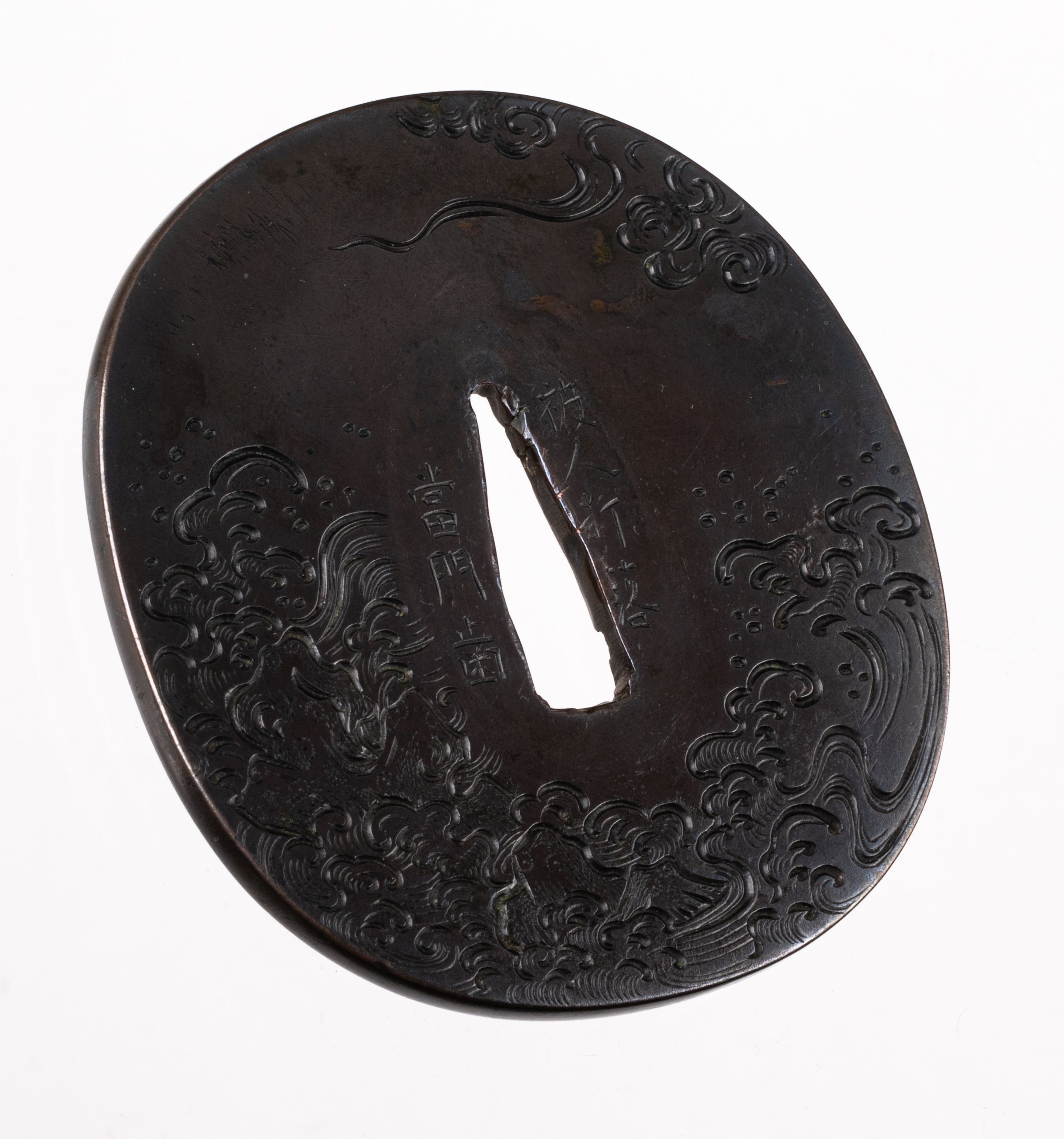
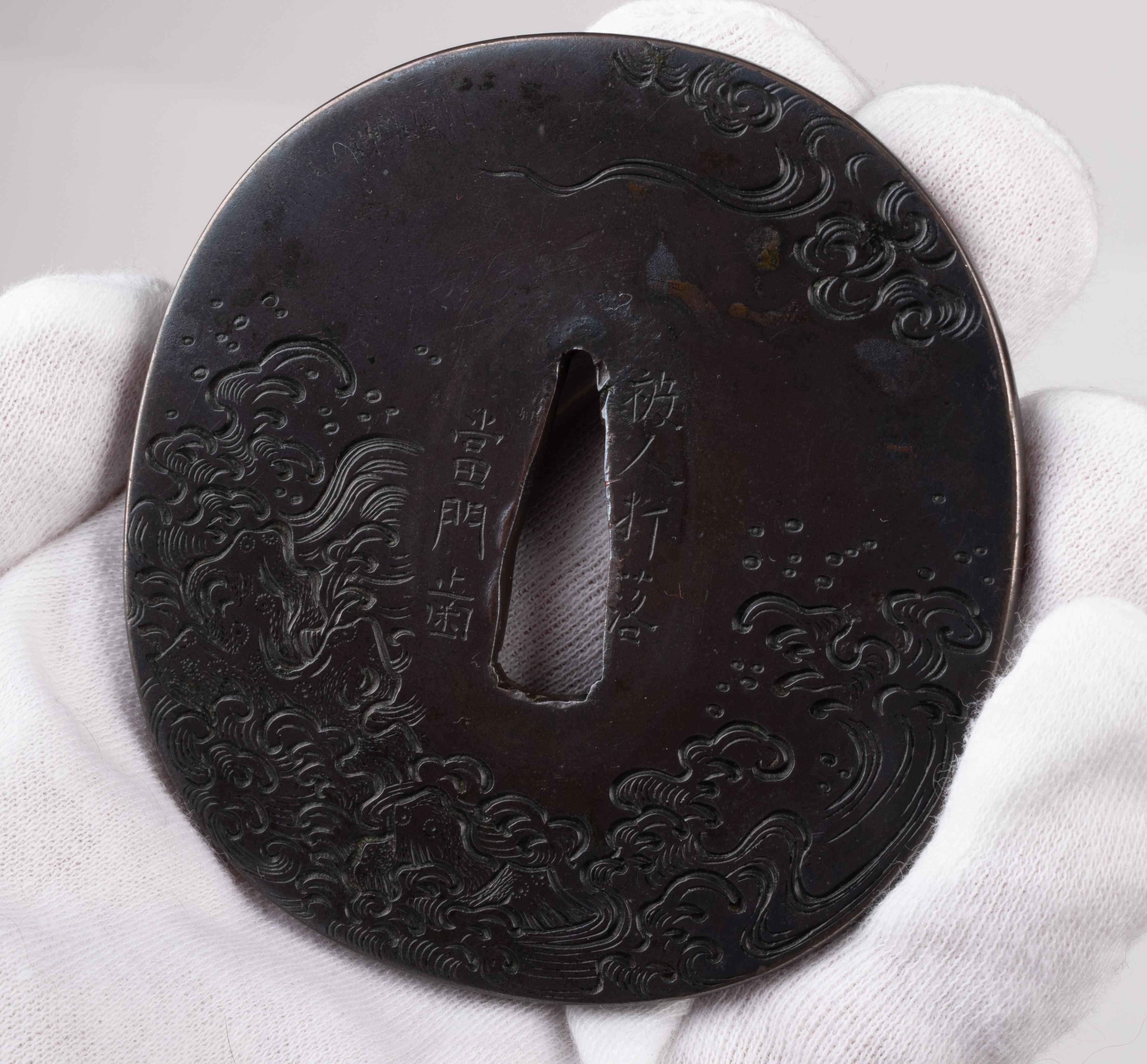
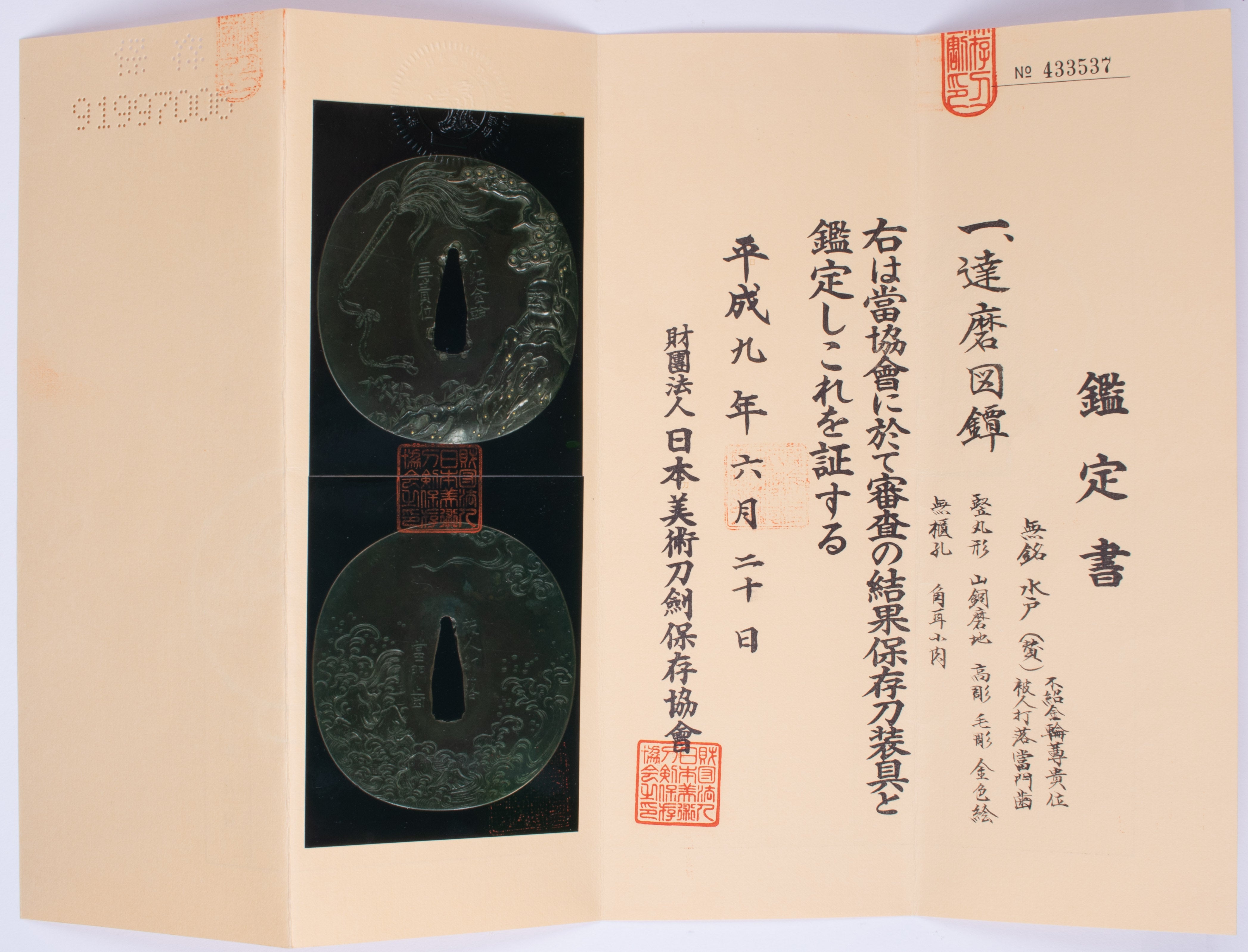
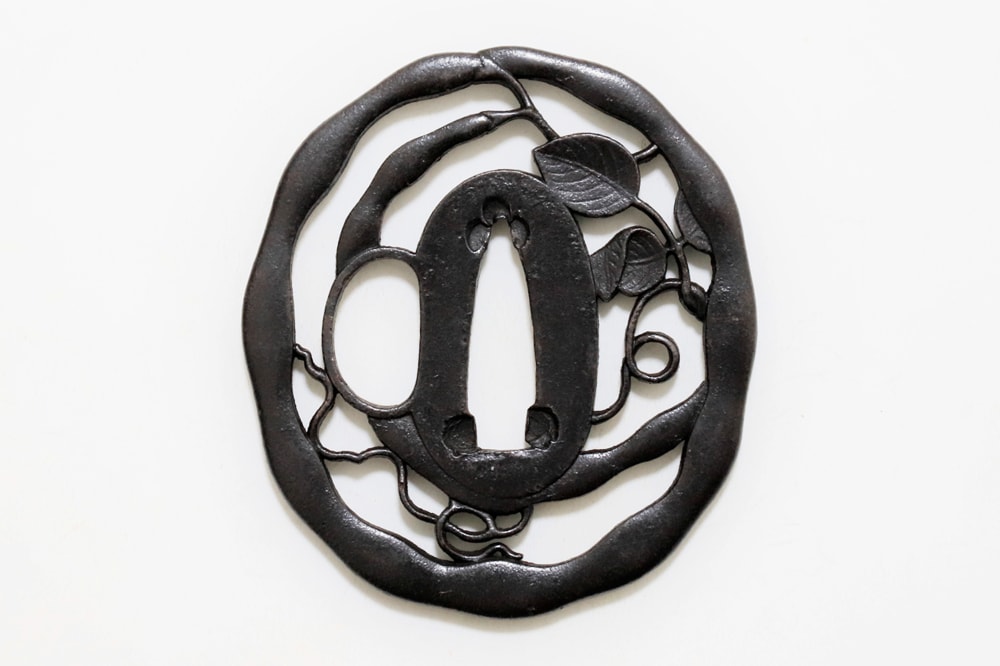
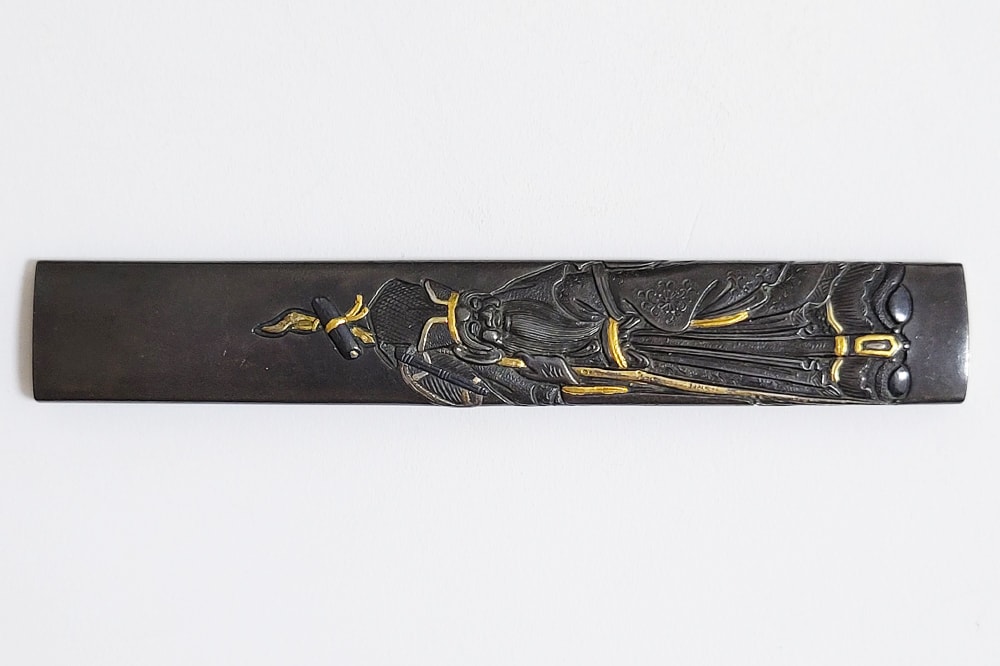
Mito School tsuba decorated with Daruma, a legendary Buddhist monk. The tsuba is made of polished yamagane with inlaid gold dots and features a carved Song dynasty poem on the seppa dai. It was made in the Edo period and comes with NBTHK Hozon Tosogu certification.
 NihontoWatch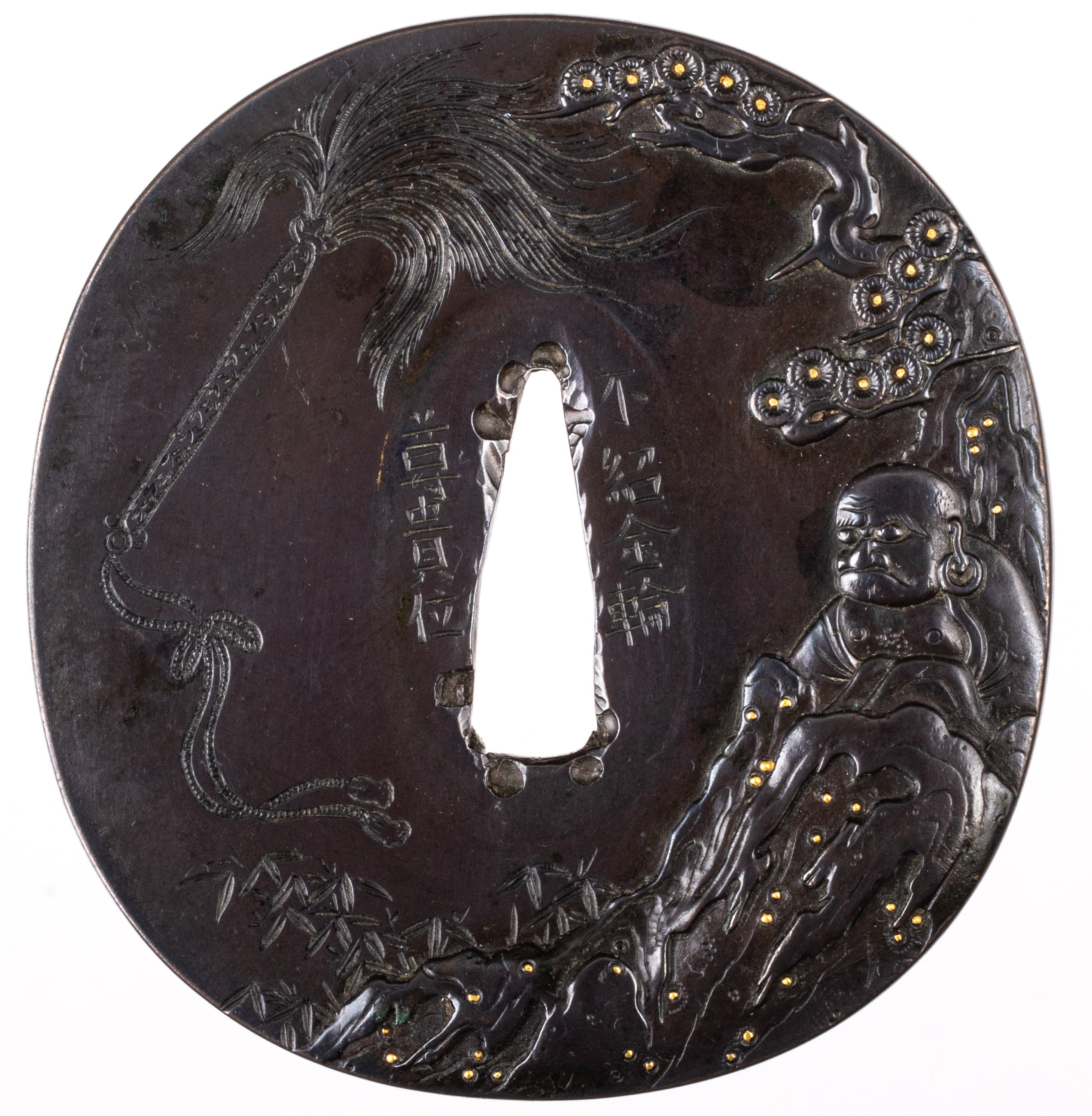
Mito School
Edo
Hitachi
Unsigned
Hozon (NBTHK)
Machibori · Hitachi
80 pieces on the market now
The Mito school of sword-fitting makers emerged as an officially sponsored tradition in the domains of the Tokugawa family's Mito branch, achieving particular prominence in the late Edo period. The school's lineage traces through Shinozaki Katsushige and his successors, who served as goyō horimonoshi (official engravers) to the domain. Unlike the privately patronized workshops of Edo and Kyoto, Mito metalworkers operated within a system of domain service, producing both presentation fittings for formal occasions and richly decorated works for commission. Learn more →
| Smith | Era | Designated |
|---|---|---|
| Katsuhira勝平 | 1804-1886 | 13 |
| Shomin勝珉 | 1844-1915 | 11 |
| Teikan貞幹 | — | 5 |
| Tomoyoshi友善 | 1716-c.1920 | 0 |
| Unno Bishu海野美秋 | — | 0 |
Certifies a genuine fitting worth preserving: a correct signature, or, if unsigned, an identifiable era and school, with recognized artistic and craft value.
The NBTHK (Nihon Bijutsu Tōken Hozon Kyōkai, the Society for the Preservation of Japanese Art Swords) is a public-interest incorporated foundation founded in 1948 and supervised by Japan’s Agency for Cultural Affairs (Bunkachō); it is based at the Japanese Sword Museum in Tokyo. Its expert panels physically examine each submitted work (shinsa) and issue a certificate (kanteishō) ranking it by artistic and historical merit. NBTHK papers are the most widely recognized standard of authentication for Japanese swords and fittings.
NBTHK official site30-day refund policy. Items must be returned in original condition and packaging; customized products are non-returnable. 2-week inspection window with full item refund (shipping costs non-refundable). Customer pays return shipping.
Mito School tsuba decorated with Daruma, a legendary Buddhist monk. The tsuba is made of polished yamagane with inlaid gold dots and features a carved Song dynasty poem on the seppa dai. It was made in the Edo period and comes with NBTHK Hozon Tosogu certification.
NihontoWatchMito School
Edo
Hitachi
Unsigned
Hozon (NBTHK)
Machibori · Hitachi
80 pieces on the market now
The Mito school of sword-fitting makers emerged as an officially sponsored tradition in the domains of the Tokugawa family's Mito branch, achieving particular prominence in the late Edo period. The school's lineage traces through Shinozaki Katsushige and his successors, who served as goyō horimonoshi (official engravers) to the domain. Unlike the privately patronized workshops of Edo and Kyoto, Mito metalworkers operated within a system of domain service, producing both presentation fittings for formal occasions and richly decorated works for commission. Learn more →
| Smith | Era | Designated |
|---|---|---|
| Katsuhira勝平 | 1804-1886 | 13 |
| Shomin勝珉 | 1844-1915 | 11 |
| Teikan貞幹 | — | 5 |
| Tomoyoshi友善 | 1716-c.1920 | 0 |
| Unno Bishu海野美秋 | — | 0 |
Certifies a genuine fitting worth preserving: a correct signature, or, if unsigned, an identifiable era and school, with recognized artistic and craft value.
The NBTHK (Nihon Bijutsu Tōken Hozon Kyōkai, the Society for the Preservation of Japanese Art Swords) is a public-interest incorporated foundation founded in 1948 and supervised by Japan’s Agency for Cultural Affairs (Bunkachō); it is based at the Japanese Sword Museum in Tokyo. Its expert panels physically examine each submitted work (shinsa) and issue a certificate (kanteishō) ranking it by artistic and historical merit. NBTHK papers are the most widely recognized standard of authentication for Japanese swords and fittings.
NBTHK official site30-day refund policy. Items must be returned in original condition and packaging; customized products are non-returnable. 2-week inspection window with full item refund (shipping costs non-refundable). Customer pays return shipping.

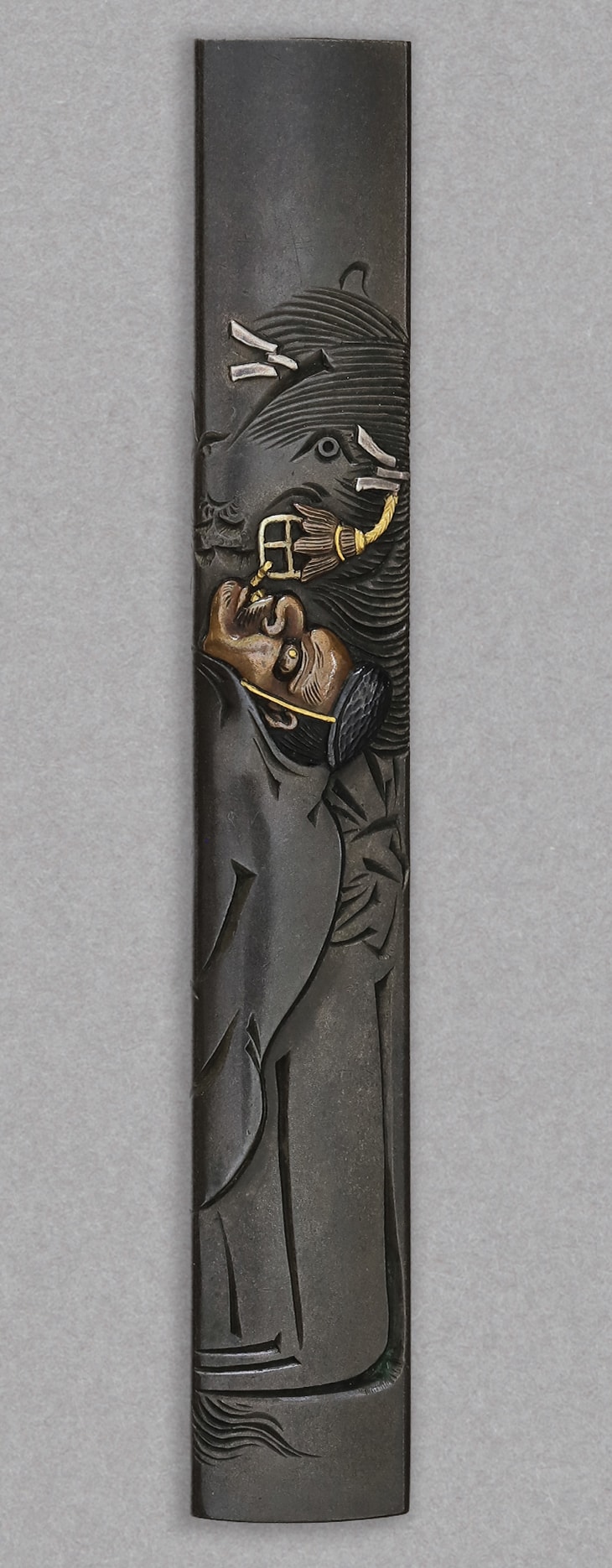
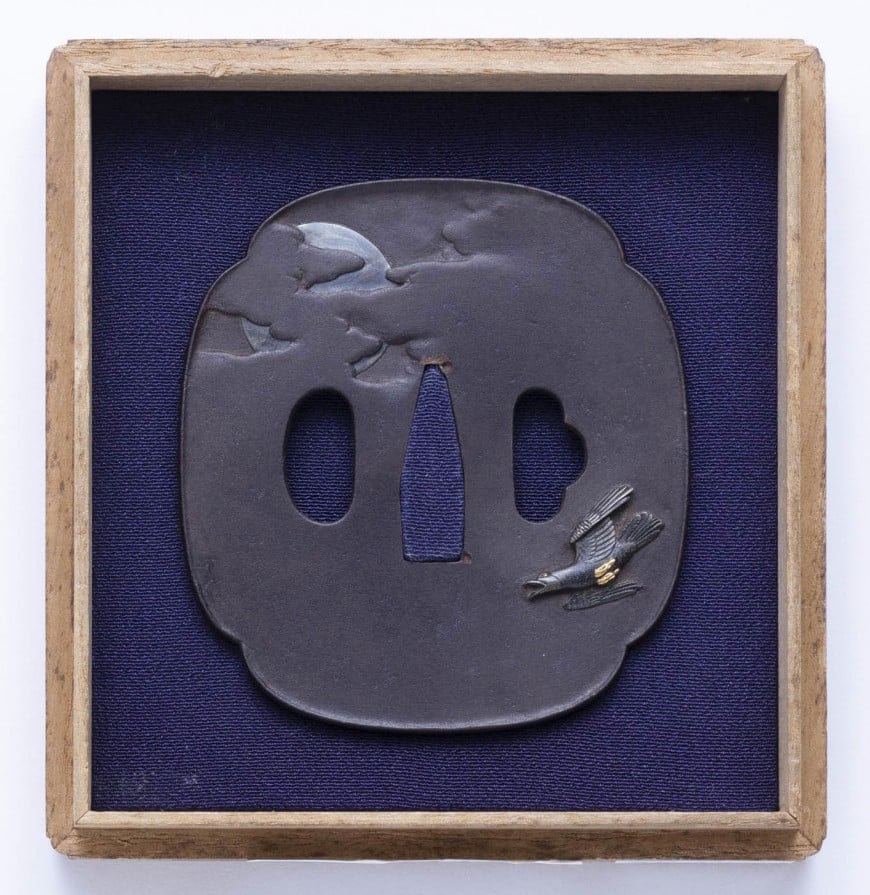
![Tsuba - Hozon - by Mito School - Mito Bakegitsune-zu Tsuba [N.B.T.H.K] Hozon Tousougu](/_next/image?url=https%3A%2F%2Fitbhfhyptogxcjbjfzwx.supabase.co%2Fstorage%2Fv1%2Fobject%2Fpublic%2Flisting-images%2Fworld-seiyudo%2FL32716%2F00.jpg&w=2560&q=90)