The Haitōrei edict of 1876 ended sword wearing and nearly ended the craft itself. Military demand and imperial patronage kept a remnant alive, and in 1906 Gassan Sadakazu and Miyamoto Kanenori were named Artists to the Imperial Household.
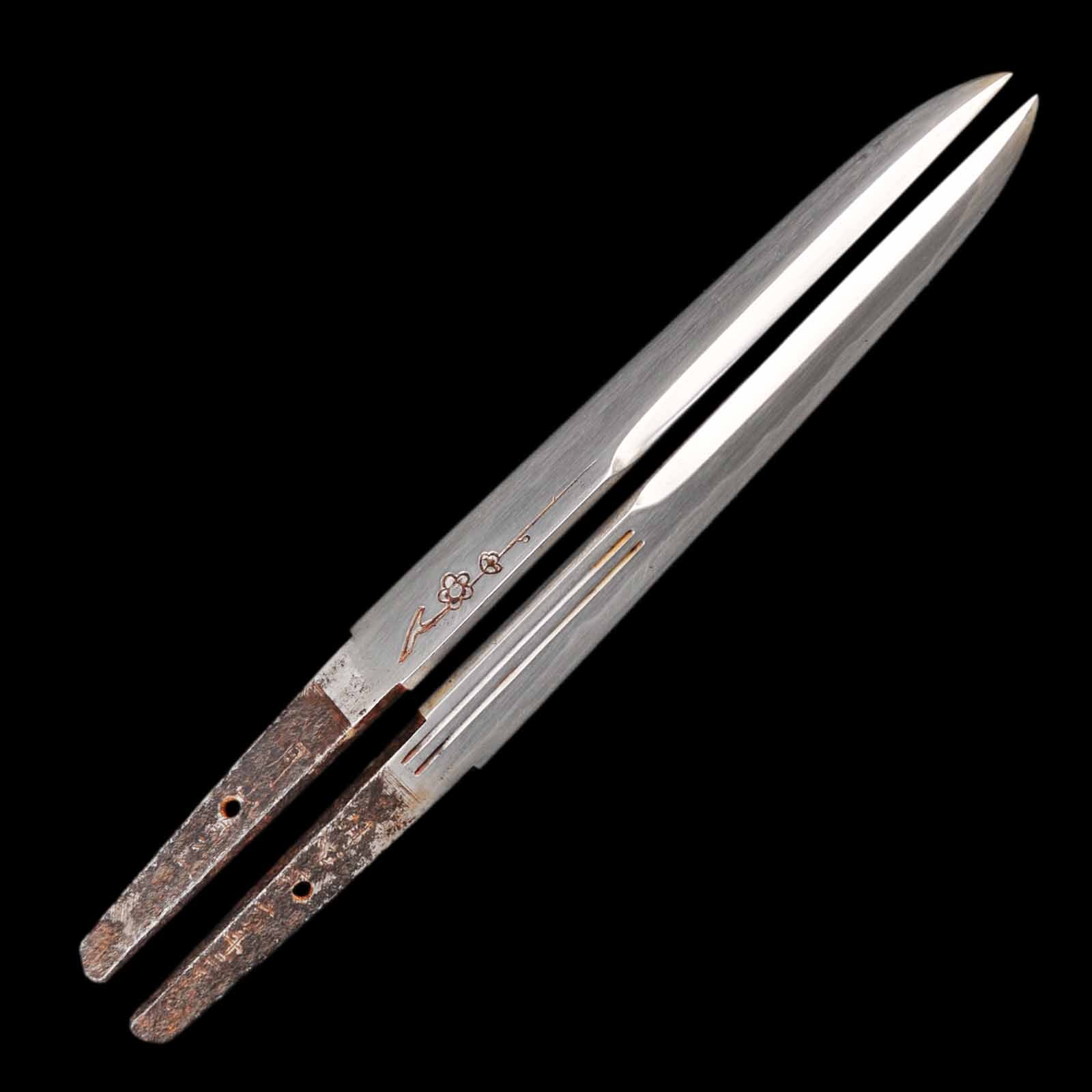
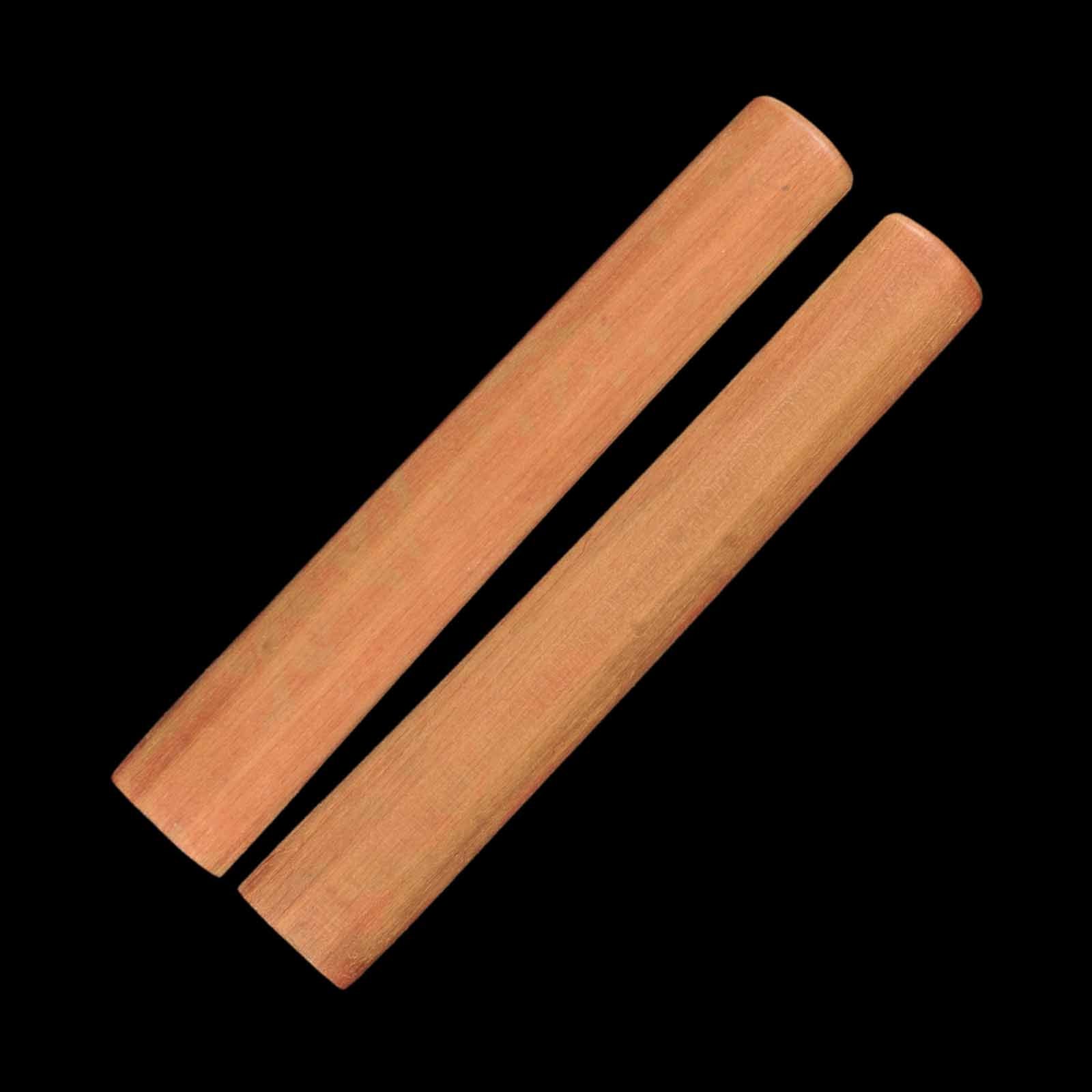
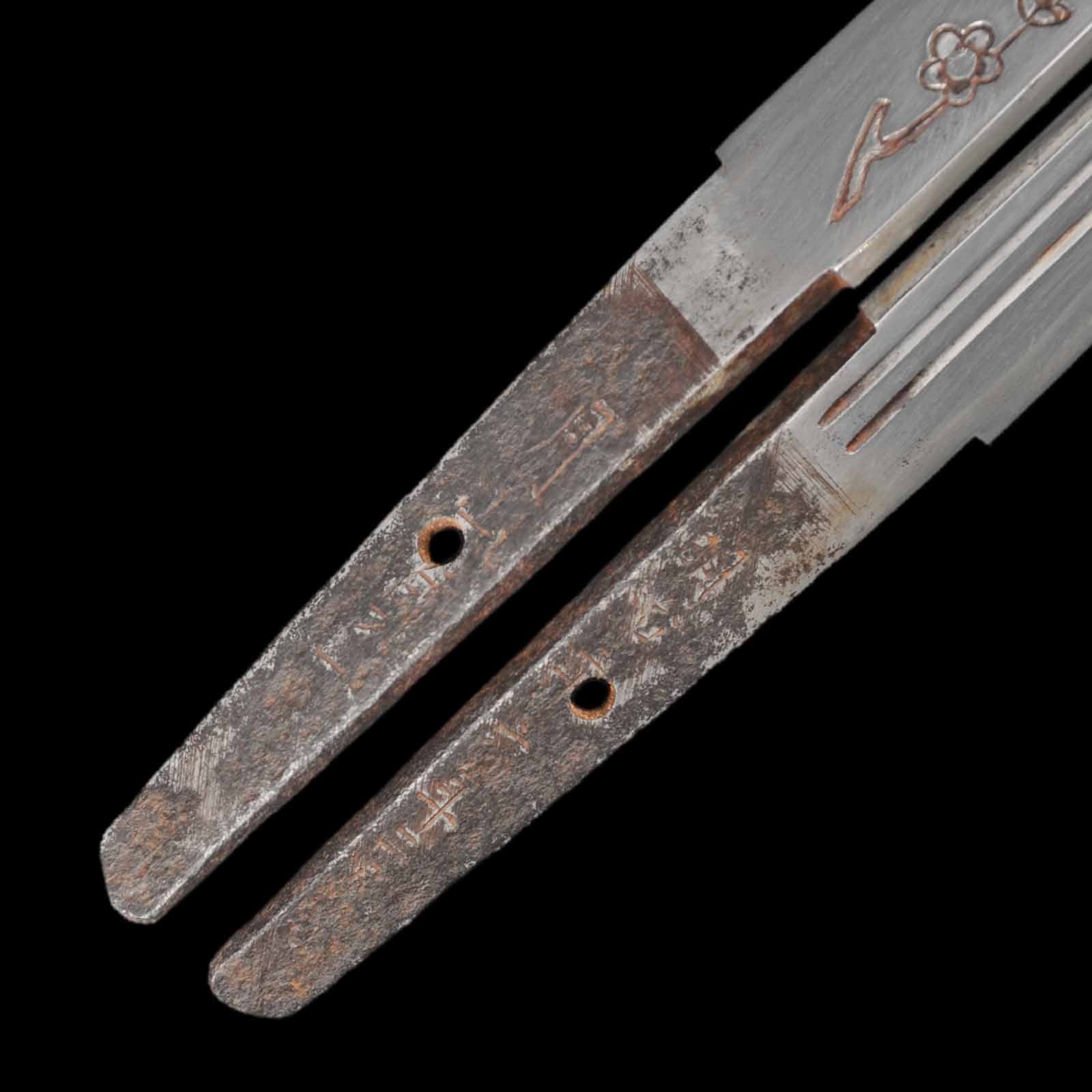
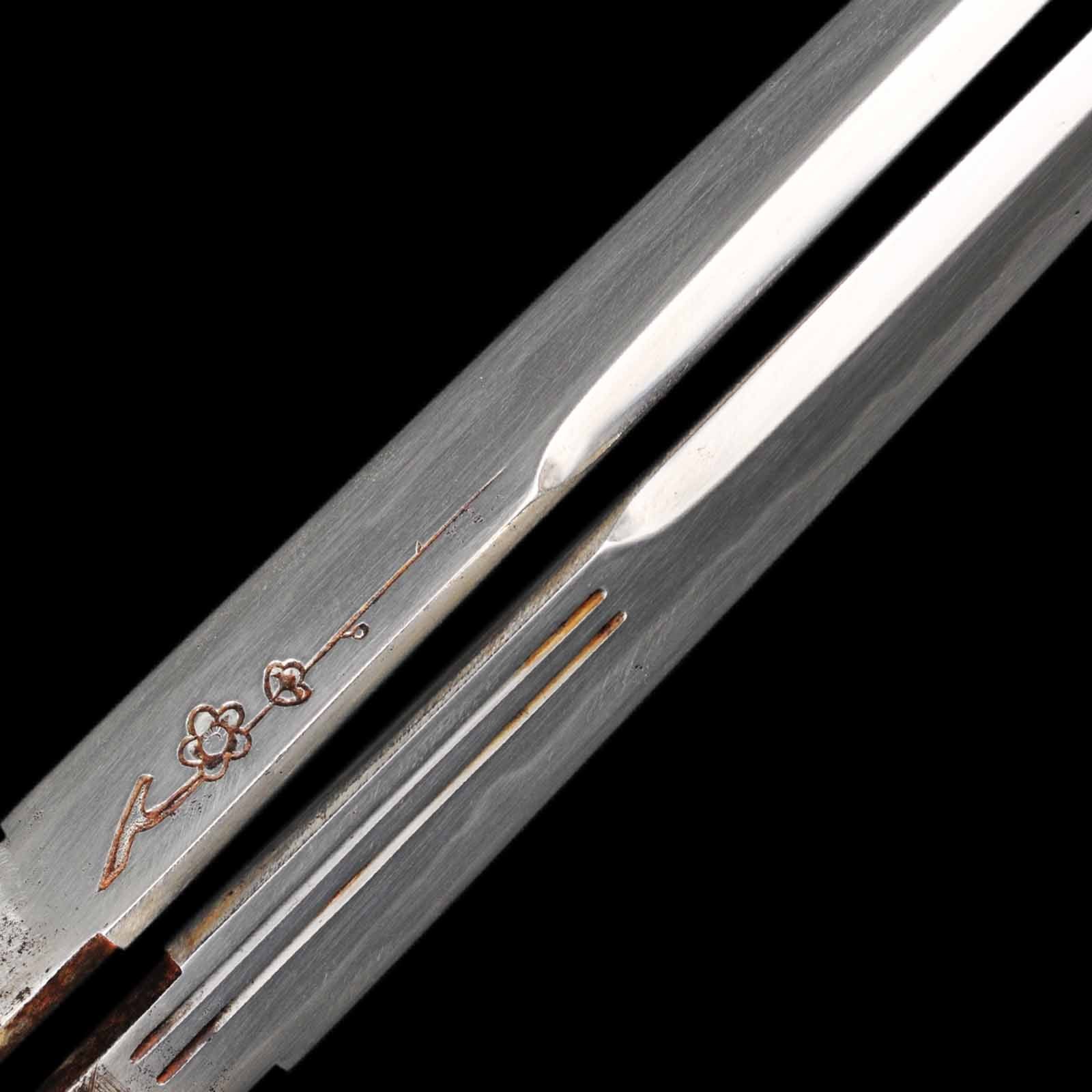
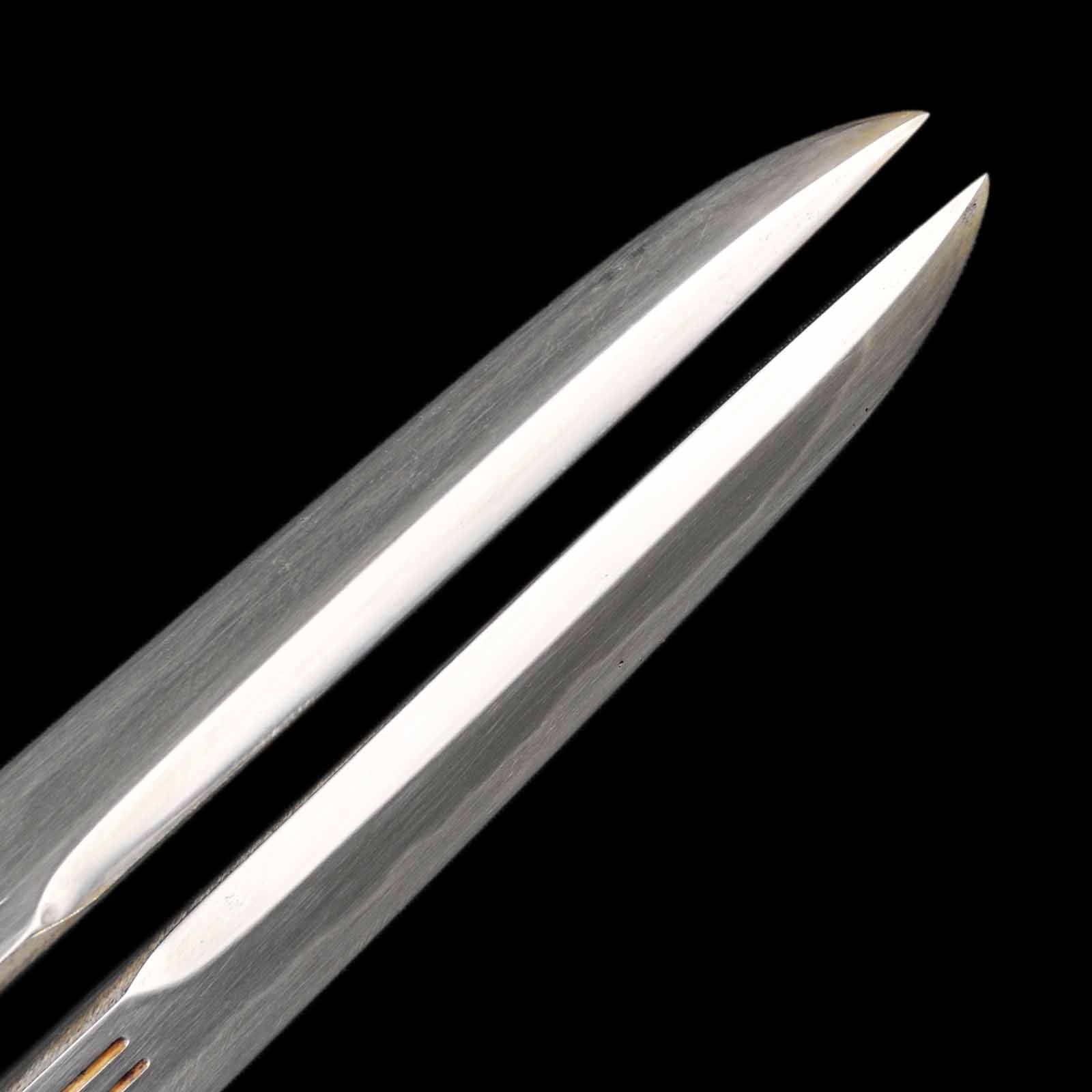
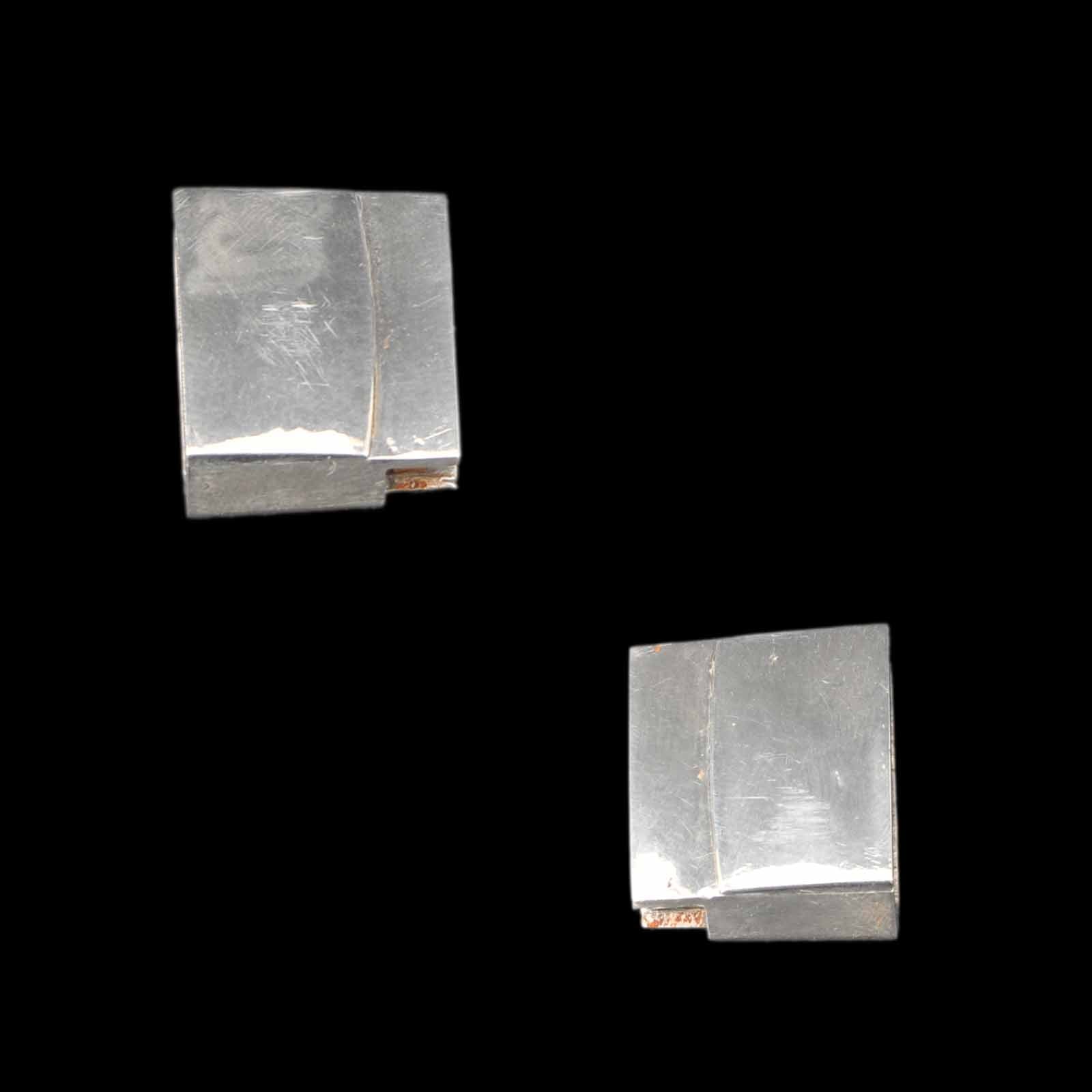
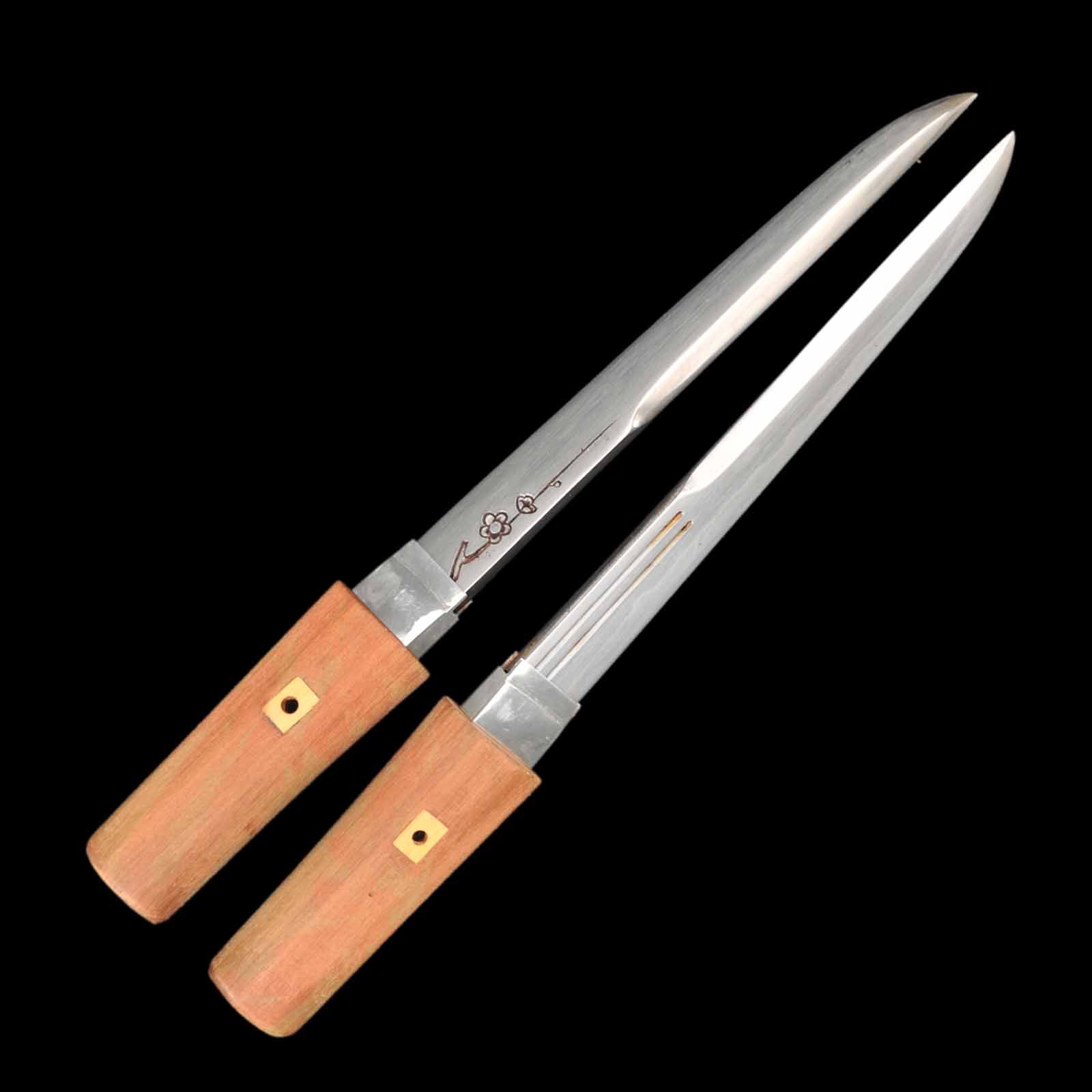
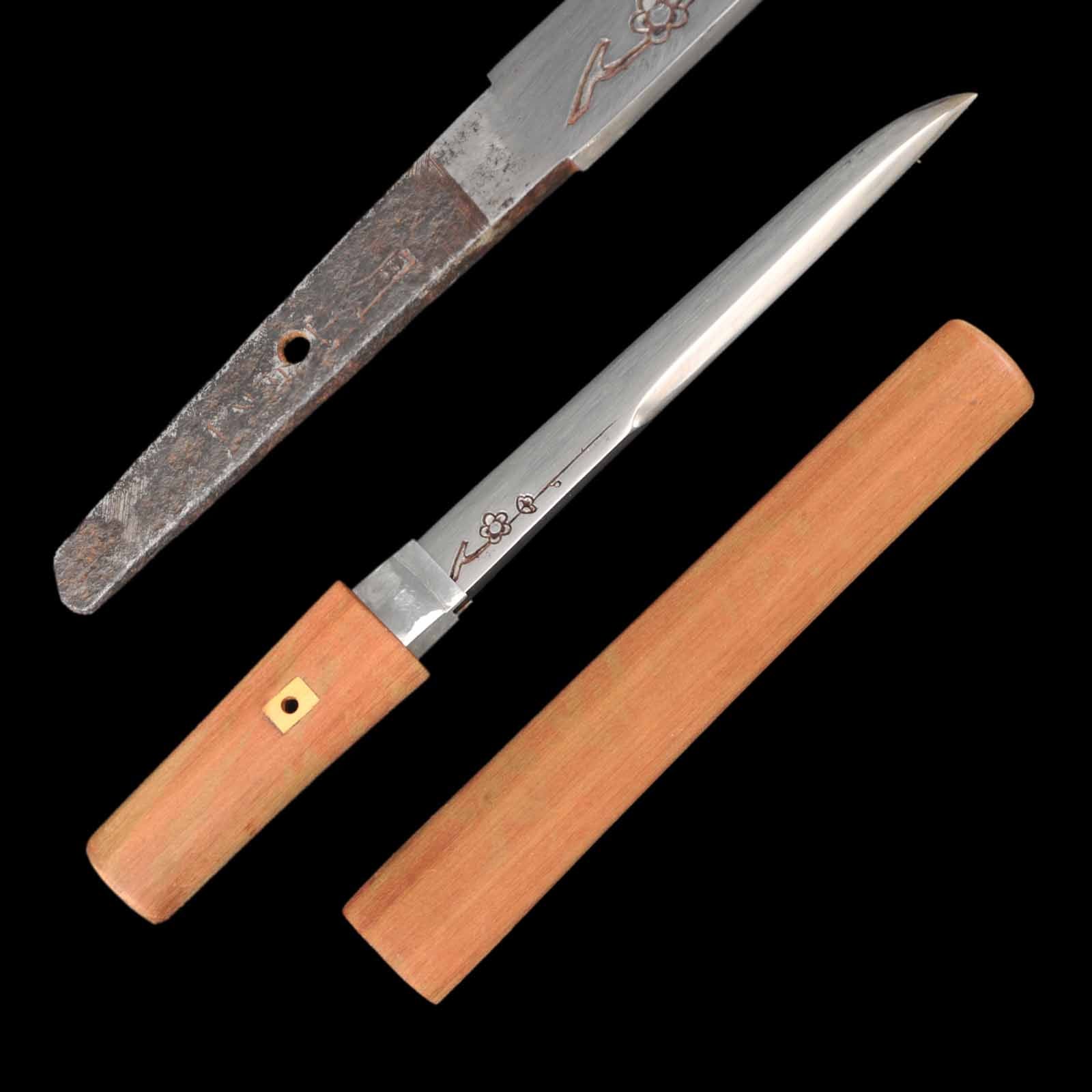
Antique Japanese Kaiken Tantō, signed Gassan — reads Sadakazu — early Meiji period Gassan school · dated early Meiji era · kanmuri-otoshi form with engraving on both faces This is a signed kaiken — a small tantō of the kind traditionally carried for personal defense — and a genuine work of the Gassan school , dated to the early Meiji period. The tang is signed on the front (omote) Gassan ...ichi (月山□一) — the middle character is worn on the registration papers, but on the blade itself it reads clearly as Sadakazu (貞一). The reverse carries an early Meiji-era date (明治...年二...), placing the blade in the 1870s–1880s. Read as Gassan Sadakazu , the signature is that of the greatest Gassan master of the Meiji period — the first-generation Sadakazu (1836–1918), Imperial Household swordsmith and Teishitsu Gigeiin (Imperial Court Artist), celebrated for his blade engraving and for reviving the school's ayasugi grain. As this blade is offered without modern shinsa papers, we present the signature as it reads rather than as an attribution; formal authentication is left to the buyer and the certifying bodies. What is beyond question is that this is a genuine, early-Meiji-dated Gassan-school kaiken, engraved on both faces. The Gassan school The Gassan tradition is one of the oldest in Japan, tracing back some eight centuries to the smiths who worked at the foot of the sacred Mt. Gassan in Dewa province. The school is famous above all for ayasugi-hada , a distinctive wave-like grain, but its Meiji-era smiths — trained across the five classical traditions — also worked in other styles. Nearly lost by the late Muromachi period, the Gassan line was revived in the 19th century by Gassan Sadayoshi and carried to new heights by his heir, the first-generation Sadakazu, whose work stands at the summit of Meiji-era swordmaking, prized for its superb blade engraving. Form, workmanship and condition The blade is made in kanmuri-otoshi-zukuri — an elegant, archaic form in which the back (mune) is be
Offered by Tozando
This piece has sold
Get an email when a new Gassan Sadakazu piece hits the market.


Shinshinto · Settsu · around 1864-1865
Fujishiro Jo saku · Tōken Taikan top 23%
7 pieces on the market now
Where Sadakazu stands among comparable artisans: across all of nihontō, and within tradition, era, and period. The tiers (Foremost · Leading · Major · Notable) weigh official designations from the NBTHK and Japan's Agency for Cultural Affairs, together with historical honors of lasting repute such as the Sansaku and Meibutsu-chō.
Select a lens to see how it's measured.
Shinshinto · Settsu
28 pieces on the market now
| Smith | Era | Designated |
|---|---|---|
| Sadaharu貞晴 | 1865-1868 | 0 |
| Sadayoshi貞吉 | 1926-1989 | 0 |
| Yoshiaki吉明 | 1844-1848 | 0 |
| Naonobu直信 | 1854-1860 | 0 |
| Sadayoshi貞吉 | 1830-1863 | 0 |
Meiji: survival after the edict
The Haitōrei edict of 1876 ended sword wearing and nearly ended the craft itself. Military demand and imperial patronage kept a remnant alive, and in 1906 Gassan Sadakazu and Miyamoto Kanenori were named Artists to the Imperial Household.
As a general rule, returns/exchanges are not accepted on Japanese sword orders unless damaged upon delivery. Other items: returns/exchanges accepted within 7 days of delivery. Cancellation for personal reasons incurs a 30% restocking fee (70% refunded). Return shipping must be prepaid and insured by the buyer; shipping/handling fees are non-refundable. Contact katana@tozando.co.jp to initiate a return.