The Haitōrei edict of 1876 ended sword wearing and nearly ended the craft itself. Military demand and imperial patronage kept a remnant alive, and in 1906 Gassan Sadakazu and Miyamoto Kanenori were named Artists to the Imperial Household.
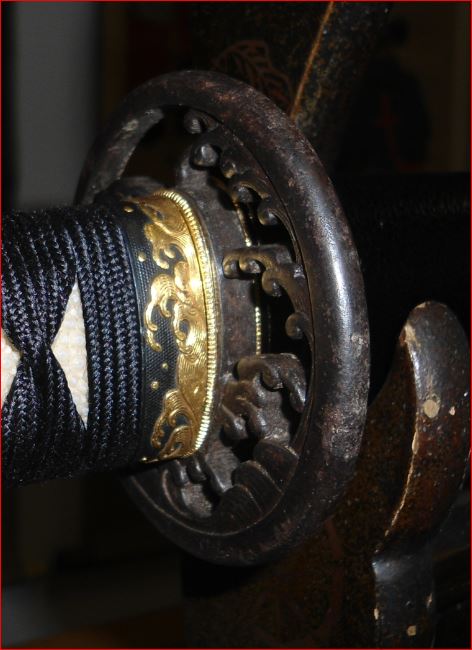
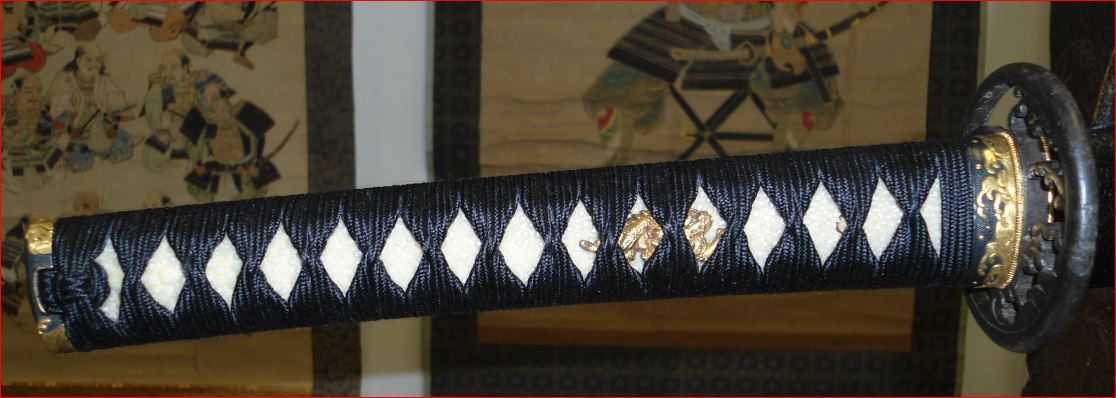
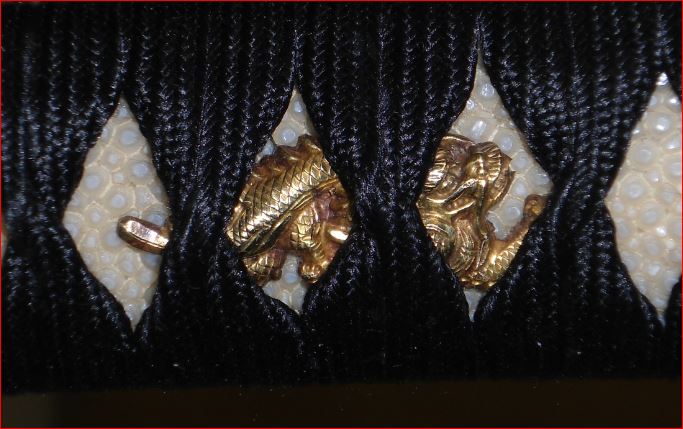
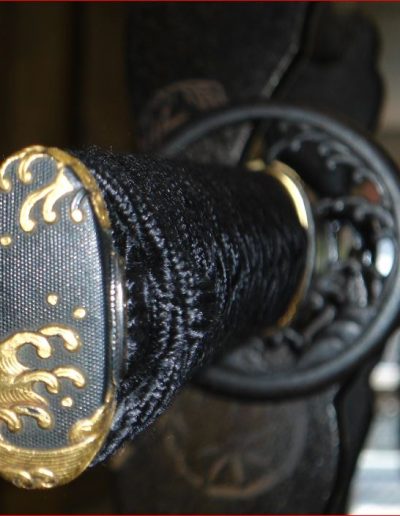
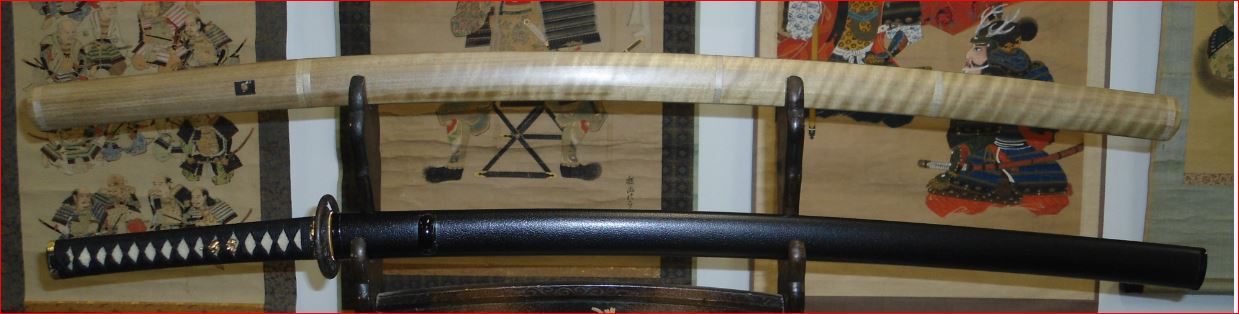
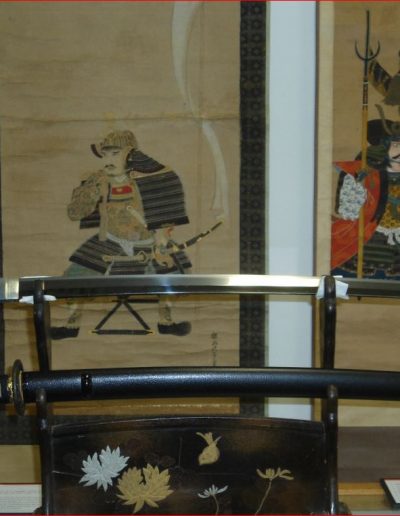
Historically important Katana from an interesting time in the final years of the Samurai describing the attack on the Imperial Palace in Kyoto on the 18th of August 1863,This Katana is Made by Hori Minamoto Sadamitsu from Kyôto to Commemorate this Historic Battle. Sadamitsu was a student of Gassan Sadakazu. Mounted in Shirasaya with Koshirae with Wave motif Tsuba ,Fuchi Kashira are also wave motif in gold set in a fine Nanako ground. Gold Dragon Menuki. Inscription Reads I was part of the army that was raised in awareness of the Imperial Court against the various Lords [daimyô]. On the 18th day of the eighth month Bunkyû three (1863), year of the boar, we were able to overcome the enemy at the Sakaimachi Gate after we fought there for three days with all our might and until our weapons were smashed. I gave the money that I thankfully received as a reward [for my effort in this battle] to Sadamitsu to forge me a sword that should be handed down within successive generations [of my family]. Niibo Toshikata. 平安城堀井源貞光造之 文久三亥八月十八日朝延有戒心微諸侯之兵與吾輩共界街郭門勤◯争三日各得物携碎肺肝斬退治天賞之贈金予是金與貞光江鍛釼故子孫寿伝之新穂利堅 SADAMITSU (貞光), Keiō (慶応, 1865-1868), Yamashiro – “Heianjō-jū Horii Ryū´unsai Minamoto Sadamitsu saku” (平安城住堀井龍雲斎源貞光作), student of Gassan Sadakazu (月山貞一), gō Ryū´unsai (龍雲斎), relative many katana but hardly any wakizashi or tantō are extant by him, katana have mostly a wide mihaba, an elongated kissaki, and an iori or mitsu-mune,
Offered by Nihonto Australia
The listing mentions papers from the NBTHK that aren’t in our records yet. Current NBTHK and NTHK shinsa papers are the independent check we rely on, so it’s worth asking the dealer for a clear photo of the certificate. — Hoshi
7 on the market


Shinshinto · Settsu · around 1864-1865
Fujishiro Jo saku · Tōken Taikan top 23%
7 pieces on the market now
Where Sadakazu stands among comparable artisans: across all of nihontō, and within tradition, era, and period. The tiers (Foremost · Leading · Major · Notable) weigh official designations from the NBTHK and Japan's Agency for Cultural Affairs, together with historical honors of lasting repute such as the Sansaku and Meibutsu-chō.
Select a lens to see how it's measured.
Shinshinto · Settsu
28 pieces on the market now
| Smith | Era | Designated |
|---|---|---|
| Sadaharu貞晴 | 1865-1868 | 0 |
| Sadayoshi貞吉 | 1926-1989 | 0 |
| Yoshiaki吉明 | 1844-1848 | 0 |
| Naonobu直信 | 1854-1860 | 0 |
| Sadayoshi貞吉 | 1830-1863 | 0 |
Meiji: survival after the edict
The Haitōrei edict of 1876 ended sword wearing and nearly ended the craft itself. Military demand and imperial patronage kept a remnant alive, and in 1906 Gassan Sadakazu and Miyamoto Kanenori were named Artists to the Imperial Household.
We could not find an authenticity certificate on the seller’s listing. Japanese swords and fittings are normally papered by the NBTHK (or the NTHK). Without one, the attribution is the seller’s own assessment and has not been independently verified — treat it with caution and ask the dealer about certification before buying.
Price on request