Hizen swords were a domain enterprise: the Nabeshima sent Tadayoshi to study under Umetada Myōju around 1596, then built a licensed school around him. Nine generations carried its famously consistent konuka-hada work into the Meiji era.
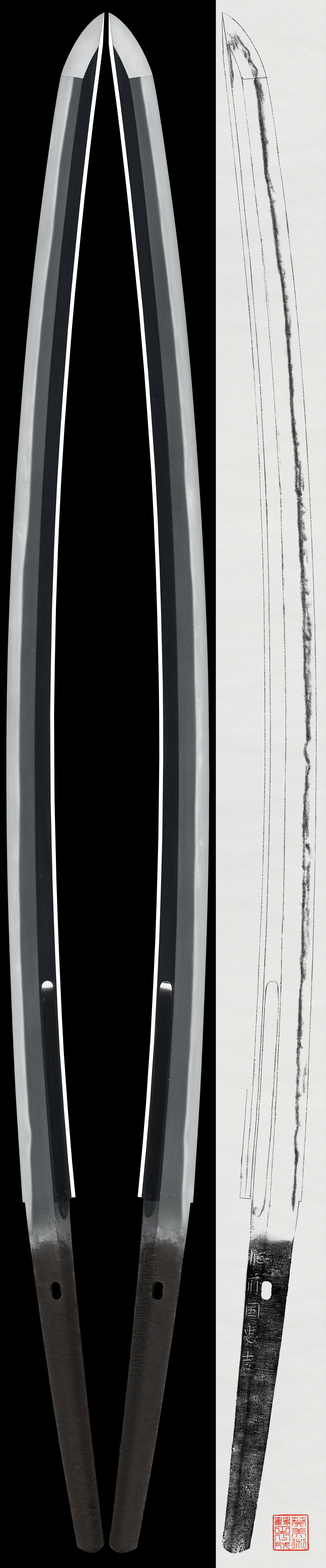
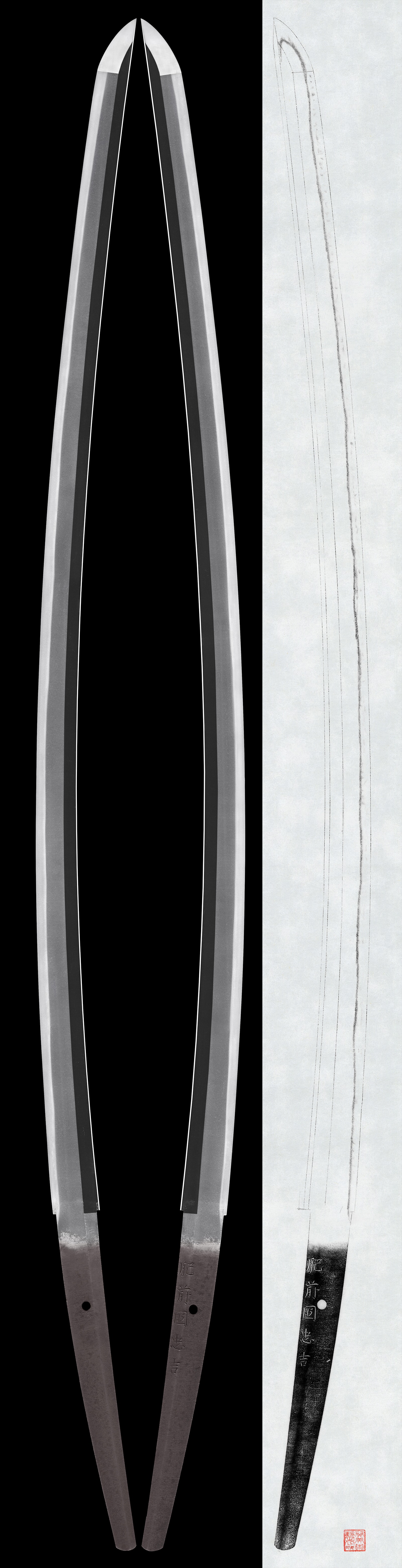
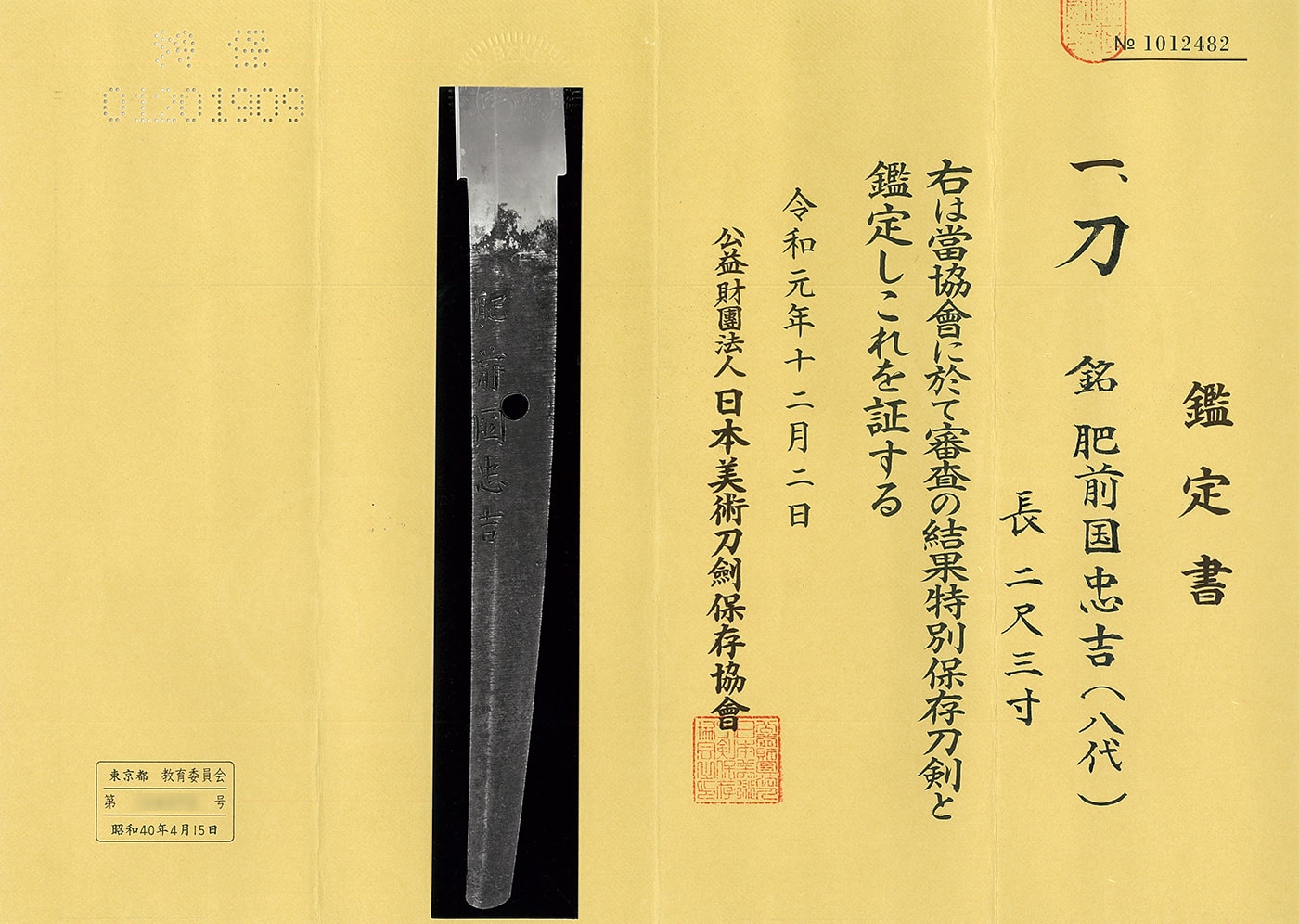
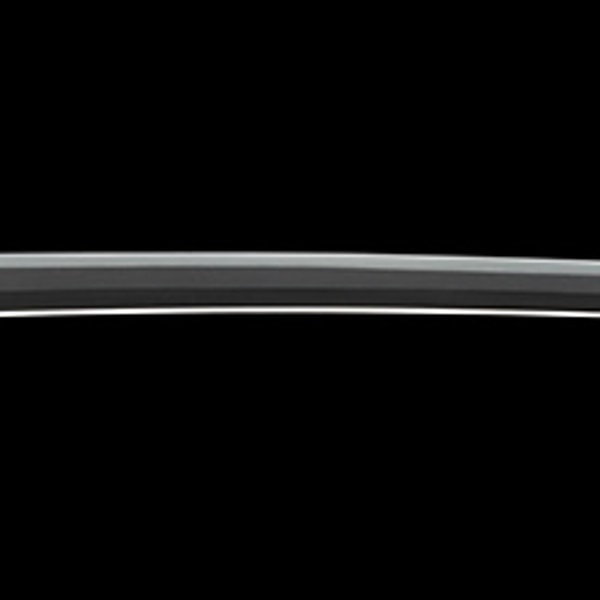
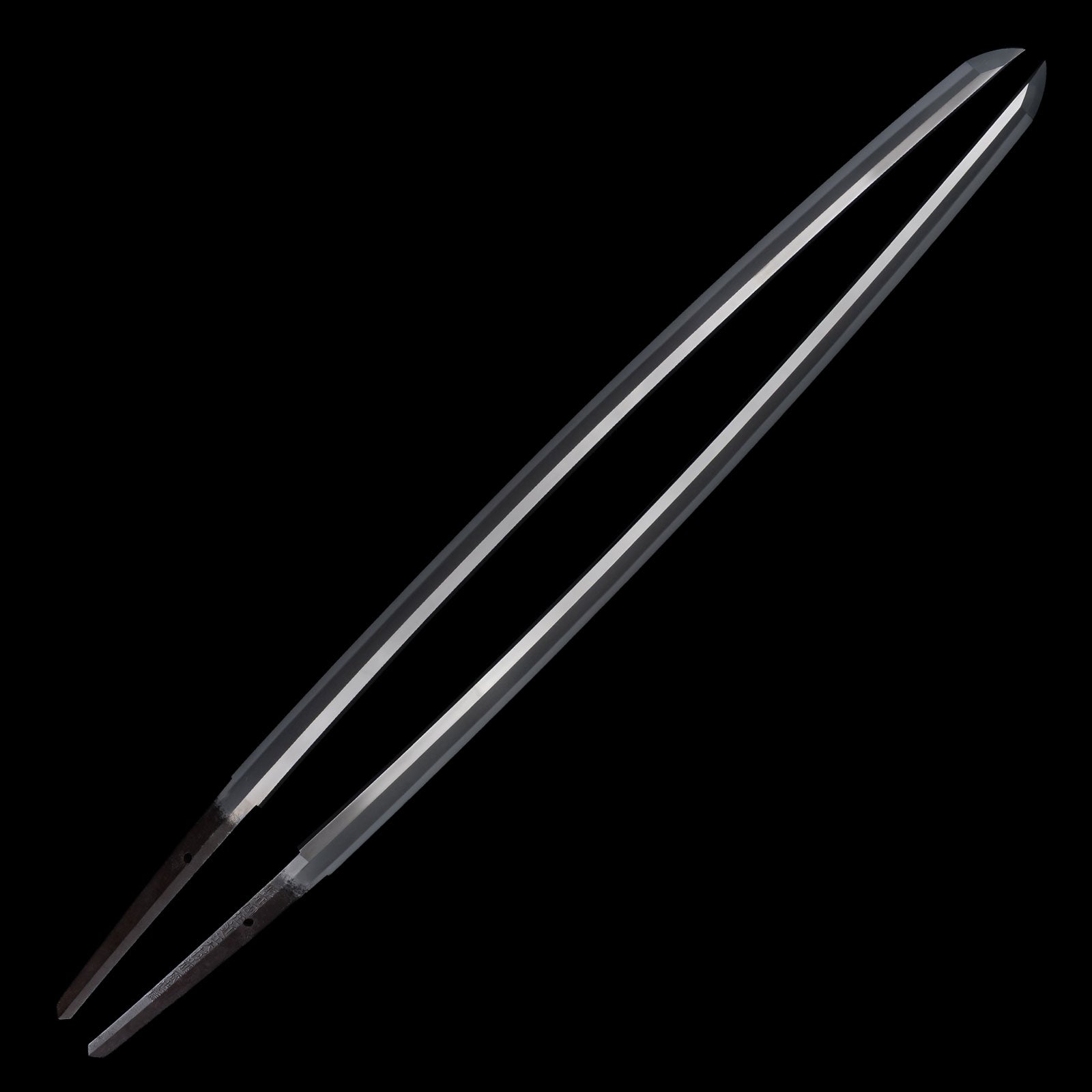
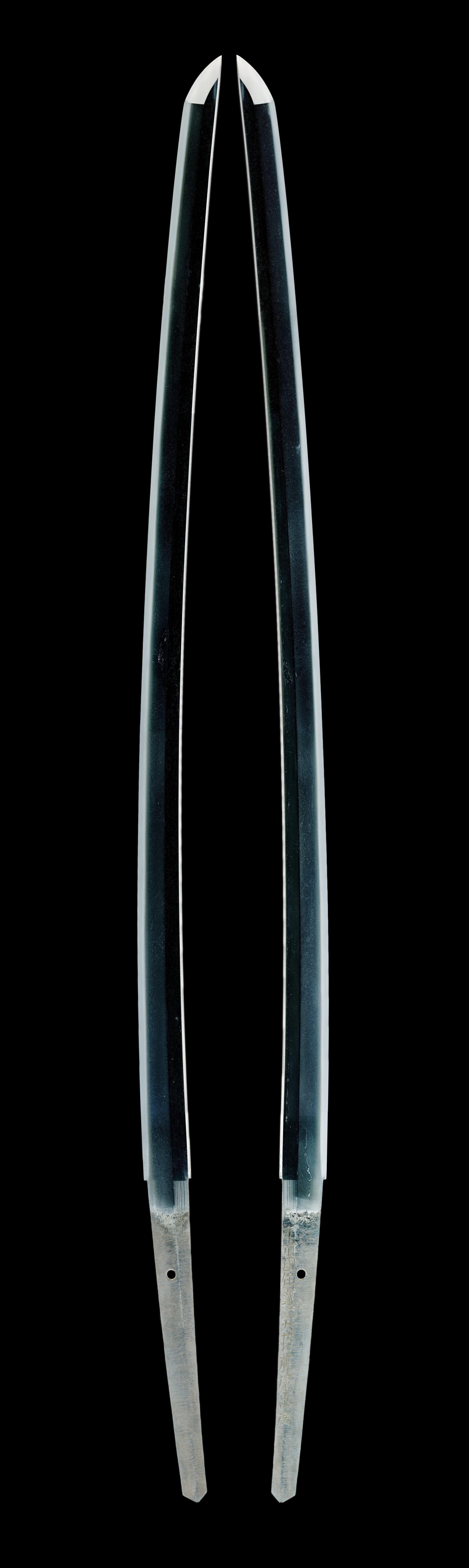
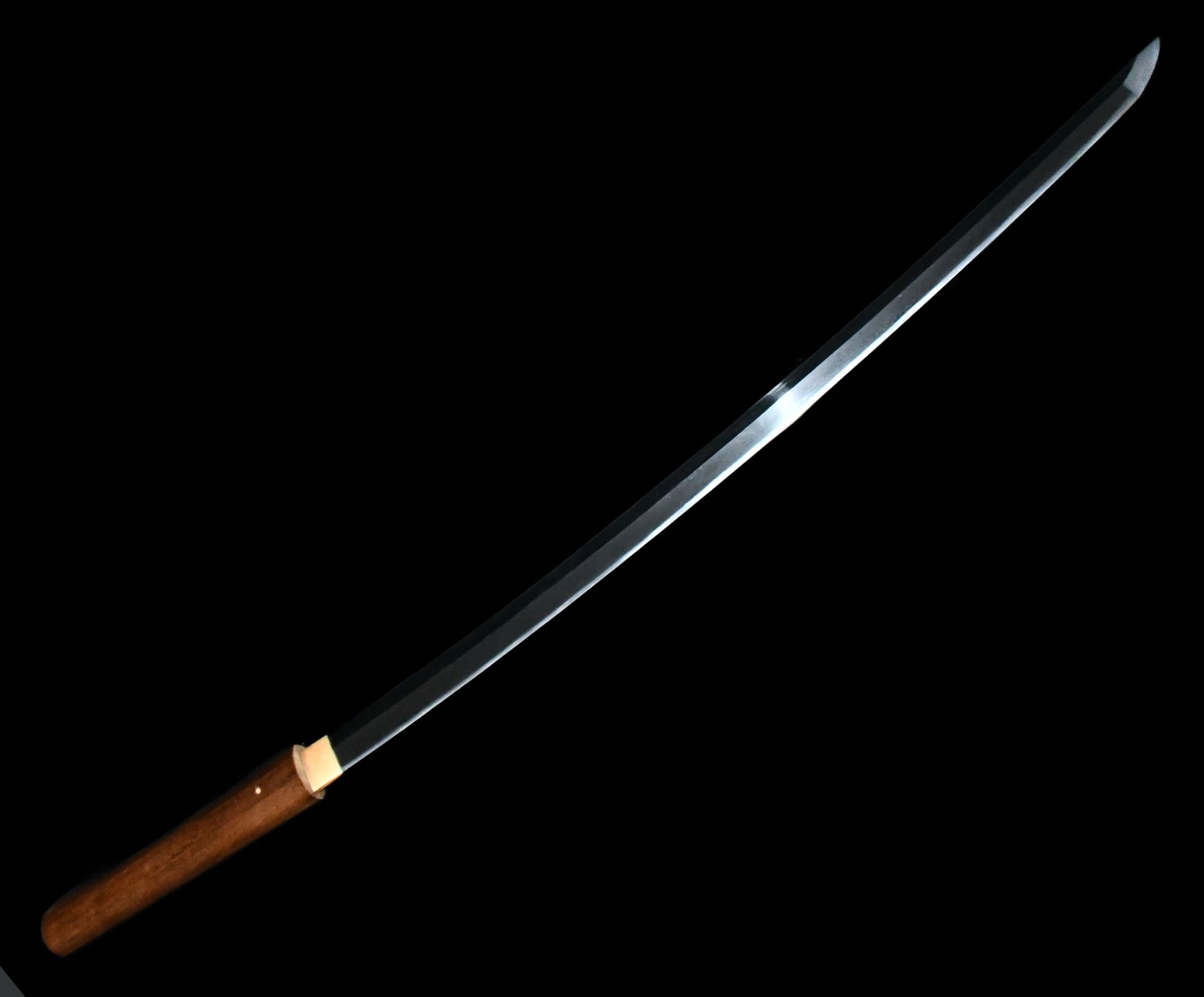
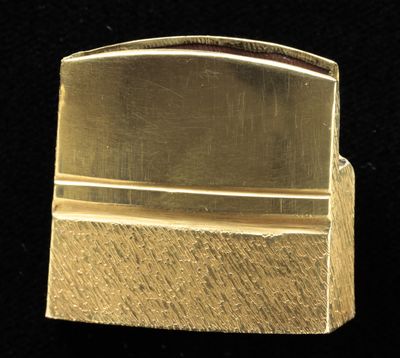
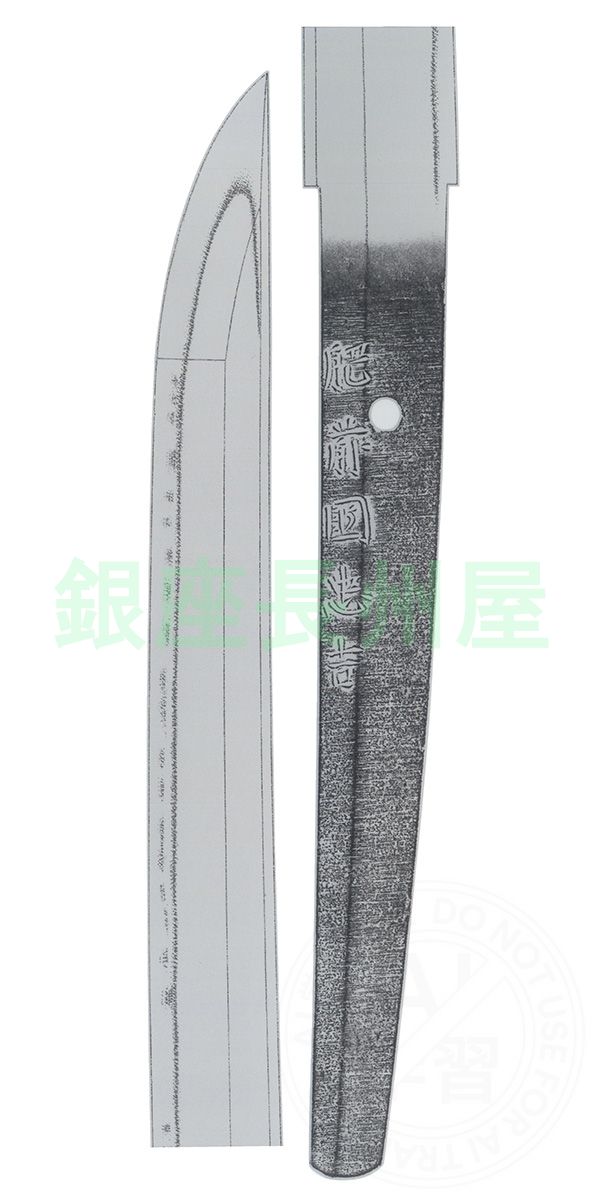
This katana is a powerful work by the 8th generation Tadayoshi, born in Kyowa 1 (1801) and active during the Tenpo era (1830-1843). It exhibits a magnificent form reminiscent of the first generation Tadayoshi, with a thick kasane, wide moto-haba and saki-haba, and a large kissaki. The jitetsu is a tightly forged ko-itame with abundant ko-nie, forming a resilient ko-nukahada, while the suguha hamon is bright and clear with small kinsuji and active ashi and yo.
 NihontoWatch
mei · Tenpo (1830-1844) · nagasa 69.3cm · sori 1.21cm








Shinto · Hizen · around 1830-1844
Fujishiro Chu-jo saku · Tōken Taikan top 76%
7 pieces on the market now
Shinto · Hizen
130 pieces on the market now
The Hizen Tadayoshi school began with a single domain commission. In Keicho 1 (1596) the Nabeshima of Hizen ordered Hashimoto Shinzaemon, the smith who would sign Tadayoshi, up to Kyoto with the carver Munenaga; there he entered the gate of Umetada Myoju and studied forging while Munenaga learned the chisel. The two returned to the province in Keicho 3 (1598), and Tadayoshi settled in the castle town below Saga, where under the domain's patronage the line grew into the dominant sword-making house of Kyushu. His own work runs from Keicho 5 (1600) to his death in Kan'ei 9 (1632); in Genna 10 (1624) he received the court title Musashi Daijo, changed his name to Tadahiro, and shifted his clan name from Minamoto to Fujiwara, so that the late Musashi Daijo blades are the founder under a second name. From him the house became a true generational institution: his son the second-generation Omi Daijo Tadahiro carried it forward as its most prolific hand, the third-generation Mutsu no Kami Tadayoshi returned its highest finish, and a Tosa no Kami branch took the founder's signature when he set it aside. Around this main line grew a circle of disciples and collateral hands, the waki-Hizen or Soba-Hizen smiths, several of them, like Yoshiie and Hironori, working as daisaku substitute makers whose own signed pieces are therefore scarce. The school's signature is its steel. Over a ko-itame forged so tightly it shows no slackness, fine ji-nie gathers in minute particles until the surface takes on the rice-bran konuka-hada (also written komenuka-hada) that no other school produces, fine chikei entering throughout and the ji notably clear and bright.
The orthodox temper laid upon it is a chu-suguha or hiro-suguha, sometimes tinged with a shallow notare and ko-gunome, the nioiguchi deep with finely clustered ko-nie and tightened to a bright clarity, the boshi running straight to a quiet ko-maru. The founder aimed this suguha toward the Rai school yet departed from it, his nioiguchi tighter and his forging carrying more vigor; the third generation refined it to what the published sources call the strongest and most precise hand of the first three generations. Against that calm register the house also worked a showier one, the Hizen choji-midare mixing gunome, long ashi, kinsuji and sunagashi, ordered clove the founder himself had not attempted but the second generation made his own. The branches pushed further from the suguha standard: Tadakuni of the Ogi domain ran sunagashi more conspicuously than any other Hizen hand and reached toward old Ichimonji in his o-choji; Masahiro and Yukihiro favored a flamboyant long-ashi choji over the calm main line; and the Iyo no Jo Munetsugu line worked apart in the Soshu-den, building a midareba on notare with a pointed togariba and a jihada that tends to stand and tone slightly blackish. A collector seeks Hizen-to first for that steel, and reads it the same way the appraiser does: a bright suguha lying over a clear, tight konuka-hada identifies the school before the signature is consulted, and the quiet ko-maru boshi on the ura-signed tang confirms the main-line practice. Generation and branch are then told within that frame, the third generation's powerful sugata recalling not his father but his grandfather, the waki-Hizen hands set apart by their irregular temper, their sujikai file marks and a sashi-ura signature, the Munetsugu line by its Soshu togari. The main line, made in real numbers across so long a span, reaches the market more readily than any Kamakura master, so a papered example is within reach of a patient collector, while the founder's own work and the finest konuka-suguha of the third generation come to open hands only from time to time. Provenance runs back through the house the school served, blades recorded to Nabeshima Katsushige and Nabeshima Naomoto and passing onward to the Owari Tokugawa, the Satake and the Imperial families; documentary inscriptions sharpen the picture further, a Myoju soemei attesting the founder's discipleship, Umetada carving adding flowers to brocade on his late blades, and the gold-inlaid cutting tests of Yamano Kanjuro and Yamano Ka'emon, rare on Hizen work, naming the edge as well as the hand. Learn more →
| Smith | Era | Designated |
|---|---|---|
| Tadayoshi忠吉 | 1596-1632 | 123 |
| Tadayoshi忠吉 | 1662-1681 | 58 |
| Tadahiro忠廣 | 1624-1693 | 169 |
| Masahiro正廣 | 1624-1655 | 32 |
| Tadakuni忠國 | 1648-1652 | 32 |
Hizen swords were a domain enterprise: the Nabeshima sent Tadayoshi to study under Umetada Myōju around 1596, then built a licensed school around him. Nine generations carried its famously consistent konuka-hada work into the Meiji era.
A Hozon-certified blade judged to show notably superior workmanship and a better state of preservation. The bar is higher: re-tempered blades and most unsigned Muromachi/Edo works are excluded.
The NBTHK (Nihon Bijutsu Tōken Hozon Kyōkai, the Society for the Preservation of Japanese Art Swords) is a public-interest incorporated foundation founded in 1948 and supervised by Japan’s Agency for Cultural Affairs (Bunkachō); it is based at the Japanese Sword Museum in Tokyo. Its expert panels physically examine each submitted work (shinsa) and issue a certificate (kanteishō) ranking it by artistic and historical merit. NBTHK papers are the most widely recognized standard of authentication for Japanese swords and fittings.
NBTHK official siteIf, due to our fault, the item differs significantly from its proper condition, the item may be returned. Cooling-off is within one week of the item's arrival.
This katana is a powerful work by the 8th generation Tadayoshi, born in Kyowa 1 (1801) and active during the Tenpo era (1830-1843). It exhibits a magnificent form reminiscent of the first generation Tadayoshi, with a thick kasane, wide moto-haba and saki-haba, and a large kissaki. The jitetsu is a tightly forged ko-itame with abundant ko-nie, forming a resilient ko-nukahada, while the suguha hamon is bright and clear with small kinsuji and active ashi and yo.
NihontoWatchmei · Tenpo (1830-1844) · nagasa 69.3cm · sori 1.21cm
Shinto · Hizen · around 1830-1844
Fujishiro Chu-jo saku · Tōken Taikan top 76%
7 pieces on the market now
Shinto · Hizen
130 pieces on the market now
The Hizen Tadayoshi school began with a single domain commission. In Keicho 1 (1596) the Nabeshima of Hizen ordered Hashimoto Shinzaemon, the smith who would sign Tadayoshi, up to Kyoto with the carver Munenaga; there he entered the gate of Umetada Myoju and studied forging while Munenaga learned the chisel. The two returned to the province in Keicho 3 (1598), and Tadayoshi settled in the castle town below Saga, where under the domain's patronage the line grew into the dominant sword-making house of Kyushu. His own work runs from Keicho 5 (1600) to his death in Kan'ei 9 (1632); in Genna 10 (1624) he received the court title Musashi Daijo, changed his name to Tadahiro, and shifted his clan name from Minamoto to Fujiwara, so that the late Musashi Daijo blades are the founder under a second name. From him the house became a true generational institution: his son the second-generation Omi Daijo Tadahiro carried it forward as its most prolific hand, the third-generation Mutsu no Kami Tadayoshi returned its highest finish, and a Tosa no Kami branch took the founder's signature when he set it aside. Around this main line grew a circle of disciples and collateral hands, the waki-Hizen or Soba-Hizen smiths, several of them, like Yoshiie and Hironori, working as daisaku substitute makers whose own signed pieces are therefore scarce. The school's signature is its steel. Over a ko-itame forged so tightly it shows no slackness, fine ji-nie gathers in minute particles until the surface takes on the rice-bran konuka-hada (also written komenuka-hada) that no other school produces, fine chikei entering throughout and the ji notably clear and bright.
The orthodox temper laid upon it is a chu-suguha or hiro-suguha, sometimes tinged with a shallow notare and ko-gunome, the nioiguchi deep with finely clustered ko-nie and tightened to a bright clarity, the boshi running straight to a quiet ko-maru. The founder aimed this suguha toward the Rai school yet departed from it, his nioiguchi tighter and his forging carrying more vigor; the third generation refined it to what the published sources call the strongest and most precise hand of the first three generations. Against that calm register the house also worked a showier one, the Hizen choji-midare mixing gunome, long ashi, kinsuji and sunagashi, ordered clove the founder himself had not attempted but the second generation made his own. The branches pushed further from the suguha standard: Tadakuni of the Ogi domain ran sunagashi more conspicuously than any other Hizen hand and reached toward old Ichimonji in his o-choji; Masahiro and Yukihiro favored a flamboyant long-ashi choji over the calm main line; and the Iyo no Jo Munetsugu line worked apart in the Soshu-den, building a midareba on notare with a pointed togariba and a jihada that tends to stand and tone slightly blackish. A collector seeks Hizen-to first for that steel, and reads it the same way the appraiser does: a bright suguha lying over a clear, tight konuka-hada identifies the school before the signature is consulted, and the quiet ko-maru boshi on the ura-signed tang confirms the main-line practice. Generation and branch are then told within that frame, the third generation's powerful sugata recalling not his father but his grandfather, the waki-Hizen hands set apart by their irregular temper, their sujikai file marks and a sashi-ura signature, the Munetsugu line by its Soshu togari. The main line, made in real numbers across so long a span, reaches the market more readily than any Kamakura master, so a papered example is within reach of a patient collector, while the founder's own work and the finest konuka-suguha of the third generation come to open hands only from time to time. Provenance runs back through the house the school served, blades recorded to Nabeshima Katsushige and Nabeshima Naomoto and passing onward to the Owari Tokugawa, the Satake and the Imperial families; documentary inscriptions sharpen the picture further, a Myoju soemei attesting the founder's discipleship, Umetada carving adding flowers to brocade on his late blades, and the gold-inlaid cutting tests of Yamano Kanjuro and Yamano Ka'emon, rare on Hizen work, naming the edge as well as the hand. Learn more →
| Smith | Era | Designated |
|---|---|---|
| Tadayoshi忠吉 | 1596-1632 | 123 |
| Tadayoshi忠吉 | 1662-1681 | 58 |
| Tadahiro忠廣 | 1624-1693 | 169 |
| Masahiro正廣 | 1624-1655 | 32 |
| Tadakuni忠國 | 1648-1652 | 32 |
Hizen swords were a domain enterprise: the Nabeshima sent Tadayoshi to study under Umetada Myōju around 1596, then built a licensed school around him. Nine generations carried its famously consistent konuka-hada work into the Meiji era.
A Hozon-certified blade judged to show notably superior workmanship and a better state of preservation. The bar is higher: re-tempered blades and most unsigned Muromachi/Edo works are excluded.
The NBTHK (Nihon Bijutsu Tōken Hozon Kyōkai, the Society for the Preservation of Japanese Art Swords) is a public-interest incorporated foundation founded in 1948 and supervised by Japan’s Agency for Cultural Affairs (Bunkachō); it is based at the Japanese Sword Museum in Tokyo. Its expert panels physically examine each submitted work (shinsa) and issue a certificate (kanteishō) ranking it by artistic and historical merit. NBTHK papers are the most widely recognized standard of authentication for Japanese swords and fittings.
NBTHK official siteIf, due to our fault, the item differs significantly from its proper condition, the item may be returned. Cooling-off is within one week of the item's arrival.