Summary
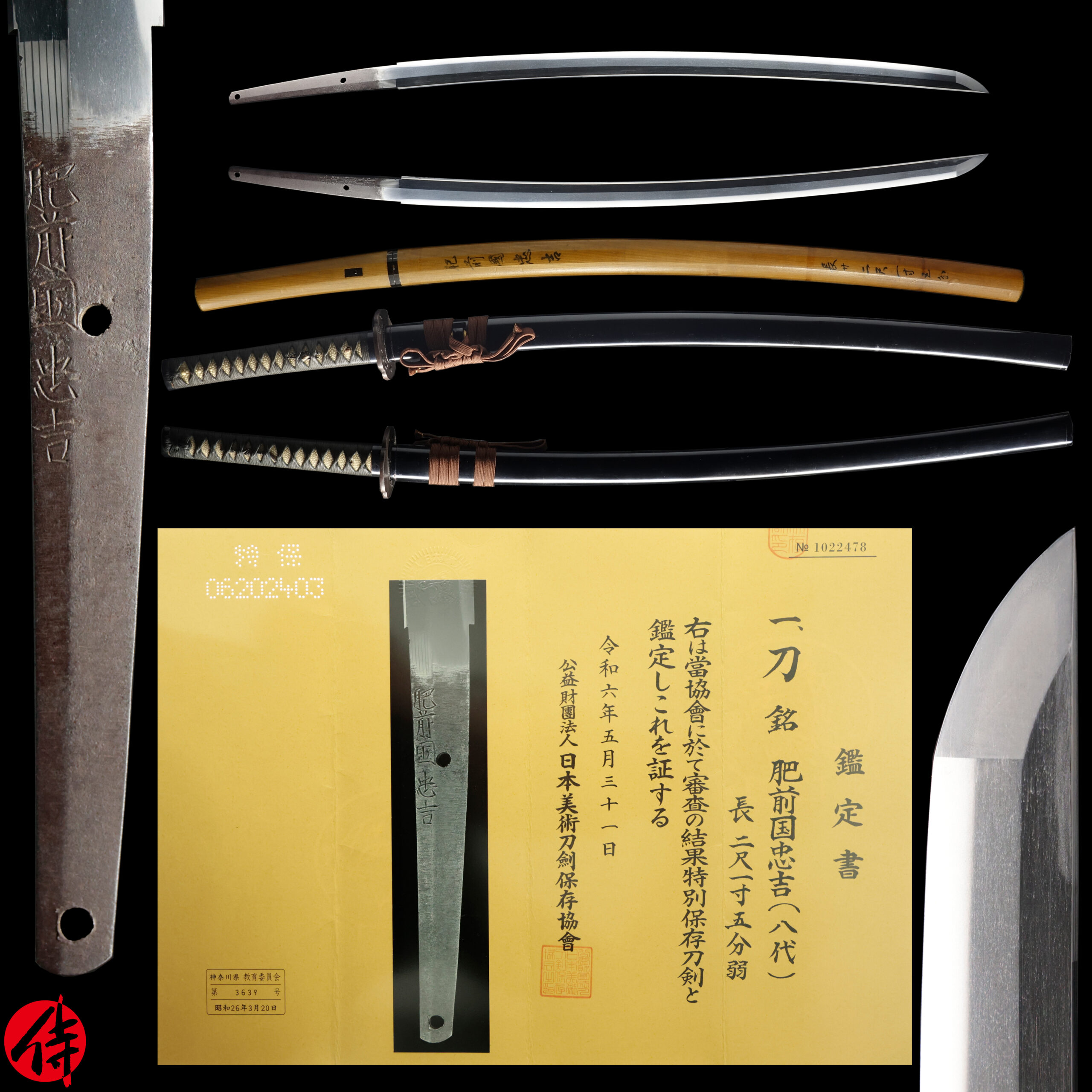
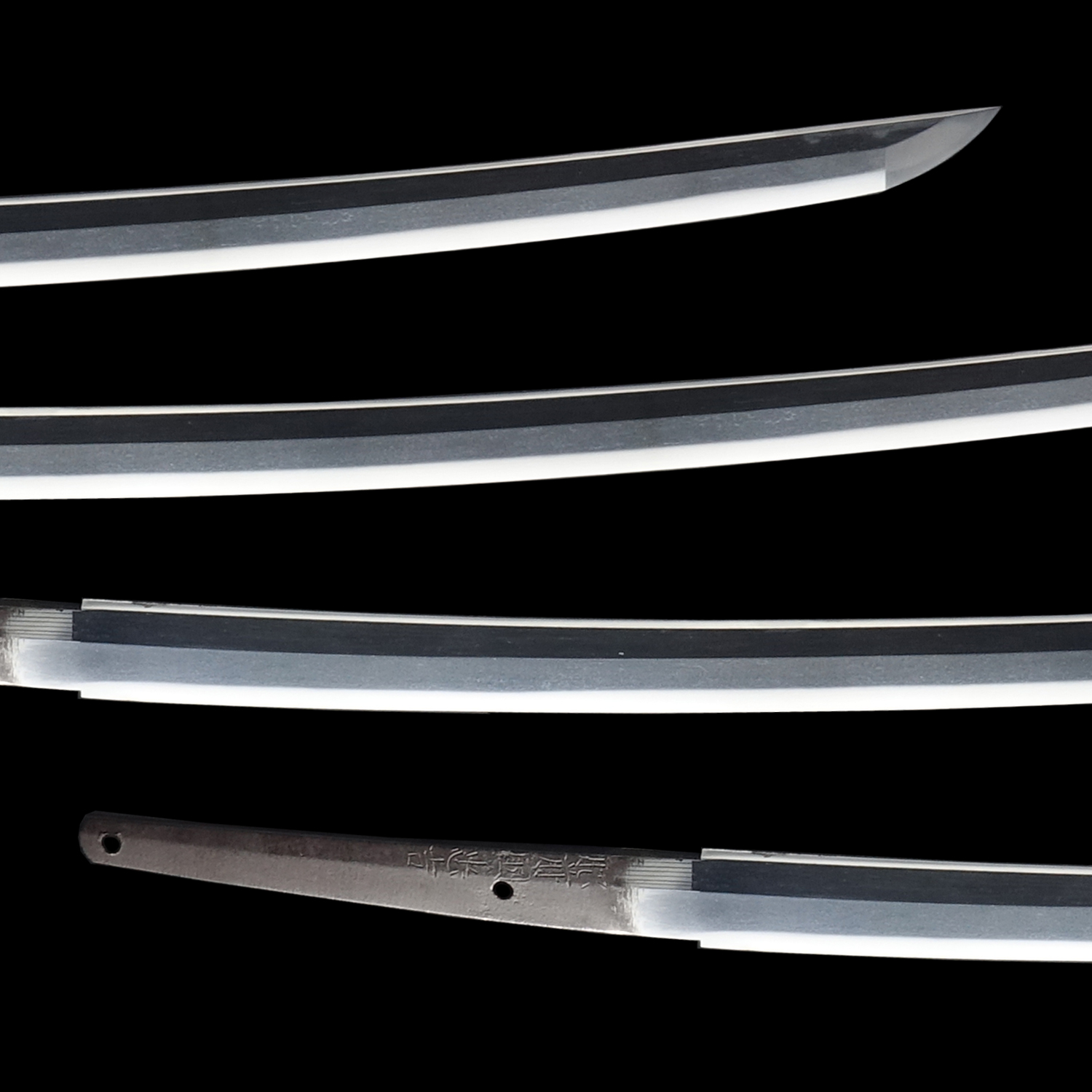
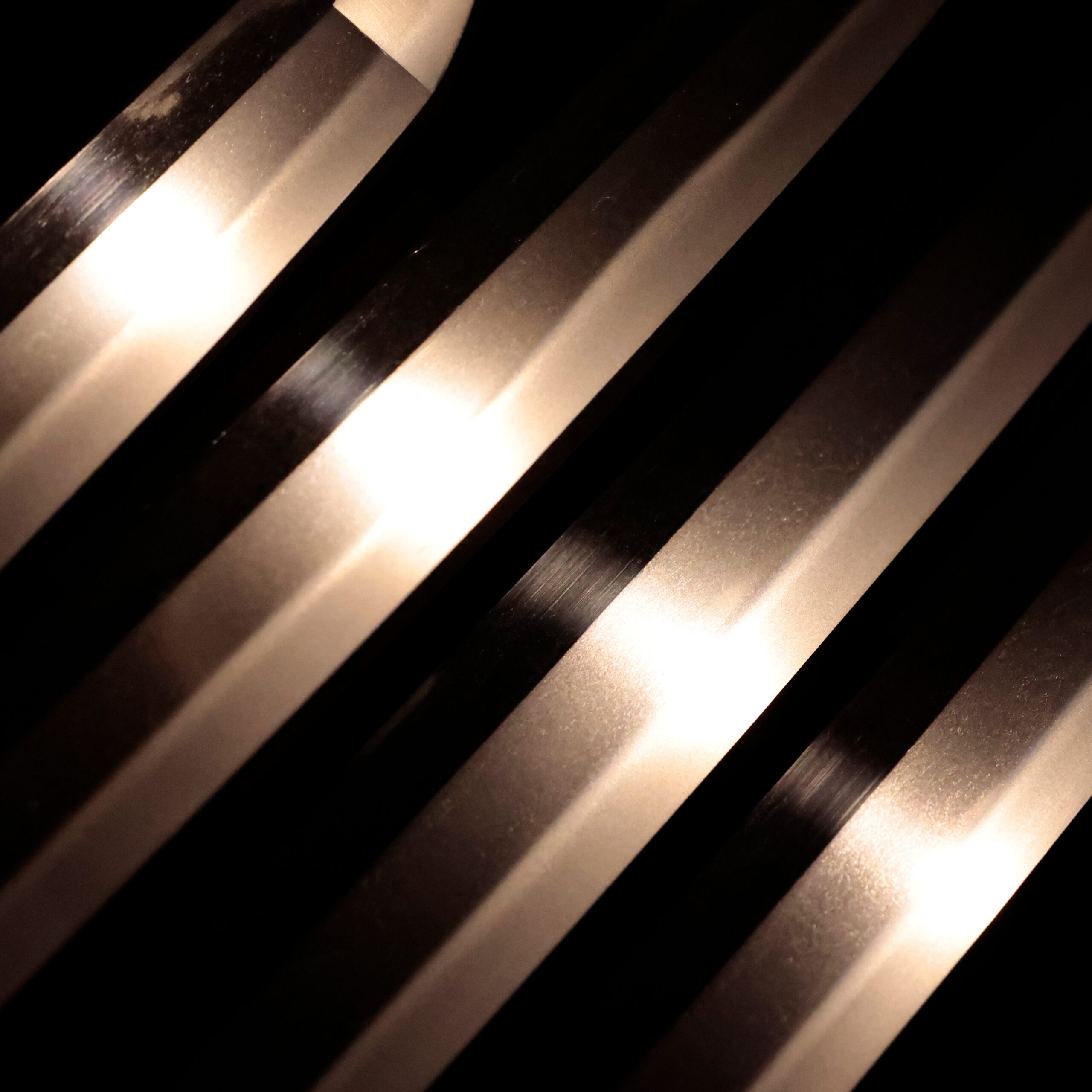
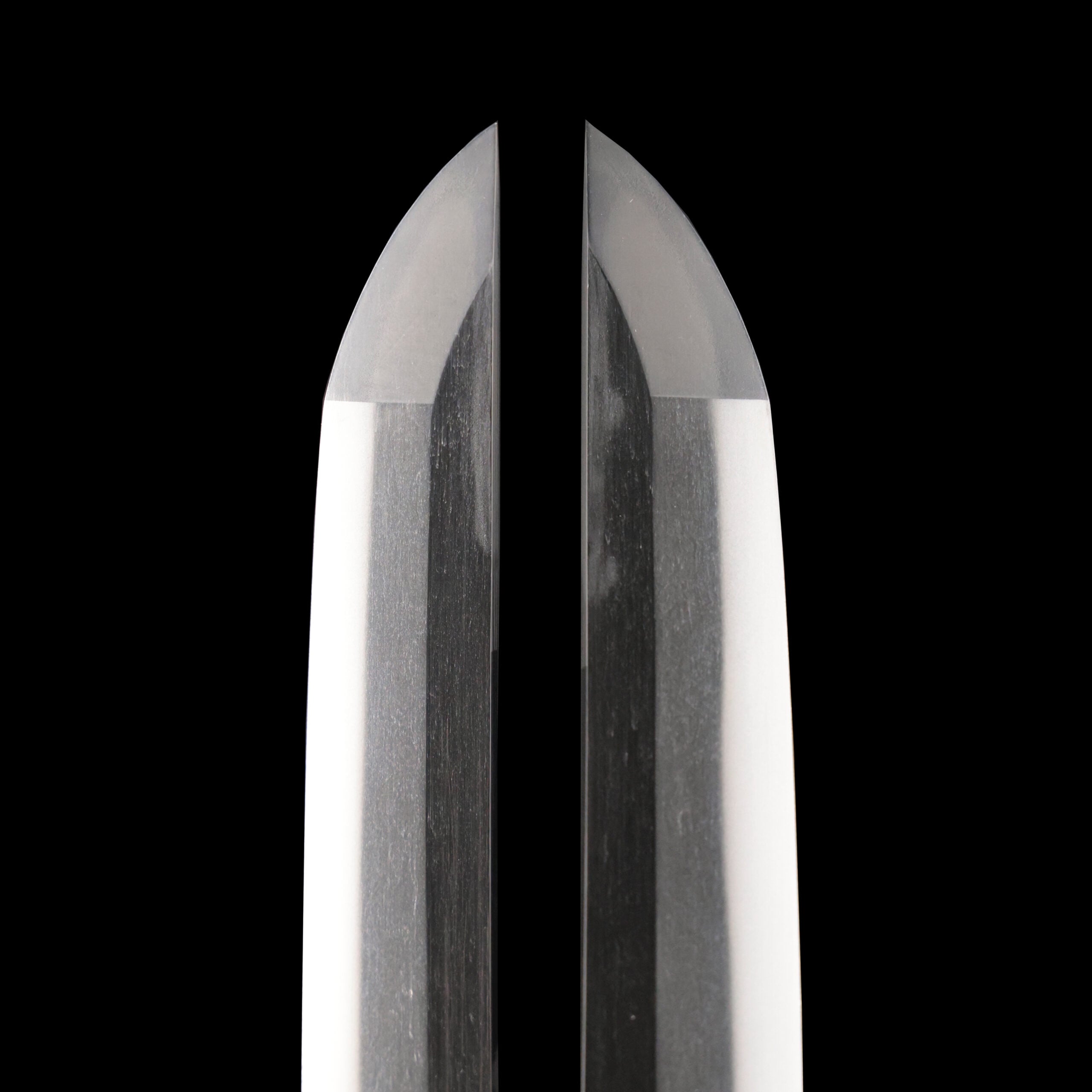
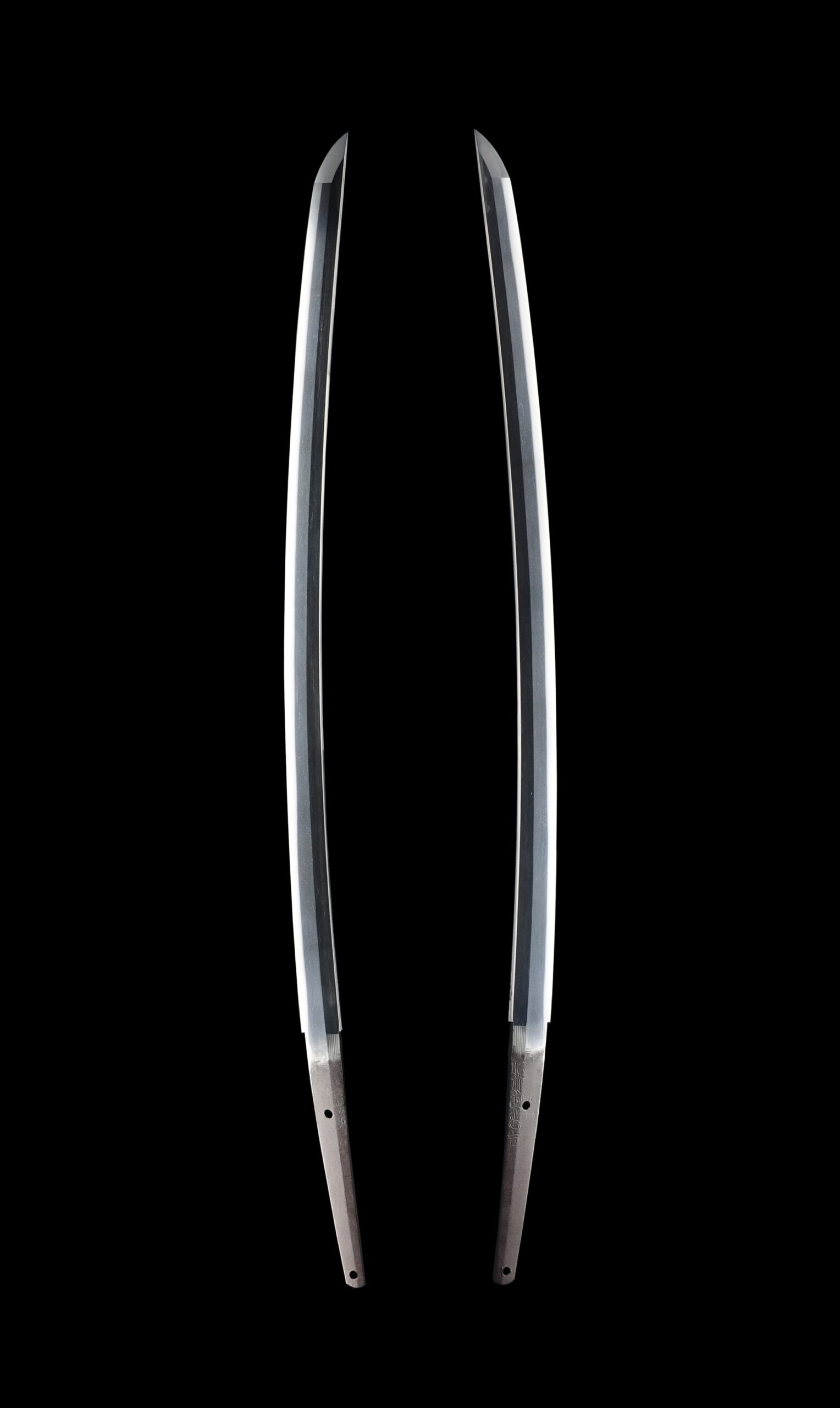
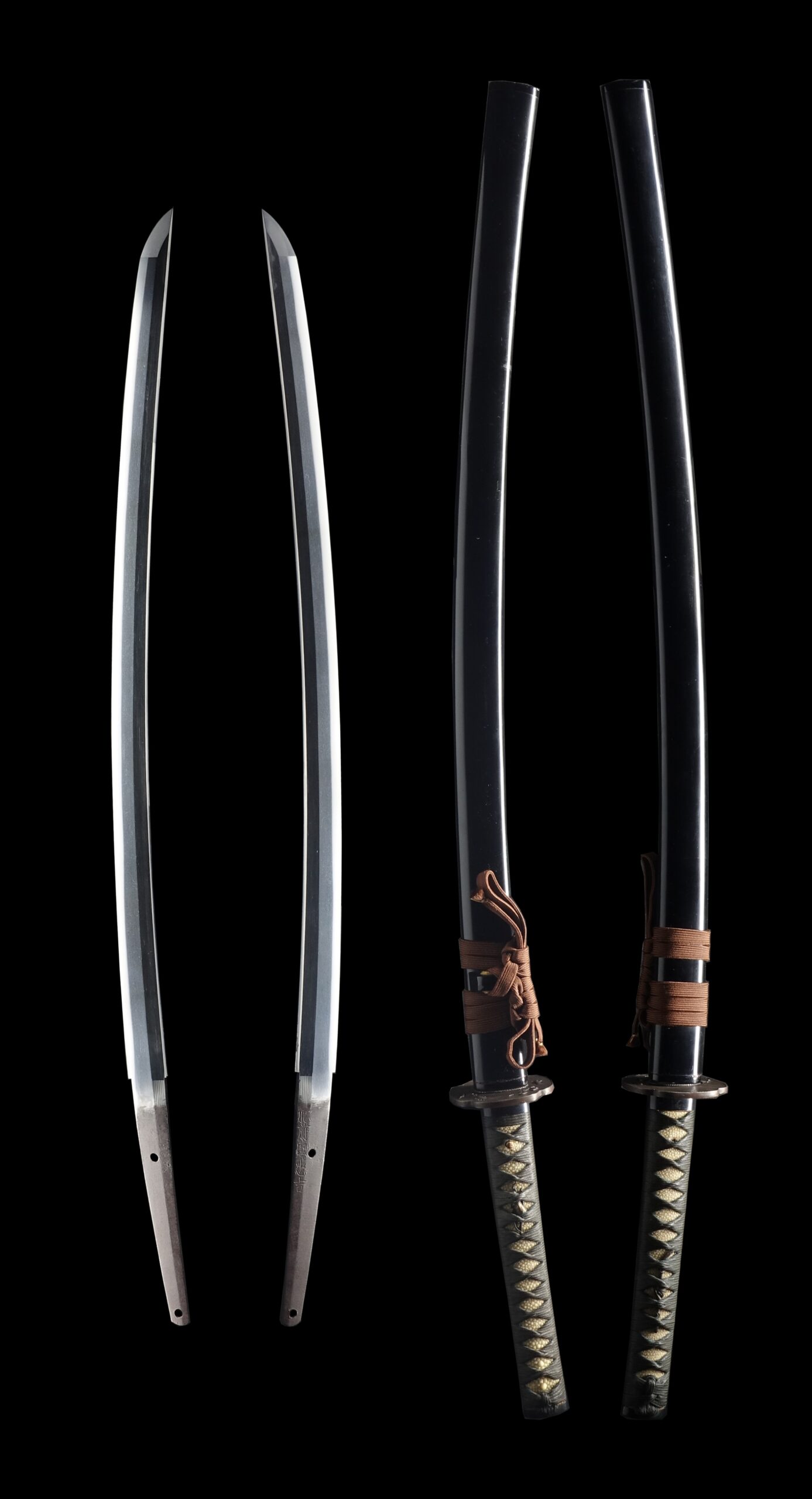
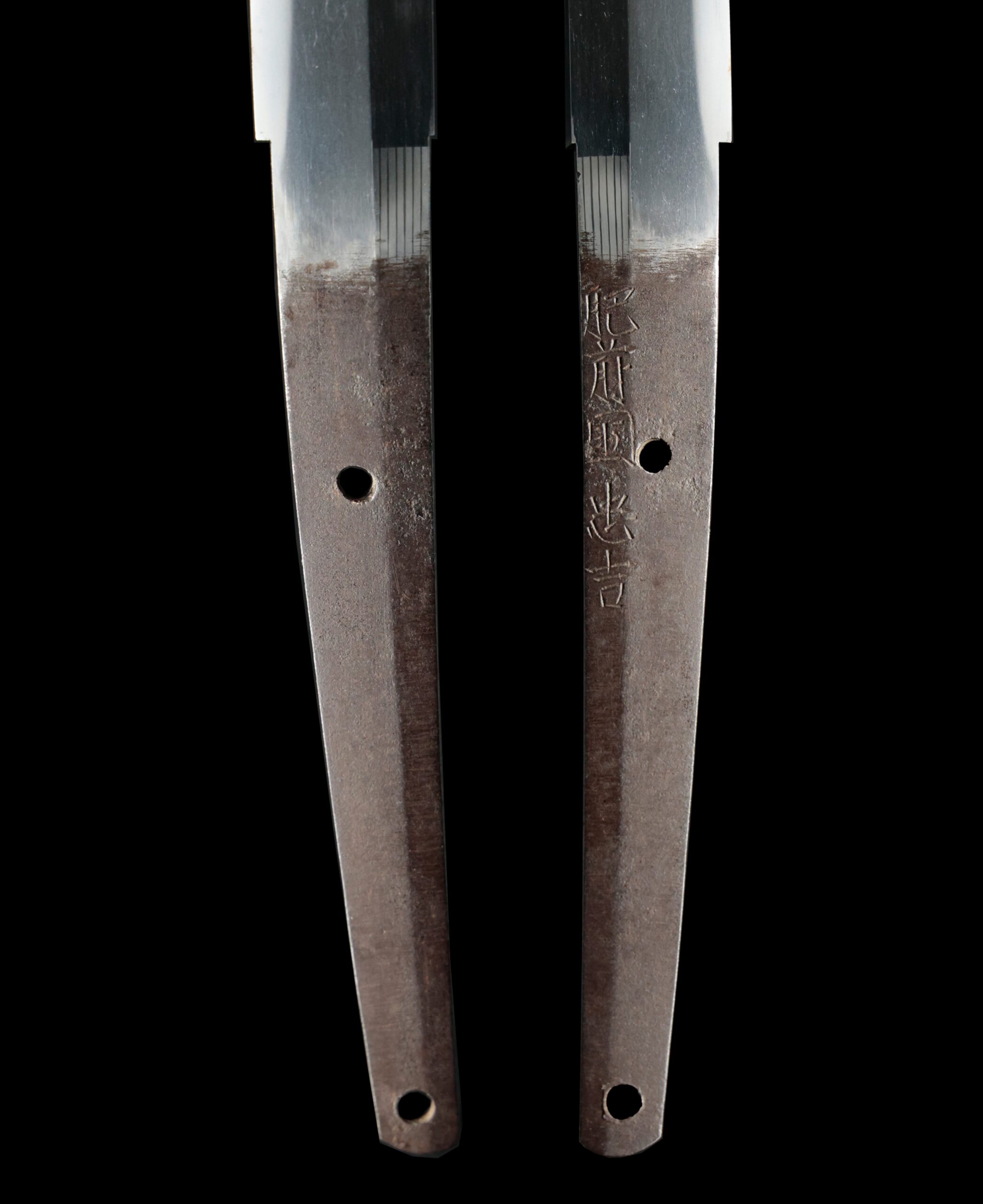
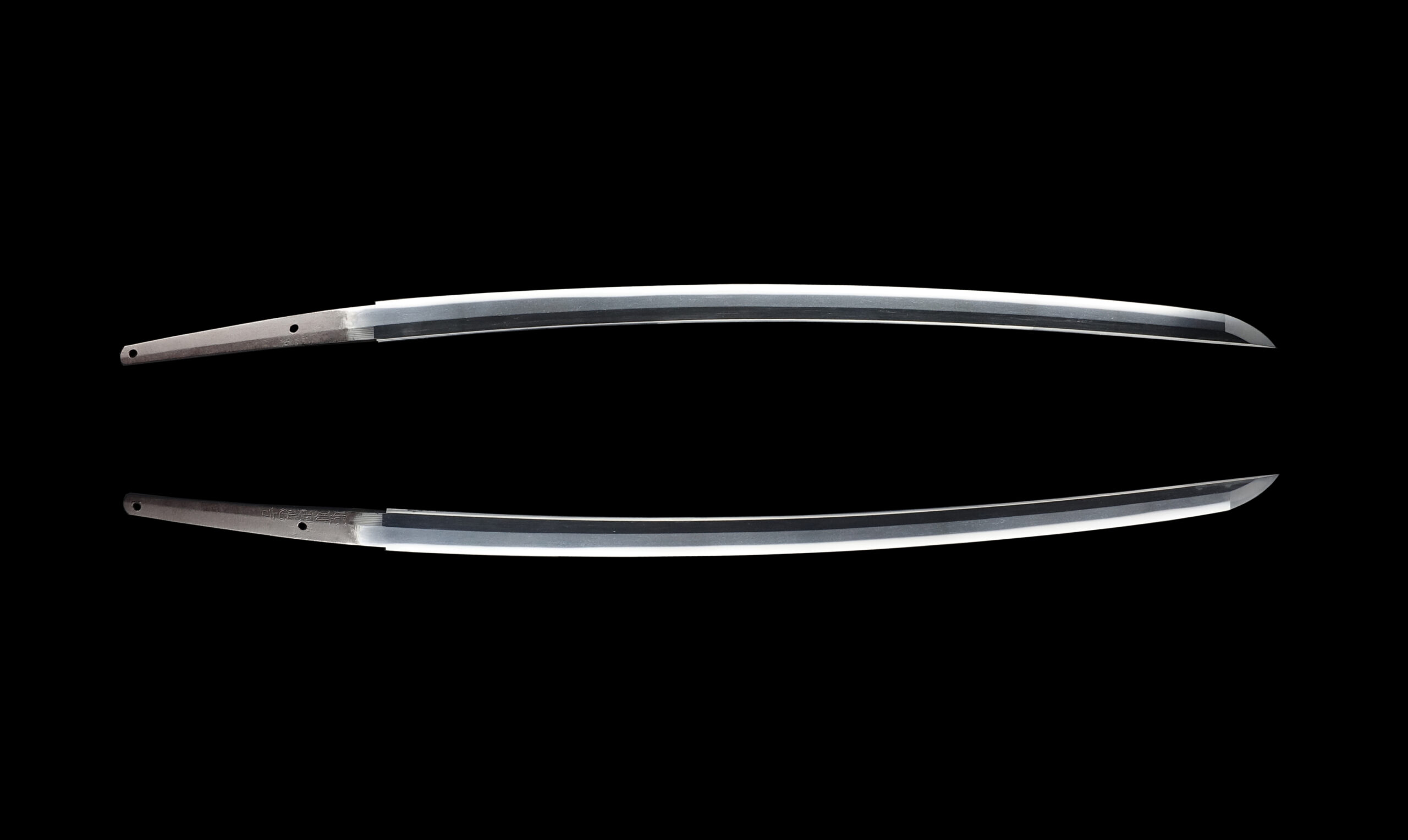
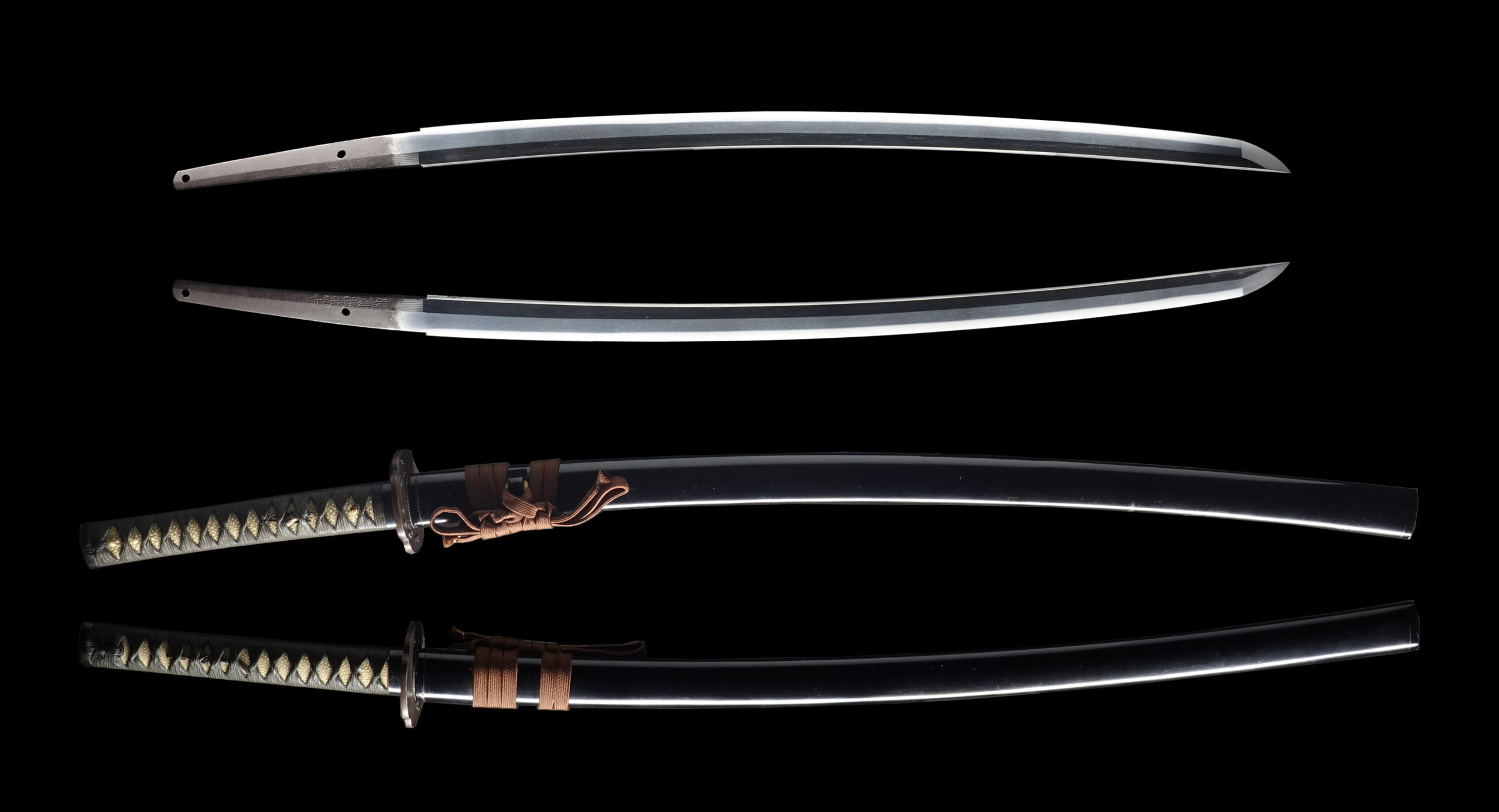
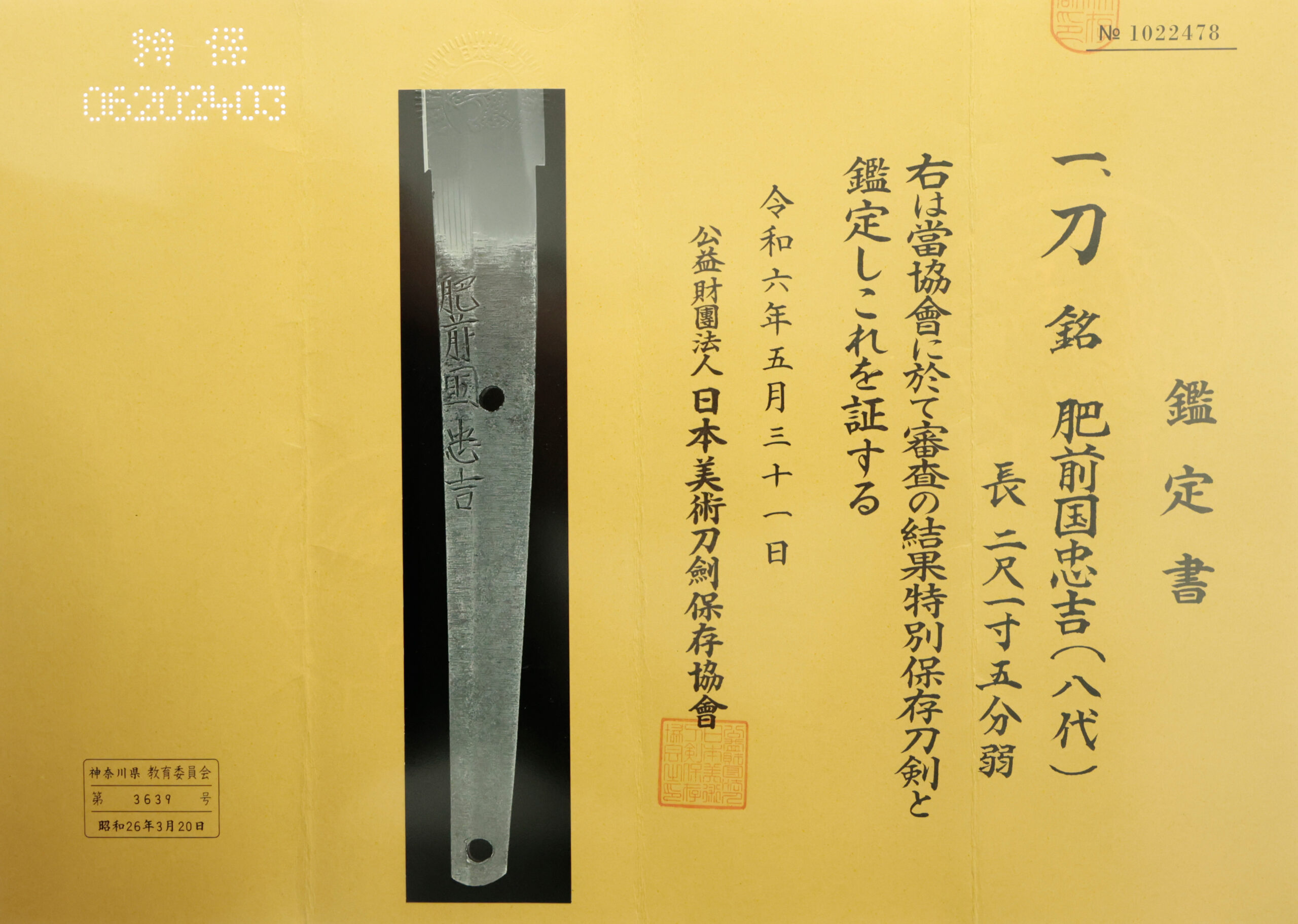
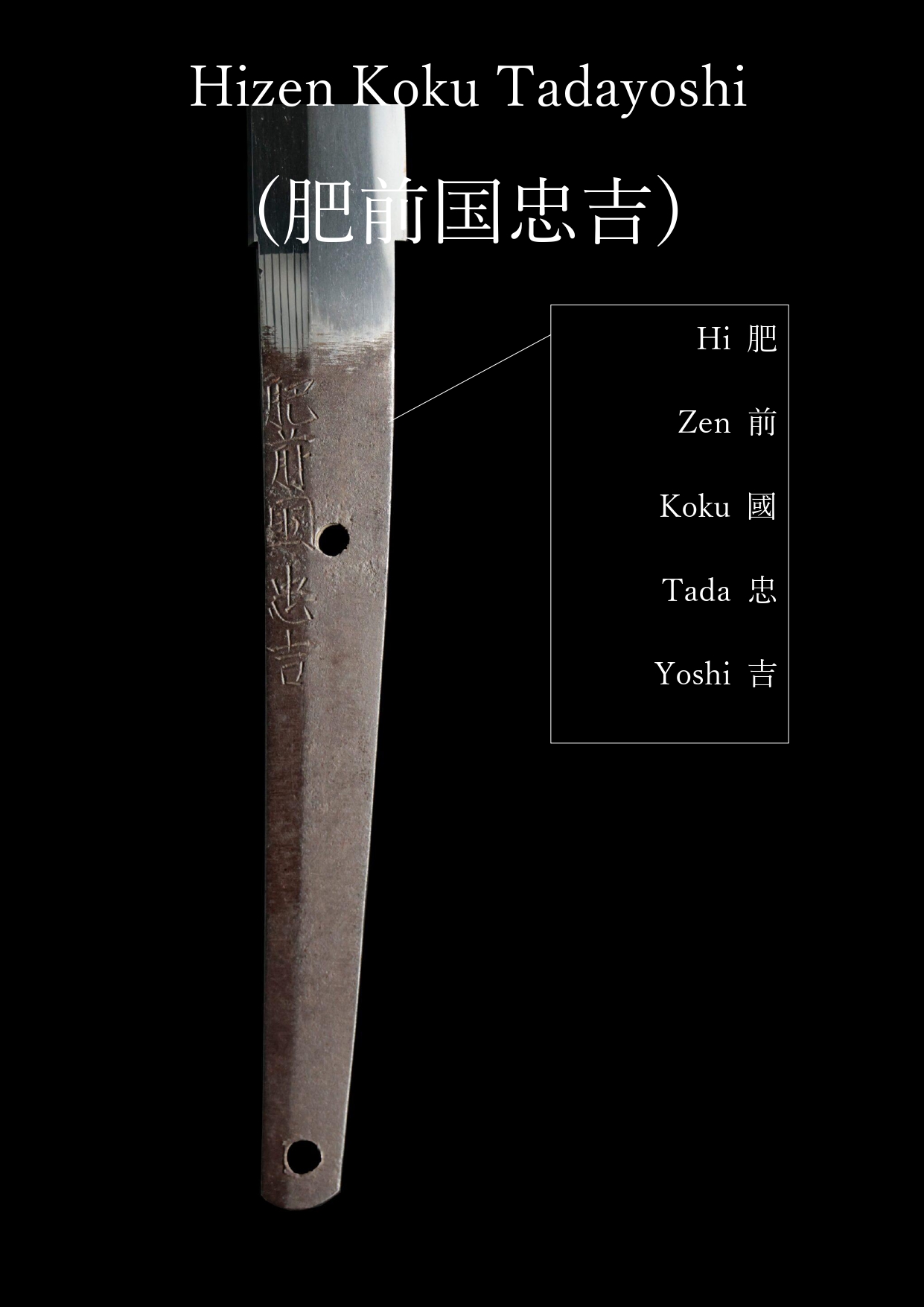
This blade was signed by Hizen Koku Tadayoshi (肥前国忠吉) or Hizen no Kuni Tadayoshi. The maker’s name Tadayoshi lasted nine generations during the Edo period. According to its NBTHK’s appraisal, it was made by the 8th- gen Tadaysohi (八代忠吉) during the Tenpo era (1830-1844). Among other generations of Tadayoshi, the eighth-gen was a renowned figure and mastered a high level of craftsmanship passed down from the previous generations. All the generations of Tadayoshi served Nabeshima clan, which controlled Saga domain (Today’s Saga prefecture).
The 8th-gen Tadayoshi was born as the son of Furukawa family in Saga domain in 1801. He was eventually adopted by the 7th-gen Tadayoshi, and he changed his name to Hashimoto Shinzaemon (橋本新左衛門). He took over Tadayoshi school from the 7th-gen in the 13th year of the Bunka era (1816).
The domain acknowledged his skill, and he played a vital role in modernizing the weaponry of Saga domain. In 1850, he was in charge of making a cannon for the domain because of his refined blacksmithing. He died at 59 in the 6th year of the Ansei era (1859).
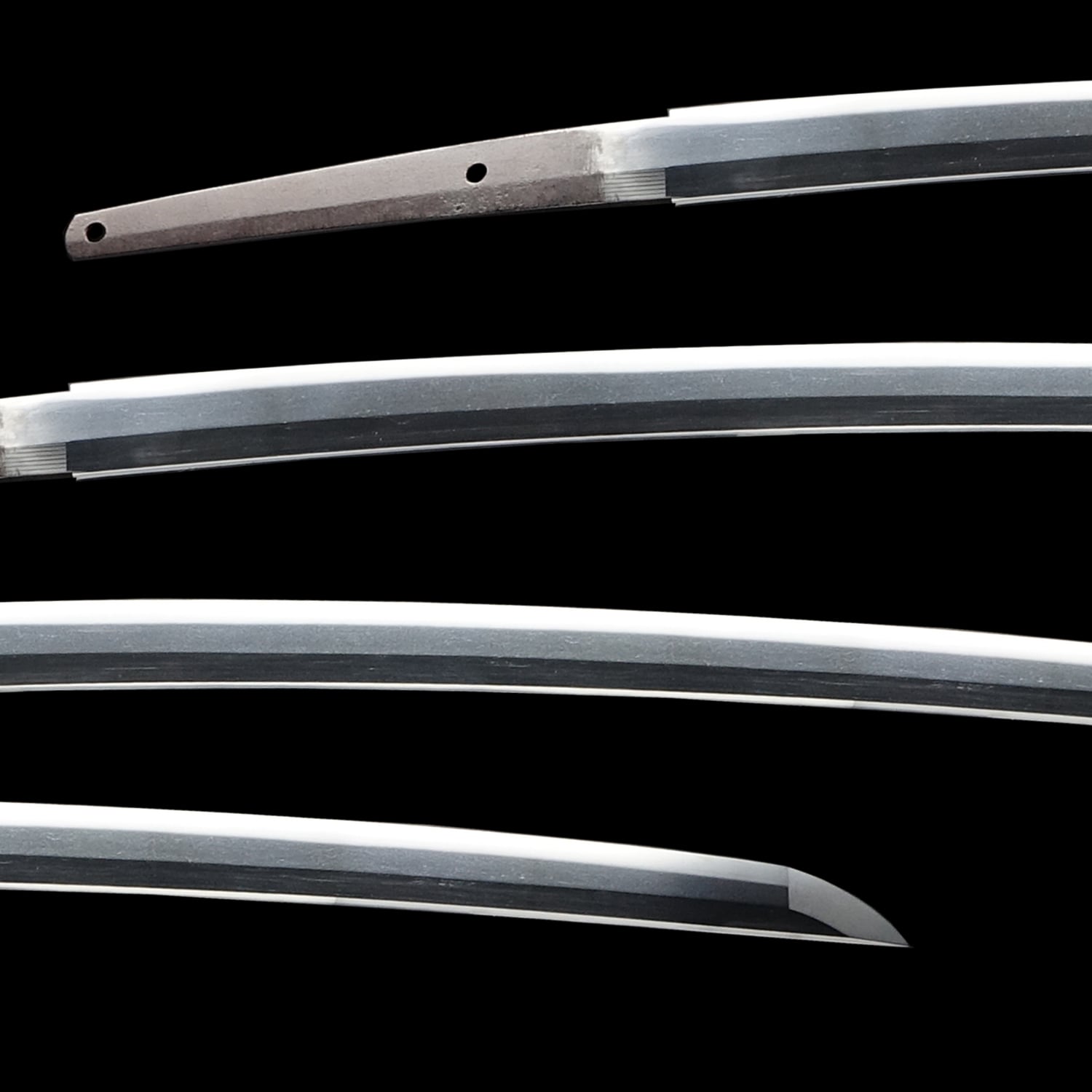
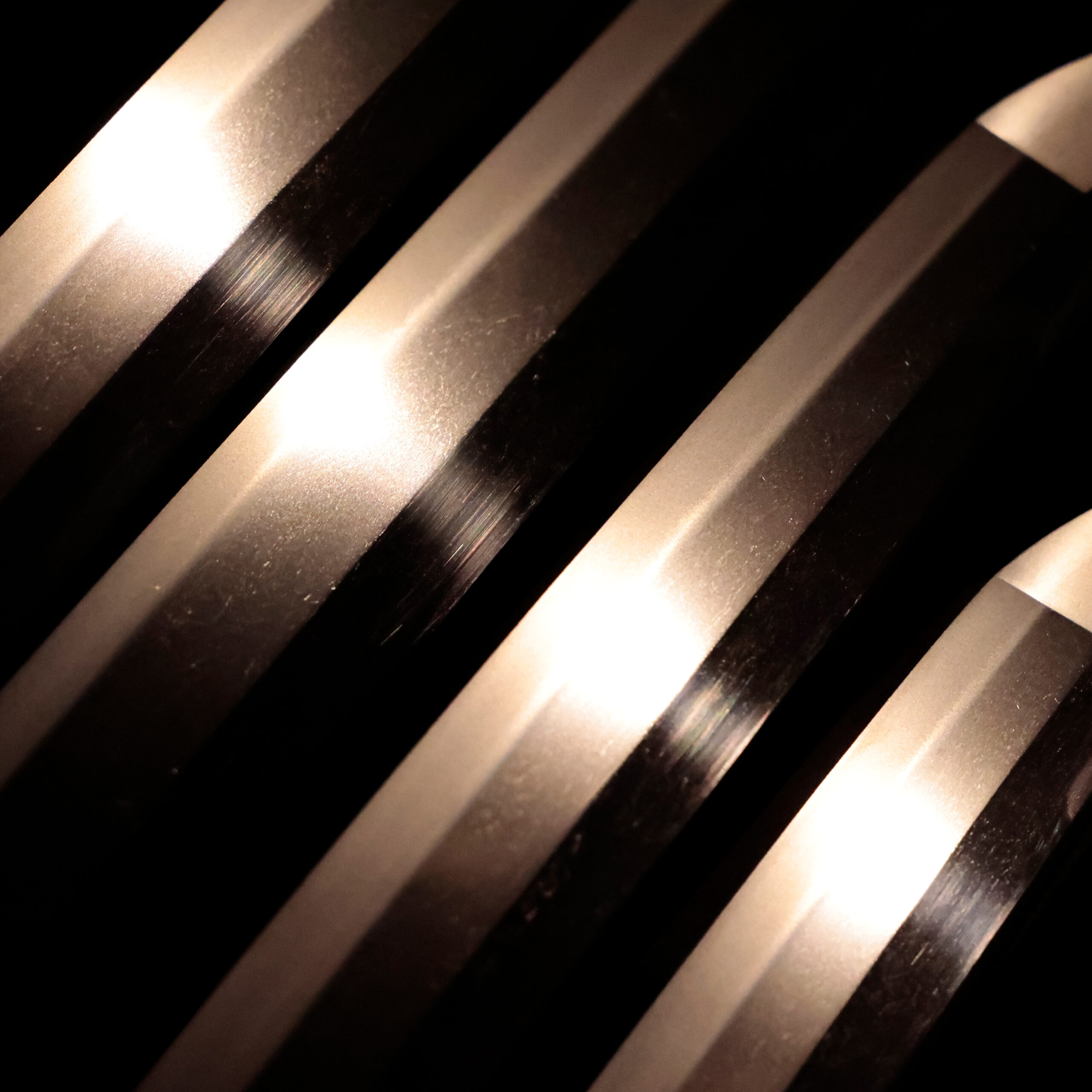
The swordsmiths in the Hizen province worked under the auspices of the Nabeshima clan like Tadayoshi. They could produce beautiful blades with Konuka Hada, whose steel surface is very smooth. This Hada is one of the most well-known characteristics of the blades produced in Hizen province. The swordsmiths also used and mixed carbon steel made in western countries. Since Hizenkoku had been flourishing through international trading, it had easy access to western carbon steel.
The first-gen Tadayoshi
The first-gen Tadayoshi was born and raised in the Saga domain. In 1596, under the domain’s order, he went to Kyoto to learn the sword-forging technique from Umetada Myojyu (埋忠明寿), one of the greatest swordsmiths in the early Edo period. He improved his craftsmanship and returned to the Saga domain two years later (1598).
The first head of the Nabeshima clan, Nabeshima Katsushige, appreciated the work of the first-gen Tadayoshi very much. Then, Katsushige appointed him as his Okakaekaji, a swordsmith who exclusively forged swords for a specific domain or clan. Moreover, he founded Hizen Tadayoshi school, which trained more than 100 swordsmiths during the Edo period.
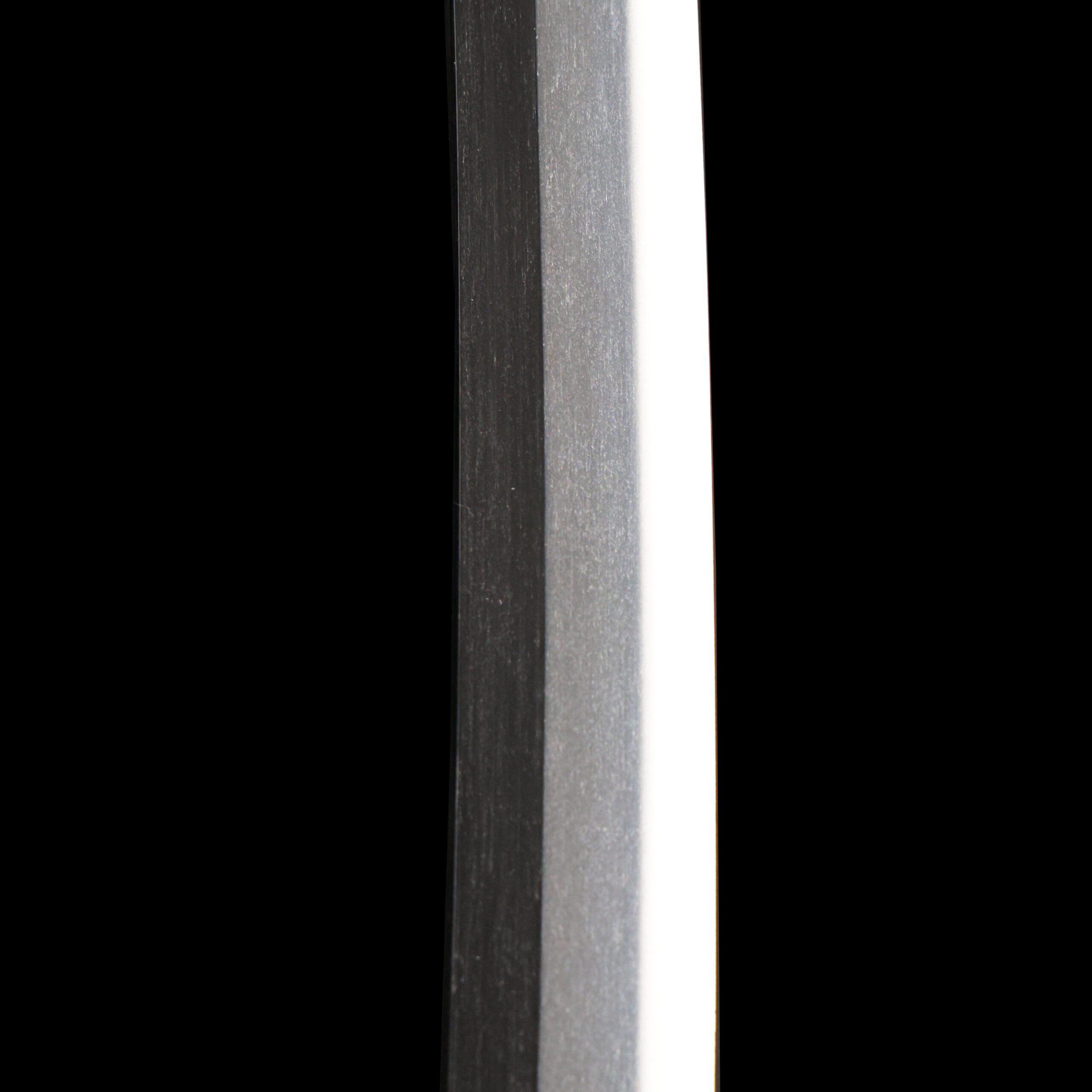
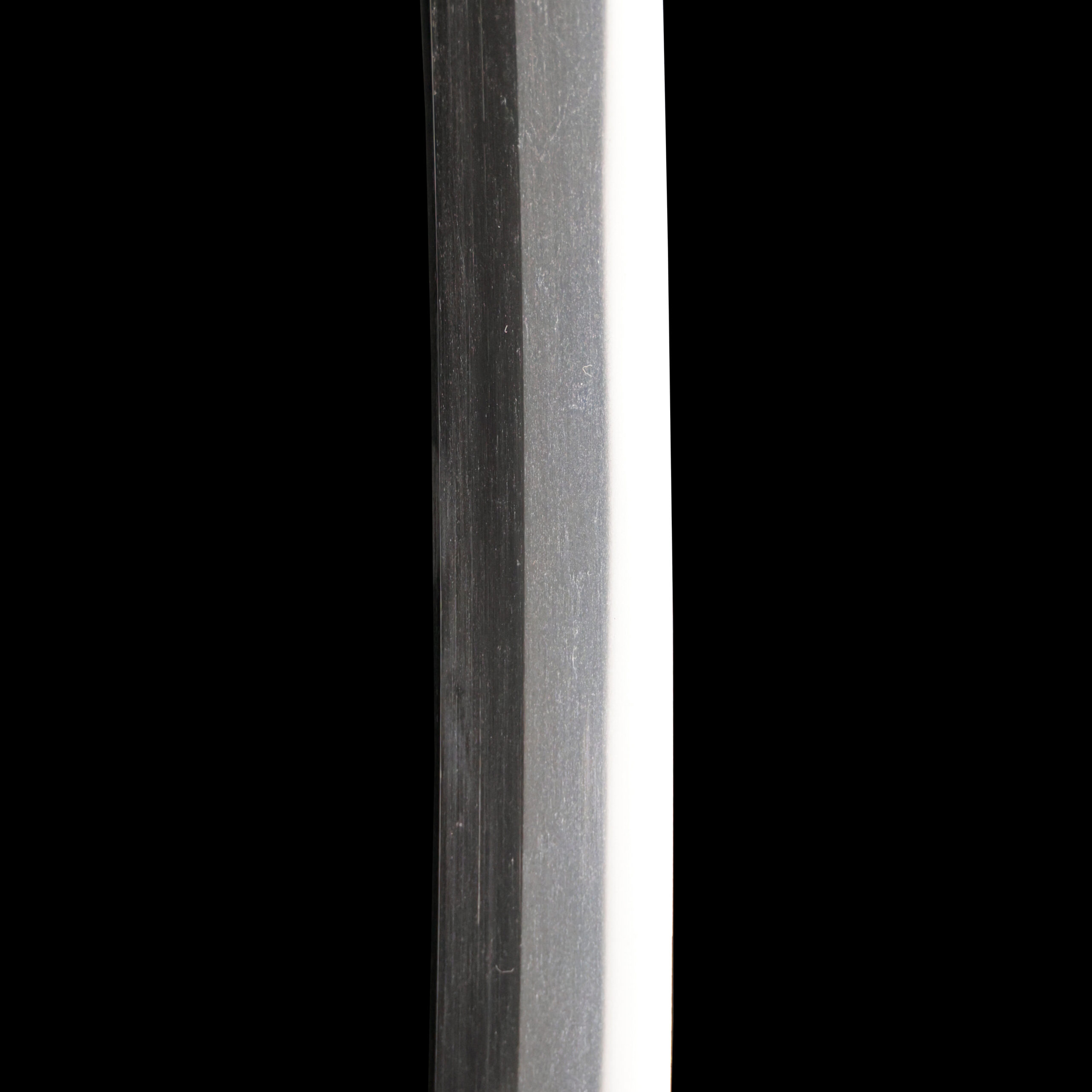
It is appraised as a Tokubetsu Hozon Token (特別保存刀剣) issued by NBTHK (Nihon Bijutsu Touken Hozon Kyokai:日本美術刀剣保存協会).
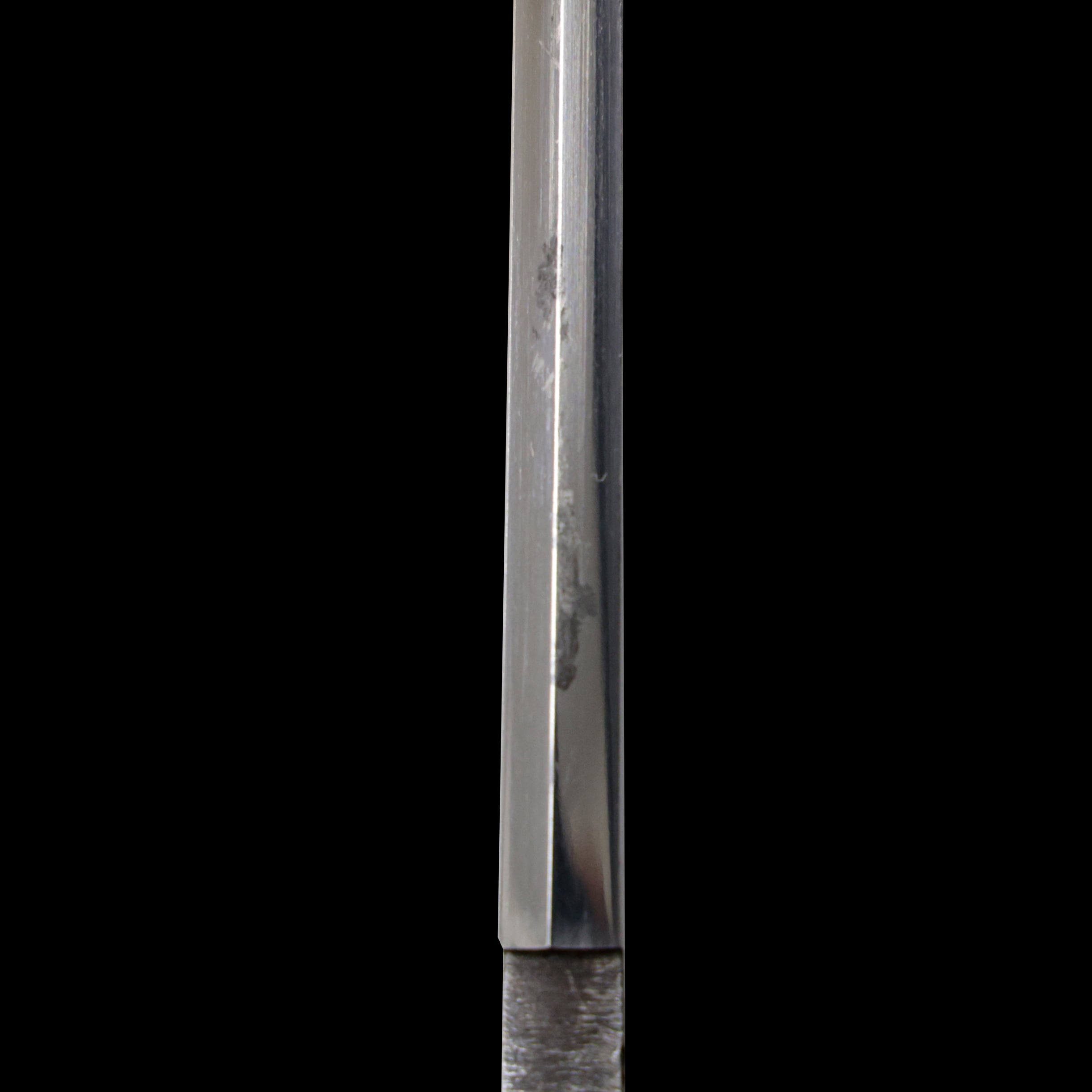
*Please keep in mind that there is a blak rust on the mune of this blade.
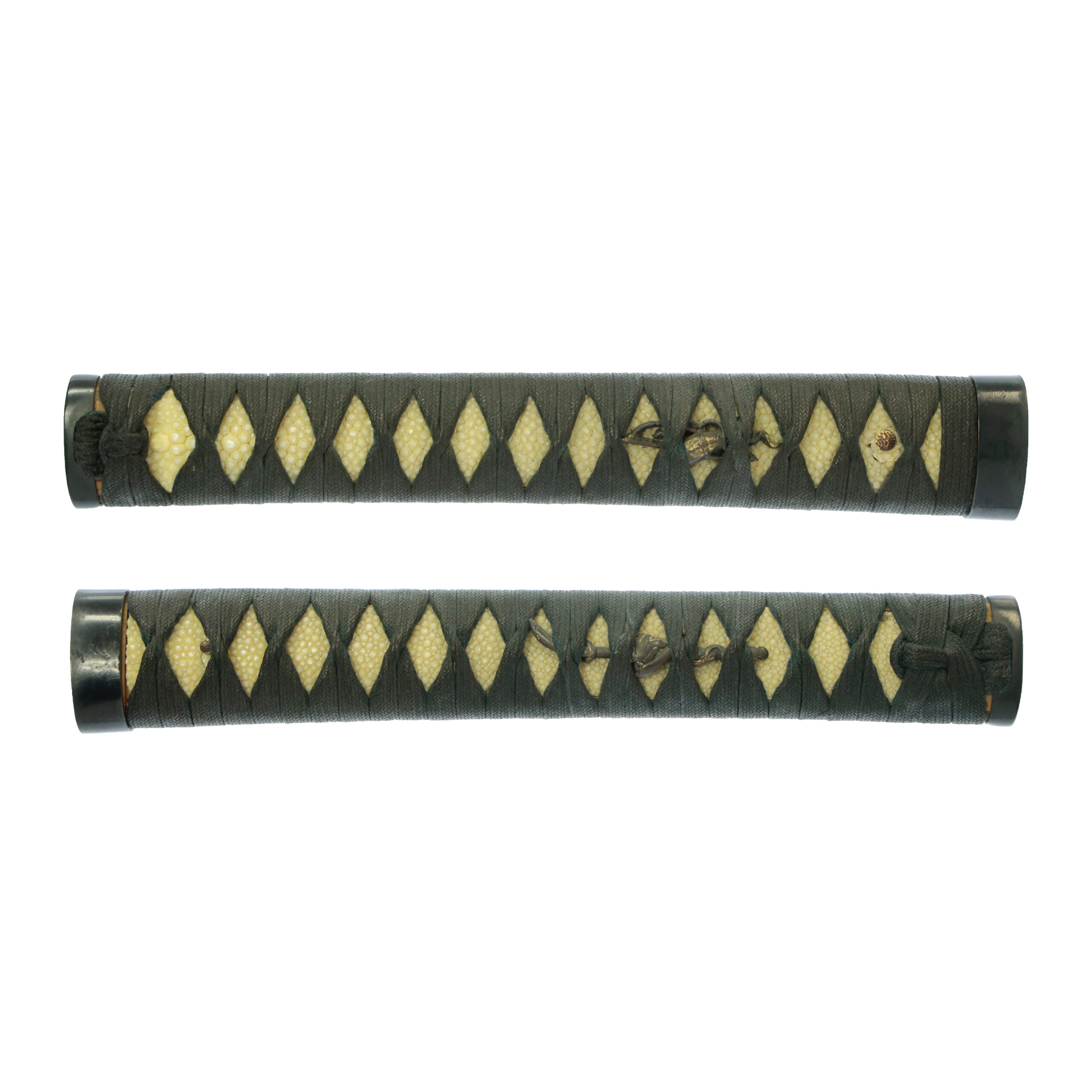
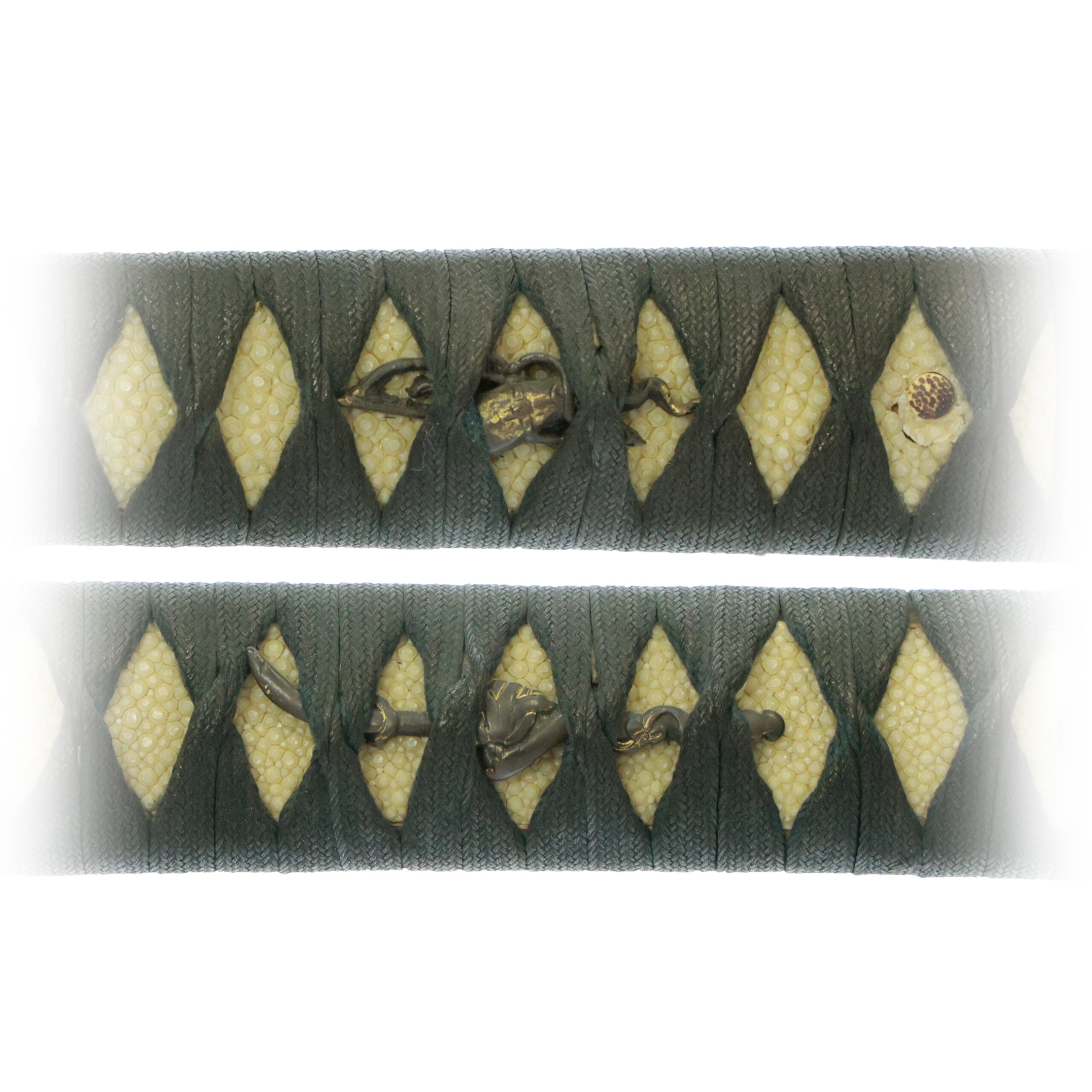
Tsuka and Menuki
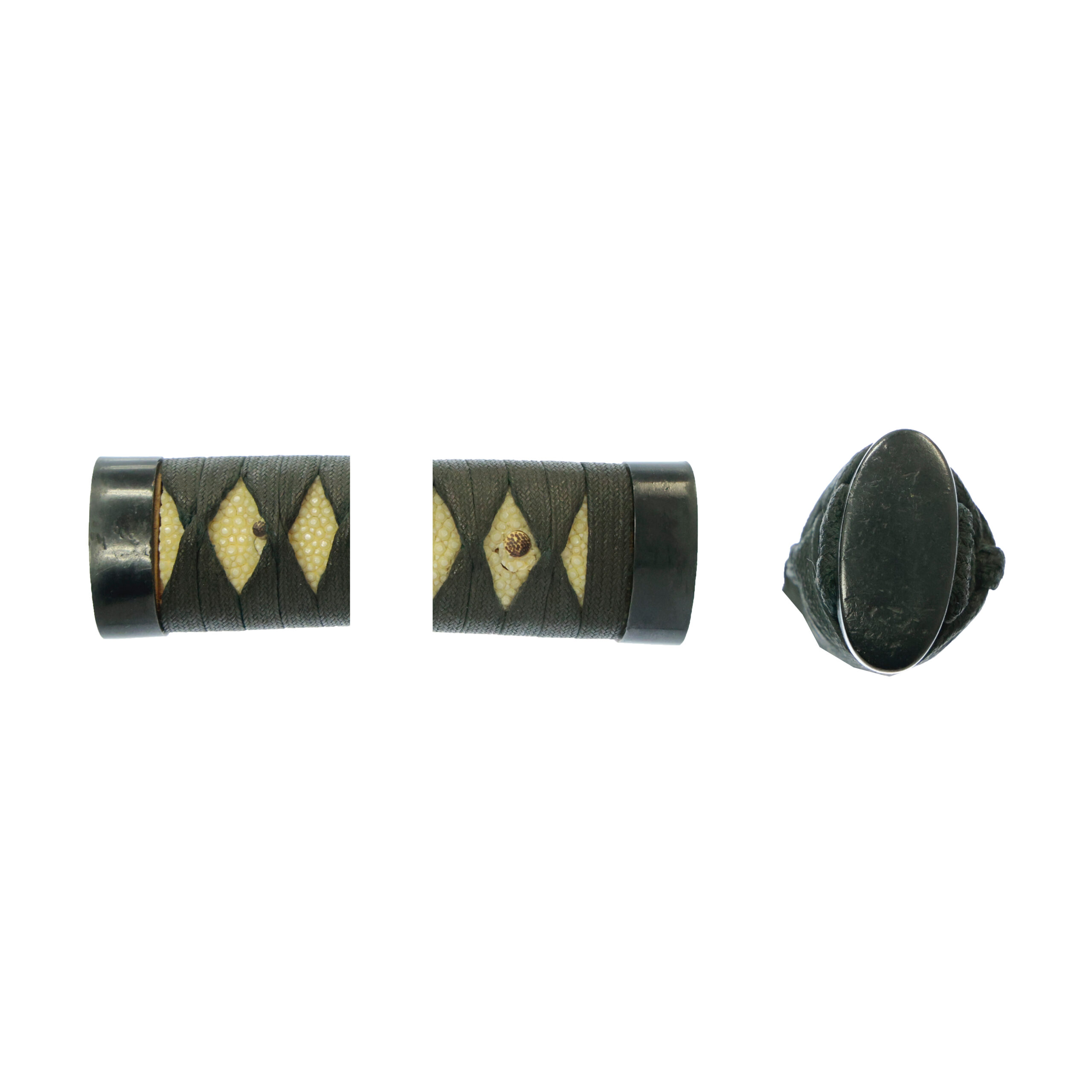
For this Menuki, two combinations which are related to weapons and tools of Samurai are used. The first, the upper Menuki, is the combination of Yumi (弓, bow) and Utsubo (弓靭 or 空穂, an arrow quiver), and the second, the lower Menuki, is the combination of Naginata (薙刀, Japanese halberd) and Saihai (采配, a tool made by attaching strips of cloth or paper to the end of a stick so that it could be seen from a distance).
The bow and arrow called Yumi-Ya (弓矢) was once one of the classical primary weapons for Samurai. Therefore, we could imagine that this motif reminded them of battlefields. Also, as an arrow goes straight forward, lots of Samurai loved the arrow pattern. Additionally, each home displayed decorated arrows wishing that it would exorcize evil spirits in the house. This talisman is called Hamaya (破魔矢) in Japanese, and this custom is still kept today. And, the other side is Kabuto (Samurai helmet) theme.
Naginata is a traditional Japanese pole sword and it was once a primary weapon like Yumi-Ya; this trend changed during the Samurai period. Also, Naginata has a longer history than Katana has as a weapon, and this weapon was highly valued among Samurai families because of its history, which led them to believe it was an excellent weapon.
The Saihai (采配) is a tool made by attaching strips of cloth or paper to the end of a stick so that it could be seen from a distance. It began to be used around the end of the Muromachi period (室町時代, 1336-1573) and is also written as 采幣, 再拝, or 采 in Japanese. This item initially comes from the Sai (旄), a tool used to call a tamed falcon, and its name influenced the name of Saihai. Those who could use a Saihai were limited to the commander of the Ashigaru (足軽, foot soldier) or above or Samurai warriors who had notable military exploits. Being allowed to possess this tool meant commanding a unit, and it was a convenient tool. At the same time, it also had a strong meaning of showing the rank and authority of a military commander. In an actual battle, the movement of the troops was controlled in detail by swinging the Saihai, such as using it as a signal to advance. The signal from this tool differs depending on each military commander, and there is no set pattern. Therefore, it was necessary for the soldiers who received the order to understand the content of the signal perfectly. A theory says that warlords chose their Saihais according to their preferences in the Warring States period. However, in the Edo period, when battles were abolished, this tool became more meaningful than ever as a symbol of authority. The Tokugawa (徳川) family, who ruled the Edo Shogunate, restricted the ownership of these tools based on social status. Saihais were generally made of paper or yak tail hair. Since the Saihai attached to this armor is made of paper, it is the one which was often used on battlefields.
Since a Meniki adds a little flair to the Japanese sword, it is said that using the design of Samurai related items such as the bow and arrows was based on the wishes of warlords hoping to become stronger than anyone else.
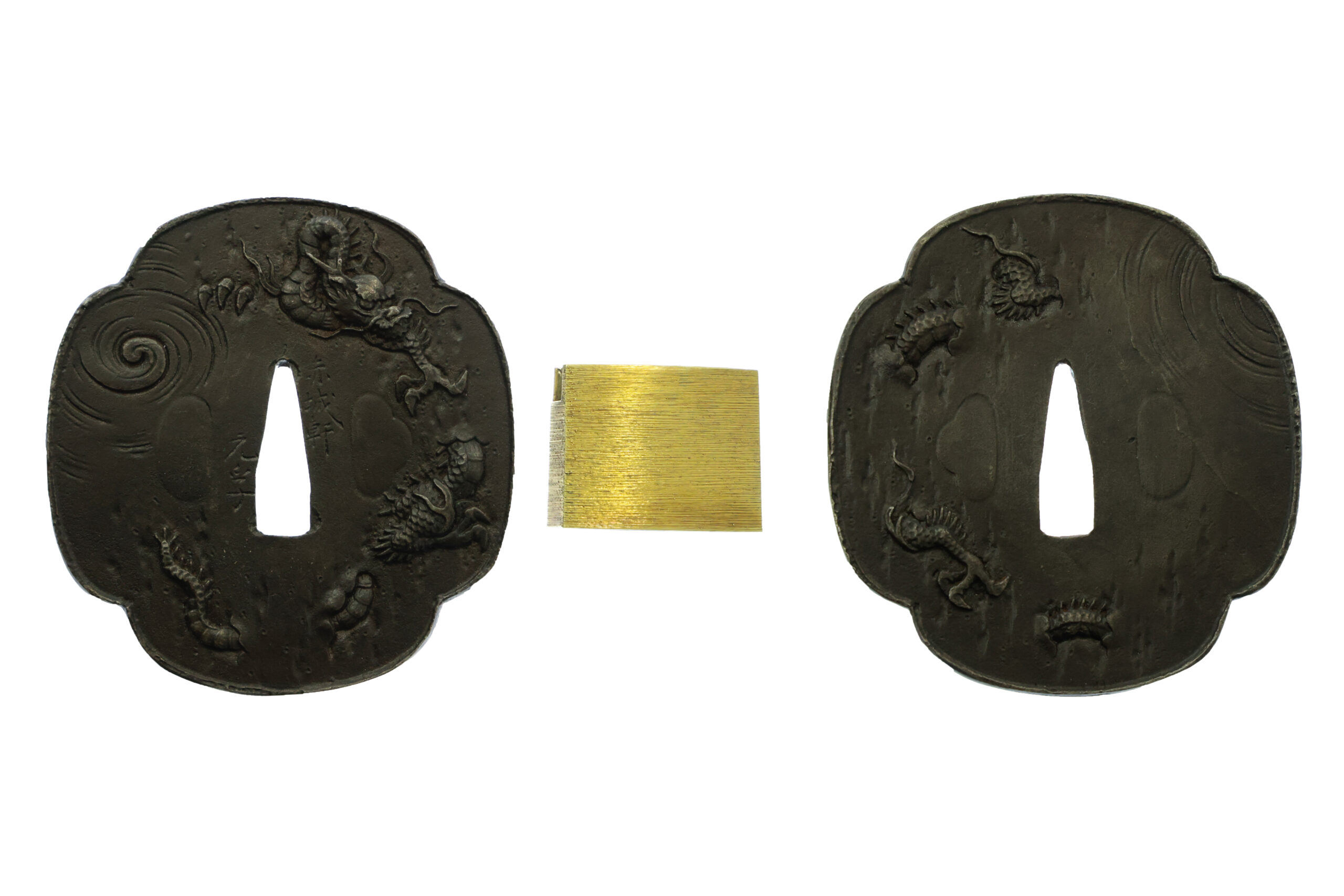
Tsuba and Habaki
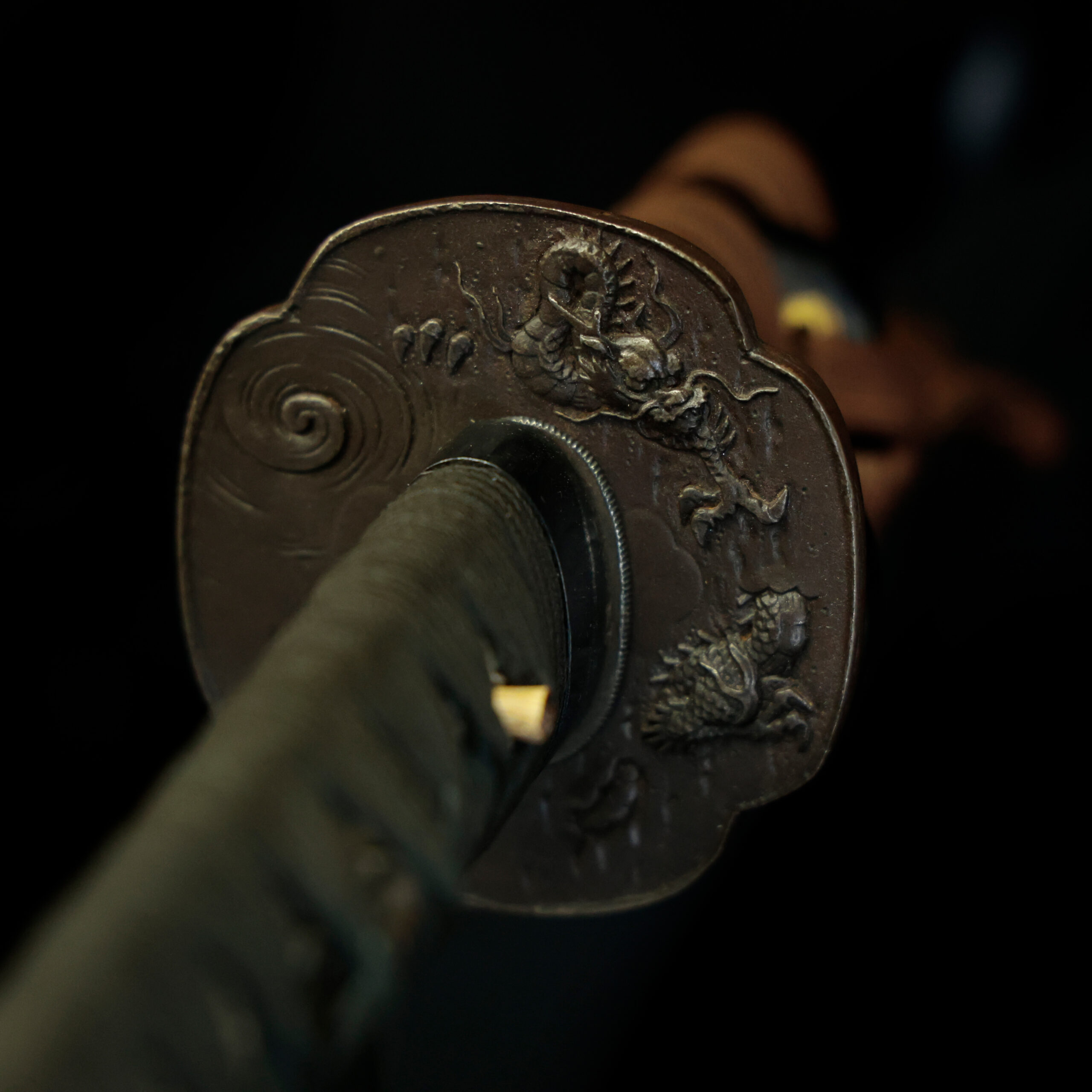
The theme of this Tsuba is the Unryu Zu (雲龍図). It is a combination of dragons (龍) and clouds (雲). Initially, dragons were imaginary creatures found in ancient foreign traditions or myths. Furthermore, it is regarded as a symbolic beast of auspicious signs. Its body is likened to nine animals: antlers are deer, the head is a camel, eyes are demons, the neck is a snake, the belly is the Mizuchi (蛟, a mythical animal in Japan that looks like a snake and has a horn and four legs), scales are fish, claws are falcons, palms are tigers and ears are cows. It was thought that the dragon would reign at the top of all animals because of its odd-looking appearance.
Regarding the cloud pattern, clouds bring blessed rain and snow, and their movements significantly affect the day’s weather. Due to its supernatural power, a theory says that gods, spirits, and dragons dwell in the clouds. In Japan, there is a belief that worships dragons as water gods. Since rice cultivation has flourished in this country, people always treat water as an essential resource. We imagine some people wished for a plentiful harvest in the Unryu theme. From such a religious aspect, we could infer that dragon designs were familiar to people.
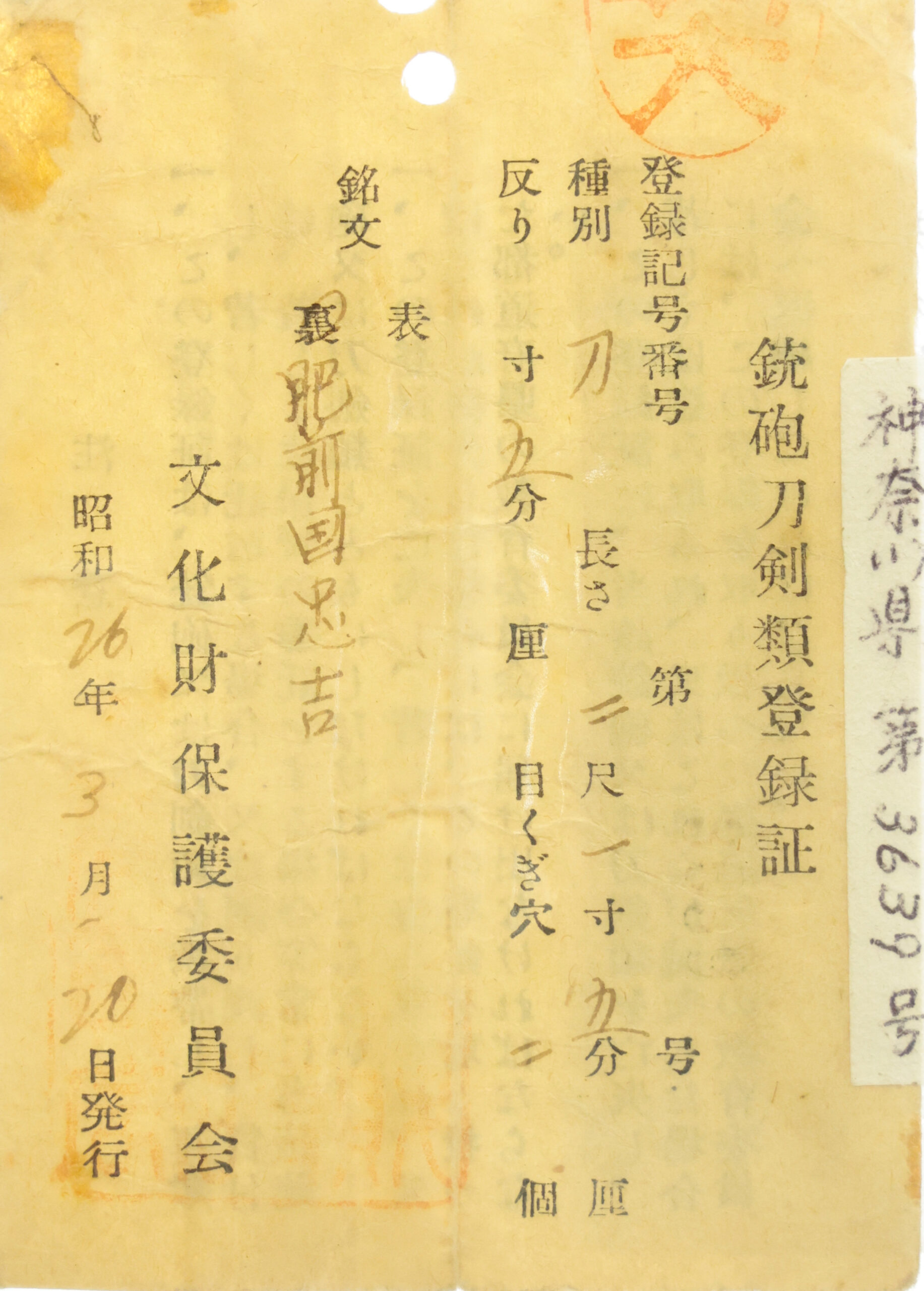
Authentication Paper
They authenticated the blade on May 31st in the 6th year of Reiwa (2024). They appraised it as Tokubetsu Hozon Touken, the blade especially worth preserving for Japanese society.

 NihontoWatch