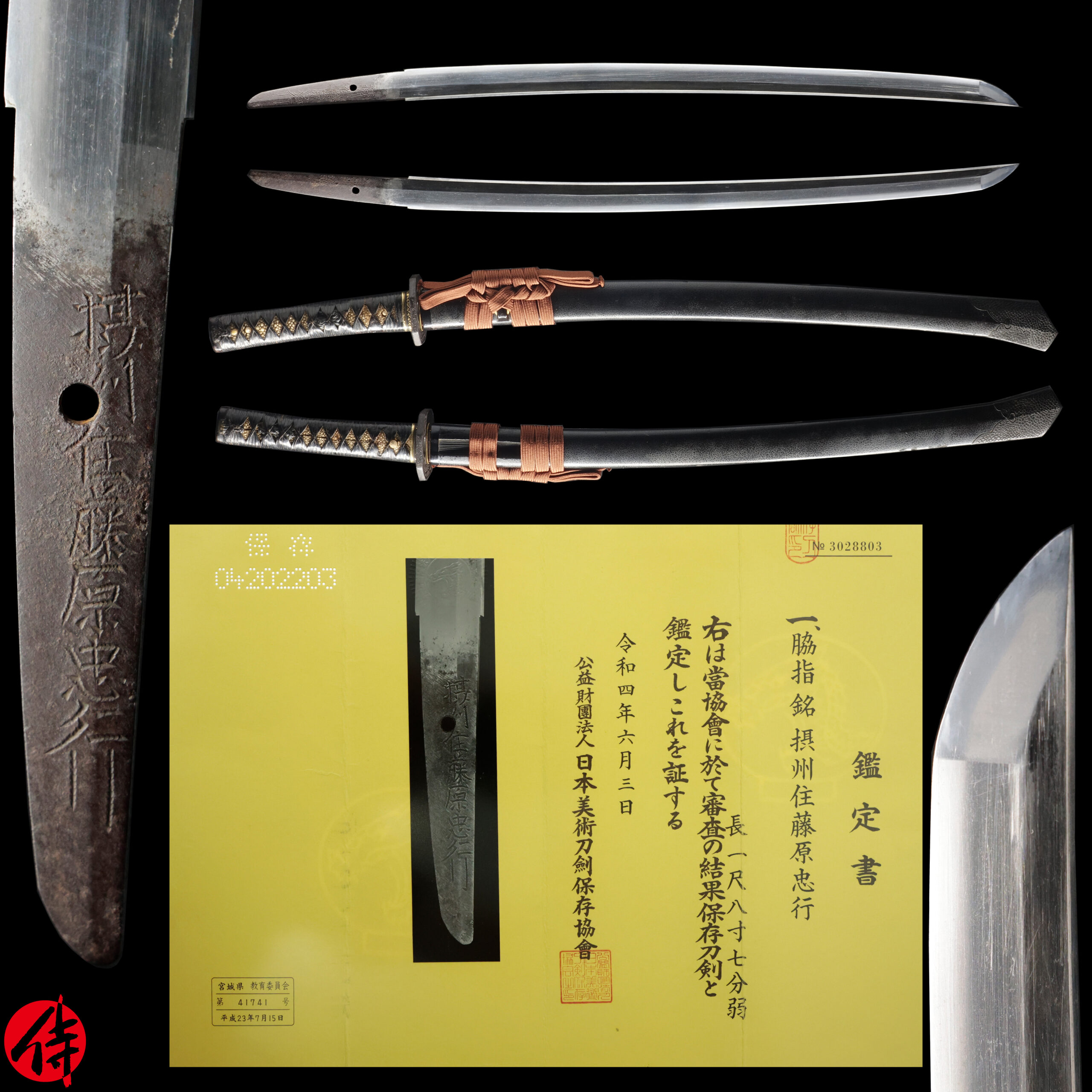
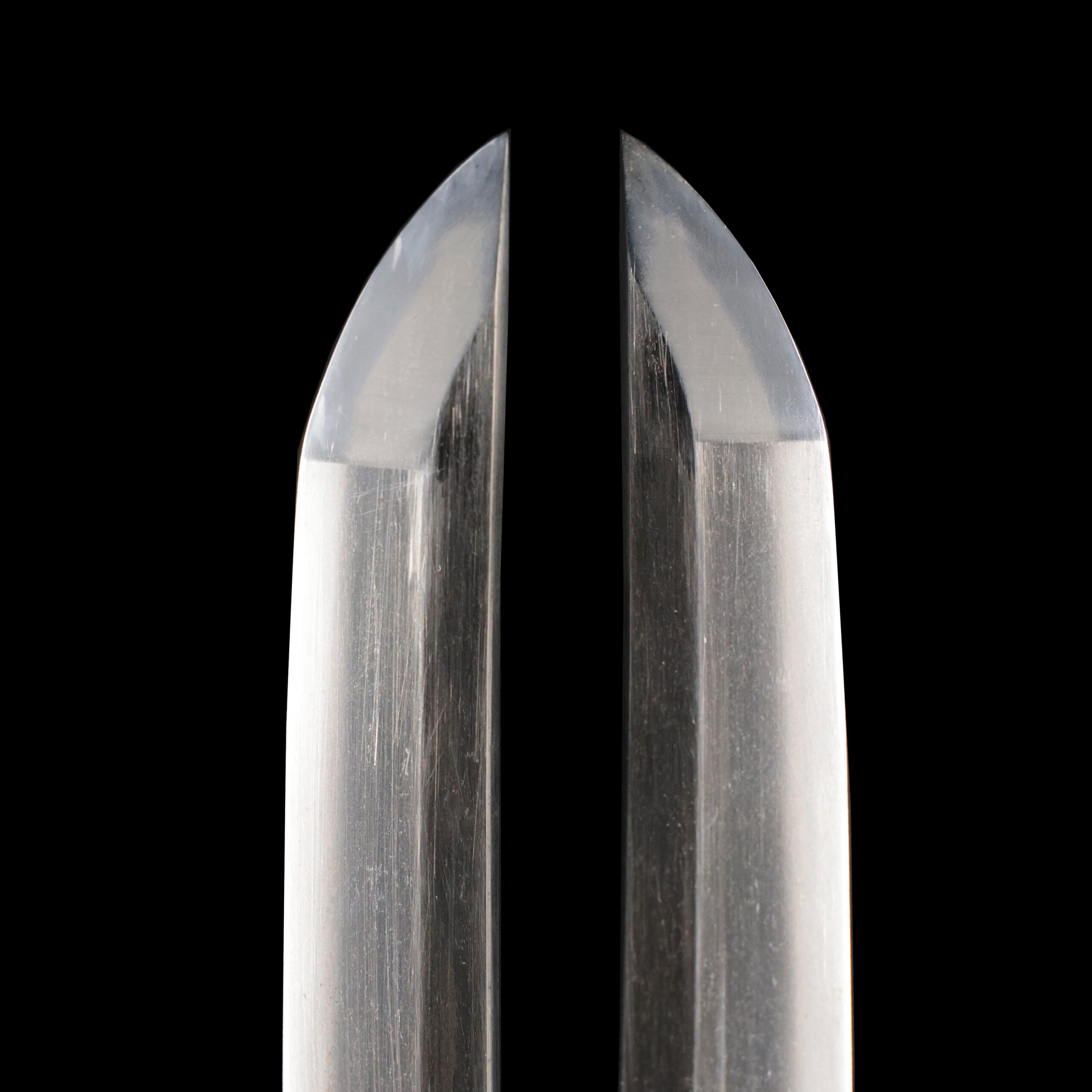
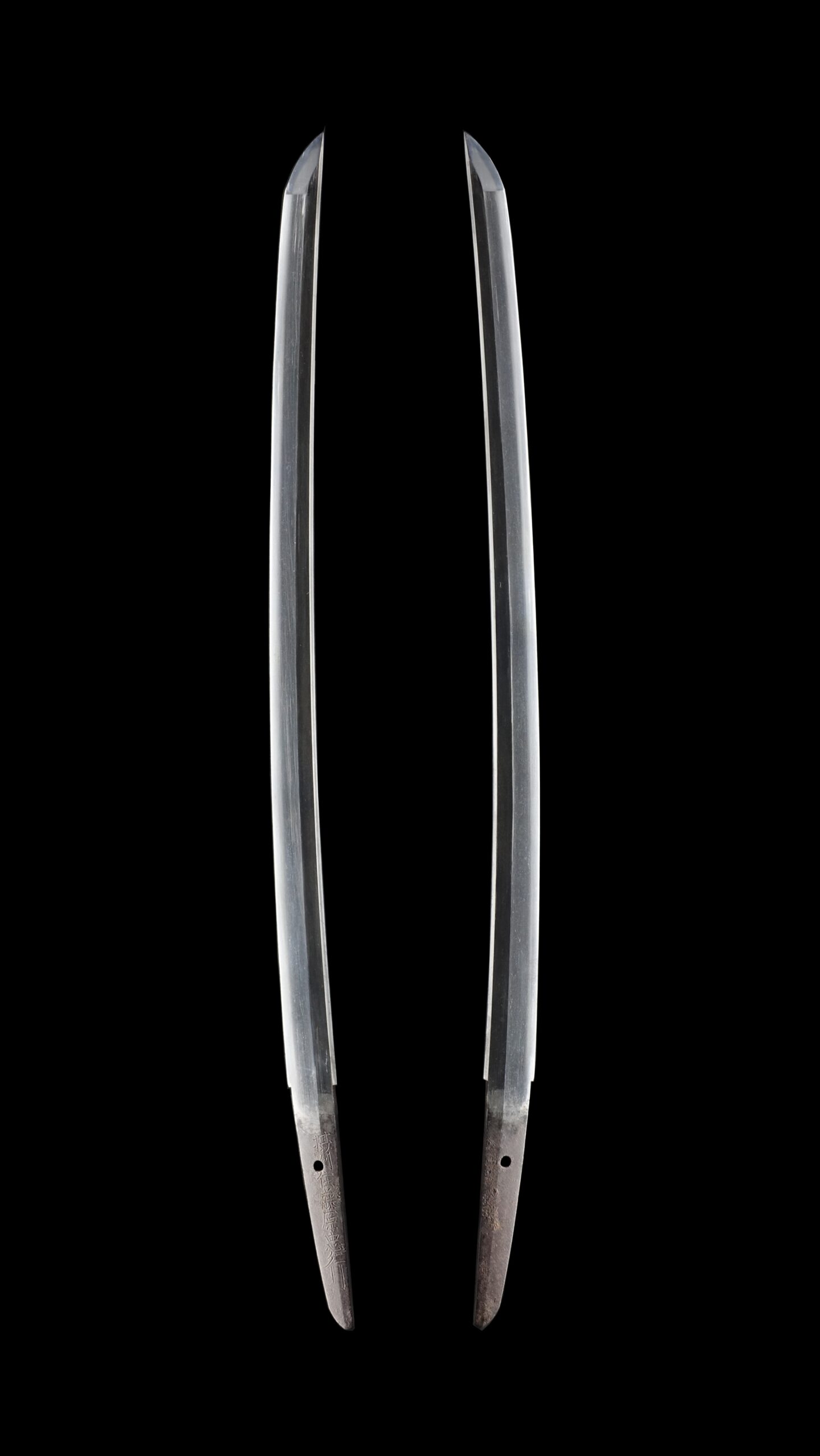
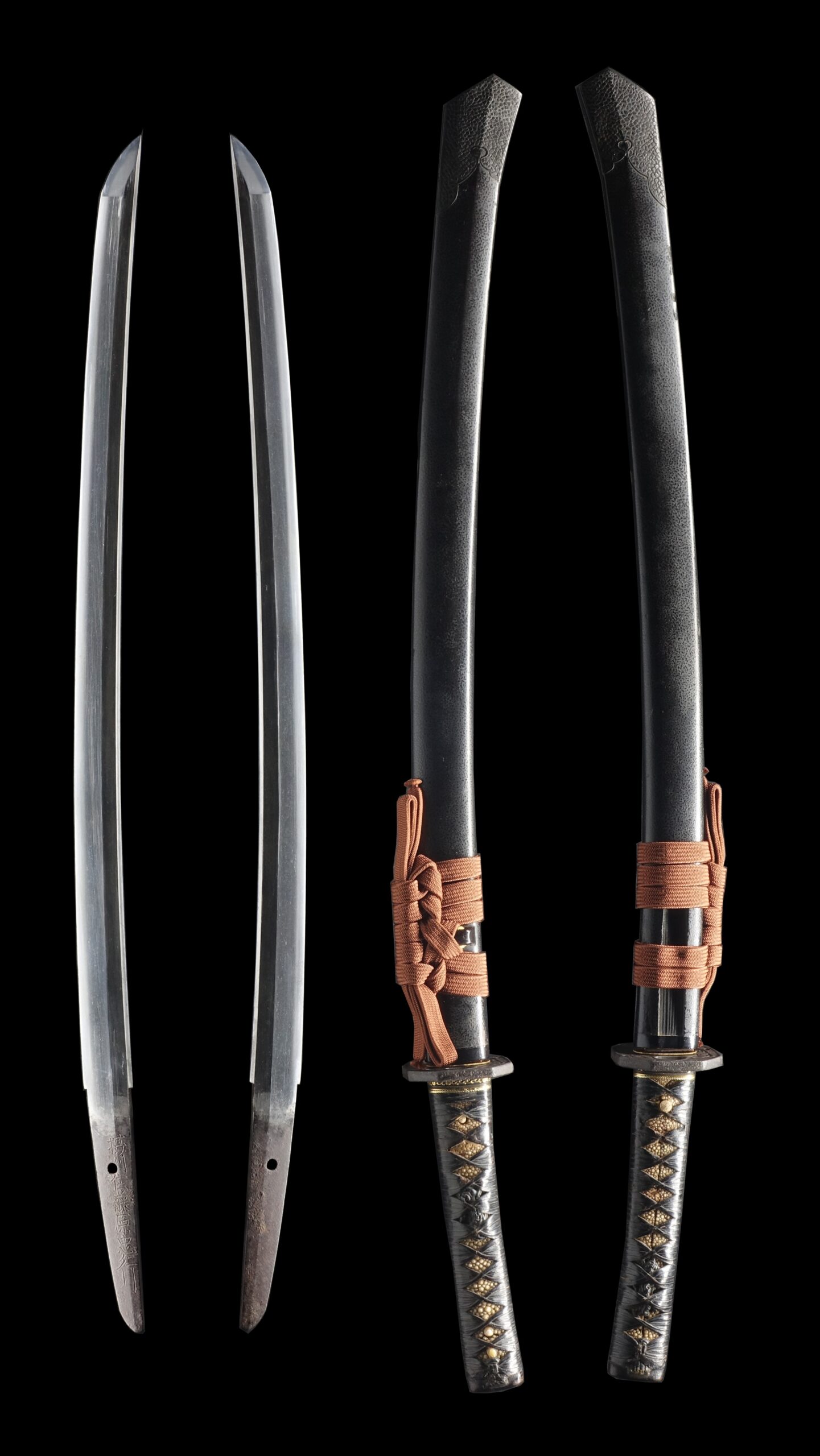
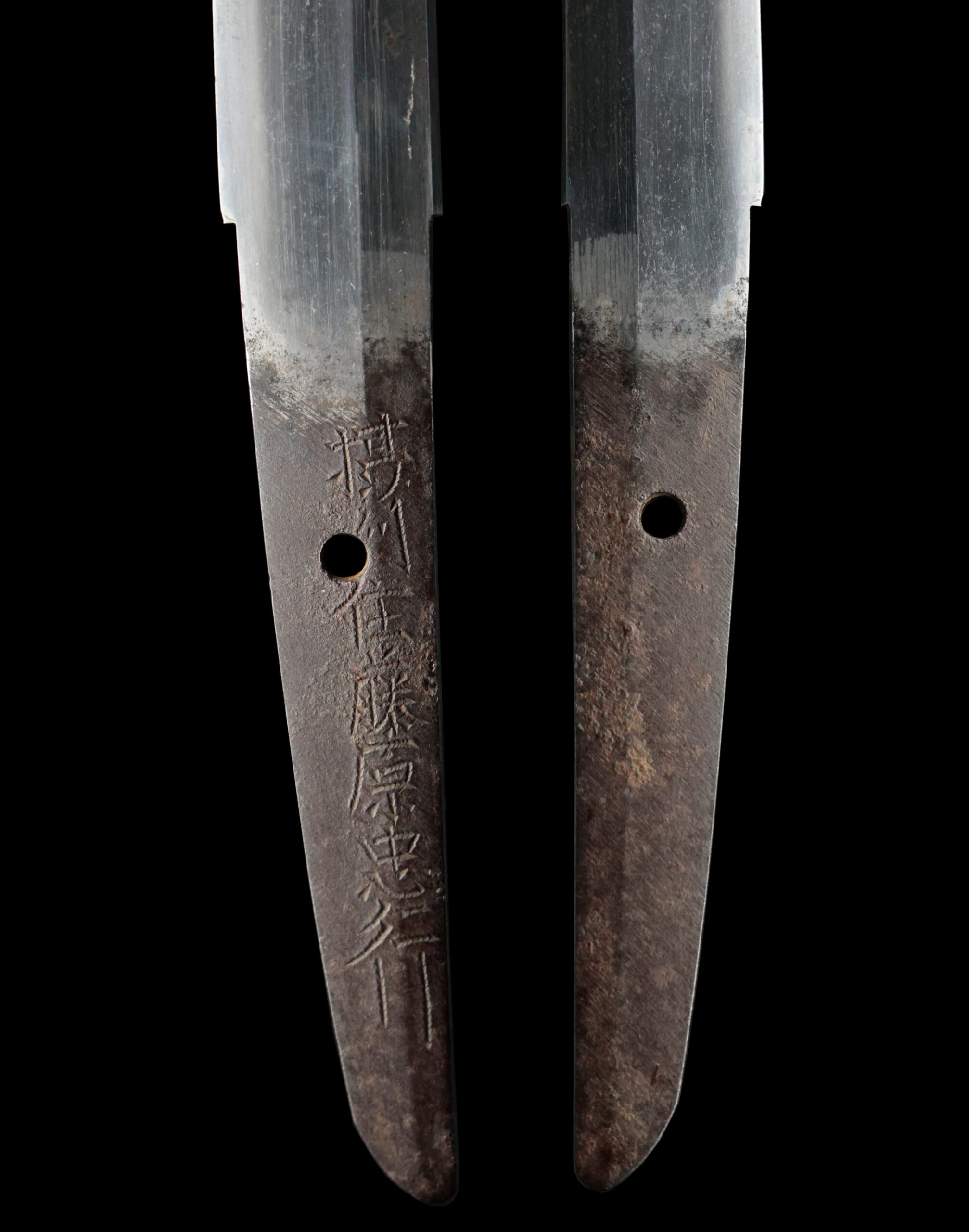
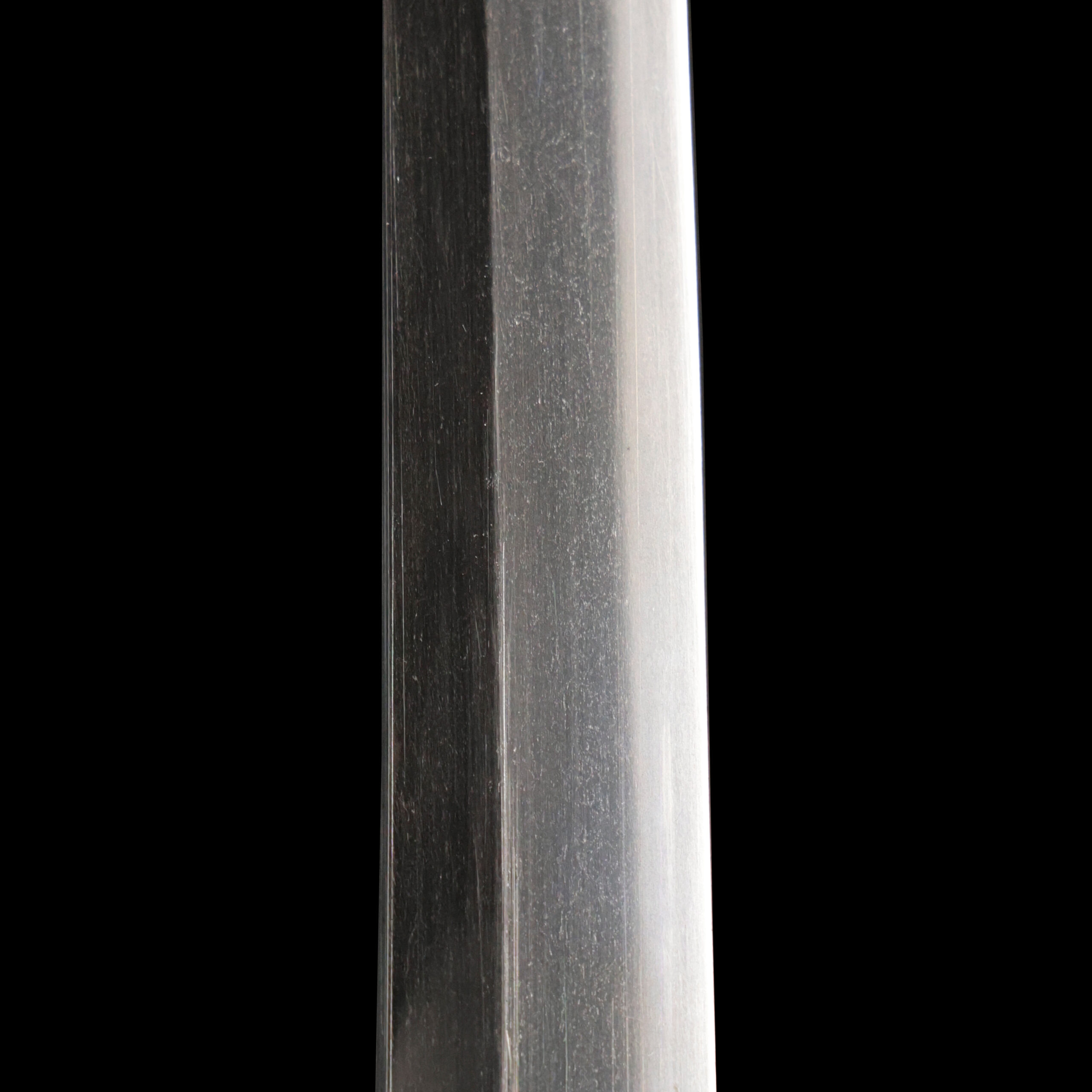
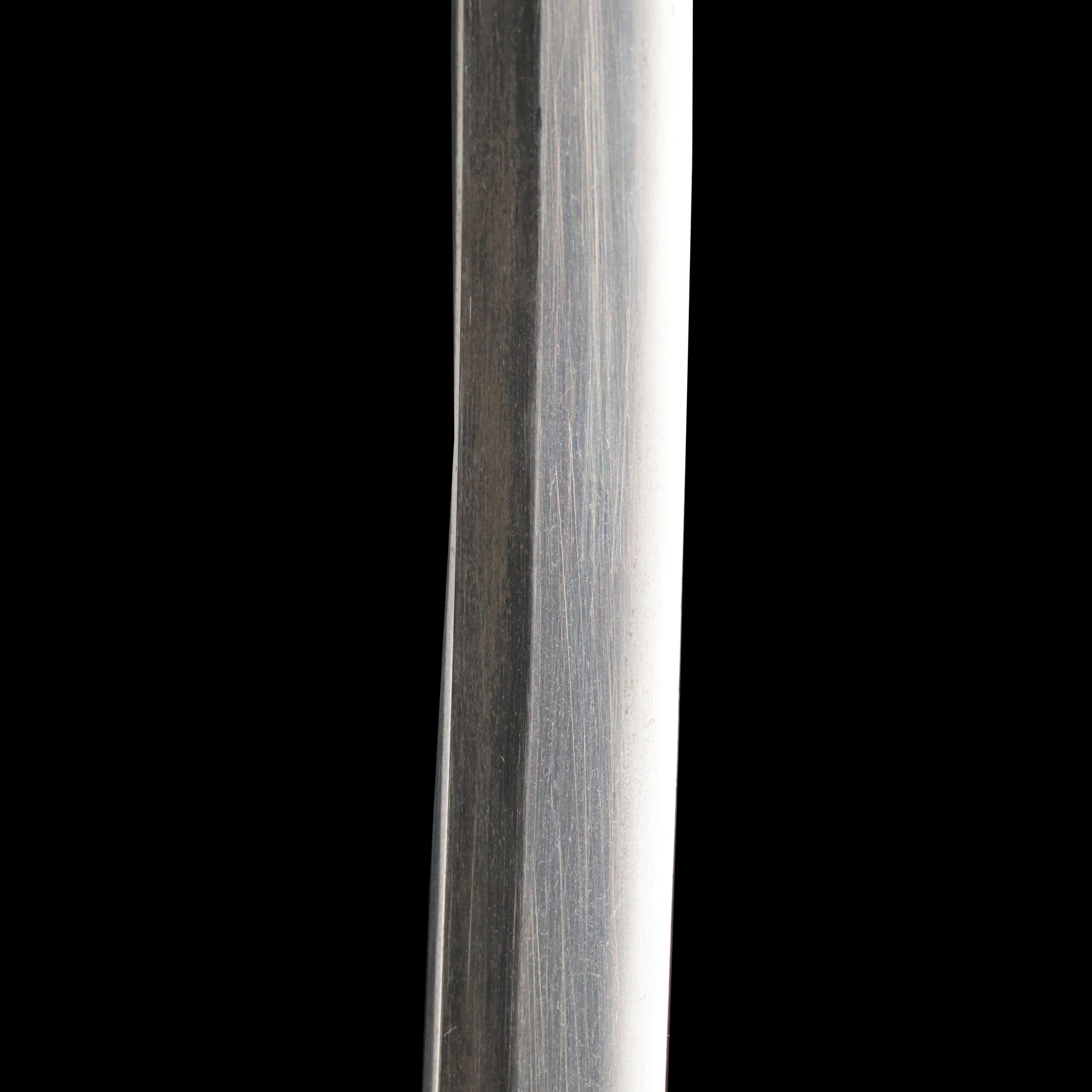
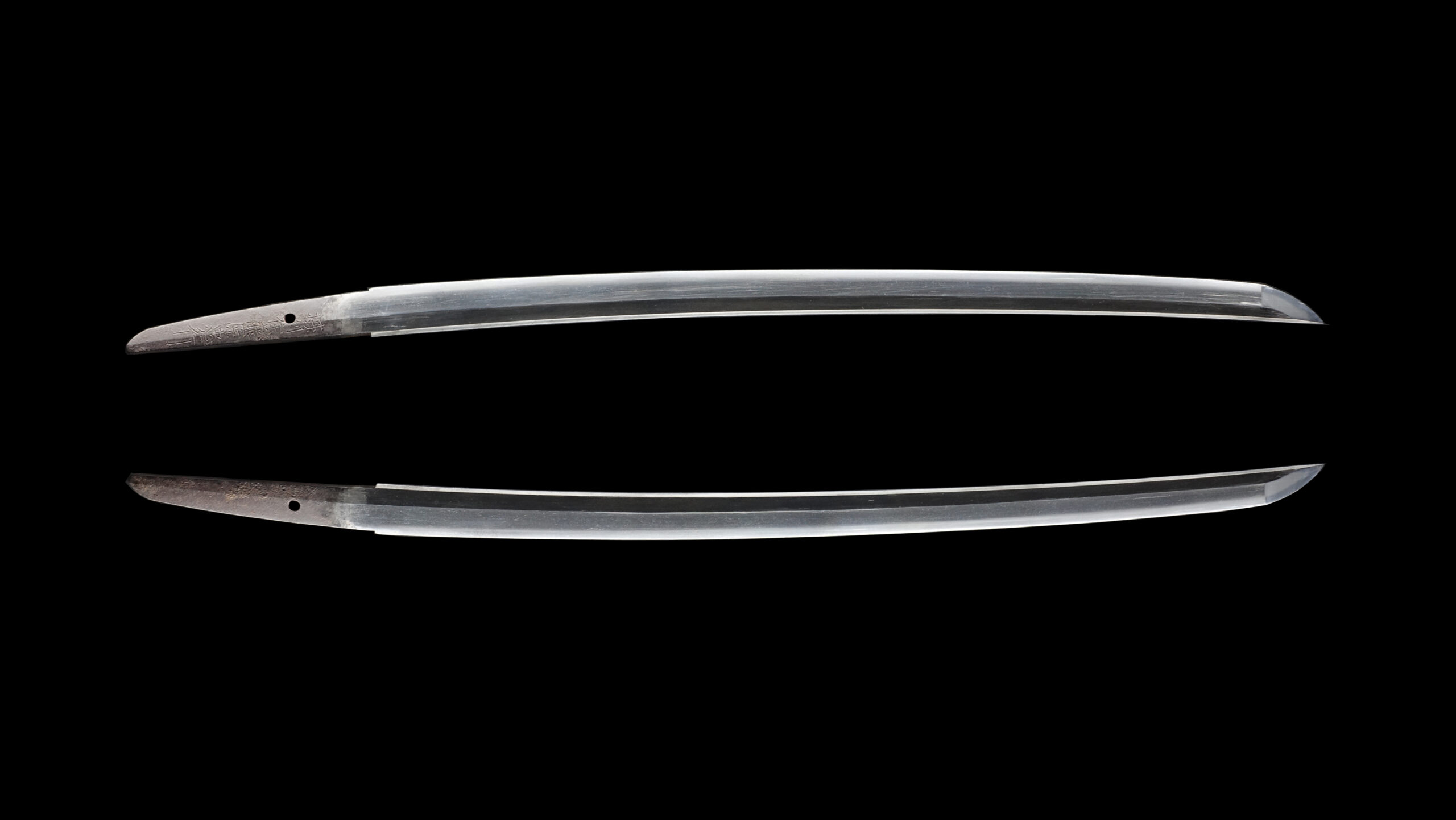
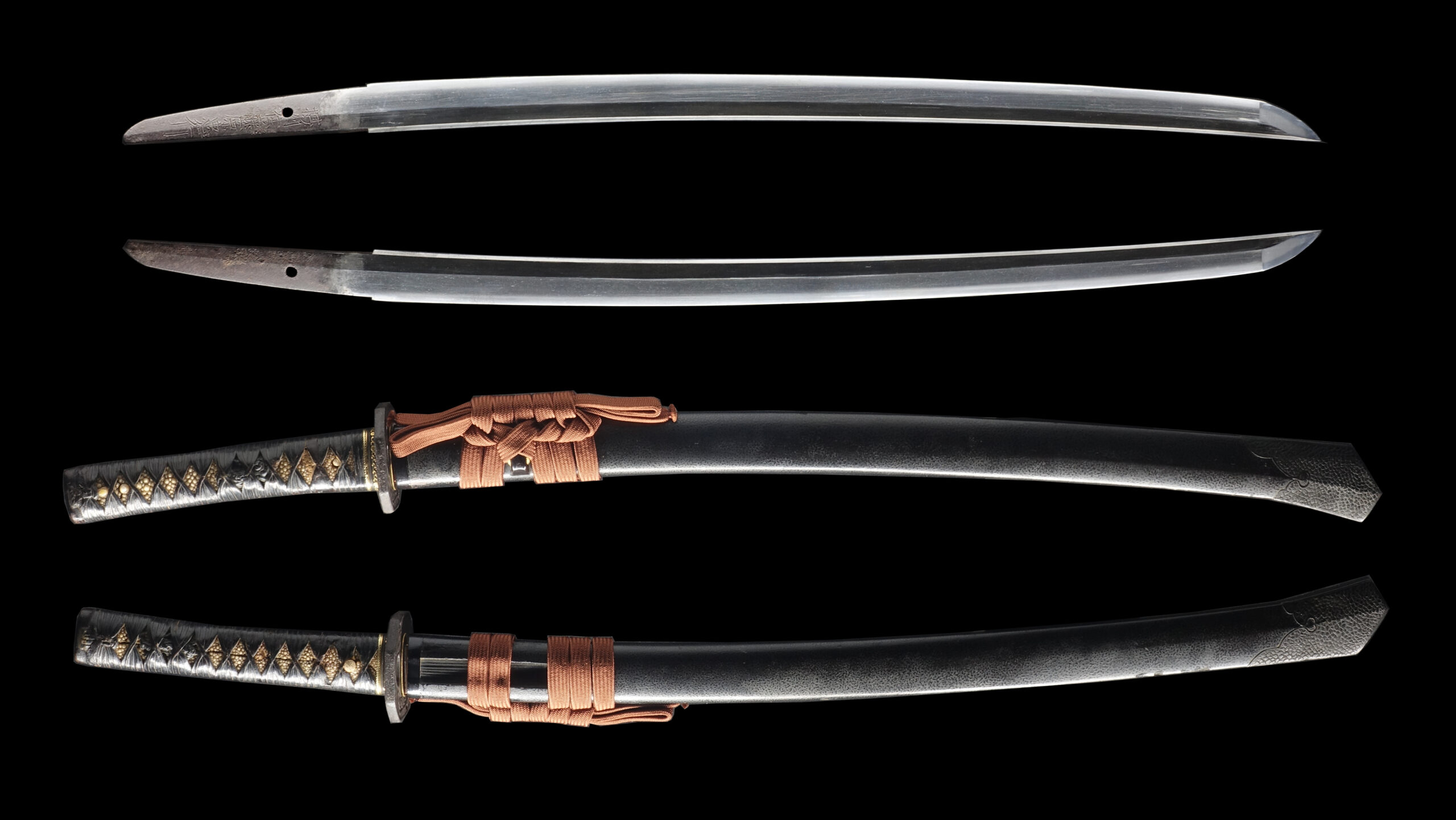
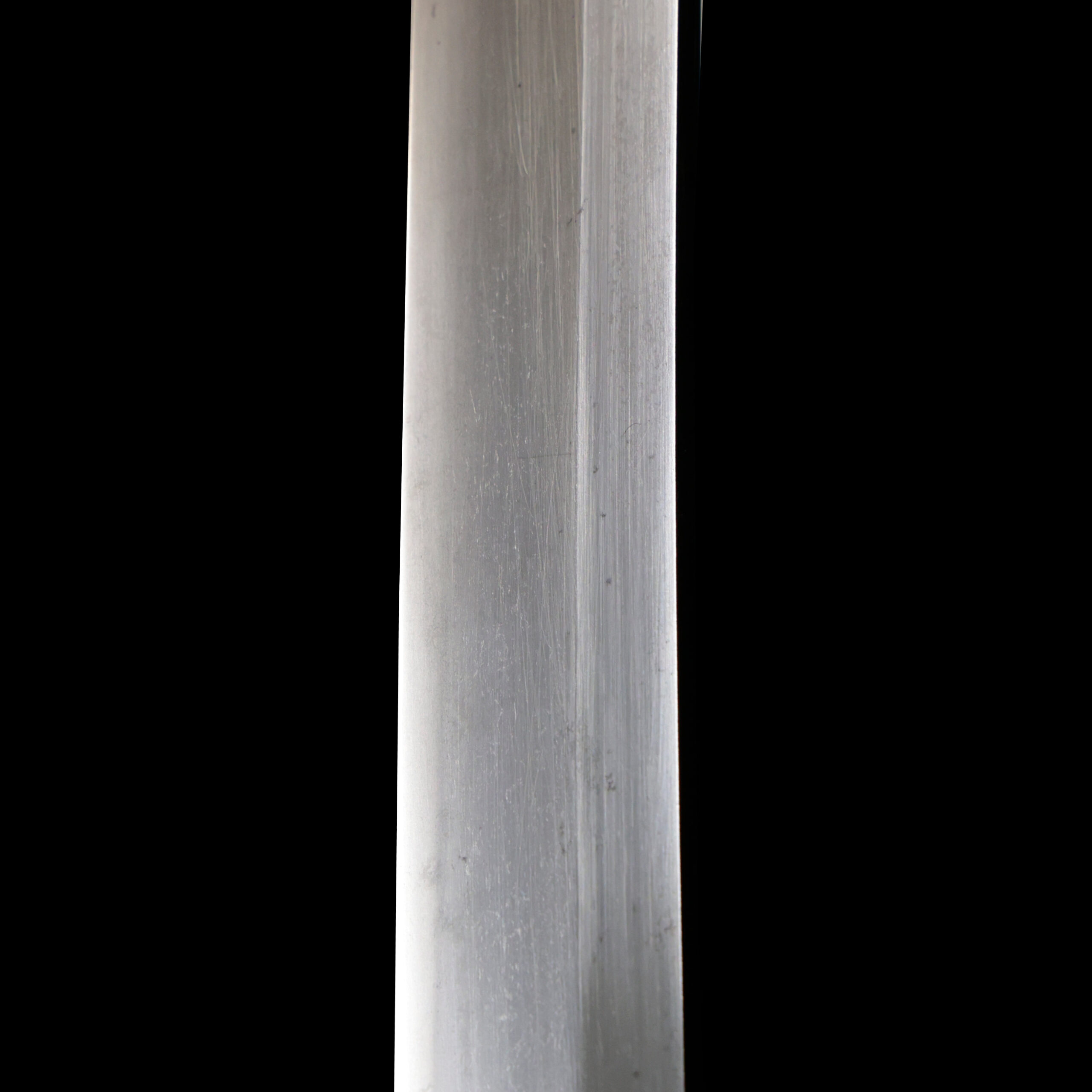
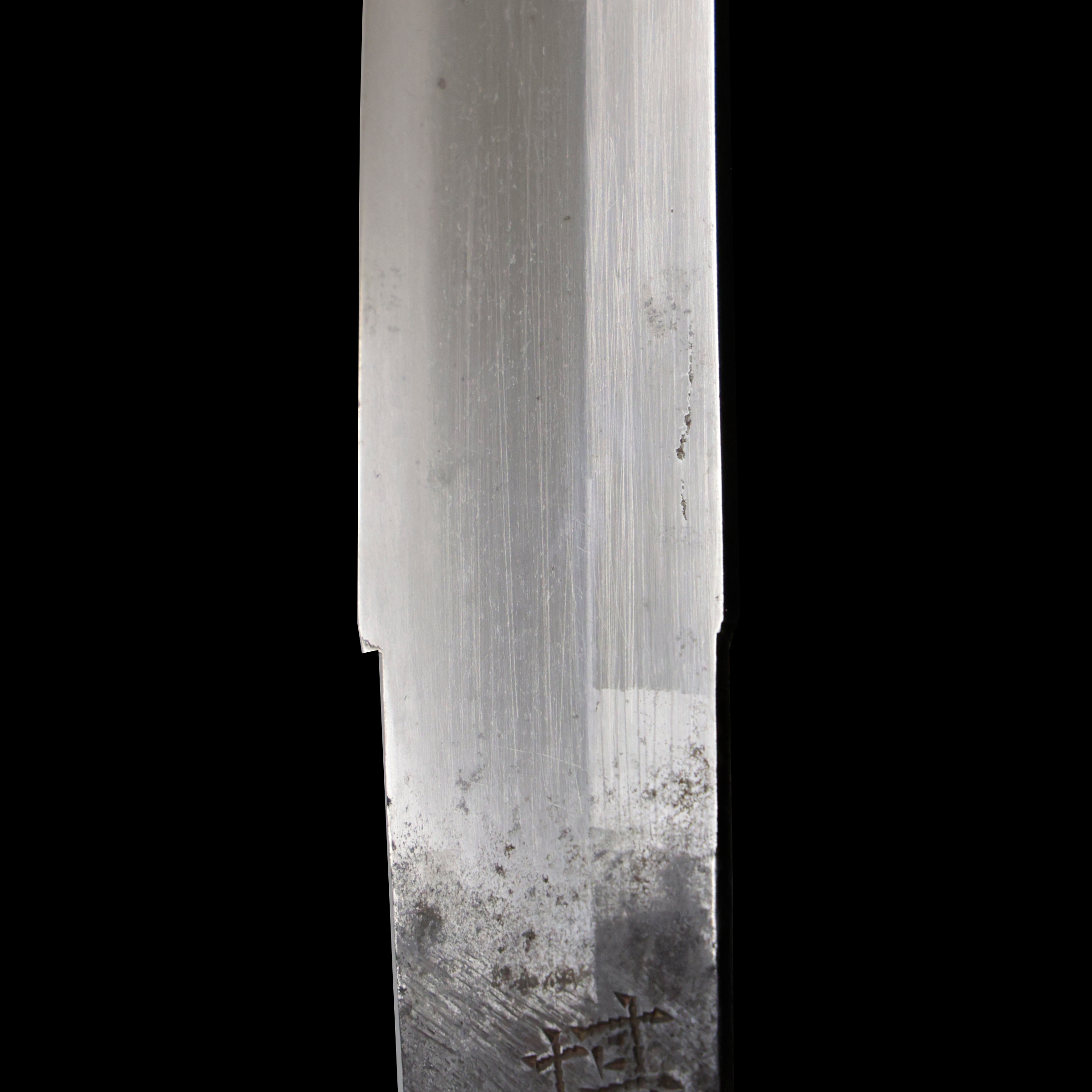
This blade was forged by Sesshu Ju Fujiwara Tadayuki (摂州住藤原忠行), whose birthname is Tarouemon (太郎右衛門), during the early Edo Period (the late 17th century). Sesshu is another name of Settsu province (today’s Osaka) and Sesshu Ju means that he resided in this area when he forged this blade. The maker’s name Tadayuki lasted several generations during the Edo period. Based on the signature, we believe the first-gen Tadayuki forged it.
The first-gen Tadayuki was the younger brother of Awataguchi Omi no Kami Tadatsuna (粟田口近江守忠綱), one of the most famous swordsmiths in Osaka in the early Edo period. It is said that the first-gen Tadayuki was an apprentice of Tadatsuna, so was the second-gen. And the first-gen often did Daimei for Tadatsuna while the second-gen helped them forged great swords. Daimei is a regular act where an apprentice or a child of the swordsmith signed his master’s name with his master’s permission, being involved in a sword-forging.
After the first-gen Tadayuki was given the honorable title Settsu no Kami (摂津守), he began to sign the name of Settsu no Kami Tachibana Tadayuki (摂津守橘忠行), Settsu no Kami Fujiwara Tadayuki (摂津守藤原忠行) and other name on his blade. Also, it is said that among the several-gen Tadayuki, the first-gen was most appreciated for his high sword-forging skill and the sharpness of his blades.
The blades forged by Tadayuki are categorized as Osaka Shinto. Shinto is Japanese Sword terminology that refers to the swords forged during 1596-1781. The blades made in Osaka area during this period are called Osaka Shinto. There are many famous swordsmiths in this Osaka Shinto era. After Hideyoshi Toyotomi built Osaka castle, Osaka city flourished as a castle town and became the business center. Many swordsmiths moved to Osaka to look for better opportunities. They not only forged swords for those Samurai who lived in Osaka but also for feudal lords nationwide. Ikanshi Tadatsuna (Awataguchi Omi no Kami Tadatsuna), Inoue Shinkai, and Tsuda Sukehiro are the most famous ones among those many swordsmiths.
One of the most notable characteristics of Osaka Shinto is its beauty in Jigane. Jigane is a visible steel surface pattern created by folding and hammering during the forging process), which made it possible by the location of Osaka. Osaka had close access to the Tamahagane (special carbon steel to make Japanese swords) production sites. The swordsmiths residing in Osaka were able to get high-quality carbon steel from these sites.
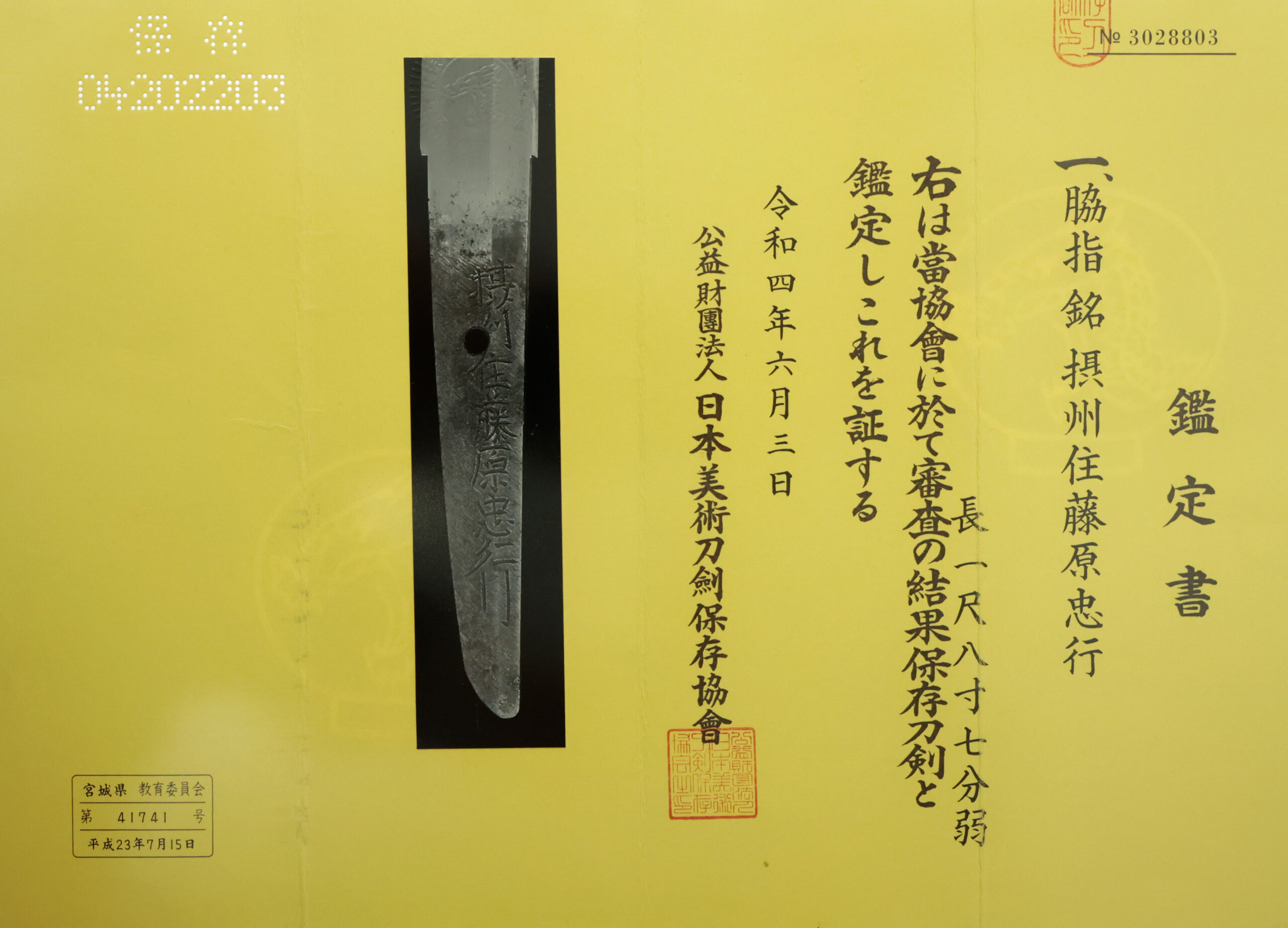
This blade is appraised as a Hozon Token (保存刀剣) issued by NBTHK (Nihon Bijutsu Touken Hozon Kyokai:日本美術刀剣保存協会).
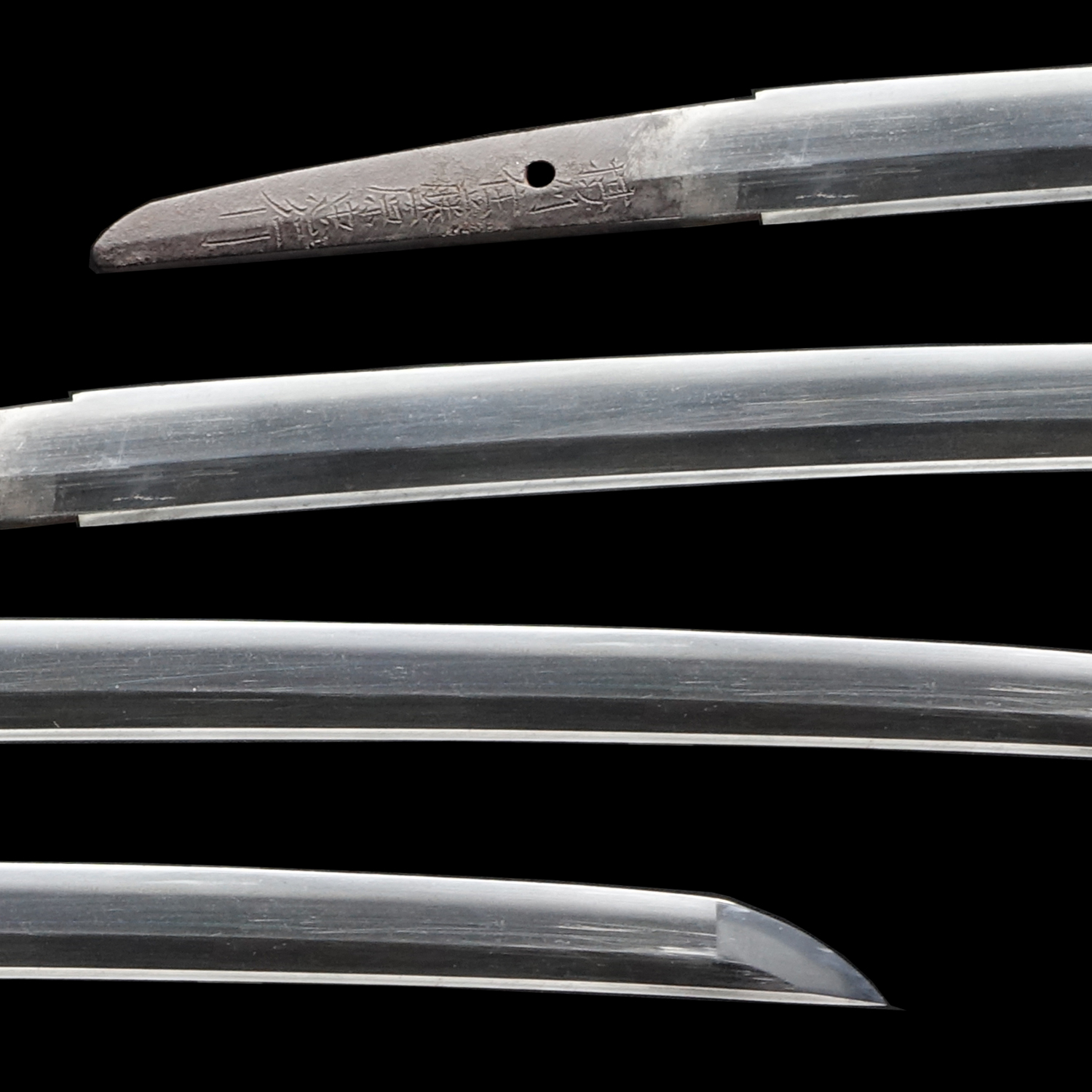
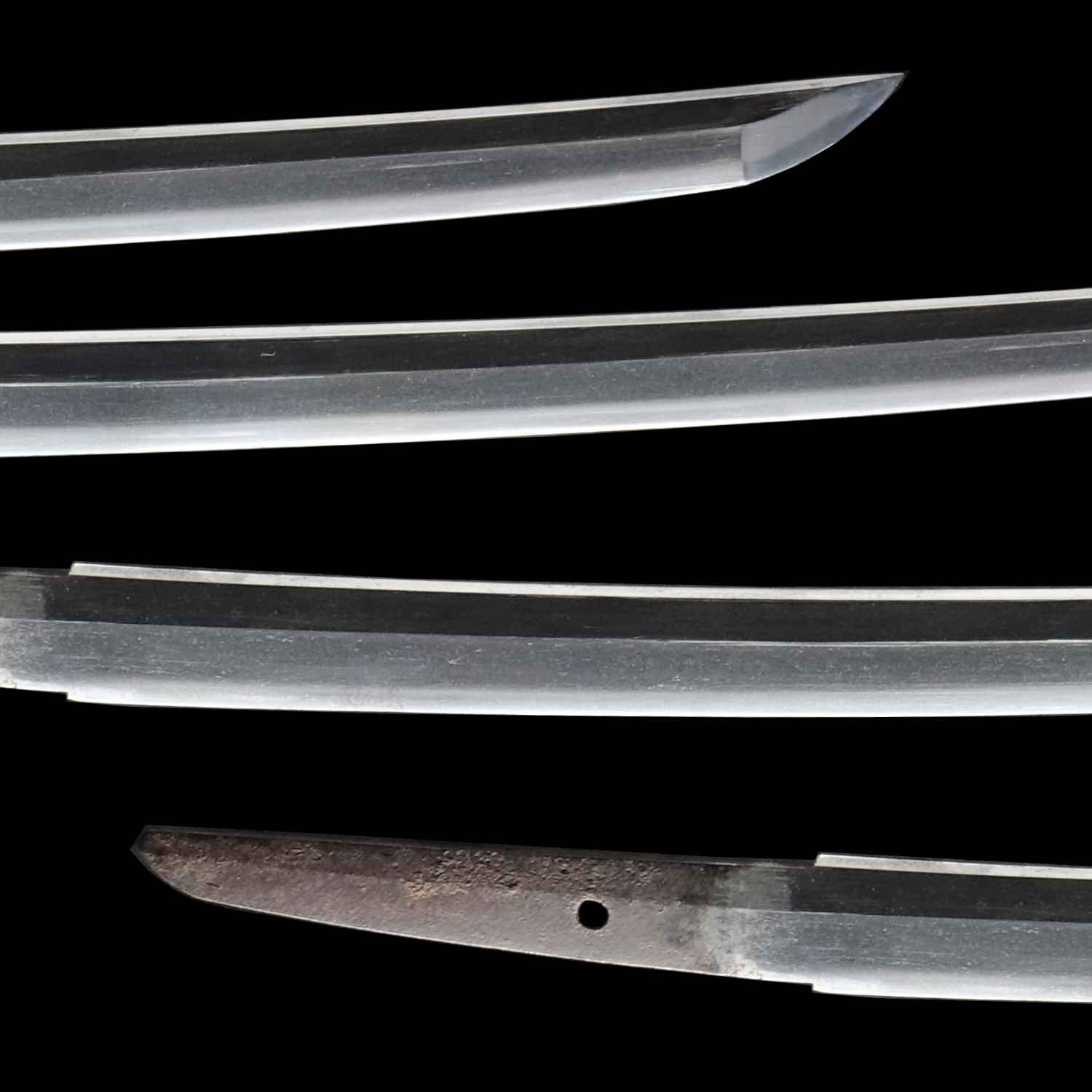
*Please keep in mind that there are a few Kitae Kizu and the black rust on this blade.
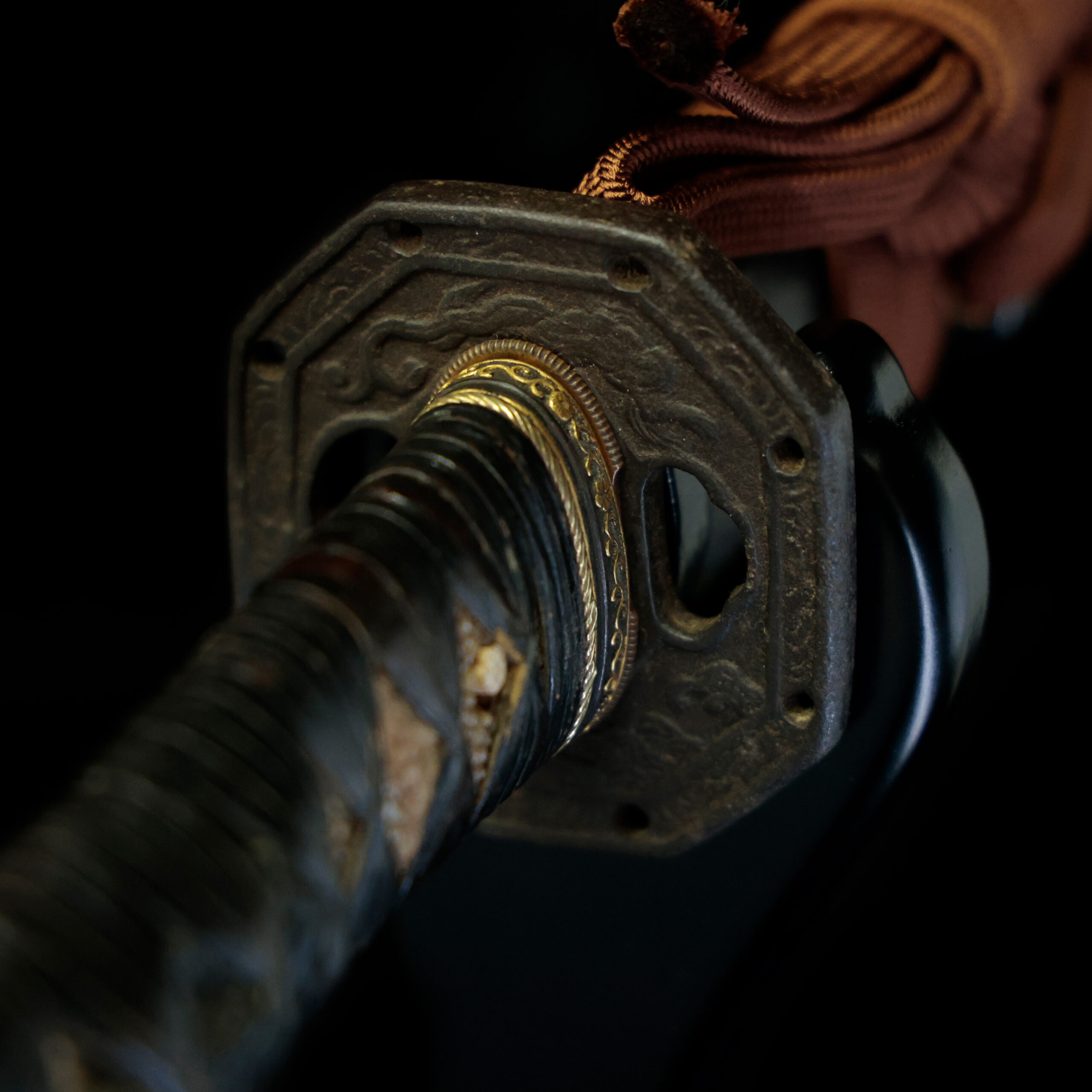
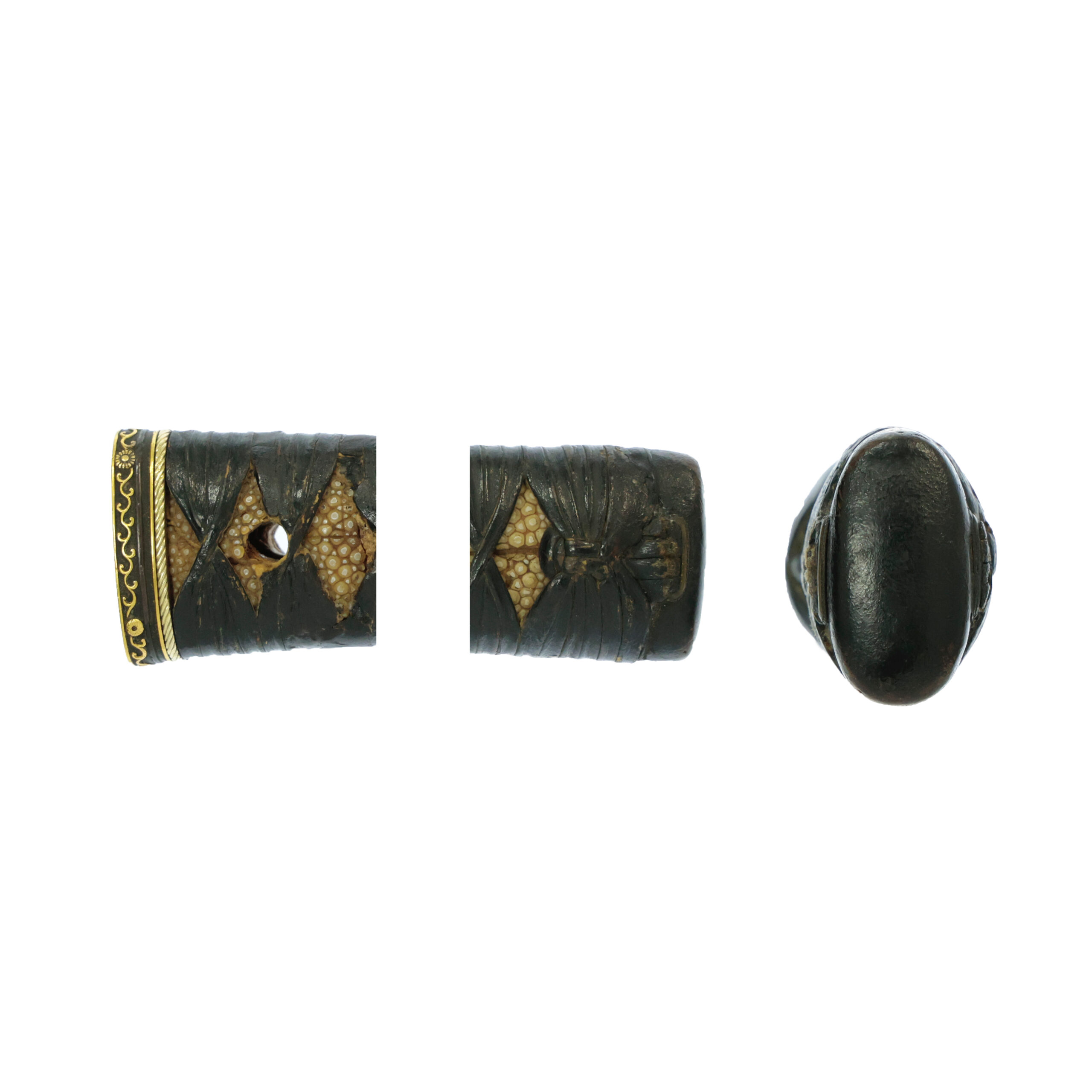
Fuchi-Kashira
The arabesque (唐草, Karakusa) pattern is depicted with golden color on this Fuchi.
Karakusa is a pattern in which stems and leaves of vines are twined and make curves. Since ivy has a strong vitality and grows up without interruption, people regarded this design as a symbol of prosperity and longevity. Vine is called Tsuru (蔓) in Japanese, and it has another pronunciation; “Man.” There is a word 万 (it is also read Man), which means ten thousand. In the Karakusa pattern, leaves and vines are connected like Obi (帯, belt). The word “帯” can also be read “Tai.” Due to its pronunciation, the term “代 (Tai)” is associated. From this word-association game, an idiom 万代 is associated, and it means a thousand generations. In other words, we could imagine that people used this design wishing prosperity and longevity for their clans for a long time.
Also, the flowers designed on this Fuchi might be the chrysanthemum (菊, Kiku). A long time ago, the chrysanthemum was used as a medicine for obtaining a long life in China, and it was brought to Japan with this thought in the Nara period (648-781). Chrysanthemum is one of the flowers which symbolizes fall, and people appreciate it very much since ancient times. As its petals form radially, the chrysanthemum has been likened to the sun. That is why this flower pattern is treated as the symbol of perpetual youth and longevity or good health. “Kiku no Gomon (菊の御紋)” is a kind of chrysanthemum pattern, and it has been used as the crest of the Emperor and the royal family in Japan so that it is well-known as a noble pattern.
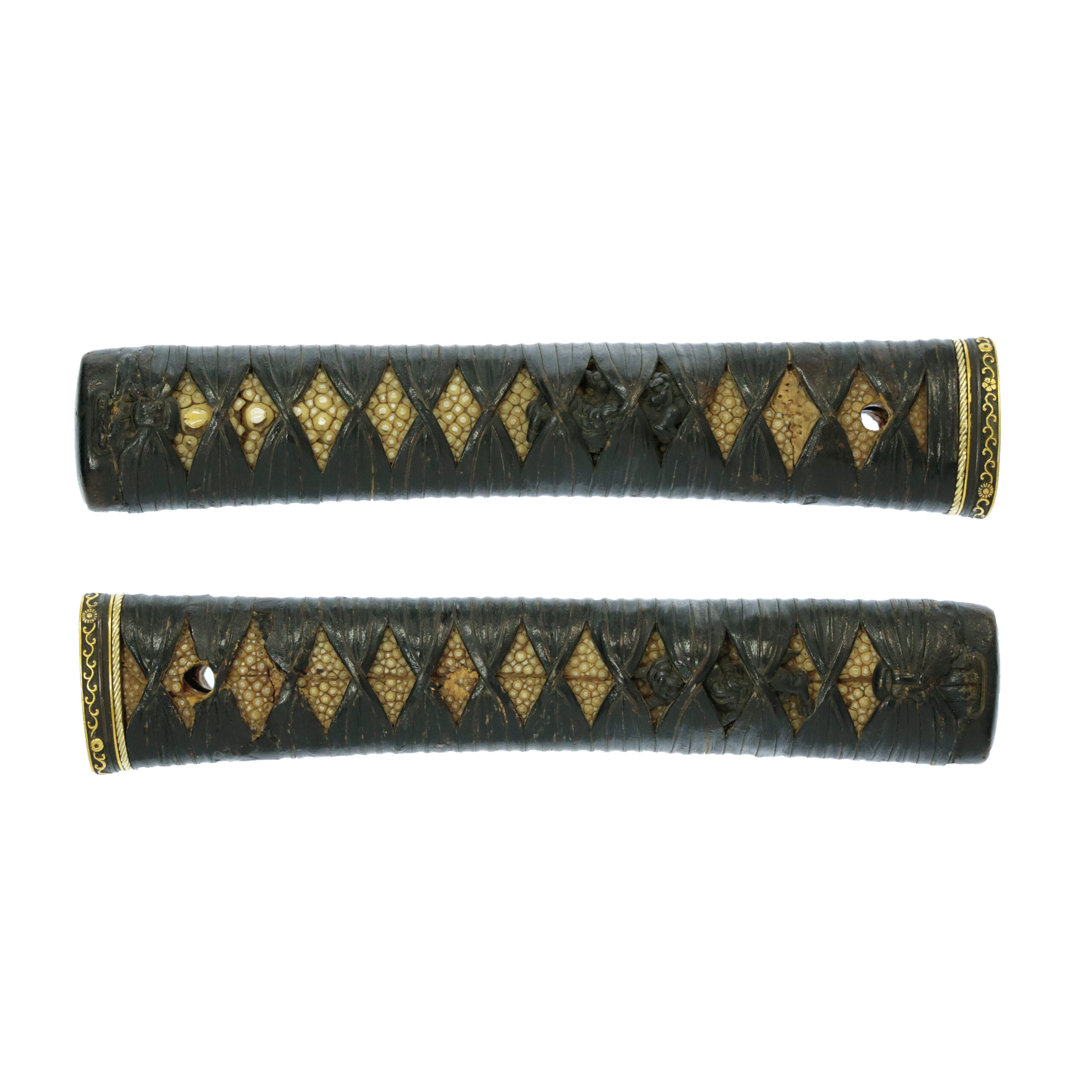
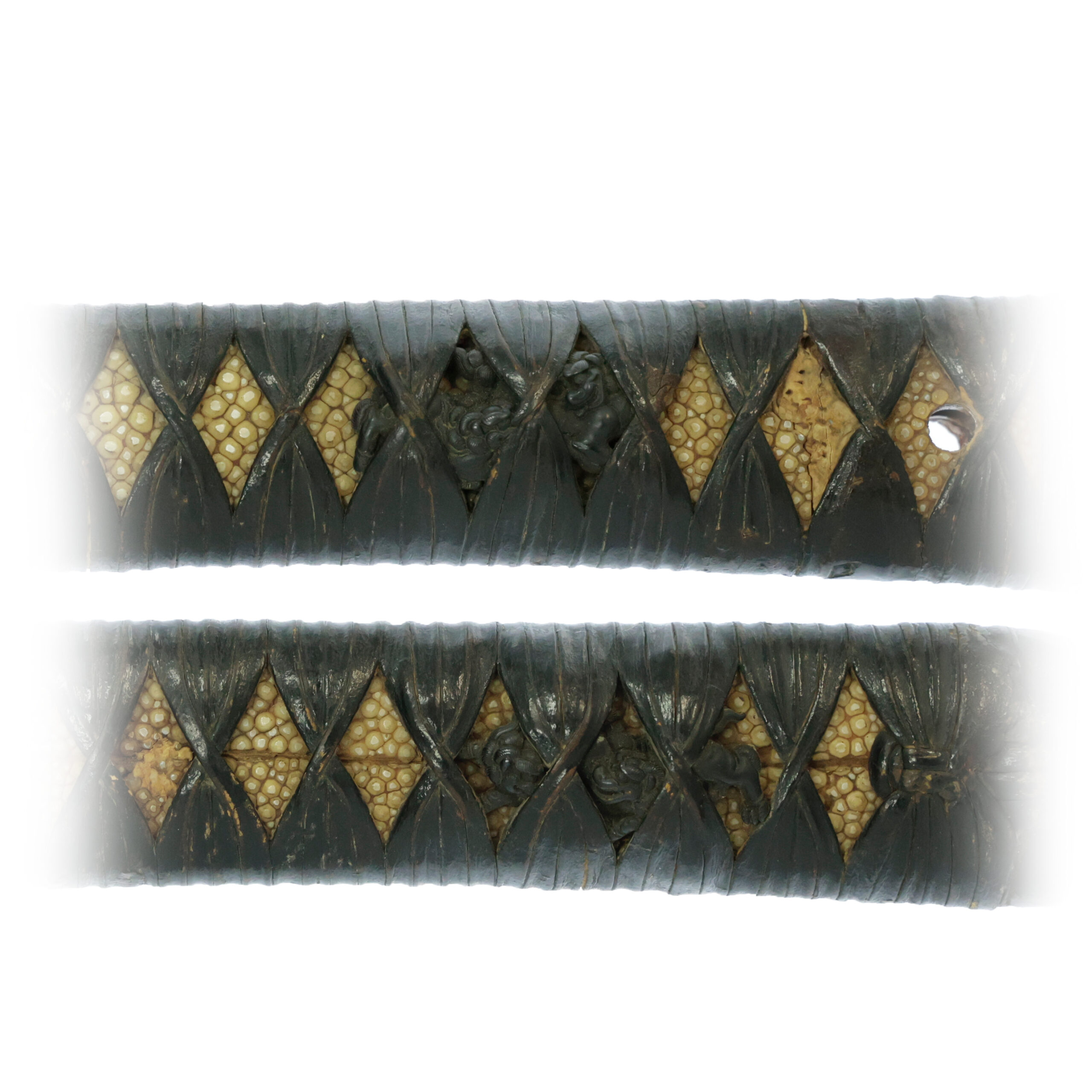
Tsuka and Menuki
The motif of this Menuki is Shishi (獅子). You would find the figures of animals that look similar to lions. These beasts are the Karajishi (唐獅子). The Shishi (獅子) means a lion in Japanese, and the Karajishi is a lion brought from the continent to Japan in the Toh period (唐, Tang dynasty, 618-907). The Karajishi typically has curly hair for its head, neck, body, and tail. A simplified pattern of this curly hair is carved as the body hair pattern of the Karajishi on this Inro. In Buddhism, the Karajishi is regarded as a symbol of wisdom, and Monju Bosatu (文殊菩薩, Manjushri Bodhisattva) rides lions. According to a theory, the Karajishi is the origin of Komainu (狛犬, stone guardian dogs that exorcize evil spirits). It shows this beast motif has been familiar to Japanese people since ancient times.
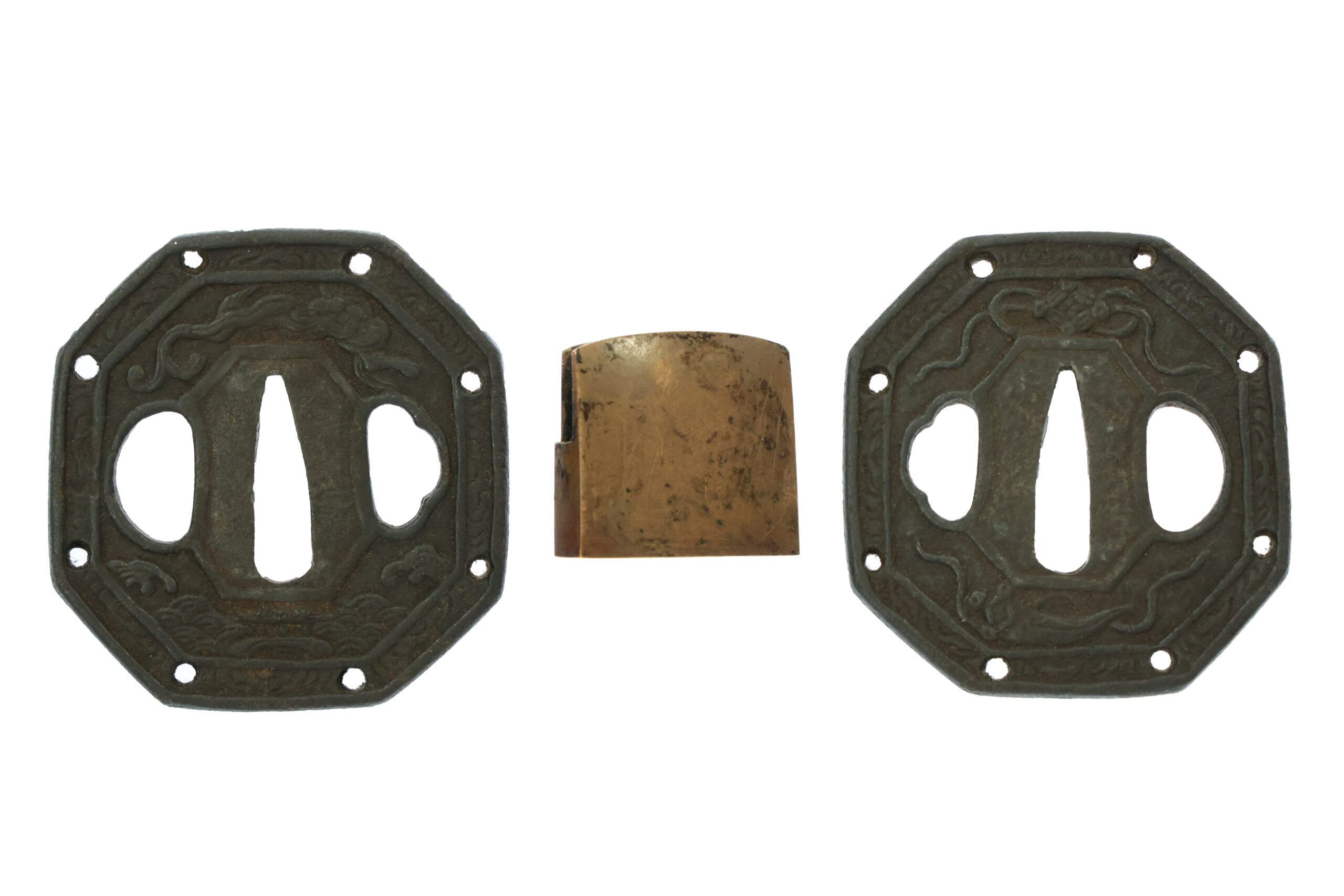
Tsuba and Habaki
This Tsuba has an octagon shape, and its edge has a circle-shaped hole. Also, on the front side of this Tsuba, waves (波, Nami) and something similar to a dragon are depicted. As waves’ movements continue endlessly, the wave pattern represents eternity, immortality, longevity, birth, etcetera. Also, since tides repeatedly change the shape and terrain of rocks, some people hoped for a strong will by using this motif. People used this pattern wishing for an indomitable spirit to rechallenge time and time without giving up. Thanks to its dynamic design, this motif has been appreciated, especially for men’s Kimono (traditional Japanese costume).
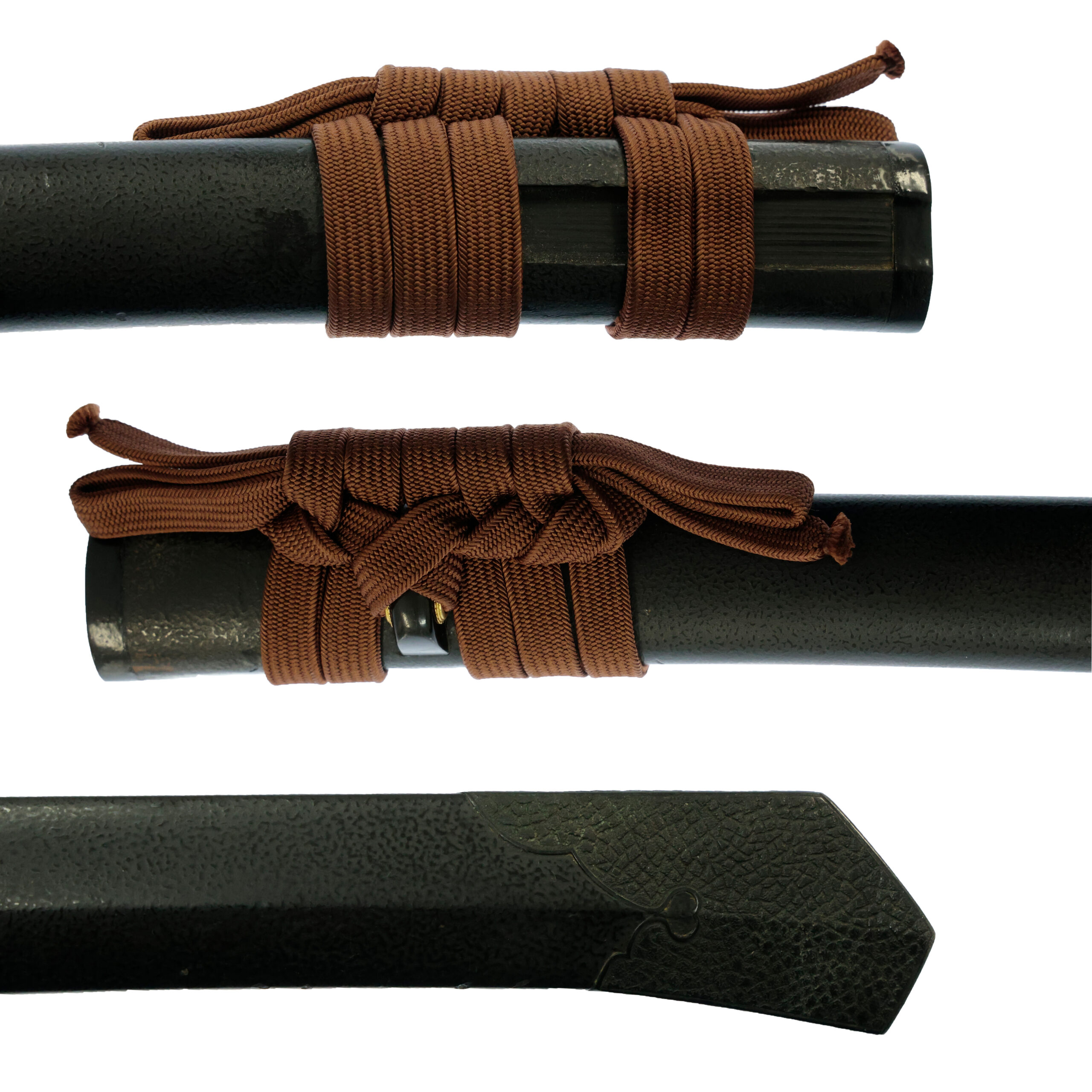
Saya
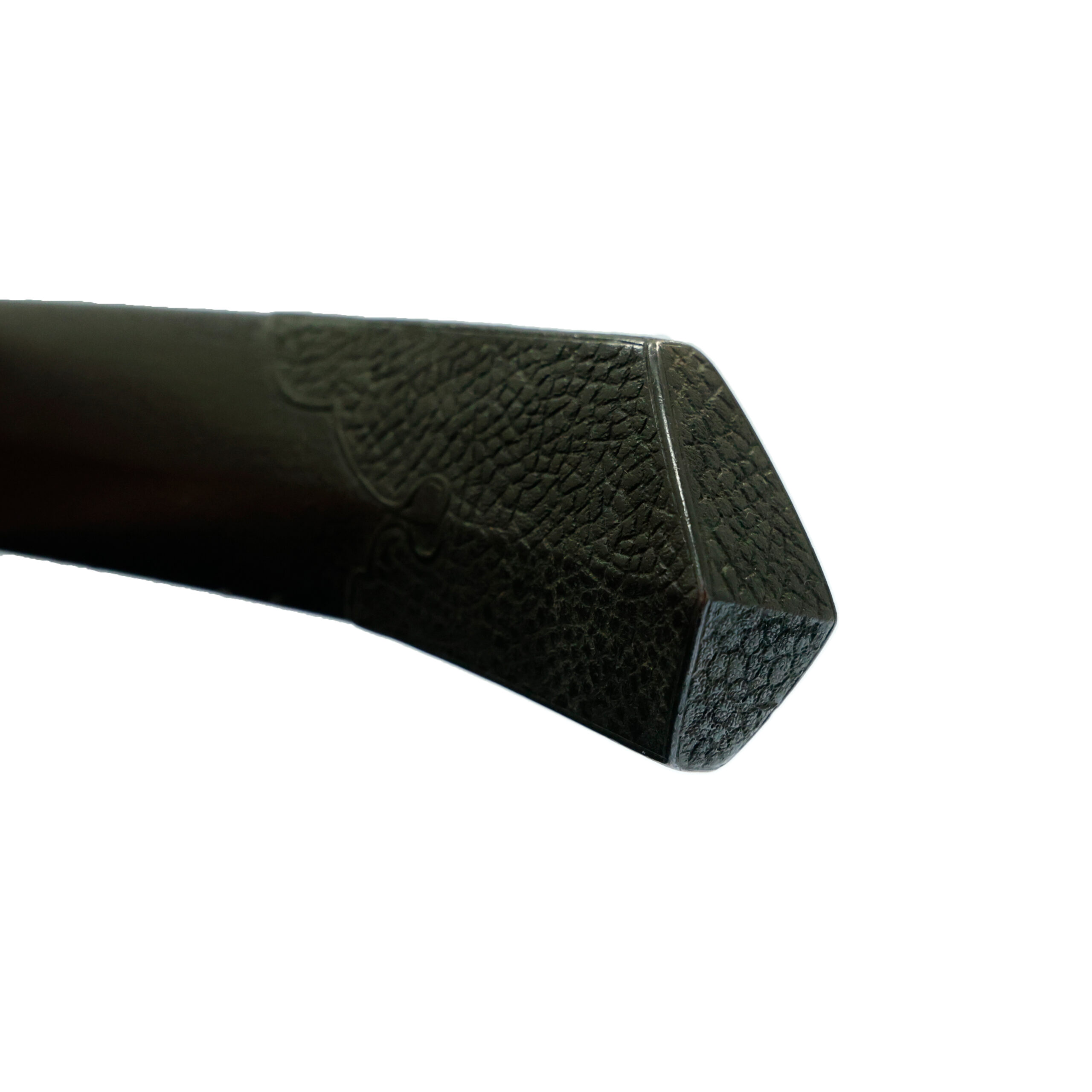
This Saya is decorated with the Ishime-Ji (石目地). Its base was hit by Tagane (鏨, chisel for metalworking), and it makes a rough surface that seems stone.
Authentication Paper
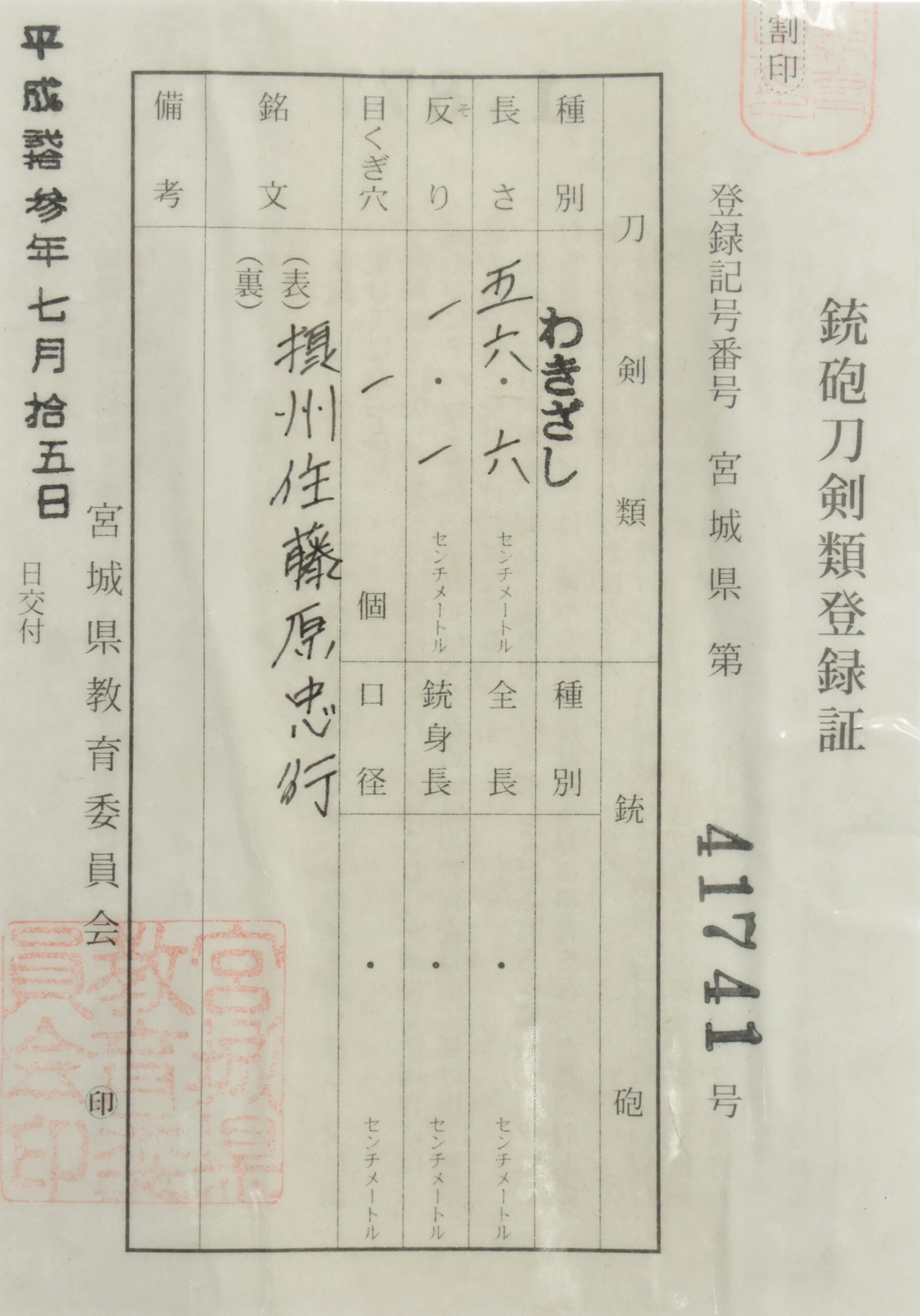
They authenticated the blade on June 3rd in the 4th year of Reiwa (2022). They appraised it as Hozon Touken, the blade worth preserving for Japanese society.


 NihontoWatch