Edo was the sword’s age of connoisseurship: the Hon’ami appraisers, the shogunal register of famous blades of 1719, and a thriving literature turned the sword into an object of study even as it ceased to be drawn in war.
 NihontoWatchNihontoWatch
Sesshu-ju Tadayuki was a student of the first generation Tadatsuna, and because he trained alongside the master's heir, Ikanshi Tadatsuna, and often collaborated on Tadatsuna's sword making, his surviving works are extremely rare; however, the examples seen today have jigane, hamon, nakago-gata, and mei that closely resemble those of Ikanshi, and the workmanship is excellent. This sword has a refined sugata. The jigane has fine masame on the shinogi-ji, while the hira-ji has tightly forged ko-itame hada, with faint masame mixed in near the ha, chikei appearing along the hadame, and thick, small ji-nie, resulting in a bright iron colour. The suguha hamon has uniform ko-nie, and the ha-buchi is bright.
NihontoWatchOffered by Choshuya
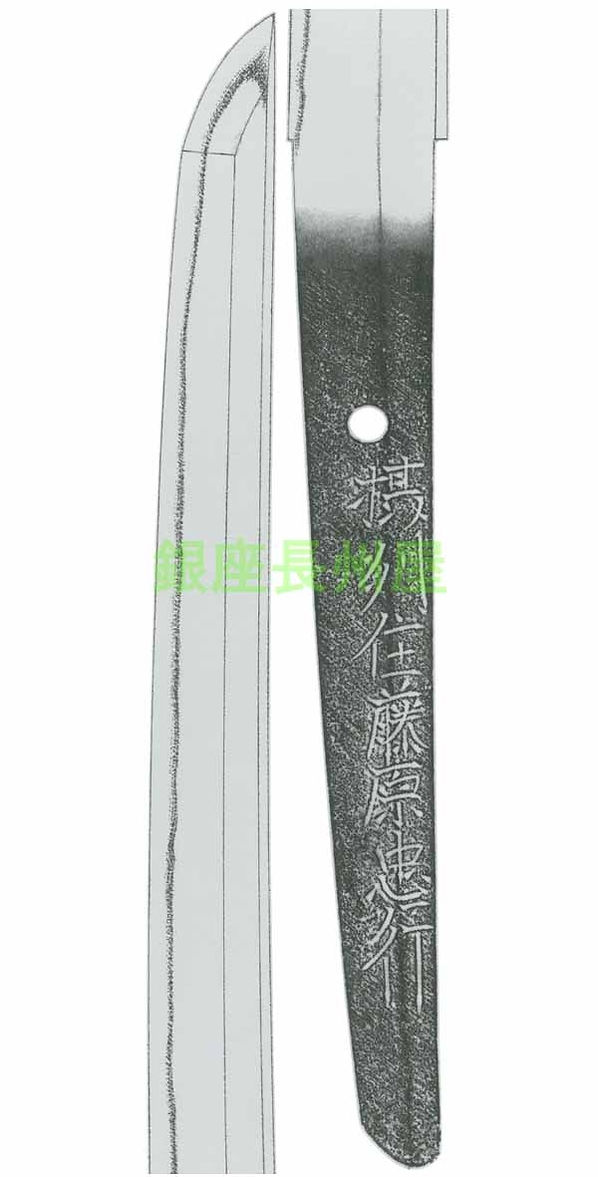
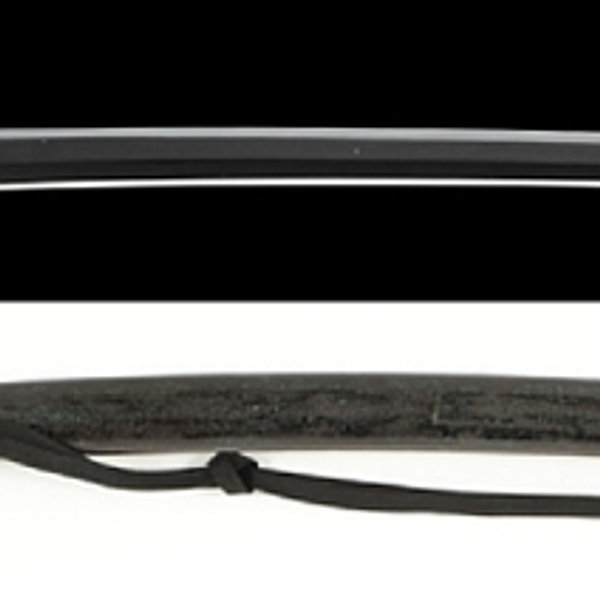
As written by the shop
Machine translation from the shop's Japanese · may contain errors ·
Settsu · around 1661-1673
Fujishiro Jo saku · Tōken Taikan top 60%
1 piece on the market now
The Edo period (1615 to 1868)
Edo was the sword’s age of connoisseurship: the Hon’ami appraisers, the shogunal register of famous blades of 1719, and a thriving literature turned the sword into an object of study even as it ceased to be drawn in war.
If, due to our fault, the item differs significantly from its proper condition, the item may be returned. Cooling-off is within one week of the item's arrival.